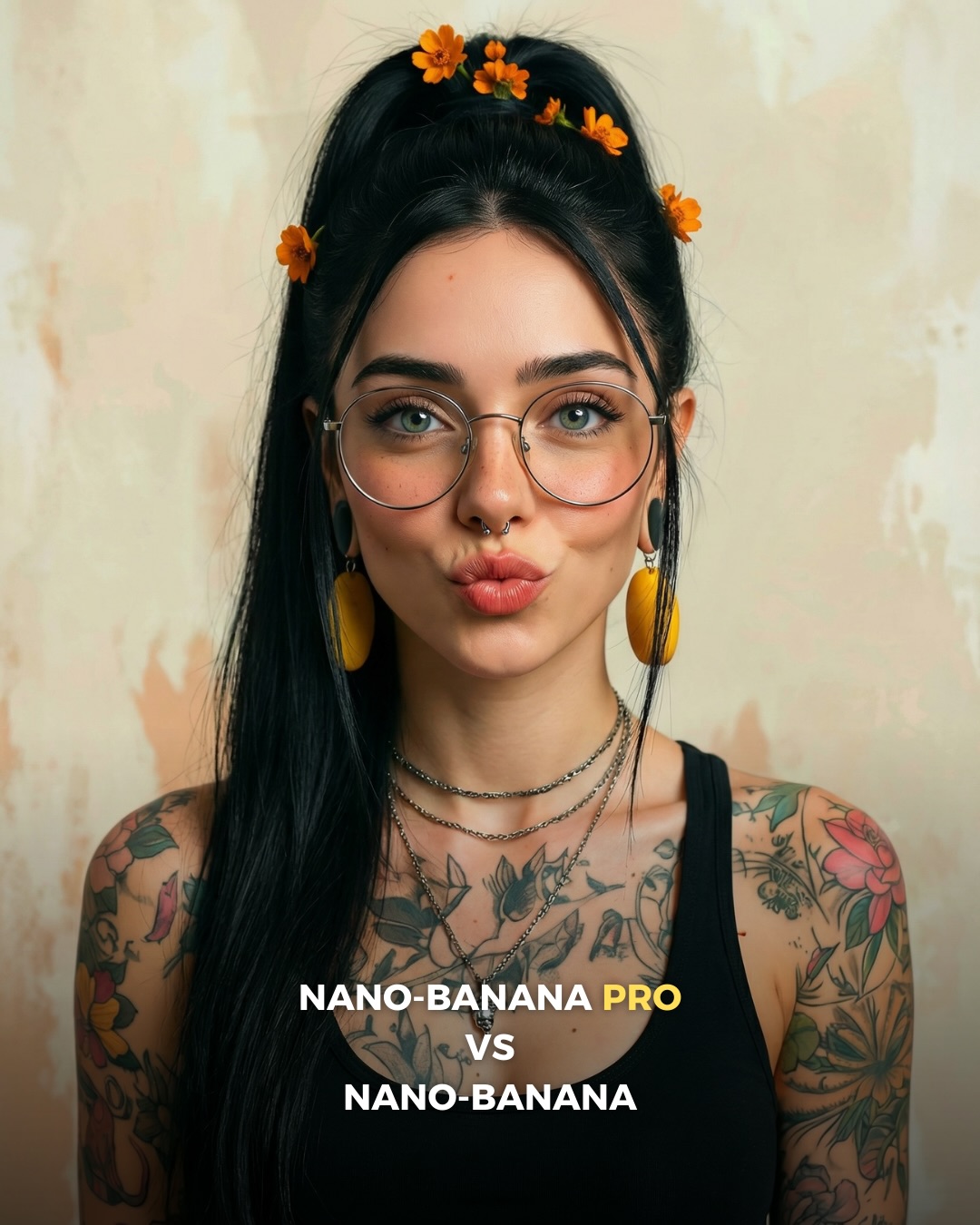
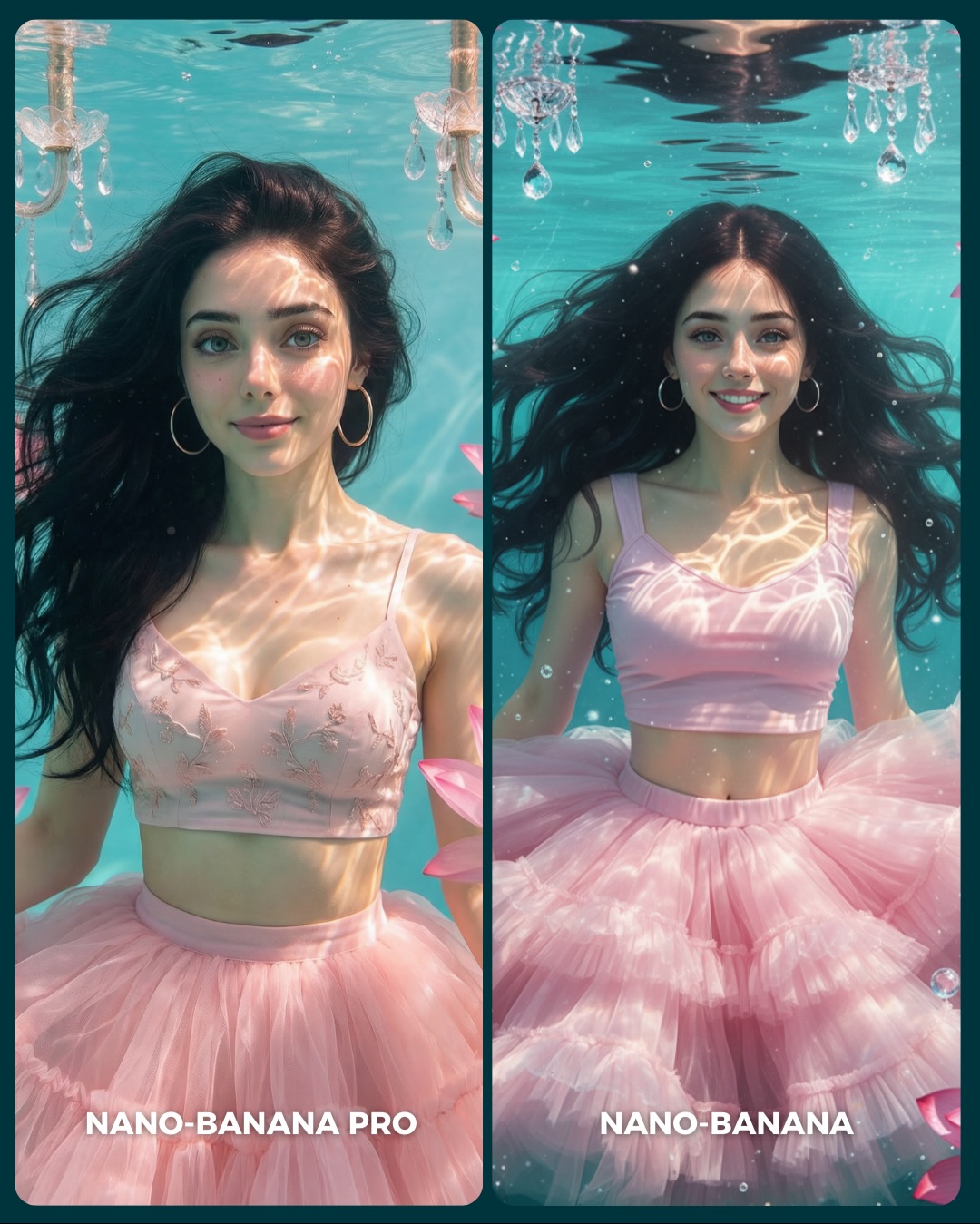
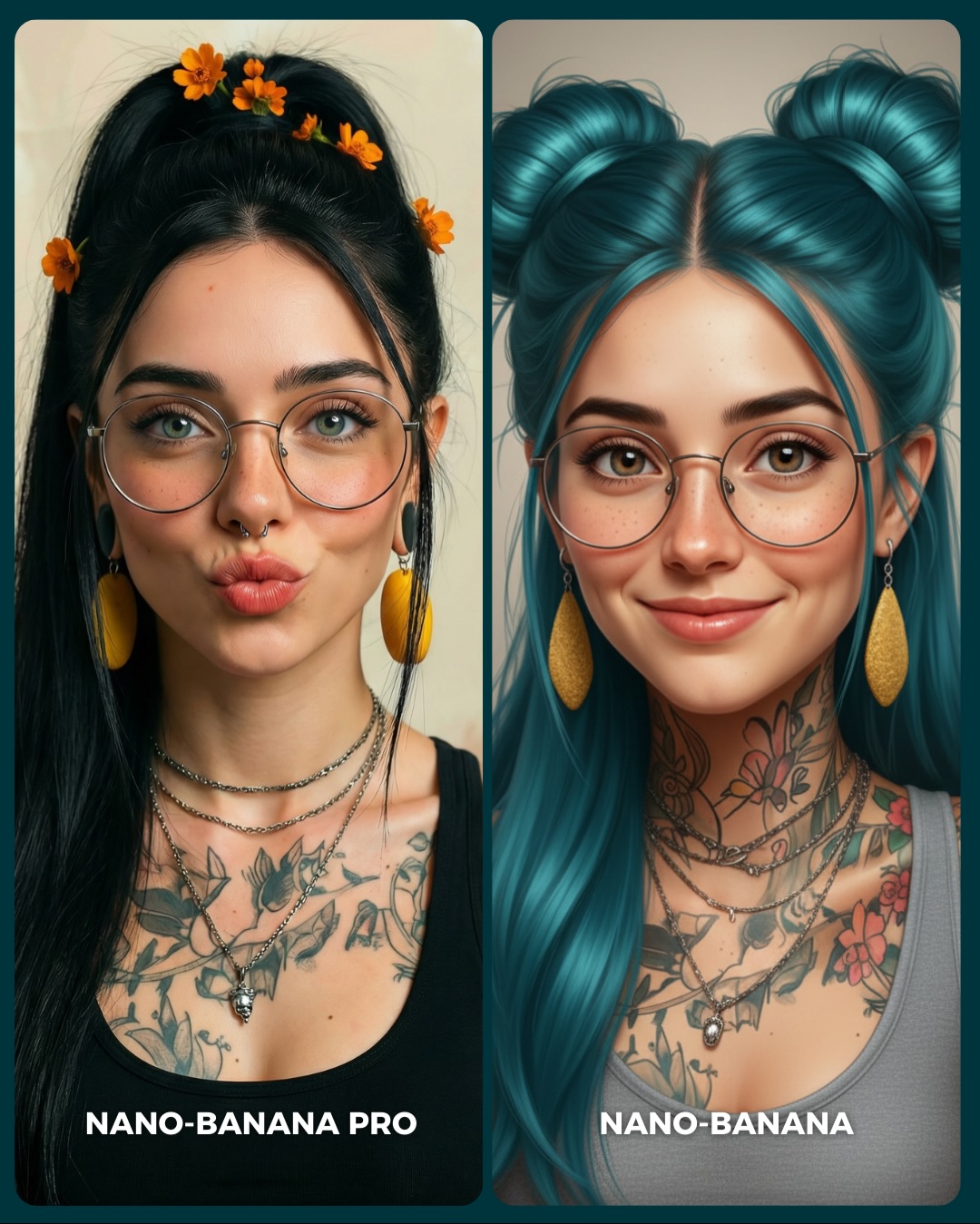
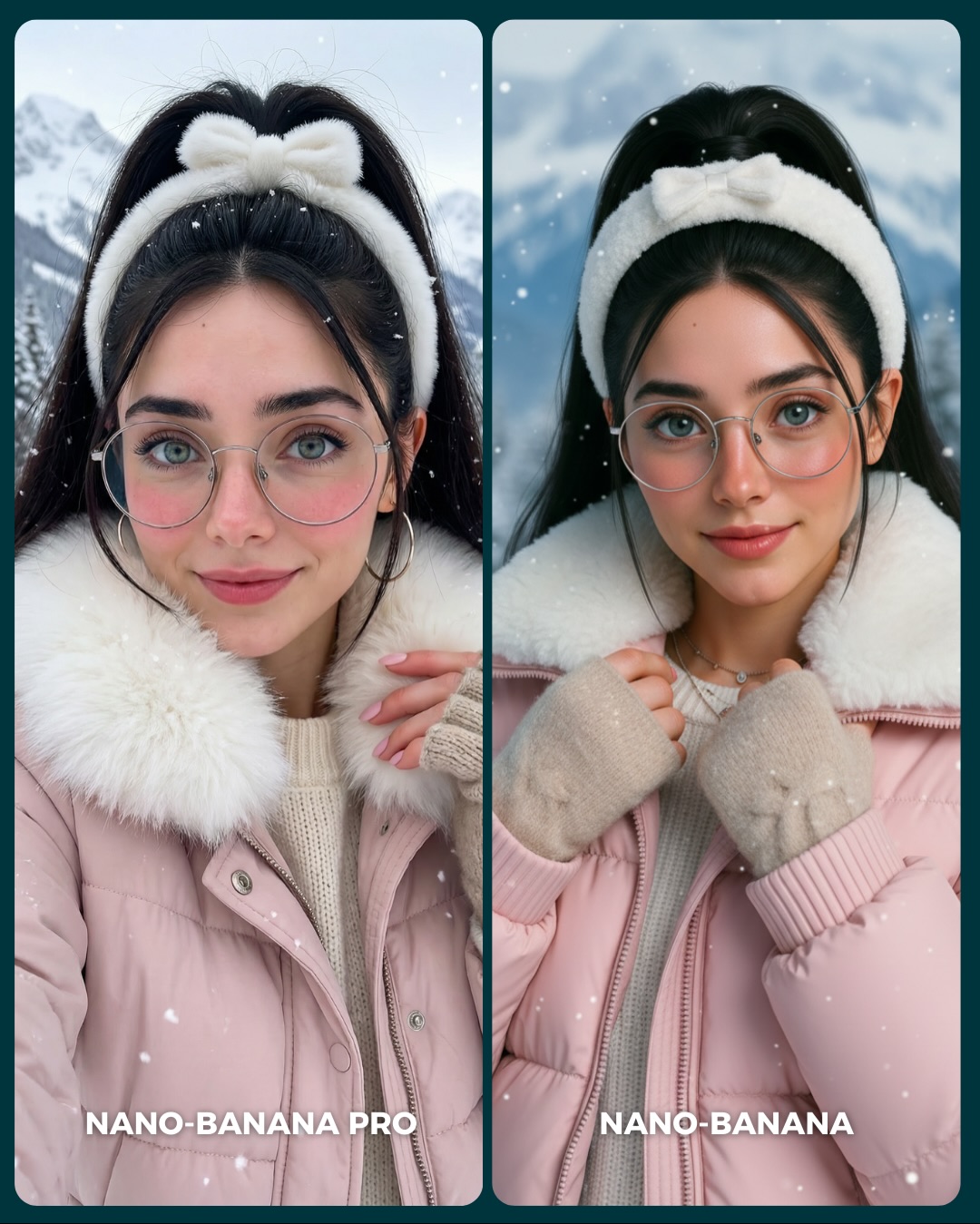
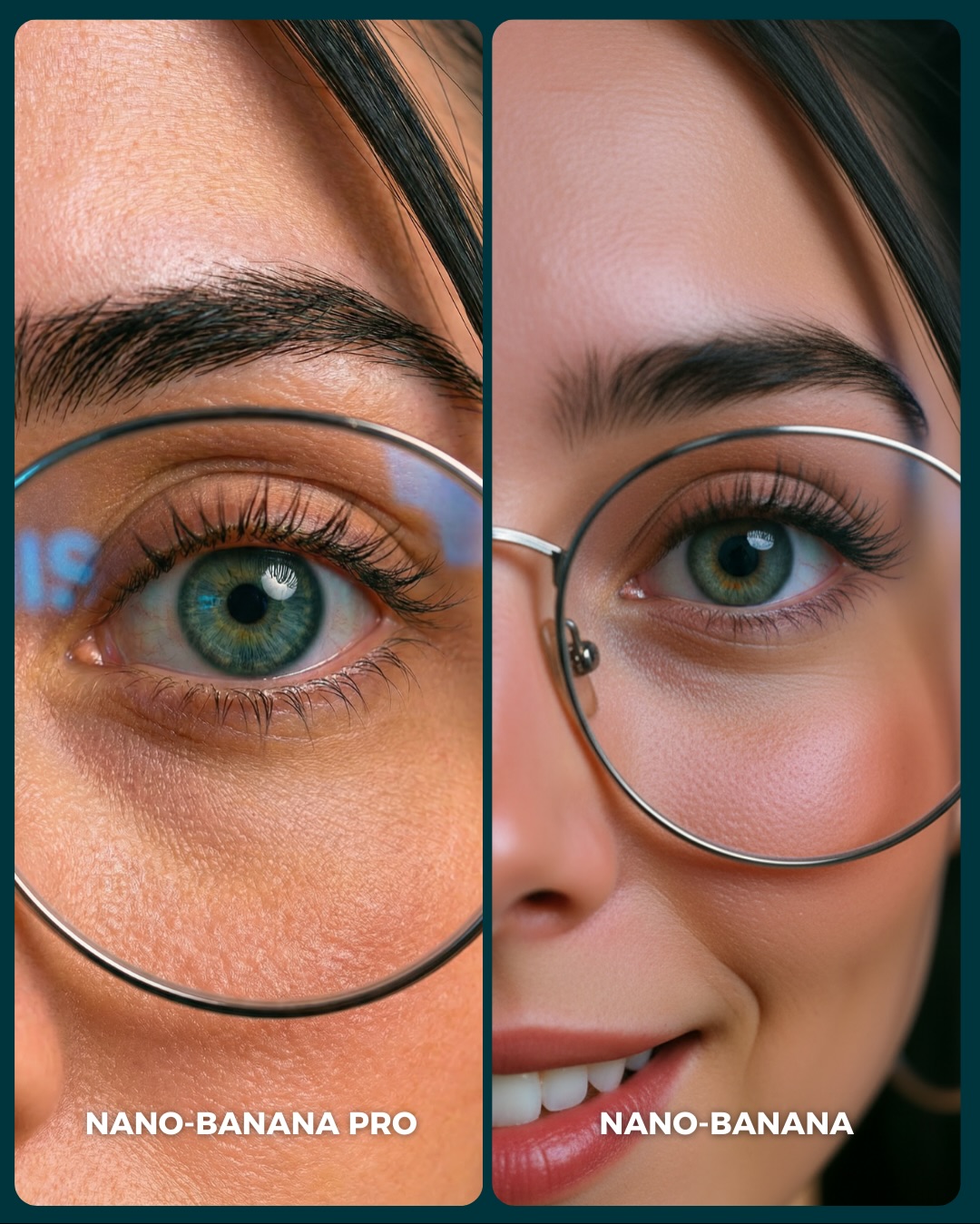
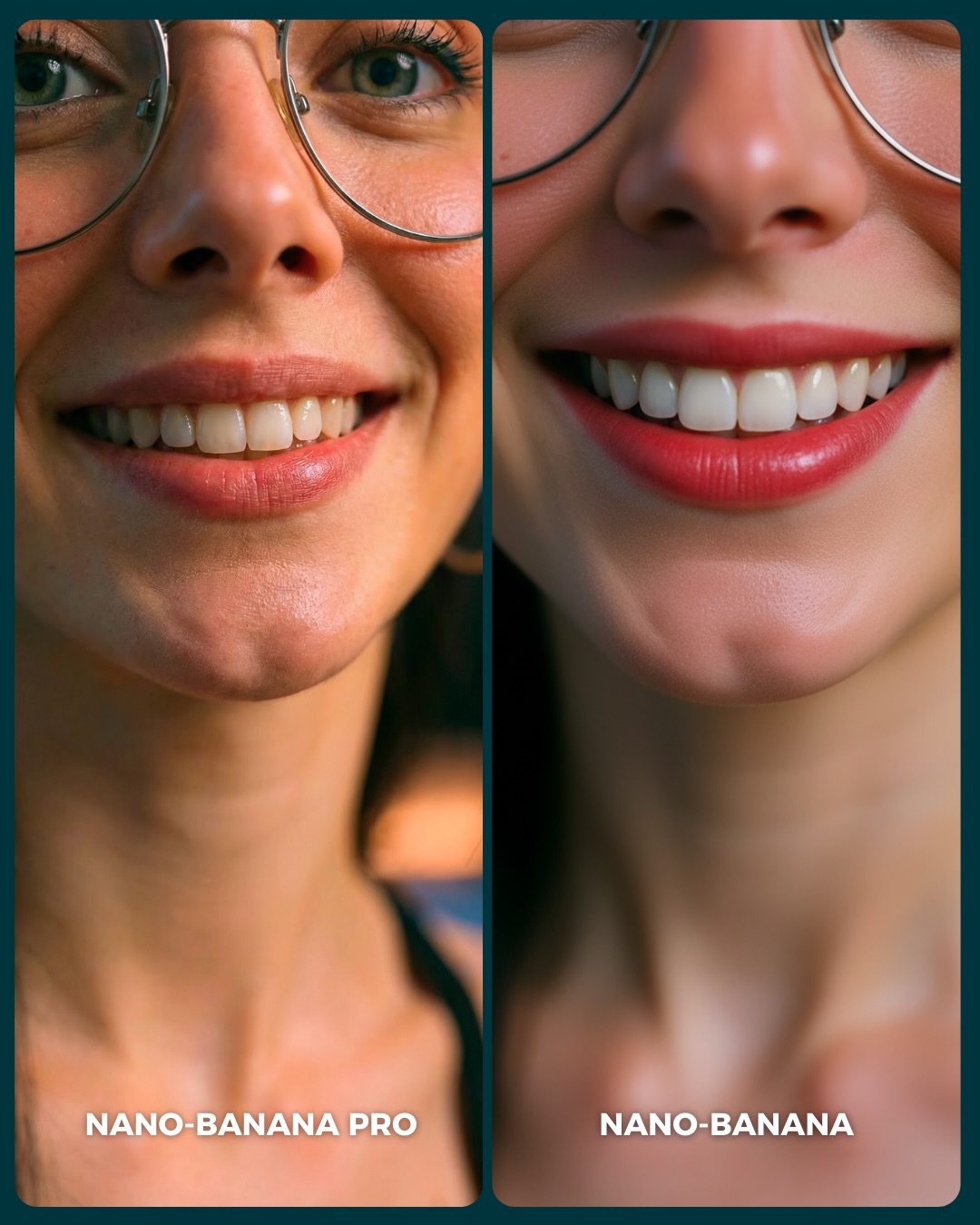
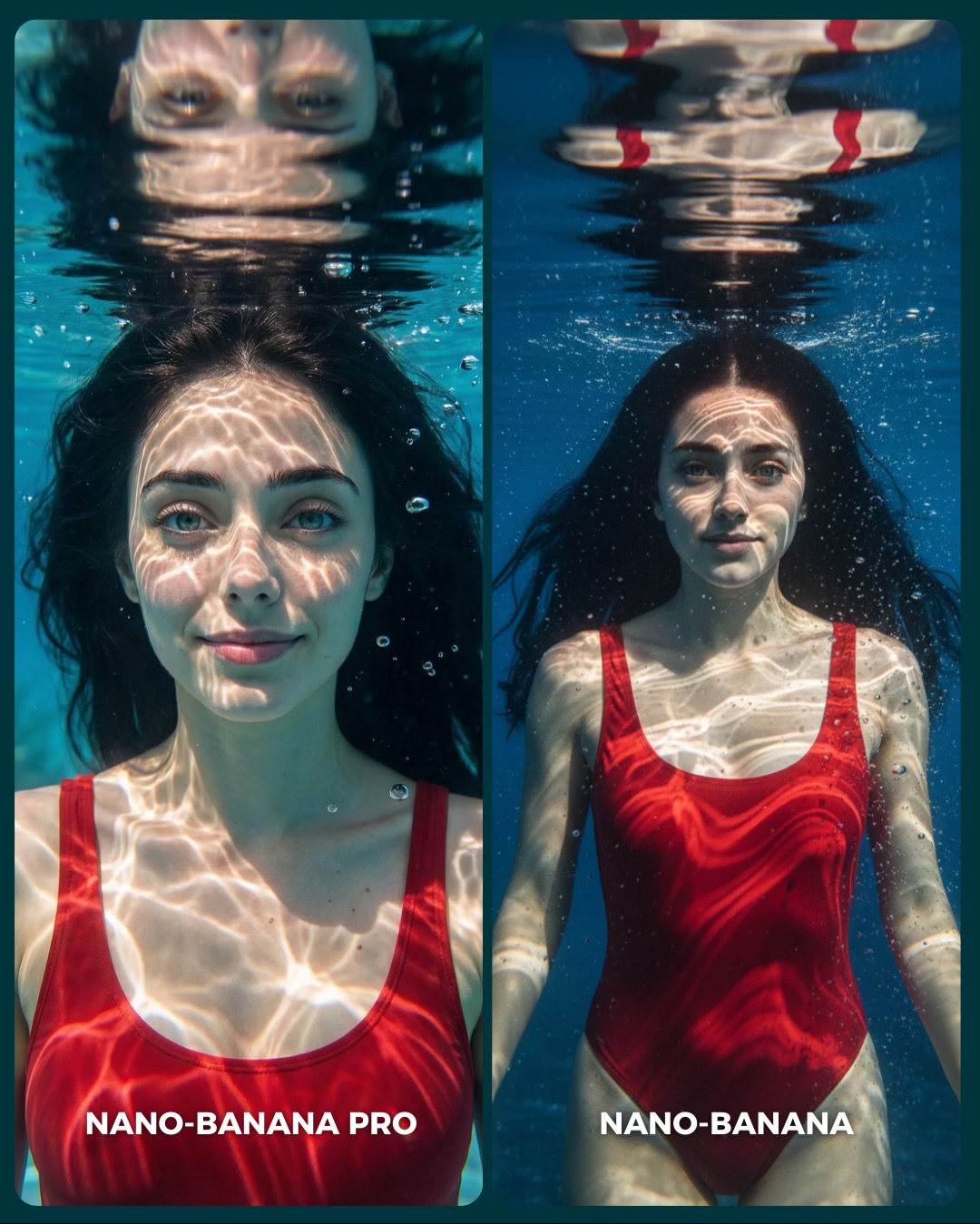
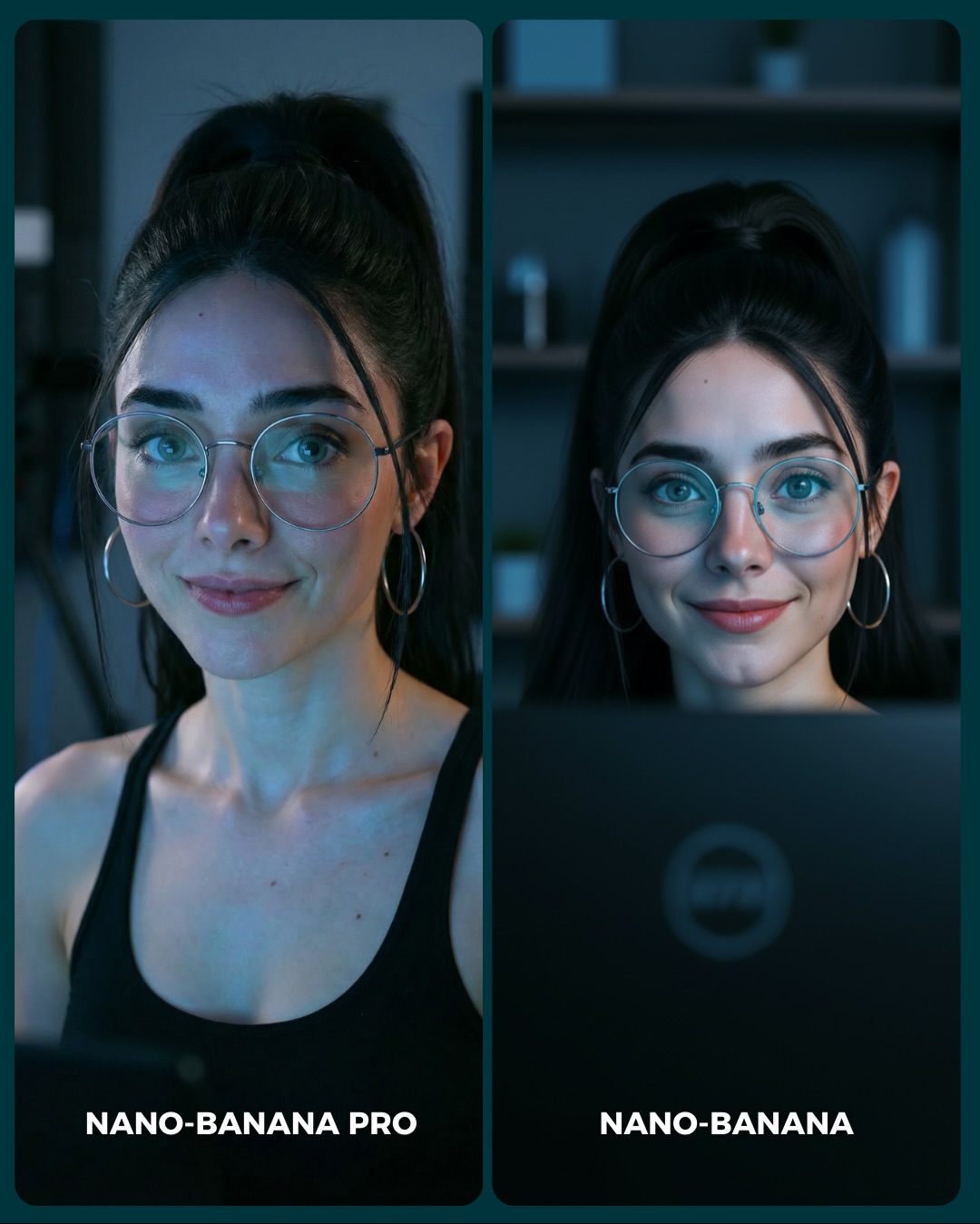
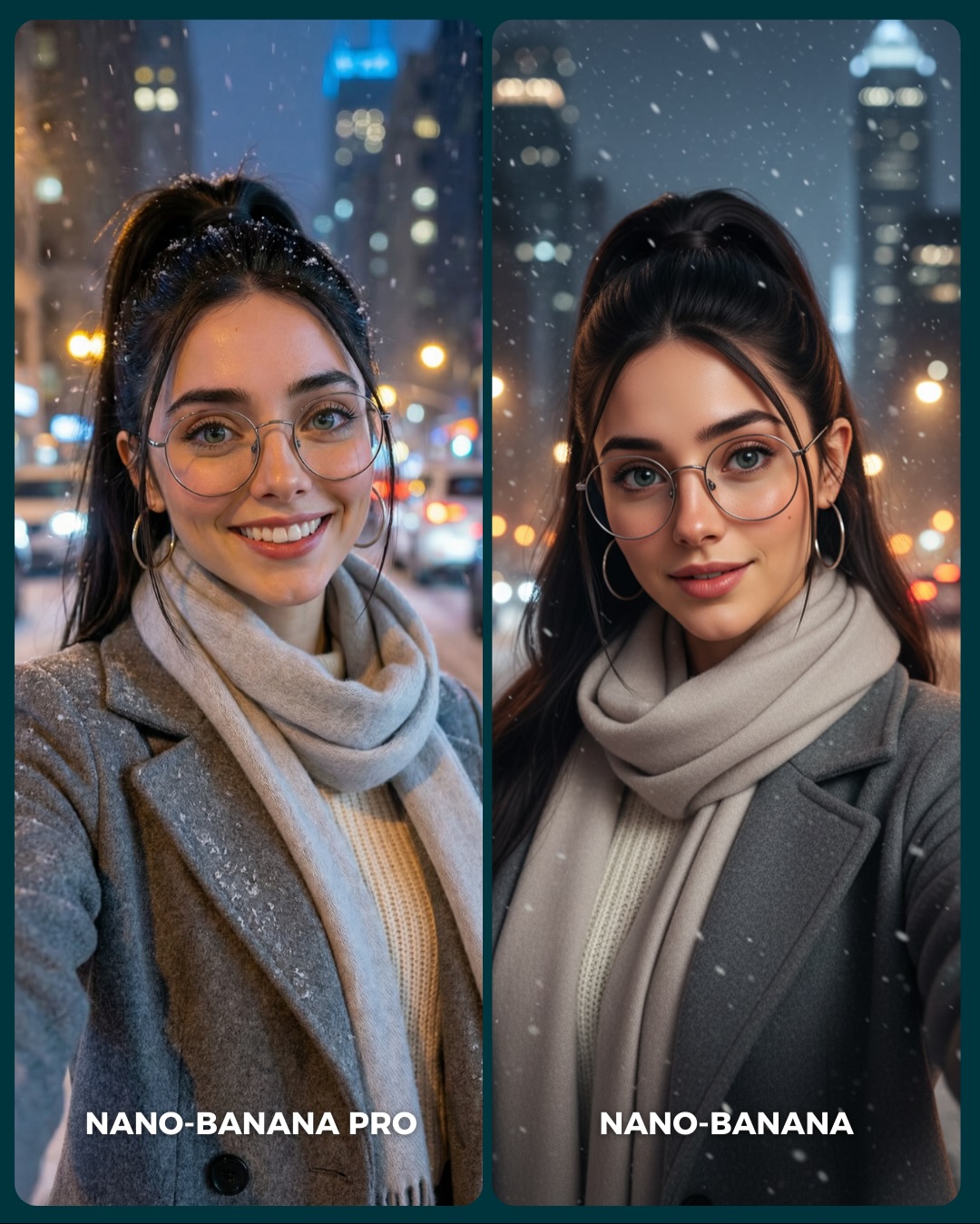
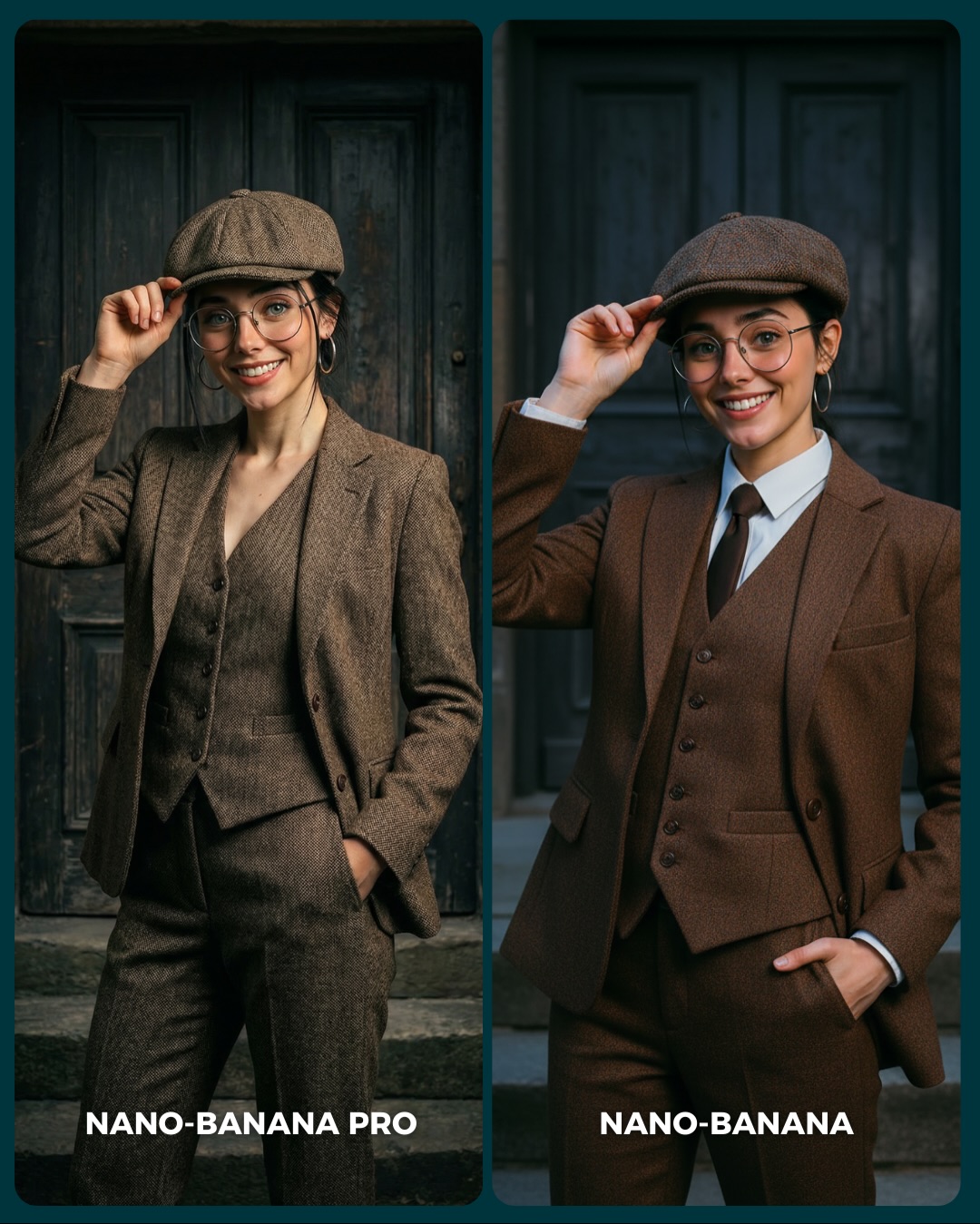
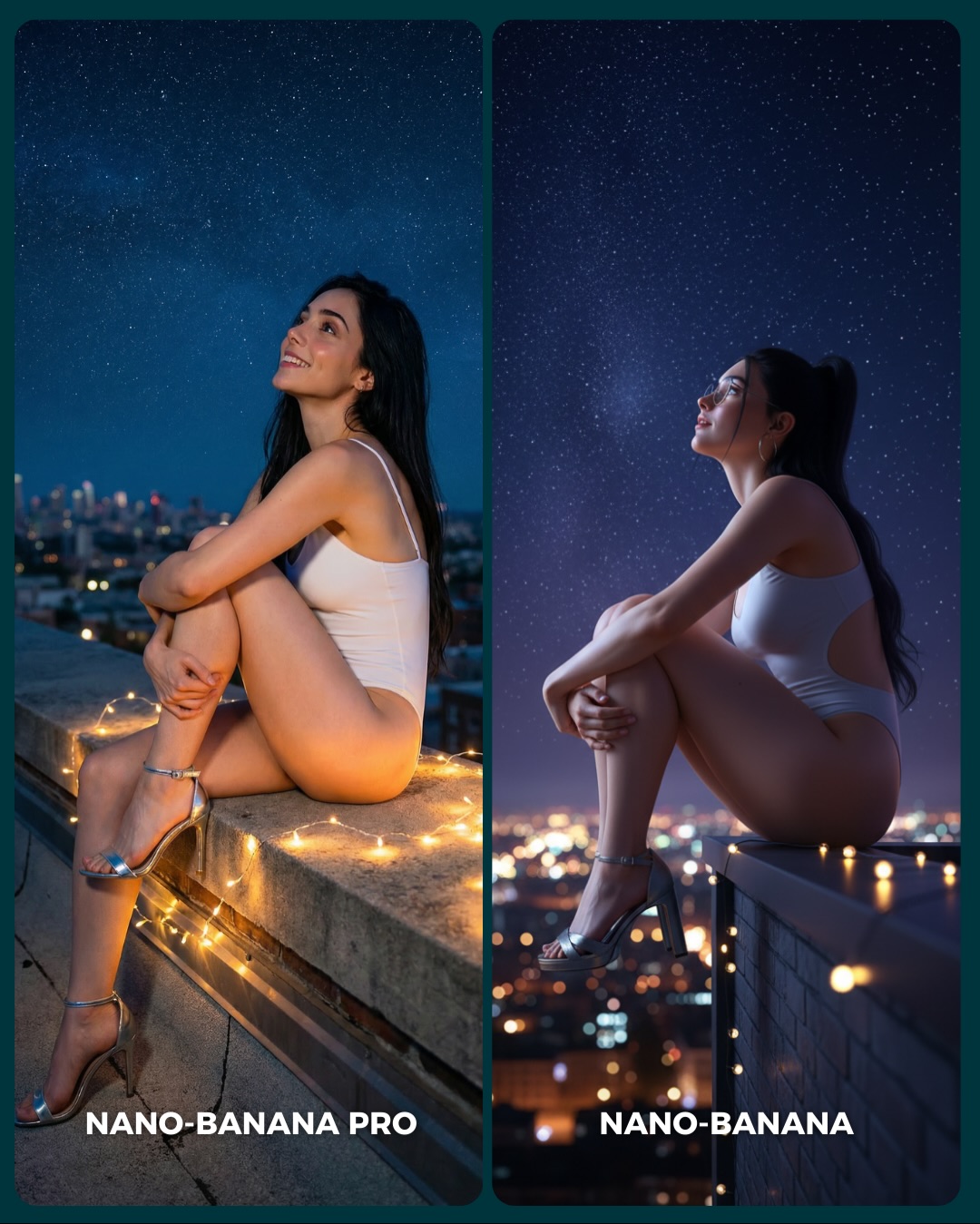
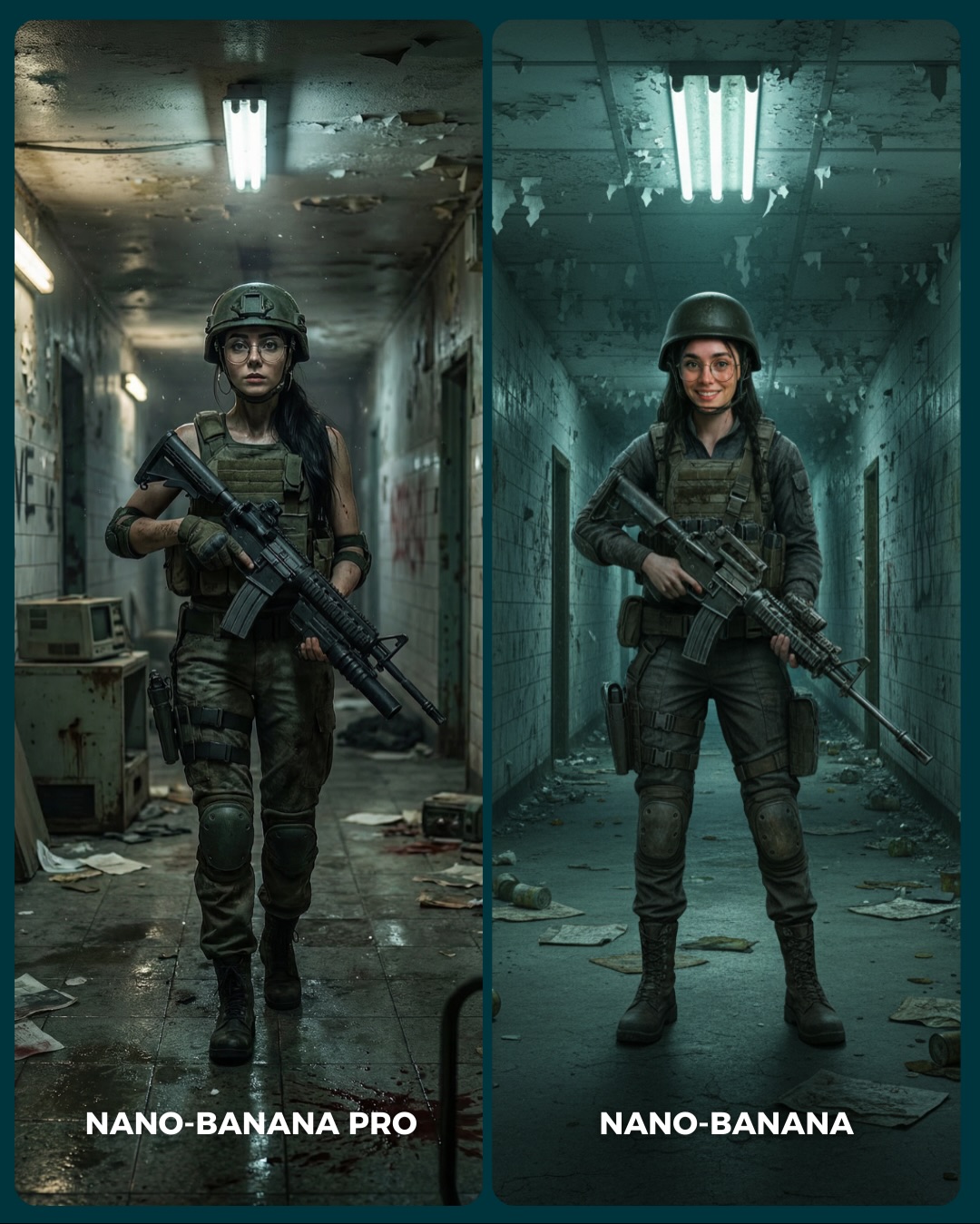
🥹Nano-Banana PRO VS. Nano-Banana
Hoy toca poner a prueba el nuevo generador de Google 🙊 Es tan bueno que tienes que verlo para creerlo…
Aquí os dejo unas imágenes para que podáis comparar el Gran salto de calidad de algo que ya era muy bueno a algo insuperable 💕
Y dime… con cuál de los 2 te quedas?? 👀
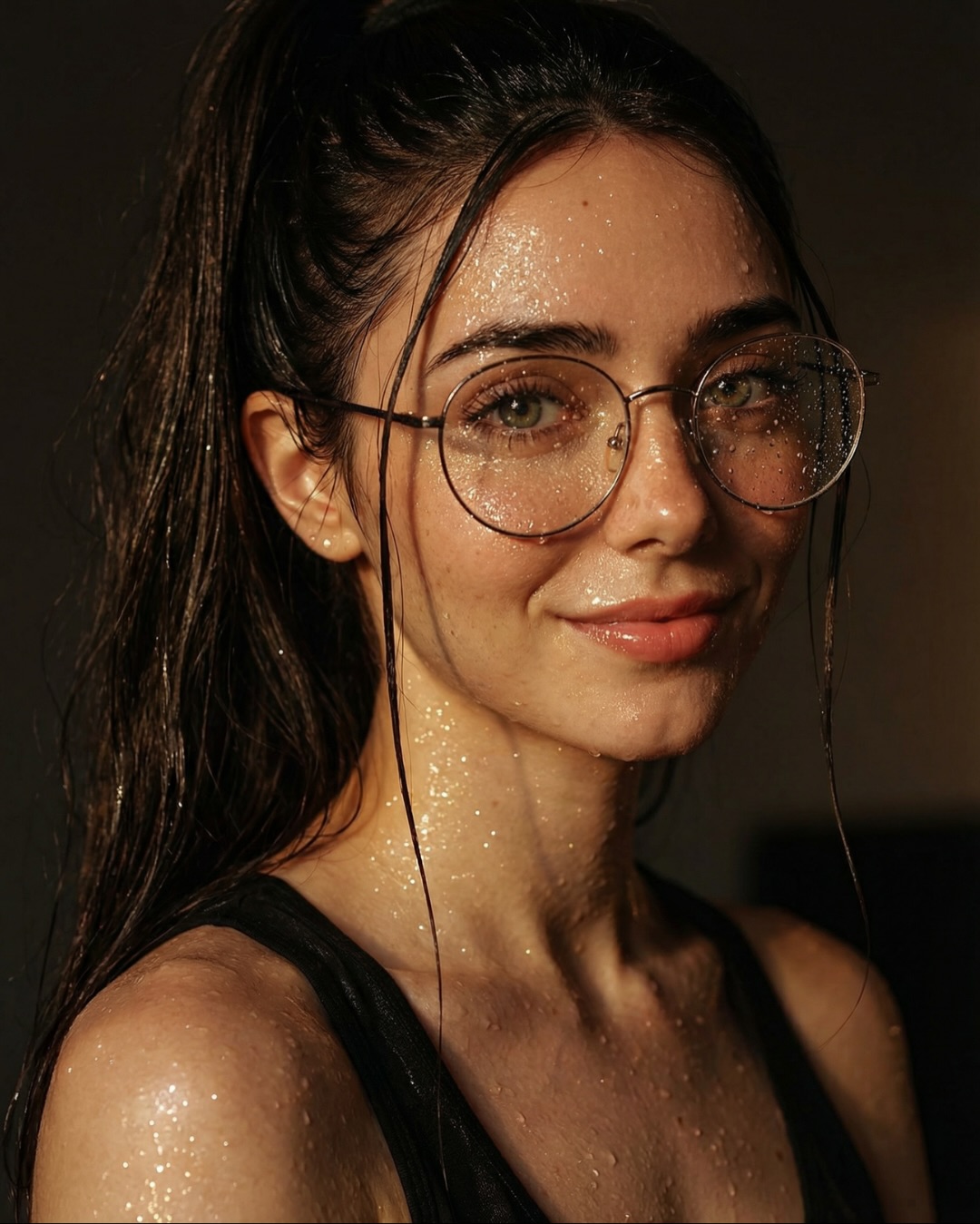
How soy_aria_cruz Created This Wet Skin Glasses Portrait AI
This image works because it chooses one realism challenge and commits to it completely. The entire frame is built around moisture: water beads on the forehead, droplets on the glasses, reflective skin on the cheeks and collarbone, damp strands of hair stuck to the face. That is a smart creator move. If you want an AI portrait to feel expensive, do not ask for ten dramatic ideas at once. Ask for one difficult surface condition and make the whole image prove that the model can handle it.
The other reason it lands is restraint. The background is almost empty, the outfit is nearly invisible, and the pose is simple. That means the viewer has no escape route. All attention goes to skin rendering, lens interaction, and whether the light really behaves like it is hitting water on a face. When an image strips away distractions like this, quality differences become obvious very fast. That is exactly why this kind of portrait is useful for both growth content and model testing.
There is also a subtle emotional advantage here. The smile is small, the gaze is direct, and the warm light keeps the image from turning cold or clinical. So even though the frame is technically a realism stress test, it still feels human. That balance matters. People share and comment on images that teach something, but they stay longer when the image still feels like a person rather than a lab sample.
Signal
Evidence (from this image)
Mechanism
Replication Action
Surface complexity
Water droplets sit on skin, glasses, hairline, neck, and shoulder
Hard-to-render micro-surfaces create a strong realism benchmark
Choose one difficult material state and repeat it across multiple facial zones
Minimal scene noise
Dark blurred background with no props or environment clutter
Removes distractions and forces viewers to inspect the render quality
Strip the scene down when the goal is realism proof, not storytelling scale
Warm emotional light
Soft amber highlights on wet skin and gentle facial shadows
Keeps the portrait human and inviting instead of purely technical
Use one warm directional light rather than flat beauty fill
Where this style fits best
Beauty-realism prompt libraries, because the image demonstrates skin, moisture, and eyewear interaction clearly.
Model benchmark posts, because wet surfaces expose weak rendering fast.
Creator education pages about portrait lighting, because the light setup is simple but highly effective.
High-end thumbnail covers, because the frame reads premium even on a small screen.
Less ideal: travel storytelling, wardrobe-led fashion posts, or environment-heavy cinematic scenes. This image is about surface fidelity, not worldbuilding.
If you want to transfer the logic, keep the close crop, keep the minimal background, and keep the “single difficult surface” strategy. Then change the material challenge. Instead of water on skin, test sunscreen shine, rain on a leather jacket, tears on lashes, or fog on sunglasses. Slot template: {portrait type} with {specific reflective surface condition} under {single directional warm light}.
Aesthetic read
The strongest choice here is the hierarchy of detail. The face gets the sharpest attention, the droplets create the second layer of interest, and everything else falls away. That makes the portrait feel confident. It is not trying to sell a location, a costume, or a concept. It is selling image quality through a single controlled visual problem. That is a very useful lesson for creators building educational SEO pages: specificity beats volume.
The color palette also helps more than people realize. Warm amber skin, black clothing, dark brown background, and the cool silver line of the glasses create just enough contrast without becoming loud. Because the palette stays limited, the viewer notices texture first. That is why the portrait feels polished instead of busy.
Observed
Why it matters
Warm side-front light
Builds glow and makes the moisture readable
Round glasses with visible droplets
Adds a second realism test beyond skin texture
High ponytail with loose wet strands
Keeps the portrait from feeling too clean or overly styled
Dark empty background
Protects the face as the clear focal point
Small restrained smile
Makes the image feel intimate rather than performative
Prompt technique breakdown
Prompt chunk
What it controls
Swap ideas (EN, 2–3 options)
young woman with round glasses and high ponytail
Identity silhouette and facial readability
soft bob haircut, slicked-back bun, loose shoulder-length hair
wet skin with visible water droplets on face, neck, shoulder, and lenses
neutral tank top, strapless styling, dark robe edge only
close beauty portrait with shallow depth of field
Focus hierarchy and premium editorial feel
macro face crop, chest-up studio portrait, tighter 85mm headshot
How to iterate this without losing the core
Lock these three things first: the close crop, the warm light direction, and the moisture distribution on both skin and glasses. Those are the identity anchors. After that, change only one or two variables per run.
Baseline run: keep the exact wet portrait setup until skin and droplets both render cleanly.
Second run: change only the expression from soft smile to neutral gaze to see if realism survives without the smile advantage.
Third run: keep the face but switch from warm indoor light to cooler overcast rain light.
Fourth run: keep the moisture logic but move the same treatment onto another subject category, such as a male portrait or a close-up of sunglasses and wet hair.
If the image starts failing, the first place to look is usually not the overall face. It is the contact points: droplets on lenses, wet strands crossing skin, and highlight transitions around the nose and cheeks. Those tiny areas are where realism is won or lost.