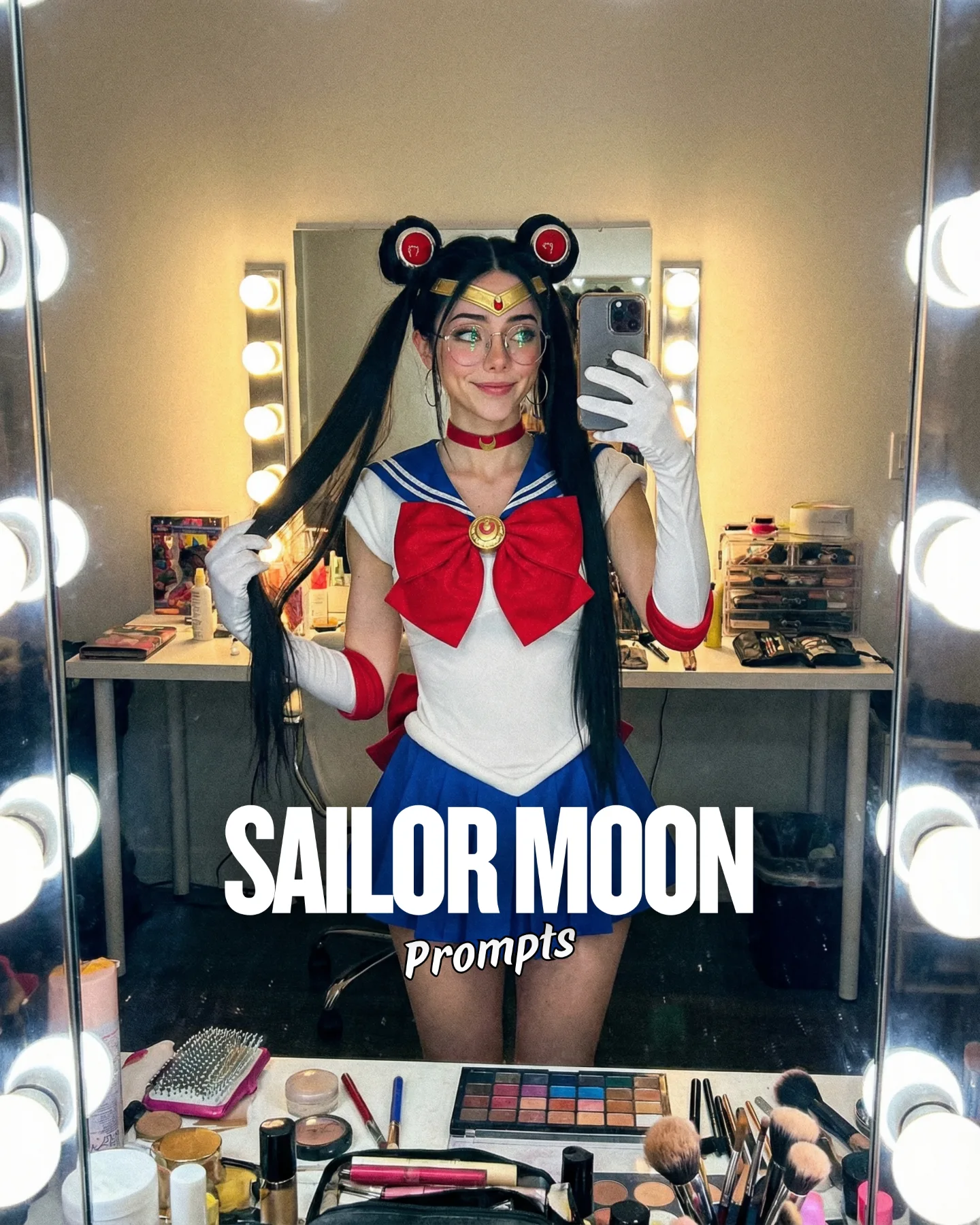
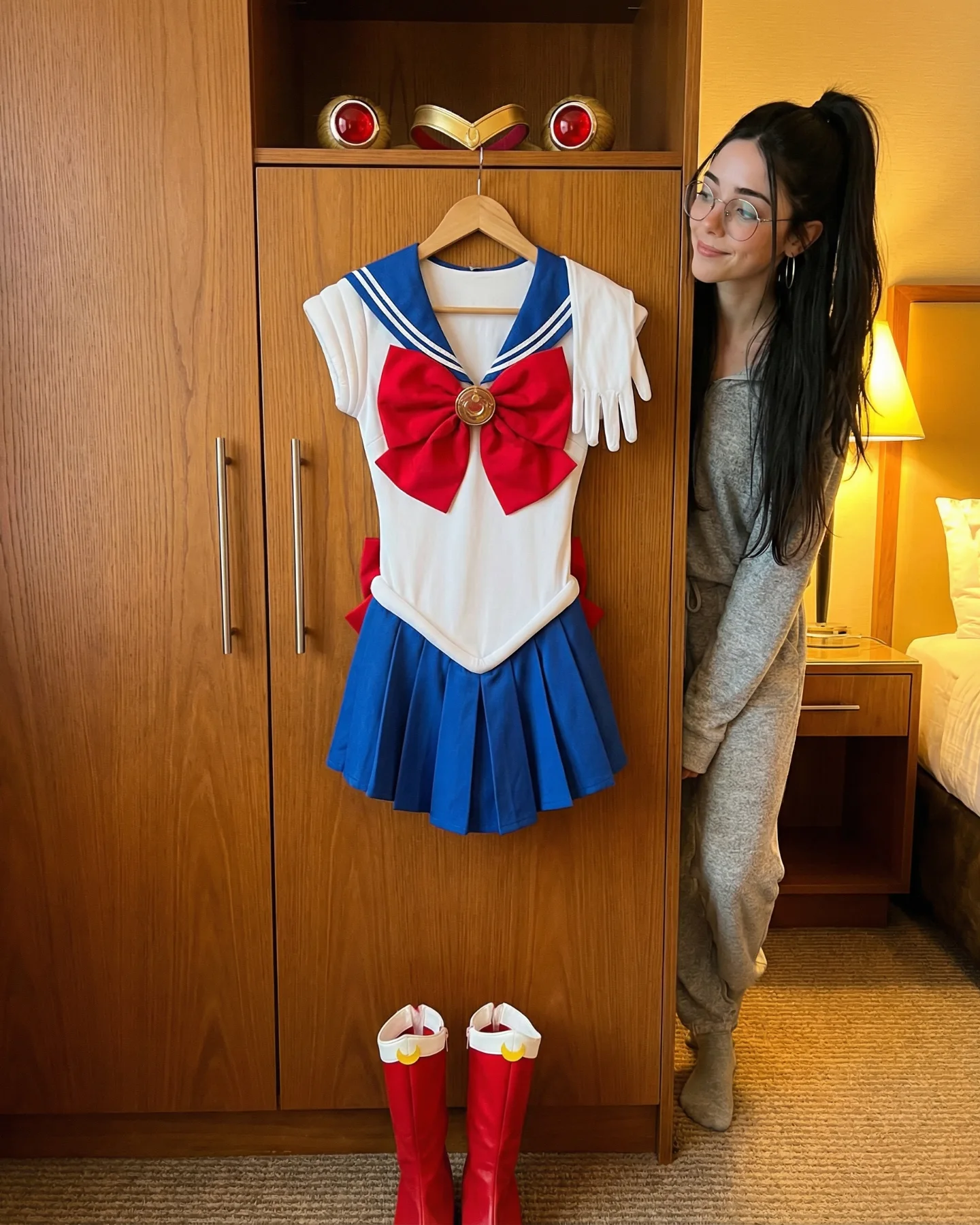
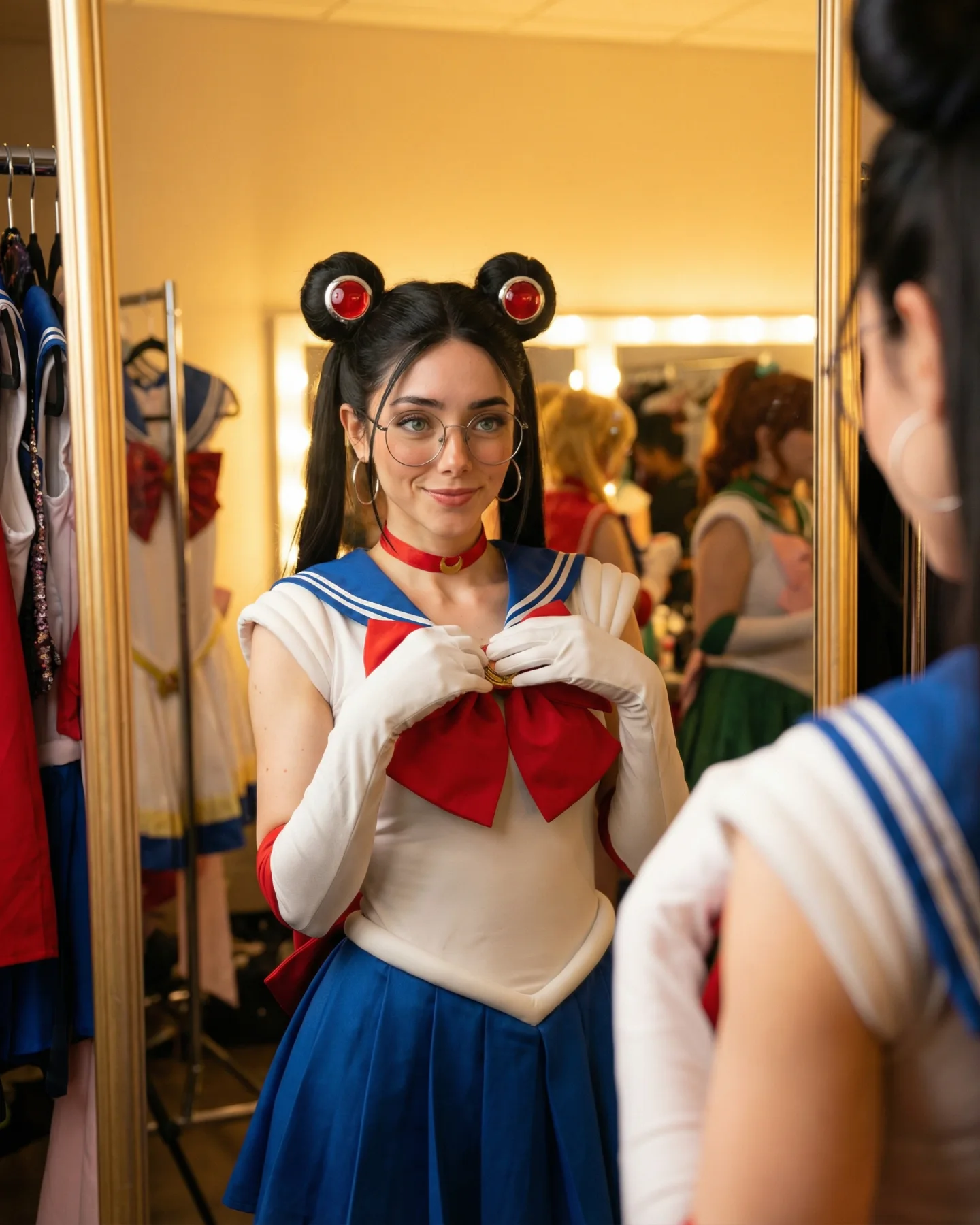
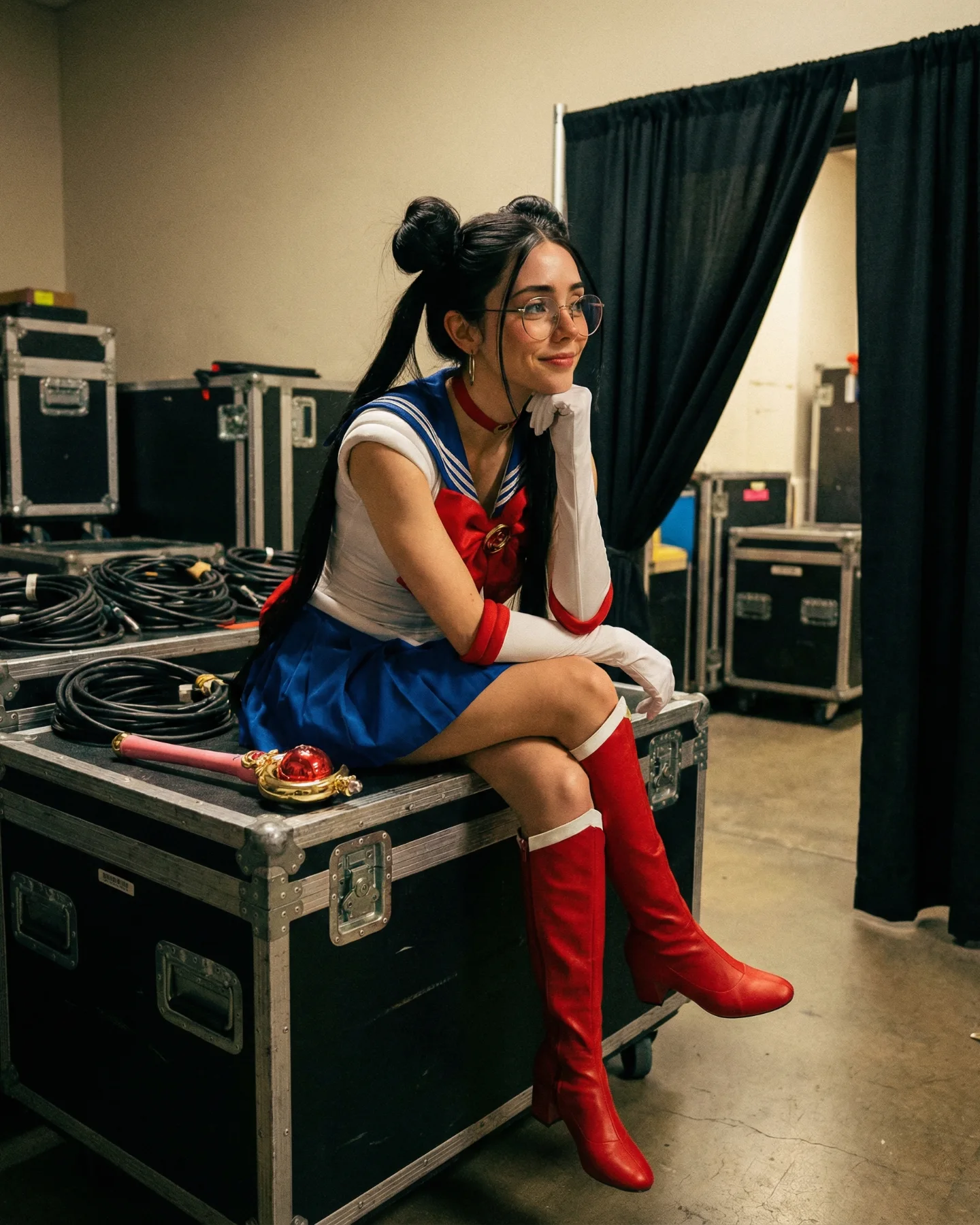
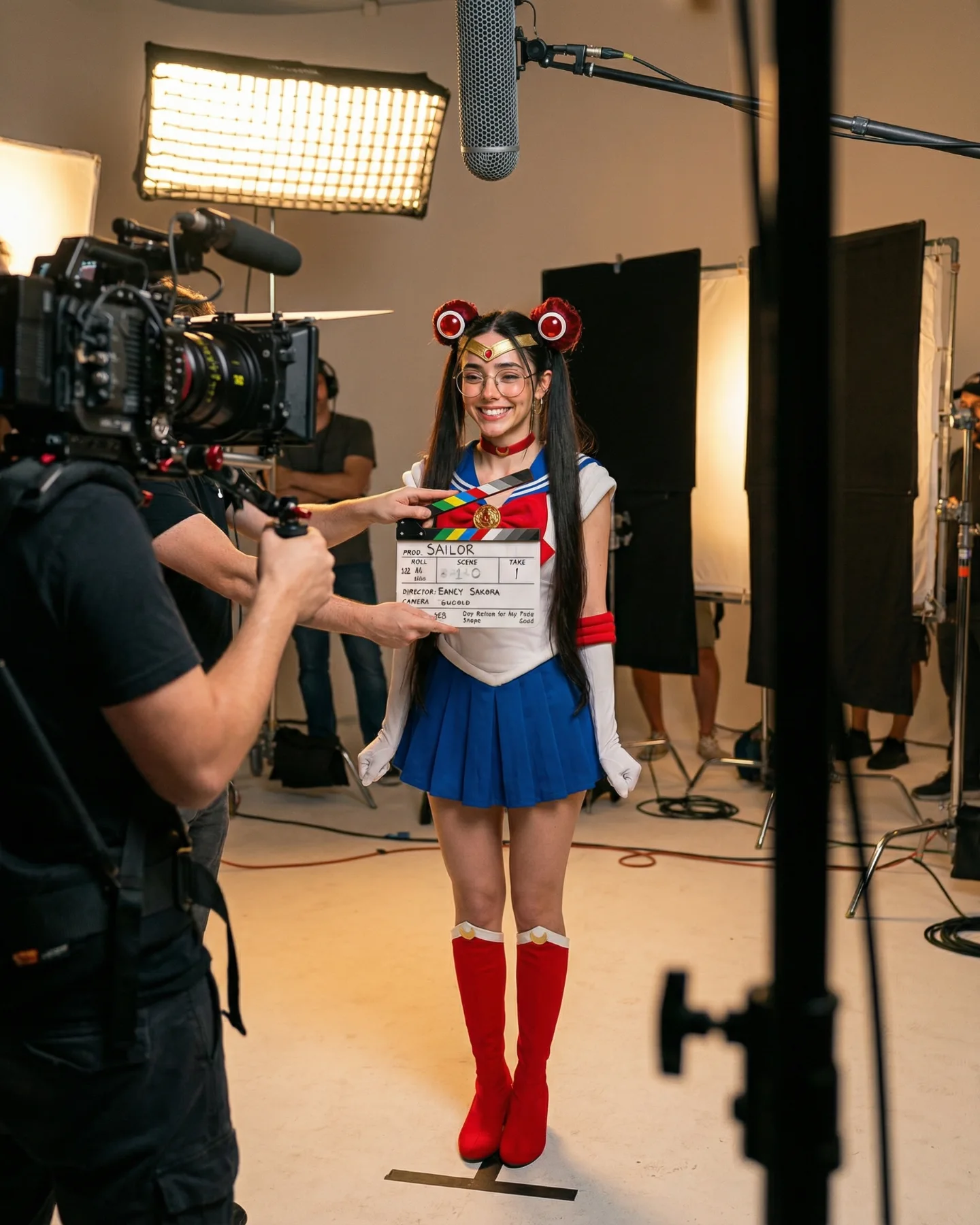
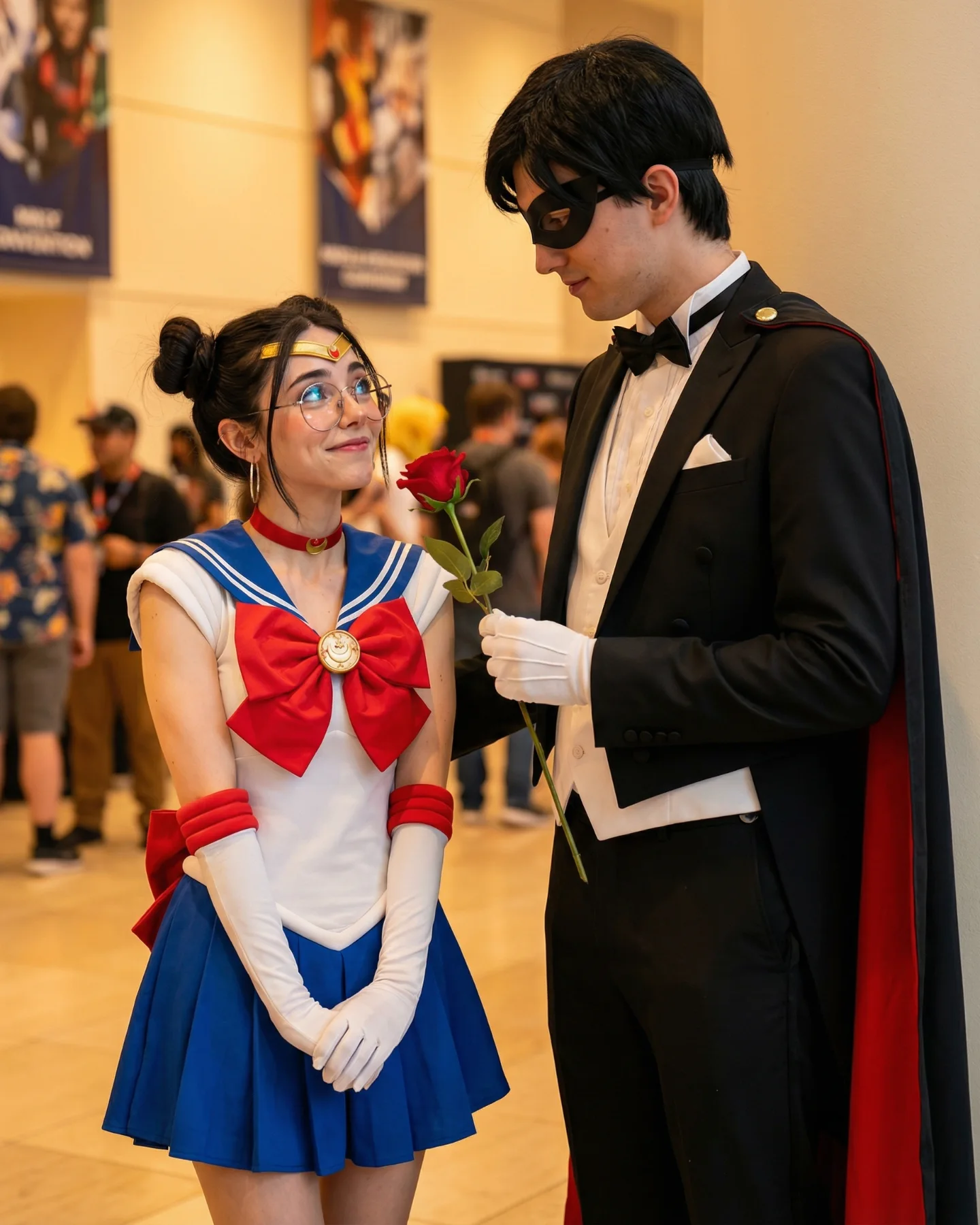
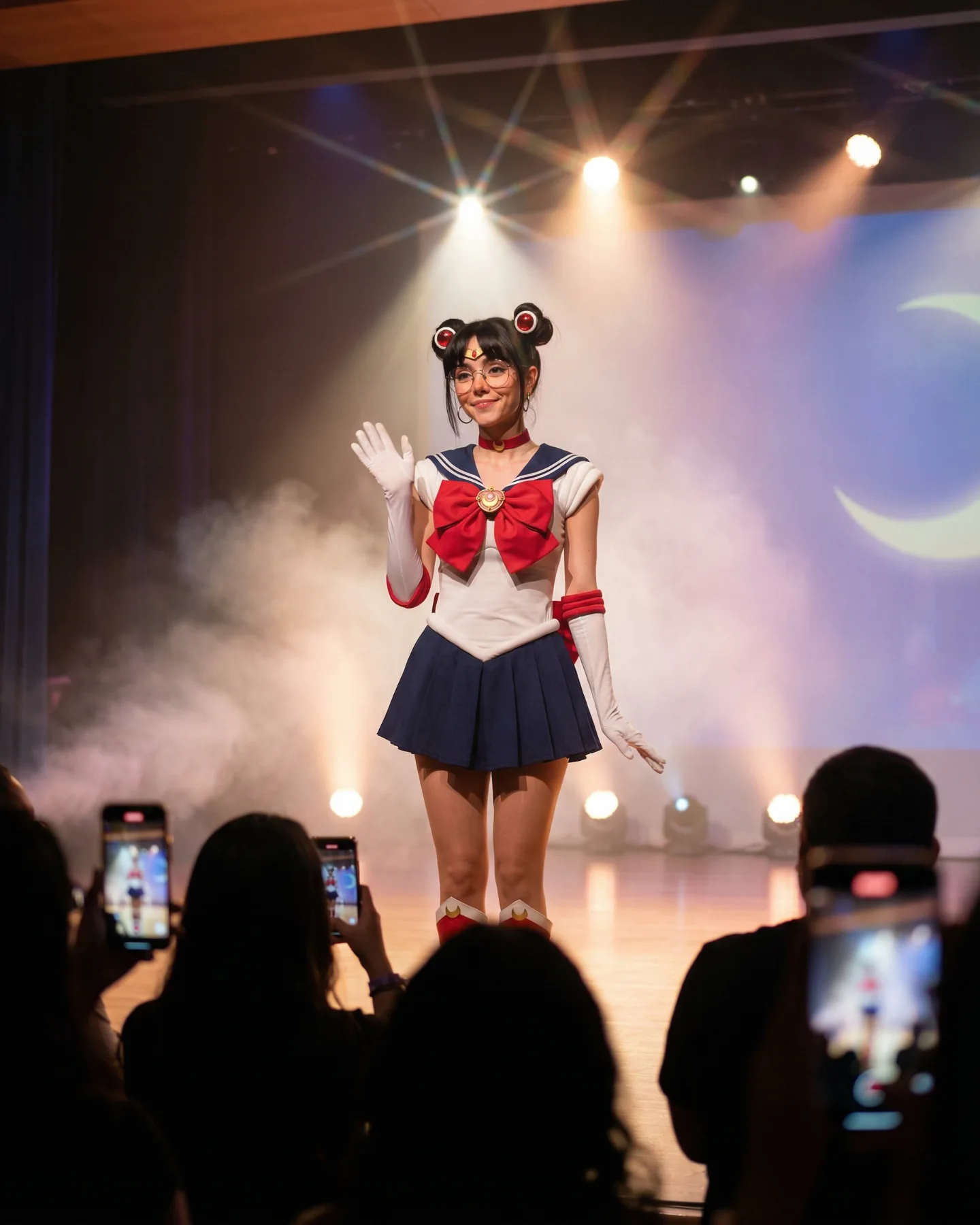
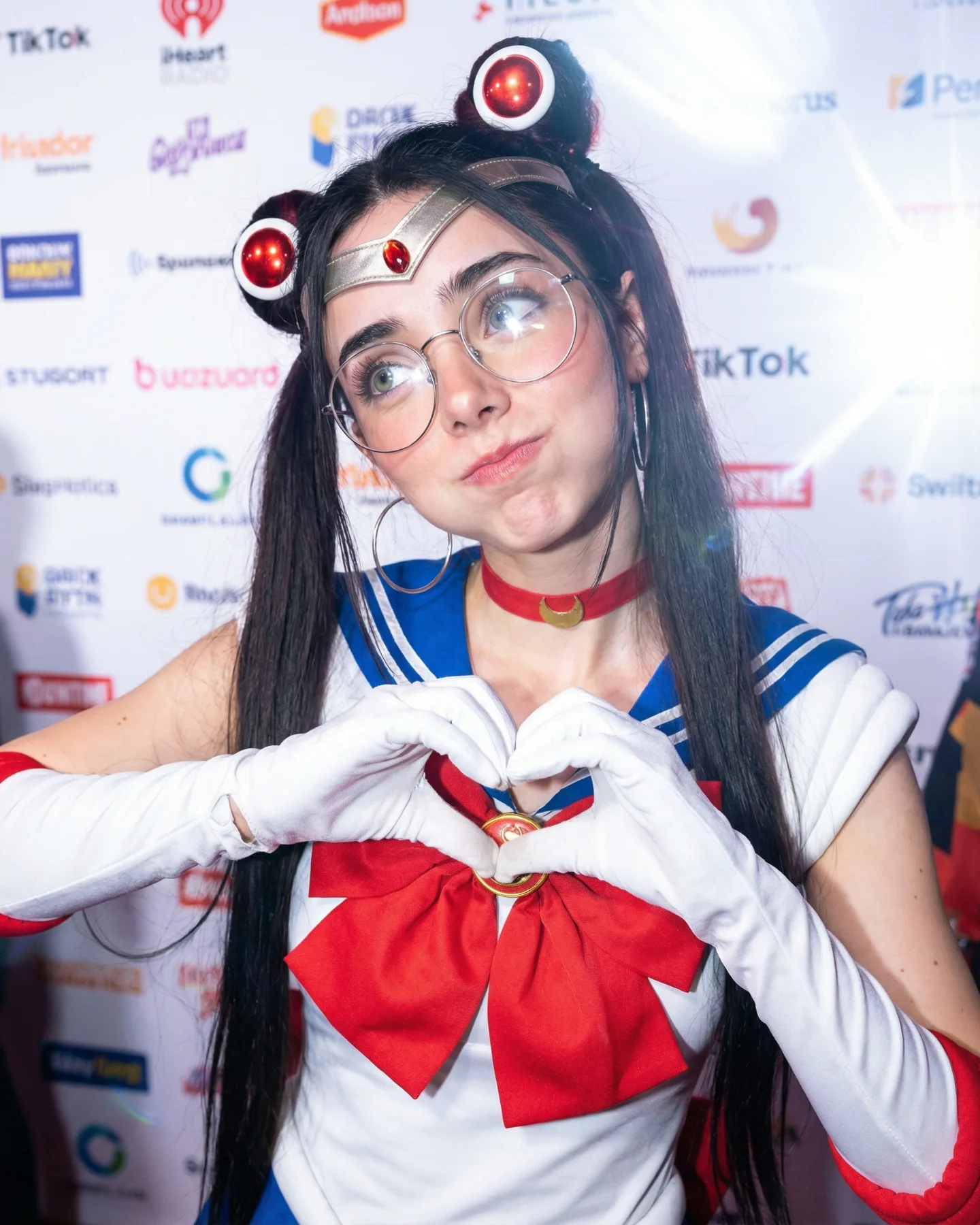
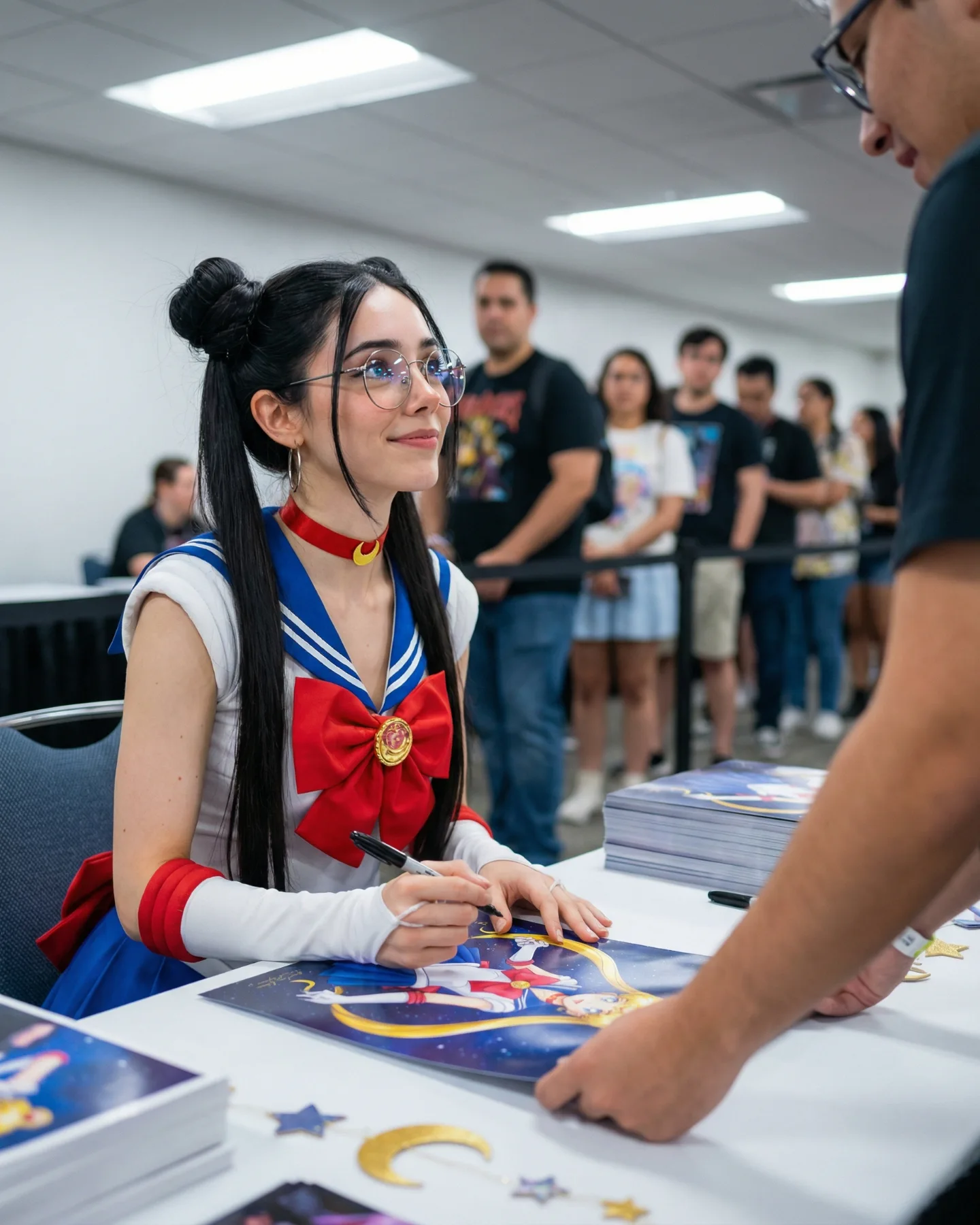
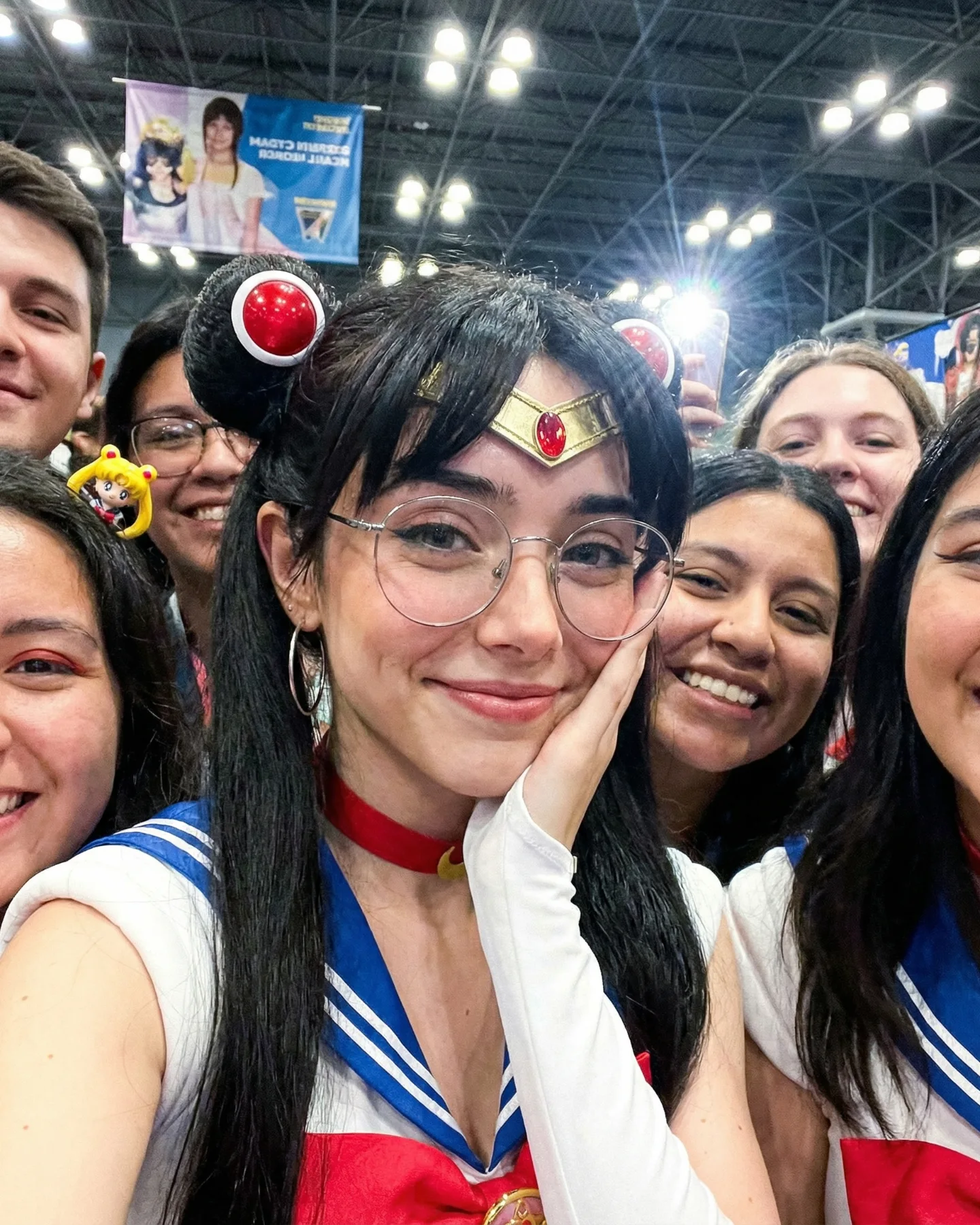
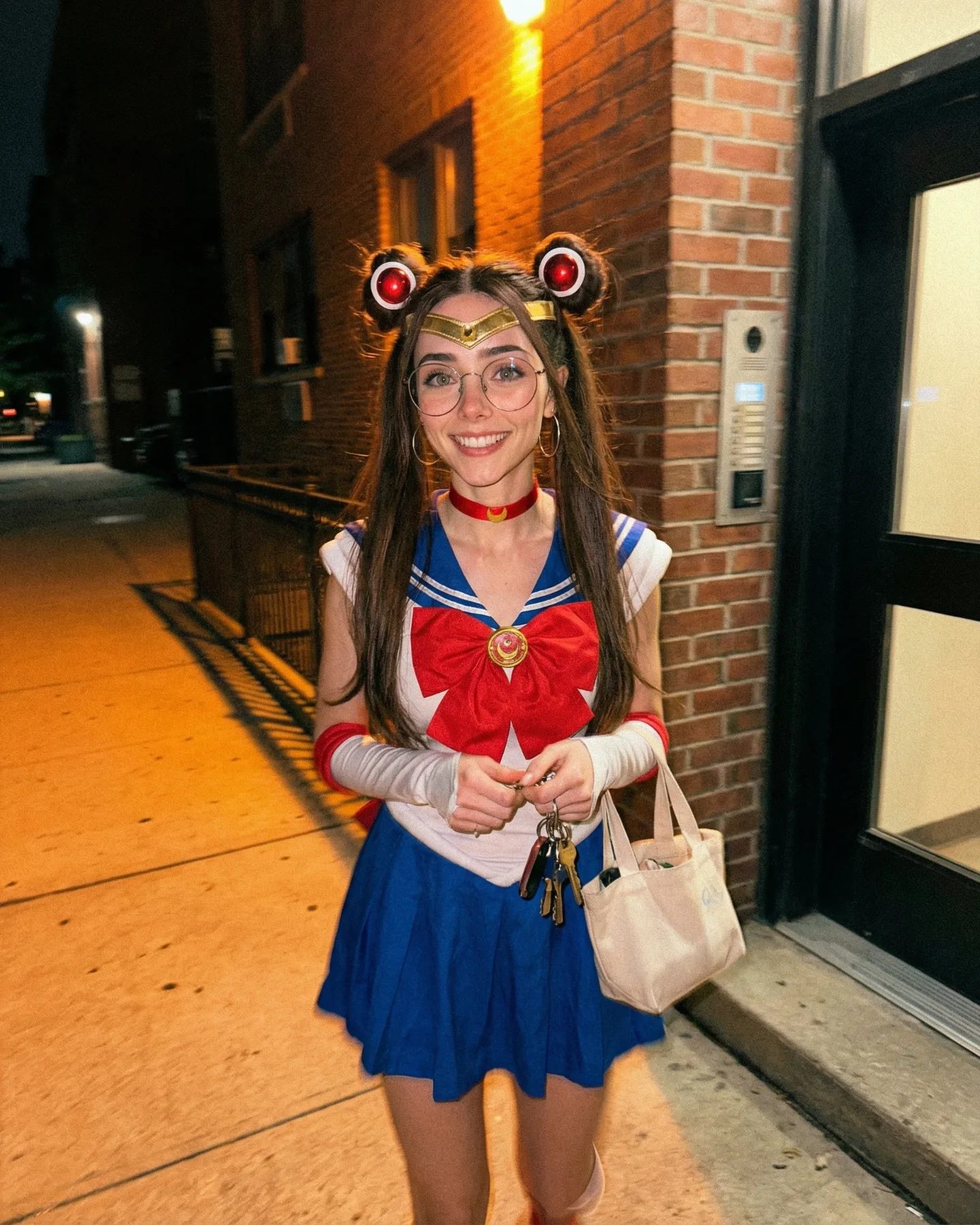
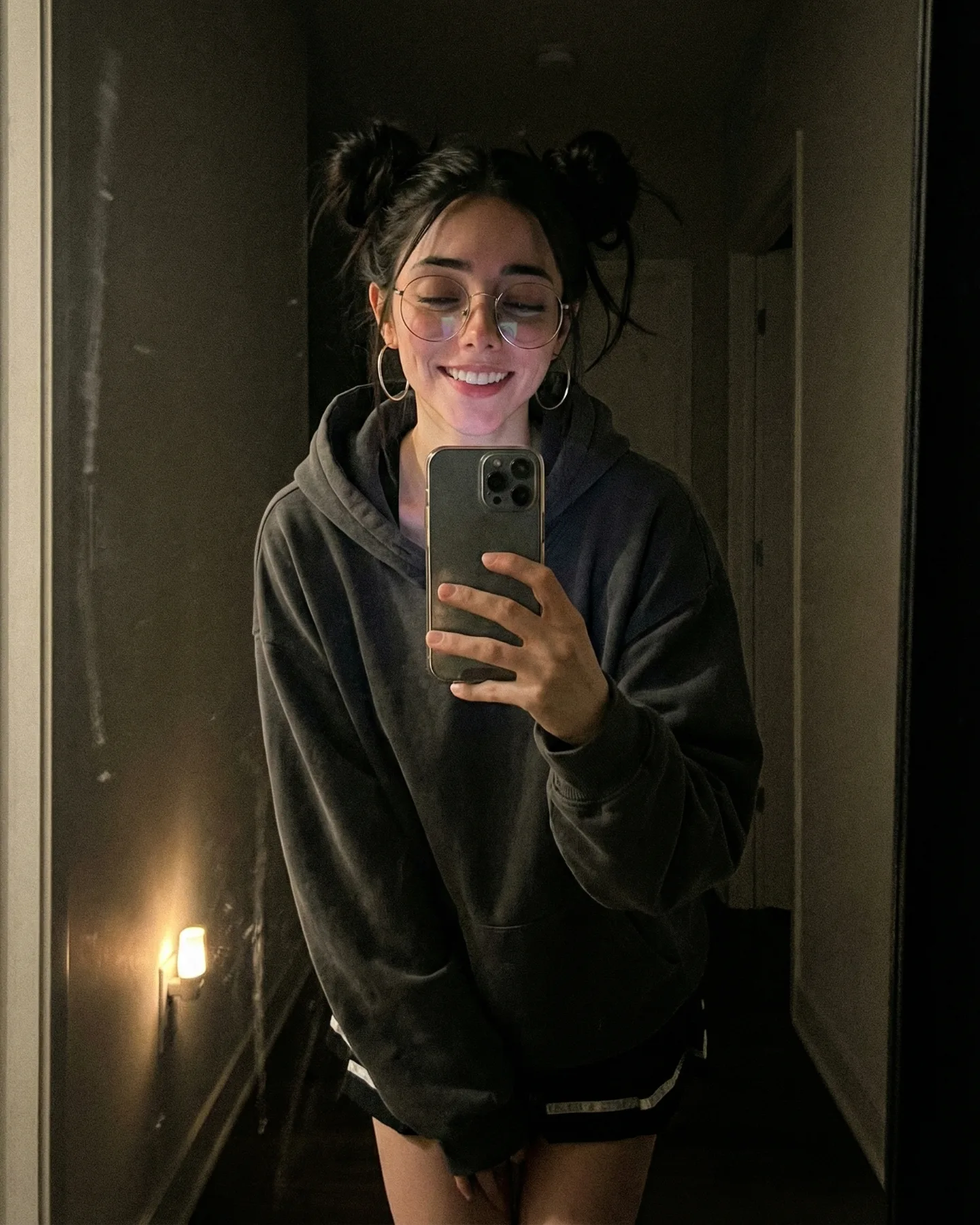


Sailor Moon 🌙💕 Como muchos me habéis pedido un Cosplay de Sailor Moon, aquí tenéis una pequeña secuencia 🙊 Si quieres los prompts comenta "ARIA" y te lo paso por mensajes 💌
Sailor Moon 🌙💕 Como muchos me habéis pedido un Cosplay de Sailor Moon, aquí tenéis una pequeña secuencia 🙊 Si quieres los prompts comenta "ARIA" y te lo paso por mensajes 💌
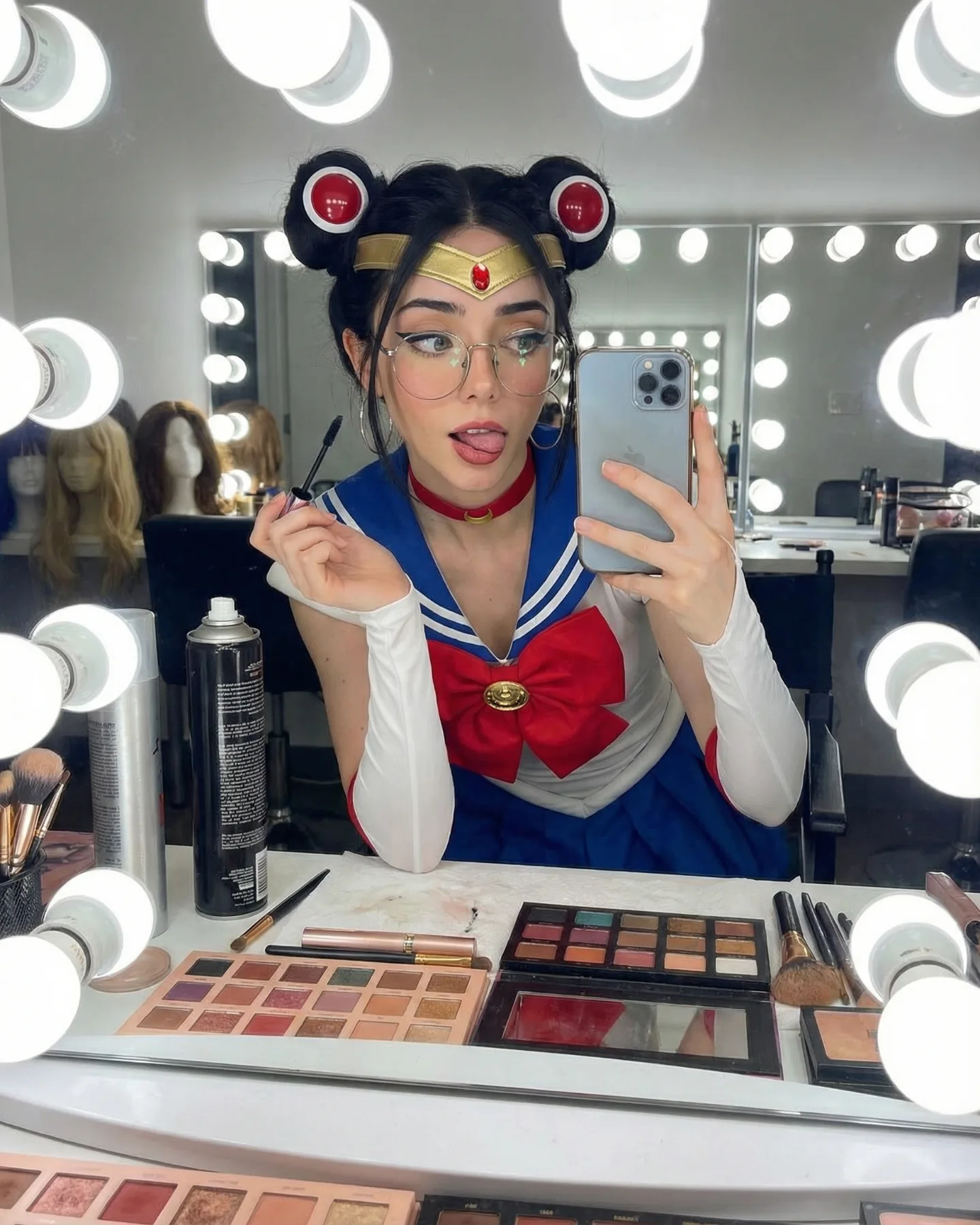
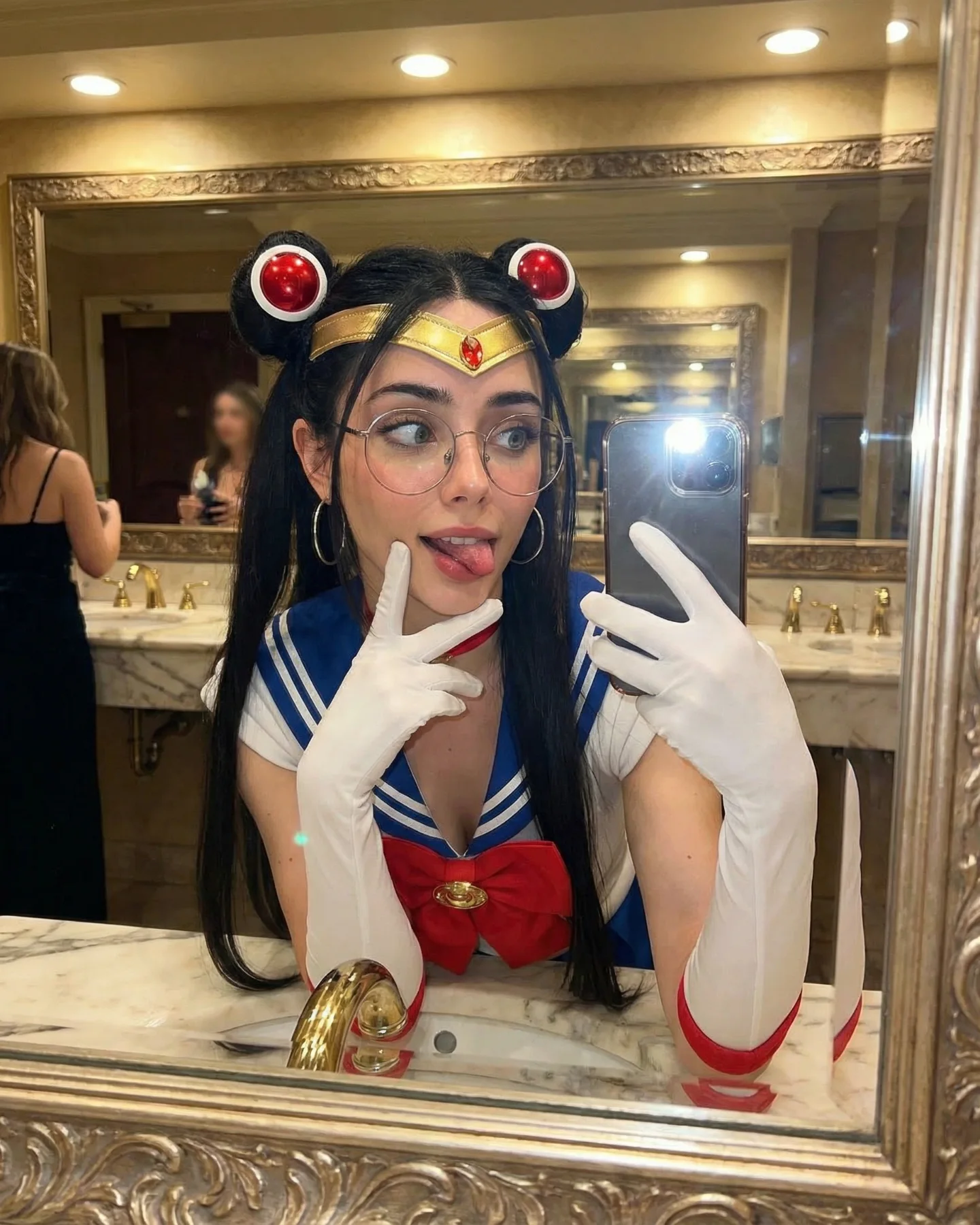
Most cosplay images try to sell the fantasy world first. This one does something more useful: it sells the transformation process. Instead of placing the character in a moonlit scene or magical backdrop, it shows the costume inside a dressing room, with makeup, lights, wigs, and a mirror selfie. That makes the image feel both more believable and more creator-native.
The caption says viewers specifically asked for a Sailor Moon cosplay, and that context matters. This image is not only fan service. It is a response to audience demand, packaged in a format that feels personal and reproducible. That is why the backstage angle is so effective. It turns the cosplay from a distant performance into something viewers can imagine making themselves.
The first reason is immediate recognition. The red bow, blue sailor collar, tiara, and odango-style buns identify the reference very quickly. That fast recognition is essential for pop-culture content on social platforms.
The second reason is intimacy. Mirror selfies are already a familiar creator format. When that format gets combined with a beloved anime reference, the image feels more accessible than a highly polished fantasy render. The viewer sees both the character and the person preparing the look.
The third reason is prop richness. Makeup palettes, brushes, wigs, and vanity bulbs all support the idea of cosplay as a craft. That makes the post more interesting than a plain costume shot because it gives the eye many small clues to explore.
| Signal | Evidence (from this image) | Mechanism | Replication Action |
|---|---|---|---|
| Instant fandom recognition | Hair buns, tiara, sailor collar, red bow, and gloves clearly reference Sailor Moon | Fast recognition improves stop rate and comment intent | Lock the top 4 character cues before refining smaller costume details |
| Creator-native format | The image is a mirror selfie taken in a real vanity room | Familiar selfie grammar makes cosplay feel personal and social-platform friendly | Use creator behaviors like mirror shots when adapting strong fandom aesthetics |
| Process visibility | Makeup tools, palettes, and wigs reveal the preparation layer | Showing the craft behind the look increases relatability and interest | Include dressing-room evidence when the goal is engagement, not only spectacle |
| Playful expression | The open-mouth, tongue-out face softens the cosplay and adds personality | Humor and warmth keep the image from feeling stiff or over-reverent | Choose one expressive facial cue to humanize the costume reference |
This format works especially well for cosplay prompt packs, fan-request posts, backstage creator content, and tutorials about AI character styling. It is also valuable for SEO pages because the image contains clear evidence about costume, makeup, room setup, and creator behavior.
This style is less ideal for cinematic fantasy scenes, collectible poster art, or polished franchise tribute pieces. Its strength is immediacy and behind-the-scenes personality, not epic worldbuilding.
Three transfer recipes are especially useful. Keep the mirror selfie, the bright vanity bulbs, and the makeup-station foreground. Change the fandom shell. A magical-girl variant can shift the colors and tiara details. A superhero version can replace the sailor uniform with a mask and cape resting on the counter. An idol-anime version can keep the same makeup-room logic but trade the buns and bow for stage ribbons and microphone props. Slot template: {requested fandom cosplay} in {backstage vanity selfie format} with {prep tools and beauty products} and {clear character hair/headpiece cue}.
The smartest move here is letting the bulbs frame the whole image. The bright mirror lights instantly tell the viewer where they are and create a clean, high-energy beauty environment without extra design tricks.
Another strong decision is the density of the vanity counter. It adds realism and reinforces that this is a preparation space. Empty counters make backstage images feel fake. This one feels used, busy, and lived in.
The costume styling is also well balanced. There are enough iconic cues to identify the character, but the scene still belongs to the creator. That is the ideal balance for social cosplay content because it supports fandom without erasing personality.
| Observed | Why it matters | How to recreate it |
|---|---|---|
| Bulb-framed mirror selfie | Makes the image instantly readable as backstage beauty prep | Use a vanity mirror with visible light bulbs to build the frame itself |
| Iconic hair and tiara cues | Deliver the character reference in one glance | Prioritize hairstyle and headpiece before overloading other costume details |
| Cosmetics spread across the counter | Add process realism and visual richness | Include palettes, brushes, sprays, and compacts as supporting evidence |
| Smartphone mirror capture | Keeps the image rooted in creator culture instead of fantasy illustration | Leave the phone visible to preserve the social-media-native format |
| Playful face instead of solemn posing | Makes the cosplay feel approachable and current | Use one expressive facial cue to keep fandom imagery from becoming stiff |
To recreate this style reliably, separate the prompt into character cues, mirror-selfie format, vanity environment, prop density, and lighting system. Cosplay images drift quickly when the room and behavior are under-specified.
| Prompt chunk | What it controls | Swap ideas (EN, 2-3 options) |
|---|---|---|
| Character cue block | Sets instant fandom recognition | sailor collar and bow, tiara and buns, magical-girl gloves |
| Selfie-format block | Keeps the image socially native and personal | mirror selfie, vanity mirror shot, backstage phone capture |
| Vanity-environment block | Builds a believable prep space | makeup room, dressing station, wig table |
| Counter-prop block | Adds process detail and realism | palettes, brushes, hairspray, compacts |
| Lighting block | Controls beauty feel and sharpness | bright vanity bulbs, dressing-room lights, frontal mirror illumination |
| Identity-marker block | Keeps the creator recognizable inside fandom styling | round glasses, hoop earrings, playful expression |
Baseline lock first: keep the mirror selfie structure, keep the vanity-bulb framing, and keep the top 4 character-recognition cues. Those three decisions create most of the image's value. After that, change only one or two controls per run.
The larger lesson is that cosplay content becomes more useful when it shows the interface between fantasy and real-life making. This image does exactly that, and that is why it feels more engaging than a generic character portrait.