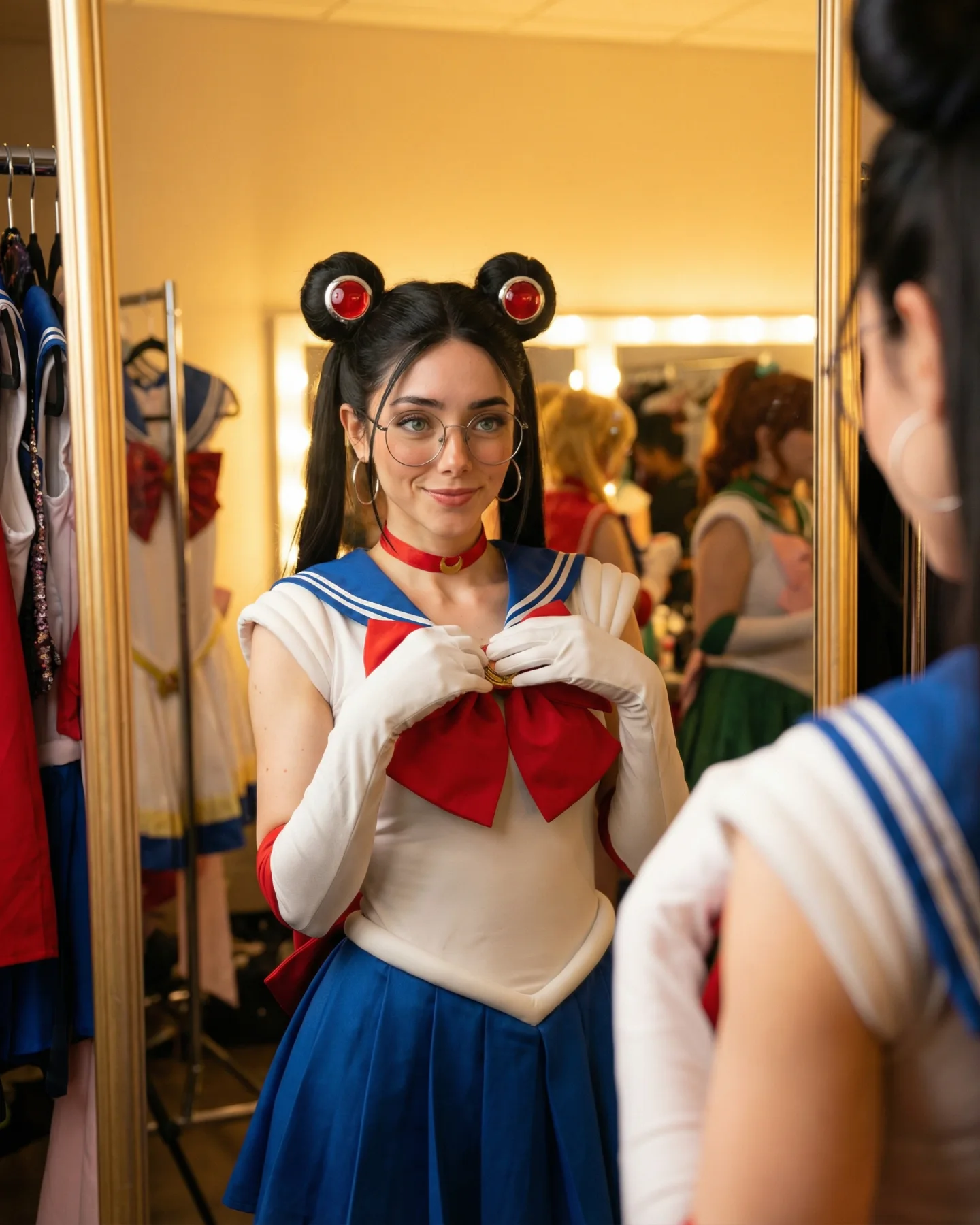
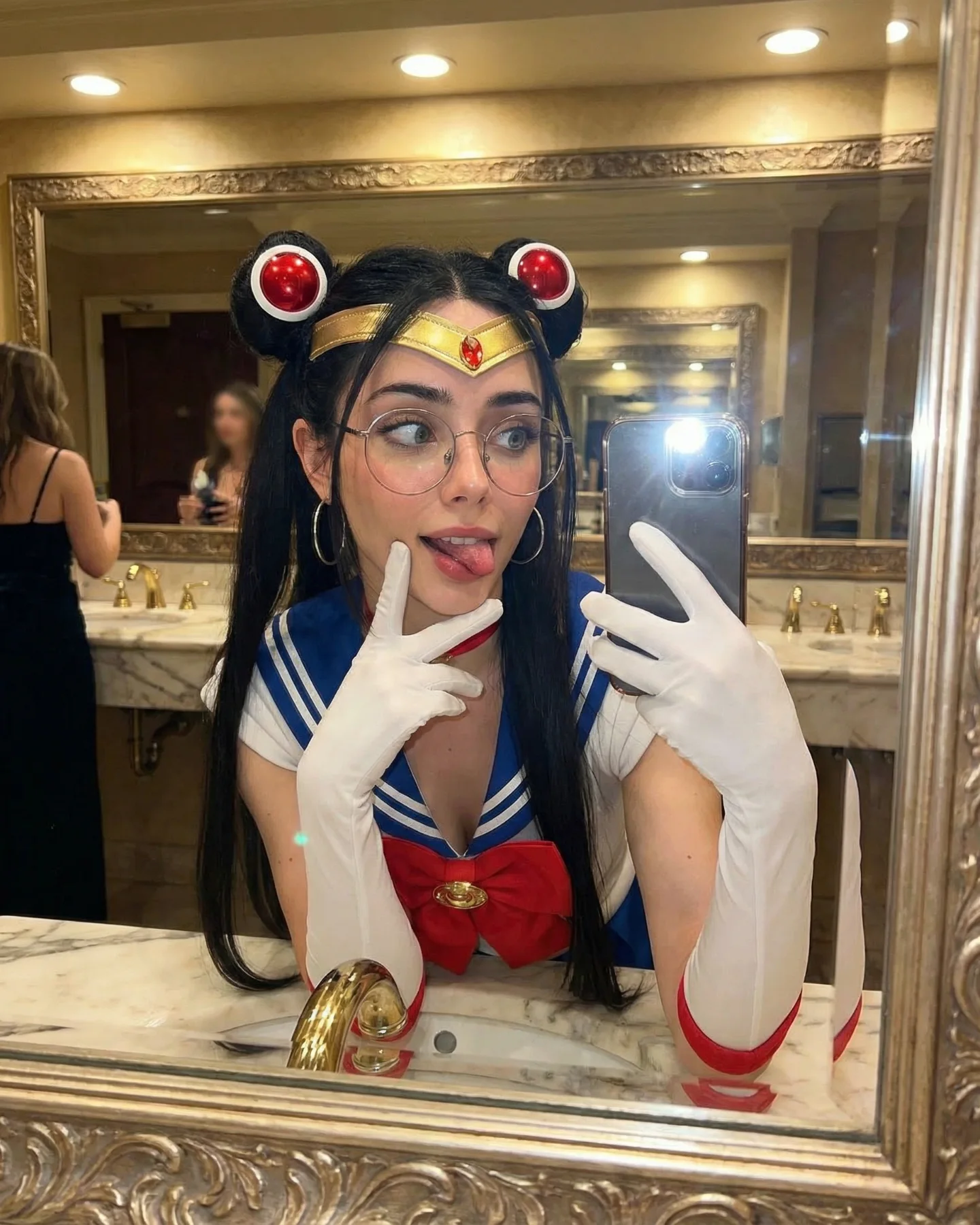
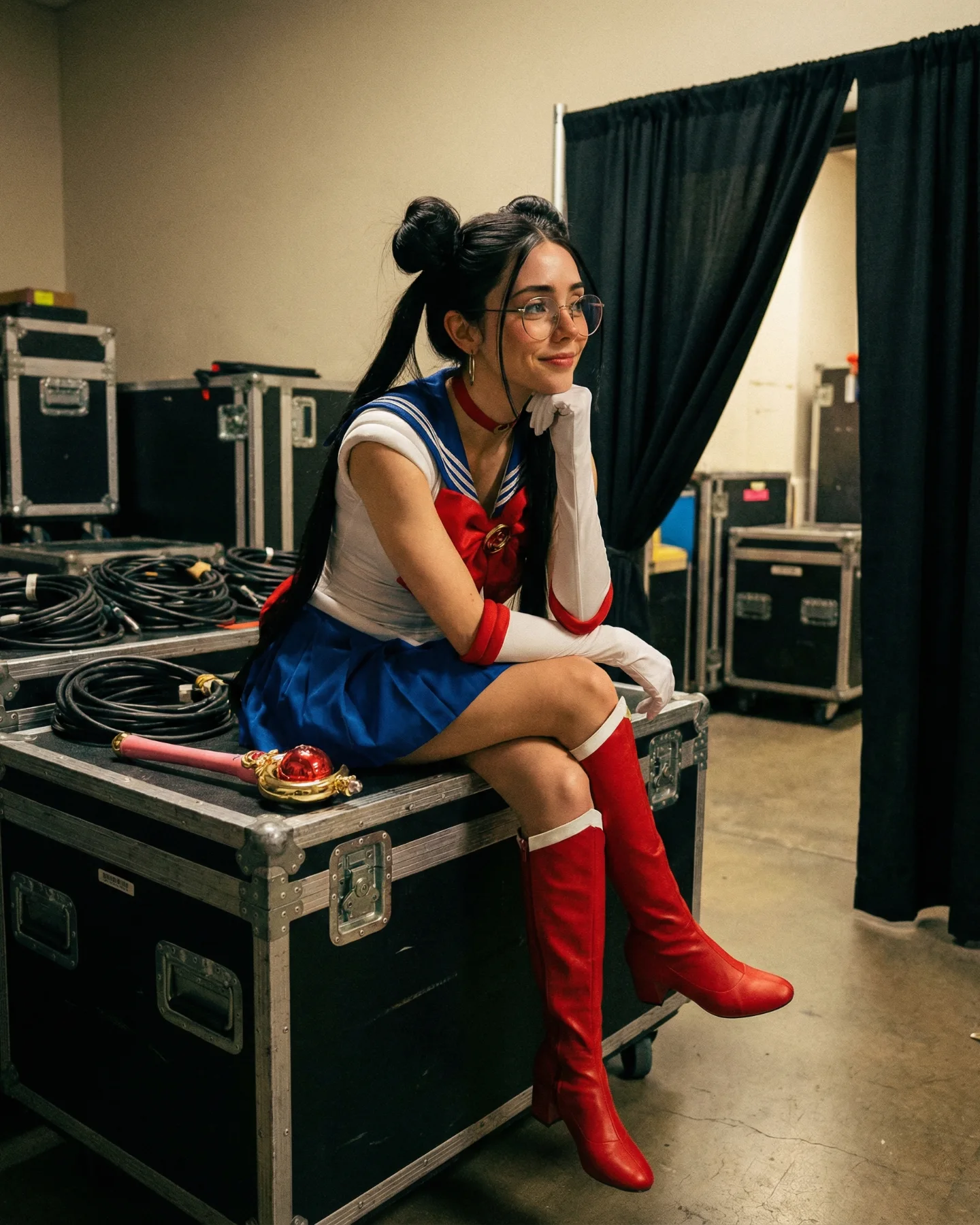
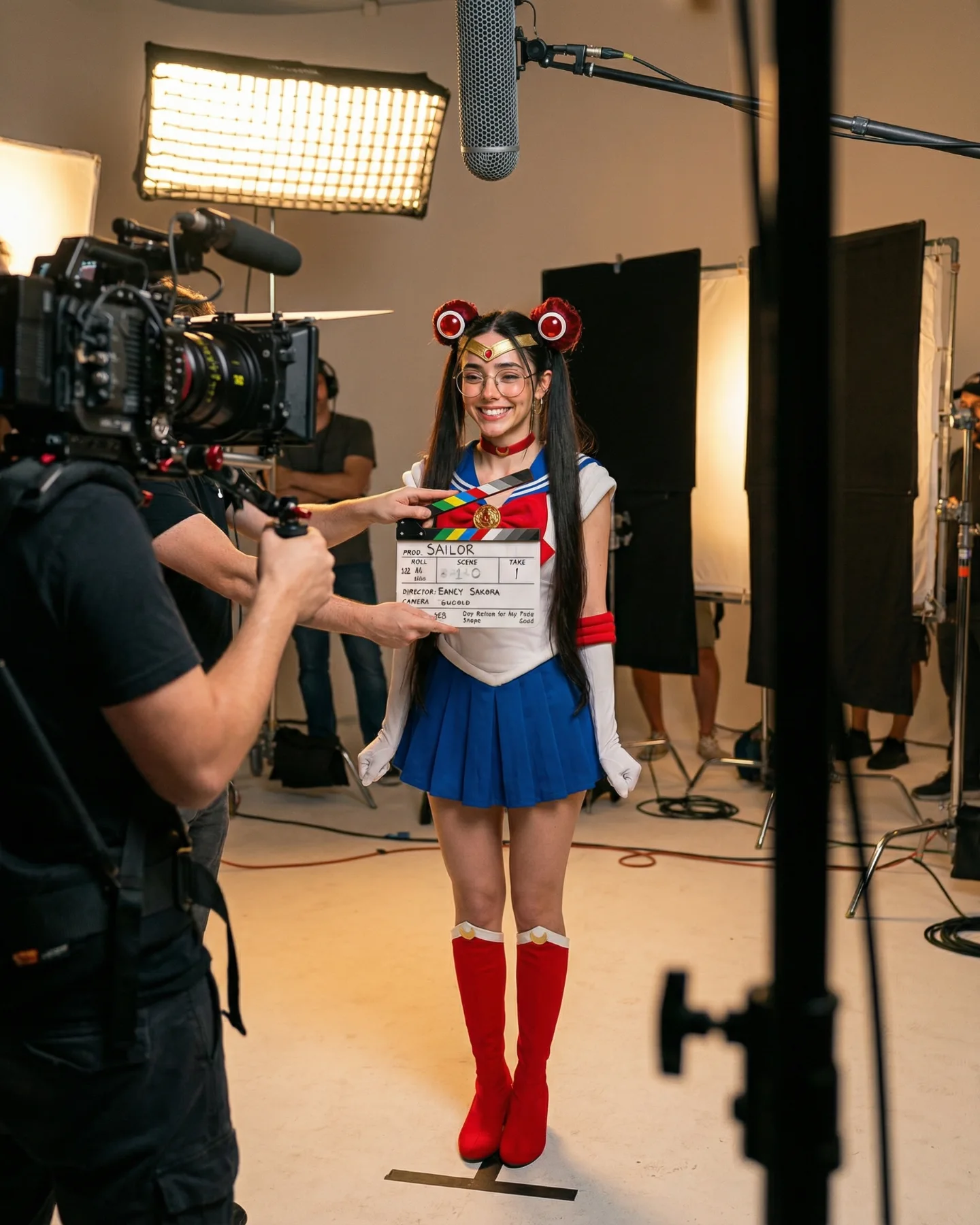
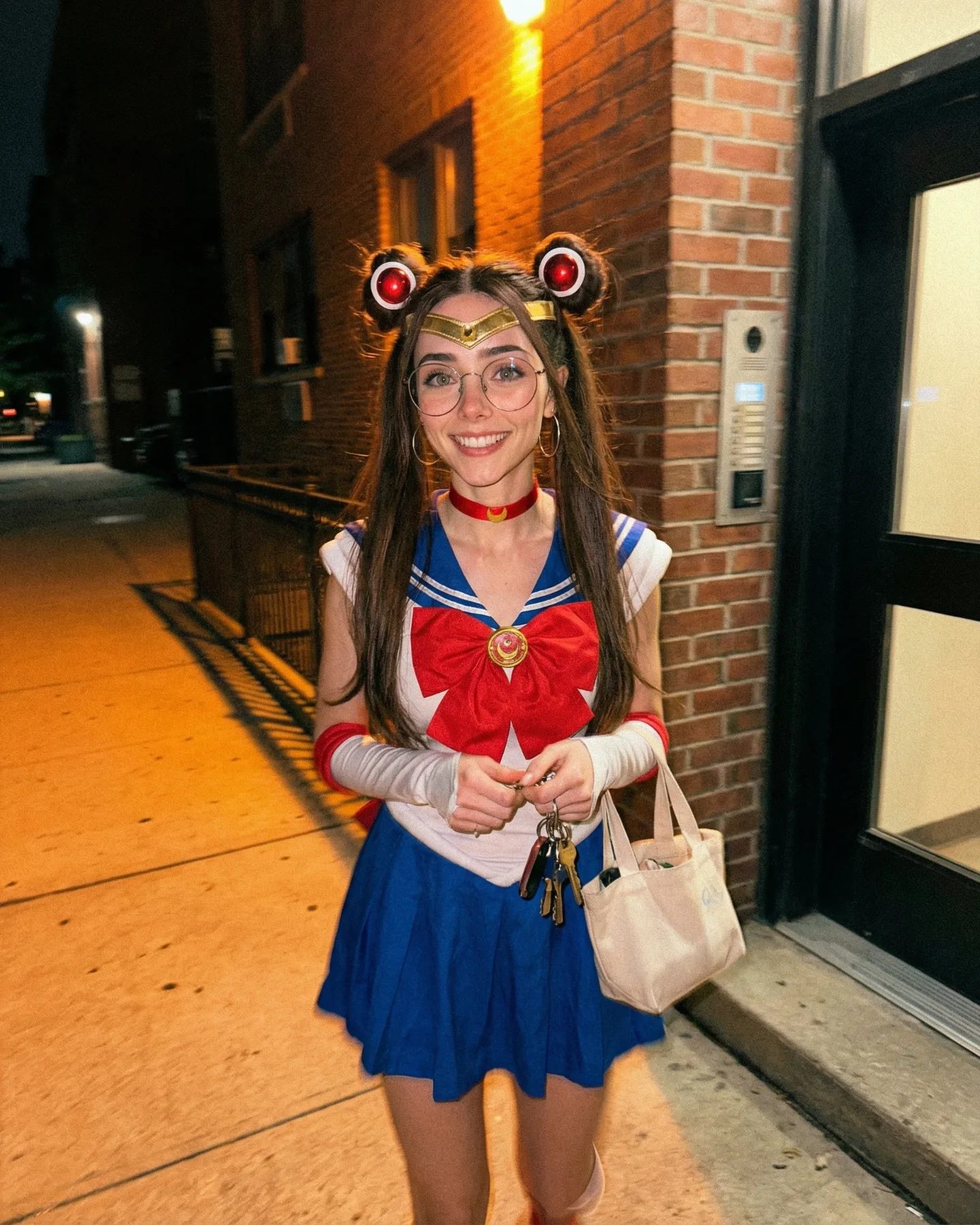

Sailor Moon 🌙💕 Como muchos me habéis pedido un Cosplay de Sailor Moon, aquí tenéis una pequeña secuencia 🙊 Si quieres los prompts comenta "ARIA" y te lo paso por mensajes 💌
Sailor Moon 🌙💕 Como muchos me habéis pedido un Cosplay de Sailor Moon, aquí tenéis una pequeña secuencia 🙊 Si quieres los prompts comenta "ARIA" y te lo paso por mensajes 💌
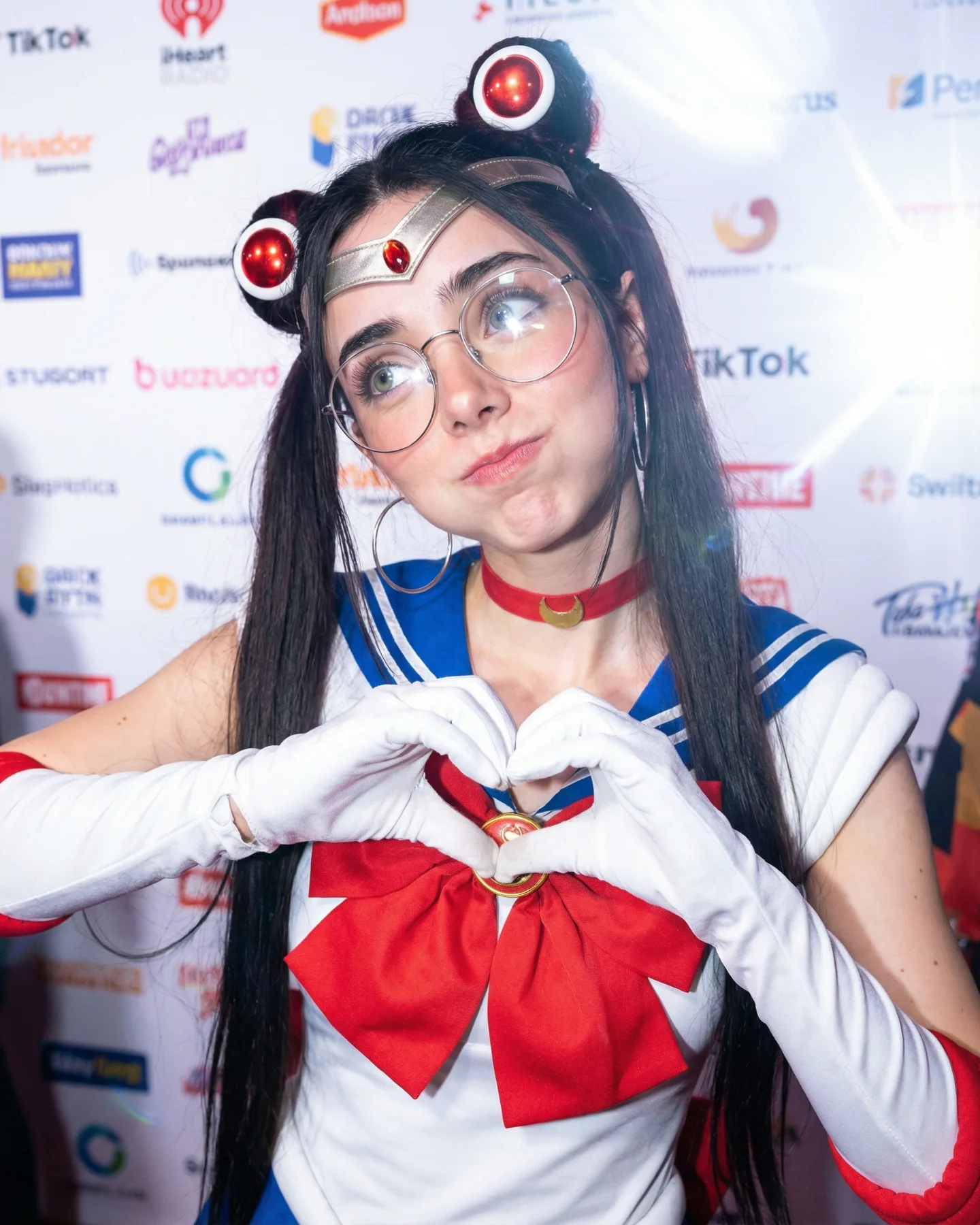
This image succeeds because it understands that fandom pictures do not always need a fantasy set to feel high-energy. Instead of placing the Sailor Moon styling inside a moonlit scene or a magical environment, it puts the character in front of a sponsor wall and treats the whole frame like an event appearance. That one decision changes the meaning of the image immediately. It stops being only about resemblance and starts feeling like a public moment.
The heart-hand gesture is doing more than adding cuteness. It gives the portrait a social action the audience can instantly decode. Combined with the playful puffed-cheek expression, it keeps the image light, warm, and fan-friendly. This matters for creators because convention-style content often performs best when it feels participatory rather than distant.
The background is also more important than it looks. A step-and-repeat wall with scattered logos introduces event legitimacy. It tells viewers this was not captured in a random bedroom corner or generated against a blank backdrop. Even if nobody reads every logo, the brain reads “organized public setting” immediately. That gives the image more perceived scale.
| Signal | Evidence (from this image) | Mechanism | Replication Action |
|---|---|---|---|
| Event legitimacy | Sponsor-logo backdrop behind the subject | A branded environment makes the image feel public, documented, and socially important | Place cosplay portraits against a step-and-repeat wall or designed event backdrop instead of a plain wall |
| Emotional readability | Heart-hand gesture plus playful puffed-cheek expression | Clear social signals make the portrait easier to react to and share | Give the subject one simple hand action that reads instantly in the thumbnail |
| Fast character decoding | Tiara, odango buns, red bow, blue sailor collar, moon choker | Strong silhouette cues lower recognition effort for the viewer | Lock the top 3 character-signature elements before adding any secondary detail |
This kind of image fits convention recaps, cosplay reveal carousels, fandom event promotions, and comment-to-get-prompts posts. It also works well for creators who want their fandom content to feel more public-facing and less like a private photoshoot. It is less suited to cinematic narrative scenes, because the sponsor wall intentionally flattens the illusion and brings the viewer back into real event space.
Three good transfer recipes come out of this image. Keep the event-wall format, direct flash, and one highly readable gesture. Change the fandom, the expression, and the accessory emphasis. Template one: {character-coded styling} in front of {event backdrop} making {simple hand gesture}. Template two: {iconic costume cues} + {friendly convention portrait energy} + {branded background}. Template three: {fandom silhouette} photographed as {public appearance moment} with {playful expression}.
Aesthetically, this image works because it is clean where it matters and busy where it helps. The costume area stays high-contrast and simple: white, red, blue, gold. The backdrop is visually noisy, but because it stays soft and flat behind the subject, it reads as context rather than distraction. The hands forming a heart also create a second focal point beneath the face, which is useful for portrait rhythm.
The direct flash is another smart move. It gives the portrait the slightly over-bright event-photo quality people associate with fan conventions, red carpets, and backstage media walls. That type of lighting is not “cinematic,” but it is highly legible, and legibility usually wins on social platforms.
| Observed | Why it matters |
|---|---|
| Bright frontal flash on face and costume | Creates clarity, catchlights, and event-photo realism |
| Logo wall kept slightly soft behind the subject | Adds public-setting proof without stealing attention from the face |
| Hand-heart placed at chest center | Introduces a second readable symbol that supports the fan-friendly tone |
| Strong red-blue-white-gold costume coding | Makes the character recognizable even before viewers inspect details |
| Prompt chunk | What it controls | Swap ideas (EN) |
|---|---|---|
| close event portrait with sponsor backdrop | Public-setting identity and realism | fan expo booth, movie premiere wall, branded press corner |
| Sailor-inspired tiara, buns, bow, and gloves | Character recognition | moon-princess variant, casual sailor remix, pastel idol version |
| heart-hand gesture and playful expression | Social warmth and reaction value | wink, peace sign, small wave |
| direct flash convention lighting | Event-photo credibility and platform readability | paparazzi flash, softer on-camera flash, brighter media-wall lighting |
| medium close-up vertical crop | Thumbnail legibility and costume density | waist-up crop, tighter beauty portrait, wider group-event frame |
Lock three things first: the sponsor-wall setting, the iconic costume silhouette, and the simple readable hand gesture. Then change one knob per run. A strong sequence is:
This order matters because the image does not win through elaborate scenery. It wins through fast readability, public-context proof, and a pose that people understand instantly.