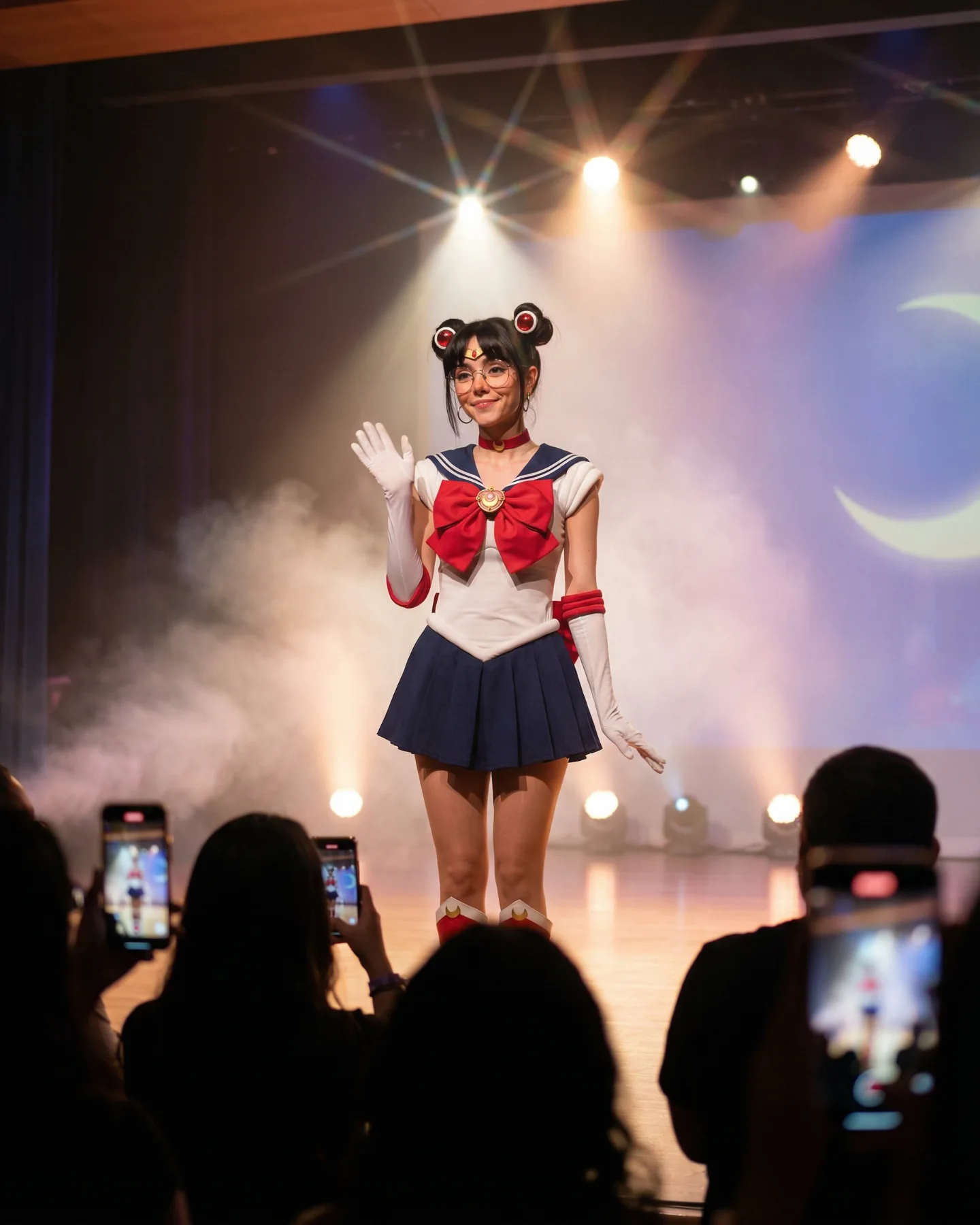

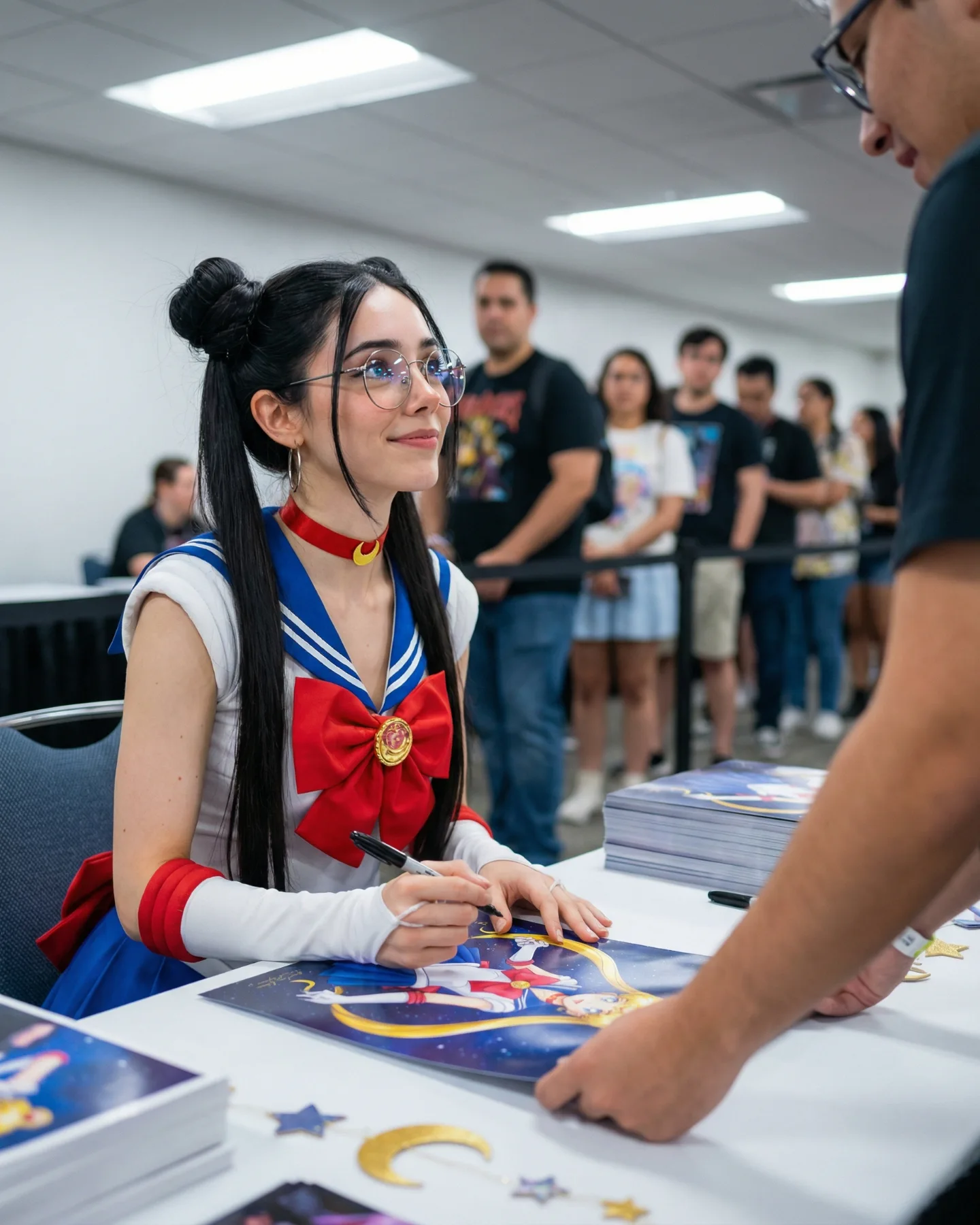

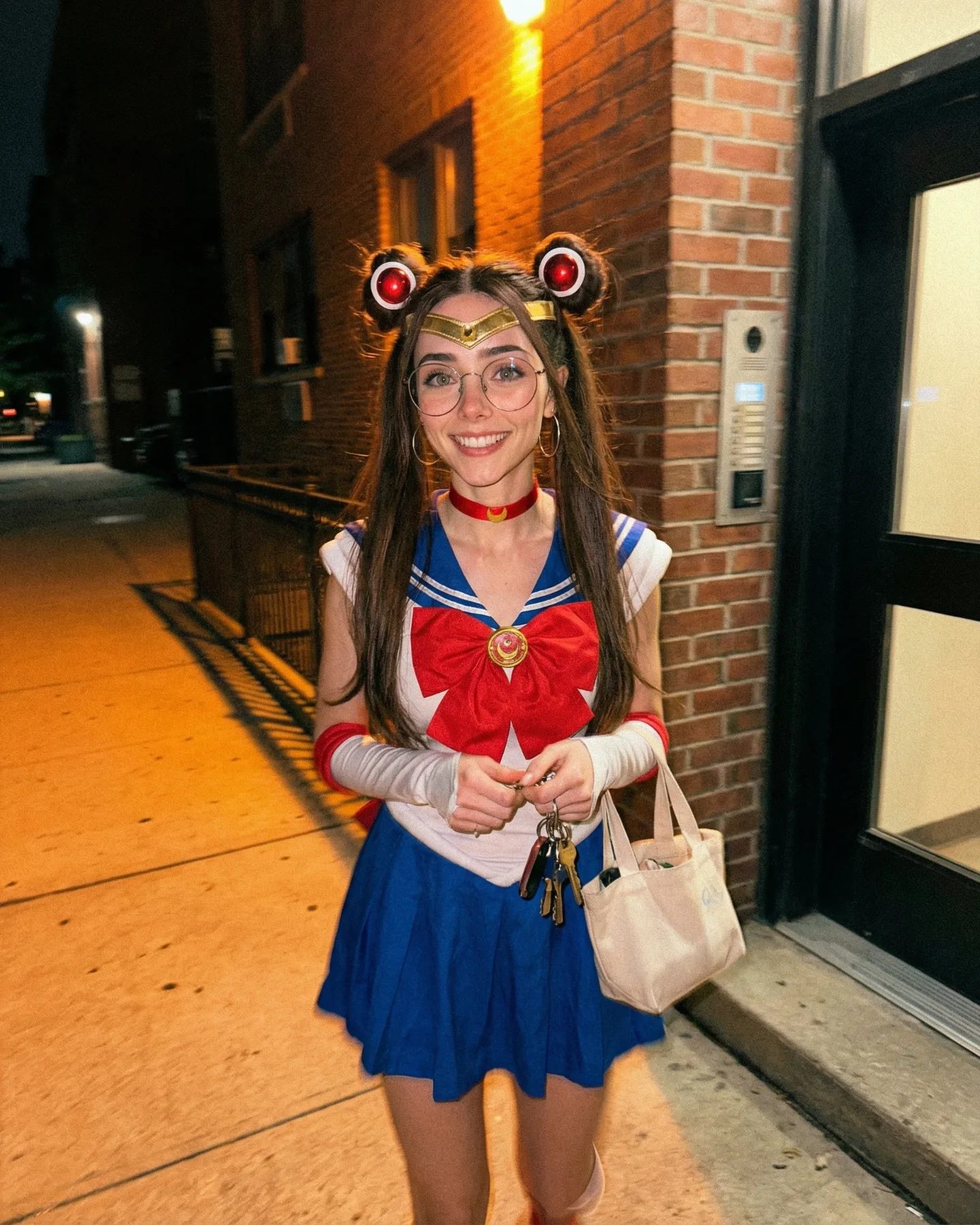
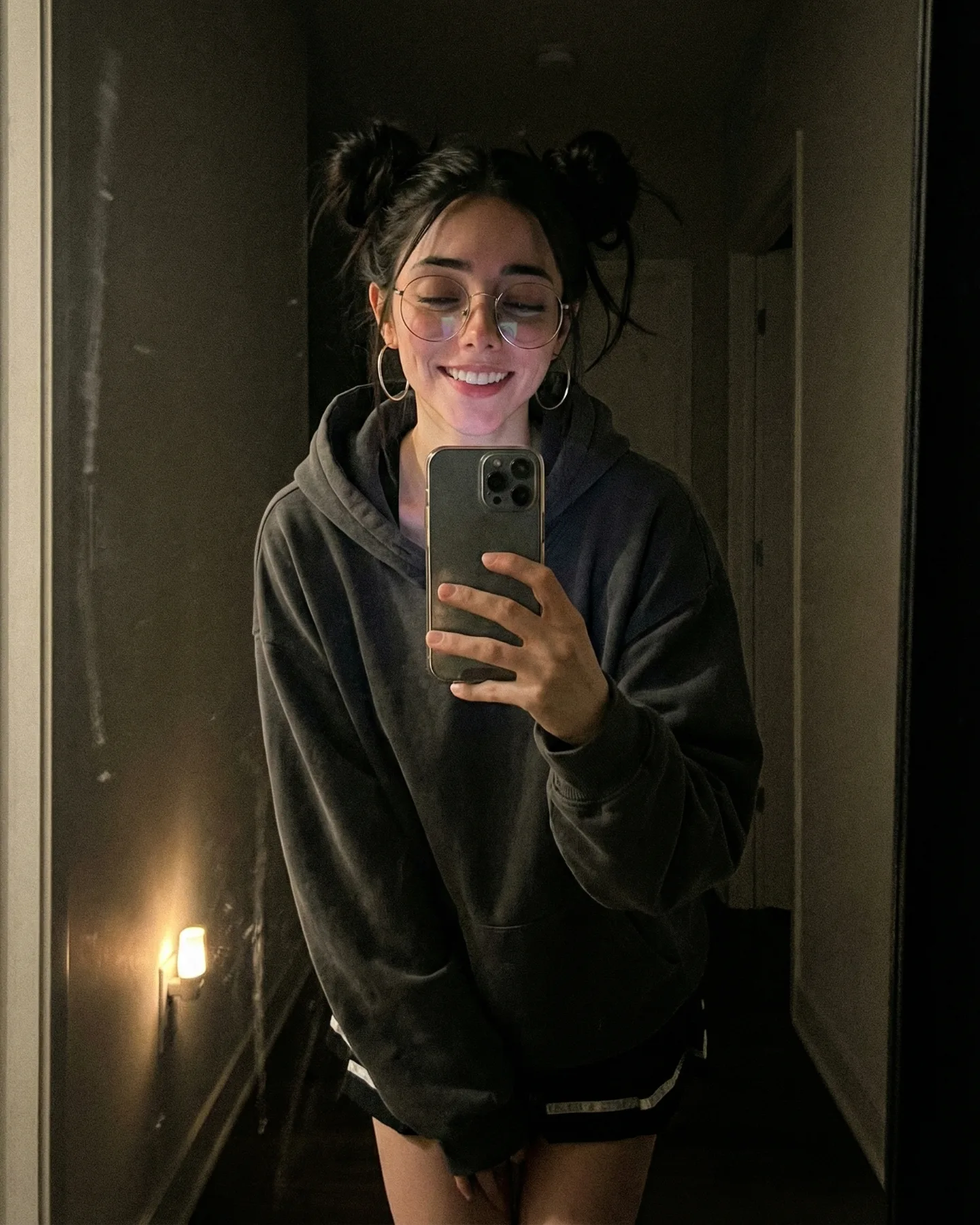


Sailor Moon 🌙💕 Como muchos me habéis pedido un Cosplay de Sailor Moon, aquí tenéis una pequeña secuencia 🙊 Si quieres los prompts comenta "ARIA" y te lo paso por mensajes 💌
Sailor Moon 🌙💕 Como muchos me habéis pedido un Cosplay de Sailor Moon, aquí tenéis una pequeña secuencia 🙊 Si quieres los prompts comenta "ARIA" y te lo paso por mensajes 💌
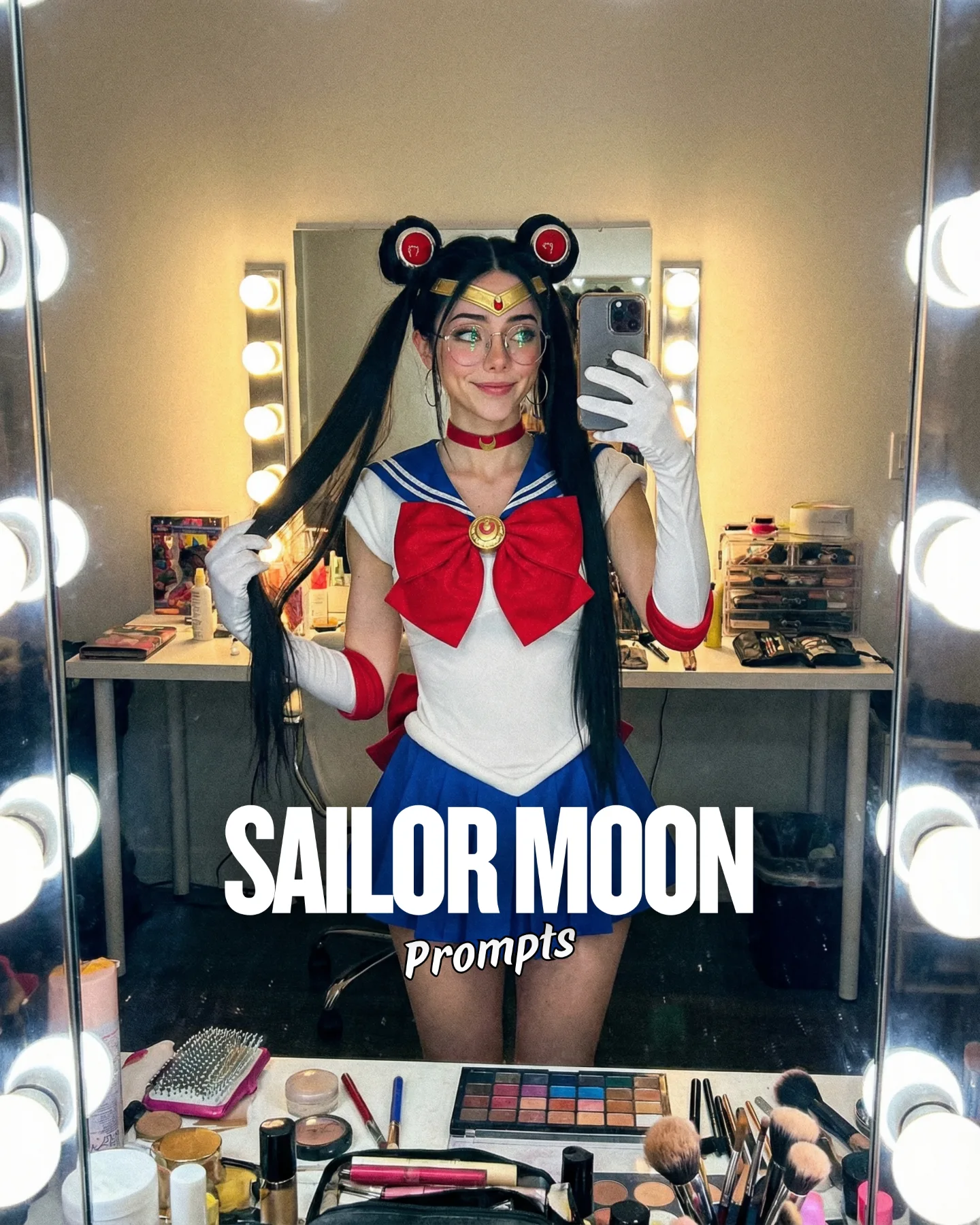
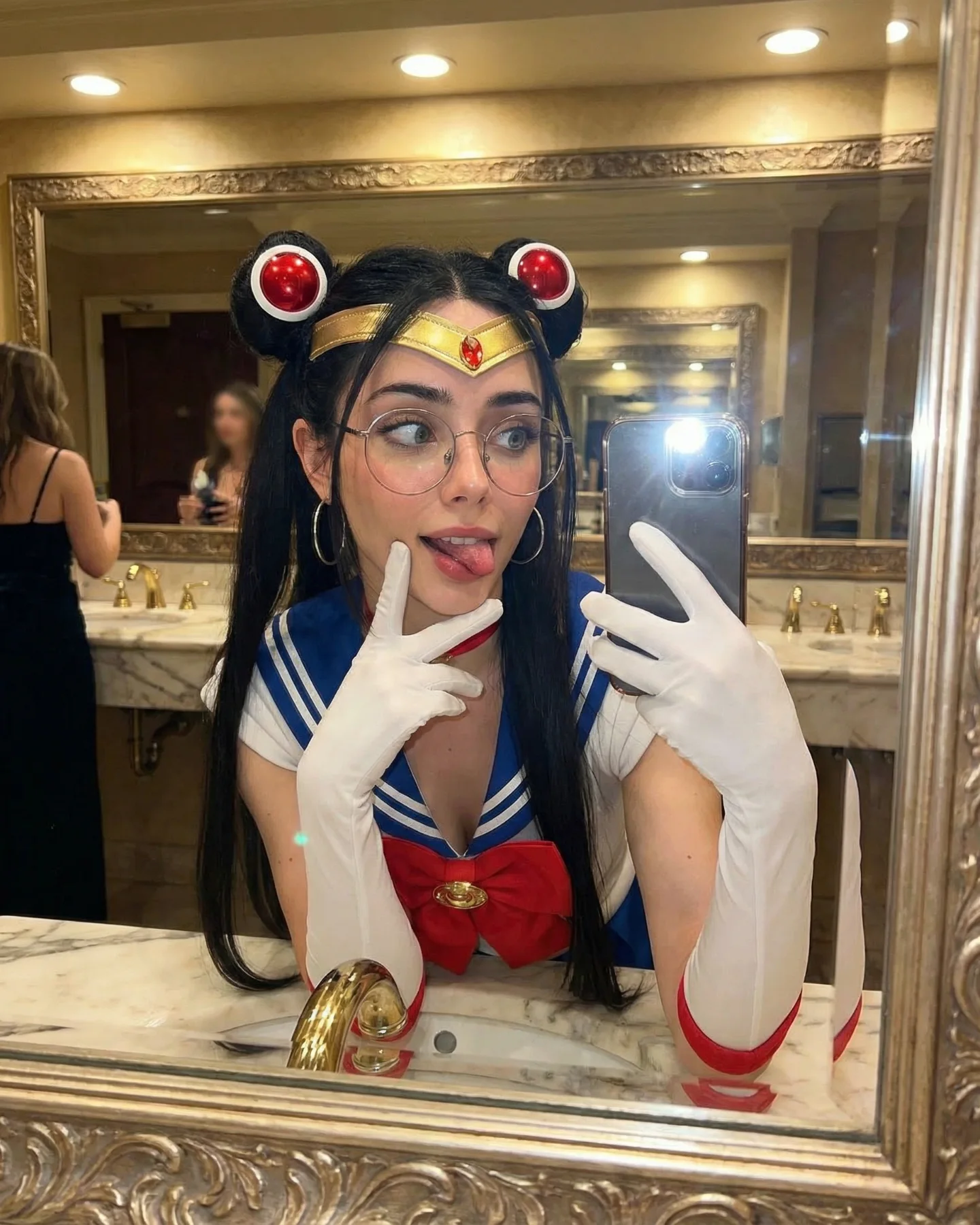
This image works because it gives the viewer more than cosplay accuracy. It gives them process, place, and personality at the same time. The costume is recognizable immediately, but the dressing-room mirror, the vanity lights, and the makeup spread tell a fuller story: this is not just someone wearing a look, it is someone inside the ritual of becoming the character. That difference matters. It turns fan content into a stronger social image because the frame feels lived-in rather than costume-only.
The mirror selfie format also helps. Cosplay can sometimes feel overproduced when it is shot like a cinematic poster every time. Here, the phone in hand and the visible prep station make the image more intimate and creator-native. It feels like a backstage moment a fan would actually want to save, repost, or use as a reference.
The strongest thing in the frame is recognizability with proof. Recognizability comes from the hair buns, long twin tails, bow, gloves, and color palette. Proof comes from the vanity bulbs, makeup brushes, and practical room setting. Together they create trust. The viewer believes both the character and the effort behind the character. That is what makes the image richer than a plain mirror selfie.
Another reason it performs is that the composition is naturally shareable. The bulb-lined mirror creates a built-in frame, the costume colors pop against the neutral room, and the cosmetics along the bottom add visual density without stealing focus. For creators, this is a useful lesson: themed content becomes more compelling when the environment supports the transformation instead of staying invisible.
| Signal | Evidence (from this image) | Mechanism | Replication Action |
|---|---|---|---|
| Instant fandom recognition | Hair buns, twin tails, tiara, red bow, and blue skirt identify the character immediately | Fast recognizability increases stop rate and invites fan sharing | Lock the 3-4 most iconic character markers before styling secondary details |
| Transformation proof | Vanity lights and makeup tools are visible around the selfie | Prep-room context makes the costume feel earned rather than generic | Include makeup stations, wigs, or tools to show part of the making process |
| Creator-native framing | The subject uses a phone mirror selfie instead of a formal portrait setup | Self-shot framing feels social-first and lowers the distance between creator and audience | Use mirrors, phones, or handheld capture language when you want authenticity |
| Symmetrical visual anchor | Mirror bulbs frame the image evenly on both sides | Strong symmetry helps busy costume details stay organized in the frame | Center the subject in a mirror or doorway when the styling is already complex |
This setup is less ideal for highly cinematic fan art, outdoor convention coverage, or minimalist fashion pages. The strength of the image is backstage intimacy. If you remove the prep-room feeling, you remove much of what makes the frame memorable.
Transfer recipe one: Keep the mirror symmetry, vanity bulbs, and visible prep tools. Change the character, wig color, and costume palette while preserving the backstage logic. Slot template: {character cosplay} {vanity mirror setup} {visible prep items} {fan-ready confidence}.
Transfer recipe two: Keep the phone selfie and transformation context. Change the room to a hotel makeup station or convention green room and make the styling more elaborate. Slot template: {prep room} {signature costume} {handheld selfie} {pre-event excitement}.
Transfer recipe three: Keep the lit mirror and strong front-facing framing. Change the concept from anime cosplay to drag, stage makeup, or performance costume while retaining the beauty-station environment. Slot template: {performance look} {mirror lights} {tabletop tools} {getting-ready energy}.
The image succeeds because it layers spectacle over structure. The costume is colorful and specific, but the frame itself is disciplined: centered subject, vertical mirror, balanced bulbs, and a clear bottom layer of tools. That is what stops the image from becoming cluttered. Even the title overlay works because the composition already has strong scaffolding.
The other smart choice is that the room stays neutral. A louder background would compete with the costume. Instead, the visual excitement comes from the cosplay details and the practical glow of the vanity bulbs. For creators, this is a strong takeaway: when the character design is already doing heavy lifting, the environment should support rather than escalate.
| Observed | Recreate |
|---|---|
| Centered mirror composition with bright bulbs framing both sides | Use mirror symmetry to contain costume detail and keep the eye anchored |
| Iconic costume colors against a neutral prep room | Keep the room quiet so the character palette stays dominant |
| Visible makeup tools along the vanity edge | Add brushes, palettes, and containers to prove preparation and process |
| Phone selfie posture instead of a detached camera angle | Let the creator remain visibly involved in the capture method |
| Prompt chunk | What it controls | Swap ideas (EN, 2–3 options) |
|---|---|---|
| Sailor Moon cosplay in a lit vanity mirror selfie | Core fandom concept and capture format | other anime cosplay mirror selfie; magical-girl dressing room portrait; backstage character reveal |
| odango buns, long twin tails, tiara, gloves, red bow, blue skirt | Character recognizability and costume accuracy | alternate wig color; different magical-girl palette; sailor-inspired variant costume |
| makeup counter with brushes, palettes, and beauty tools | Transformation context and environmental proof | wig stands and pins; skincare products; costume accessories and jewelry trays |
| bright warm dressing-room bulbs | Front-facing clarity and backstage atmosphere | cool white bulbs; softer hotel vanity lights; mixed backstage tungsten lighting |
| smartphone held in one hand for mirror selfie | Social-first capture language | compact camera mirror shot; phone with decorated case; half-body posed mirror capture |
| large title text overlay across the lower center | Poster-like social packaging | smaller caption lockup; no text overlay; upper-corner title treatment |
Lock three things first: the iconic costume markers, the lit vanity mirror, and the visible prep surface. Those are the structural parts that make this more than a costume selfie. If they disappear, the image loses both its fandom clarity and its backstage charm.
The repeatable lesson is simple: cosplay content becomes more compelling when viewers can see both the fantasy and the preparation that made it possible.