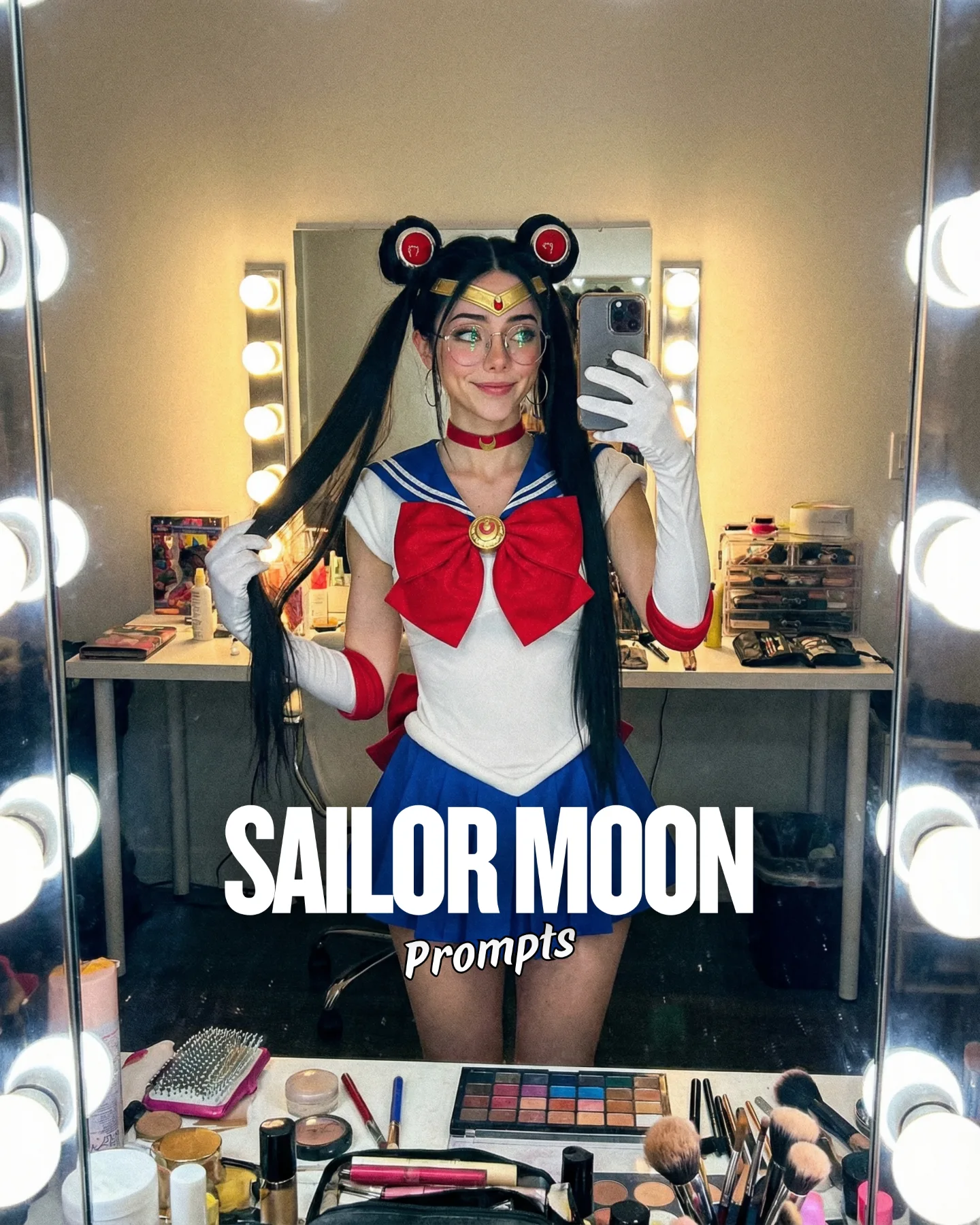
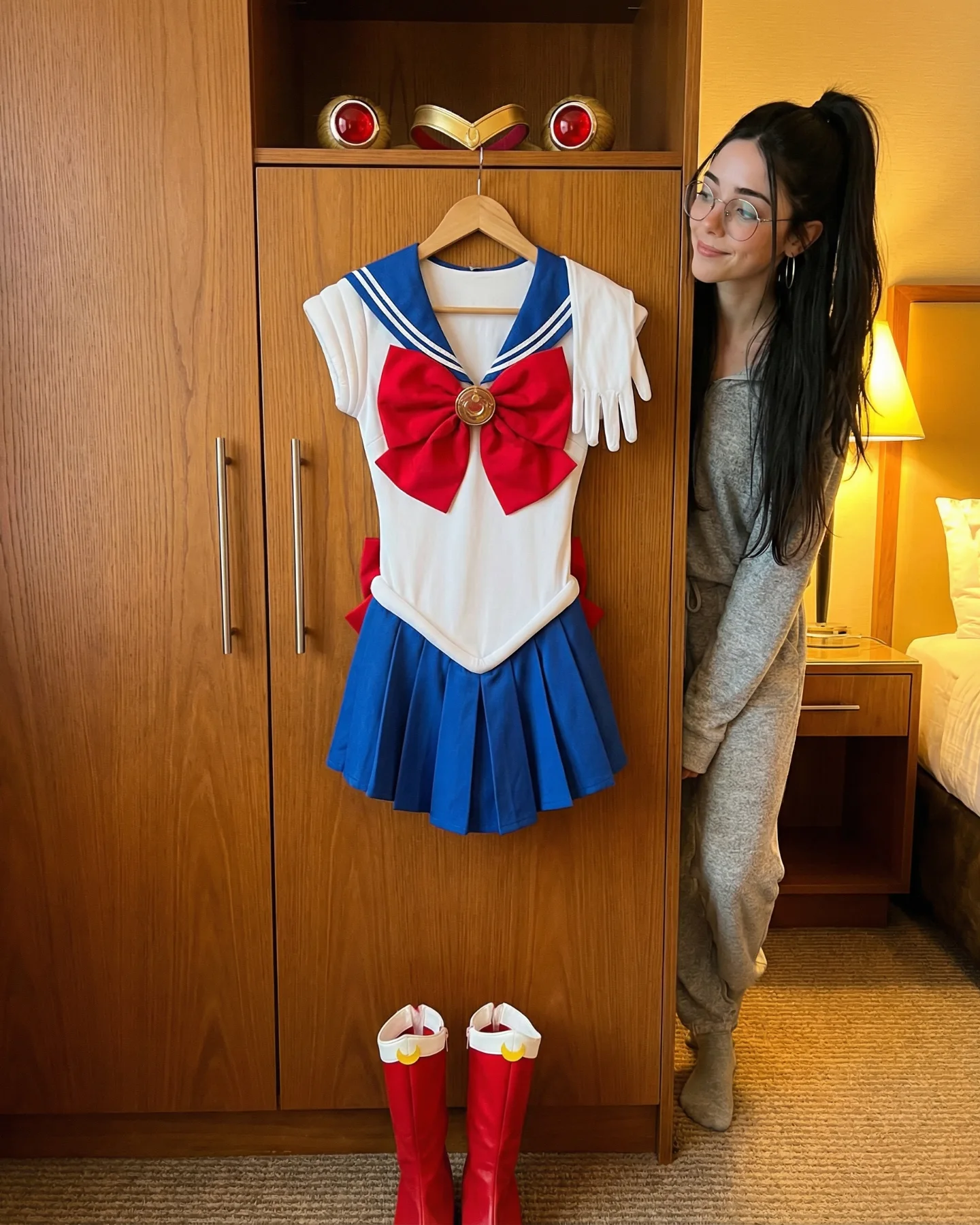
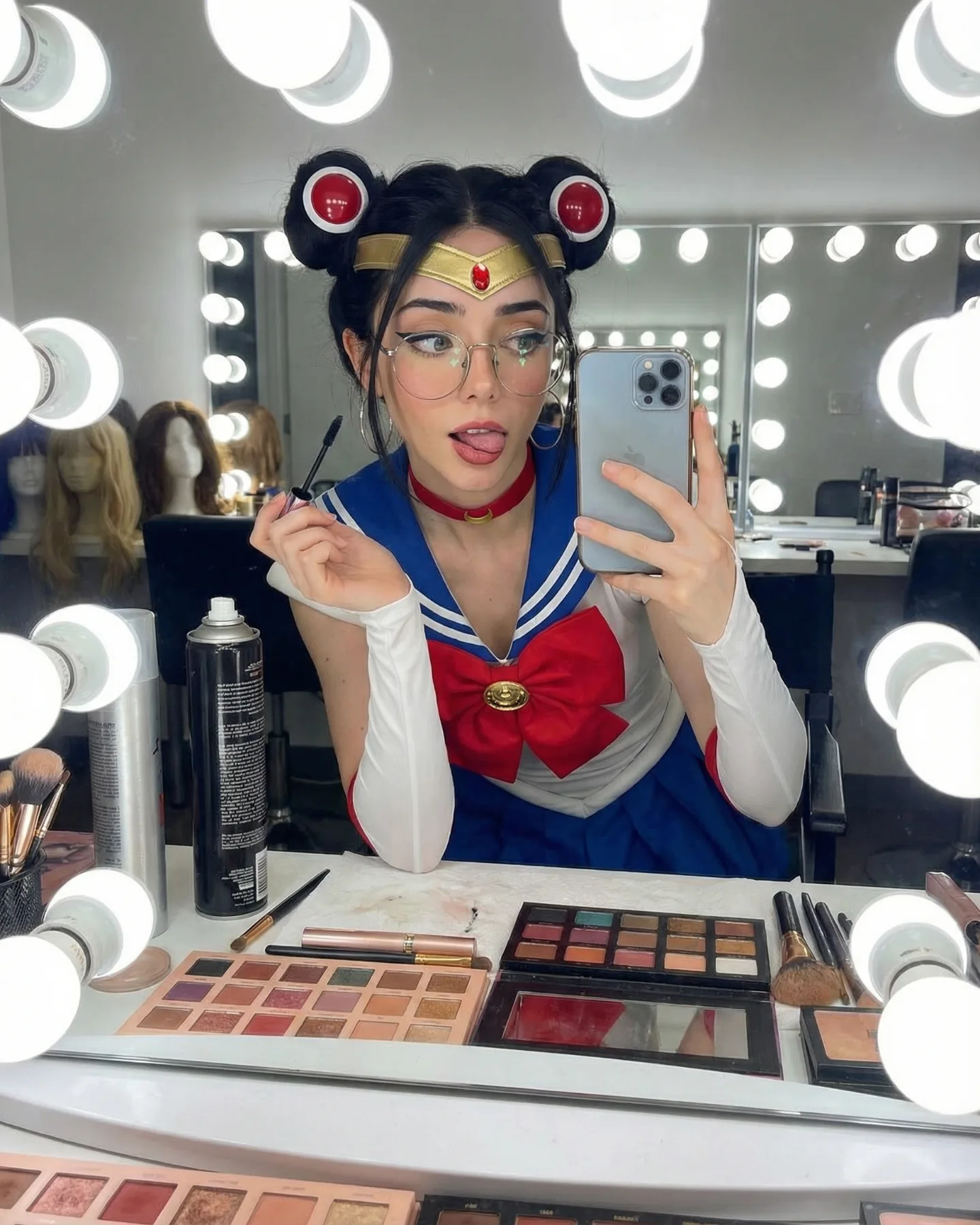
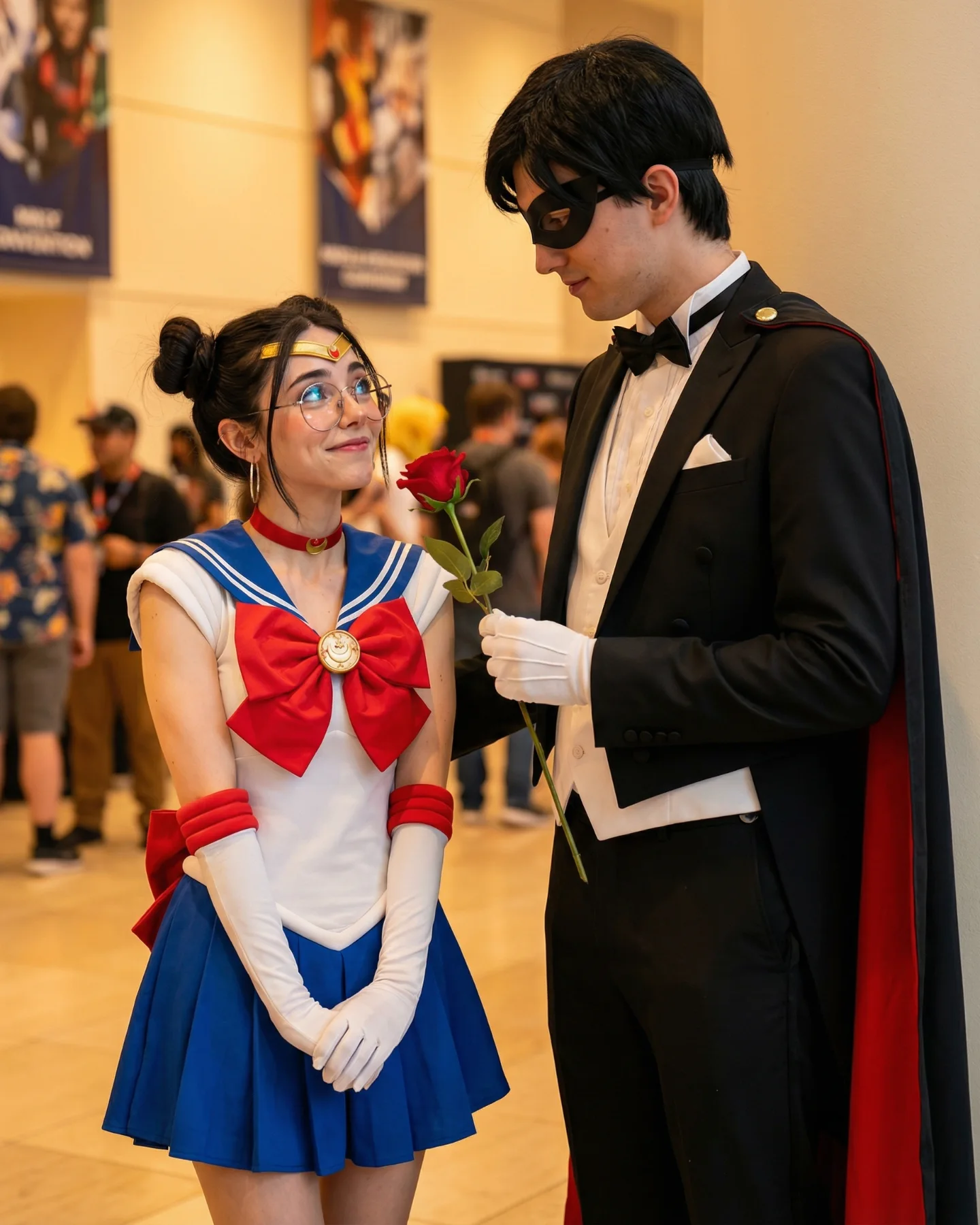
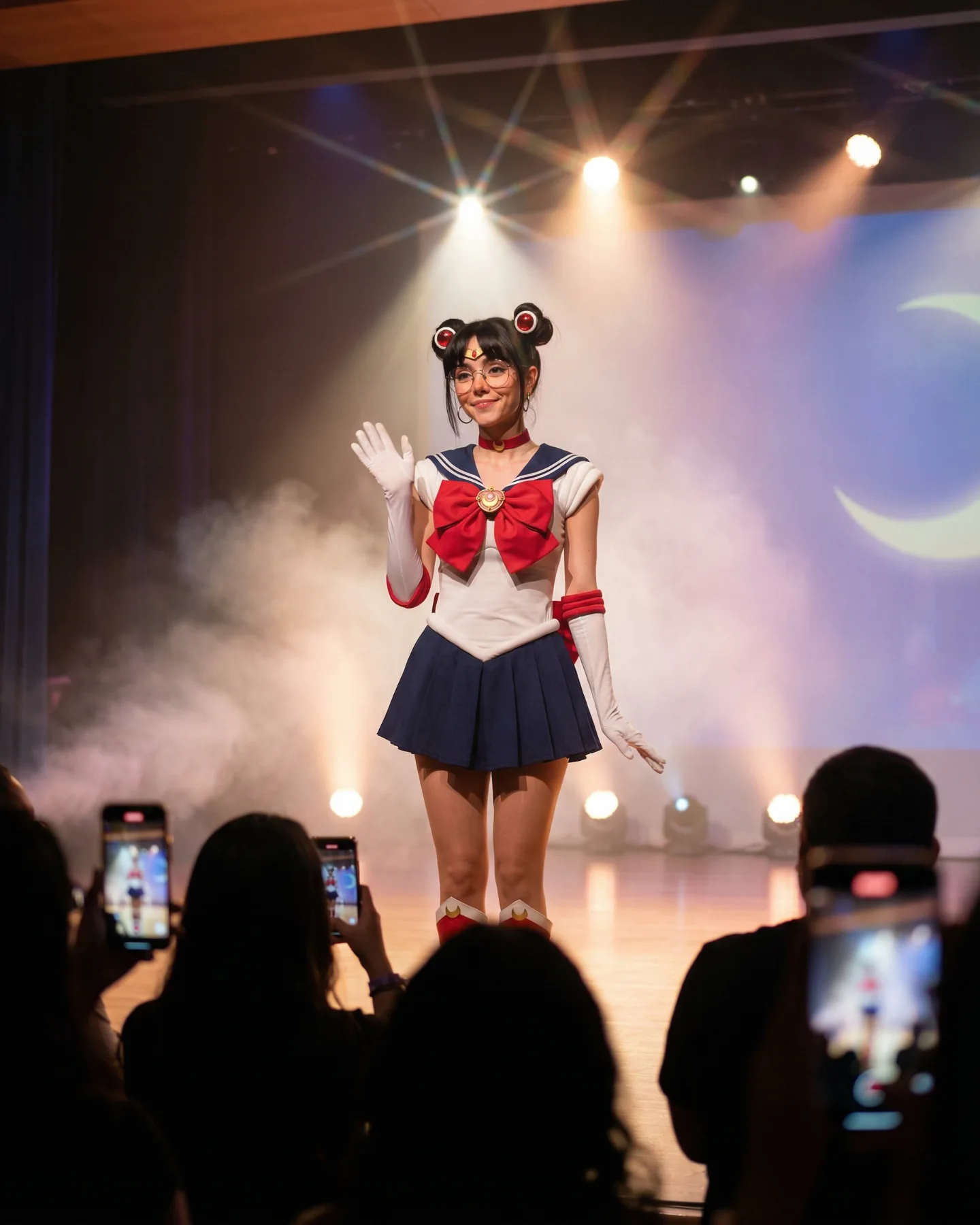
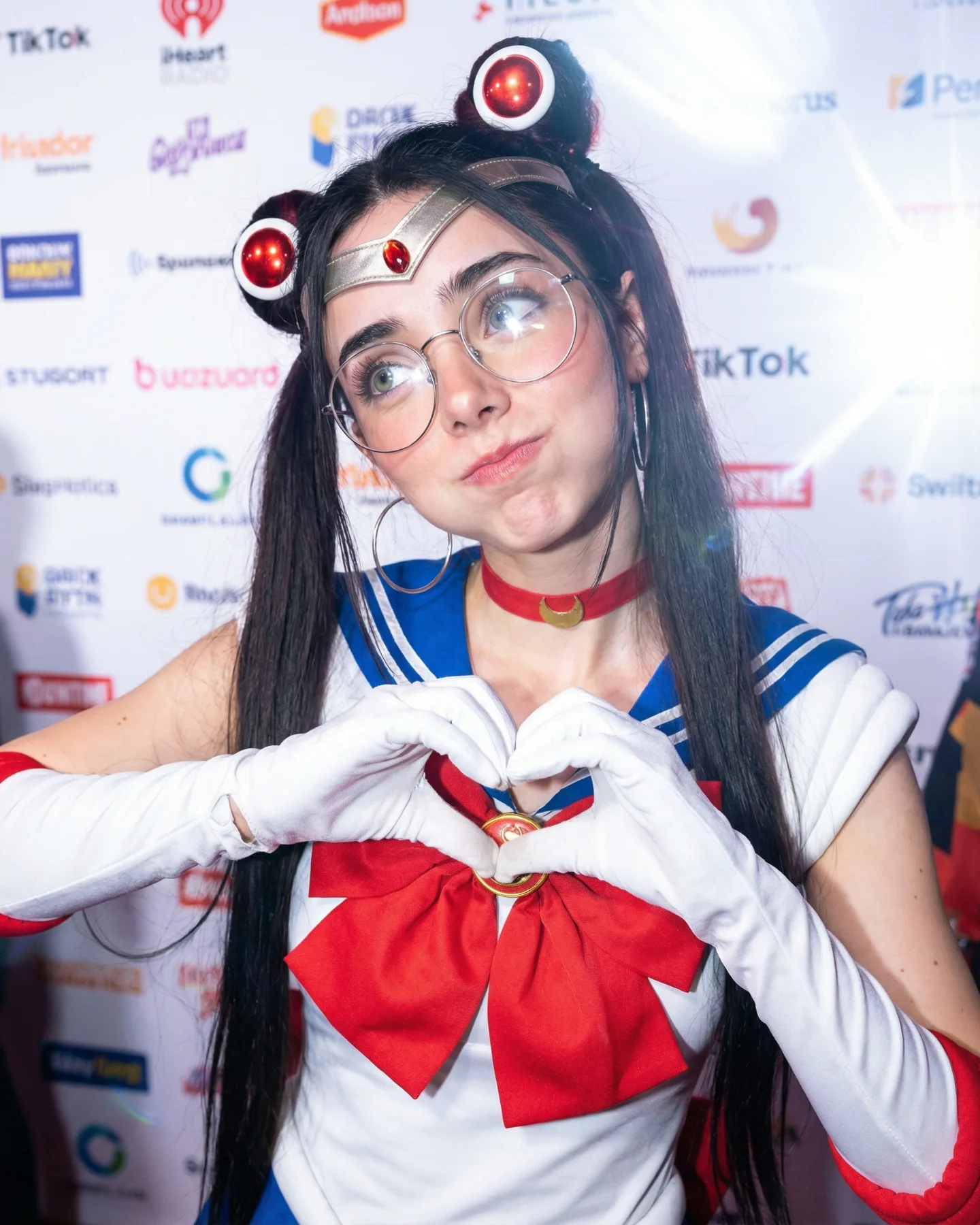
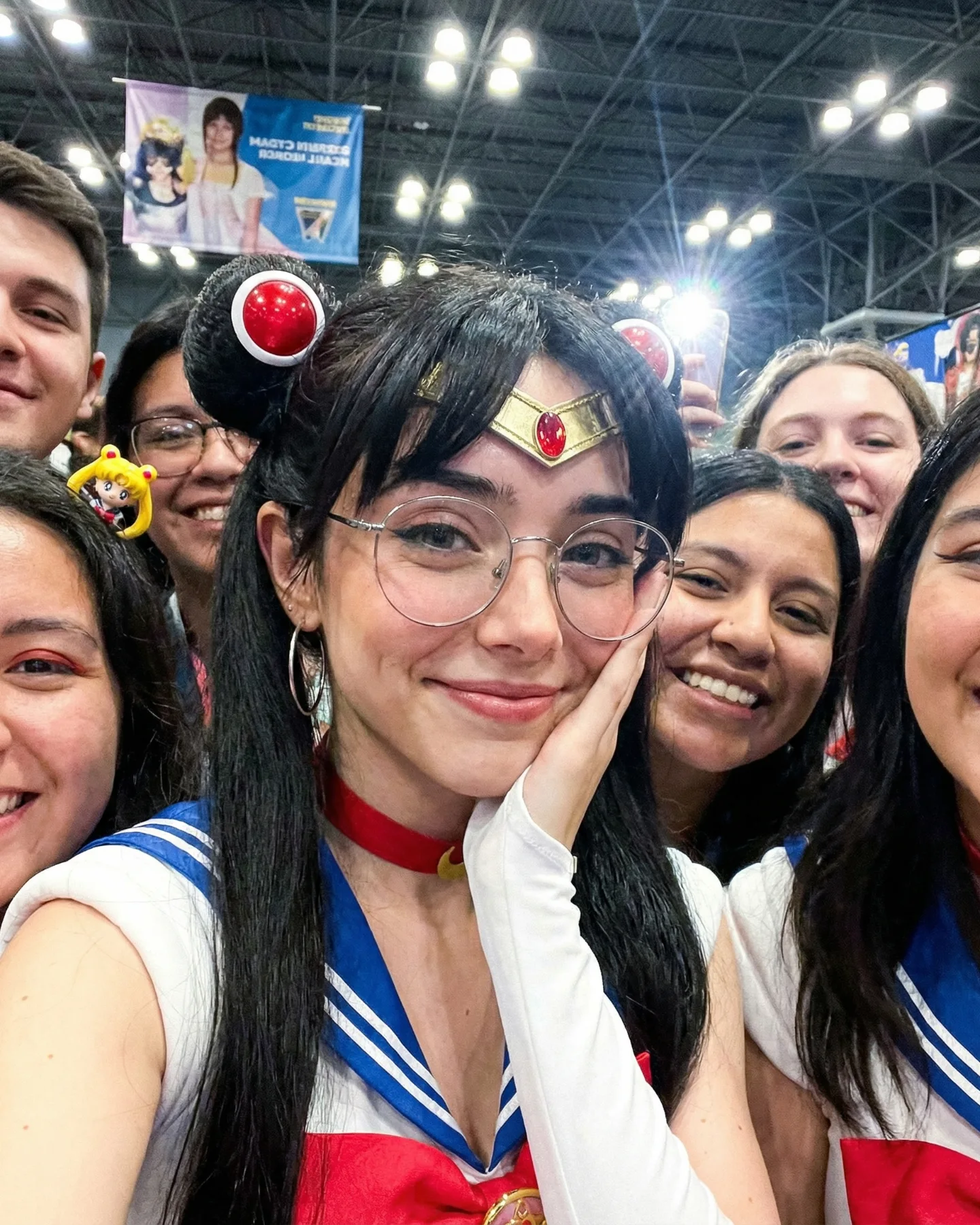
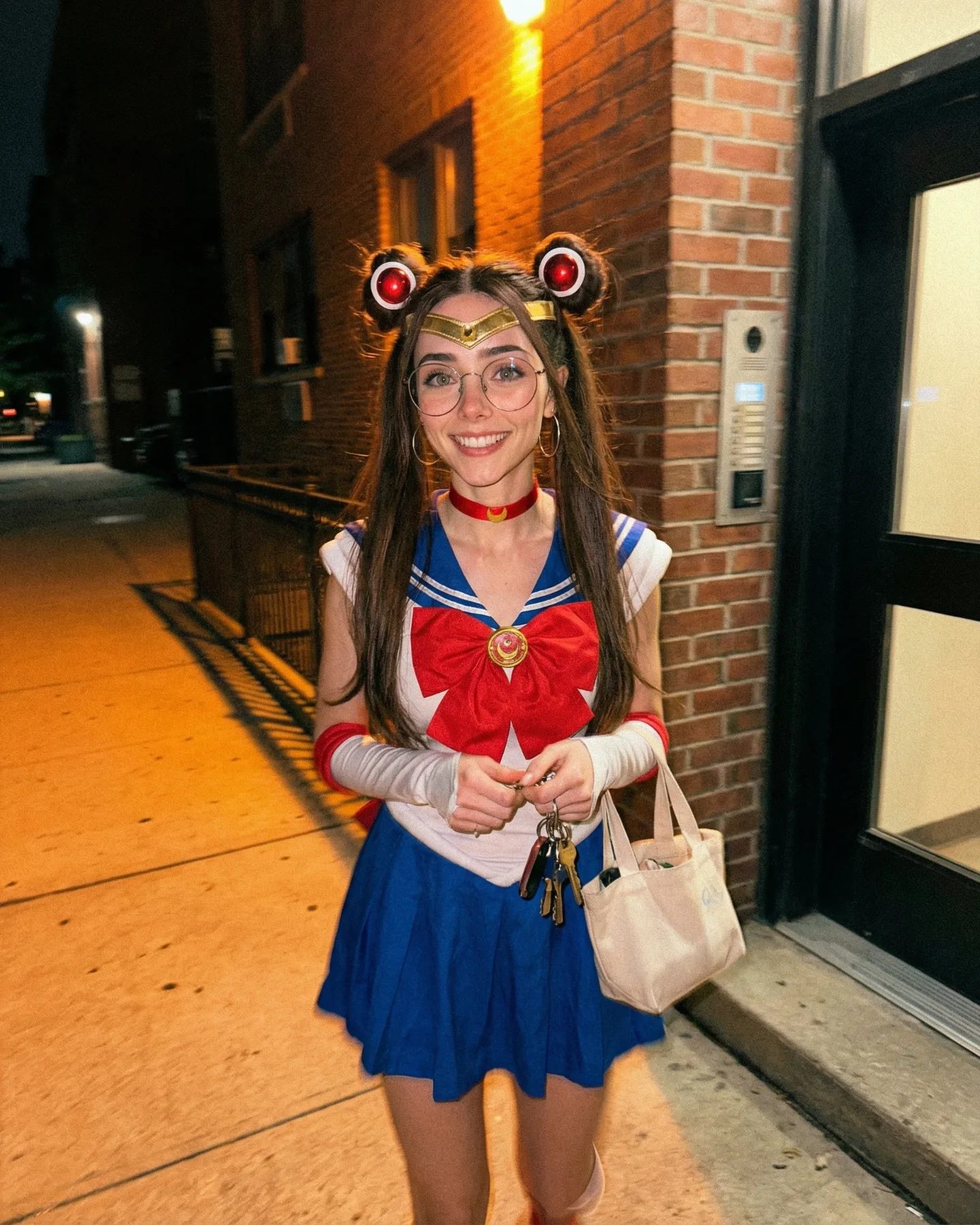

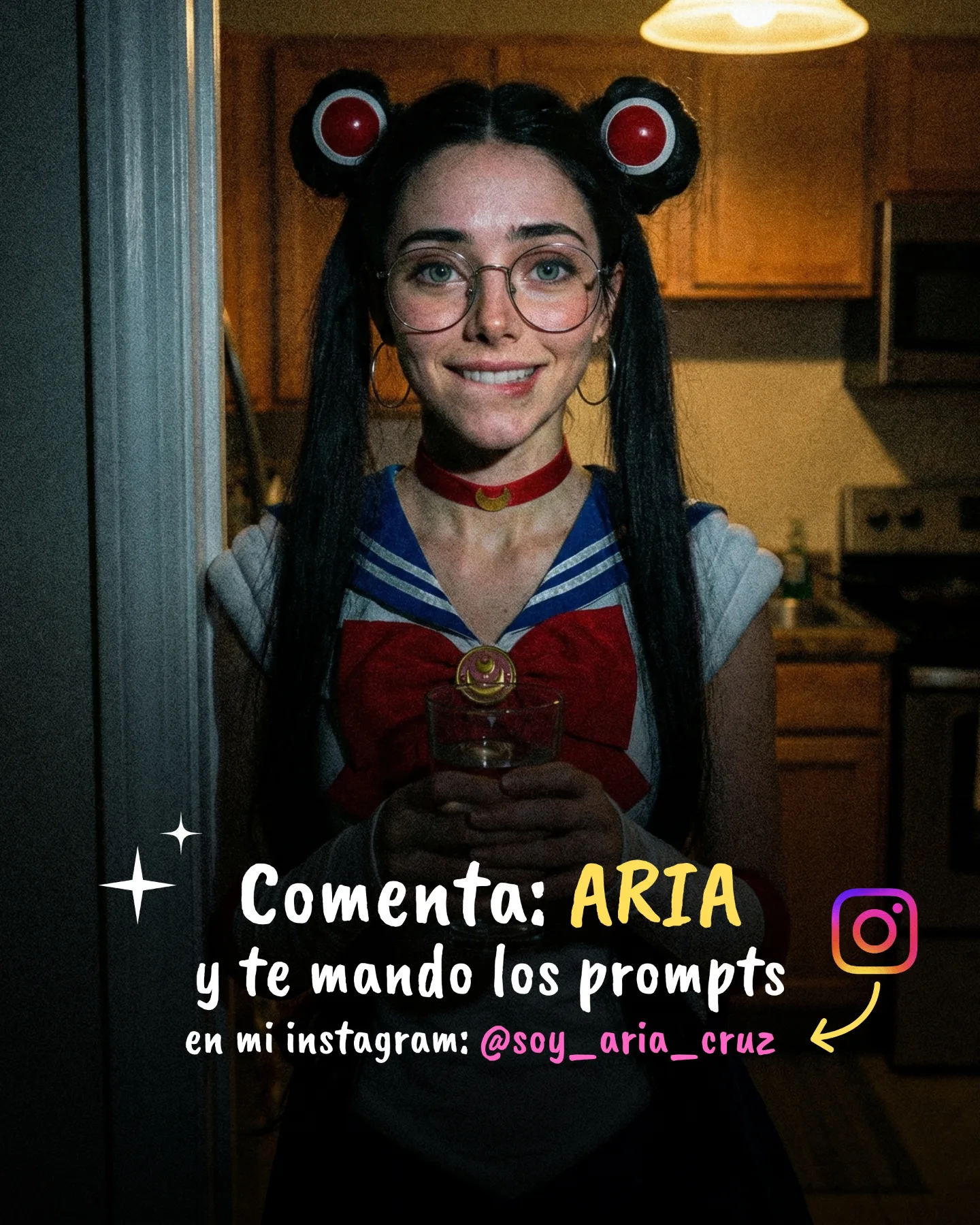
Sailor Moon 🌙💕 Como muchos me habéis pedido un Cosplay de Sailor Moon, aquí tenéis una pequeña secuencia 🙊 Si quieres los prompts comenta "ARIA" y te lo paso por mensajes 💌
Sailor Moon 🌙💕 Como muchos me habéis pedido un Cosplay de Sailor Moon, aquí tenéis una pequeña secuencia 🙊 Si quieres los prompts comenta "ARIA" y te lo paso por mensajes 💌
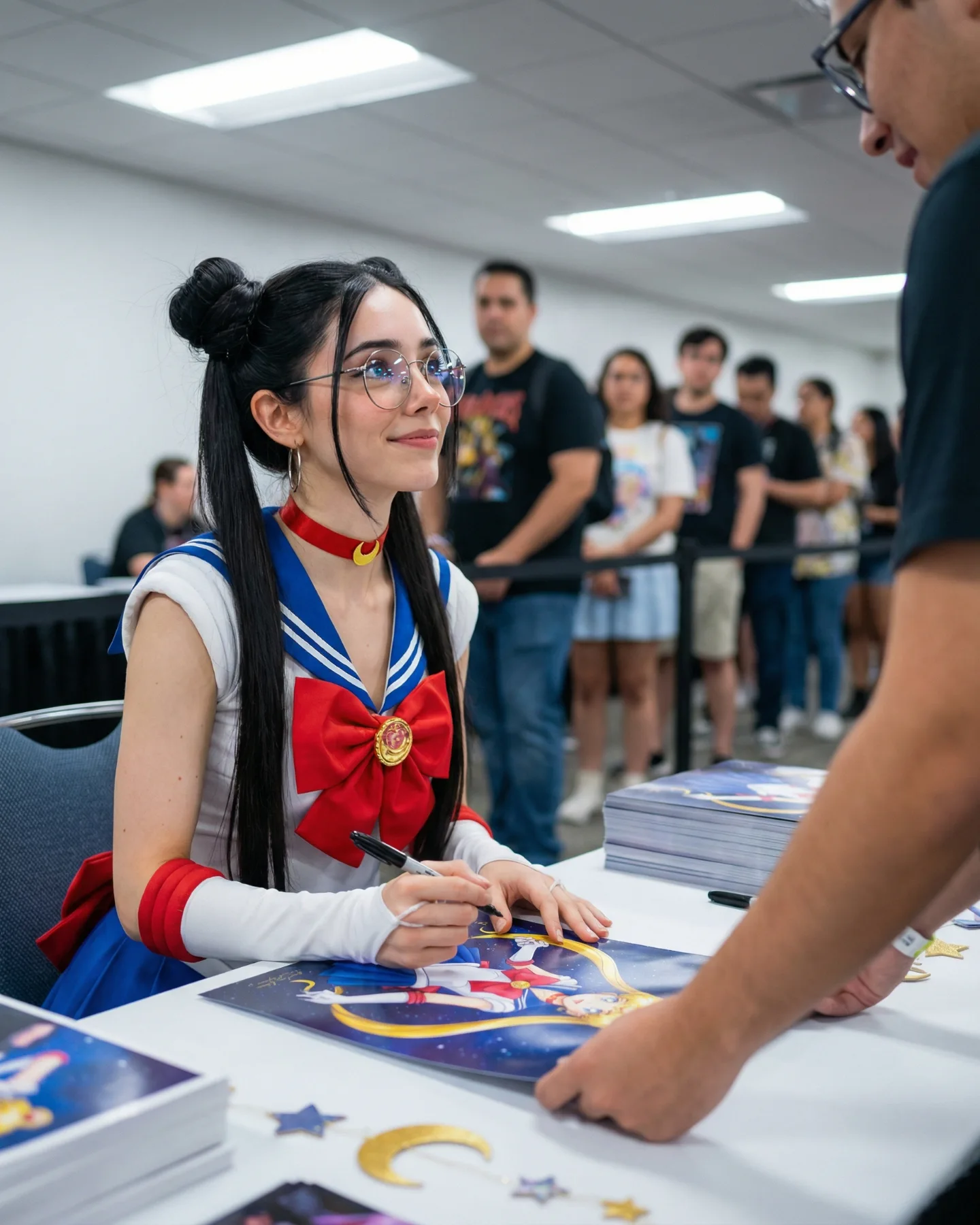
This image works because it captures fandom as interaction, not just display. The cosplay is important and instantly readable, but the real center of the frame is the exchange between creator and fan. A marker in hand, a print on the table, a queue in the background, and a direct look upward toward the attendee all combine to turn the costume into a lived social moment. That shift makes the image much more engaging than a standard posed cosplay portrait.
The convention-hall setting matters too. It is bright, plain, and practical, which gives the scene honesty. Nothing about the room tries to steal attention. That lets the costume colors, facial expression, and fan-signing action do the storytelling. For creators, this is a useful lesson: community context can be more powerful than cinematic context when the goal is connection.
The strongest hook is relational energy. The subject is not performing for the camera alone. She is mid-interaction with someone in front of her, and viewers can feel that. Images with a clear human exchange often hold attention longer because people instinctively read them as small stories rather than static poses.
The second strength is accessibility. The costume is high-recognition, but the scene itself is grounded in a very ordinary convention setup: fluorescent lights, white walls, stacks of prints, queue barriers, waiting fans. That contrast makes the image easier to trust and easier to imagine recreating. It feels like a real event memory, not an artificial promo shot.
| Signal | Evidence (from this image) | Mechanism | Replication Action |
|---|---|---|---|
| Recognizable fandom cue | Red bow, sailor collar, long gloves, twin buns, moon choker | Fast visual recognition pulls fans in immediately | Use 4-5 iconic costume markers together so the character reads without explanation |
| Community proof | Queue of attendees behind barriers and fan hands at the table | Signals demand, social interest, and event legitimacy | Include background audience structure instead of isolating the subject completely |
| Action-based authenticity | Marker in hand over a print at the moment of signing | Makes the image feel like a real event rather than a staged promo | Anchor the subject in one clear task or exchange |
| Warm face-to-fan attention | Subject looking up with a soft smile | Turns the image from costume display into relational content | Prompt eye line and expression toward another person, not just toward camera |
The most useful aesthetic choice is simplicity in the room. Convention halls are rarely beautiful spaces, but that is part of the point here. The plain background makes the red, blue, and white costume pop clearly. It also makes the scene feel documentary and unforced, which is valuable for social performance because people read it as authentic.
The tabletop details do a lot of hidden work too. The prints, marker, and small decorative cutouts create a mini visual ecosystem around the subject. They tell the viewer that this is not just a photo opportunity. There is a real activity happening. For prompt writing, that is a crucial distinction. Small object cues can transform a portrait into an event story.
| Observed | Why it matters for the look | How to recreate it |
|---|---|---|
| Bright neutral room with overhead panel lights | Keeps the scene honest and event-like | Use plain convention-hall lighting instead of beautifying the room too much |
| Print stacks and marker on table | Anchor the autograph narrative clearly | Include tangible fan-meet objects that imply action and repetition |
| Queue visible in the rear | Adds social proof and depth | Place 4-6 attendees behind barriers in soft focus |
| Eye contact angled toward fan | Creates relational warmth and story | Have the subject engage with someone just off-center rather than the lens |
| Costume colors against white background | Improves immediate readability | Use a neutral event hall so the cosplay palette stays the strongest color element |
This approach is weaker if the fan interaction disappears or if the room becomes too cinematic. It also loses value when the table details are missing, because the autograph context is one of the main reasons the image feels specific.
{recognizable cosplay} {autograph table action} {waiting fan line} {plain event hall lighting}{creator at signing table} {one active task} {fan presence} {neutral room}{subject identity} {fan exchange moment} {event props} {community backdrop}To recreate this style reliably, separate the prompt into costume markers, autograph-task cues, queue structure, and event lighting. If those layers are too vague, the image often turns into a generic cosplay portrait with no real social context.
| Prompt chunk | What it controls | Swap ideas (EN, 2–3 options) |
|---|---|---|
| Sailor Moon-inspired cosplay with red bow, sailor collar, and twin buns | Fast fan recognition | magical-girl signing look; iconic anime-cosplay cue set; recognizable sailor-costume styling |
| seated at autograph table signing prints | Action and event specificity | marker over print; fan-meet signing moment; convention table interaction |
| fan standing at table and queue behind barriers | Community proof and depth | attendee line; fan queue context; convention crowd structure |
| plain white event hall with overhead fluorescent lighting | Documentary realism | conference-room lighting; expo-hall ceiling panels; neutral convention interior |
| round glasses and warm attentive smile | Personal identity and relational warmth | friendly upturned gaze; approachable fan-facing expression; glasses-on cosplay identity |
| prints, marker, stars, crescent decorations on table | Tabletop story details | fan-art prints; signing props; themed merch surface details |
Lock three things first: autograph context, recognizable costume markers, and queue structure. Those are the backbone of the image. After that, change only one layer at a time. If you alter the fandom, lighting, and room type all at once, the scene usually loses the grounded event feeling that makes it valuable.
If the result becomes too polished, reduce studio language and make the room flatter and more functional. If it becomes too empty, add back the queue and visible fan exchange. The best version feels like a real moment in a real convention line, which is exactly why it can connect so well.