
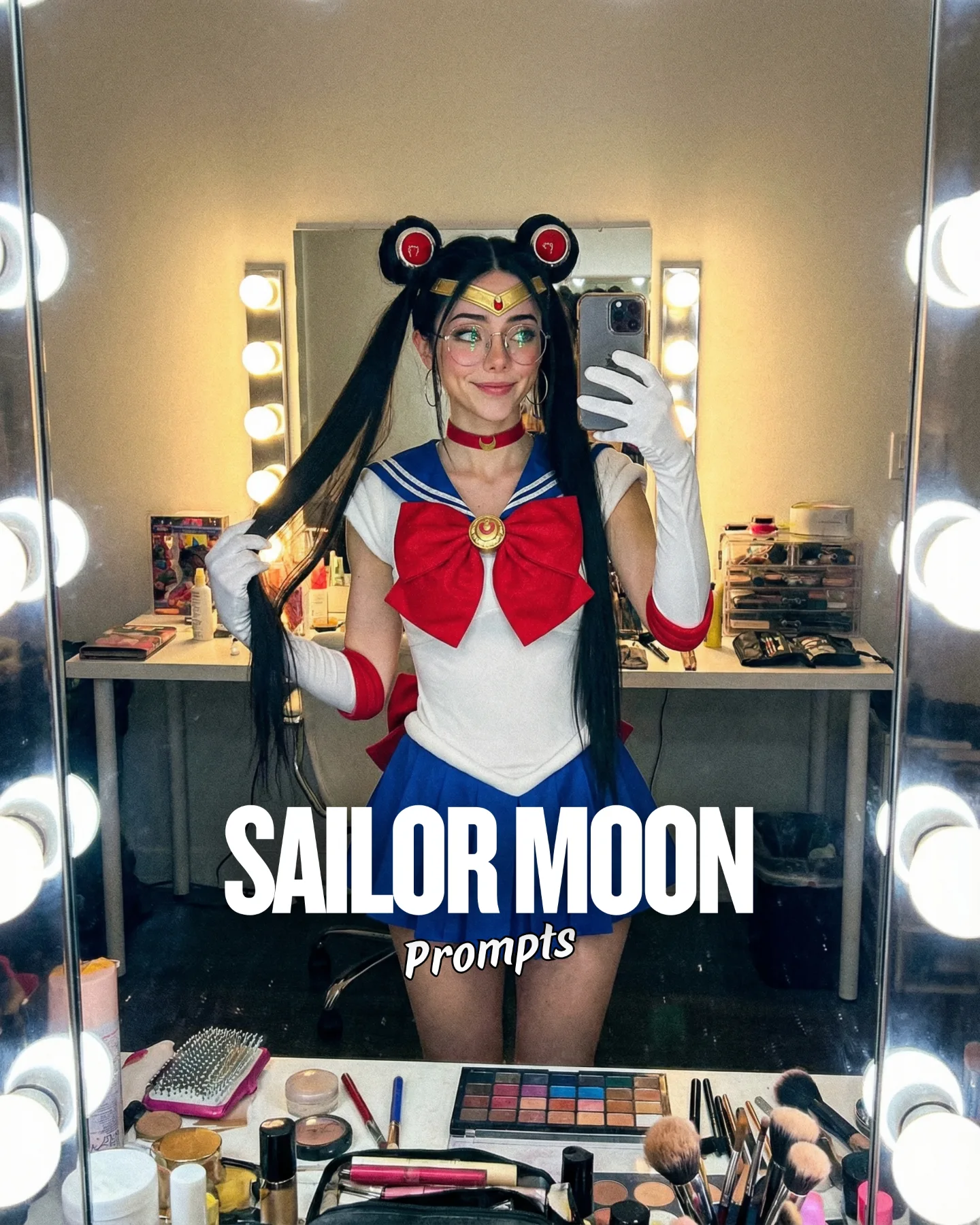
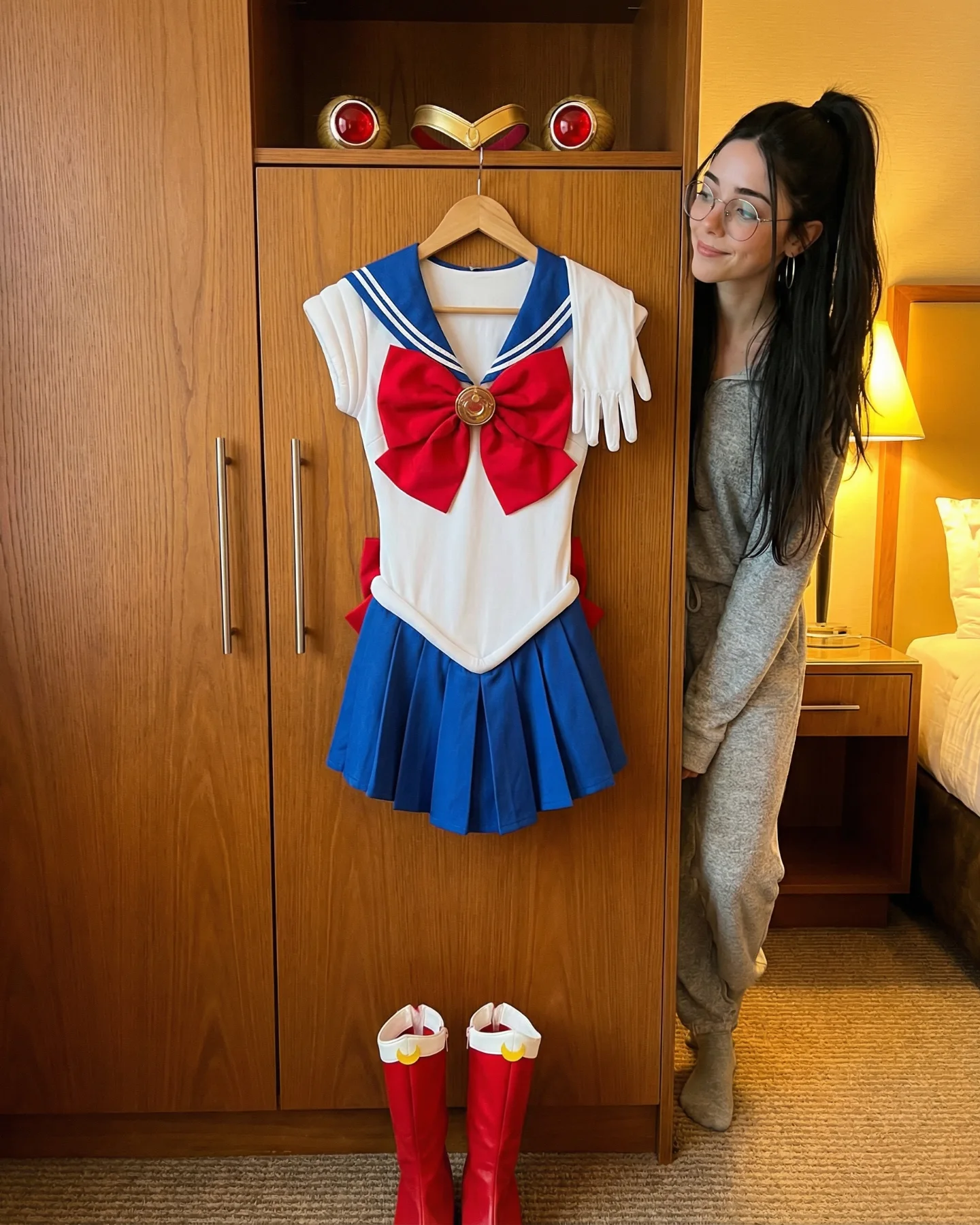
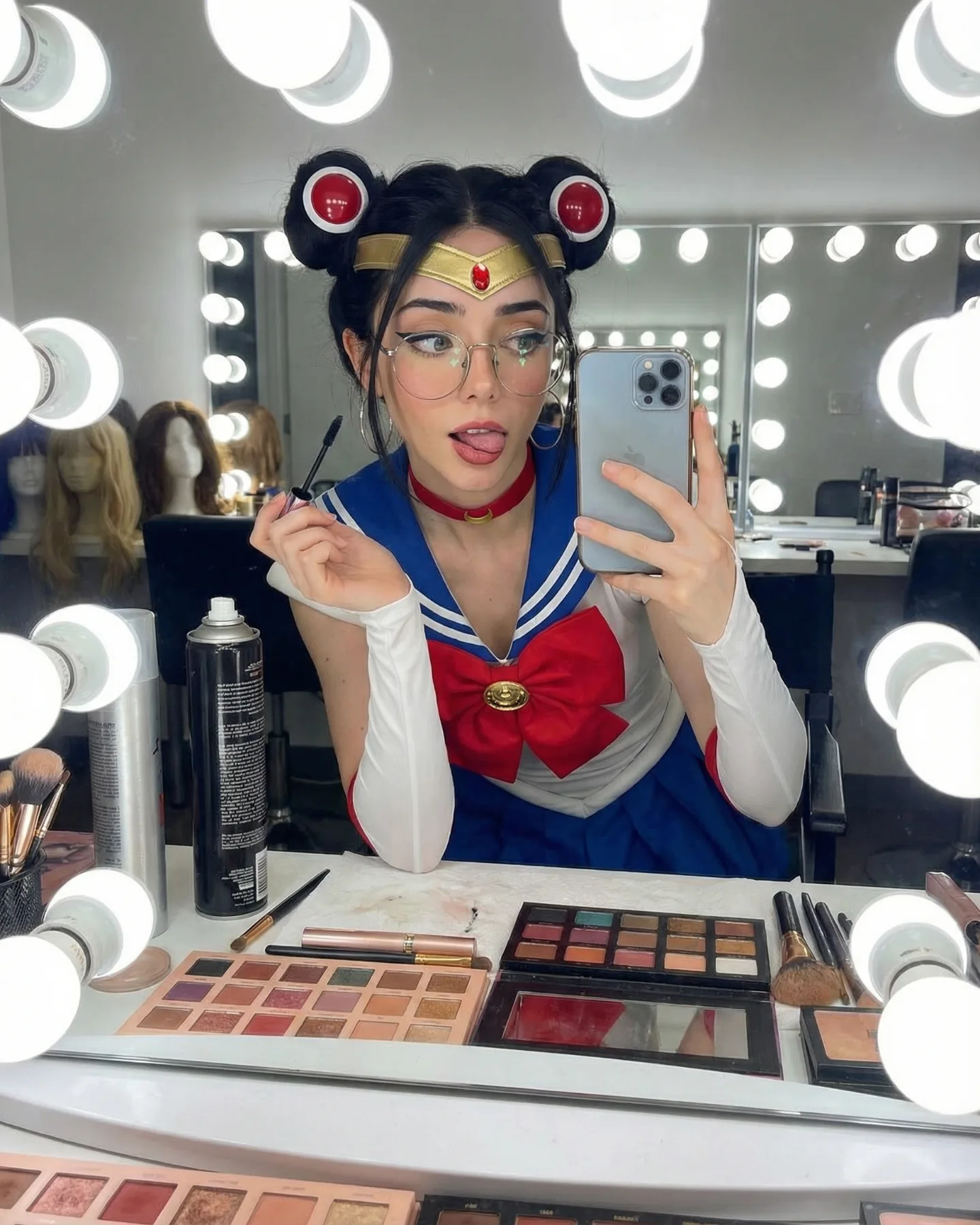


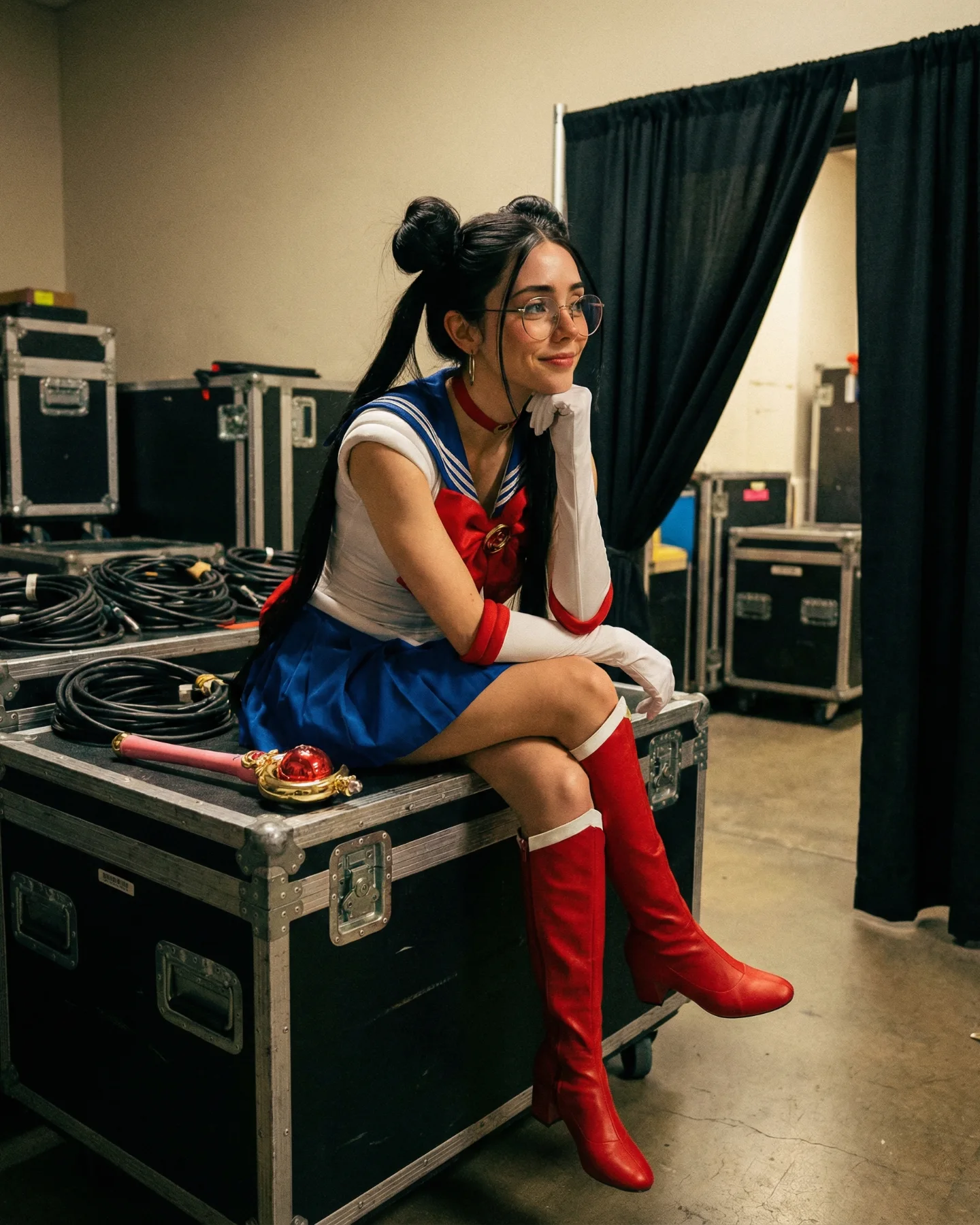
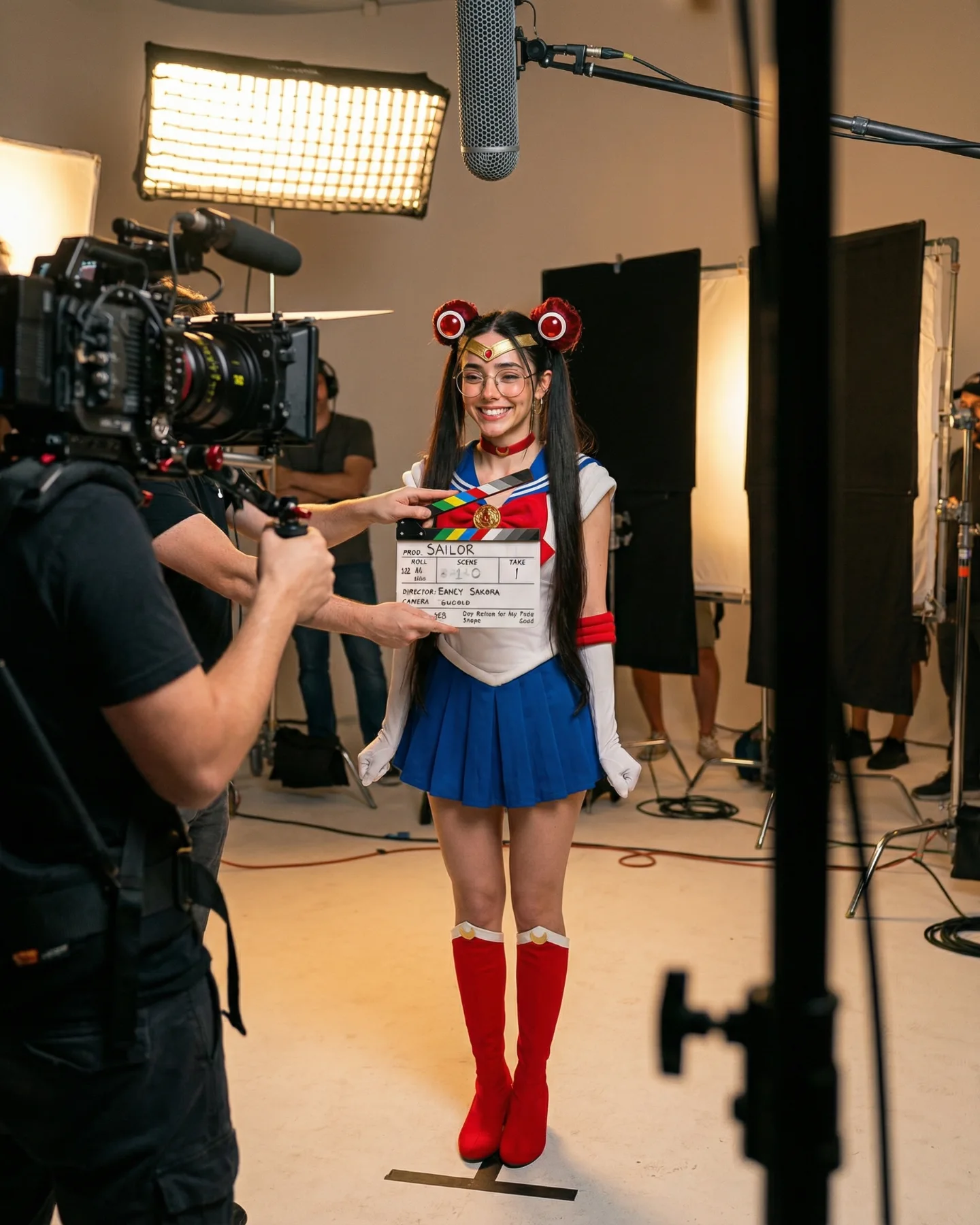
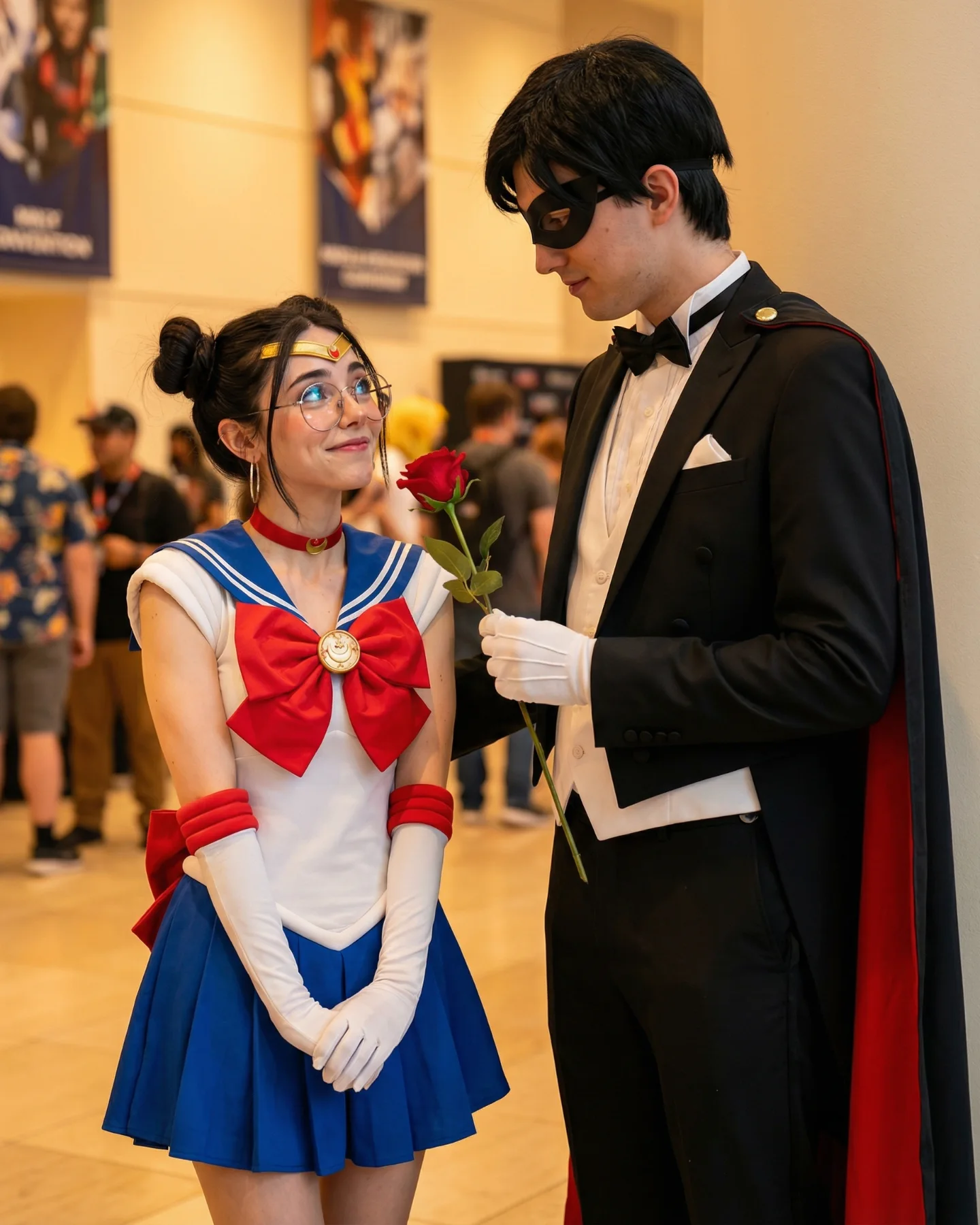
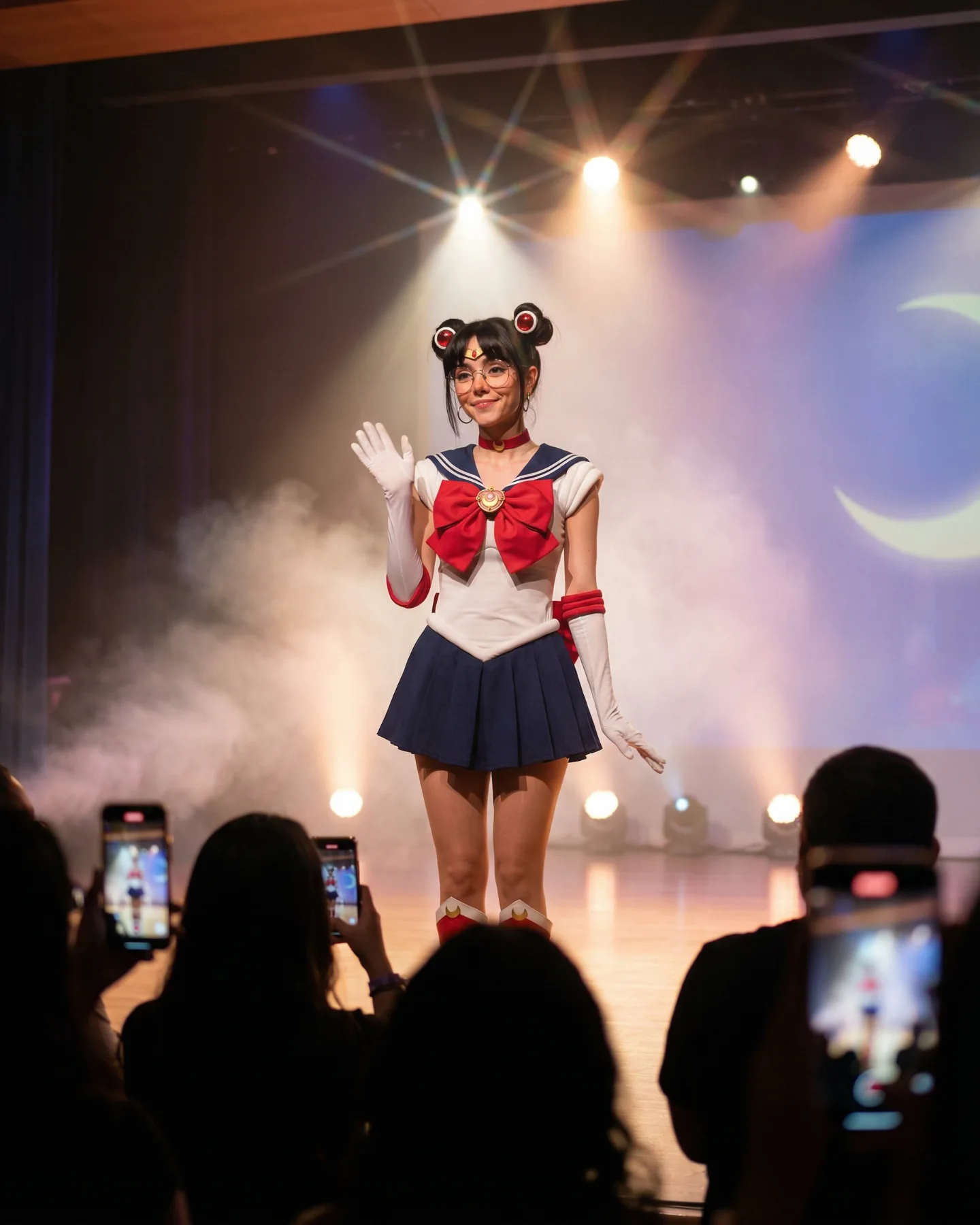

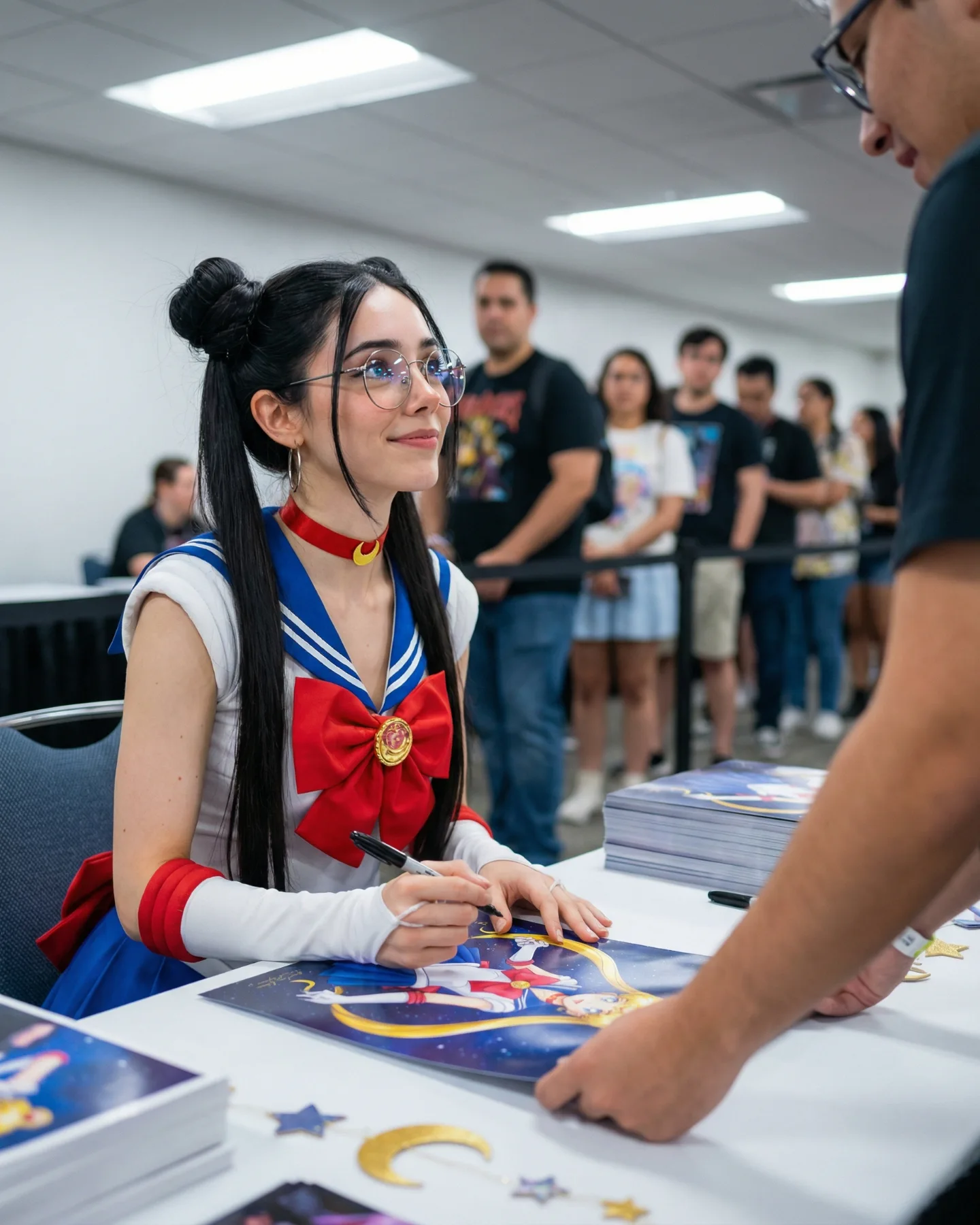

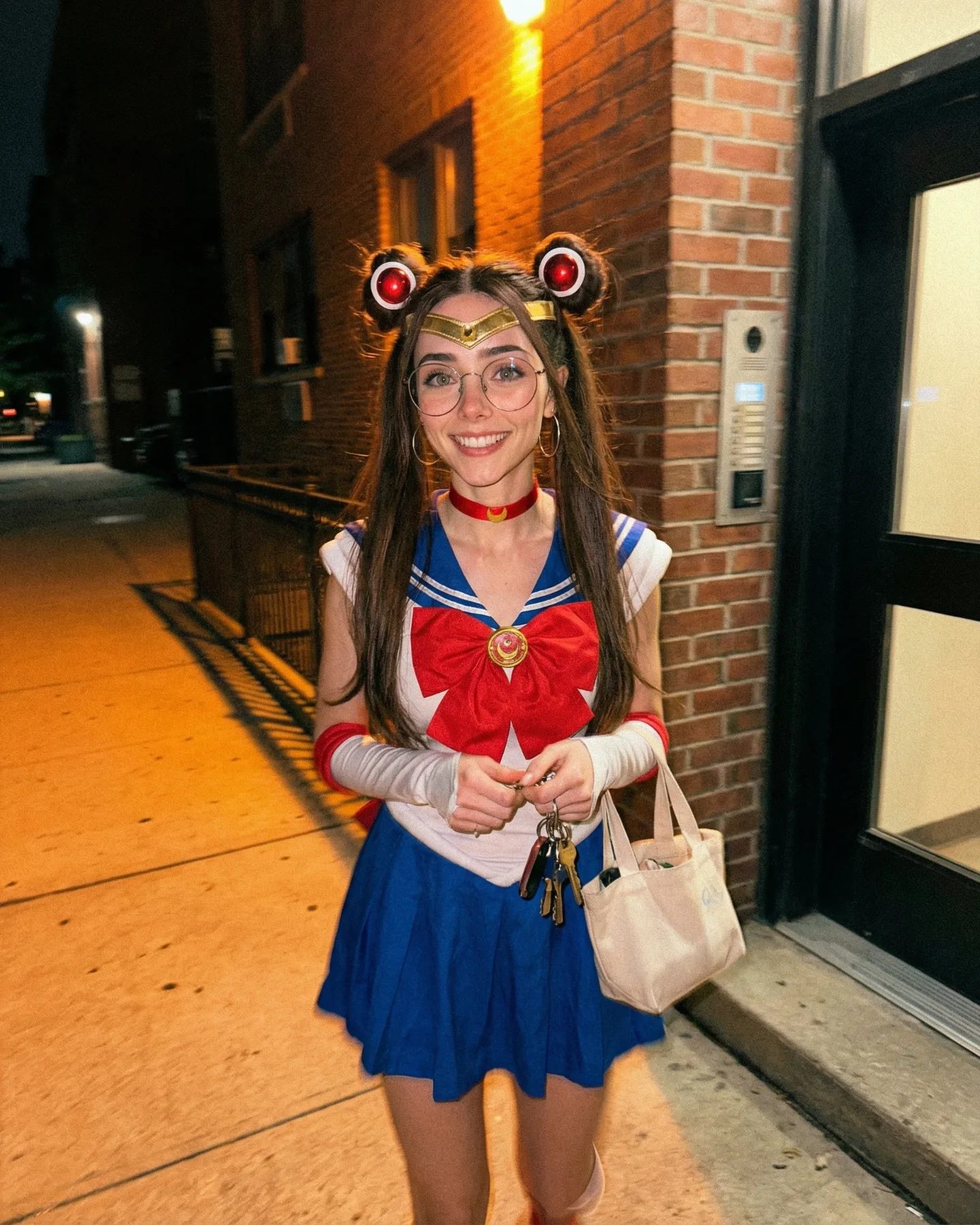


Sailor Moon 🌙💕 Como muchos me habéis pedido un Cosplay de Sailor Moon, aquí tenéis una pequeña secuencia 🙊 Si quieres los prompts comenta "ARIA" y te lo paso por mensajes 💌
Sailor Moon 🌙💕 Como muchos me habéis pedido un Cosplay de Sailor Moon, aquí tenéis una pequeña secuencia 🙊 Si quieres los prompts comenta "ARIA" y te lo paso por mensajes 💌
Cosplay images often aim for spectacle first, but this one works because it shifts the setting into everyday life. The character styling is still clear, yet the scene happens in a kitchen doorway with warm home light and a casual glass in hand. That contrast makes the image feel personal instead of distant.
The caption says people asked for a Sailor Moon cosplay, and this image answers that request in a way that feels highly social-platform native. It is not trying to replace the anime world. It is showing how a recognizable fandom look can live inside familiar home-space content. For creators, that is a very useful model.
The first reason is accessibility. The costume cues are immediate, but the environment is ordinary. That combination lowers the distance between viewer and image. Fans still get the reference, while casual viewers see a warm, friendly portrait instead of a heavy role-play scene.
The second reason is the domestic mood. The kitchen light and doorway framing make the image feel like a private share. That kind of intimacy often performs well because it creates the sense that the creator is inviting the audience into her space, not only showing them a costume.
The third reason is the built-in call to action. The lower-third text and Instagram icon turn the image into a conversion asset while still keeping the subject visible. The post is not only aesthetic. It knows exactly what action it wants from the audience.
| Signal | Evidence (from this image) | Mechanism | Replication Action |
|---|---|---|---|
| Recognizable fandom cues | Twin buns, sailor collar, red bow, and tiara-adjacent styling identify the reference quickly | Fast recognition improves stop rate and comment intent | Lock the character's top silhouette cues before refining the room or props |
| Domestic intimacy | The costume appears in a warm kitchen doorway rather than a fantasy set | Everyday space makes the image feel personal and more socially native | Place fandom styling inside one ordinary lived-in room to reduce visual distance |
| Soft low-light realism | Warm room light and visible shadow keep the image grounded | Believable indoor lighting helps cosplay feel less synthetic | Use one household light source and let the room stay slightly dim instead of over-lighting |
| In-image CTA | The lower third directly asks viewers to comment for prompts | Conversion intent is clear without requiring a long caption to do all the work | Reserve lower-third space for a concise action line only after the portrait still reads clearly |
This format works especially well for fandom prompt giveaways, creator-led cosplay series, at-home character experiments, and social posts built around a friendly, approachable tone. It is also useful for SEO pages that want to show how recognizable character design can be integrated into realistic environments.
This style is less ideal for convention-stage recaps, cinematic cosplay posters, or collectible-fantasy artwork. Its value comes from intimacy and realism, not spectacle. If you overbuild the scene, that advantage disappears.
Three transfer recipes are especially useful. Keep the doorway framing, the warm household light, and the character-identifying hair/headpiece cues. Change the fandom shell. A magical-girl variant can swap colors while keeping the home setting. A fantasy-princess version can replace the bow and tiara language with a simpler crown and robe. An idol-anime version can preserve the mirror-free home snapshot feel while changing the costume palette and handheld prop. Slot template: {recognizable fandom styling} in {warm domestic room} holding {small everyday prop} with {integrated CTA overlay}.
The strongest decision here is choosing a room that feels lived in. The kitchen is not glamorous, but that is exactly why the costume feels more interesting inside it. Contrast between fantasy styling and ordinary domestic architecture creates the image's charm.
Another smart move is the restrained mood. The image does not try to be sexy, dramatic, or overtly magical. It stays soft, which makes the fandom reference feel less like performance and more like personal expression.
The text overlay also works because it sits low and leaves the face clear. In creator content, this kind of integrated promotional treatment often performs better than separate graphic cards because the call to action remains tied to the human moment.
| Observed | Why it matters | How to recreate it |
|---|---|---|
| Doorway framing with warm kitchen behind | Creates instant domestic context and intimacy | Use one architectural edge to frame the subject and one warm practical room behind |
| Clear twin-bun silhouette and red bow | Make the character reference readable immediately | Prioritize top-line hair and chest-color cues for fast fandom recognition |
| Small glass held in both hands | Adds calm domestic behavior and softens the cosplay | Give the subject one everyday object to humanize the costume |
| Low-light home realism | Prevents the scene from feeling like a studio composite | Let the room stay slightly dim and avoid over-cleaning shadows |
| Lower-third CTA overlay | Turns the portrait into a clear conversion post | Reserve clean bottom space for concise promotional copy and iconography |
To recreate this style reliably, separate the prompt into character cues, domestic environment, everyday prop, lighting family, and social overlay system. Cosplay images like this only work when the realism layer is treated as seriously as the fandom layer.
| Prompt chunk | What it controls | Swap ideas (EN, 2-3 options) |
|---|---|---|
| Character cue block | Defines the reference quickly and cleanly | twin buns and sailor bow, magical-girl collar, princess headpiece |
| Domestic-environment block | Makes the image feel personal and lived in | kitchen doorway, apartment hallway, living-room corner |
| Everyday-prop block | Humanizes the costume and softens the fantasy tone | small glass, mug, snack bowl |
| Lighting block | Creates realism and intimacy | warm kitchen light, hallway lamp glow, dim apartment lighting |
| Overlay block | Turns the image into a conversion asset | comment CTA, prompt giveaway note, DM instruction |
| Identity-marker block | Keeps the creator visible beneath the character shell | round glasses, hoop earrings, gentle smile |
Baseline lock first: keep the home-room framing, keep the top 4 character-recognition cues, and keep the warm low-light environment. Those three choices create most of the image's value. After that, change only one or two controls per generation.
The broader lesson is that fandom content becomes more engaging when it meets the viewer in a familiar space. This image understands that, and that is why it feels less like costume display and more like a real creator moment.