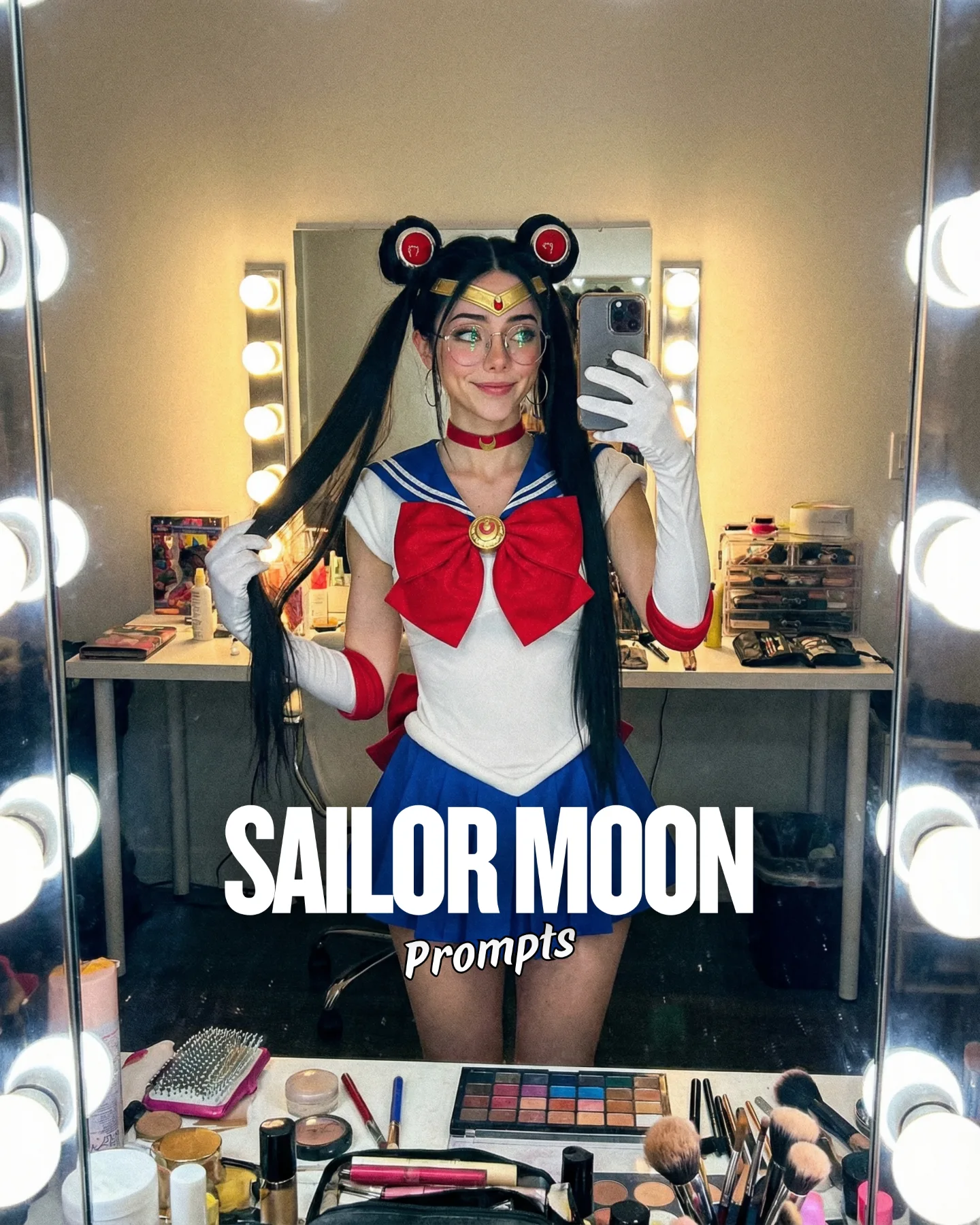
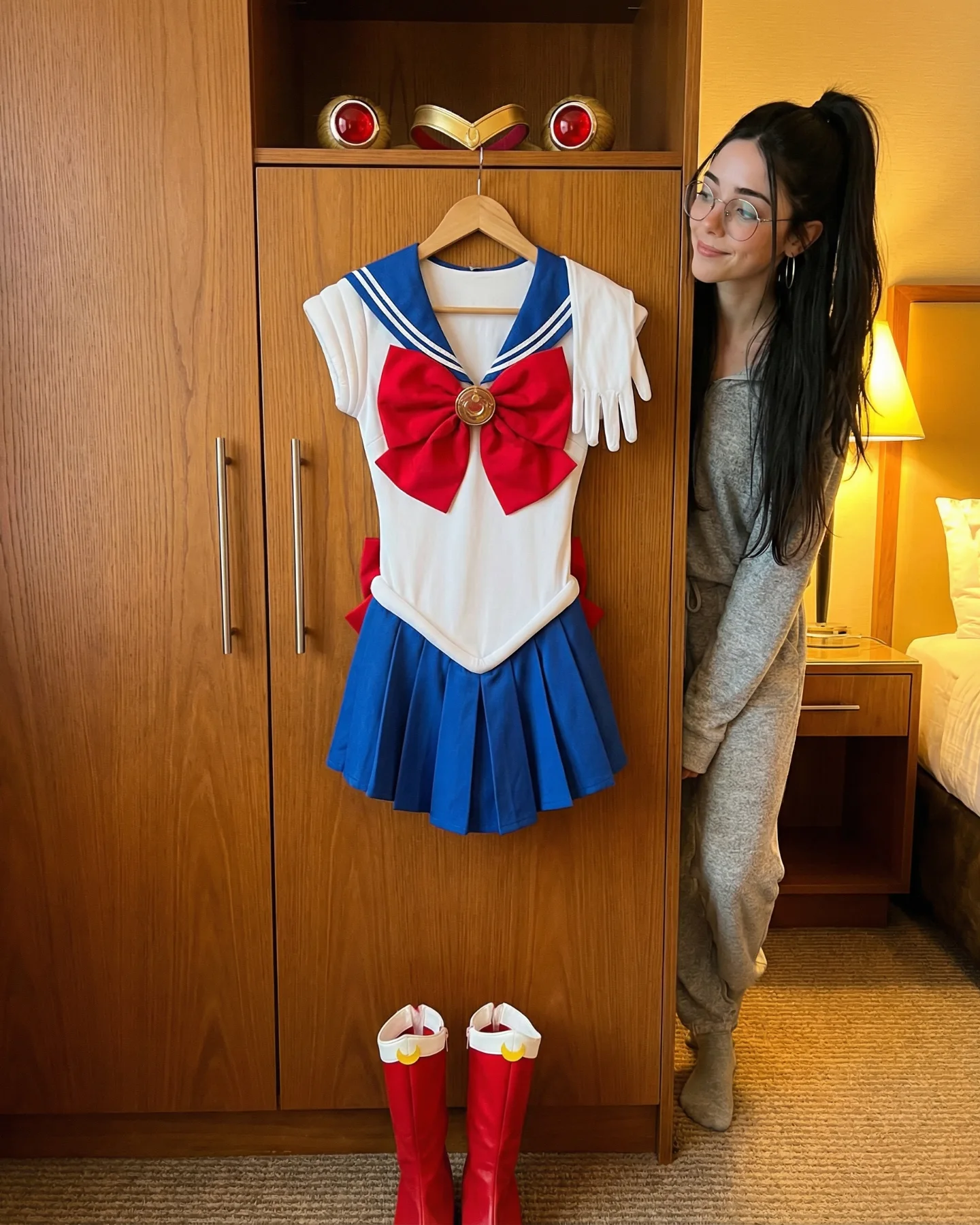
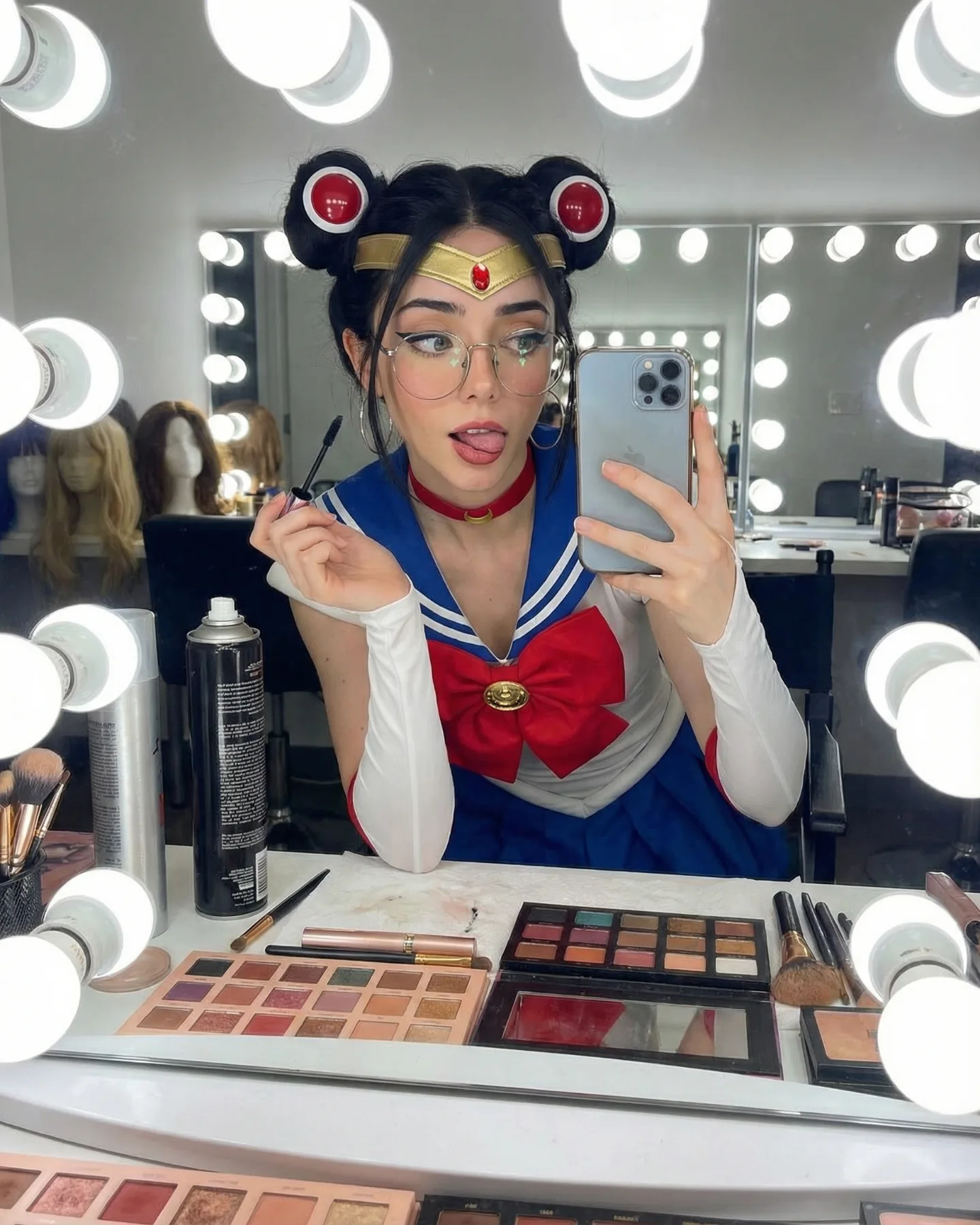
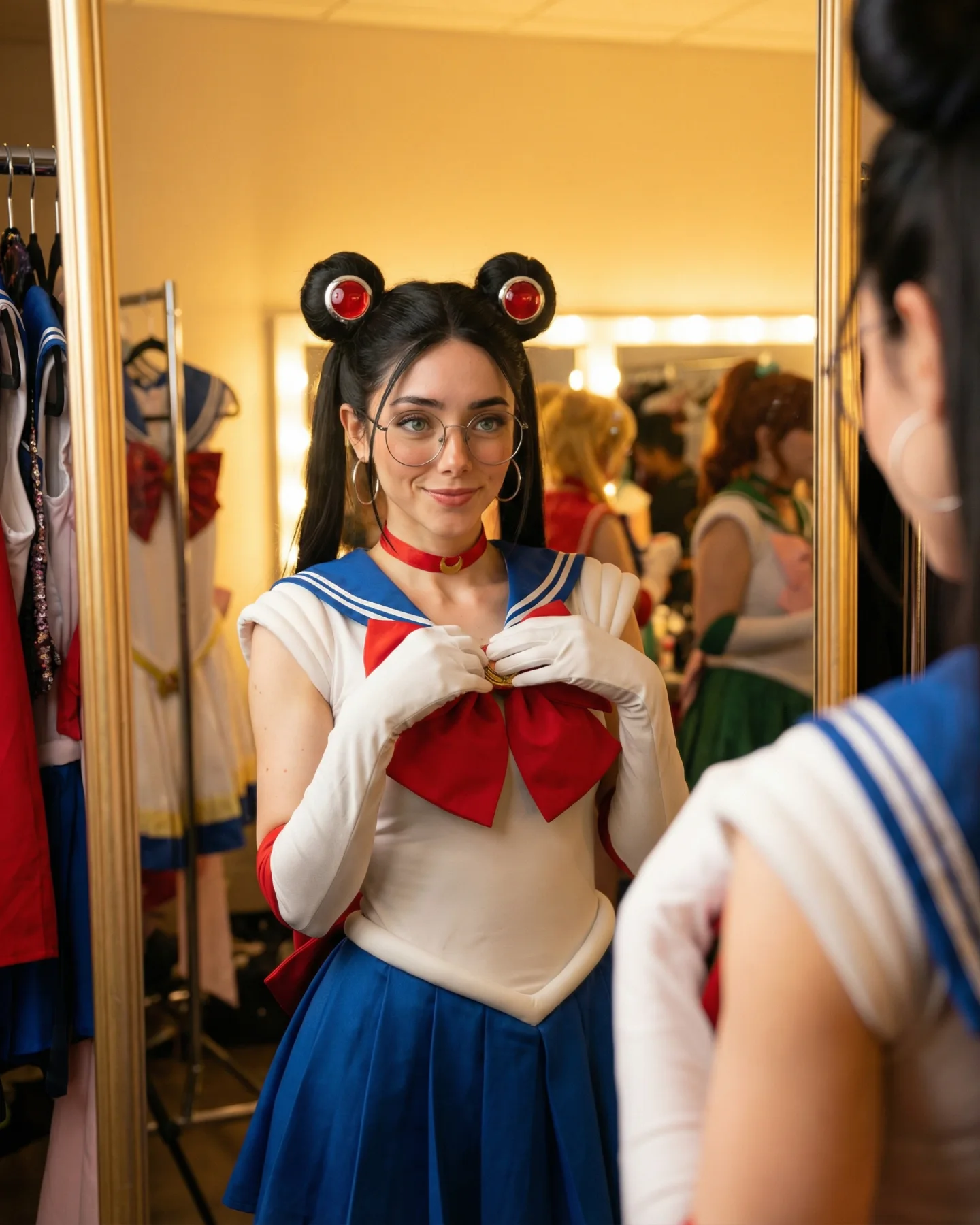
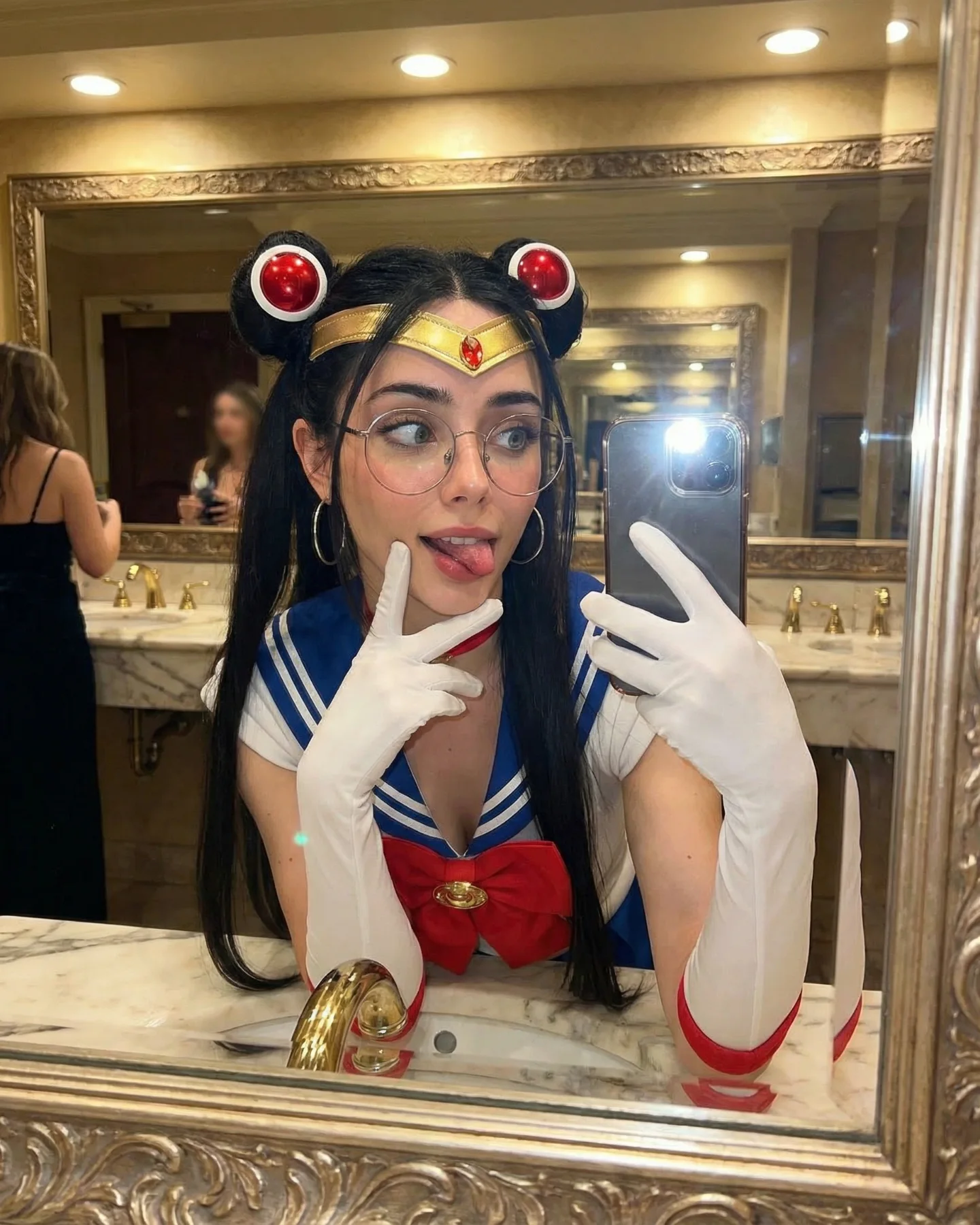
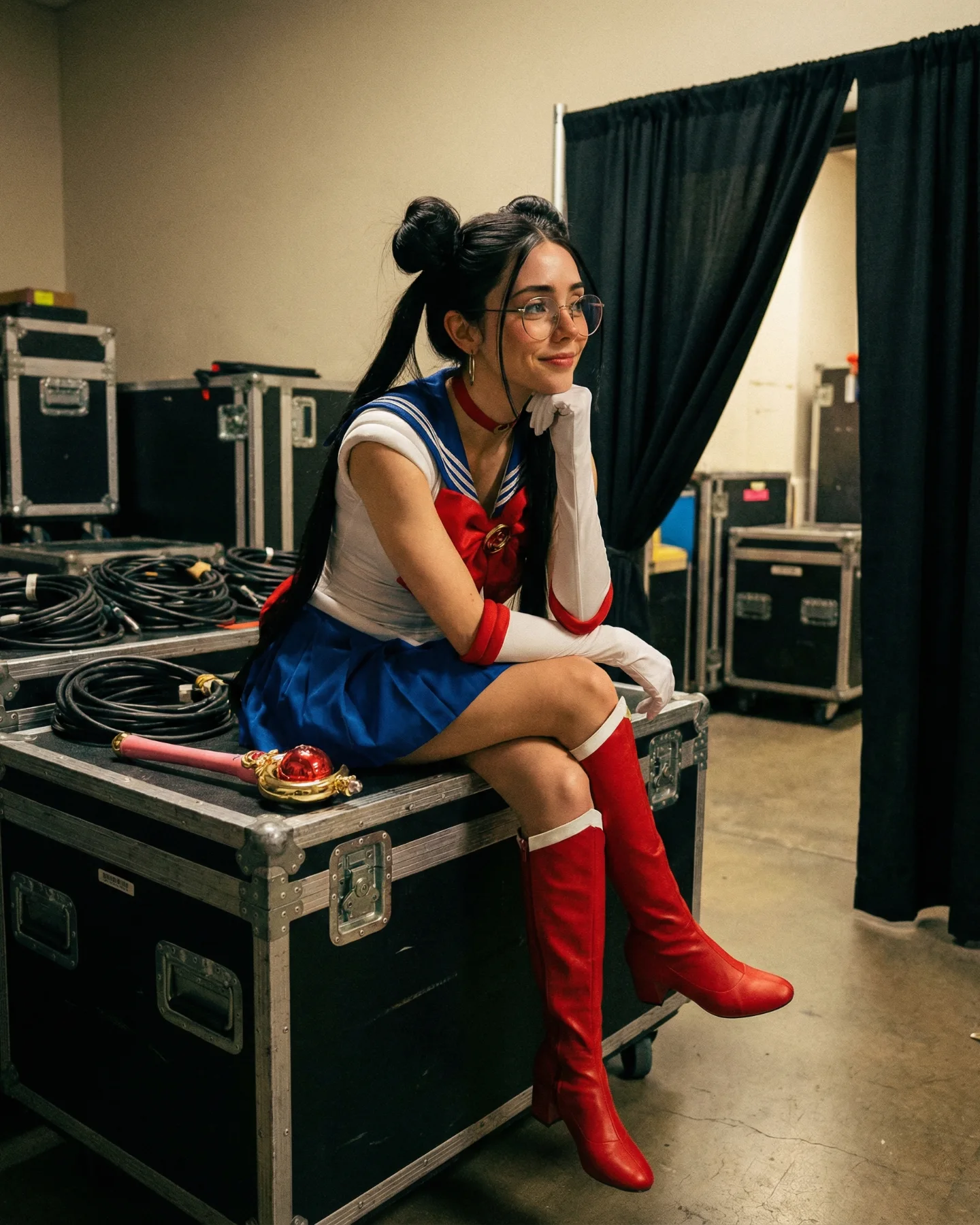
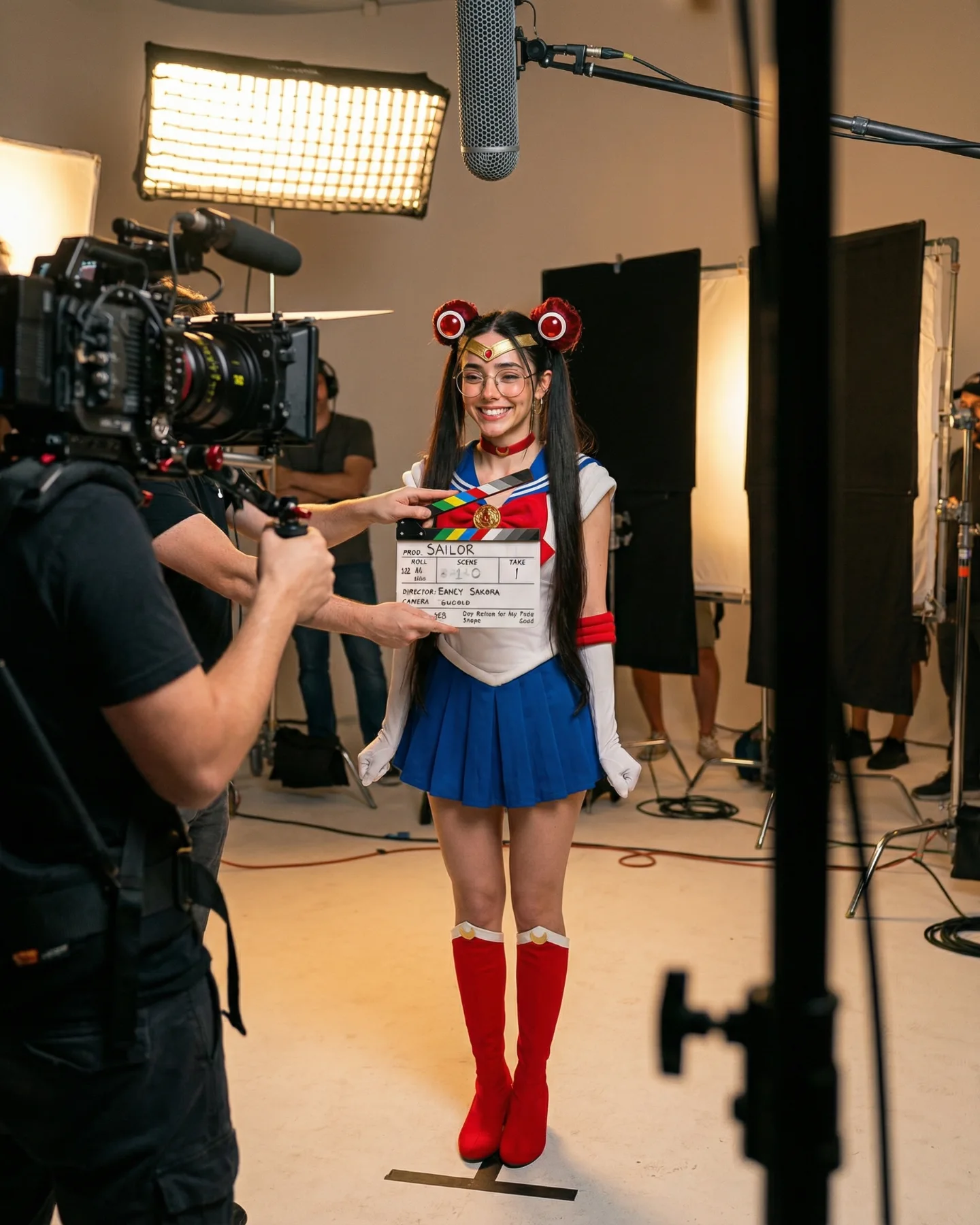
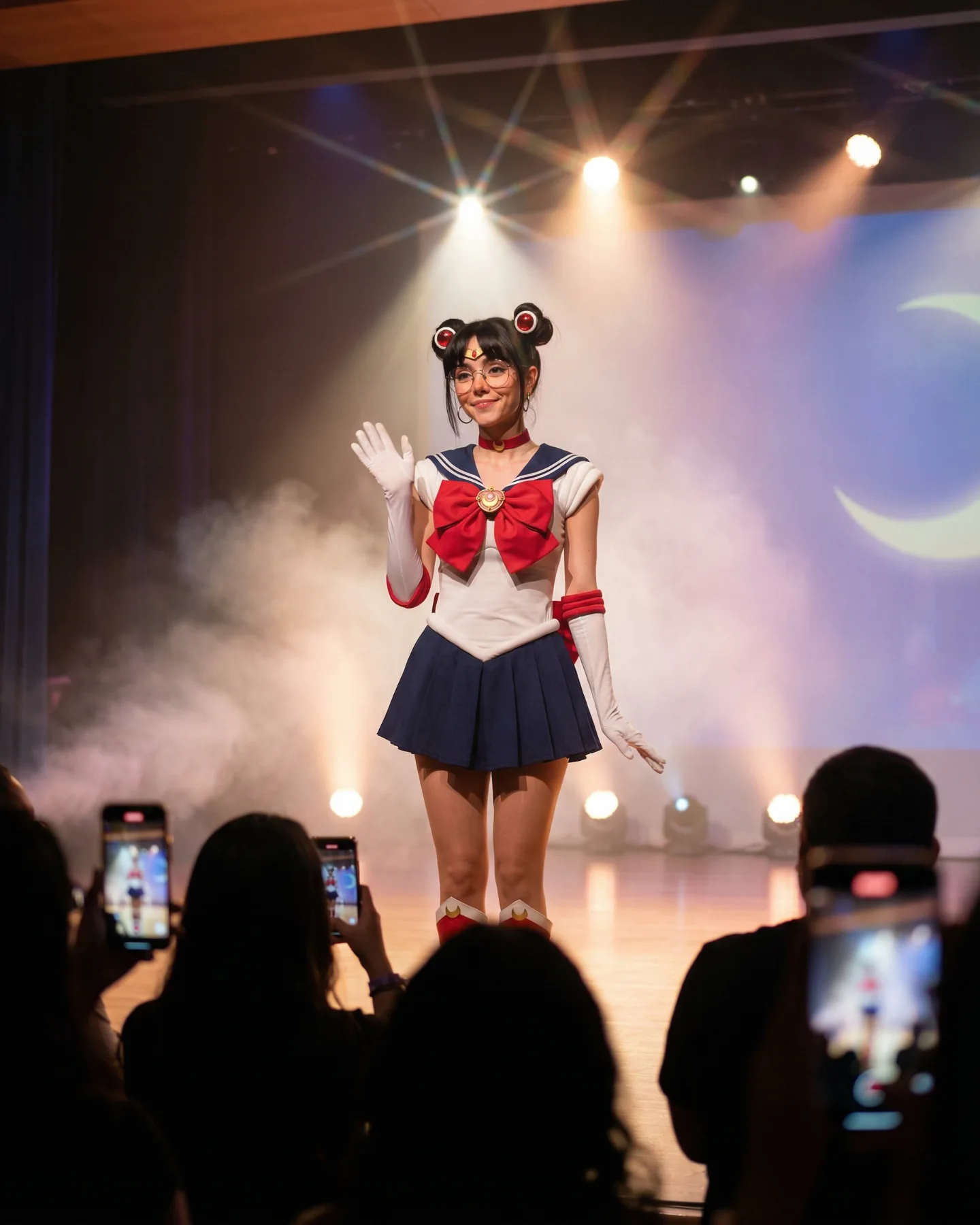
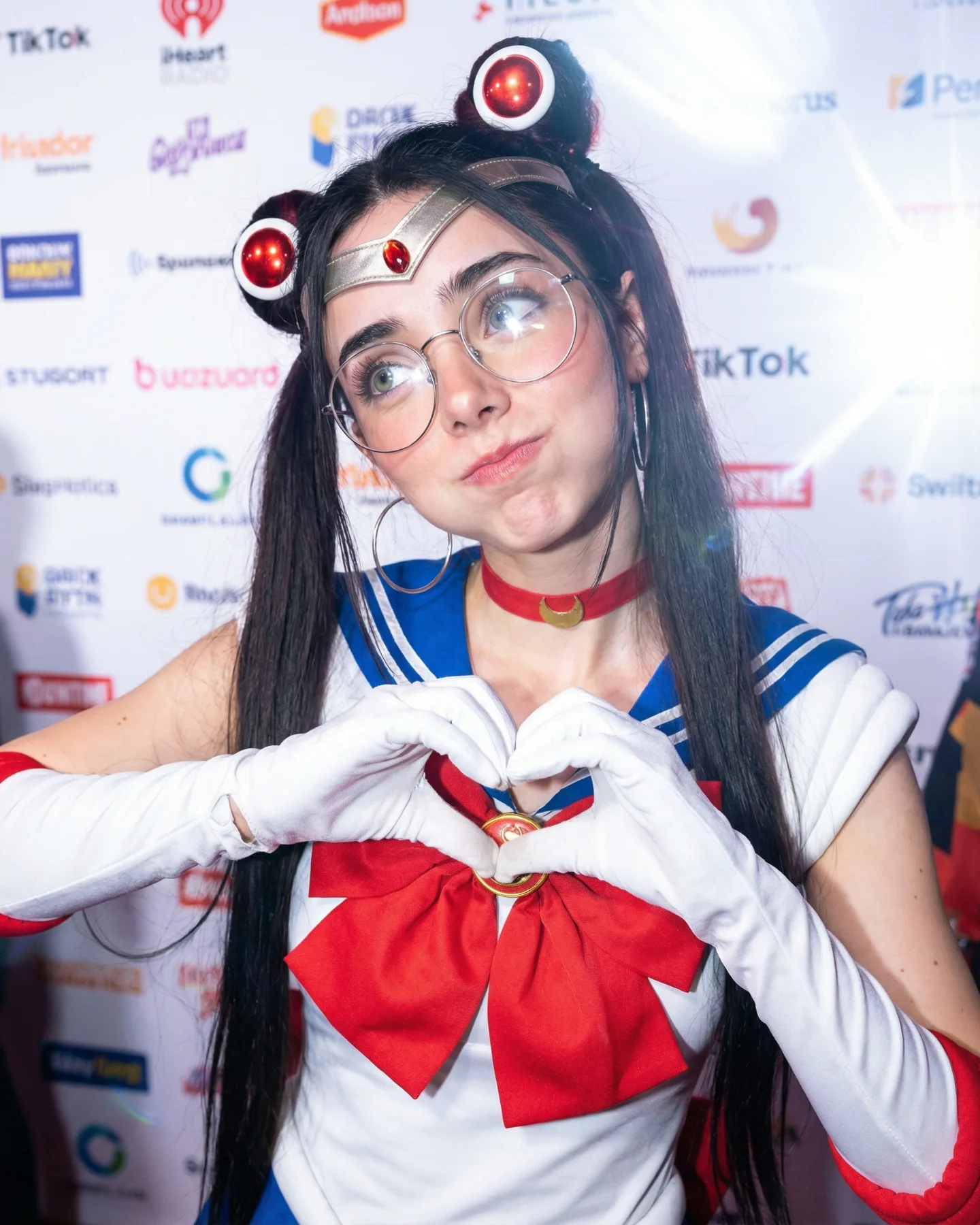
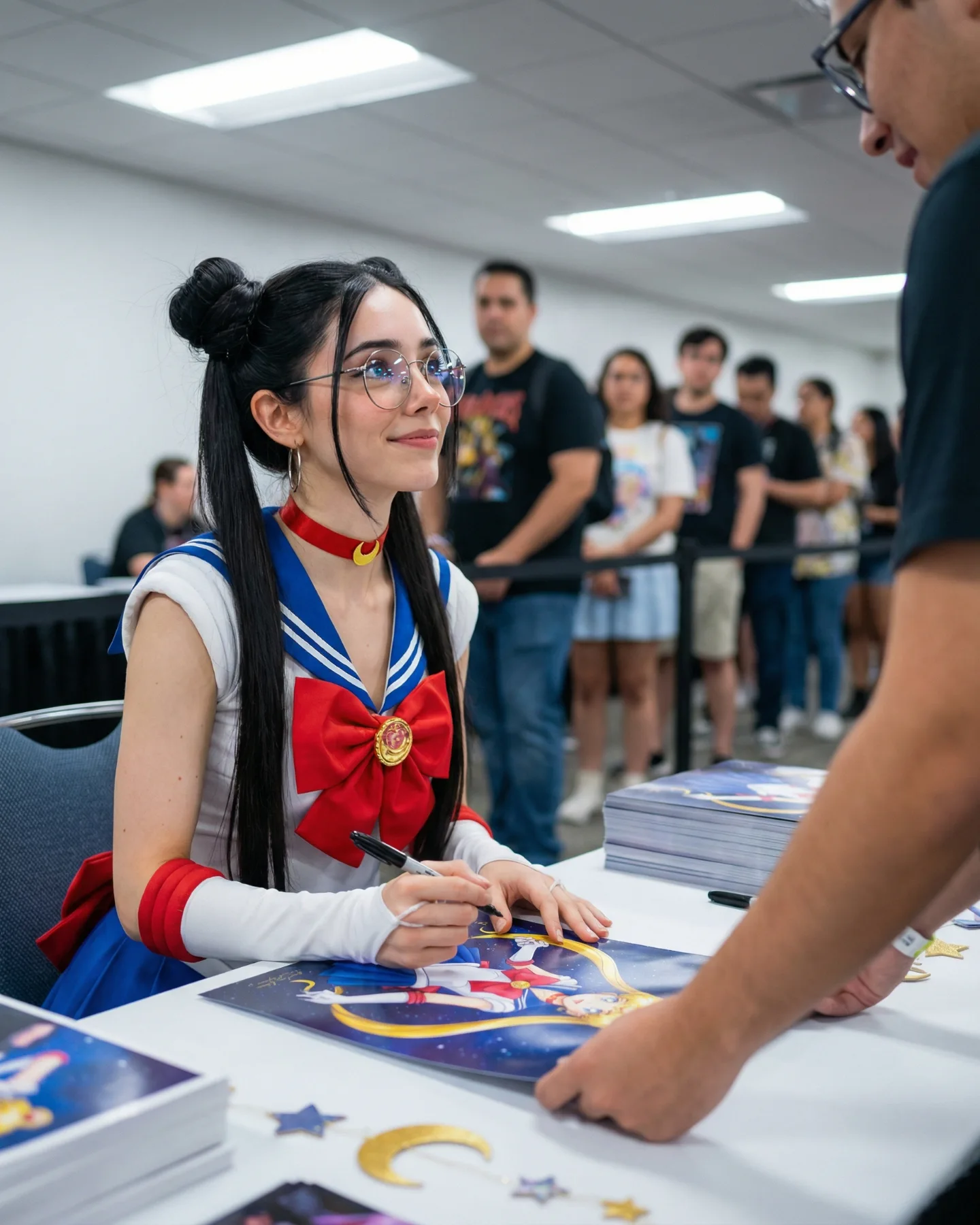
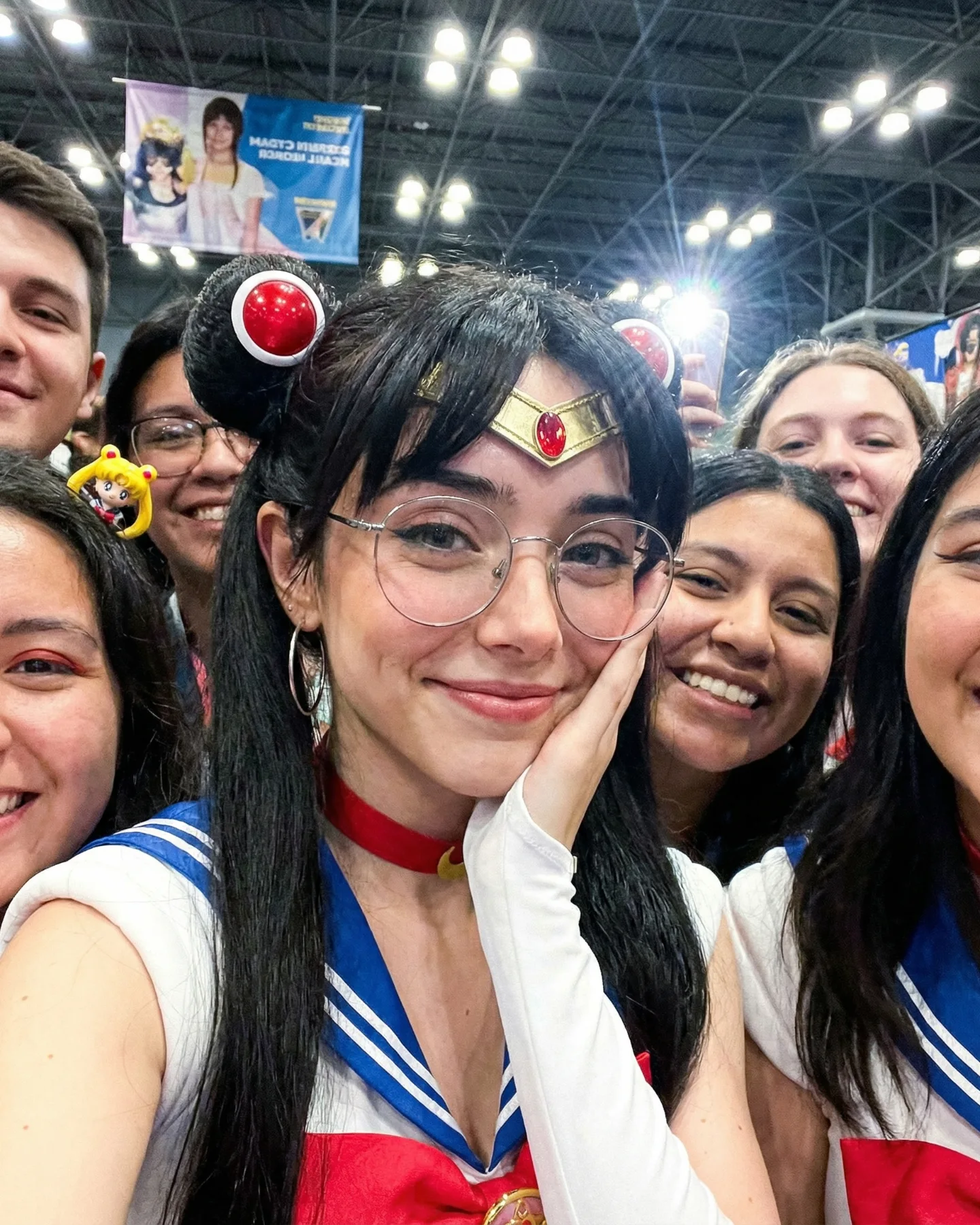
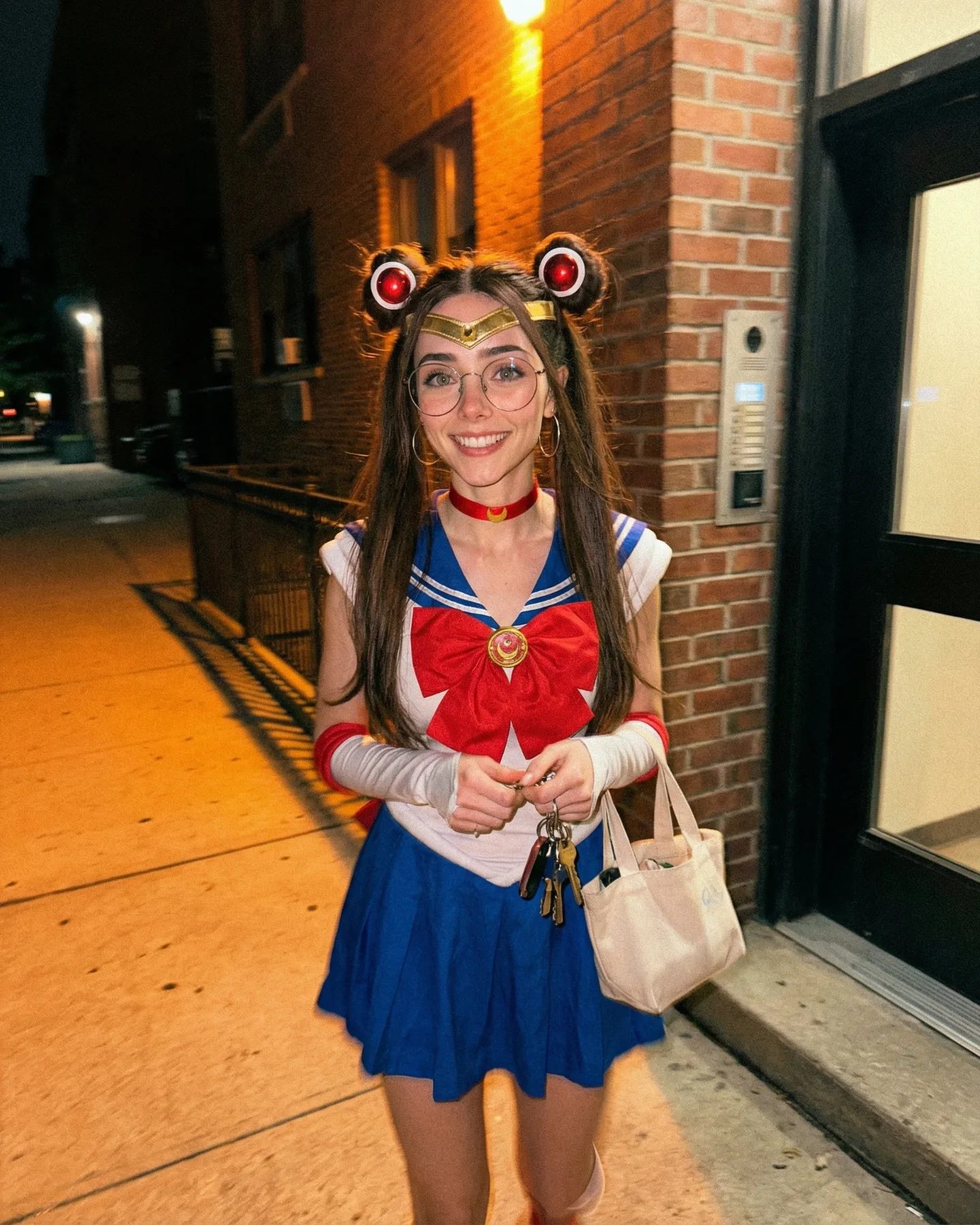
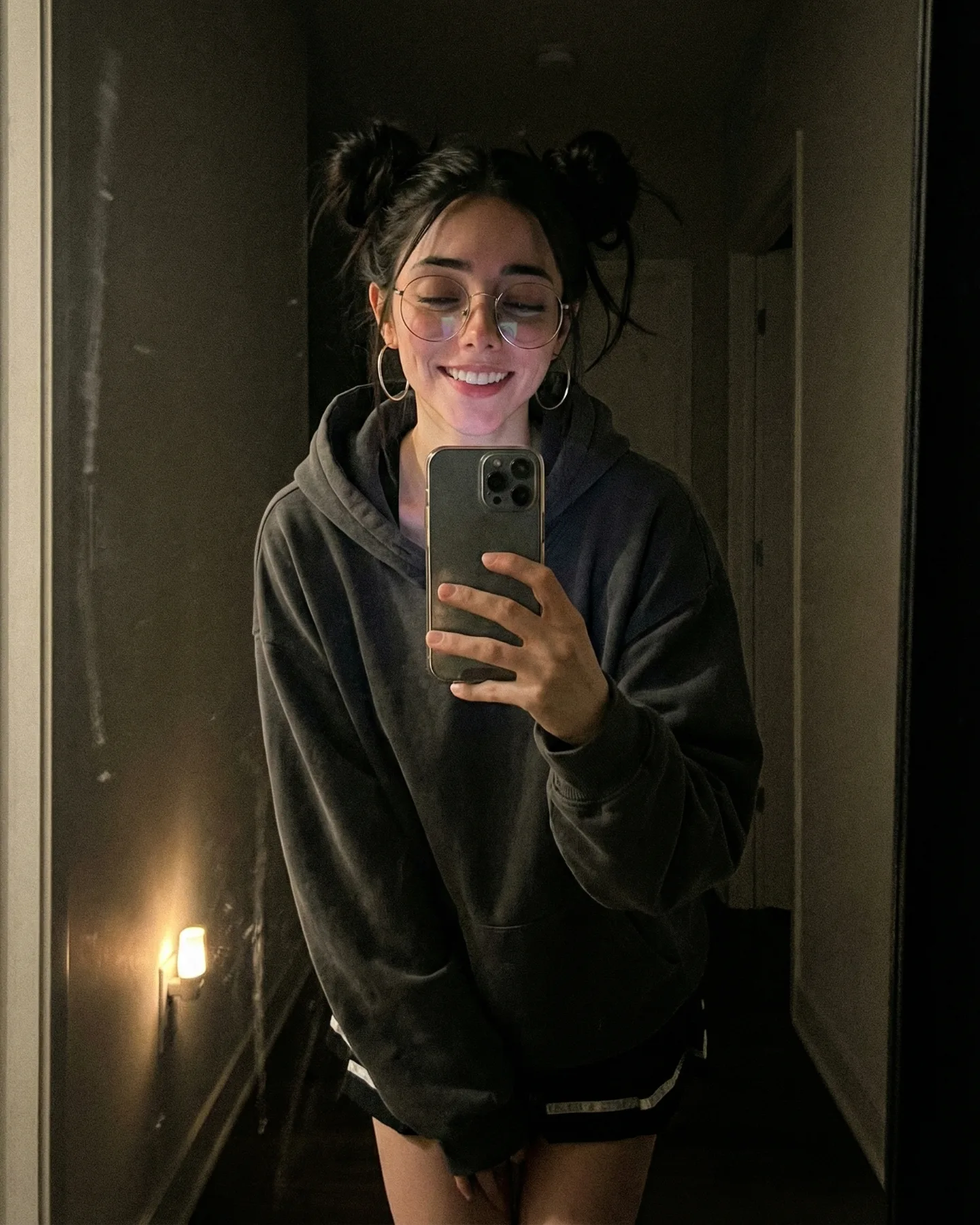

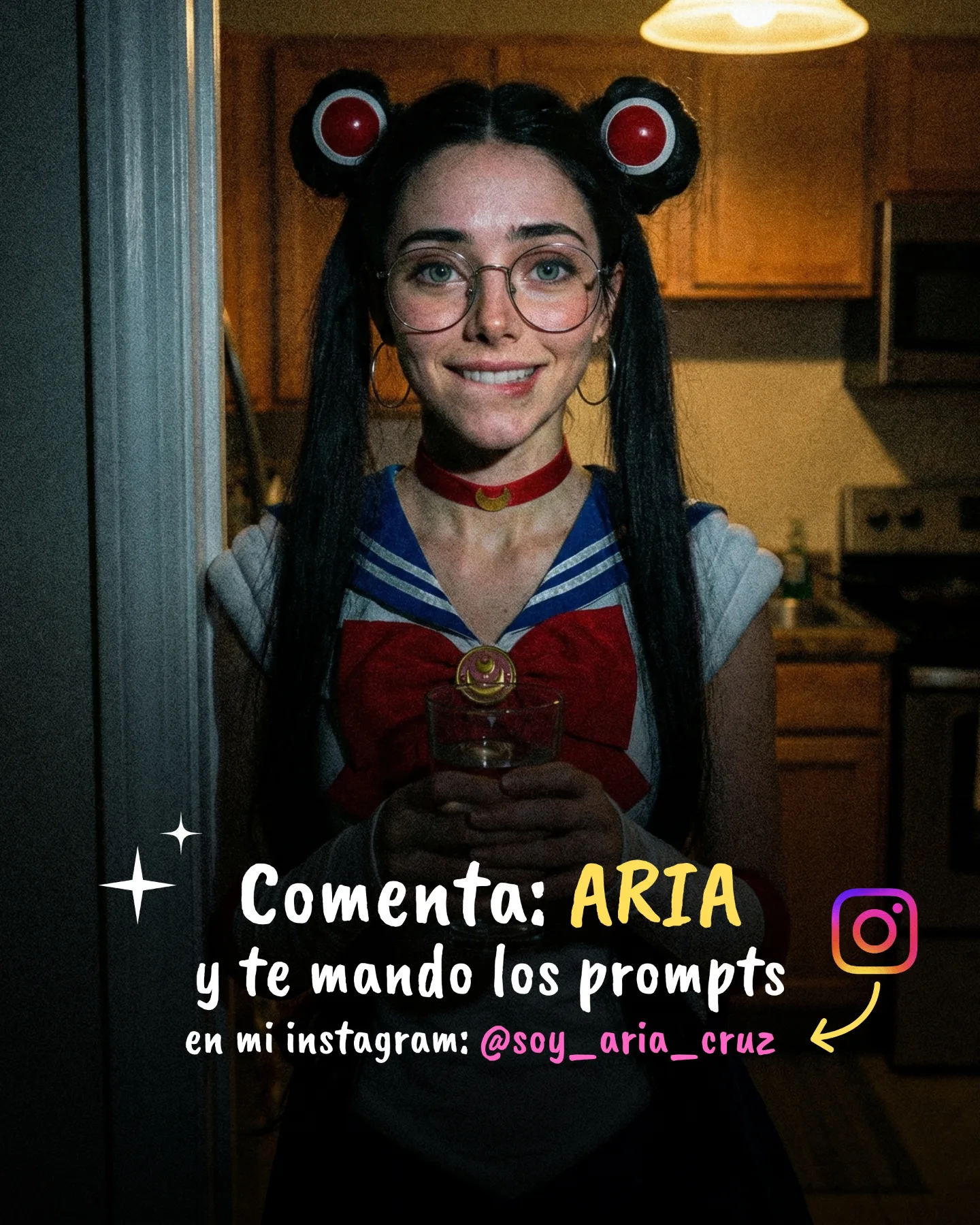
Sailor Moon 🌙💕 Como muchos me habéis pedido un Cosplay de Sailor Moon, aquí tenéis una pequeña secuencia 🙊 Si quieres los prompts comenta "ARIA" y te lo paso por mensajes 💌
Sailor Moon 🌙💕 Como muchos me habéis pedido un Cosplay de Sailor Moon, aquí tenéis una pequeña secuencia 🙊 Si quieres los prompts comenta "ARIA" y te lo paso por mensajes 💌
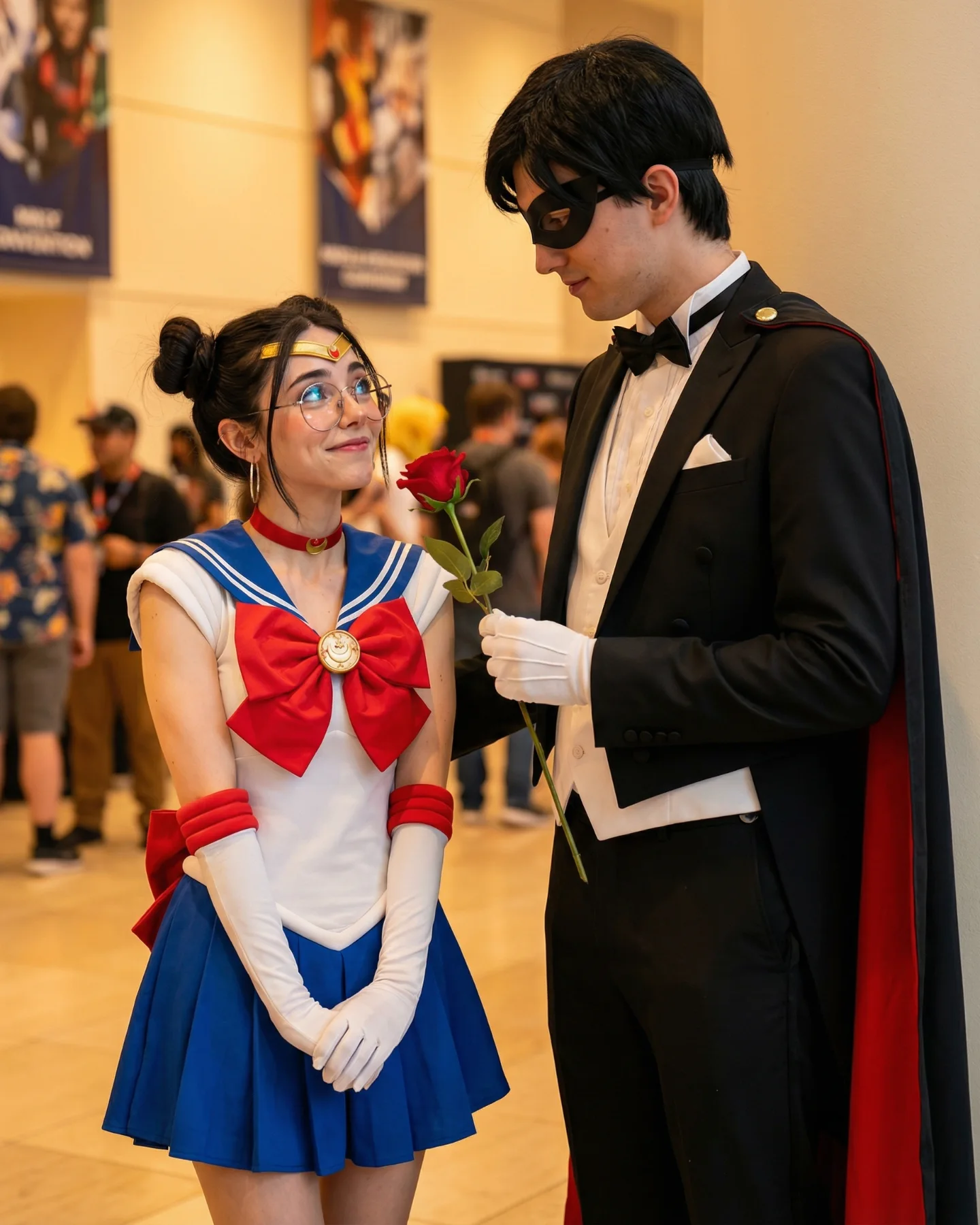
This image works because it captures the emotional logic of cosplay, not just the costume logic. The characters are recognizable immediately, but what really makes the frame land is the interaction. The rose, the height difference, the upward glance, and the quiet body language all turn this from a convention snapshot into a scene. That is a big distinction. Fans respond more strongly when a cosplay image recreates a relationship dynamic instead of only displaying clothing accuracy.
The convention background also helps. It keeps the image grounded in a real social space, which makes the moment feel discovered rather than over-engineered. That is useful for creators because public-event authenticity often performs better than trying to simulate epic fantasy in a flat studio. Here, the fantasy stays in the costumes and the gesture, while the room provides proof that the moment actually happened.
The photo succeeds because it gives viewers three fast signals at once: character recognition, romantic staging, and event authenticity. Character recognition comes from the costume colors and props. Romantic staging comes from the rose and eye line. Event authenticity comes from the blurred attendees and banners in the background. Any one of those alone would be enough for a decent image. Together, they make the frame easier to stop on and easier to share.
Another strength is that the body language stays soft. Neither person is overacting. That restraint works in the image’s favor because it keeps the scene sincere. A lot of fandom content becomes stiff when people chase exact references too literally. Here, the cosplayers look like they are enjoying the interaction, which makes the image warmer and more human.
| Signal | Evidence (from this image) | Mechanism | Replication Action |
|---|---|---|---|
| Relationship storytelling | The male cosplayer offers a rose while the female cosplayer looks up at him | A clear gesture makes the image feel like a scene, not just a costume record | Prompt one recognizable interaction beat between characters instead of two separate poses |
| Immediate fandom clarity | Iconic bow, skirt, mask, tuxedo, cape, and hairstyle identify the pair quickly | Fast recognizability raises stop power and fan engagement | Lock the most iconic silhouette and prop details before adding secondary styling |
| Convention proof | Blurred attendees and event banners remain visible behind the pair | Public-event context adds authenticity and social energy | Keep background event cues soft but legible rather than removing them entirely |
| Emotional warmth | The expressions are gentle rather than exaggerated | Softer performance makes the characters feel approachable and believable | Direct the faces toward warmth and recognition, not only theatrical intensity |
This setup is less ideal for solo character spotlights, armor-heavy action cosplay, or highly cinematic fantasy composites. The strength here is sincerity, social context, and readable interaction. Overloading the frame with effects would weaken that clarity.
Transfer recipe one: Keep the duo framing, eye-line interaction, and one symbolic prop. Change the characters while preserving the relational beat. Slot template: {character pair} {signature prop} {soft interaction} {event setting}.
Transfer recipe two: Keep the convention-hall realism and medium-full portrait. Change the mood from romantic to rivalry or friendship by swapping the prop and facial expressions. Slot template: {duo cosplay} {event background} {gesture cue} {relationship tone}.
Transfer recipe three: Keep the iconic-costume-meets-real-space formula. Change the location from convention hall to hotel lobby or backstage corridor while preserving the same paired body language. Slot template: {public event space} {accurate costumes} {recognizable interaction} {fan-service mood}.
The image is visually successful because it avoids fighting itself. The costumes are colorful and specific, but the background is soft enough to stay supportive. The red rose gives the eye a focal punctuation point between the two figures. The height difference also creates a natural compositional slope, guiding the eye from the man’s face down through the rose and back to the woman’s expression.
The public-event lighting helps too. It is bright enough to show costume detail clearly, but neutral enough that the frame does not become theatrical. For creators, that is a useful lesson: a lot of cosplay imagery becomes stronger when you let the costume and the interaction carry the fantasy instead of depending on dramatic visual effects.
| Observed | Recreate |
|---|---|
| Two-character interaction with one central prop | Give the pair a single object or gesture that defines the scene immediately |
| Accurate costume markers against a soft event background | Keep the character signals crisp while letting the hall and crowd blur gently |
| Height contrast and opposing eye lines | Use body scale and gaze direction to create instant relational tension |
| Warm convention lighting without dramatic effects | Favor readable event light when the costumes already carry strong visual identity |
| Prompt chunk | What it controls | Swap ideas (EN, 2–3 options) |
|---|---|---|
| Sailor Moon and Tuxedo Mask standing together at a convention | Core fandom pairing and public setting | other anime duo at expo hall; magical-girl pair backstage; character couple in lobby |
| single red rose offered between them | Scene-defining romantic cue | letter, wand, bouquet, or hand-touch depending on the pair |
| soft admiring eye contact and gentle smiles | Emotional tone and sincerity | playful teasing; shy reunion; rivalry stare |
| blurred attendees and banners in the background | Event authenticity and social context | booth lights; signage; hallway crowd |
| accurate mask, cape, bow, gloves, skirt, and buns | Recognizability and fan trust | alternate costume versions; casual variants; upgraded detail level |
| centered medium-full vertical portrait | Readability of silhouettes and interaction | tighter waist-up crop; wider duo portrait; lower-angle hero shot |
Lock three things first: the iconic duo markers, the relational gesture, and the public event context. Those are the load-bearing elements. If any one of them disappears, the image becomes either generic cosplay or generic convention coverage.
The repeatable takeaway is simple: paired cosplay images become much more memorable when they recreate a relationship moment, not just two matching outfits in the same frame.