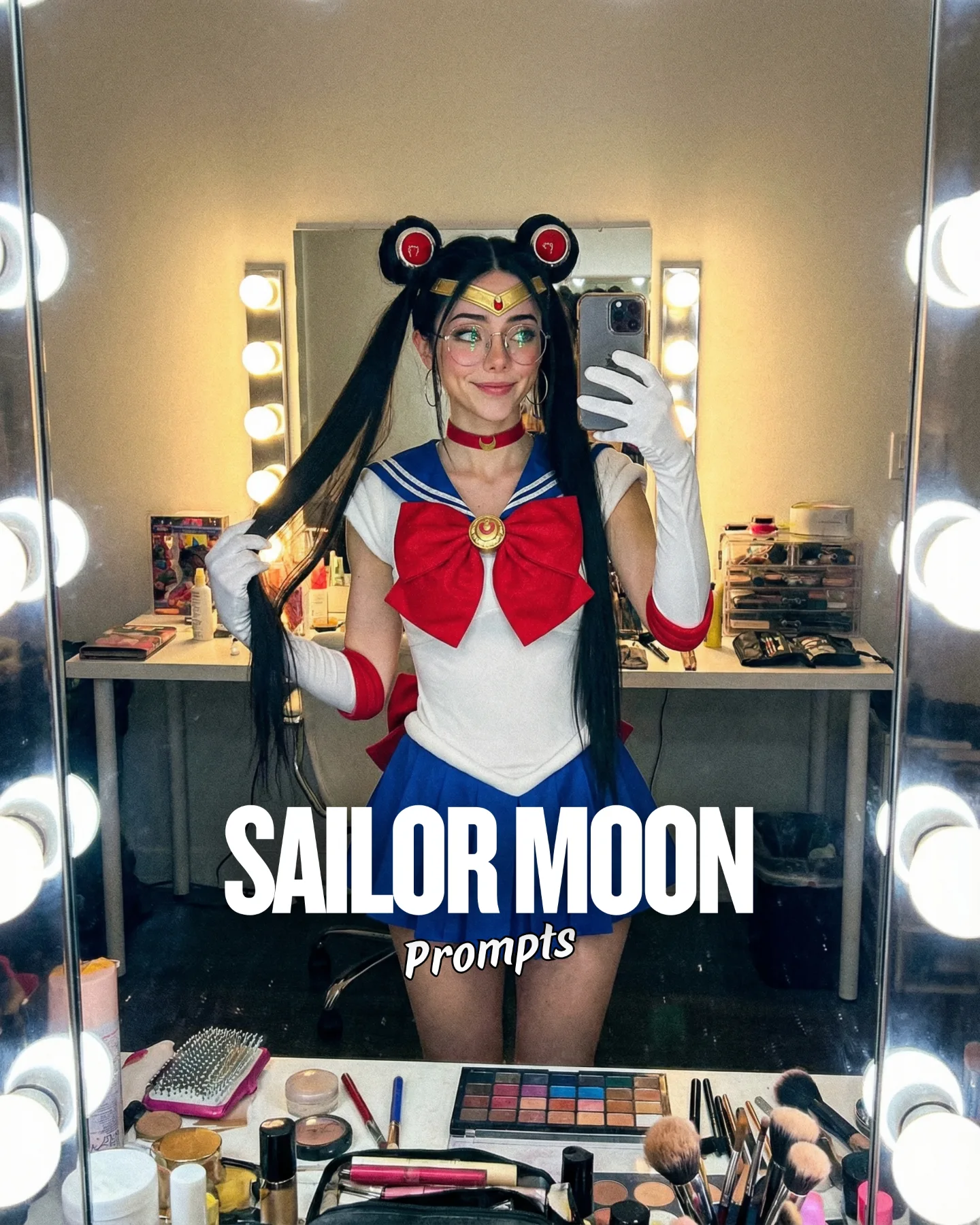
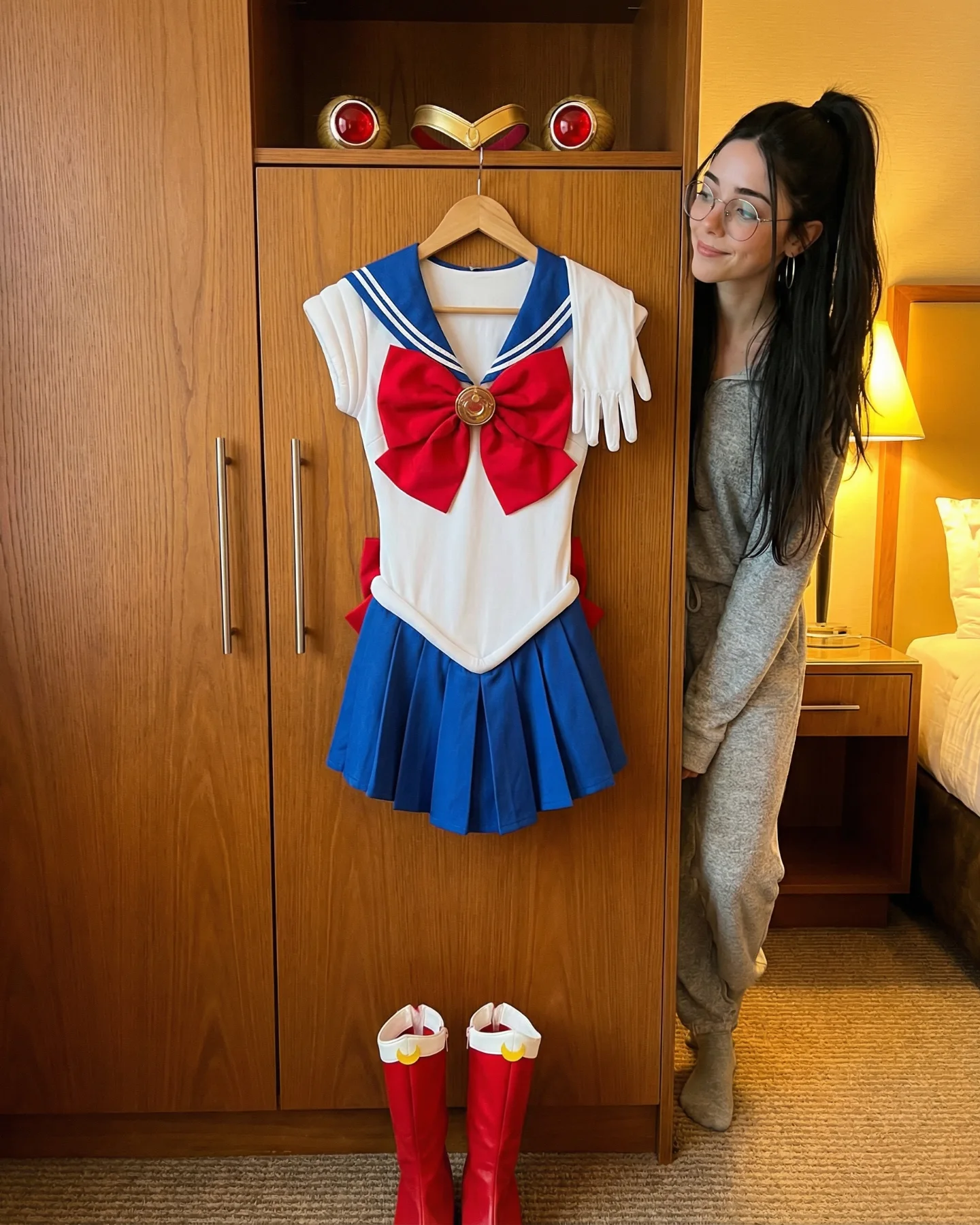
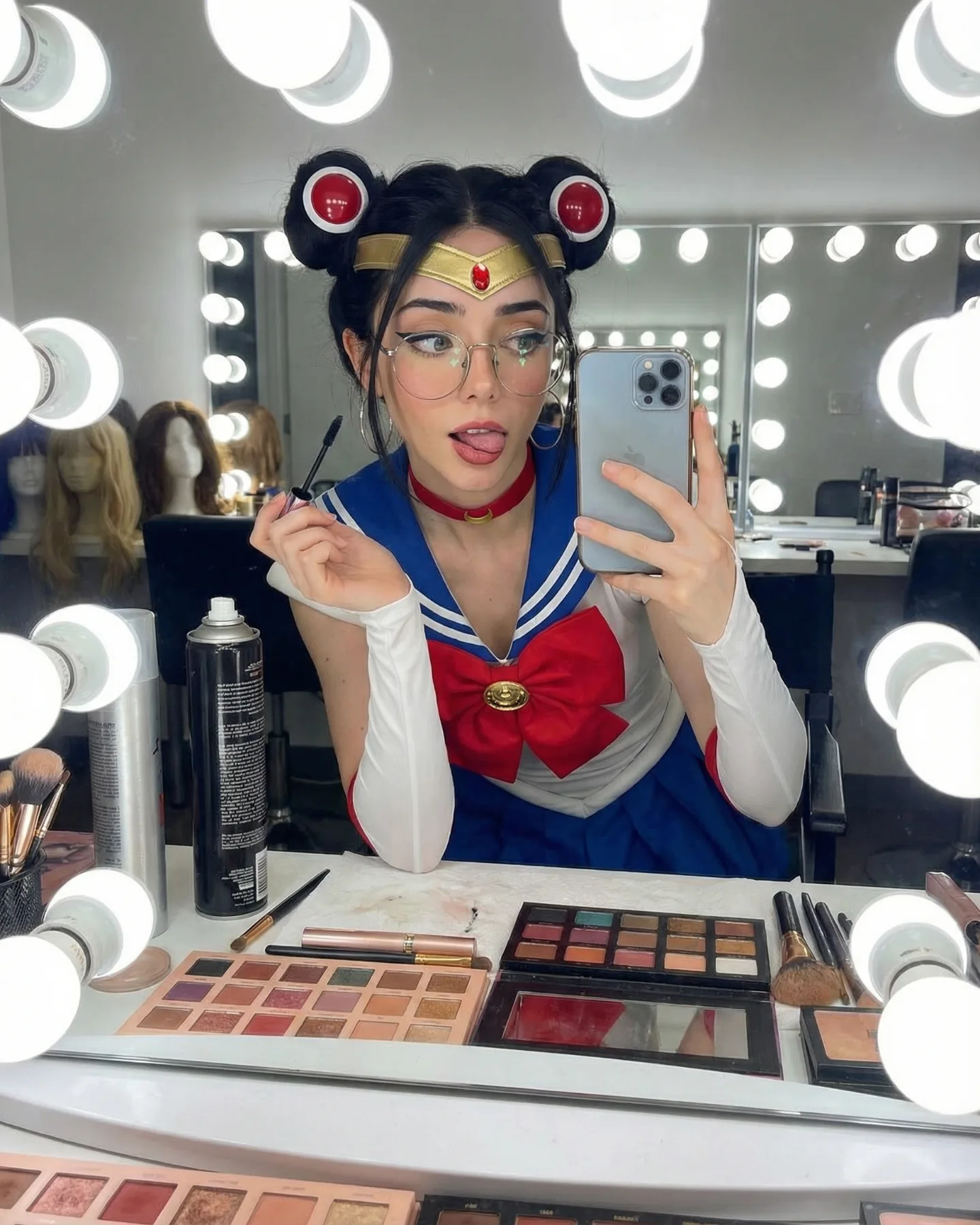
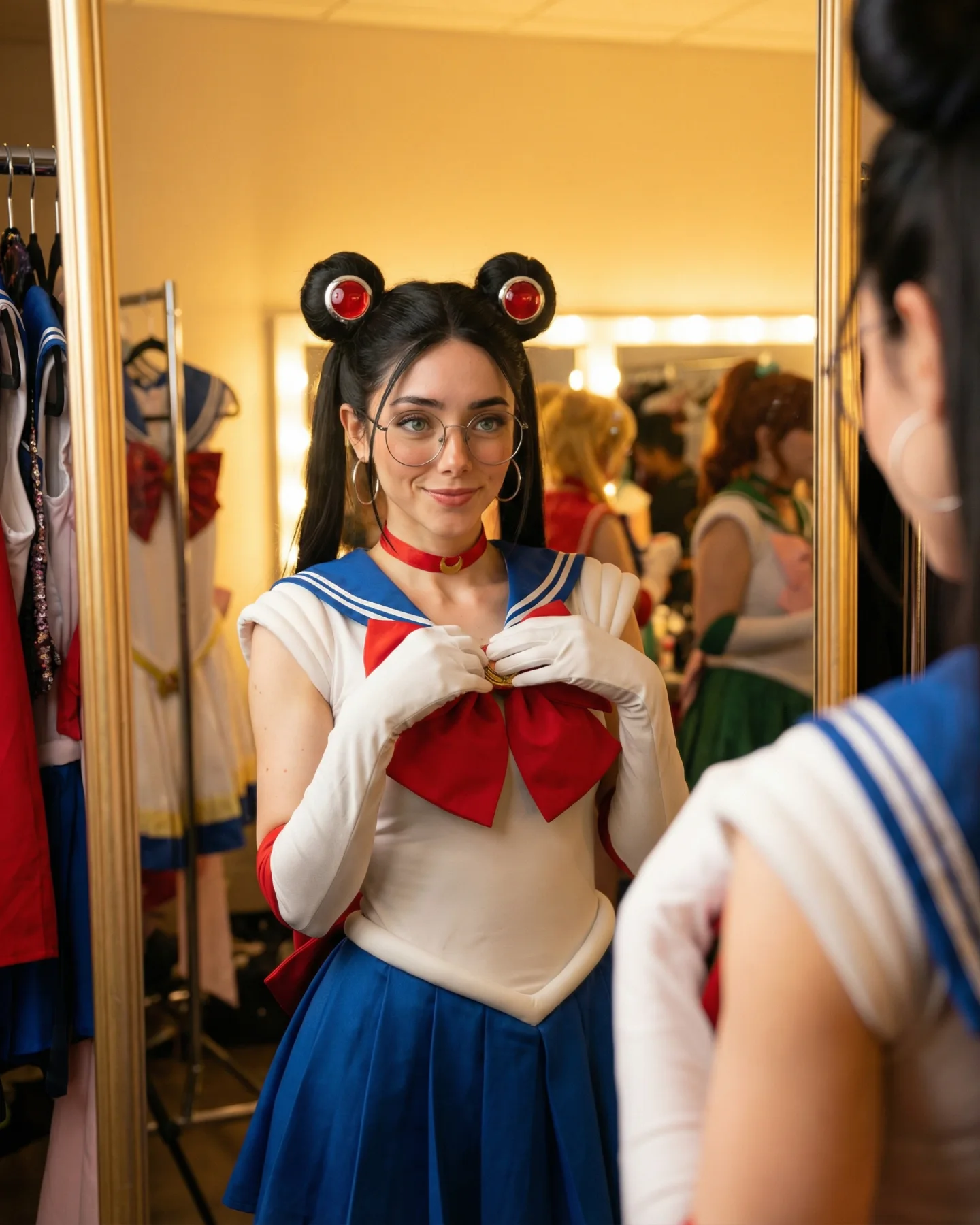
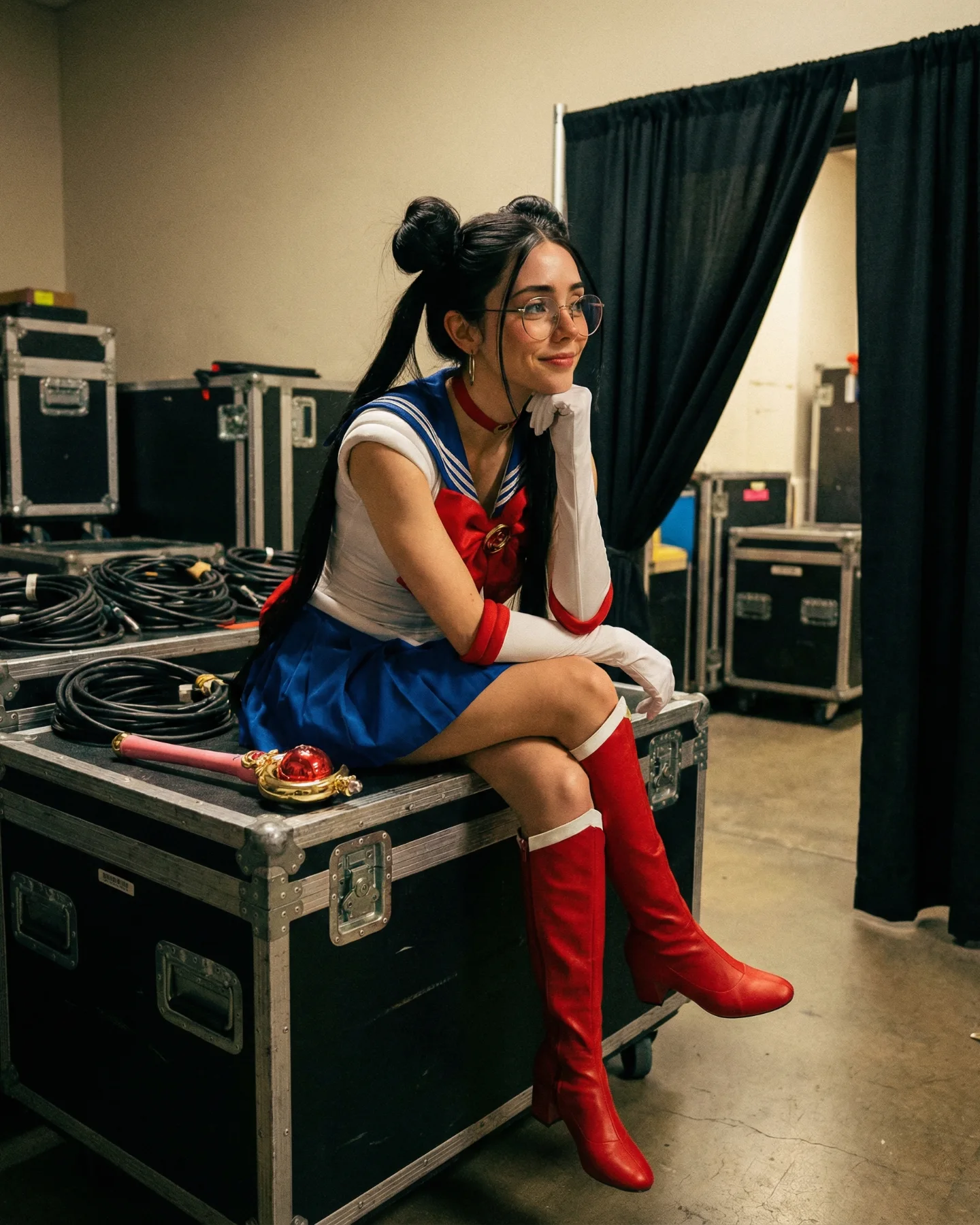
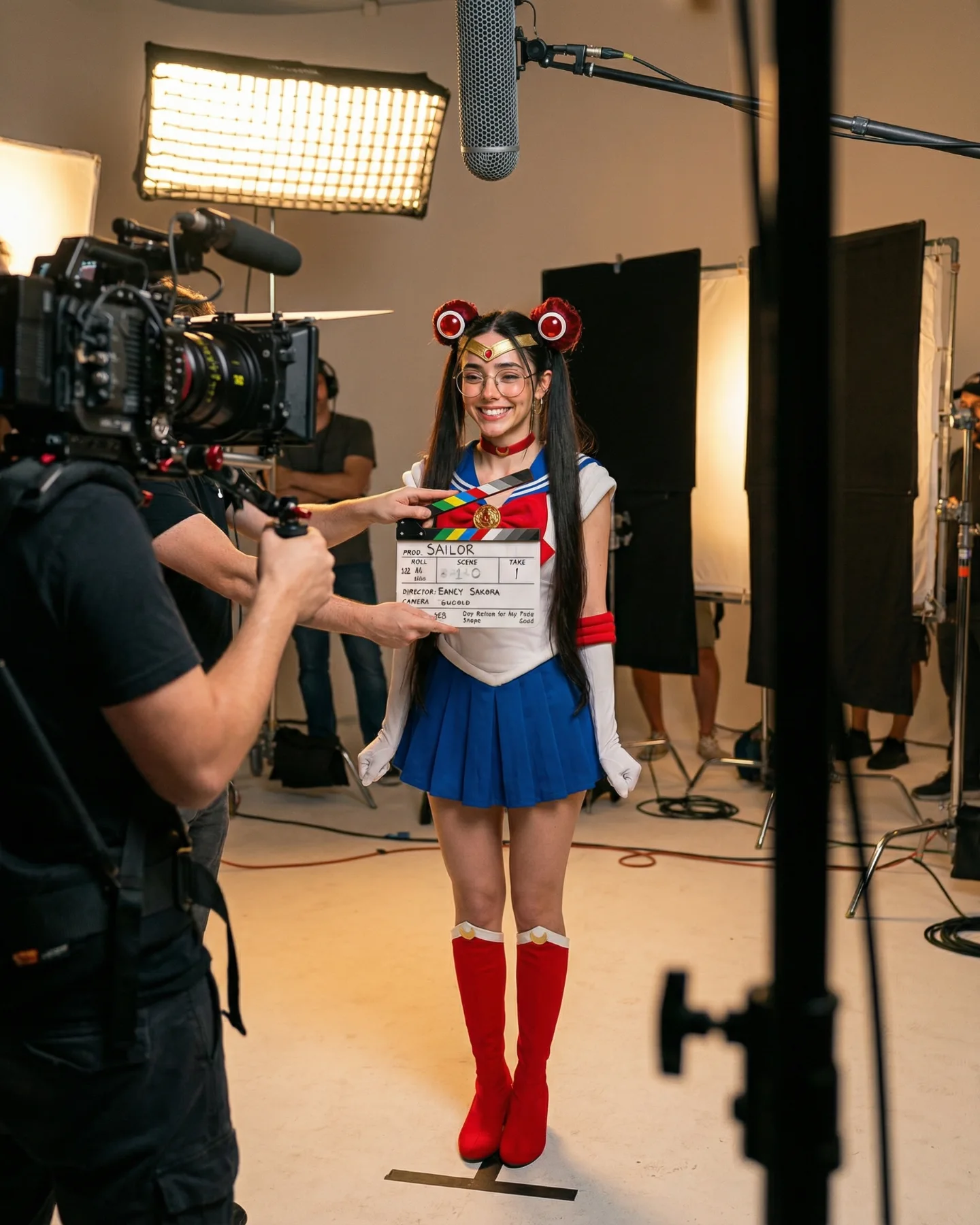
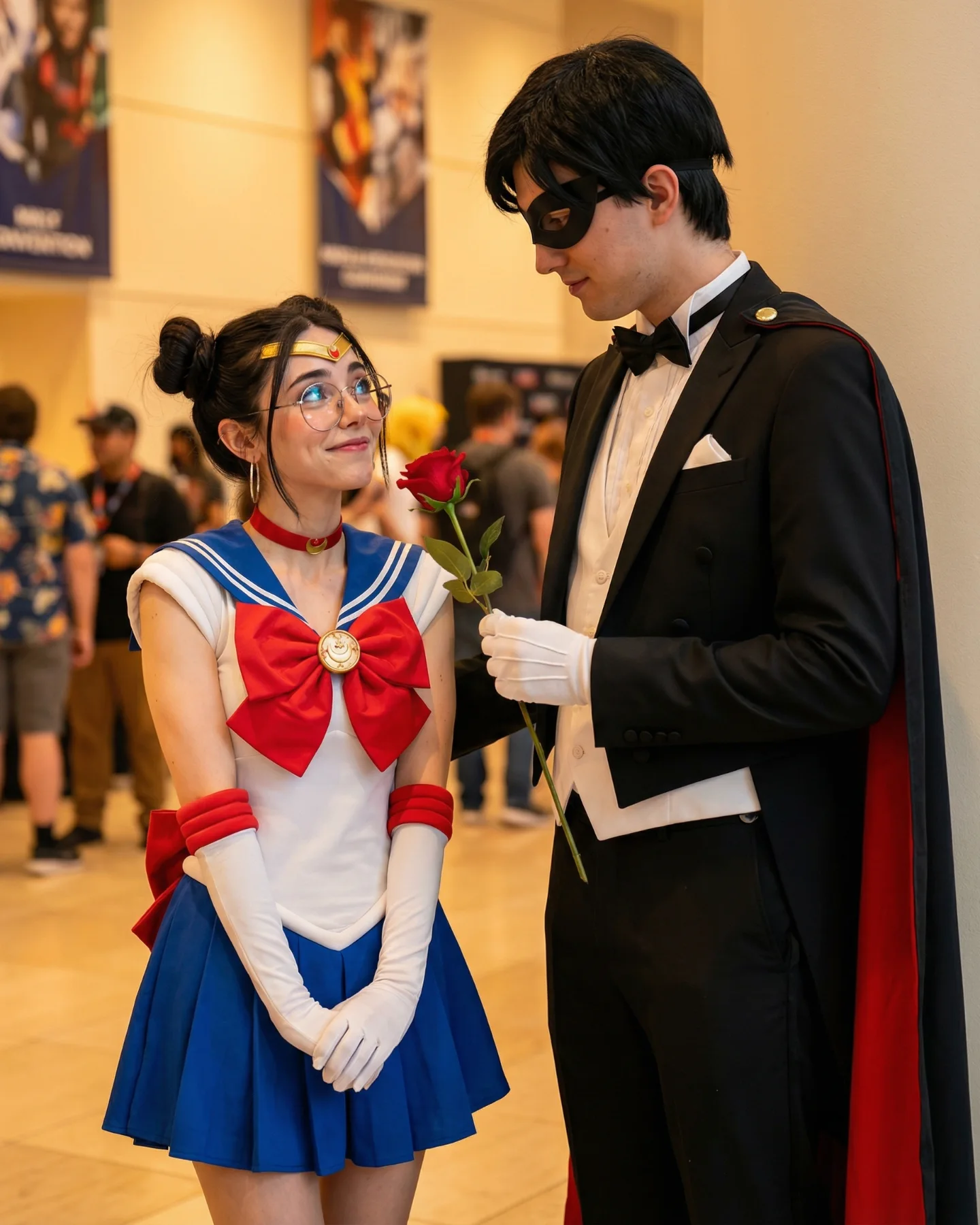
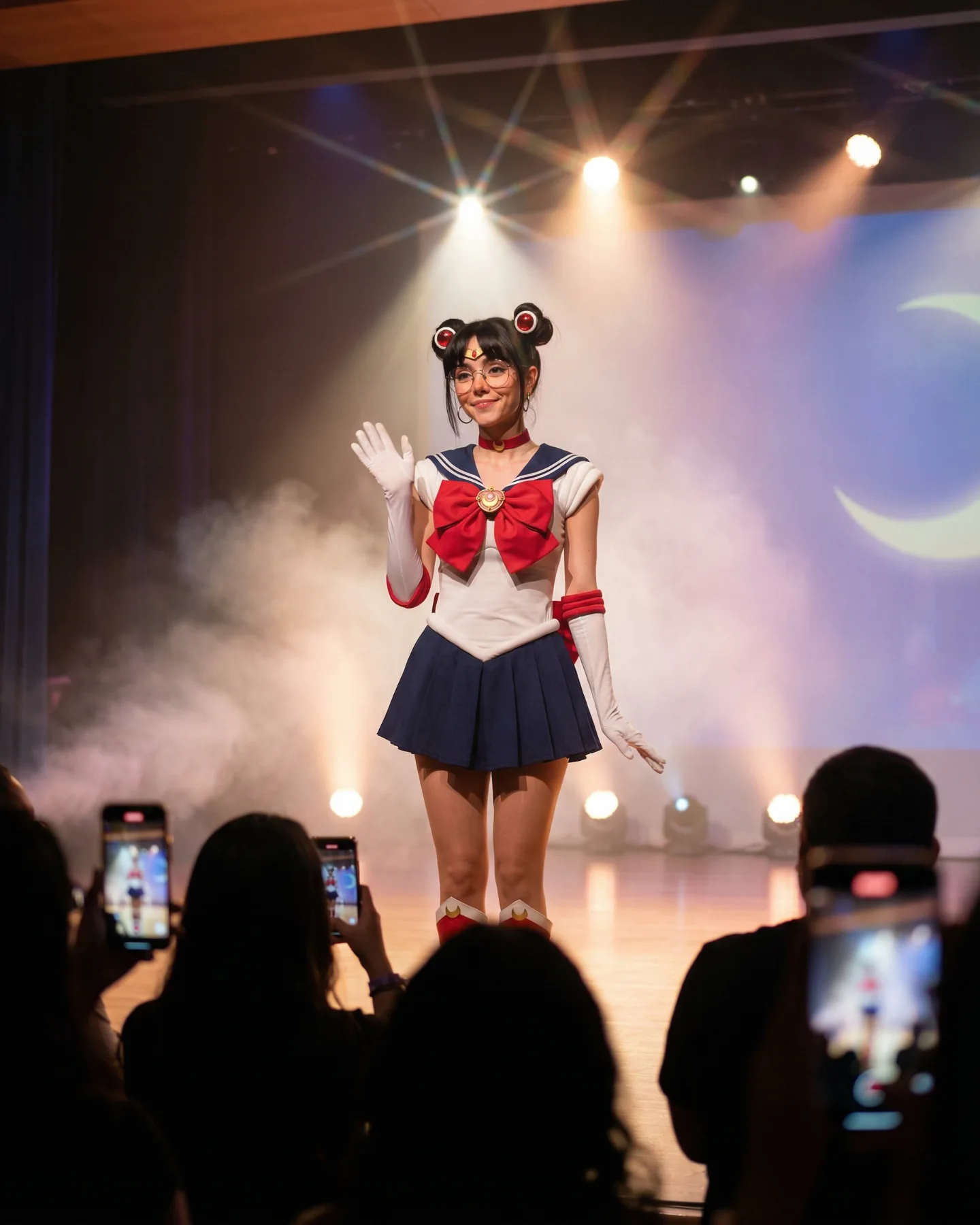
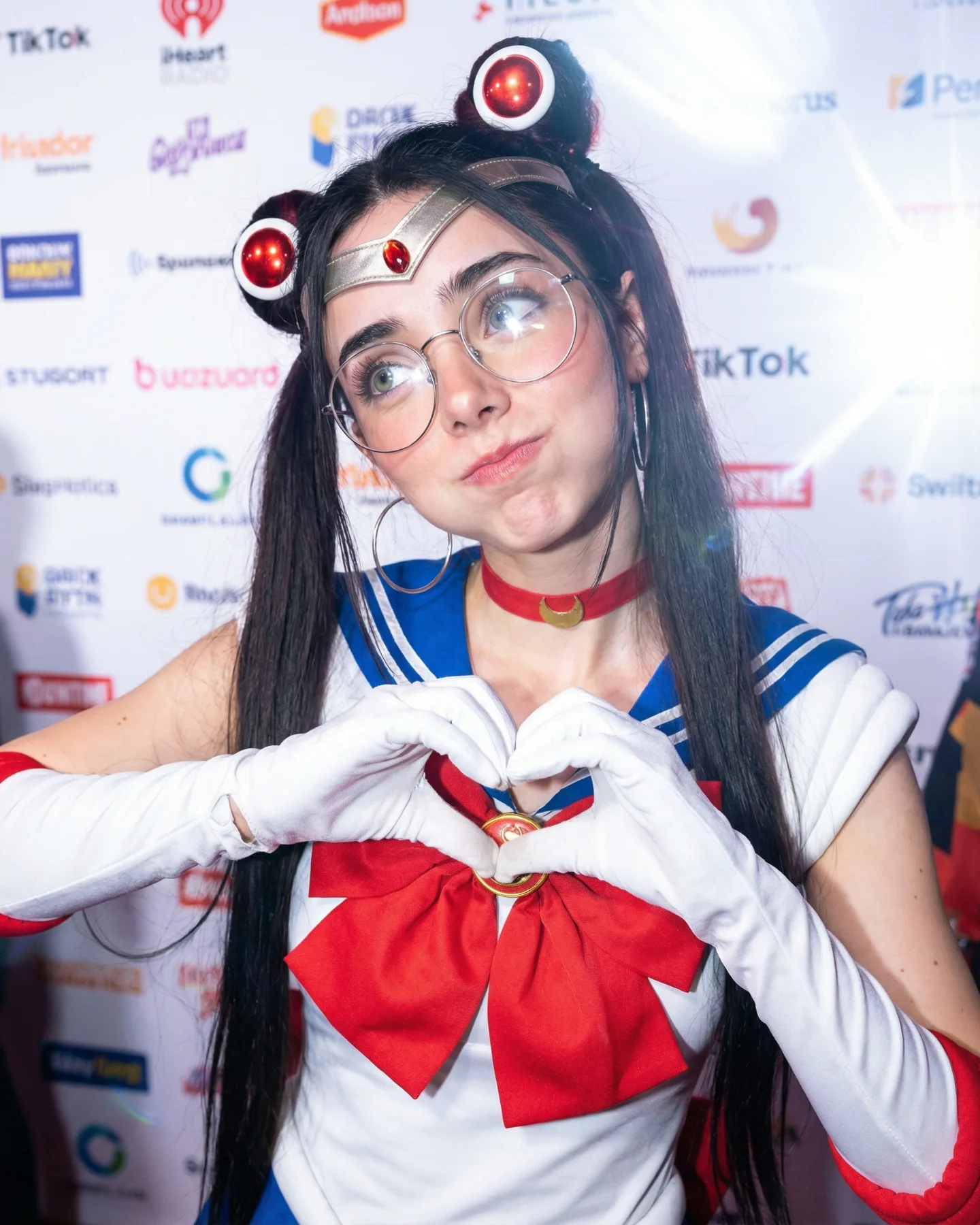
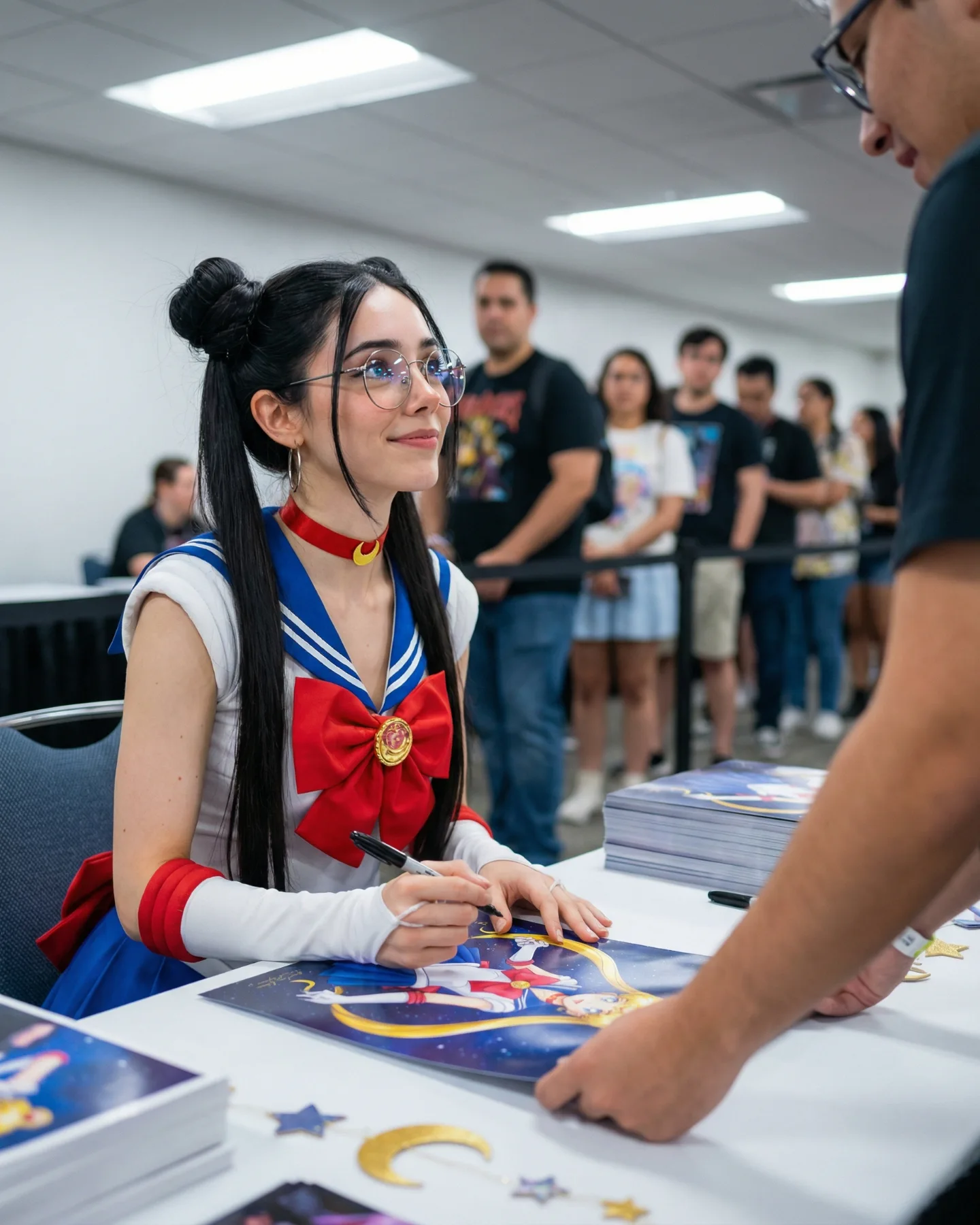
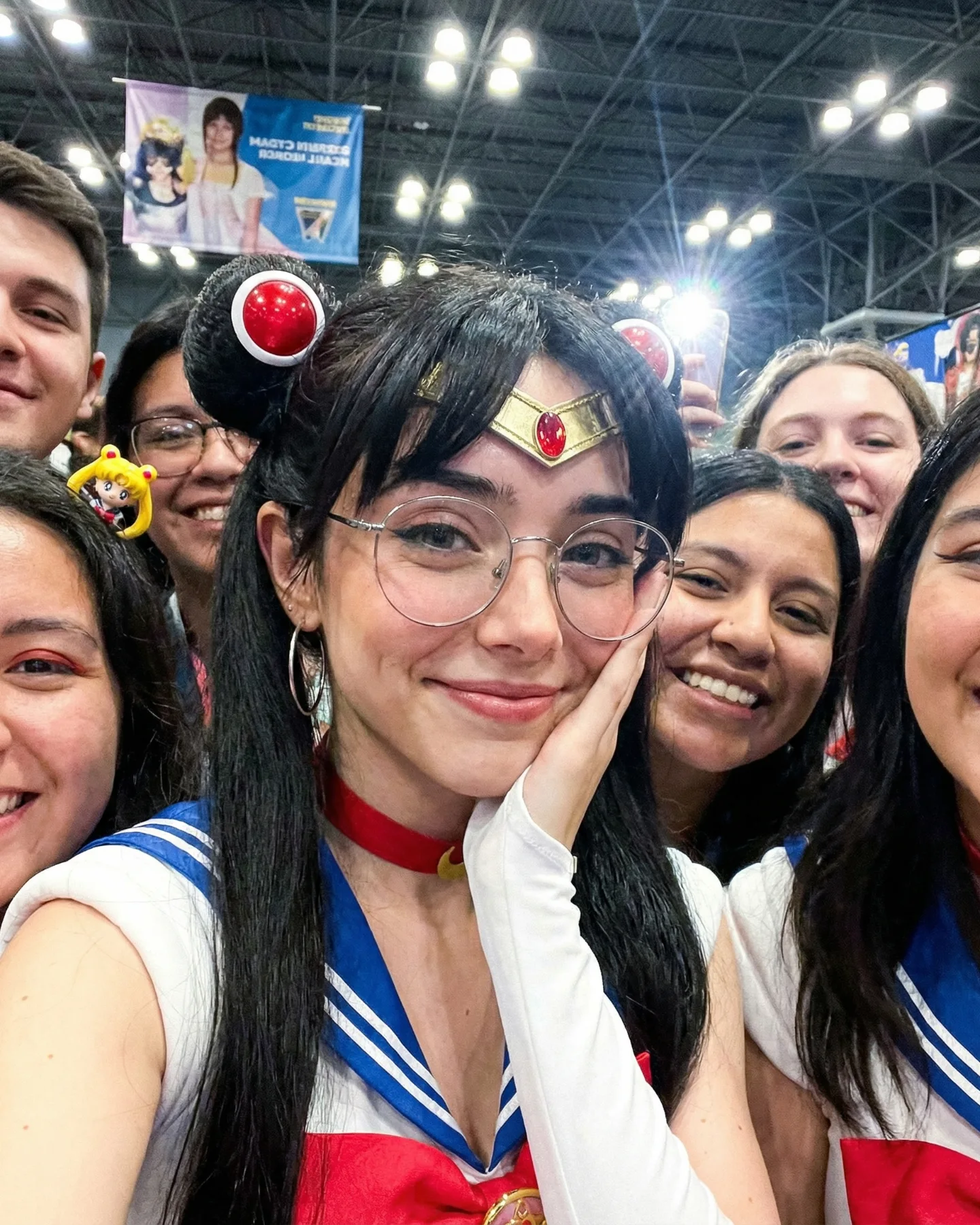
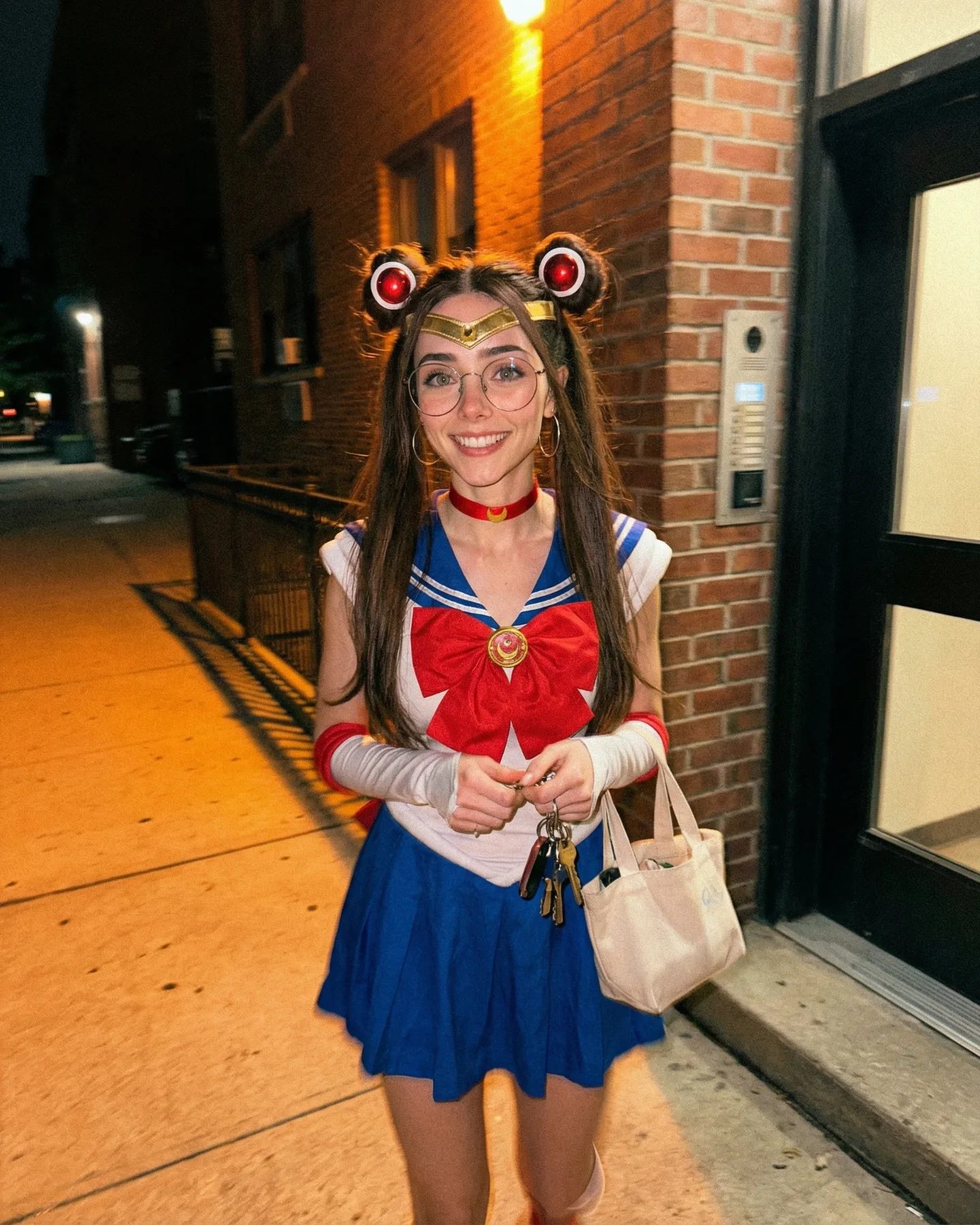
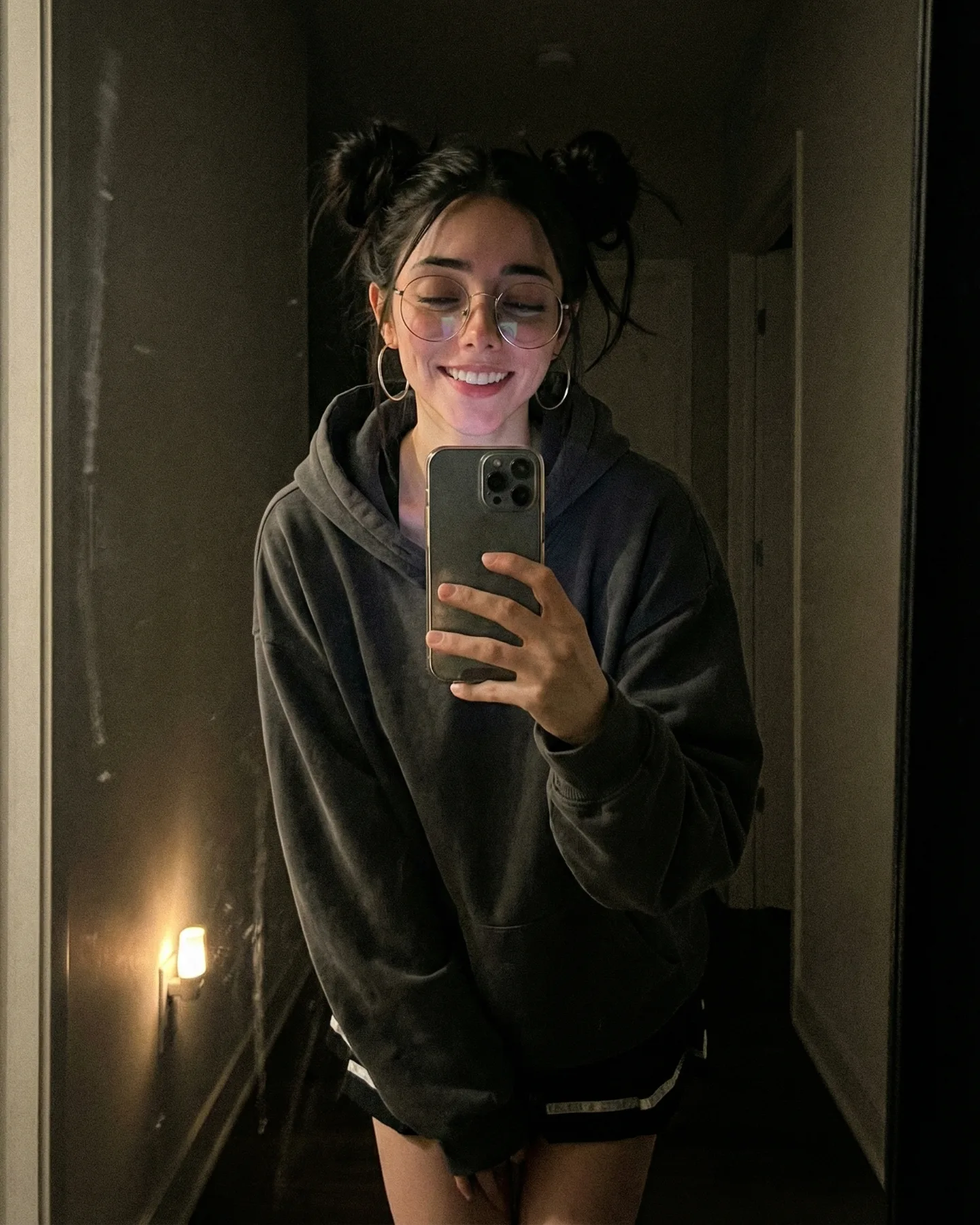


Sailor Moon 🌙💕 Como muchos me habéis pedido un Cosplay de Sailor Moon, aquí tenéis una pequeña secuencia 🙊 Si quieres los prompts comenta "ARIA" y te lo paso por mensajes 💌
Sailor Moon 🌙💕 Como muchos me habéis pedido un Cosplay de Sailor Moon, aquí tenéis una pequeña secuencia 🙊 Si quieres los prompts comenta "ARIA" y te lo paso por mensajes 💌
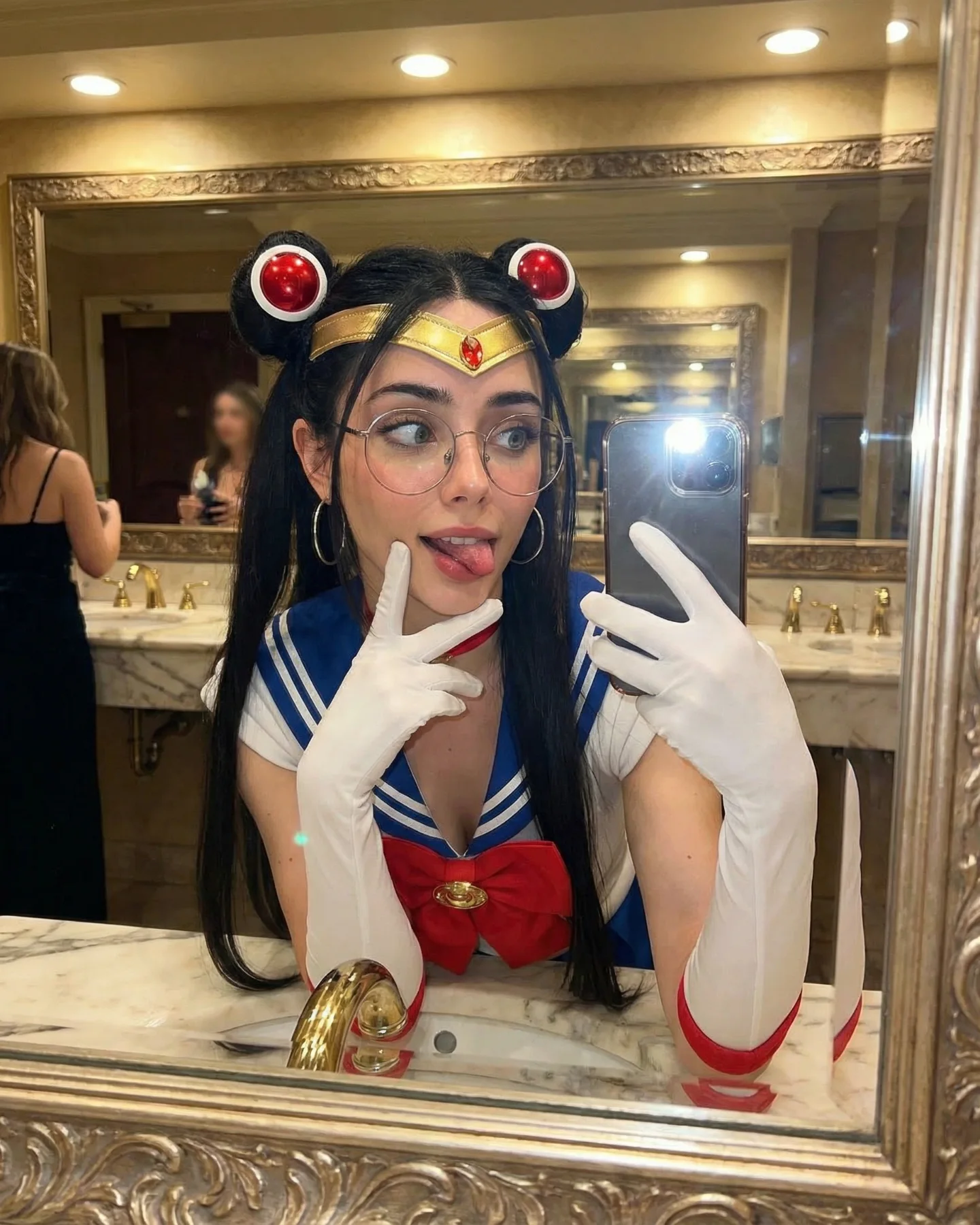
This image works because it keeps the cosplay recognizable while letting the photo stay human. The costume cues are unmistakable: sailor collar, red bow, long white gloves, twin buns, jeweled tiara. But the expression is playful, the glasses stay on, and the setting is a real restroom rather than a fantasy backdrop. That combination makes the image feel more social and shareable than a formal cosplay portrait.
The mirror-selfie format is doing more than documenting the outfit. It gives the image a behind-the-scenes quality that fans respond to. Viewers are not just seeing the character. They are seeing a person enjoying the character. For creators, that difference matters because it turns cosplay from display into personality content.
The biggest strength is recognizability with immediacy. The core costume signals are legible in a second, and the tongue-out expression adds just enough irreverence to make the frame feel current rather than ceremonial. That balance is very useful for social media. It respects the source material without becoming stiff.
The second reason it works is the choice of setting. Bathrooms and mirrors are often treated as accidental spaces, but here they help the image. The ornate frame, marble counter, warm lights, and flash reflection make the shot feel like a found event moment. That sense of candid access is often more engaging than a perfect studio setup because it feels like something the audience could realistically recreate.
| Signal | Evidence (from this image) | Mechanism | Replication Action |
|---|---|---|---|
| Fast character readability | Tiara, twin buns, red bow, sailor collar, white gloves | Fandom audiences recognize the theme instantly | Use 4-5 iconic costume markers together instead of one vague reference |
| Playful humanization | Tongue-out expression and glasses still on | Makes the cosplay feel personal instead of museum-like | Keep one candid facial cue and one everyday identity marker visible |
| Behind-the-scenes intimacy | Mirror selfie in a real restroom with phone flash | Creates an access-driven, social-native feeling | Use a lived location and visible capture device instead of hiding the camera |
| Luxury contrast | Marble counter and ornate mirror around a playful cosplay pose | Setting texture adds polish without requiring a fantasy set | Choose an environment with one elegant architectural feature that frames the subject |
The strongest aesthetic move is that the setting does not try to compete with the costume. The bathroom is warm, ornate, and visually rich, but still neutral enough to let the red, blue, and white outfit dominate. That keeps the frame readable. If the background were louder or more themed, the image could easily tip into clutter.
The second smart move is leaving the flash visible. That small burst turns the photo into a real moment. It also helps bridge the gap between fan cosplay and social-native documentation. In other words, the image does not pretend to be a cinematic still. It is proudly a selfie, and that honesty is part of its charm.
| Observed | Why it matters for the look | How to recreate it |
|---|---|---|
| Visible phone flash in mirror | Strengthens candid realism and platform-native feel | Let the flash be part of the composition instead of hiding it |
| Ornate gold mirror frame | Adds elegance and visual containment | Frame the subject with one strong decorative border element |
| Classic magical-girl color split | Keeps the cosplay readable immediately | Preserve white, blue, red, and gold as the dominant costume colors |
| Face-led playful expression | Makes the image feel social rather than performative | Use a teasing expression instead of a neutral “pretty” look |
| Marble and warm downlights | Give the space polish without becoming a set | Use upscale restroom or hotel bathroom cues for grounded visual richness |
This approach is weaker if the costume markers are too subtle or if the bathroom setting becomes too plain. It also loses impact when the pose is too serious, because the image works largely through playfulness and accessibility.
{character-coded outfit} {mirror selfie} {visible phone flash} {elegant restroom backdrop}{same-person cosplay} {personal expression} {decorative frame element} {social-native snapshot}{recognizable costume markers} {real mirror setting} {phone-flash honesty} {controlled expression shift}To recreate this style reliably, separate the prompt into character markers, selfie structure, environment cues, and expression. If those layers are written too broadly, the output often collapses into either anime art or a generic cosplay portrait.
| Prompt chunk | What it controls | Swap ideas (EN, 2–3 options) |
|---|---|---|
| Sailor Moon-inspired sailor cosplay with tiara and twin buns | Fast fandom readability | magical-girl sailor look; moon-princess-coded uniform; iconic anime-inspired outfit |
| mirror selfie with visible smartphone flash | Social-native camera logic | restroom mirror snapshot; candid convention selfie; phone-flash reflection shot |
| tongue-out playful expression with cheek-touch pose | Human warmth and playfulness | teasing expression; cheeky convention pose; playful face-led reaction |
| ornate gold-framed mirror and marble sink counter | Environmental richness and framing | hotel restroom mirror; classic bathroom vanity; elegant event-space washroom |
| large round glasses and hoop earrings | Personal identity continuity | everyday accessories kept in cosplay; glasses-on cosplay styling; recognizable face markers |
| warm downlights plus flash | Readable exposure and realistic ambience | hotel-bathroom ambient glow; warm interior light with flash hotspot; mixed warm light and phone flash |
Lock three things first: the recognizable costume markers, the mirror-selfie structure, and the restroom environment. Those are the backbone of the image. After that, change only one layer at a time. If you change the character, expression, and setting all at once, the output usually loses the simple social clarity that makes this work.
If the result becomes too studio-like, reduce the beauty language and strengthen the restroom cues. If it becomes too cartoonish, reinforce real fabric texture, phone-flash realism, and human facial detail. The strongest version feels like a fan taking a great photo at exactly the right moment, not like a staged promo campaign.