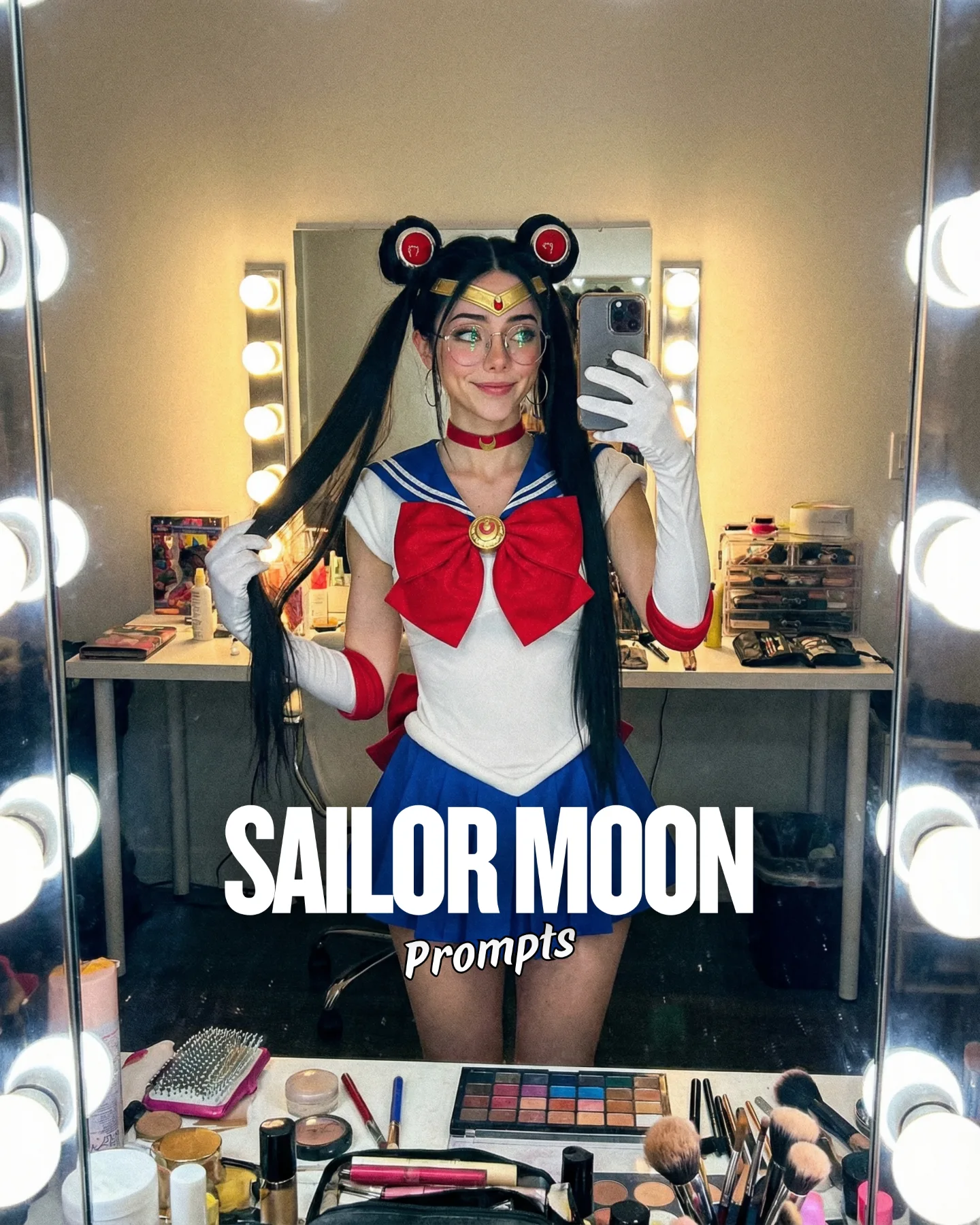
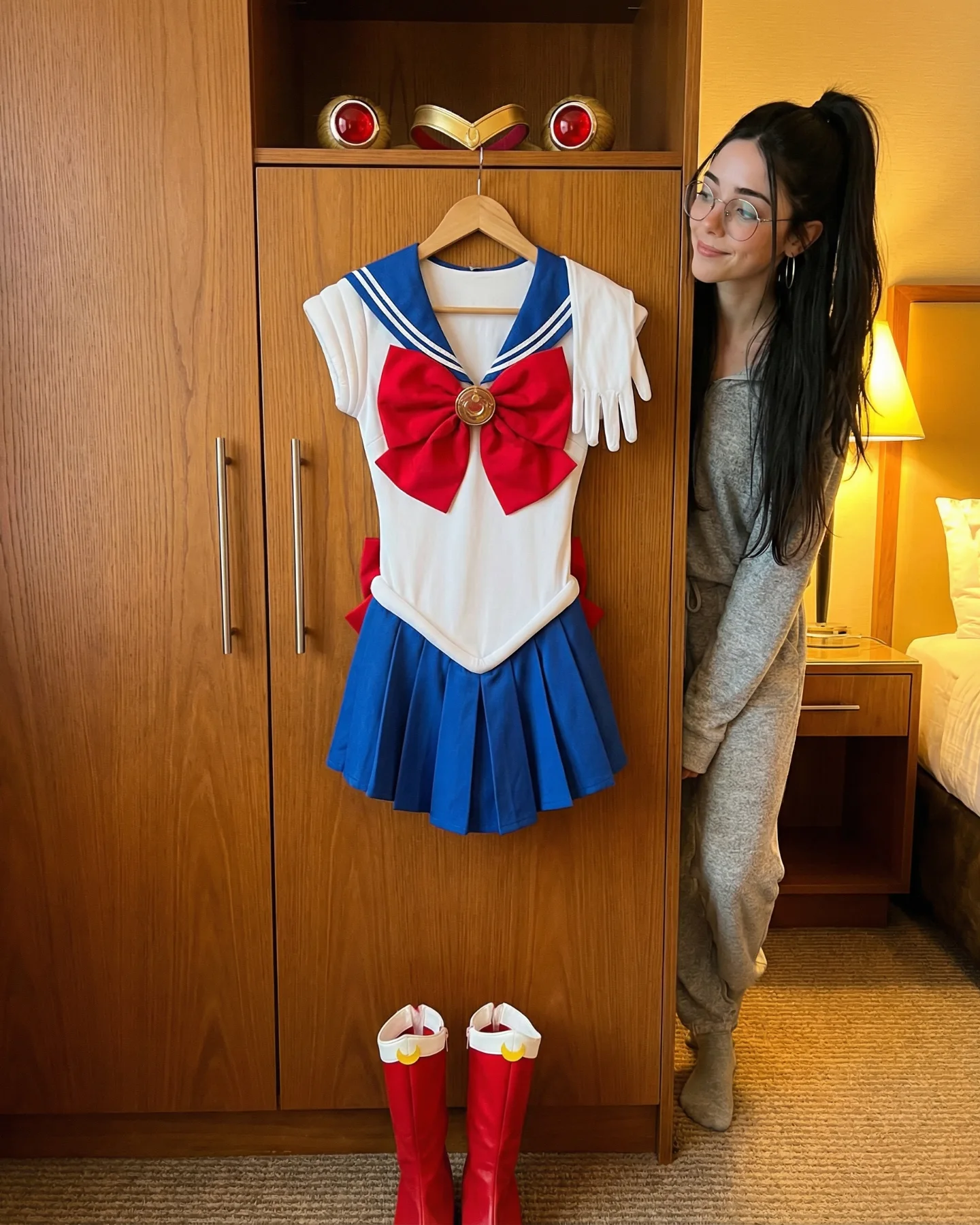
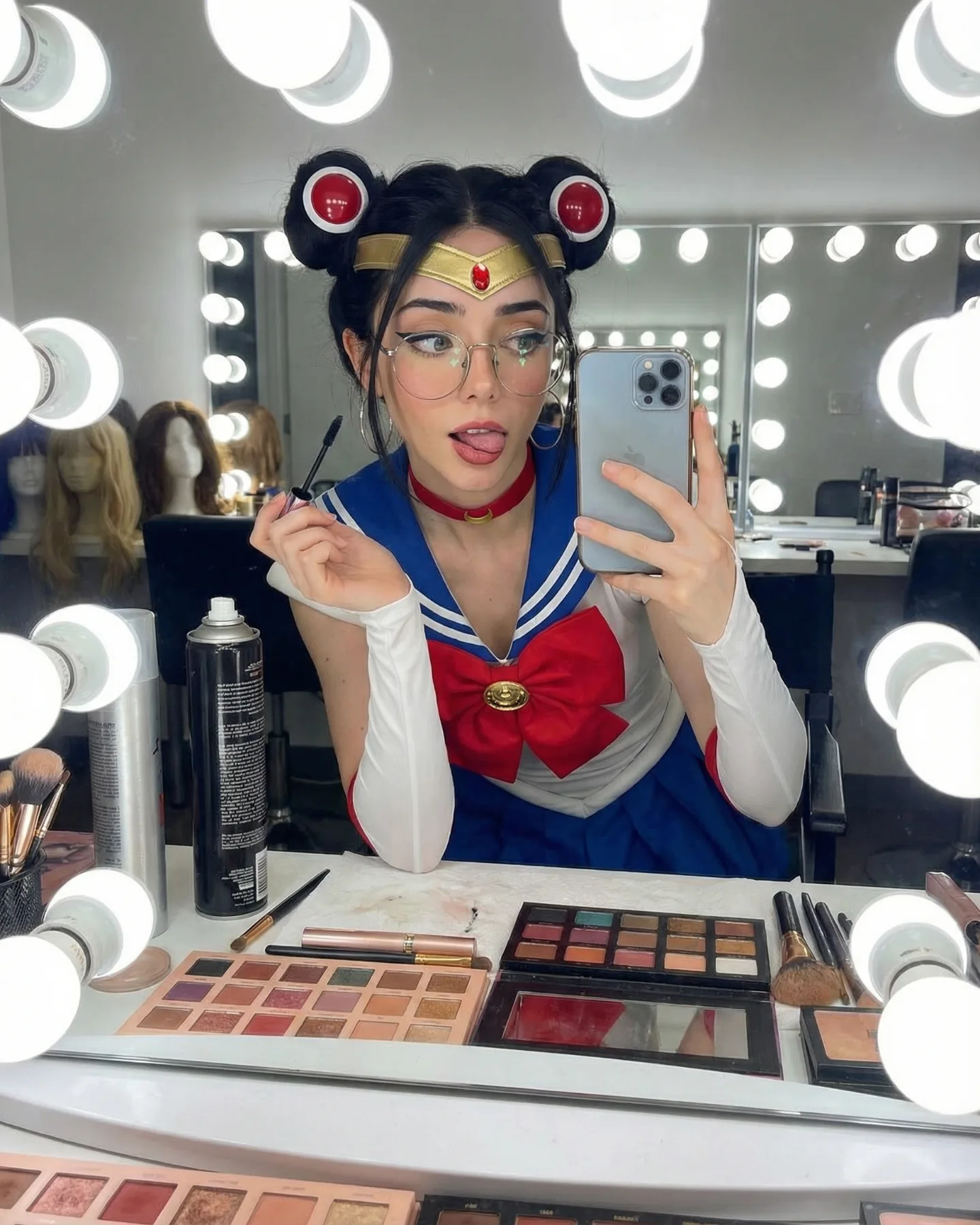
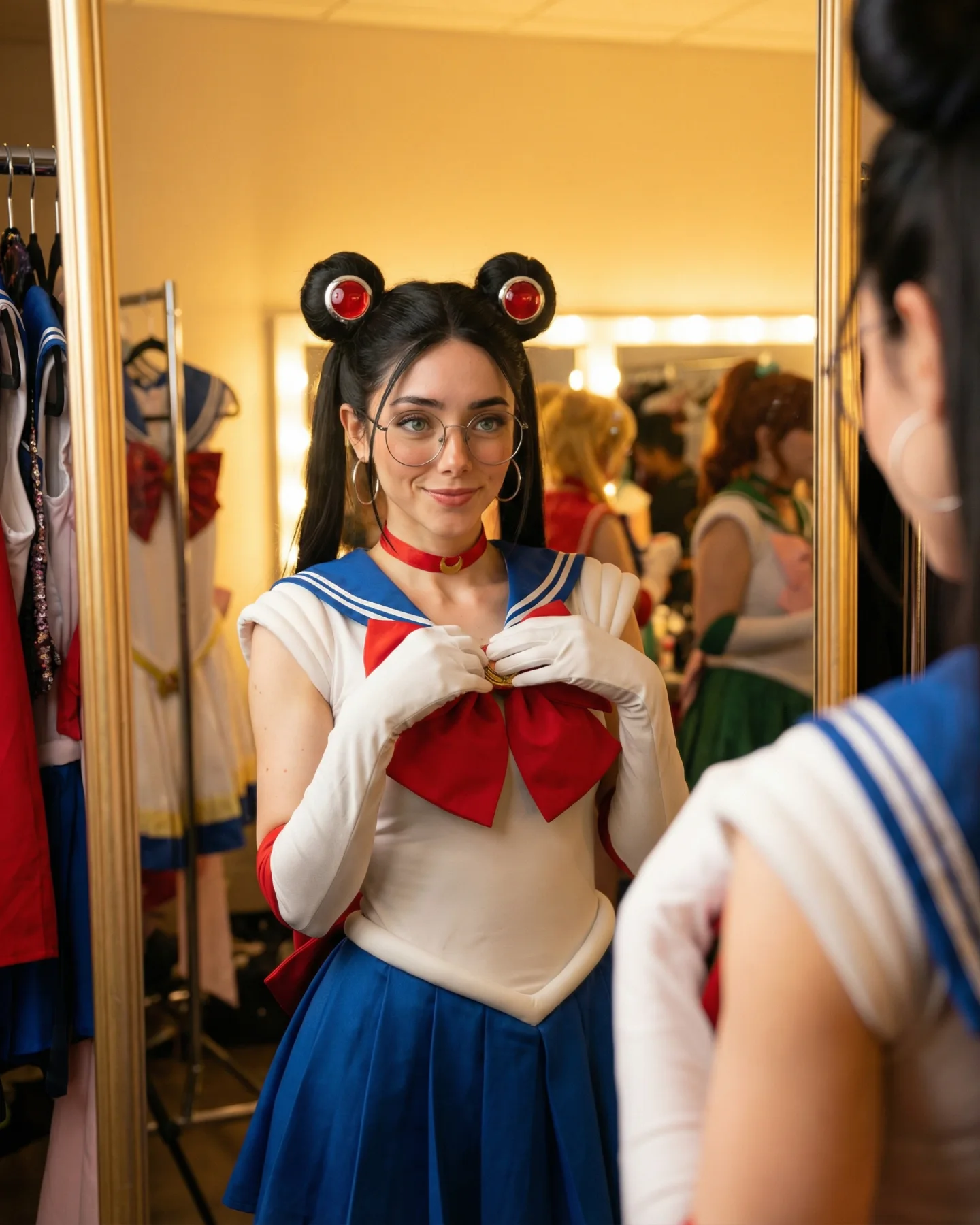
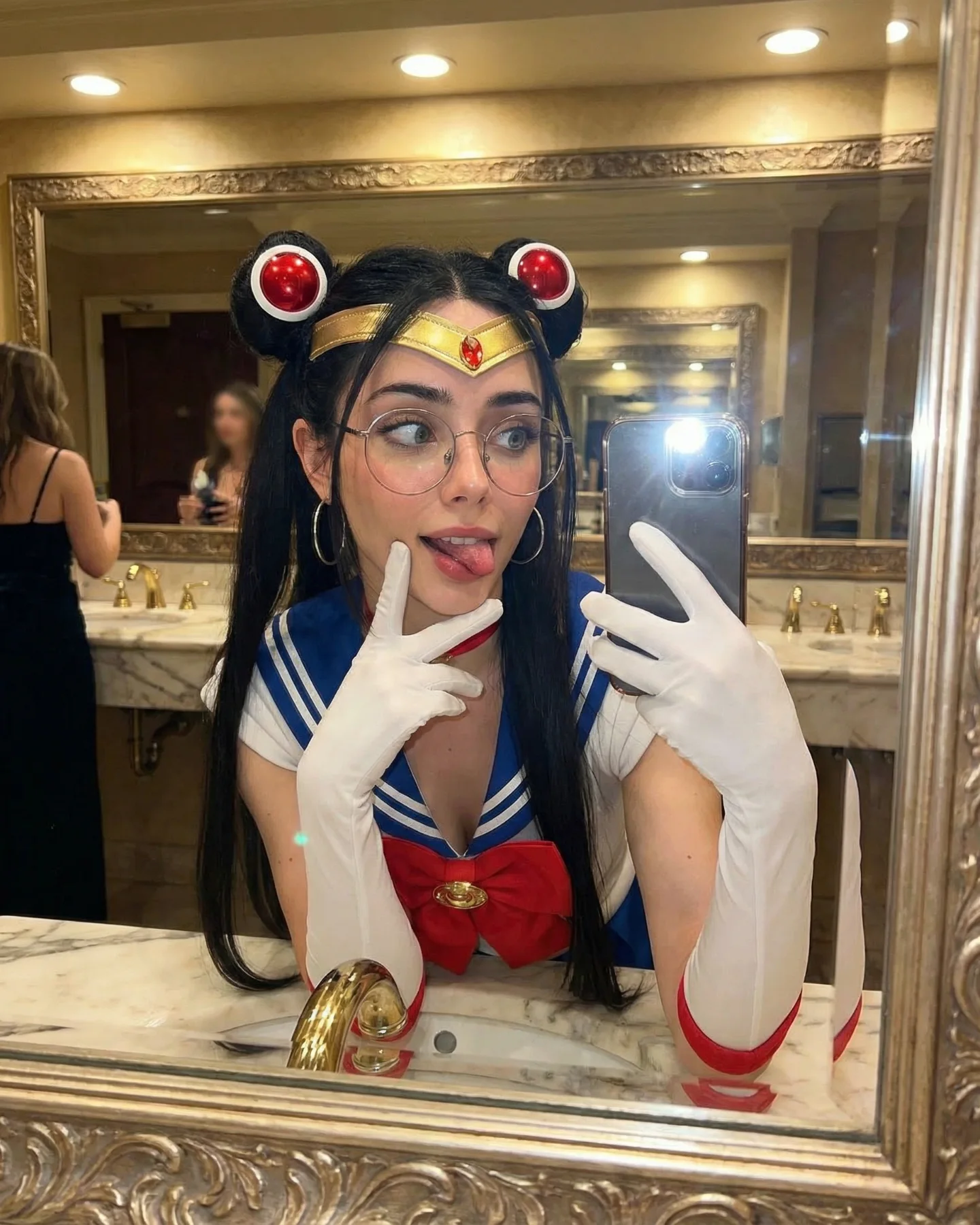
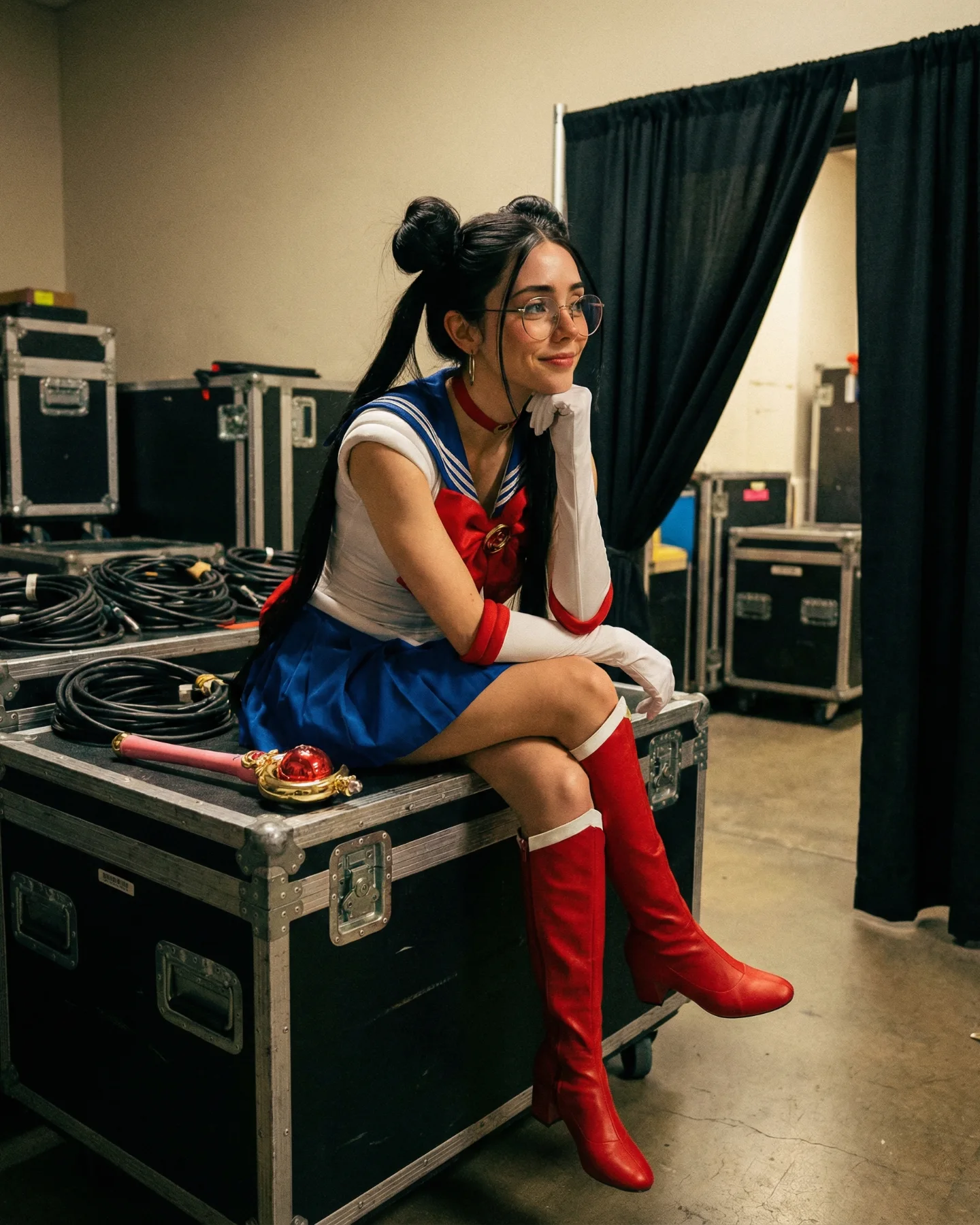
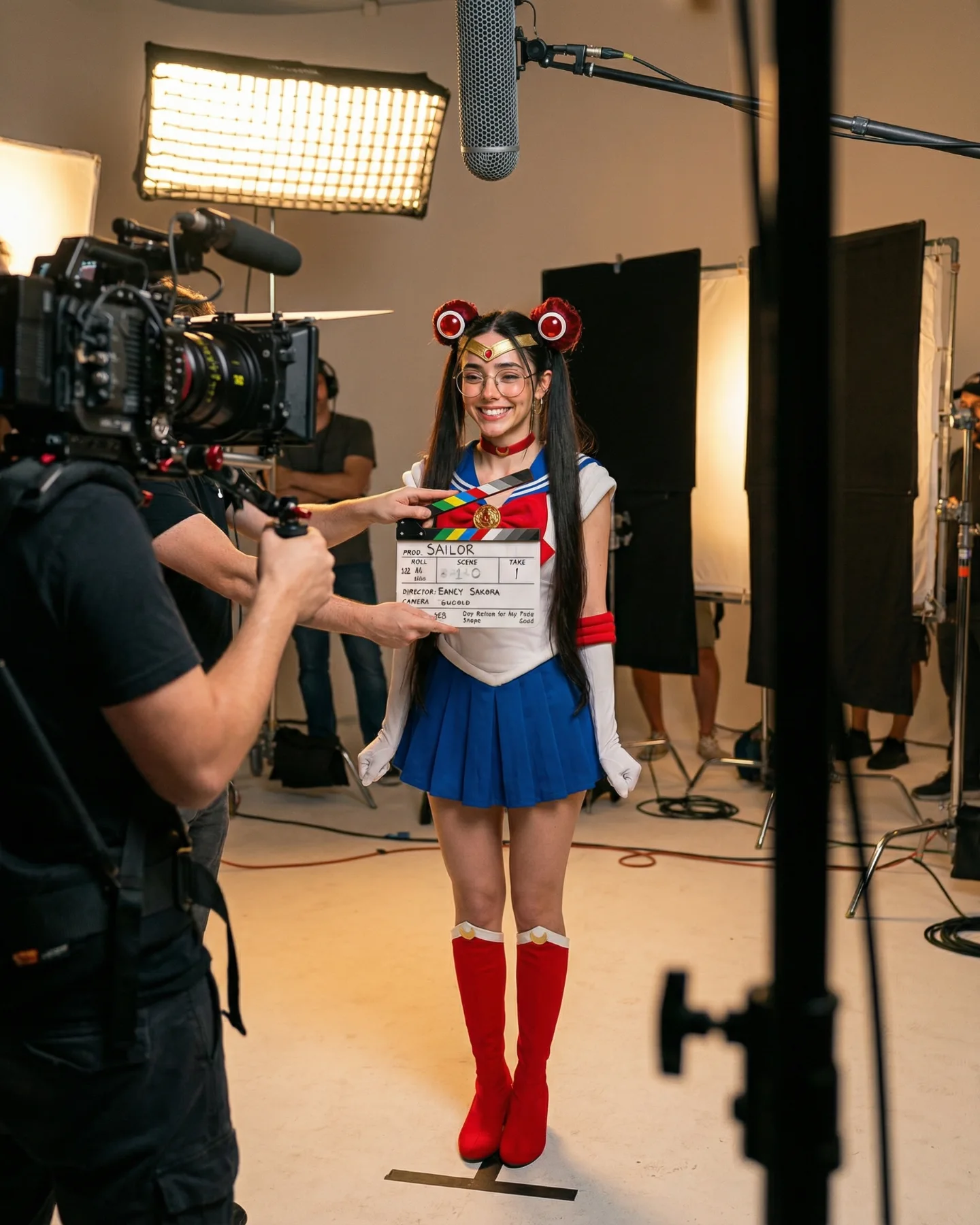
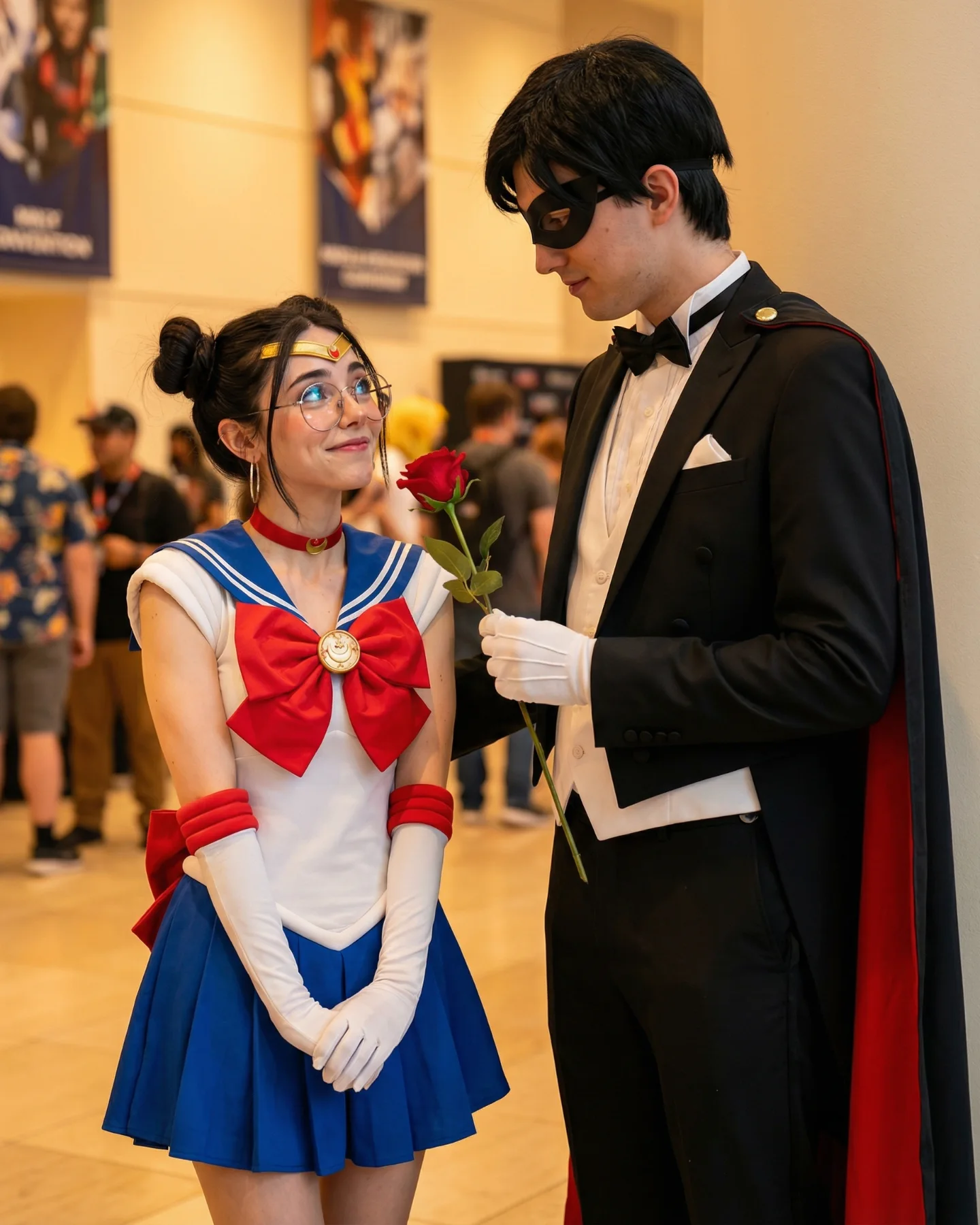
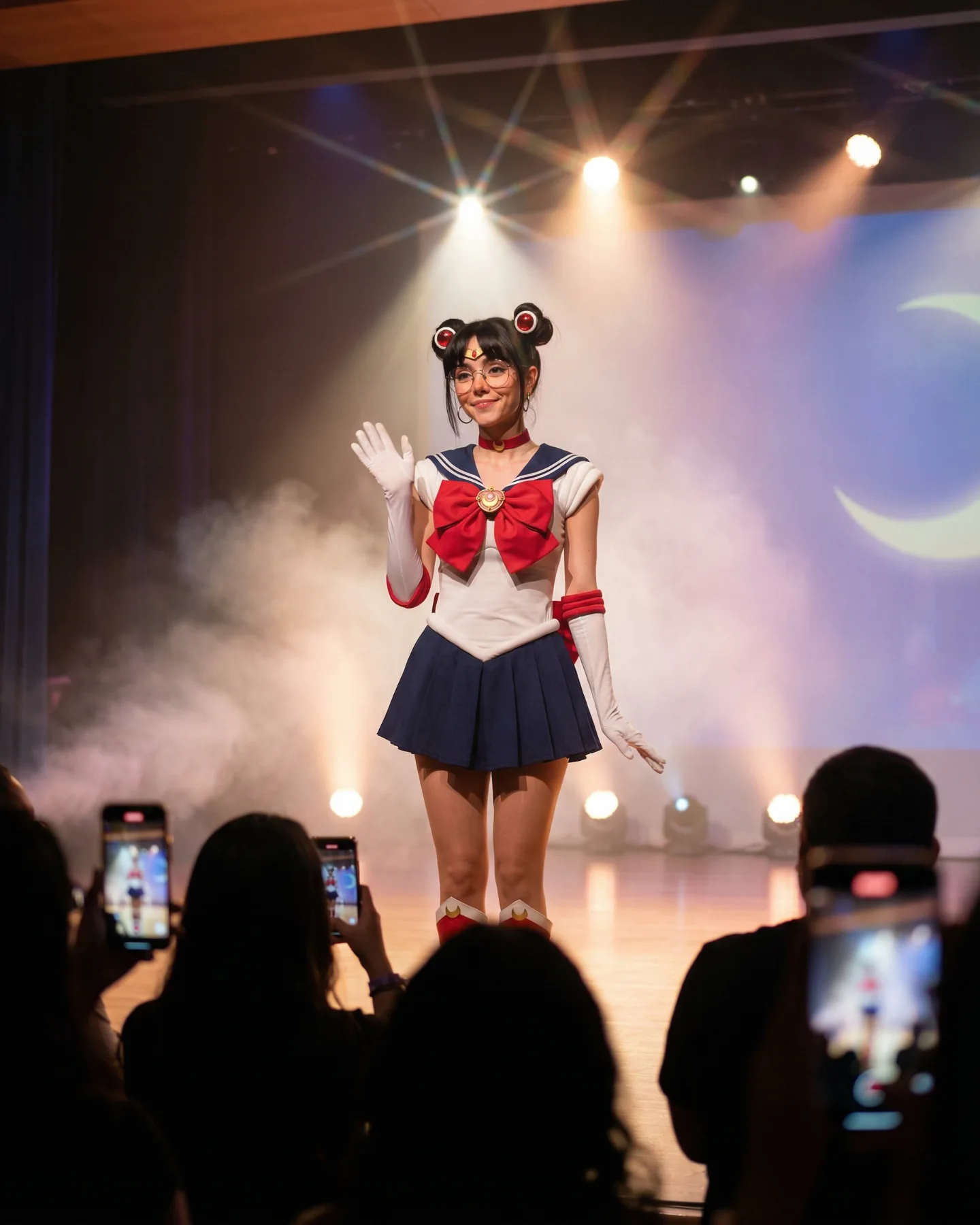
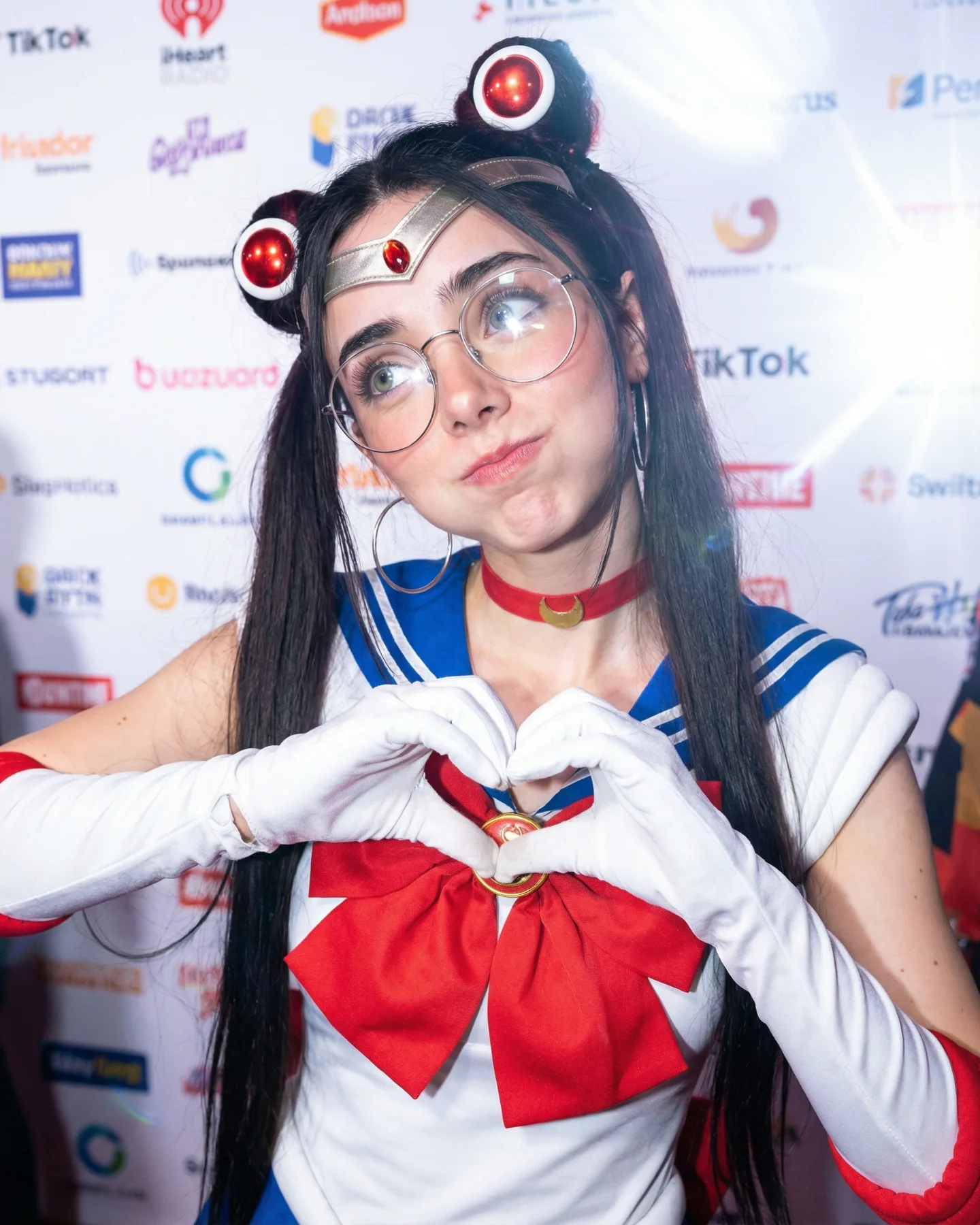
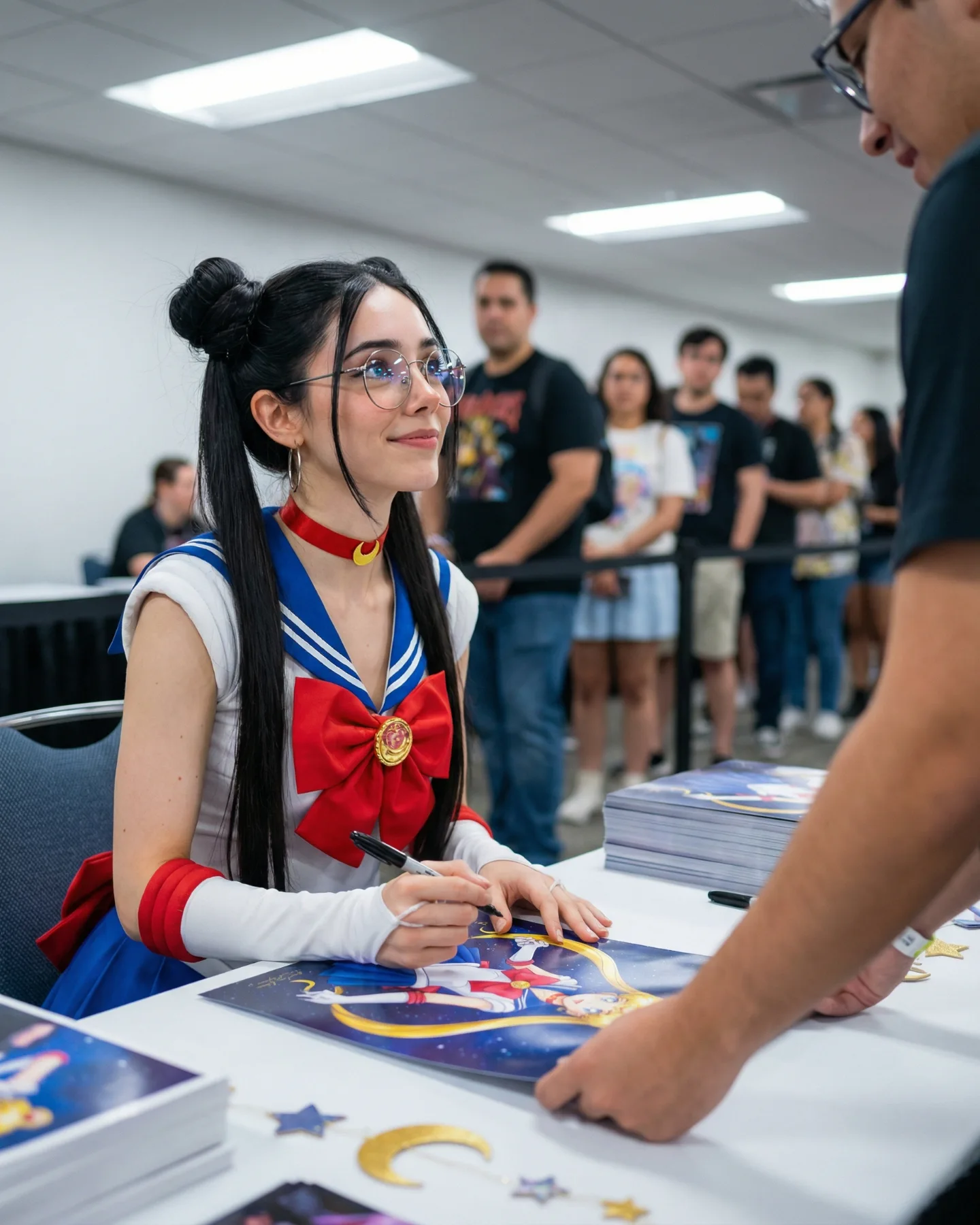
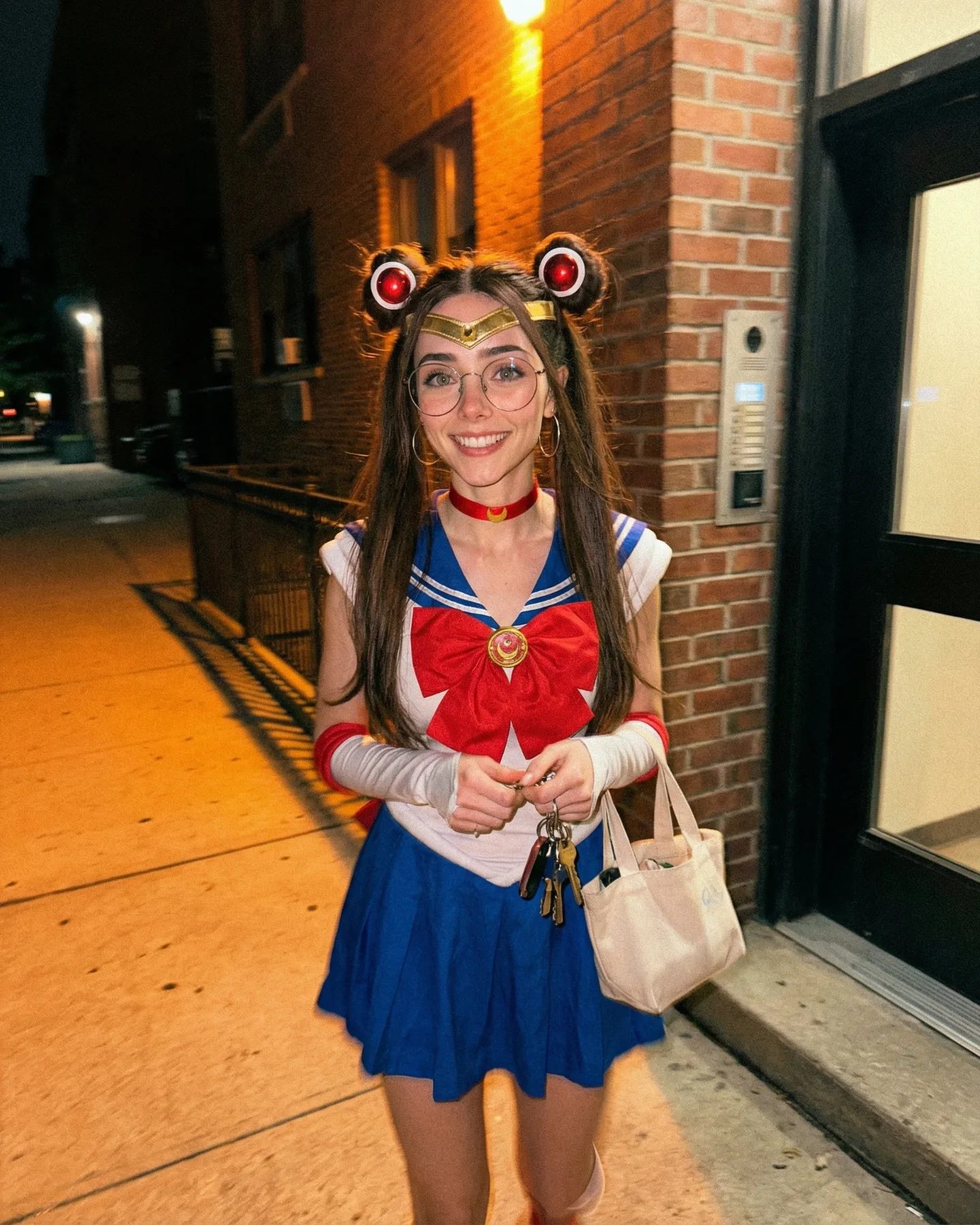
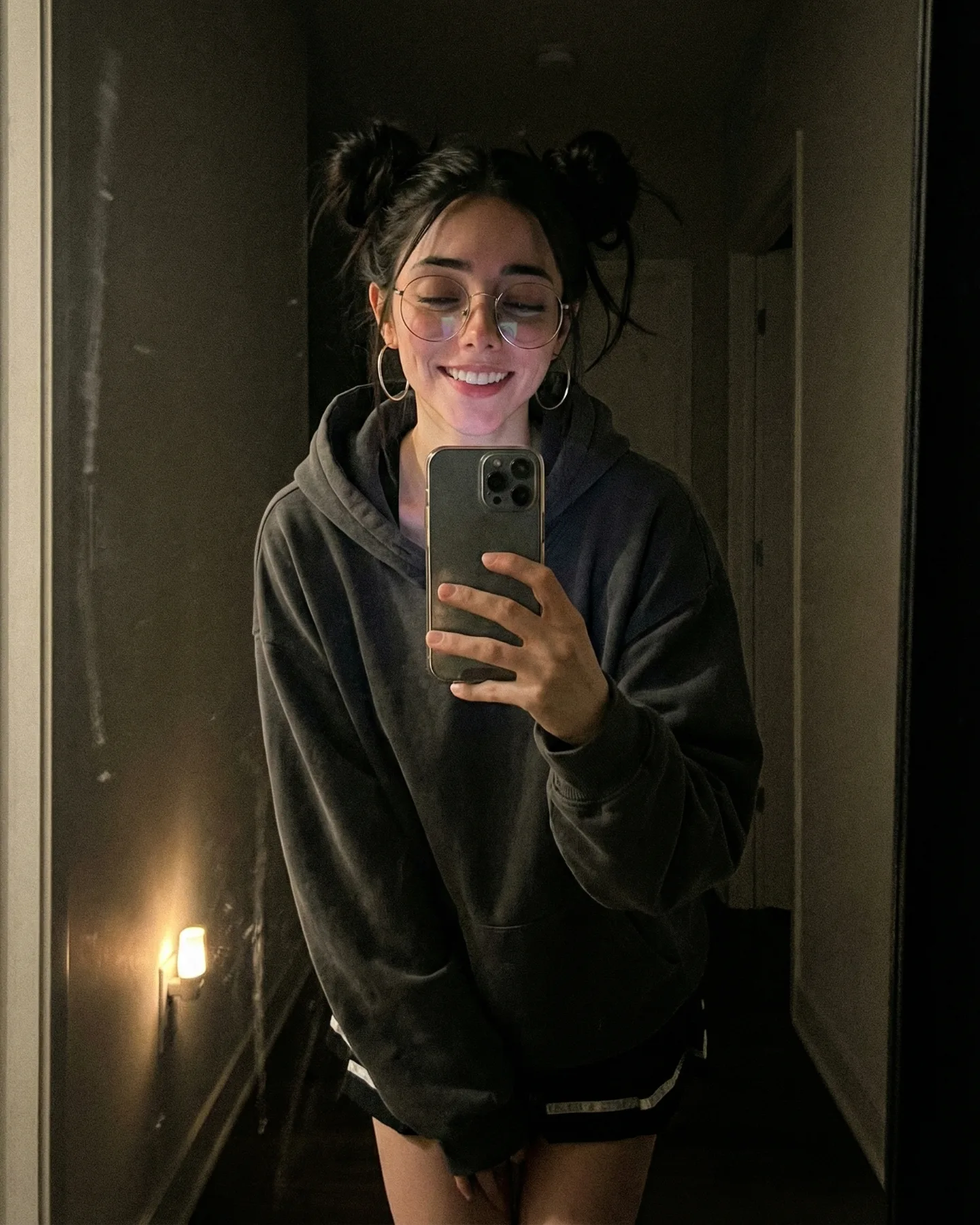

Sailor Moon 🌙💕 Como muchos me habéis pedido un Cosplay de Sailor Moon, aquí tenéis una pequeña secuencia 🙊 Si quieres los prompts comenta "ARIA" y te lo paso por mensajes 💌
Sailor Moon 🌙💕 Como muchos me habéis pedido un Cosplay de Sailor Moon, aquí tenéis una pequeña secuencia 🙊 Si quieres los prompts comenta "ARIA" y te lo paso por mensajes 💌
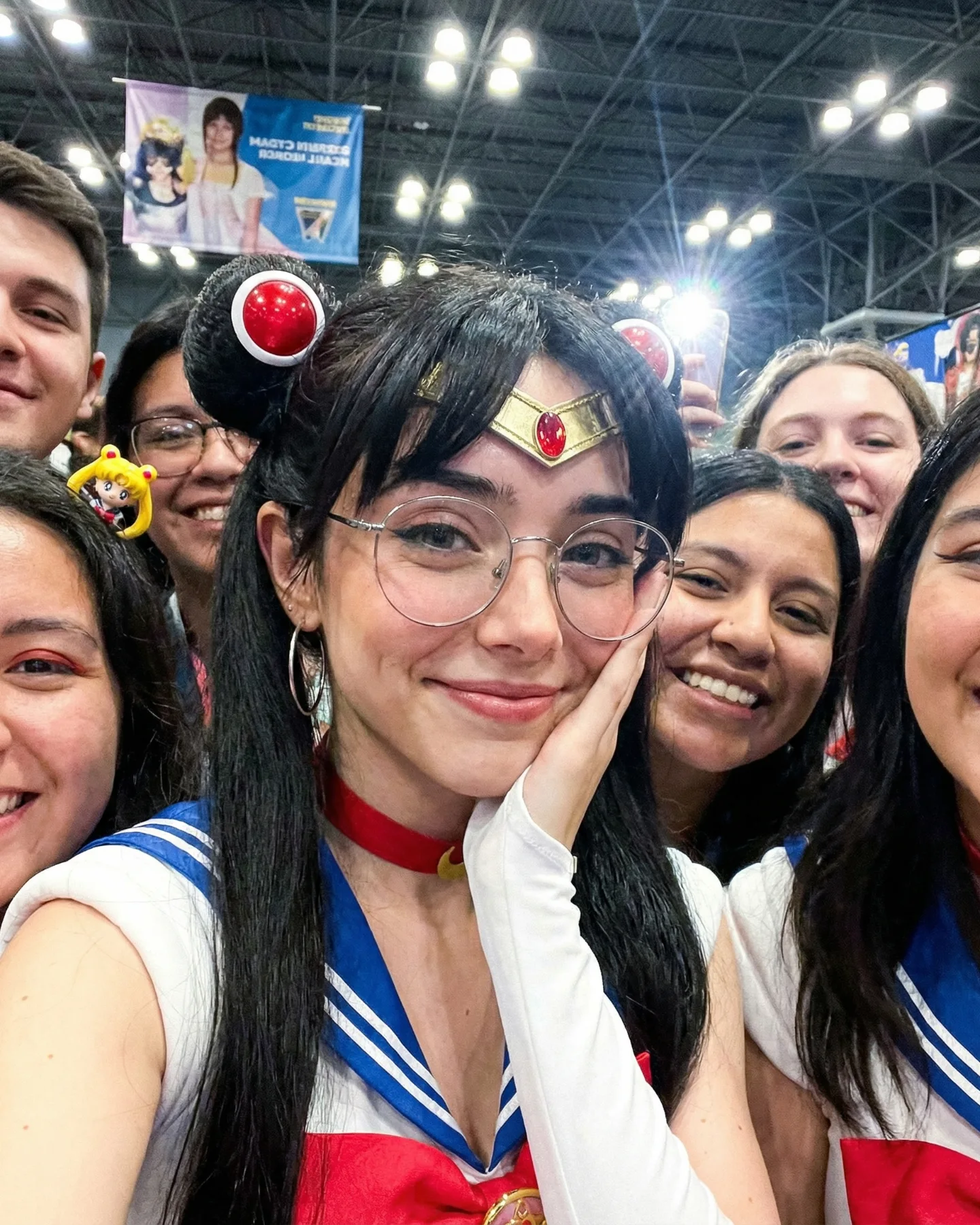
Some images travel because they are polished. Others travel because they feel instantly social. This Sailor Moon-inspired convention selfie belongs to the second category. It does not rely on a perfect studio setup, a rare location, or heavy post-production. Instead, it wins through familiarity, warmth, and a very readable visual hook. The costume is iconic enough to stop the scroll, but the group framing keeps the post from feeling like a distant cosplay showcase. It feels like you were there.
That balance matters more than many small creators expect. A lot of cosplay content looks technically competent but emotionally closed. Here, the opposite is true. The frame is crowded, the composition is imperfect in a useful way, and the smile from the central subject feels gentle rather than performative. The surrounding friends do more than fill space. They act as proof of context. This is not a detached beauty shot. It is a moment inside a real fan environment, and that gives it stronger platform energy.
The visual hierarchy is extremely efficient. The tiara, red bow, sailor collar, and hair ornaments announce the cosplay reference within a second. Even viewers who are not deep anime fans can decode the inspiration immediately. After that first read, the eye moves to the expression. The hand-on-cheek pose softens the frame and creates intimacy, while the surrounding faces confirm that this is a shared event moment rather than a private photoshoot. That combination of clear costume language and human accessibility is a powerful growth pattern.
There is also a useful contrast between subject clarity and environmental looseness. The main cosplayer is sharply readable, but the convention hall behind her stays just messy enough to feel real. Overhead lights, ceiling trusses, and banners provide public-event texture without stealing the scene. For creators, this is a reminder that authenticity often comes from keeping a little background noise instead of cleaning everything away.
| Signal | Evidence (from this image) | Mechanism | Replication Action |
|---|---|---|---|
| Instant fandom recognition | Tiara, red bow, sailor collar, twin-tail styling, red hair ornaments | Recognizable iconography reduces interpretation time and improves scroll-stop speed | Lock one unmistakable character silhouette or costume marker before worrying about finer details |
| Social proof inside the frame | Multiple smiling faces crowd the edges around the main subject | Group presence signals community, popularity, and event participation | Do not crop out every bystander; keep 3 to 6 partial faces when the goal is convention energy |
| Warmth over perfection | Relaxed smile, hand resting on cheek, casual selfie perspective | Approachability drives saves and shares because the post feels personal rather than staged | Use a natural pose and smartphone framing instead of over-directed cosplay hero shots |
| Environment as credibility | Visible hall lights, ceiling grid, and event banner in back | Background details confirm the image belongs to a real live moment | Keep one or two venue clues visible so the scene reads as documentary rather than backdrop-only |
This type of image works especially well for creators posting convention recaps, character-based fashion content, community-building reels covers, fandom account growth, and creator pages that need a more human tone. The reason is simple: it gives you an identifiable theme without isolating the creator from the audience. In practice, that means the format is strong when you want to look recognizable and relatable at the same time.
Where does it fit less well? It is not ideal for luxury cosplay editorials, product close-ups, or clean tutorial thumbnails. Those formats need either tighter control or less visual noise. This image succeeds because of ambient life, so if your goal depends on spotless background separation, the same structure can work against you.
The easiest way to adapt this visual language is to keep the social mechanics and swap the fandom layer. That means preserving the candid selfie energy while changing the costume, venue, or mood only one step at a time.
What makes this image aesthetically effective is not just the costume accuracy. It is the mix of softness and noise. The central face is calm and composed, but the frame around her is busy, bright, and alive. That tension makes the image feel contemporary even though the character reference is classic. The palette also helps. White, blue, and red are high-contrast costume colors, while black hair and neutral skin tones keep the image from becoming visually chaotic.
The phone-lens perspective is another important part of the look. A cleaner portrait lens would have made the scene more elegant, but less communal. Here the slight wide-angle feeling puts the viewer inside the friend circle. That is why the post reads like memory instead of portfolio. For many growth-oriented creators, memory beats perfection because it invites emotional participation.
| Observed | Why It Changes The Feel |
|---|---|
| Subject fills most of the frame while other faces remain partially cut by the edges | This keeps the creator recognizable while preserving the social event context. |
| Bright overhead hall lights create natural hotspots in the background | The image feels like live attendance instead of a staged set. |
| Only a few costume colors dominate the image: white, red, blue, gold, black | The frame stays readable despite the crowd and busy venue. |
| Facial expression is gentle and close, not exaggerated or theatrical | The cosplay remains approachable, which broadens appeal beyond niche fans. |
| Background signage and truss details are visible but not dominant | Just enough documentary evidence is present to ground the scene. |
If you want to rebuild this image style with AI, the key is to treat it like a social snapshot, not a fantasy portrait. Most systems will try to over-stylize cosplay imagery. Your job is to keep dragging it back toward event realism.
| Prompt chunk | What it controls | Swap ideas (EN, 2-3 options) |
|---|---|---|
| young woman in Sailor Moon-inspired cosplay with glasses and twin-tail black hair | Main subject identity and costume readability | cosplay student at anime expo; magical girl fan look; convention-ready character tribute |
| vertical smartphone selfie with smiling friends partially visible at the edges | Social framing and group-energy realism | group selfie at comic con; crowded fan meetup photo; creator selfie with friends at event |
| large indoor convention hall with overhead lights, ceiling trusses, and banners | Venue credibility and documentary texture | expo center hall; fan convention floor; indoor event arena |
| bright even event lighting, natural phone-camera clarity, no cinematic grading | Realistic exposure and anti-editorial feel | ambient convention lighting; clean smartphone realism; natural social-photo exposure |
| gentle smile, cheek resting on hand, approachable candid mood | Emotional tone and shareability | soft smile; playful relaxed pose; friendly fan-photo expression |
The best way to iterate this look is to lock only the structural pieces that make it feel alive. Start with three things you should not let drift: the smartphone selfie composition, the public-event lighting, and the edge-cropped group presence. If those collapse, the image stops feeling like a convention memory and turns into a generic cosplay portrait.
After that, follow a one-change rule. Change only one or two knobs per run. A practical sequence looks like this: first keep everything and test another character costume; second keep the costume but reduce the crowd to see how much social proof you can lose before the frame weakens; third keep the group but change the subject expression from gentle smile to excited laugh; fourth keep the expression and crowd while changing venue cues from anime convention to gaming expo. This method helps you understand which signals are essential and which are flexible.