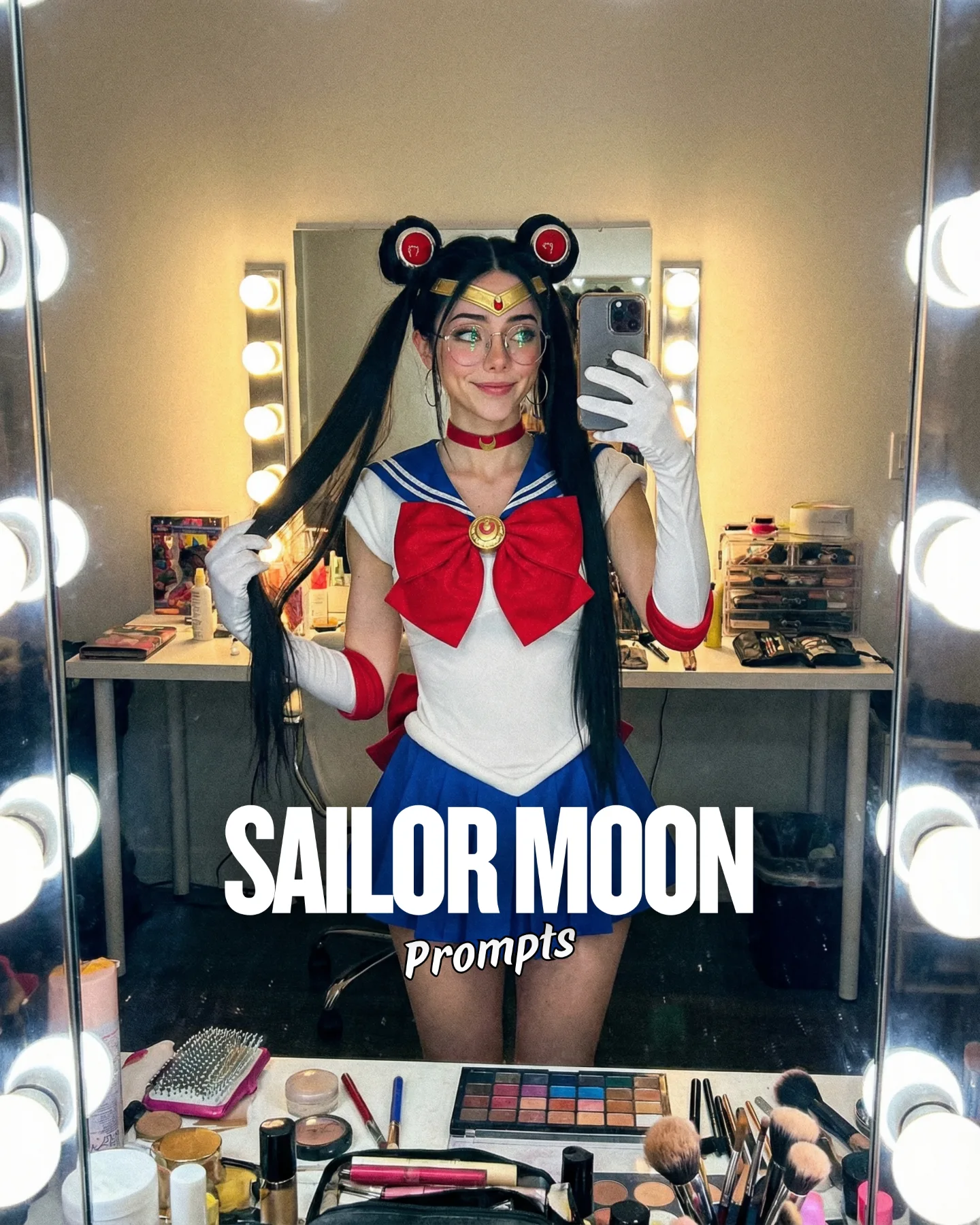
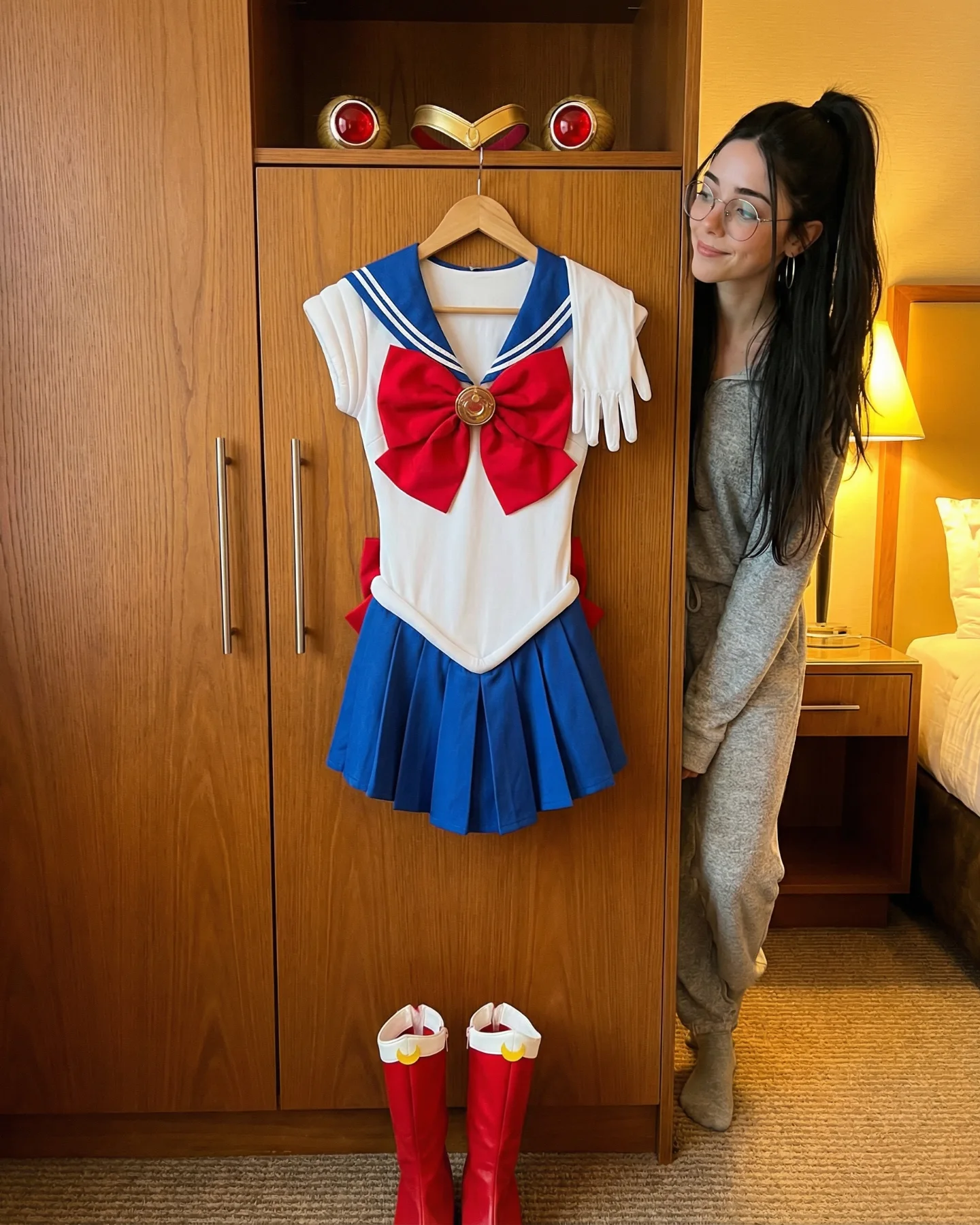
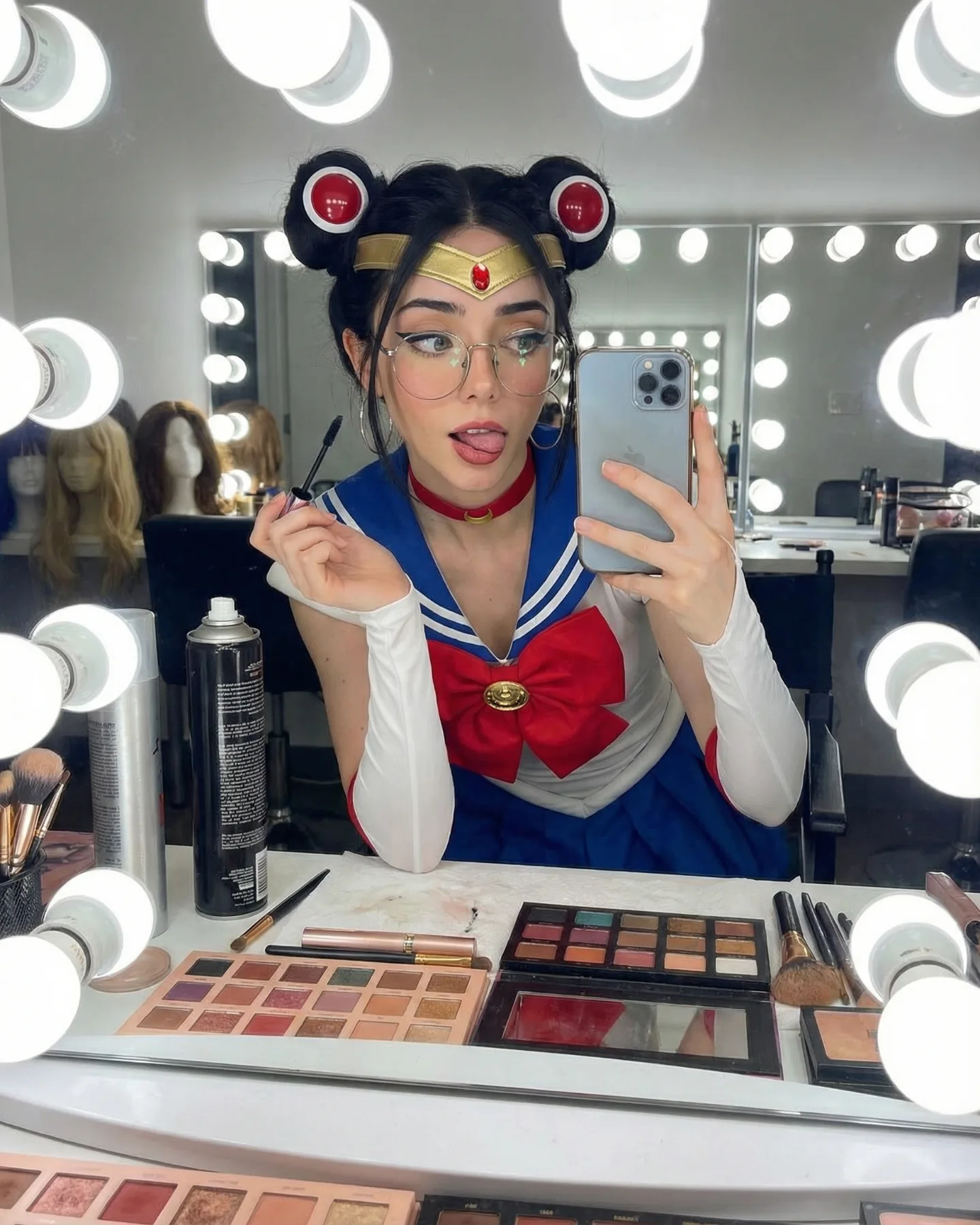
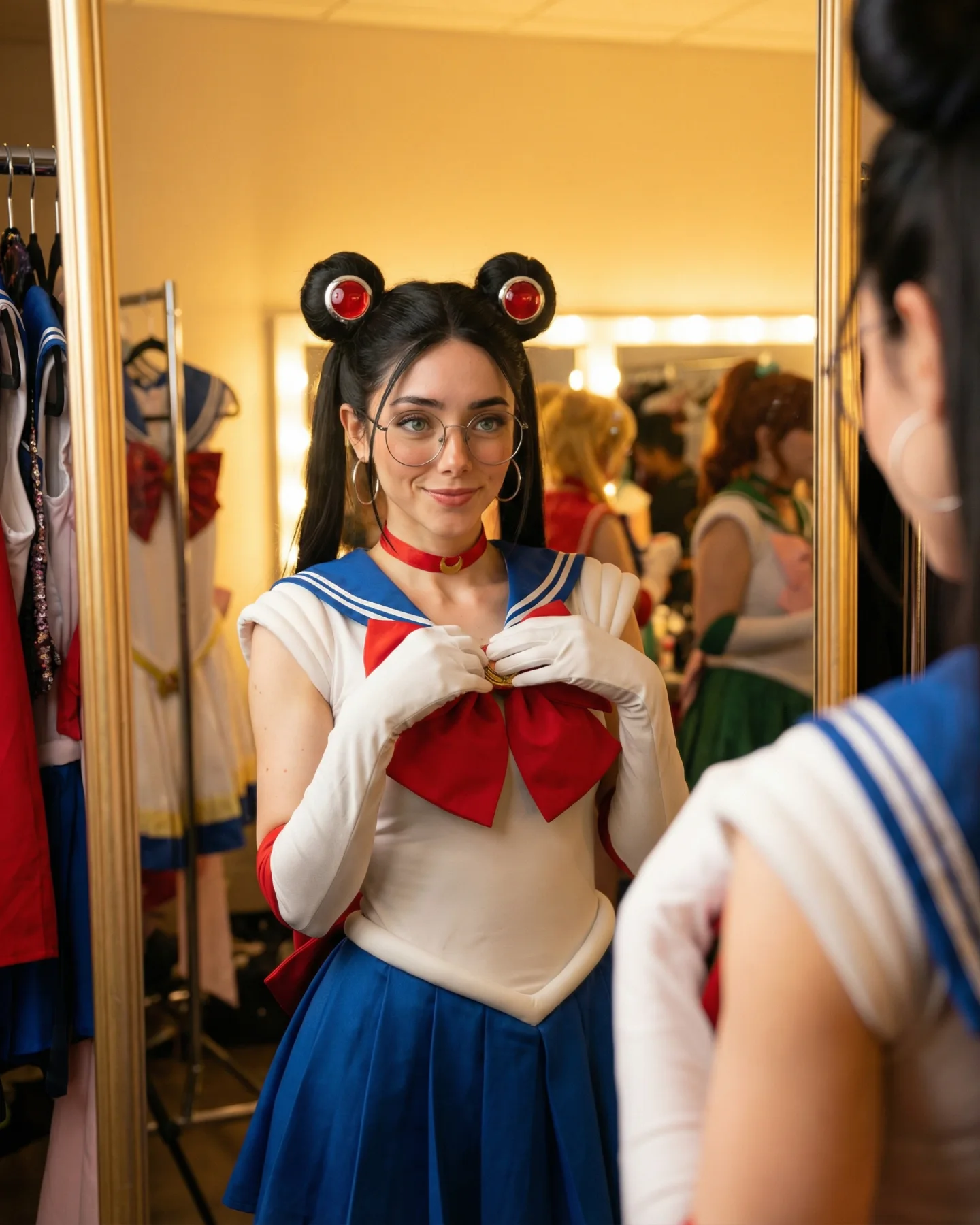
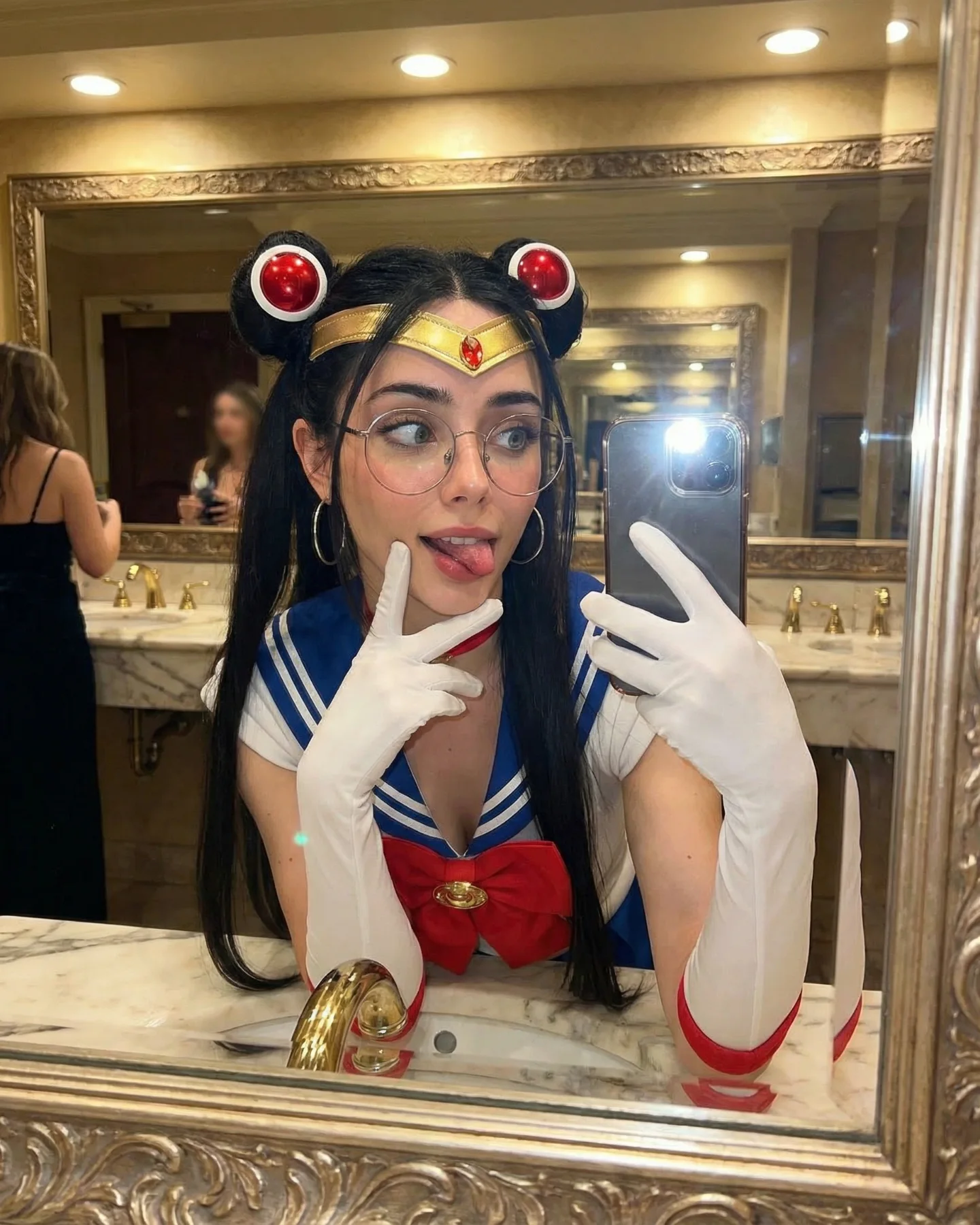
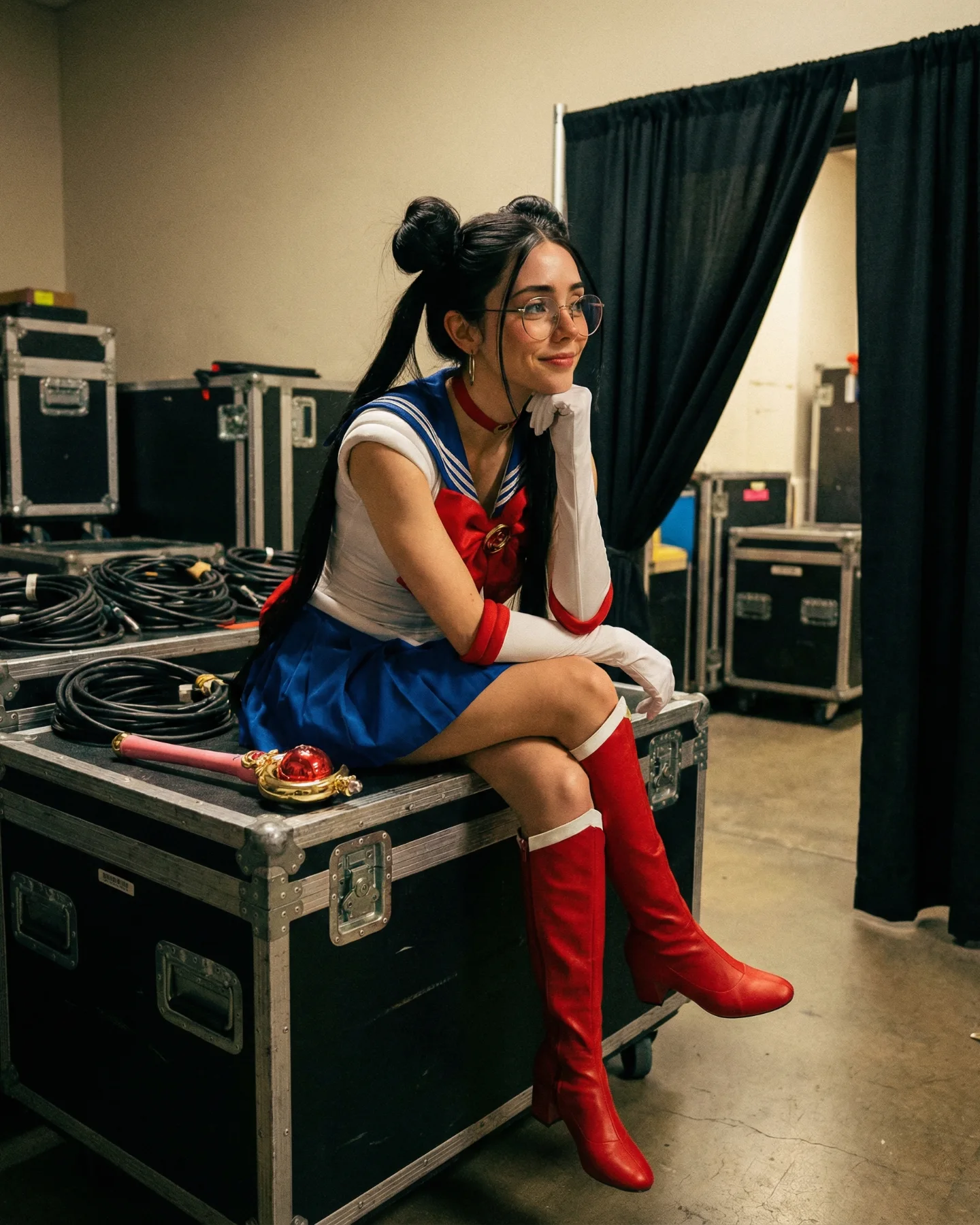
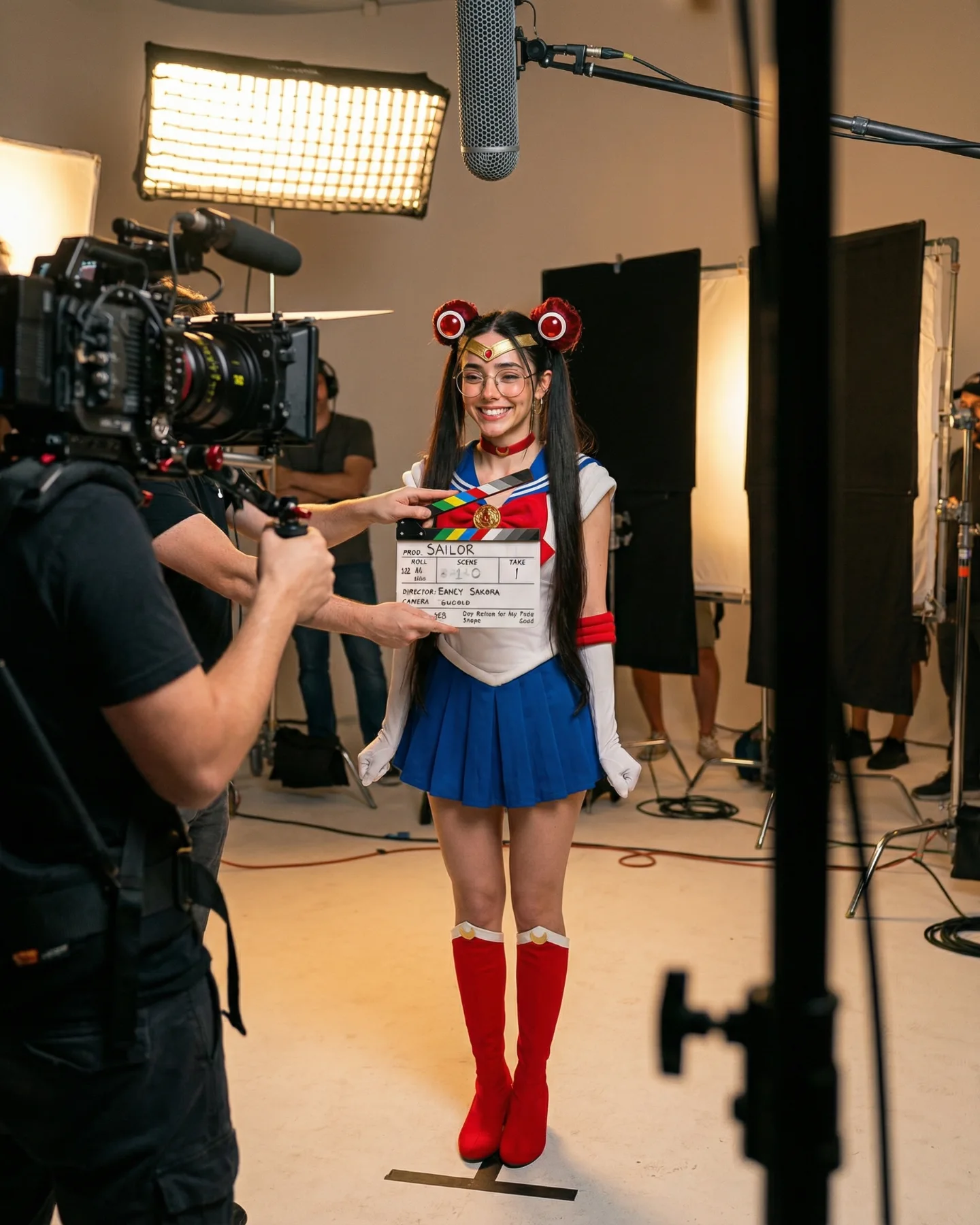
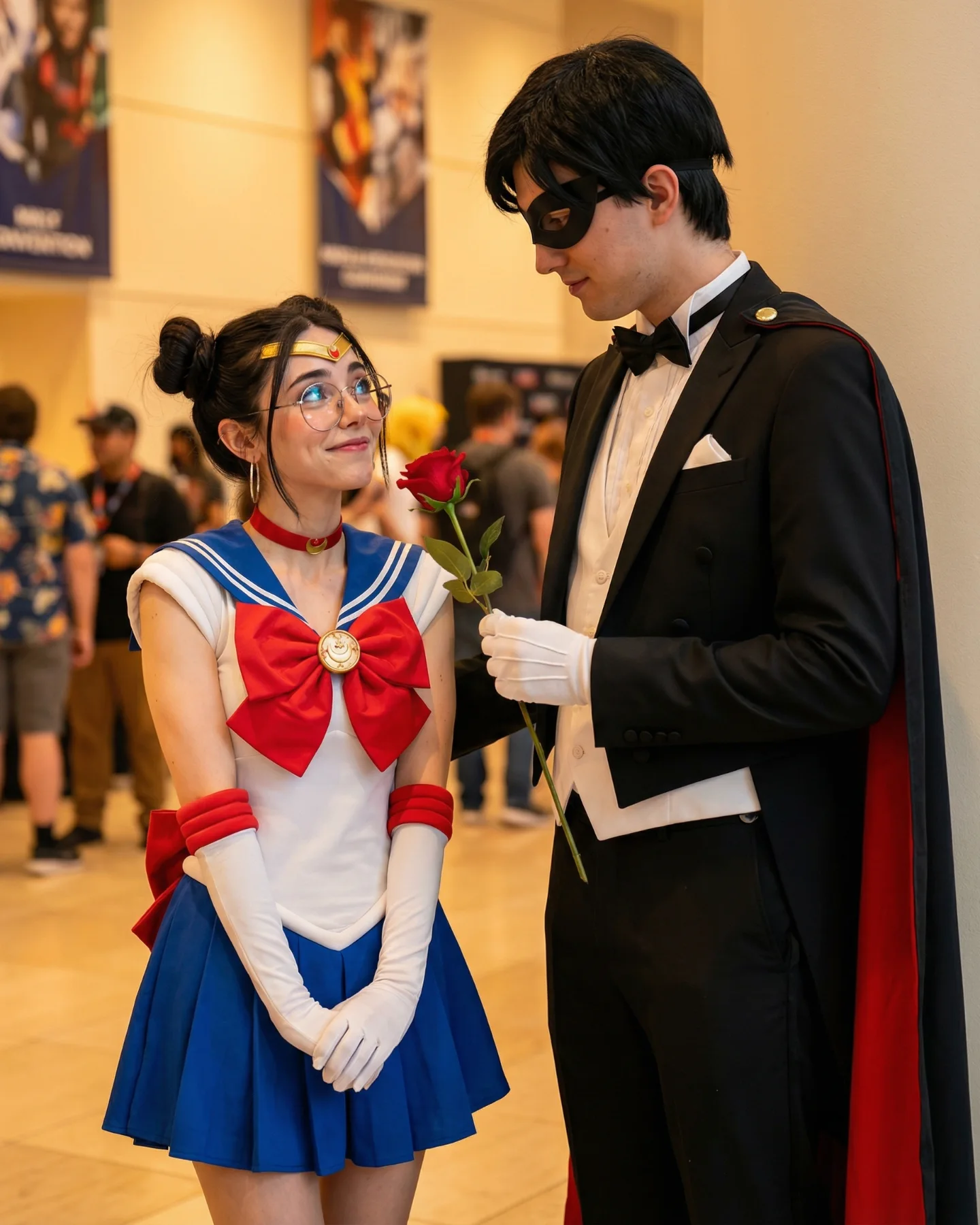
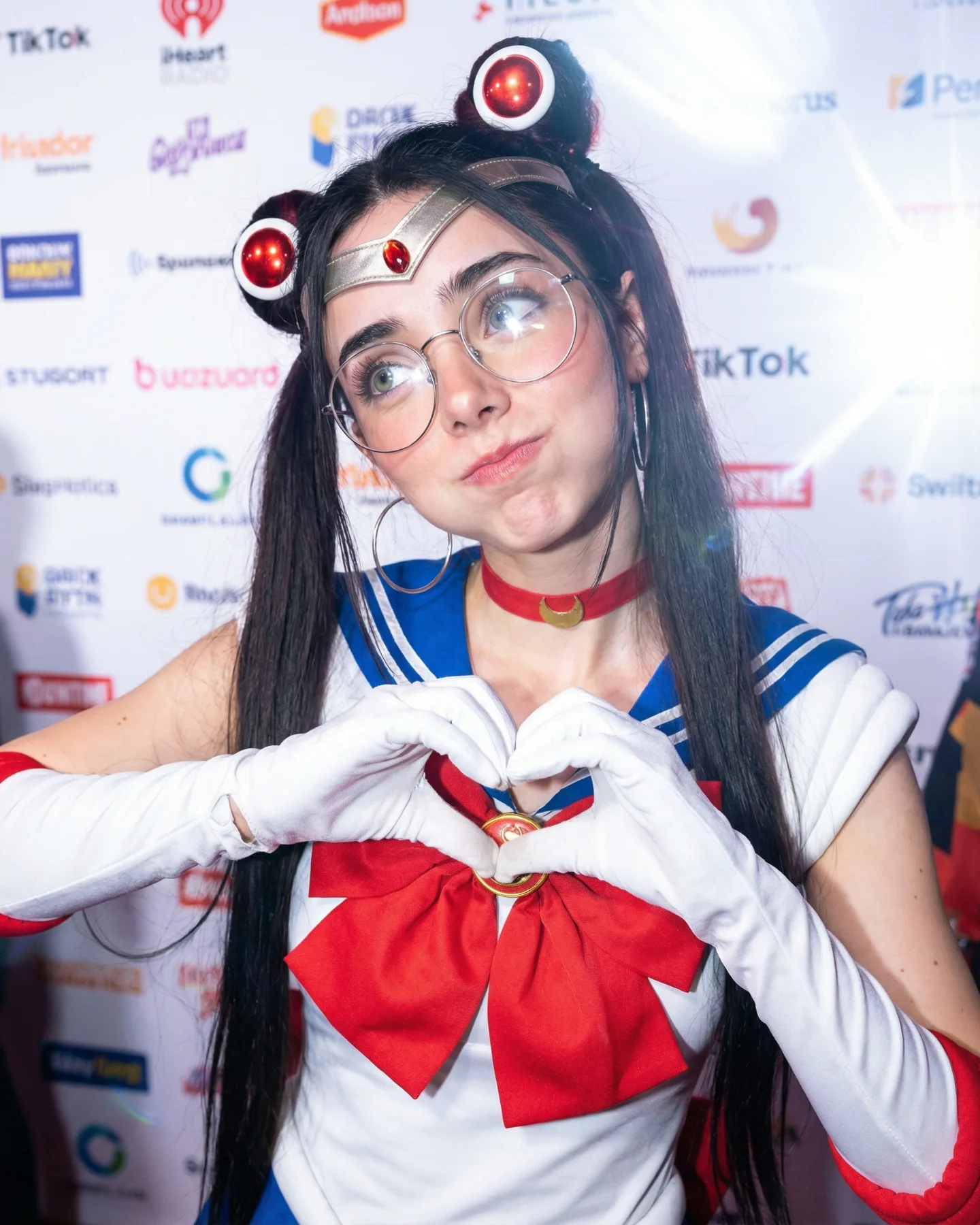
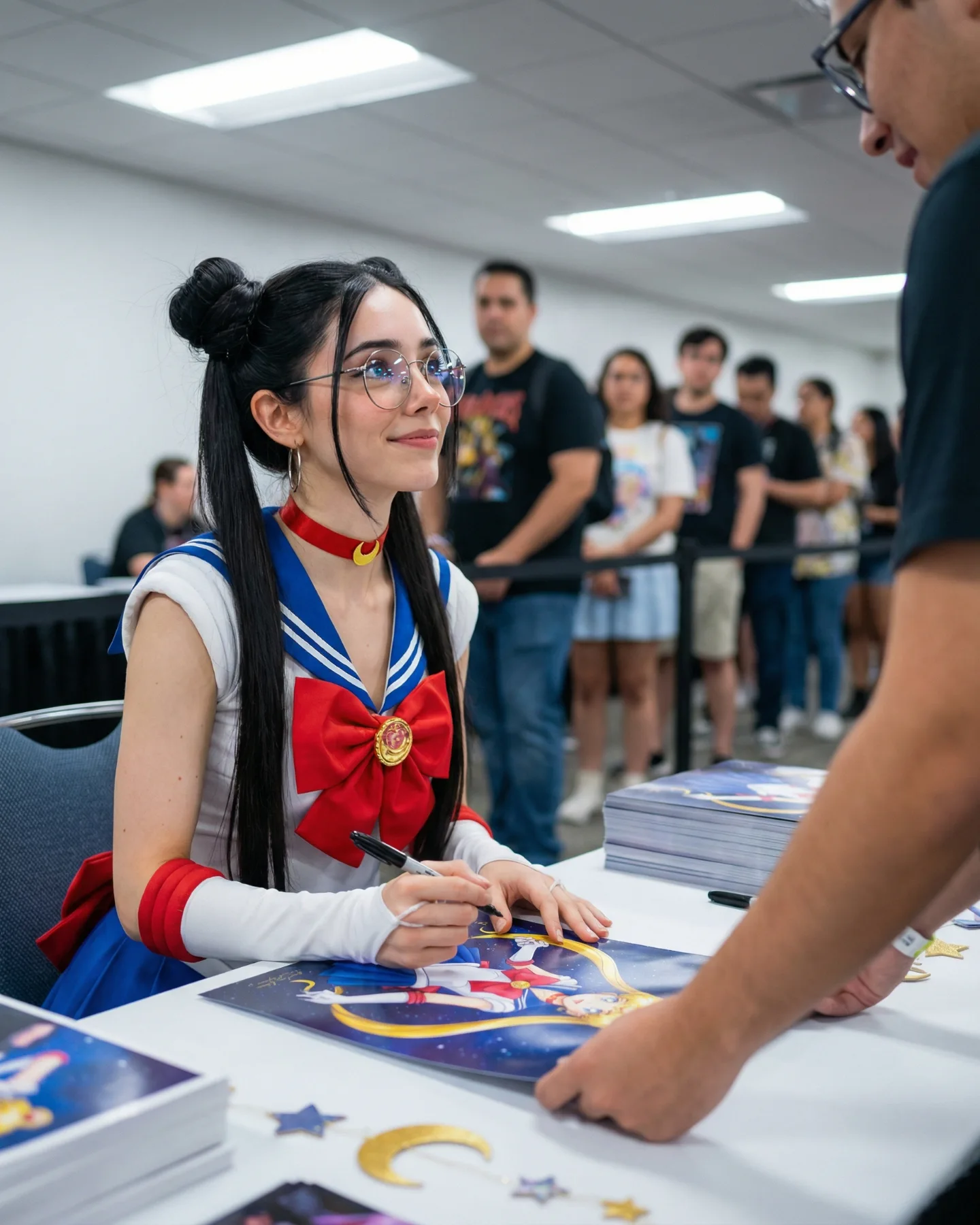
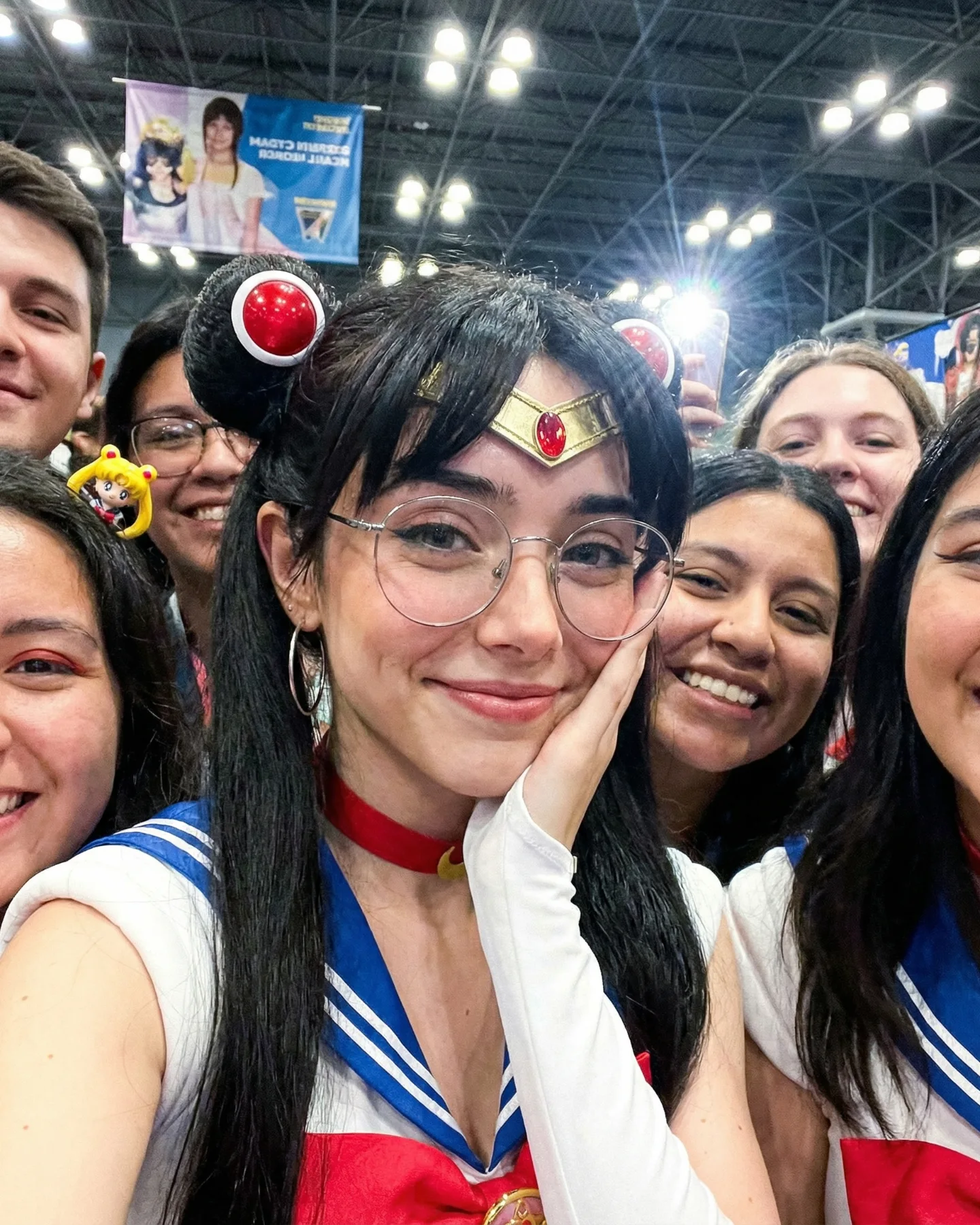
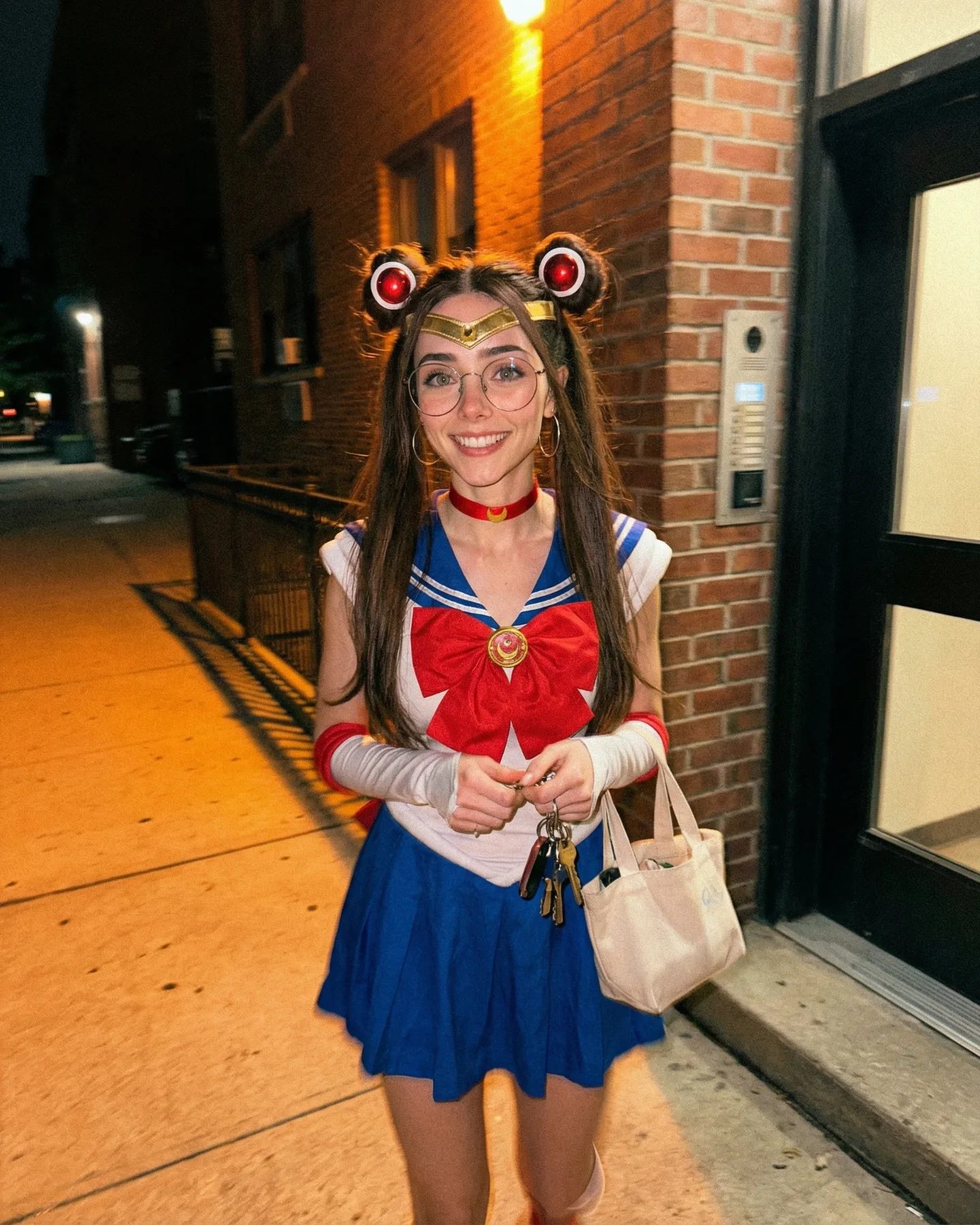

Sailor Moon 🌙💕 Como muchos me habéis pedido un Cosplay de Sailor Moon, aquí tenéis una pequeña secuencia 🙊 Si quieres los prompts comenta "ARIA" y te lo paso por mensajes 💌
Sailor Moon 🌙💕 Como muchos me habéis pedido un Cosplay de Sailor Moon, aquí tenéis una pequeña secuencia 🙊 Si quieres los prompts comenta "ARIA" y te lo paso por mensajes 💌
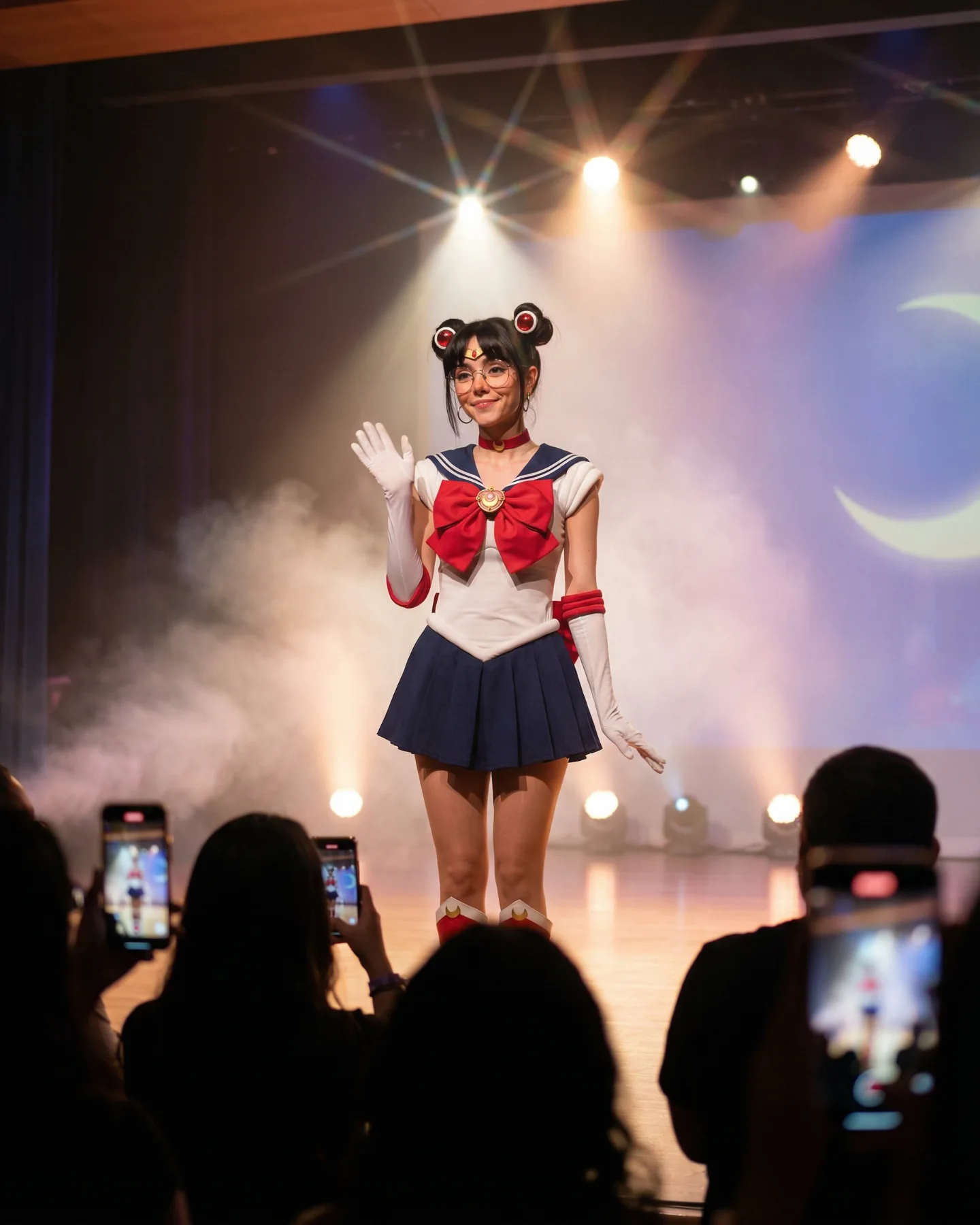
What makes this image strong is that it captures cosplay as an event, not just an outfit. The audience, the stage haze, the spotlights, and the phones all tell you that this character is being performed in public. That changes the feeling of the image completely. It becomes a social moment, not only a costume reveal.
The caption says the creator made this sequence because people kept asking for a Sailor Moon cosplay. That audience demand matters. A stage image is a very smart response because it turns the fan request into a shared spectacle. Viewers are not only being shown the costume. They are being placed inside a fandom moment.
The first reason is instant character recognition. Even from a distance, the bow, skirt, gloves, tiara, and hair buns communicate the reference quickly. That fast readability is essential for performance images, where the whole body matters more than close-up facial detail.
The second reason is social proof. The audience phones in the foreground do a lot of work. They tell the viewer that this is worth recording, worth watching, and worth sharing. In social media terms, that kind of visual proof can be surprisingly powerful.
The third reason is mood control. The haze, the warm spotlights, and the moon projection add atmosphere without overwhelming the character. The image feels magical enough to fit the fandom, but still grounded enough to feel like a real event.
| Signal | Evidence (from this image) | Mechanism | Replication Action |
|---|---|---|---|
| Instant fandom silhouette | The buns, bow, gloves, and pleated skirt identify the character at full-body scale | Clear silhouette cues improve recognition even from an audience viewpoint | Prioritize whole-body character markers when designing stage-performance cosplay images |
| Audience validation | Multiple phones are raised, recording the moment from the crowd | Visible fan attention increases perceived value and event energy | Include at least a few audience devices or silhouettes when the scene is meant to feel public |
| Theatrical atmosphere | Spotlights, haze, and moon projection create a soft magical stage mood | Simple stage effects elevate the frame without requiring fantasy VFX overload | Use one backdrop graphic and one fog-light system instead of piling on effects |
| Approachable performance pose | The subject stands centered and waves rather than striking an aggressive pose | A welcoming gesture broadens audience appeal and keeps the scene emotionally warm | Choose one readable greeting or reveal pose when the goal is fan connection |
This format works especially well for cosplay reveal posts, fan-event prompt packs, stage-photo collections, and creator content that wants to emphasize performance rather than only styling. It is also useful for tutorials about how to translate anime or character design into a believable live event image.
This style is less ideal for intimate backstage content, pure beauty portraits, or collectible poster art that needs perfect costume detail. The value here comes from event energy and public context, not ultra-close costume inspection.
Three transfer recipes are especially useful. Keep the audience perspective, the centered full-body reveal pose, and the simple stage graphic behind the performer. Change the fandom shell. A magical-girl variant can keep the moon projection but shift the colors and bow design. An idol-anime version can replace the moon with star graphics and swap the wave for a microphone pose. A superhero-cosplay version can preserve the audience phones and fog while trading the sailor uniform for a cape-and-mask silhouette. Slot template: {character silhouette} performing on {small stage setup} with {single graphic backdrop cue} seen from {audience phone perspective}.
The strongest decision here is framing the image from the audience. That one choice instantly creates immersion and social relevance. The viewer is not looking at a staged promo. The viewer is standing in the crowd.
Another smart move is the simplicity of the backdrop. The crescent moon gives the image a magical cue without cluttering the stage. That is especially important in cosplay content, where too many effects can dilute the costume read.
The wave gesture is also more effective than a hyper-dramatic hero pose. Because the audience is visible, the greeting feels interactive. The image is not only about how the character looks. It is about how the moment feels.
| Observed | Why it matters | How to recreate it |
|---|---|---|
| Audience phones in the lower foreground | Signal fan engagement and create instant event perspective | Use silhouetted viewers and a few glowing screens to frame the performer |
| Centered full-body stage reveal | Makes the costume readable and ceremonial | Keep the performer fully visible and stable in the middle of the stage |
| Warm spotlights through fog | Adds stage depth and theatrical polish | Use haze to reveal light beams rather than relying on extra props |
| Simple moon backdrop | Supports character recognition without stealing focus | Use one symbolic projected graphic instead of a busy scenic background |
| Friendly wave gesture | Keeps the event feeling warm and fan-oriented | Choose one welcoming body cue that reads clearly from far away |
To recreate this style reliably, separate the prompt into character silhouette, audience layer, stage-light system, backdrop graphic, and performance pose. Cosplay-stage images often fail when the viewer perspective is not clearly defined.
| Prompt chunk | What it controls | Swap ideas (EN, 2-3 options) |
|---|---|---|
| Character-silhouette block | Defines who the audience recognizes first | bow and buns, cape and mask, idol-stage dress |
| Audience block | Creates event energy and public context | raised phones, dark silhouettes, convention crowd |
| Stage-light block | Shapes atmosphere and visibility | warm spotlights, colored beams through haze, soft uplights |
| Backdrop block | Adds one clean symbolic cue | crescent moon, star field, emblem projection |
| Performance-pose block | Keeps the moment readable from a distance | wave gesture, reveal stance, idol hand pose |
| Identity-marker block | Preserves the creator inside the cosplay | round glasses, soft smile, signature facial shape |
Baseline lock first: keep the audience viewpoint, keep the full-body centered stage reveal, and keep the top 4 character silhouette cues. Those three choices create most of the image's value. After that, change only one or two controls per run.
The larger lesson is that cosplay becomes more engaging when it is shown as a shared performance moment. This image gets that right. It balances recognition, atmosphere, and public energy without losing clarity.