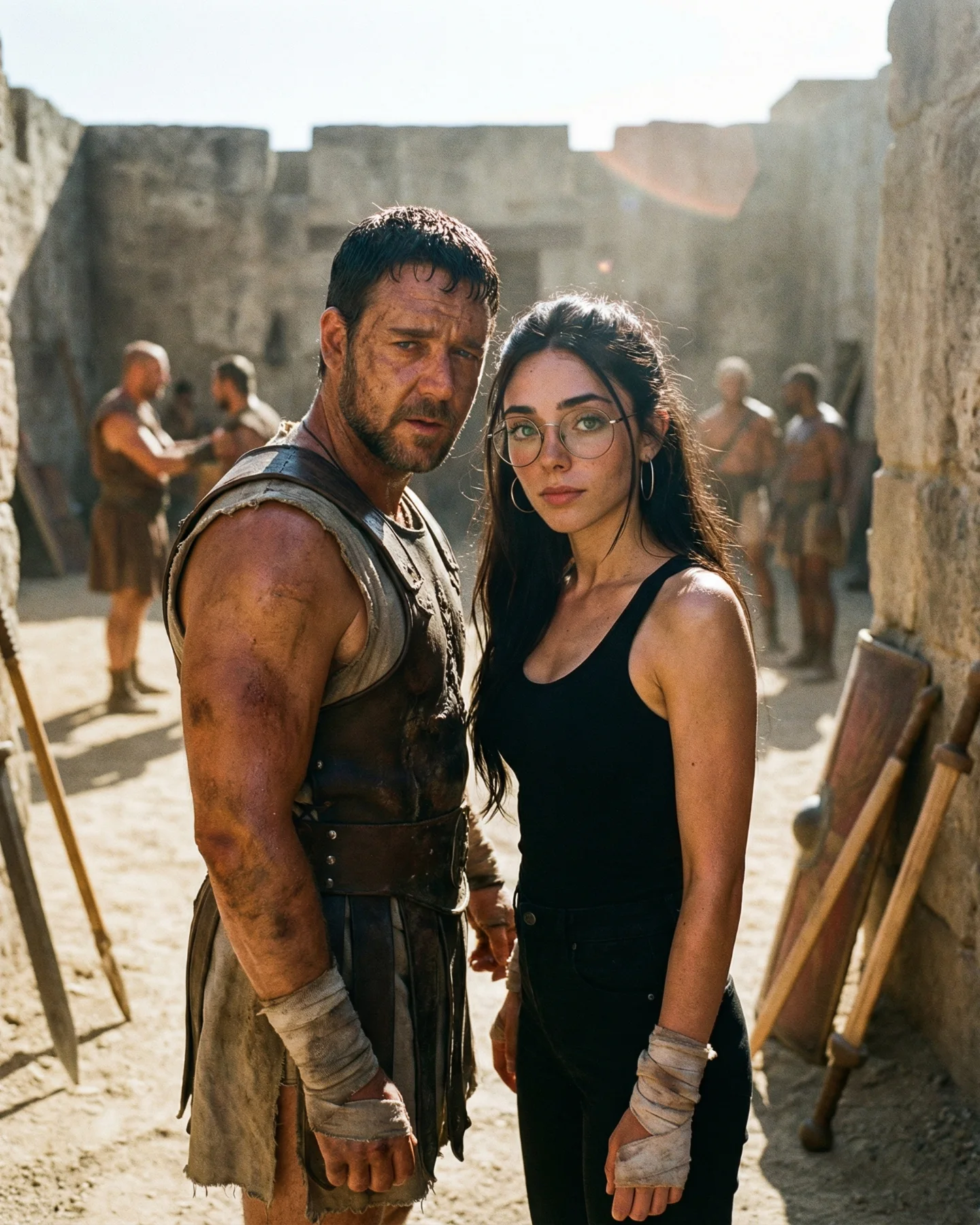
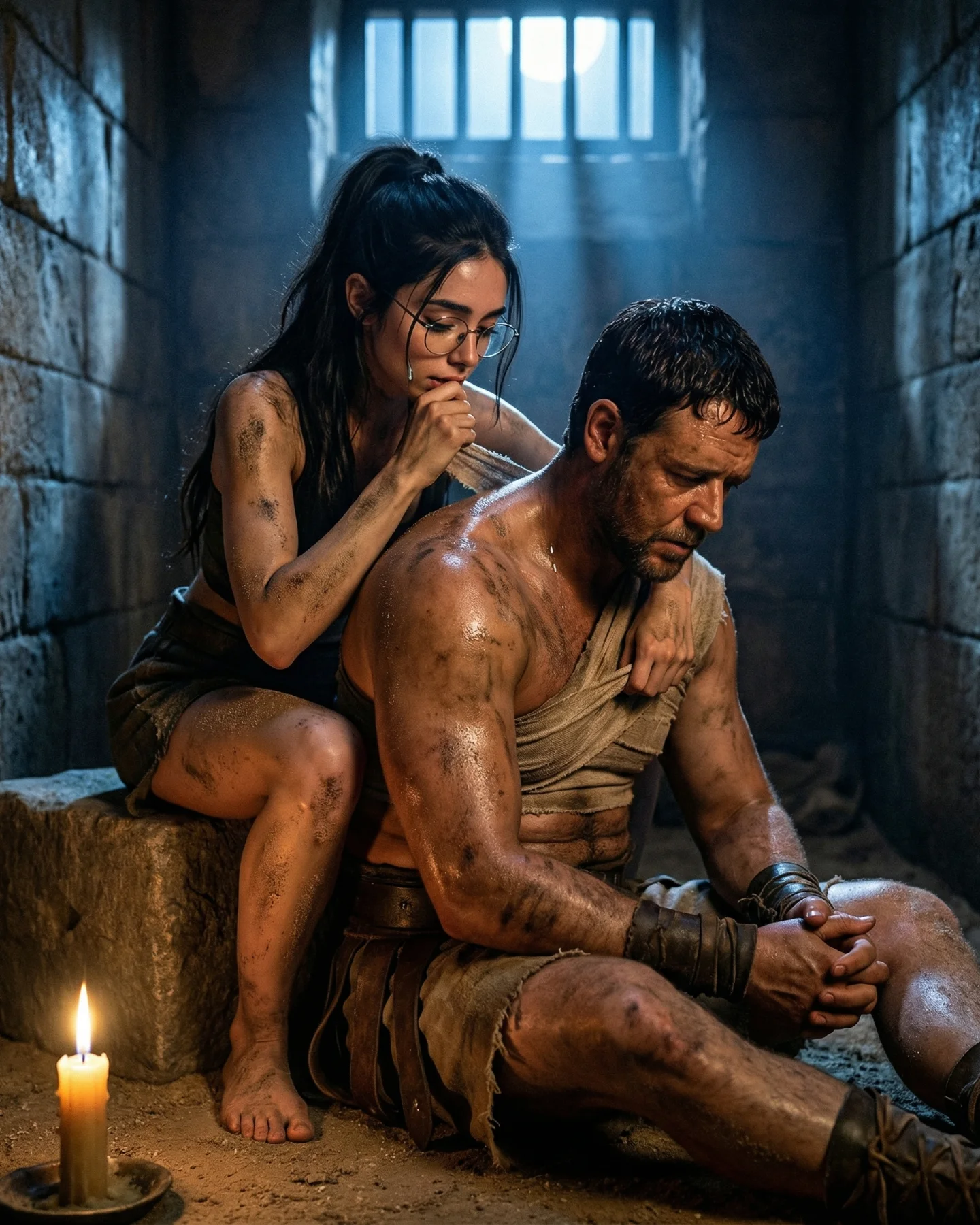
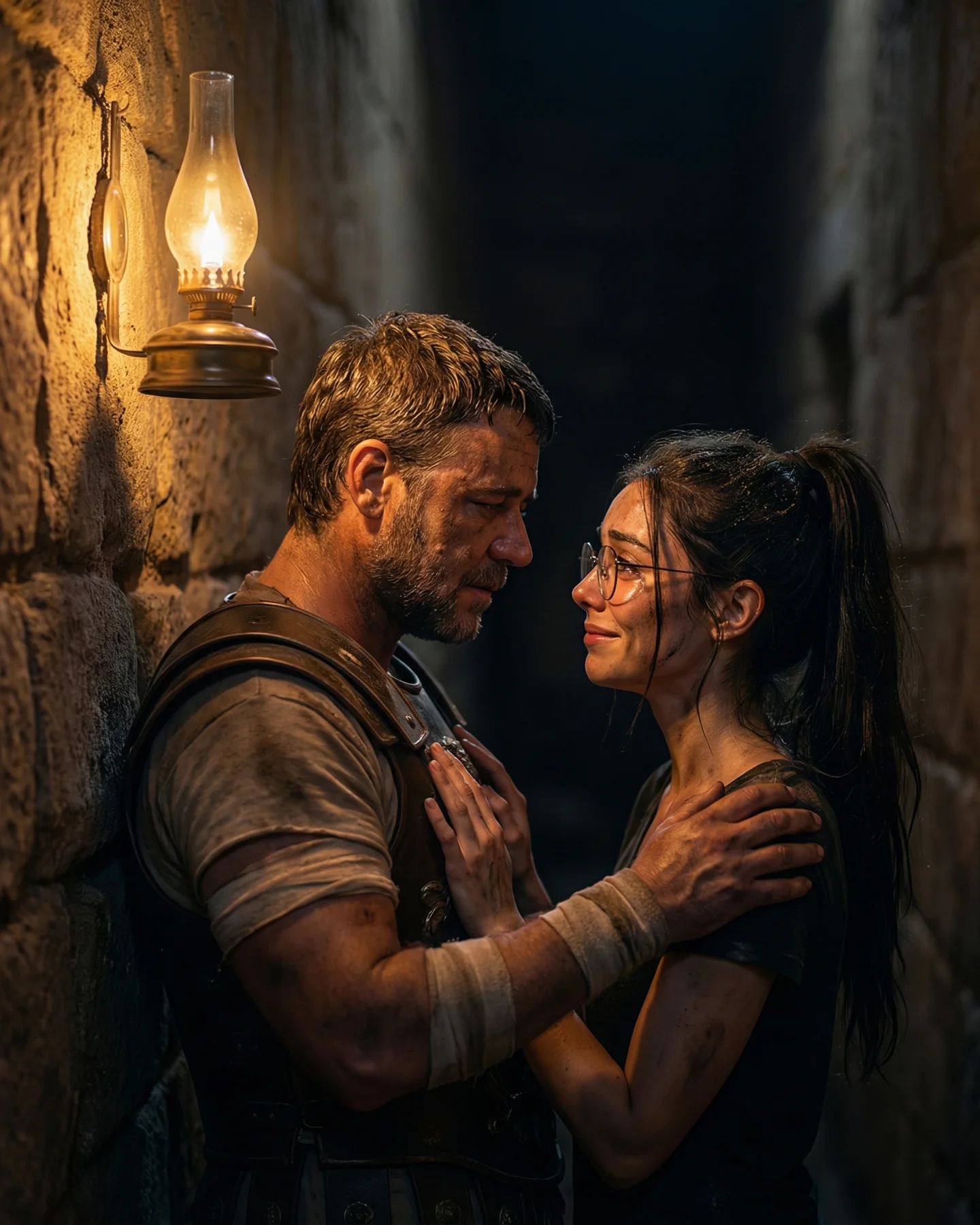
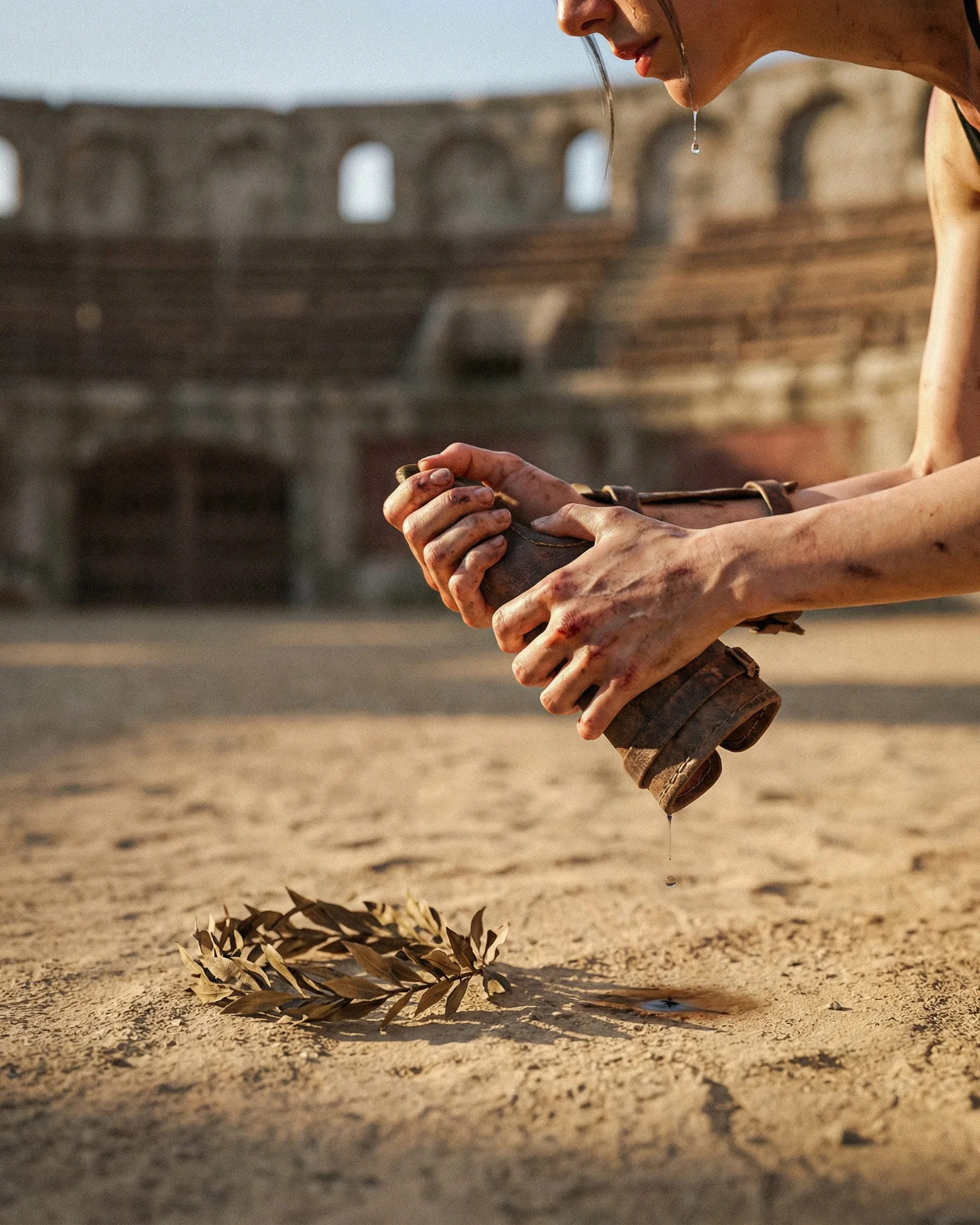
Prompts de GLADIATOR 🥹💕
Os dejo una pequeña secuencia de fotos y vídeos que nunca ha existido de la película de Gladiator 🙊
Lo mejor de todo es que con todos los avances de la IA ahora todos podemos crear nuestra propia película o versión alternativa 🎬
Y como siempre os dejo los prompts si comentáis "ARIA" ❤️🩹💌
How soy_aria_cruz Made This Gladiator Arena Gate Farewell Image — and How to Recreate It
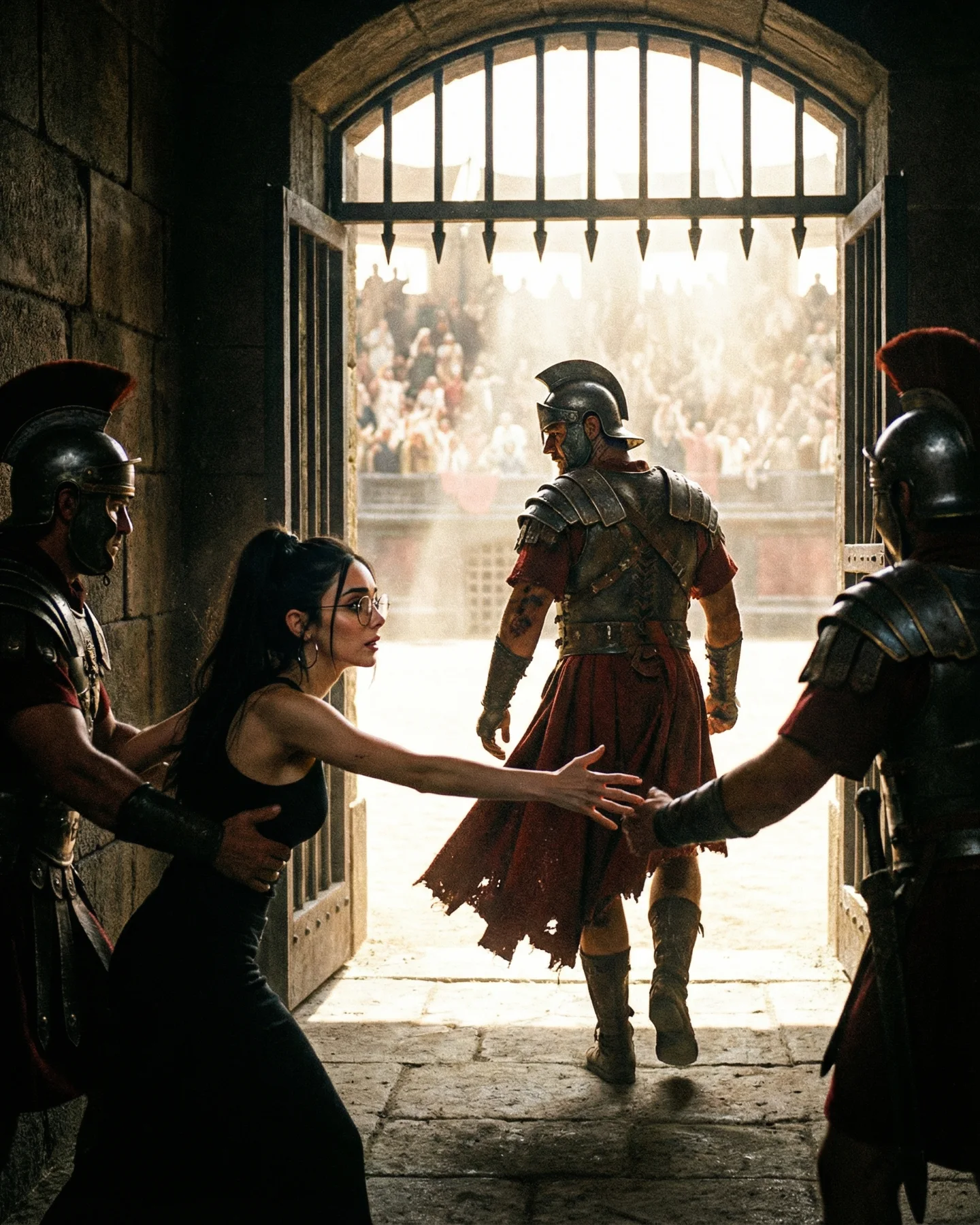
This image does not depend on spectacle alone. Its real strength is that it compresses an entire tragic storyline into one doorway. You have a woman being physically held back, a hero already gone emotionally even before he exits the frame, and a bright arena outside that feels more like fate than geography. That is why the post travels. The viewer understands the emotional stakes immediately.
For creators, this is a more useful lesson than simply saying “epic cinematic lighting.” The image is built around a clear directional tension. Every line pushes the eye toward the center opening, and every gesture reinforces separation. When a frame has that much narrative gravity, people do not just admire the image quality. They project a whole scene onto it, which makes comments easier and shares more likely.
Why the scene reads as viral instead of just expensive
The first thing working here is recognizable film grammar. Even if a viewer cannot name the exact inspiration, the arena gate, Roman armor, and backlit departure instantly activate a historical-epic memory. Familiarity lowers friction. The second thing is that the emotional conflict is readable at thumbnail size: one figure leaving, one figure reaching, two figures blocking. That is an ideal feed composition because the action survives even before anyone zooms in.
The bright exterior also matters. Many AI historical scenes fail because everything is equally dramatic. Here, the frame has hierarchy. The interior is dark, heavy, and constrained; the exterior is washed in destiny-like light. That contrast gives the shot moral direction, not just visual contrast. It feels like a point of no return.
Signal
Evidence (from this image)
Mechanism
Replication Action
Clear emotional vector
The woman reaches forward while the gladiator walks away and guards stop her
Viewers understand the conflict instantly, increasing stop power
Build scenes around one obvious directional action instead of multiple competing gestures
Architectural framing
The arena gate creates a natural frame around the central figure
Strong structure makes the image feel cinematic and intentional
Use doors, arches, windows, or tunnels as compositional anchors
High-stakes contrast
Dark interior opens into a blown-out arena filled with dust and crowd energy
Light becomes narrative, signaling danger, glory, and irreversible movement
Separate emotional zones with a hard light transition rather than uniform mood lighting
Where this style transfers well
This formula is strong for film reinterpretations, AI story posters, dramatic carousel covers, and any creator brand built around “lost scenes” or alternate movie universes. It is especially good when you want the audience to feel that they are seeing a missing frame from a larger narrative. The image sells implication more than exposition.
It is less useful for creators whose audience expects bright, friendly, immediately relatable content. The mood is heavy, masculine, and fate-driven. If you want broader social appeal, you can keep the doorway composition and backlight but swap the Roman battle context for romance, fantasy travel, or emotional reunion.
Best fit: alternate movie-scene creators. Why fit: the frame already feels like a deleted still. What to change: swap the specific franchise cues while keeping the separation mechanics.
Best fit: prompt educators teaching composition. Why fit: the gate demonstrates framing, layering, and gesture hierarchy clearly. What to change: annotate only the locked composition rules.
Best fit: cinematic AI accounts. Why fit: the image carries scale and feeling without needing motion. What to change: vary wardrobe and architecture, not the light logic.
Not ideal: cheerful lifestyle brands. Reason: the emotional weight is too severe for light audience positioning.
Not ideal: product-led commercial posts. Reason: the narrative overwhelms any single item you might want to feature.
Transfer recipes
Keep: central gate framing, one person leaving, one person reaching, strong backlight. Change: gladiator arena to train station farewell, guards to staff or family members. Slot template: "{threshold architecture} {departing figure} {reaching figure} {blocking figures} {bright beyond-space}"
Keep: dark interior versus luminous exterior, layered foreground bodies, emotional asymmetry. Change: Roman setting to sci-fi hangar or fantasy castle. Slot template: "{dark chamber} opening to {brilliant destination} with {hero archetype} and {restrained companion}"
Keep: visual hierarchy and one-way motion. Change: tragedy to triumph by turning the reach into support rather than loss. Slot template: "{framed exit} {central walker} {foreground emotional gesture} {environmental stakes}"
What the image gets right aesthetically
The strongest aesthetic choice is restraint. The frame uses only a few dominant materials: stone, leather, bronze, skin, dust, and sun. That limitation is exactly why it feels expensive. Instead of stuffing the scene with decorative clutter, it gives each surface enough space to register. The open doors, the iron spikes, and the blurred crowd outside are not random details; they all reinforce the same emotional destination.
The pose logic is equally strong. The woman is not centered, which makes her feel powerless. The gladiator is centered but turned away, which makes him feel unreachable. The guards are partially cropped, which turns them into structural pressure rather than full characters. This is a great prompt lesson: sometimes side characters are better used as forces than as personalities.
Observed
Why it matters for recreation
Arched stone gate used as a centered visual frame
Creates immediate grandeur and guides the eye to the story core
Backlit dust and exterior haze
Adds scale, atmosphere, and a sense of destiny
Foreground restraint gesture from both sides
Turns stillness into visible dramatic pressure
Limited earthy palette with bright white-gold exterior
Keeps the image coherent and historically grounded
Back-view hero silhouette
Makes the scene feel iconic rather than portrait-like
Prompt chunks to control deliberately
To recreate this kind of image, do not start with “epic Gladiator scene” and hope for the best. You need to define the motion hierarchy and architecture first. The emotional result depends on those structural choices much more than on costume detail.
warehouse to daylight, tunnel to stadium, hangar to sunset runway
dusty historical textures and worn armor
Material credibility
weathered uniforms, scuffed space suits, aged ceremonial robes
An execution sequence that keeps the drama intact
Lock these three things first: the gate framing, the leaving-versus-reaching gesture relationship, and the interior-to-exterior light contrast. Those are the non-negotiables. Once they work, you can refine costume period, crowd density, and surface detail.
Run 1: stabilize the doorway geometry and figure placement.
Run 2: refine body language so the woman’s reach and the hero’s departure read clearly.
Run 3: improve material realism in armor, stone, doors, and dust bloom.
Run 4: remix the universe while preserving the same compositional pressure system.
If a result looks “epic” but feels flat, the missing ingredient is usually not more detail. It is usually a weak emotional vector. Keep one person committed to leaving, one person desperate to follow, and the frame will hold its tension.