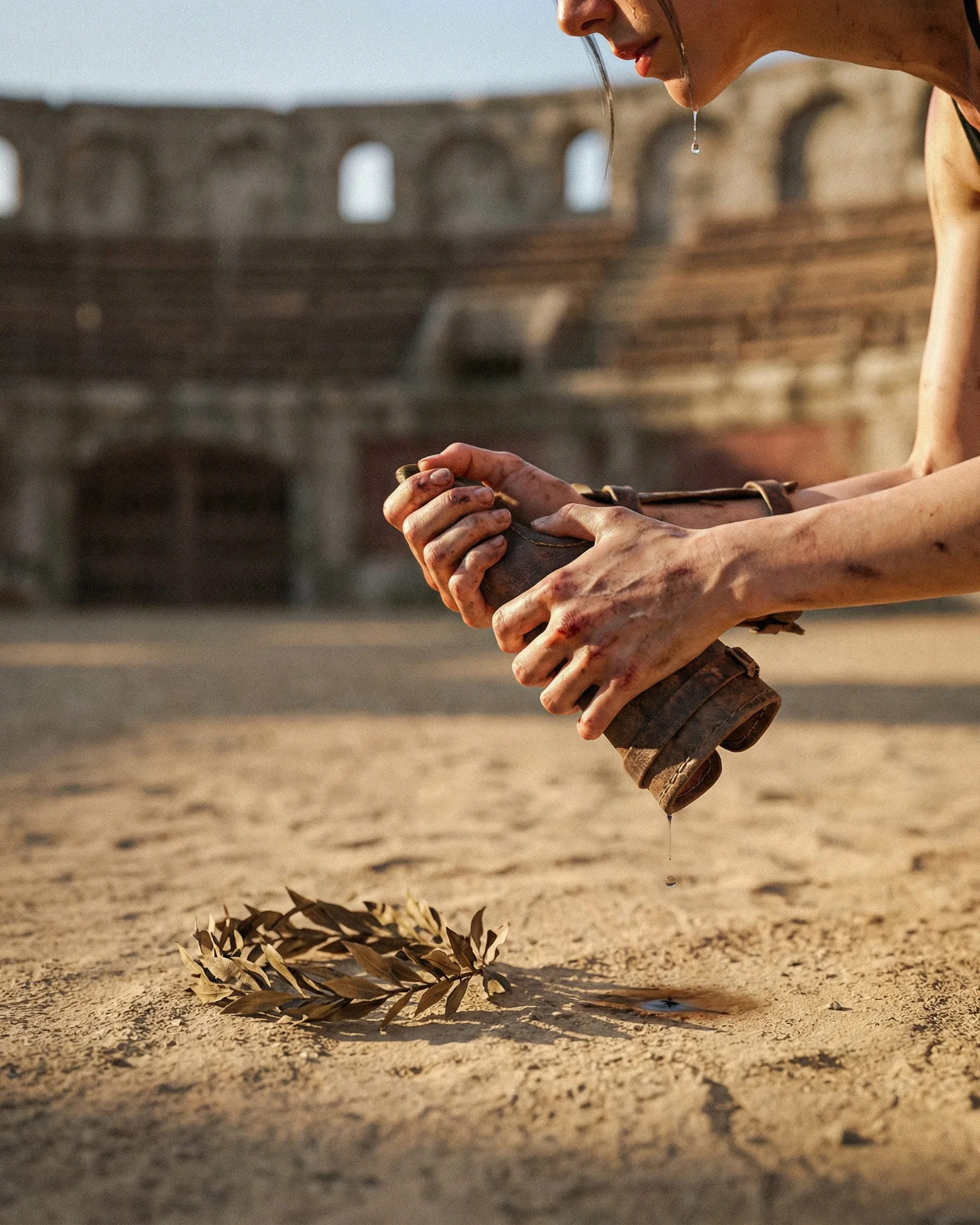
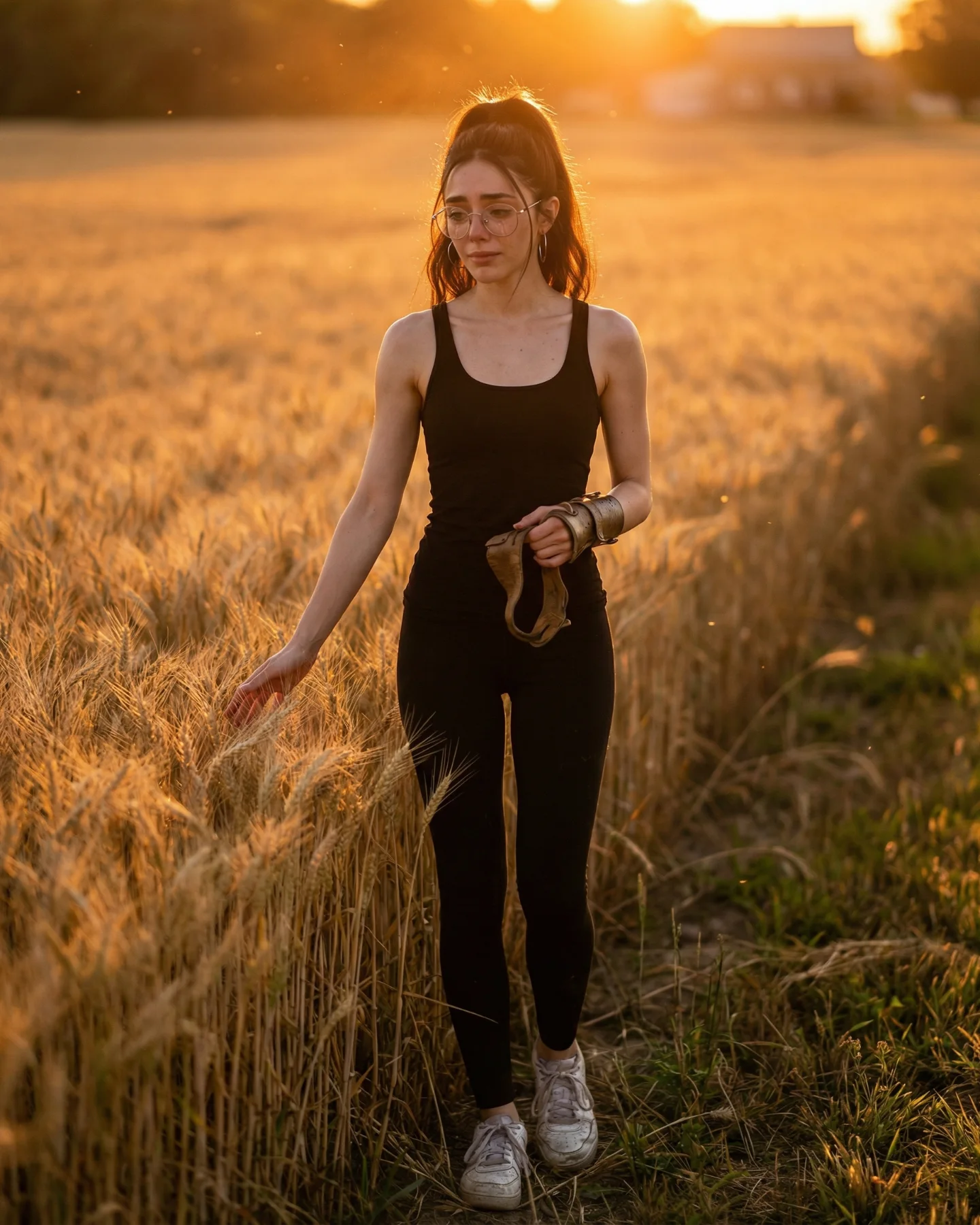
Why soy_aria_cruz's Gladiator Set Cinematic Duo Editorial Photo Went Viral — and the Formula Behind It
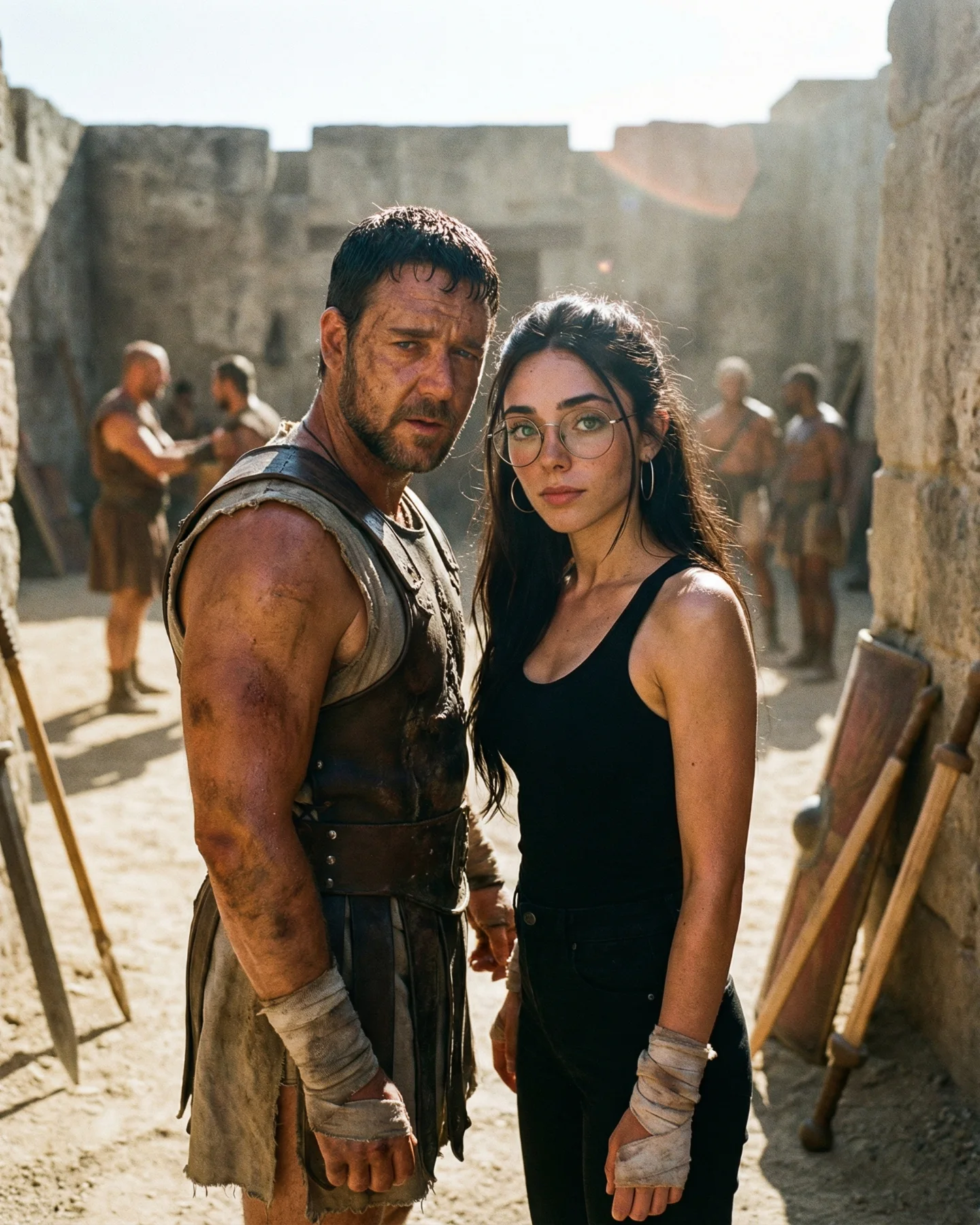
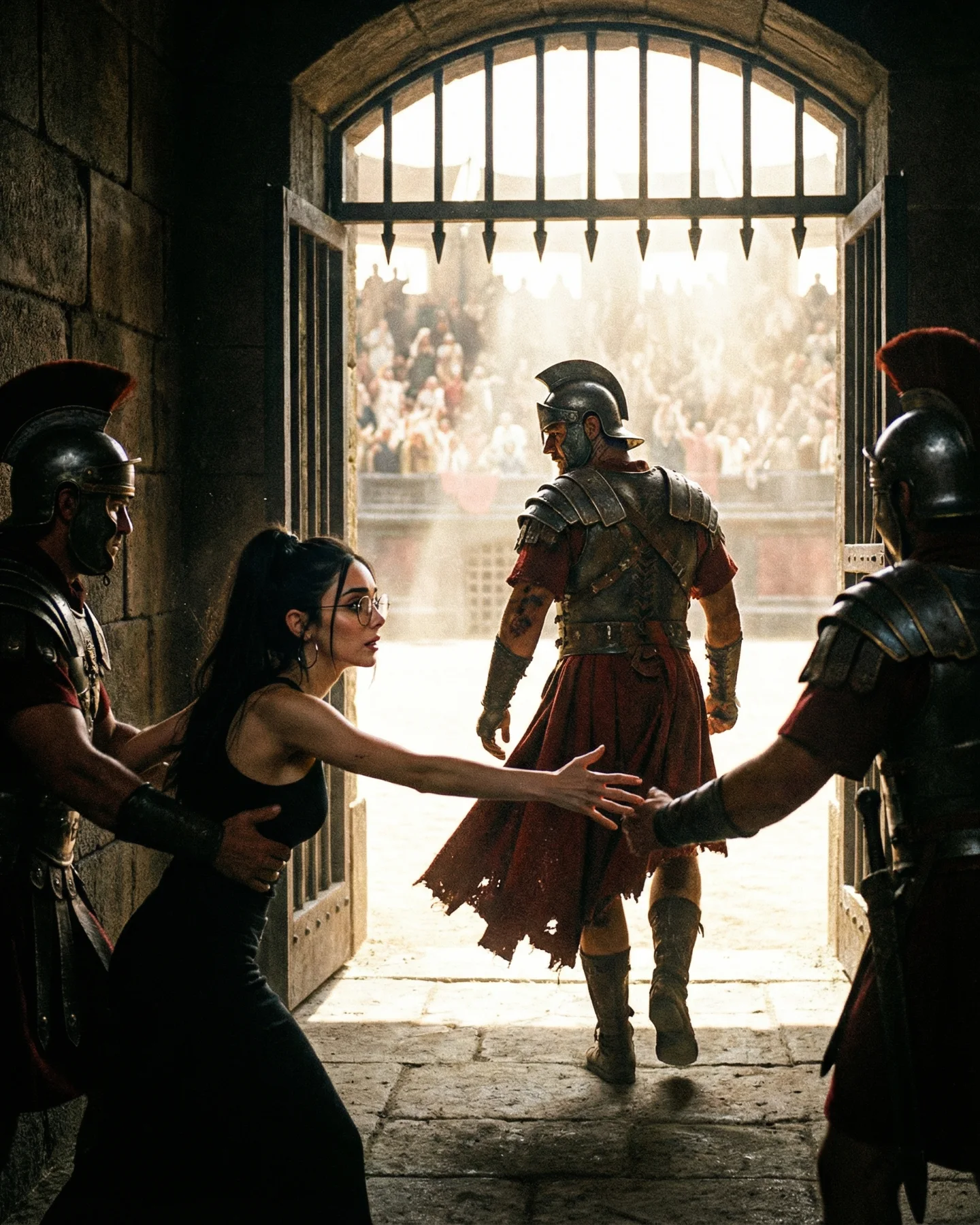
This image works because it creates tension through mismatch. One figure belongs to a dusty historical world of battle, labor, and heat. The other feels almost contemporary in her black tank, glasses, and quiet stillness. That contrast is the whole engine of the frame. It makes the viewer ask a question before they even read the expressions: why do these two people belong in the same world?
The image also succeeds because it avoids overexplaining itself. The background extras, the spears, and the stone walls make the ancient setting obvious, but the main pair stand still enough that the story remains open. It feels like a movie still pulled from a larger narrative. For creators, that is a strong lesson: mystery often lands harder than total visual explanation.
Why This Pairing Feels Cinematic So Quickly
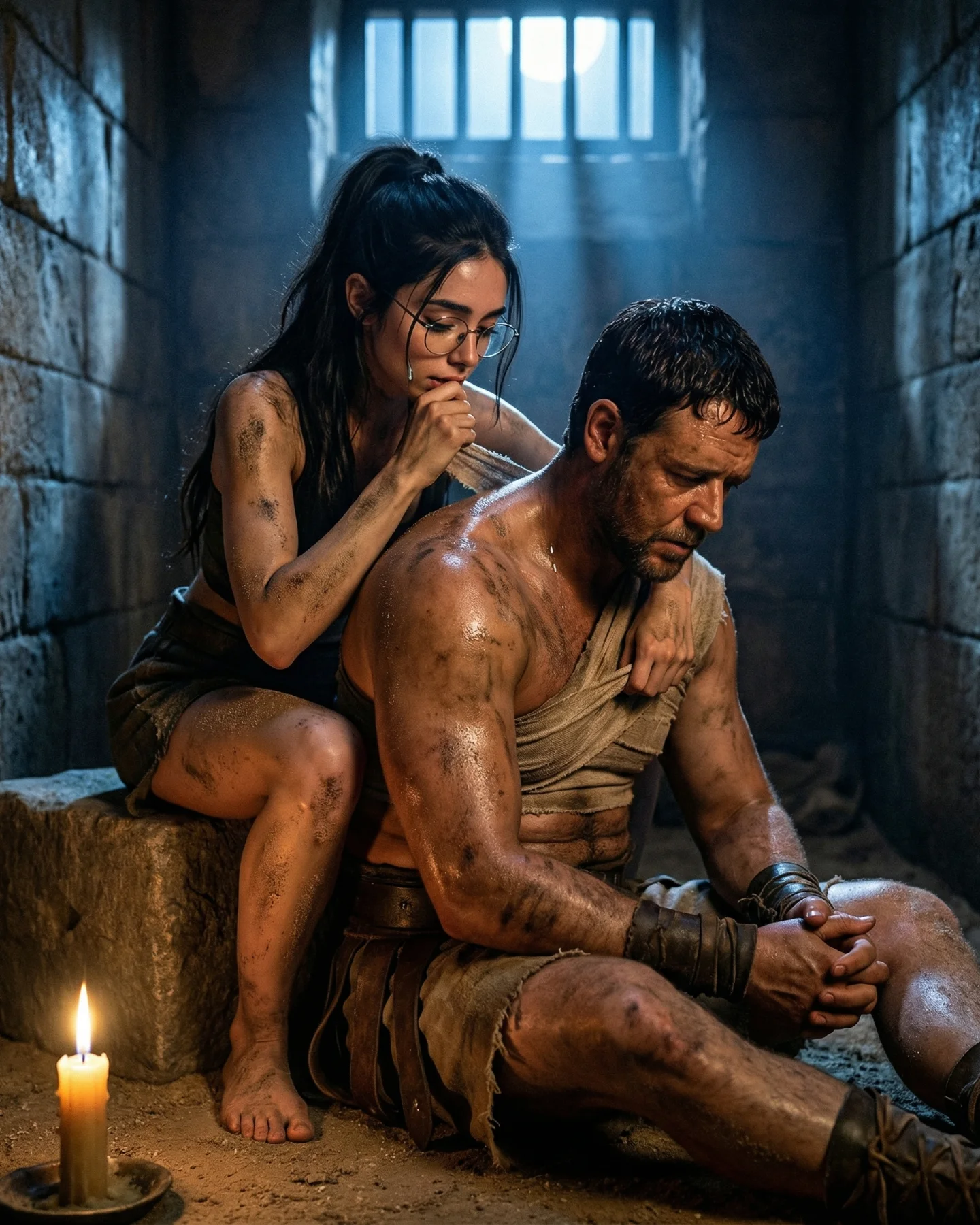
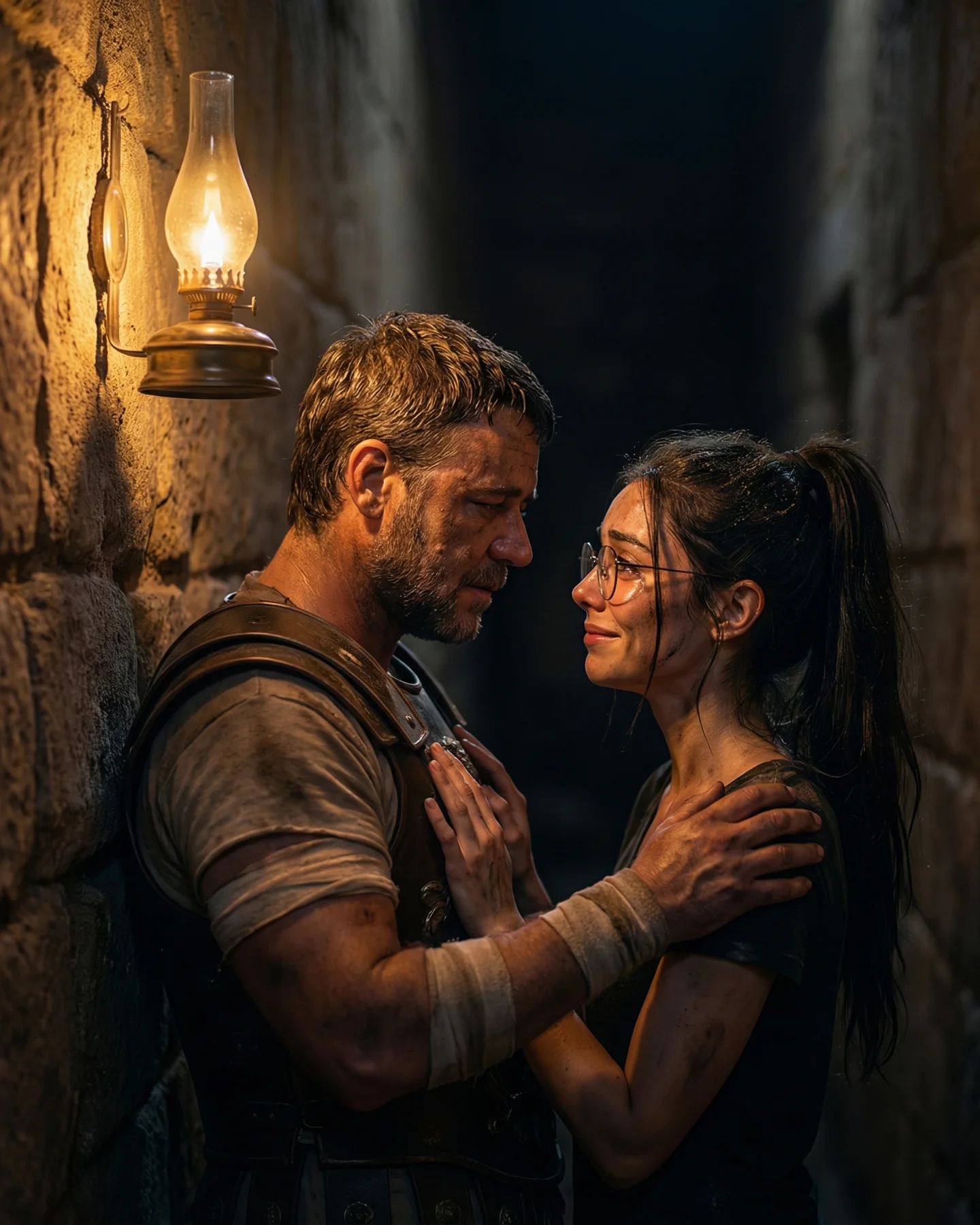
The strongest thing here is contrast in role and texture. The armored man is covered in physical evidence: sweat, dust, bruises, leather, metal. The woman is comparatively clean and minimal. That creates a visual hierarchy of worlds rather than just of people. You are not only looking at two subjects. You are looking at two different narrative energies colliding.
Another reason the image works is the corridor staging. The stone walls compress the scene and naturally focus attention on the pair. The extras remain blurred enough to reinforce scale without stealing the shot. For creators, this is a practical reminder that historical scenes usually get stronger when the environment supports character tension instead of competing with it.
| Signal | Evidence (from this image) | Mechanism | Replication Action |
|---|
| World contrast | Battle-worn armored man stands beside a modern-looking woman in black | Mismatch in styling creates curiosity and narrative tension immediately | Pair one heavily world-coded subject with one restrained subject when you want intrigue |
| Historical proof | Stone walls, dusty ground, spears, and background extras all reinforce the era | Multiple environmental cues make the setting credible without overloading the frame | Use at least three period markers if you want a location to feel convincing fast |
| Texture hierarchy | Armor, dirt, bruises, and wraps contrast with the woman’s clean black silhouette | Rough-versus-clean texture creates visual depth and character difference | Let one subject carry material complexity while the other stays graphically simple |
| Poster-like stillness | Both stand directly toward camera in a narrow corridor | Still posture makes the frame feel iconic and movie-still ready | Use calm body language when the setting and costume already carry enough drama |
Where This Visual Formula Fits Best
- Historical-drama prompt references: ideal when you want realism, dust, and cinematic restraint instead of fantasy excess.
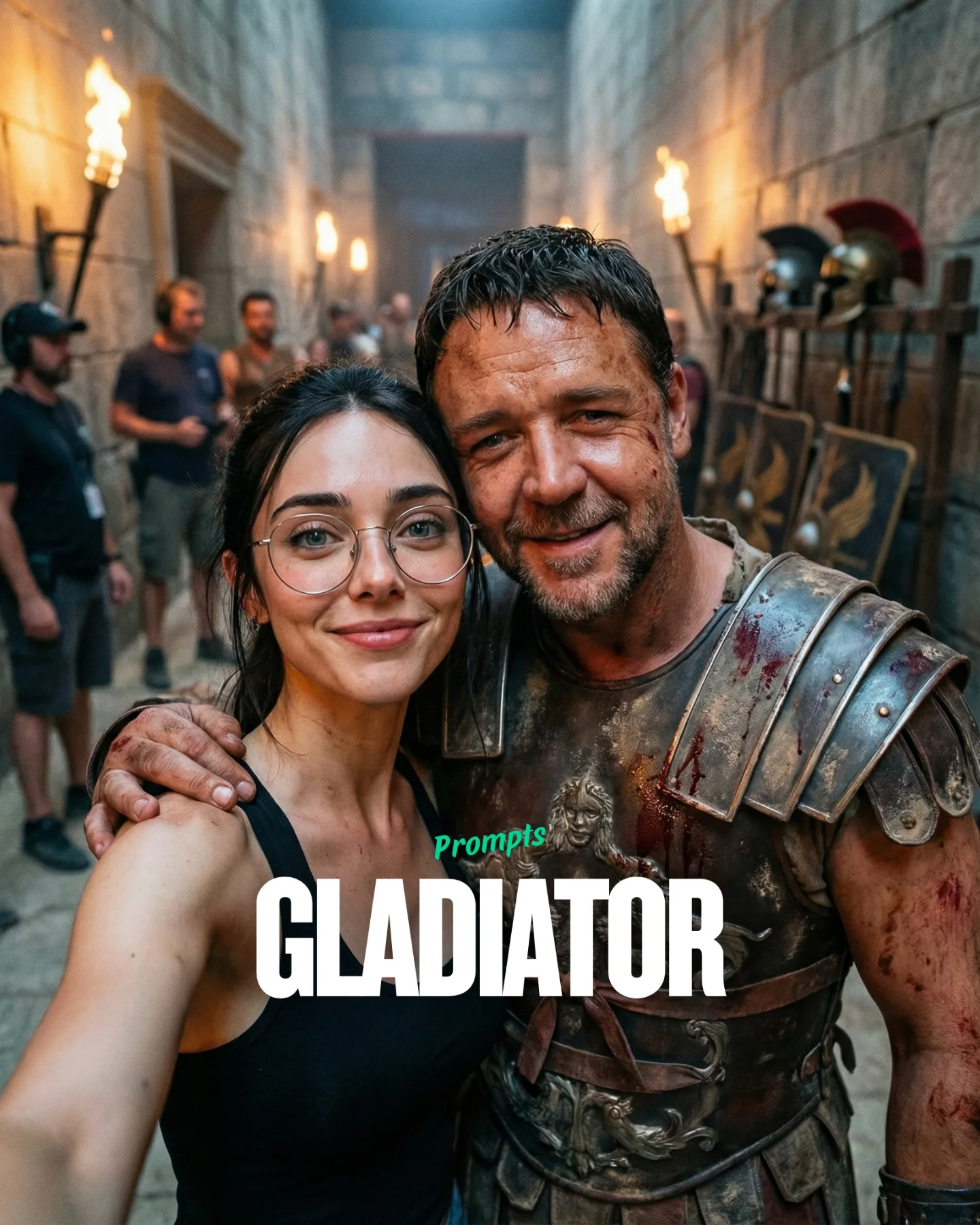
- Film-set or behind-the-scenes imagery: strong because it can read as both in-world and just-outside-the-world at once.
- Character-contrast editorials: useful when the whole point is the collision of eras, roles, or textures.
- Story-driven duo portraits: especially effective for scenes that need mystery more than explicit action.
This setup is less ideal for pure cosplay documentation, bright travel imagery, or straightforward romance content. The strength here is tension and context. If you make it too neat or too literal, the image loses its edge.
Transfer recipe one: Keep the weathered setting, one battle-worn subject, and one visually restrained companion. Change the era or genre while preserving the contrast. Slot template: {historical world} {textured lead} {minimal companion} {mystery tension}.
Transfer recipe two: Keep the dusty corridor and background extras. Change the relationship read from allyship to suspicion or mentorship while preserving the same calm frontal posture. Slot template: {narrow set environment} {two-character contrast} {background world proof} {open-ended narrative}.
Transfer recipe three: Keep the strong sunlight and rough material palette. Change the wardrobe family from gladiator to western, war drama, or post-apocalyptic while preserving the same one-rough-one-clean logic. Slot template: {harsh outdoor set} {battle-worn figure} {clean modern counterpoint} {cinematic stillness}.
What Makes the Image Feel Expensive
The frame looks premium because it uses restraint instead of excess. The set is textured, but not cluttered. The costumes are distinct, but not competing. The light is strong, but still readable. That kind of discipline is what makes historical images feel like film stills instead of themed costume portraits.
The woman’s glasses are especially useful as a modern marker. They keep her visually specific and sharpen the contrast with the man’s world-coded armor. For creators, that is a strong prompt lesson: one small modern detail can completely change how a historical image is read, if the rest of the frame is controlled well.
| Observed | Recreate |
|---|
| One heavily textured figure versus one minimal figure | Use asymmetry in material detail to create immediate narrative friction |
| Dusty corridor and extras scale the world quietly | Let background people and props prove the setting without overstepping the leads |
| Harsh sunlight adds realism rather than glamour | Use strong natural light if the goal is heat, labor, and historical physicality |
| Straight-on stillness makes the duo feel iconic | Resist unnecessary motion when the power of the image is already in the contrast |
Prompt Technique Breakdown
| Prompt chunk | What it controls | Swap ideas (EN, 2–3 options) |
|---|
| gladiator-style warrior standing beside a woman in simple black modern clothing | Core dual-world contrast | samurai and minimalist companion; cowboy and city girl; soldier and civilian contrast |
| dusty stone corridor with extras and leaning spears | Historical environment proof | arena tunnel; fortress yard; ruined courtyard |
| battle-worn armor, bruises, and rough wraps | Physical realism and character history | scarred leather; muddy military gear; sun-bleached survival clothing |
| glasses, black tank top, calm direct gaze | Modern restraint and emotional anchor | simple blouse; dark slip dress; understated neutral top |
| harsh warm daylight and sandy haze | Atmosphere and material definition | golden heat haze; cooler overcast dust; late-afternoon sun |
| frontal movie-still composition with two equal leads | Iconic poster energy | slight walk-forward pose; side glance variation; tighter shoulder-up crop |
How to Iterate Without Losing the Tension
Lock three things first: the world contrast between subjects, the historical set proof, and the restrained frontal composition. Those are the load-bearing elements. If one changes too much, the image stops feeling cinematic and starts feeling accidental.
- Start with the exact formula: dusty stone corridor, battle-worn warrior, modern black-clad companion, and warm hard light.
- Change only the genre skin, moving from gladiator to western, war film, or post-collapse world while preserving the same rough-versus-clean contrast.
- Change only the emotional relationship, testing ally, outsider, witness, or guide while keeping the body language calm.
- Change only the level of environmental density, adding or reducing extras and props without removing the core historical proof.
The repeatable takeaway is simple: duo images become much more compelling when each person seems to come from a slightly different story world.