How soy_aria_cruz Created This Gladiator Laurel Crown Closeup AI
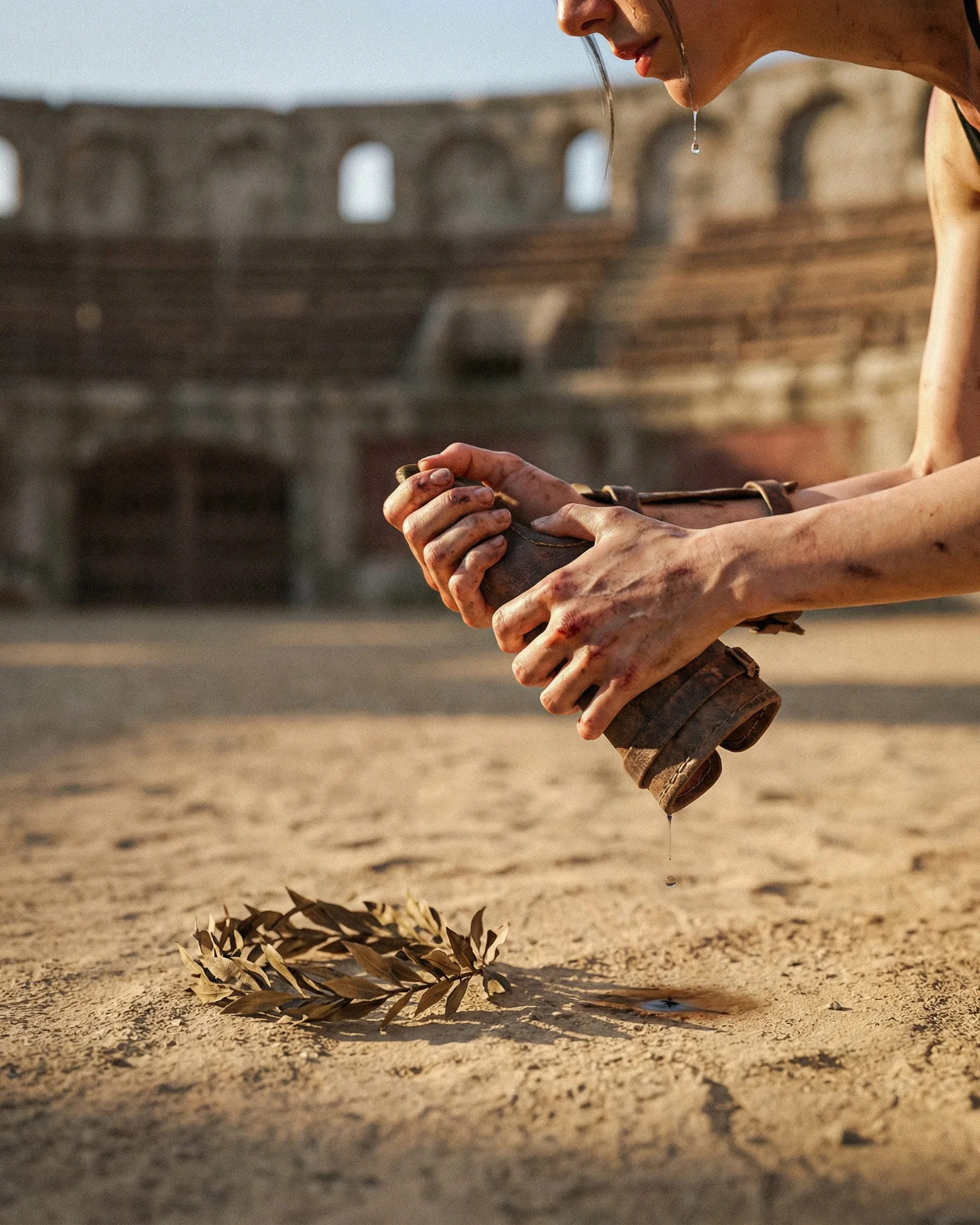
This image works because it avoids showing the full spectacle directly and instead focuses on the physical aftermath. The laurel crown, the scraped hands, and the ancient arena in the background tell a complete story through implication.
Why it works
The crown is the key symbolic object. A laurel wreath instantly communicates victory, but placing it in the dust rather than on a head adds emotional complexity. It suggests that triumph has a cost.
The close crop is equally important. By focusing on hands, arms, and part of the face, the image becomes more tactile and intimate. It feels less like a broad historical panorama and more like a personal moment inside a brutal world.
The arena background gives the scene scale without distracting from the human detail. The viewer understands the grandeur of the setting, but the emotional focus stays low and close to the ground.
Use cases
This prompt is ideal for historical-epic concept art, gladiator-film posters, cinematic trailer stills, dramatic moodboards, prestige-drama visuals, and AI image prompts built around victory, survival, and ancient spectacle.
Aesthetic read
The aesthetic sits between historical blockbuster cinematography and intimate character-based concept art. It is less about costumes on display and more about physical consequence, symbolism, and atmosphere.
Prompt technique breakdown
To recreate this image well, the prompt should specify the close-up hands in the sand, laurel crown, leather wrappings, falling sweat or water, and blurred Colosseum architecture in warm light. Those details create the emotional language of the image. If the crop widens too much or the symbolic objects are removed, the scene loses much of its weight.
It also helps to keep the pose low and weary. This image is about aftermath, not active combat.
Remix playbook
You can remix this concept by changing the era to Greek, medieval, or fantasy arena combat, replacing the laurel with a sword or helmet, or shifting the light to dawn, storm, or torchlight. You can also widen the composition into a full arena tableau after establishing the close-up. The concept remains useful because symbols of victory become more powerful when shown through physical exhaustion.
That is what makes this prompt effective. It turns a simple close-up into a mythic image of earned triumph.