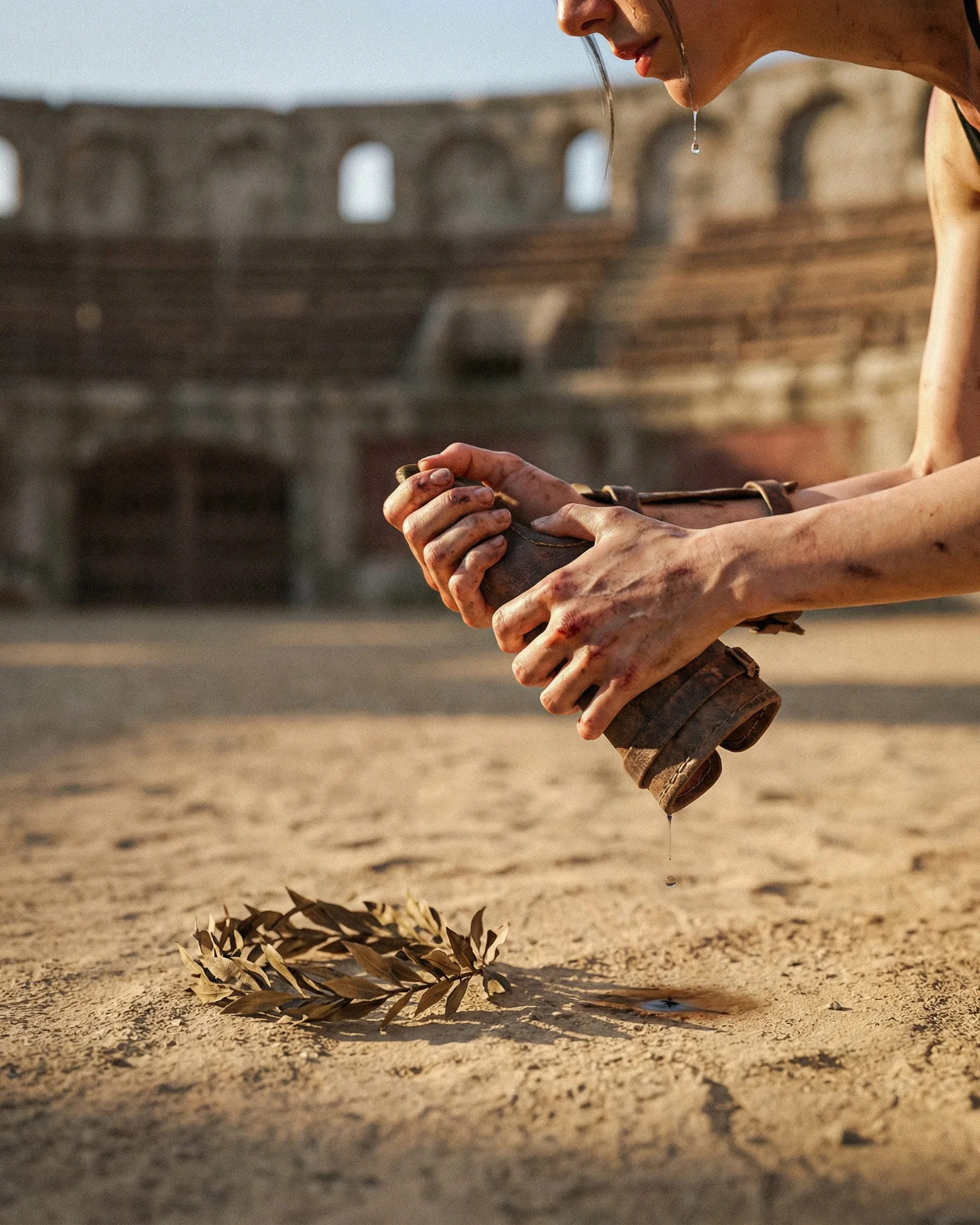
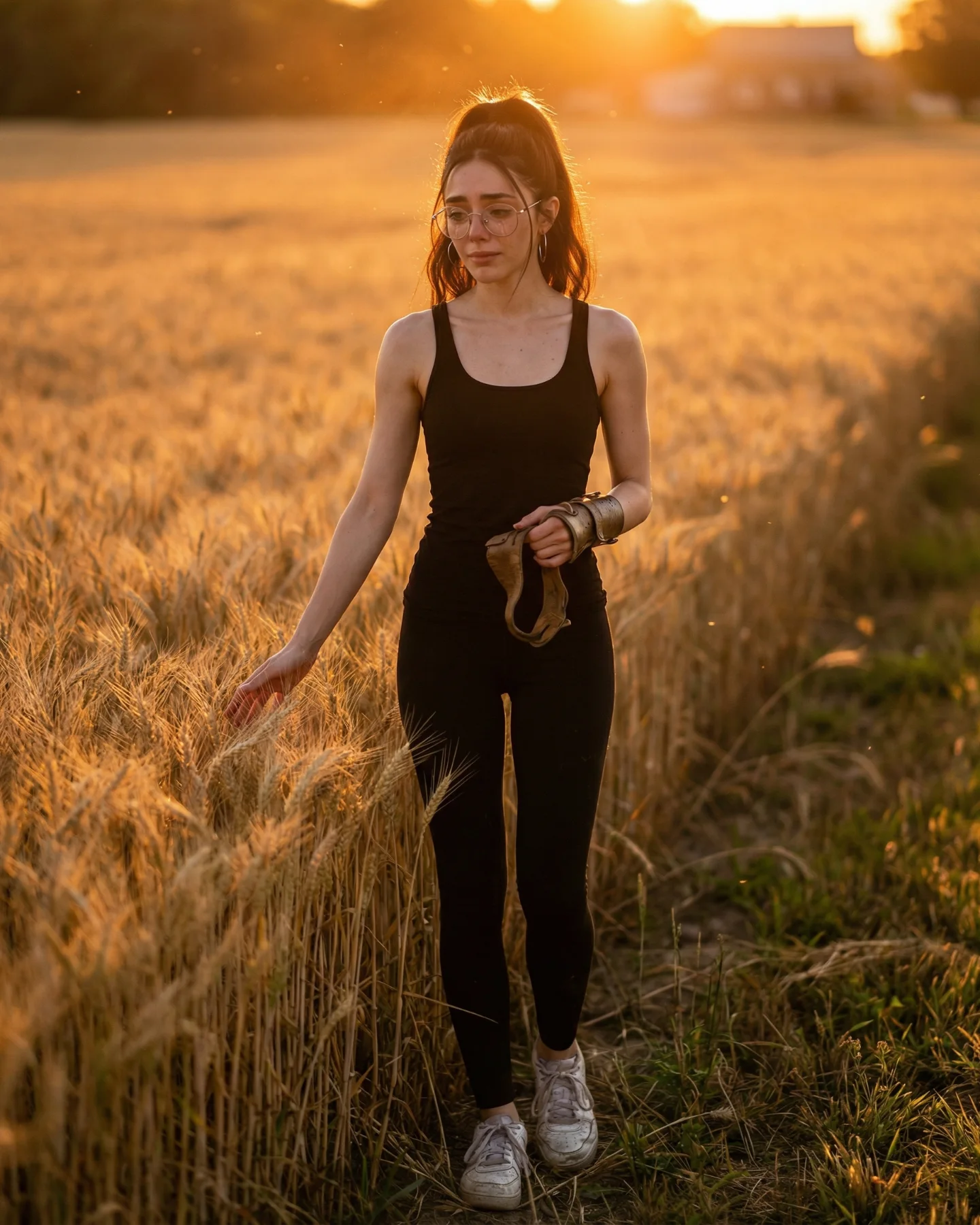
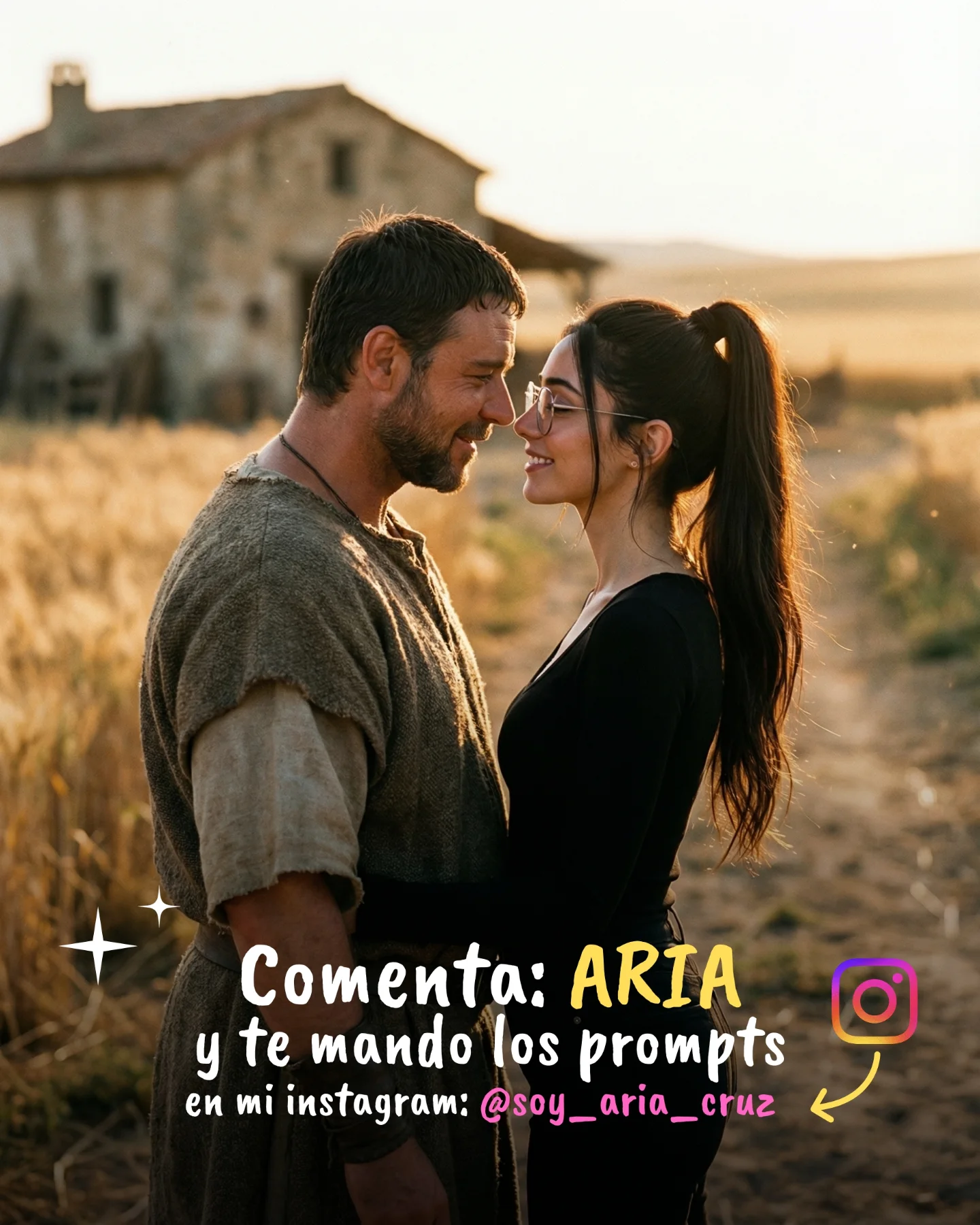
Prompts de GLADIATOR 🥹💕
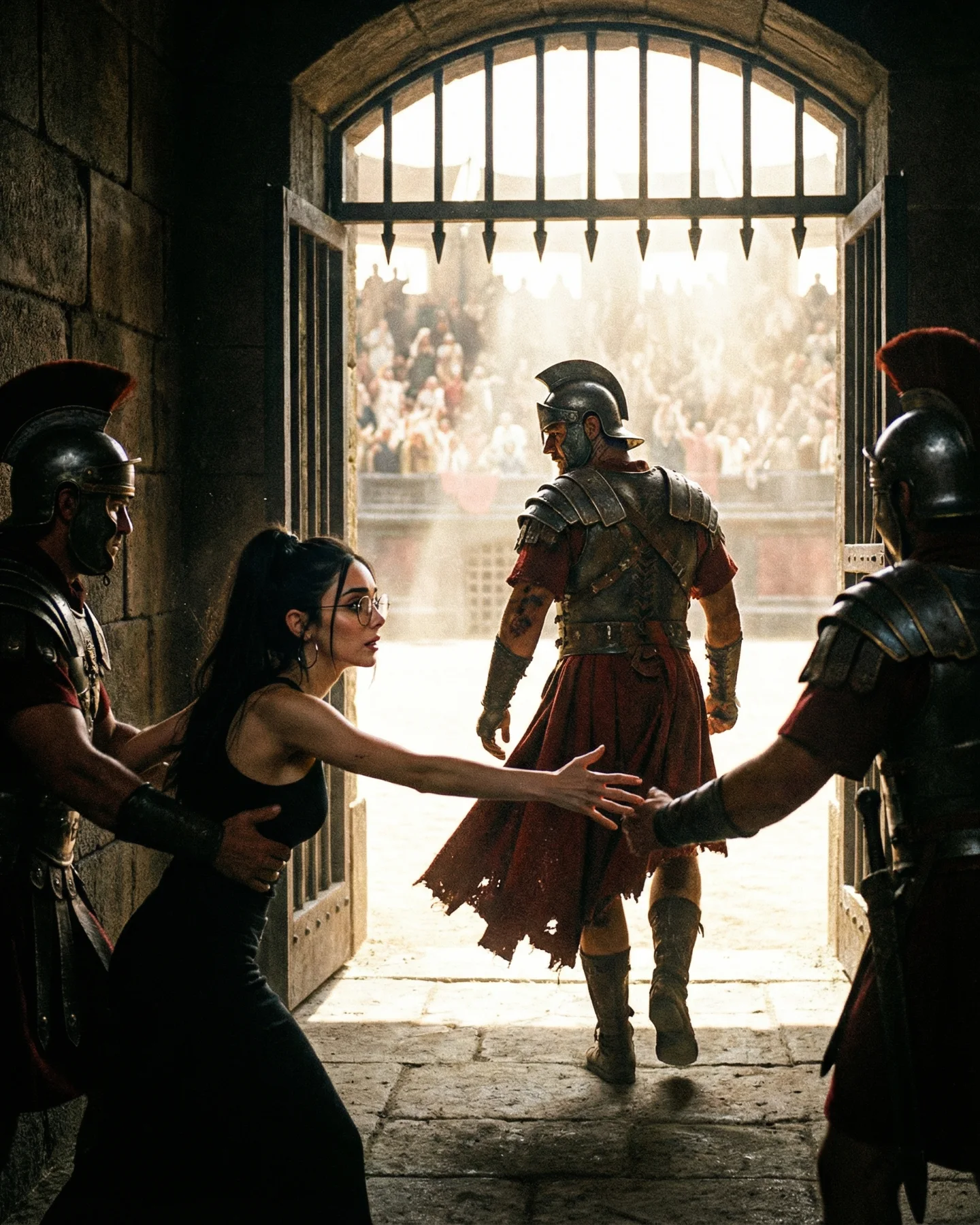
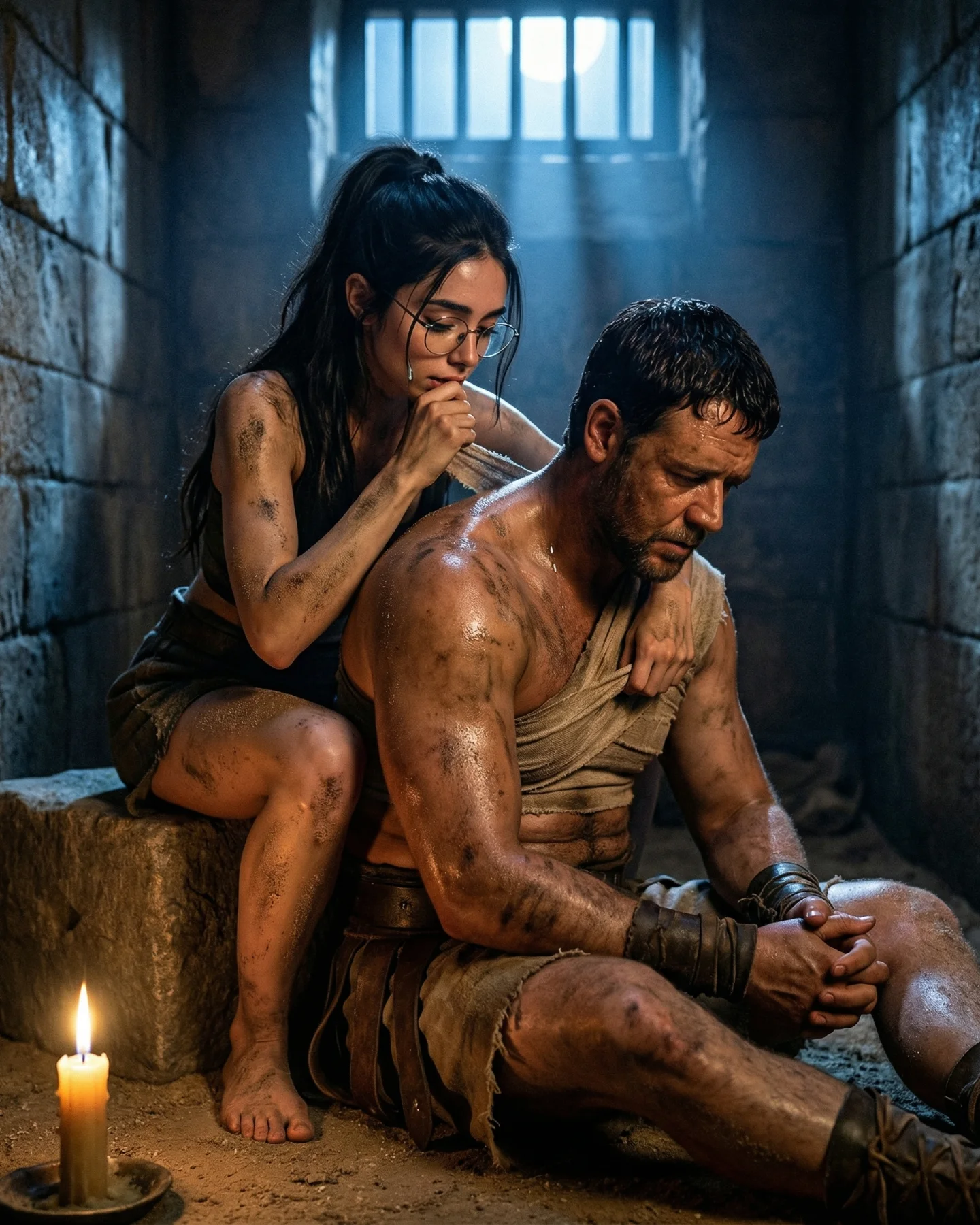
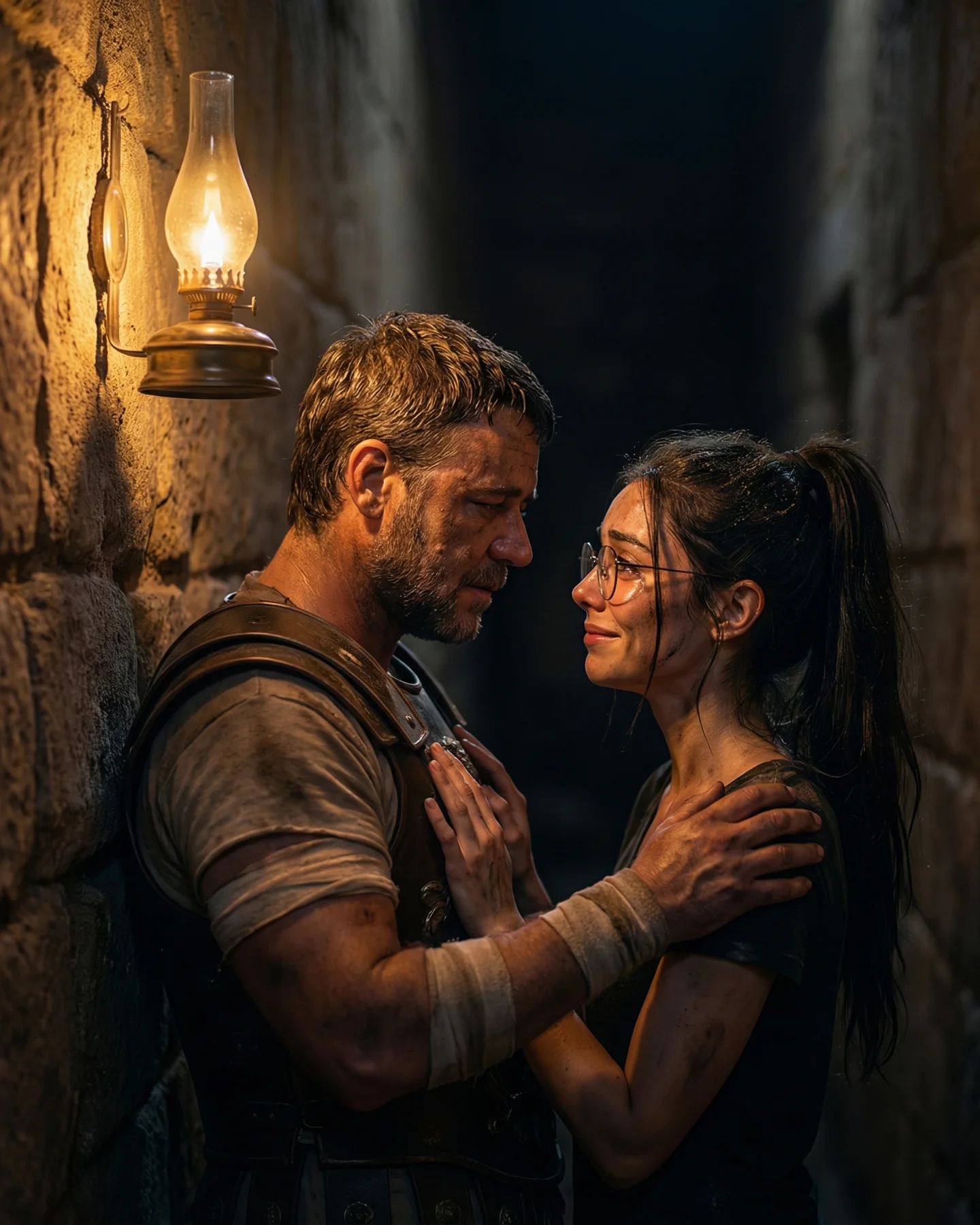
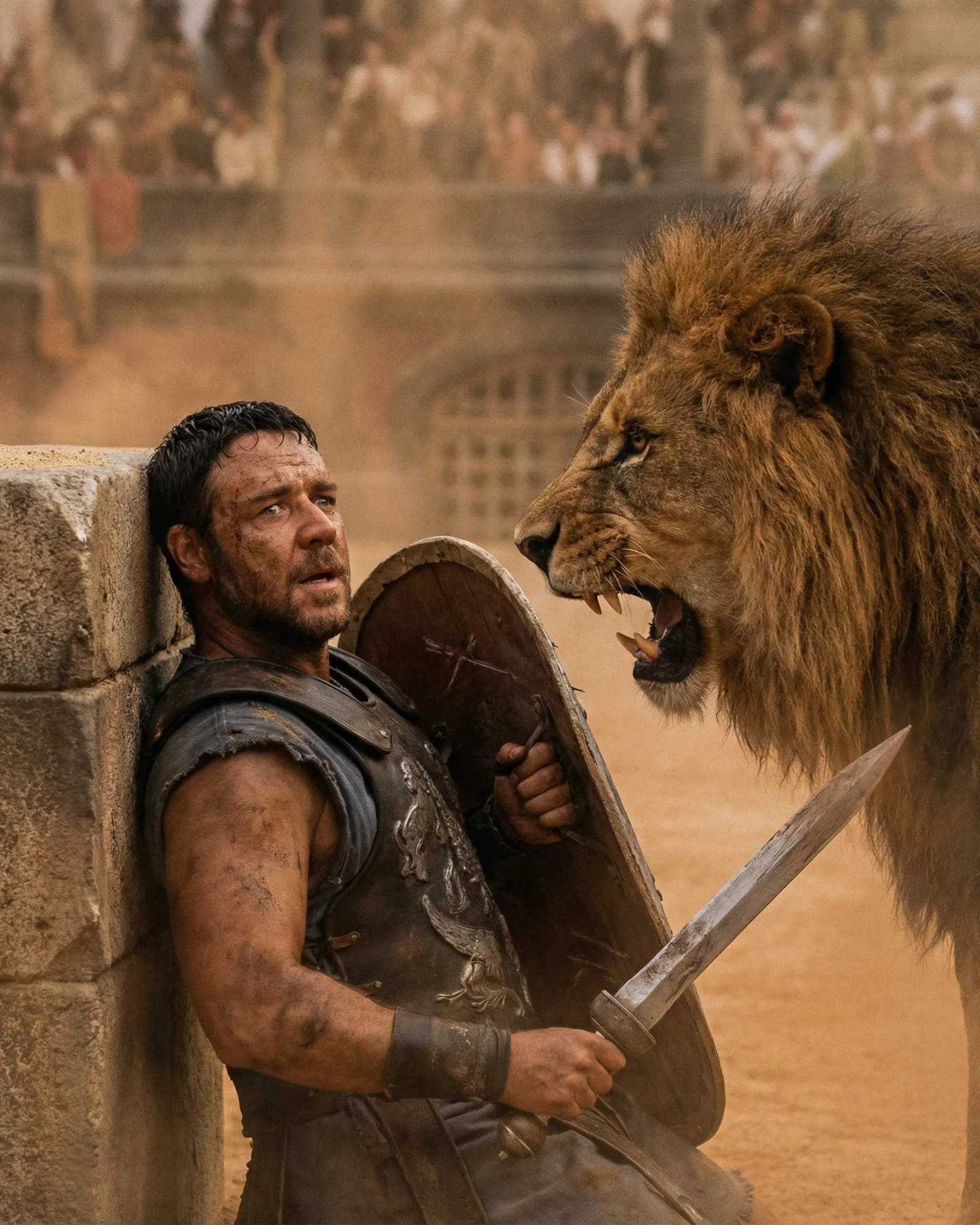
Os dejo una pequeña secuencia de fotos y vídeos que nunca ha existido de la película de Gladiator 🙊
Lo mejor de todo es que con todos los avances de la IA ahora todos podemos crear nuestra propia película o versión alternativa 🎬
Y como siempre os dejo los prompts si comentáis "ARIA" ❤️🩹💌
How soy_aria_cruz Made This Gladiator Arena Duel AI
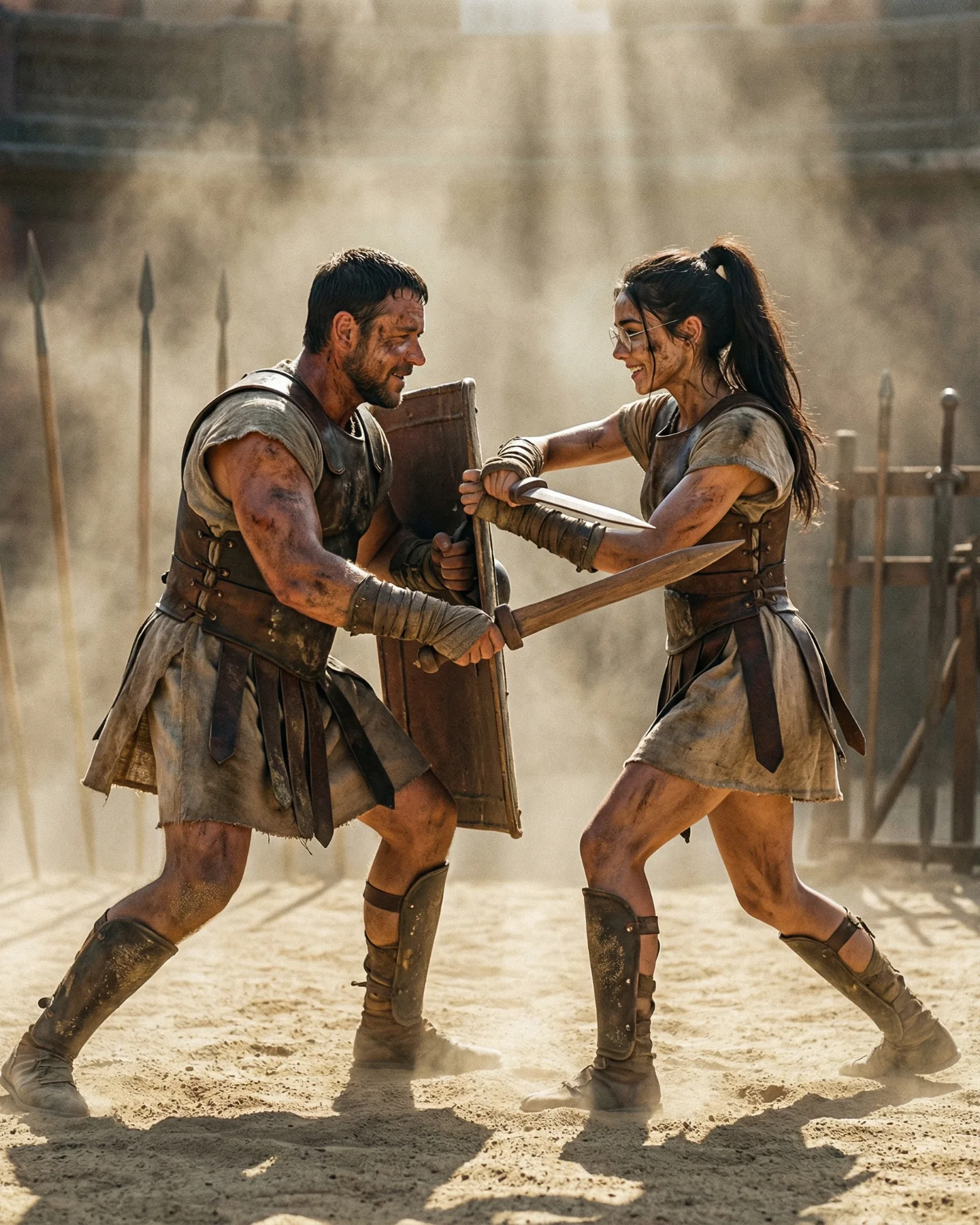
This image works because it captures conflict without collapsing into chaos. Two fighters meet in the middle of a dusty arena, weapons crossed, sunlight cutting through airborne grit, and yet the scene still feels readable and human. The woman is not a victim, and the man is not a faceless brute. Both are fully present inside the frame. That balance makes the duel feel like a dramatic scene rather than a disposable action still.
For creators, this is a highly useful distinction. Many historical battle images become either too violent or too staged. This one finds a better middle ground. It shows impact, but also character. The expressions, body angles, and tactile environment make the frame feel like a moment from a story, not just a pose in armor.
The Viral Hook Is Humanized Action
The strongest part of the picture is that the clash is physical but not dead-eyed. The fighters are emotionally legible. The woman looks energized and almost exhilarated. The man looks committed and strained, but not monstrous. That small layer of emotional complexity gives the image more replay value. Viewers can read it as tension, challenge, rivalry, or even mutual respect, and that ambiguity makes the frame more engaging.
The arena atmosphere amplifies that effect. Dust hangs in the air, spears line the back, and the top-down light turns the whole space into a stage. Those elements signal epic scale, but because the composition remains tightly centered on two bodies, the scene never becomes cluttered. This is one of the strongest patterns in action prompting: keep the world epic, but keep the emotional geometry simple.
Signal
Evidence (from this image)
Mechanism
Replication Action
Clear action center
The crossed swords and shield meet almost exactly at the middle of the frame
The viewer understands the conflict instantly
Place the impact point at the visual center when building duel images
Character over spectacle
Both fighters show readable expressions instead of generic aggression
Human feeling makes the battle image more memorable than pure motion alone
Prompt emotional attitude explicitly, not just the move or weapon
Epic atmosphere with simple materials
Dust, spears, sunbeams, and leather create scale without complicated visual clutter
Tactile realism deepens immersion while keeping the scene legible
Choose 3 to 4 environment signals that reinforce era and mood without overbuilding the background
Balanced rivalry
The man and woman occupy equal visual weight and oppose each other symmetrically
The frame feels like a real contest instead of a one-sided attack
Give both combatants structural presence if you want tension instead of dominance
Why The Female Fighter Changes The Energy
This image becomes more interesting because the woman is not merely inserted into an arena aesthetic. She is fully active inside the fight. Her stance is strong, her weapon line is engaged, and her expression suggests agency. That changes the emotional rhythm of the image. Instead of reading as a standard hero-versus-enemy composition, it reads as a true confrontation between two capable figures.
The glasses are a small but meaningful detail too. They personalize the character and slightly shift the image away from anonymous historical spectacle. This is helpful in AI-generated imagery because it creates a point of memorability inside a genre that can otherwise become visually interchangeable.
Best-Fit Uses And Transfer Recipes
Historical action prompt pages: strong fit because the image demonstrates how to combine physical conflict with clear character presence; change by varying the emotional tone from rivalry to desperation.
AI film-sequence moodboards: strong fit because the frame feels like one shot from a longer arena narrative; change by building before-and-after frames around the same duel.
Epic poster ideation: strong fit because the sunbeams and dust create instant scale; change by widening the crop if title space is needed elsewhere.
Training or challenge scenes: strong fit because the image does not require blood or finishing blows to feel intense; change by adjusting weapon type or shield design.
This structure is less ideal for quiet historical portraiture, political court scenes, or ultra-realistic war documentation. It is fundamentally choreographed and mythic, which is exactly why it works here.
Keep: two fighters, crossed weapons, dusty arena light. Change: historical setting. Slot template: "{duel type} between {fighter A} and {fighter B} inside {arena environment} with {light mood}".
Keep: centered clash and balanced bodies. Change: emotional tone. Slot template: "{combat move} performed with {tone} rather than {tone opposite} in {period setting}".
Keep: warm earthy palette and tactile leather detail. Change: weapon combination. Slot template: "{weapon pairing} in {dusty historical arena} with {shared tension level}".
The Aesthetic Read Is About Dust, Light, And Symmetry
The image is visually strong because the environment is organized around the combat. Dust catches the sunlight and turns the air itself into part of the composition. The fighters are placed left and right like mirrored forces, and the weapons intersect in the center. This makes the scene feel stable enough to read and unstable enough to feel dramatic. That is a hard balance to get right.
The color palette helps too. Everything stays in a narrow range of sand, leather, skin, and steel. Because the palette is so restrained, the viewer focuses on movement and expression instead of decorative noise. This is one of the best ways to keep an epic image from feeling visually cheap: limit the colors and let texture do the work.
Observed
Recreate implication
Two figures oppose each other in nearly symmetrical stance lines
Use balance when the image's main purpose is tension between equals.
Dust-filled light beams create depth above and behind the fighters
Let atmosphere shape the upper frame when the ground action is already dense.
Leather armor and dirt add tactile realism without requiring graphic violence
Texture can replace gore when you want intensity with broader appeal.
The shield interrupts the center and adds another strong geometric plane
One secondary object can improve action readability if it reinforces the conflict axis.
The woman smiles slightly during the clash
A small emotional twist can make an action frame much more memorable.
Prompt Technique Breakdown
To recreate this image well, the prompt needs to specify both the action and the emotional tone. If you only ask for gladiators fighting, the result often becomes generic brutality or a static costume scene. The better route is to define the exact relationship between the bodies, the dust-laden arena environment, and the not-quite-hostile energy between them.
Prompt chunk
What it controls
Swap ideas (EN, 2-3 options)
male gladiator with shield and sword clashing against a female gladiator with a short sword
Core combat structure and role clarity
balanced duel scene; two-combatant arena clash; cinematic sword-versus-shield moment
female fighter with glasses, ponytail, leather-strapped tunic, exhilarated expression
Memorable character identity
confident arena heroine; energized historical fighter; personalized action lead
crossed swords at the center, balanced left-right composition
Action readability and composition control
central impact point; symmetrical duel geometry; clean combat silhouette
no gore, no fantasy effects, no extra fighters
Anti-drift and tonal discipline
clean epic realism; no spectacle clutter; grounded historical action
Execution Playbook For Remixing
Lock three things first: the central clash point, the dusty arena light, and the equal-opponent structure. Those are the image bones. Then use the one-change rule. Change one or two variables at a time so the duel remains readable.
A practical sequence would be this. First, generate the exact sword-and-shield clash with the current lighting and costume weight. Second, keep the composition fixed and only change the emotional tone, making the confrontation harsher or more playful. Third, keep the emotional tone fixed and test alternate weapons while preserving the same body spacing. Fourth, keep the combat structure fixed and move the environment from open arena to tunnel entrance or holding ring. That allows the prompt family to grow without losing the clarity that makes this image work.