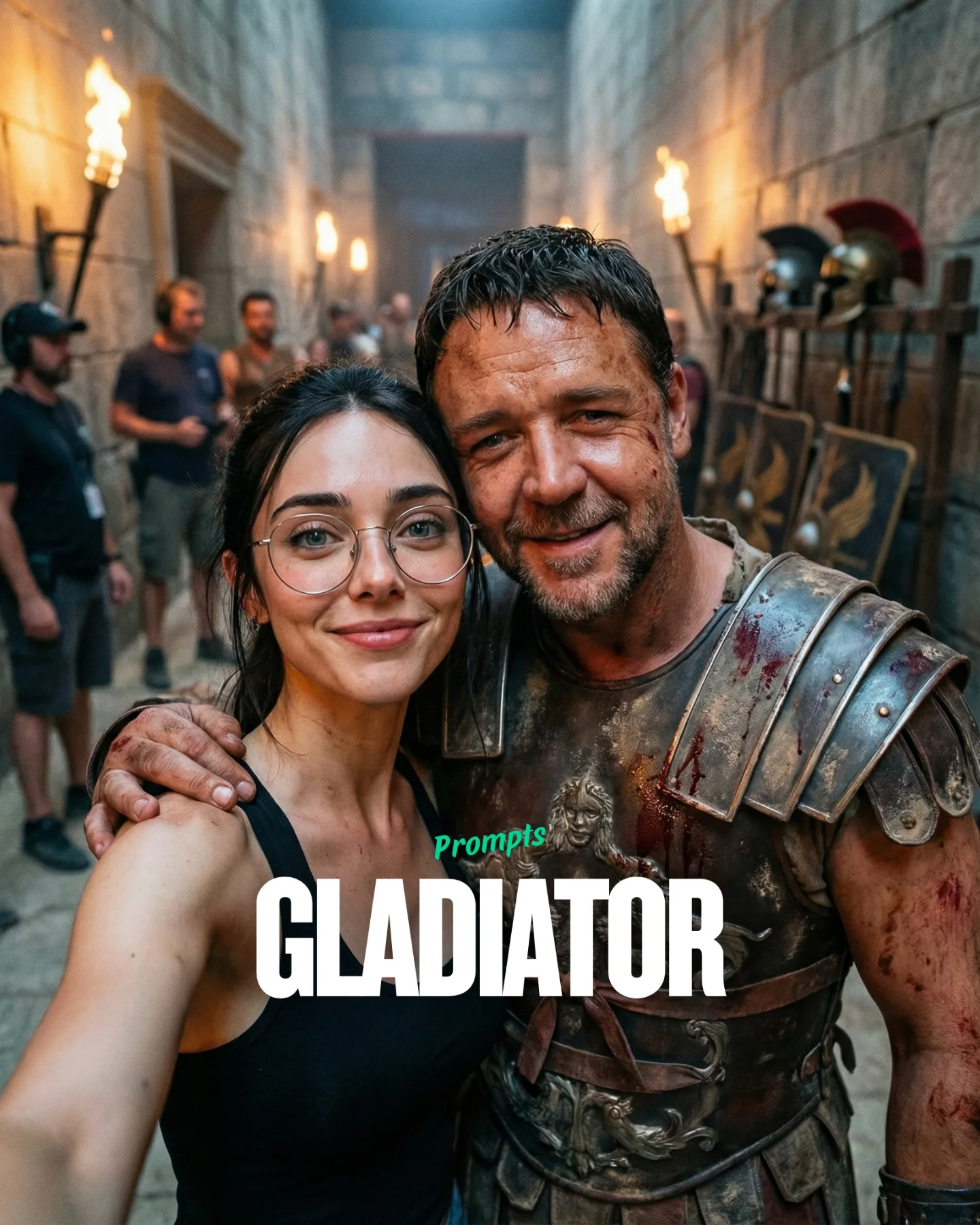
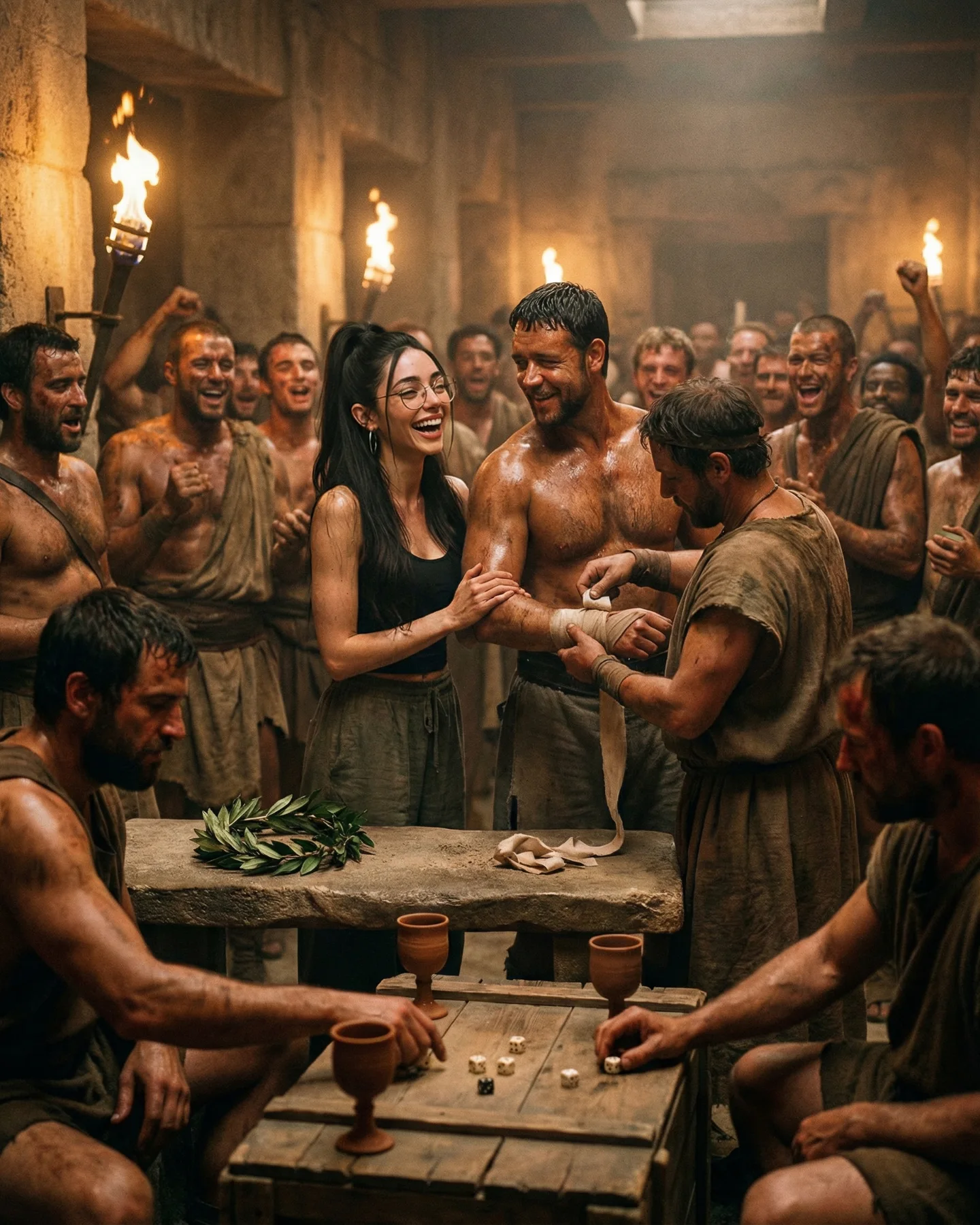
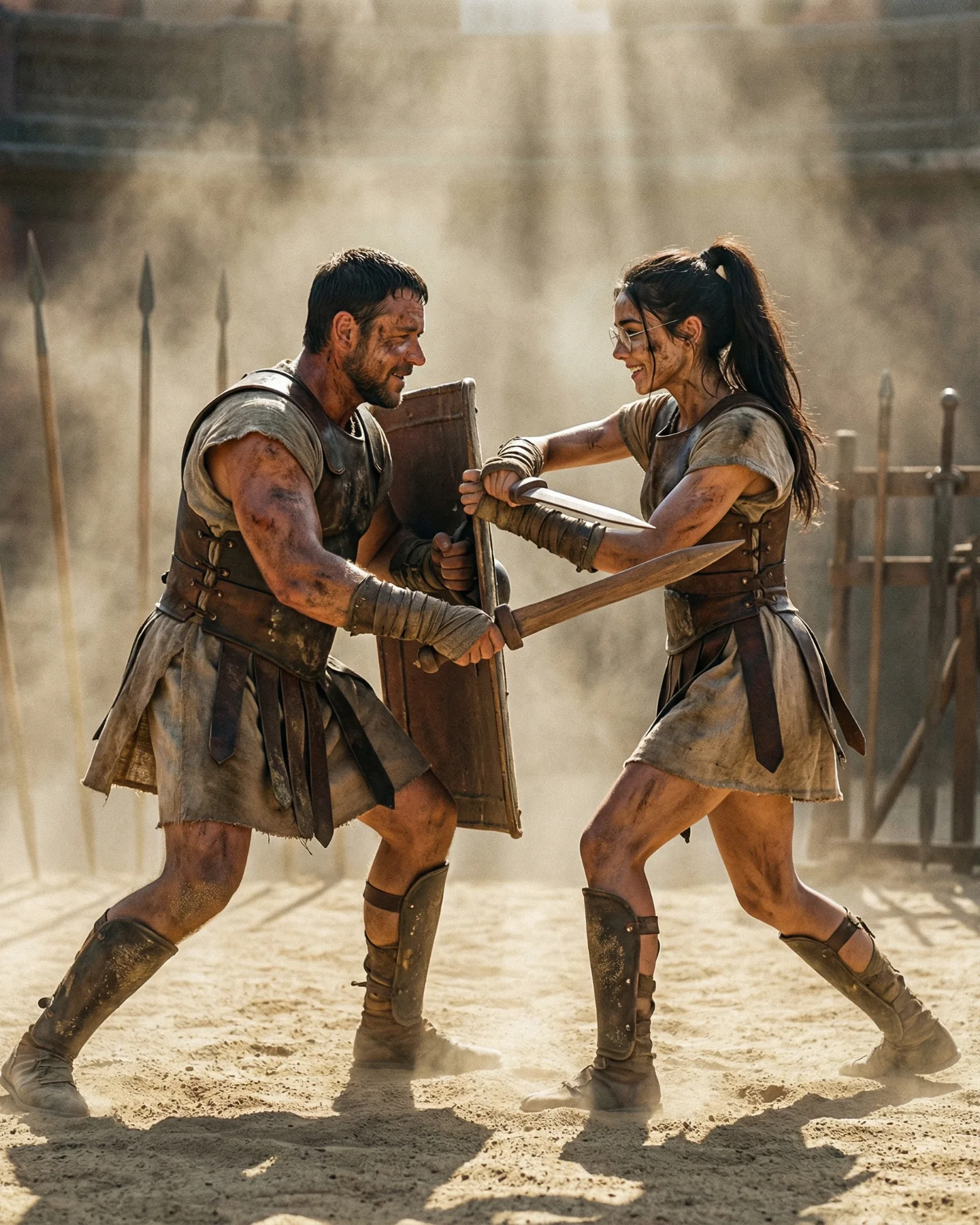
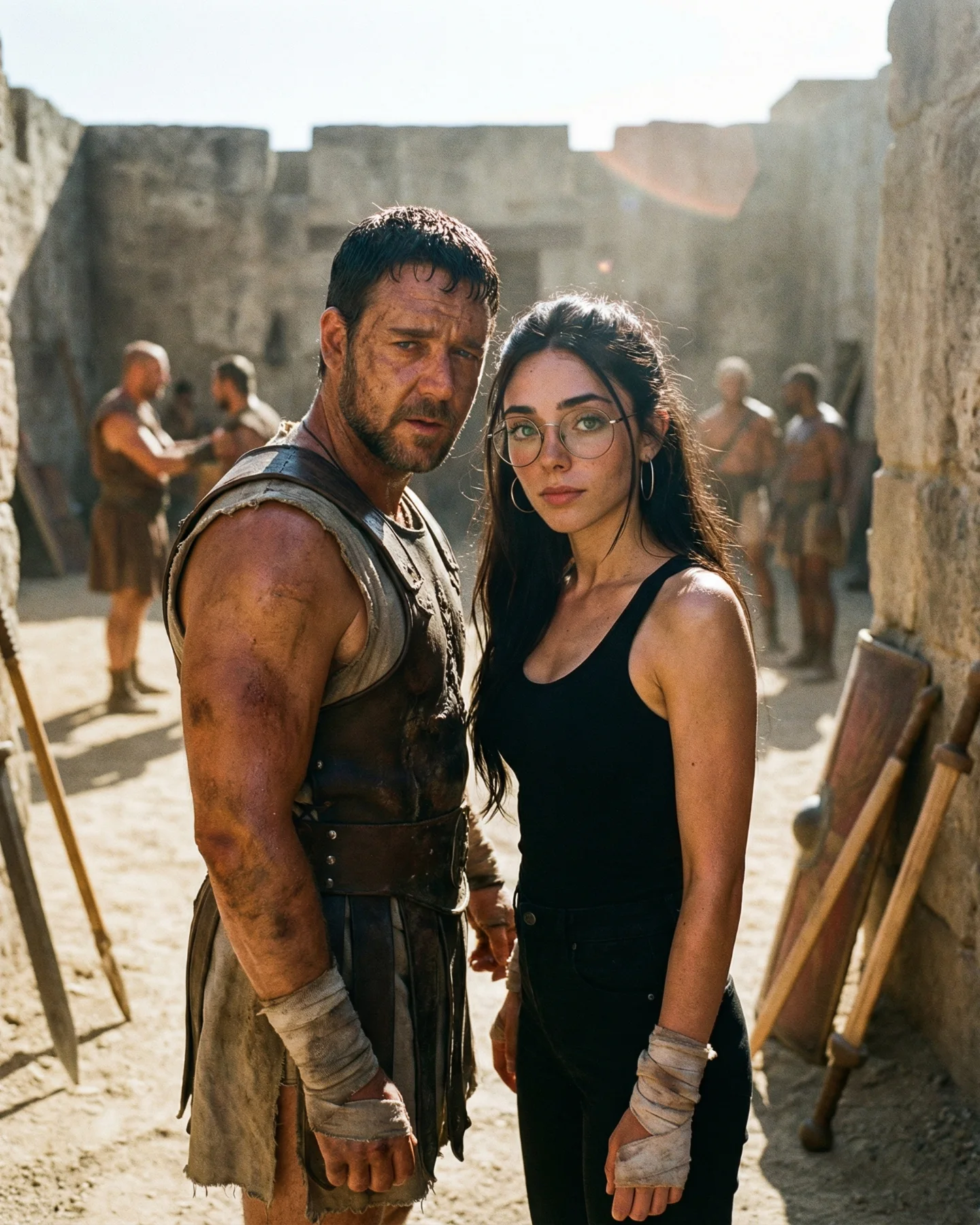
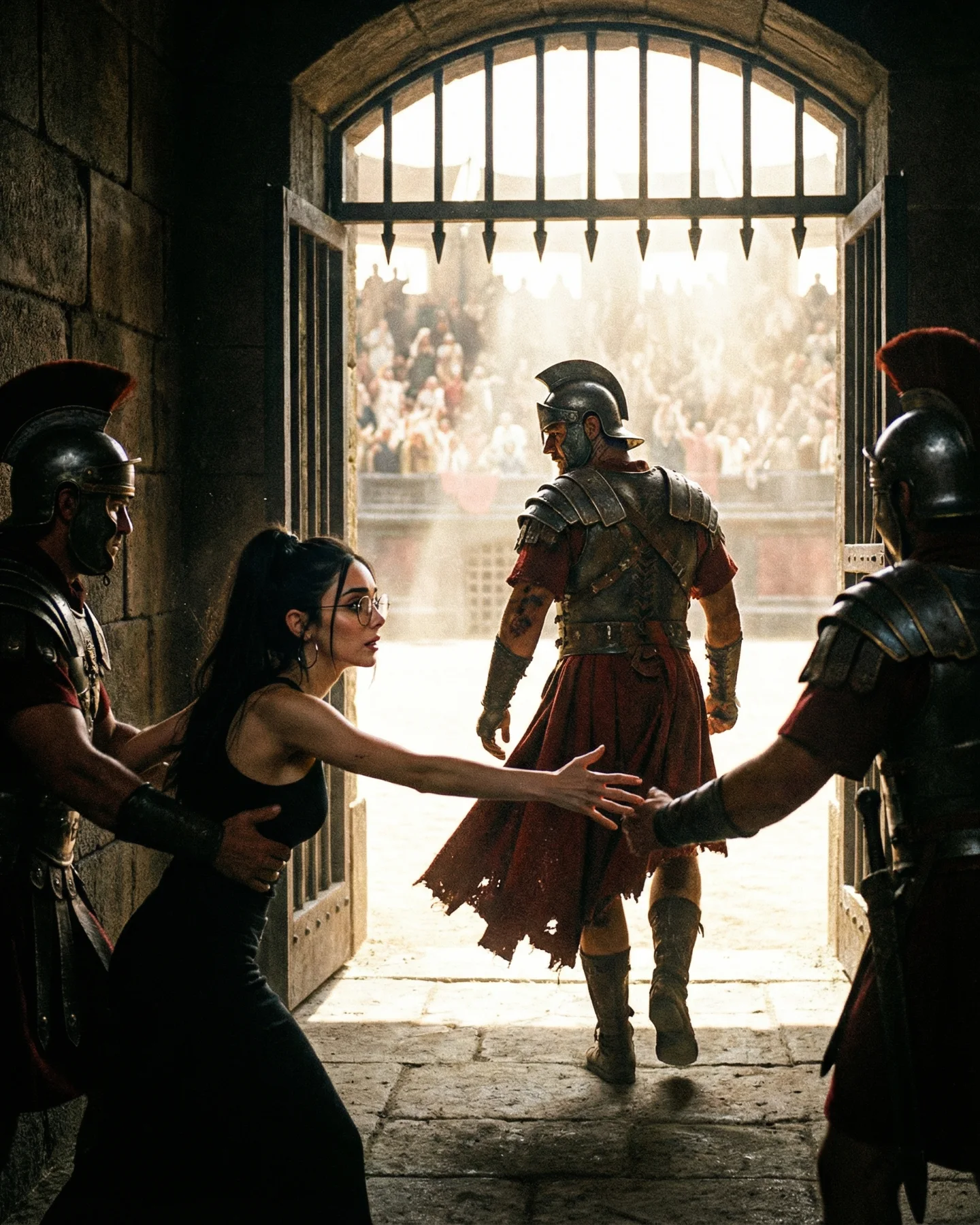
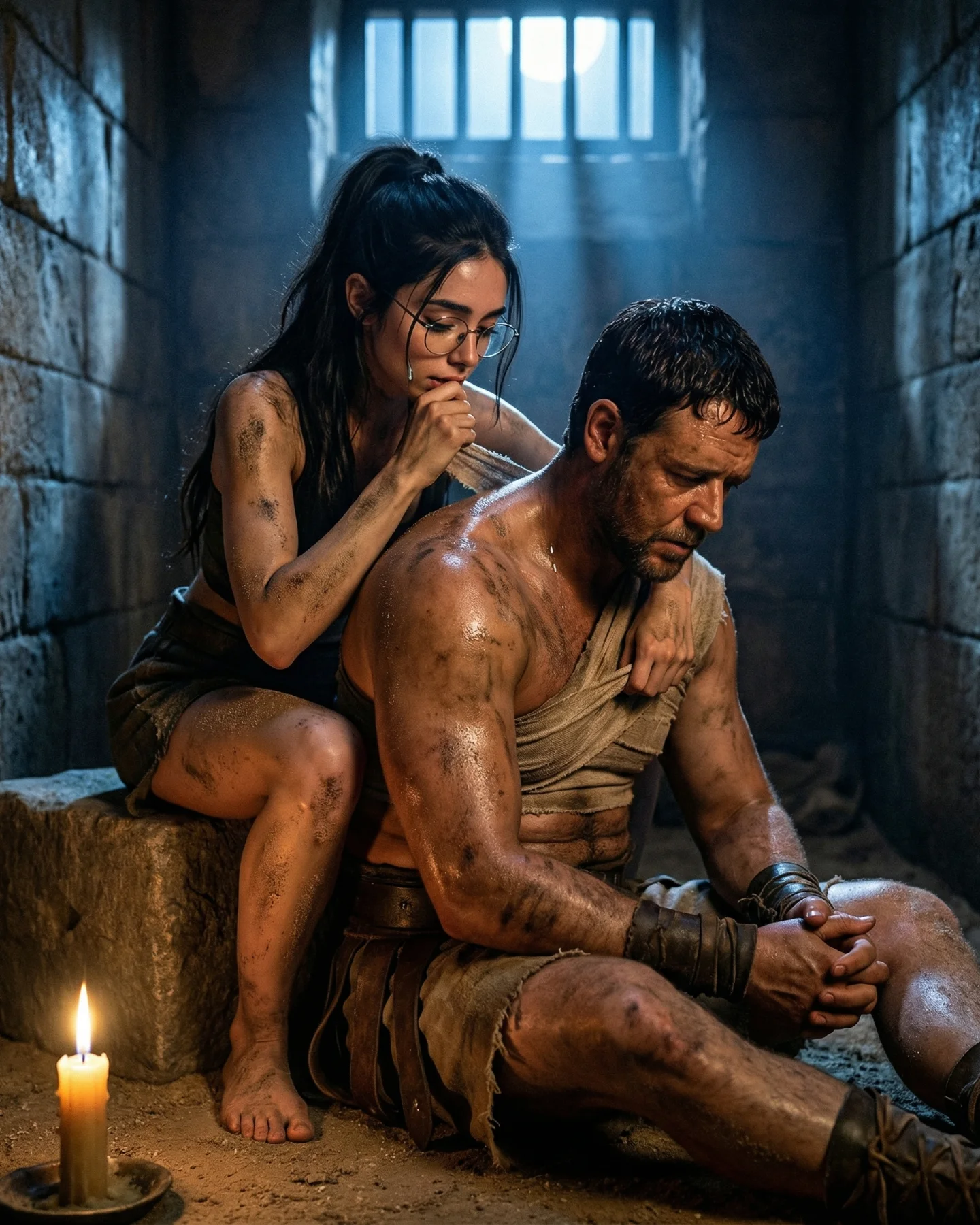
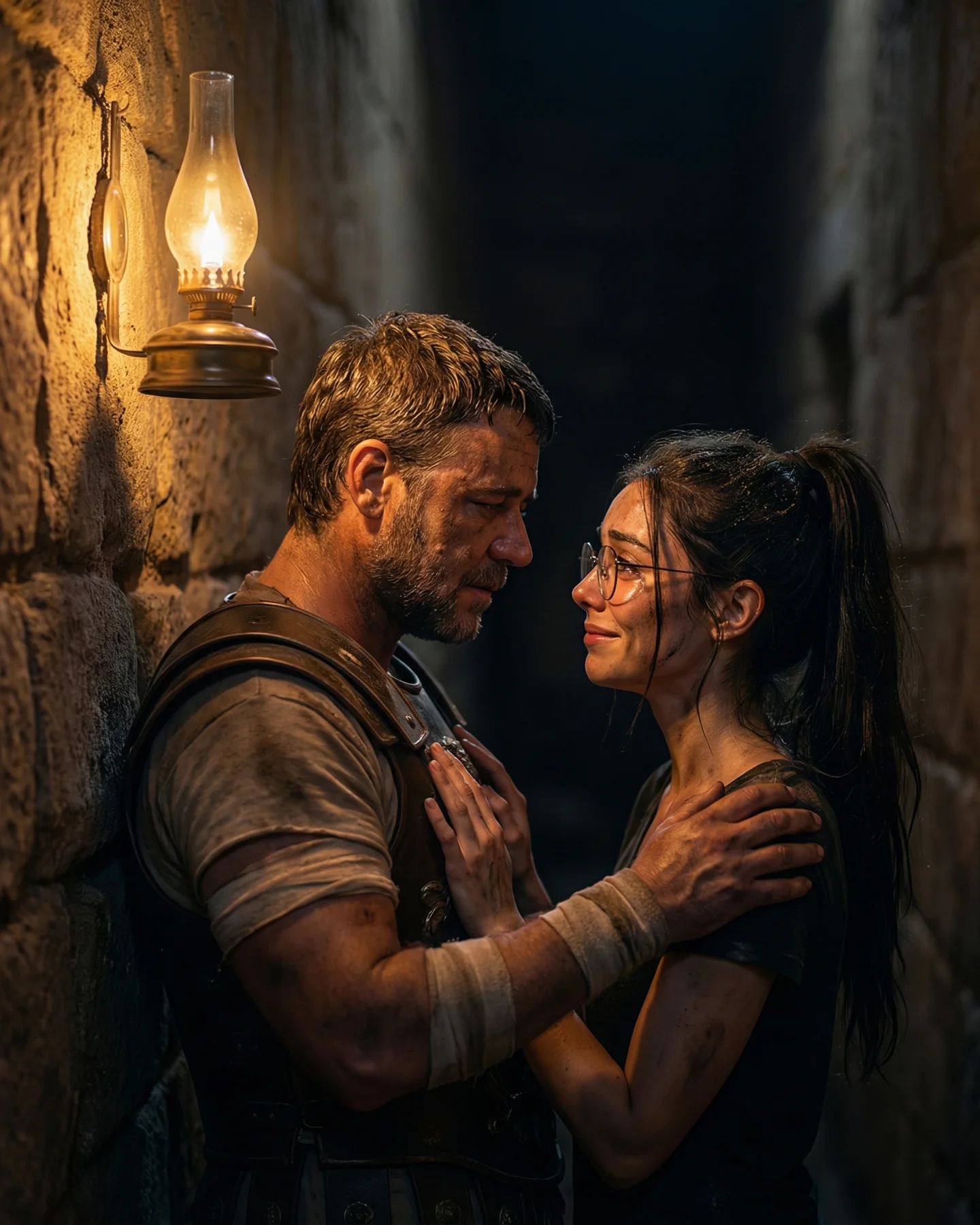
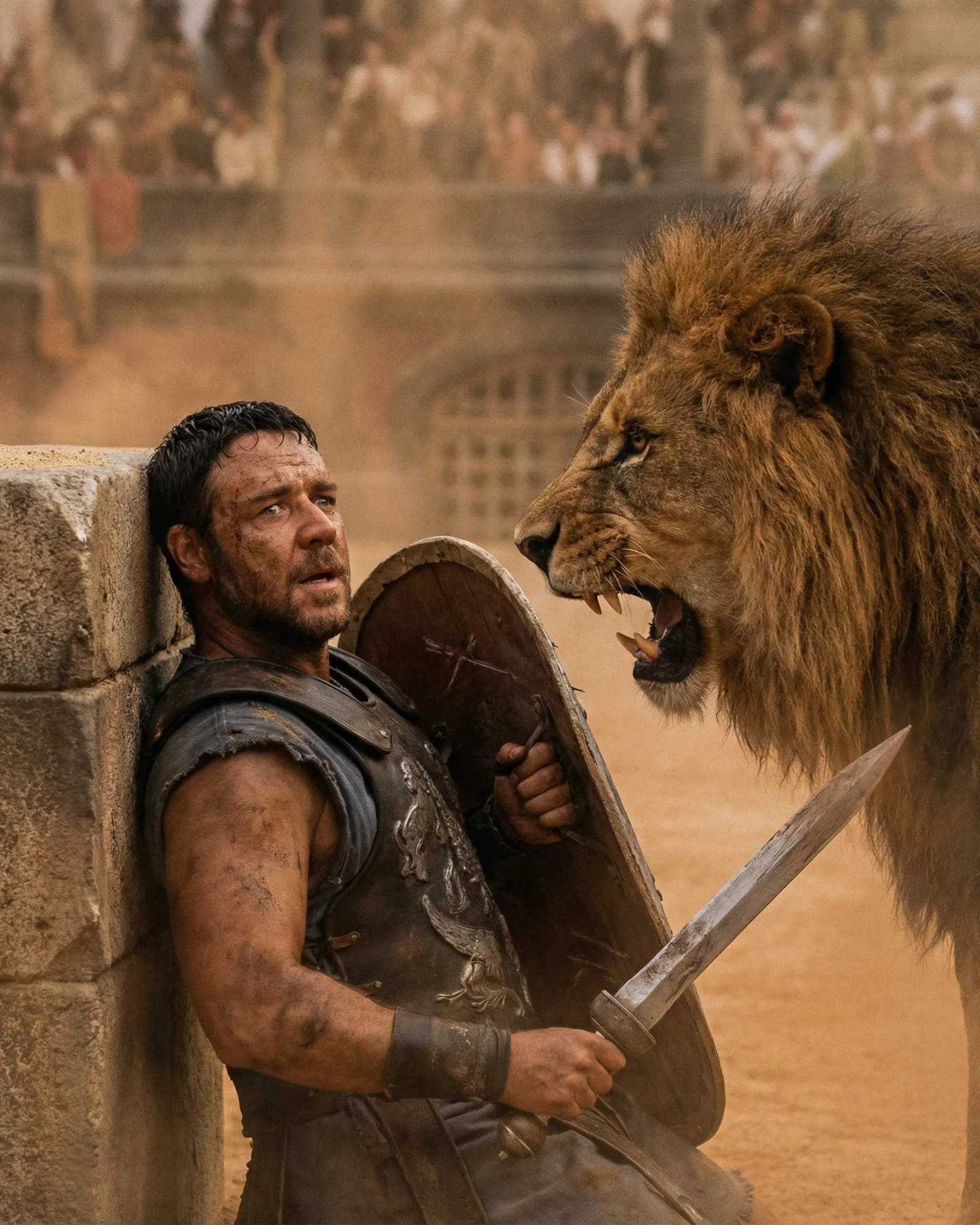
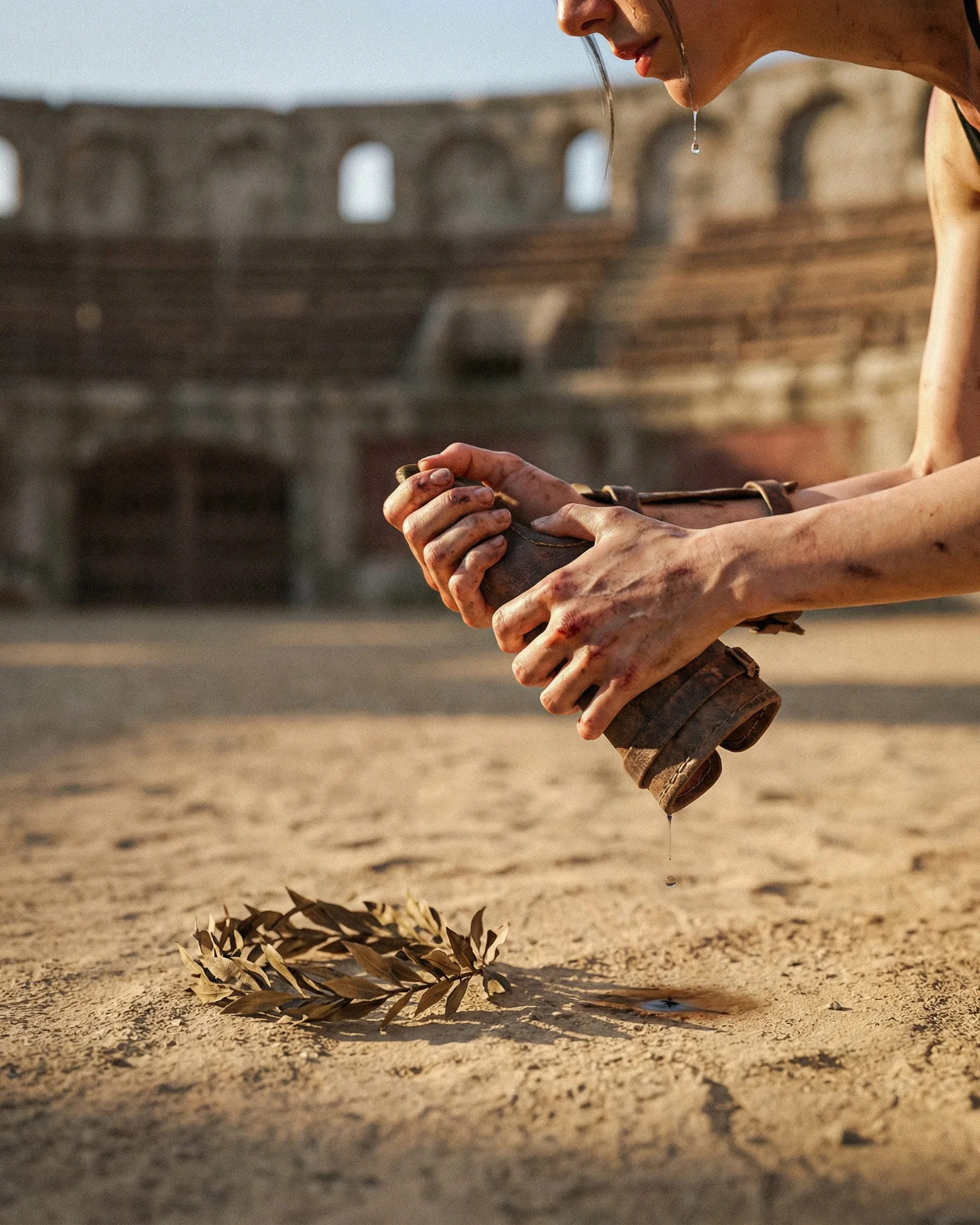
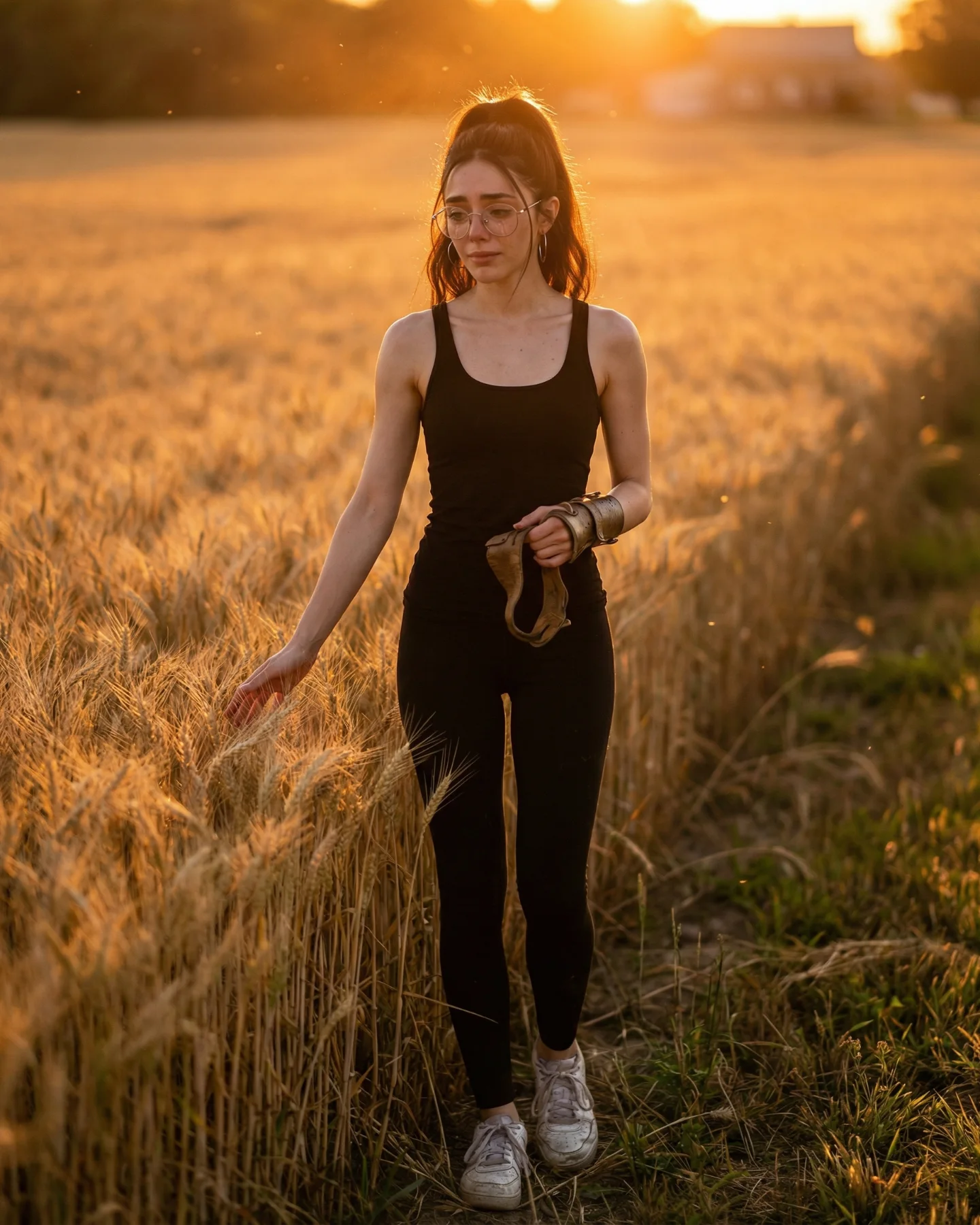
Prompts de GLADIATOR 🥹💕
Os dejo una pequeña secuencia de fotos y vídeos que nunca ha existido de la película de Gladiator 🙊
Lo mejor de todo es que con todos los avances de la IA ahora todos podemos crear nuestra propia película o versión alternativa 🎬
Y como siempre os dejo los prompts si comentáis "ARIA" ❤️🩹💌
How soy_aria_cruz Made This Gladiator Self Insert AI Video — and How to Recreate It
This viral case study examines a high-concept "AI Self-Insertion" video where a modern creator transports herself into the world of Ridley Scott’s Gladiator. By blending modern fitness aesthetic (black leggings and tank top) with the gritty, sun-drenched cinematography of ancient Rome, the creator @soy_aria_cruz creates a jarring yet emotionally resonant narrative. The core hook isn't just the technology; it's the "What If?" scenario of a modern person using their resources to "buy the freedom" of a legendary cinematic hero. This specific video leverages cinematic editorial portraiture, warm desert lighting, and high-fidelity character consistency to blur the lines between AI generation and high-budget film production.
What You’re Seeing
The video is a short, punchy sequence of three distinct shots that tell a complete micro-story. The subject is a modern woman with long dark hair in a high ponytail, wearing black athletic wear and glasses. She stands in a dusty, crowded Roman slave market, surrounded by extras in period-accurate tunics, chained men, and even camels in the background. The lighting is harsh, top-down sunlight filtered through canvas awnings, creating high-contrast shadows and a warm, golden-brown color palette that perfectly mimics the Gladiator film grade.
Shot-by-shot Breakdown
Time Range
Visual Content
Shot Language
Lighting & Tone
Viewer Intent
00:00–00:02
The woman places a heavy leather pouch of gold on a wooden table in front of a merchant.
Medium Shot (MS), eye-level, static.
Warm, dusty, high contrast.
The Hook: Establish the "transaction" and the setting.
00:02–00:03
The woman smiles brightly, looking toward the "Maximus" character in chains.
Medium Close-Up (MCU).
Softened highlights on skin.
Emotion: Show the protagonist's intent and joy.
00:03–00:05
The woman embraces the man (Maximus). He is dirty and battle-worn; she is clean and modern.
Medium Shot, slight handheld shake.
Golden hour glow, shallow depth of field.
The Payoff: Emotional resolution and "saving the hero."
Why It Went Viral: The "Hero's Savior" Mechanism
The Power of the "Self-Insertion" Fantasy
This content taps into a deep-seated psychological desire: the savior fantasy. By placing herself in a position of power (buying the freedom of a legendary warrior), the creator allows the audience to live vicariously through her. The contrast between her modern "gym-ready" outfit and the ancient, dirty environment creates a "fish out of water" effect that is visually arresting. It’s not just a technical demo; it’s a narrative that fixes a "wrong" in a beloved movie, which triggers high engagement from fans of the original film.
Platform Signals & Algorithmic Triggers
From a platform perspective (Instagram/TikTok), this video succeeds because of its visual density. Every frame is packed with detail—the camels, the chains, the dust motes in the air. This high "information per second" rate encourages users to re-watch the video to catch details they missed. The 0–3 second hook is a "pattern interrupt": seeing a modern woman in a Roman slave market is so unexpected that it forces a "stop-the-scroll" action. Furthermore, the caption "Prompts de GLADIATOR" creates a saveable value proposition; users save the post intending to try the prompts themselves later.
5 Testable Viral Hypotheses
Hypothesis 1: The Anachronism Hook. Mixing modern clothing with historical settings creates a visual "glitch" that stops the scroll. Evidence: The black leggings stand out sharply against the beige tunics.
Hypothesis 2: The "Fixing the Movie" Narrative. Saving a character who suffered in a film creates an immediate emotional bond. Evidence: The hug at the end is the most liked/shared moment.
Hypothesis 3: High-Fidelity "Lookalikes." Using AI to recreate a recognizable celebrity (Russell Crowe's Maximus) leverages existing fanbases. Evidence: Comments specifically mentioning the movie characters.
Hypothesis 4: The "Prompt Tease." Mentioning "prompts" in the caption converts casual viewers into "savers." Evidence: High save-to-like ratio typical for tutorial-adjacent content.
Hypothesis 5: Short Loop Pacing. A 5-second story with a clear beginning, middle, and end encourages infinite looping. Evidence: The seamless transition from the hug back to the gold pouch.
How to Recreate: From 0 to 1
Step 1: Define Your "Movie Universe"
Choose a film with a very distinct visual style (e.g., Gladiator, Dune, The Matrix). The more recognizable the color grade and costume style, the better.
Step 2: Create Your Character LoRA or Reference
To maintain consistency, you need a high-quality reference image of yourself. Use tools like Midjourney (Character Reference --cref) or Flux (LoRA training) to ensure the "modern you" looks the same in every shot.
Step 3: Prompting the Environment
Use descriptive keywords for the setting: "Ancient Roman slave market, dusty atmosphere, sun-drenched, cinematic lighting, 35mm film grain, extras in burlap tunics, camels in background."
Step 4: The "Anachronism" Prompting
Explicitly describe your modern outfit to create the contrast: "A modern Hispanic woman wearing a sleek black athletic tank top and black leggings, wearing modern glasses, standing in the center of the scene."
Step 5: Generating the Keyframes
Generate three distinct images: 1. The Transaction (Gold), 2. The Reaction (Smile), 3. The Resolution (Hug). Use the same seed or character reference for all three.
Step 6: Video Animation
Use a video AI tool (like Luma Dream Machine, Kling, or Runway Gen-3) to animate the transitions between your keyframes. Focus on "Image-to-Video" to maintain the high quality of the stills.
Step 7: Color Grading & Sound
In CapCut or Premiere, apply a "Teal and Orange" or "Warm Film" LUT to match the Gladiator aesthetic. Add foley sounds: clinking coins, desert wind, and a cinematic orchestral swell.
Step 8: The "Prompt" Hook Caption
Your caption must promise the "how-to." Use: "I spent 5 hours perfecting these Gladiator prompts so you don't have to. Comment 'GLADIATOR' for the full workflow."
Growth Playbook
3 Opening Hook Lines
"I finally saved Maximus. 🥹"
"POV: You have a time machine and a bag of gold."
"AI just made my dream of being in Gladiator come true."
4 Caption Templates
The Storyteller: "I’ve always wondered what I’d do if I were in [Movie Name]. Today, I used AI to find out. Which movie should I visit next? 👇"
The Value-Add: "Stop struggling with AI consistency. Here is exactly how I kept my character the same in this Gladiator scene. [Step 1... Step 2]. Save this for your next project!"
The Engagement Bait: "If you could save ONE movie character from their fate, who would it be? I chose Maximus. 🏛️"
The Technical Tease: "The secret to this cinematic look? It’s all in the lighting prompts. Comment 'LIGHT' and I'll DM you my lighting cheat sheet."