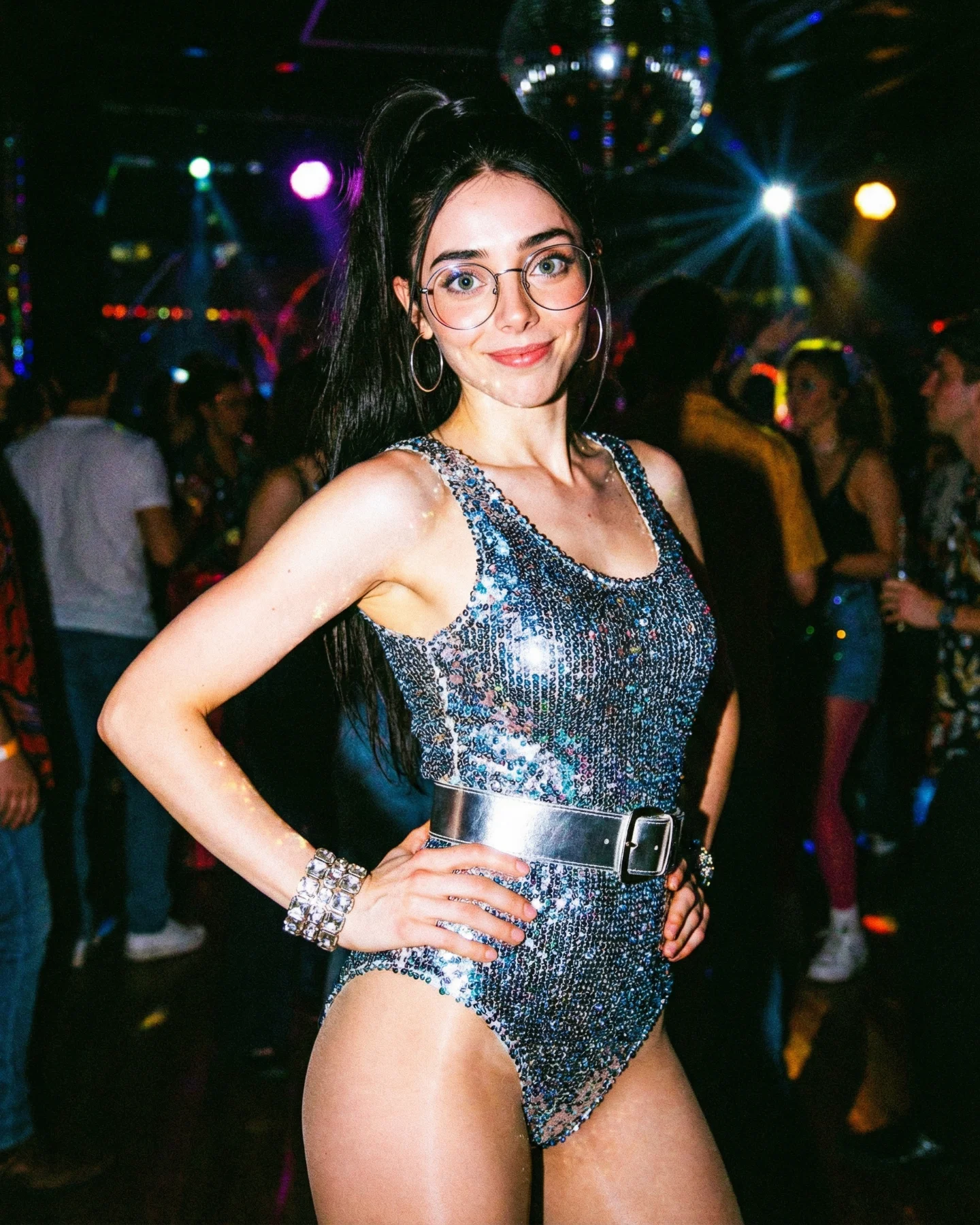
How soy_aria_cruz Made This 80s Mirror Selfie AI
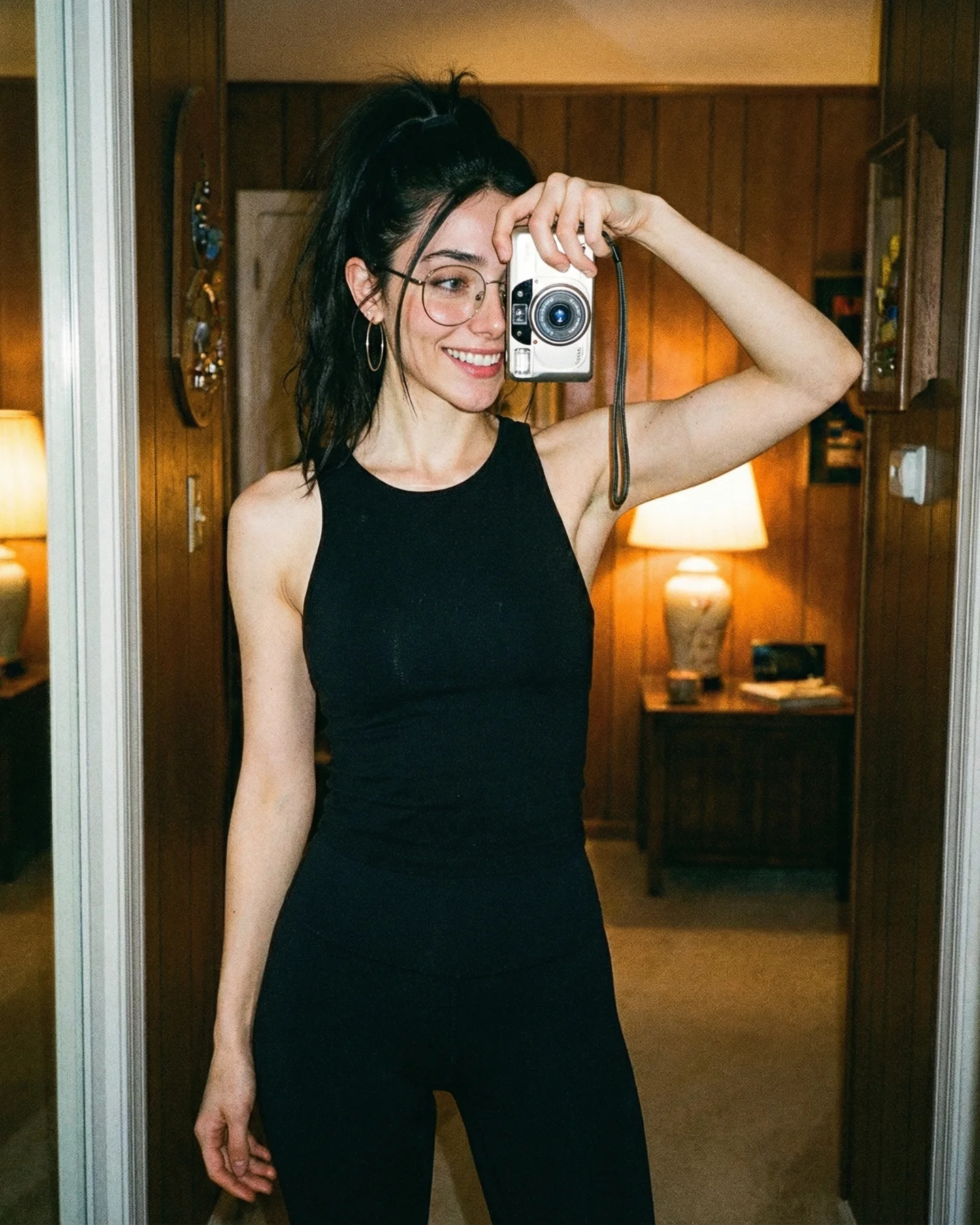
This image works because it stays simple in exactly the right places. The outfit is minimal, the room is quiet, and the pose is casual, but the result still feels memorable because the warmth of the space and the compact-camera mirror capture make it feel lived-in. It is not trying to look like a campaign. It looks like someone with taste documenting a real moment in a room with character.
The wood paneling and lamp glow are doing more than just decorating the background. They create emotional temperature. Without them, this would be a straightforward black-outfit mirror selfie. With them, the picture gains nostalgia, softness, and a sense of private space. That is why this kind of image tends to hold attention better than a neutral mirror shot. It gives viewers a mood to step into.
Why This Mirror Selfie Feels Stronger Than a Generic One
The main reason is that the environment is specific. The mirror is not in a white bathroom or a blank hallway. It is in a warmly lit, wood-paneled room that feels a little retro and slightly cinematic. That immediately makes the selfie more story-rich. The compact camera reinforces that tone, because it introduces an object that feels intentional rather than purely functional.
Another strength is the visual restraint of the styling. The black sleeveless outfit keeps the body line clear, the glasses and ponytail make the face easy to remember, and the expression is natural rather than overly posed. For creators, this is a practical lesson: when the room already has atmosphere, the styling can stay clean and still feel complete.
| Signal | Evidence (from this image) | Mechanism | Replication Action |
|---|
| Atmospheric room identity | Wood-paneled walls and warm bedside lamps define the space immediately | A specific room mood makes the selfie feel like a memory, not just documentation | Choose interiors with one strong material and one clear practical light source |
| Device character | The compact silver camera is visible and part of the composition | The capture tool adds personality and separates the image from common phone selfies | Let the camera remain visible if the device helps tell the aesthetic story |
| Minimal styling clarity | Black sleeveless outfit keeps the silhouette clean and easy to read | Simple styling allows room texture and mood to take on more importance | Reduce wardrobe complexity when the background already provides emotional weight |
| Warm intimacy | The smile and lamplight keep the image inviting rather than cold | Approachable emotion improves saveability and personal-brand resonance | Prompt a candid smile and soft room lighting instead of a hard editorial stare |
Where This Visual Language Fits Best
- Personal-brand lifestyle posts: ideal for creators who want to look polished but still approachable.
- Travel or motel-diary content: the room style gives the image a quiet on-the-road intimacy.
- Minimal fashion references: useful when the focus is on silhouette and mood rather than accessories or styling complexity.
- Late-night or soft-glam social posts: the lamplight and black outfit naturally support intimate evening energy.
This setup is less ideal for product-heavy beauty content, bright daytime fashion, or architectural interior photography. The strength here is mood and personality. If the goal is clarity above all else, the warm softness and nostalgic room tone will compete with the message.
Transfer recipe one: Keep the mirror framing, warm lamp glow, and compact camera. Change the wardrobe to knitwear, lingerie layering, or a blazer dress while preserving the same quiet room mood. Slot template: {cozy interior} {clean outfit} {visible camera} {private evening tone}.
Transfer recipe two: Keep the simple silhouette and room specificity. Change the wall material from wood paneling to wallpaper, tile, or motel art while maintaining the warm practical lights. Slot template: {characterful room} {minimal styling} {mirror capture} {nostalgic mood}.
Transfer recipe three: Keep the black outfit and candid smile. Change the device from compact camera to disposable flash camera or point-and-shoot while preserving the same intimate room context. Slot template: {warm room} {dark outfit} {capture device} {soft self-aware energy}.
What Holds the Aesthetic Together
The image is visually convincing because it limits the number of active ideas. There is one strong outfit, one strong room texture, and one clear light mood. The camera device adds personality, but it does not complicate the frame. That makes the whole image feel authored rather than accidental.
The mirror composition also matters. It creates a little distance between viewer and subject, which keeps the portrait personal without making it invasive. For creators, that is a useful prompt principle: a quiet selfie becomes much stronger when the environment carries emotional information and the styling remains restrained.
| Observed | Recreate |
|---|
| Warm wood-paneled room with two lamp glows | Use practical lights and strong wall material to create room character quickly |
| Visible compact camera held above the face line | Make the capture tool part of the aesthetic instead of hiding it |
| Black sleeveless outfit with glasses and high ponytail | Keep the subject styling recognizable and tonally simple |
| Head-to-thigh mirror crop with soft room context | Show enough of the body for silhouette while keeping the room readable behind |
Prompt Technique Breakdown
| Prompt chunk | What it controls | Swap ideas (EN, 2–3 options) |
|---|
| woman taking a mirror selfie with a compact digital camera | Core capture language and subject behavior | phone mirror selfie; disposable camera reflection; point-and-shoot travel selfie |
| cozy wood-paneled bedroom with warm table lamps | Emotional tone and environment identity | retro motel room; cabin-style bedroom; softly lit vintage apartment |
| sleek sleeveless black outfit, glasses, high ponytail | Styling clarity and character recall | black slip dress; ribbed tank and trousers; fitted bodysuit with boots |
| natural smile and relaxed body posture | Approachability and social realism | soft smirk; thoughtful side look; sleepy late-night calm |
| visible mirror frame edges and layered room depth | Framing structure and spatial feel | closet mirror; hotel dresser mirror; hallway mirror with side trim |
| warm ambient light with subtle camera clarity | Mood and overall rendering style | flashier direct snapshot; cooler motel light; candlelike bedside warmth |
How to Iterate Without Losing the Mood
Lock three things first: the room warmth, the visible camera device, and the clean black silhouette. Those are the structural pieces. If you remove them, the image becomes a normal mirror selfie without any memorable atmosphere.
- Start with the exact setup: wood paneling, bedside lamps, compact camera, black outfit, and relaxed smile.
- Change only the room type, testing motel, cabin, vintage apartment, or hotel suite while preserving the warm practical lights.
- Change only the outfit family, moving from one-piece to slip dress, knit set, or tailored black look while keeping the room identical.
- Change only the emotional read, from cheerful to calm, dreamy, or slightly detached, without losing the intimate mirror structure.
The repeatable insight is simple: a mirror selfie becomes much more valuable when the room itself participates in the story.