How soy_aria_cruz Made This Eighties Fashion AI Portrait — and How to Recreate It
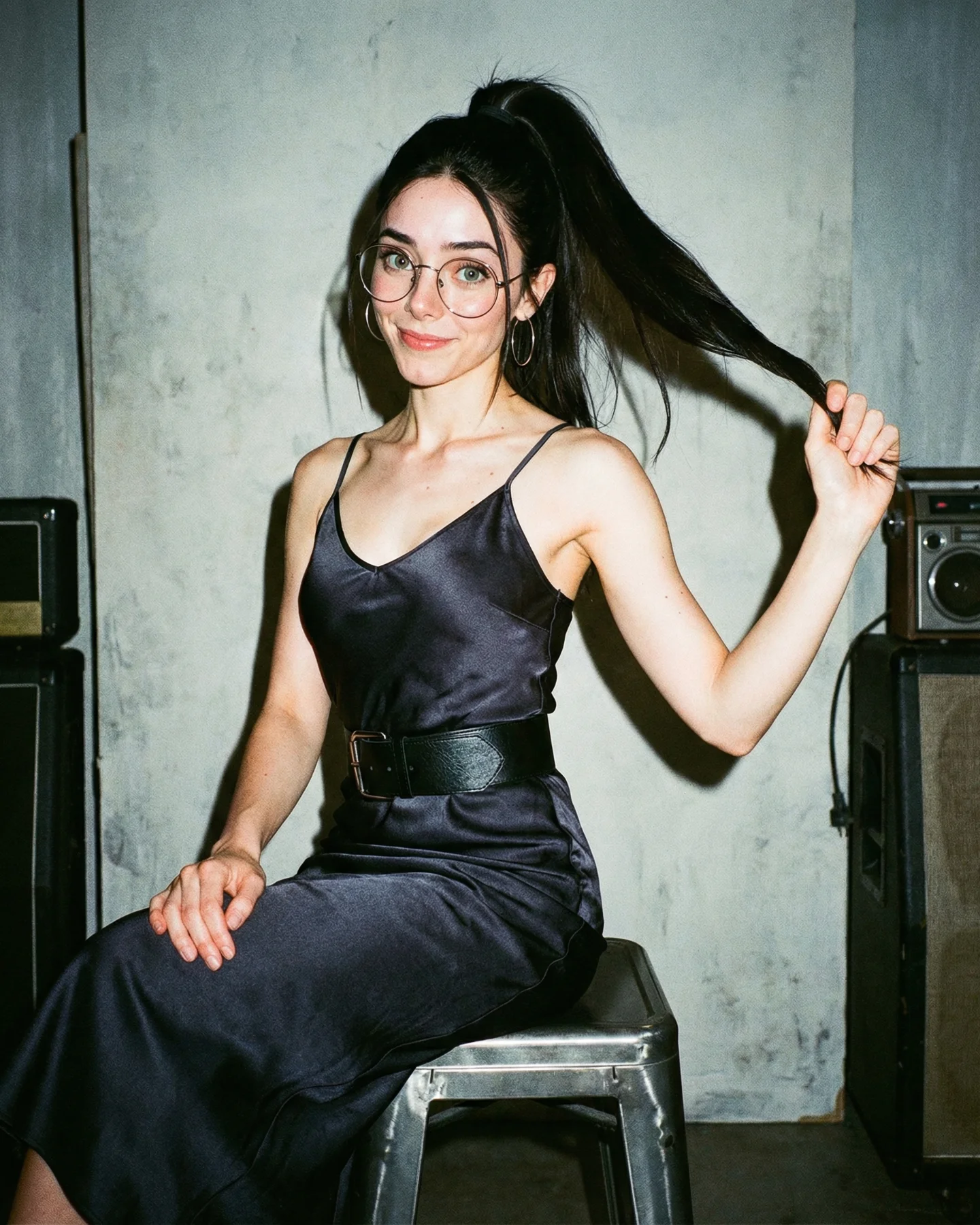
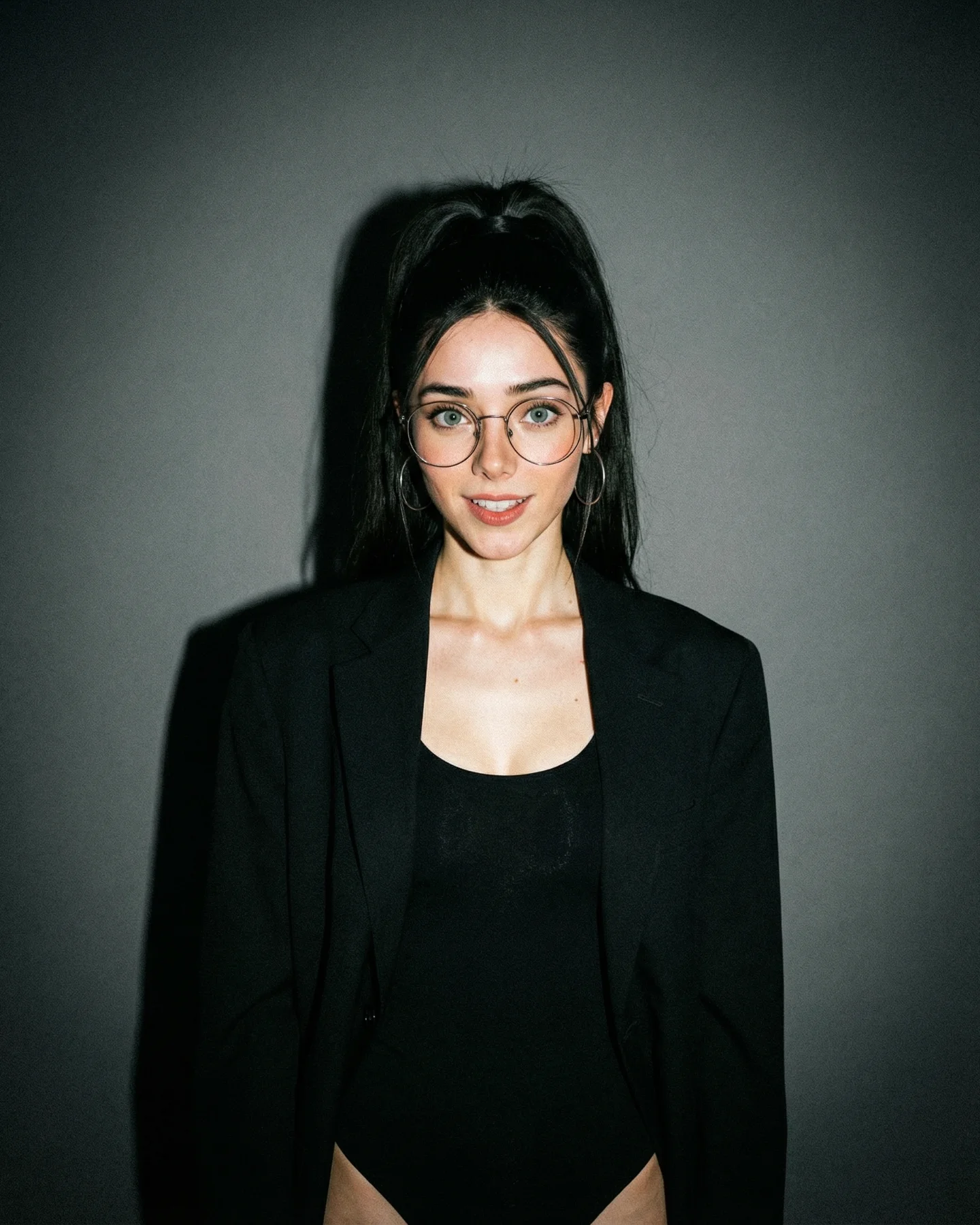
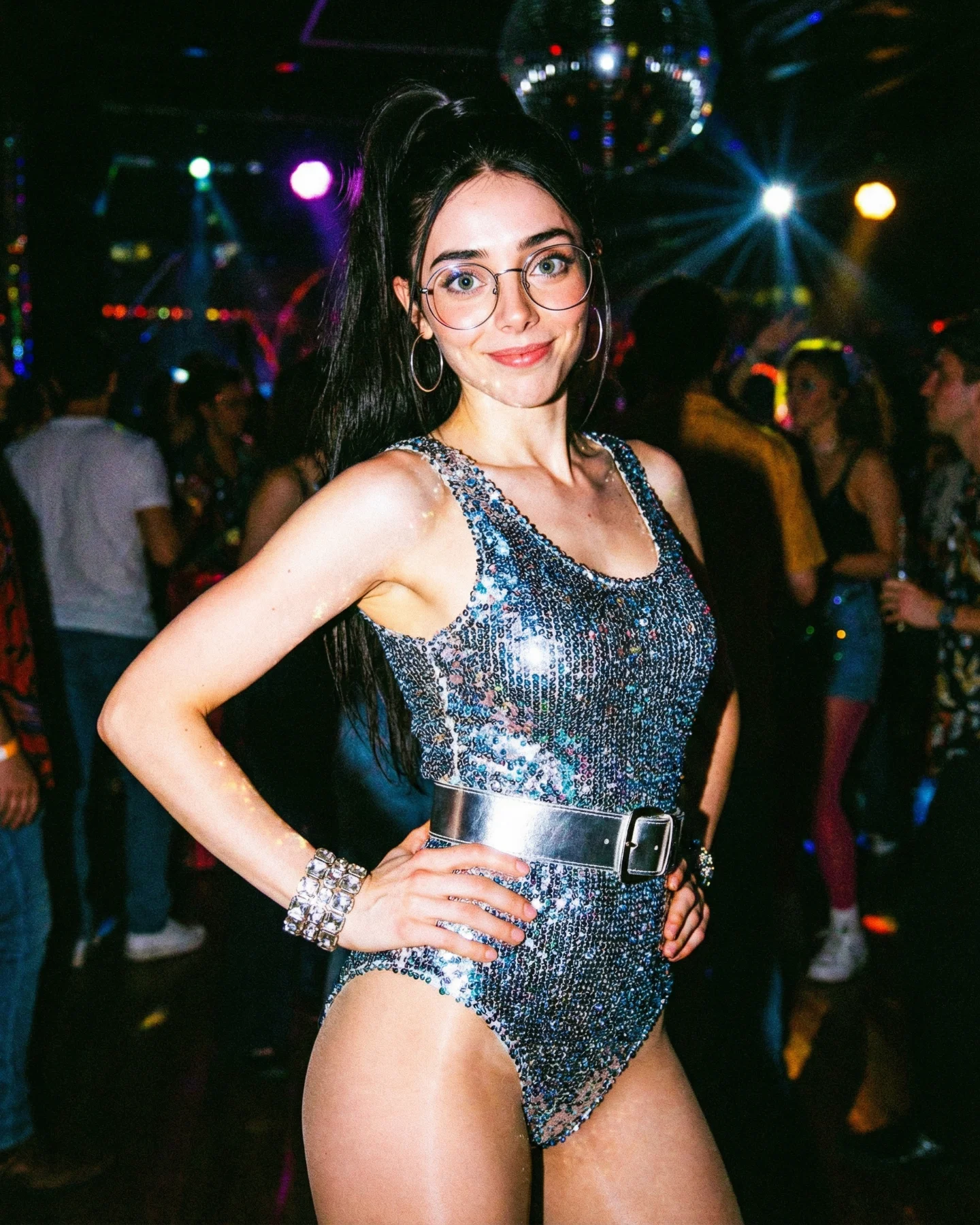
This image works because it refuses to overdecorate. The room is almost empty, the wall is rough, and the styling is doing nearly all the emotional work. That makes the portrait feel deliberate. The satin dress, the belt, the glasses, and the lifted ponytail are enough to create a recognizable character without relying on props or scenery. For creators, this is a strong reminder that a portrait can feel expensive or memorable through shape and texture alone.
The direct flash is also essential. It gives the image a self-aware snapshot quality that keeps the dress from becoming too formal. Without the flash, this could have turned into a generic occasionwear portrait. With it, the frame feels more contemporary, more personal, and more native to creator culture. It reads like someone with strong visual taste choosing restraint on purpose.
Why This Minimal Setup Still Feels Rich
What gives the image weight is the contrast between polish and roughness. The dress is sleek and fluid. The wall is coarse. The stool is industrial. The speakers on the sides imply a creative environment rather than a polished studio. That tension makes the subject feel more distinct. The outfit is not floating in a blank void. It is being tested against texture.
Another strength is the pose. It is simple, but the lifted ponytail gives the image a human rhythm. That one gesture softens the otherwise structured look of the belt and dress. In feed terms, this matters a lot. It keeps the portrait from becoming static while preserving the clean, almost architectural composition.
| Signal | Evidence (from this image) | Mechanism | Replication Action |
|---|
| Texture contrast | Satin dress sits against rough concrete wall and metal stool | Luxury fabric feels stronger when the environment is visibly tougher | Pair one refined material with one industrial or unfinished backdrop |
| Snapshot honesty | Direct flash creates hard frontal clarity and removes mood-light ambiguity | Flash makes the scene feel immediate and contemporary rather than staged | Use visible direct-flash language when you want fashion to feel personal |
| Gesture-led personality | The subject lifts her ponytail instead of posing symmetrically | One small off-balance gesture keeps a simple portrait from feeling stiff | Prompt one hand action that adds movement without adding props |
| Minimal but specific setting | Speakers and bare wall suggest a creative room without visual overload | Specific environmental hints build story while keeping the frame clean | Use two or three location clues only, rather than filling the scene with decor |
Best Uses and Transfer Paths
- Fashion portrait content: especially useful when the goal is to highlight silhouette, fabric, and attitude rather than scenery.
- Music-adjacent creator branding: the speakers and industrial wall naturally support an artist or backstage tone.
- Date-night or occasionwear references: the satin dress reads elevated, but the direct flash keeps it socially usable.
- Minimal personal-brand shoots: ideal for creators who want a recognizable visual identity without building a complex set.
This setup is less ideal for travel content, romantic soft-light beauty work, or product-first campaigns that need a bright, descriptive environment. The image depends on attitude, silhouette, and controlled roughness. If those qualities are not aligned with the message, the frame will feel too sparse.
Transfer recipe one: Keep the seated composition, direct flash, and industrial background. Change the dress to leather or tailoring and push the mood toward musician or nightlife editorial. Slot template: {raw interior} {statement wardrobe} {simple seat} {self-aware confidence}.
Transfer recipe two: Keep the minimal room and one-hand gesture. Change the stool to a folding chair, vanity bench, or amplifier case while preserving the narrow palette. Slot template: {plain room} {textural outfit} {single gesture} {clean attitude}.
Transfer recipe three: Keep the rough wall and direct flash language. Change the wardrobe from satin to knit or denim for a more casual creator portrait while holding the same compositional discipline. Slot template: {industrial backdrop} {focused outfit} {small pose action} {modern candid tone}.
What the Aesthetic Gets Right
The image understands that minimalism works better when every remaining detail is legible. The belt is bold enough to shape the silhouette. The glasses and ponytail define the face. The stool gives the body a clear geometry. Even the speakers help, because they create side anchors that keep the portrait from floating. Nothing is random, which is why the simplicity reads as intention instead of absence.
The direct flash also sharpens the aesthetic logic. Satin can easily become too romantic or too formal under soft lighting. Here it stays modern because the flash flattens sentimentality and introduces a little friction. For creators, this is a useful prompt lesson: the same outfit can tell a very different story depending on whether the light is flattering, cinematic, or blunt.
| Observed | Recreate |
|---|
| Dark fluid fabric against a hard neutral room | Use one soft, reflective material and place it inside a room with rough matte surfaces |
| Centered seated pose with one asymmetrical hair gesture | Keep the base pose stable, then add one hand action for personality |
| Direct flash with low ambient background | Let the flash dominate the scene so the portrait feels immediate and contemporary |
| Limited environmental clues such as speakers and stool | Add just enough props to imply a setting without cluttering the composition |
Prompt Technique Breakdown
| Prompt chunk | What it controls | Swap ideas (EN, 2–3 options) |
|---|
| woman seated on a metal stool in an industrial room | Core setting and body geometry | seated on a folding chair; leaning on an amp case; perched on a concrete block |
| dark satin spaghetti-strap dress with a wide black belt | Texture, silhouette, and styling hierarchy | black slip dress without belt; leather midi dress; structured blazer dress |
| holding a high ponytail to the side | Gesture and personality | touching necklace; adjusting glasses; resting chin on hand |
| rough gray wall with speakers at the edges | Minimal environment identity | rehearsal room amps; backstage curtains and cases; plain plaster wall with one speaker |
| direct on-camera flash | Modern snapshot feel and tonal honesty | compact-camera flash; disposable film flash; slightly softer bounce flash |
| centered vertical medium-full portrait | Compositional discipline and legibility | waist-up crop; wider seated room shot; tighter fashion portrait |
How to Iterate Without Diluting the Look
Lock three things first: the direct-flash lighting, the rough neutral background, and the single strong fabric texture. Those are the load-bearing parts. If you change all three at once, the image stops feeling intentional and starts looking like a random indoor portrait.
- Start with the exact structure: stool, gray wall, speakers, satin dress, and one lifted-hair gesture.
- Change only the wardrobe texture, comparing satin, leather, knit, or matte tailoring while keeping the room unchanged.
- Change only the seat or side props, testing chair, crate, amp case, or bench against the same pose.
- Change only the emotional read, moving from soft smile to detached stare or playful grin without changing the flash grammar.
The repeatable takeaway is simple: when the set is minimal, one material, one gesture, and one lighting decision can carry the whole image.