How soy_aria_cruz Made This Train Reflection Selfie AI Portrait — and How to Recreate It
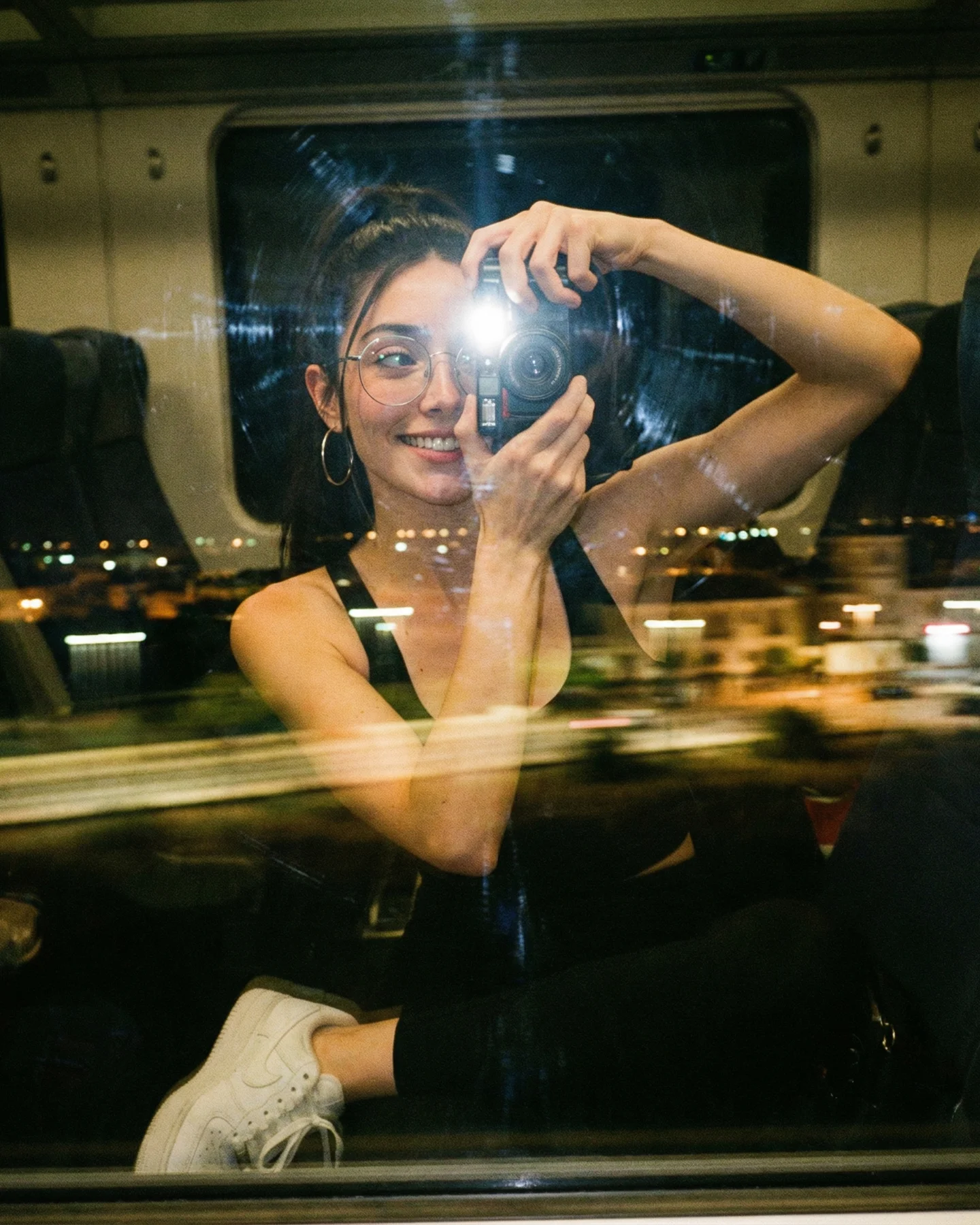
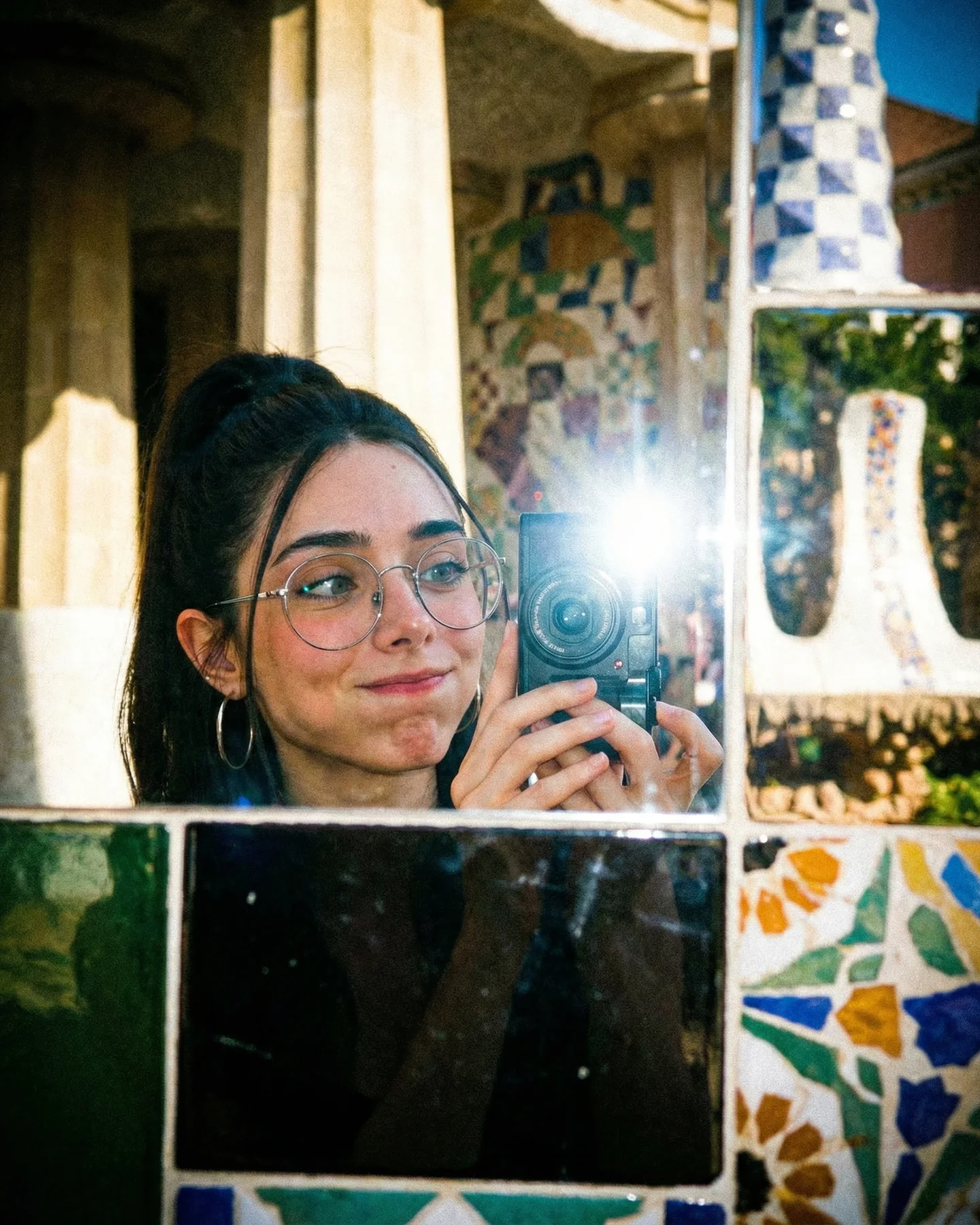
This image stands out because it turns a basic selfie into a layered travel memory. The subject is not just posing. She is using the train window as part of the picture, letting the flash, the dirty glass, the seat reflections, and the moving city lights all stack into one frame. That gives the image something many polished portraits lack: atmosphere with proof of place. It feels like a moment that happened during motion, not a scene built only for the camera.
The most important choice here is imperfection. The streaks across the glass, the direct flash, and the slight visual clutter are not mistakes. They are the whole aesthetic. For creators, that matters because this style performs differently from clean luxury content. It feels intimate, modern, and a little nostalgic, which makes viewers treat it like a memory rather than an ad.
Why This Reflection Selfie Has Real Shareability
The hook is visual layering. You get face, camera, interior train context, and exterior movement all at once. That density gives the image replay value because there is more than one thing to notice on the first pass. The camera flash also acts like a focal lock. It tells the eye exactly where to land before the rest of the scene unfolds.
Another reason it works is that the subject is smiling rather than trying to look editorially distant. That warmth balances the rawness of the window reflection. The result feels social, not performative. For small creators, this is a useful model because it shows how to make transit, waiting, or commuting look emotionally rich instead of disposable.
| Signal | Evidence (from this image) | Mechanism | Replication Action |
|---|
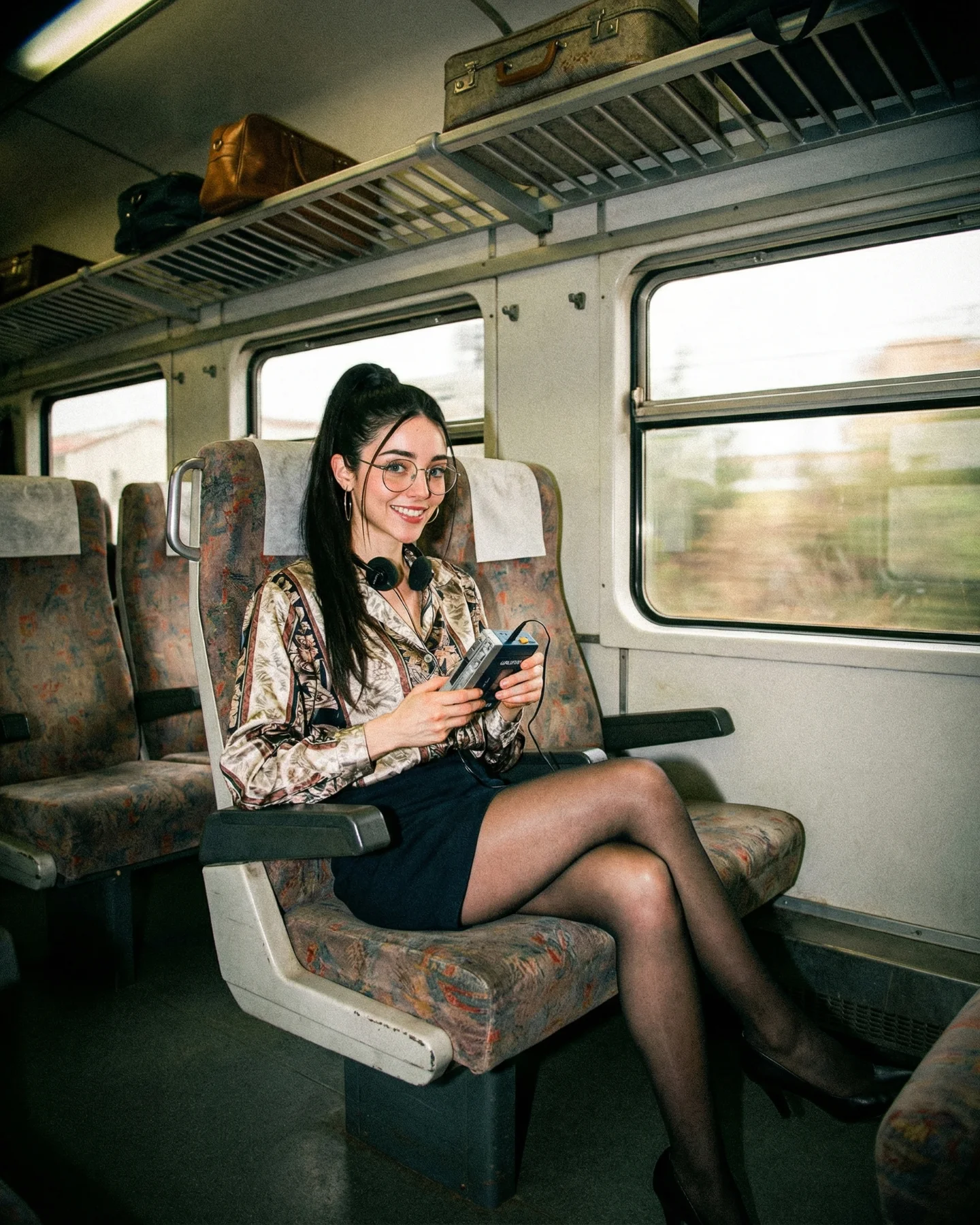
| Place-proof storytelling | Train seats, window frame, and moving exterior lights are all visible | Specific travel details make the image feel lived-in rather than generic | Keep at least two unmistakable transit cues in frame instead of relying on caption context |
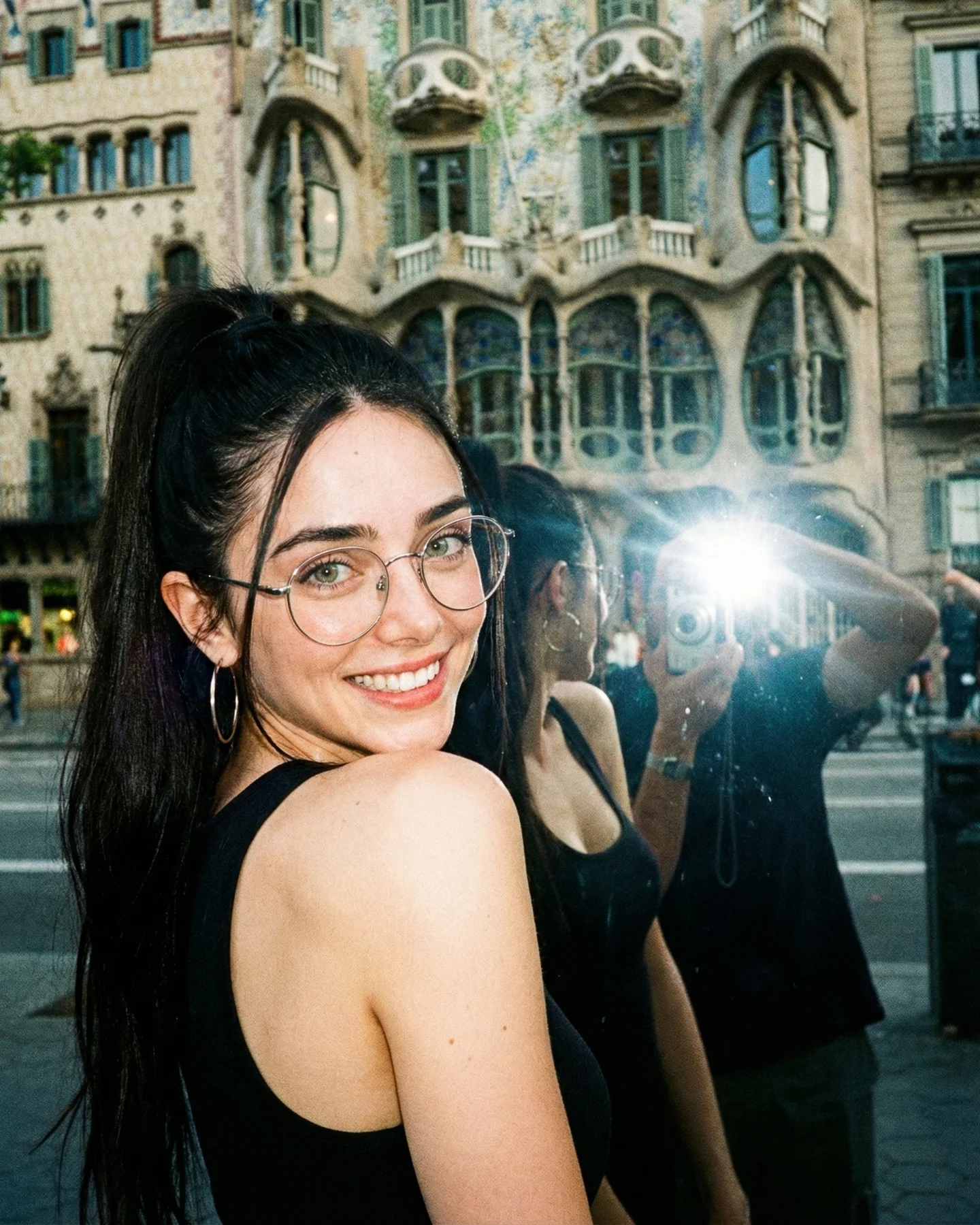
| Direct-flash focal point | The camera flash hits the center of the image and lights the subject clearly | Flash creates immediacy and gives the viewer an obvious entry point | Use one strong direct-flash source and let it stay visible rather than hiding the equipment |
| Reflection complexity | Glass smudges and overlapping light streaks sit on top of the portrait | Imperfection adds texture and makes the frame feel like a found moment | Do not over-clean the glass layer; preserve streaks, flare, and exterior motion lines |
| Human warmth | Relaxed smile, glasses, and casual seated pose make the subject approachable | Personal warmth keeps the image from becoming too abstract or purely experimental | Prompt an easy smile and compact seated pose instead of a hard fashion expression |
Best Uses and Adaptation Paths
- Travel-lifestyle content: ideal when the goal is to make movement itself feel aesthetic rather than just documentary.
- Night-commute or city diary posts: the layered lights instantly suggest a lived urban routine.
- Indie fashion or creator-branding edits: the direct flash and raw reflection style feel current and culturally familiar.
- Memory-driven social posts: works especially well for captions about in-between moments, transitions, or late-night rides.
This setup is less ideal for product catalogs, clean beauty portraits, or campaigns that need absolute clarity. Reflection-heavy images trade sharpness and cleanliness for mood. If product readability is the goal, this approach will work against you.
Transfer recipe one: Keep the flash, the reflection layer, and the seated intimacy. Change the train to a taxi, bus, or subway car and shift the wardrobe toward streetwear. Slot template: {transit interior} {casual night look} {camera or phone flash} {in-motion mood}.
Transfer recipe two: Keep the glass surface and movement streaks. Change the subject to a couple or a friend group and turn the energy from introspective to playful. Slot template: {window setting} {group styling} {light streaks} {shared memory vibe}.
Transfer recipe three: Keep the direct-flash snapshot language. Change the train to a cafe window, airport gate, or ferry cabin and use rain or neon reflections instead of speed lines. Slot template: {reflective location} {personal look} {surface texture} {nostalgic mood}.
What Makes the Aesthetic Feel Current
The image works aesthetically because it refuses the polished separation between subject and environment. The window does not disappear. The flash does not hide. The outside lights do not stay neat. Everything overlaps, and that overlap is what makes the frame contemporary. It feels like a creator understands how to use documentary mess as a design tool.
The black outfit and white sneaker also matter more than they first appear to. They give the composition simple tonal anchors, which helps the image survive all the reflective complexity. Without that wardrobe clarity, the frame could turn muddy. For creators trying to recreate this style, that is the key lesson: if the surface is chaotic, the subject styling should stay readable.
| Observed | Recreate |
|---|
| Visible flash source becomes part of the composition | Let the camera or light device remain in frame instead of pretending the shot is invisible |
| Transit interior remains readable through reflections | Preserve seat shapes, window frame lines, and carriage darkness behind the subject |
| Exterior lights turn into horizontal motion bands | Use speed streaks or passing city lights to imply movement across the glass surface |
| Simple styling grounds a visually noisy surface | Keep outfit colors narrow and accessories distinct so the face remains easy to read |
Prompt Technique Breakdown
| Prompt chunk | What it controls | Swap ideas (EN, 2–3 options) |
|---|
| woman taking a camera-flash reflection selfie through a train window at night | Core scene concept and storytelling angle | subway reflection selfie; taxi-window flash portrait; ferry cabin mirror-like snapshot |
| visible glass smudges and layered light streaks | Texture realism and imperfect memory feel | rain droplets; neon streak reflections; scratched glass surface |
| round glasses, hoop earrings, high ponytail | Character specificity and recognizability | loose waves and no glasses; bun with statement earrings; baseball cap and minimal jewelry |
| black top with white sneaker and knee-up seated pose | Silhouette clarity and casual intimacy | oversized hoodie and boots; fitted dress and heels; denim with chunky sneakers |
| compact digital camera with direct flash | Snapshot energy and focal emphasis | point-and-shoot silver camera; disposable camera flash; phone flash with visible case |
| warm moving lights outside the carriage | Travel motion and nighttime atmosphere | station platform lights; tunnel reflections; rainy street glow |
How to Iterate Without Flattening the Mood
Lock three things first: the visible flash source, the reflective window surface, and the transit context. Those are the structural elements. If any of them disappear, the image stops feeling like a layered memory and turns into a normal selfie.
- Start with the full setup: train seat, window reflection, direct flash camera, and exterior motion lights.
- Change only the location class, testing train, subway, taxi, airport shuttle, or bus while keeping the same candid posture.
- Change only the surface texture, moving from dirty glass to rain-speckled glass or neon reflections.
- Change only the emotion, shifting from smile to calm stare or sleepy late-night mood while preserving the flash-and-reflection grammar.
The repeatable insight is simple: if you want transit content to feel special, do not fight the reflections. Build the whole image around them.