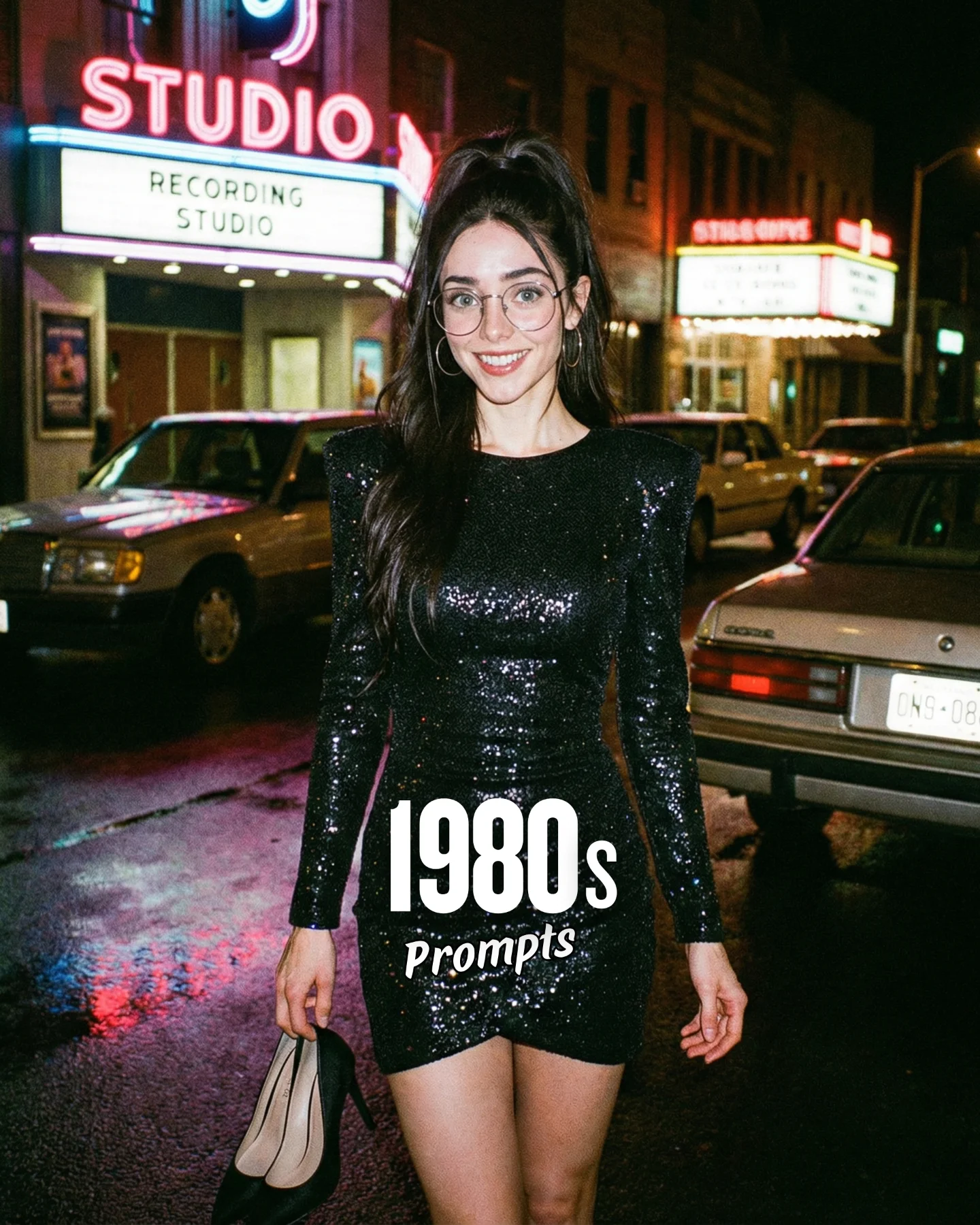
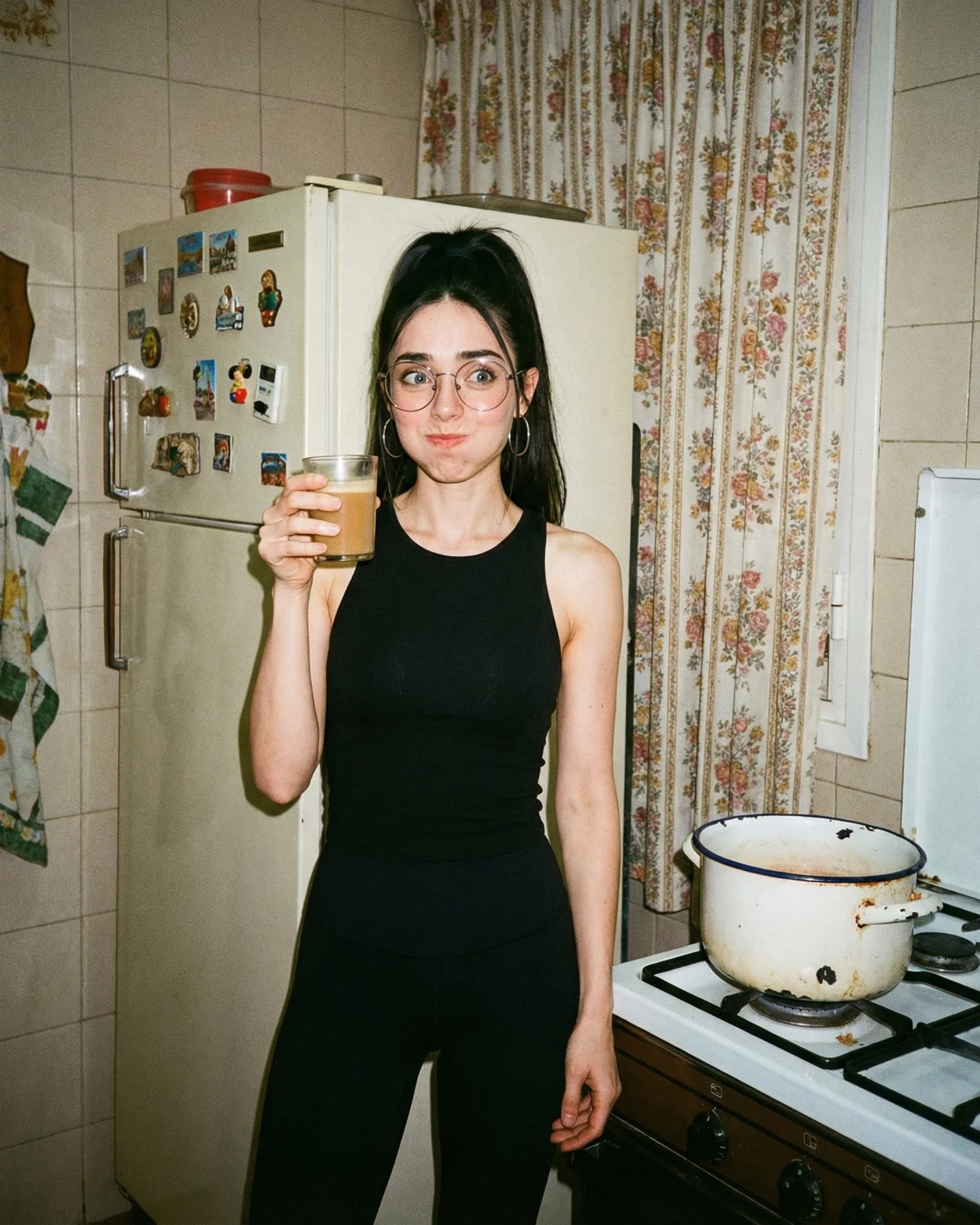
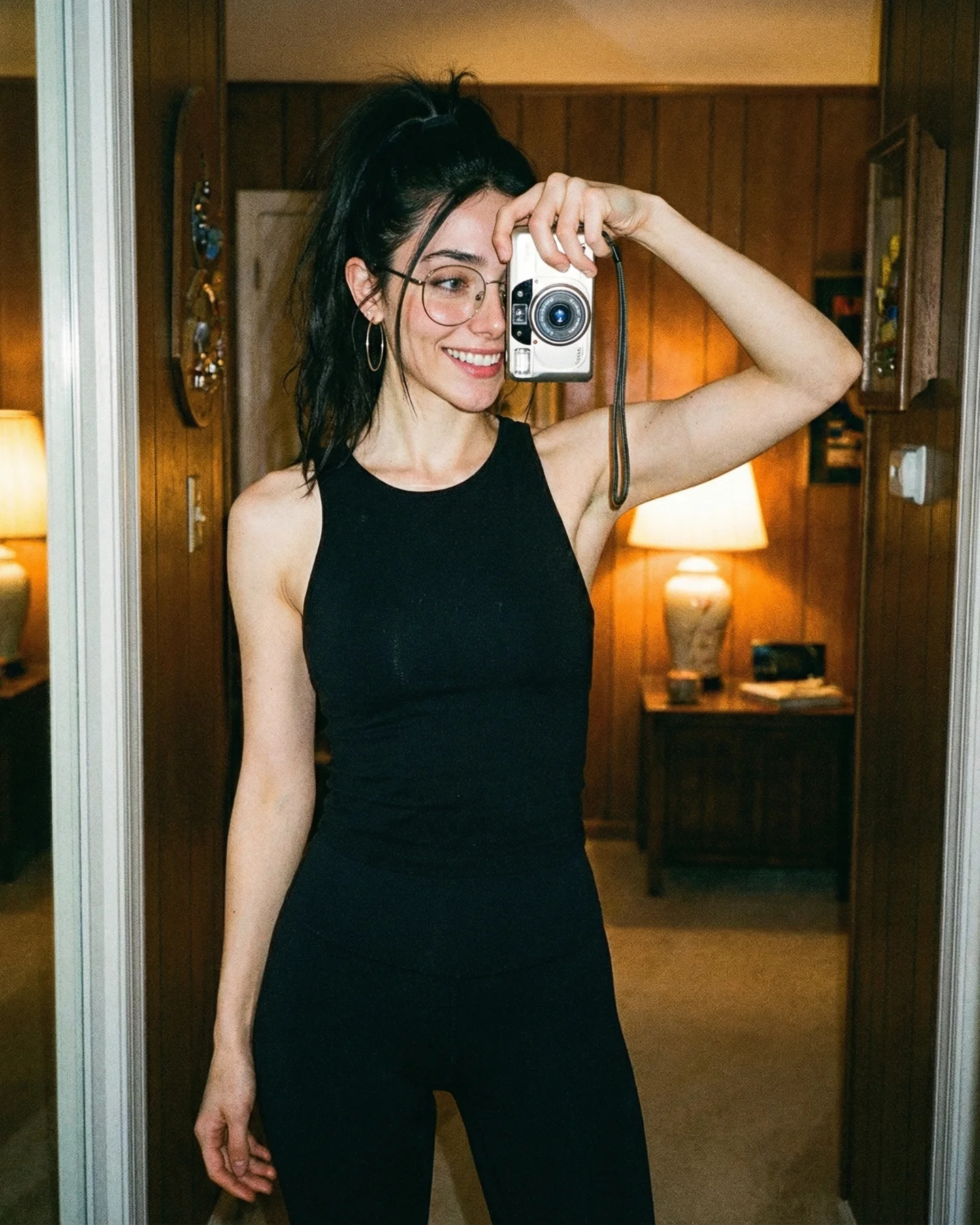
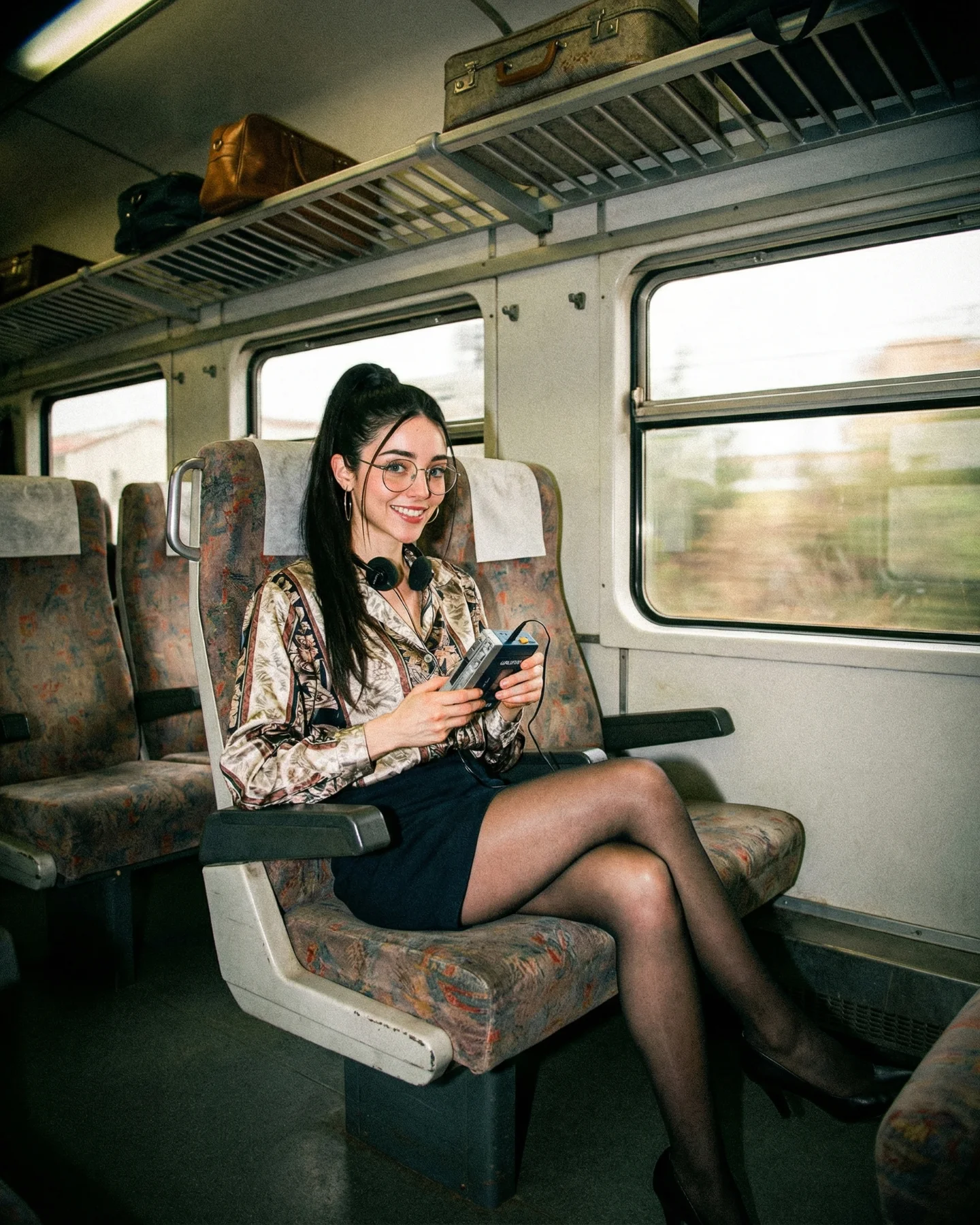
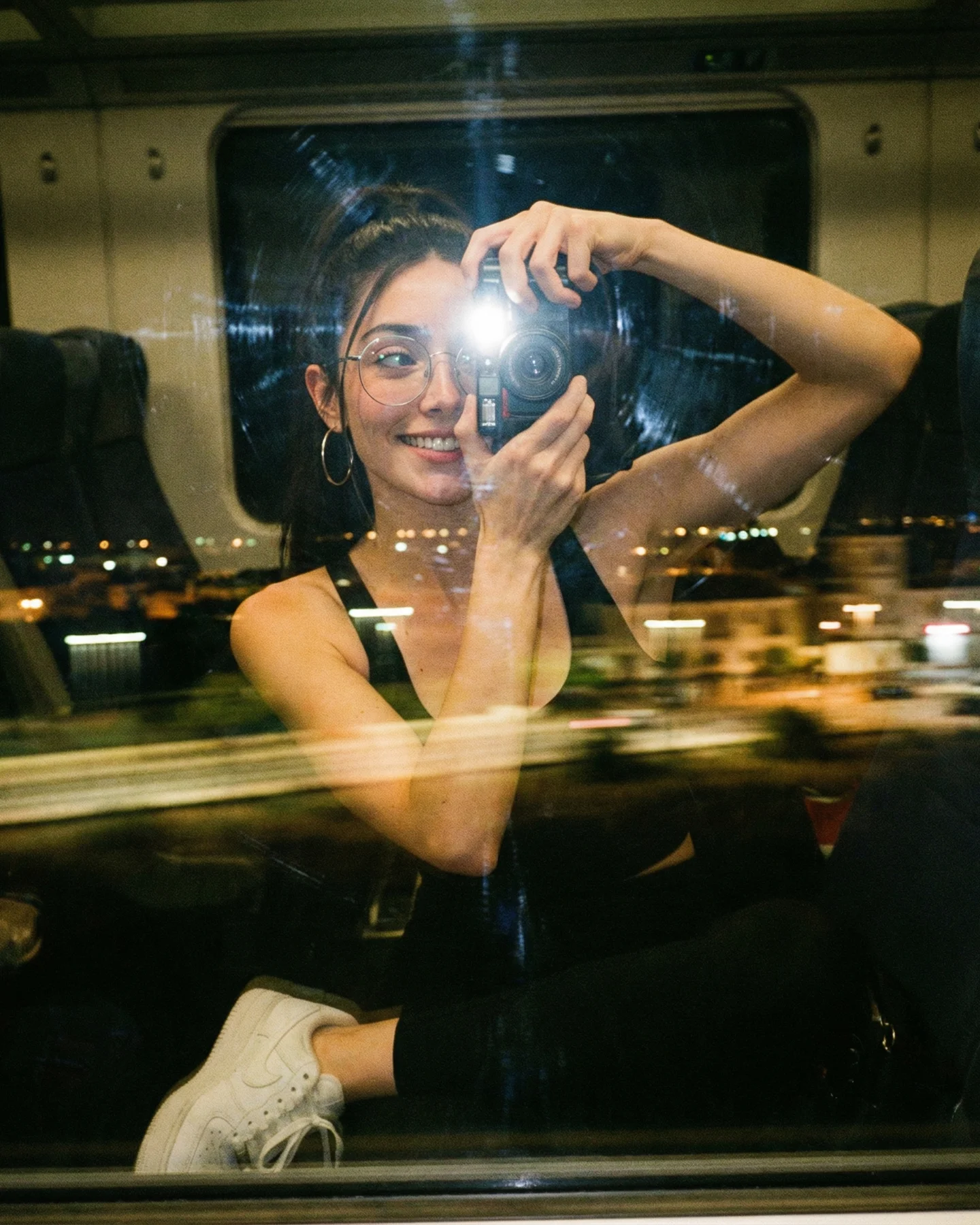
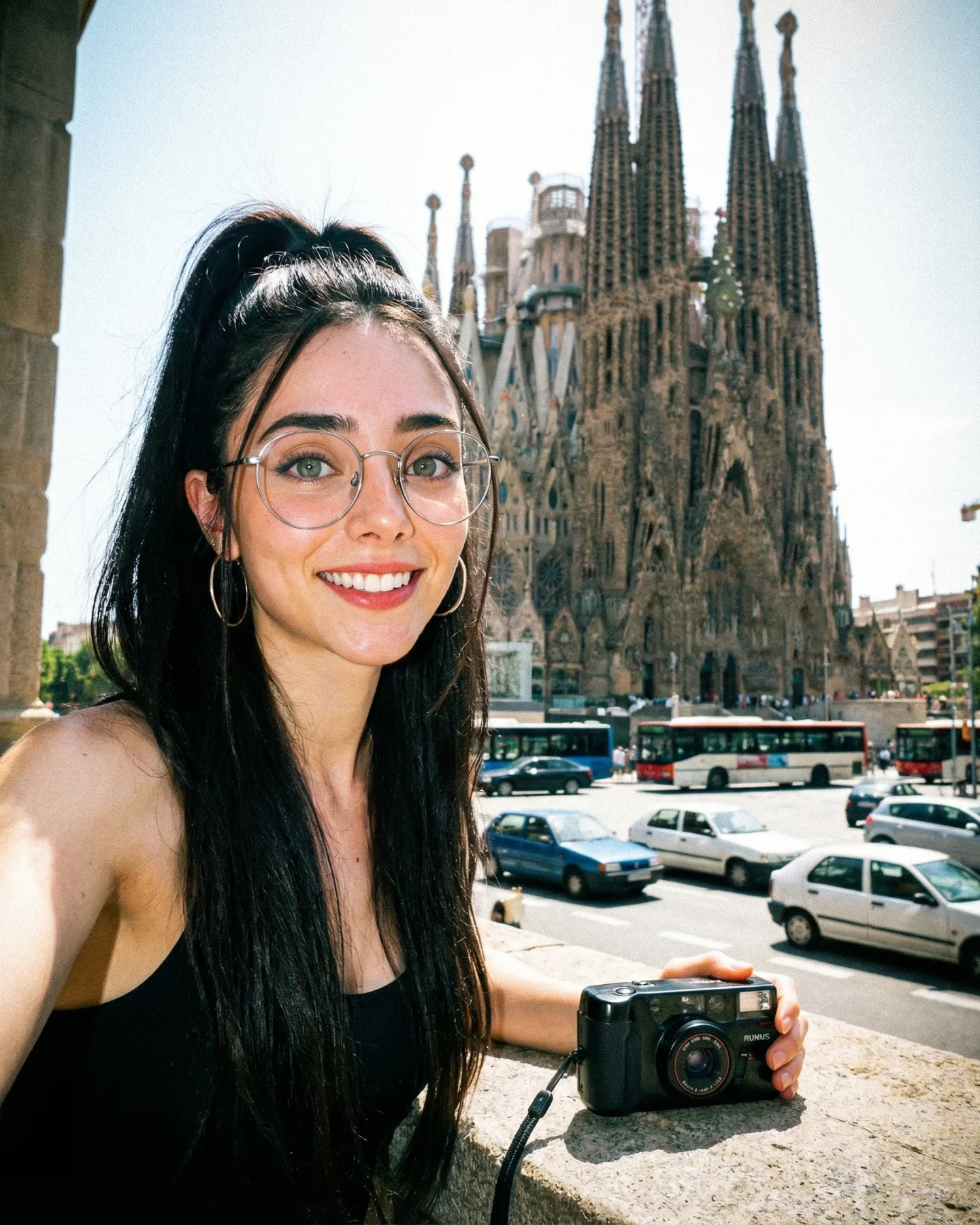
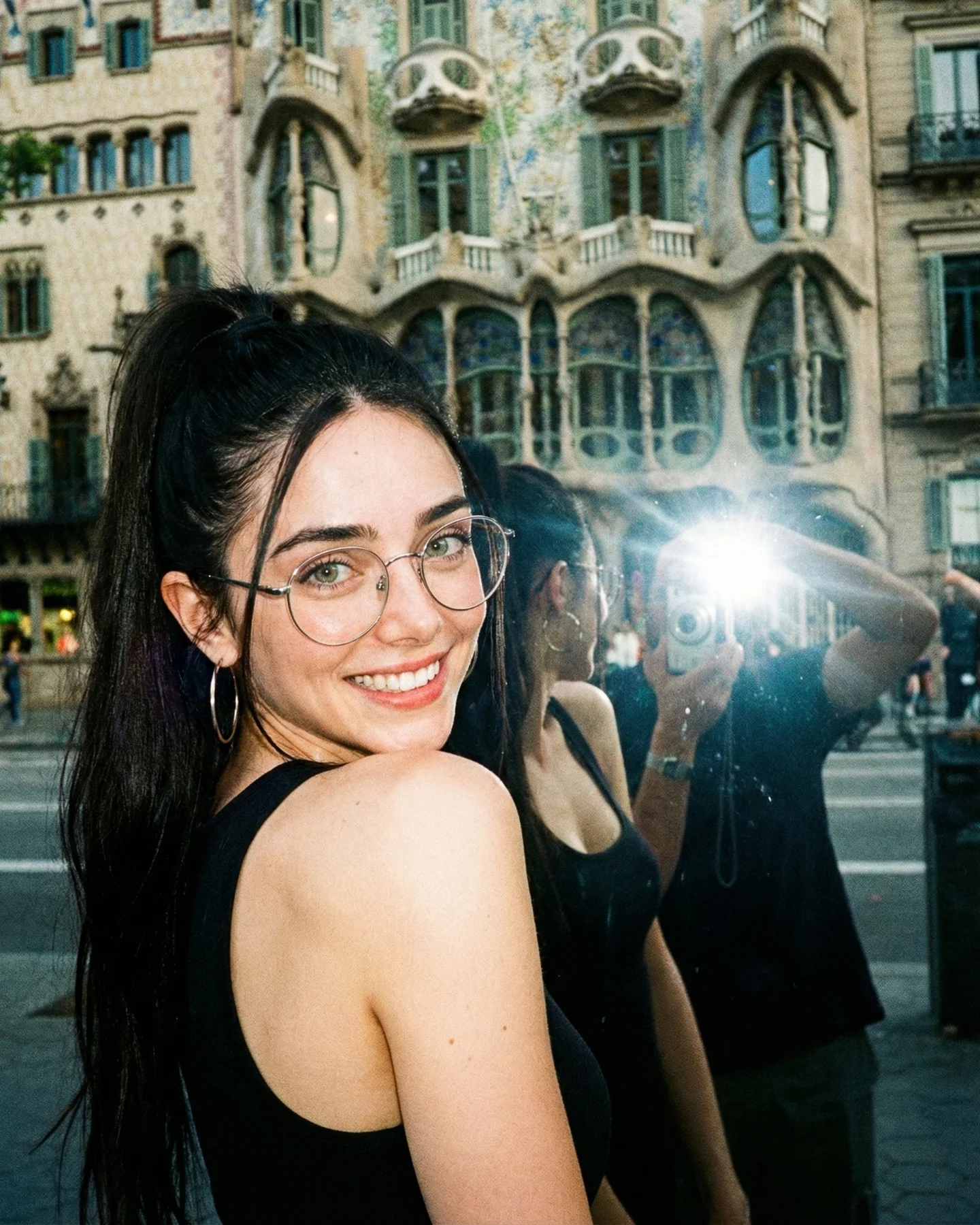
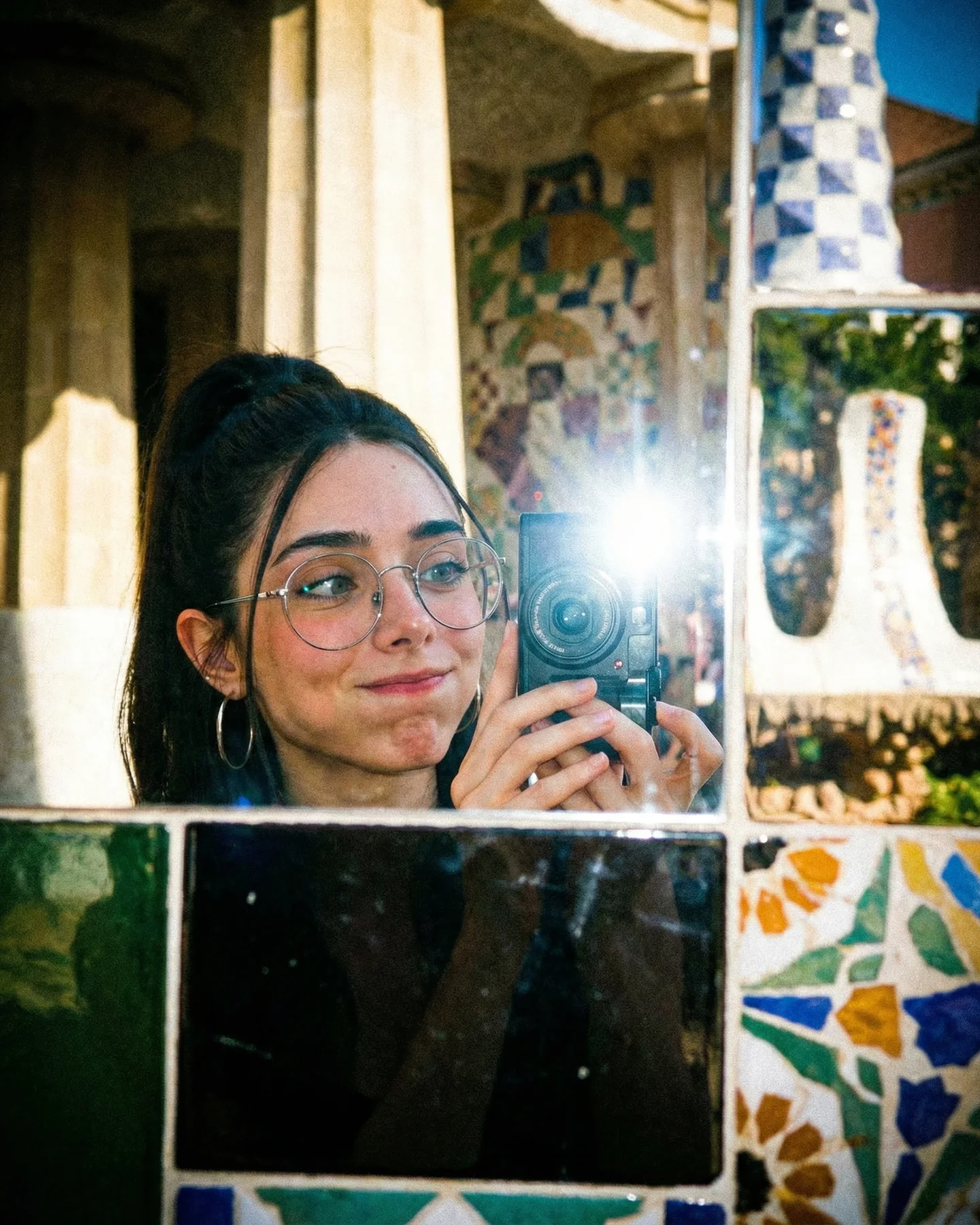
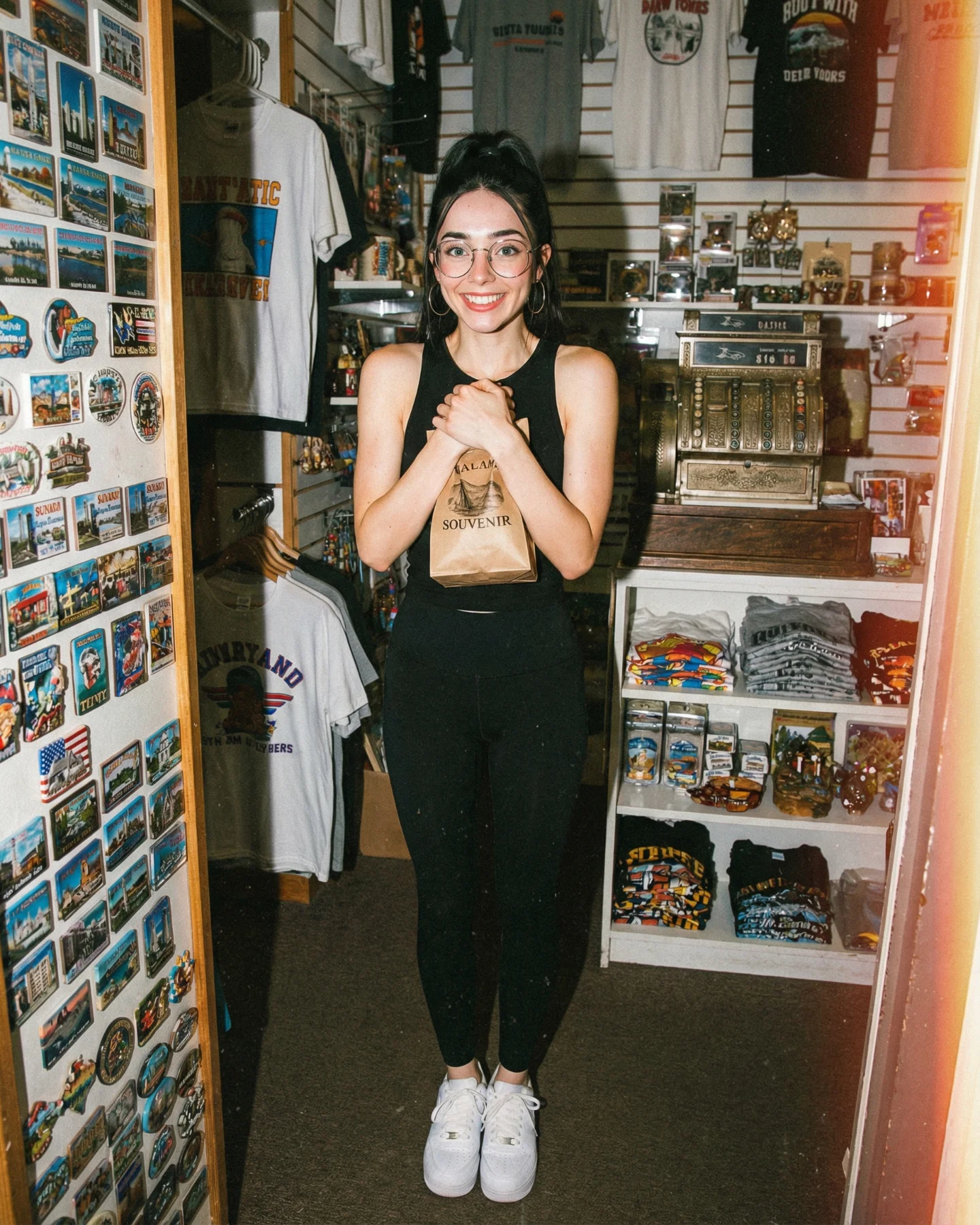
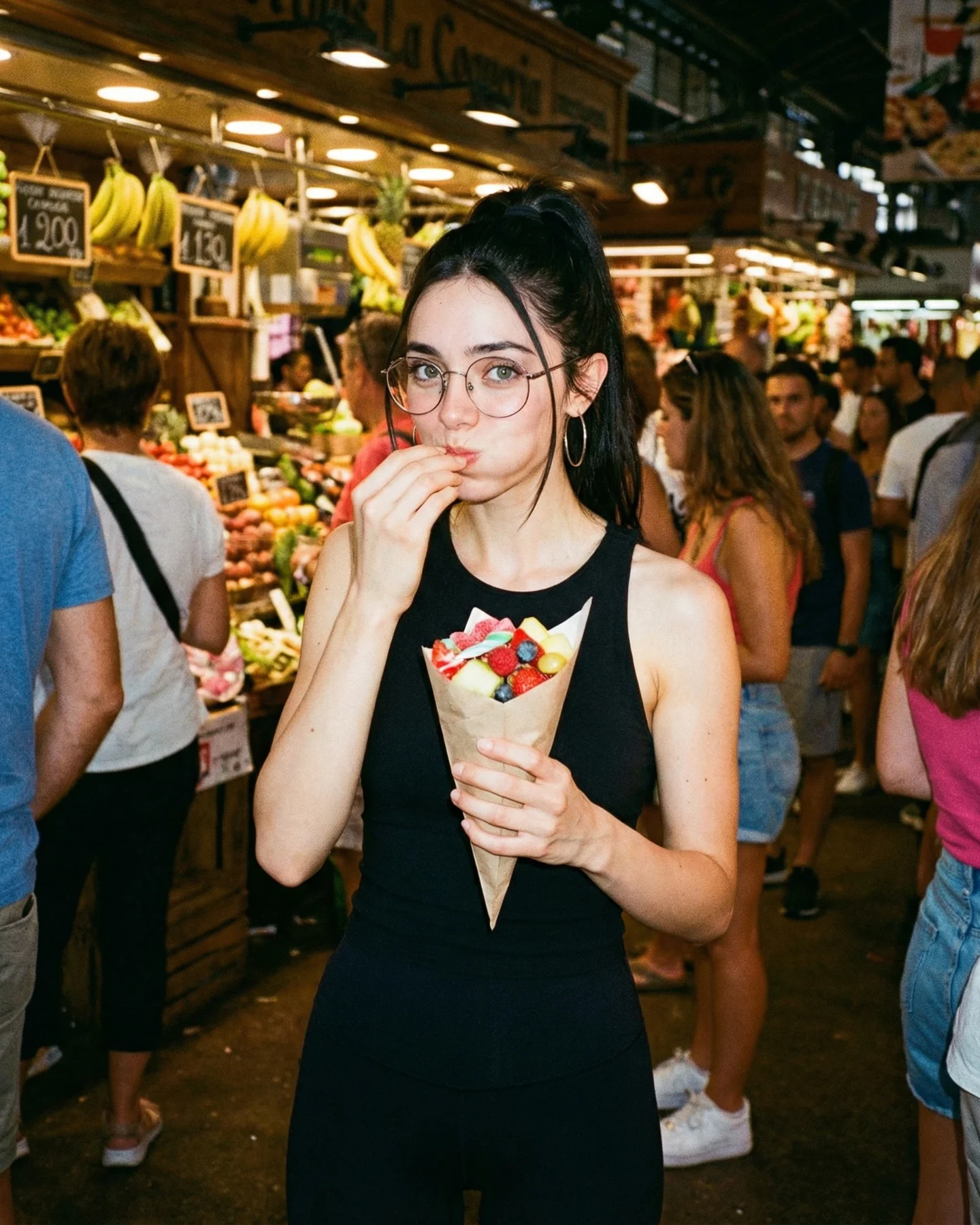
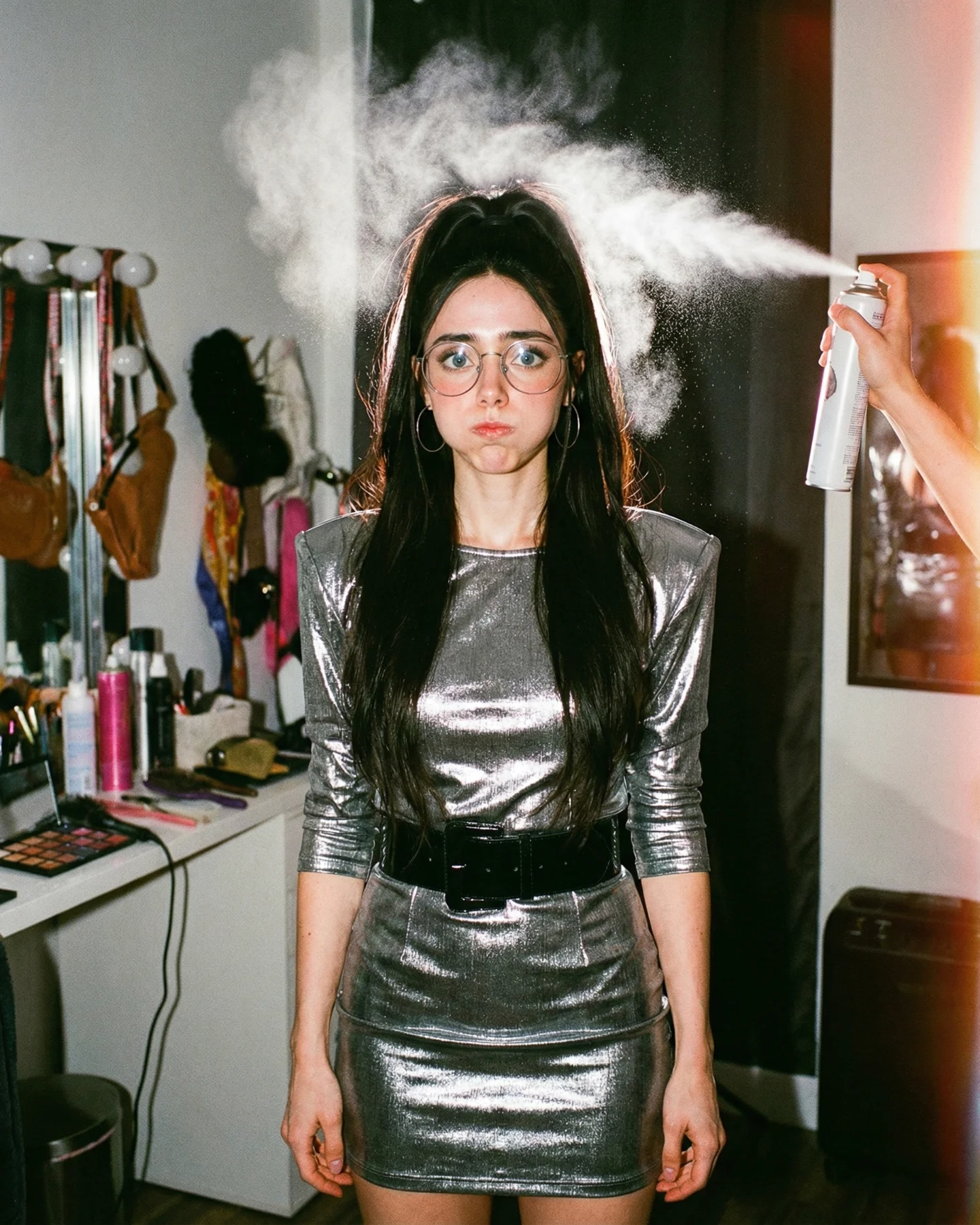
Fotografía estilo 1980s - Prompts 💕
Os dejo por aquí una colección de prompts de imágenes al estilo de los años 80 🫶🏽
La IA que usé para crear este tipo de imágenes es Nano Banana Pro 🙊
Feliz vacaciones a todos, espero que lo paséis genial con la familia y amigos 🥰
Comenta "ARIA" si quieres los prompts y te los mando por mensaje 💌
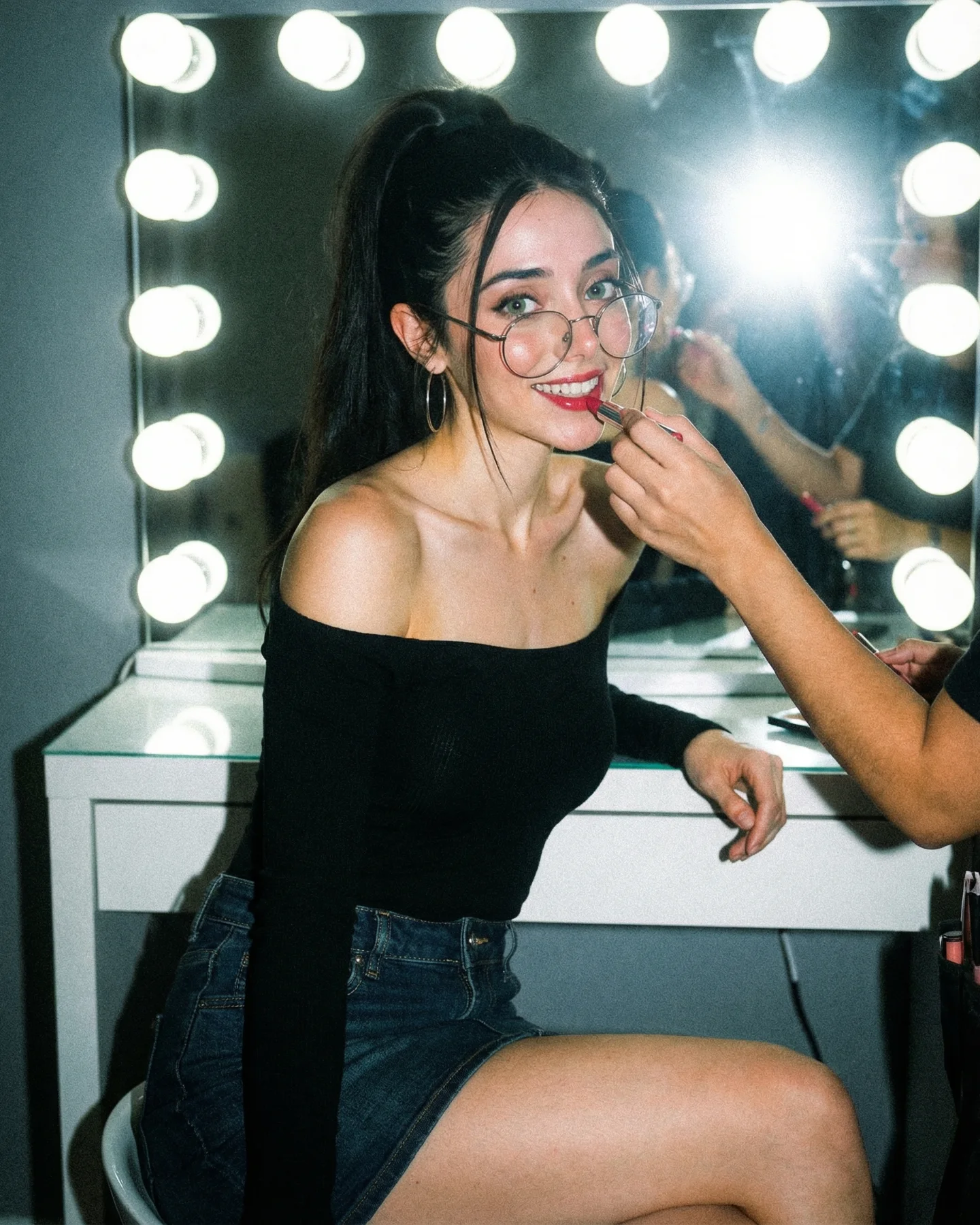
Soy_aria_cruz's 1980s Dressing Room Mirror Flash AI Image
This image works because it captures preparation instead of performance. The viewer does not see the final stage, the event, or the audience. They see the moment just before. A hand reaches in with lipstick, the bulbs glow, and the subject smiles at the camera like she already knows the night is starting. That kind of backstage timing is powerful because it feels more personal than the polished result.
The second reason it performs is that the vanity mirror does most of the retro work. You do not need huge shoulder pads or loud synthwave colors to suggest an older era. The bulb-framed mirror, the flash, and the dressing-room intimacy are enough. This is a more sophisticated kind of 1980s nostalgia because it is built from environment and ritual, not just from costume exaggeration.
Why This Backstage Snapshot Reads Fast
The image is easy to decode immediately. Mirror bulbs, lipstick touch-up, seated pose, flash. Those cues together say “backstage” almost instantly. And because the helper’s arm is only partial, the composition stays focused. We know someone else is there, but the story remains centered on the woman getting ready.
The direct flash also matters. It makes the image feel like a found behind-the-scenes moment rather than a beauty campaign. That distinction is important for nostalgic content. Retro images often feel stronger when the glamour is interrupted by something a little clumsy or ordinary, like a flash hotspot in the mirror or a half-visible assistant.
Signal
Evidence (from this image)
Mechanism
Replication Action
Pre-performance intimacy
The lipstick is being applied in the moment rather than after the image is fully styled.
Preparation scenes feel more personal than finished presentation scenes.
Capture one active getting-ready action instead of only a posed beauty look.
Instant backstage coding
The mirror is framed with exposed bulbs and a simple vanity table.
Specific room cues create immediate setting recognition.
Use one unmistakable backstage object as the environment anchor.
Retro authenticity through imperfection
The flash is direct and the helper is only partially visible.
Small imperfections make the image feel candid and real.
Allow some asymmetry, crop edges, or flash harshness to remain.
Warm feminine energy
The subject smiles while being touched up, not staring seriously into the mirror.
Soft personality keeps the scene playful and broadly shareable.
Favor relaxed joy over high-fashion detachment.
Best Use Cases and Transfers
This setup is ideal for retro backstage prompt pages, dressing-room nostalgia, analog beauty-prep scenes, and creator content that wants to feel glamorous but still personal. It also transfers well to hair salons, theater wings, motel mirrors, green rooms, dressing trailers, and other “almost ready” spaces where beauty and ritual intersect.
Best for 1980s beauty and dressing-room prompts: the mirror bulbs instantly lock the era-feel.
Best for feminine backstage narratives: the touch-up action makes the image feel alive.
Best for candid glam aesthetics: flash and partial helper presence keep the image relatable.
Best for SEO around retro prep or vanity-room imagery: the scene is highly specific and easy to explain.
It is less effective for runway-fashion drama, contemporary influencer makeup setups, or ultra-clean editorial beauty images. The charm here is humble backstage intimacy. If you modernize the room too much, the nostalgia collapses.
Not ideal for polished beauty campaigns: the image wins because it feels like a prep moment, not an ad.
Not ideal for modern social-media makeup culture: ring lights and phones would break the period mood.
Not ideal for crowded backstage scenes: one helper hand is enough to tell the story.
Three Transfer Recipes
Backstage prep portrait. Keep: one vanity mirror, one active touch-up gesture, and one warm direct-flash portrait. Change: beauty tool and wardrobe. Slot template (EN): {subject getting ready} in front of {iconic prep mirror} while {partial helper action} suggests the larger backstage world
Retro glamour-before-the-show shot. Keep: exposed bulbs and imperfect flash. Change: decade flavor and prep detail. Slot template (EN): {candid pre-performance moment} inside {period-coded dressing room} with {one specific beauty ritual}
Intimate vanity-room memory. Keep: one seated subject, one helper fragment, and a visible mirror frame. Change: location type and styling family. Slot template (EN): {personal glam prep scene} captured with {snapshot realism} inside {small reflective beauty space}
Aesthetic Read
The image feels convincing because the mirror bulbs are not just decoration. They establish the room type, the era, and the emotional temperature all at once. Warm bulbs instantly make the scene feel old-school and intimate. This is why vanity-room images can carry nostalgia so efficiently: the lighting source is also the storytelling source.
The black off-shoulder top and denim skirt are also useful because they feel dressed-up but not ceremonial. They keep the subject stylish without pushing the image into theatrical costume. That balance lets the environment speak louder than the wardrobe.
Observed
Why it matters for recreation
Bulb-framed vanity mirror filling the background
The mirror is the strongest environment cue and should remain dominant.
Partial helper hand applying lipstick
This small action creates narrative and immediacy.
Direct flash with slight mirror hotspot
The image gets the exact candid-backstage quality that makes it feel real.
Black off-shoulder top and denim mini skirt
The styling feels retro and wearable instead of overly theatrical.
Bright smile behind glasses
The scene stays warm and approachable, not distant or fashion-stiff.
Prompt Technique Breakdown
To recreate this image well, start with the room and the action: “woman getting lipstick touch-up at a bulb-framed vanity.” If you start with “retro glamorous woman,” the result can become vague or overly styled. This image is built around ritual and space. The smile and outfit come after that.
Prompt chunk
What it controls
Swap ideas (EN, 2-3 options)
young woman at a dressing-room vanity while someone applies lipstick
Baseline lock the vanity mirror, the lipstick touch-up gesture, and the direct flash first. Those are the structural controls. Then fix the outfit and the subject’s smile. Only after that should you refine the mirror hotspot or subtle helper reflection.
Run 1: establish the bulb-framed dressing-room mirror and the seated subject being touched up by a cropped helper hand.
Run 2: correct the glasses, ponytail, hoop earrings, smile, and black off-shoulder top.
Run 3: refine the denim mini skirt, seated pose, and vanity proportions so the image feels candid and balanced.
Run 4: add flash charm, slight reflection complexity, and warm bulb glow while keeping the room simple and intimate.
Keep the one-change rule strict. If the vanity loses its old-school identity, fix the bulbs and table before touching the face. If the image becomes too editorial, strengthen the flash and crop imperfection before refining anything else. This image wins because it feels like a backstage memory rather than a concept render.