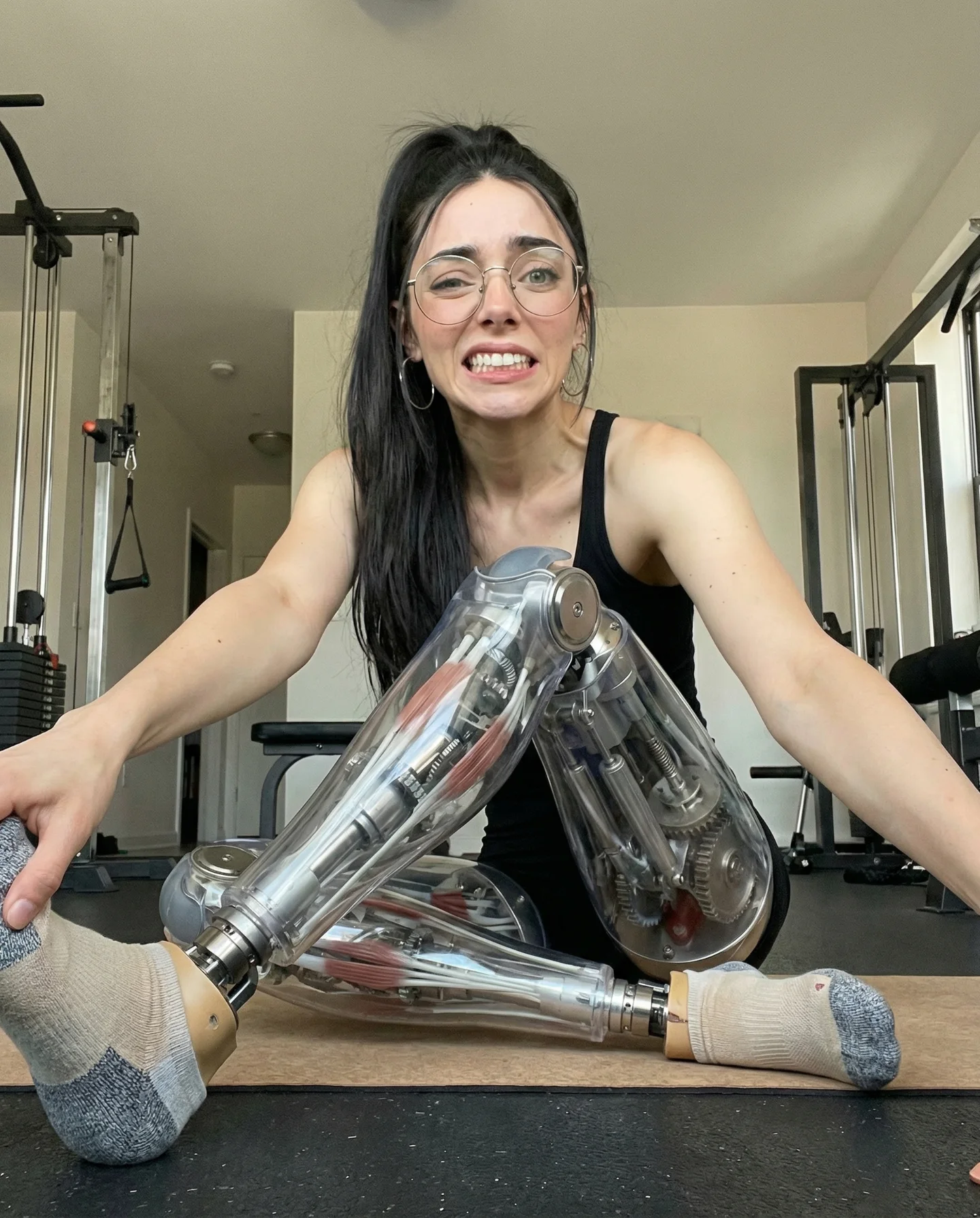
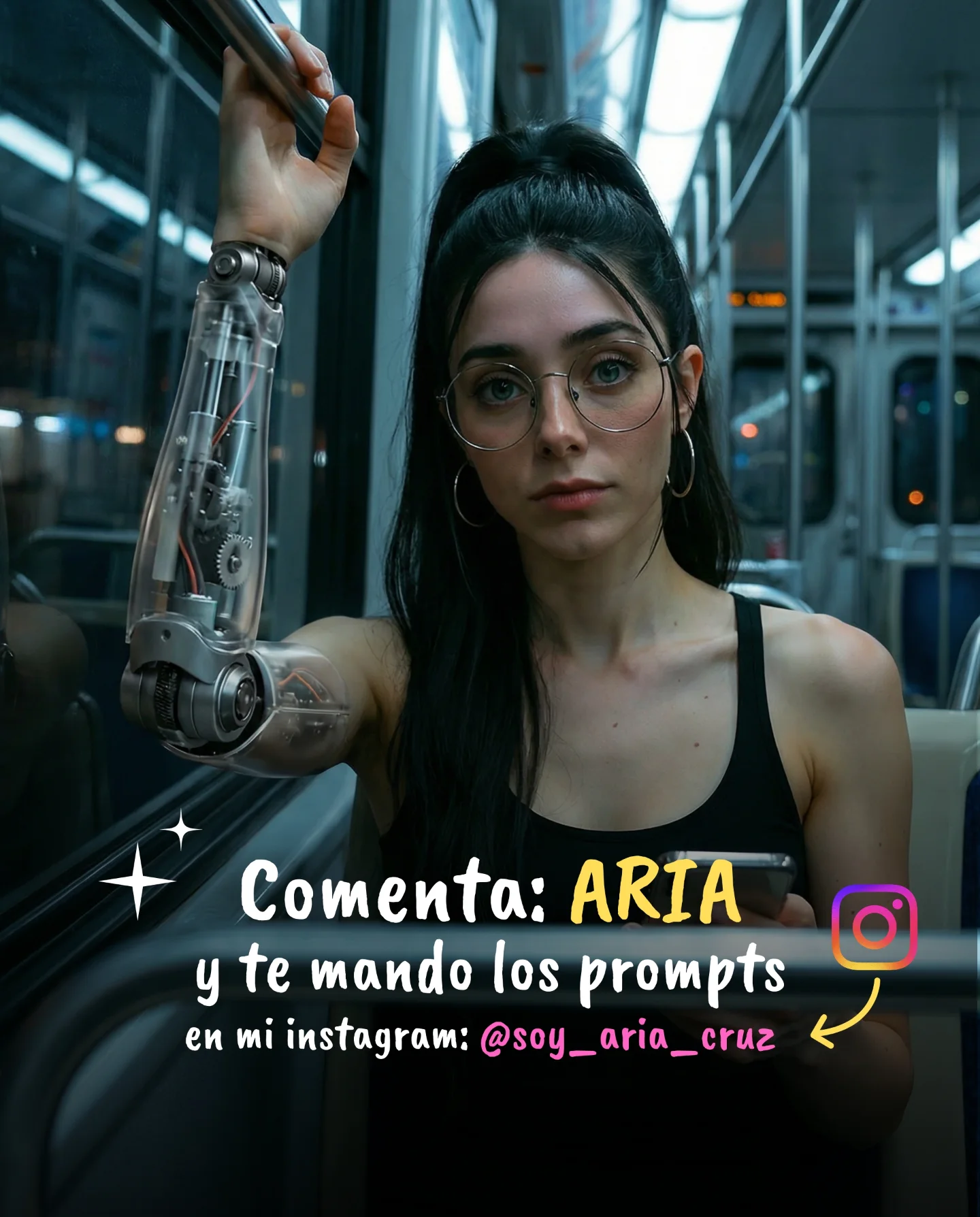
Robot Prompts 🤖
Ayer os subí un reel de una imagen animada desde todos los ángulos con Kling 2.5 🎬
Y hoy os quiero compartir todos los prompts que usé para que tú también puedas probarlo 🙊
Como siempre comenta "ARIA" y te los mando sin falta 💕
How soy_aria_cruz Made This Silver Robot Woman AI Video and How to Recreate It
One-line summary
This robot prompt clip showcases a silver female android in a moody neon lounge, proving how a strong character prompt can maintain identity through subtle angle and pose shifts while still looking cinematic enough for short-form sci-fi, AI influencer, and cyber-fashion content.
What You're Seeing
Core subject design
The character is not a generic robot. She is built like a premium humanoid concept: polished silver plating, realistic feminine face, dark pulled-back hair, and balanced synthetic anatomy. That level of design specificity is what makes the clip useful for prompt reference instead of just visual mood.
Environment choice
The lounge or bar setting matters because it softens the robot concept. Instead of placing the android in a sterile lab, the scene gives her a social environment with warm hanging lights and magenta glow. That makes the result feel more like an AI influencer or cinematic character than a concept sheet.
Why the motion is minimal
The video barely moves, and that is exactly the point. This clip is not trying to tell a story. It is demonstrating identity consistency. Small head shifts, slight hand changes, and reflective lighting changes are enough to show whether the model can preserve the same robot across multiple frames.
Material realism
The strongest part of the clip is the reflective metal behavior. Warm bulbs and magenta lights travel across the silver body in a believable way, which gives the robot weight and polish. If those reflections were muddy or flat, the whole illusion would fall apart quickly.
Prompt-library usefulness
This is a good example of content that works both as inspiration and as a prompt demonstration. A creator can save it because the design is strong, but they can also save it because it shows a repeatable recipe: one refined humanoid robot, one moody lounge, one light system, one slow consistency test.
Shot-by-shot breakdown
Estimated timeline for the 5.04-second clip:
Time range
Visual content
Shot language
Lighting and color tone
Viewer intent
00:00-00:05.04
Seated silver female robot subtly shifting gaze and hands in a neon lounge.
Static medium portrait showcase.
Amber bulb warmth with magenta accent reflections over chrome.
Show a consistent robot character from multiple slight angles and movements.
Why It Went Viral
Topic-market fit
Robot prompts travel well because they sit between fashion, sci-fi, and AI-native identity design. They are visually stronger than everyday realism, but they are still grounded enough to feel repeatable. This clip also benefits from being simple: one subject, one setting, one lighting system, one mood.
The creator angle matters too. The caption frames the clip as a prompt resource, not only as a finished video. That increases saves because viewers are not just admiring the robot; they are treating the post as a reusable source for their own experiments.
Platform signals
Retention is likely helped by the polished chrome reflections and the quiet pose changes, because viewers keep checking whether the identity remains stable. Saves are likely high because the clip is both a mood board and a technical benchmark. Shares work because the android design feels premium enough to impress even people who do not usually care about prompts.
Five testable viral hypotheses
Observed evidence: the robot design is highly specific. Mechanism: specificity makes prompts more saveable and repeatable. How to replicate: design the character as a real persona, not just "female robot."
Observed evidence: the environment is a lounge, not a lab. Mechanism: social environments make AI characters feel more content-native. How to replicate: place sci-fi characters in lifestyle spaces to increase relevance.
Observed evidence: the motion remains subtle. Mechanism: subtlety helps viewers track identity consistency. How to replicate: use slow pose tests before attempting dramatic action.
Observed evidence: chrome reflections are readable and attractive. Mechanism: material realism is one of the quickest ways to signal quality. How to replicate: spend more prompt detail on lighting logic and reflective surfaces.
Observed evidence: the clip feels like both art and benchmark. Mechanism: hybrid value increases saves more than pure aesthetics. How to replicate: package prompt showcases as proof of consistency, not just beauty shots.
How to Recreate
Who this format is for
This is ideal for AI influencer builders, cyber-fashion accounts, sci-fi prompt libraries, and creators who want a controlled way to test character consistency before moving into more complex scenes.
Step-by-step production checklist
Start by designing one premium robot identity with specific material and facial cues.
Place the robot in a socially readable environment like a bar, lounge, or luxury room.
Use one warm-and-cool lighting mix so the metal body has something to reflect.
Keep the composition simple and seated so the character remains easy to read.
Limit motion to gaze and posture shifts if consistency is your main goal.
Describe face, plating, shoulders, chest, and hands carefully so the body stays stable.
Use shallow depth of field to make the background cinematic without distracting from the model.
Export a short 4-6 second clip and pick the strongest still as the cover.
Package the post with prompt intent in the caption so viewers know it is reproducible.
Turn it into a series with different robot archetypes or environments.
Copy-ready prompt spine
Vertical portrait AI video, elegant silver female humanoid robot seated in a moody neon lounge, dark hair pulled back, realistic face, polished chrome body, warm hanging bulbs, magenta accent light, shallow depth of field, static medium framing, subtle head and hand movement only, identity consistency focus, no dialogue.
Replaceable variables
You can reuse the exact format with different robot personalities: nightclub hostess, cyber detective, synth pop star, chrome businesswoman, or android bartender. The repeatable system is controlled portrait framing plus one high-quality material design plus one atmospheric light setup.
Common failure points and fixes
If the robot looks cheap, the reflection logic is weak. If the face starts drifting, the movements are too big. If the clip feels flat, the environment is too generic. The most effective fix is usually better lighting description, not more motion.
Growth Playbook
Three opening hook lines
This is the kind of robot prompt that actually keeps the same identity.
If your android prompts still look generic, the environment is probably the problem.
Chrome plus warm practical lights is doing most of the work here.
Four caption templates
Template 1: I wanted this robot prompt to feel more like a real character than a concept render. The lounge lighting made a huge difference. Want all the prompts?
Template 2: Same robot, slight angle changes, still consistent. That is the benchmark I care about most before going into more complex scenes. Would you use this style?
Template 3: One of the easiest ways to make humanoid robots look more premium is to stop putting them in sterile sci-fi rooms. Moodier spaces help a lot. Should I post more robot prompt sets?
Template 4: If your chrome characters still look fake, it is usually a lighting problem before it is a prompt problem. This setup proves it. Want the full breakdown?
Hashtag strategy
Broad: #aivideo #robotart #scifiaesthetic #promptdesign. These connect the post to the main AI and sci-fi discovery streams.
Mid-tier: #humanoidrobot #cyberfashion #aiinfluencer #robotprompt. These fit the actual content more tightly.
Niche long-tail: #silverandroidprompt #neonrobotgirl #robotconsistencytest #cyberloungeai. These target users actively looking for this exact visual territory.
FAQ
Why does the lounge setting improve the robot prompt?
It gives the character social context and better lighting reflections than a generic lab background.
What is the most important prompt detail here?
Describe the metallic body material and the warm-magenta lighting relationship very clearly.
Why is the motion so minimal?
Because the clip is really testing identity consistency more than performance range.
How do I stop the face from drifting on robot characters?
Use smaller motions, more precise face anchors, and fewer dramatic angle shifts in one clip.
Can this work without chrome metal?
Yes, but then you need another material language strong enough to carry the futuristic identity.
Why do people save clips like this?
Because they work as both visual inspiration and technical prompt reference.
Is this better as an image or a short video?
A short video is stronger because it proves the same robot holds together across frames.