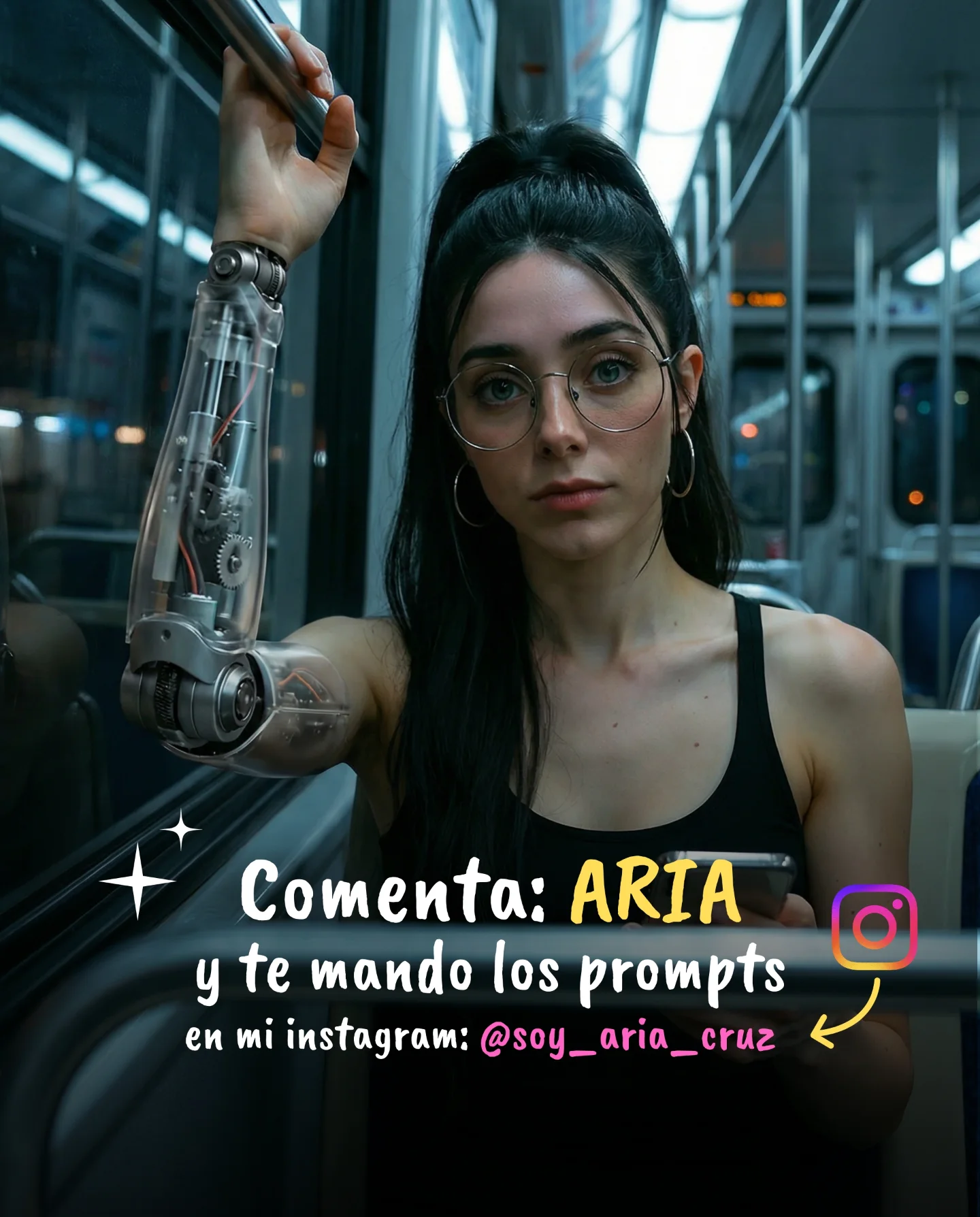
Robot Prompts 🤖 Ayer os subí un reel de una imagen animada desde todos los ángulos con Kling 2.5 🎬 Y hoy os quiero compartir todos los prompts que usé para que tú también puedas probarlo 🙊 Como siempre comenta "ARIA" y te los mando sin falta 💕
Robot Prompts 🤖 Ayer os subí un reel de una imagen animada desde todos los ángulos con Kling 2.5 🎬 Y hoy os quiero compartir todos los prompts que usé para que tú también puedas probarlo 🙊 Como siempre comenta "ARIA" y te los mando sin falta 💕
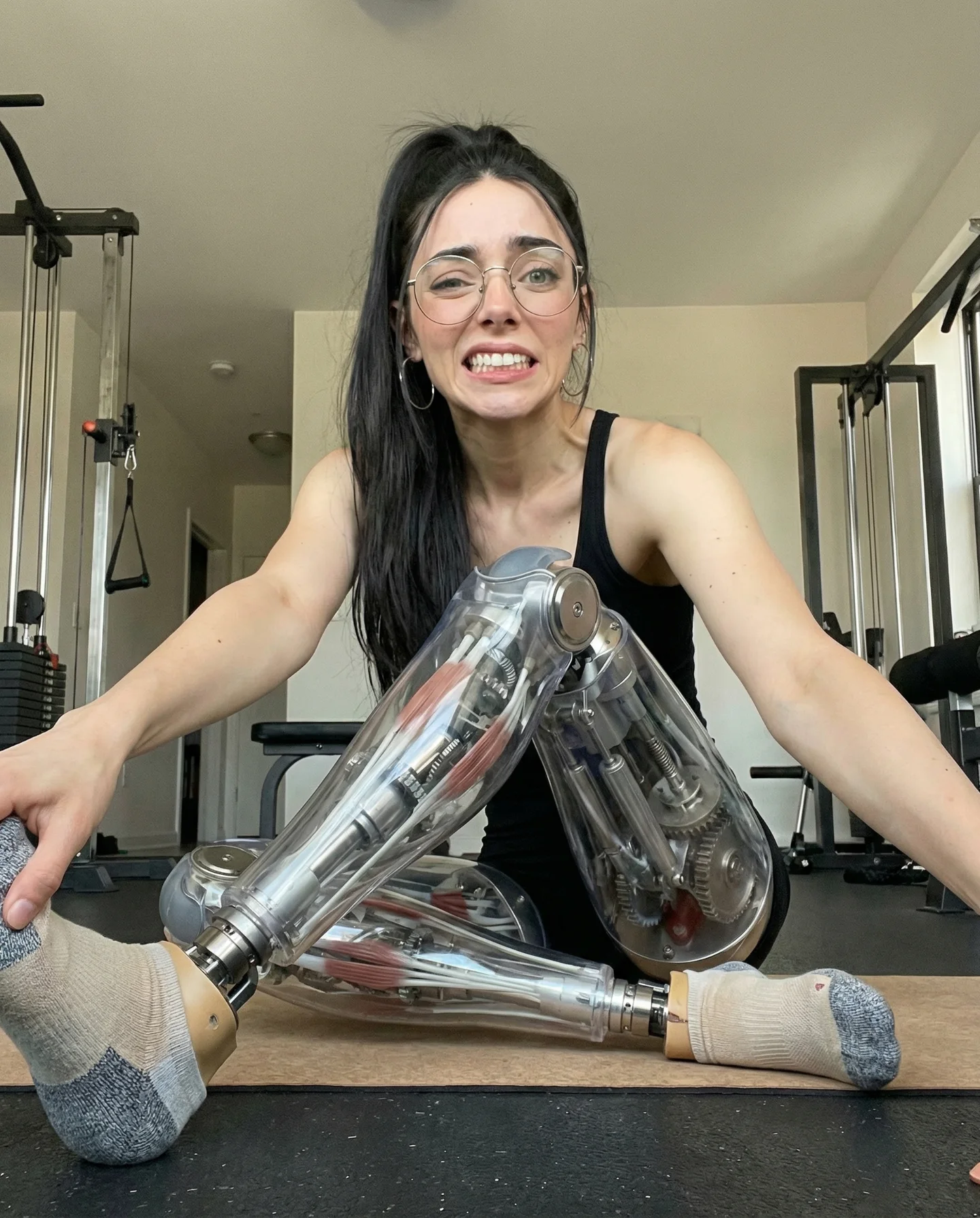
The success of this post comes from tone control. The robotic legs are visually sophisticated, but the expression is not cool or cinematic. It is awkward, funny, and human. That choice changes the entire reading of the image. Instead of presenting futuristic machinery as distant or intimidating, the post turns it into a relatable gym struggle. The audience is not only looking at a robot concept. They are recognizing the universal feeling of a painful stretch and laughing at the mash-up.
That is a useful growth lesson for AI creators. Novelty alone is rarely enough anymore. The strongest images combine novelty with a familiar social format. Here the format is basically a fitness selfie: floor angle, home gym, effort face, straddle stretch. The robot legs are the twist, but the post still speaks the visual language people already know from wellness and lifestyle content.
| Signal | Evidence (from this image) | Mechanism | Replication Action |
|---|---|---|---|
| Relatable format | It looks like a normal stretching selfie in a gym | Familiar framing lowers friction and helps viewers understand the joke instantly | Start from a recognizable social-media situation before adding the surreal element |
| Strong contrast twist | Human upper body paired with transparent mechanical legs | The contradiction is sharp, clear, and memorable | Keep one body zone fully normal and transform one body zone dramatically |
| Expressive emotion | The strained grin sells effort and discomfort | Facial expression turns the image into a story rather than a static render | Lock the facial emotion early instead of treating expression as an afterthought |
This approach fits creators working in AI humor, futuristic lifestyle, robotic fashion, or “what if everyday life changed” storytelling. The structure is especially useful when you want advanced visual design without losing social warmth. You can swap the gym for a kitchen, office desk, dance studio, or yoga room and still keep the same core device: ordinary routine plus one impossible upgrade.
It is less effective for hard sci-fi worldbuilding, because the home-gym realism makes the image feel like social satire rather than cinematic lore. It is also not ideal for luxury aesthetics, since the awkward facial expression is doing intentional anti-glamour work. If you remove the humor, the frame will need stronger lighting, wardrobe, and scene design to compensate.
The image borrows from the internet-native “front camera struggle shot.” The low lens, stretched limbs, close face, and imperfect expression all feel native to short-form content. Even the transparency of the robotic shells helps, because it keeps the mechanics legible without making the design too heavy. That clarity matters. Viewers do not have to study the picture to understand the upgrade. They get it immediately, then stay for the details inside the limbs.
| Prompt chunk | What it controls | Swap ideas (EN, 2-3 options) |
|---|---|---|
| wide straddle stretch on a gym mat | Body geometry and instant context | wall sit pose; yoga pigeon stretch; seated toe-touch |
| transparent robotic legs with visible mechanics | Main futuristic hook | carbon-fiber prosthetics; chrome skeletal legs; translucent bio-mech limbs |
| awkward strained smile | Comedy level and personality | determined grimace; laughing expression; mock-serious fitness face |
| home gym with cable machines | Relatability and environment credibility | pilates studio; garage gym; apartment workout corner |
Baseline lock first: low floor camera angle, the split pose, and transparent mechanics inside the legs. Those three define the post. Then use a one-change rule. Run one should fix anatomy and foot placement. Run two should refine the internal pistons and gears so the legs read as engineered objects, not plastic toys. Run three should simplify the room until the subject remains dominant. Run four should tune emotional tone by changing only the face, from funny pain to confident flex, depending on whether you want humor or a cleaner future-athlete vibe.