How soy_aria_cruz Made This Soul 2 Nano Banana Face Comparison Image and How to Recreate It
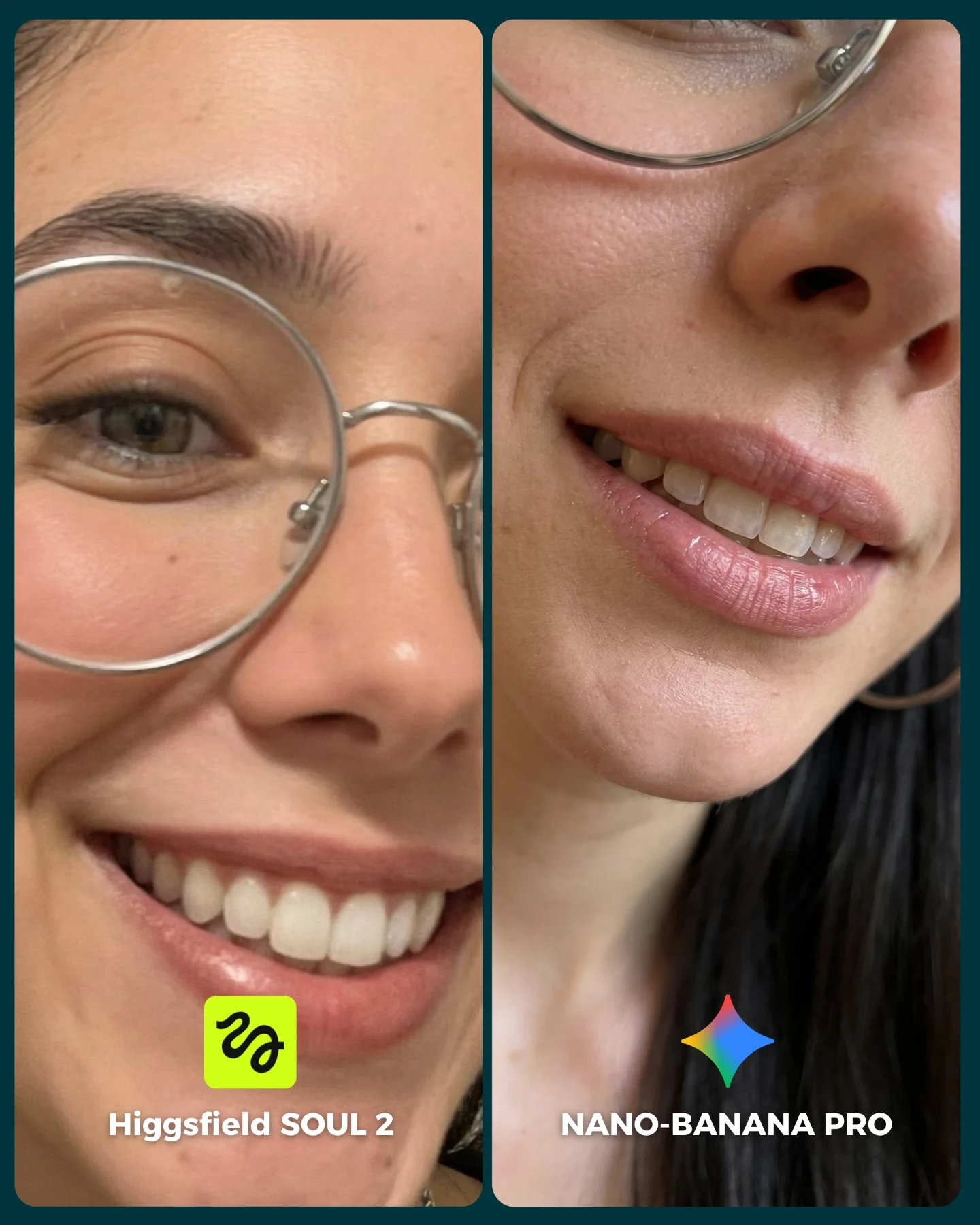
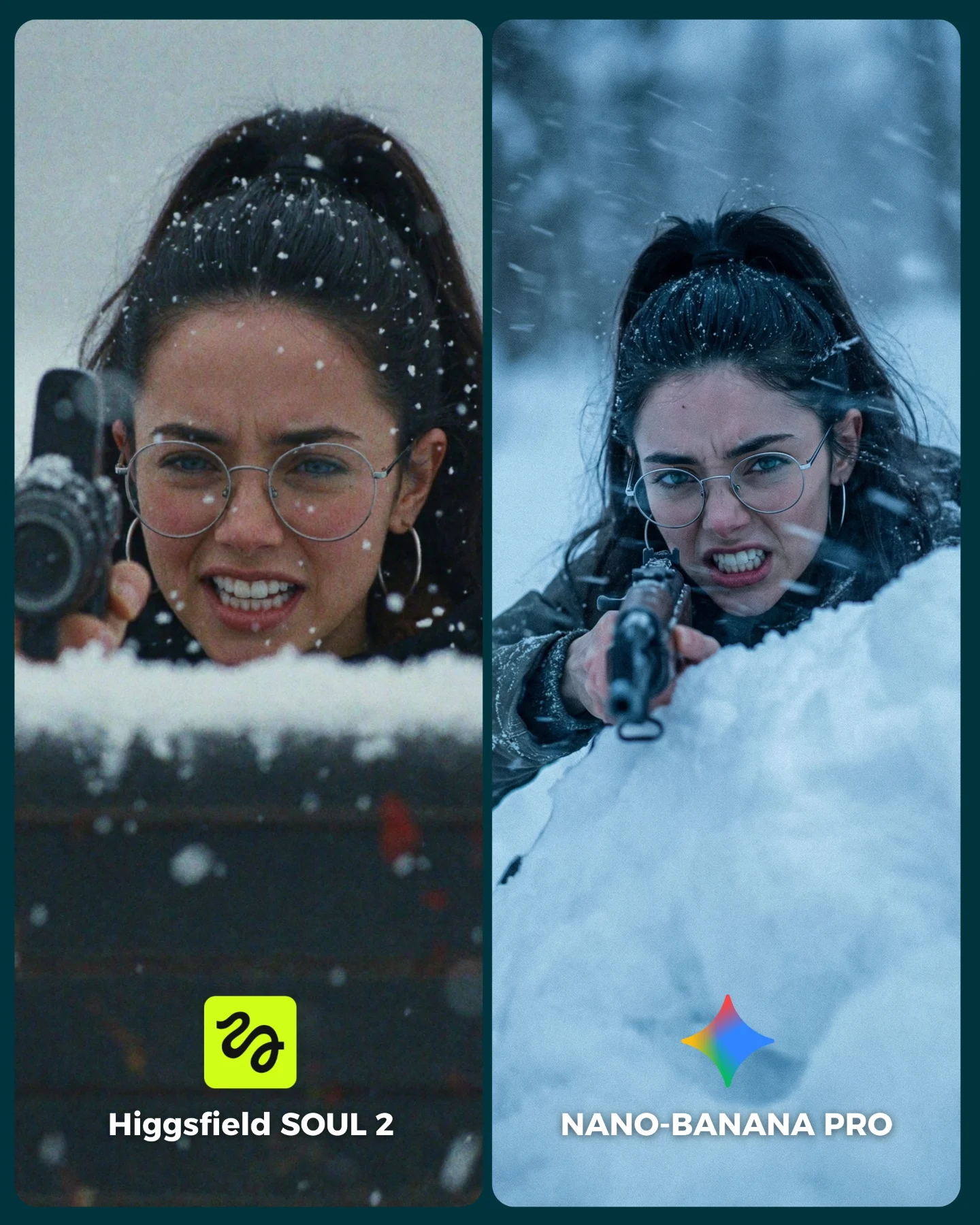
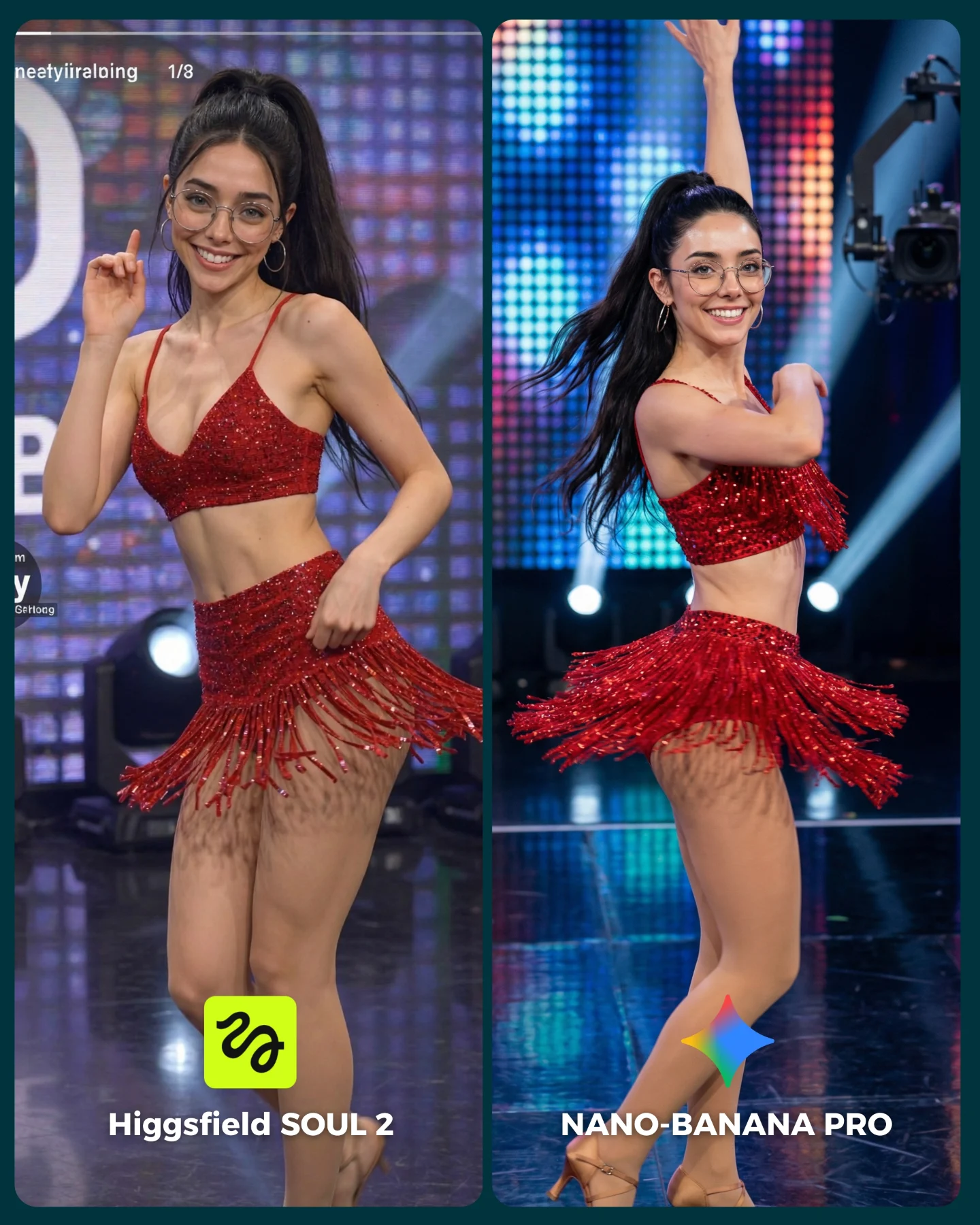
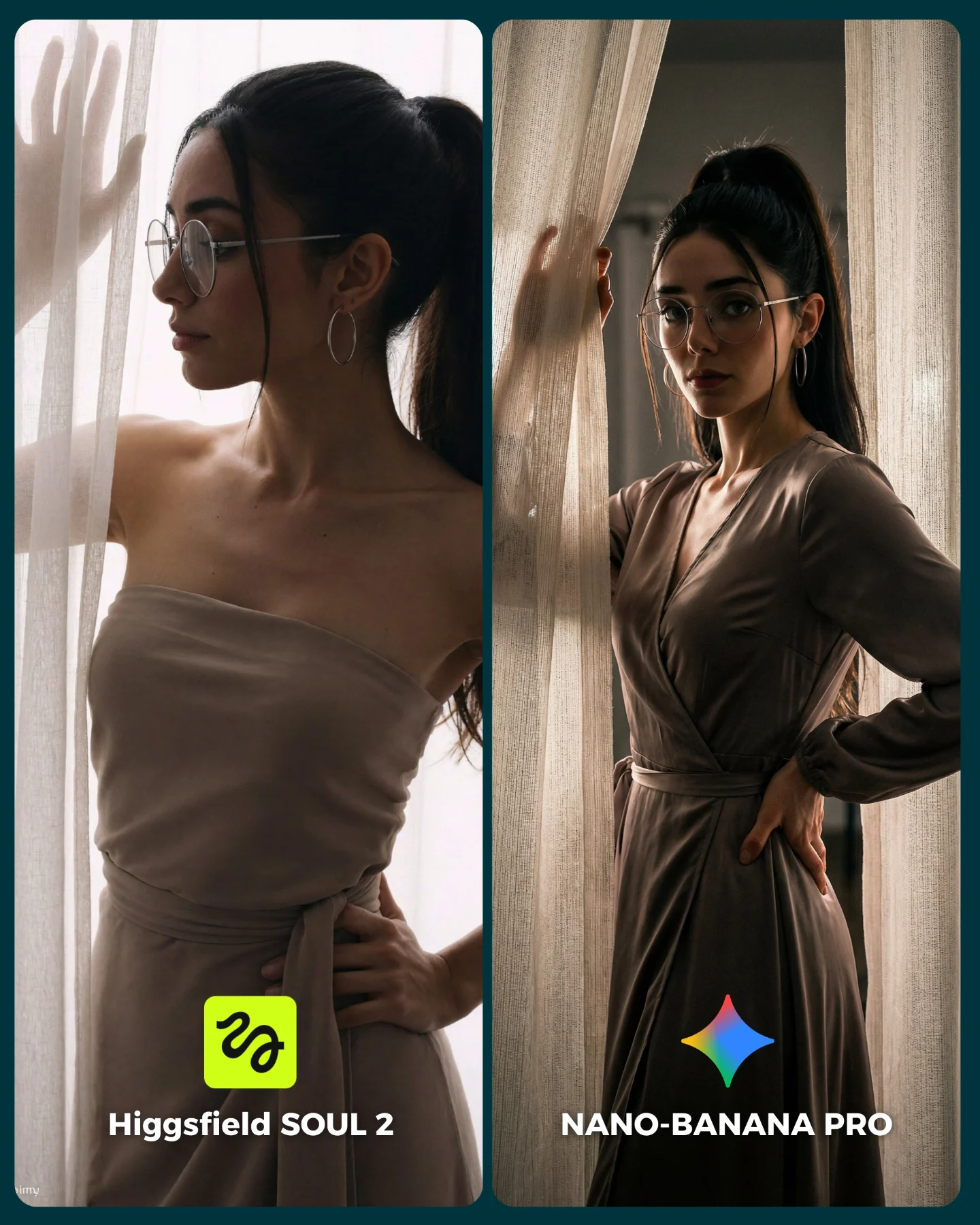
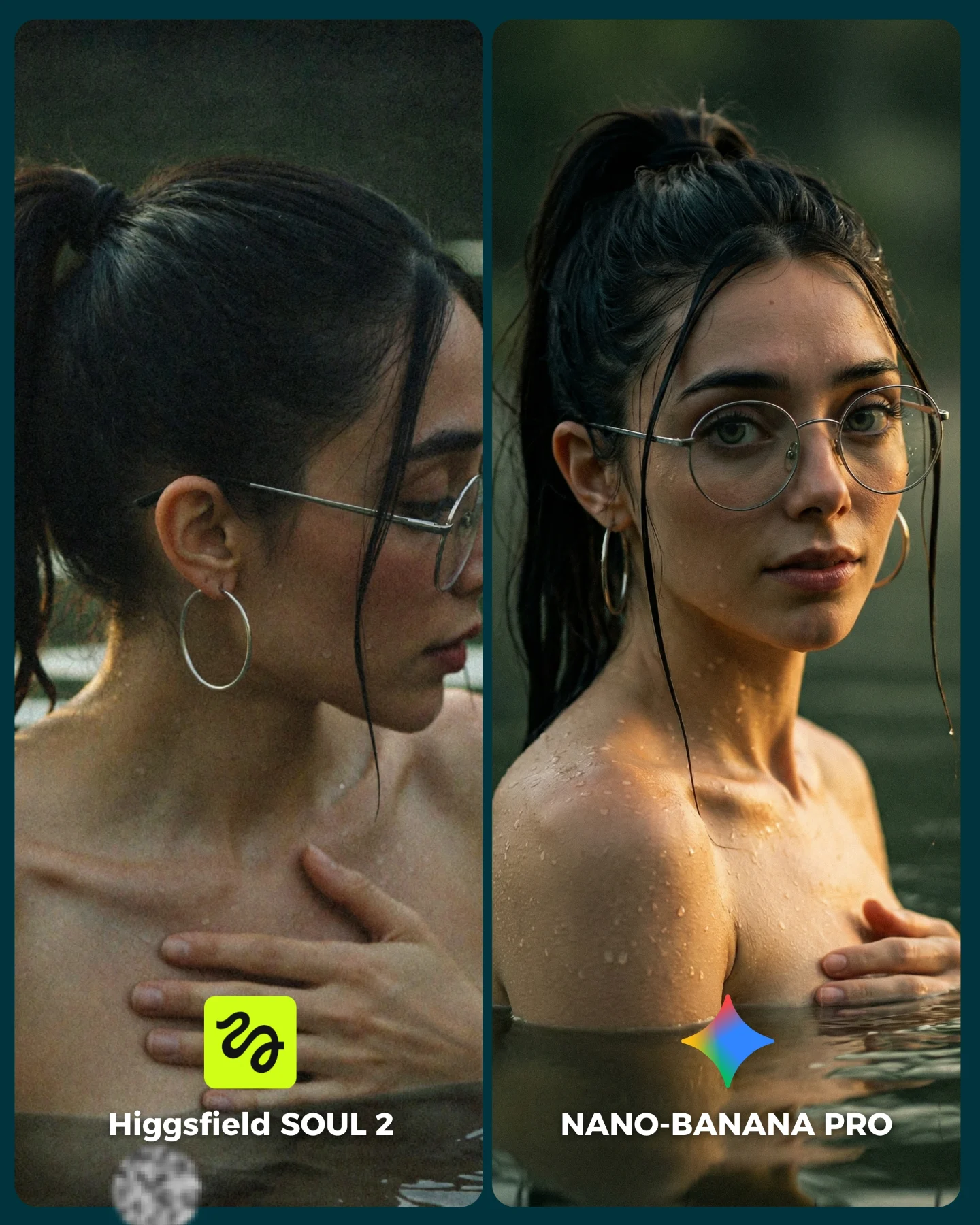
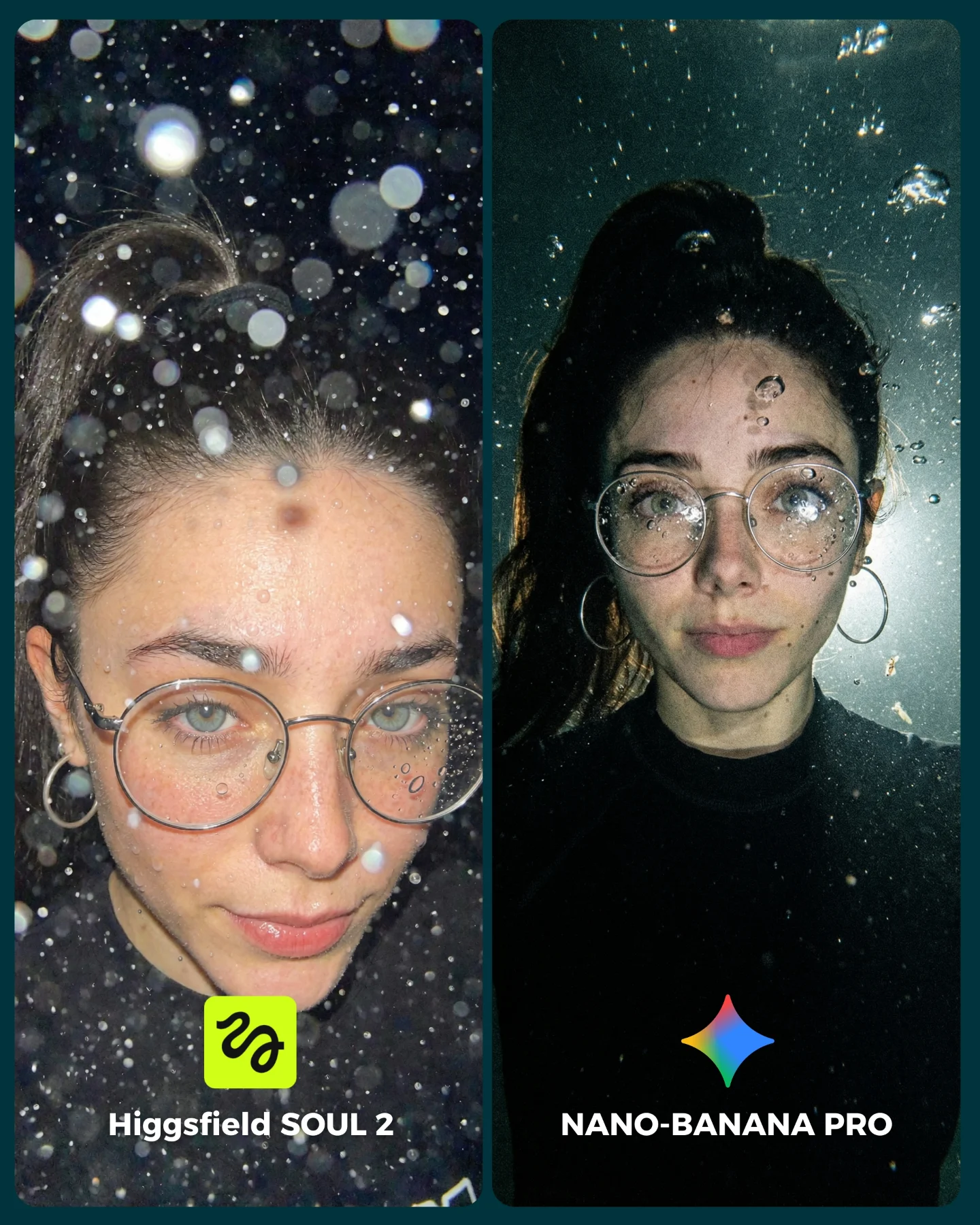
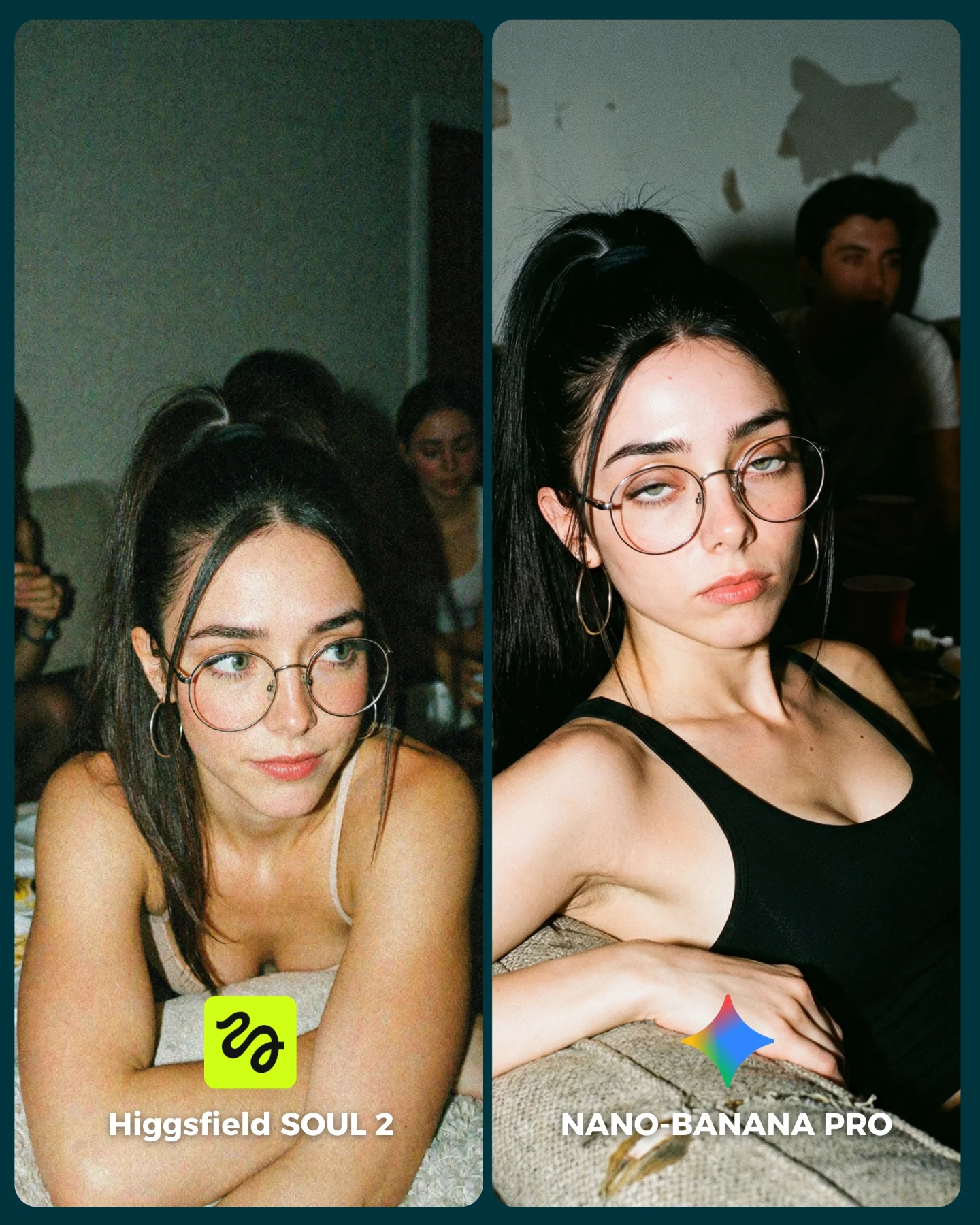
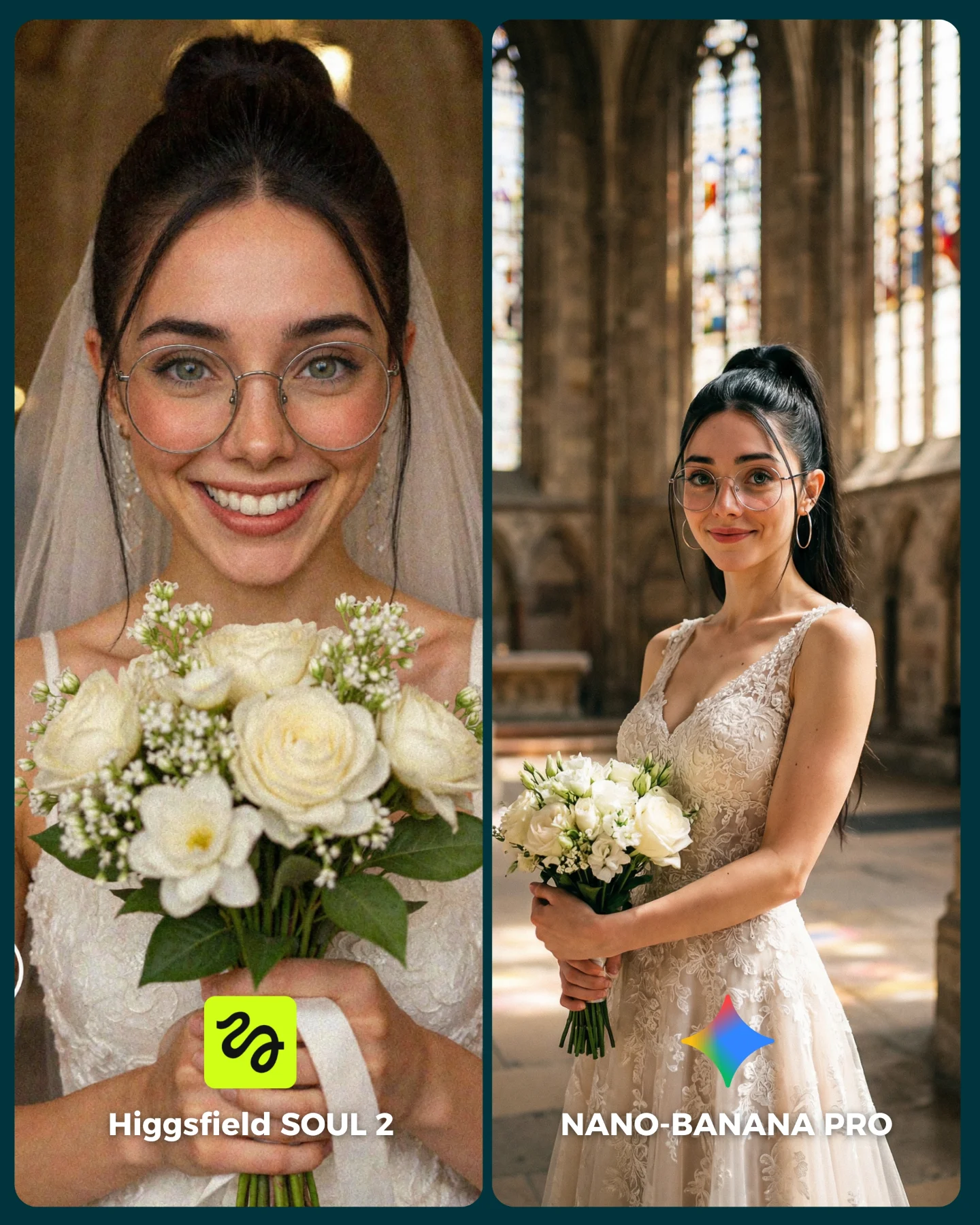
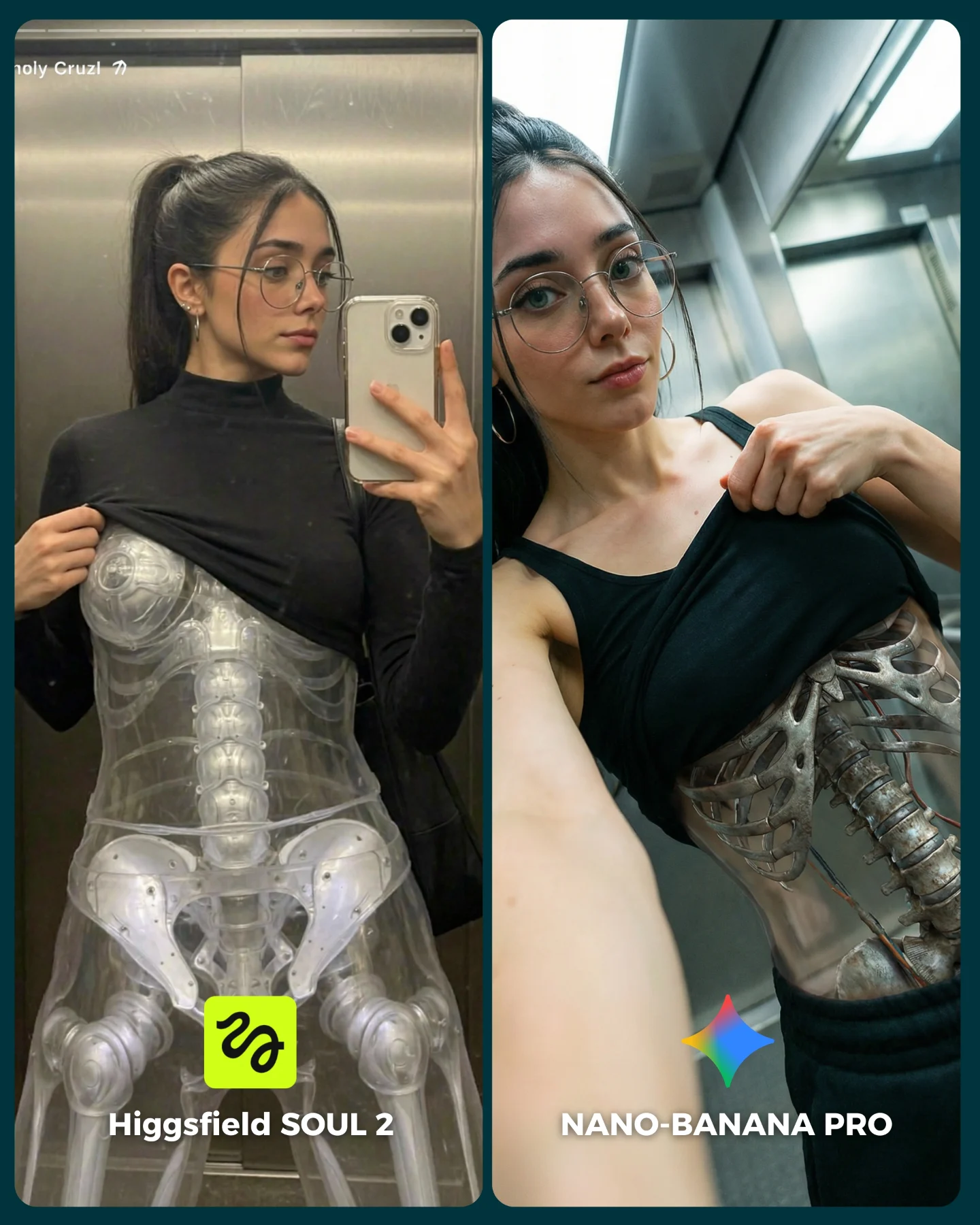
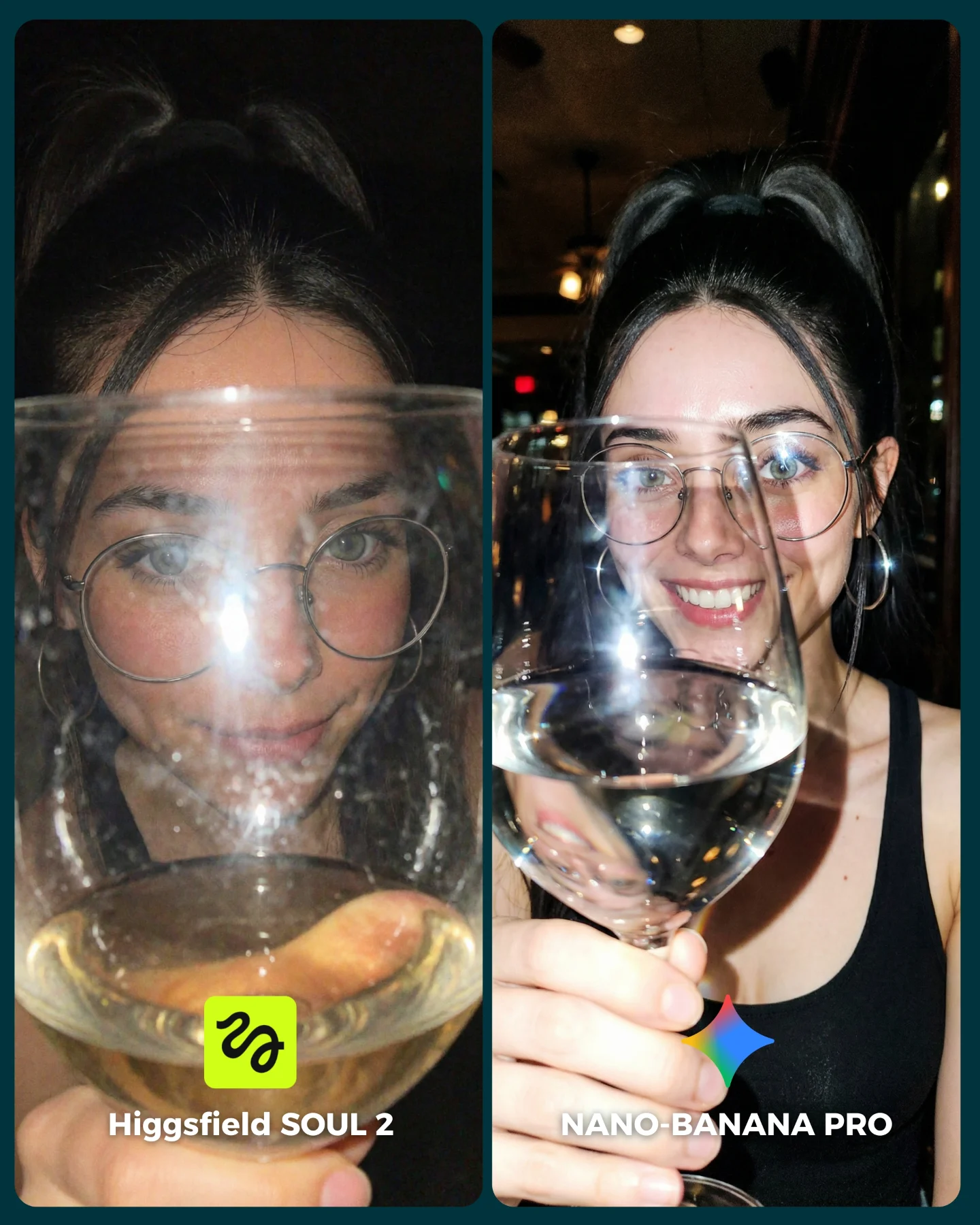
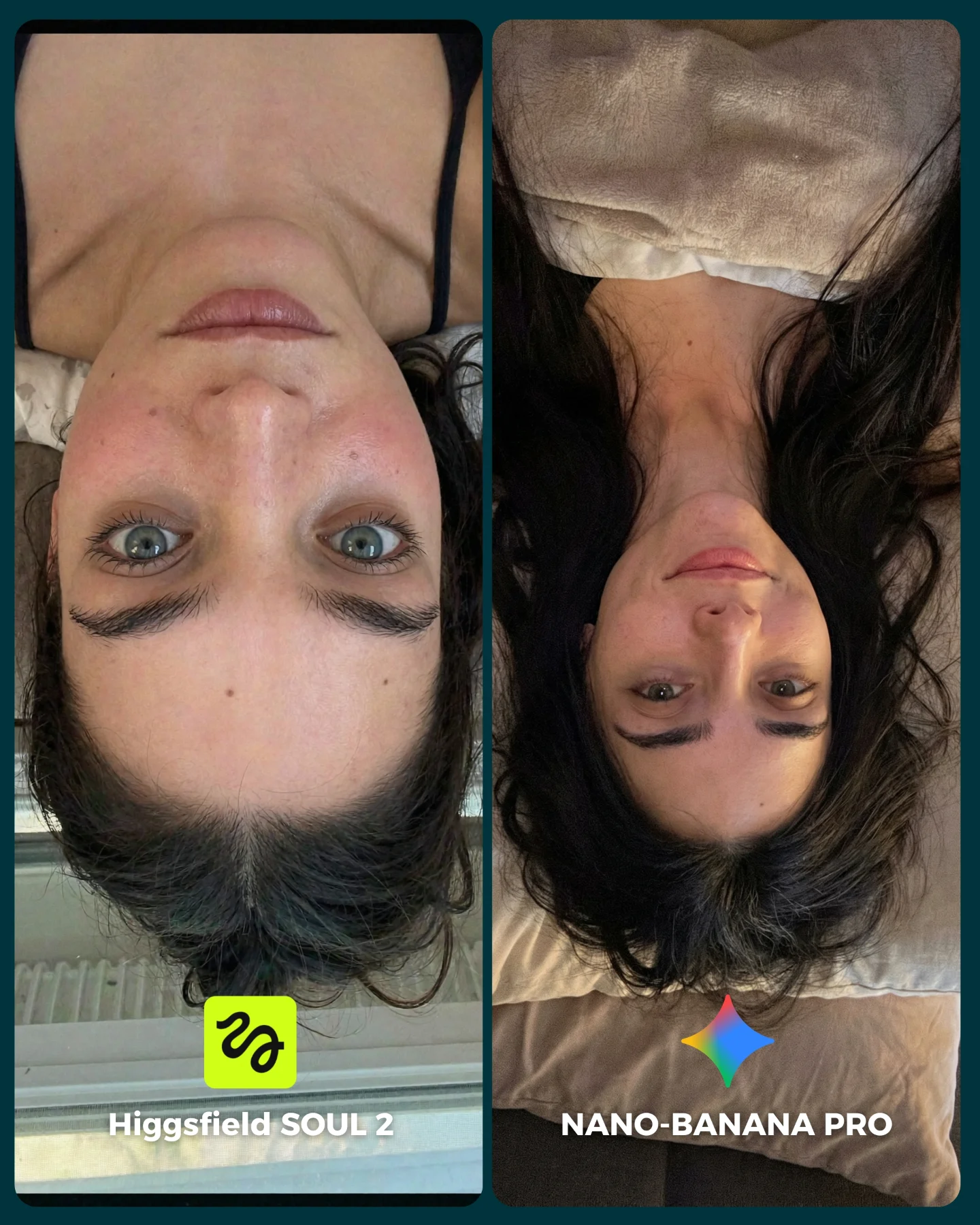
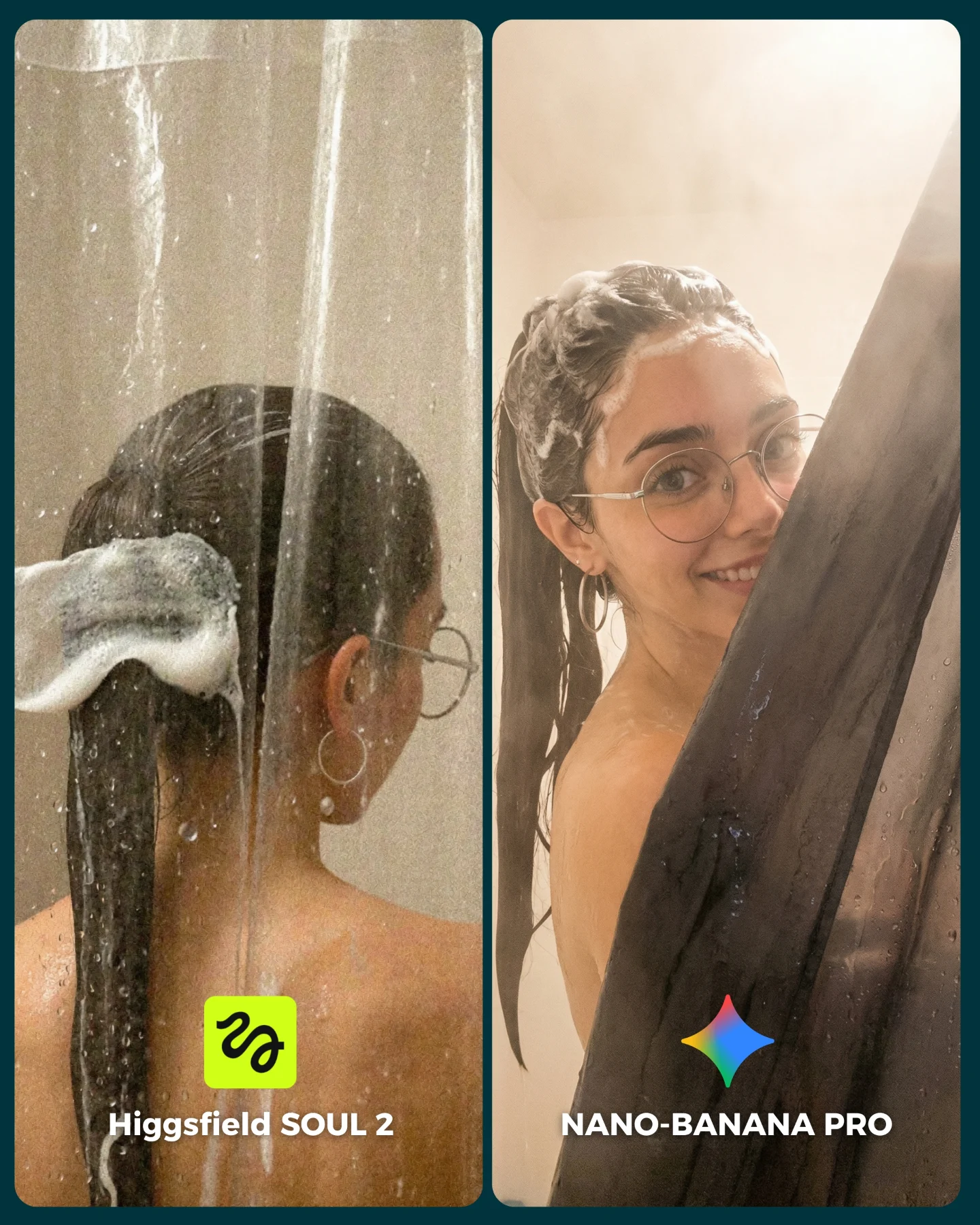
This image is one of the most revealing benchmark formats in the entire set because it removes nearly every easy distraction. There is no costume to admire, no interesting location, no dramatic lighting trick, no movement to excuse weak rendering. There is only face. At this distance, the model has to prove it understands teeth, lips, pores, skin transitions, glasses reflections, smile anatomy, and facial proportion under a brutally close crop. That is a serious test.
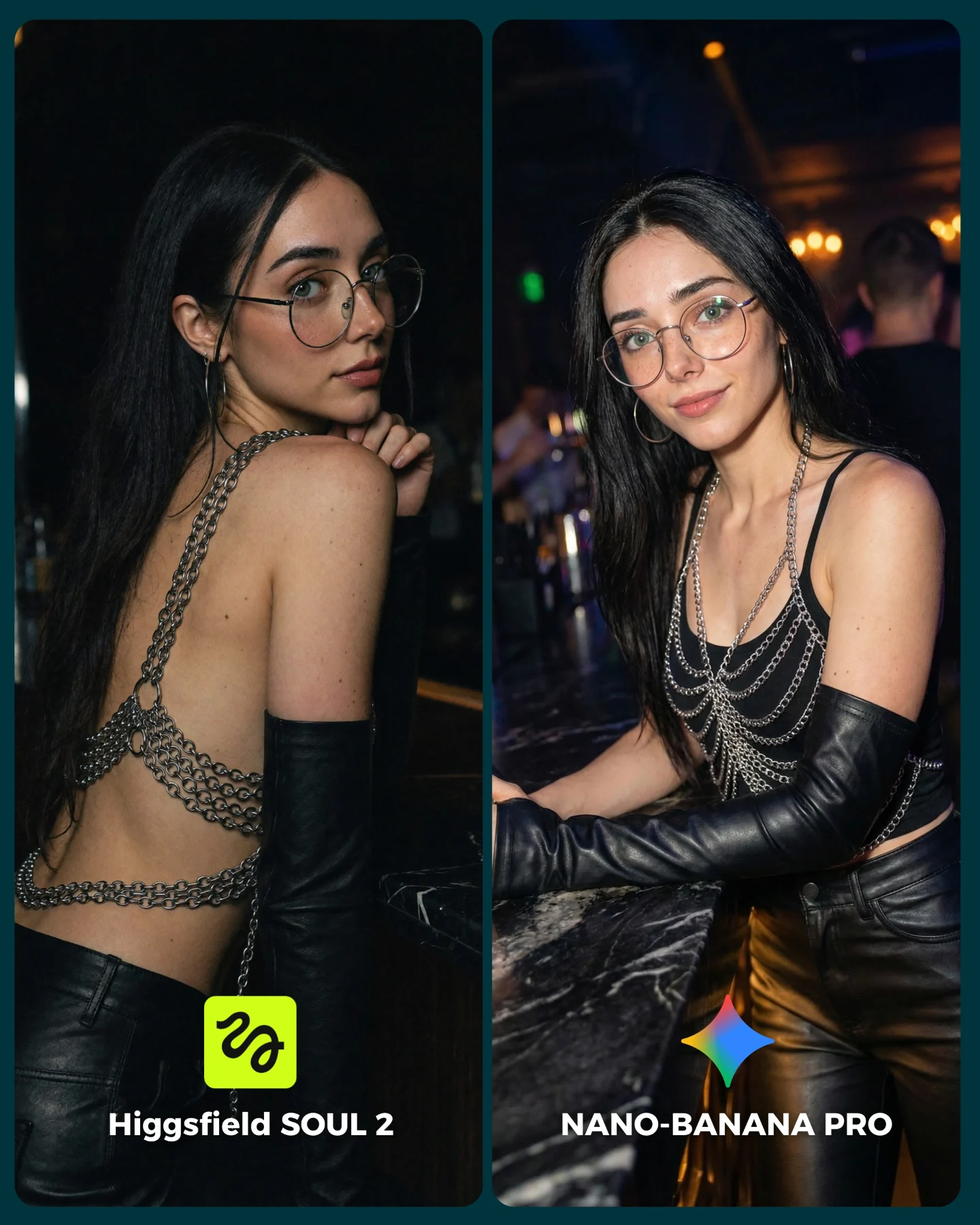
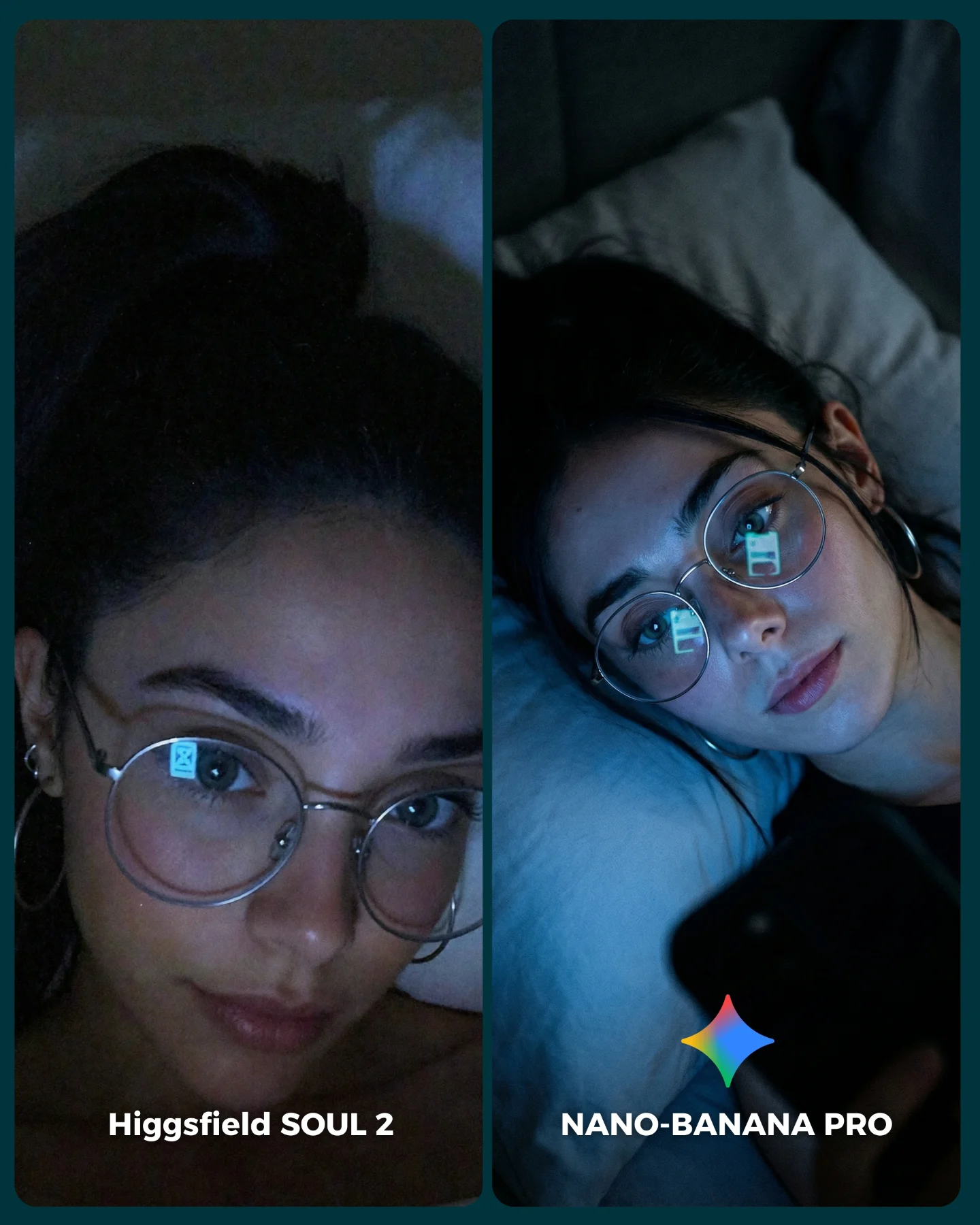
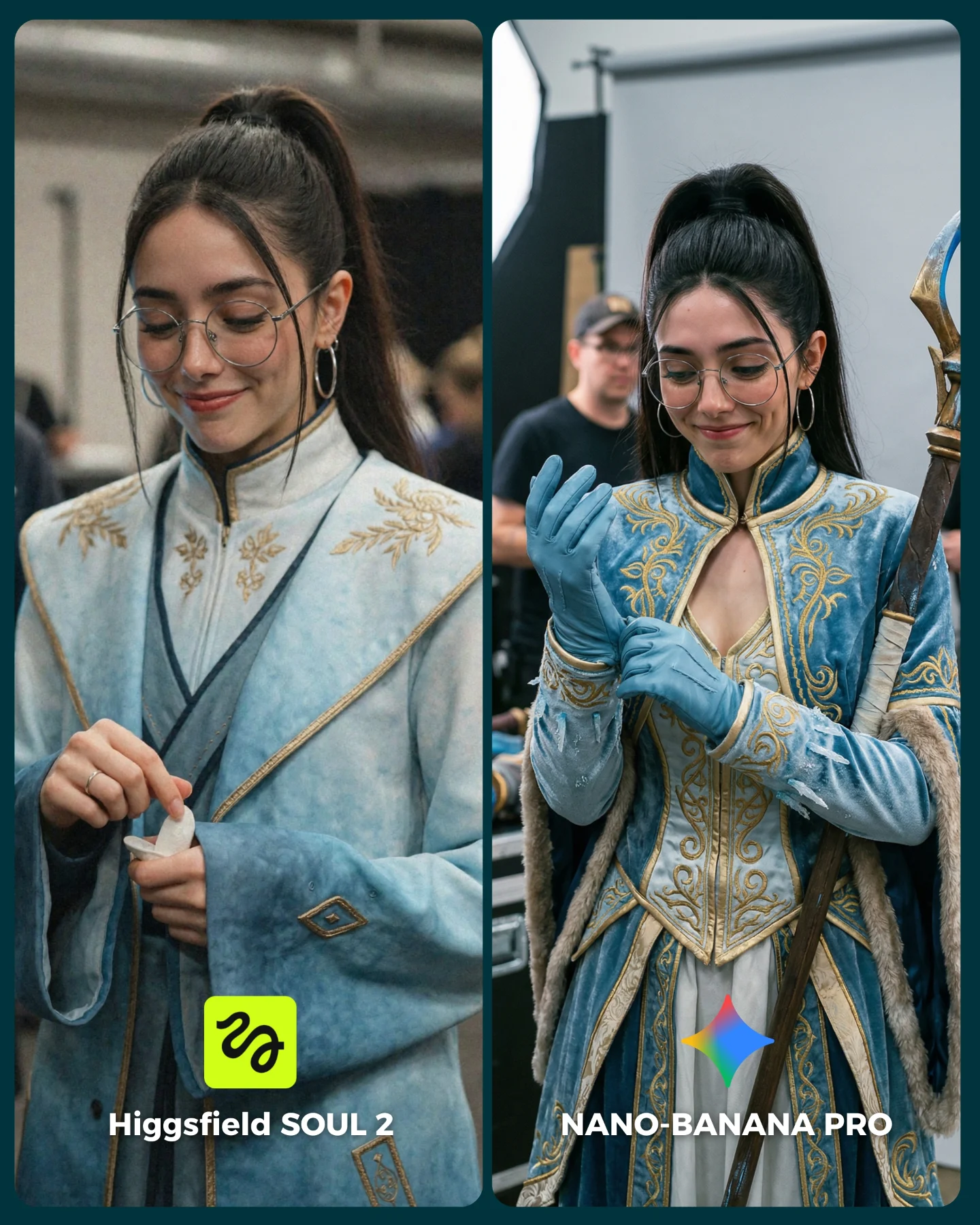
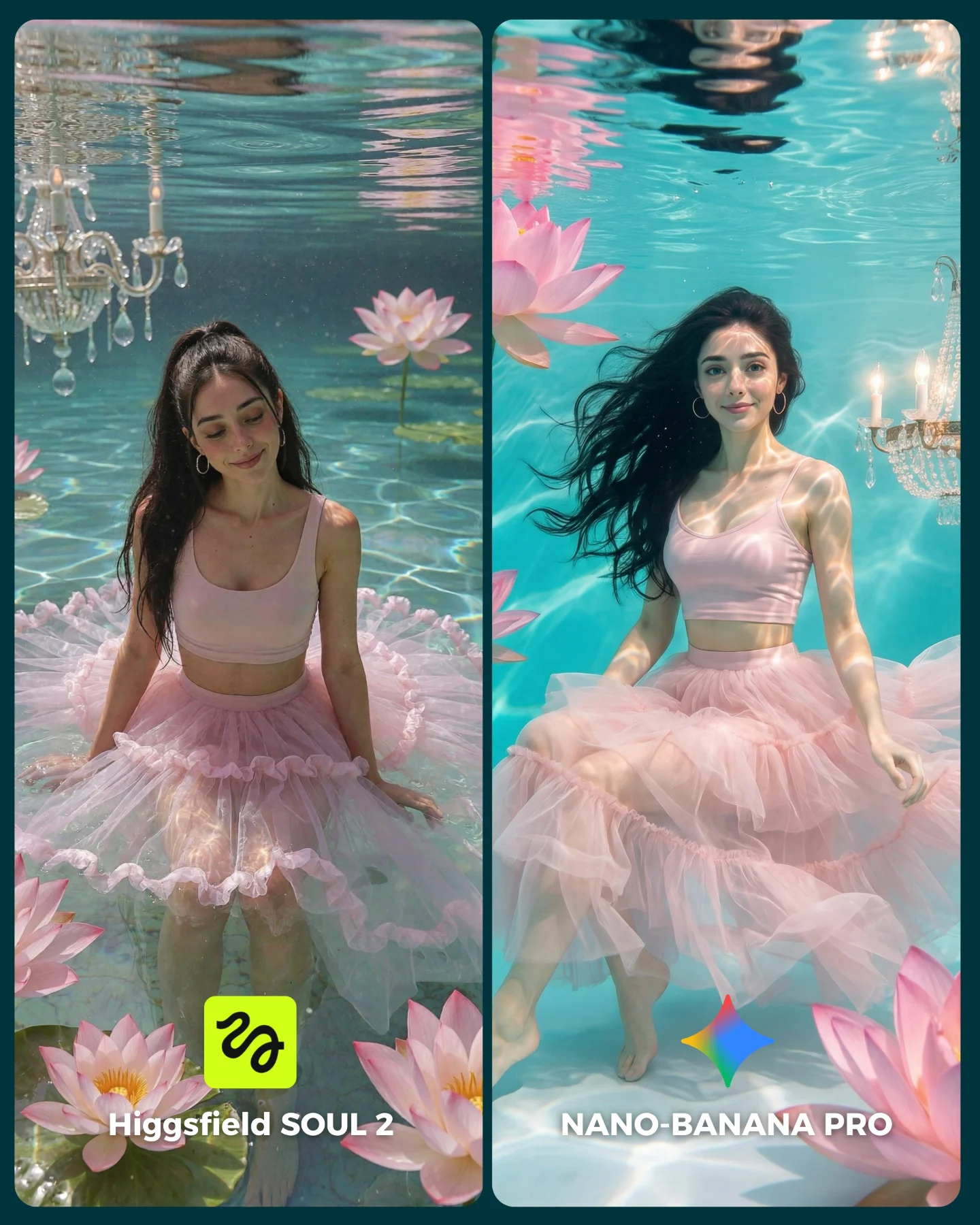
The caption frames this post as a SOUL 2 versus Nano Banana Pro comparison, and this kind of crop is exactly where the differences become impossible to ignore. A full portrait can hide problems under styling. An extreme crop cannot. If the mouth shape is odd, the viewer sees it instantly. If skin gets too smooth, the image looks fake immediately. If the glasses sit unnaturally on the face, the whole render loses trust. That is why this comparison has such high diagnostic value.
Why the Benchmark Feels So Honest
The strongest thing here is that the image is almost rude in its closeness. It forces viewers to examine the small mechanics of realism rather than reacting to broader aesthetics. That is good benchmark design. The tighter the crop, the less room the model has to distract you with cinematic atmosphere.
The second reason it works is that smiling is harder than people think. Teeth are one of the fastest ways for AI images to fail. So are lip edges and the tiny shadow transitions around the nose and mouth. By pushing the crop this close and keeping a smile in frame, the creator turns the comparison into a focused realism audit.
| Signal | Evidence (from this image) | Mechanism | Replication Action |
|---|
| Micro-detail stress test | The crop shows skin, lips, teeth, nose, brow, and glasses at near-macro scale. | Weak renderers cannot hide poor anatomy or texture handling at this distance. | Use extreme crops when you want to evaluate realism rather than composition. |
| Smile realism challenge | Both panels include visible teeth and lip tension. | Teeth and smiles expose unnatural generation faster than neutral closed-mouth portraits. | Include mouth detail in benchmark shots instead of relying only on eyes. |
| Fair identity comparison | Same glasses, same brow shape, same overall face identity across both sides. | The audience can focus on rendering quality, not on whether the model changed the person. | Lock several stable facial anchors before comparing models in close-up tests. |
What Viewers Are Actually Noticing
Most viewers will say one side simply feels “more real,” but that reaction is built from many tiny agreements. Are the teeth shaped naturally? Does the lip color sit like real skin rather than paint? Does the cheek transition into the nose smoothly? Does the glasses rim reflect light in a believable way? In extreme close-ups, realism is cumulative. Many small correct decisions create trust. One or two wrong ones break it fast.
That is why this comparison matters for creators. It teaches a higher standard of evaluation. Instead of judging only style, it trains the eye to look at evidence: micro-texture, edge control, anatomy, and material behavior. That is much closer to how real photographic quality works.
Where This Format Fits Best
This format is ideal for realism benchmarking, prompt education, face-consistency testing, and AI influencer pages trying to prove that a character can survive close inspection. It is especially useful for creators who want to compare image models beyond “which one is prettier?” and move toward “which one is actually more believable?”
- Face realism benchmarks: perfect fit because extreme crops reveal weak rendering immediately.
- Prompt tutorials about identity locking: strong fit because viewers can see exactly which facial anchors stayed consistent.
- AI model comparisons: useful when the goal is to judge micro-quality rather than cinematic styling.
- Creator trust-building content: effective because it shows the benchmark is not hiding behind wide shots.
It is less suited to storytelling or emotional immersion. This is a forensic comparison format, not a narrative one.
Three Transfer Recipes
| Transfer | Keep | Change | Slot Template (EN) |
|---|
| Eye-area benchmark version | Same identity anchors, extreme crop, realism-first comparison. | Focus on eye, lashes, brow, and glasses reflections instead of the mouth zone. | {two-panel macro benchmark} {same face anchors} {eye-detail realism test} {model comparison} |
| Male portrait skin test version | Ultra-close crop, fair side-by-side structure, micro-detail focus. | Swap to beard stubble, pores, and jawline texture as the realism challenge. | {extreme face crop diptych} {same identity} {skin-and-hair realism test} {left-right benchmark} |
| Makeup realism version | Close crop discipline and identity control. | Add subtle eyeliner, blush, and lip finish to test cosmetic texture without changing the structure. | {macro portrait comparison} {same woman identity} {subtle makeup realism challenge} {clear benchmark labels} |
Aesthetic Read
The image is visually effective because it is almost abstract in its intimacy. Curves of cheeks, lip lines, teeth, and metal rims become the composition. This makes the viewer judge form more than scene. The palette stays narrow: skin tones, soft pink lips, dark hair, silver glasses. That narrow palette is exactly what allows realism differences to become noticeable.
The glasses are particularly useful as a benchmark object because metal edges need to stay sharp without looking cut out. They also give scale to the face. At this crop, even slight distortion in the glasses can make the entire portrait feel wrong. That is why they are more than an accessory here. They are a realism instrument.
| Observed | Recreate |
|---|
| Visible smile and tooth structure under extreme crop | Use a close-up that includes the mouth if you want to test realism thoroughly. |
| Round metal glasses cutting across the frame | Include one rigid object on the face to test edge handling and reflection behavior. |
| Natural lip tone and soft skin transitions | Avoid over-stylized makeup if the goal is realism benchmarking. |
| Near-backgroundless framing | Strip away scene complexity so the viewer is forced to judge the face itself. |
Prompt Technique Breakdown
When building a benchmark like this, treat the face like an engineering object. Every small feature matters.
| Prompt chunk | What it controls | Swap ideas (EN, 2–3 options) |
|---|
| same woman with round glasses, brows, smile, pink lips | Locks identity across both comparison panels. | same freckles and smile line; same lashes and brow arch; same nose bridge and lip shape |
| extreme close-up facial crop | Creates the realism stress test by removing scene distractions. | macro eye crop; mouth-and-cheek crop; cheekbone-and-lip crop |
| teeth and lips visible in frame | Raises the realism difficulty level significantly. | closed-mouth neutral test; half-smile test; speaking-mouth realism test |
| left slightly flatter, right more photoreal | Defines the comparison axis without changing the identity. | left more processed right more grounded; left smoother right more textured; left synthetic right lifelike |
| two-panel labeled benchmark card | Makes the result readable on social and easy to discuss. | model A/B macro card; side-by-side realism diptych; close-up benchmark layout |
Remix Steps
Start by locking the same face identity and the same smile family. Then freeze the crop depth. Only after those are stable should you change the generator.
- Run 1: lock glasses shape, brow shape, lip tone, and overall identity across both sides.
- Run 2: hold the crop extremely tight so the test stays focused on micro-detail.
- Run 3: vary only the model or rendering pipeline to expose realism differences in skin, teeth, and edge control.
- Run 4: add labels and tiny brand markers so the benchmark can circulate cleanly on social.
The larger insight is simple: if a model survives this kind of face crop, it earns trust. Extreme close-ups are one of the most efficient ways to separate attractive-looking outputs from genuinely convincing ones.