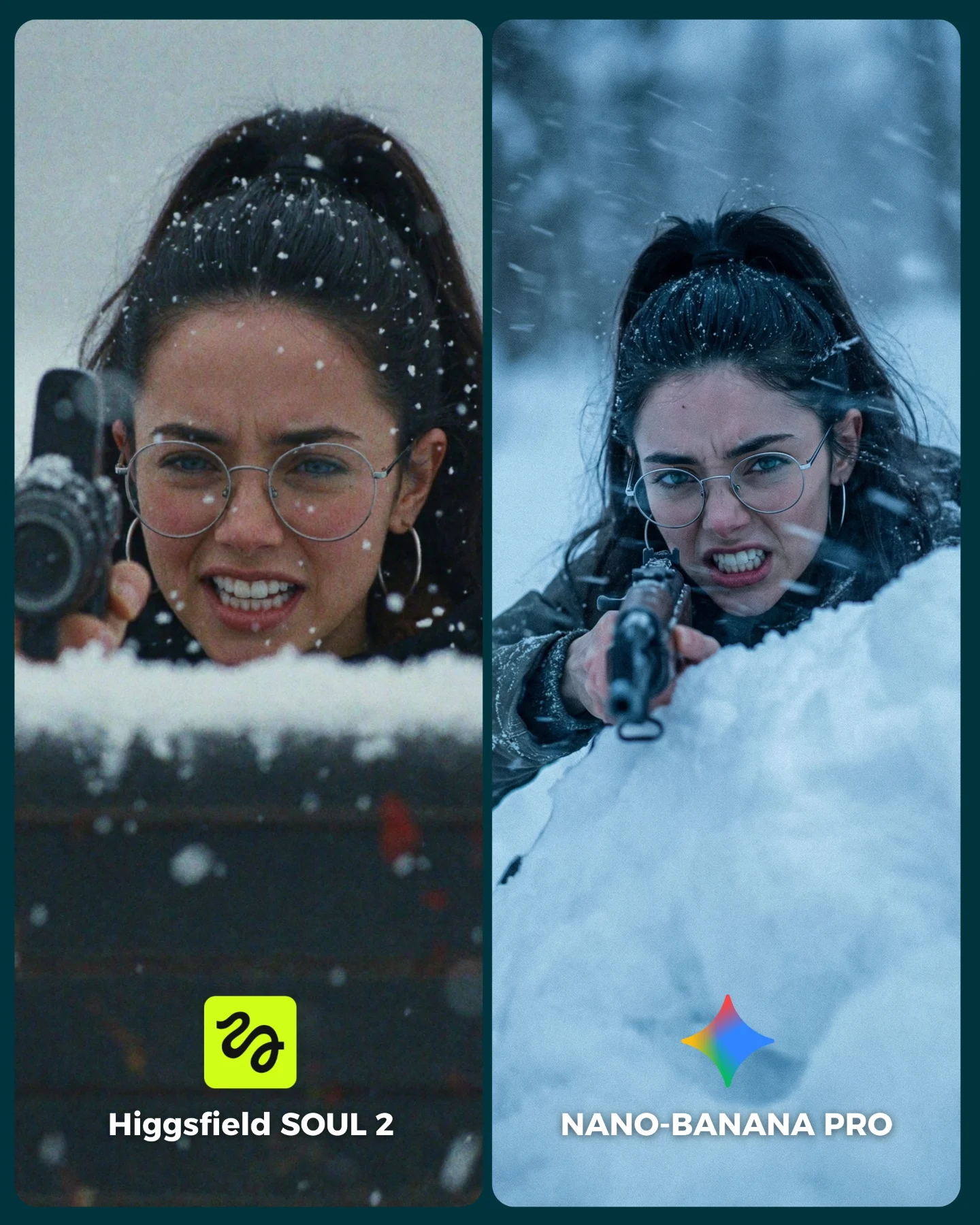
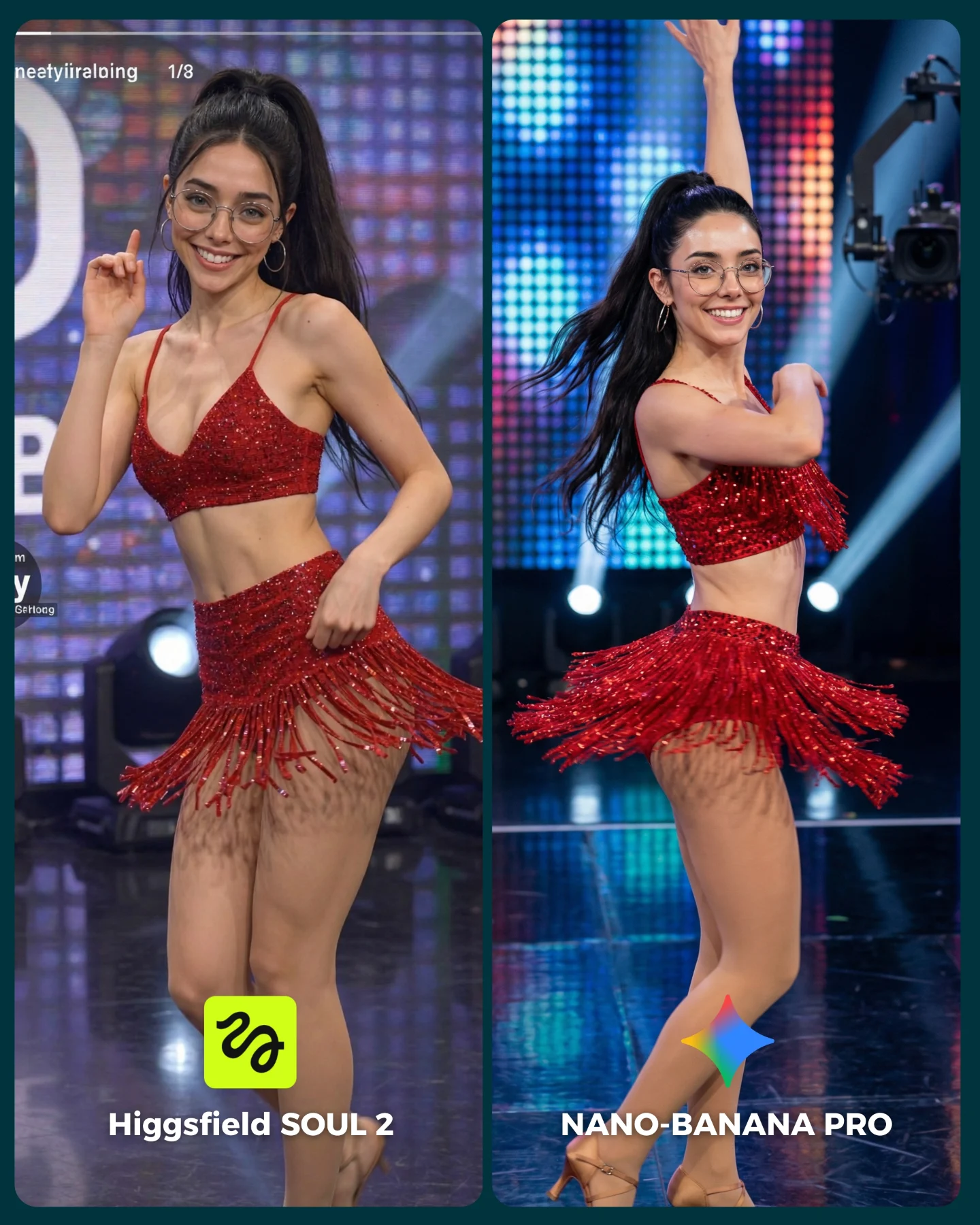
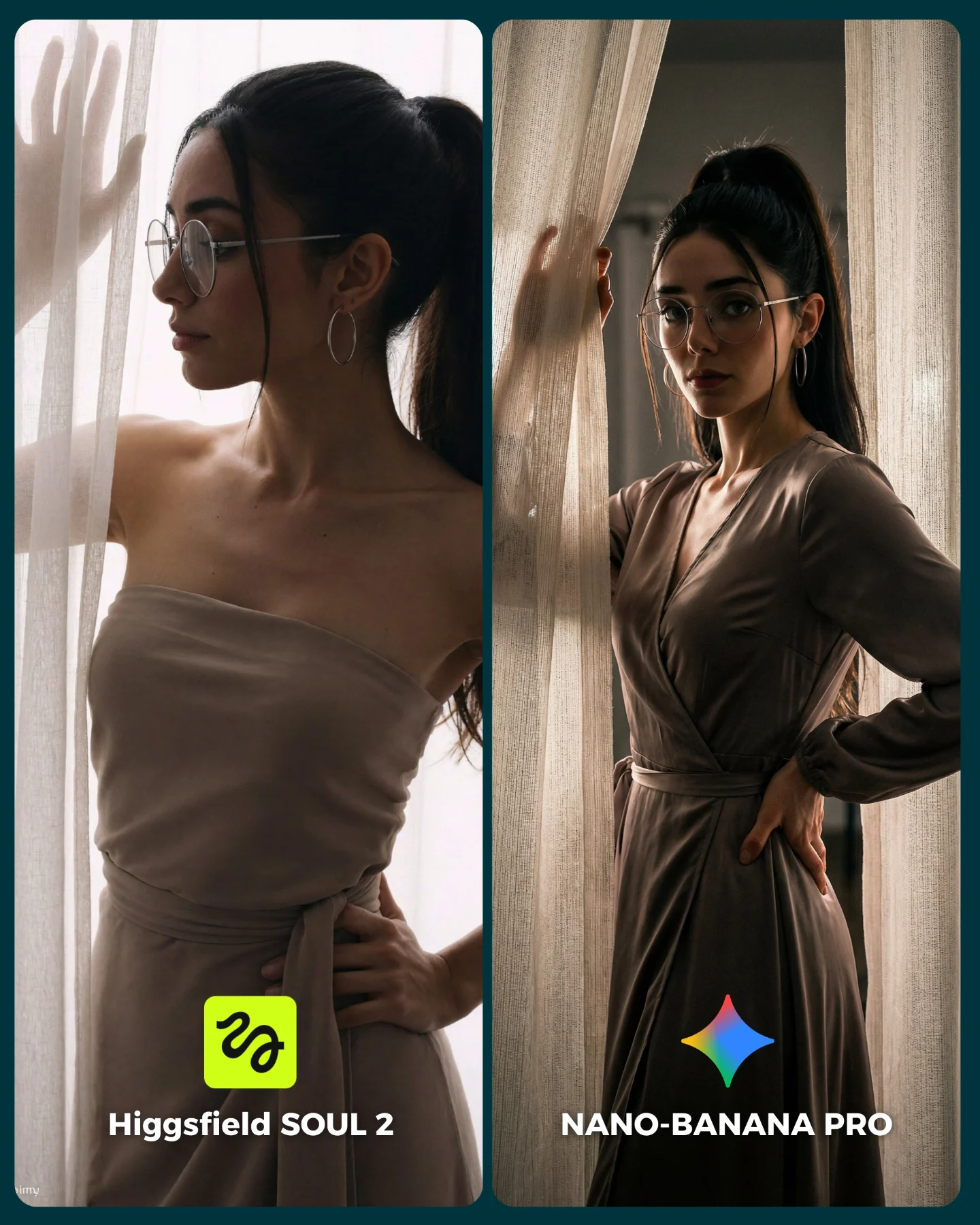
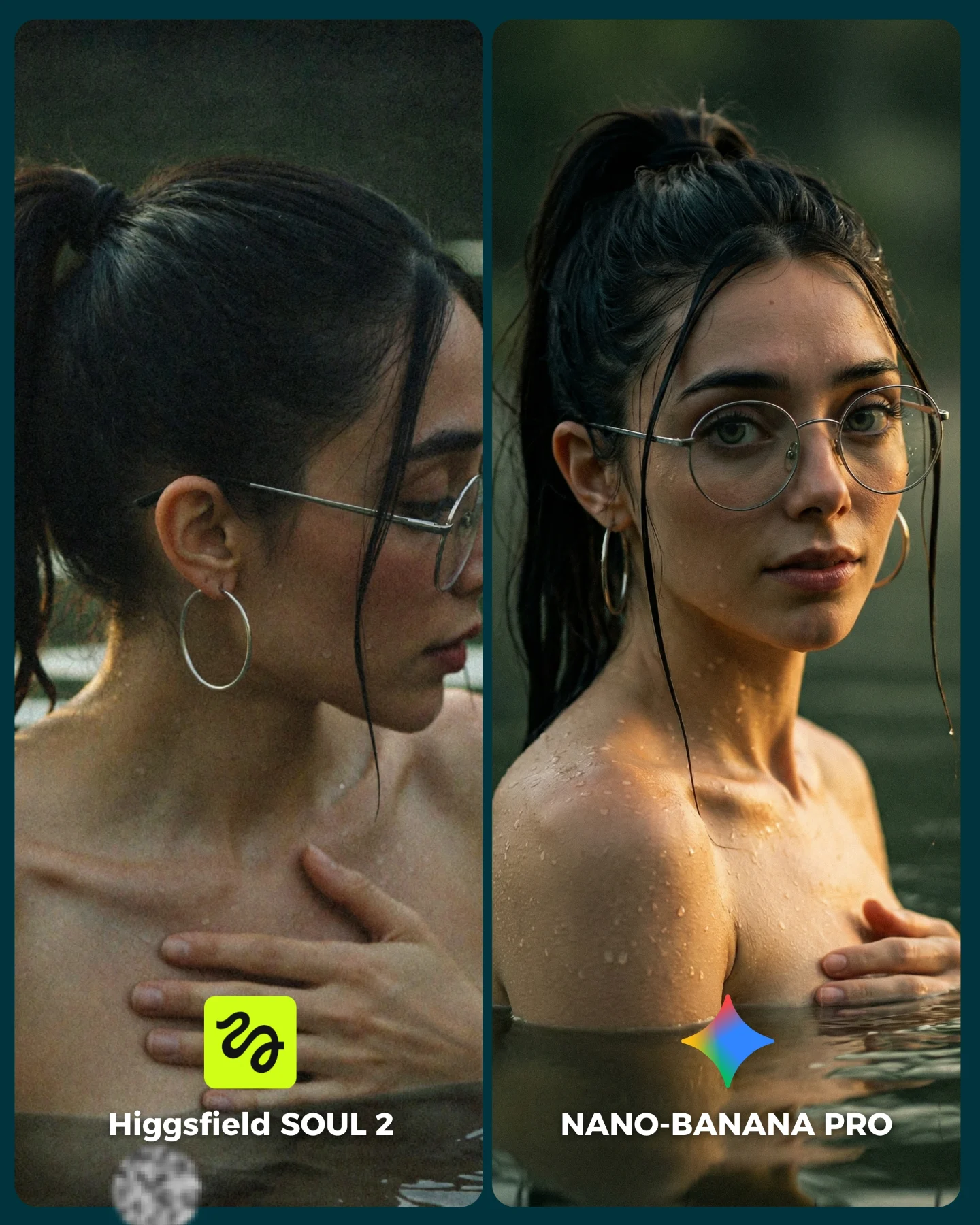
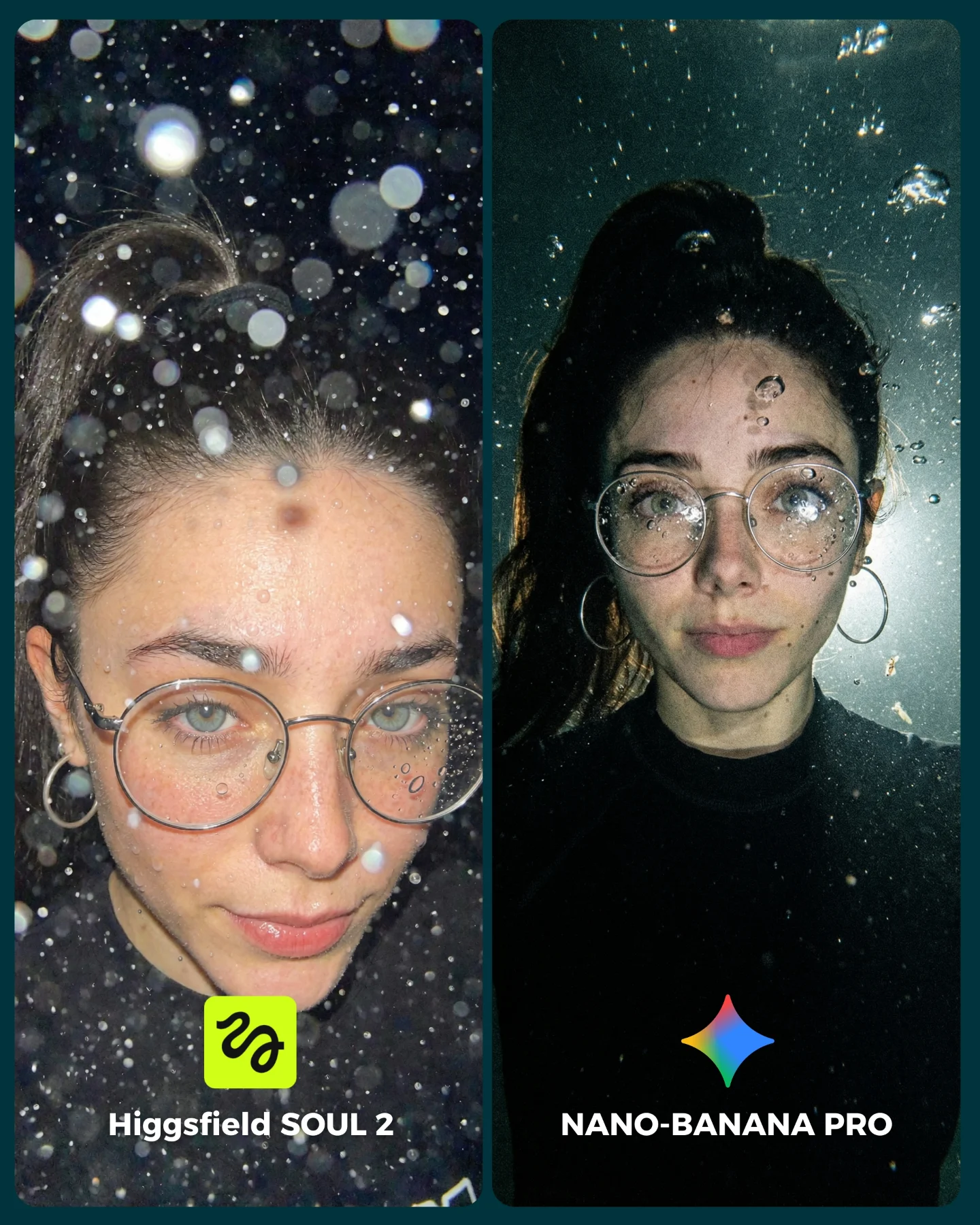
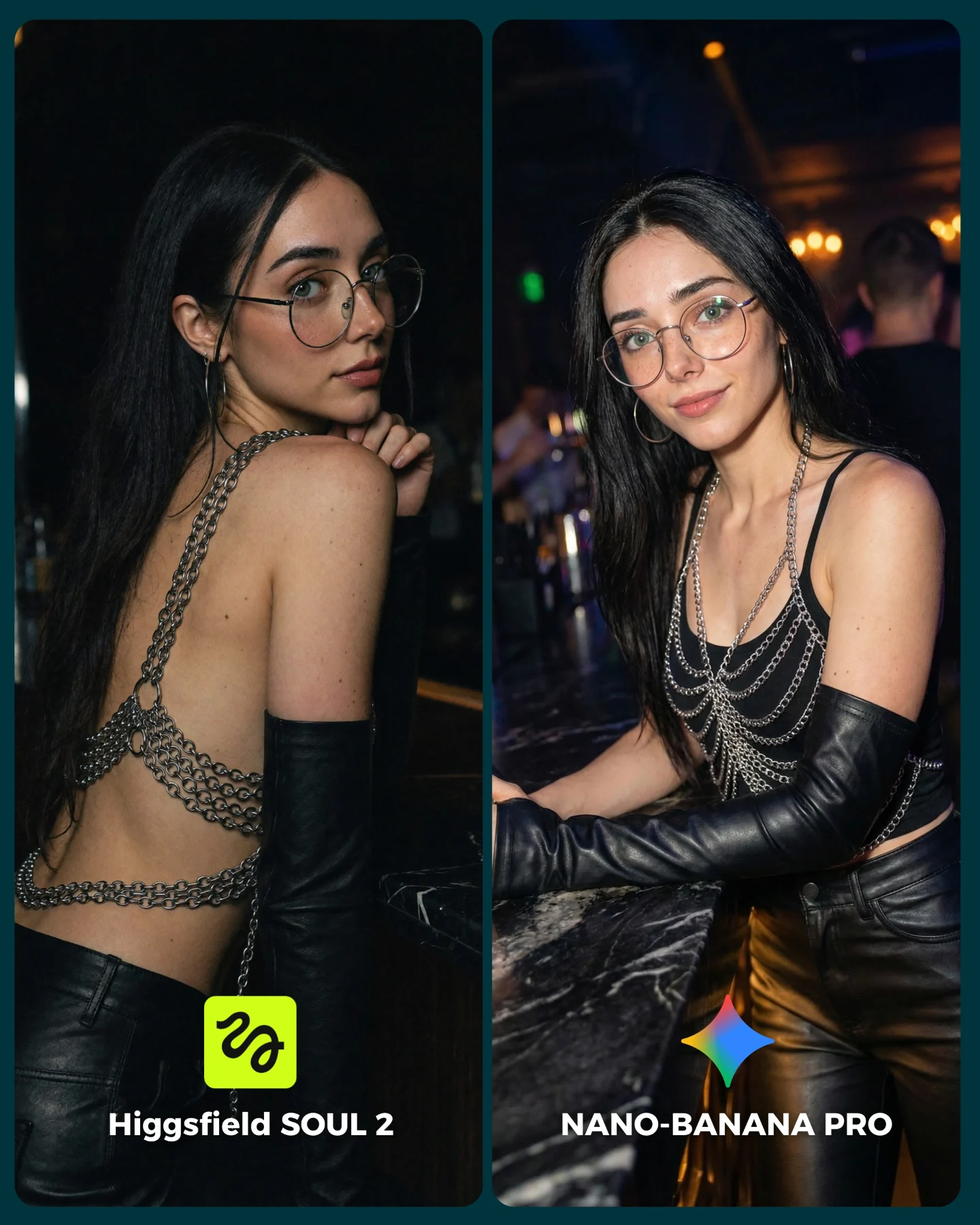
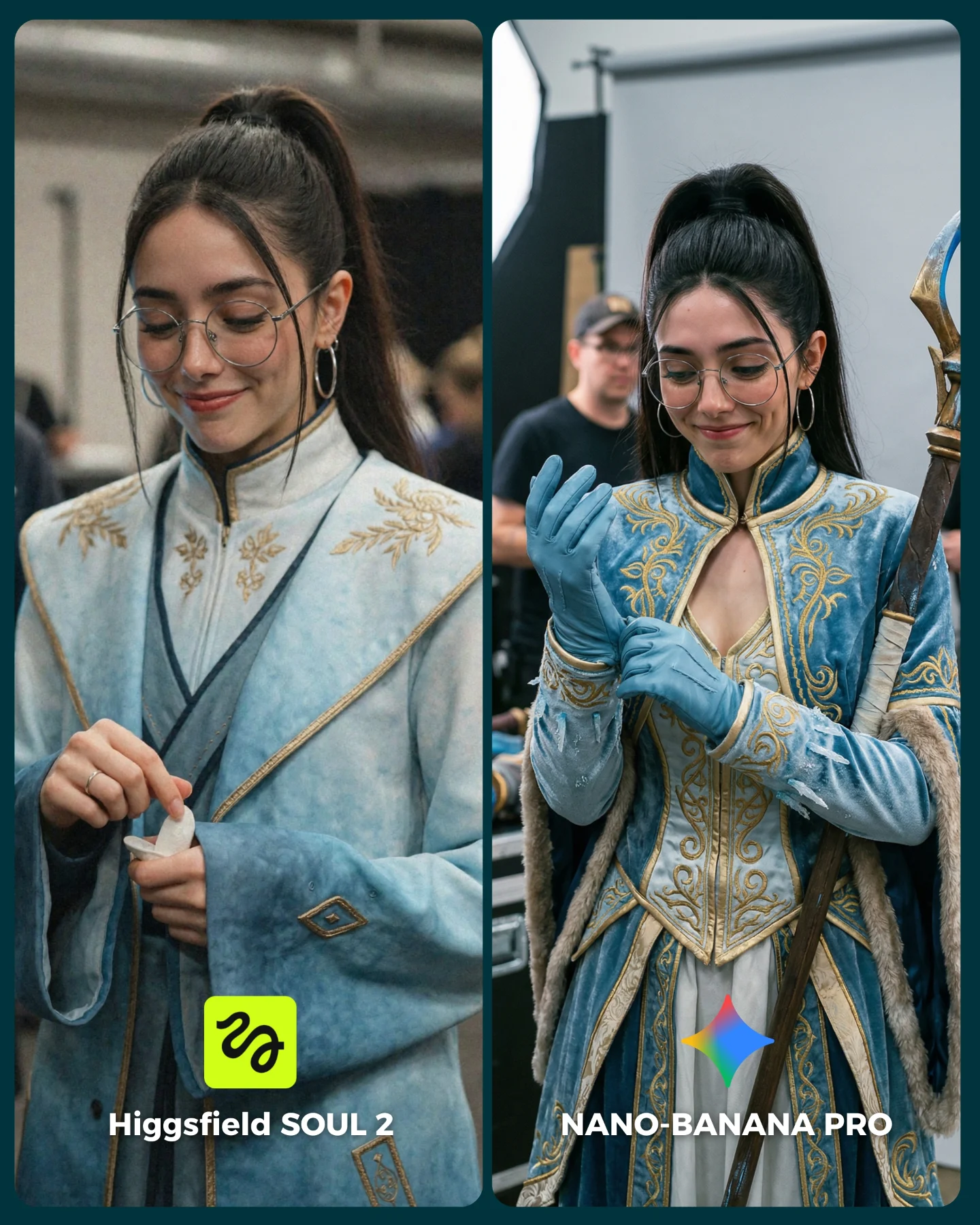
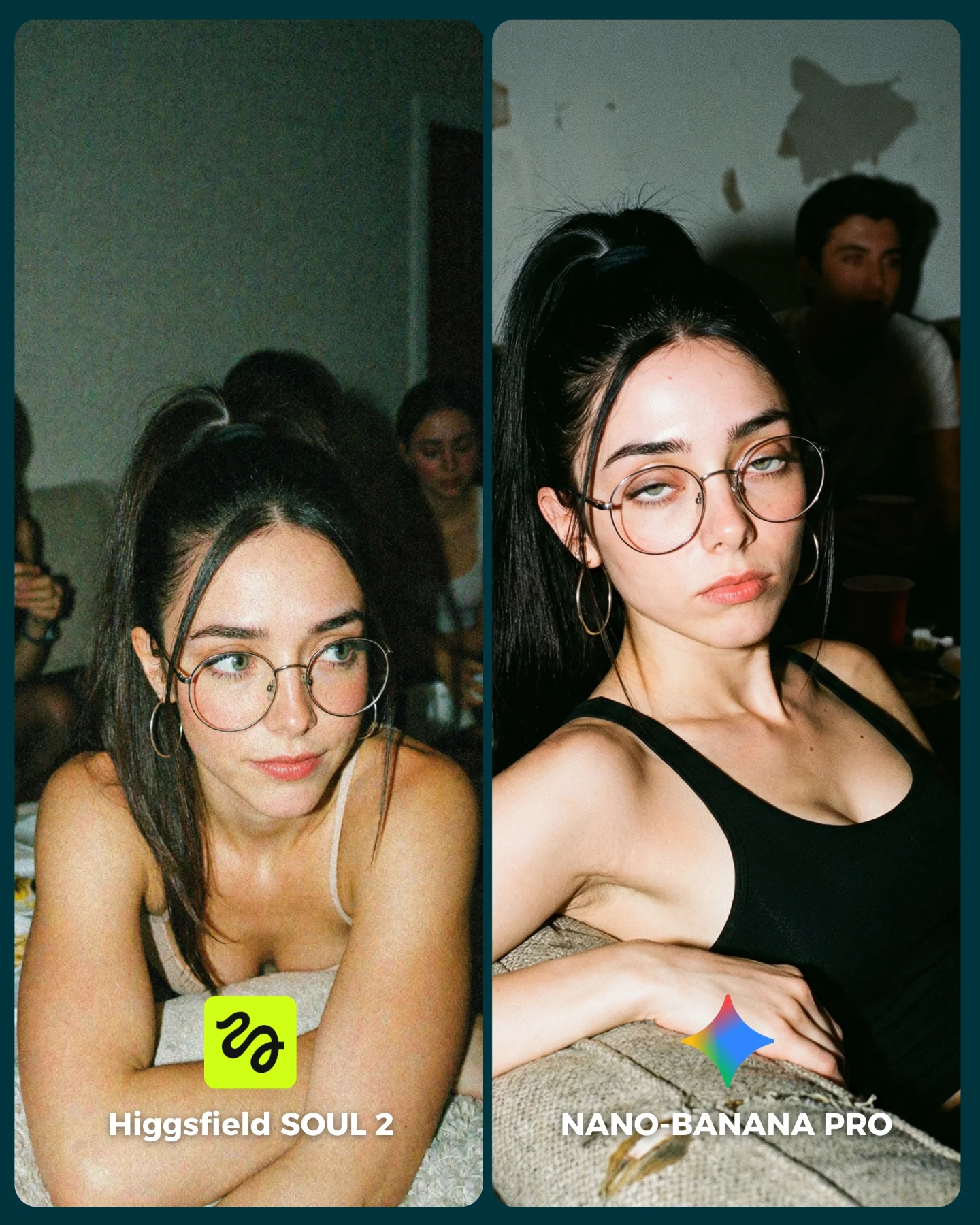
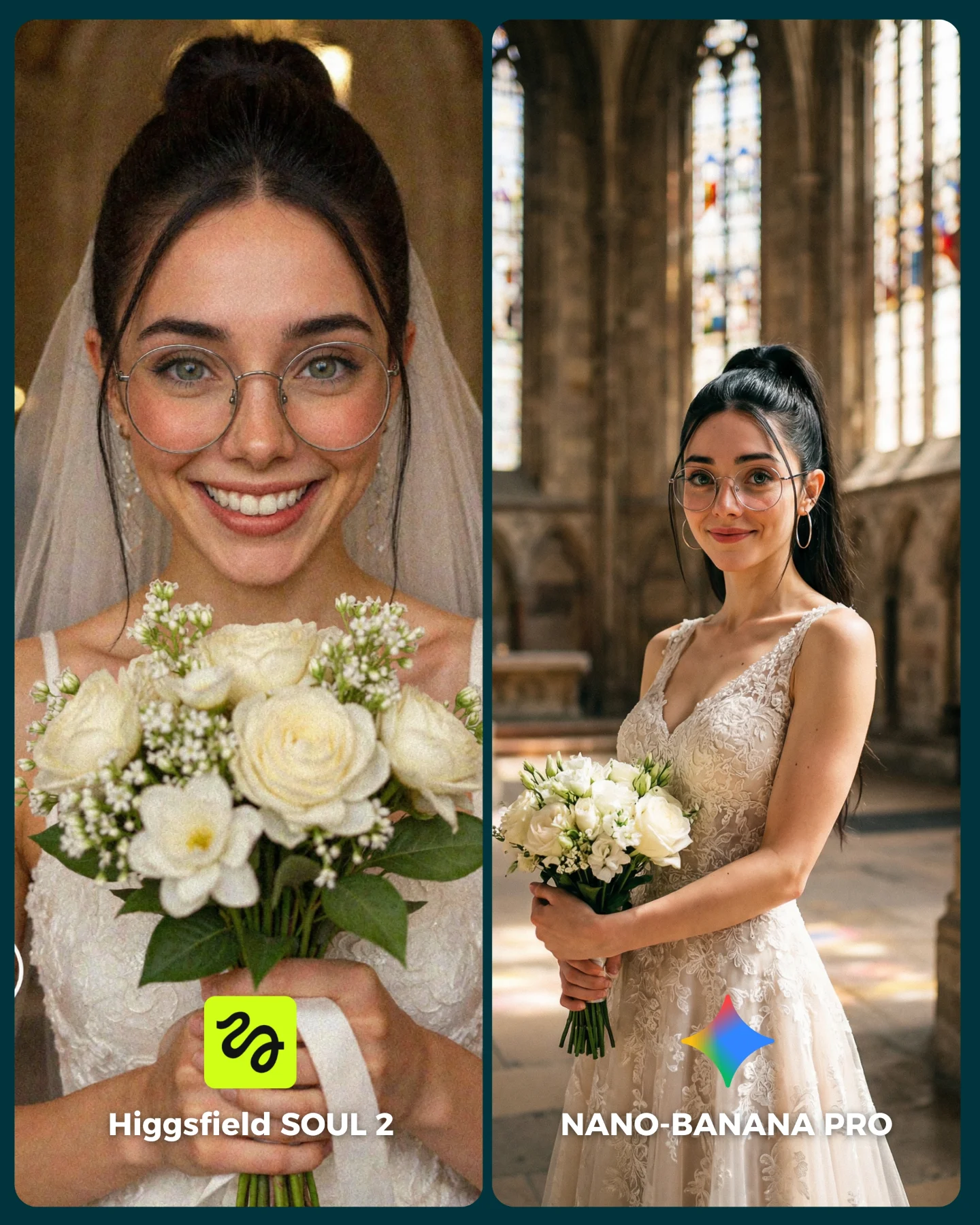
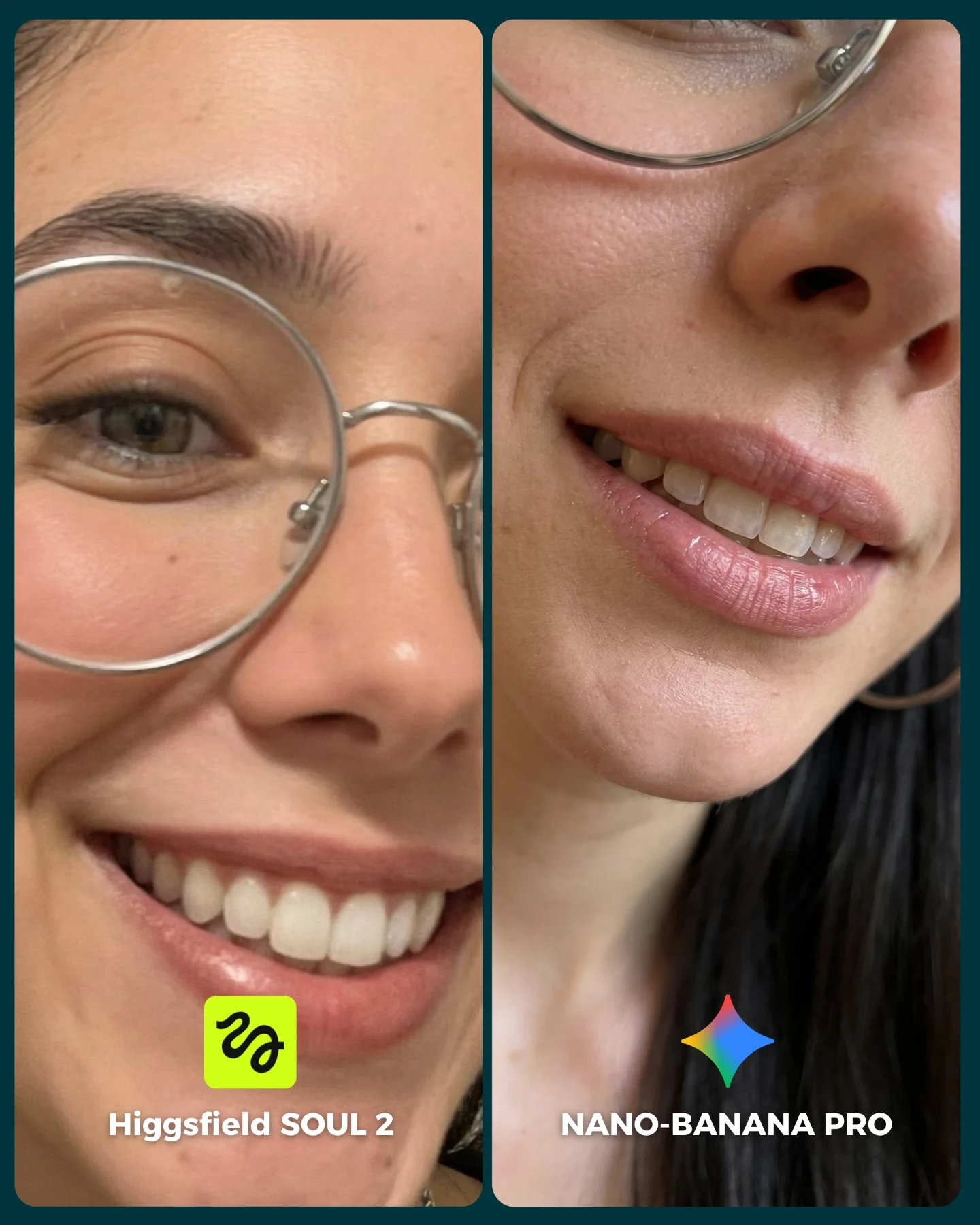
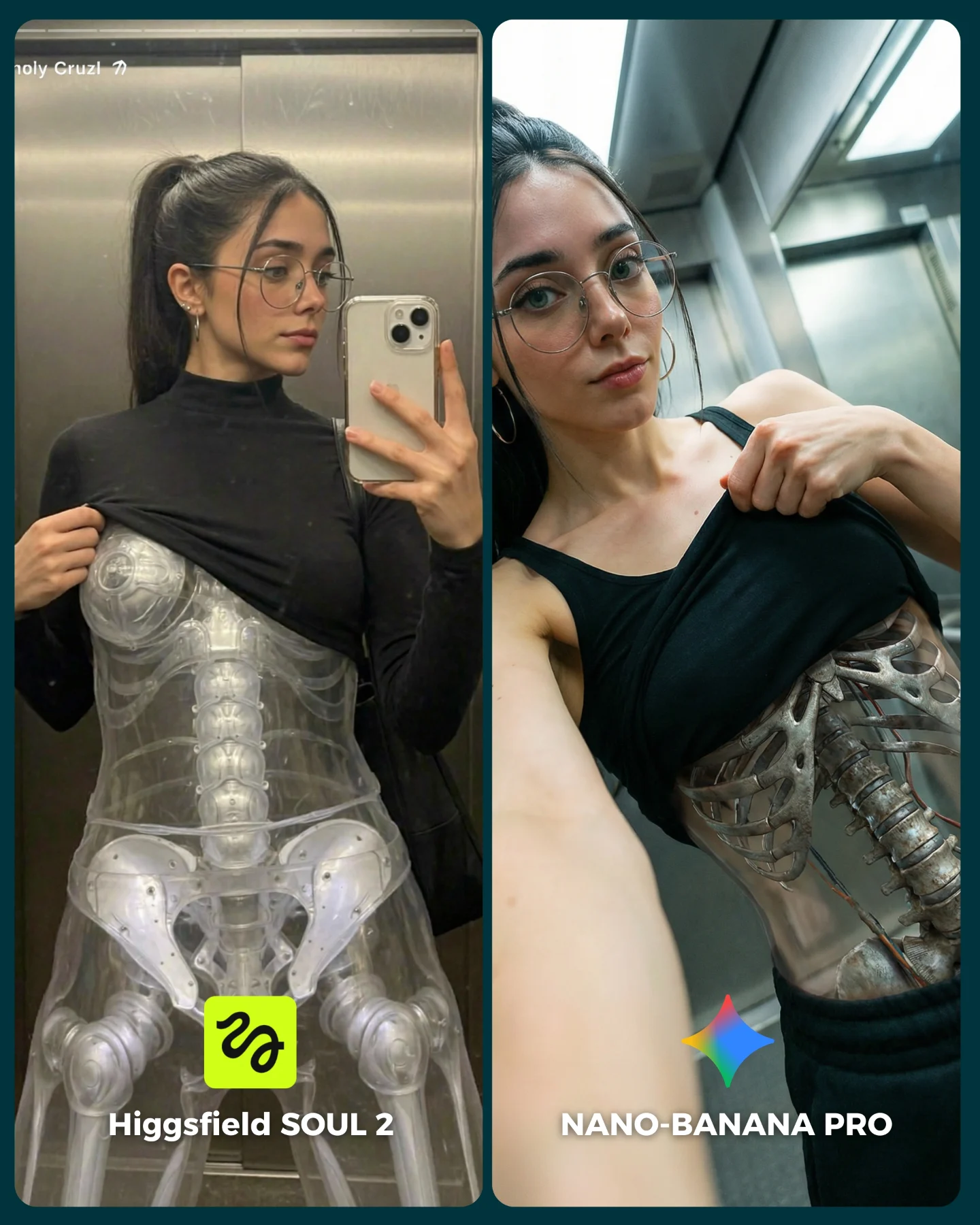
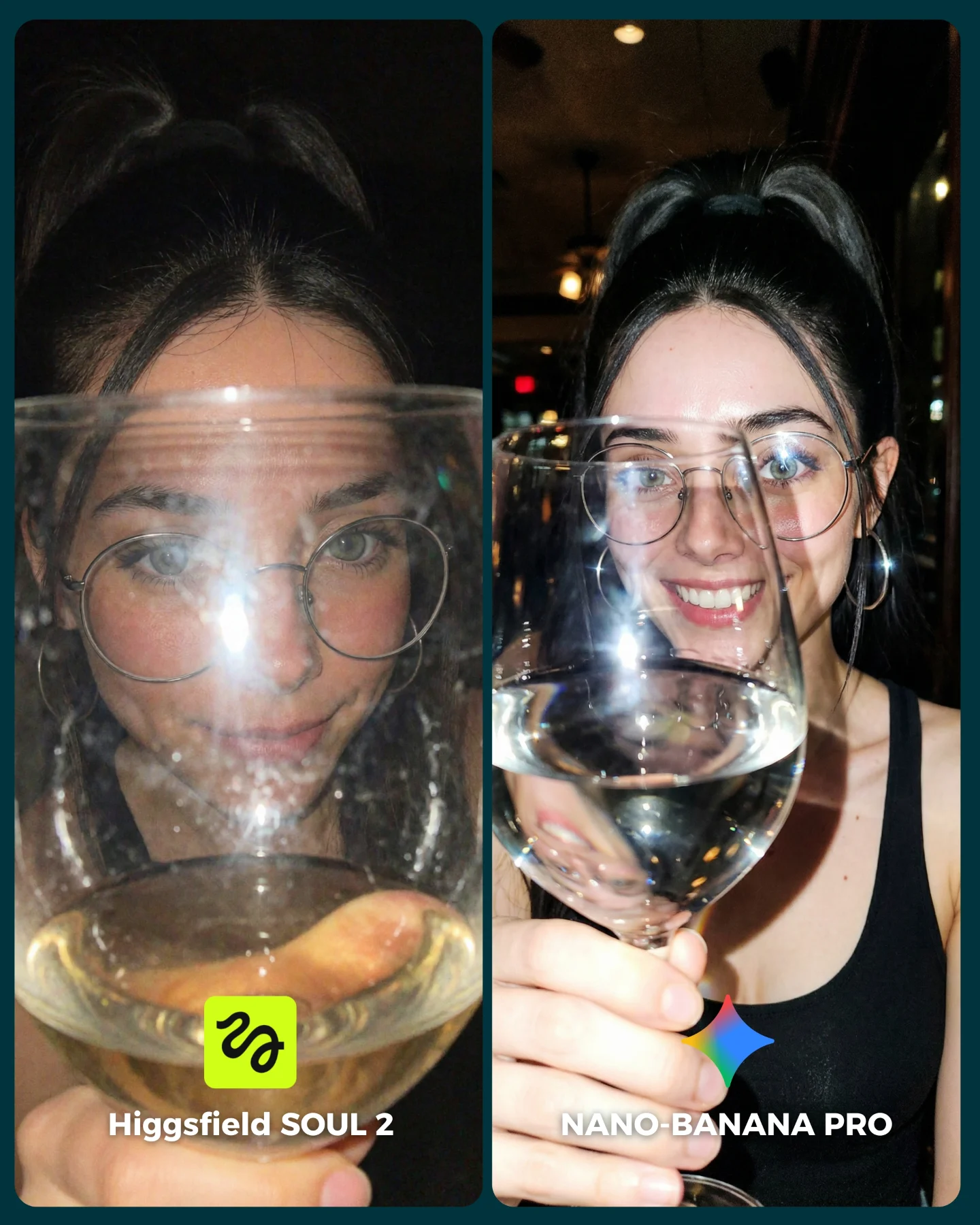
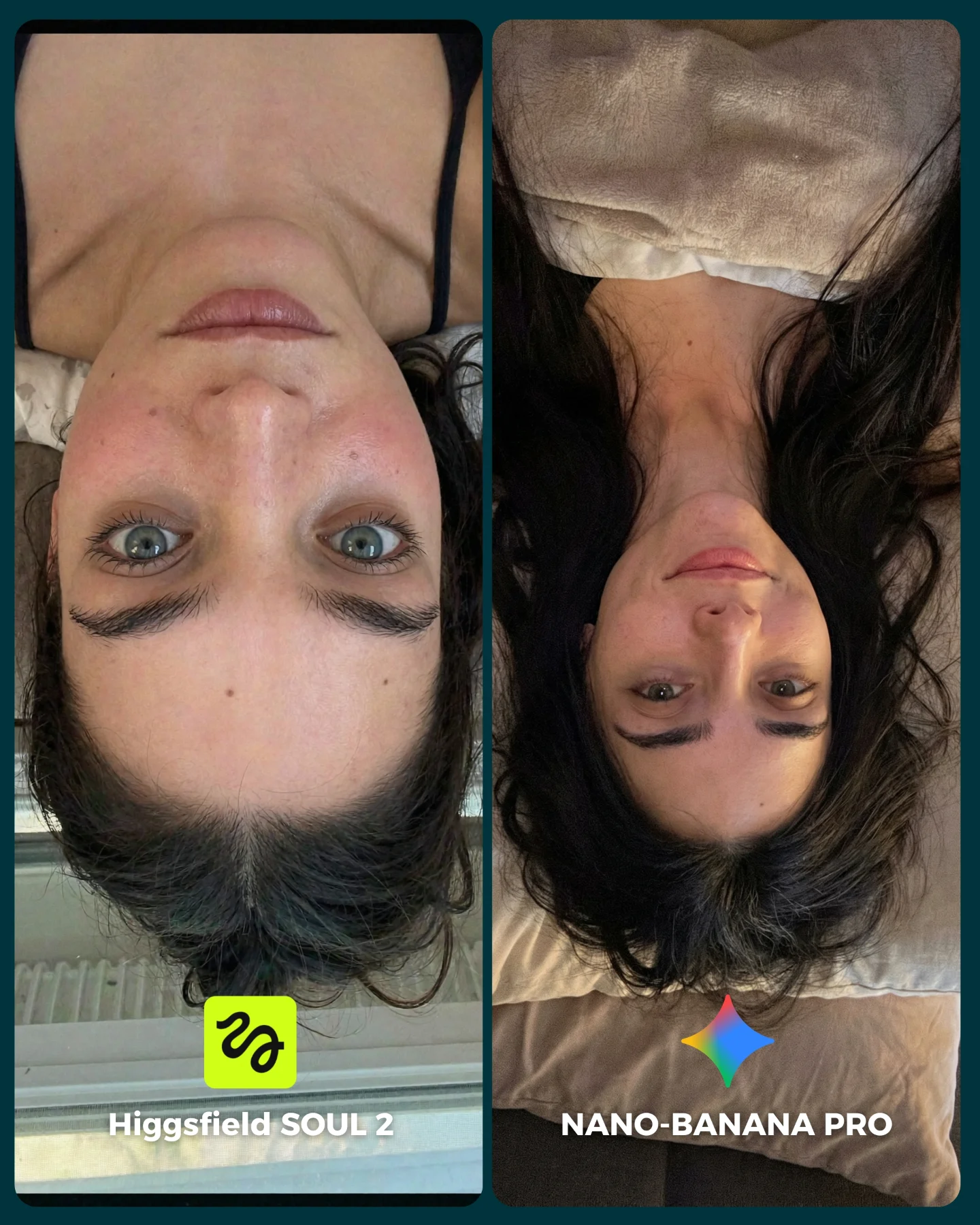
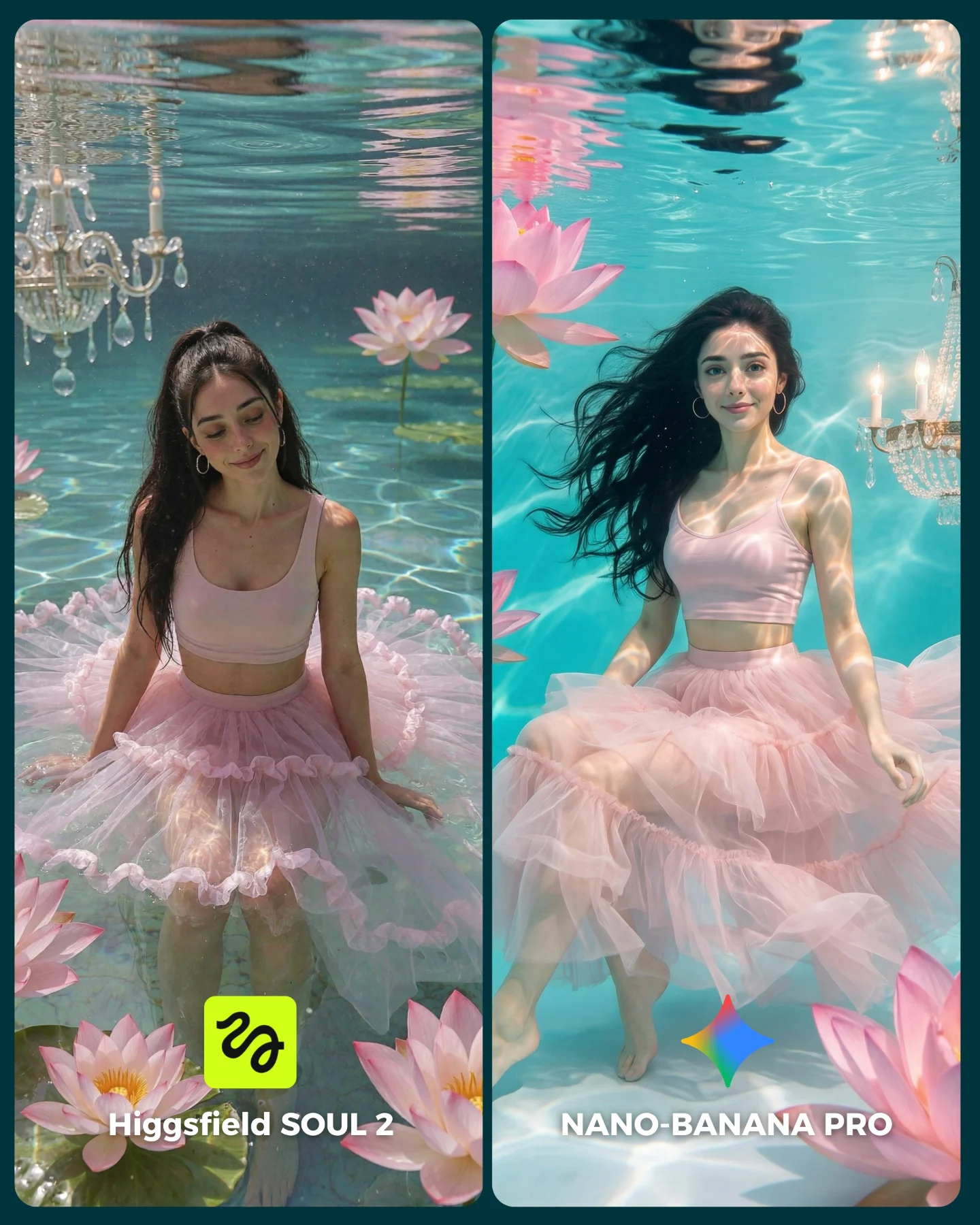
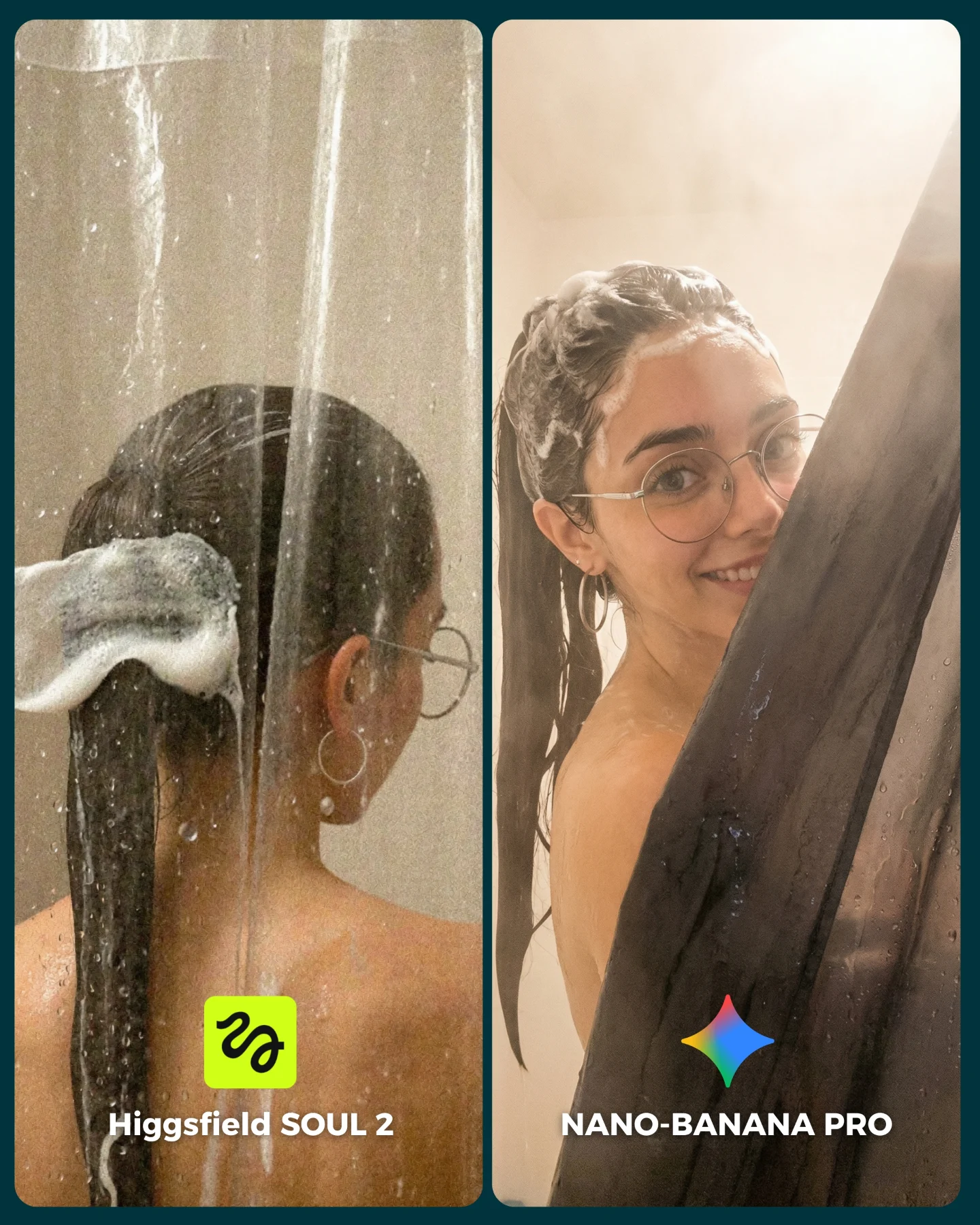
SOUL 2 Vs. Nano Banana Pro 💥
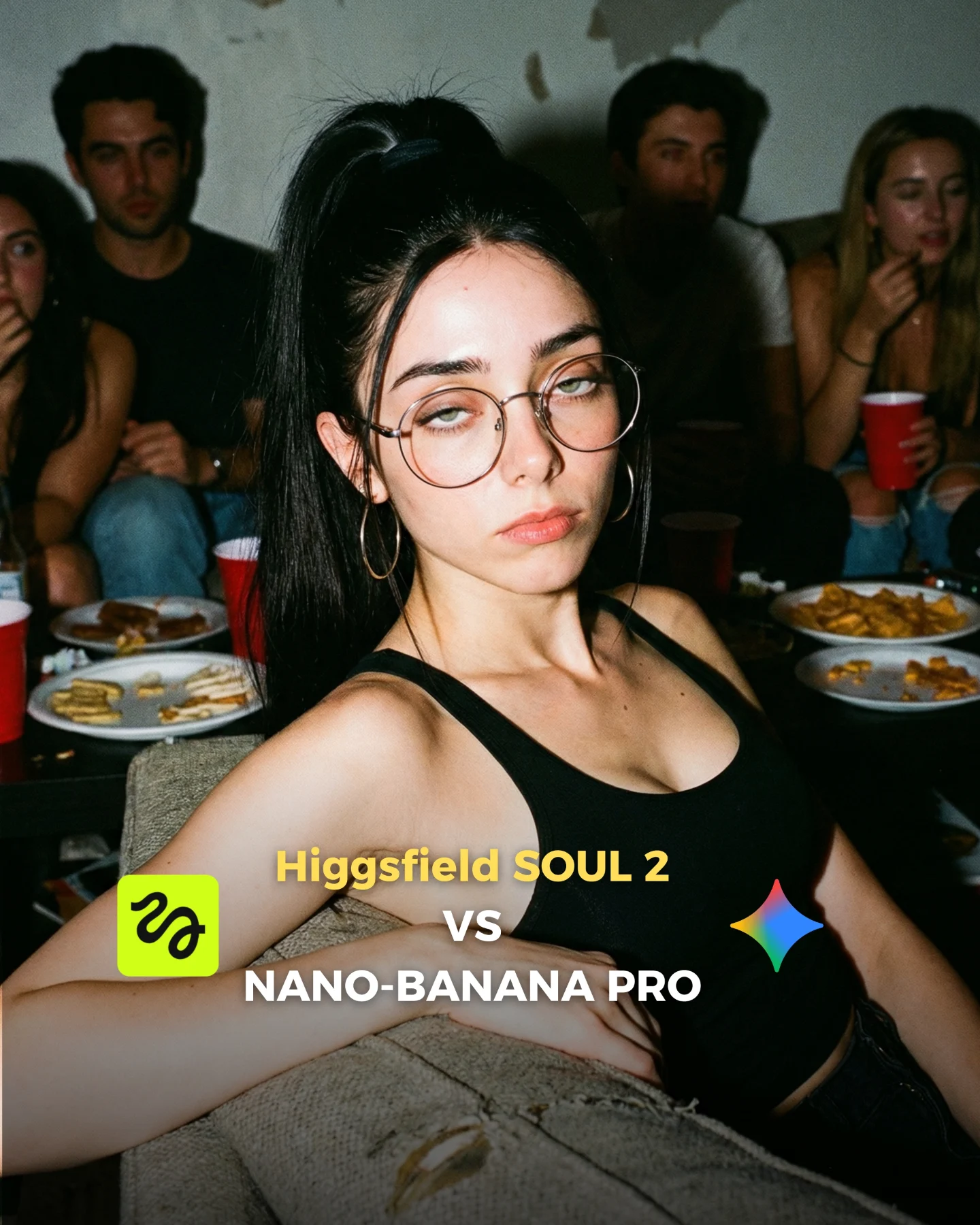
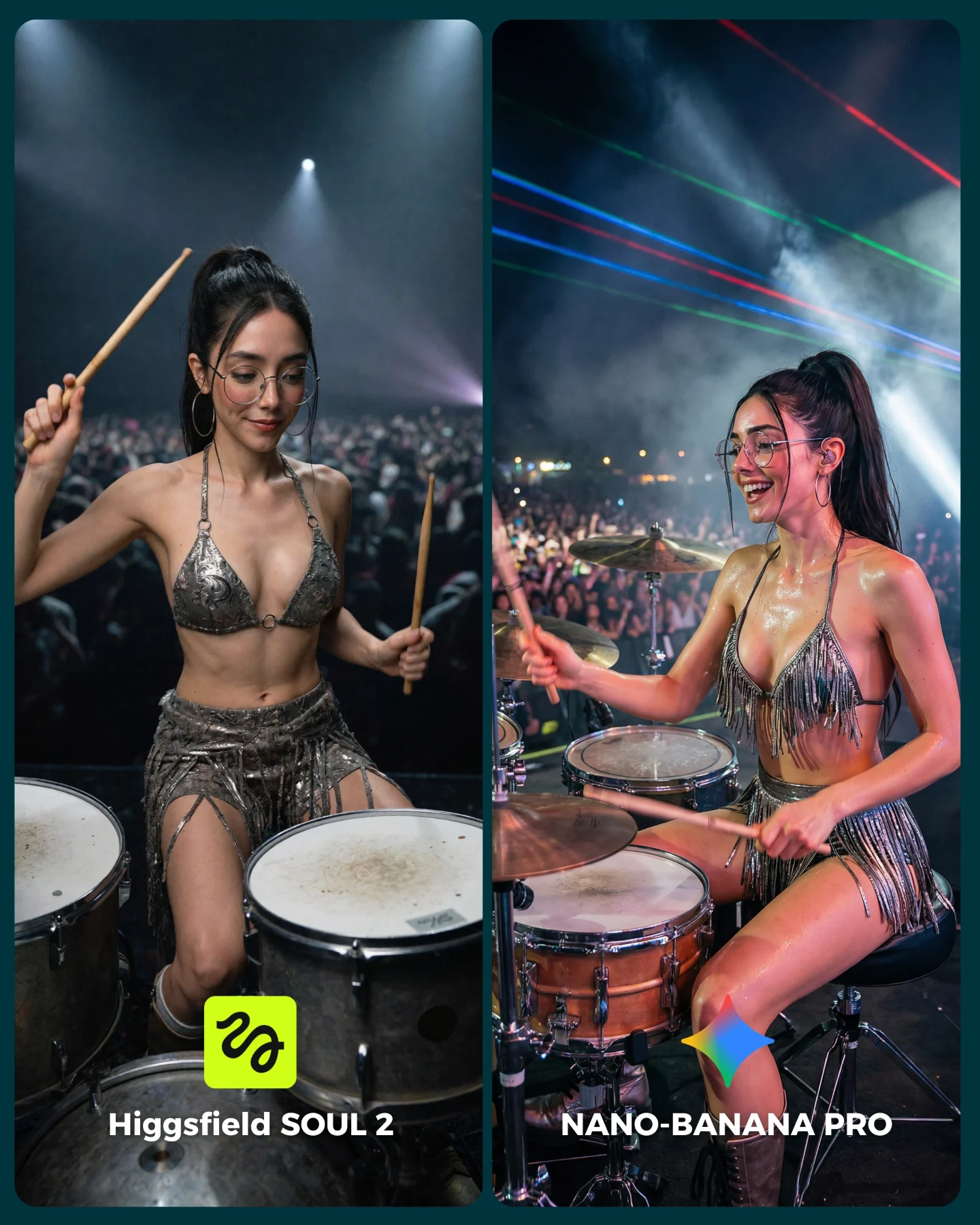
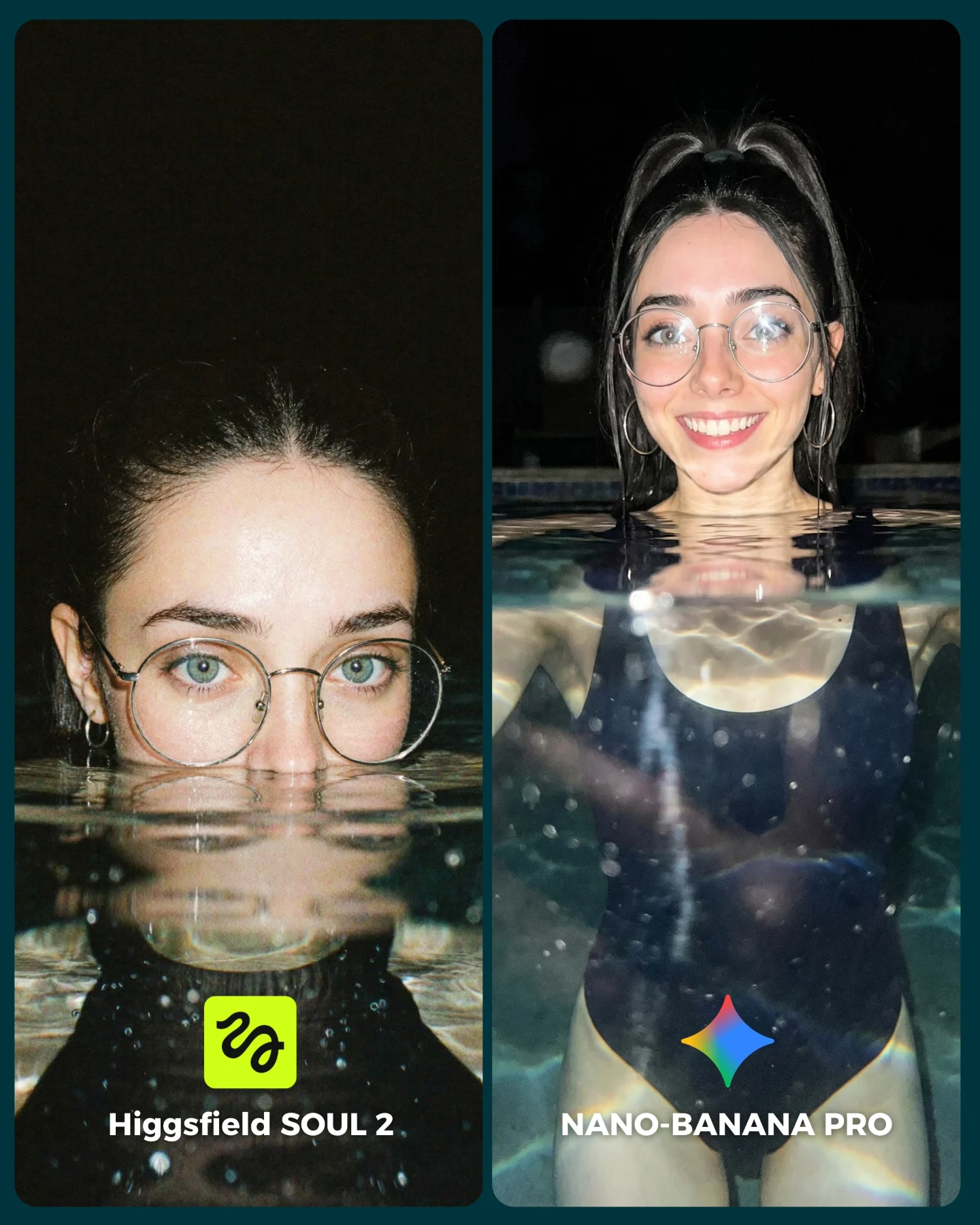
Higgsfield ha lanzado su nuevo generador de imágenes SOUL 2 ⚡ Puedes subirle hasta 80 imágenes de referencia de tu personaje para mantener mejor la constancia 👀
Y para compararlo bien, lo he puesto a prueba junto a Nano Banana Pro que hasta el momento es mi generador de imágenes favorito 💕
La verdad es que hay algunos resultados de SOUL 2 que me han sorprendido bastante... No está nada mal, pero sigo prefiriendo Nano Banana para la mayoría de las ocasiones 😅
Os dejo algunas imágenes que he generado y espero leer vuestras opiniones en comentarios 💌 Y si quieres los prompts de todas las imágenes comenta "ARIA" y te los mando por mensaje!
How soy_aria_cruz Made This Low Light Bed Selfie AI Comparison
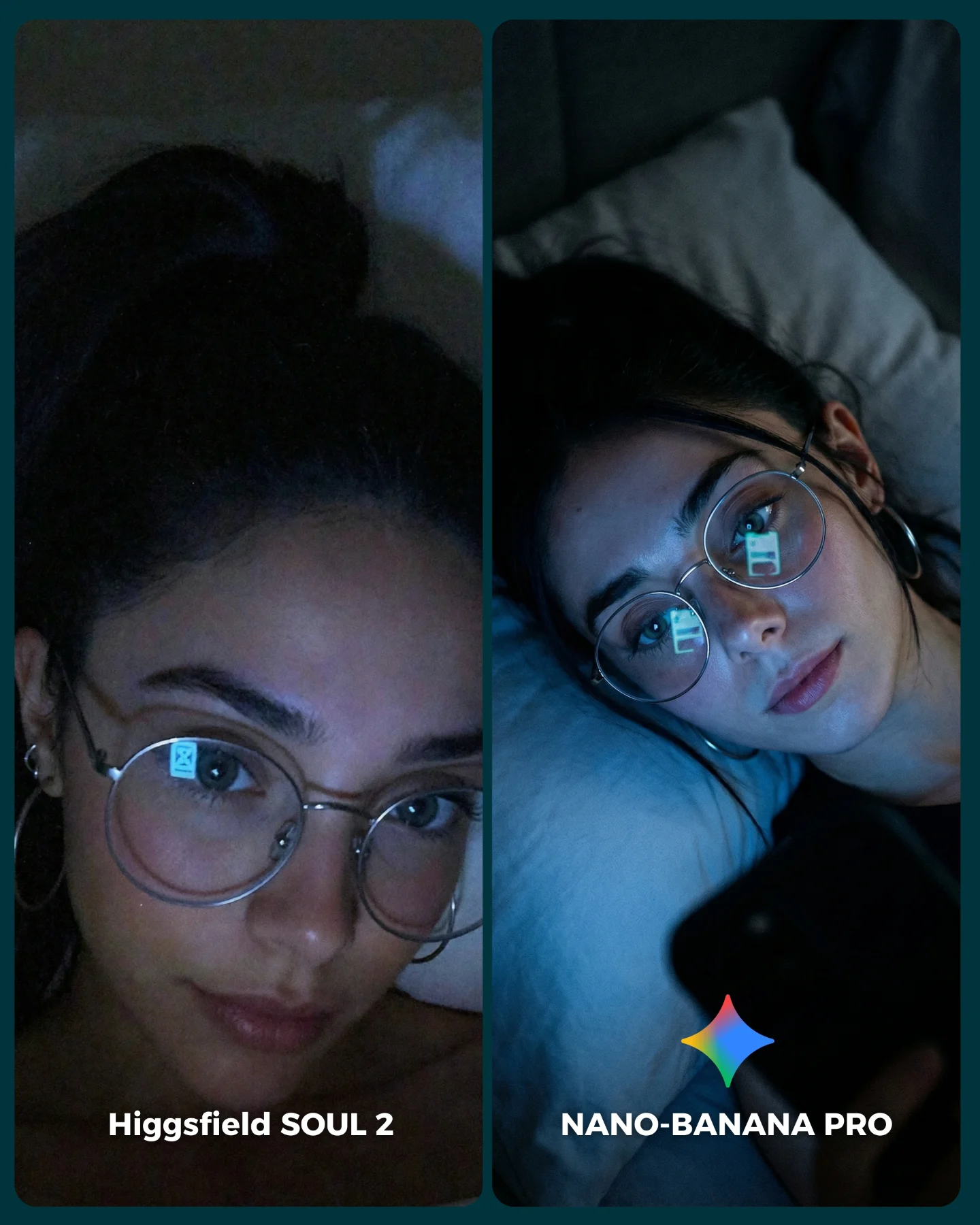
This image is a much harder test than it looks. Low-light selfies in bed are familiar to everyone, which means they are easy to judge. People instantly notice when the shadows feel fake, when the screen reflection makes no sense, or when skin turns plasticky under blue phone light. That makes this kind of comparison more revealing than a bright studio portrait.
The setup is also disciplined in the right way. Same woman, same glasses, same pillow, same late-night mood. The main variable is how each model handles darkness, phone illumination, and reflections. That gives the viewer something useful to evaluate instead of just a vague “which one do you like more?” question.
Why this comparison format is effective
The strongest part of the image is that it targets a realism zone where many generators struggle quietly. Low light is unforgiving. Small mistakes in eye reflections, skin falloff, lens glare, or pillow texture become obvious because the scene is so simple. There is nowhere for the model to hide.
The second strength is emotional familiarity. A phone-lit face on a pillow feels intimate and believable as a real-life moment. That familiarity gives the comparison social traction. Viewers are not evaluating an abstract test scene. They are evaluating a kind of image they have actually taken themselves, which makes the difference between outputs feel more tangible.
Signal
Evidence (from this image)
Mechanism
Replication Action
Hard-to-fake lighting logic
Cool phone glow and rectangular reflections appear in the glasses
Incorrect light behavior becomes obvious immediately in simple dark scenes
Use screen-lit or device-lit portraits as realism benchmarks
Controlled comparison setup
Same woman, same pillow, same bedroom mood across both panels
Viewers can attribute differences to model quality rather than concept drift
Lock identity, framing, and environment before comparing models
Universal familiarity
The scene resembles a common late-night phone selfie
People can intuitively judge whether it feels real
Choose ordinary scenarios that viewers know from experience
Minimal background noise
Dark room and plain pillow keep the face as the main test surface
Simplicity exposes subtle realism errors more clearly
Strip the scene down to one face, one light source, and one surface
Where this visual strategy fits best
Model comparison content: ideal for testing phone-light realism, eye reflections, and low-light skin rendering.
Prompt engineering posts: useful for showing how fair A/B tests should reduce variables.
AI influencer consistency checks: strong because the character has to survive intimate low-light conditions, not just bright editorial scenes.
Bedroom or lifestyle realism experiments: helpful when testing how well a model handles ordinary private moments.
Where it is less effective
High-energy social thumbnails: the mood is quiet and intimate rather than loud.
Brand-forward campaigns: the image has almost no product or environmental context.
Fantasy-art audiences: the value here is technical realism, not imaginative styling.
Three transfer recipes
Laptop-glow transfer Keep: dark room, one digital light source, intimate framing. Change: phone to laptop or tablet, pillow to desk or couch context. Slot template (EN): {same subject} lit only by {device screen} in a dark {everyday setting} shown as a model comparison
Night-call transfer Keep: close face crop, reflections in glasses, minimal background. Change: screen content, expression, and angle. Slot template (EN): {young woman} in a low-light close-up with {screen reflections} compared across {two image models}
Wake-up realism transfer Keep: pillow context, intimate bedroom framing, soft tired expression. Change: light source to dawn screen mix or alarm-clock glow. Slot template (EN): {subject} lying in bed under {single cool light source} in a split-screen realism benchmark
Aesthetic read: why the image feels believable
The strongest visual detail is the lens reflection. The rectangular phone interface reflected in the glasses instantly tells the viewer where the light is coming from. That is a tiny detail, but it creates a lot of trust. The entire image feels more grounded because the lighting has a readable source.
The pillow and the darkness are also working hard. White bedding gives the face a soft framing surface, while the dark room removes distractions and increases the importance of the screen glow. That makes the scene feel intimate without becoming overly designed.
The blue cast is restrained, which is another good choice. If the phone light were too intense, the image would look stylized or artificial. Instead, it stays close to the slightly tired, very real mood of late-night scrolling.
Observed
Why it matters
Rectangular screen reflections in the glasses
Creates believable lighting logic and a strong realism cue
White pillow against a dark room
Frames the face while keeping the environment minimal
Cool phone-lit skin tones
Defines the nocturnal mood without needing extra props
Right panel includes part of the phone in the foreground
Makes the source of the light and the selfie context more explicit
Matched subject identity across both halves
Keeps the comparison fair and easy to interpret
Prompt technique breakdown
To recreate a useful comparison like this, the prompt should behave almost like a lab setup. The challenge is not wardrobe or background design. It is how accurately the model can render a face under one small digital light source in darkness.
Produces a meaningful visual outcome without altering the concept
cleaner right-side realism; stronger right-panel dimensionality; more believable right output
Starter prompt block
split-screen low-light bed selfie of the same young woman with round glasses and hoop earrings, lying on a white pillow in a dark bedroom, illuminated by a smartphone screen with visible app reflections in the lenses, left labeled Higgsfield SOUL 2 and right labeled NANO-BANANA PRO, hyper-real comparison graphic
Remix playbook
The cleanest way to iterate on this image is to protect the lighting logic first.
Baseline lock
Lock the same face, glasses, and pillow position first.
Lock the same screen-light angle and reflection pattern second.
Lock the same dark-room environment before changing only the model.
One-change rule
If one version gets a brighter room, a different expression, or cleaner styling, the comparison becomes much less useful. Keep the scenario stable and change only the rendering engine.
Run 1: establish the pillow, face crop, and dark bedroom mood.
Run 2: refine the cool phone light and lens reflections.
Run 3: standardize the split layout and bottom labels.
Run 4: judge only realism quality, not different stylistic choices.
That is what makes the image valuable. It is not dramatic, but it is disciplined. And disciplined comparisons are the ones people trust.