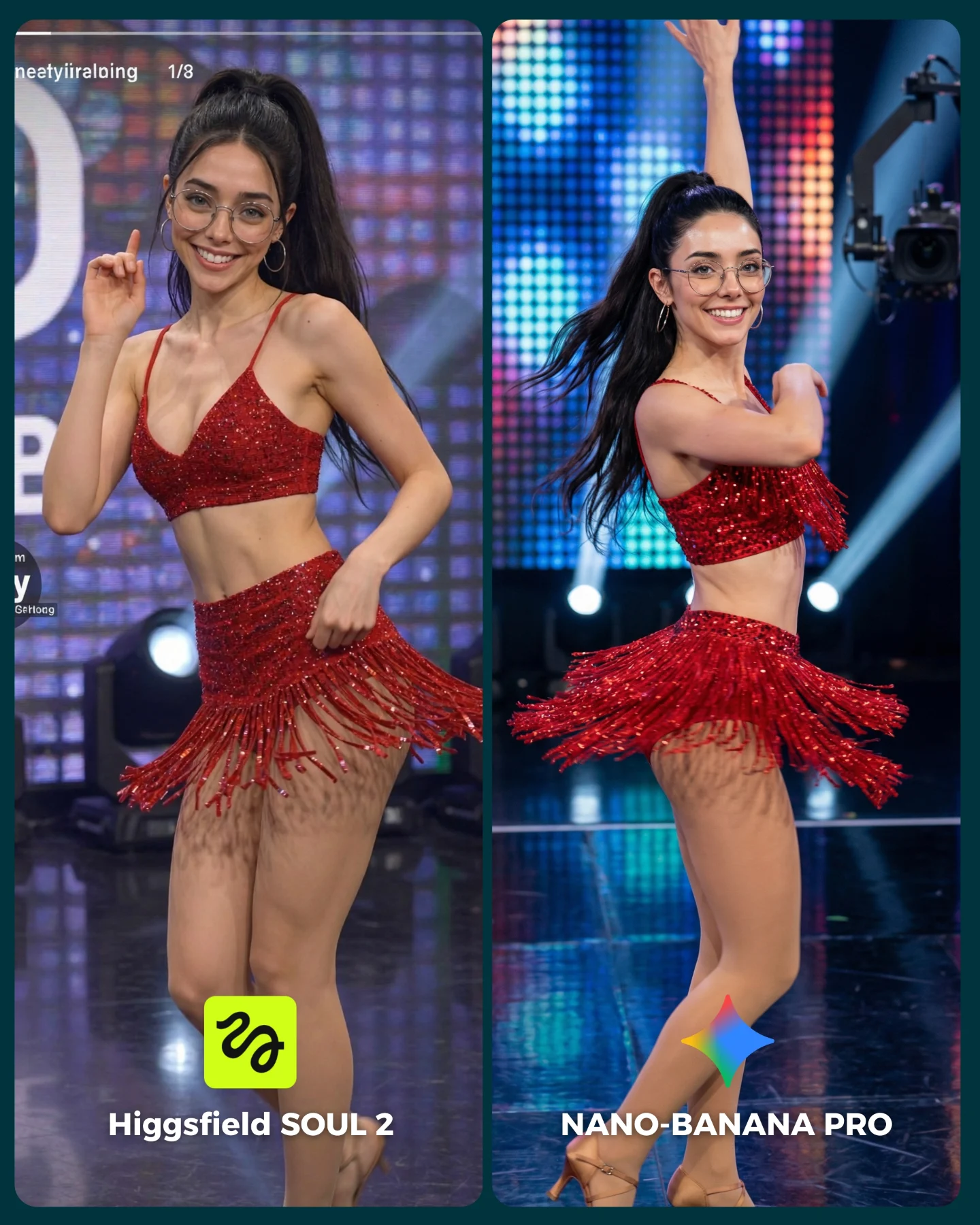
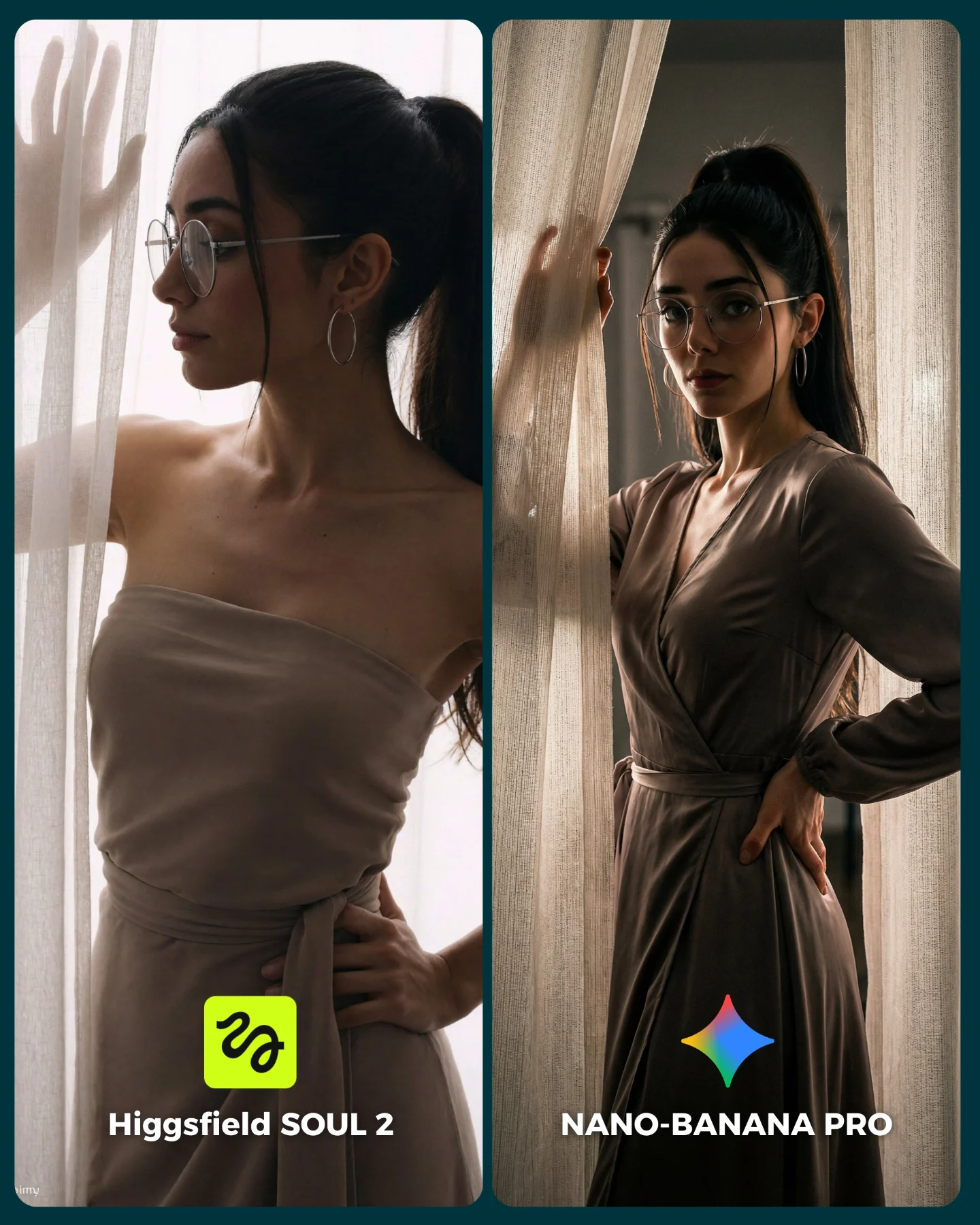
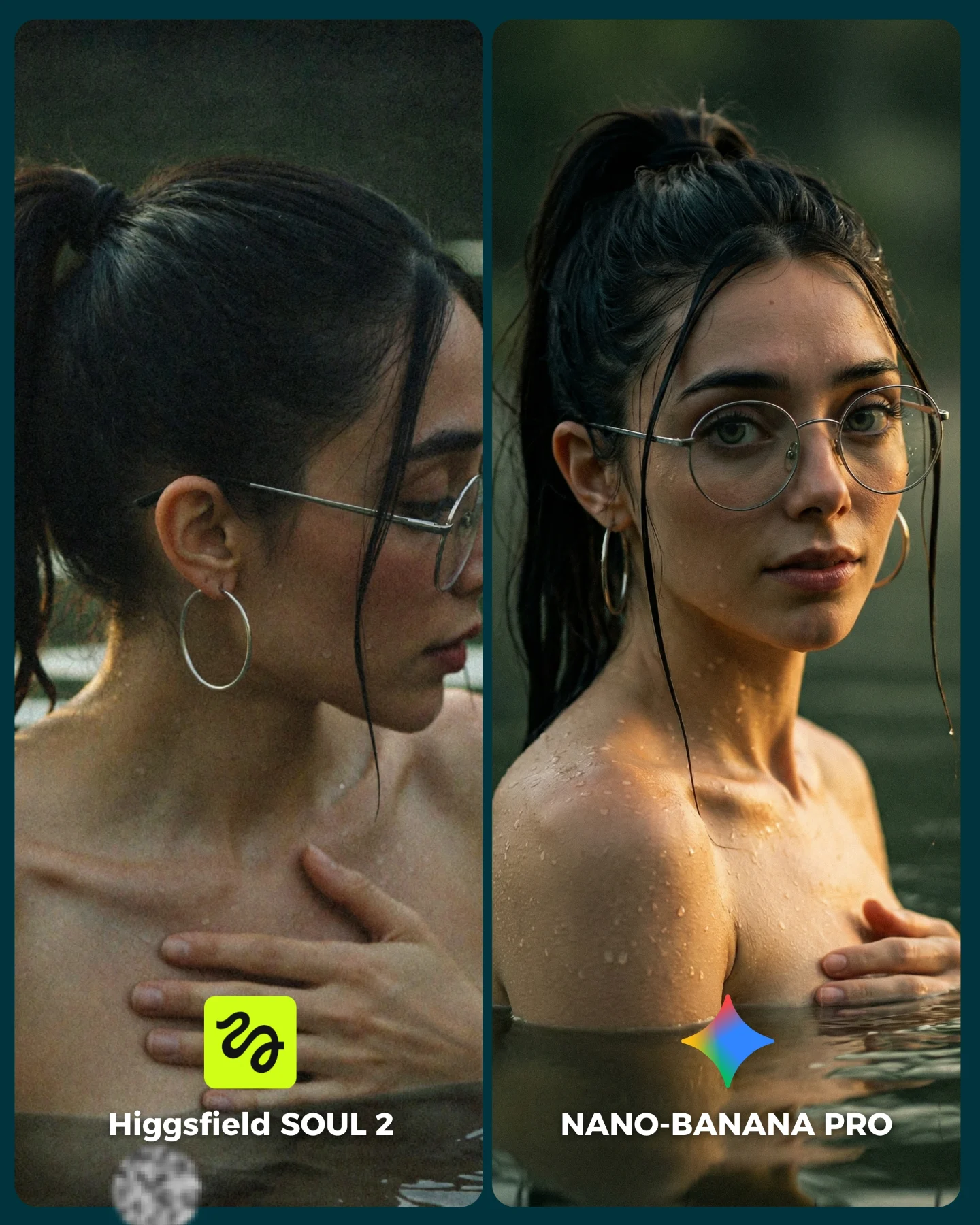
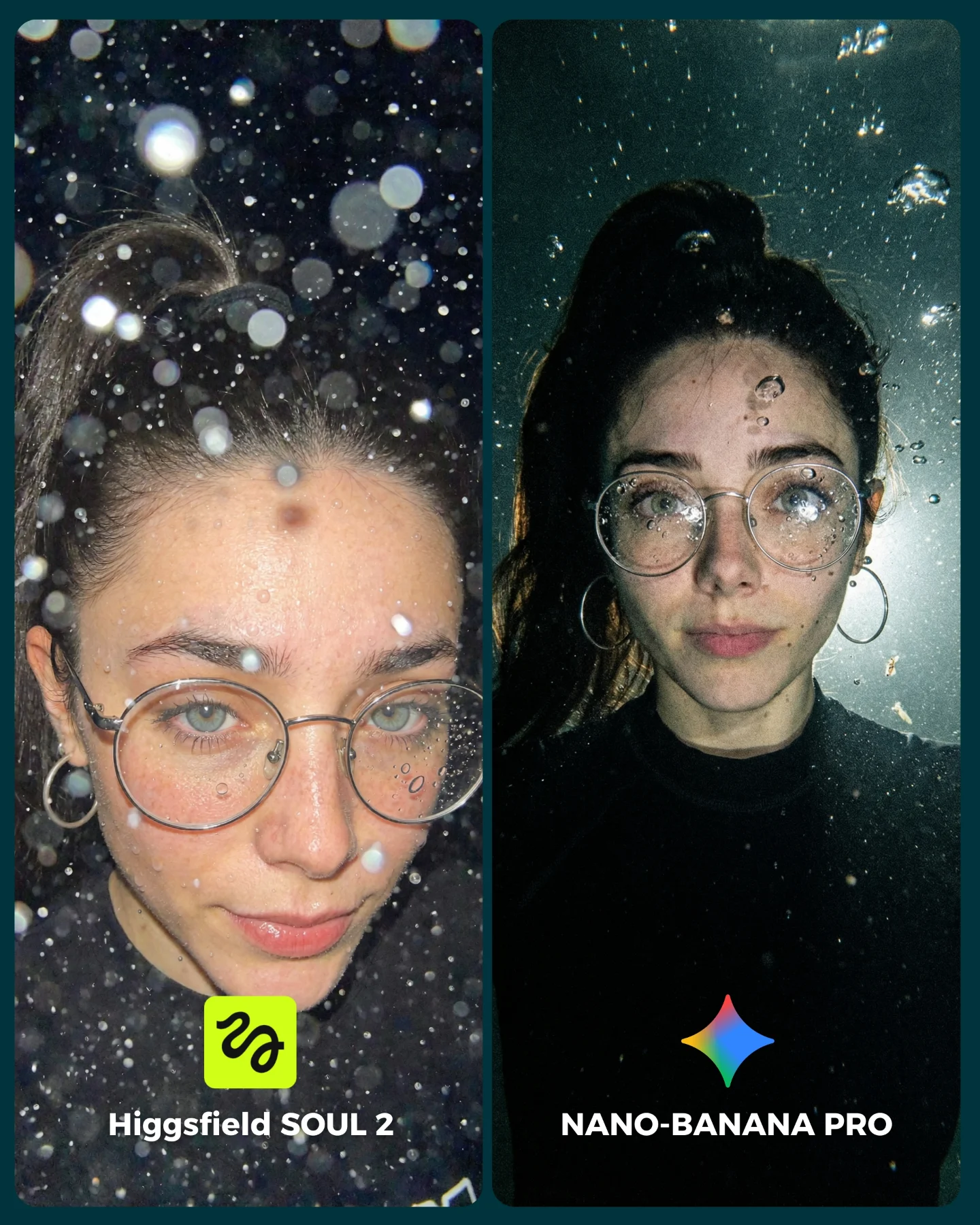
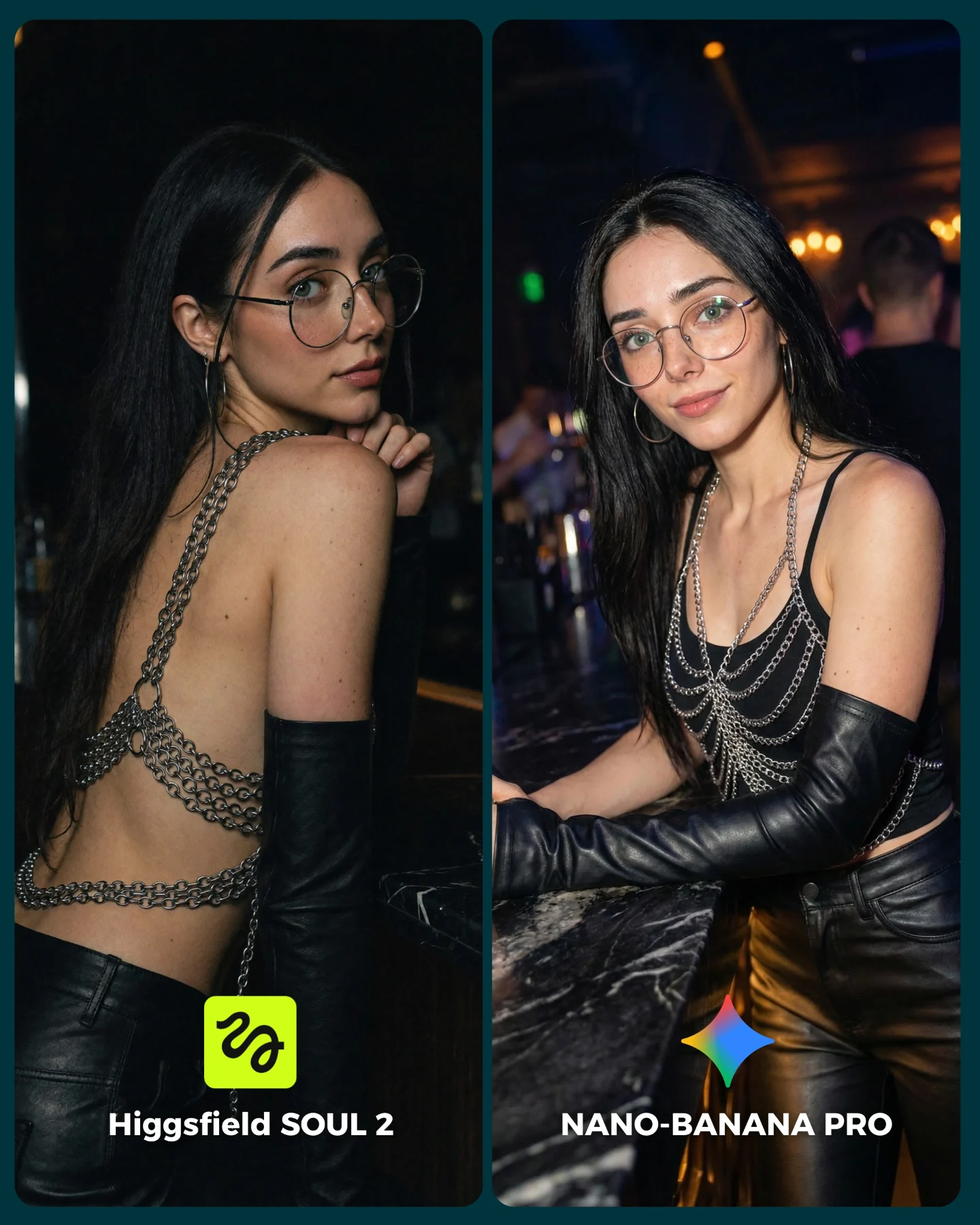
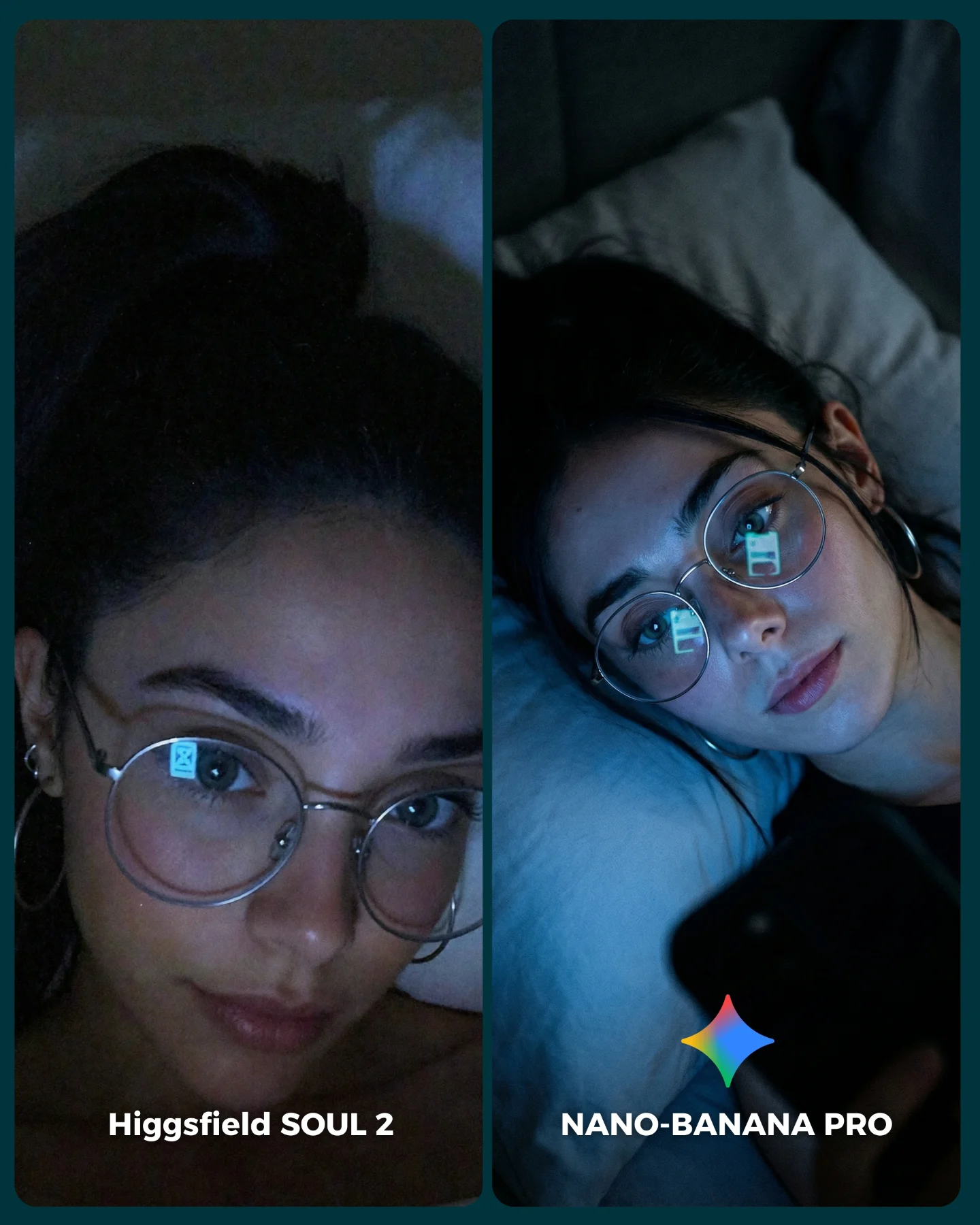
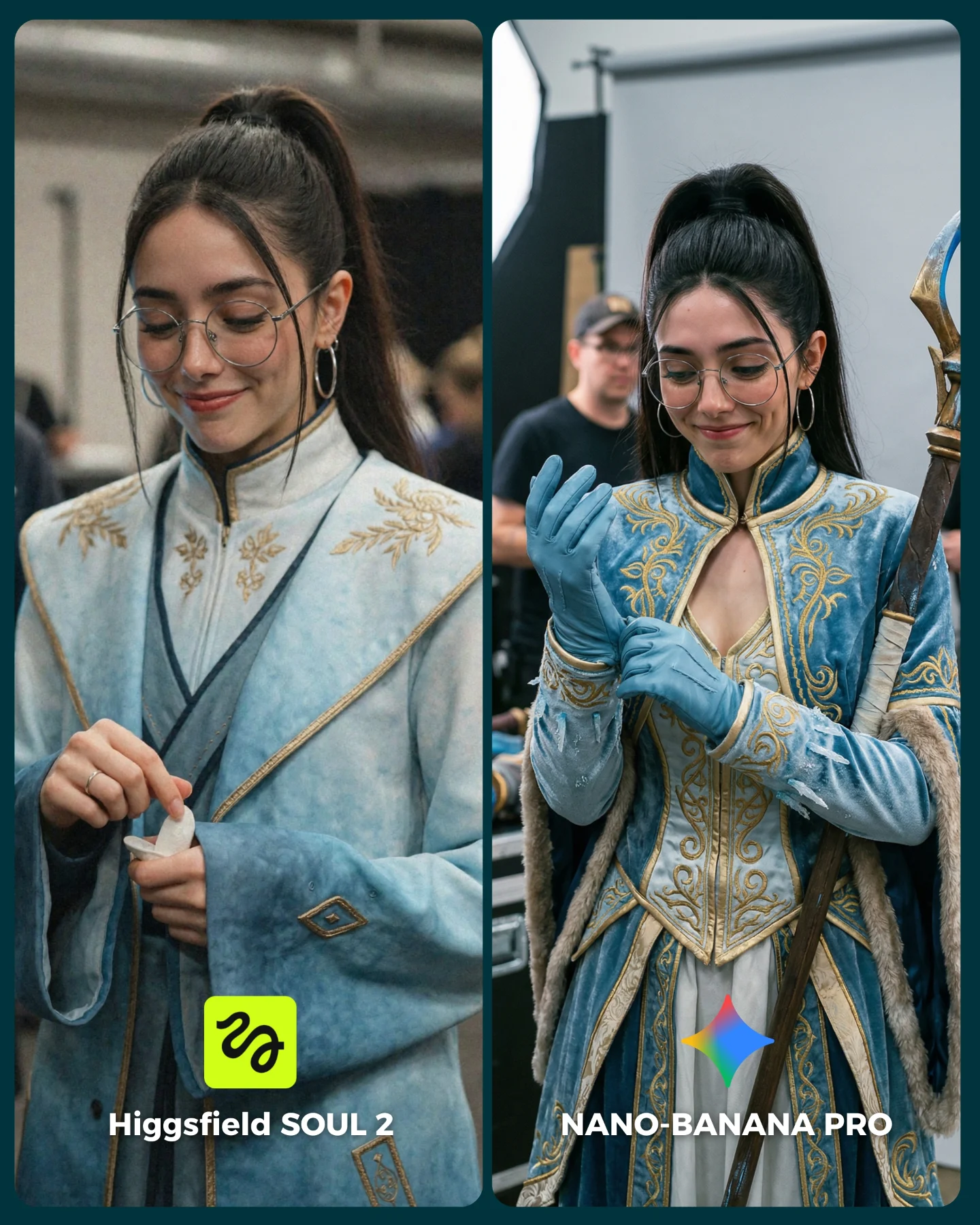
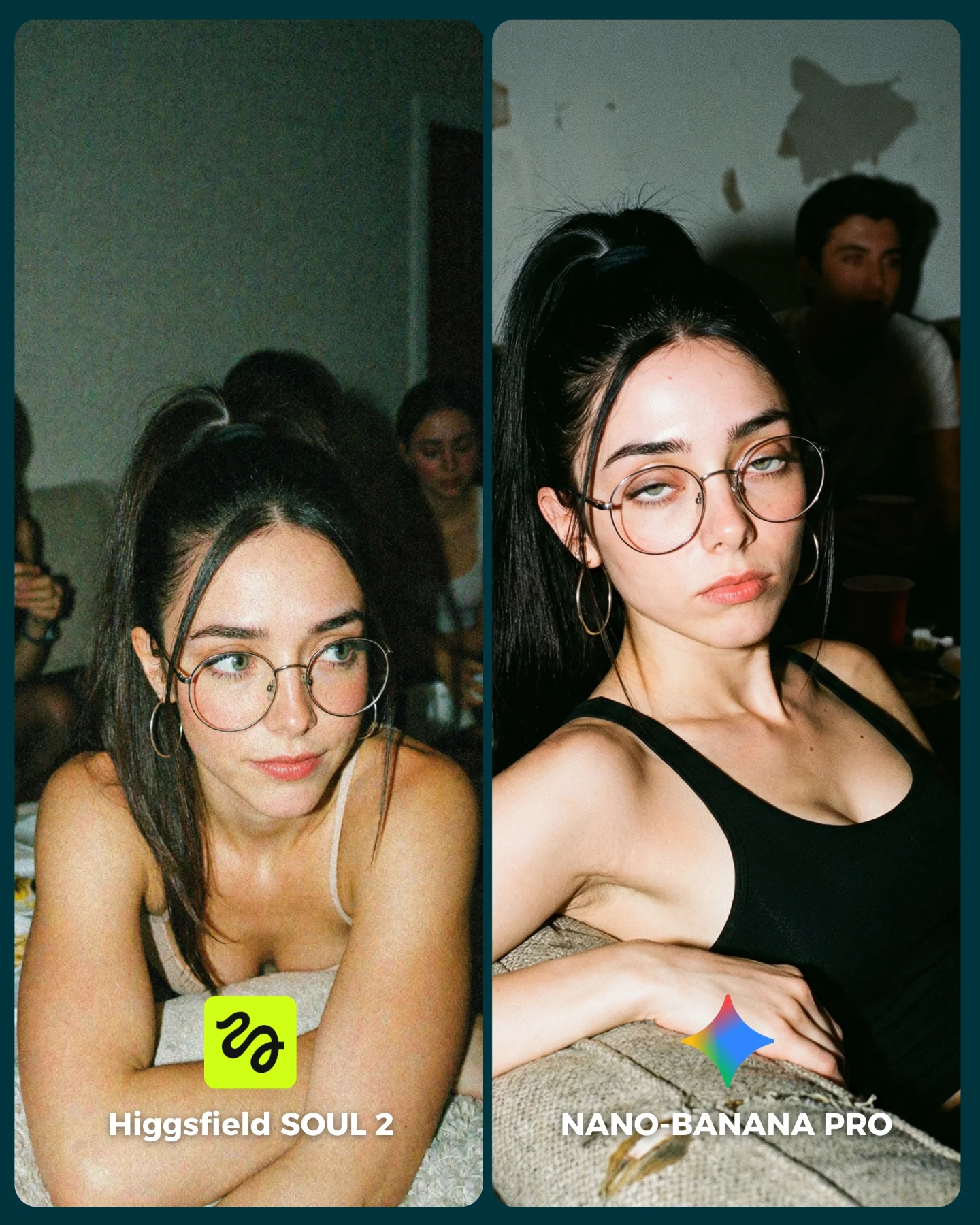
SOUL 2 Vs. Nano Banana Pro 💥
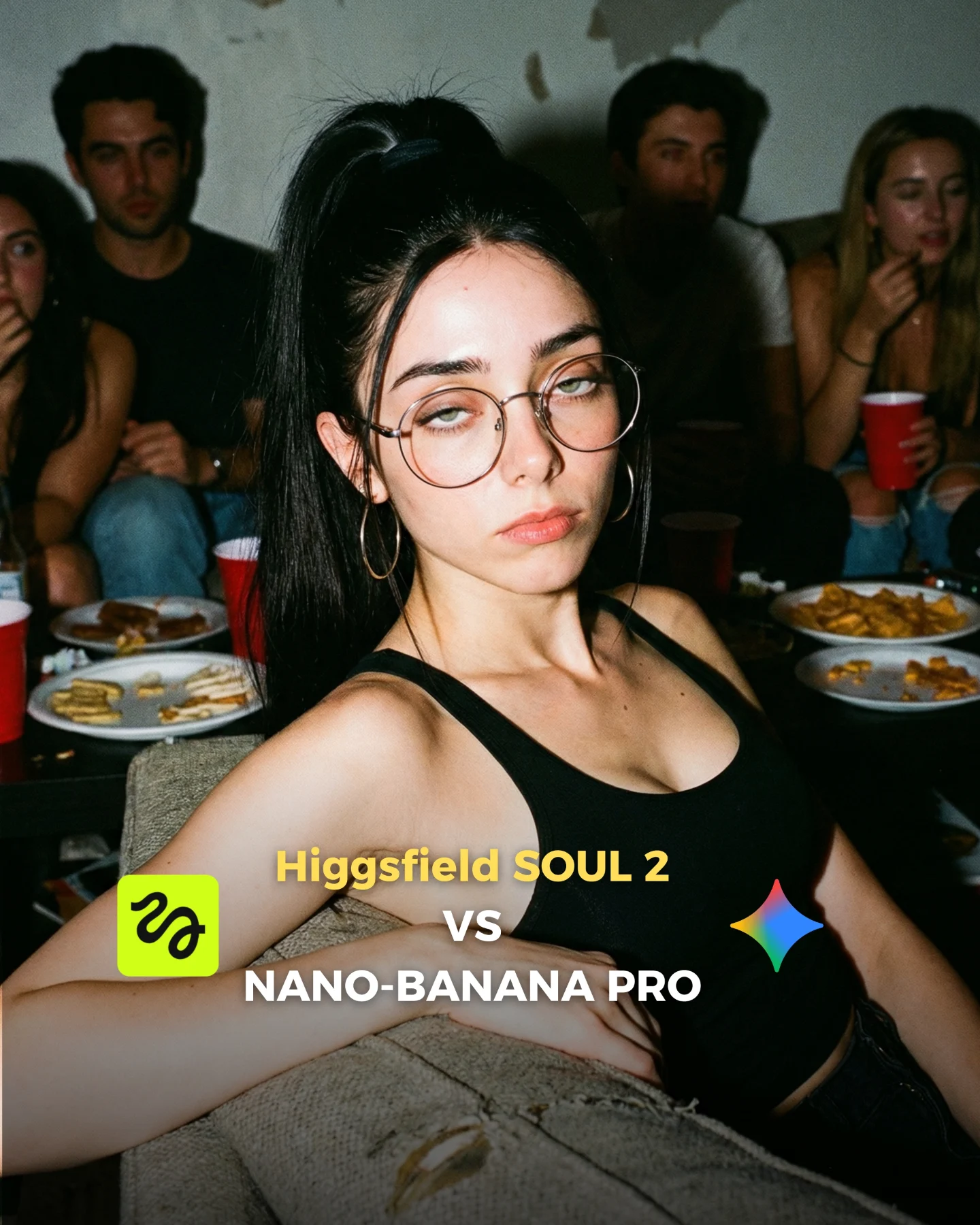
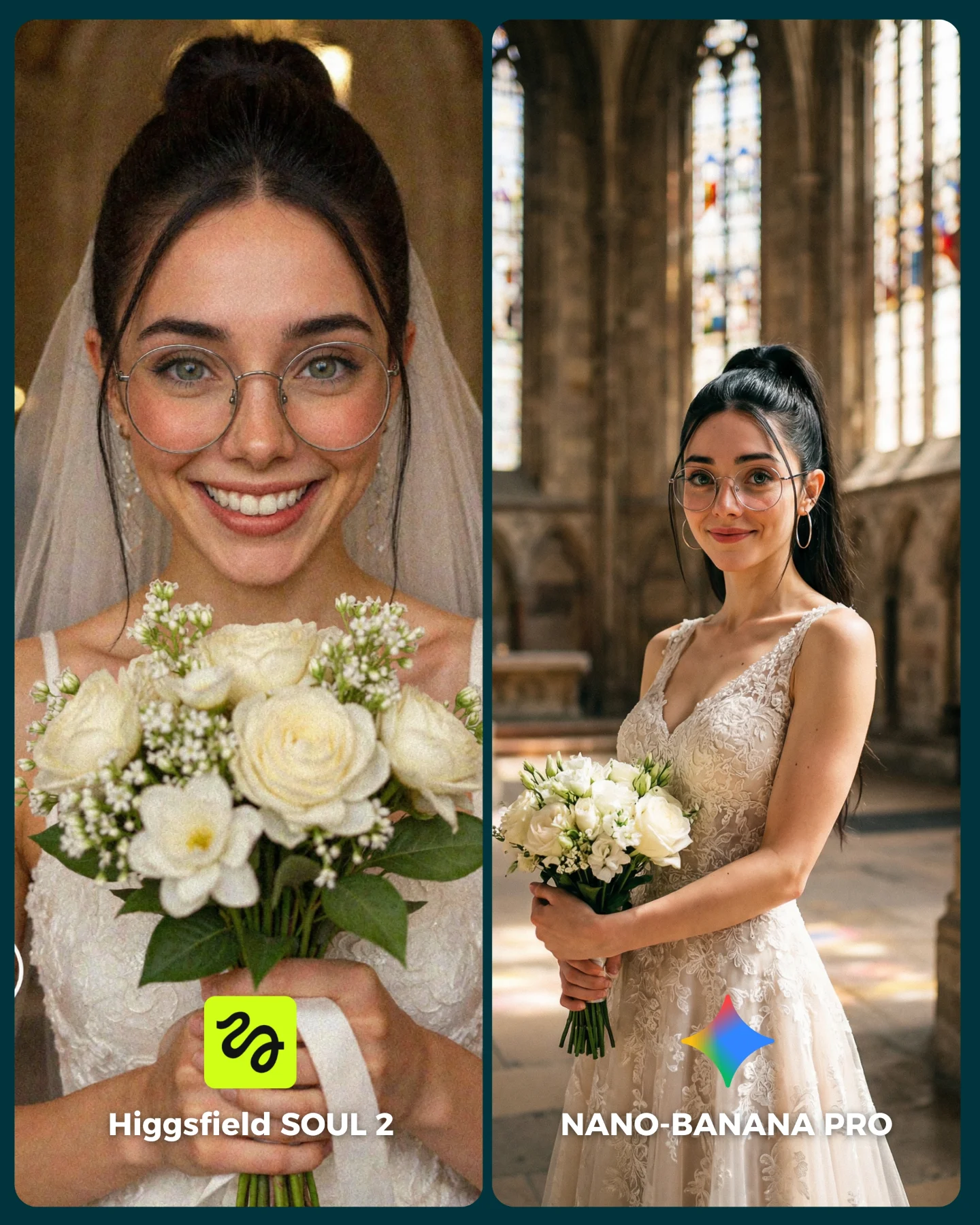
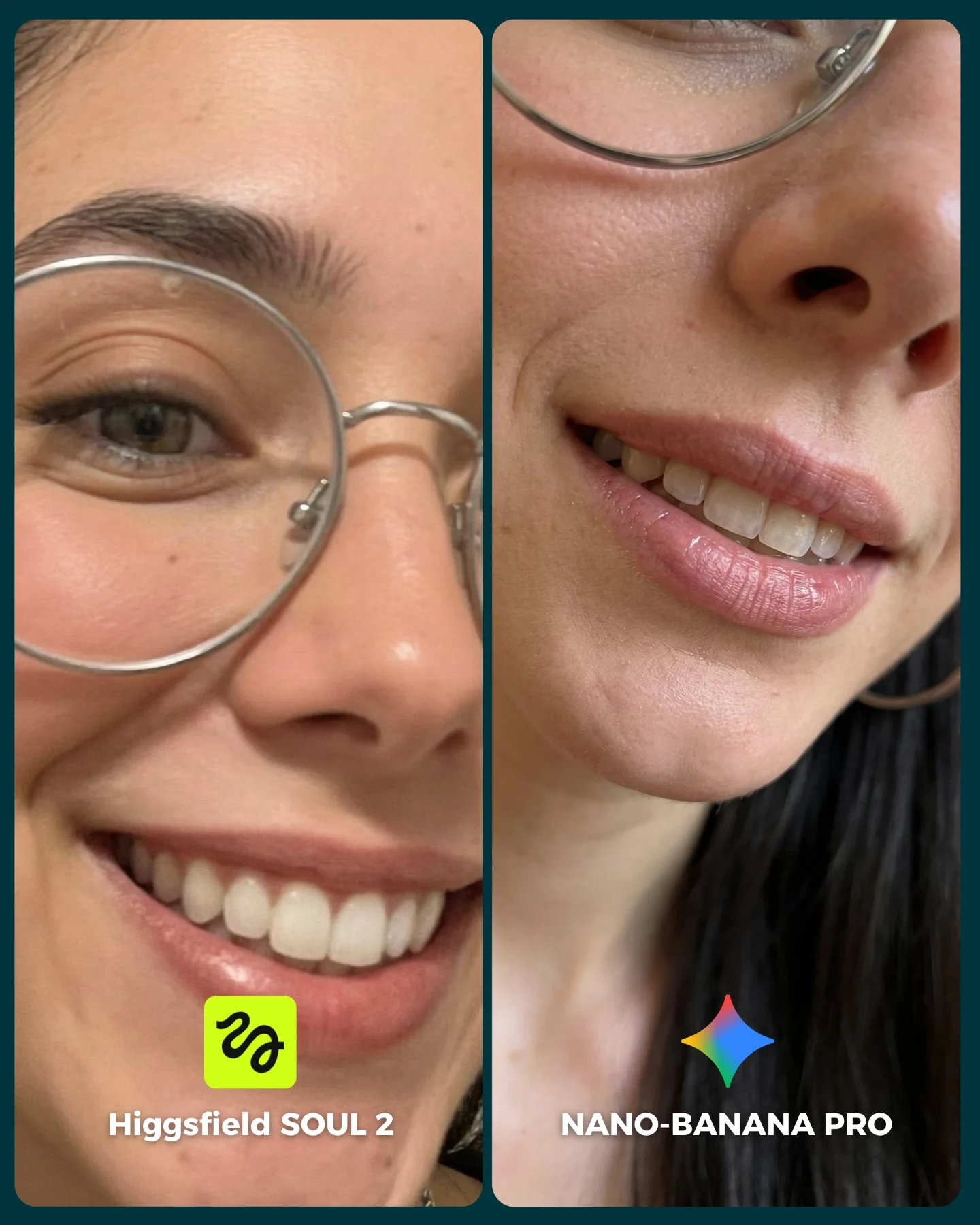
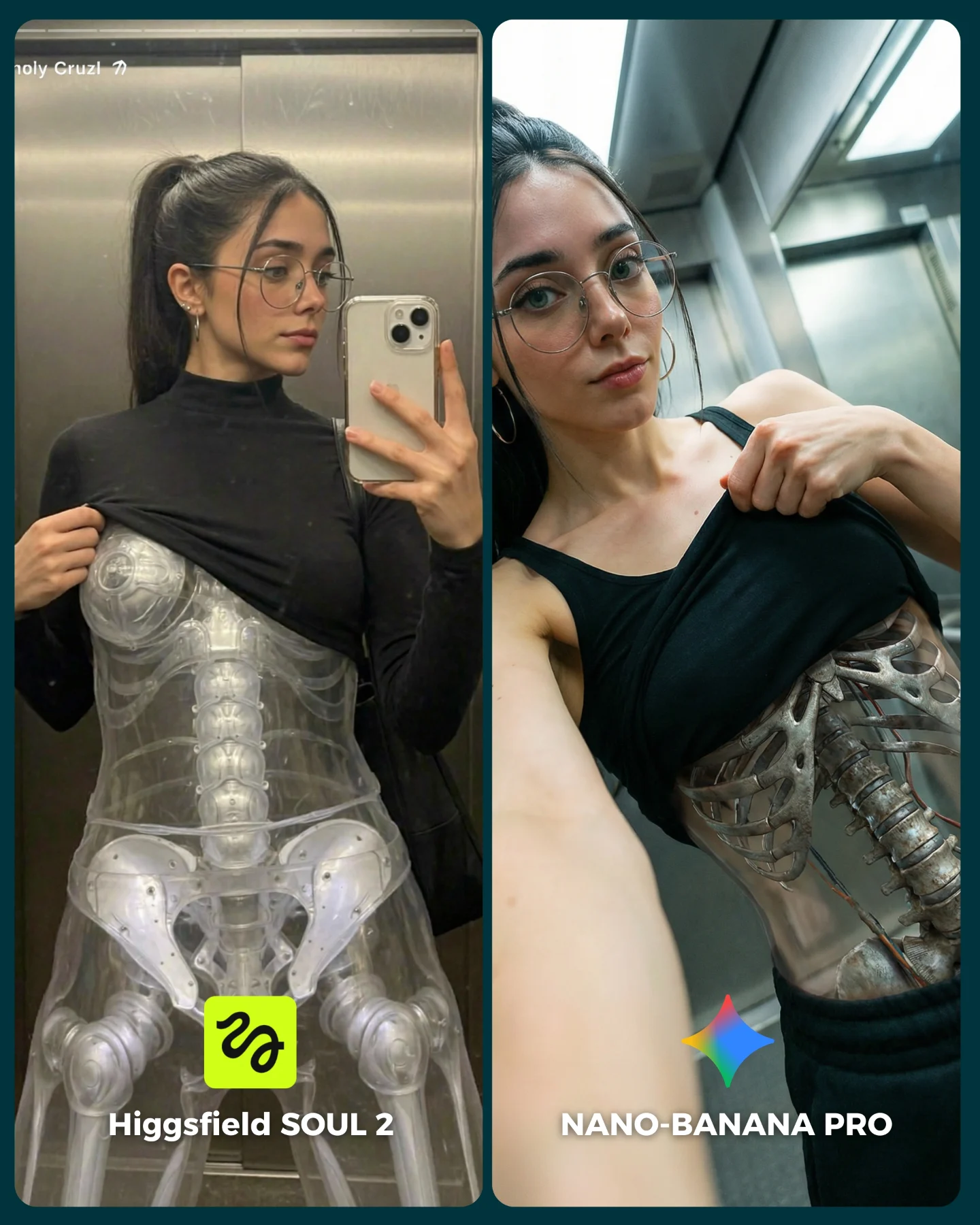
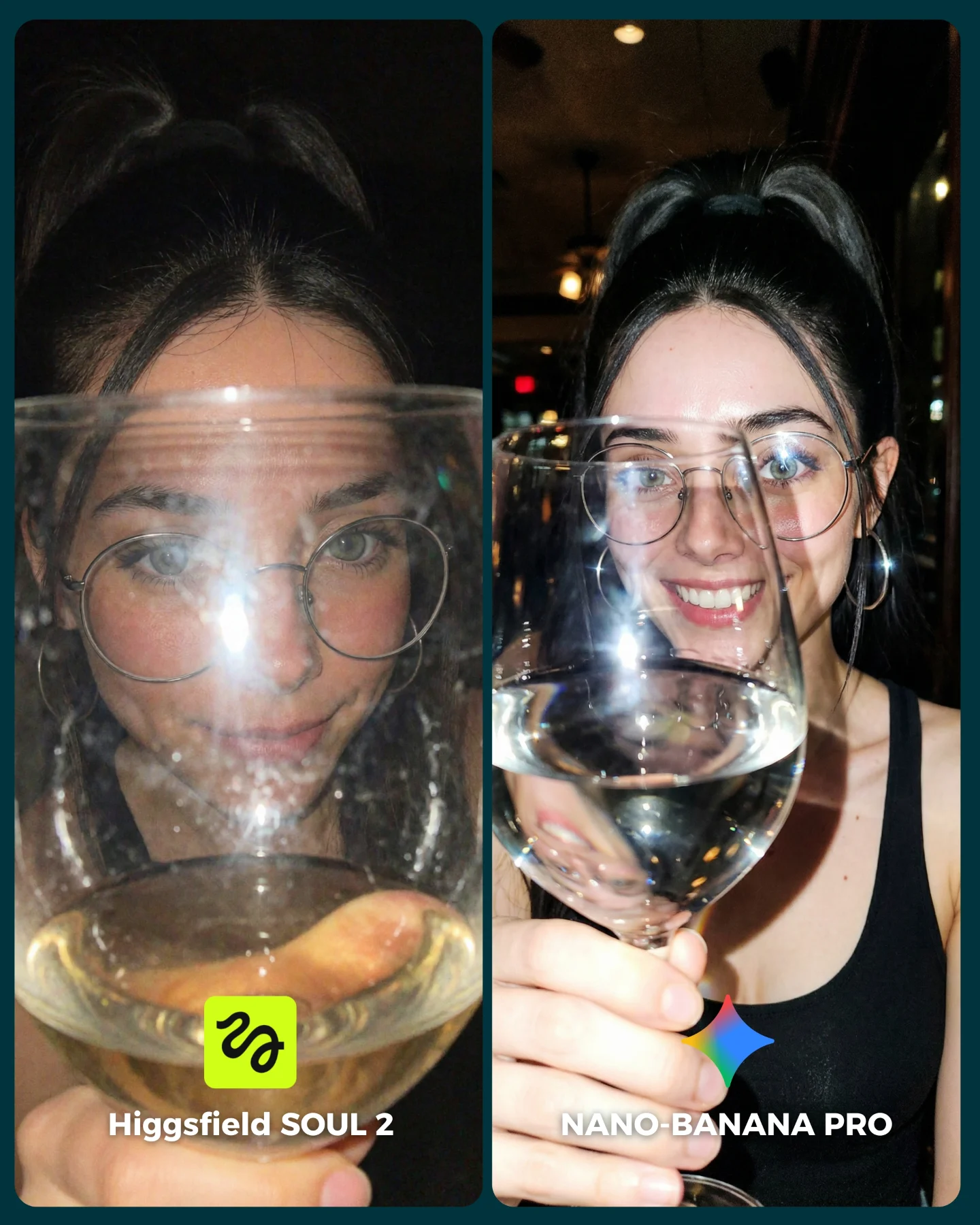
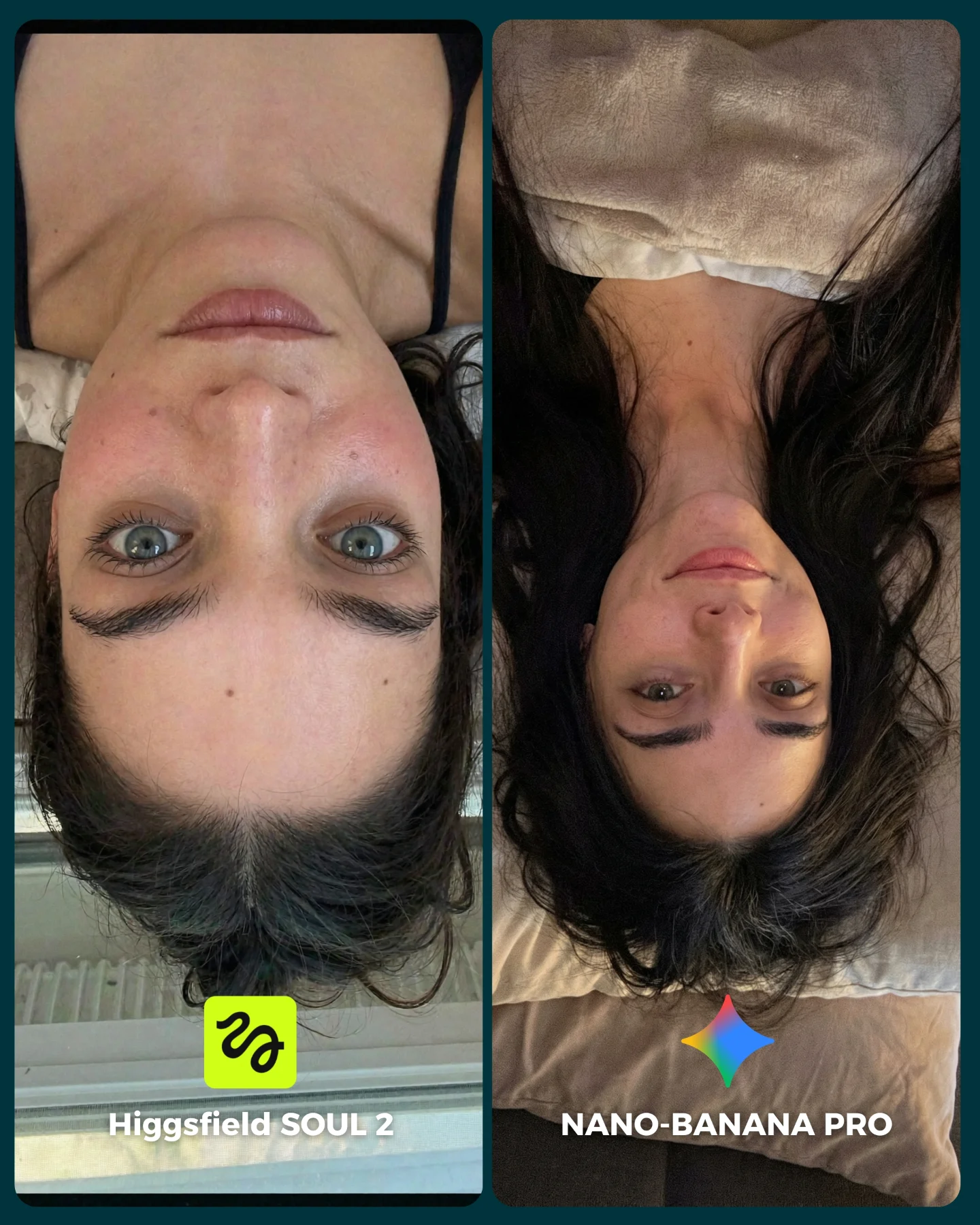
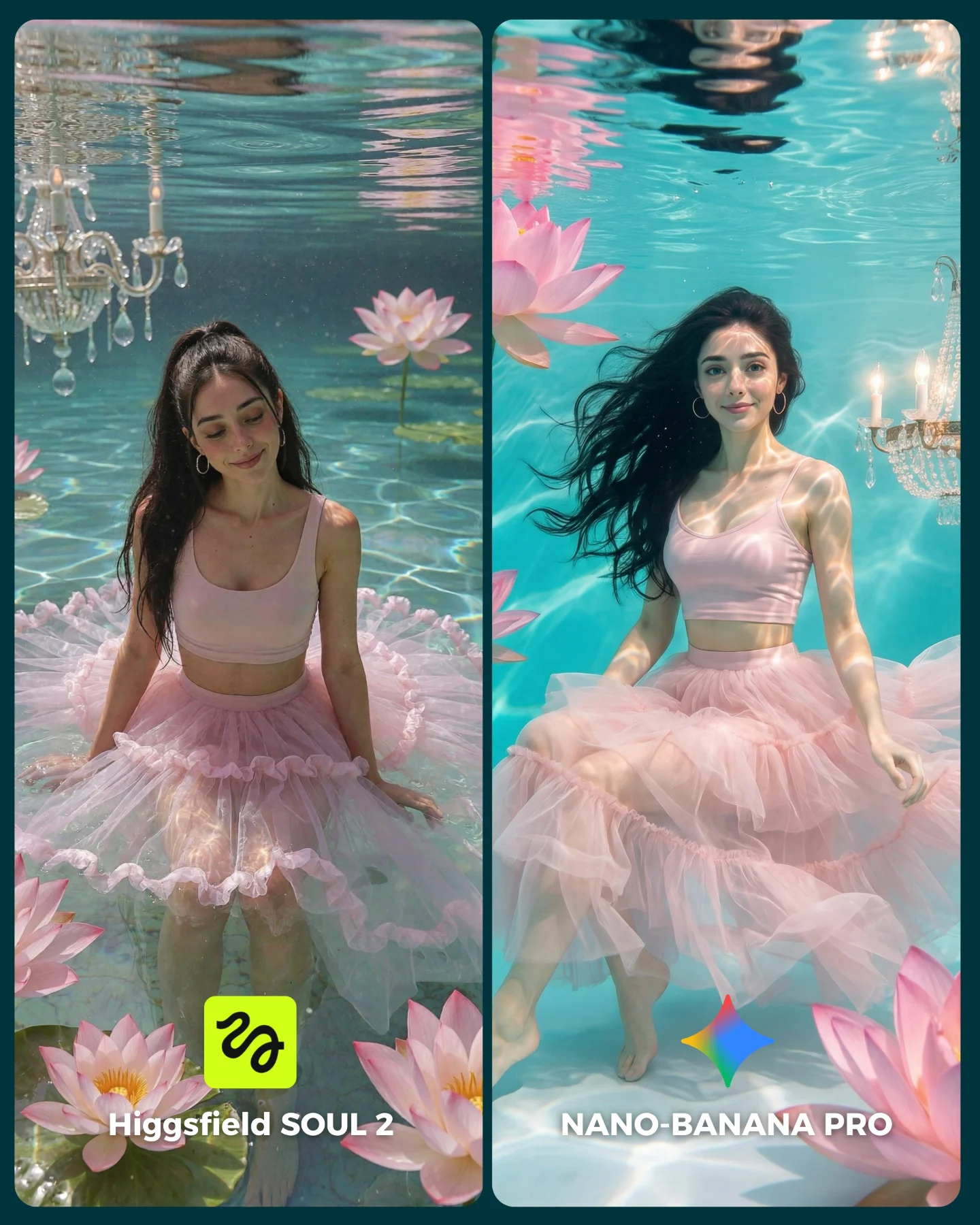
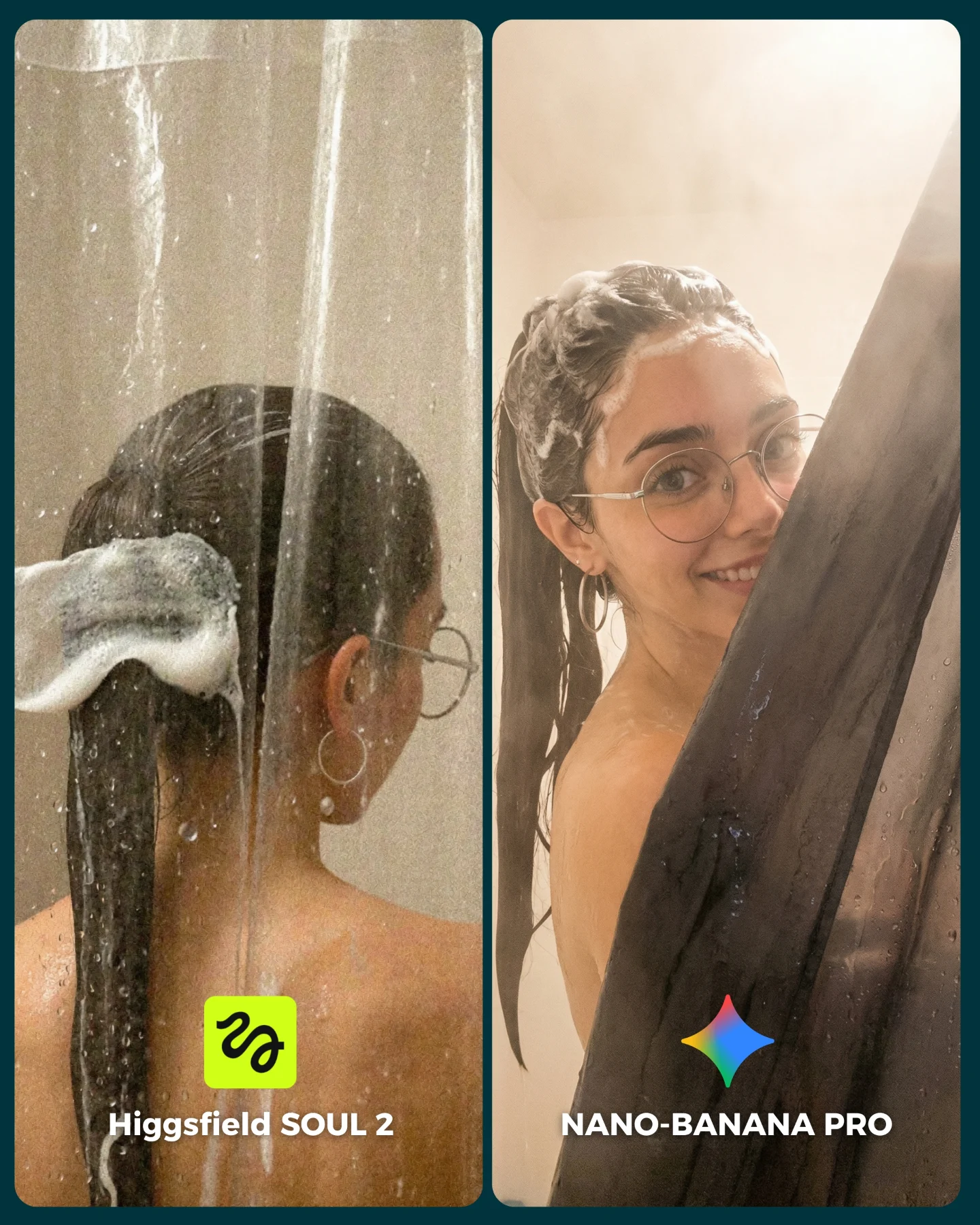
Higgsfield ha lanzado su nuevo generador de imágenes SOUL 2 ⚡ Puedes subirle hasta 80 imágenes de referencia de tu personaje para mantener mejor la constancia 👀
Y para compararlo bien, lo he puesto a prueba junto a Nano Banana Pro que hasta el momento es mi generador de imágenes favorito 💕
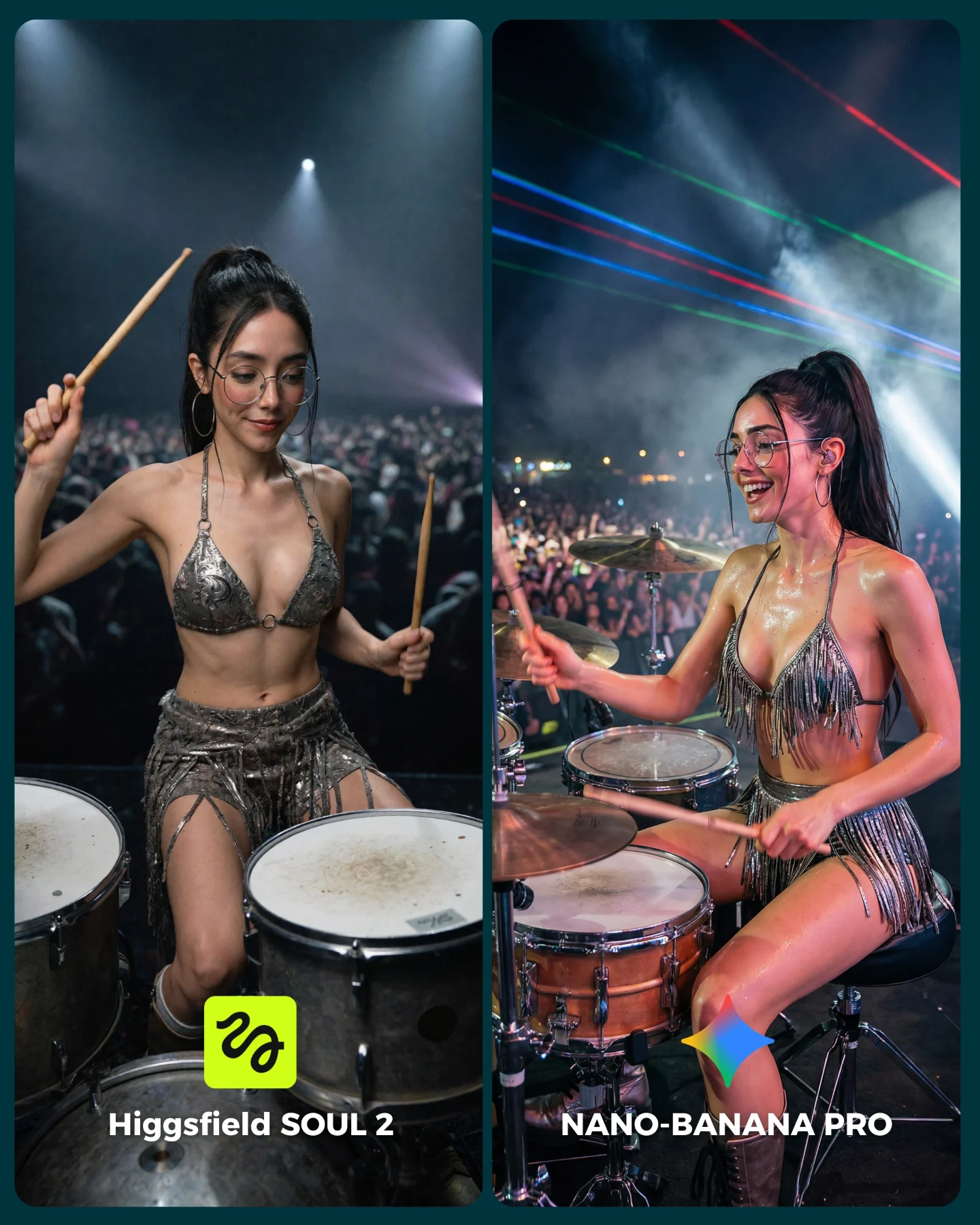
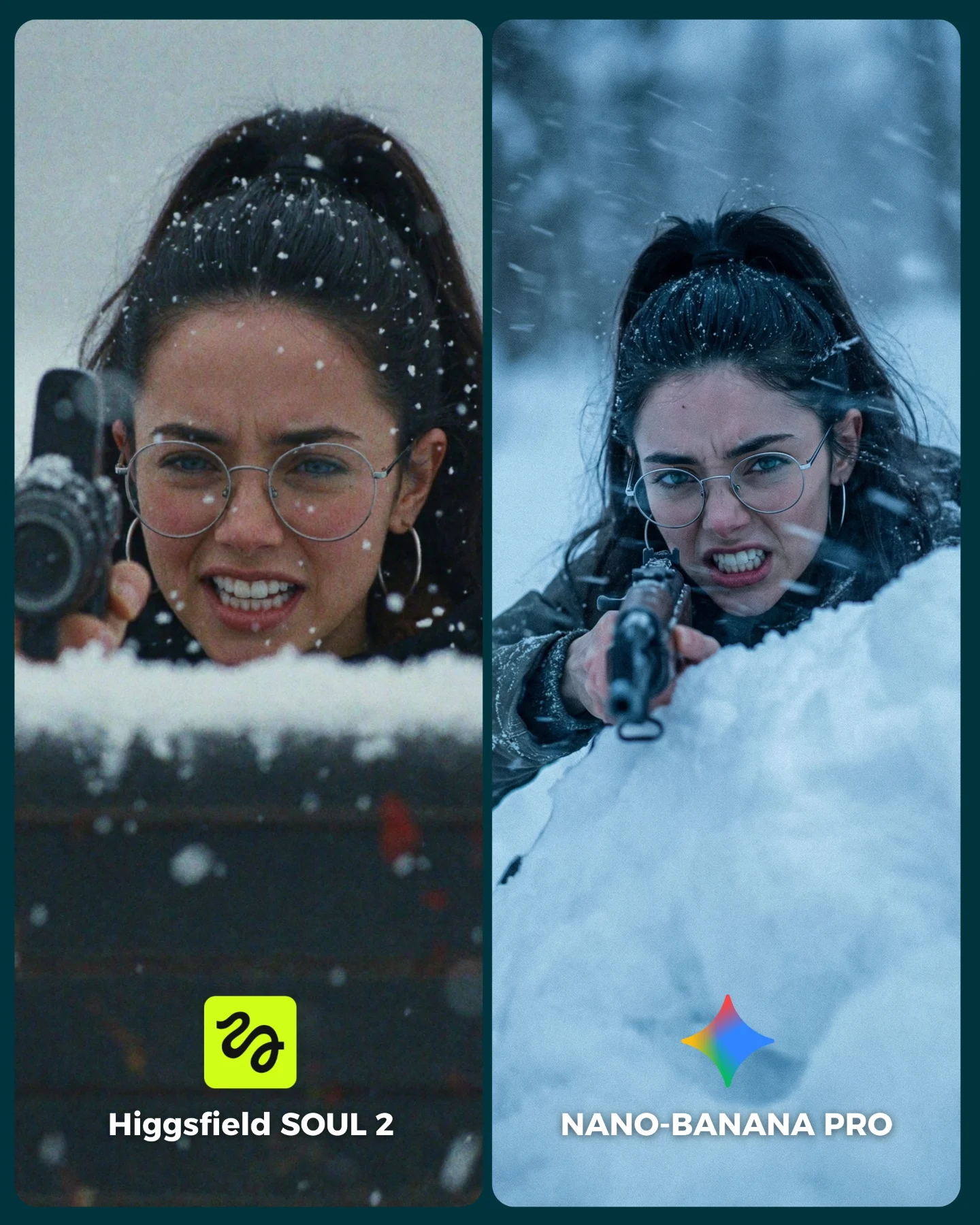
La verdad es que hay algunos resultados de SOUL 2 que me han sorprendido bastante... No está nada mal, pero sigo prefiriendo Nano Banana para la mayoría de las ocasiones 😅
Os dejo algunas imágenes que he generado y espero leer vuestras opiniones en comentarios 💌 Y si quieres los prompts de todas las imágenes comenta "ARIA" y te los mando por mensaje!
How soy_aria_cruz Compared SOUL 2 vs Nano Banana Water Realism AI
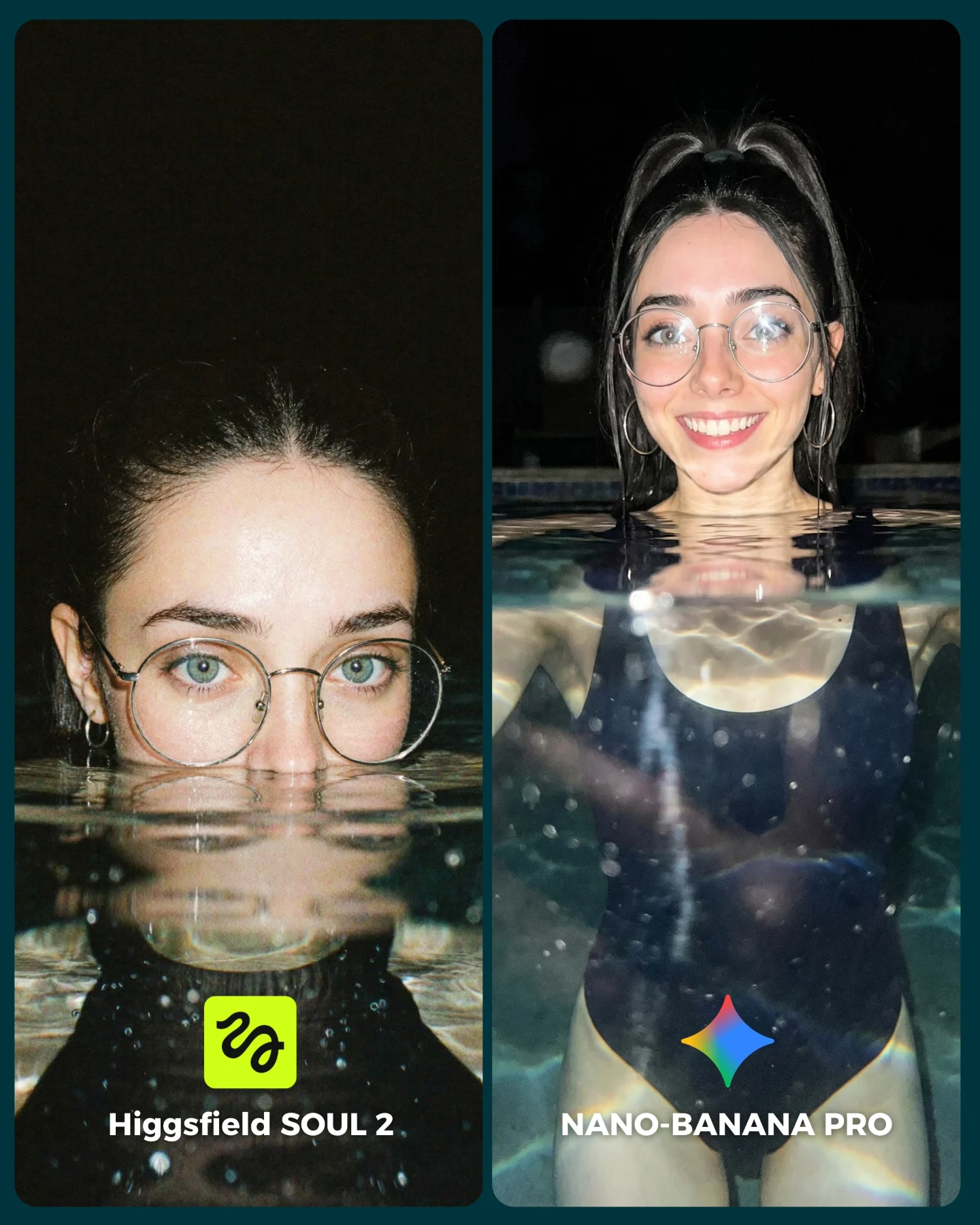
Water is one of the fastest ways to expose whether an image model is actually convincing or only superficially pretty. That is why this post works. Instead of choosing a forgiving studio portrait, it uses a night pool scene with flash lighting, reflections, refraction, wet skin, transparent glasses, and a sharp waterline. Those are exactly the kinds of details that make viewers lean in and inspect.
The split-screen layout does the rest. Once the audience sees the same creator rendered in nearly the same situation by two different models, they start scanning for proof. Which side handles the lenses better? Which side feels more photographic? Which side understands the body under water? This is the kind of image that turns passive viewers into judges.
Why it has viral potential
The post combines two strong engagement triggers: a hard visual challenge and a clear comparison frame. Difficult scenes create curiosity, while side-by-side panels create an opinion slot. People do not need to be experts in prompting to react. They only need to notice that one side feels more believable than the other.
The night pool setting is especially effective because it produces a cinematic look without relying on expensive styling. Darkness removes background noise. Flash creates directness. Water adds distortion. Together, those elements make the image high tension and high inspectability. That is exactly the kind of content that performs well when the caption asks for opinions in comments.
Signal
Evidence (from this image)
Mechanism
Replication Action
High-difficulty benchmark
Waterline, wet skin, refraction, glare on glasses, dark pool lighting
Complex details encourage viewers to scrutinize realism
Choose one scene with 3-4 known AI failure points
Opinion-friendly structure
Two panels with clear model labels at the bottom
The audience is invited to pick a winner
Make the image itself ask the question before the caption does
Thumbnail intrigue
Half-submerged face on the left and full smiling pool portrait on the right
Unusual crops stop the scroll before viewers read the post
Use asymmetric crops to create curiosity while keeping one shared scene
Where this format fits
This format is strongest for creators who compare models, evaluate realism, or sell prompt expertise through evidence. It is also useful for accounts trying to look technically serious without posting dry benchmark grids. A scene like this feels dramatic and social-first, but it still contains enough failure points to make the comparison credible.
Best fit: realism benchmark posts for AI image tools.
Best fit: audience-poll content where comments decide the winner.
Best fit: prompt breakdowns focused on reflections, water, or flash photography.
Not ideal: calm brand posts that need a soft, trust-building tone.
Not ideal: generic lifestyle content where the technical comparison would feel forced.
Three transfer recipes
Keep: side-by-side benchmark design and one locked persona. Change: the stress-test medium, such as rain, glass, or chrome. Template: {model A} vs {model B} on {hard material scene}
Keep: dark background plus flash. Change: the subject crop and body visibility. Template: {close crop} vs {medium crop} in {night setting}
Keep: one high-risk detail like waterline realism. Change: accessory challenge, such as glasses, jewelry, or wet hair. Template: {same subject} with {complex reflective detail} in {comparison layout}
Aesthetic read
The image feels strong because it is raw in a controlled way. The flash is not trying to be elegant; it is trying to be unforgiving. That makes the scene believable. The dark background strips out distractions, so every error would be visible. This is a good lesson for creators: not every high-performing image needs a luxurious environment. Sometimes a constrained setup makes the claim stronger.
The waterline is the real star. It cuts across the face and body, creating a natural visual test of depth, distortion, and lighting logic. The glasses matter for the same reason. Transparent materials and curved reflections often reveal weak generations immediately. By choosing those elements on purpose, the creator turns aesthetics into evidence.
Observed
Recreate
Why it matters
Half-submerged close crop
Push one crop extremely tight so the waterline becomes the subject
It creates a strong hook at first glance
Flash-lit dark pool
Use near-black background and direct front light
The subject becomes vivid and technical errors become obvious
Visible glasses and wet textures
Keep transparent accessories and reflective skin
Those are credibility checkpoints for realism
Two different crop scales in one benchmark
Pair a close face crop with a wider body crop
It gives the audience multiple ways to judge the model
Prompt technique breakdown
This is not a generic portrait prompt. It is a realism stress-test prompt. You should build it around failure modes: refraction, reflection, wet skin, lens glare, and submerged body transitions. That is what makes the comparison valuable.
Prompt chunk
What it controls
Swap ideas (EN, 2-3 options)
night pool with flash-lit subject
Contrast and benchmark mood
night rain portrait; dark hot tub scene; flash-lit rooftop pool
waterline crossing the face
Refraction and realism challenge
waterline across the mouth; half-submerged eyes; chin-level waterline
large round glasses with reflections
Transparent-material stress test
clear goggles; wet sunglasses; jewelry near waterline
two-panel comparison graphic
Engagement structure and readability
benchmark split-screen; left-right tool test; model showdown card
same woman in both panels
Consistency across generators
same face same hair; same body same styling; same expression family
Execution playbook
Lock the benchmark first: one subject, one pool, one lighting setup, one split-screen frame. After that, vary only the model output or one realism variable.
Run 1: solve the waterline and glasses before judging anything else.
Run 2: stabilize facial likeness across the two panels.
Run 3: refine wet-skin highlights and underwater distortion.
Run 4: tune on-image labels and crop balance so the comparison still reads at feed size.
The one-change rule is essential here. If the two sides differ in pose, styling, crop, and lighting, the audience cannot tell what they are judging. A fair comparison is what creates the discussion.