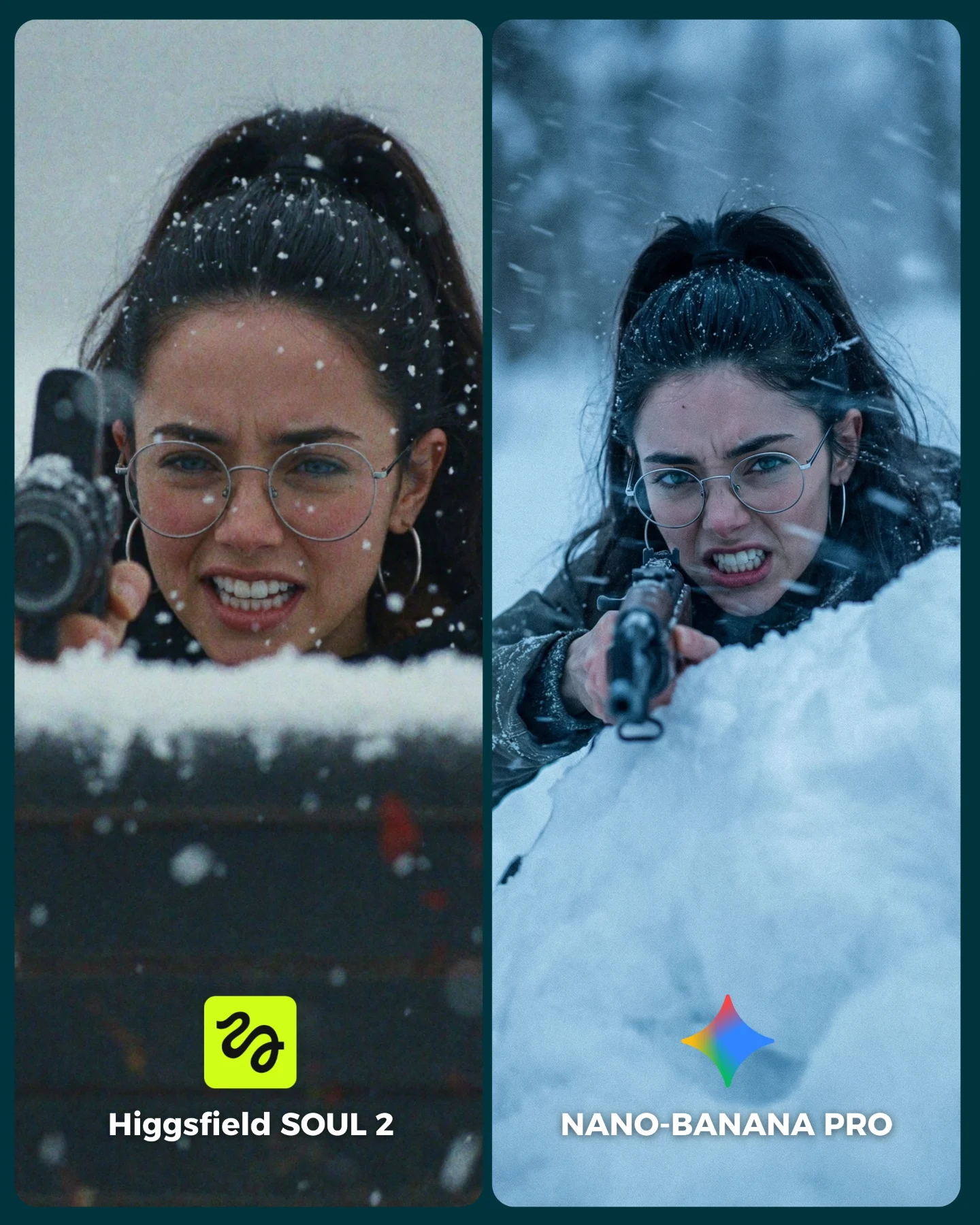
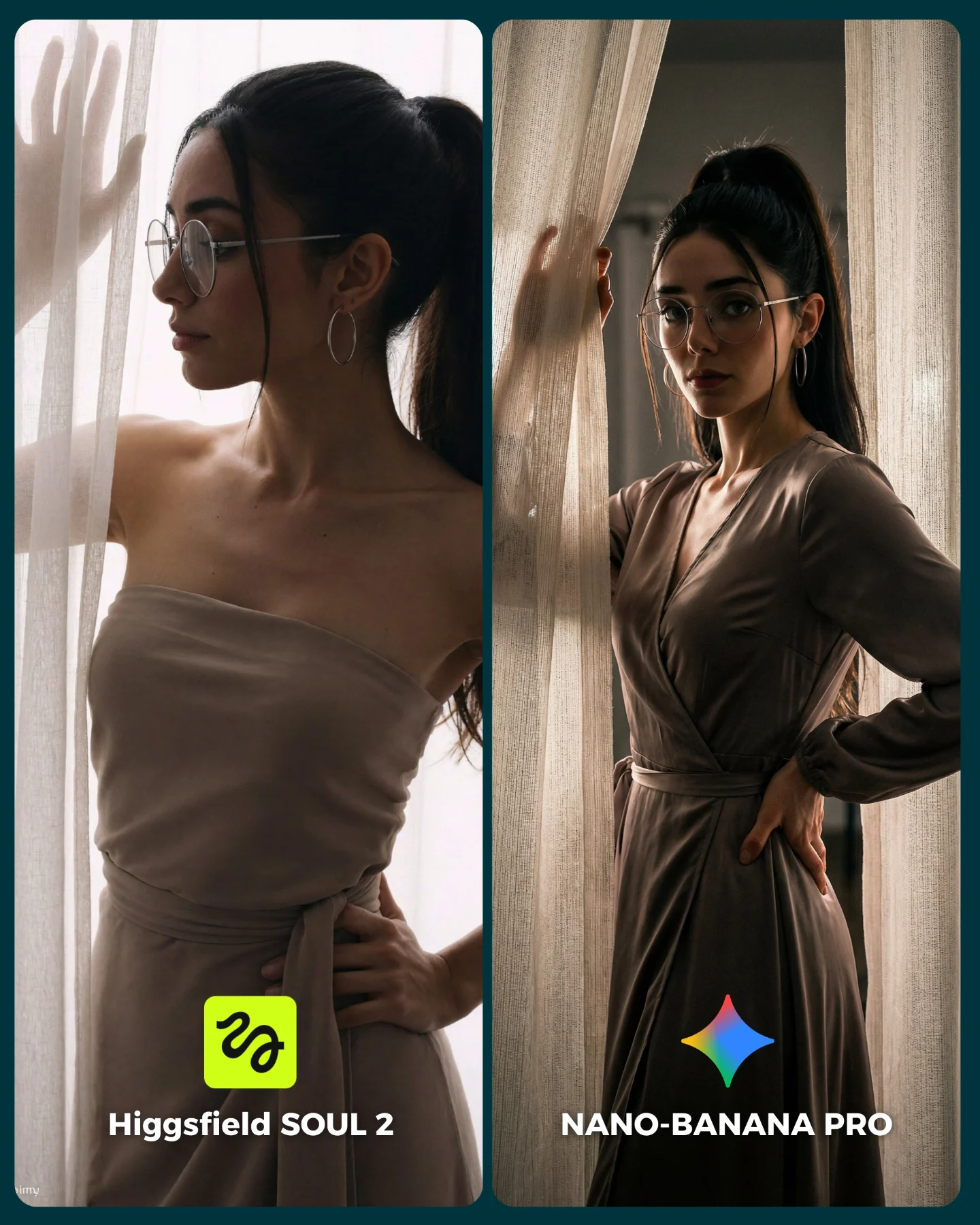
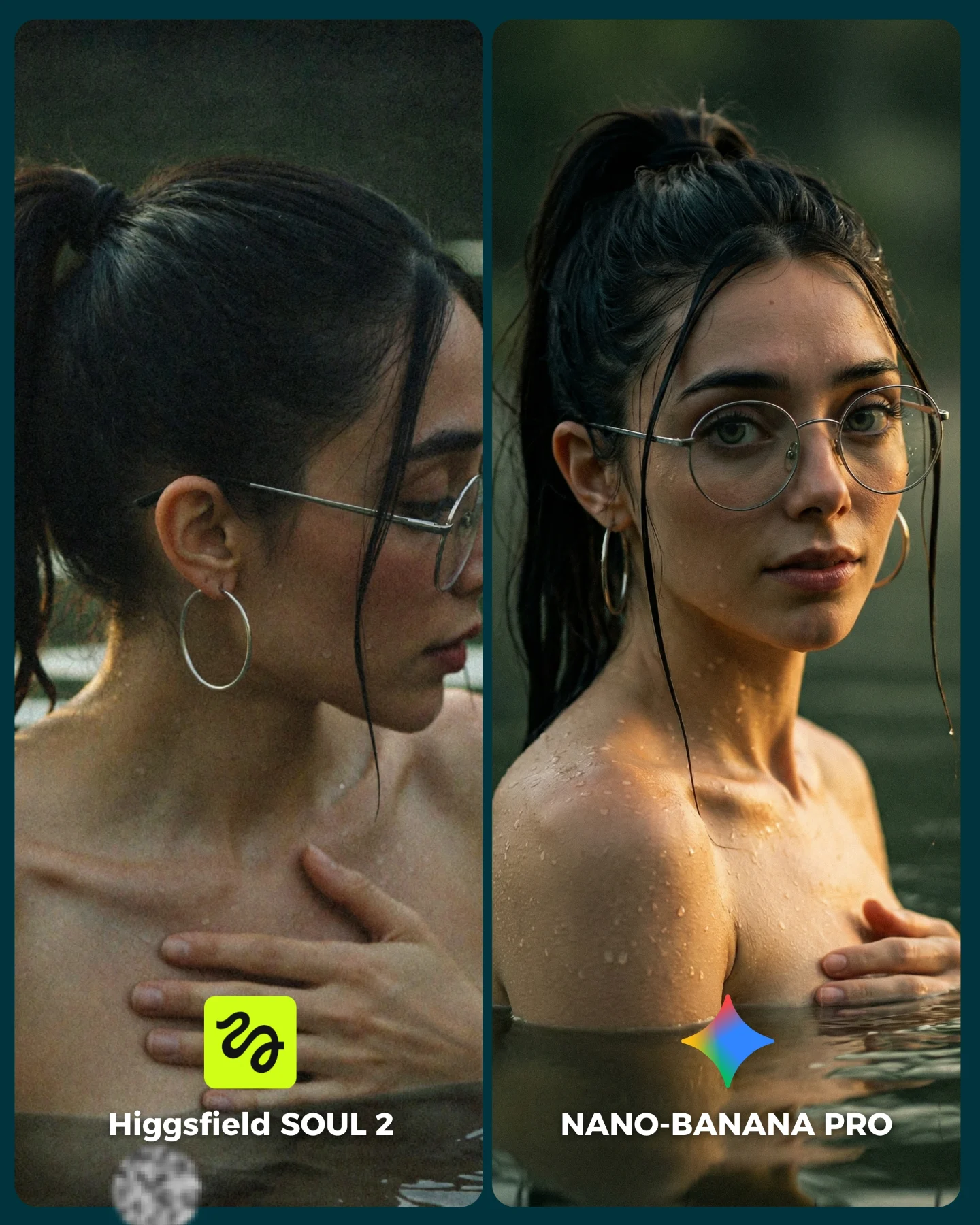
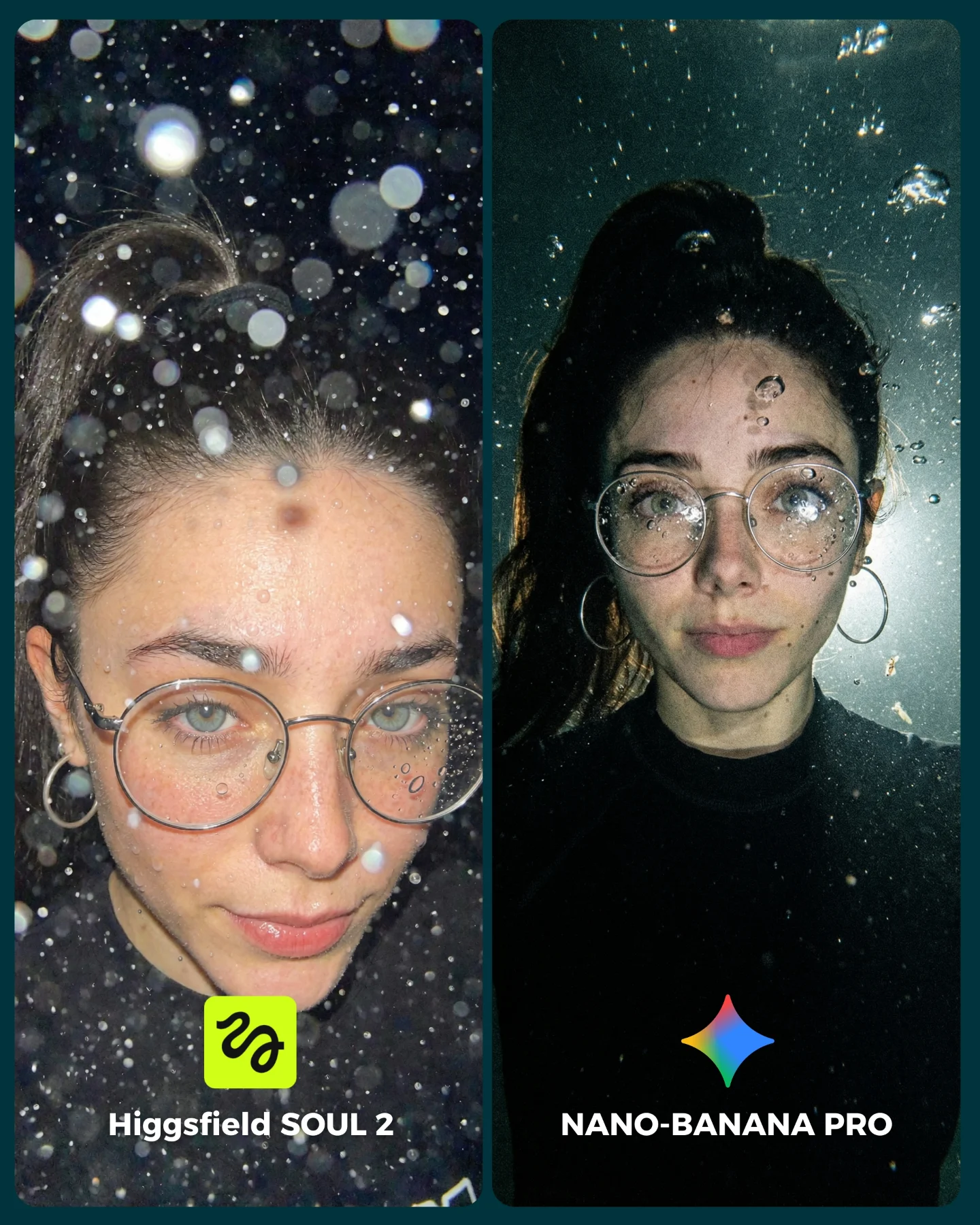
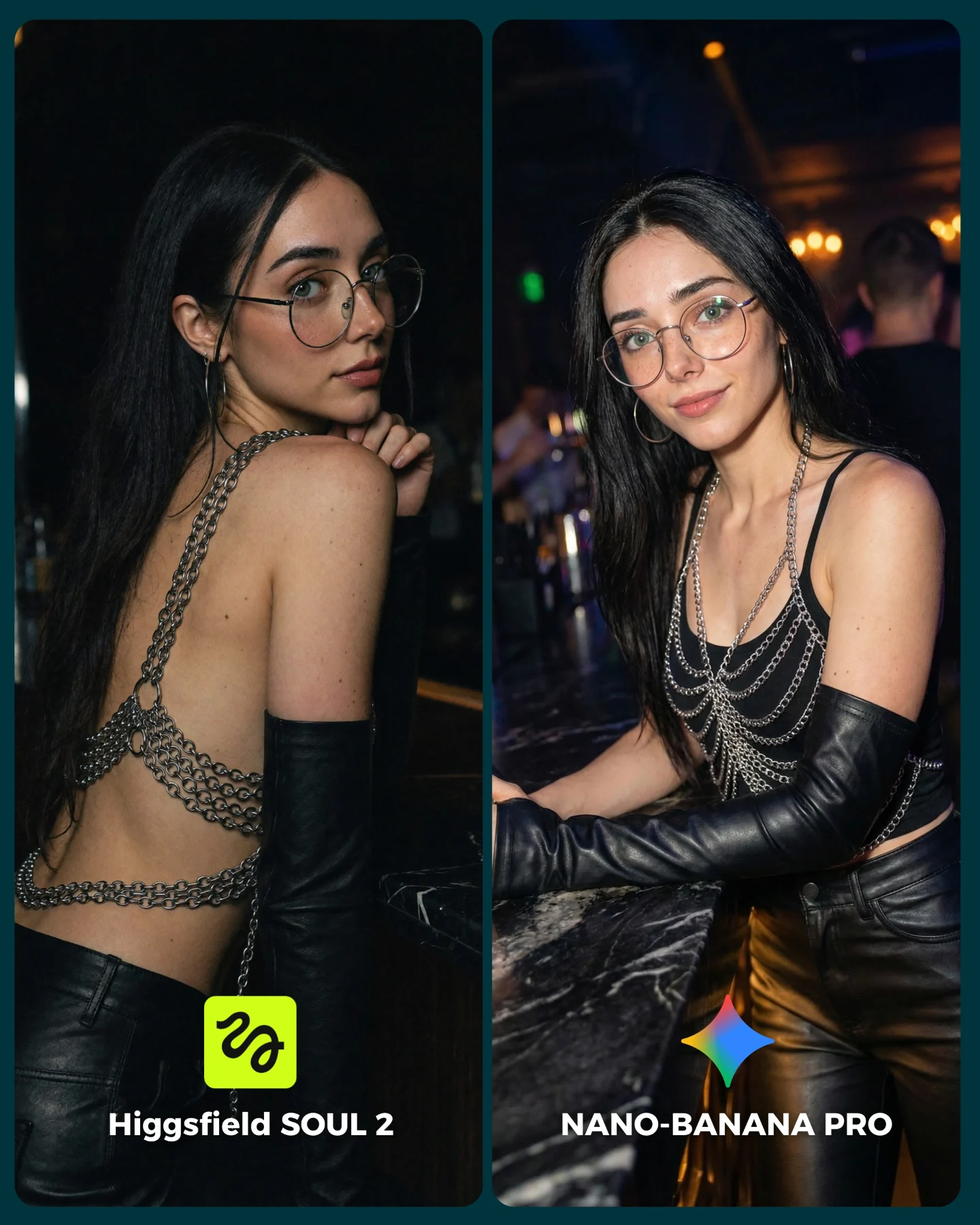
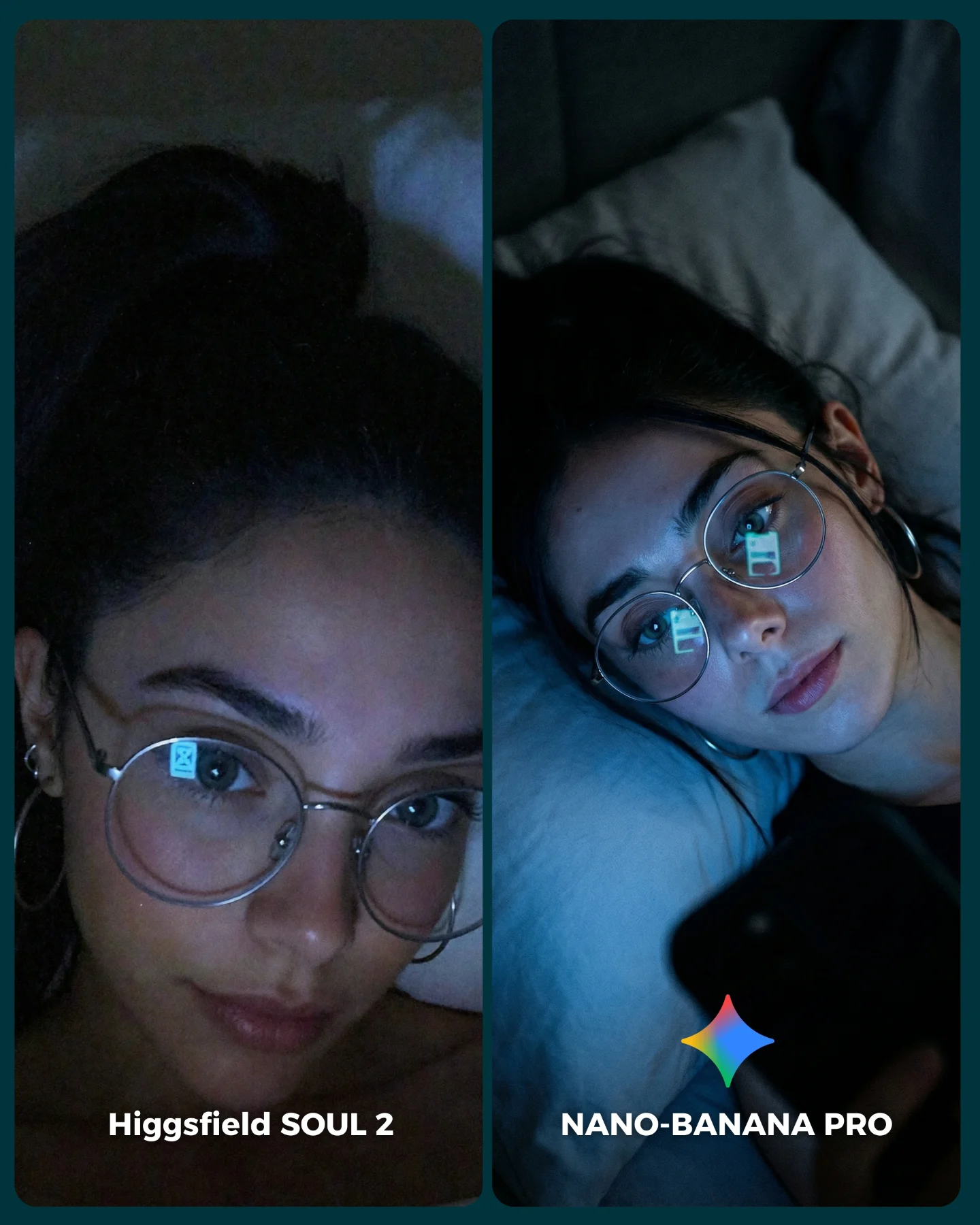
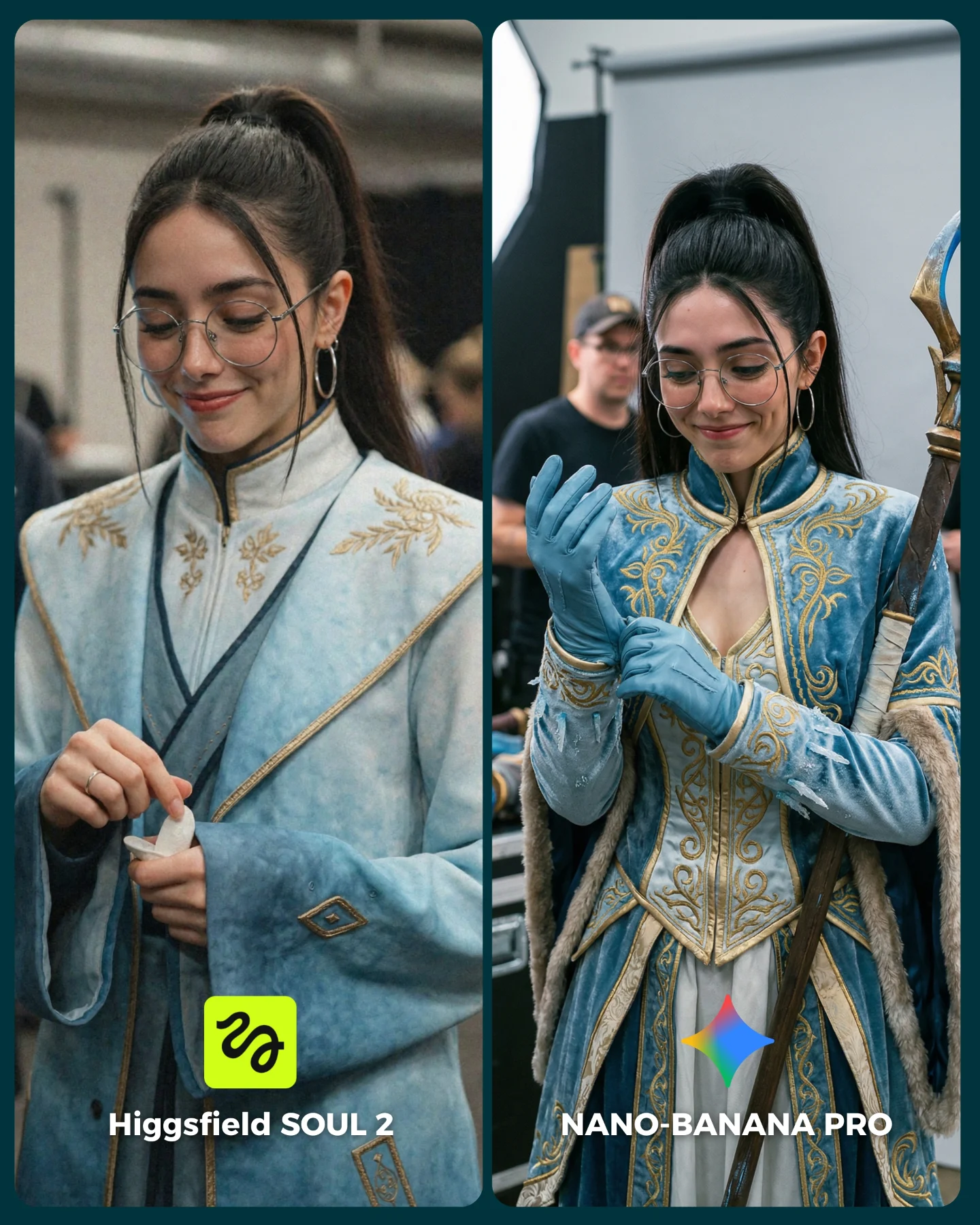
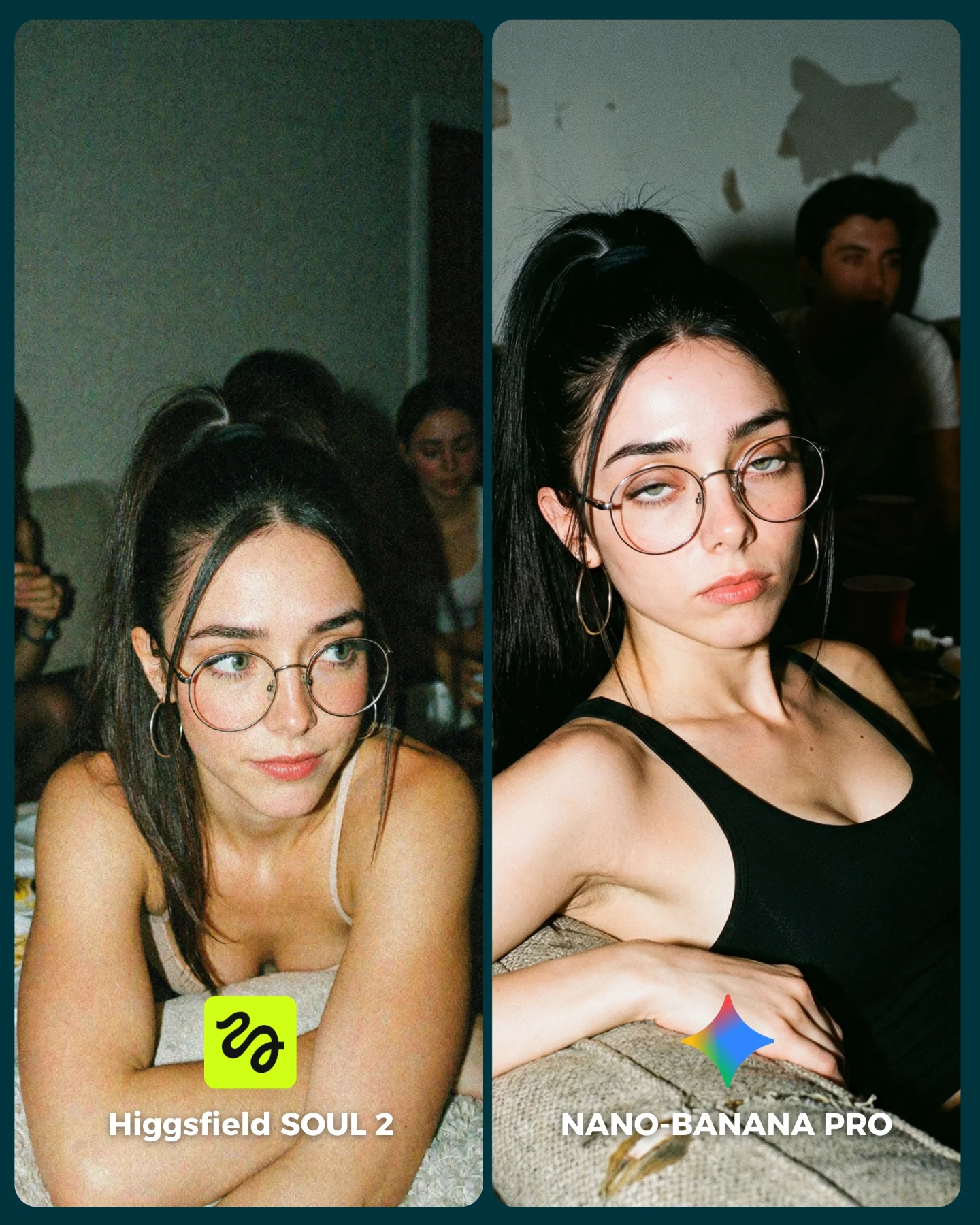
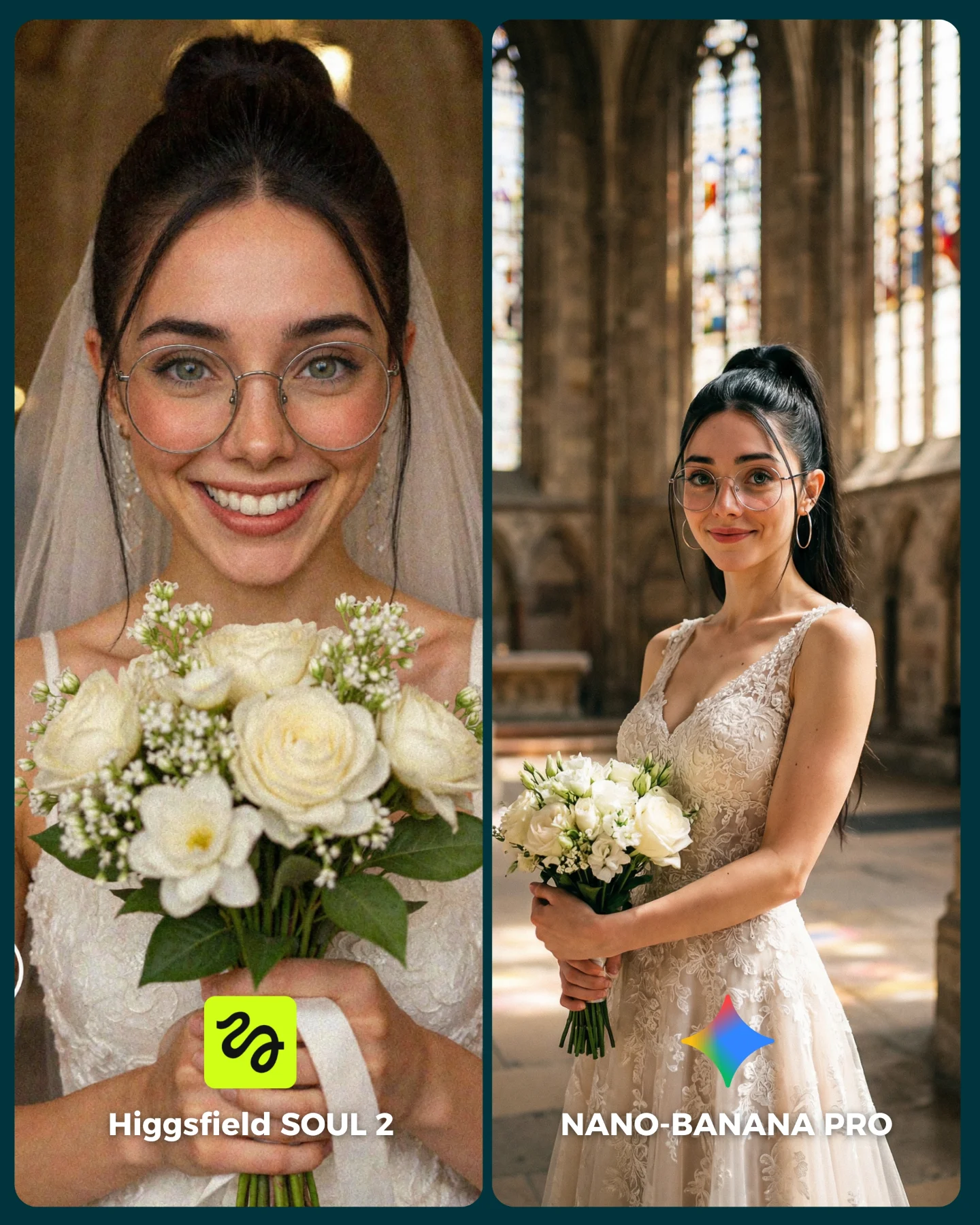
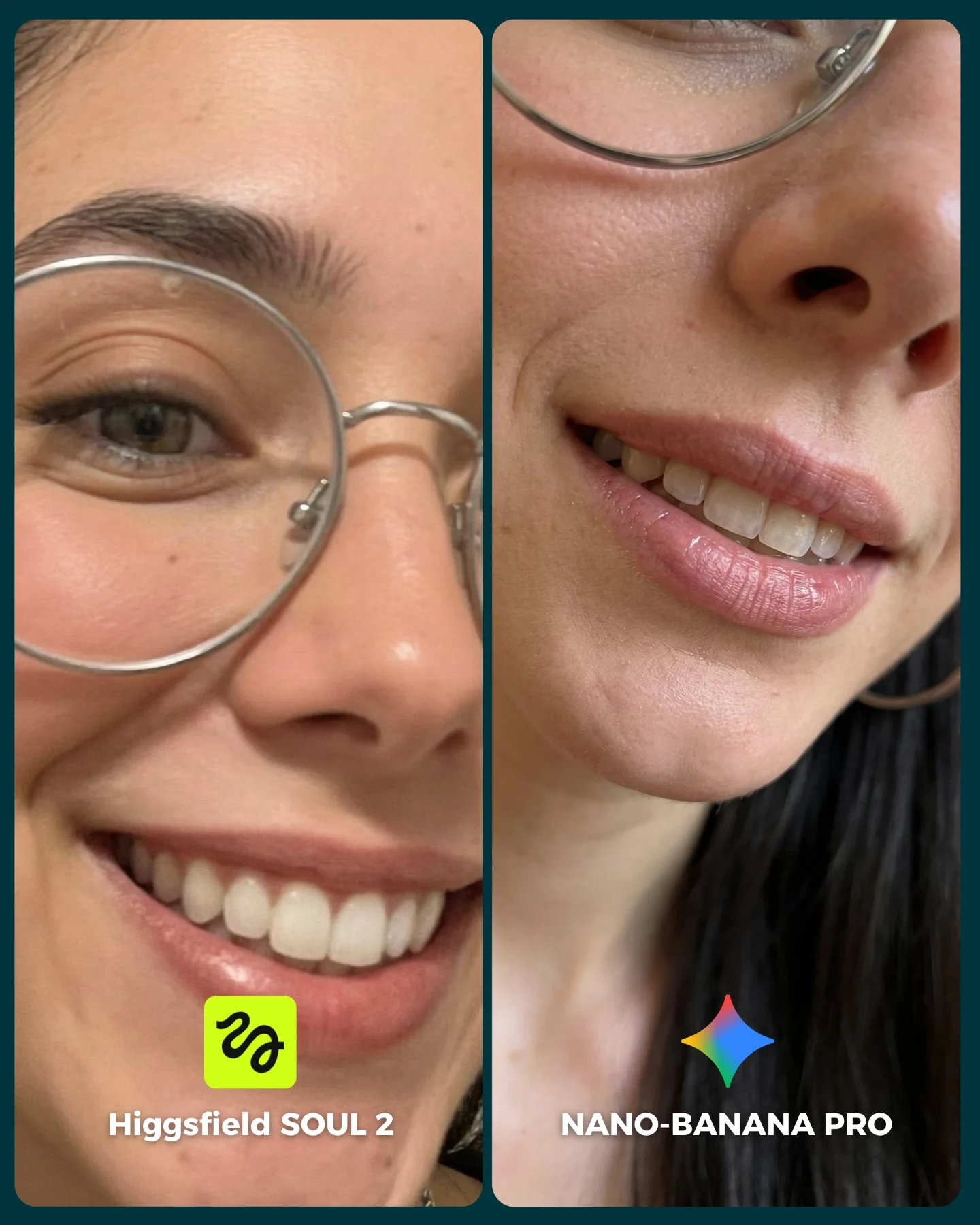
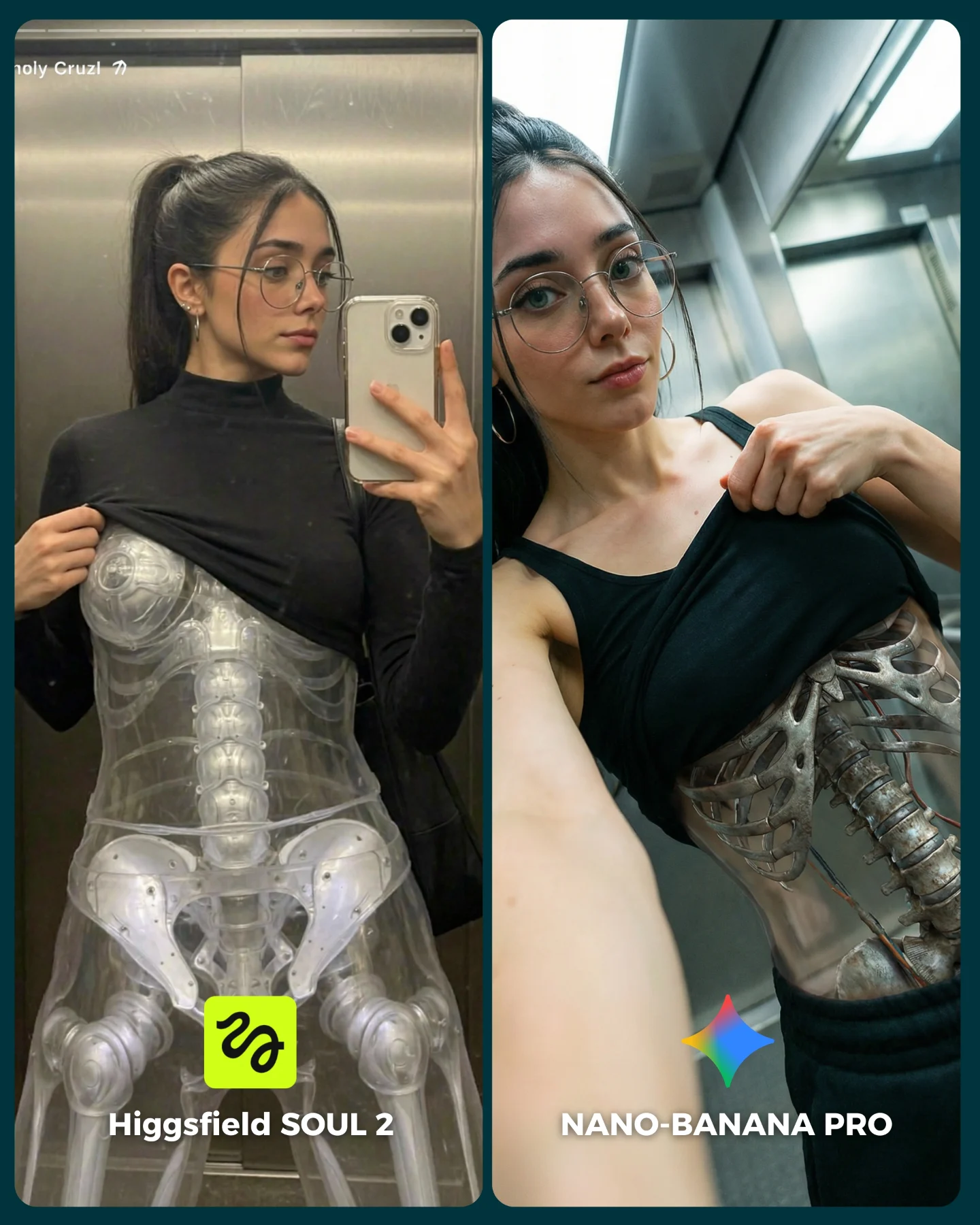
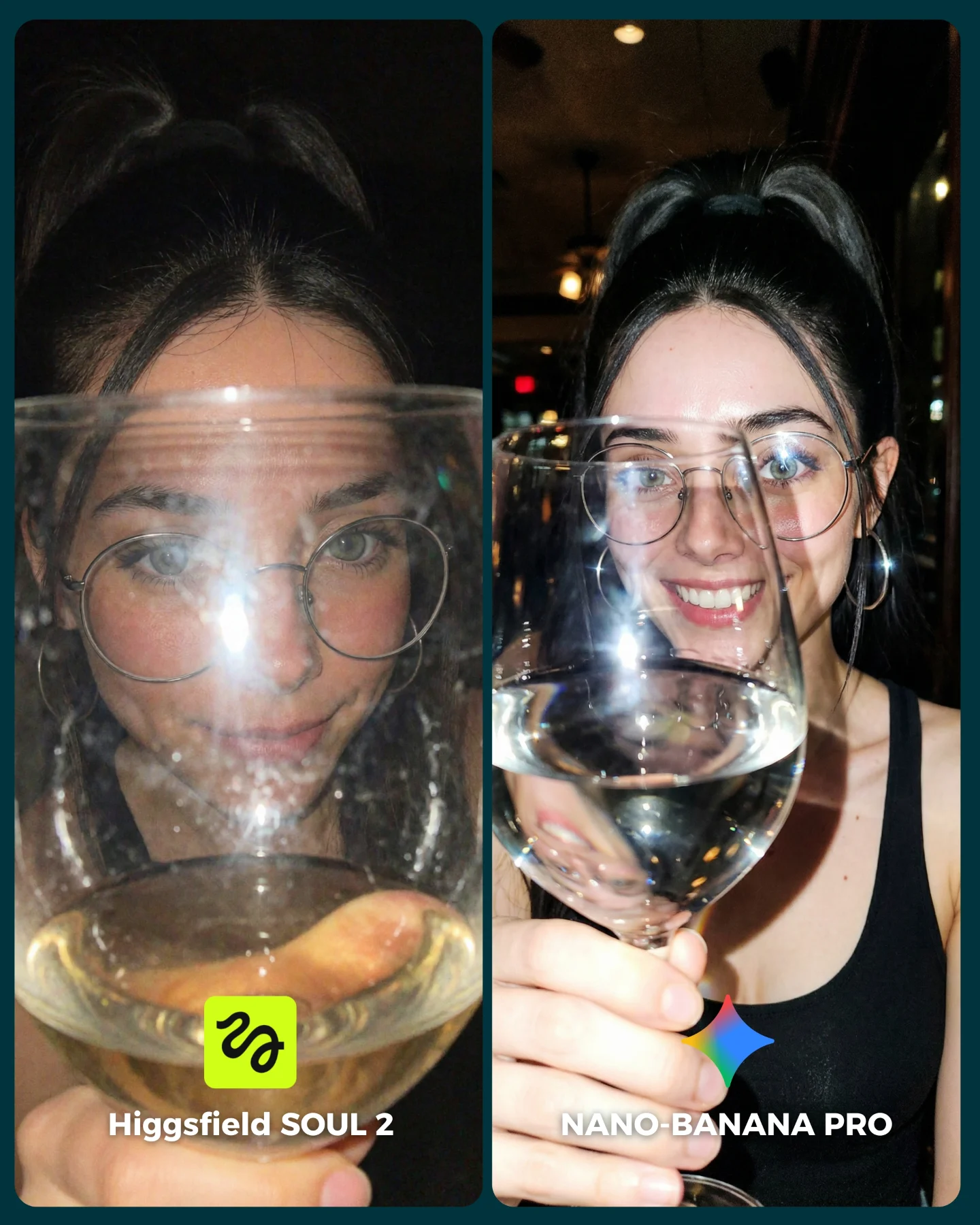
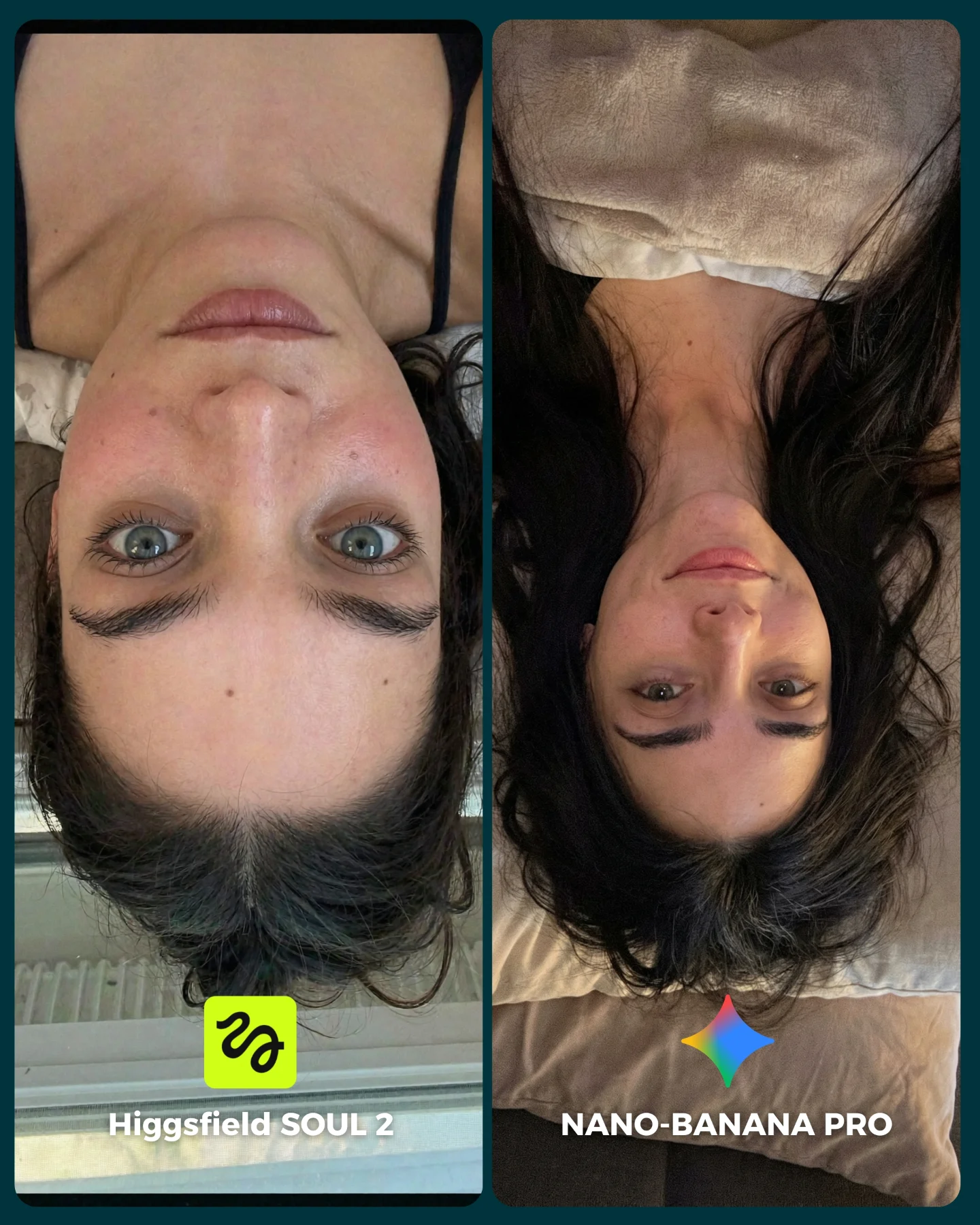
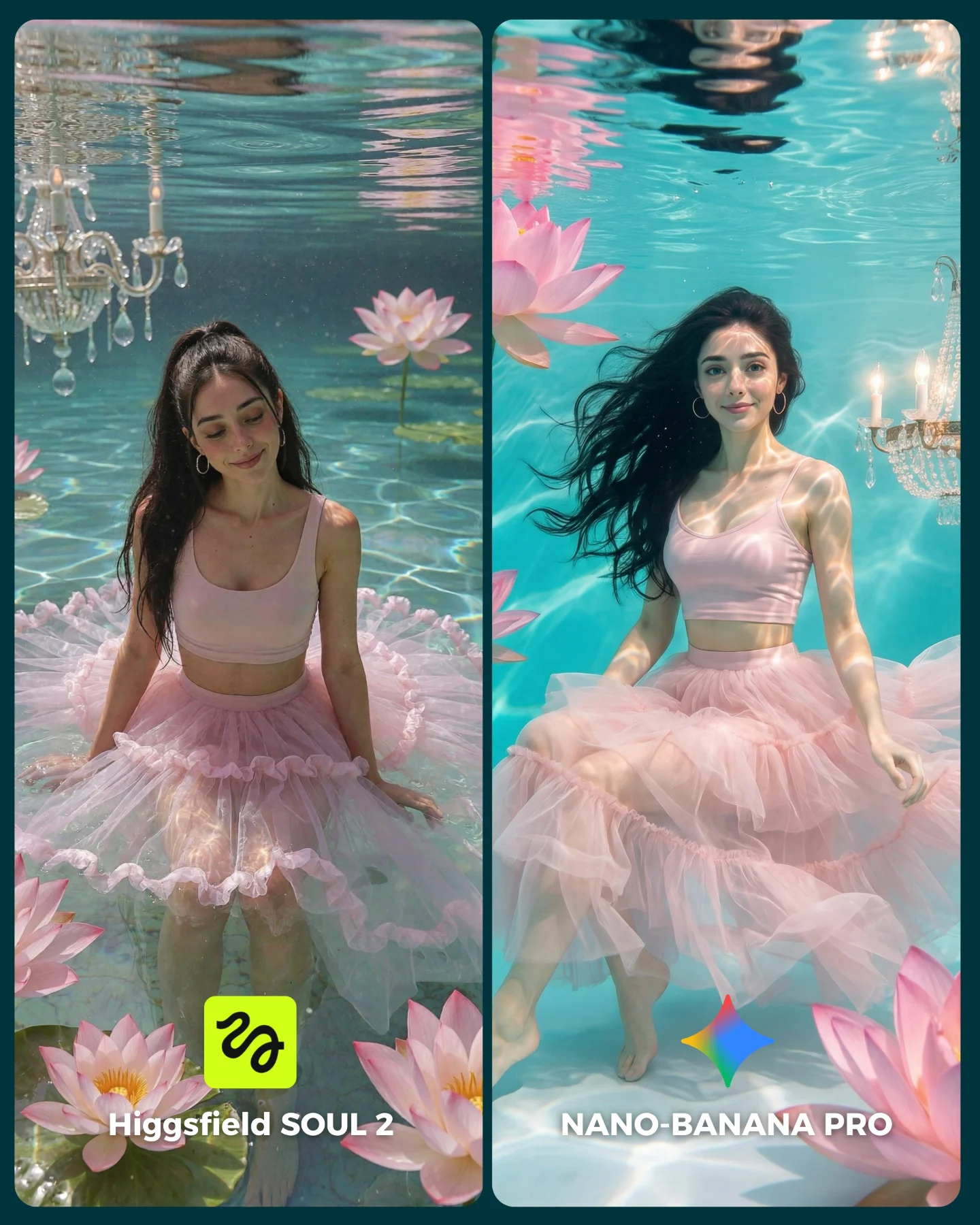
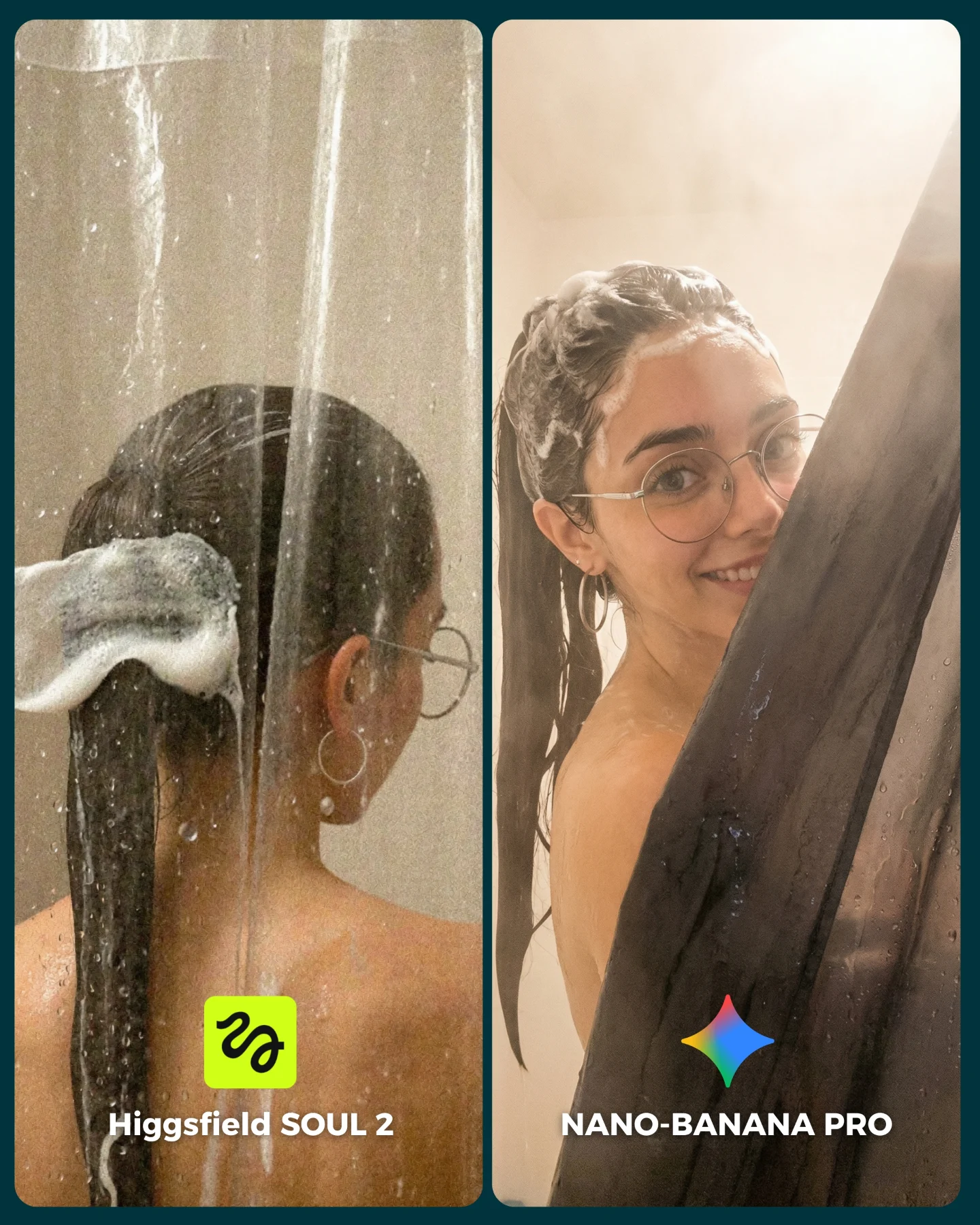
SOUL 2 Vs. Nano Banana Pro 💥
Higgsfield ha lanzado su nuevo generador de imágenes SOUL 2 ⚡ Puedes subirle hasta 80 imágenes de referencia de tu personaje para mantener mejor la constancia 👀
Y para compararlo bien, lo he puesto a prueba junto a Nano Banana Pro que hasta el momento es mi generador de imágenes favorito 💕
La verdad es que hay algunos resultados de SOUL 2 que me han sorprendido bastante... No está nada mal, pero sigo prefiriendo Nano Banana para la mayoría de las ocasiones 😅
Os dejo algunas imágenes que he generado y espero leer vuestras opiniones en comentarios 💌 Y si quieres los prompts de todas las imágenes comenta "ARIA" y te los mando por mensaje!
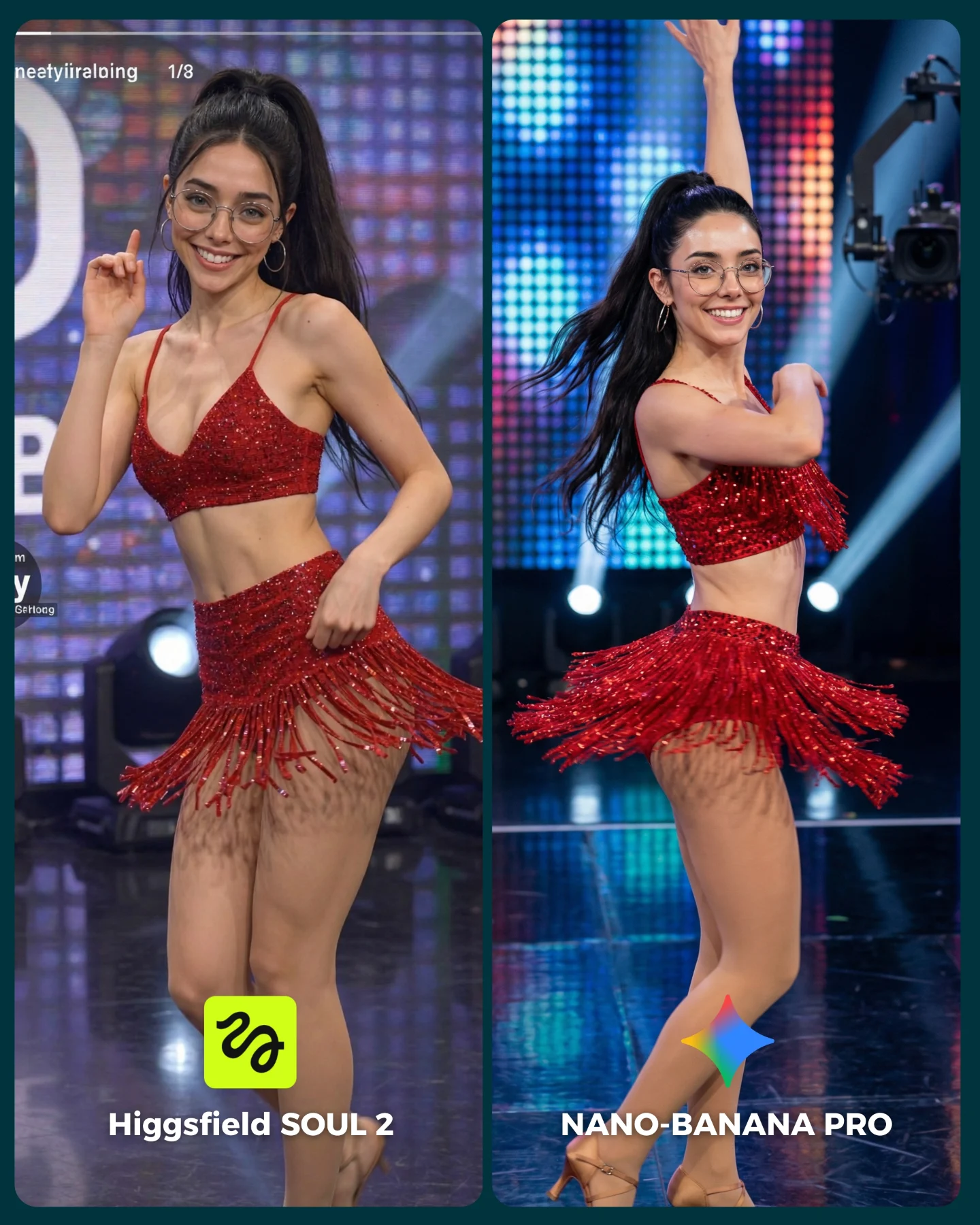
How soy_aria_cruz Made This Soul 2 Nano Banana Dance Comparison Image and How to Recreate It
This image is useful because stage-dance comparisons reveal a very different kind of model quality than close-up portraits do. Once you put the same AI influencer into a sequined fringe costume on a reflective stage, the renderer has to manage anatomy, movement, fabric behavior, lighting, and personality all at once. That is a much harder problem than making a face look pretty.
The caption frames this as a comparison between Higgsfield SOUL 2 and Nano Banana Pro, with the creator specifically interested in consistency. Dance is an excellent test for that. A character can look stable in a still selfie and still fall apart the second the body twists or the skirt starts moving. Here, the comparison becomes meaningful because the scene demands both identity retention and performance credibility.
Why the Difference Feels Easy to Judge
The strongest thing about this post is that the setup is instantly legible. Same woman, same red stage costume, same overall entertainment setting, but two different render outcomes. Viewers do not need to study the image for a minute to understand the experiment. That matters on social. Benchmark content only works when the comparison is obvious enough to invite fast opinions.
The second reason it works is that dance introduces visible failure points. Fringe skirts are great for this because they should move with rhythm and direction. LED stages are useful because they create layered background light that can either enhance realism or expose flatness. Even the smile matters. A forced or plastic-looking smile makes the entire render feel less alive, especially in a performer context.
Signal
Evidence (from this image)
Mechanism
Replication Action
Same performer, same costume
Both panels use the same black ponytail, glasses, red sequins, and stage concept.
The audience can isolate renderer quality instead of comparing different ideas.
Lock the identity anchors and costume before switching models.
Motion-sensitive wardrobe
The red fringe skirt should flare and react to movement naturally.
Costume motion reveals whether the model understands action or is just decorating the body.
Use garments that visibly respond to pose changes when benchmarking performance scenes.
Stage realism test
LED wall, reflections, spotlights, and camera rig create a believable production context.
Layered lighting and set detail make weak renderers look flat very quickly.
Benchmark inside a performance environment rather than against an empty background.
What Creators Can Learn From This Comparison
The key lesson is that entertainment realism is not only about color and sharpness. It is about whether the image feels staged in the professional sense, not staged in the fake sense. A good render makes the woman look like she belongs on that floor, under those lights, in that costume, with that body angle. A weaker render may still look attractive, but it tends to feel pasted together rather than performed.
This is why comparisons like this are useful for creators selling or refining prompts. They teach you to evaluate interaction between subject and environment, not just isolated facial quality. If the skirt, the floor reflection, the lighting direction, and the smile are not cooperating, the scene will not convince for long.
Where This Format Fits Best
This kind of side-by-side is ideal for AI model benchmarks, music-video prompt testing, dance and performance aesthetics, and creator pages exploring which generator handles character consistency best under movement. It is also effective for community-driven debate because performance images invite stronger opinions than neutral portraits.
AI model comparison posts: perfect fit because the difference becomes visible through motion and costume handling.
Dance or music-video concept pages: strong fit because stage realism is central to the aesthetic.
Prompt education content: useful when teaching people how to lock identity while changing action complexity.
Audience-engagement posts: effective because viewers naturally want to pick the side that feels more “real”.
It is less useful for quiet realism benchmarks or documentary-style comparison, because this format thrives on spectacle and movement.
Three Transfer Recipes
Transfer
Keep
Change
Slot Template (EN)
Pop-star concert version
Same character, stage lights, motion-sensitive costume, split-card layout.
Swap fringe dancewear for a metallic singer outfit and add handheld mic logic.
The image works because the palette is simple and high-impact. Red sequins against a dark floor and cool LED background create instant focus. The sparkle does not need help. That lets viewers look past the color hit and start judging more important things like body mechanics, face realism, and environment integration.
The fringe skirt is the smartest aesthetic choice in the whole frame. Fringe is readable in motion, which means it amplifies either success or failure. If it swings convincingly, the whole image feels more alive. If it hangs unnaturally, the illusion collapses. This makes it an ideal test object for generator comparison.
Observed
Recreate
Red fringe outfit catching the light and movement
Use motion-reactive costume details that expose rendering quality under pose changes.
Same facial identity under different performance poses
Lock face, hair, eyewear, and smile before varying stage action.
LED backdrop plus reflective floor
Create a multi-layer stage environment so flatness becomes easy to spot.
Comparison labels built into the card
Make the benchmark readable without needing caption context first.
Prompt Technique Breakdown
To build a fair performance benchmark, keep the character and costume stable, then let action and rendering quality do the work.
Prompt chunk
What it controls
Swap ideas (EN, 2–3 options)
same woman with high ponytail, glasses, hoop earrings, smiling
Locks recognizable performer identity across both sides.
same braid and earrings; same bob and glasses; same face with signature makeup
red sequined crop top and fringe dance skirt
Creates the motion-sensitive wardrobe benchmark.
silver fringe mini dress; gold rhinestone set; black tassel Latin costume
LED-lit performance stage with glossy floor
Establishes a believable entertainment environment.
left flatter static pose, right more dynamic dance pose
Clarifies how each renderer handles action and realism.
left rehearsal still right live move; left simple gesture right spin moment; left pose right full performance shot
two-panel labeled comparison card
Makes the result easy to decode and discuss.
model A/B diptych; benchmark split card; side-by-side stage render layout
Remix Steps
Start by locking the same performer identity and costume in both panels. Then hold the stage environment roughly constant. Only after that should you change the model or render pipeline.
Run 1: freeze face, ponytail, glasses, and red sequined outfit across both panels.
Run 2: lock the LED stage and glossy floor so the environment stays comparable.
Run 3: vary the render engine while using one simpler pose and one more dynamic dance pose.
Run 4: add labels and minor interface cues so the audience can judge quickly and comment easily.
The larger lesson is that performance scenes are a better benchmark than they first appear. They test not only whether a character looks good, but whether that character can inhabit space, light, and movement like a real performer.