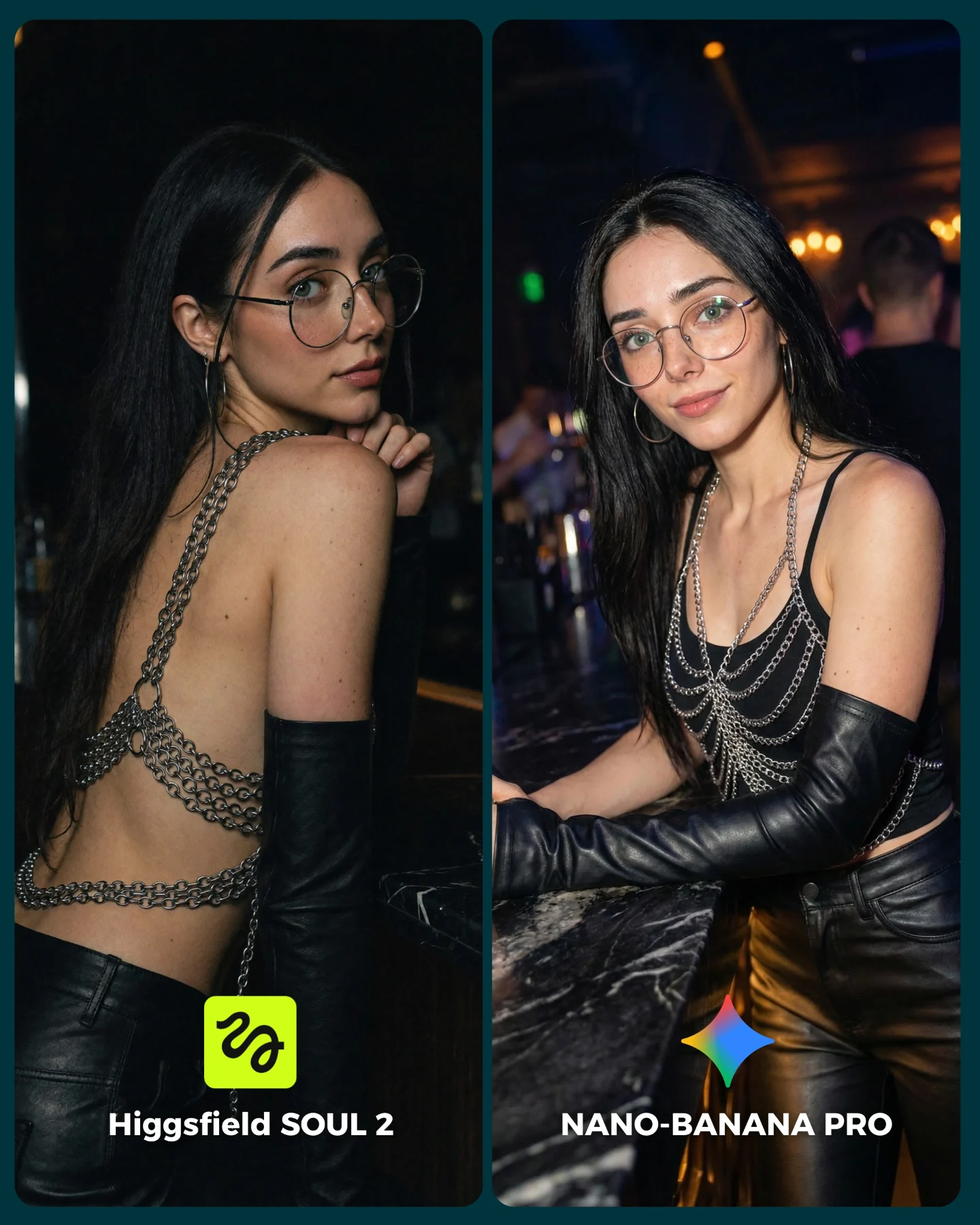
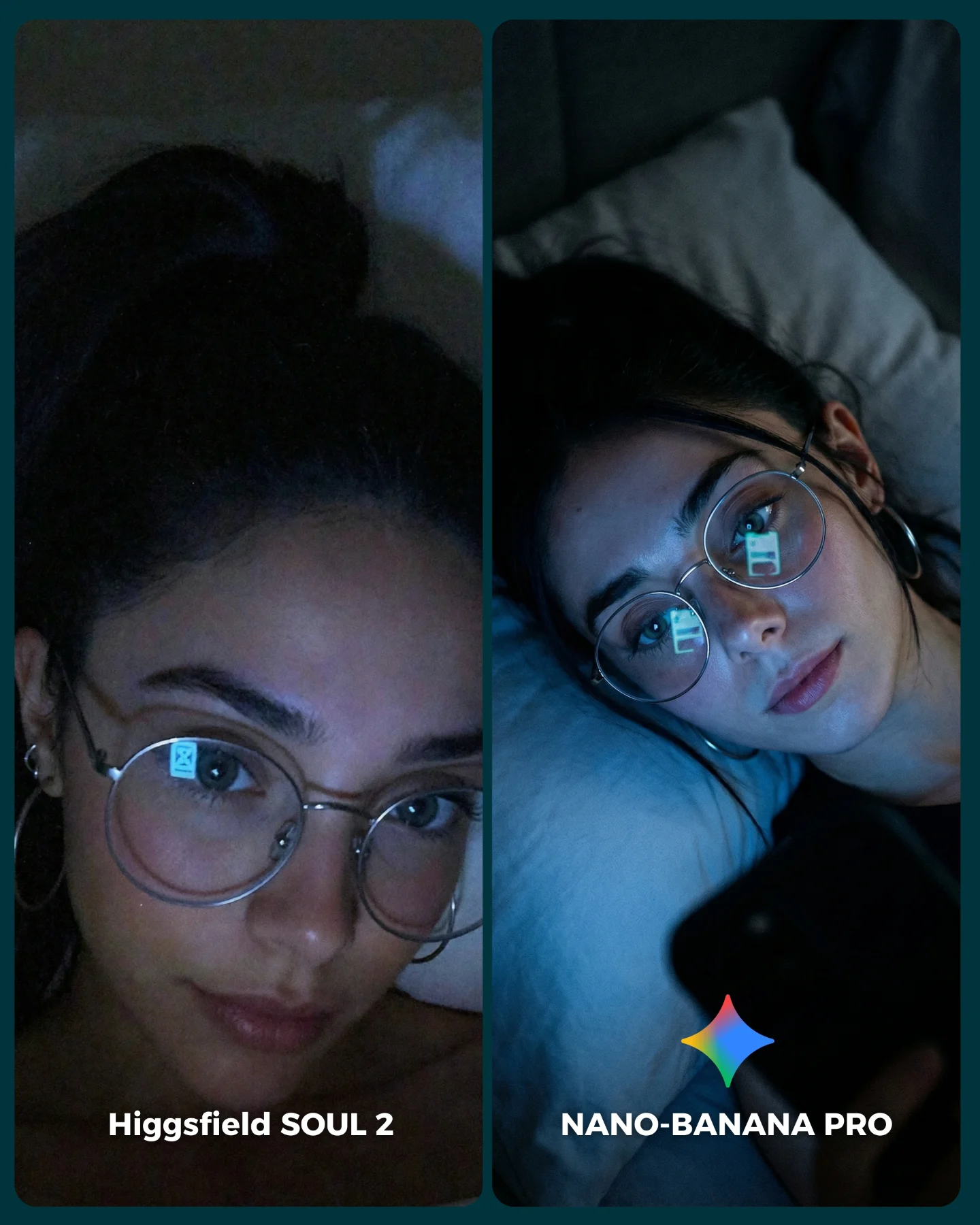
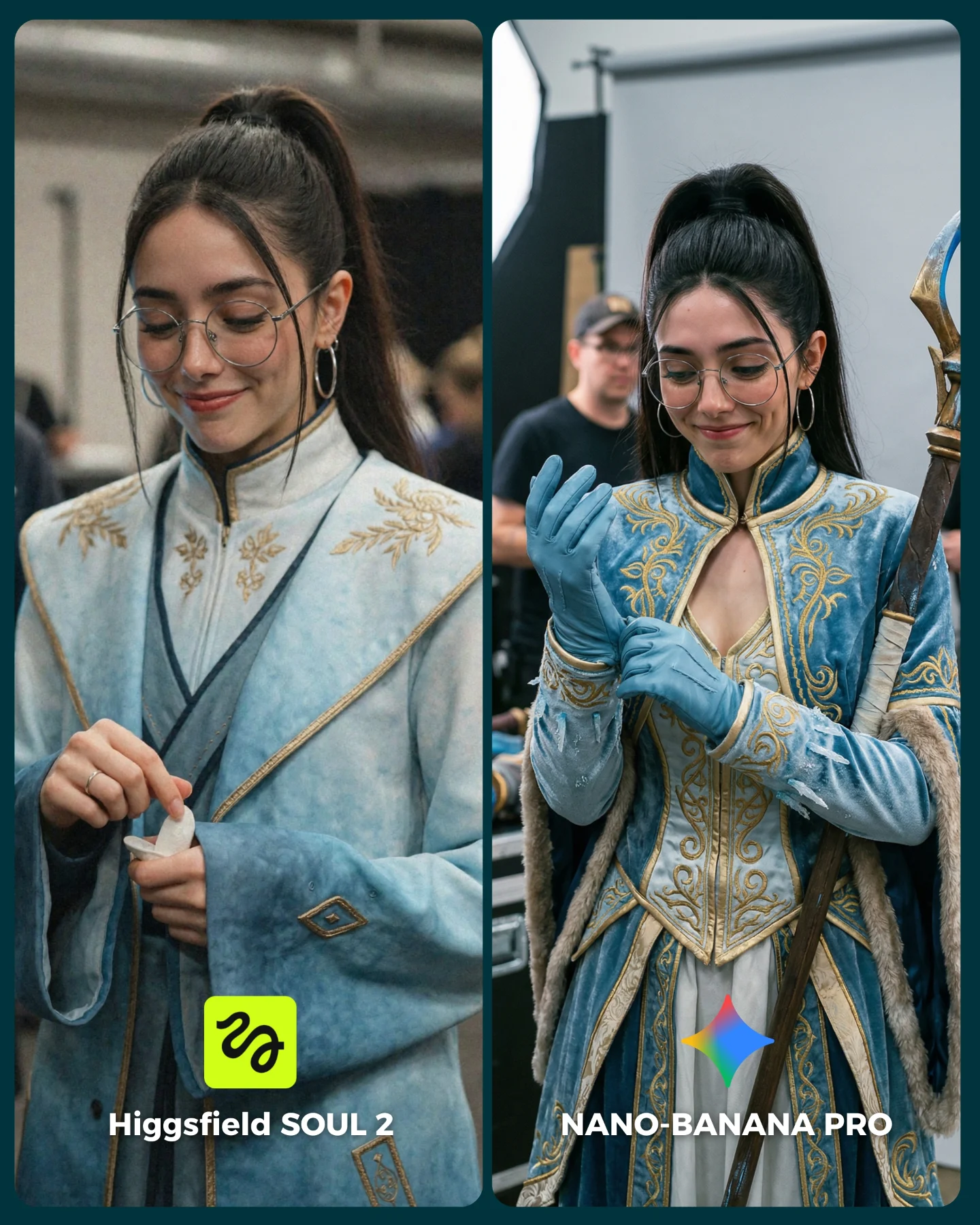
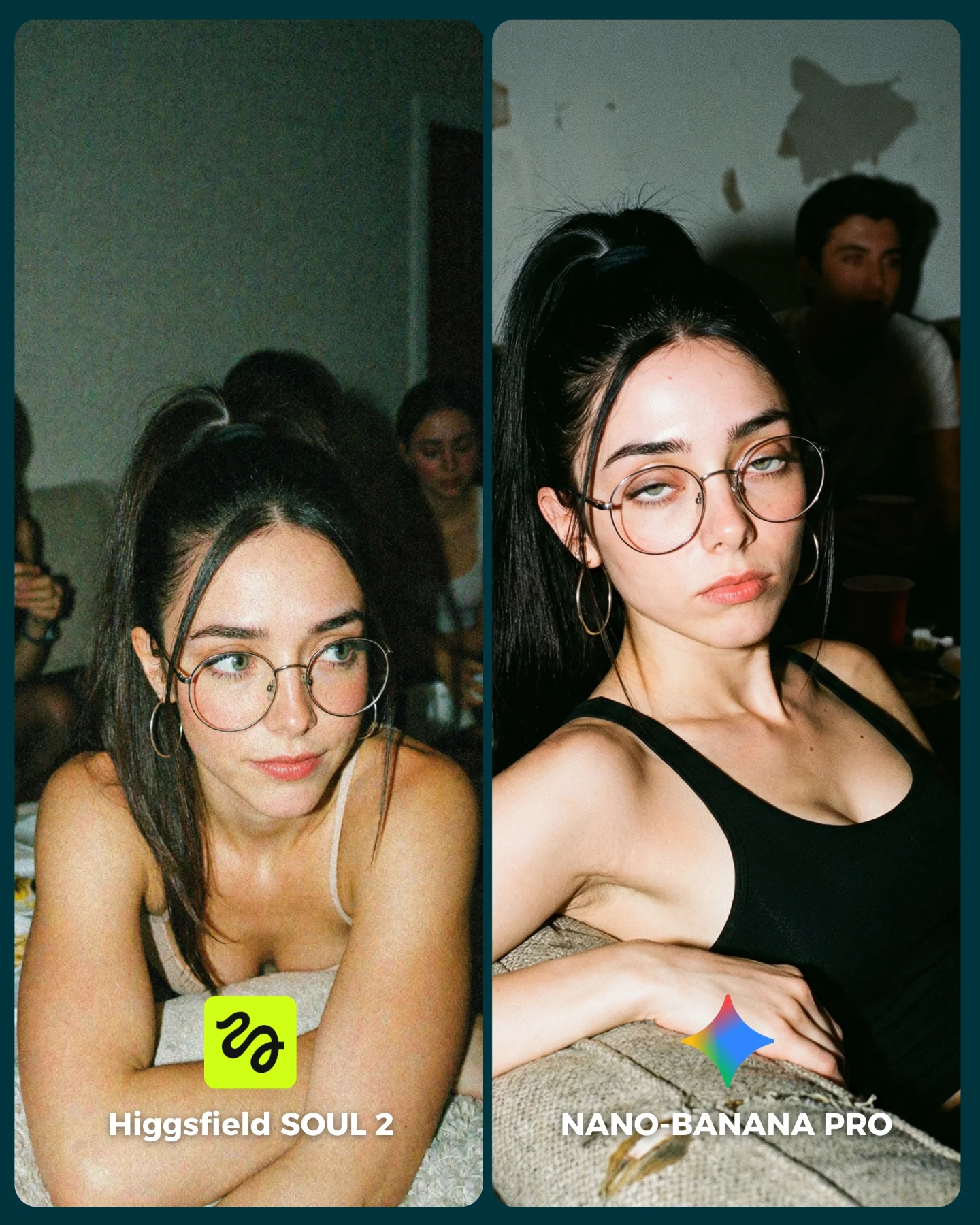
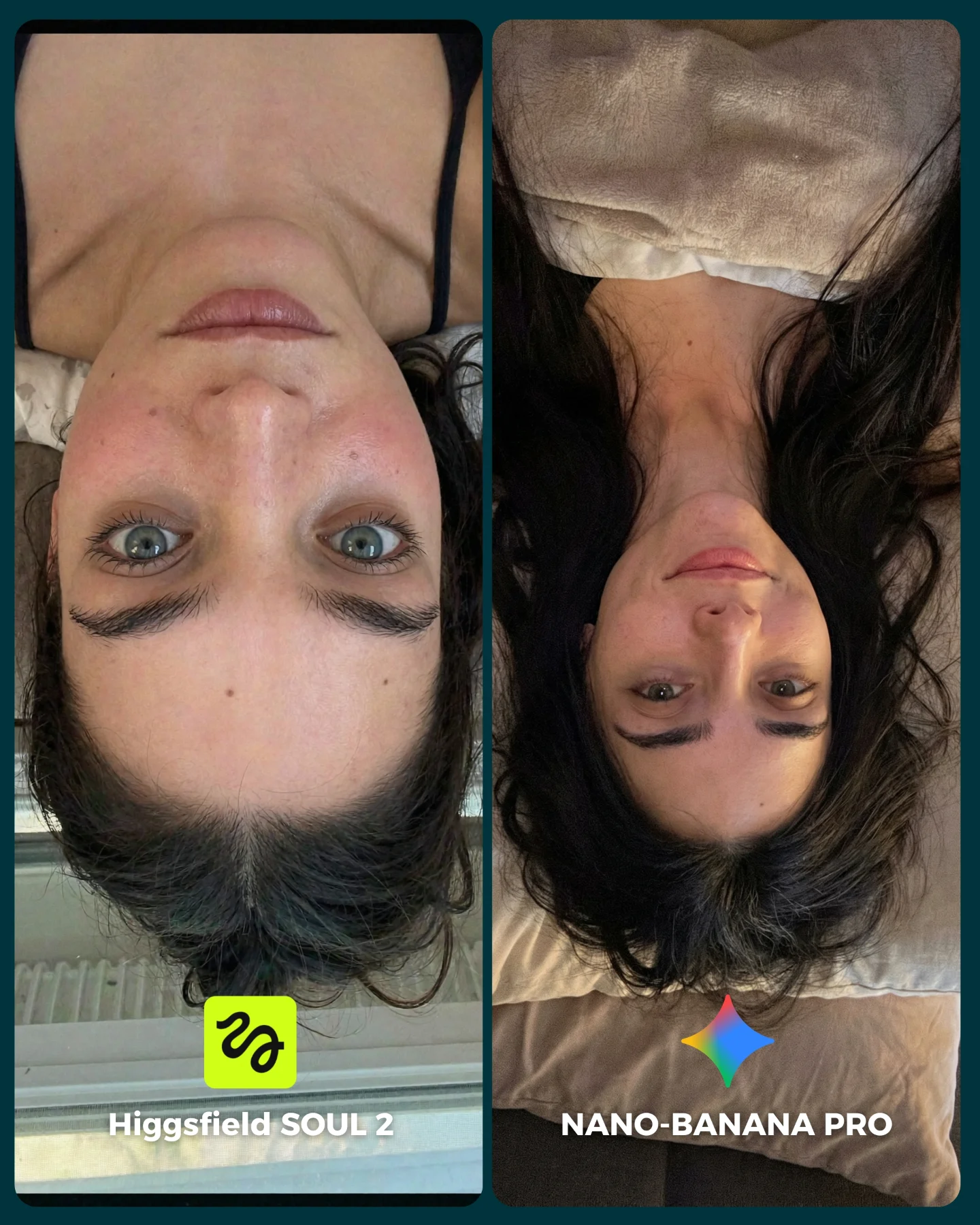
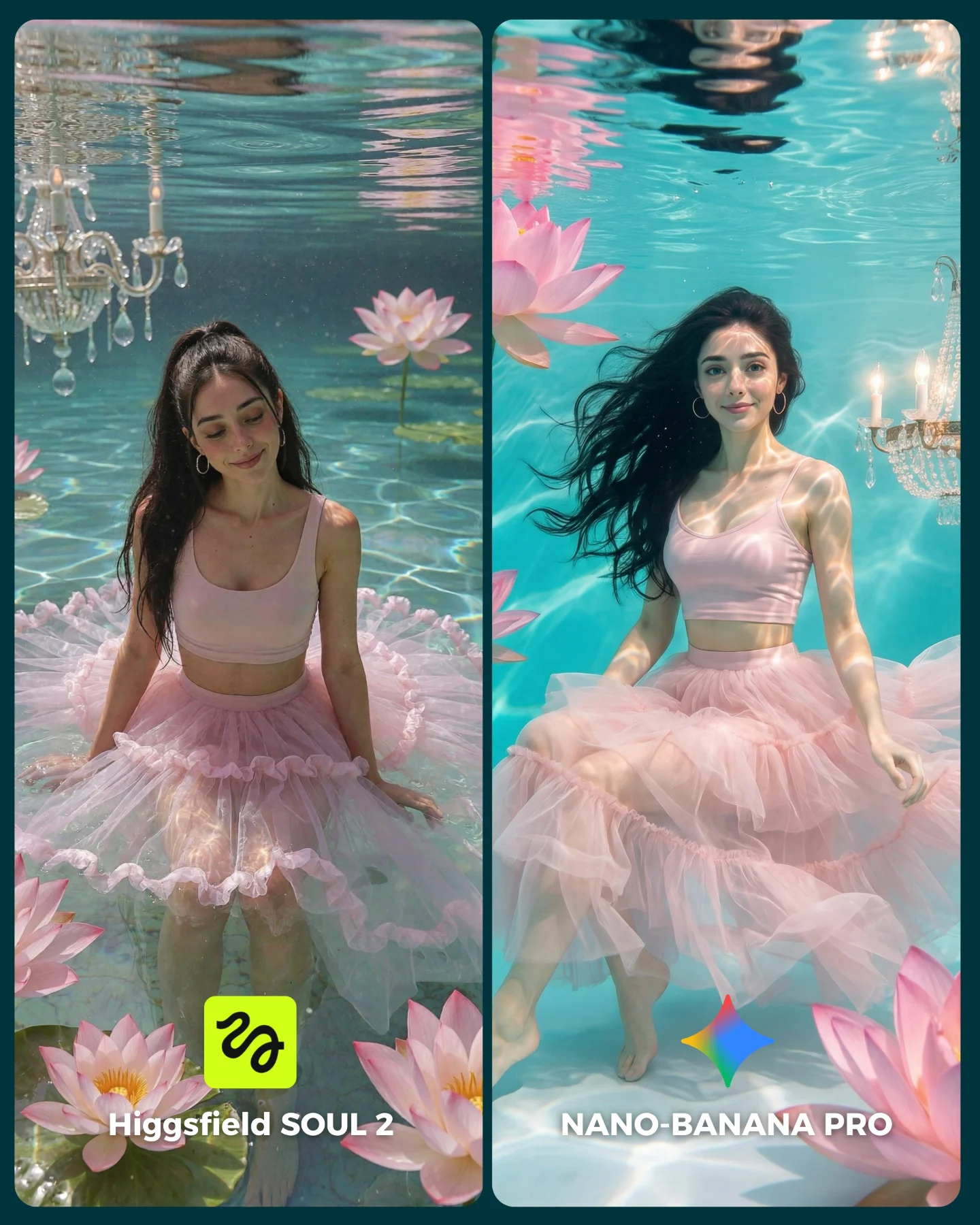
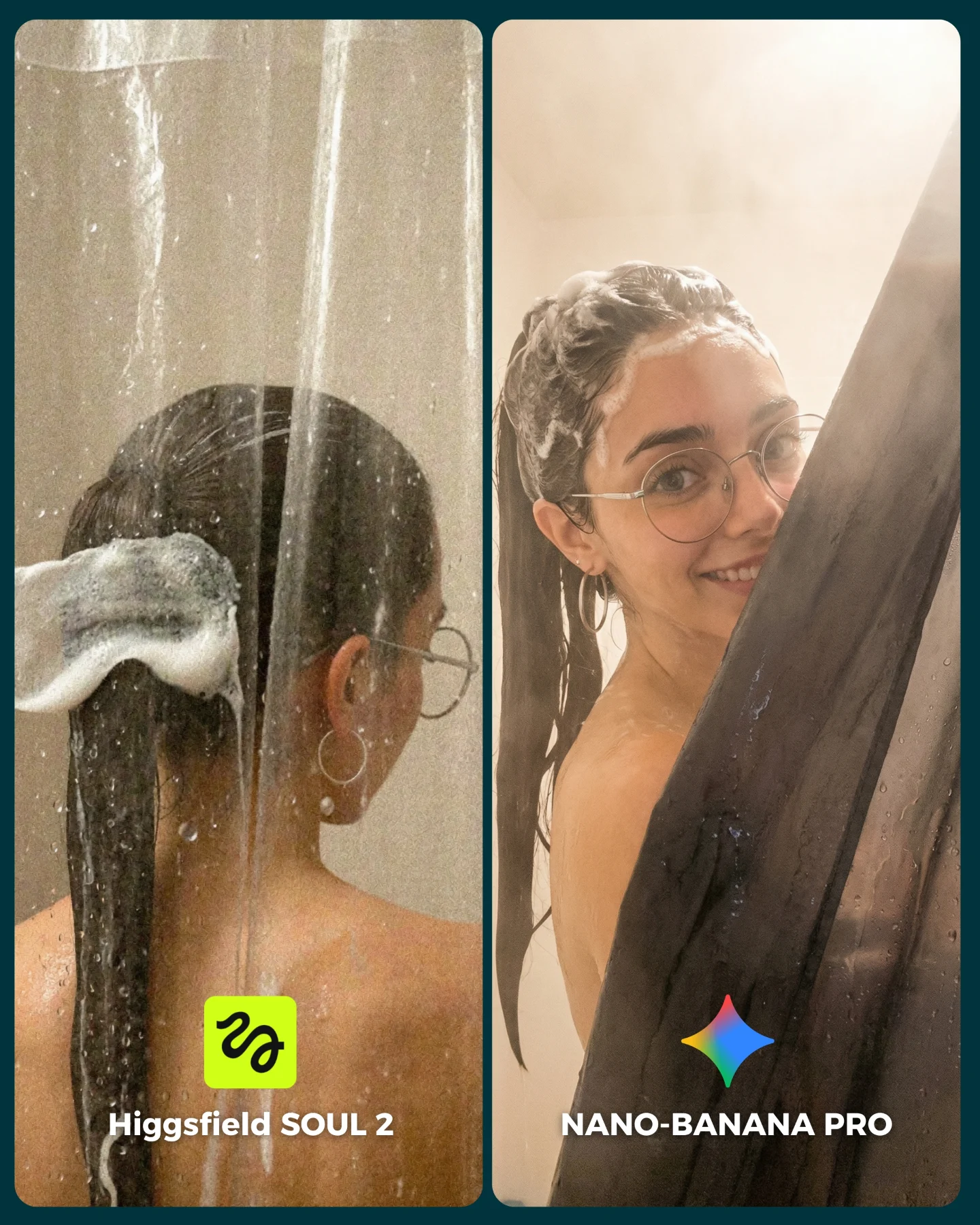
SOUL 2 Vs. Nano Banana Pro 💥
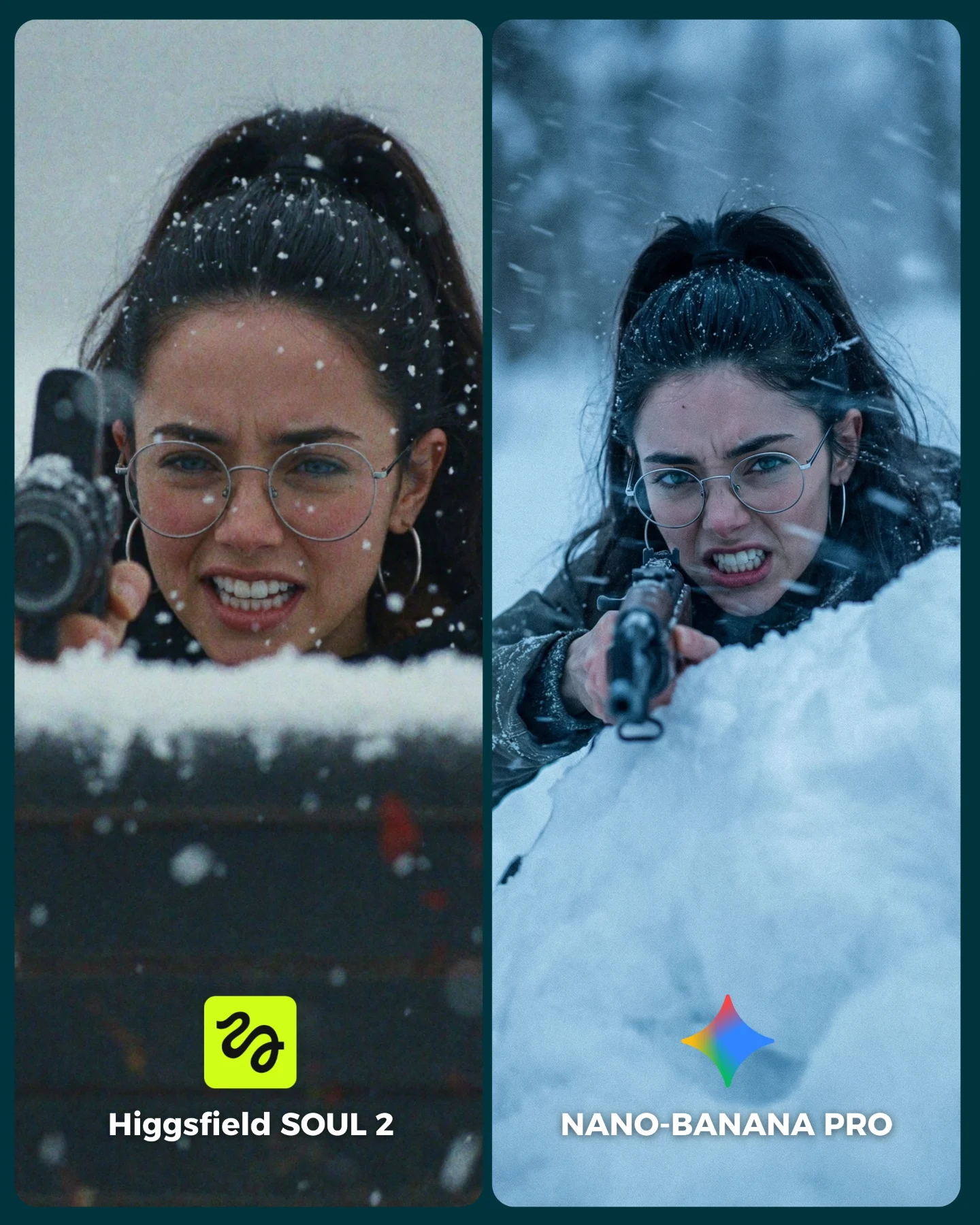
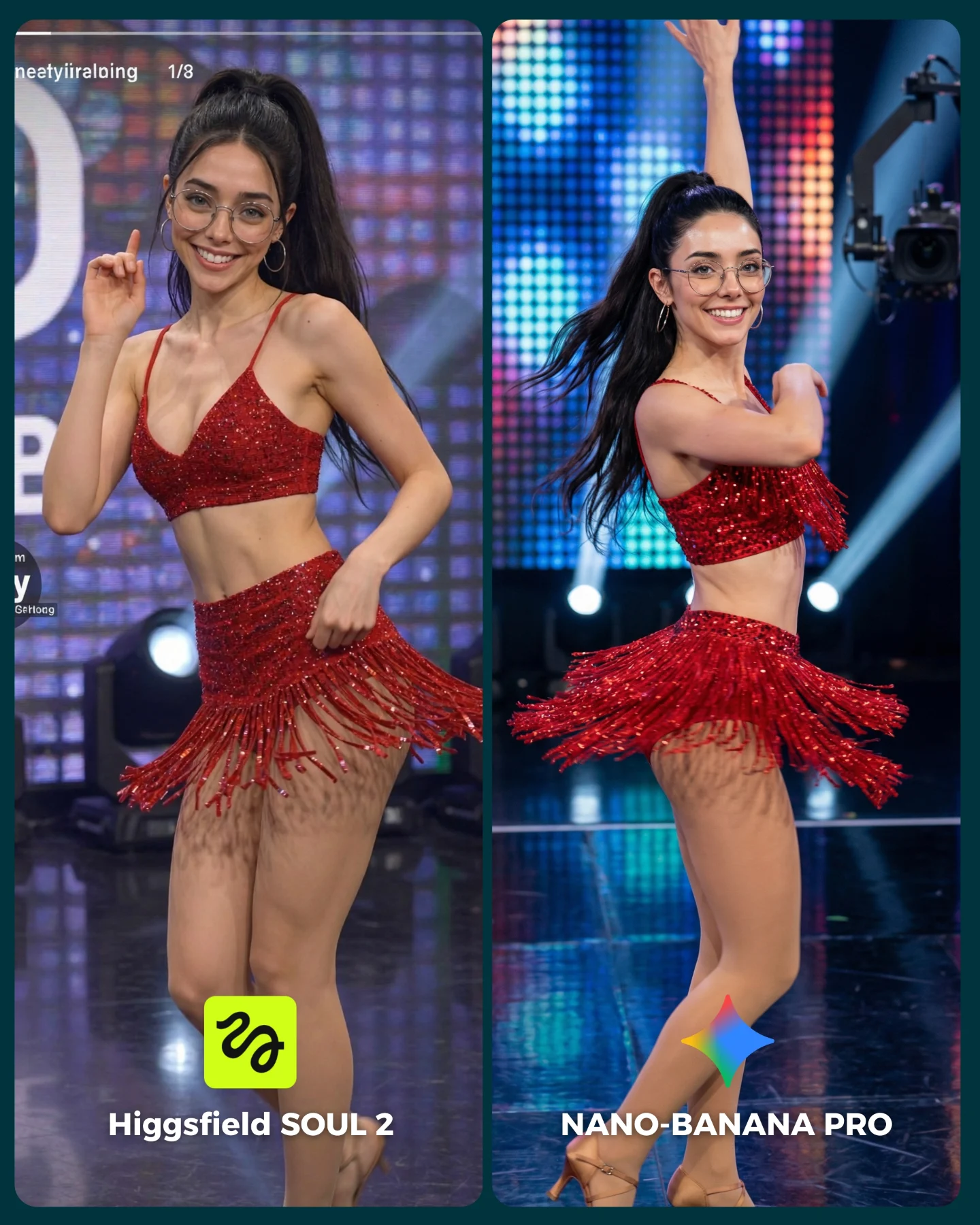
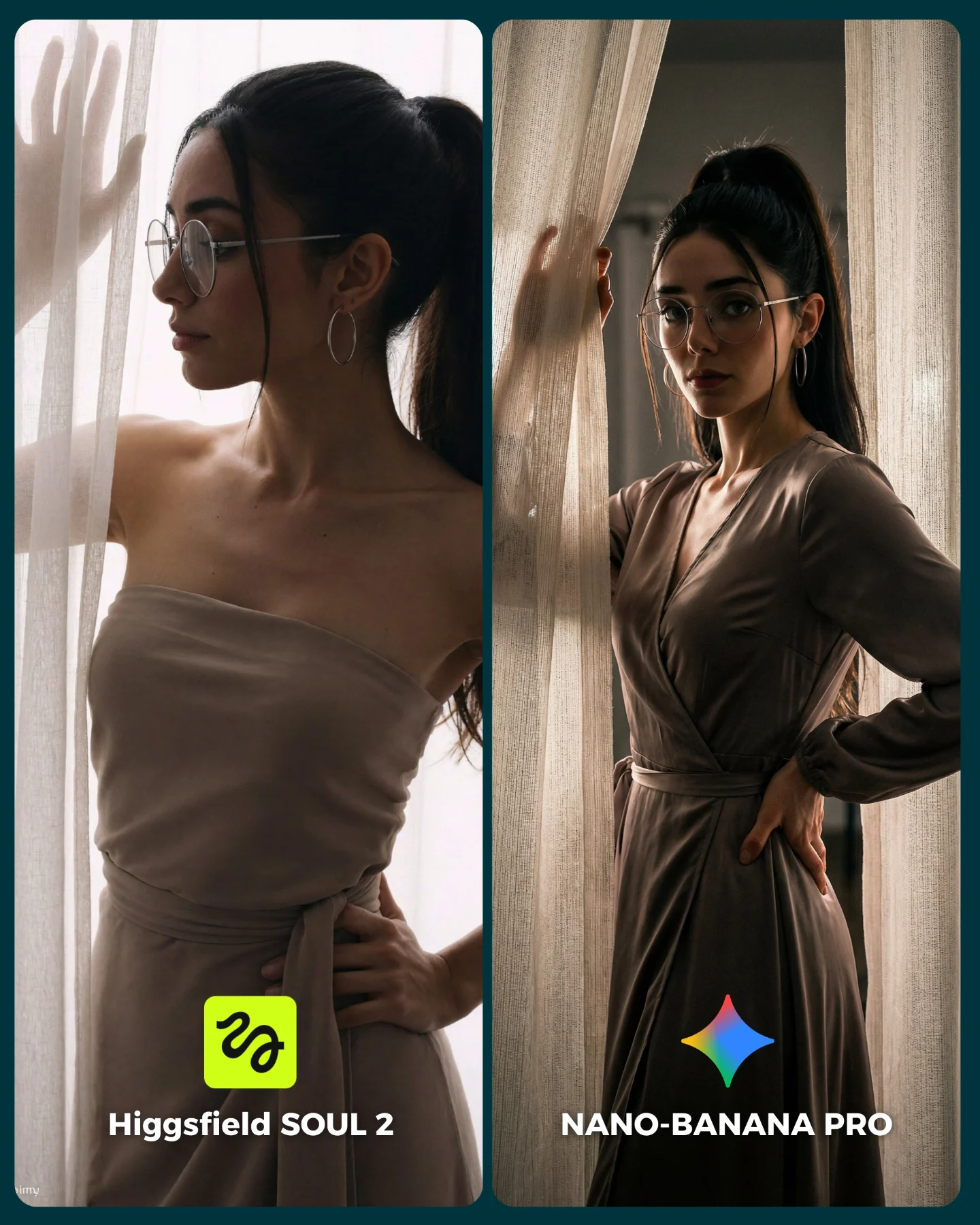
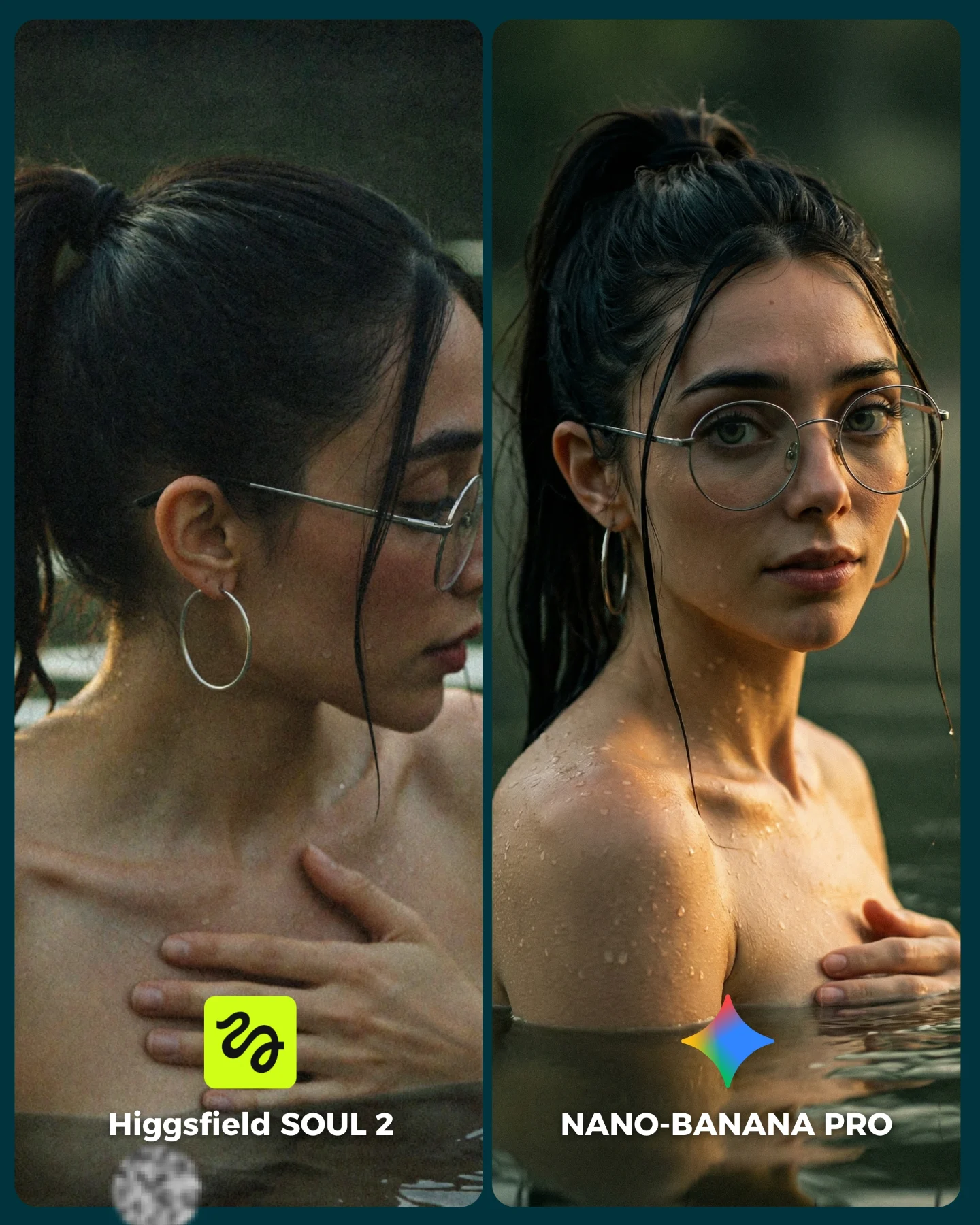
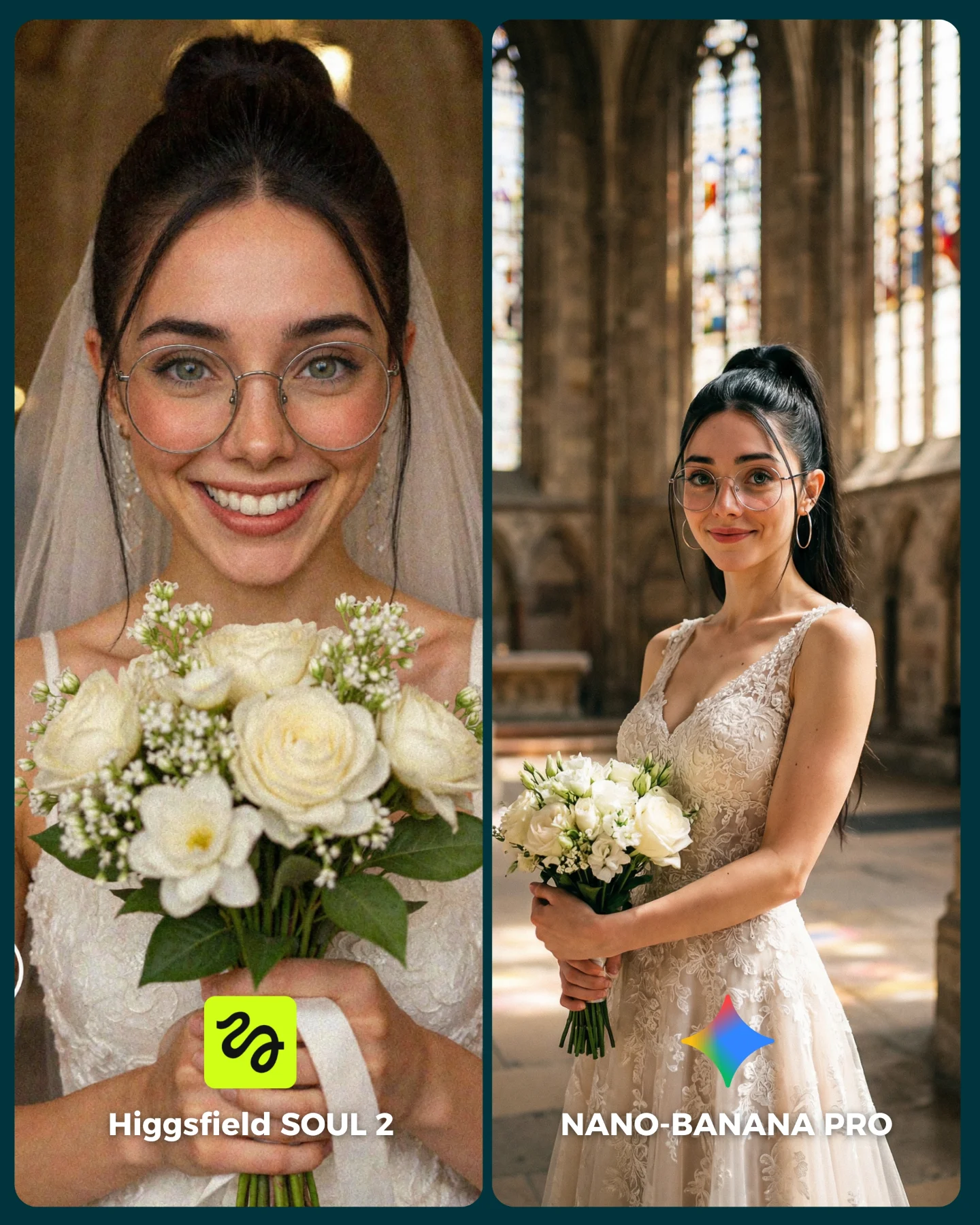
Higgsfield ha lanzado su nuevo generador de imágenes SOUL 2 ⚡ Puedes subirle hasta 80 imágenes de referencia de tu personaje para mantener mejor la constancia 👀
Y para compararlo bien, lo he puesto a prueba junto a Nano Banana Pro que hasta el momento es mi generador de imágenes favorito 💕
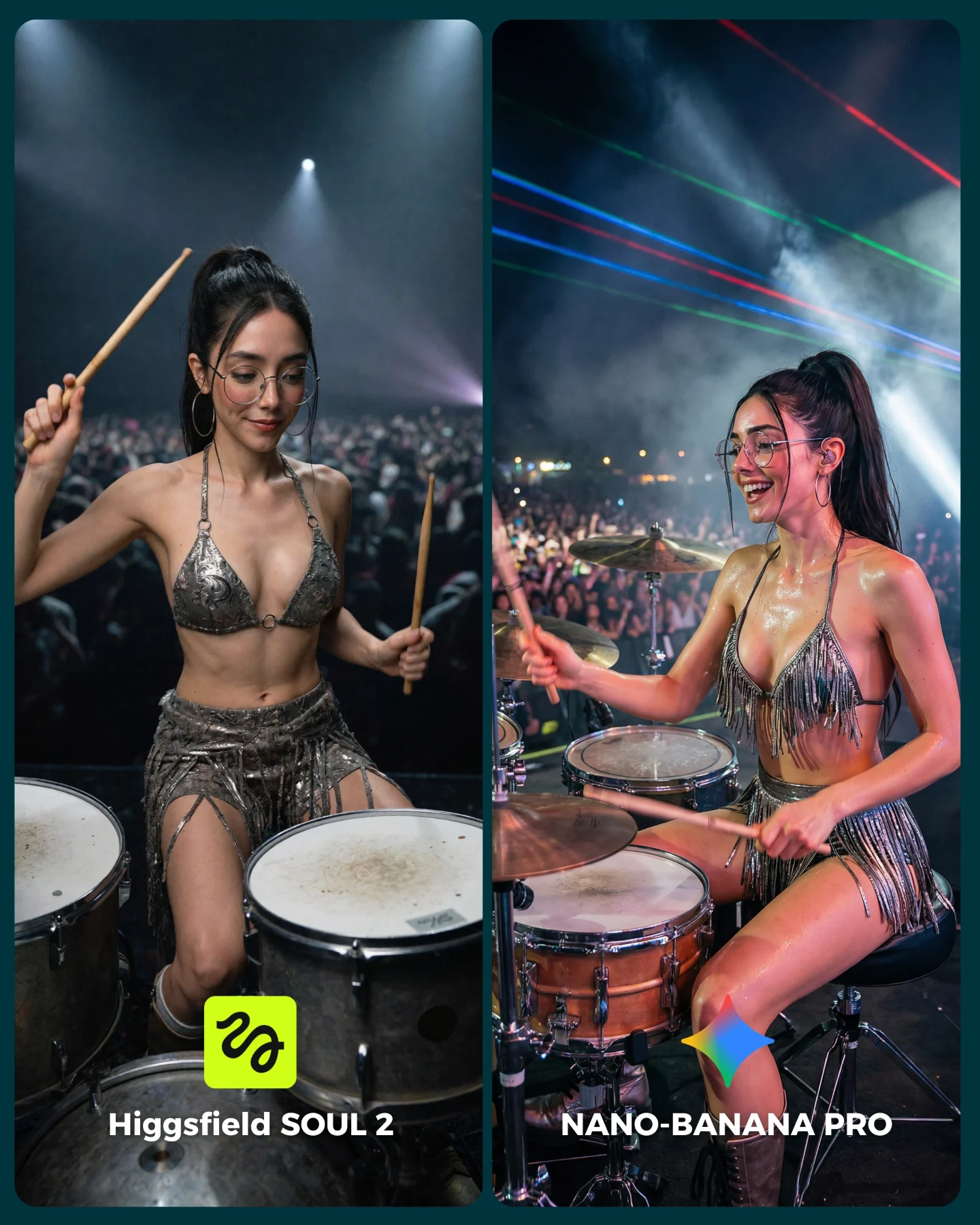
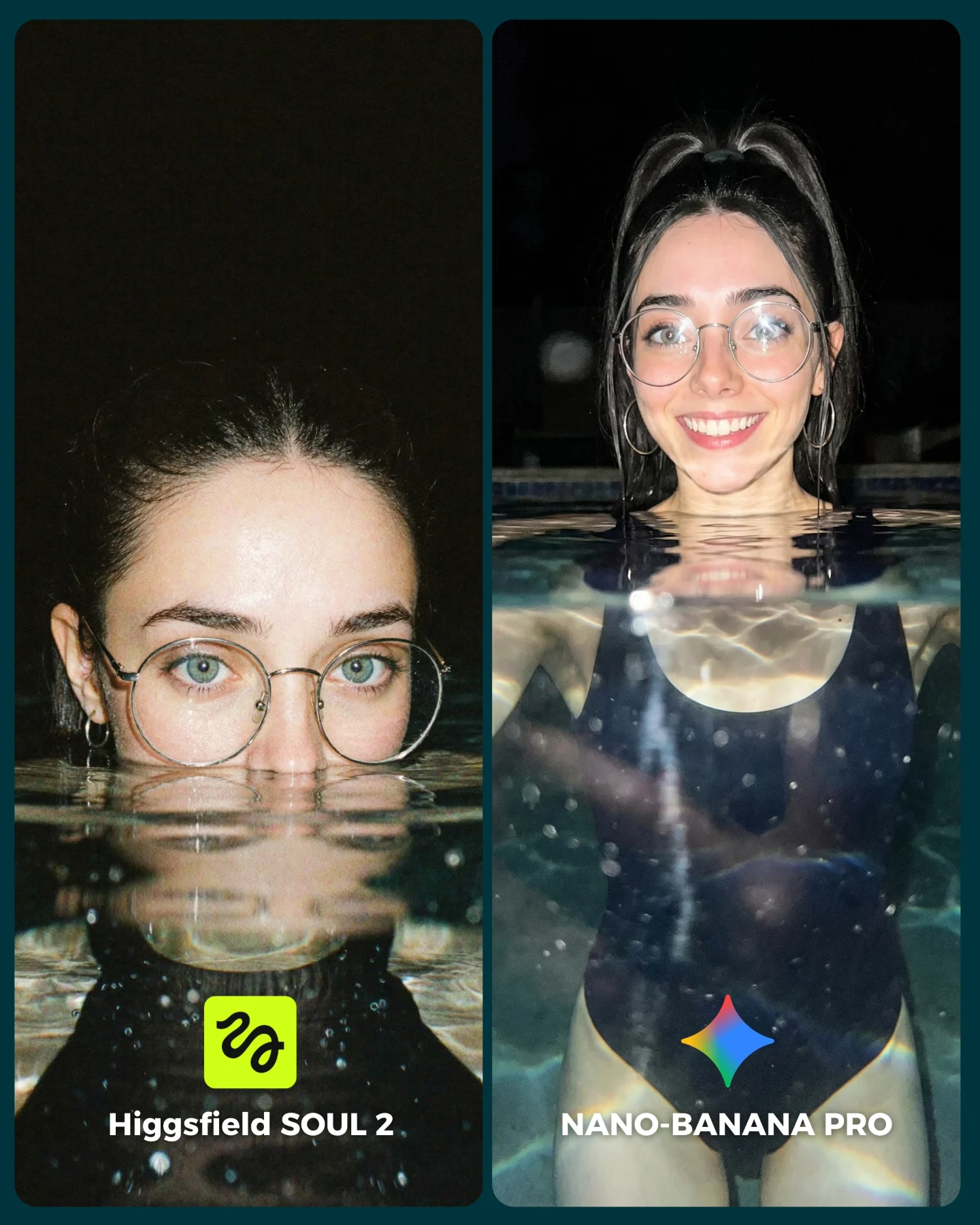
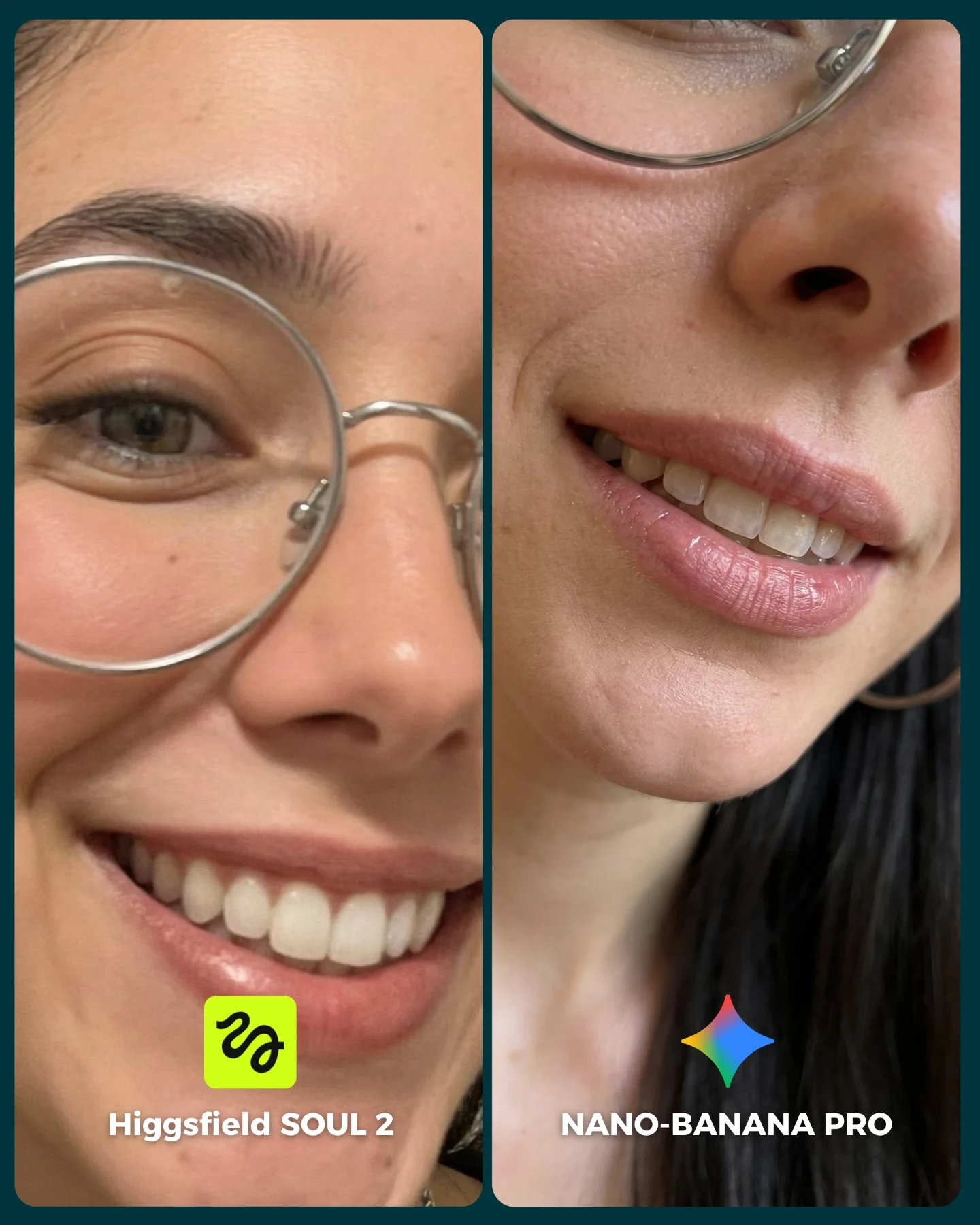
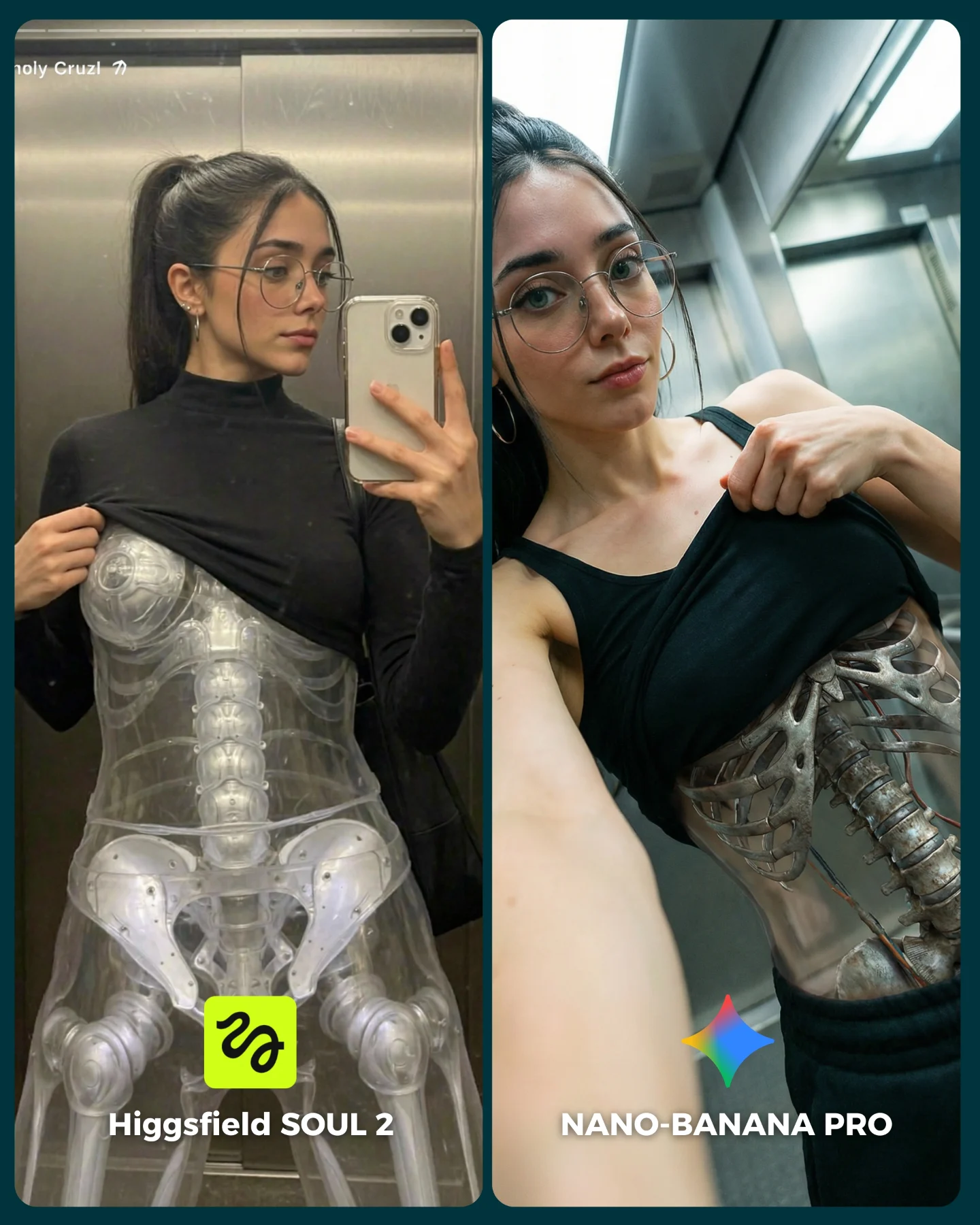
La verdad es que hay algunos resultados de SOUL 2 que me han sorprendido bastante... No está nada mal, pero sigo prefiriendo Nano Banana para la mayoría de las ocasiones 😅
Os dejo algunas imágenes que he generado y espero leer vuestras opiniones en comentarios 💌 Y si quieres los prompts de todas las imágenes comenta "ARIA" y te los mando por mensaje!
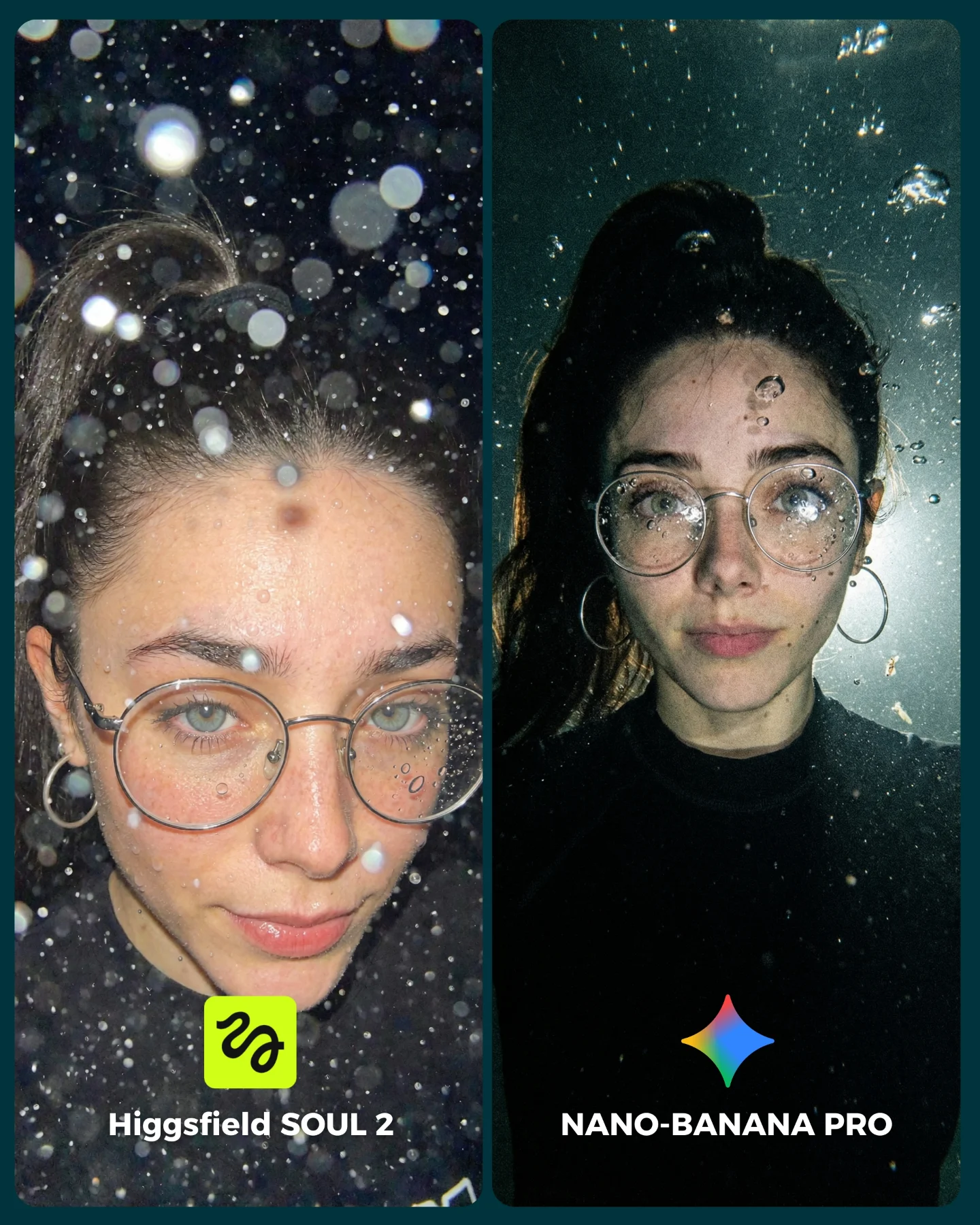
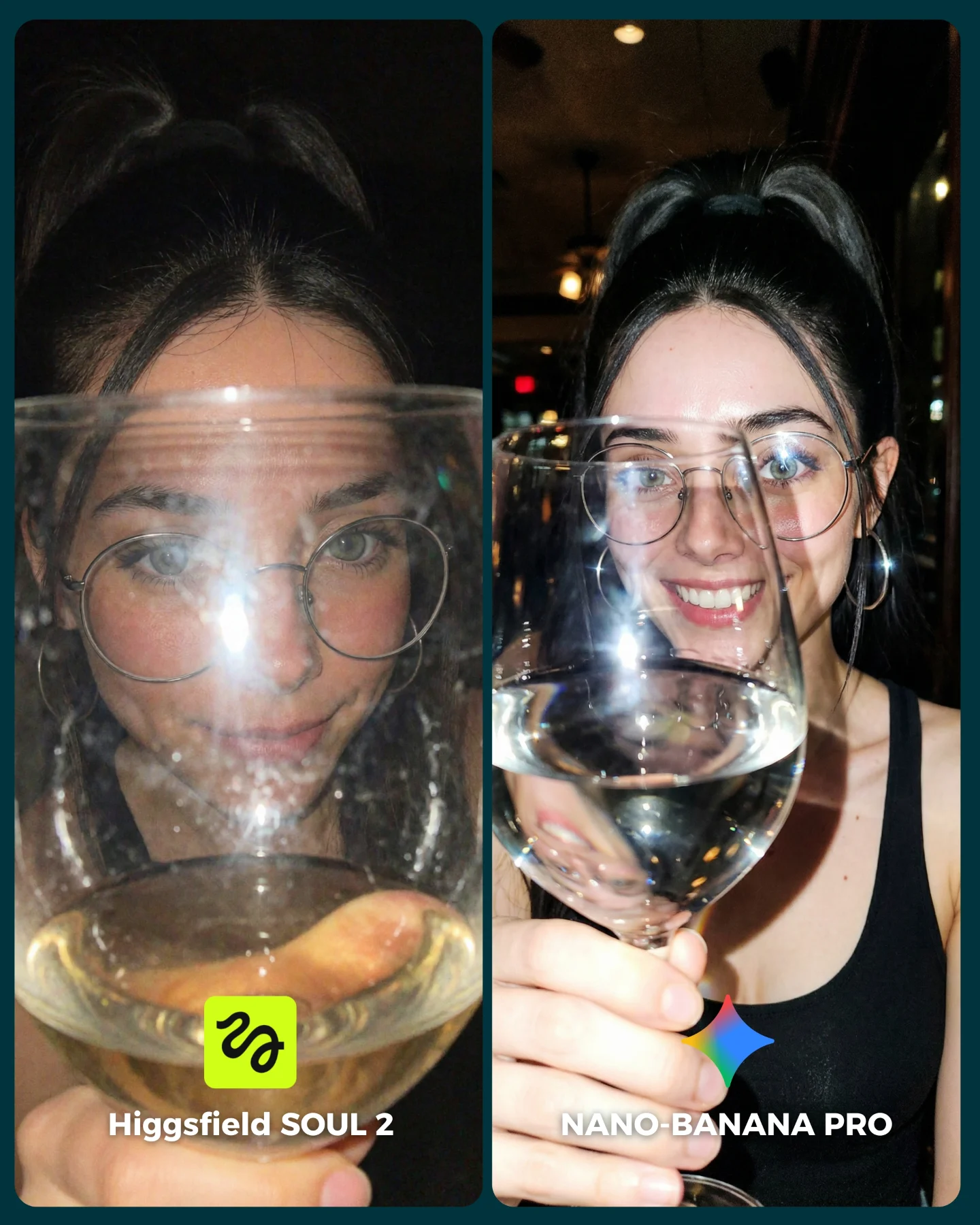
This image is a very strong benchmark because it tests one of the hardest things in AI portrait generation: realism through layered transparency. The face is already difficult because it is very close to the camera, the glasses add reflection complexity, and the wet glass introduces a second transparent surface full of highlights and distortions. That means viewers can judge model quality almost instantly. If the droplets feel fake, the face feels filtered, or the reflections look pasted on, the illusion breaks.
What makes the post smart is that it does not present this as a technical torture test. It still looks like content. It feels intimate, moody, and minimal. That is exactly why creator-facing comparison posts work better when they are visually attractive first and diagnostic second. People are willing to inspect the quality because the image already feels worth looking at.
Rainy Glass Portrait Model Comparison AI Photo
Rain-on-glass portraits stress several fragile areas at once: skin texture, eye fidelity, lens reflections, foreground transparency, and low-light color handling. When all of those interact in a close-up frame, small weaknesses become obvious. The right kind of comparison scene does not need complexity in the background. It needs complexity in the image physics. This frame has that in abundance.
Signal
Evidence (from this image)
Mechanism
Replication Action
Transparency stress test
Water droplets overlap the face, glasses, and forehead in both panels.
Foreground transparency exposes whether the model can layer highlights and depth credibly.
Use glass, droplets, or condensation when you want realism differences to surface fast.
Face-first benchmark
The crop is extremely close, leaving little room to hide facial errors.
Close crops force viewers to judge skin, eyes, and lens behavior immediately.
Keep the face large in frame when benchmarking portrait quality.
Low-light discipline
The dark background and cool lighting make subtle tonal handling important.
Good models preserve detail without turning the image muddy or over-smoothed.
Benchmark under restrained lighting, not only in bright easy conditions.
Best use cases and transfers
This concept is excellent for model comparisons, realism studies, rainy-window mood boards, and creator content focused on portrait fidelity. It also transfers well to other “layered transparency” scenes such as foggy mirrors, aquarium glass, shower doors, and car-window portraits during rain.
Best fit: realism benchmark posts. Why it fits: the image reveals subtle quality gaps very quickly. What to change: keep identity and crop stable while swapping only the model or prompt stack.
Best fit: prompt education for droplets and reflections. Why it fits: the scene provides a concrete lesson in what models often mishandle. What to change: vary droplet density or lighting source, not the subject identity.
Best fit: moody portrait prompt packs. Why it fits: the image is visually compelling even for viewers who do not care about A/B tests. What to change: swap background color temperature or expression while preserving the wet-glass logic.
Not ideal: cheerful lifestyle content. Reason: the close wet-glass mood is quiet, introspective, and technical.
Not ideal: product-heavy promo images. Reason: the face and droplets dominate the viewer’s attention.
Transfer recipe one: keep the split-screen and identical close crop; change the surface from rain glass to a steamed bathroom mirror; slot template: {same face} {same glasses} {condensation surface} {model A} vs {model B}. Transfer recipe two: keep the low-light close-up and reflections; change the scene to a car window at night; slot template: {close portrait} {wet transparent surface} {dark background} {A/B realism test}. Transfer recipe three: keep the moody minimal palette; change the foreground droplets to aquarium glass bubbles; slot template: {same subject} {face behind glass} {water texture foreground} {controlled comparison}.
Aesthetic read
The strongest visual decision here is restraint. The background is almost empty. The outfit is just black. The hair is simple. That leaves the entire aesthetic burden on the face, the glasses, and the water. In other words, nothing distracts from the rendering challenge. This is why the image feels both artistic and diagnostic. Minimalism makes the benchmark sharper.
The second key detail is the glasses. Round wire frames magnify the difficulty because the model has to preserve both lens transparency and lens reflection while keeping the eyes believable behind them. When those elements work together, the portrait suddenly feels expensive and real. When they do not, the image collapses. That is why eyewear is such a strong benchmark choice in creator comparison posts.
Observed
Why it matters for recreation
Very close face crop with glasses occupying a large portion of the frame
This forces attention onto realism rather than on styling or background spectacle.
Heavy bright droplets across the glass plane
These foreground highlights act as the main test of layered transparency.
Minimal black clothing and dark background
The restrained palette keeps the comparison clean and readable.
Left side feels harsher and more flash-driven
That flatter response helps the viewer perceive the quality difference immediately.
Right side feels deeper and more atmospheric
Atmospheric coherence is often what separates “good” from “convincing” realism.
Prompt technique breakdown
To recreate this image well, begin with the glass physics and crop, not with the person. If you only prompt “close-up woman with glasses,” you will get a generic portrait. The real structure is: split-screen test, same woman, very close crop, wet glass foreground, low-light teal-black background, and then model-style differentiation.
left flatter, right more dimensional and realistic
The actual A/B quality contrast
synthetic vs photoreal; harsher flash-like vs balanced realism; flatter render vs deeper render
Execution playbook
Baseline lock the split-screen, the same face, and the droplet-covered glass. Those are your invariants. First run: get the crop and droplet placement right. Second run: refine only the glasses reflections. Third run: refine only skin realism and low-light tonal separation. Fourth run: refine only the left-versus-right treatment difference without moving the overall composition.
Baseline: lock close crop, same subject, and heavy foreground droplets.
Iteration 2: change only lens reflections, eye visibility, and droplet brightness.
Iteration 3: change only skin texture and background atmosphere.
Iteration 4: change only the degree of synthetic-vs-real contrast between the two panels.
This matters because close-up comparison scenes stop being useful if too many variables move at once. Consistency is what allows the realism gap to become visible.