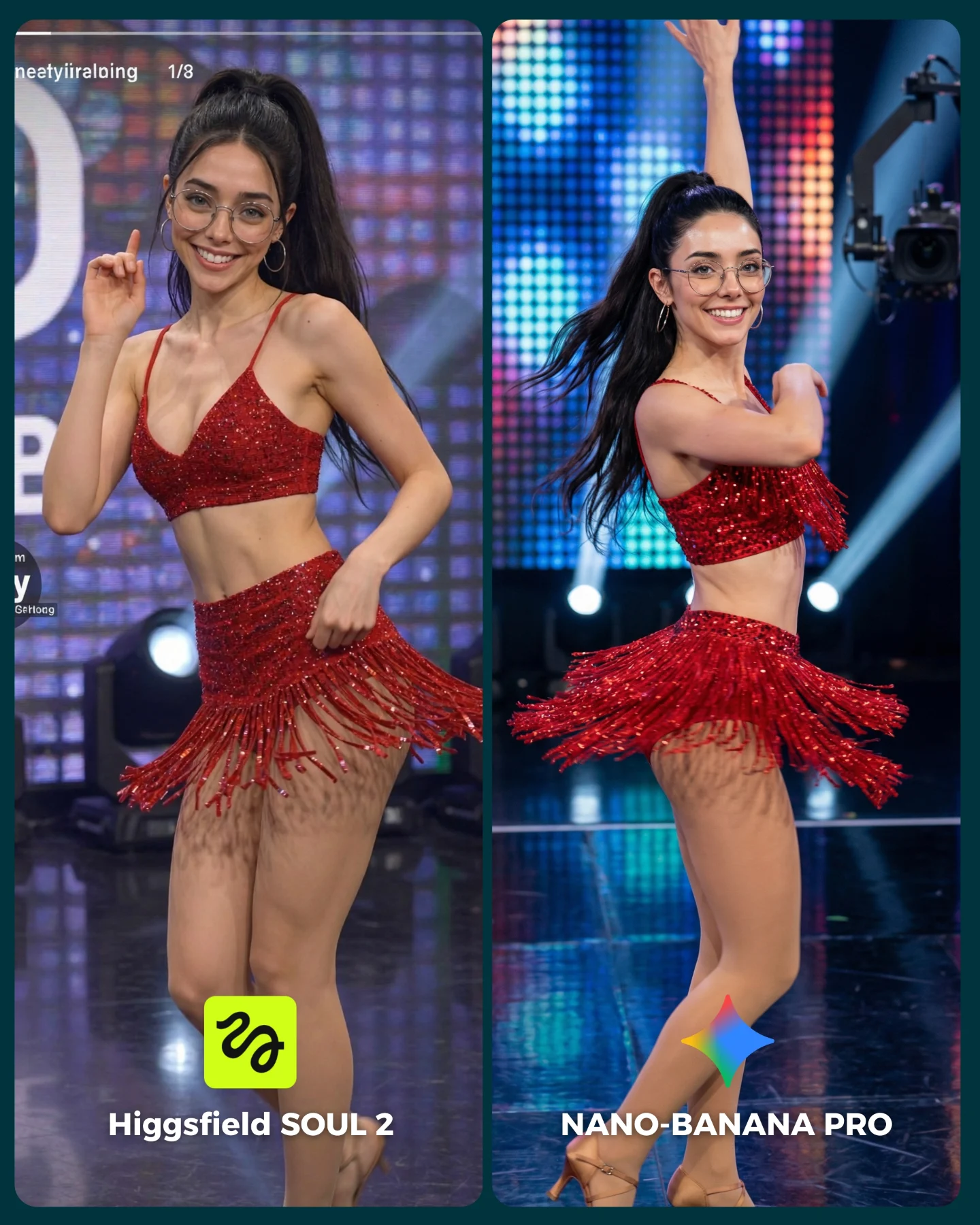
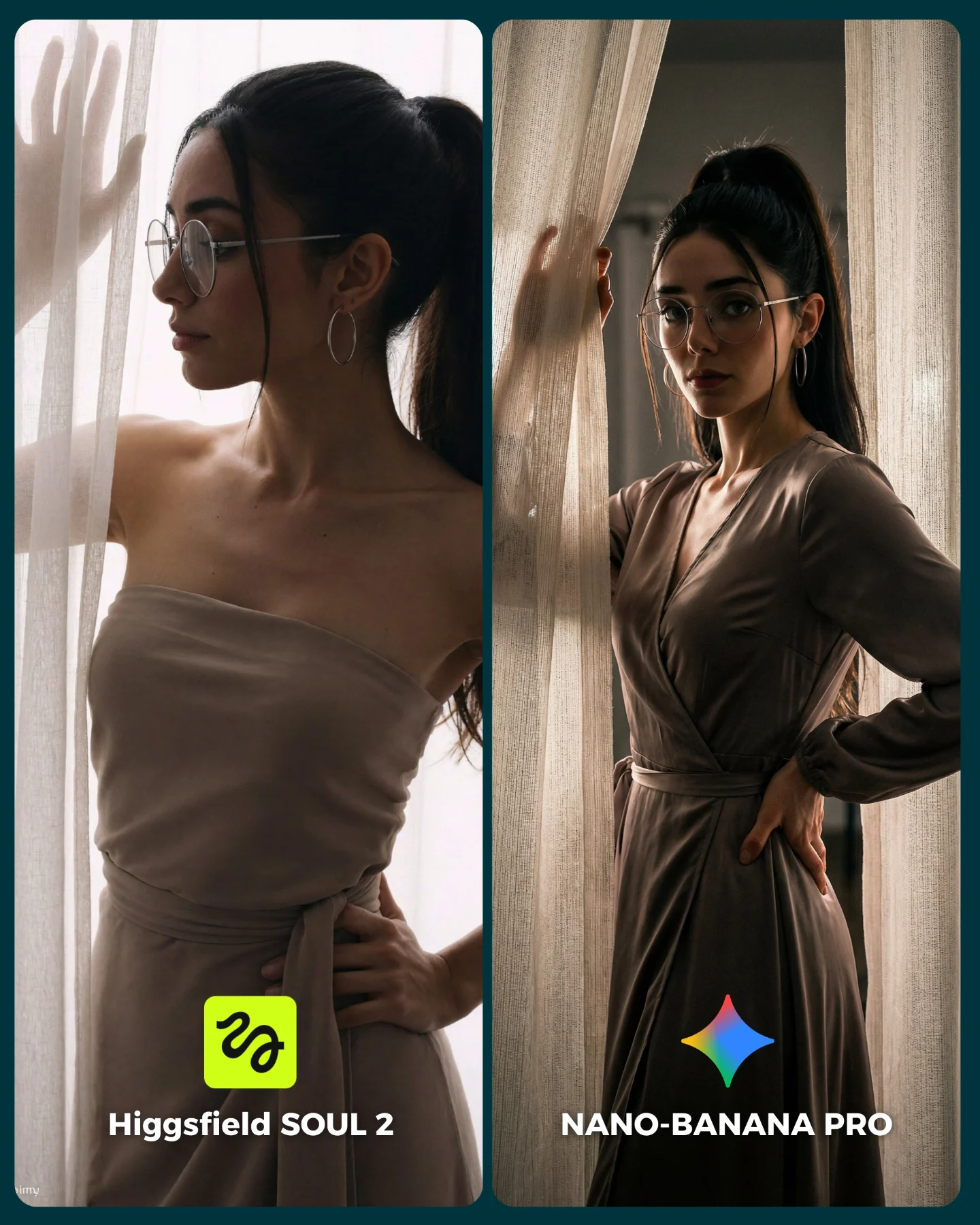
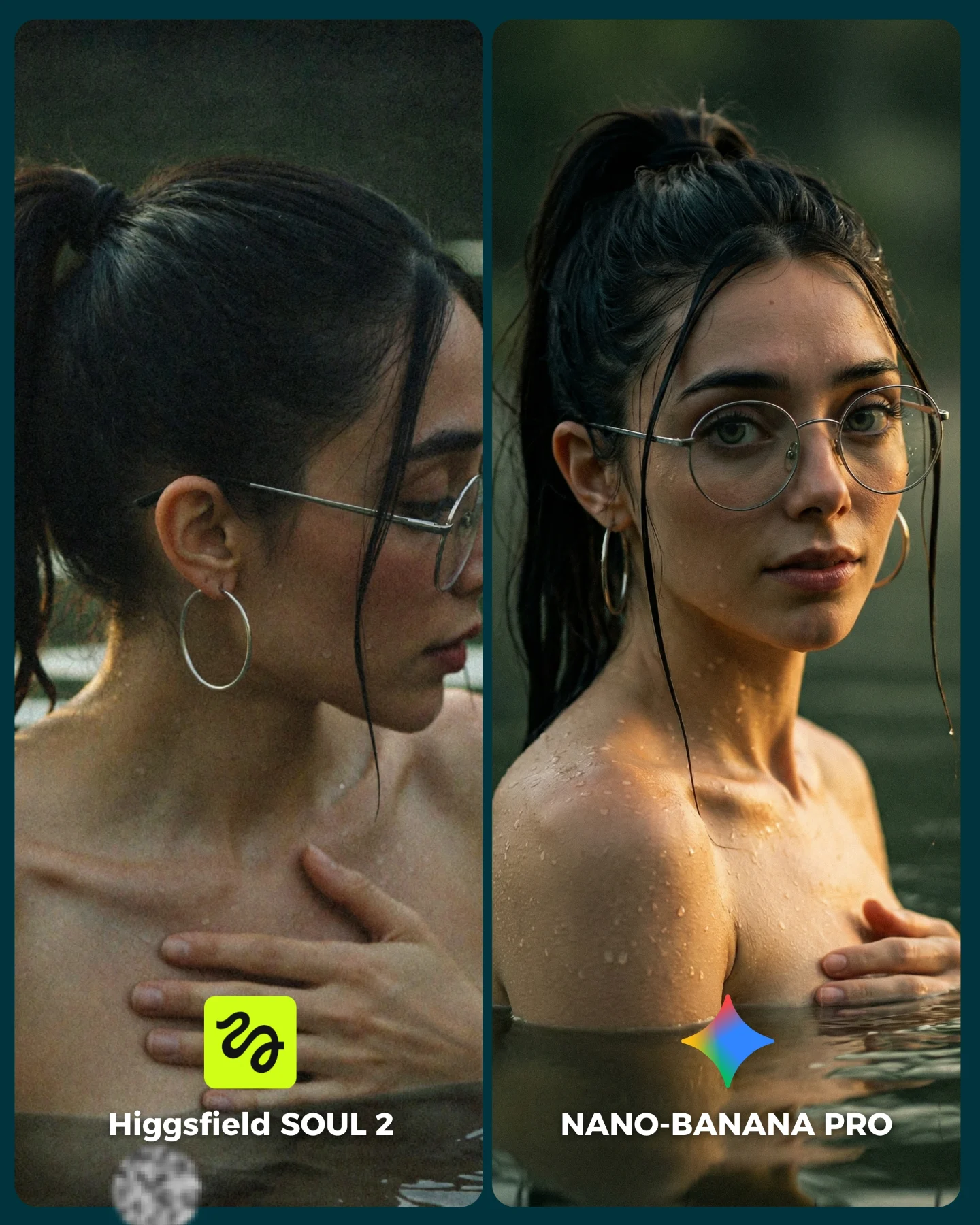
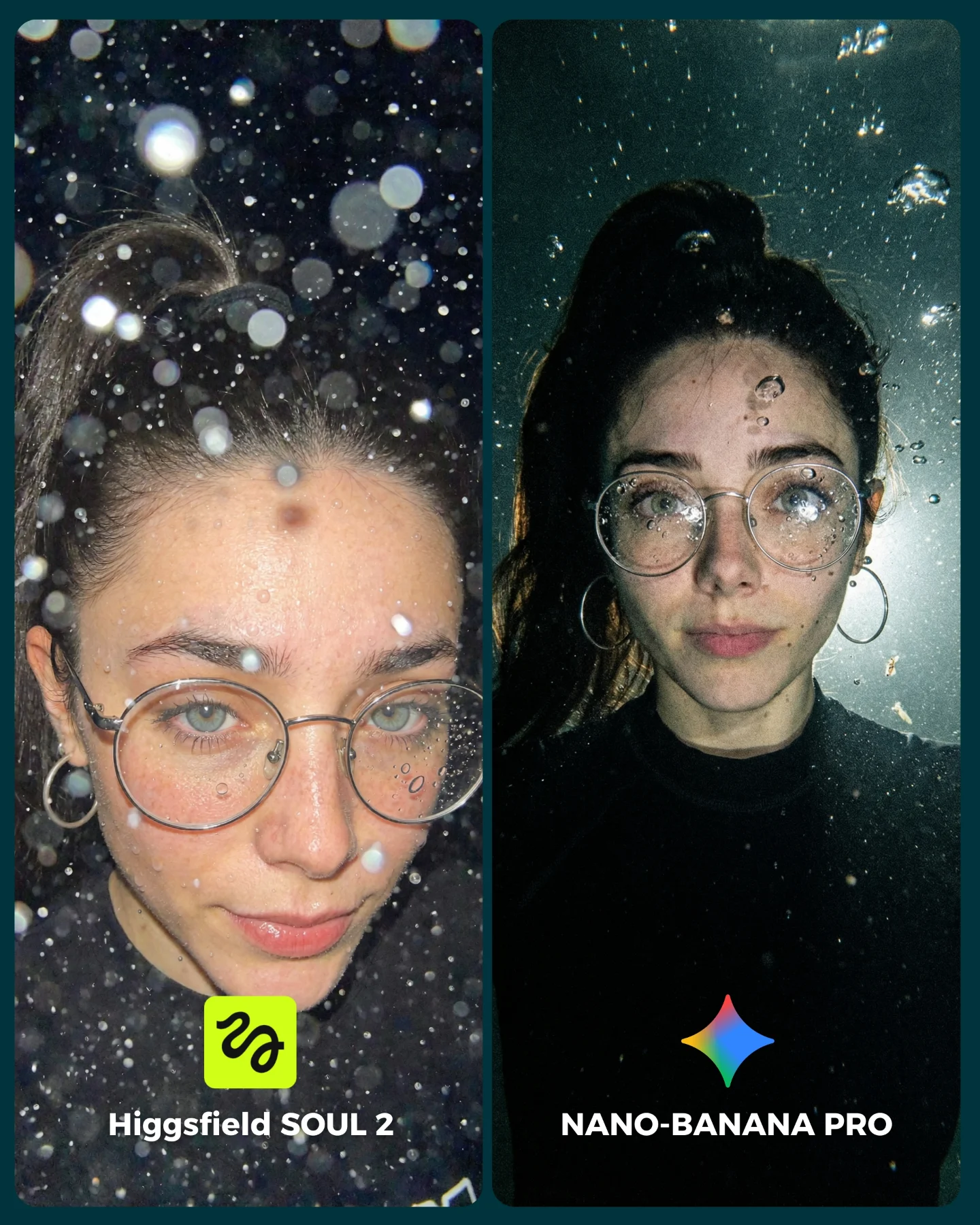
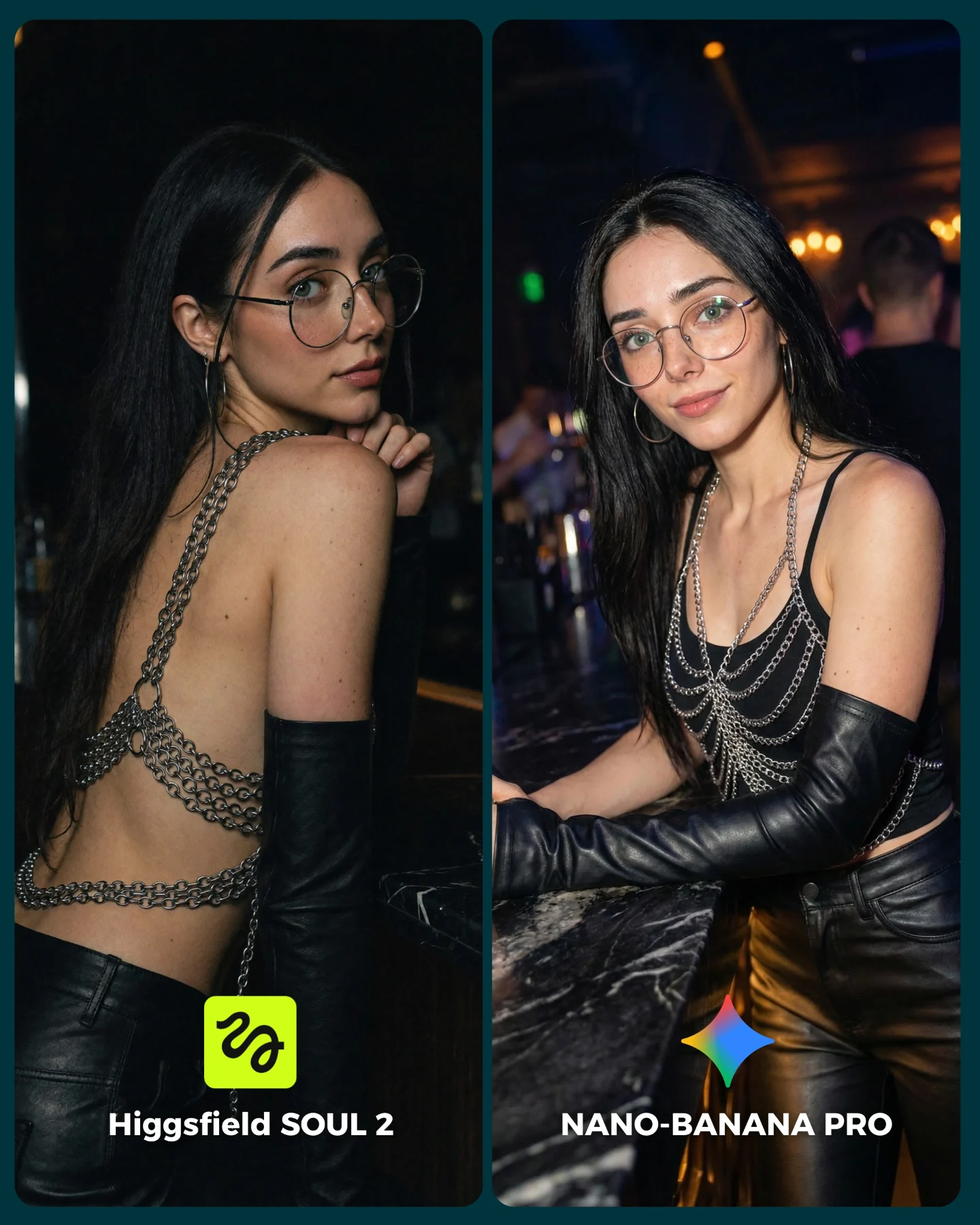
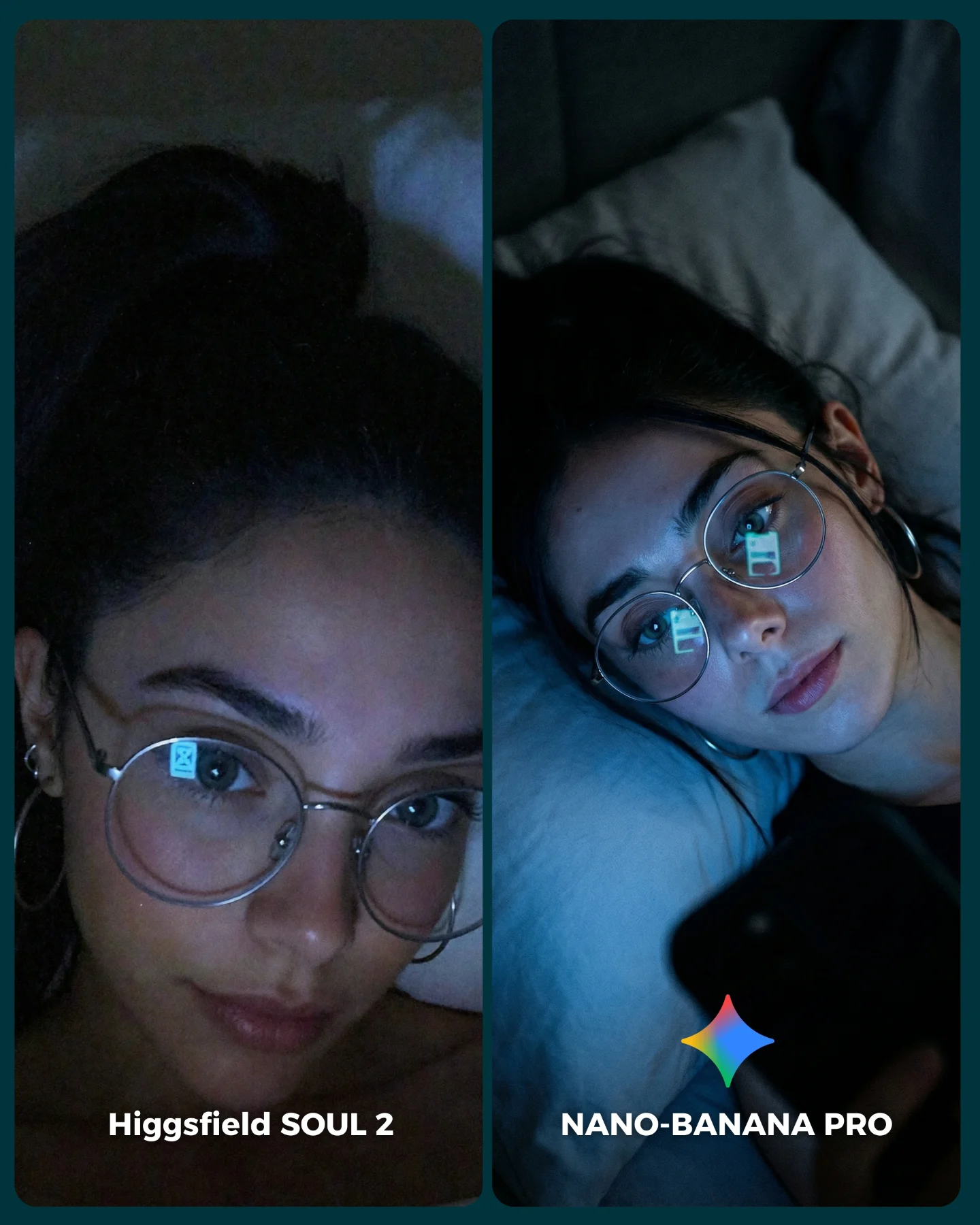
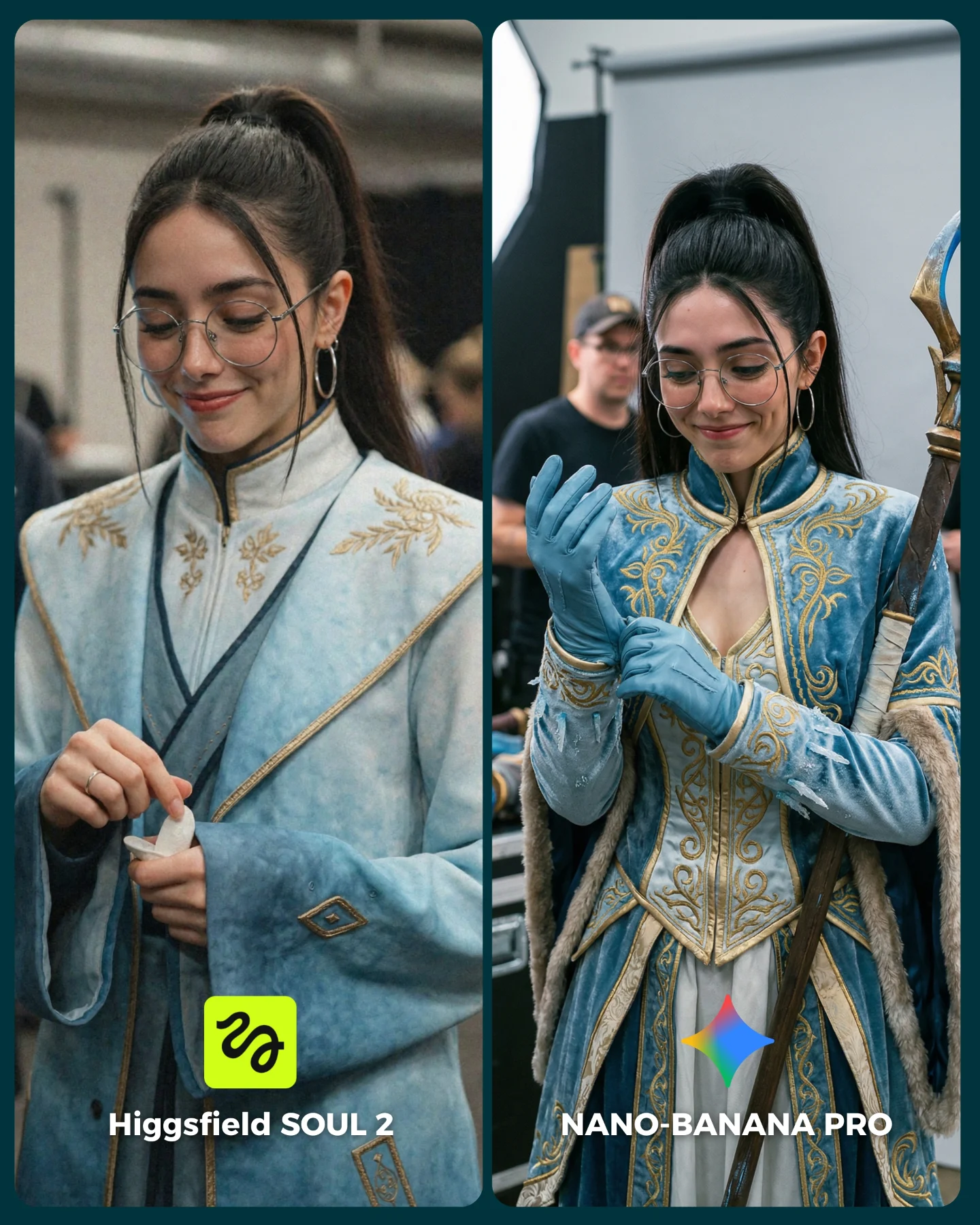
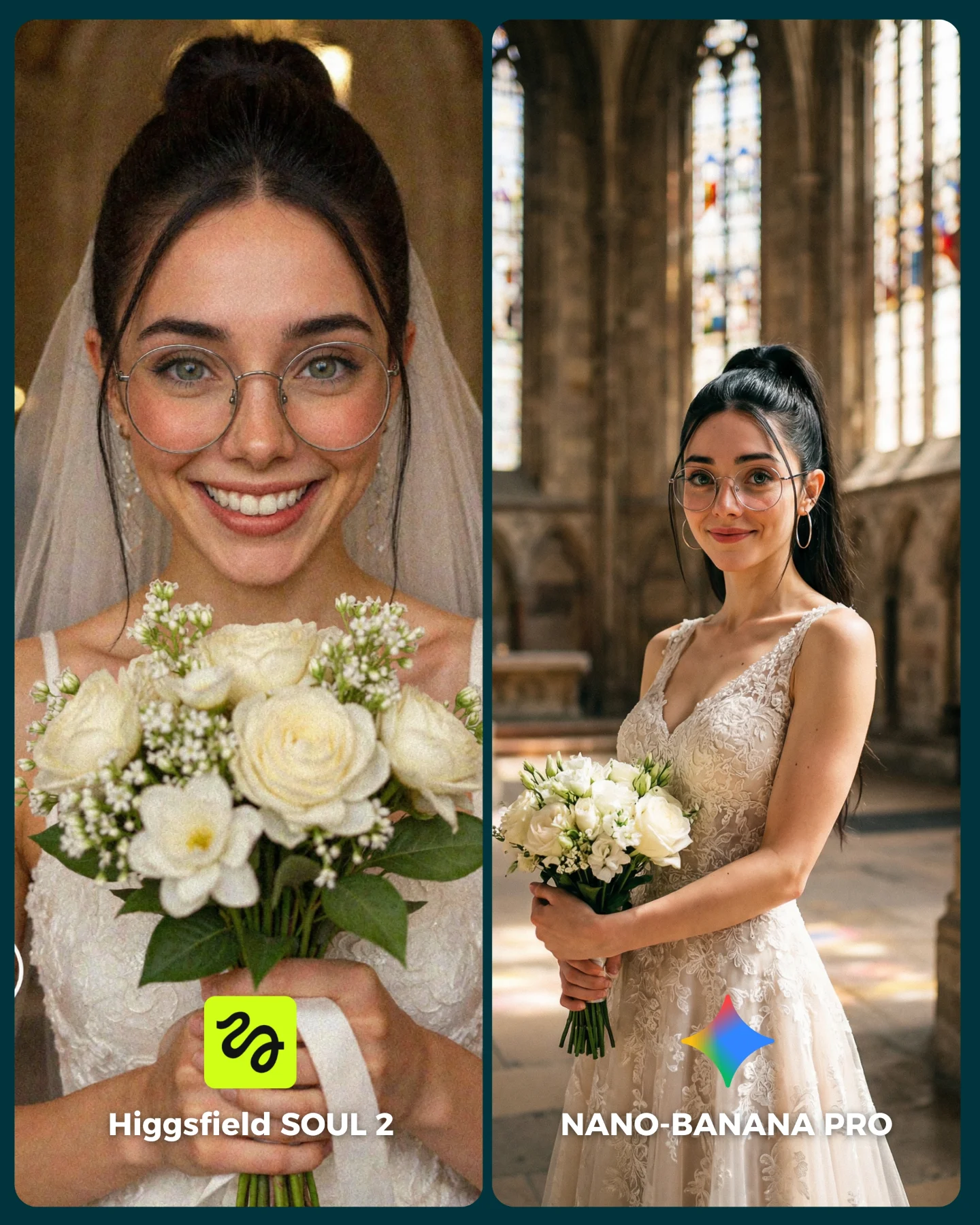
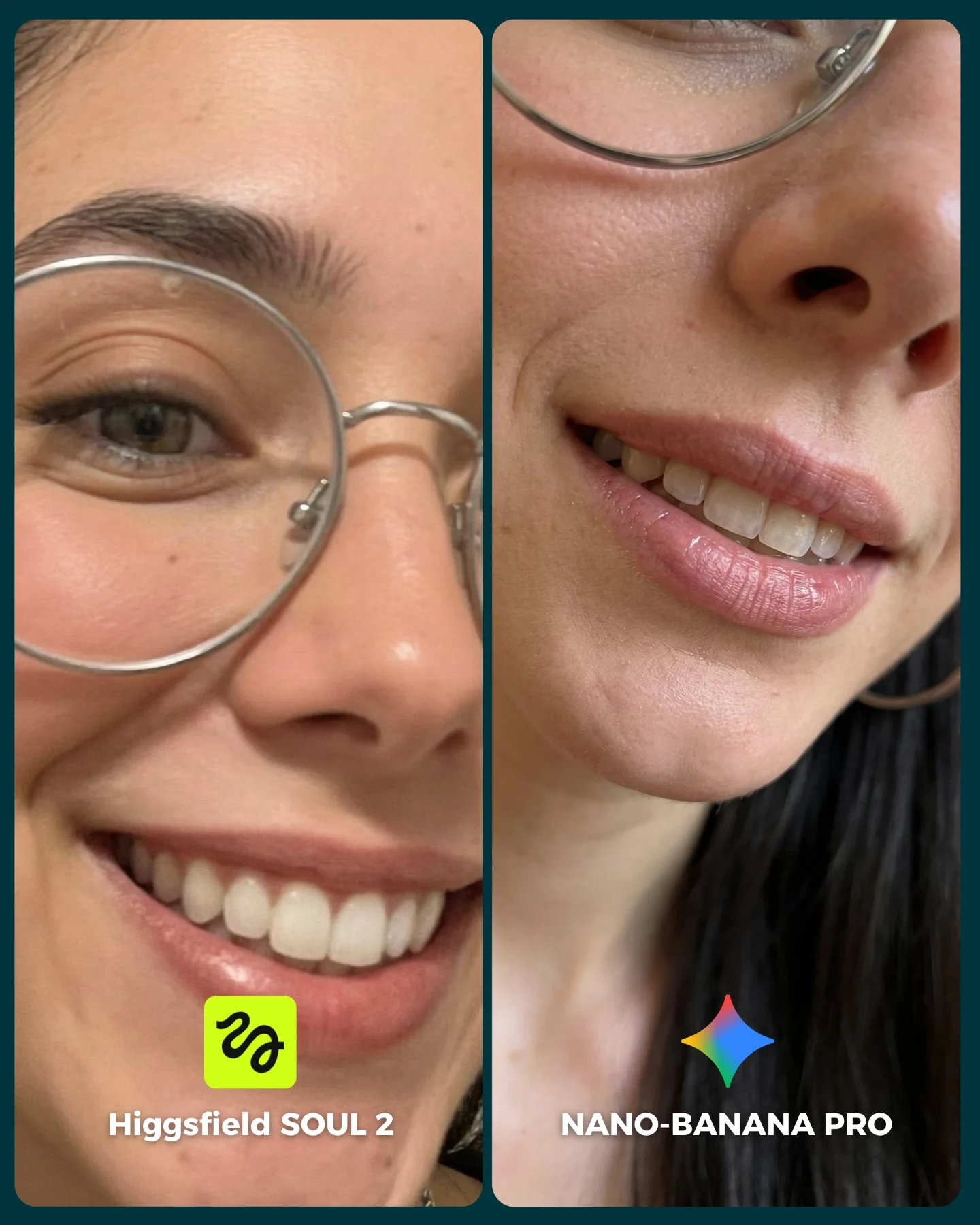
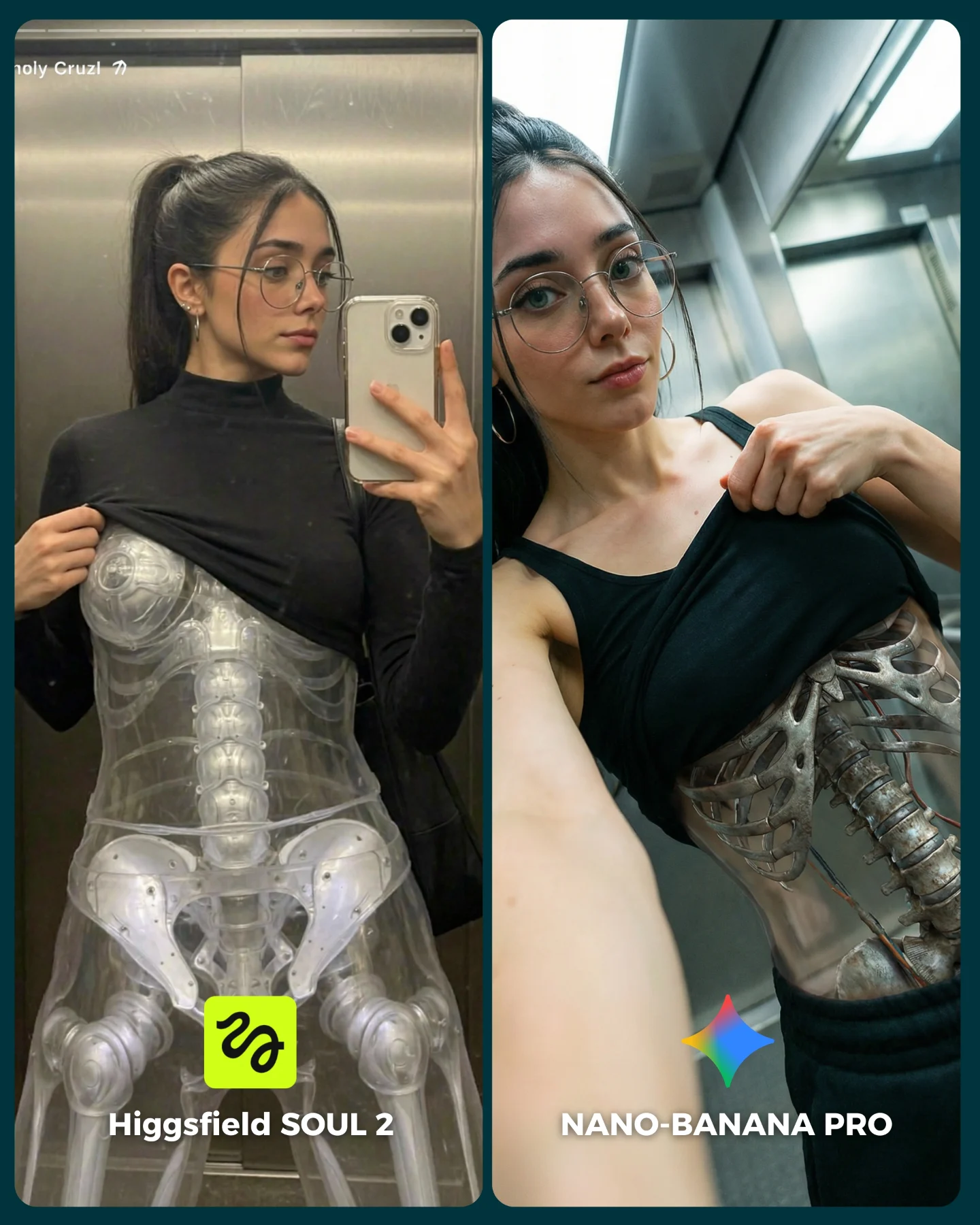
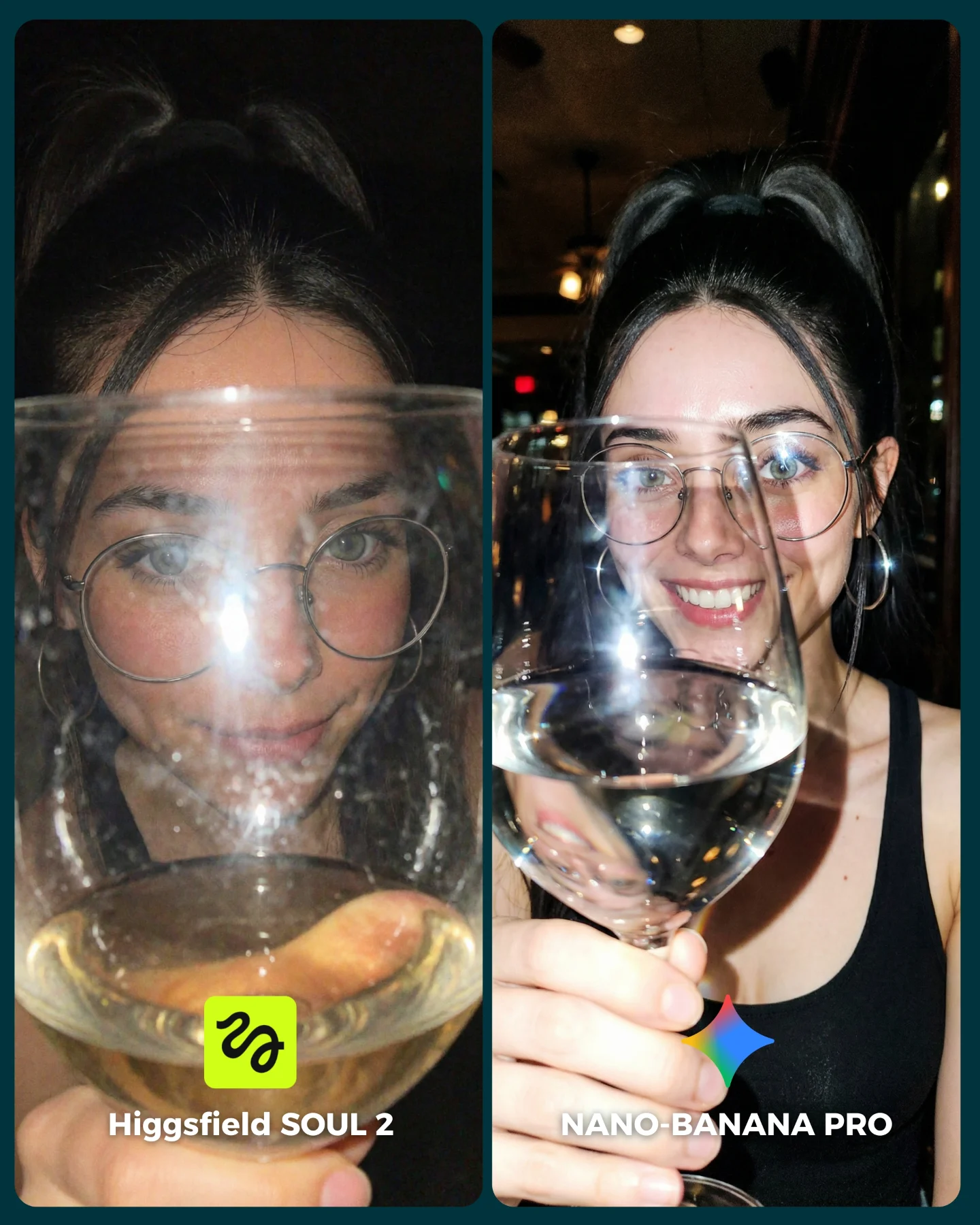
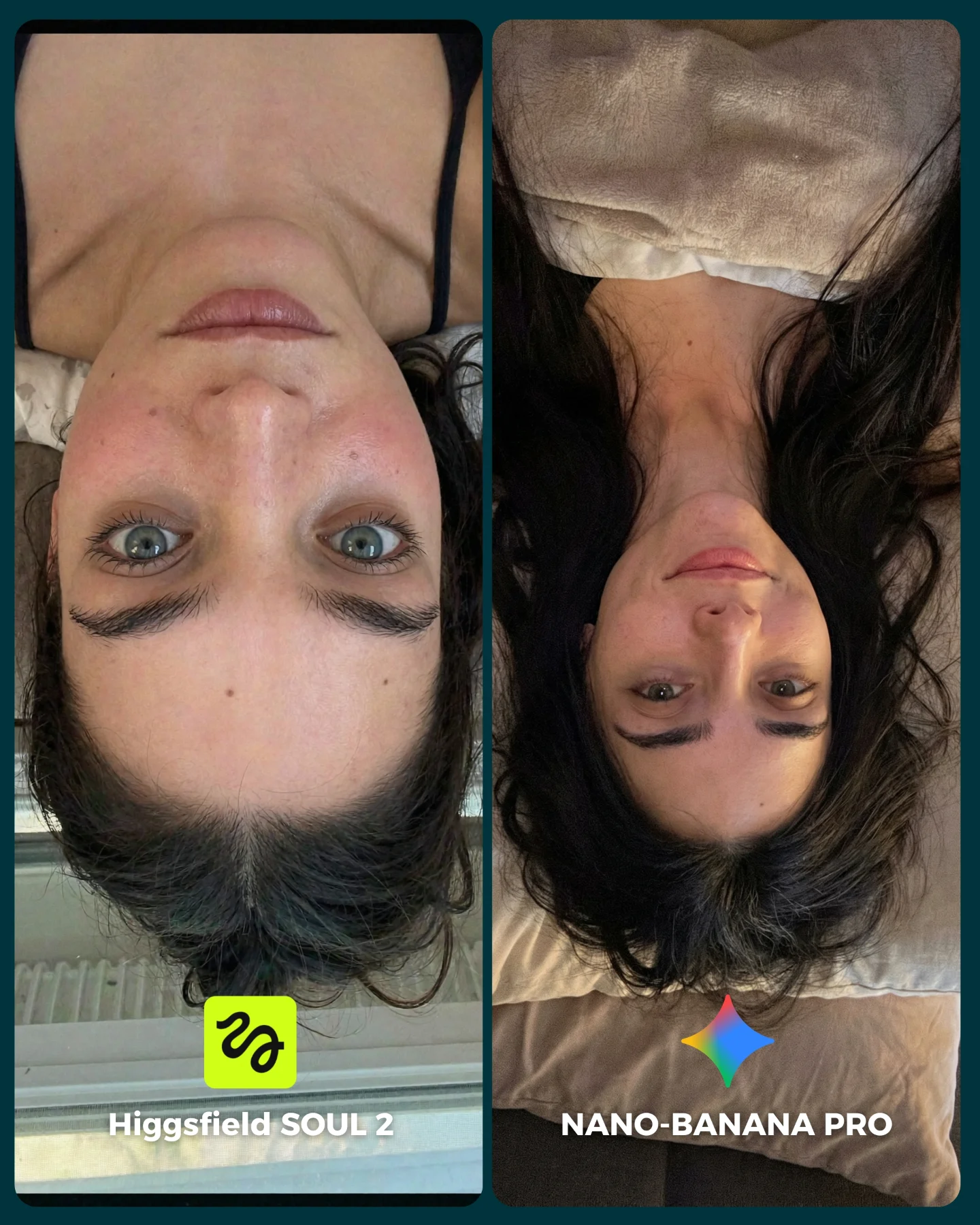
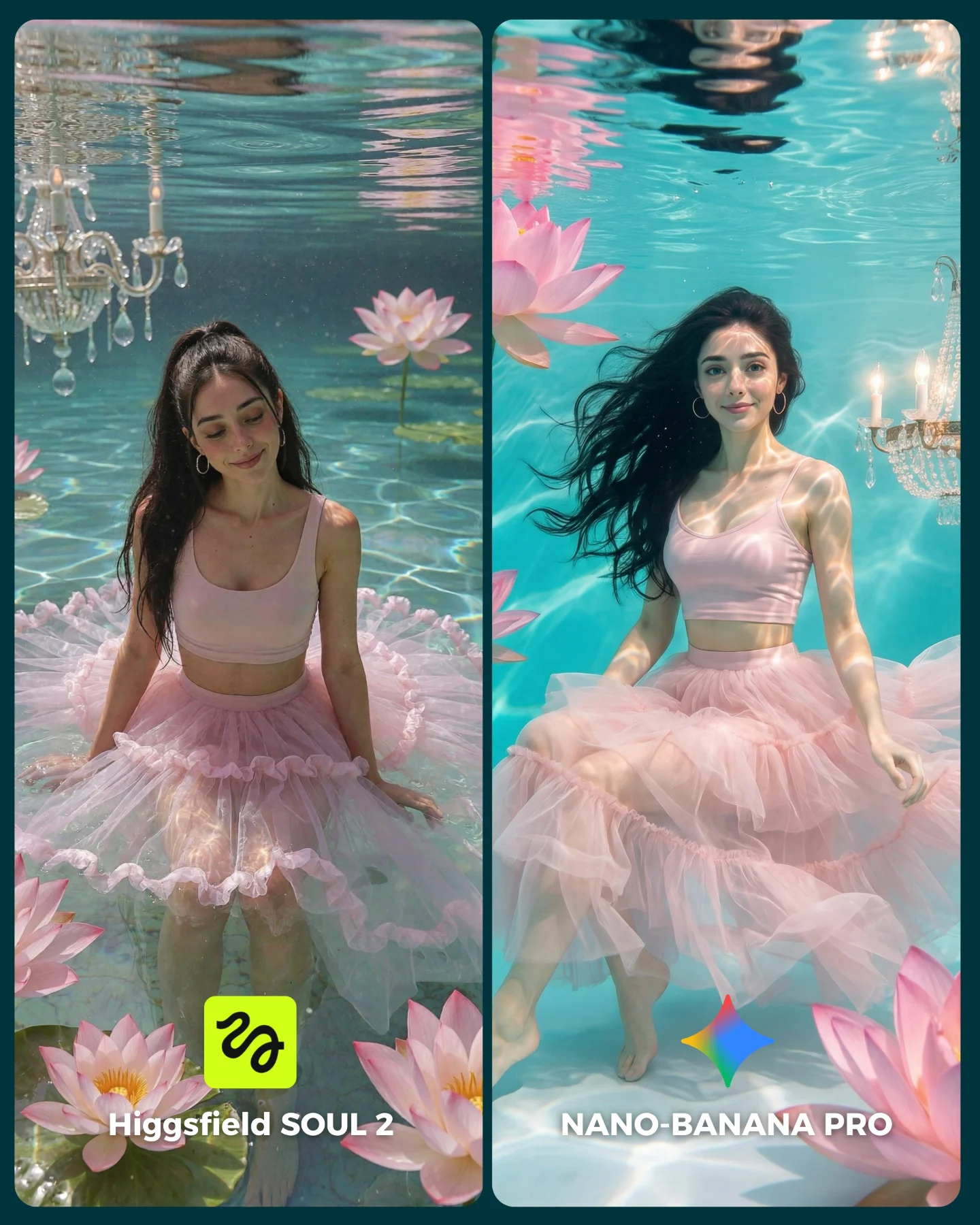
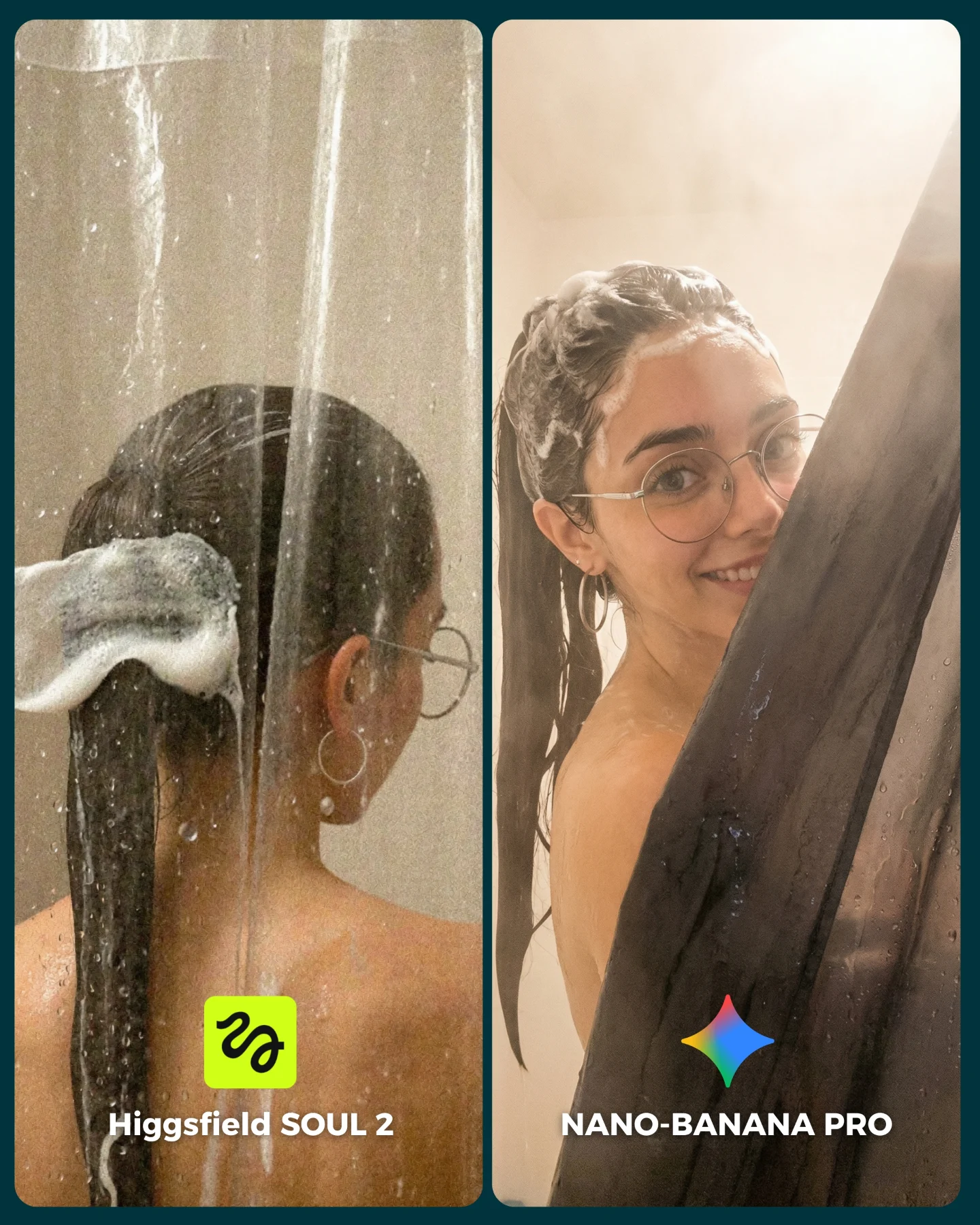
SOUL 2 Vs. Nano Banana Pro 💥
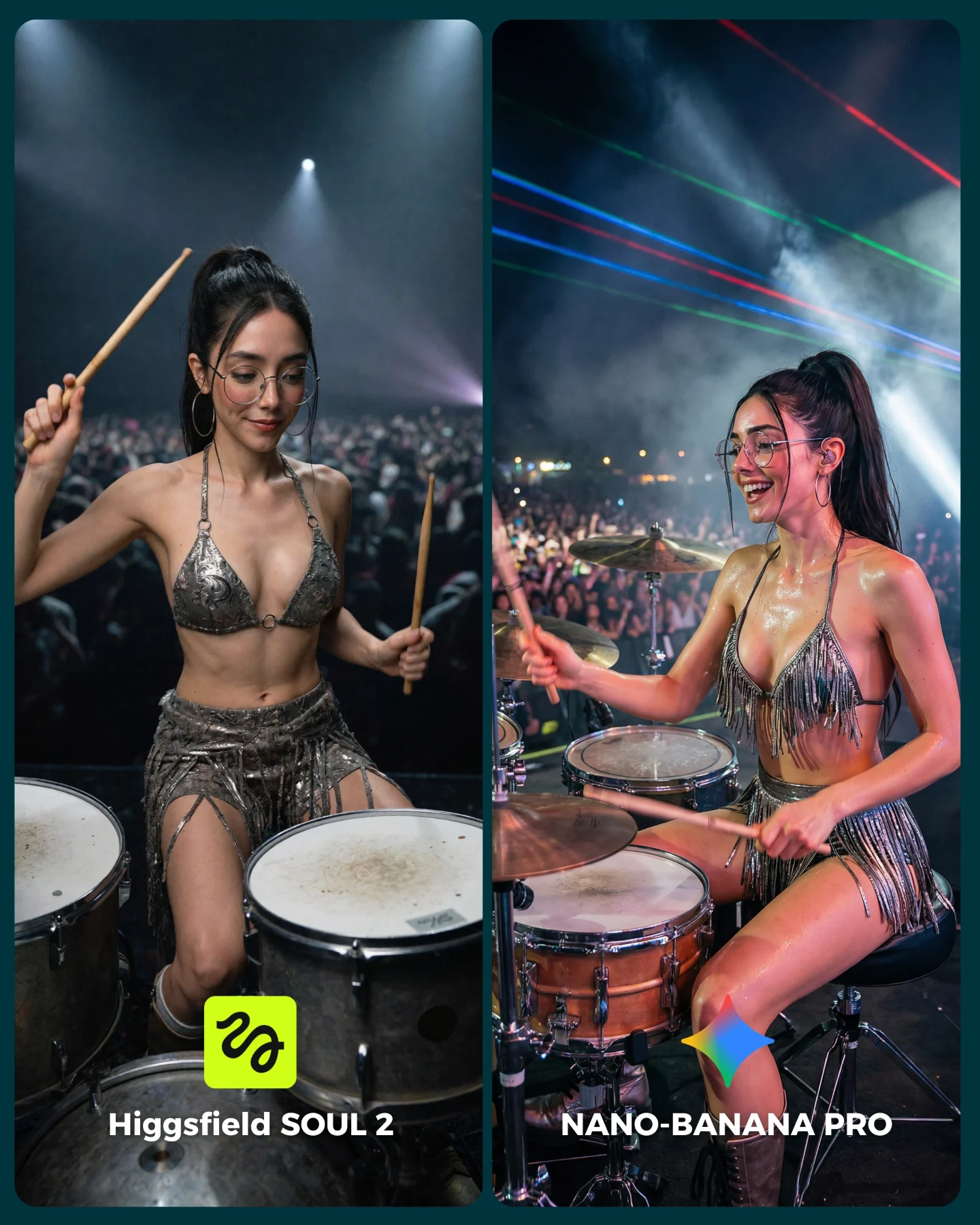
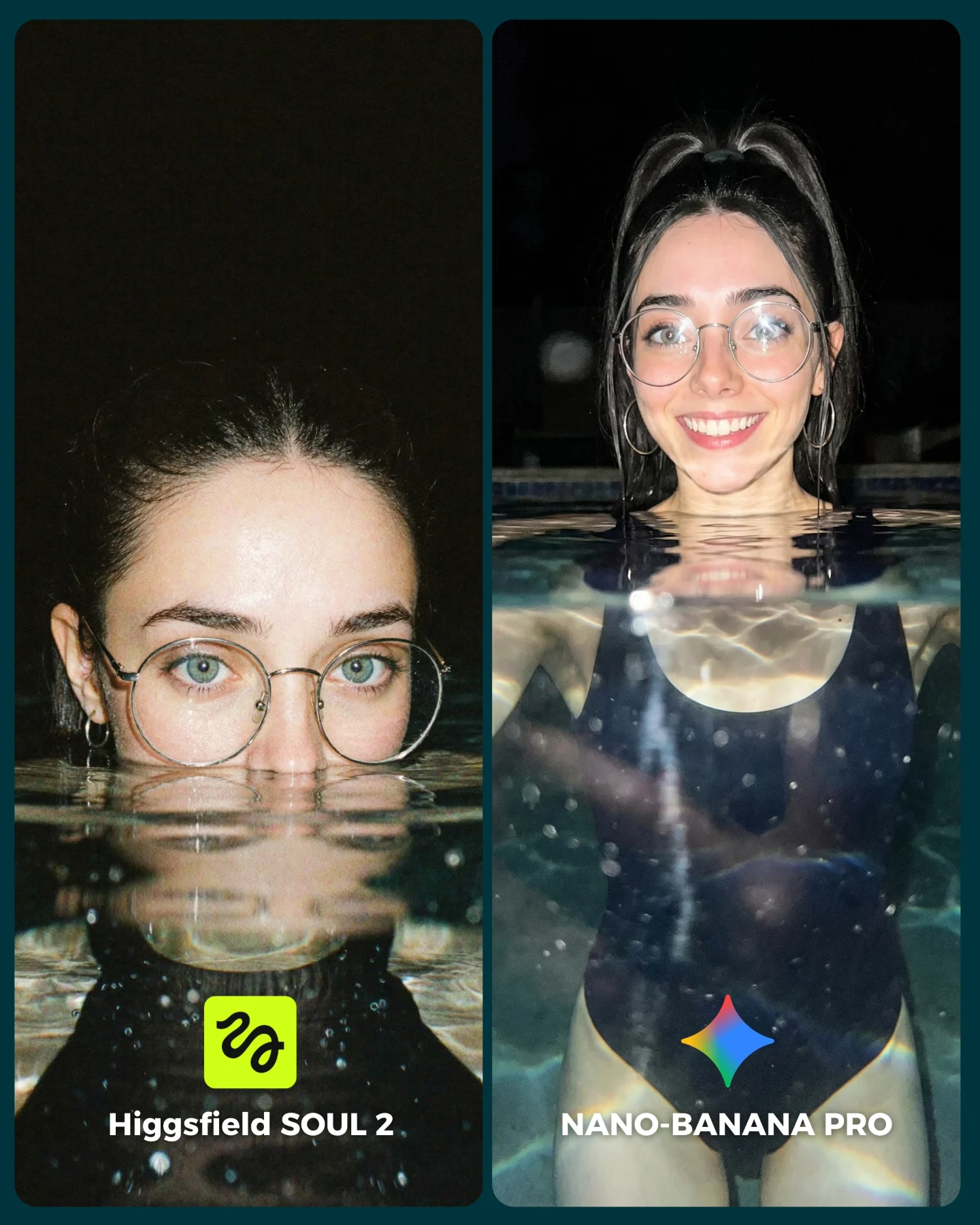
Higgsfield ha lanzado su nuevo generador de imágenes SOUL 2 ⚡ Puedes subirle hasta 80 imágenes de referencia de tu personaje para mantener mejor la constancia 👀
Y para compararlo bien, lo he puesto a prueba junto a Nano Banana Pro que hasta el momento es mi generador de imágenes favorito 💕
La verdad es que hay algunos resultados de SOUL 2 que me han sorprendido bastante... No está nada mal, pero sigo prefiriendo Nano Banana para la mayoría de las ocasiones 😅
Os dejo algunas imágenes que he generado y espero leer vuestras opiniones en comentarios 💌 Y si quieres los prompts de todas las imágenes comenta "ARIA" y te los mando por mensaje!
How soy_aria_cruz Made This SOUL 2 vs Nano Banana Pro AI Art — and How to Recreate It
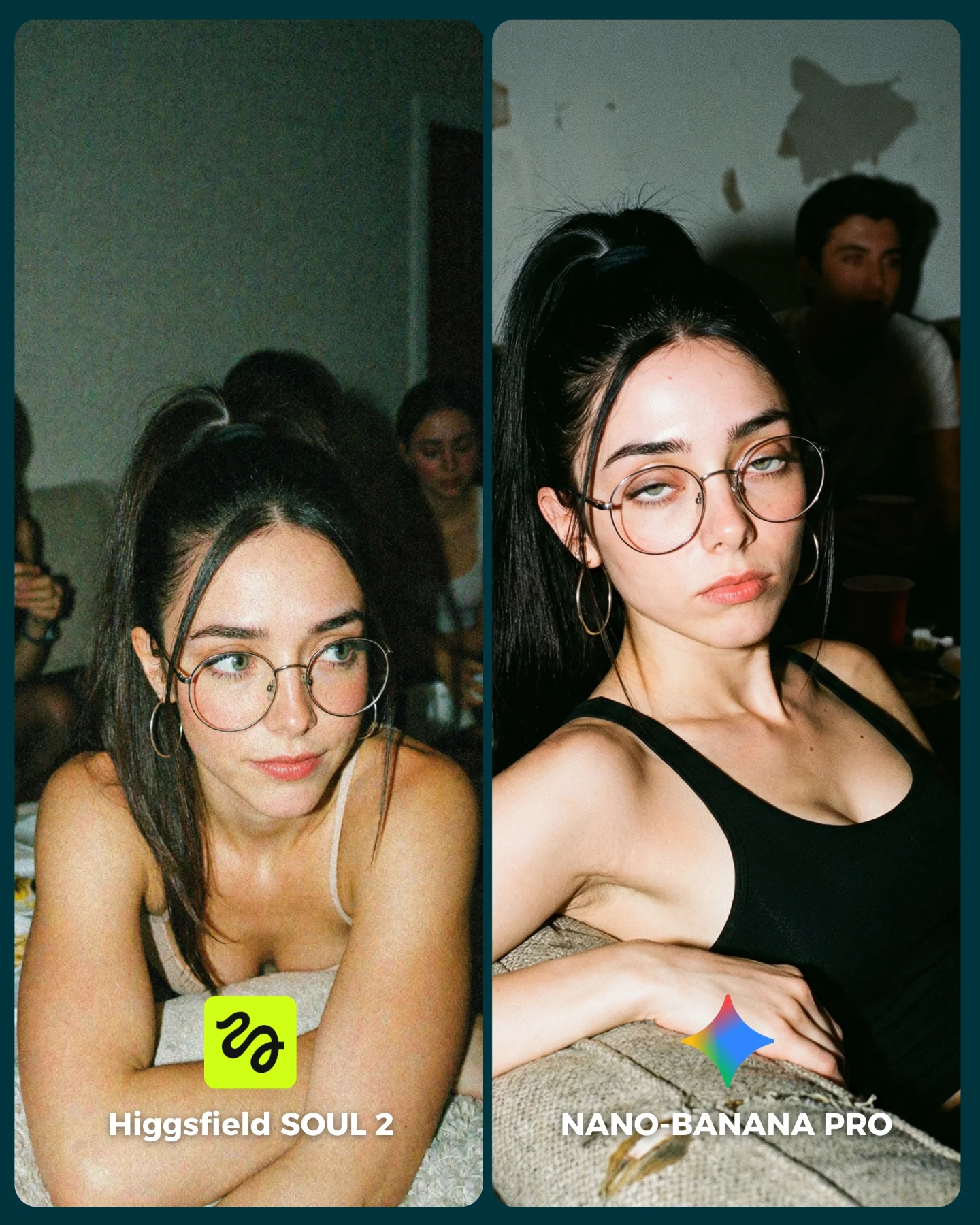
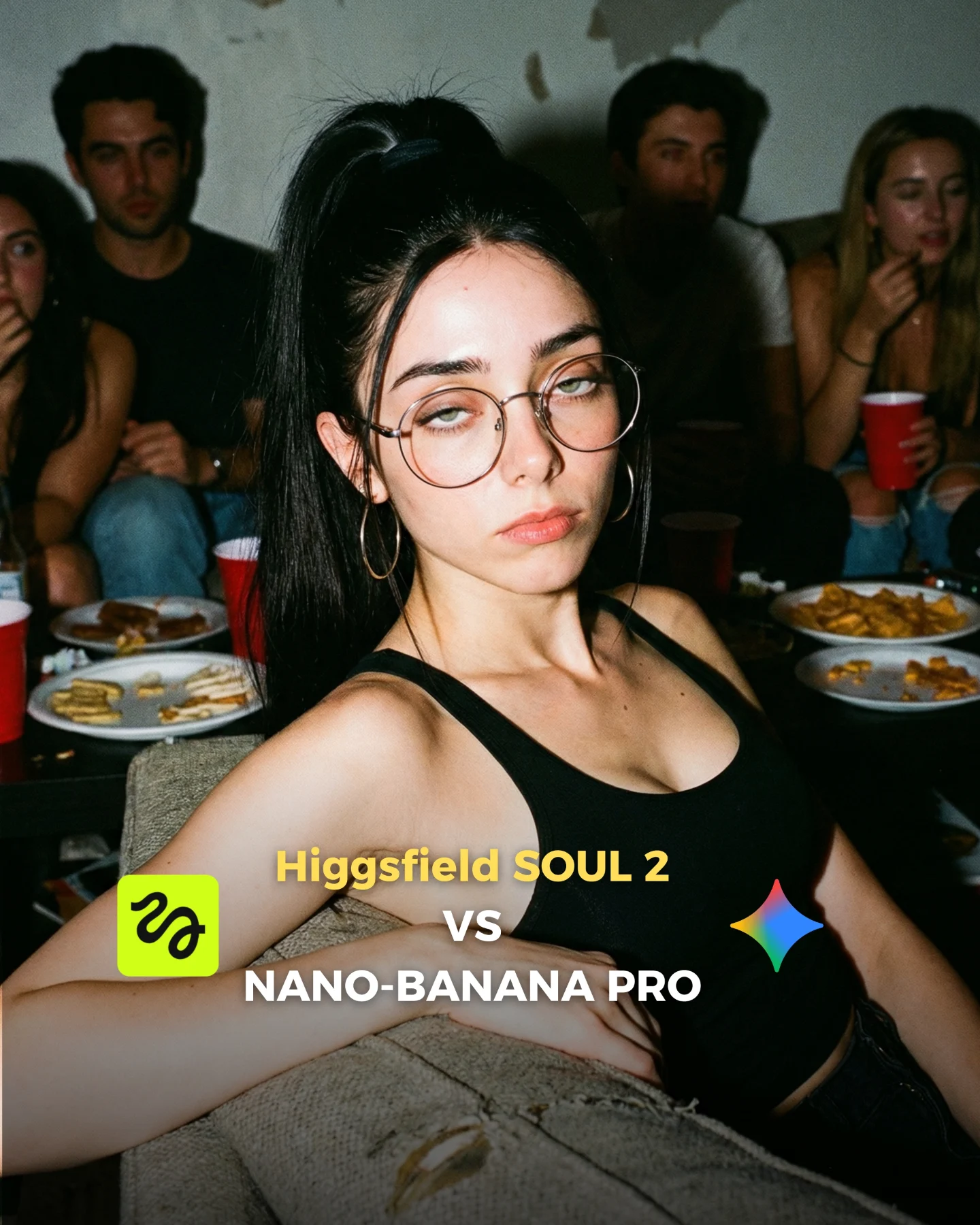
Polished portraits are easy to like, but candid realism is harder to fake. That is why this comparison image works. Instead of using a clean studio setup, it chooses a dim indoor party scene with direct flash, background people, couch texture, skin shine, and slightly awkward body language. Those details create friction, and friction is exactly what makes a realism test worth discussing.
For a creator account, this matters because social trust often comes from images that feel casually believable. A model that can only produce polished fantasy shots will always feel limited. A model that can survive messy party lighting and still keep the character consistent feels more useful. This post makes that claim visually before the caption even starts arguing for it.
Why the post can pull comments
The side-by-side format gives viewers an immediate task: decide which one feels more real. But the deeper reason it drives engagement is that candid photography has familiar imperfections. Everyone has seen flash party photos with shiny skin, odd angles, and half-distracted expressions. When an AI image enters that territory, audiences instinctively compare it to memory, not just to aesthetics.
The creator also benefits from choosing a scene with background witnesses. Once there are other people behind the subject, the comparison is no longer only about one face. It becomes about environment control, depth, social context, and whether the model can keep a casual room from collapsing into visual nonsense. That gives the audience far more to inspect and argue over.
Signal
Evidence (from this image)
Mechanism
Replication Action
Relatable messiness
Direct flash, dim room, couch pose, background people
Familiar snapshot logic makes realism easier to judge
Use scenes people already know from real life, not only stylized fantasies
Debate-ready structure
Two clearly labeled outputs from competing models
Viewers are invited to rank and explain their choice
Build the verdict into the image so comments start faster
Character stress test
Same glasses, same ponytail, same tank top across both panels
Consistency becomes visible under harder lighting conditions
Lock identity markers before testing environment difficulty
Best uses
This format is best for creators doing model comparisons, prompt breakdowns, and realism benchmarks. It is especially useful when the goal is to prove that a character still holds together in casual low-glamour settings. That is a stronger proof of consistency than another polished fashion render.
Best fit: candid-photo AI benchmark posts.
Best fit: audience-poll content around realism and naturalness.
Best fit: tutorials about flash, nightlife, or snapshot aesthetics.
Not ideal: luxury moodboards where harsh flash would break the tone.
Not ideal: simple product ads that need a cleaner commercial read.
Three transfer recipes
Keep: flash snapshot energy and one locked character. Change: the social setting, such as restaurant, car interior, or backstage room. Template: {same character} in {casual social scene} with {flash-photo mood}
Keep: couch intimacy and background people. Change: the pose attitude, from engaged to detached. Template: {pose mood} on {furniture} at {night gathering}
Keep: comparison layout and candid styling. Change: the realism challenge, like hair flyaways, sweat sheen, or reflective lenses. Template: {model A} vs {model B} on {candid realism stress test}
Aesthetic read
The strongest aesthetic choice here is refusing to be too beautiful. The image keeps the flash roughness, the room dark, and the poses slightly unguarded. That produces something closer to social proof than to fantasy. In growth terms, that is valuable because it broadens the creator's visual world. It says the character can exist in believable off-duty moments too.
The glasses are an important detail. They add a familiar reflective surface and make the face harder to render convincingly under flash. The couch fabric and background figures do similar work. These are not decorative extras. They are realism checkpoints. The image feels interesting because every visible element can succeed or fail.
Observed
Recreate
Why it matters
Harsh point-and-shoot flash
Use direct frontal light with visible shine and little drama
It mimics real party snapshots and exposes rendering weakness
Unposed body language
Choose leaning, resting, or half-distracted poses
Casual posture makes the scene feel lived-in
Dark room with background people
Keep ambient darkness and a few blurred figures behind
Social context gives the image more credibility
Minimal styling
Use one simple black top and signature accessories only
The viewer focuses on realism instead of costume spectacle
Prompt technique breakdown
This kind of image should be prompted like a documentary snapshot, not a beauty campaign. If you overspecify glamour language, the model will try to beautify away the exact qualities that make the comparison useful.
Lock three things first: one character, one room, one flash style. Then change only the model output or one realism detail.
Run 1: stabilize face identity, glasses, and ponytail across both panels.
Run 2: fix flash texture, couch material, and skin realism.
Run 3: add background people and clutter only after the main subject is stable.
Run 4: tune crop and labels so the comparison still works at small feed size.
The goal is not to make the scene cleaner. The goal is to keep the mess believable. That is what makes this benchmark feel useful instead of decorative.