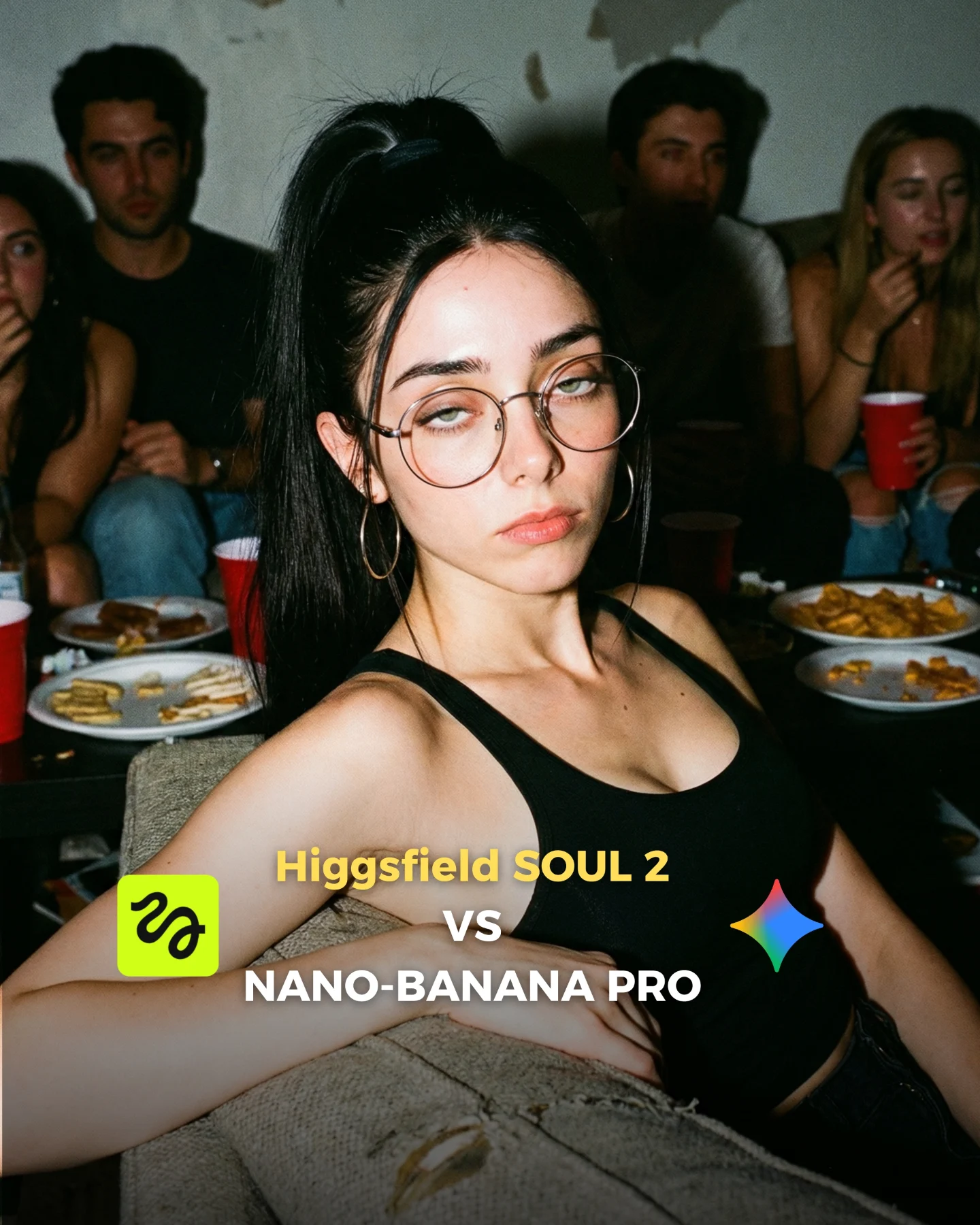
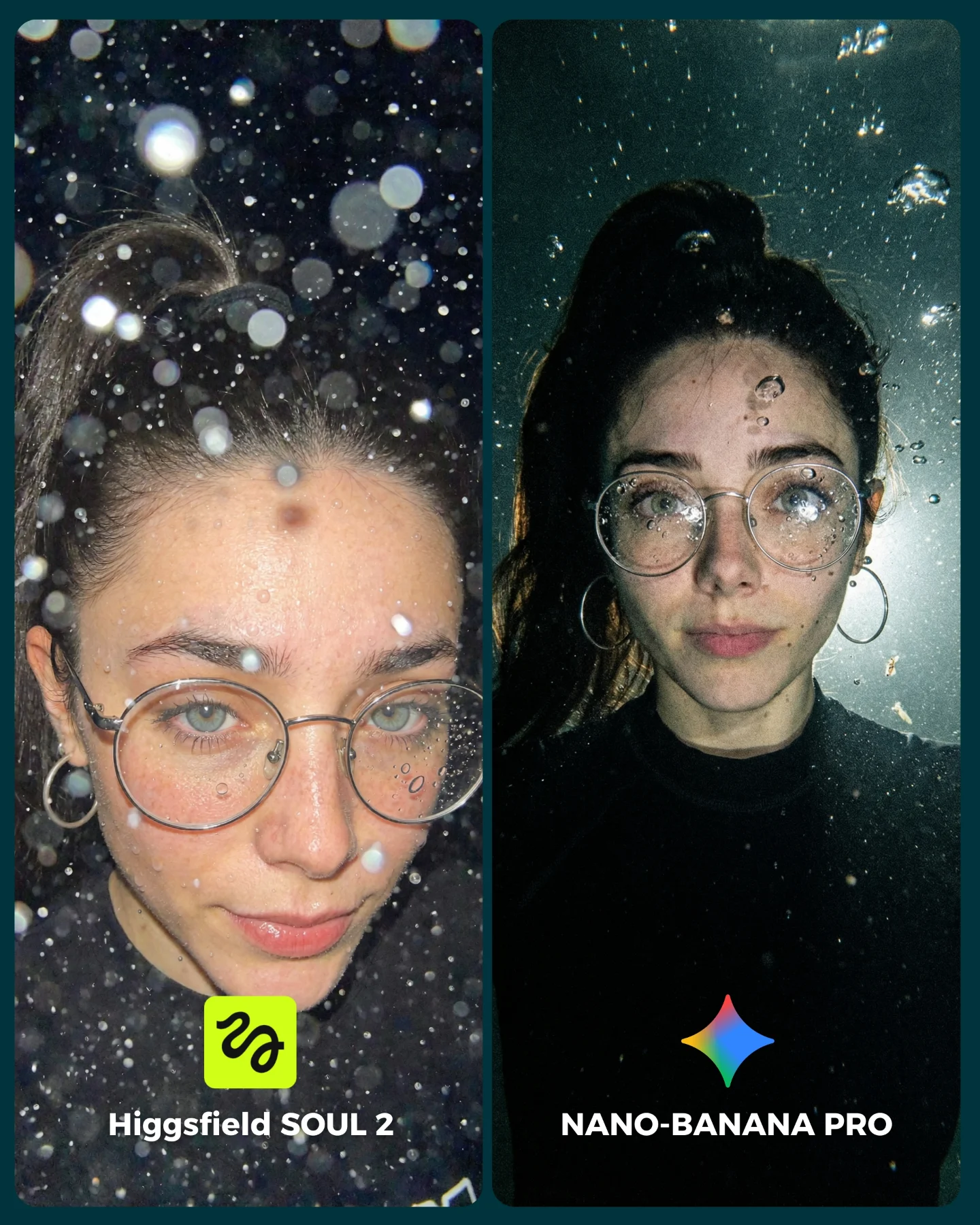
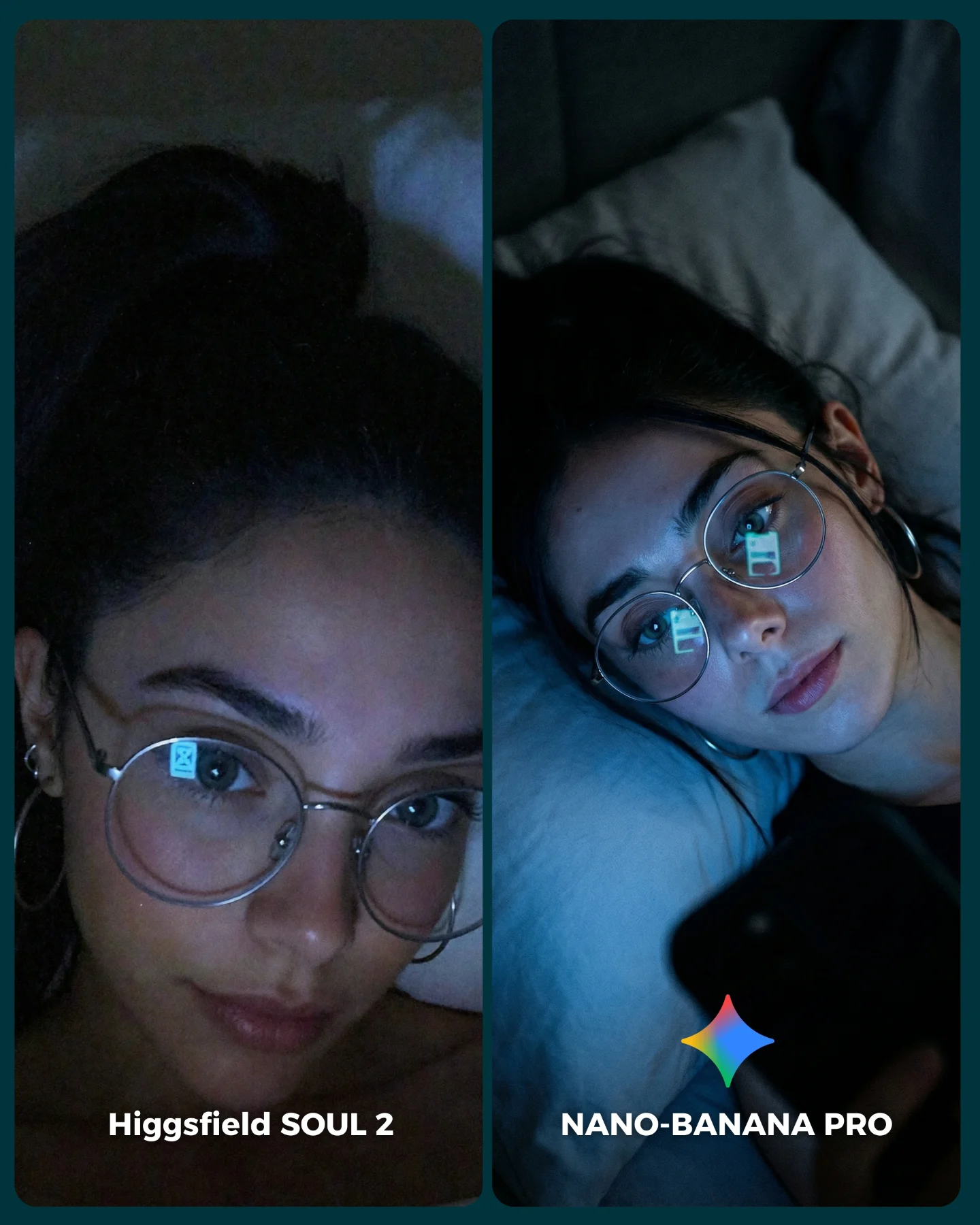
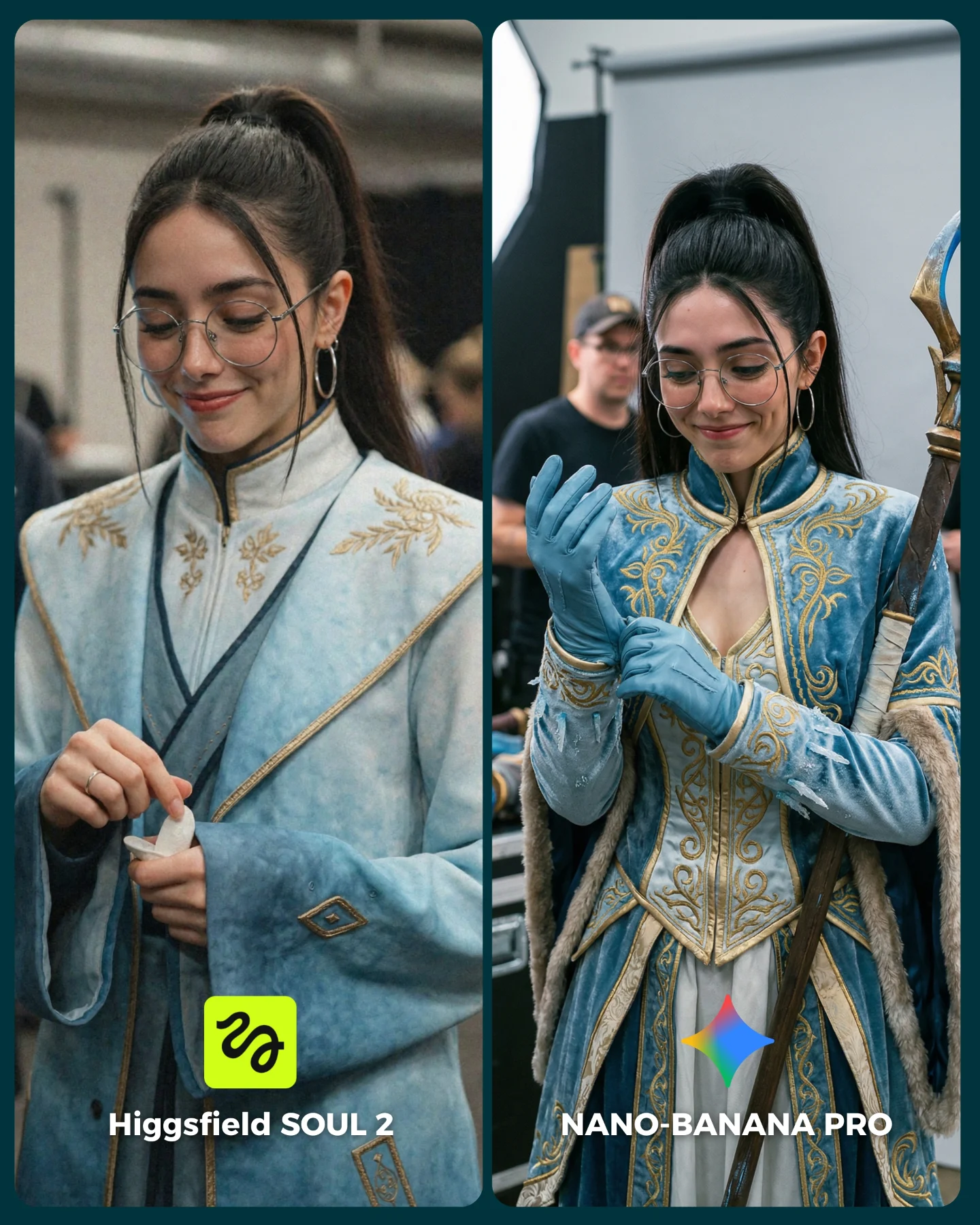
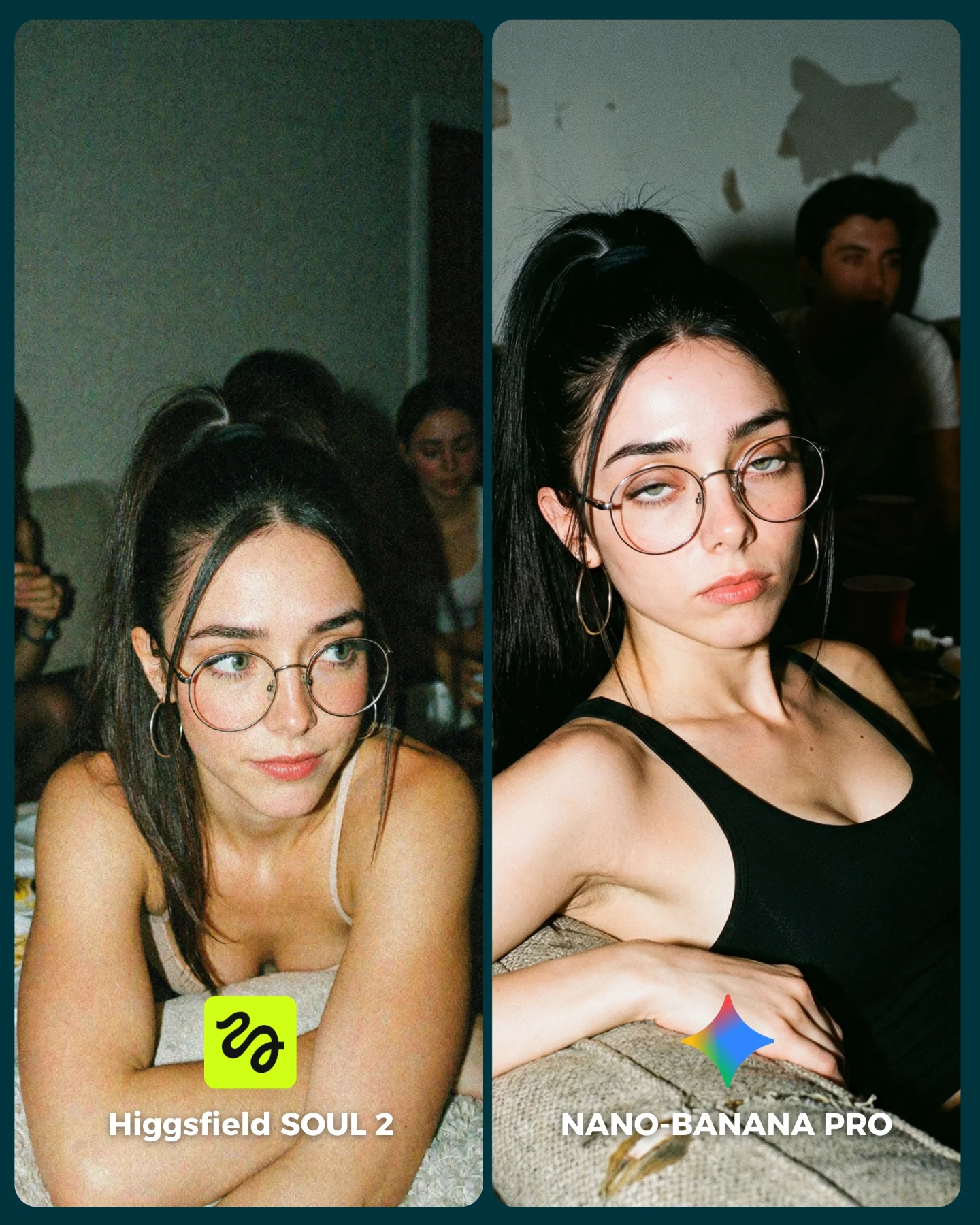
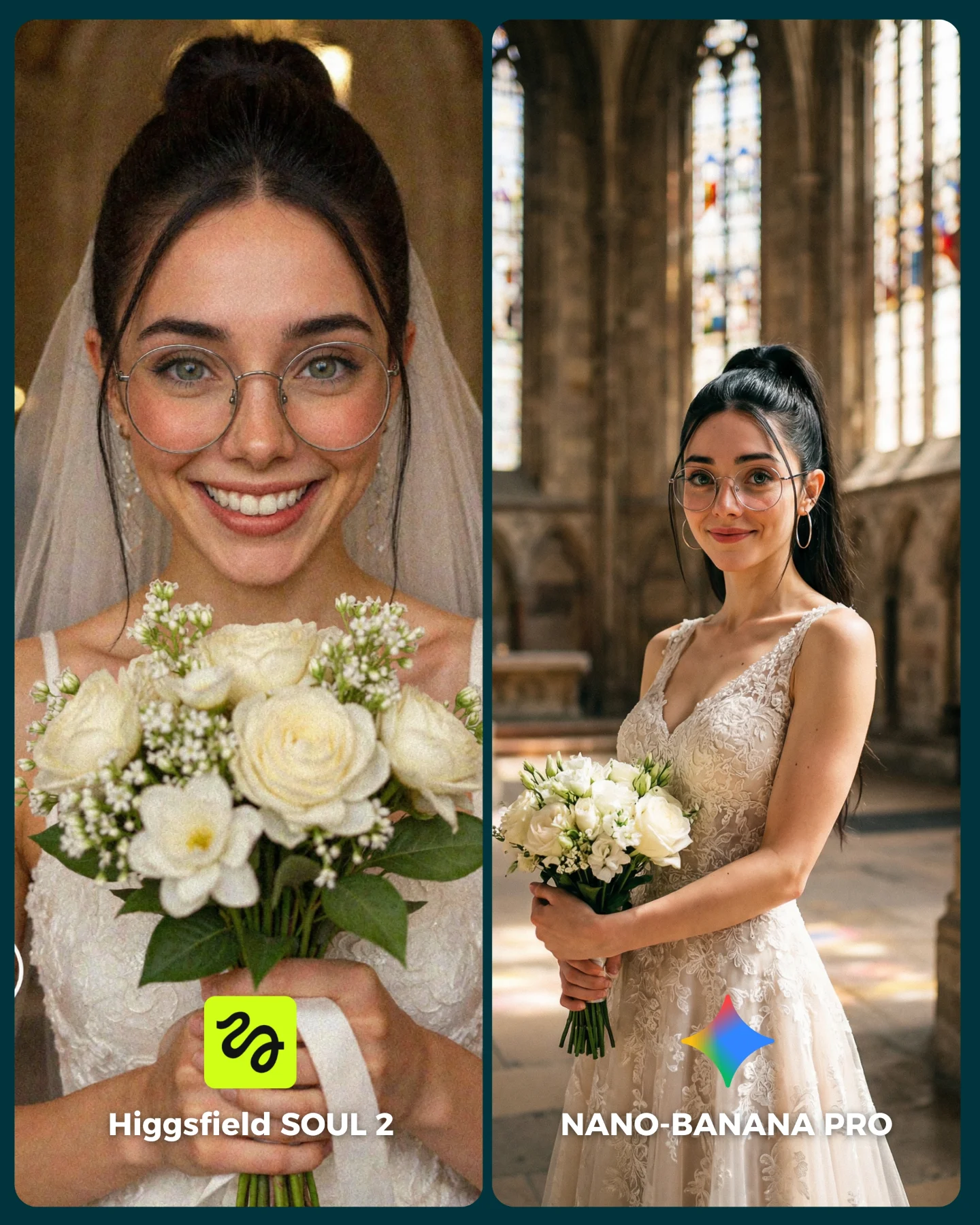
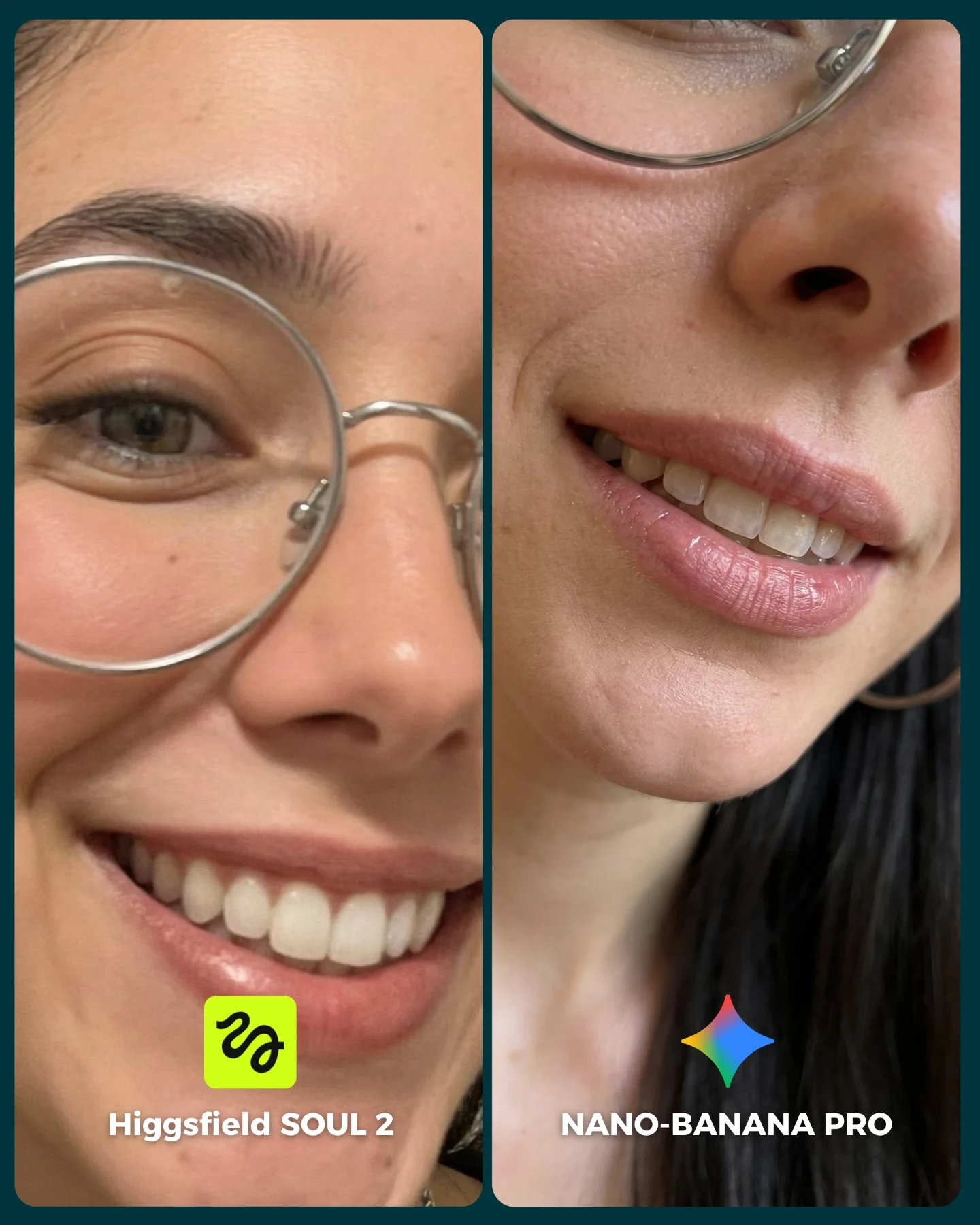
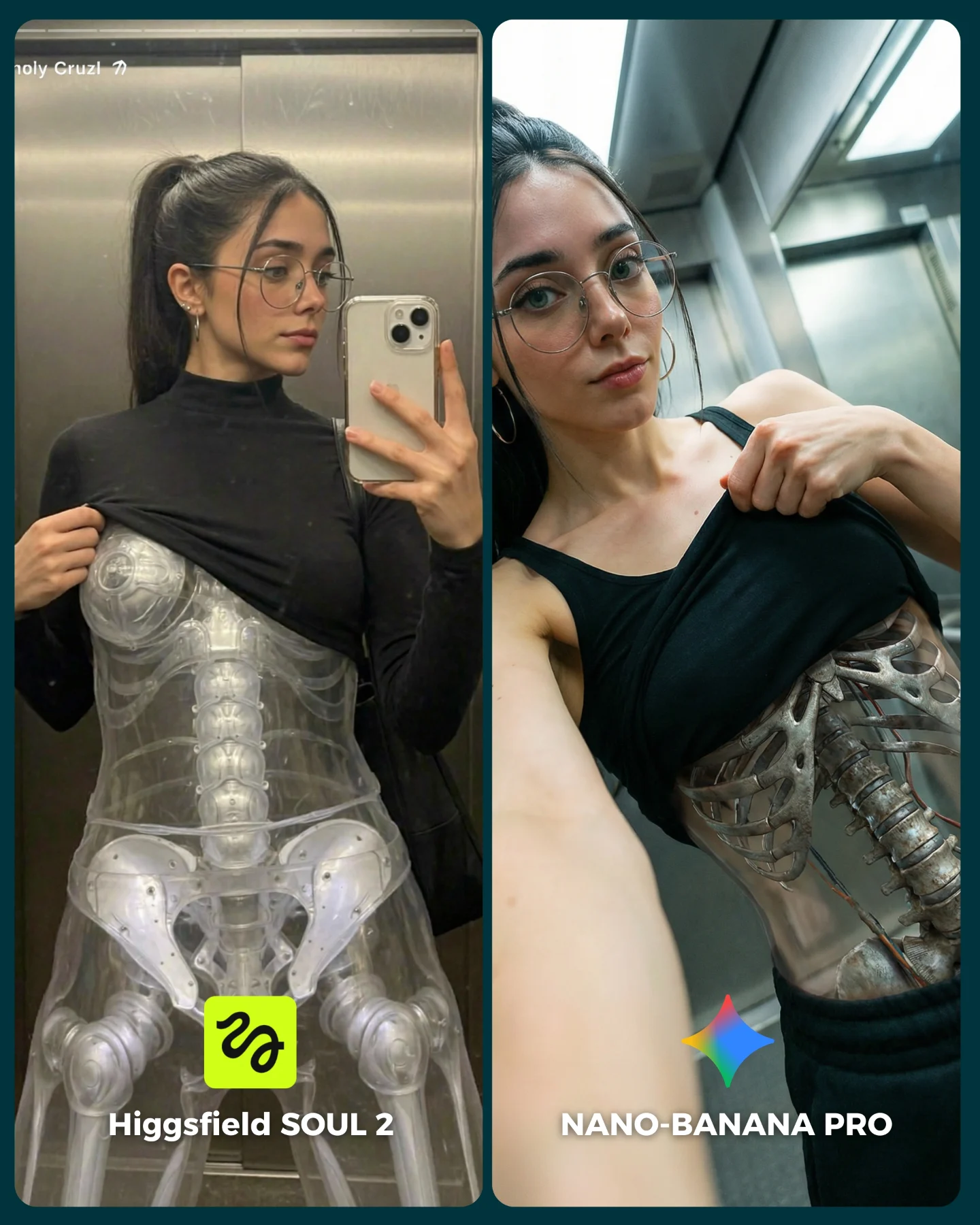
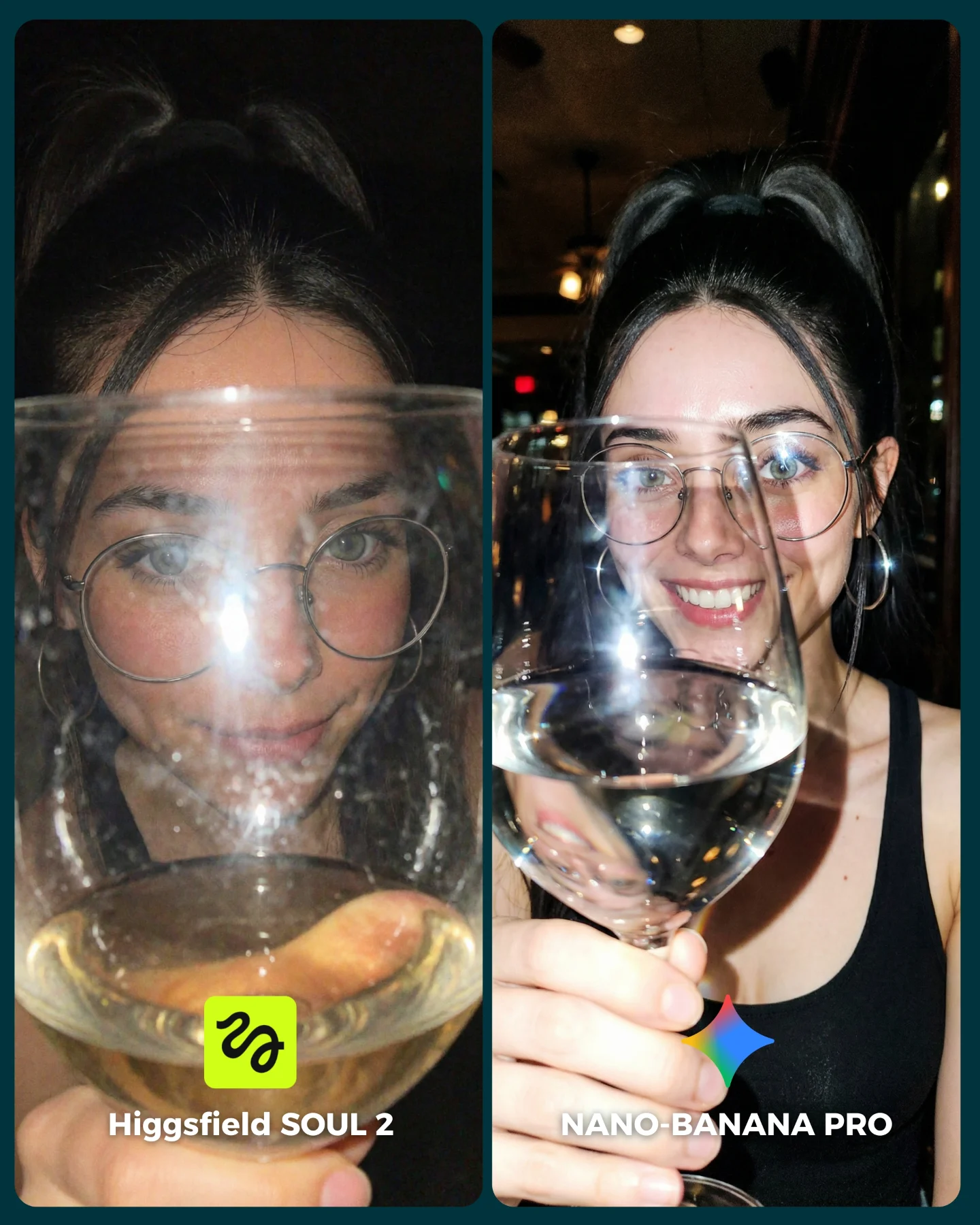
SOUL 2 Vs. Nano Banana Pro 💥
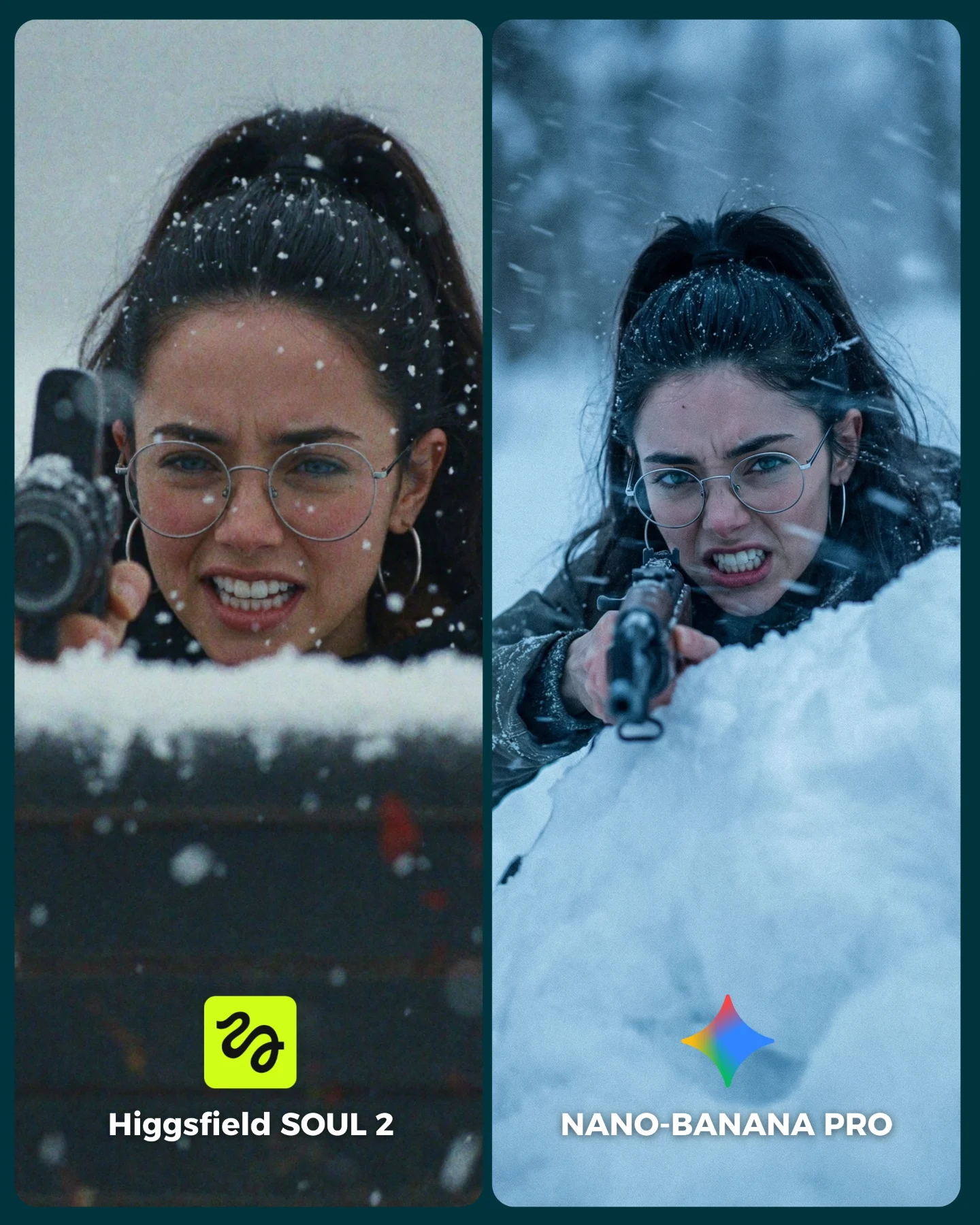
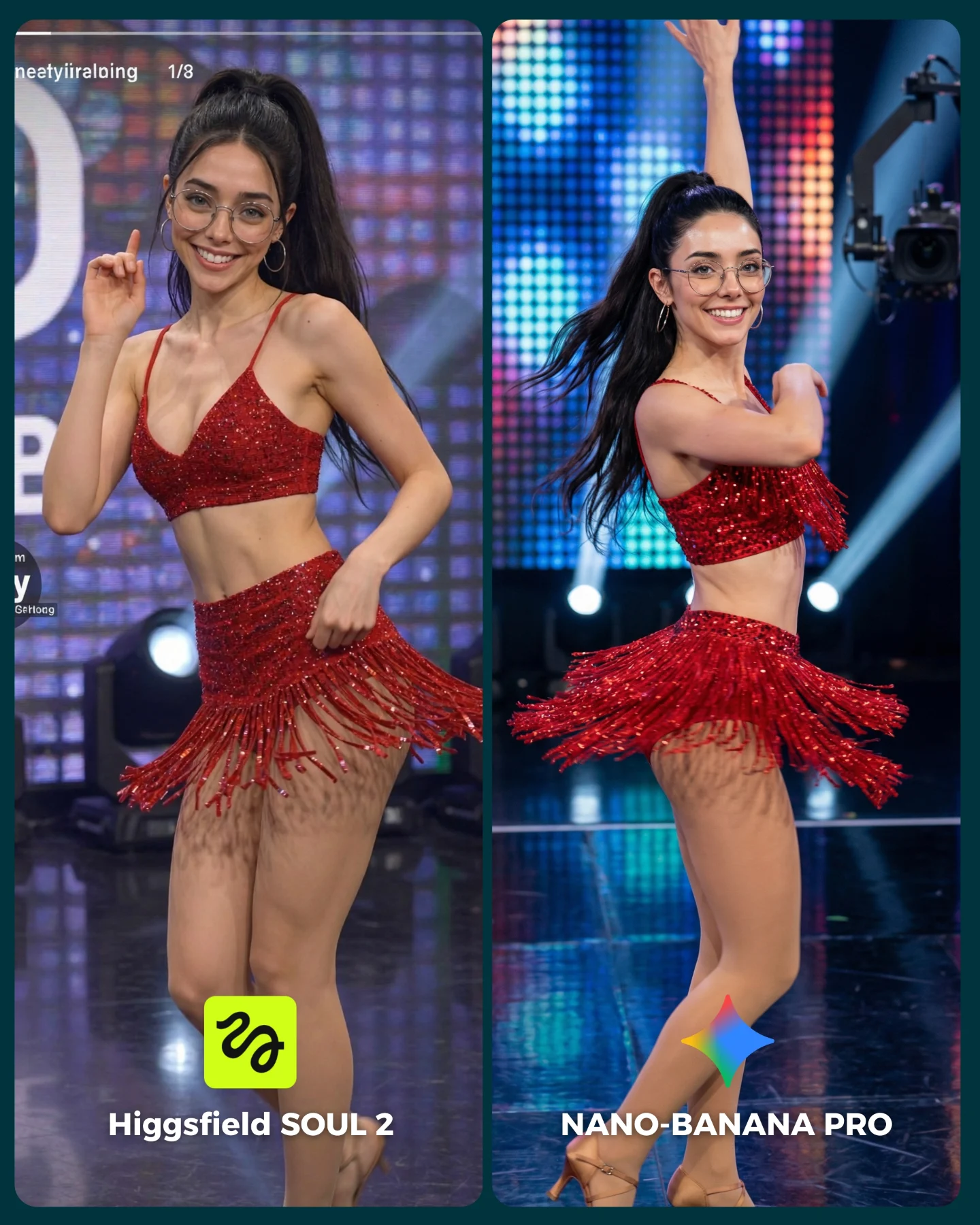
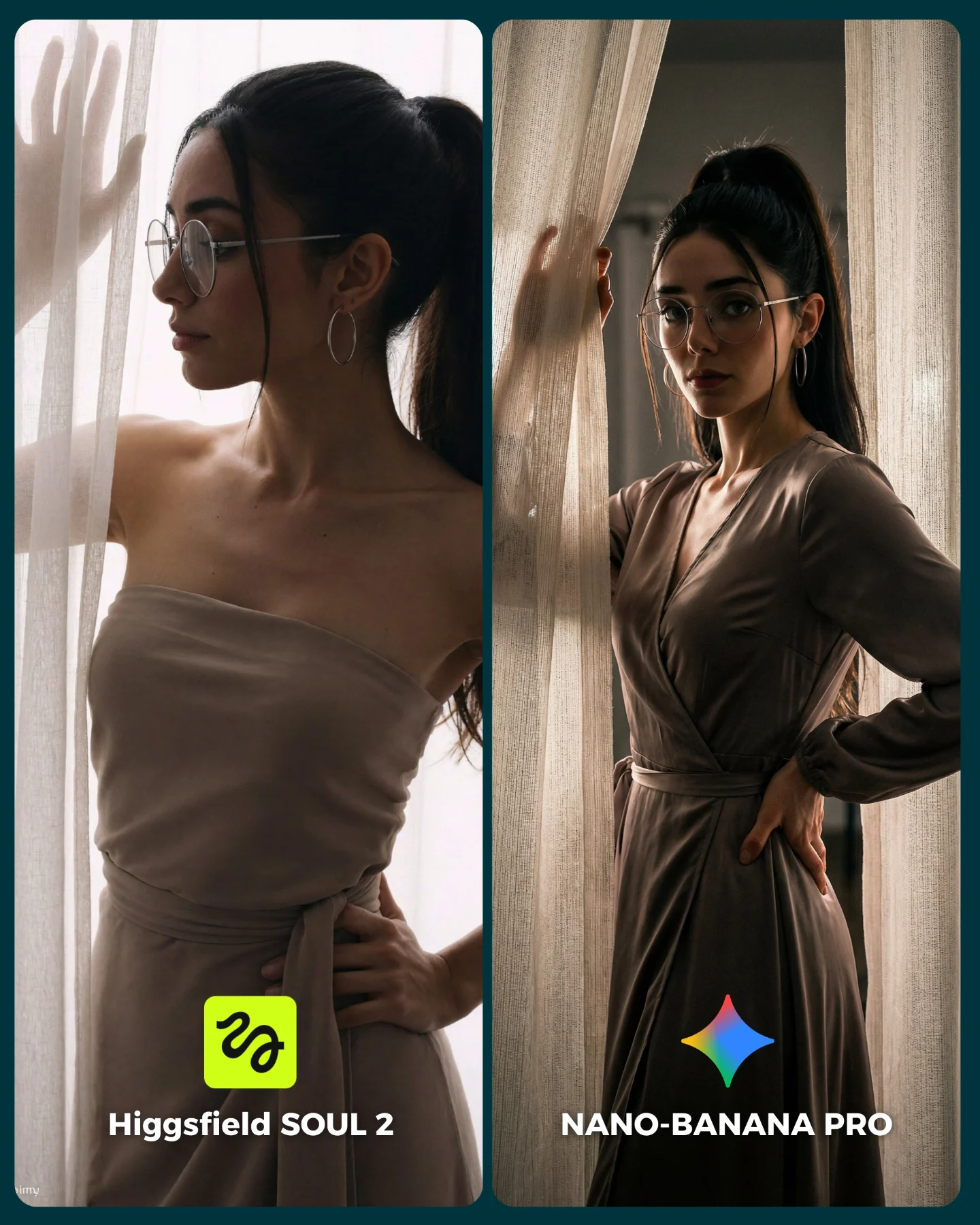
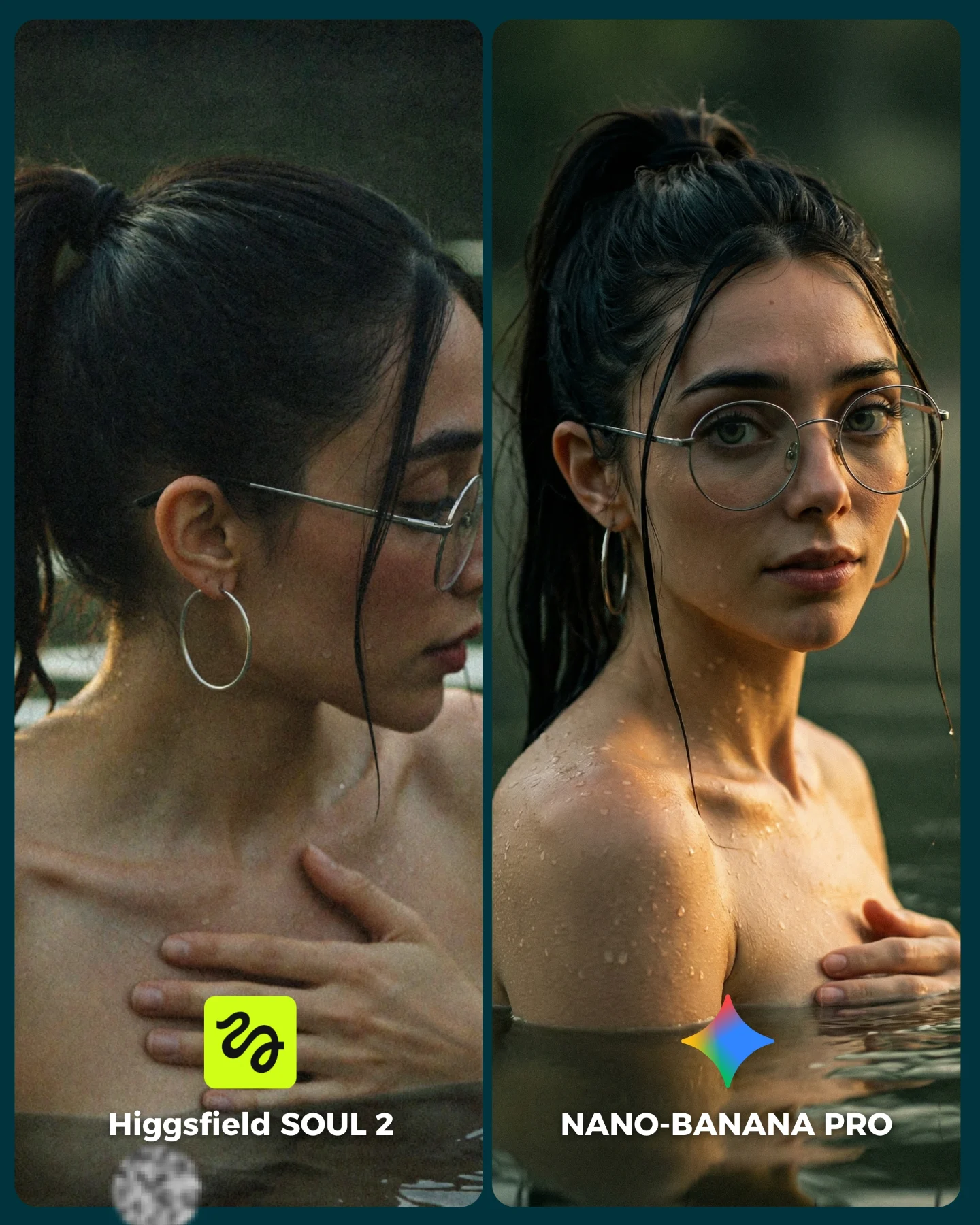
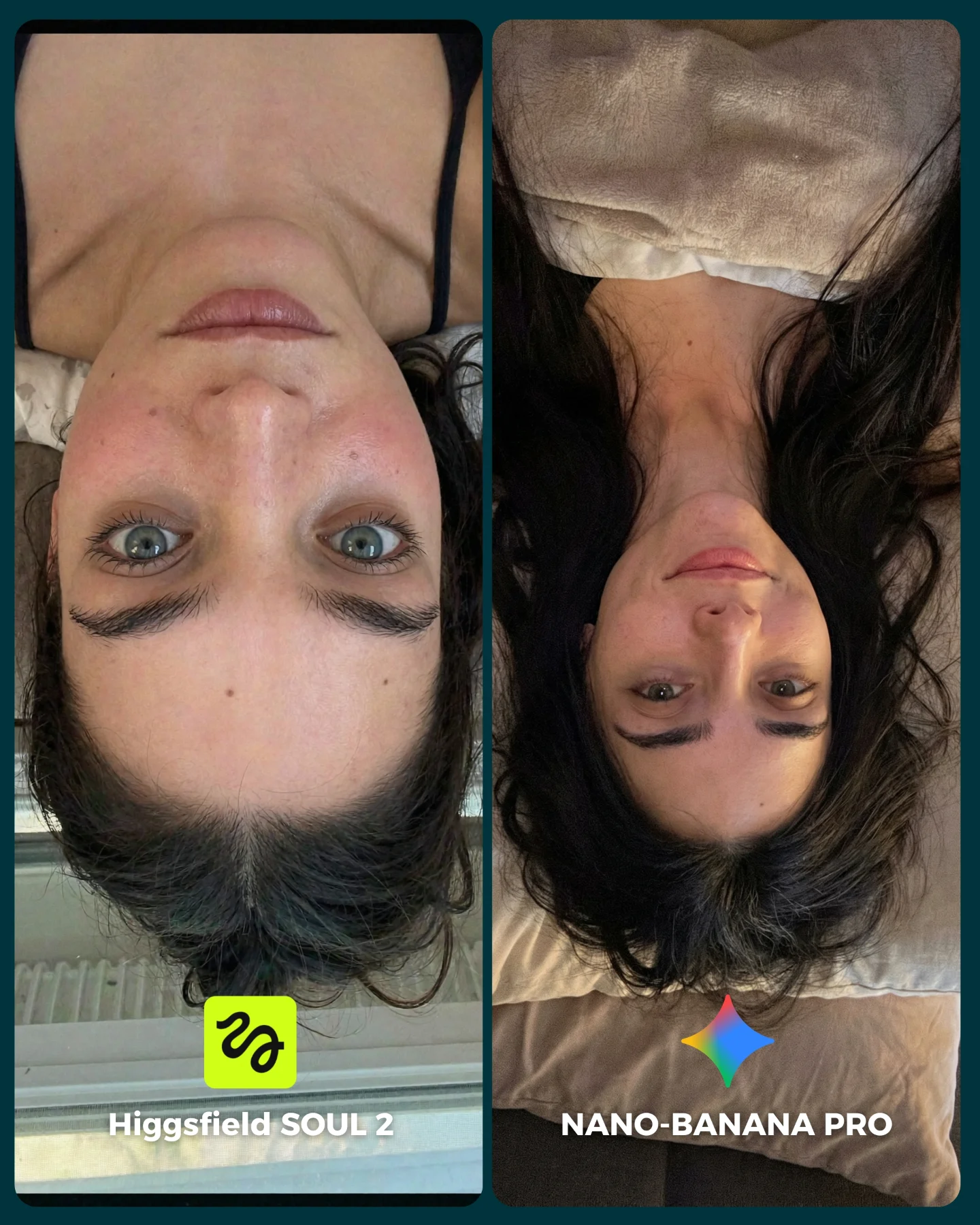
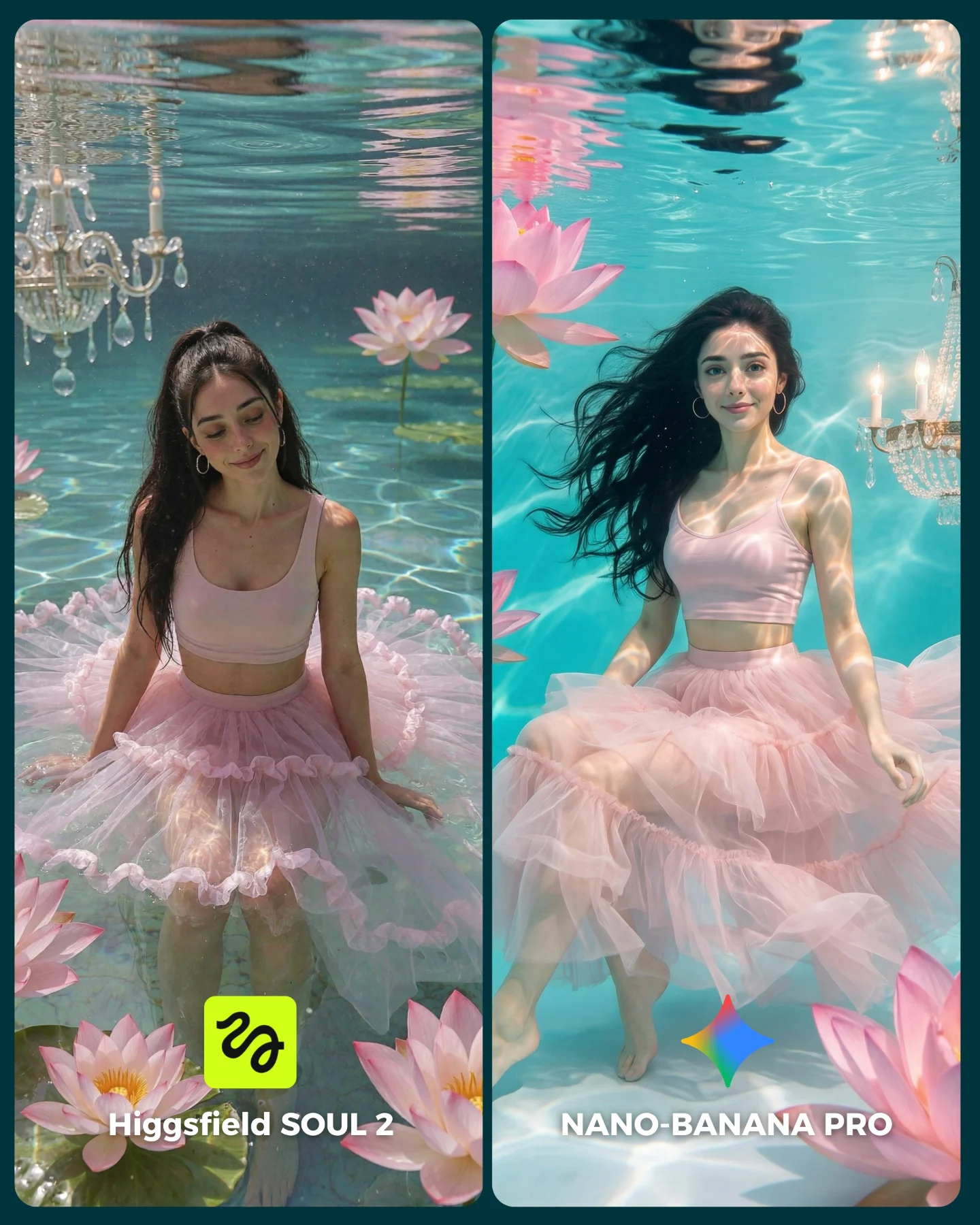
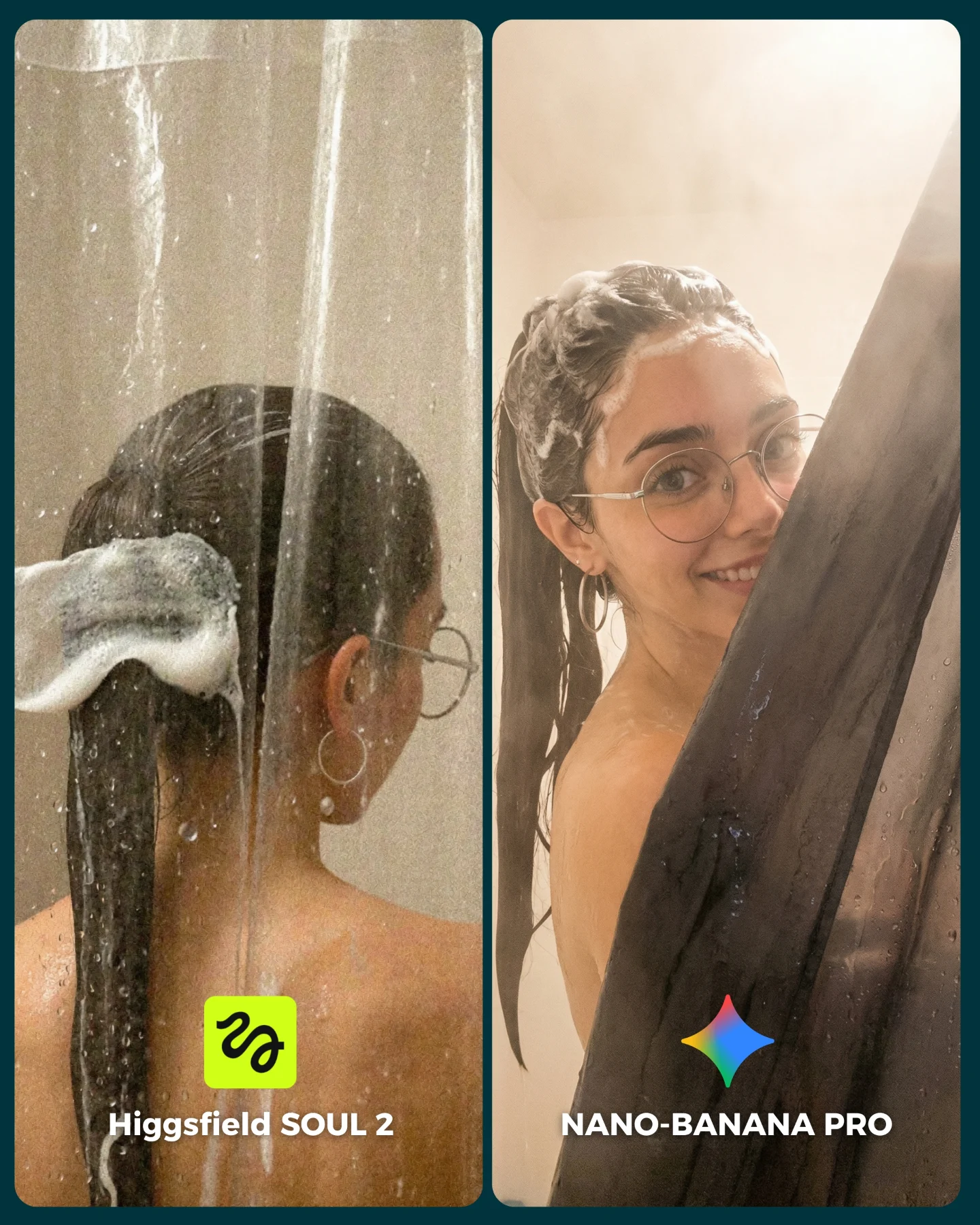
Higgsfield ha lanzado su nuevo generador de imágenes SOUL 2 ⚡ Puedes subirle hasta 80 imágenes de referencia de tu personaje para mantener mejor la constancia 👀
Y para compararlo bien, lo he puesto a prueba junto a Nano Banana Pro que hasta el momento es mi generador de imágenes favorito 💕
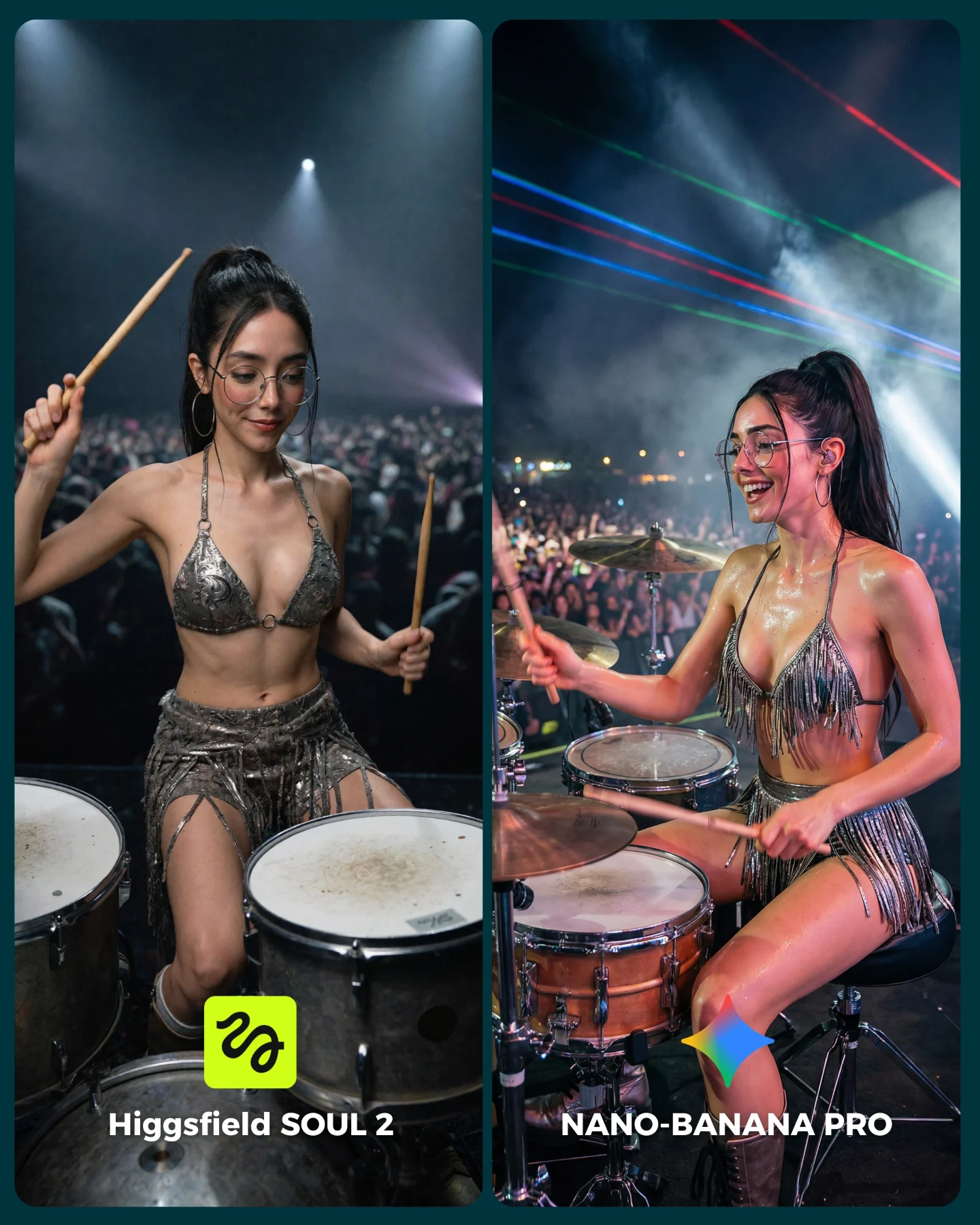
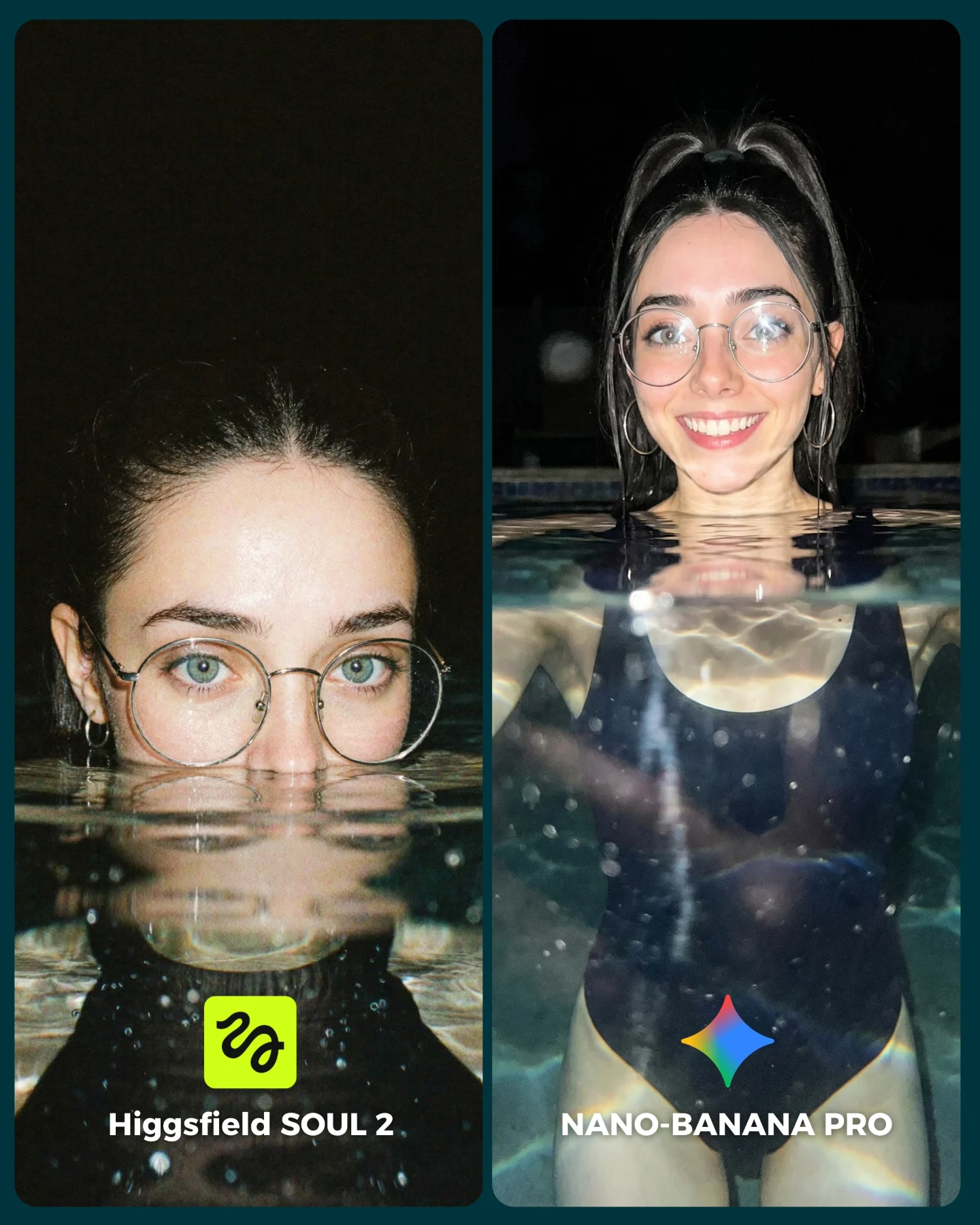
La verdad es que hay algunos resultados de SOUL 2 que me han sorprendido bastante... No está nada mal, pero sigo prefiriendo Nano Banana para la mayoría de las ocasiones 😅
Os dejo algunas imágenes que he generado y espero leer vuestras opiniones en comentarios 💌 Y si quieres los prompts de todas las imágenes comenta "ARIA" y te los mando por mensaje!
How soy_aria_cruz Made This Nightclub Glam Comparison AI Art - and How to Recreate It
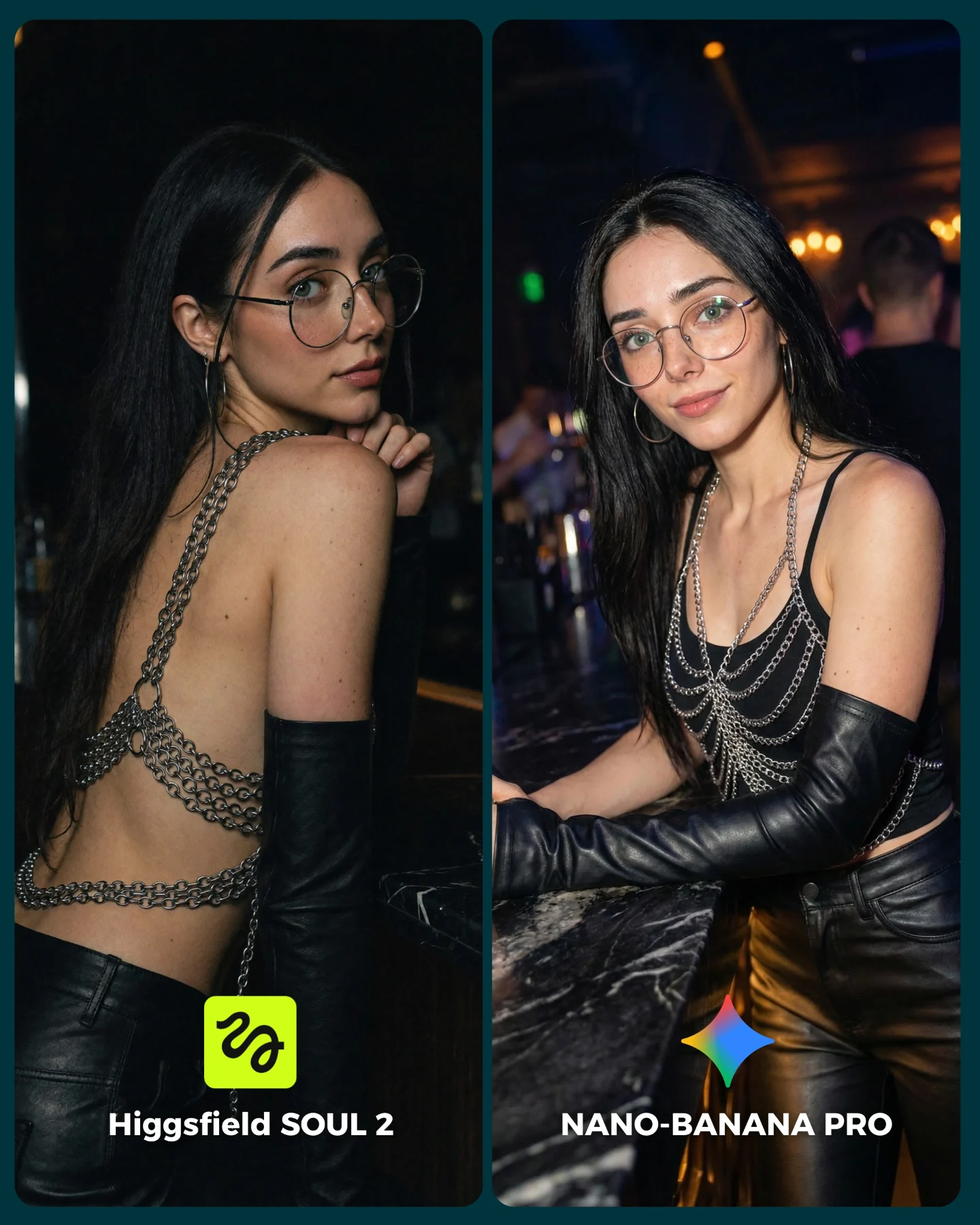
This image is useful because nightlife glamour exposes a very specific kind of model weakness. At first glance, black outfits and dark rooms can hide a lot. But once you look closer, low-light scenes are full of difficult realism problems: glasses reflections, chain geometry, leather sheen, skin softness under flash, and body proportions under moody lighting. That makes this kind of comparison far more revealing than it looks.
The split-screen format helps because the same creator identity is carrying both panels. The audience is not comparing two unrelated aesthetics. They are comparing how well each model handles the same glamorous nightlife persona under slightly different poses. That instantly raises the quality of the debate.
Why this frame earns comments
The strongest mechanism is texture judgment. People may not know how to explain it technically, but they can feel when leather looks fake, when metal chains behave incorrectly, or when low-light skin turns waxy. This image gives viewers enough of those realism checkpoints to form an opinion quickly.
The second mechanism is pose contrast. The left panel tests over-the-shoulder anatomy and chain-back logic. The right panel tests frontal face consistency, glove rendering, and how the body sits against a bar environment. Together, the two panels act like a compact realism stress test.
Signal
Evidence (from this image)
Mechanism
Replication Action
Material pressure
Chains, gloves, leather pants, and glasses all need to behave believably
Reflective materials expose rendering flaws fast
Use one or two shiny materials when you want viewers to inspect realism closely
Low-light difficulty
Dark lounge environment with warm practical lights in the background
Night scenes test whether a model can keep detail without flattening the subject
Choose dim settings that still contain a few readable light sources
Identity consistency
The same woman appears in two glamour poses with the same core facial markers
Consistency across shots is what makes an AI influencer believable
Lock face, glasses, hair, and jewelry before changing pose or camera distance
Comparison clarity
Two labeled panels create immediate side-by-side inspection
Viewers enter judgment mode the moment they see the card
Use split-screen cards when the goal is discussion and not just visual admiration
Where this format fits best
This style is ideal for model comparison content, AI influencer nightlife tests, prompt libraries focused on difficult materials, and creator posts built around “which one feels more real?” conversations. It works especially well when the audience enjoys close visual inspection rather than simple mood consumption.
Model-vs-model posts: keep the same face and outfit family, then vary only the pose or model version.
Nightlife prompt packs: use it to teach chain detail, flash realism, and bar-environment depth.
AI influencer consistency tests: place the same identity into glamorous low-light scenes where flaws show up faster.
Debate-friendly social content: preserve labels and clear panel contrast so viewers can take sides instantly.
It is less useful for calm lifestyle tutorials or product explainers. The strength here is tension, texture, and judgment. Too much instructional clutter would weaken the visual argument.
Three transfer recipes
Keep: same identity across two nightlife poses. Change: tested model or lens feel. Slot template: "split-screen glam realism test of {same creator} in two club poses".
Keep: reflective outfit materials and low-light bar context. Change: garment silhouette. Slot template: "nightclub portrait comparison focused on {material type} and face consistency".
Keep: one over-the-shoulder shot plus one frontal bar shot. Change: colorway and accessory family. Slot template: "two-angle nightlife comparison of {identity} with matching facial markers and luxury styling".
Aesthetic read: why it feels premium
The image works aesthetically because it limits its palette. Nearly everything sits inside black, skin tone, silver, and warm amber light. That narrow palette lets texture become the hero. The viewer does not need loud color to stay interested because the materials are already doing enough.
The second strength is that the pose changes are meaningful. The left image makes the back chains and shoulder line the focal point. The right image lets the face and chest drape take over. That kind of pose variation is useful for creators because it shows how the same identity can hold up across different glamour angles without losing cohesion.
Observed
Recreate
Why it matters
Dark club setting with warm practical lights
Use a dim environment that still gives you a few amber highlights
Nightlife mood needs readable light anchors or it becomes muddy
Silver chain detail against black outfit
Choose one bright metallic material against a dark base
This creates visual richness without needing more color
Same glasses and hair identity across both shots
Preserve signature facial markers even in glam contexts
Identity continuity is what makes the comparison meaningful
Two different pose purposes
Use one back-detail shot and one frontal face/material shot
Different angles reveal different realism strengths and weaknesses
Readable bottom labels
Keep branding minimal and low in the frame
The image should stay visually dominant while still inviting comparison
Prompt technique breakdown
If you want this type of image to hold up, separate the prompt into identity, material behavior, venue atmosphere, and comparison-card structure. Most weak versions fail because they ask for “club girl aesthetic” too vaguely and forget the technical pressure points.
Prompt chunk
What it controls
Swap ideas (EN, 2-3 options)
identity lock
Whether the same creator remains recognizable in both panels
"same face and glasses", "same dark straight hair", "same hoop earrings"
material block
How premium and believable the outfit feels
"silver chain drape", "glossy black gloves", "black leather pants"
venue block
Nightlife credibility and depth
"upscale dark lounge", "cocktail bar with warm lights", "club interior with blurred patrons"
pose contrast block
What each panel is testing visually
"over-the-shoulder glamour pose", "leaning on bar front-facing pose", "back detail versus face detail"
comparison card block
Social-media readability and debate framing
"two rounded panels", "clean lower labels", "distinct model icons"
Lock three things first: the same face identity, the metallic-and-leather material mix, and the dark warm nightclub environment. Those are the structural conditions. Then use pose variation to test what each model can actually handle.
Run 1: build the left panel with a strong over-the-shoulder composition and readable back-chain detail.
Run 2: create the right panel with a frontal bar pose and stable face identity.
Run 3: correct glasses reflections, glove shape, chain behavior, and leather highlight realism.
Run 4: add the split-screen labels and icons only after both images already stand on their own.
The one-change rule matters because nightlife scenes can fail in many subtle ways at once. If you change pose, venue, material, and lighting all together, the audience may feel something is off but you will not know why. Keep the experiment controlled.
Quick creator takeaway
If you want to know whether a model can really handle glamour realism, give it black leather, silver chains, glasses, and bar lighting. Weak systems show cracks fast.