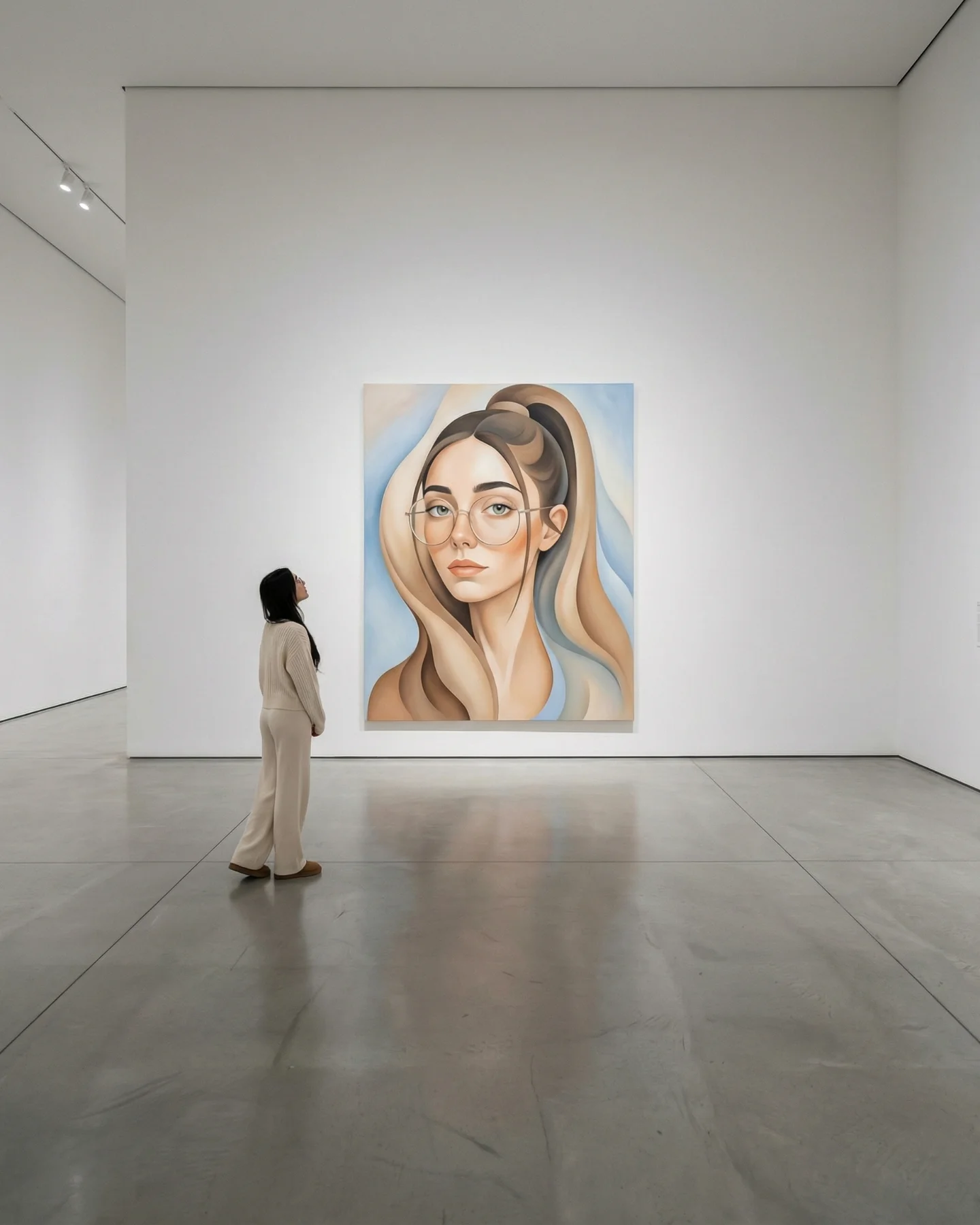
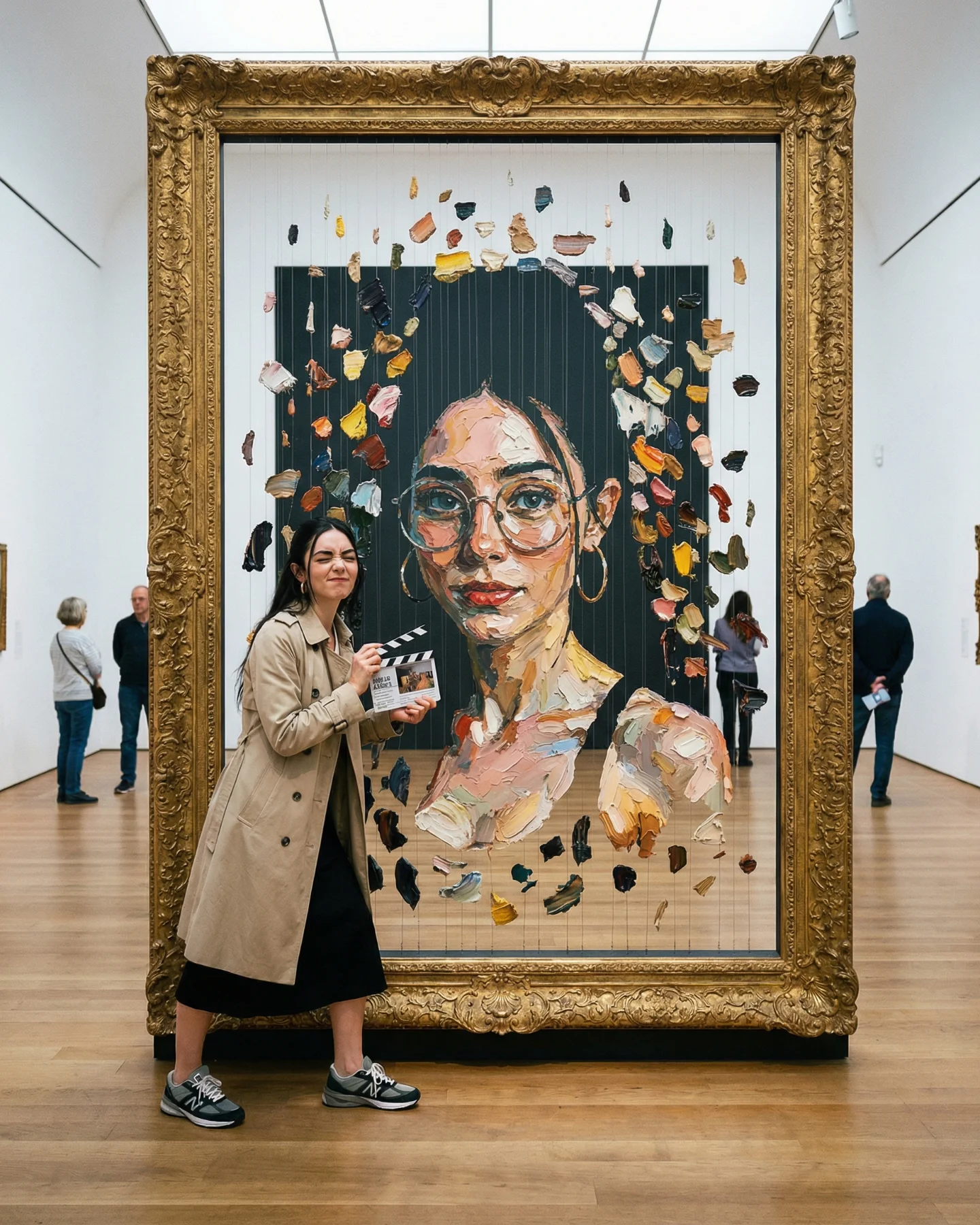
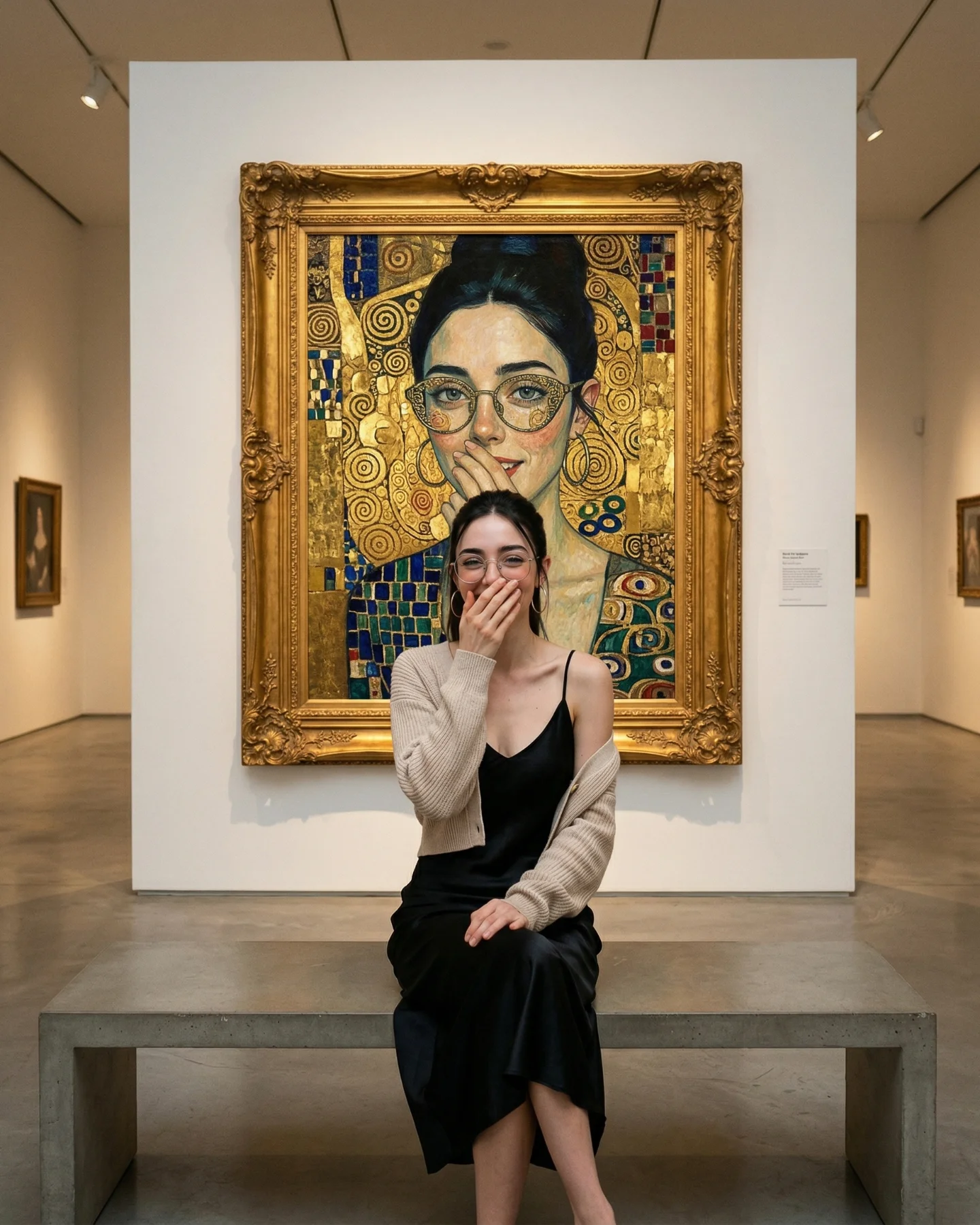
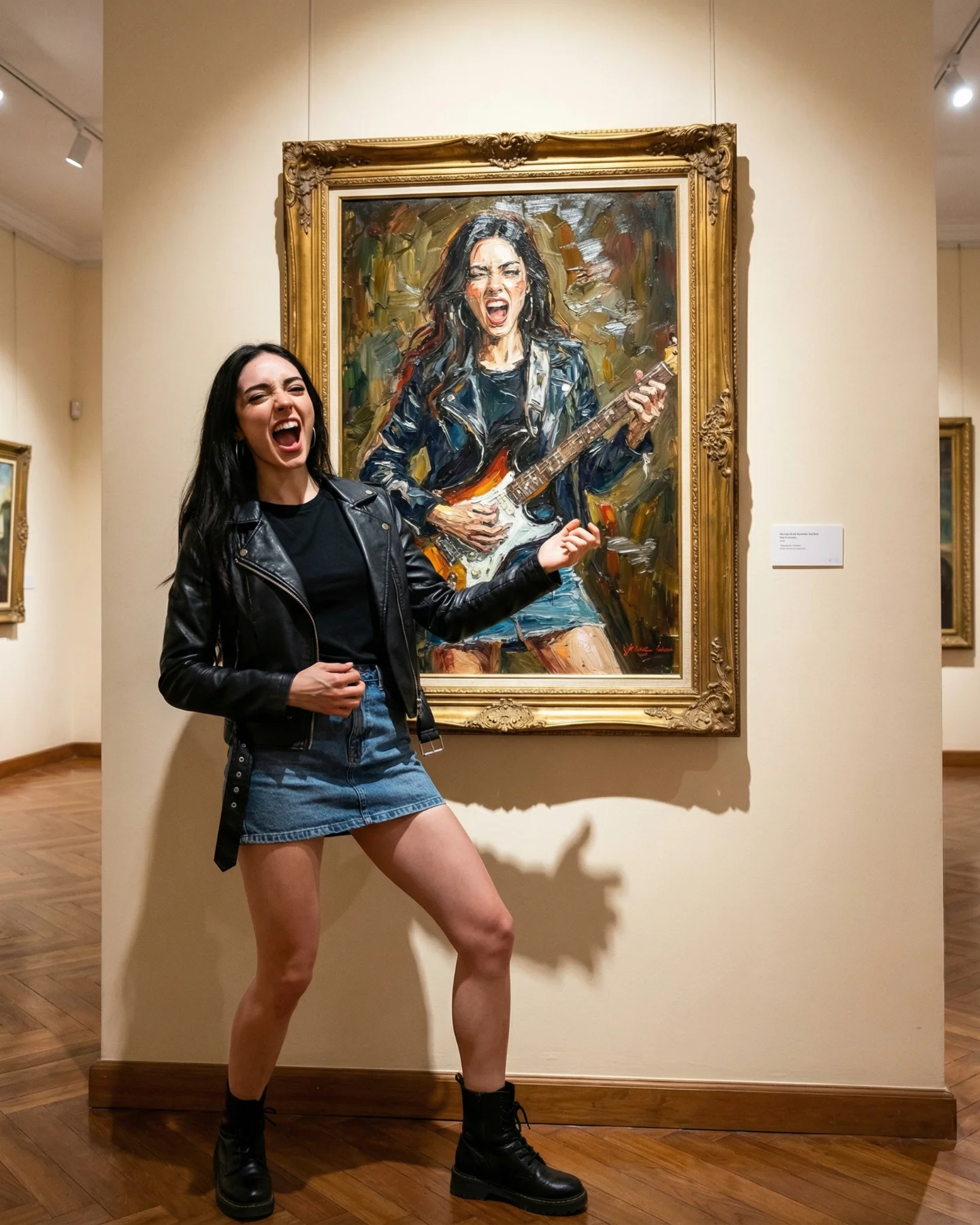
Arte Moderno 🎭🎨 Comenta "ARIA" y te paso todos los prompts 💌
Arte Moderno 🎭🎨 Comenta "ARIA" y te paso todos los prompts 💌
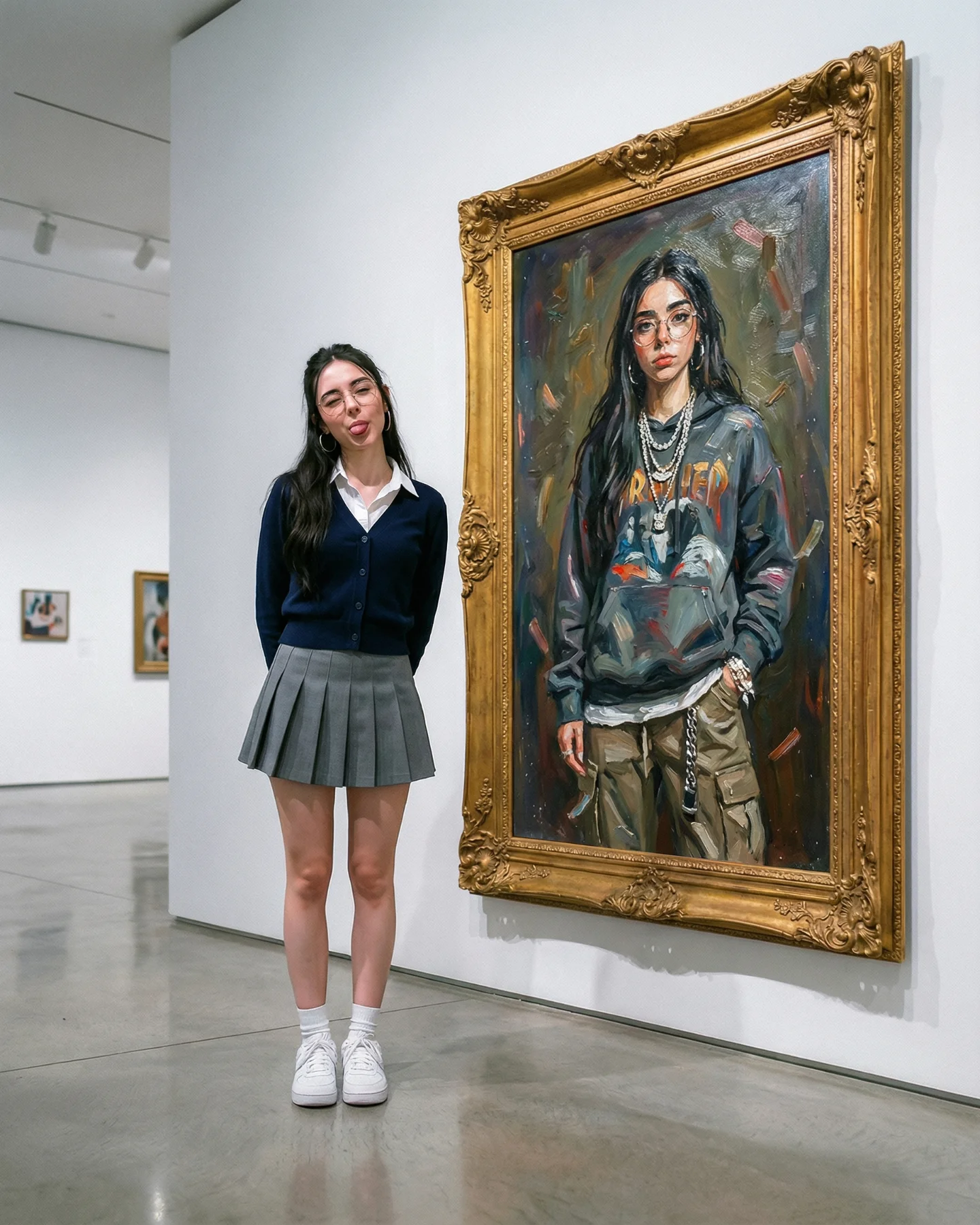
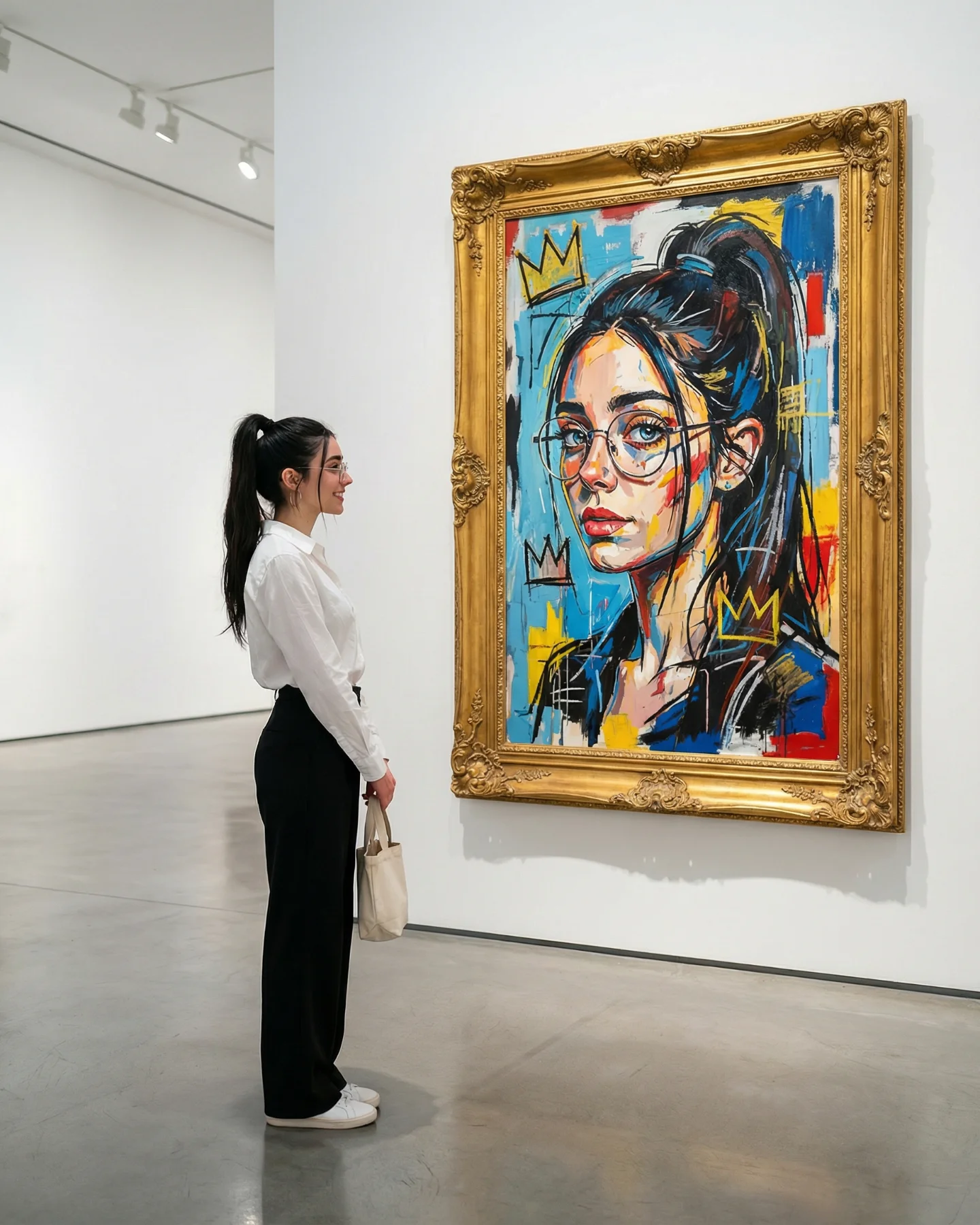
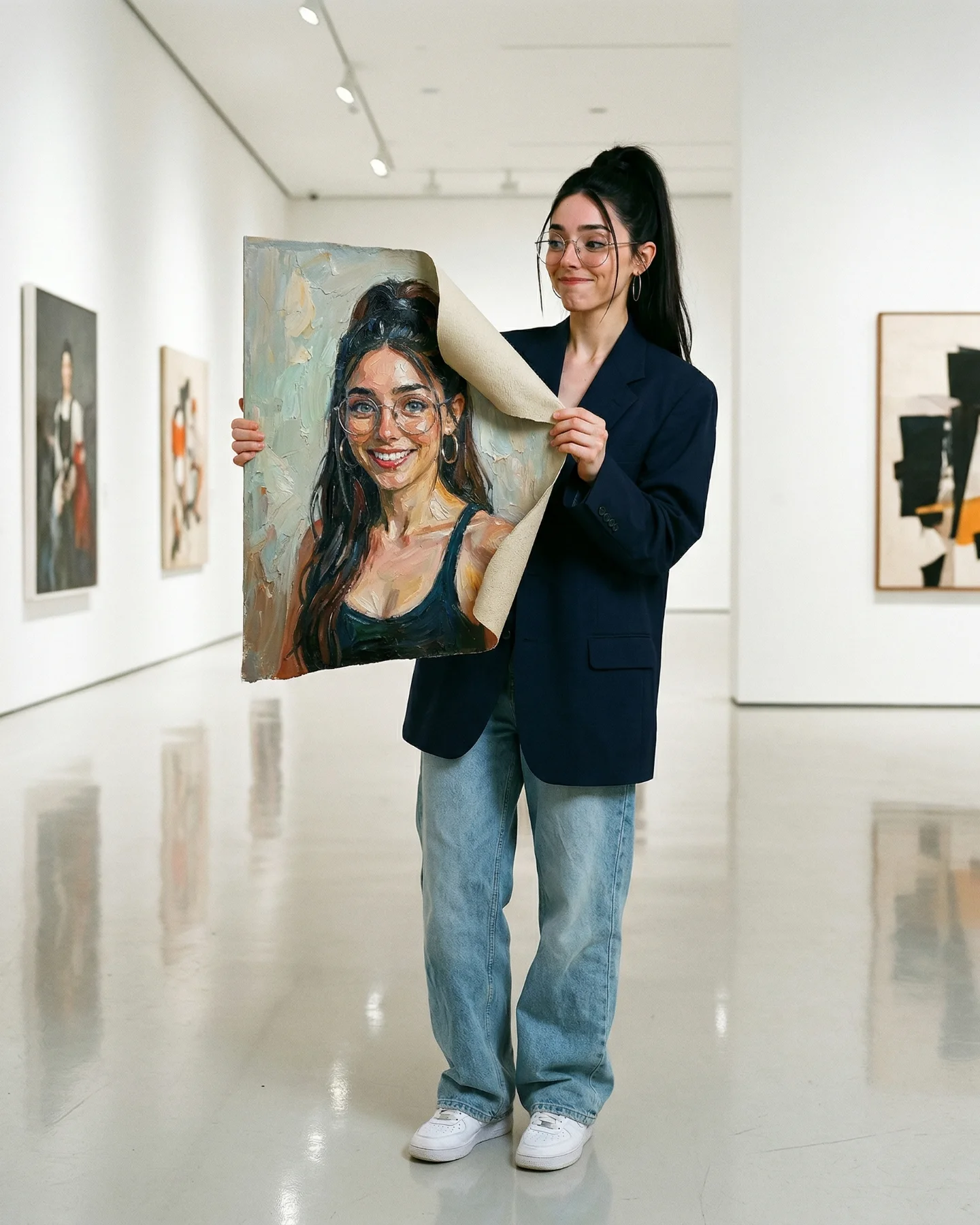
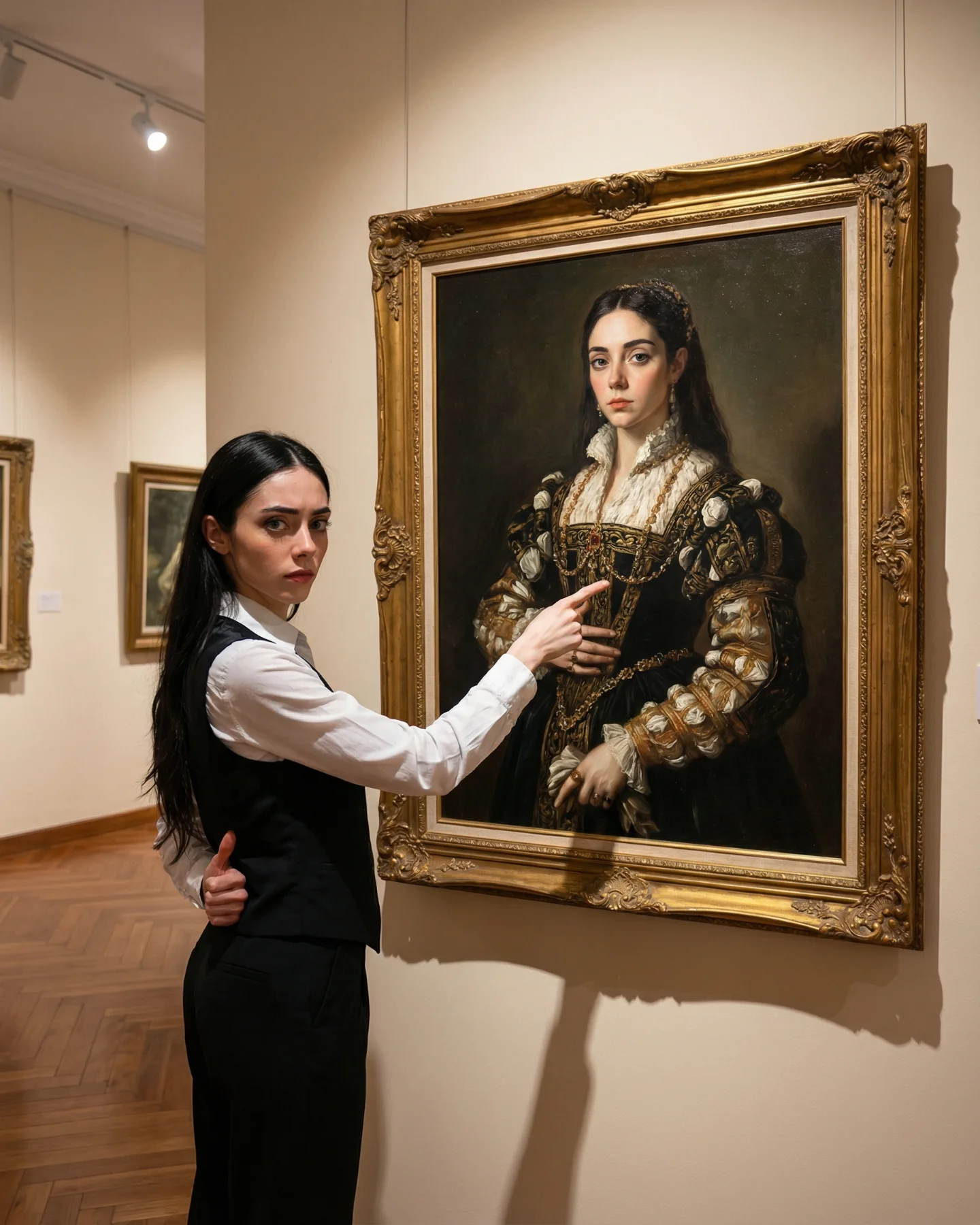
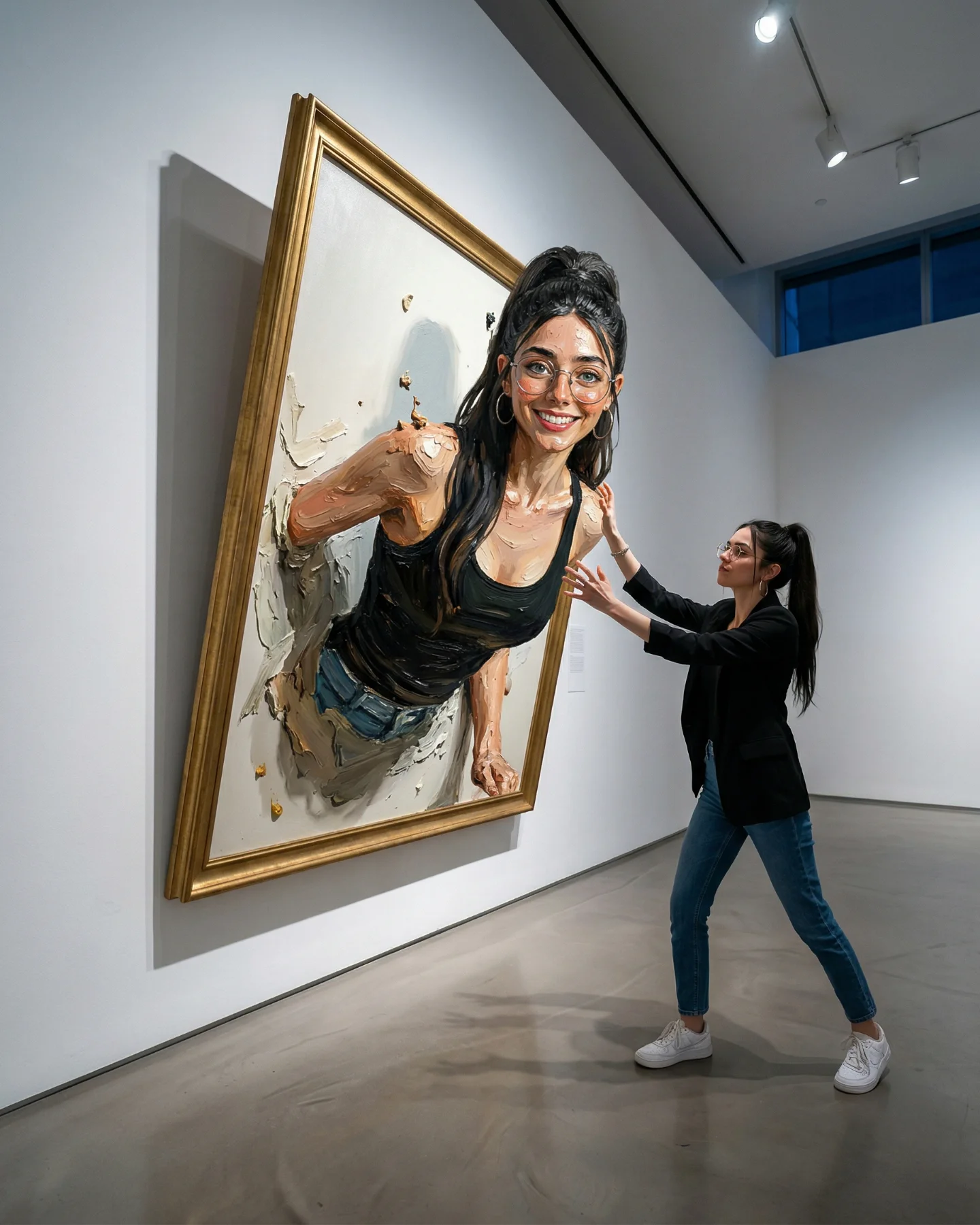
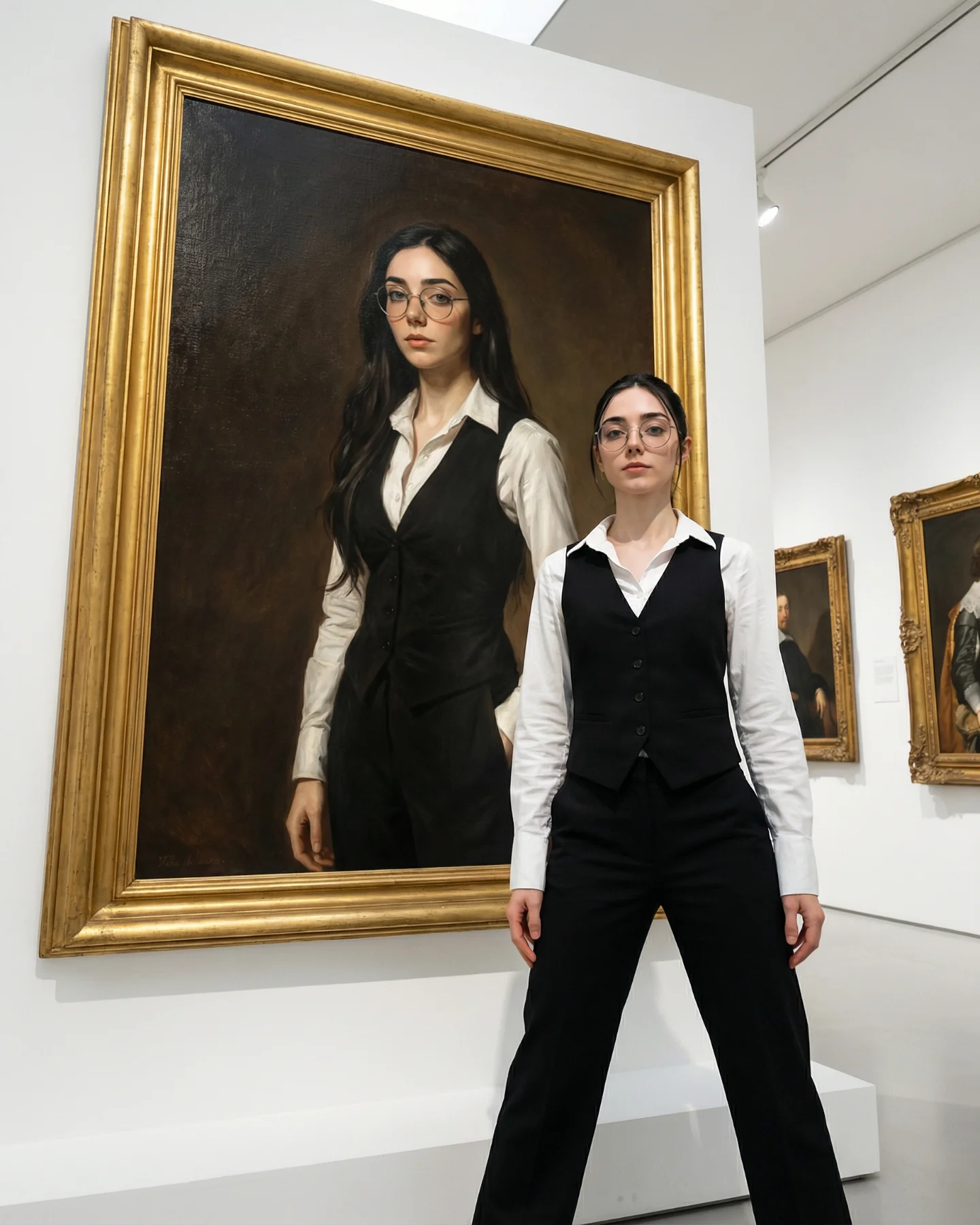
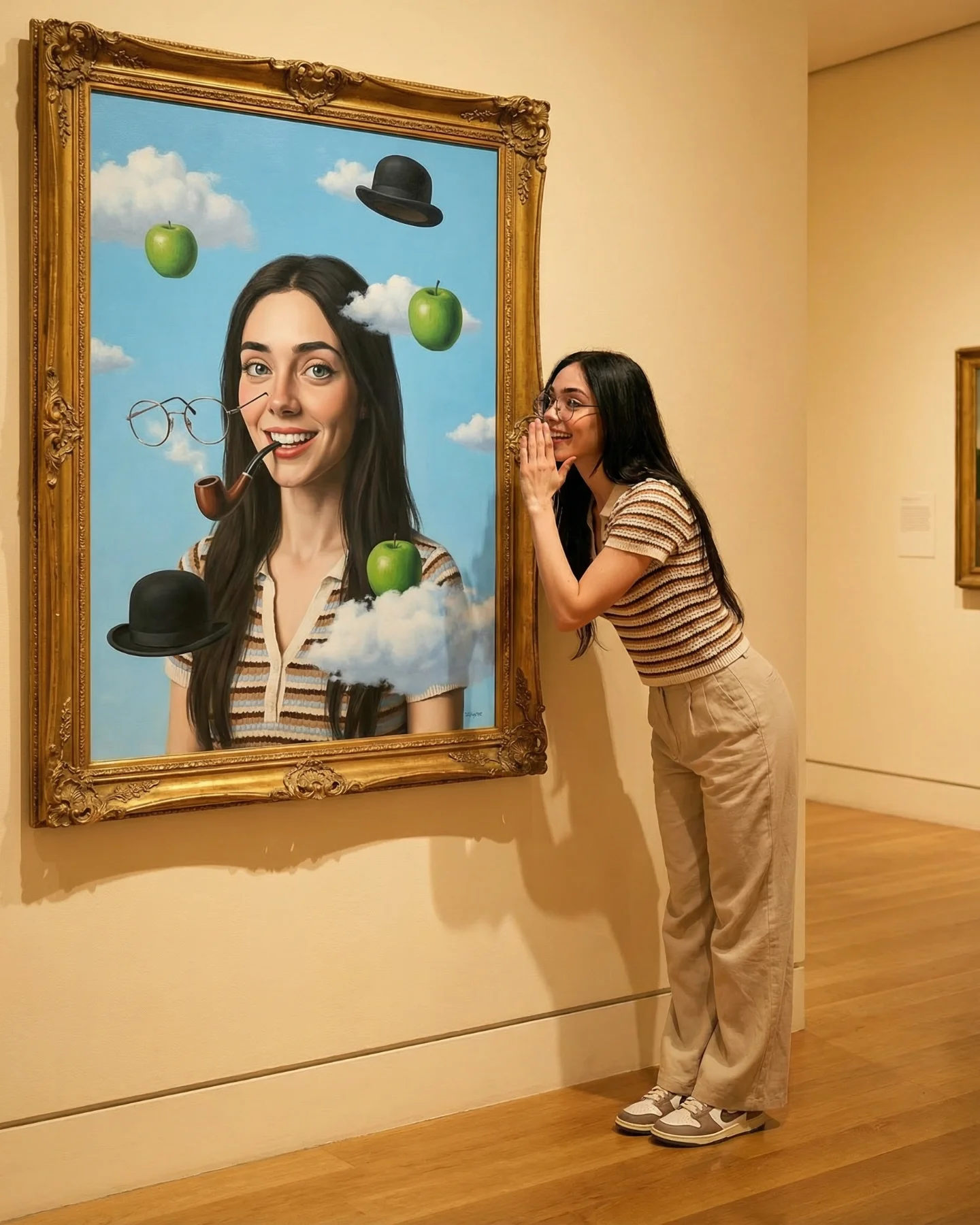
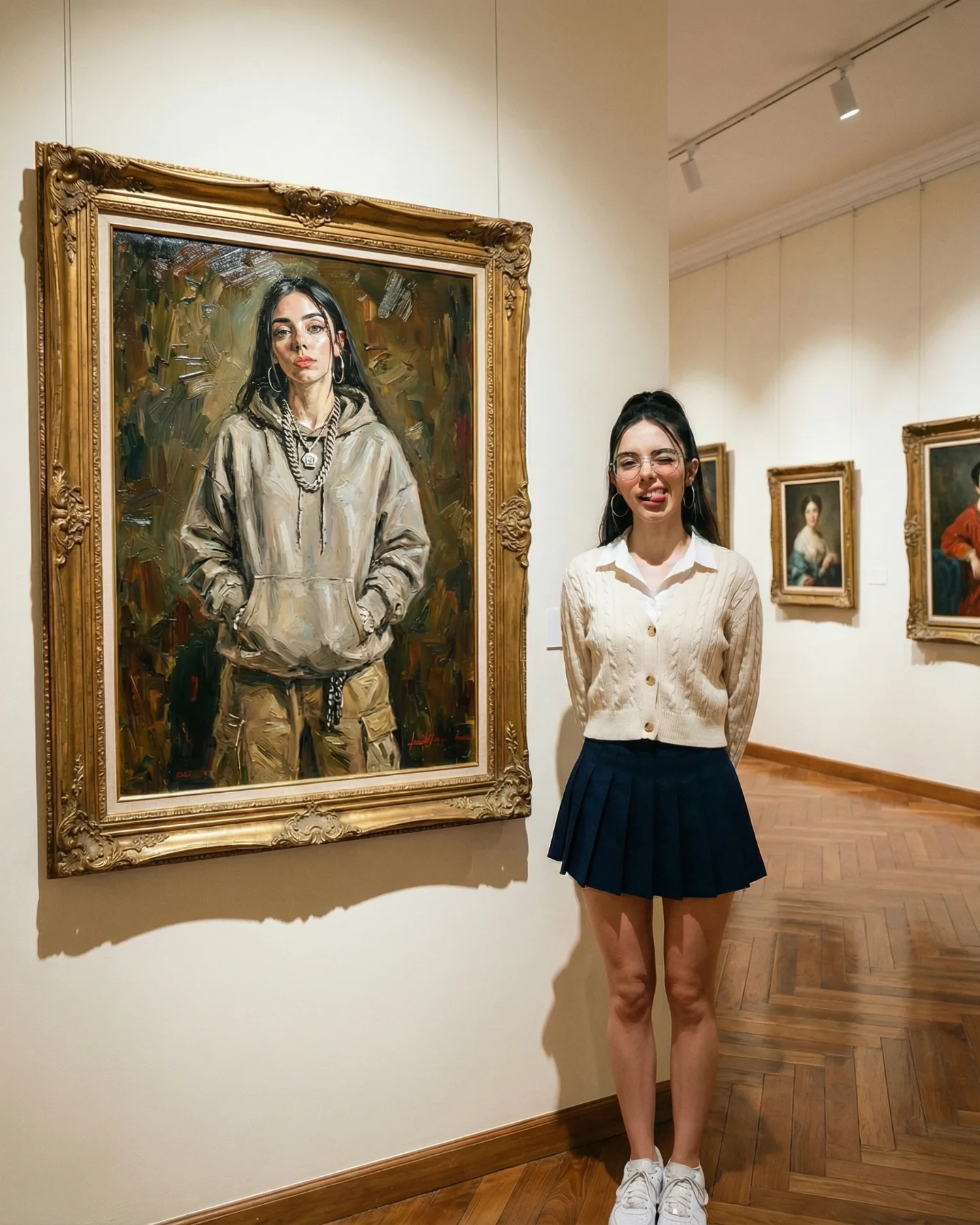
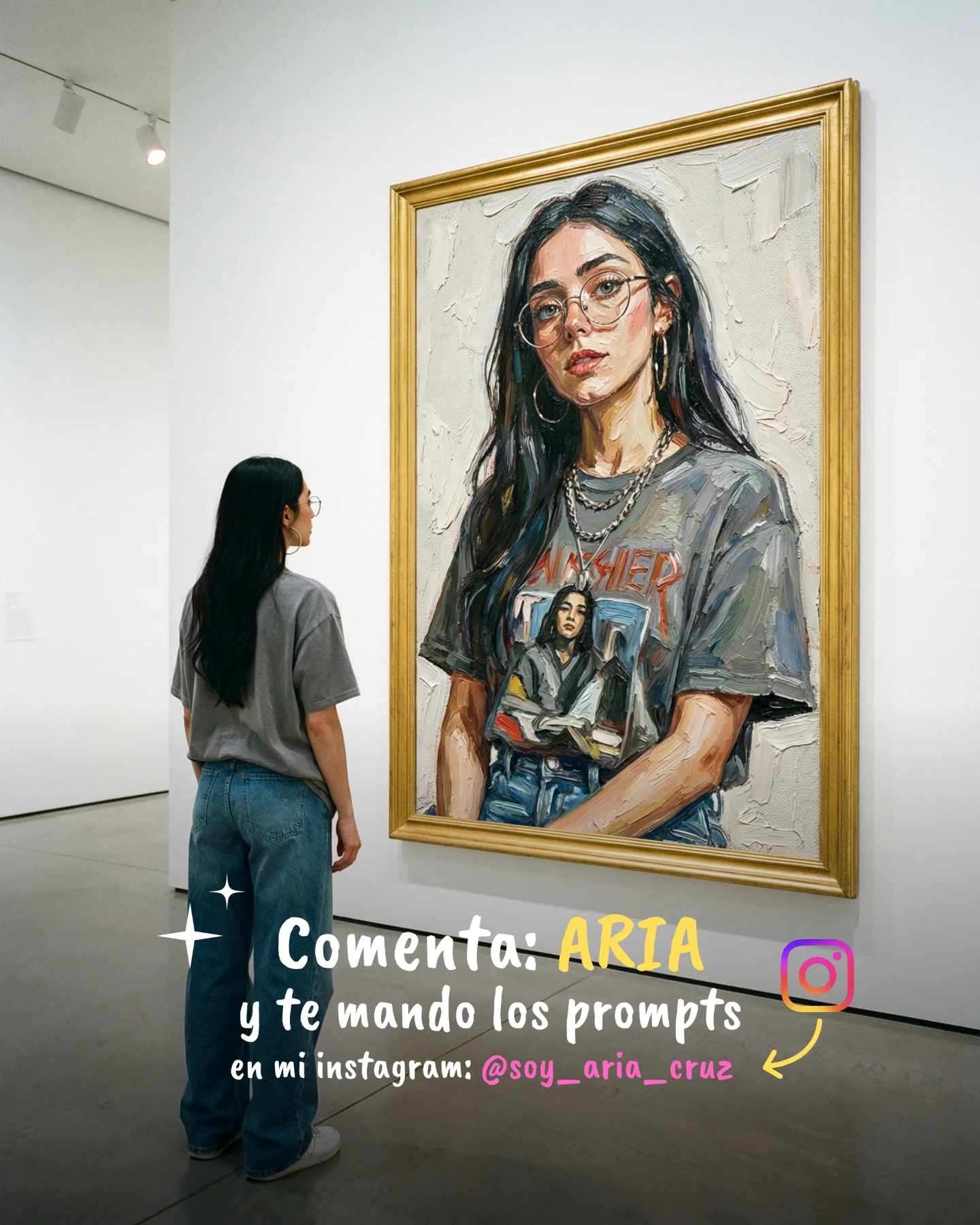
This image does not rely on motion or cloning to create intrigue. It uses contrast. On the left, the real-world subject feels playful, slightly awkward, and intentionally approachable. On the right, the painted version feels composed, guarded, and fashion-forward. That split creates a clean narrative without needing extra props or a complicated environment. It is the kind of image people can understand quickly and then interpret in their own way.
That matters for performance. A strong AI image often wins not because it is technically dense, but because it gives viewers an immediate emotional shortcut. Here the shortcut is obvious: “this is how I look in real life versus how my inner art persona looks on the wall.” The format is relatable, remixable, and expressive at the same time.
The most powerful thing here is identity compression. The picture turns one person into two readable versions of self: the approachable everyday self and the curated, stylized, almost mythic self. That is a very social-media-native idea. People are already used to the gap between casual identity and performed identity. This image makes that gap visible in one frame, which is why it feels easy to caption, easy to repost, and easy to adapt.
The museum context also gives the image more weight than a regular side-by-side comparison. A framed portrait implies value, permanence, and interpretation. So when the painted persona looks more severe and more styled, the viewer unconsciously treats it as the “elevated” or “artistically filtered” version. That makes the scene feel smarter than a simple outfit comparison.
| Signal | Evidence (from this image) | Mechanism | Replication Action |
|---|---|---|---|
| Identity duality | The same woman appears as a playful visitor and as a serious painted alter ego | People engage when an image visualizes an internal contrast they already recognize | Choose one clear self-vs-self contrast: casual vs editorial, soft vs bold, private vs public |
| Clear styling split | Navy cardigan and pleated skirt outside; hoodie, chains, and cargo pants inside | Wardrobe does narrative work before the viewer reads any caption | Push the outfit difference far enough that it reads instantly on mobile |
| High-status setting | Large ornate gold frame inside a minimal museum wall | The gallery context upgrades the concept and makes it feel worth studying | Use one authoritative environment element such as a museum frame, pedestal, or gallery wall |
| Emotional asymmetry | The real subject is goofy while the portrait stays serious | Opposed facial energy creates tension without clutter | Pair one relaxed expression with one controlled expression instead of matching both sides |
This prompt structure is ideal for creators building a personal brand through aesthetics, identity, or mood. It is especially strong for fashion, beauty, artist pages, and AI creator accounts because it lets one image say something about personality. The scene also works well for educational content around prompt control, because the “before and after persona” is built from a few obvious variables: outfit, expression, texture, and framing.
It is less effective for product promotion, action-heavy storytelling, or scenes where the environment needs equal attention. This format depends on the viewer locking onto identity contrast first.
{gallery wall} {casual beauty look} {framed glam alter ego} {identity contrast mood}{clean interior} {everyday founder outfit} {framed aspirational persona} {confident creative mood}{museum or library scene} {soft everyday outfit} {framed intellectual alter ego} {poetic mood}The image is controlled by separation. The white wall isolates both identities. The gold frame adds visual prestige. The real figure is lighter, shorter in visual weight, and emotionally open. The portrait is darker, denser, and closed off. That split is what gives the concept its clarity. Without the clean wall and the strong wardrobe difference, the two identities would blur together.
The painterly treatment is also important. The portrait is not just another photo inside a frame. It has brush texture, depth, and color smearing that make it feel authored. That tells the viewer the inner self is not merely copied; it is interpreted. This is a better creative move than simple duplication because interpretation has more emotional range than repetition.
| Observed | Why It Matters | How To Recreate |
|---|---|---|
| One real figure on the left, one framed alter ego on the right | Creates instant reading order and keeps the idea simple | Use a left-right contrast layout with clear spacing between subject and frame |
| Preppy outfit outside, streetwear outfit inside | Builds narrative through silhouette and styling alone | Define each wardrobe block separately and make them visibly incompatible |
| Playful tongue-out expression outside | Makes the real-world self feel unguarded and human | Specify one small imperfect expression instead of generic smiling |
| Dark painterly portrait with muted abstract background | Gives the inner persona gravitas and texture | Prompt oil-brush texture, subdued palette, and direct eye contact inside the painting |
If you want this image to work, think of it as a controlled contrast system. The concept is not “girl in museum.” The concept is “two versions of one identity staged in different visual languages.” That means the outside figure and inside figure should not be written as near-duplicates. They need different styling, different mood, and different texture treatment.
| Prompt chunk | What it controls | Swap ideas (EN, 2-3 options) |
|---|---|---|
| playful real girl standing beside her framed alter ego | The core narrative relationship | “shy real self beside bold portrait”; “smiling visitor beside moody painting”; “casual self beside regal alter ego” |
| navy cardigan, white shirt, gray pleated skirt, white sneakers | Outside-world relatability | “soft sweater and loafers”; “plain tee and jeans”; “simple summer dress” |
| dark graphic hoodie, layered chains, cargo pants, glasses | Inside-frame attitude and edge | “tailored monochrome suit”; “dramatic velvet gown”; “punk leather jacket” |
| large ornate gold museum frame on a white wall | Authority and aesthetic focus | “thin black modern frame”; “arched vintage frame”; “heavy carved renaissance frame” |
| oil-painted texture inside frame, photoreal subject outside | Medium contrast | “watercolor portrait”; “charcoal drawing”; “expressionist oil portrait” |
| clean neutral museum lighting, polished concrete floor | Clarity and realism | “soft skylight gallery”; “warm tungsten museum”; “cool minimalist showroom” |
Baseline lock: the left-right composition, the wardrobe contrast, and the different emotional expressions. If those three are unstable, the image loses its point. After that, apply the one-change rule. Do not rewrite the entire prompt every time; just adjust the block that is failing.
The deeper lesson is simple: contrast is often more powerful than spectacle. This image does not shout. It stages a personality split cleanly enough that viewers do the interpretive work themselves, and that is exactly why it sticks.