Arte Moderno 🎭🎨 Comenta "ARIA" y te paso todos los prompts 💌
Arte Moderno 🎭🎨 Comenta "ARIA" y te paso todos los prompts 💌
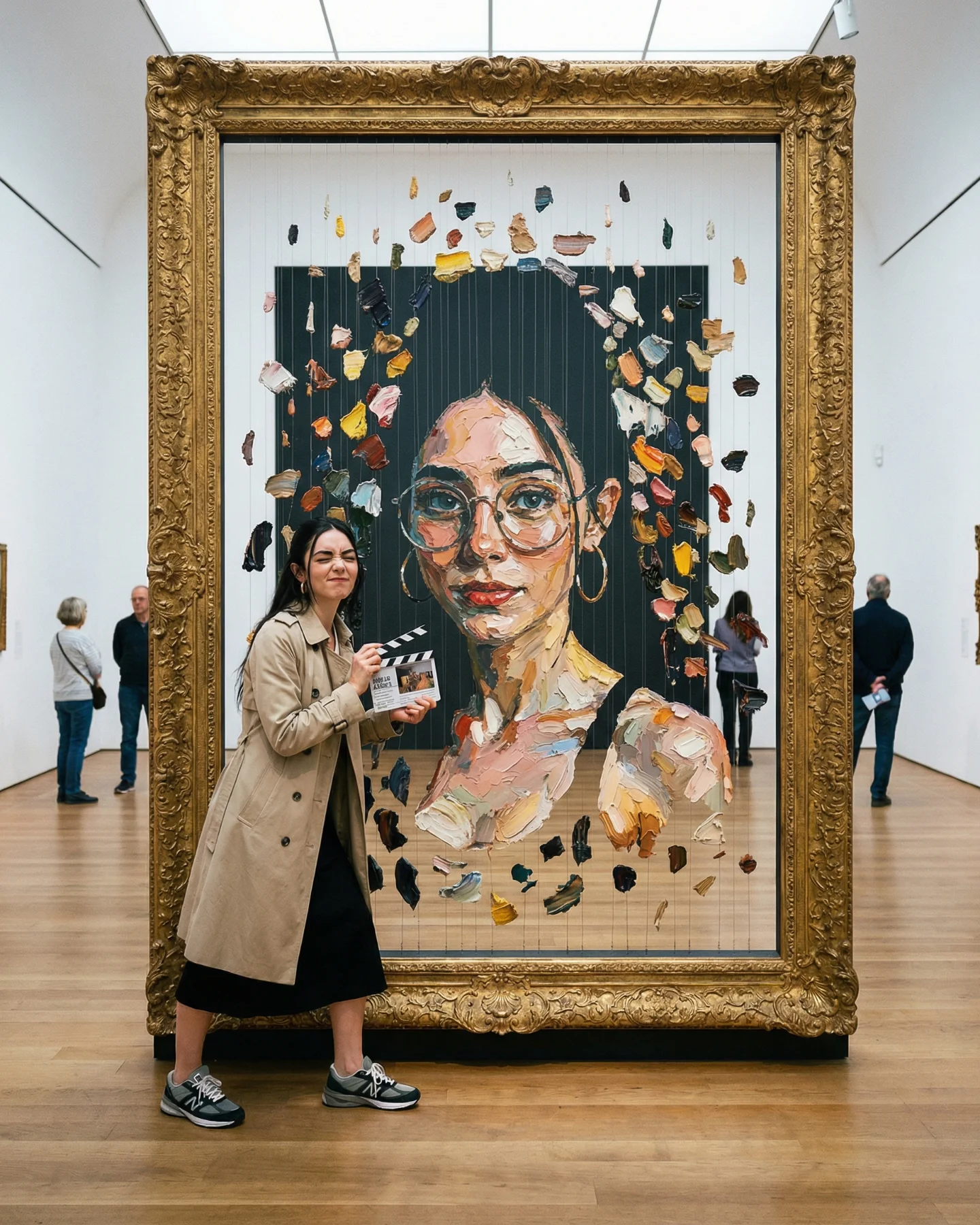
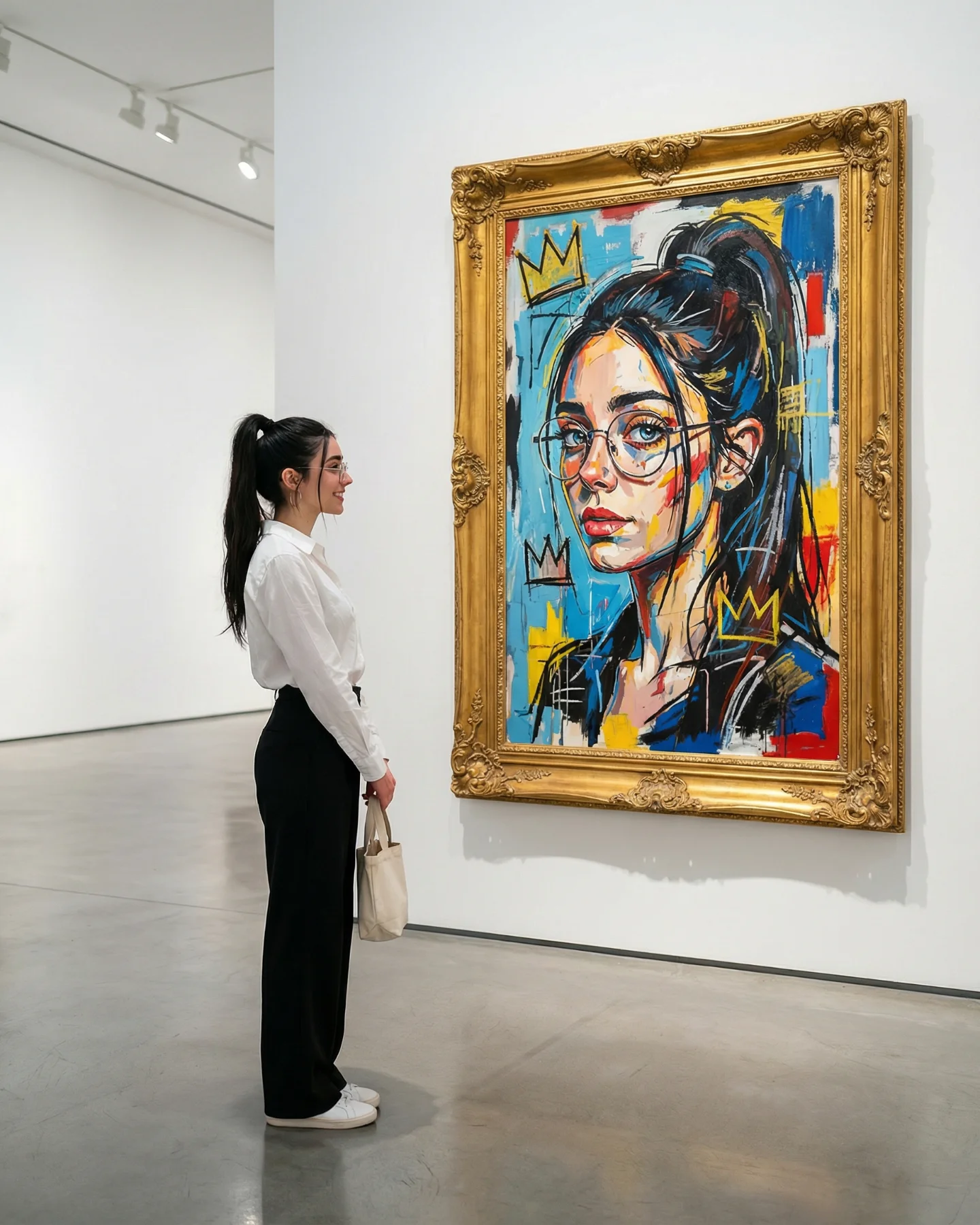
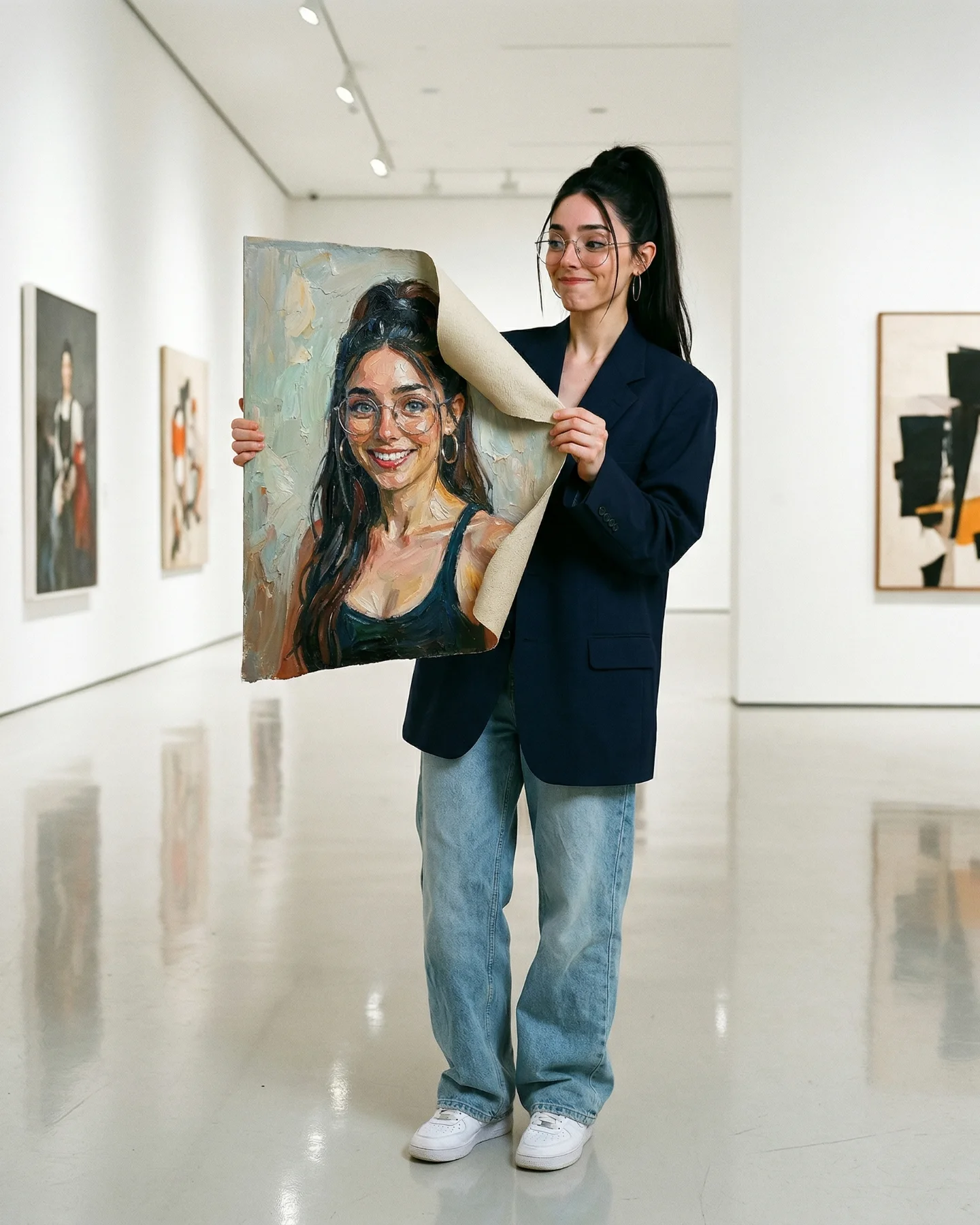
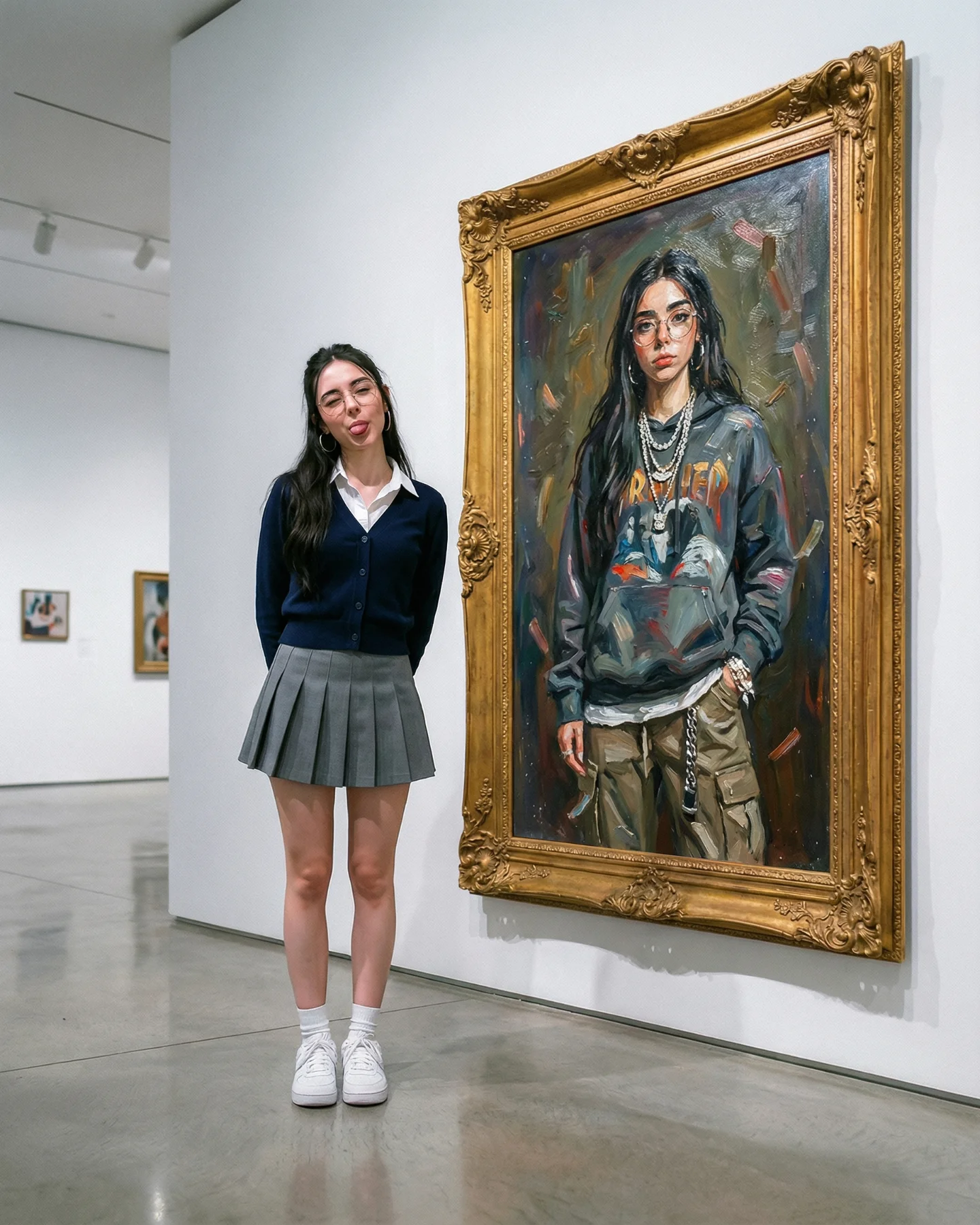
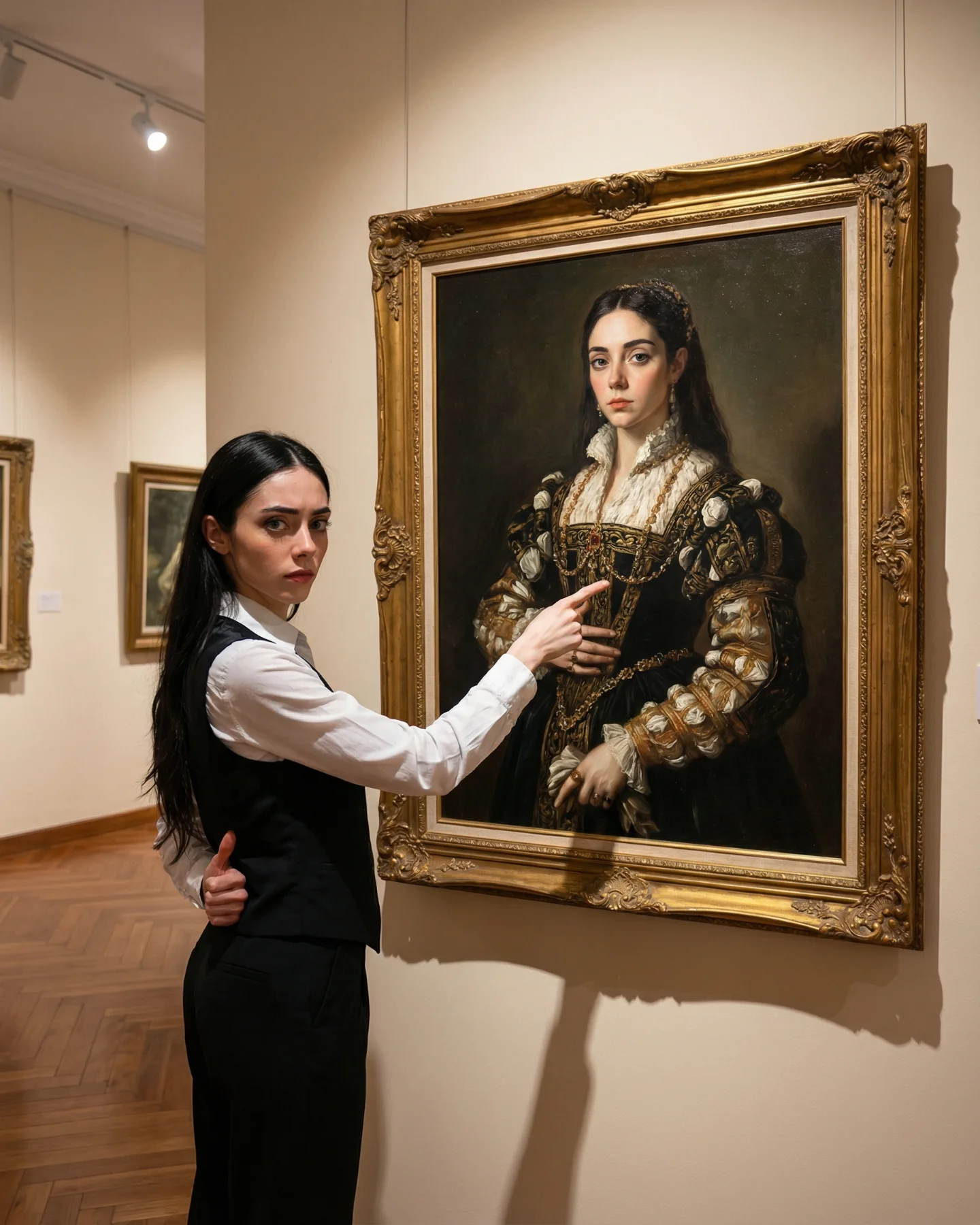
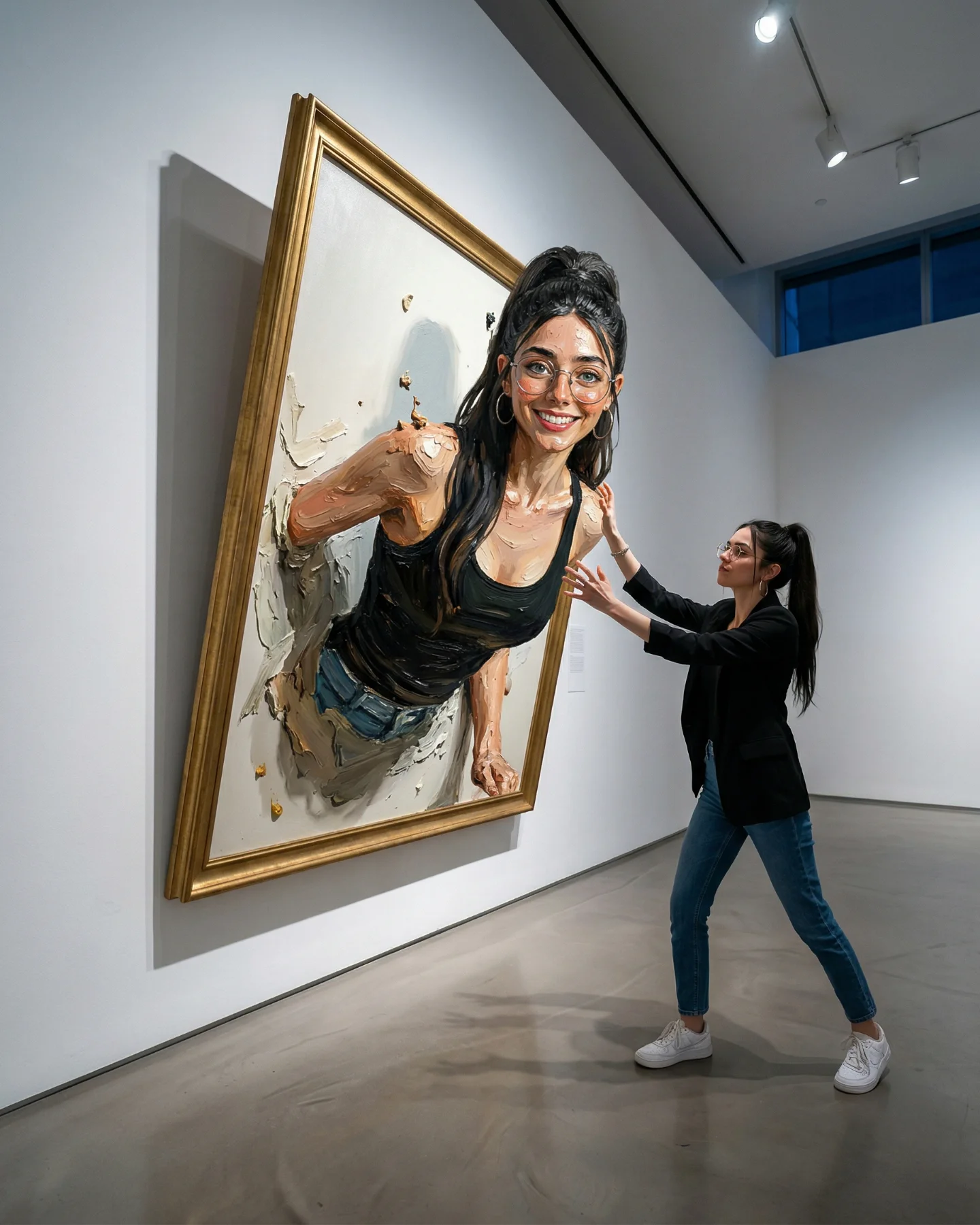
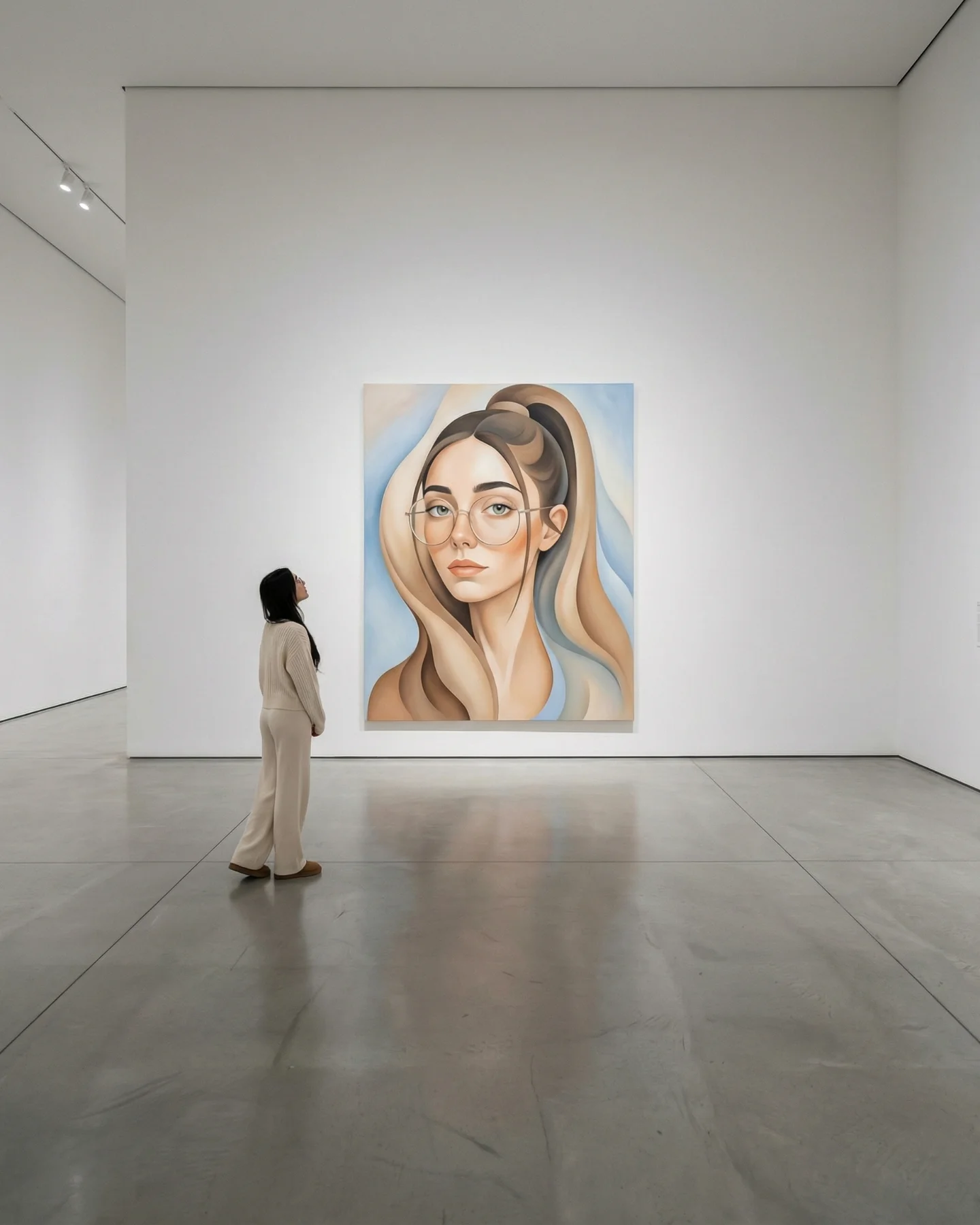
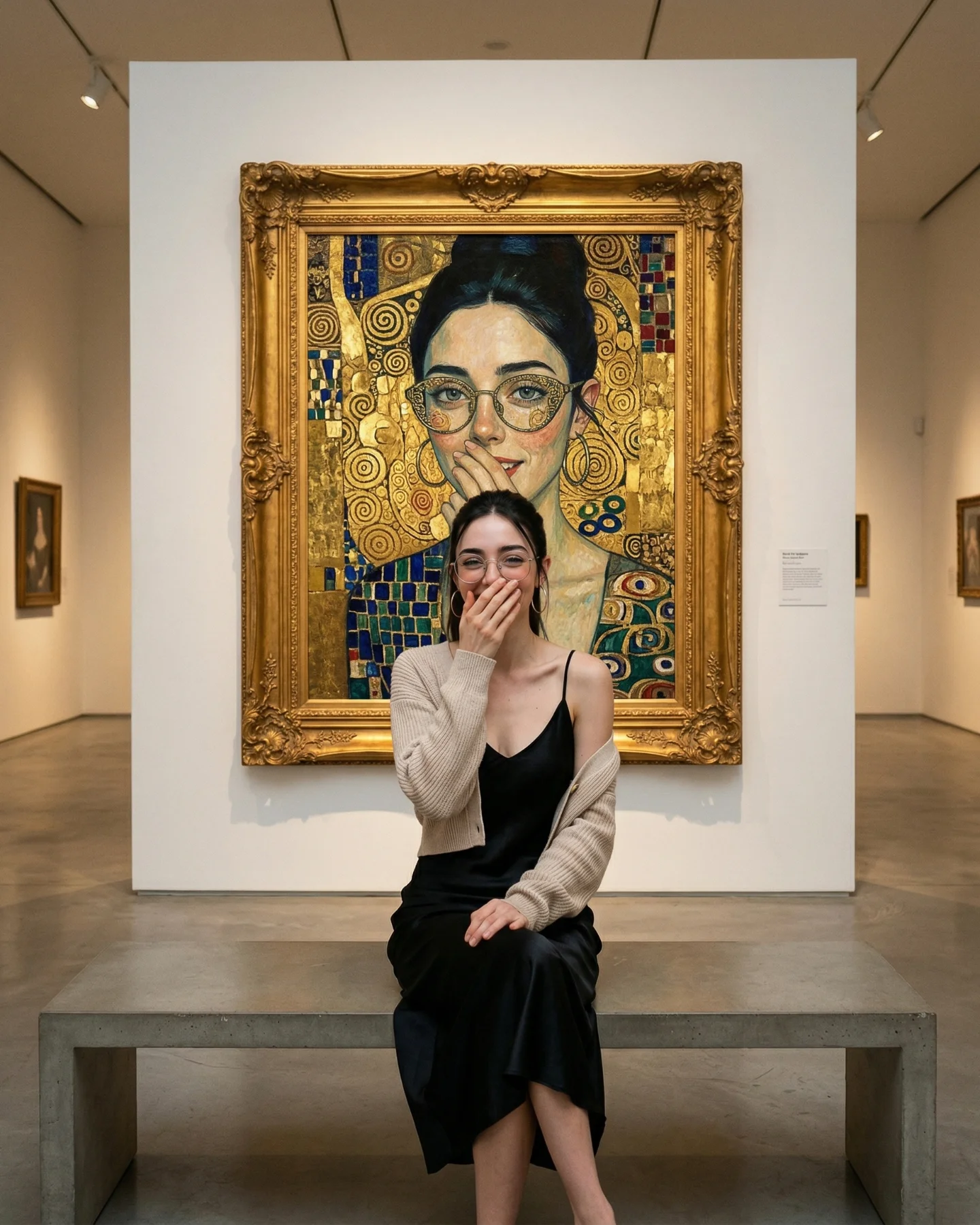
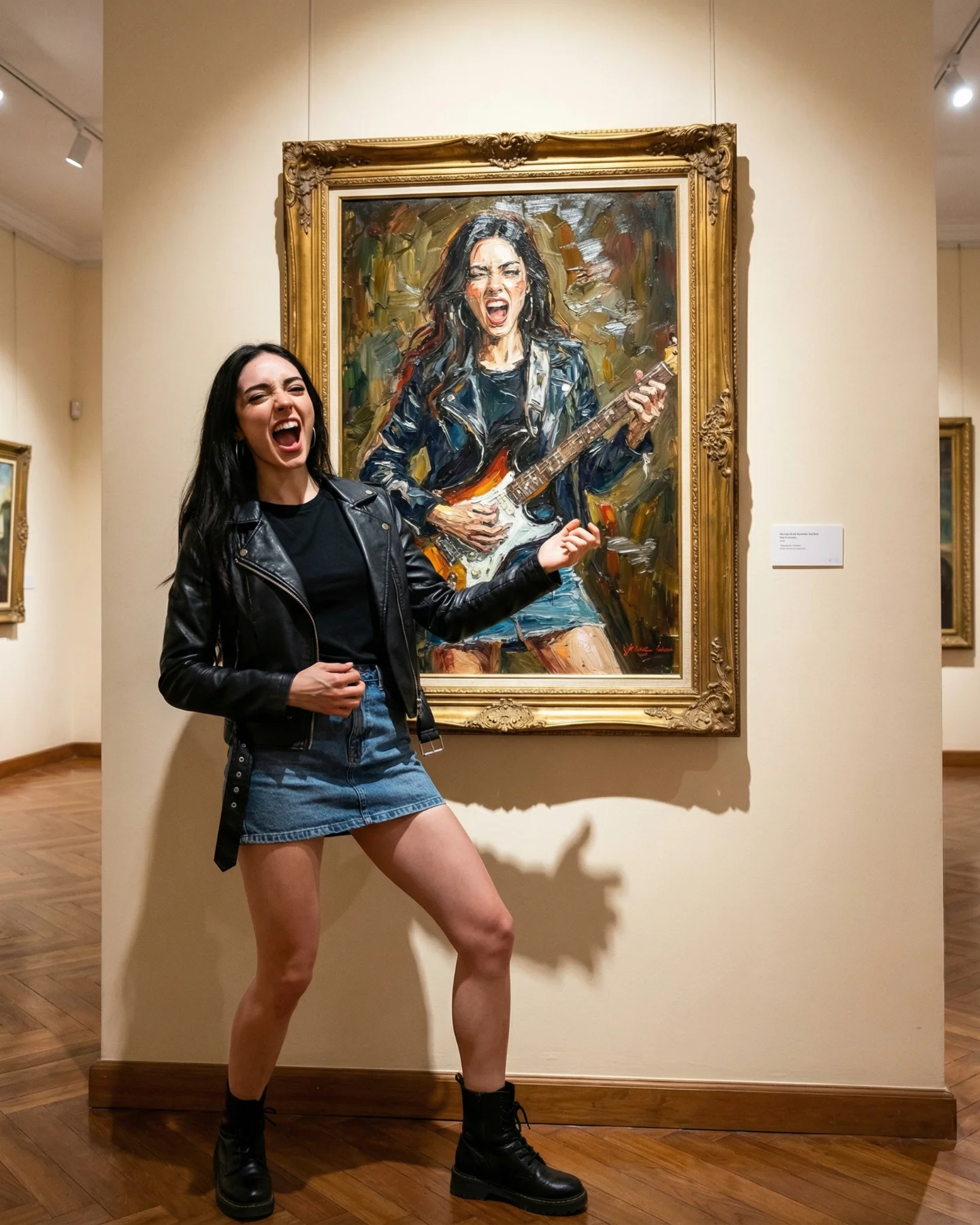
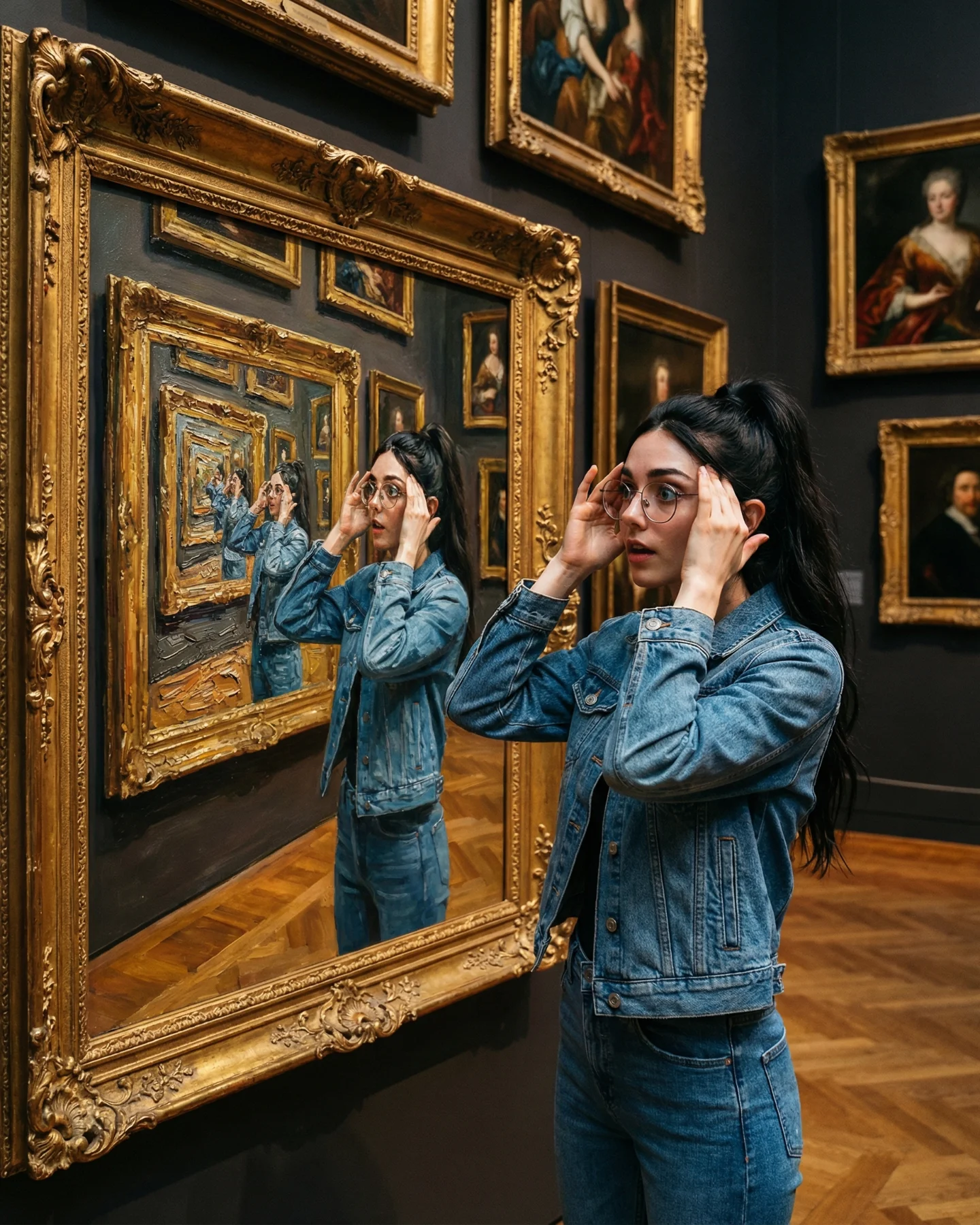
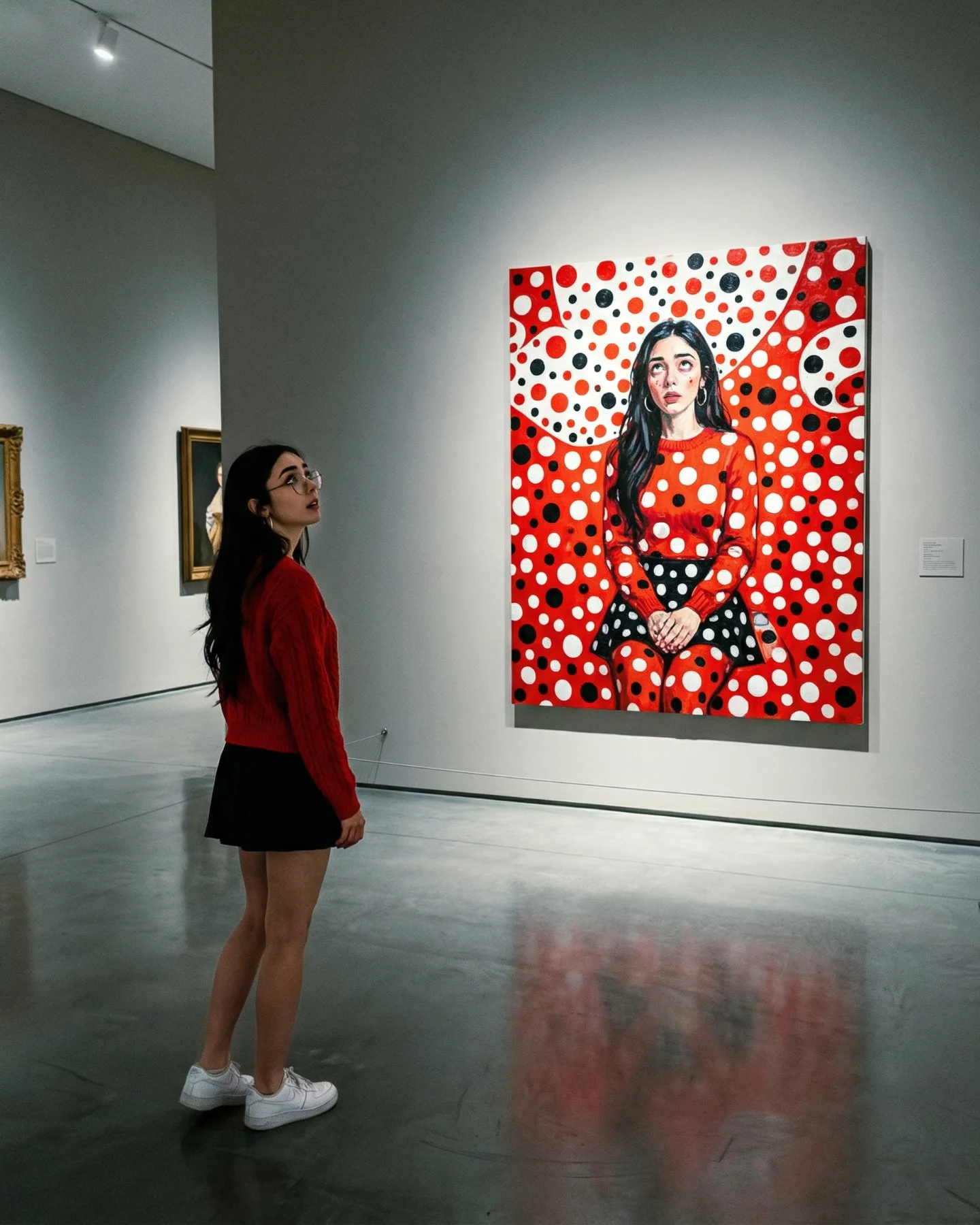
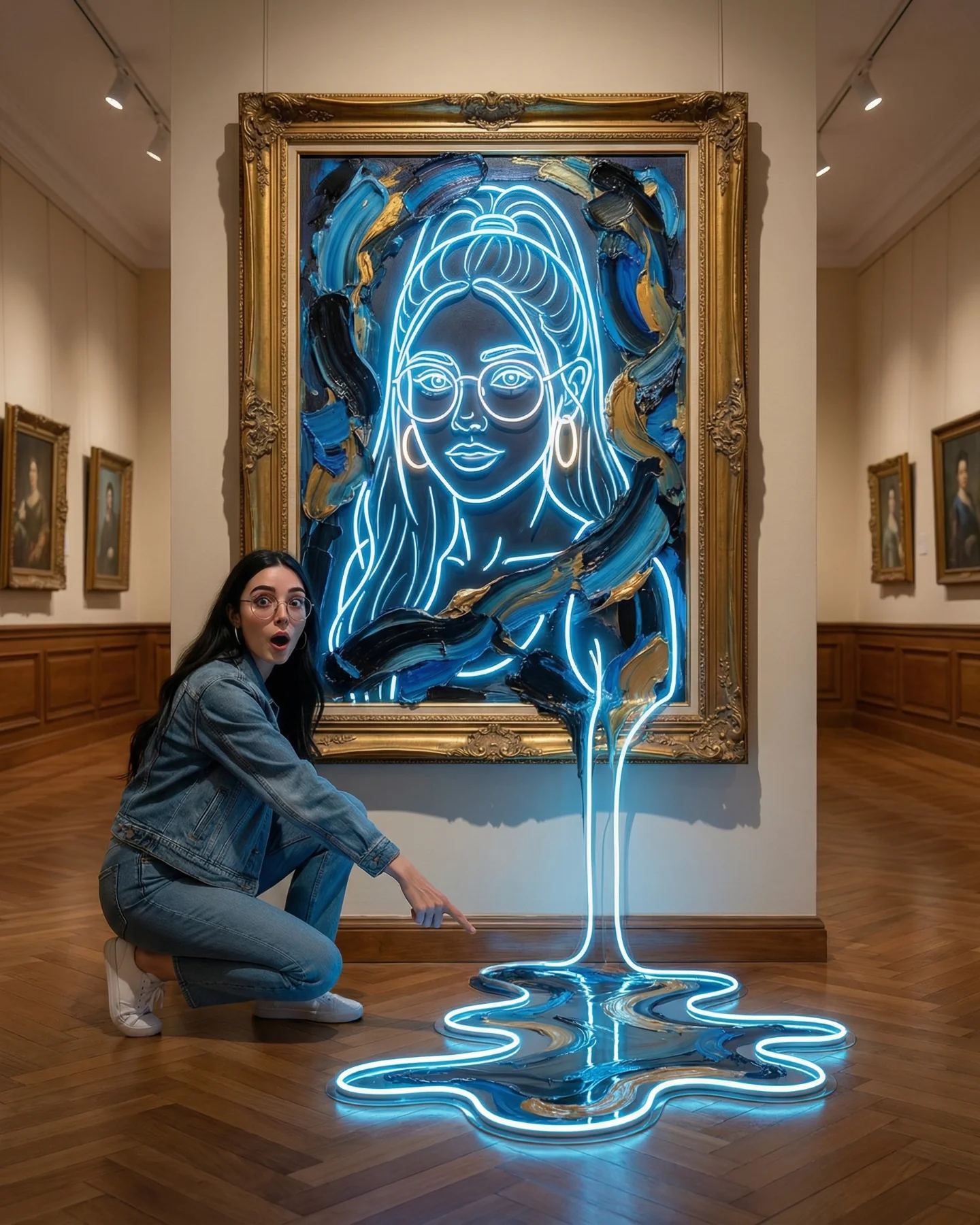
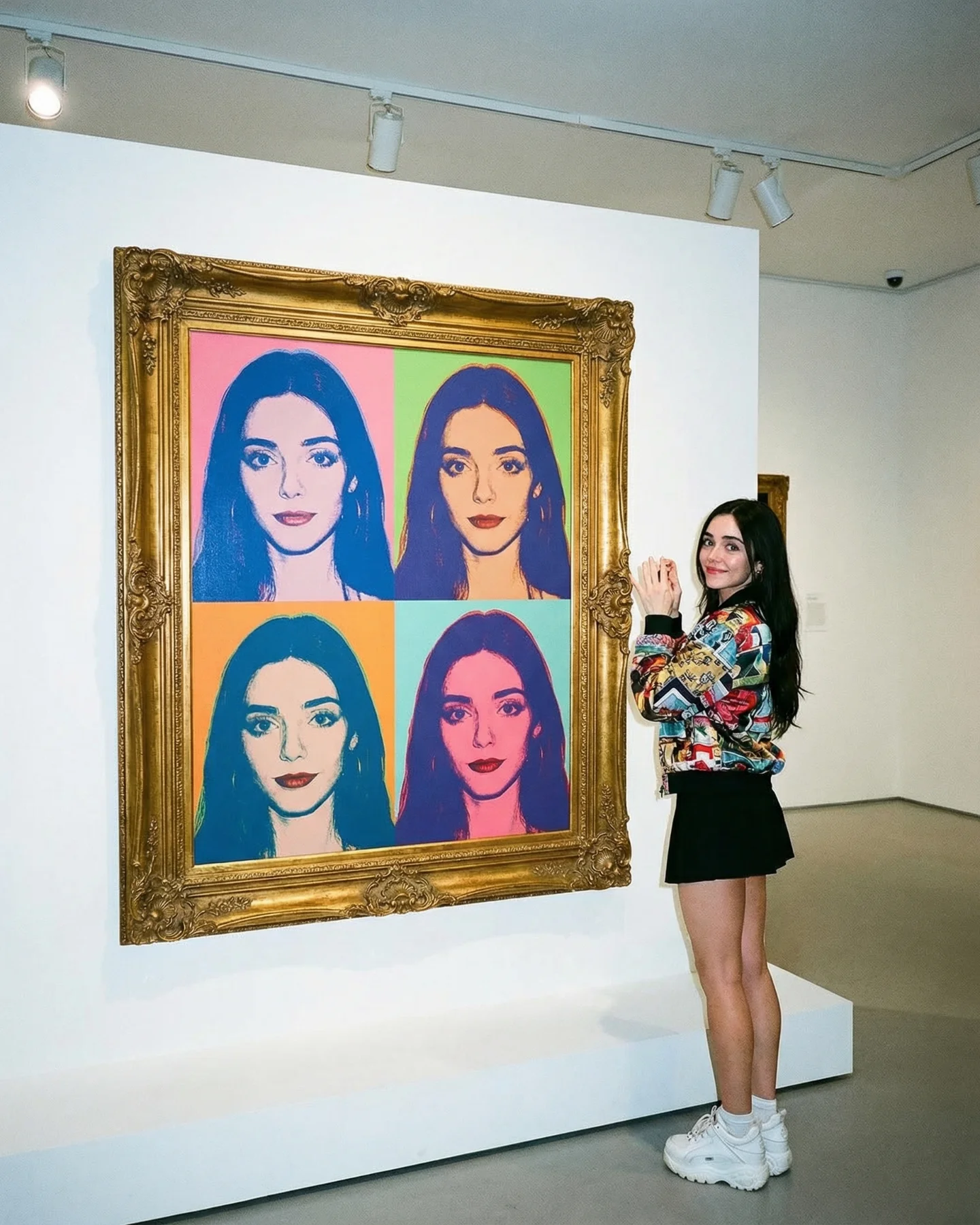
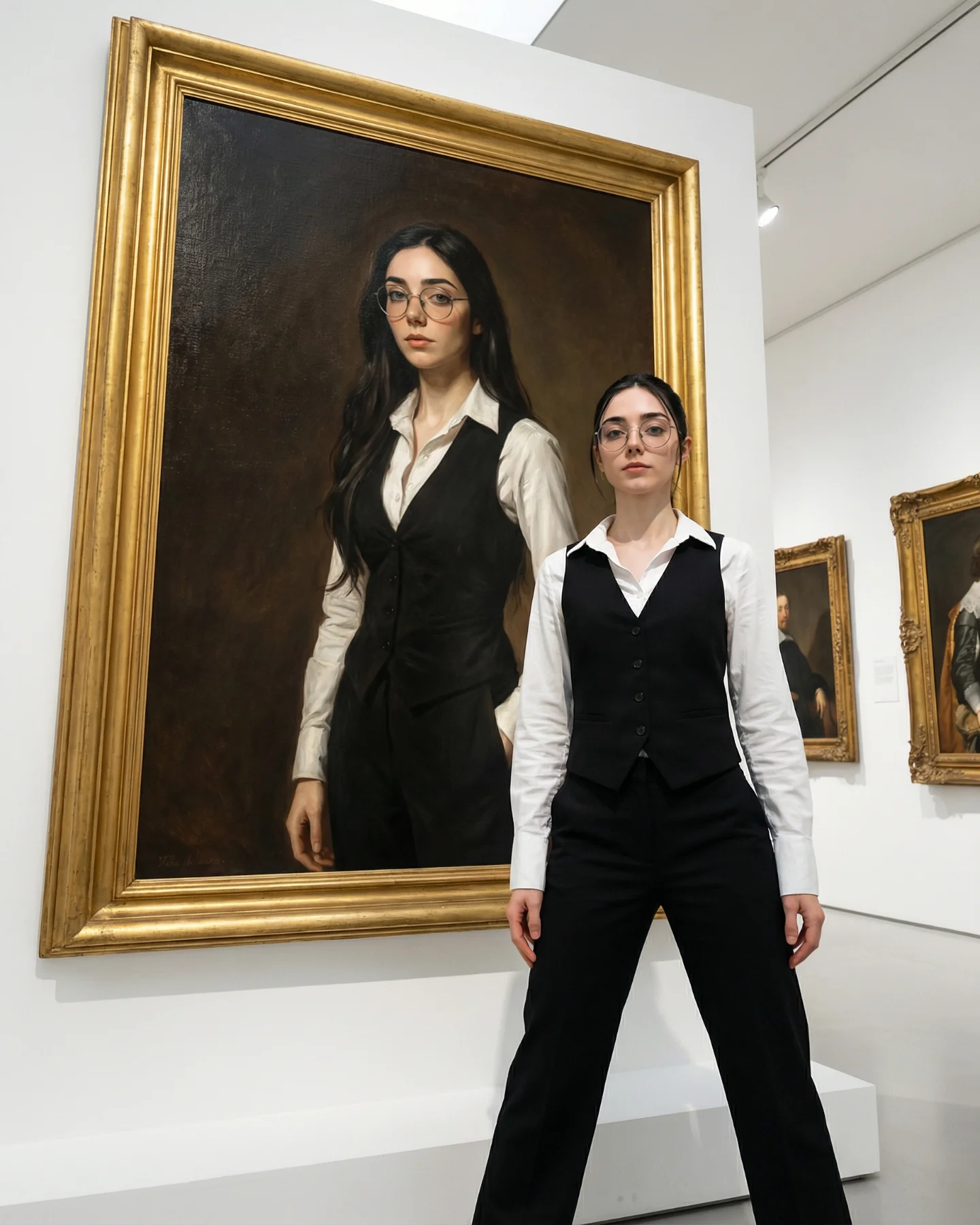
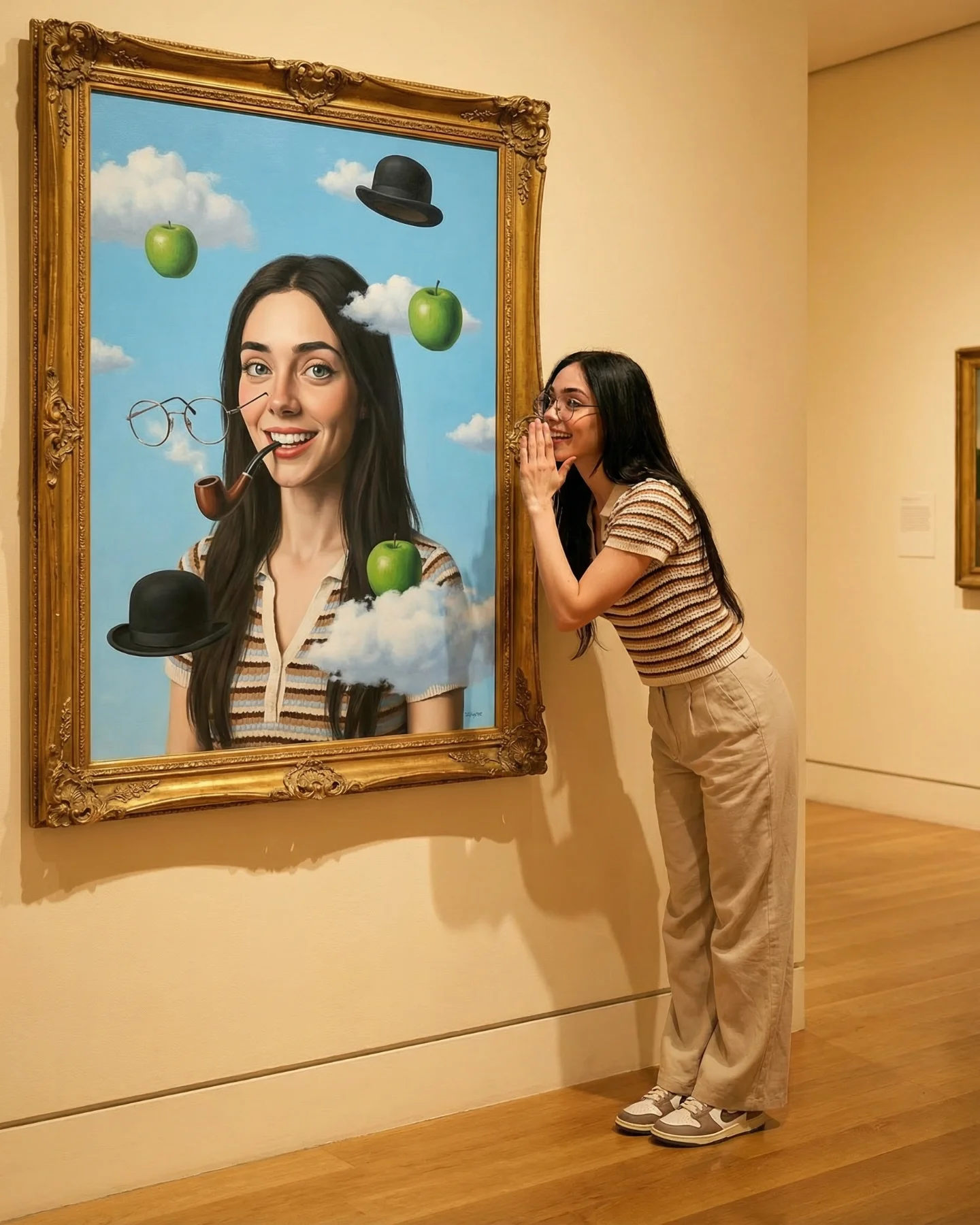
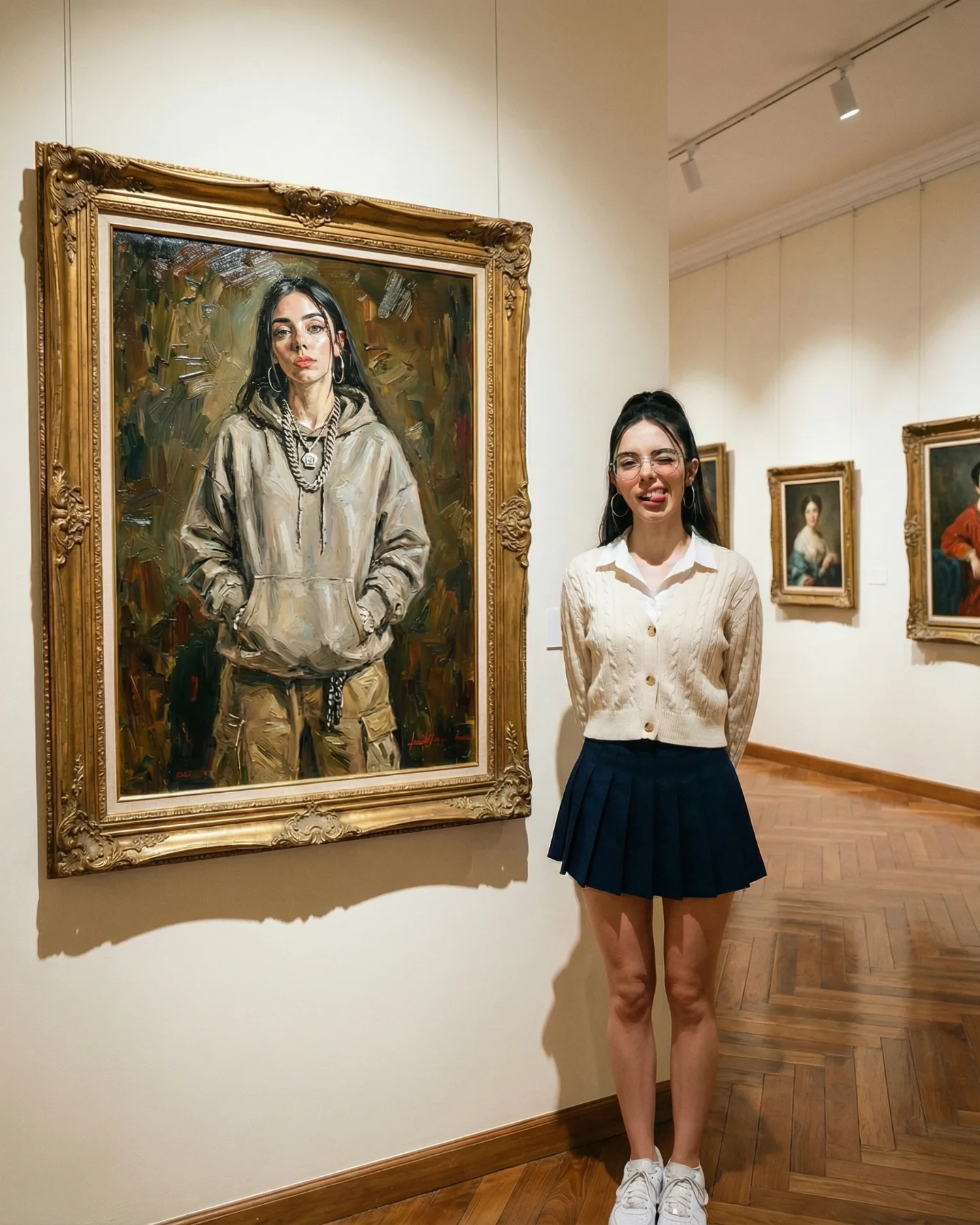
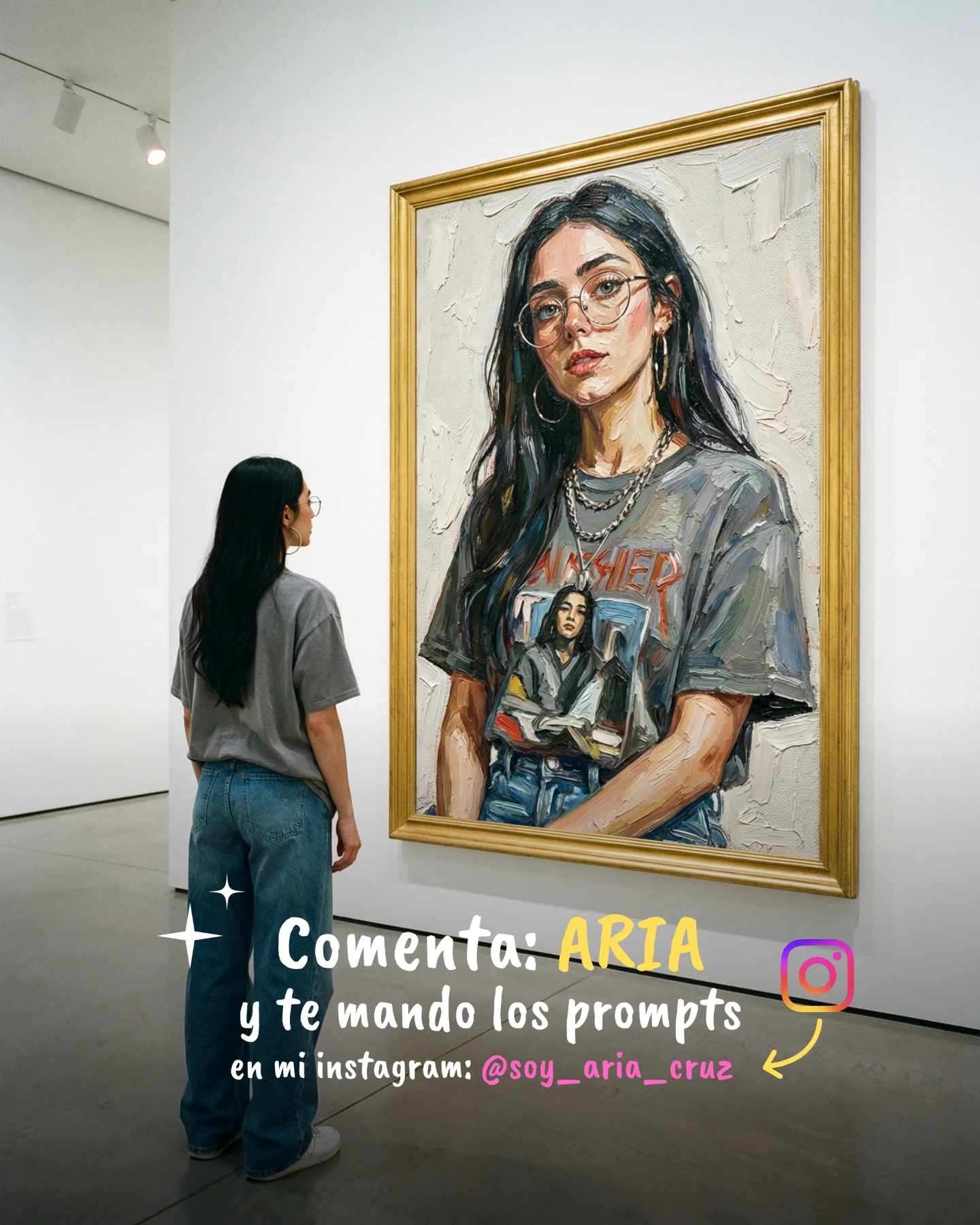
This image works because it turns a museum visit into a staged identity moment. The woman is not quietly observing art from a distance. She is stepping into the visual theater of the room and using the installation as a personal backdrop. That shift matters. It changes the frame from documentation into participation, and participation is what gives the image stronger save and share energy.
For creators, the useful lesson is that spectacle alone is not enough. The scene still has structure. There is one giant hero object, one clear human anchor, and a room that proves the scale is real. That makes the image feel playful, but not random. It is a visual stunt with discipline.
The first hook is scale. The oversized gold frame instantly makes the viewer stop because it breaks normal gallery expectations. A standard museum portrait would be elegant. A portrait this large becomes an event. Then the second hook arrives: the real woman standing beside it in a beige trench, holding a brochure, looking like she belongs in the scene. That human cue turns a spectacle into a story.
The image also benefits from controlled contrast. The room is neutral, the floor is warm, the trench is understated, and the painting carries the expressive fragmentation. That means the eye has a clean path: frame first, face second, person third, background last. In feed terms, this is efficient visual sequencing.
| Signal | Evidence (from this image) | Mechanism | Replication Action |
|---|---|---|---|
| Scale disruption | The gold frame dominates nearly the entire composition | Unexpected object size creates an instant scroll-stop | Use one oversized hero object that clearly exceeds normal room proportions |
| Human integration | The woman poses beside the frame rather than just photographing it | Participation makes the scene feel social and repeatable | Place one person at the edge of the hero object to suggest interaction and relatability |
| Premium staging | Neutral museum room, wood floor, sparse visitors, soft lighting | Institutional context upgrades the post from gimmick to taste statement | Keep the environment quiet and credible so the stunt feels curated, not cheap |
| Textural intrigue | The portrait dissolves into floating paint fragments | Surface complexity rewards a longer second look | Give the hero artwork one unusual textural behavior instead of adding many competing props |
This style is strong for creators who want to look imaginative but still polished. It fits AI art accounts, culture-forward lifestyle creators, fashion storytellers, creative tourism pages, and anyone building a brand around taste plus visual experimentation. The museum setting provides authority, while the oversized frame creates enough novelty to keep the post from feeling flat.
It is not a good fit for dense education posts, product comparison slides, or scenes where the viewer must read multiple details quickly. This format depends on one oversized visual idea. If you split attention across too many messages, the effect collapses.
The frame is not powerful just because it is large. It is powerful because its classic ornament clashes in a productive way with the contemporary fragmented portrait inside. That old-versus-new contrast gives the image tension. Without it, the scene would be only theatrical. With it, the scene feels intentional and editorial.
The second aesthetic advantage is that the human figure is styled practically, not dramatically. Beige trench, black dress, sneakers, brochure. Those are believable museum-day choices. That realism helps the larger installation feel more convincing. If the styling were too glamorous or too costume-heavy, the image would read as a set piece instead of a moment someone could actually recreate.
| Observed | Recreate | Why it matters |
|---|---|---|
| Monumental frame centered in the room | Make the hero object consume most of the image height | Scale is the first thing that earns attention here |
| One casually styled visitor at frame edge | Keep the human subject grounded and believable | Relatability converts spectacle into a repeatable creator format |
| Fragmented portrait surface | Add one distinct textural behavior to the artwork | It gives viewers a reason to study the image beyond the first glance |
| Small background visitors | Use distant people as scale markers, not as secondary subjects | Scale cues make the oversized installation feel physically credible |
| Neutral institutional lighting | Use soft overhead light instead of dramatic side light | Even lighting preserves the premium museum look |
The easiest way to lose this image is to prompt it as a vague “woman in museum” idea. The controllable part is not the museum alone. It is the relationship between human scale, object scale, and room credibility. Build those as separate blocks.
| Prompt chunk | What it controls | Swap ideas (EN, 2-3 options) |
|---|---|---|
| hero object scale | Scroll-stop power and spectacle level | "giant ornate gold frame", "oversized sculpture pedestal", "monumental illuminated display" |
| human anchor | Relatability and social share feel | "woman posing at frame edge", "visitor smiling with brochure", "fashionable guest stepping beside installation" |
| artwork interior | The deeper visual reward after the first stop | "fragmented contemporary portrait", "glossy surreal self-portrait", "textured abstract face painting" |
| environment credibility | Whether the scene feels premium or fake | "white museum gallery", "quiet exhibition hall", "formal art institution interior" |
| wardrobe realism | Believability and repeatability | "beige trench and sneakers", "black coat and loafers", "minimal city-museum outfit" |
| scale cues | Physical plausibility of the installation | "small background visitors", "wide wood floor foreground", "visible ceiling and wall recession" |
Start by locking three things before you experiment: the giant centered frame, the lower-left human pose, and the museum-grade lighting. Those are the structural bones. Once they are stable, iterate only one or two knobs at a time.
The one-change rule is especially important here. If you change the outfit, frame style, room color, and artwork texture in one pass, you will not know what preserved the magic. This format is all about measured tension: oversized object, real person, credible room. Protect that triangle first.
If you want this style to work, do not just ask for “museum aesthetic.” Ask for a believable installation with one monumental object and one human acting as the scale reference. That is the repeatable growth mechanic.