Arte Moderno 🎭🎨 Comenta "ARIA" y te paso todos los prompts 💌
Arte Moderno 🎭🎨 Comenta "ARIA" y te paso todos los prompts 💌
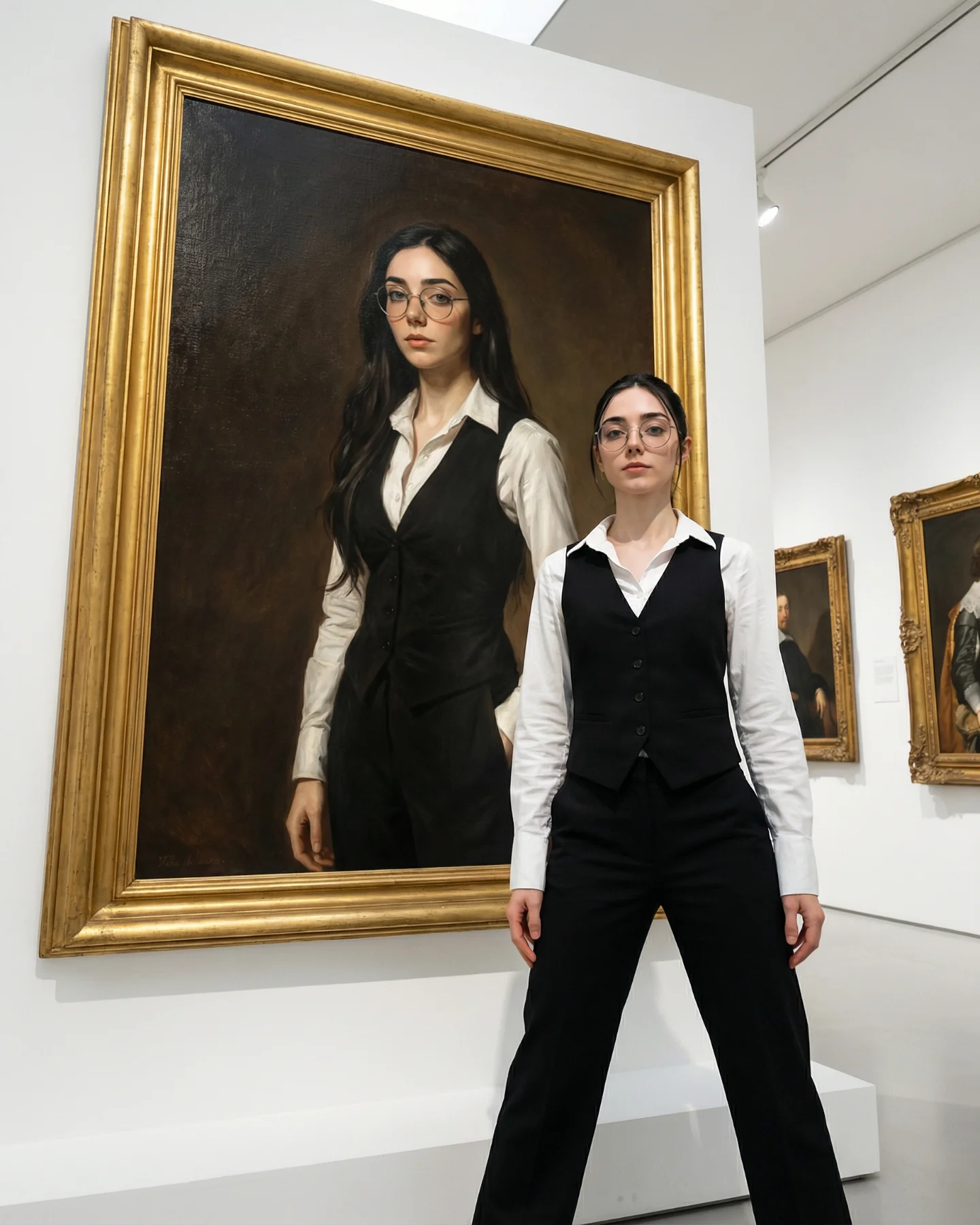
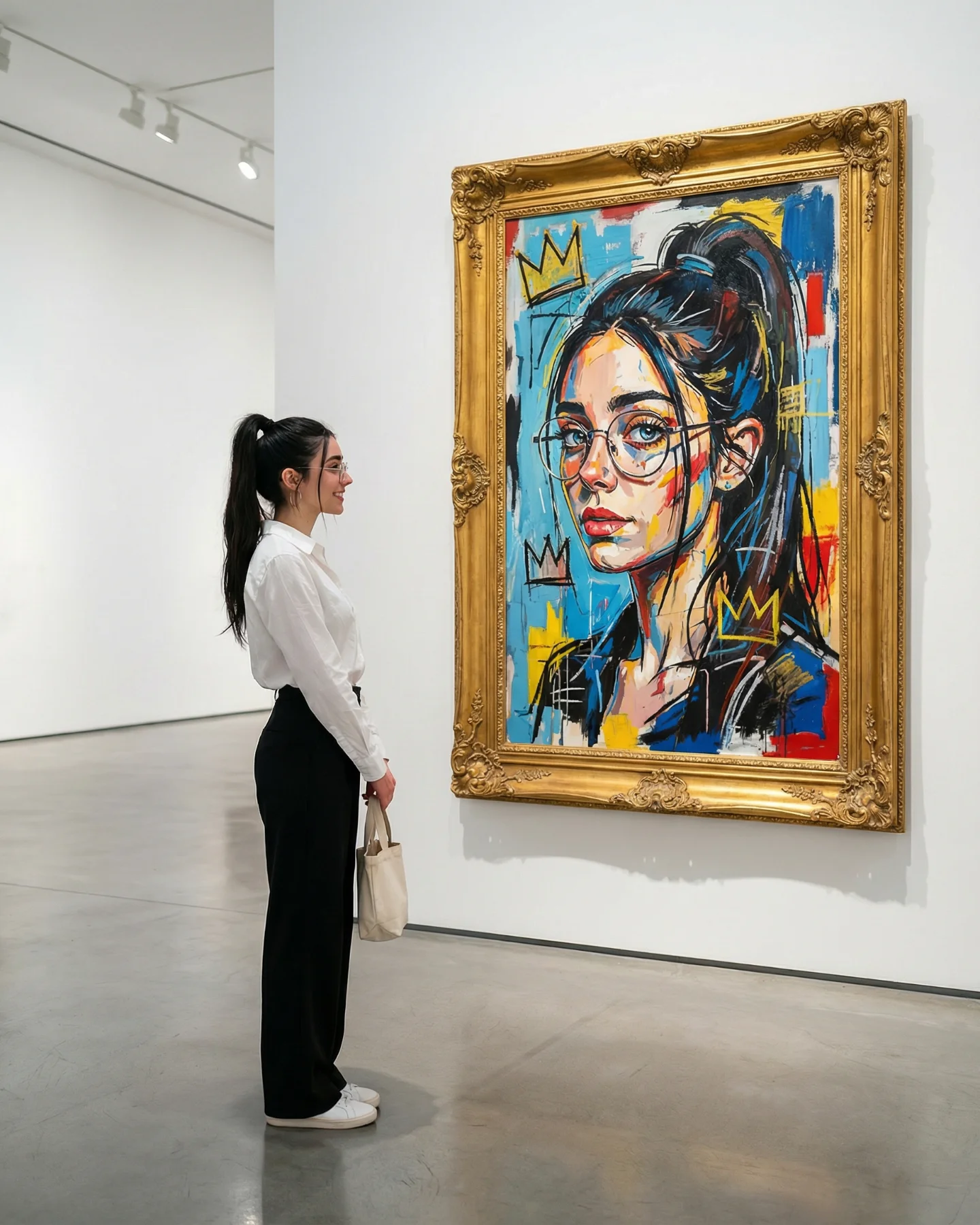
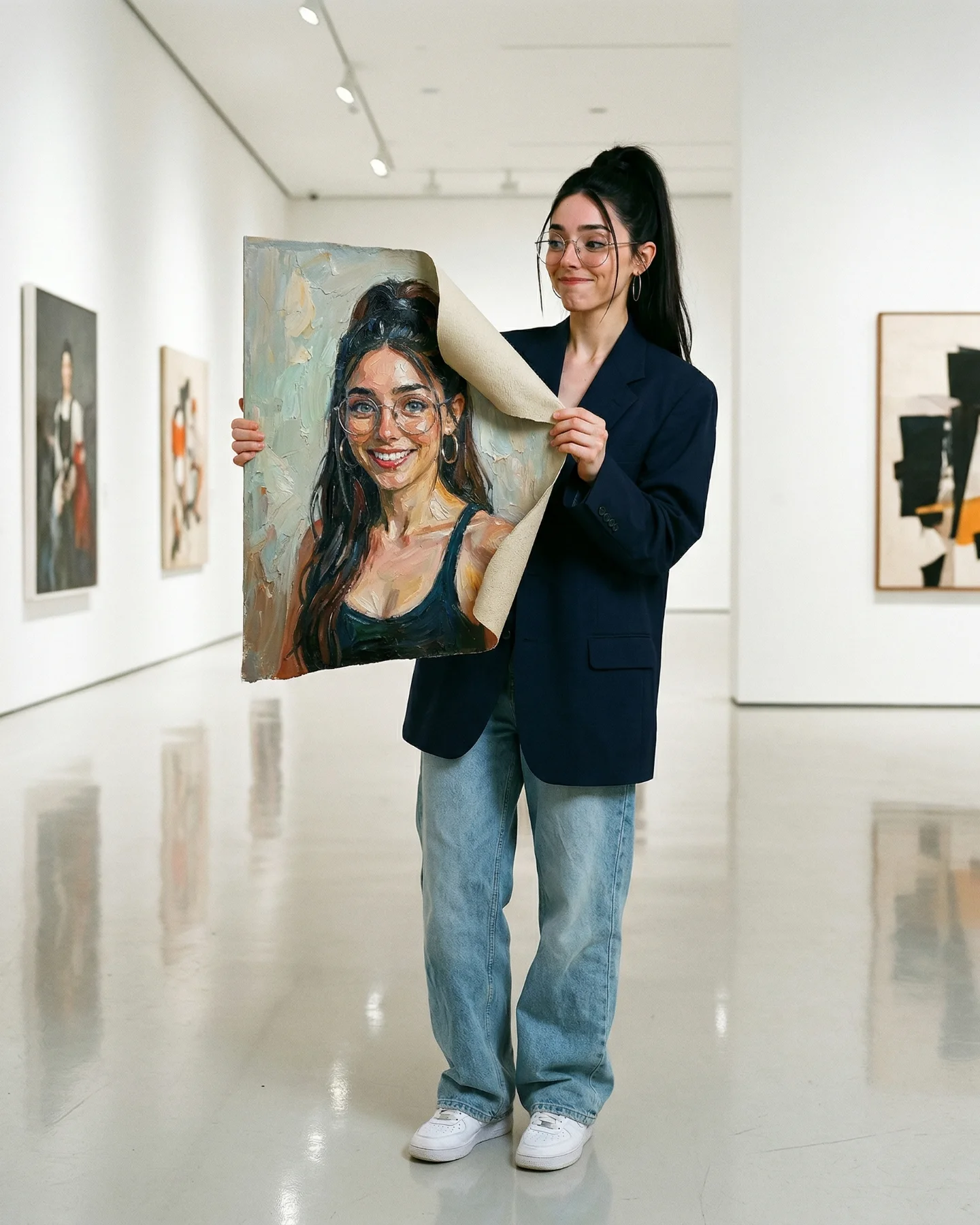
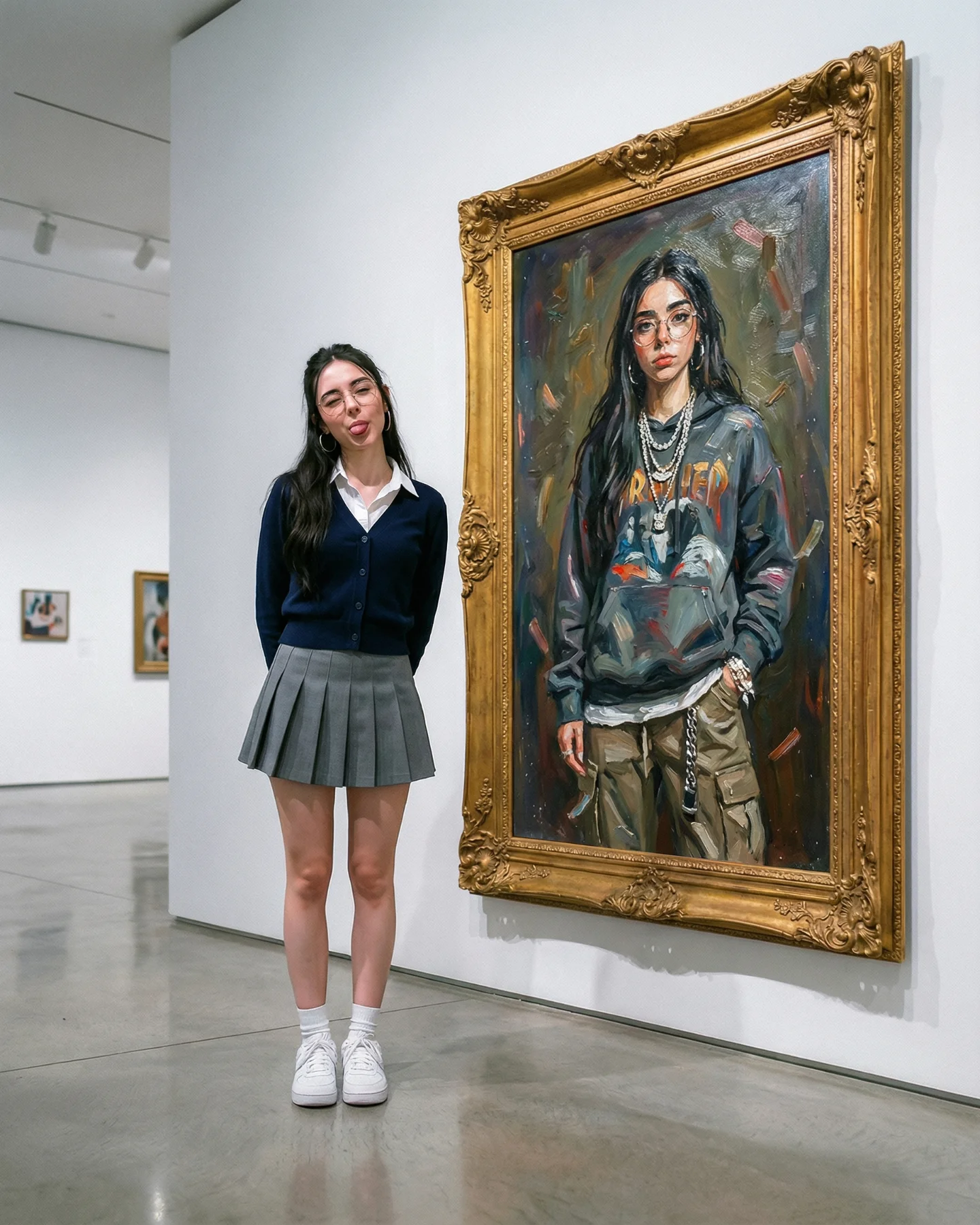
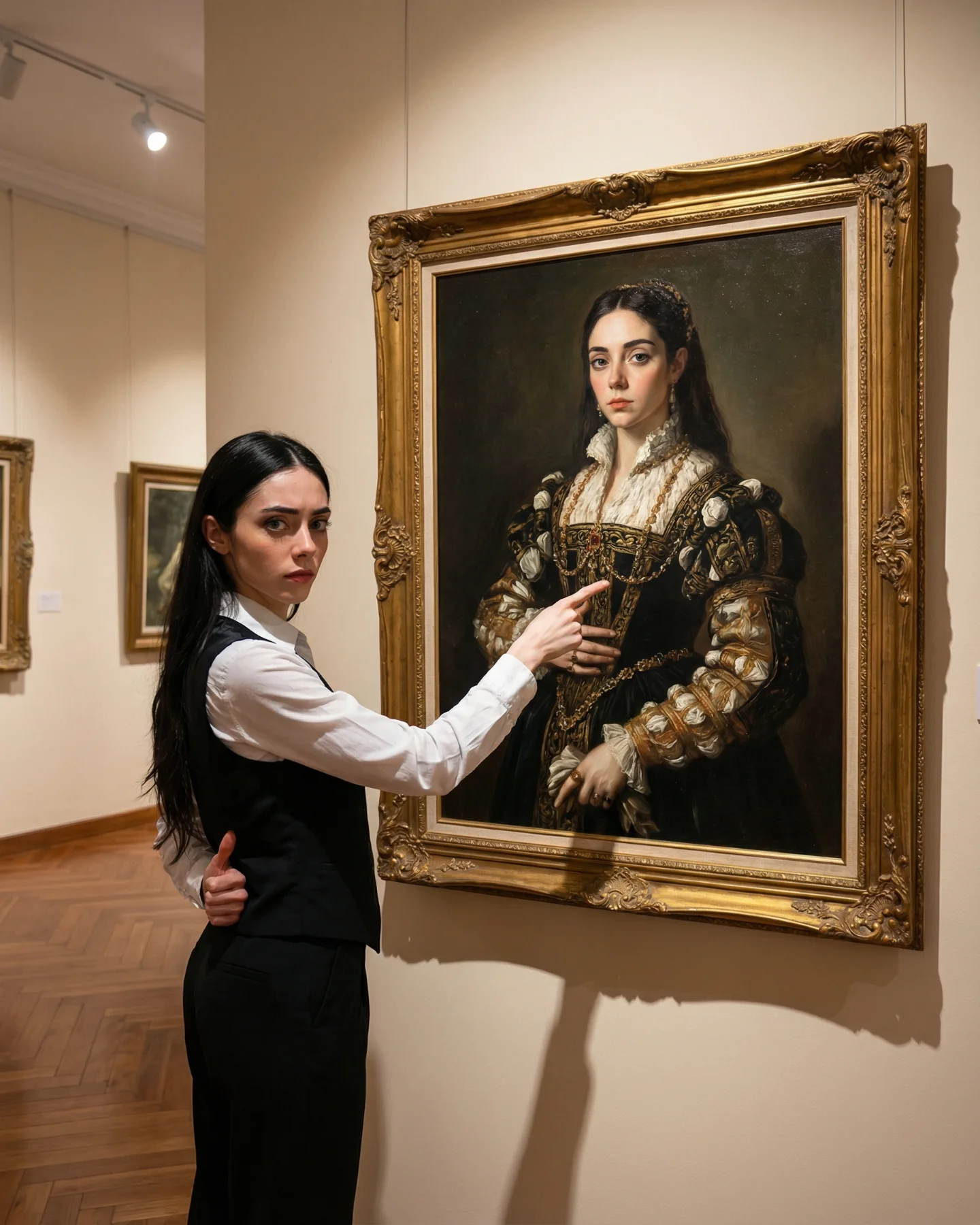
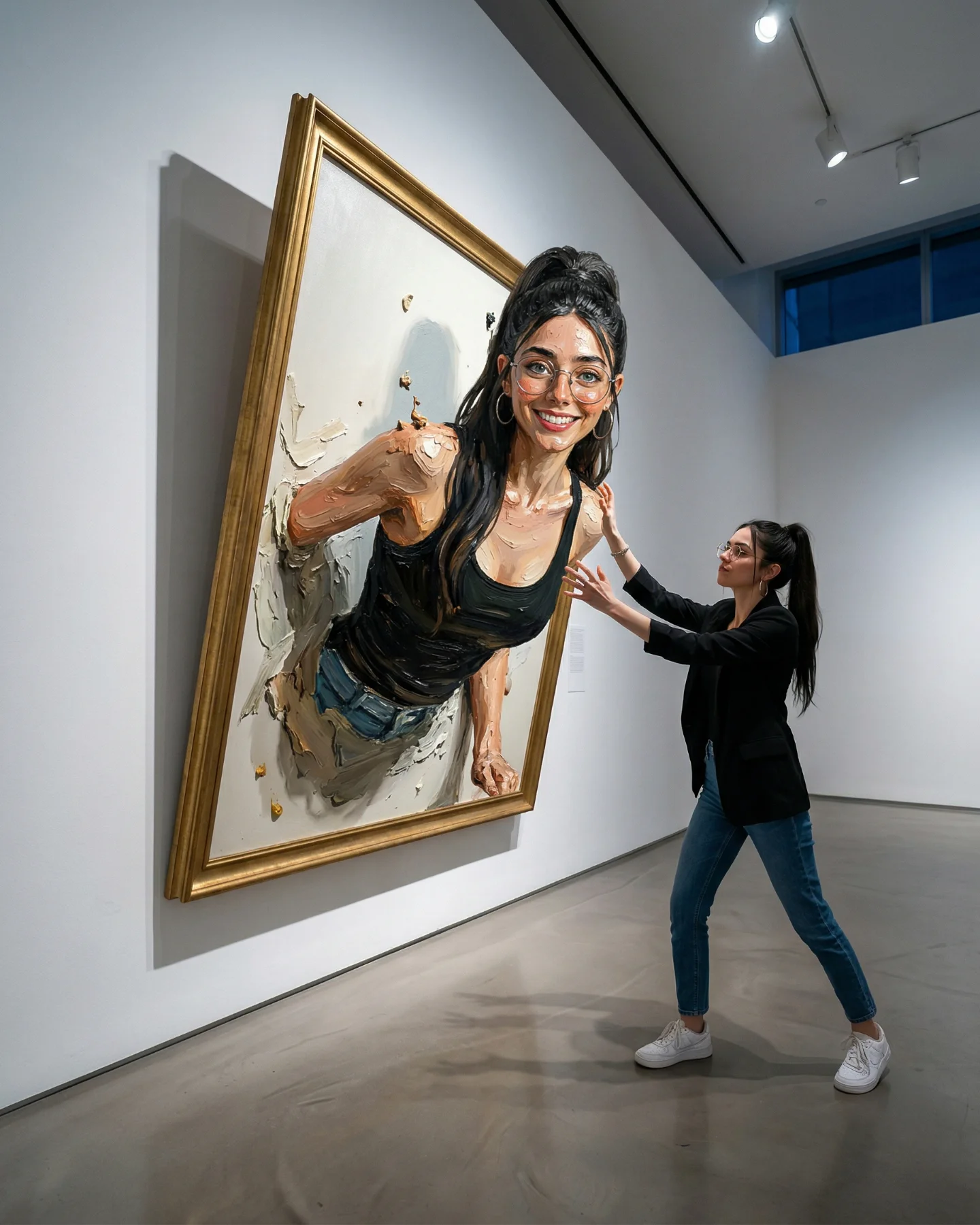
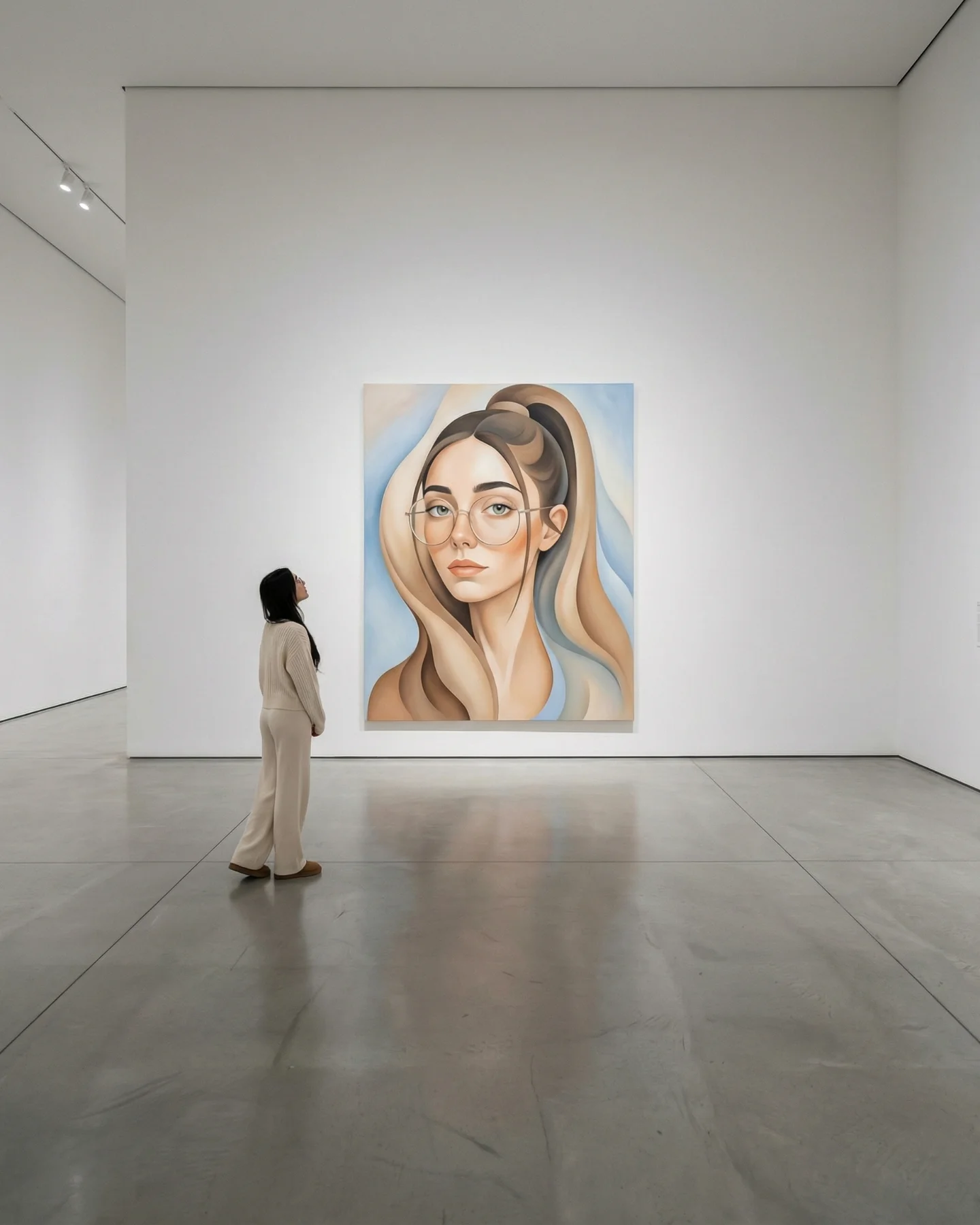
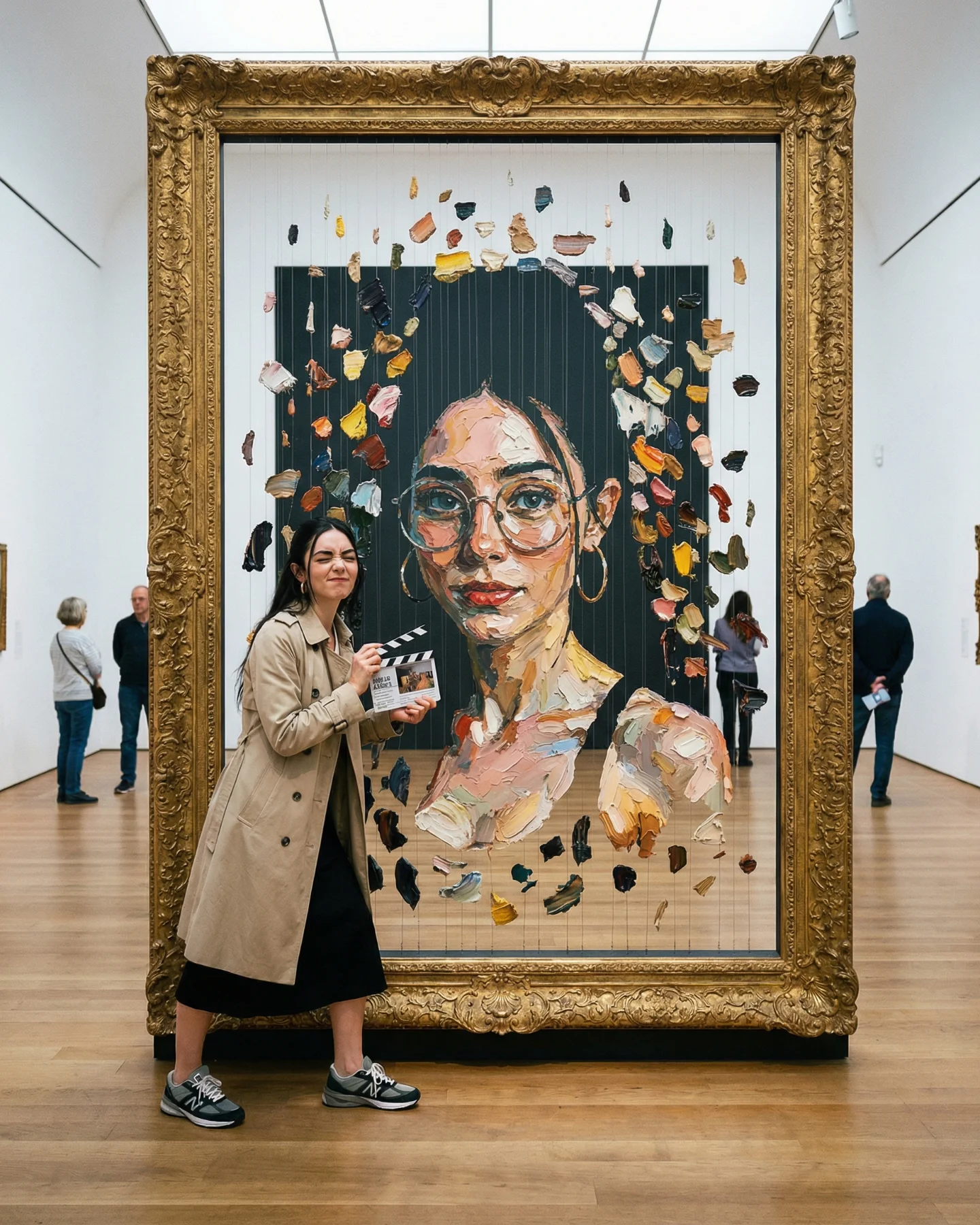
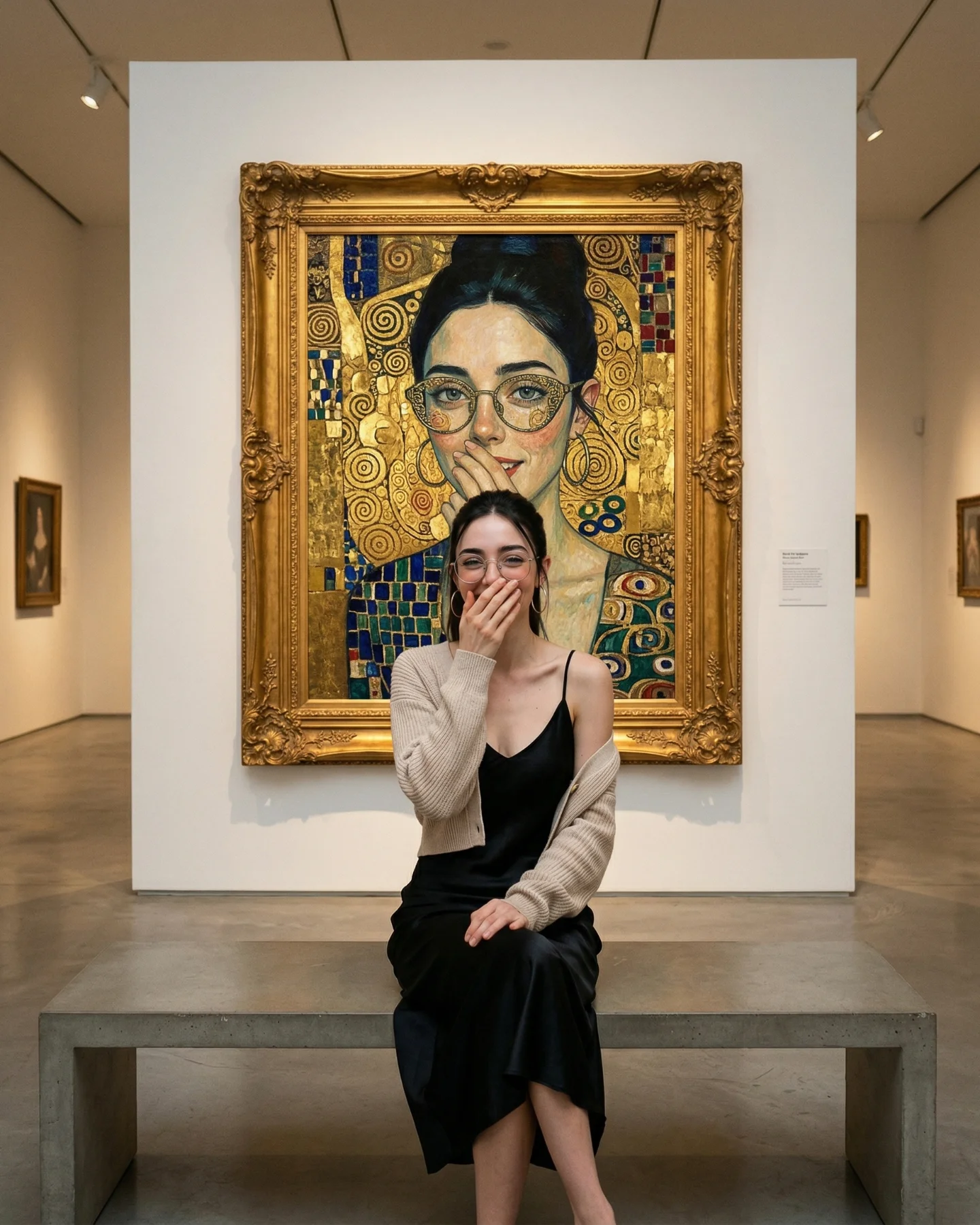
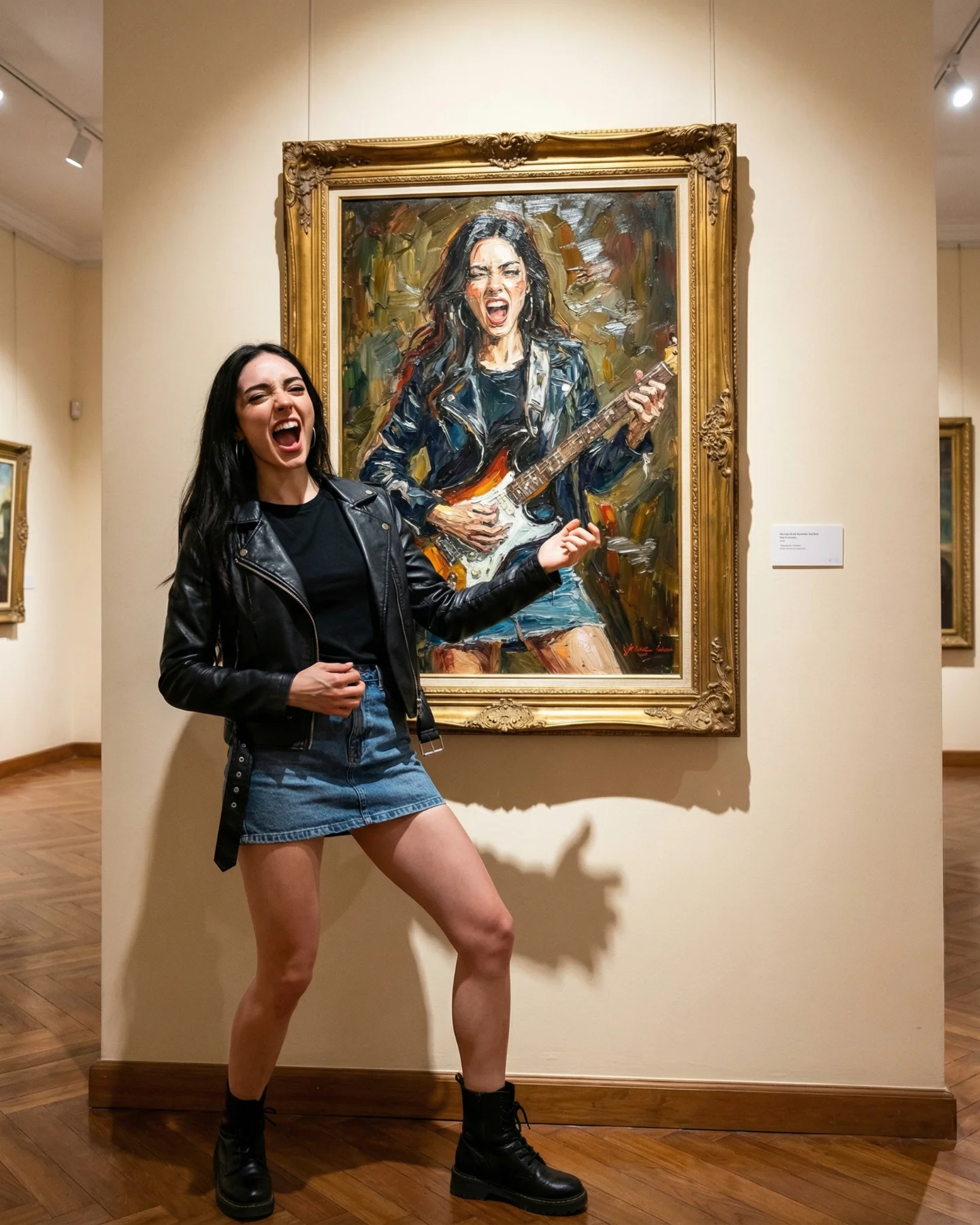
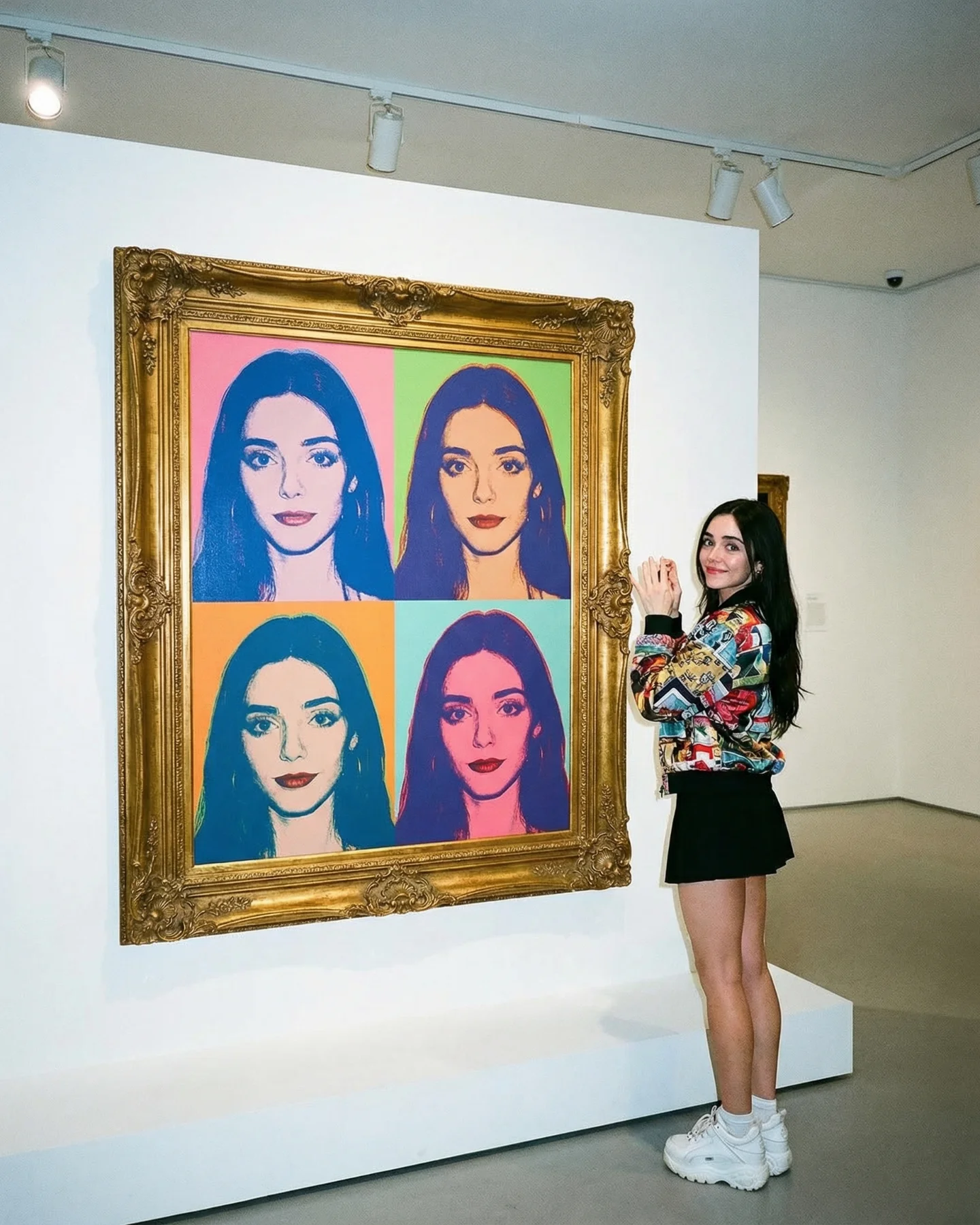
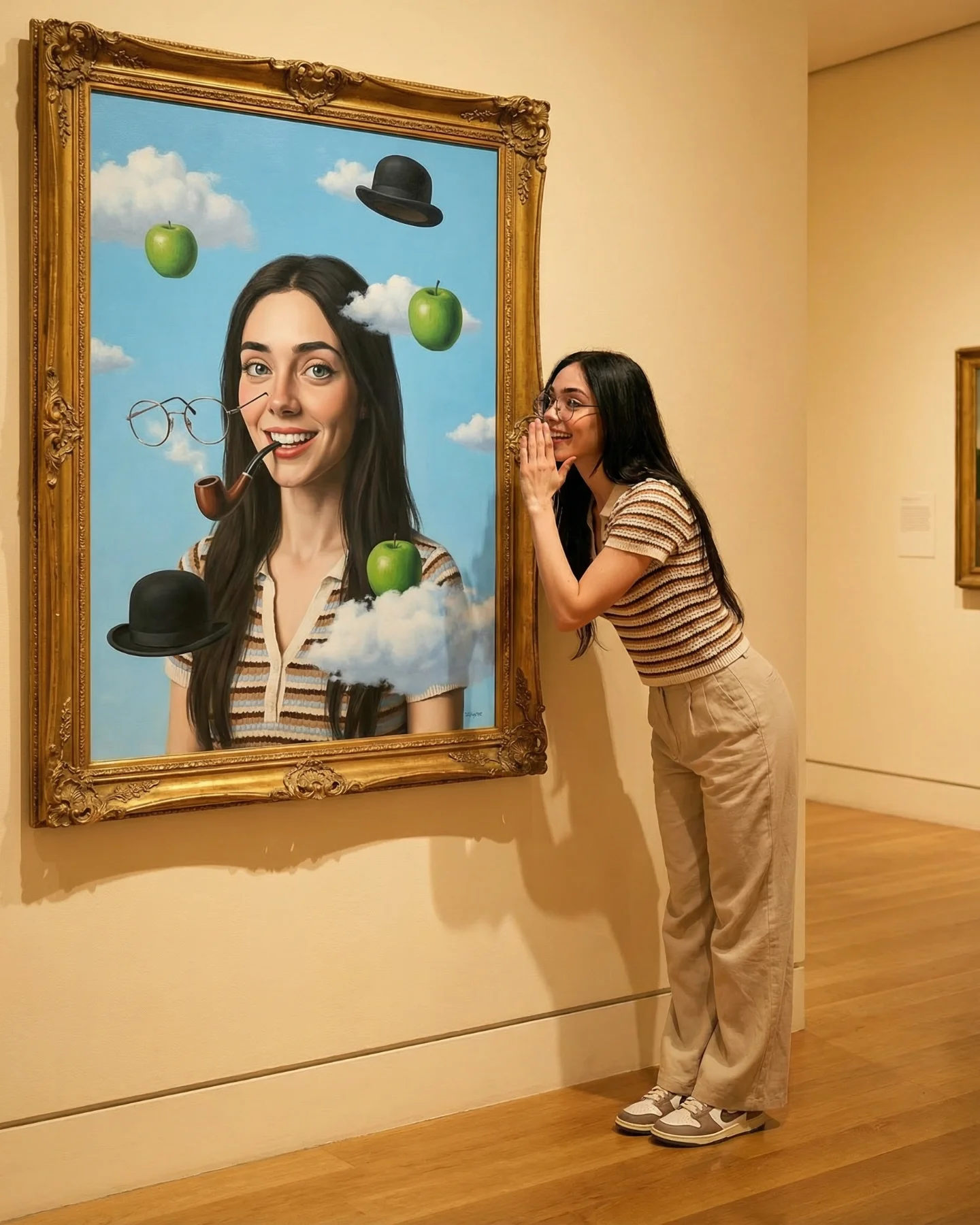
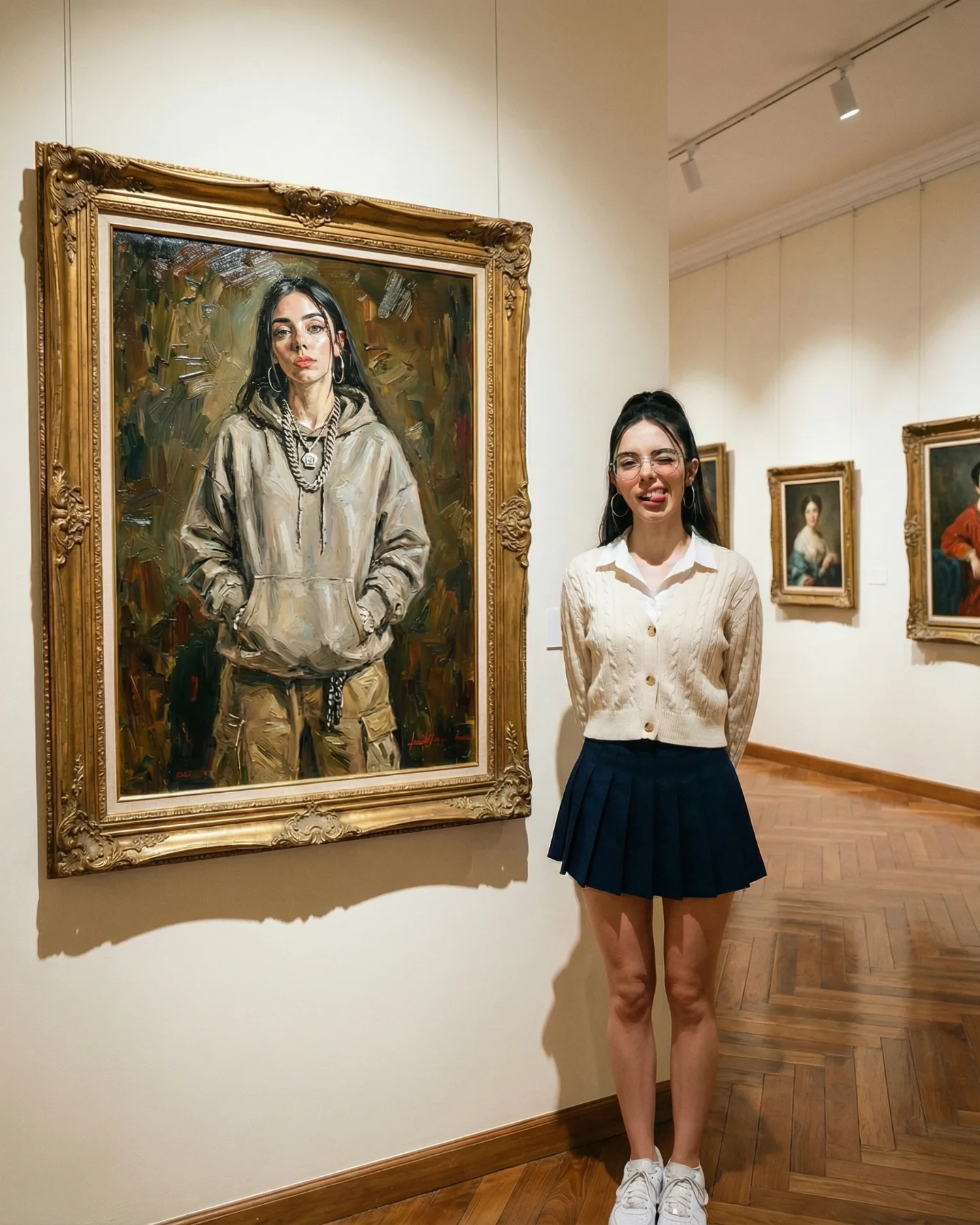
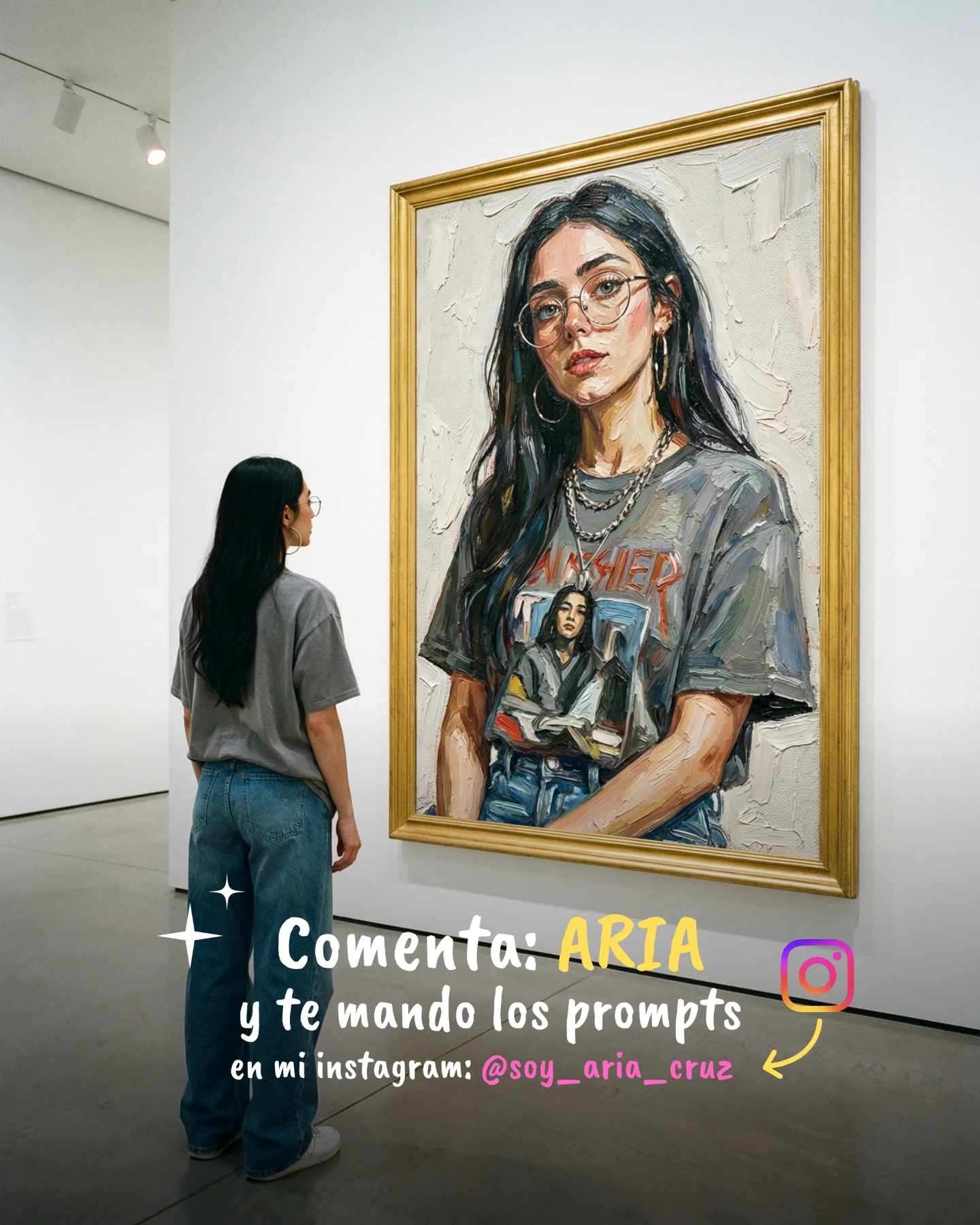
At first glance this image reads like a museum fashion shot. A second later, the real hook lands: the woman standing in the gallery and the woman inside the painting are effectively the same character, styled with the same black vest, white shirt, glasses, and controlled expression. That single decision creates the scroll-stopping tension. It feels familiar because it borrows the authority of classical portraiture, but it also feels current because the subject is staged like a creator who stepped out of her own artwork.
What makes the image travel well is not just the visual trick. It gives viewers a quick story they can decode without effort. There is a modern-girl-versus-masterpiece contrast, a scale contrast, and a reality-versus-image contrast all working at once. Creators often miss this point: virality usually comes from layered readability, not from random visual complexity. Here, the frame, the posture, and the outfit all point at the same idea, so the image feels intentional instead of noisy.
The composition turns one person into two versions of the same persona. That instantly creates curiosity because the audience starts comparing details: is the subject imitating the painting, or is the painting a stylized projection of the subject? The museum setting adds status and seriousness, while the fitted monochrome outfit keeps the image from feeling costume-heavy. It is clean enough for Instagram, but rich enough for search traffic around AI portrait prompts, museum-style photos, and editorial character concepts.
| Signal | Evidence (from this image) | Mechanism | Replication Action |
|---|---|---|---|
| Identity echo | The live subject and the large portrait share the same face, glasses, dark hair, and outfit formula. | Viewers pause to resolve the relationship between reality and representation. | Lock face cues, wardrobe, and expression across both the real figure and the framed artwork. |
| Scale drama | The painted version is much larger than the real person standing in front of it. | Scale turns a simple pose into a visual statement about persona, status, and self-mythology. | Make the background artwork oversized enough to dominate half the frame. |
| Controlled palette | White walls, black tailoring, gold frame, and dark brown oil-paint backdrop carry the whole shot. | A limited palette makes the concept legible in one glance and gives it an editorial finish. | Keep the color system narrow and let one warm accent, like gilded framing, do the contrast work. |
This setup fits creators who want to signal taste, persona building, and a more art-directed form of AI imagery. It works especially well for creator introductions, “alter ego” posts, virtual muse concepts, and campaign visuals for fashion, personal branding, or digital character storytelling. In those cases, the museum setting gives instant context and the mirrored portrait gives the image a built-in thesis.
Three transfer recipes are especially strong. First: keep the museum architecture, the oversized frame, and the face-match idea; change the wardrobe to a sharp red suit; slot template: {museum scene} {tailored wardrobe} {matching painted portrait} {calm authority}. Second: keep the black-white-gold palette and full-body stance; change the painting into a baroque fantasy queen version; slot template: {gallery} {modern outfit} {historical painted alter ego} {editorial stillness}. Third: keep the identity echo and frame dominance; change the location from museum to luxury hotel corridor with framed photography; slot template: {interior} {signature look} {oversized self-image} {brand persona}.
The strongest aesthetic choice is the collision between contemporary tailoring and old-master framing. The live subject is styled with modern restraint: white shirt, black vest, black trousers, minimal expression. The painting behind her uses a deeper brown atmosphere and classical portrait proportions. That contrast prevents the scene from becoming gimmicky. It feels like a conversation between two image systems rather than a single costume trick.
Another important detail is the framing balance. The woman is not centered perfectly. She stands slightly to the right, letting the huge portrait own the left side of the composition. That asymmetry gives the frame a built-in reading order: viewers see the painting first, then discover the real counterpart. The museum walls stay clean, and the smaller paintings on the right help sell the space without competing with the main idea.
| Observed | Why it matters for recreation |
|---|---|
| Monumental gilded frame covering most of the left side | This is the visual anchor and the fastest signal that the shot is about image-within-image contrast. |
| Full-body standing subject with feet apart and arms relaxed | The grounded pose makes the scene feel authoritative instead of theatrical. |
| Limited palette of white, black, gold, and deep brown | The concept stays readable because color is doing discipline, not decoration. |
| Soft overhead museum lighting | Neutral light preserves both the live subject and the painted texture without introducing drama from the wrong place. |
| Moderate lens feel with architectural lines kept clean | The realism holds because perspective is believable and the gallery space remains intact. |
When creators try to remake this kind of shot, they usually over-describe the “art museum” part and under-control the identity relationship. The better move is to build the prompt in blocks and lock the visual hierarchy first. Think in terms of subject parity, frame dominance, and palette discipline.
| Prompt chunk | What it controls | Swap ideas (EN, 2–3 options) |
|---|---|---|
| same woman standing before a giant painted portrait of herself | The core concept and identity echo | same woman before a giant charcoal sketch of herself; same man before a monumental oil portrait; creator before a museum-scale self portrait |
| white button-up shirt, black tailored vest, black trousers, round glasses | Wardrobe clarity and professional modern tone | cream silk blouse with black waistcoat; dark turtleneck with long coat; sharp ivory suit with minimal jewelry |
| clean contemporary museum gallery, white walls, smaller framed portraits on side wall | Location credibility and contextual support | minimal gallery hall; polished art fair booth; luxury heritage museum interior |
| monumental ornate gold frame, dark brown oil-paint backdrop | Prestige signal and old-master contrast | baroque gilded frame; carved antique walnut frame; museum bronze frame with patina |
| soft neutral overhead museum lighting, restrained contrast, realistic digital editorial photo | Lighting logic and finish quality | soft skylight gallery light; gentle tungsten museum wash; neutral diffused exhibition lighting |
Start by locking three things before touching anything else: the scale relationship between the real subject and the painting, the wardrobe parity across both versions, and the neutral museum lighting. If those three drift, the image stops reading as a deliberate self-portrait concept and starts reading like a random portrait in front of wall art.
Then follow a one-change rule. Run one baseline image with the exact museum composition. In the second run, only change the painting era or brush texture. In the third run, only adjust wardrobe styling. In the fourth run, only test a different emotional register, such as colder confidence or softer melancholy. That sequence preserves the concept while still giving you room to remix. Creators who change pose, lighting, wardrobe, and background all at once usually lose the elegant tension that makes this image memorable.