Arte Moderno 🎭🎨 Comenta "ARIA" y te paso todos los prompts 💌
Arte Moderno 🎭🎨 Comenta "ARIA" y te paso todos los prompts 💌
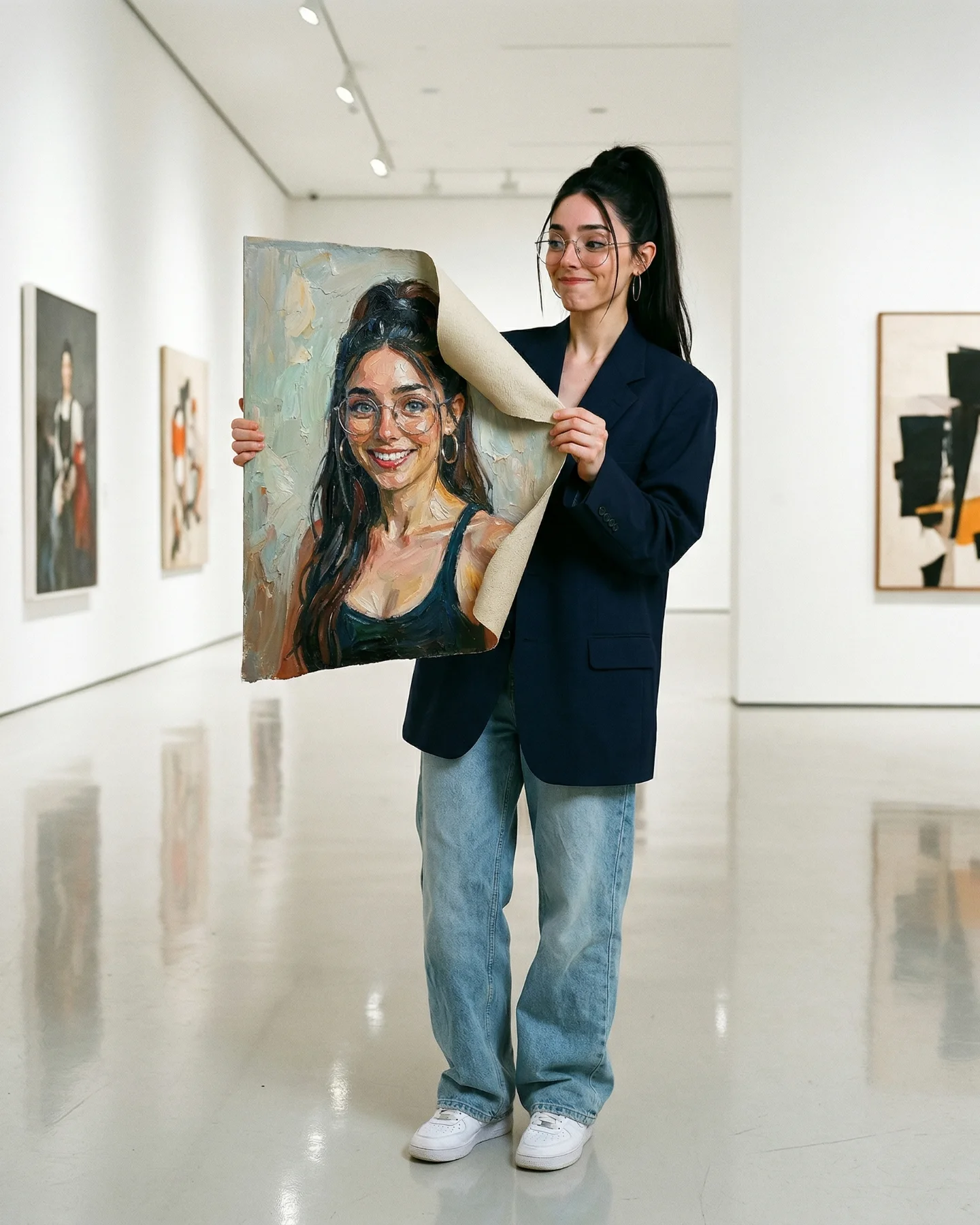
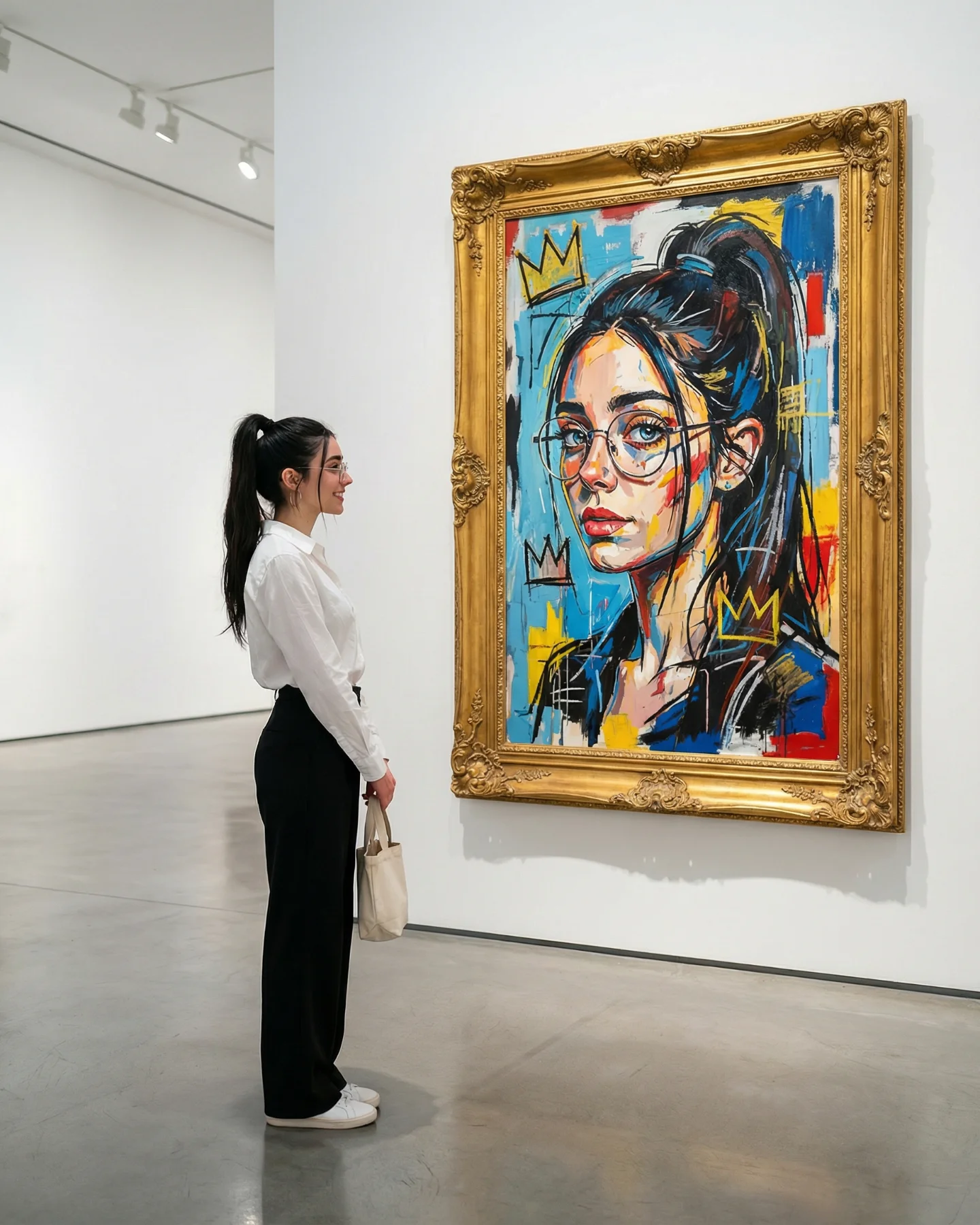
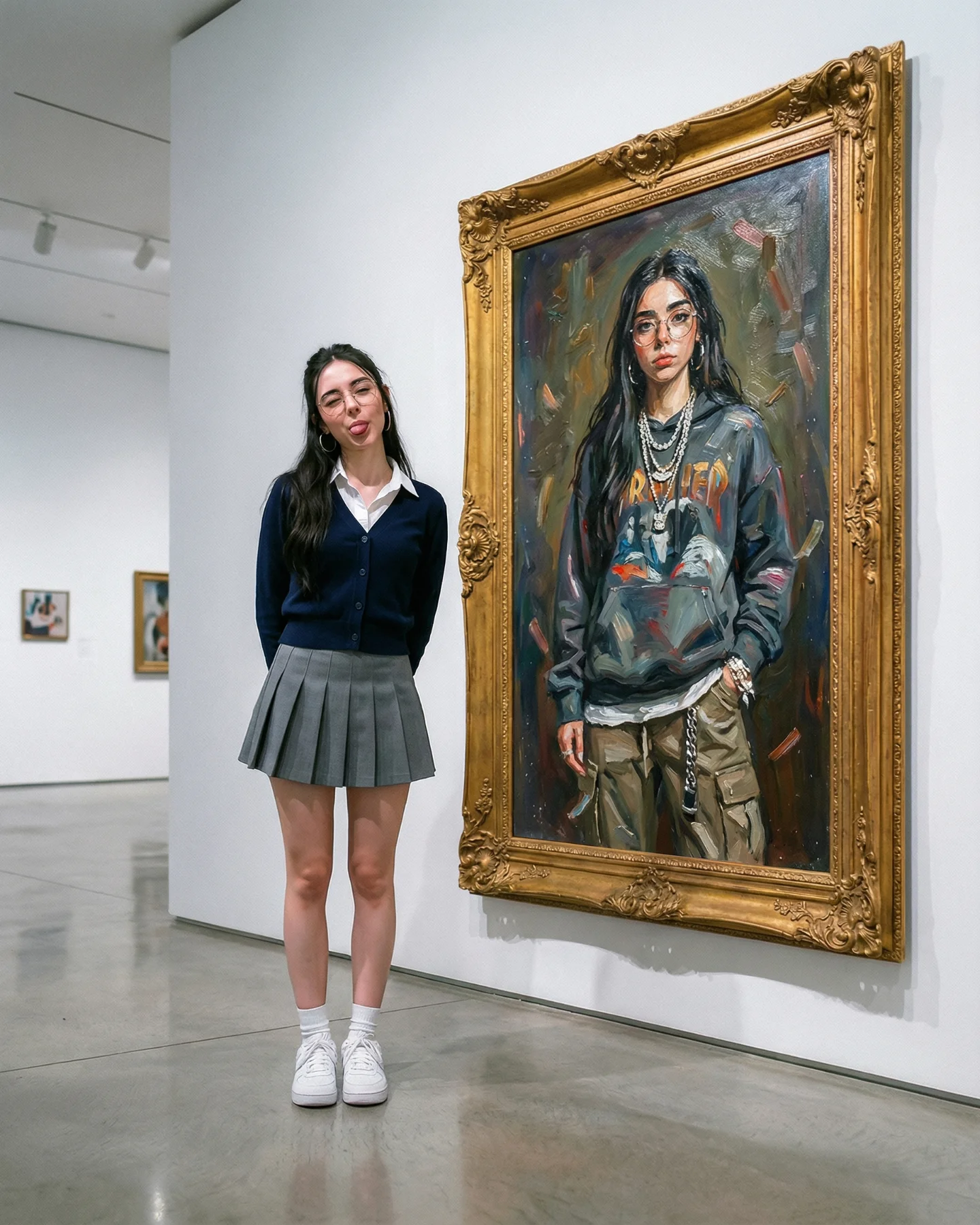
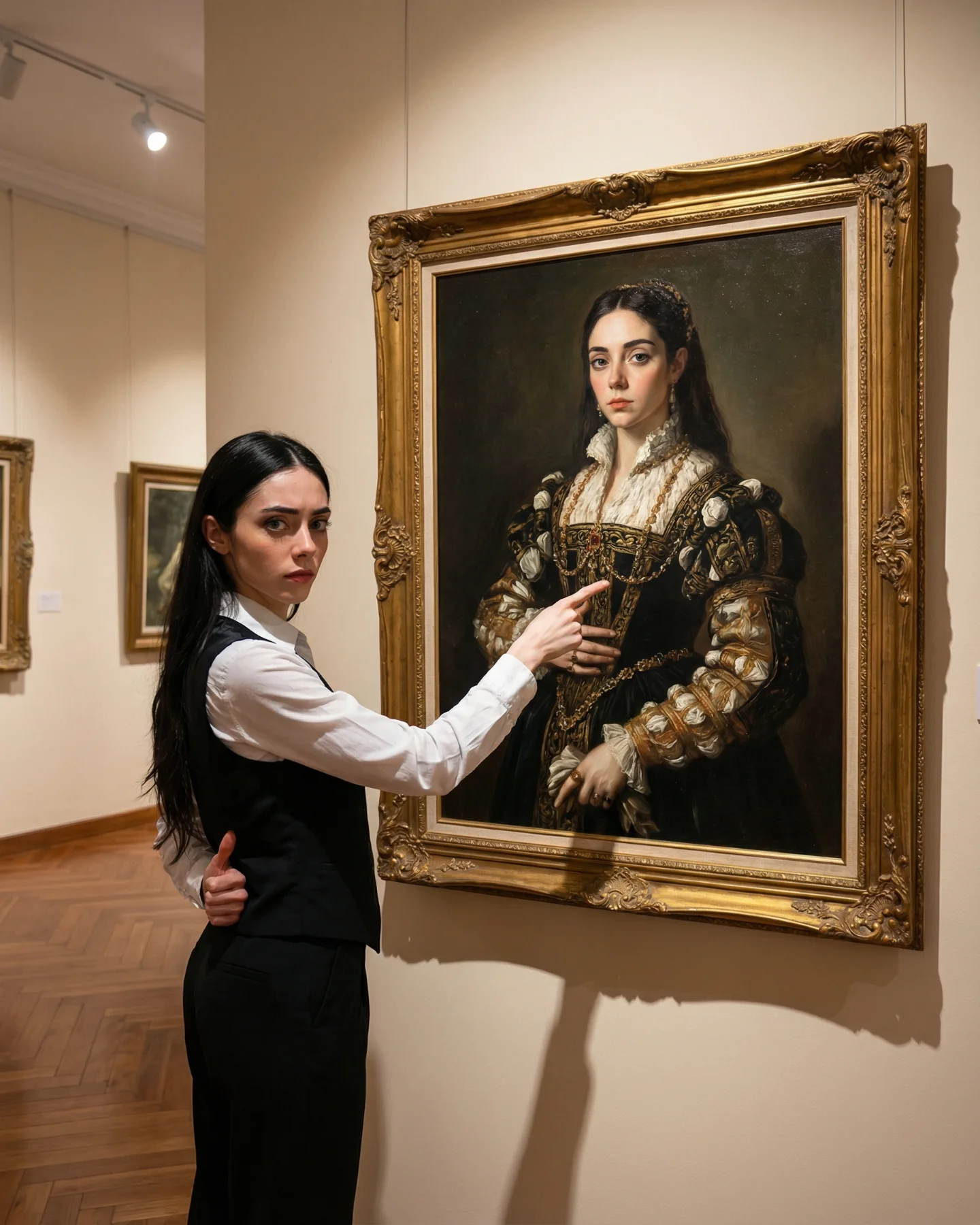
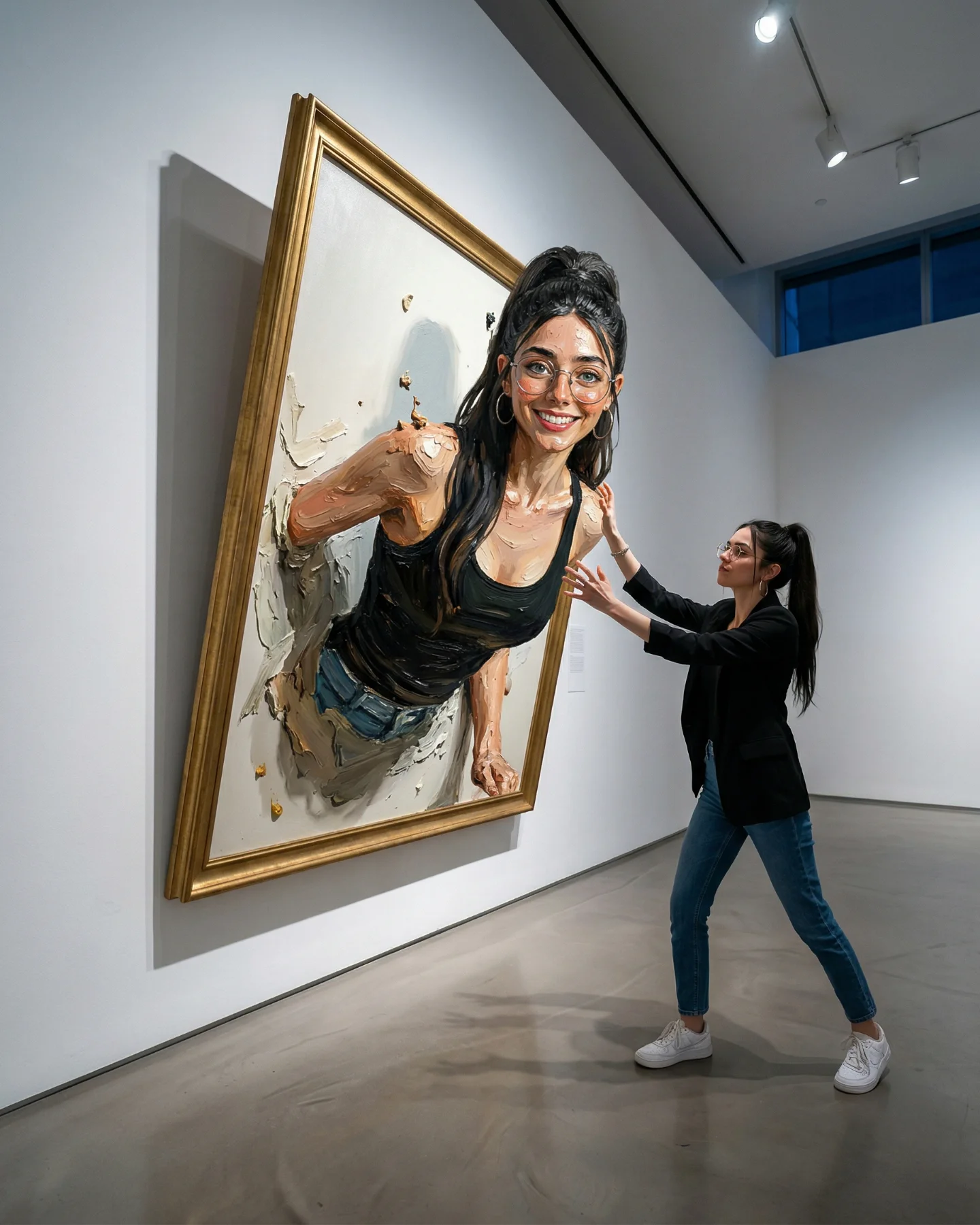
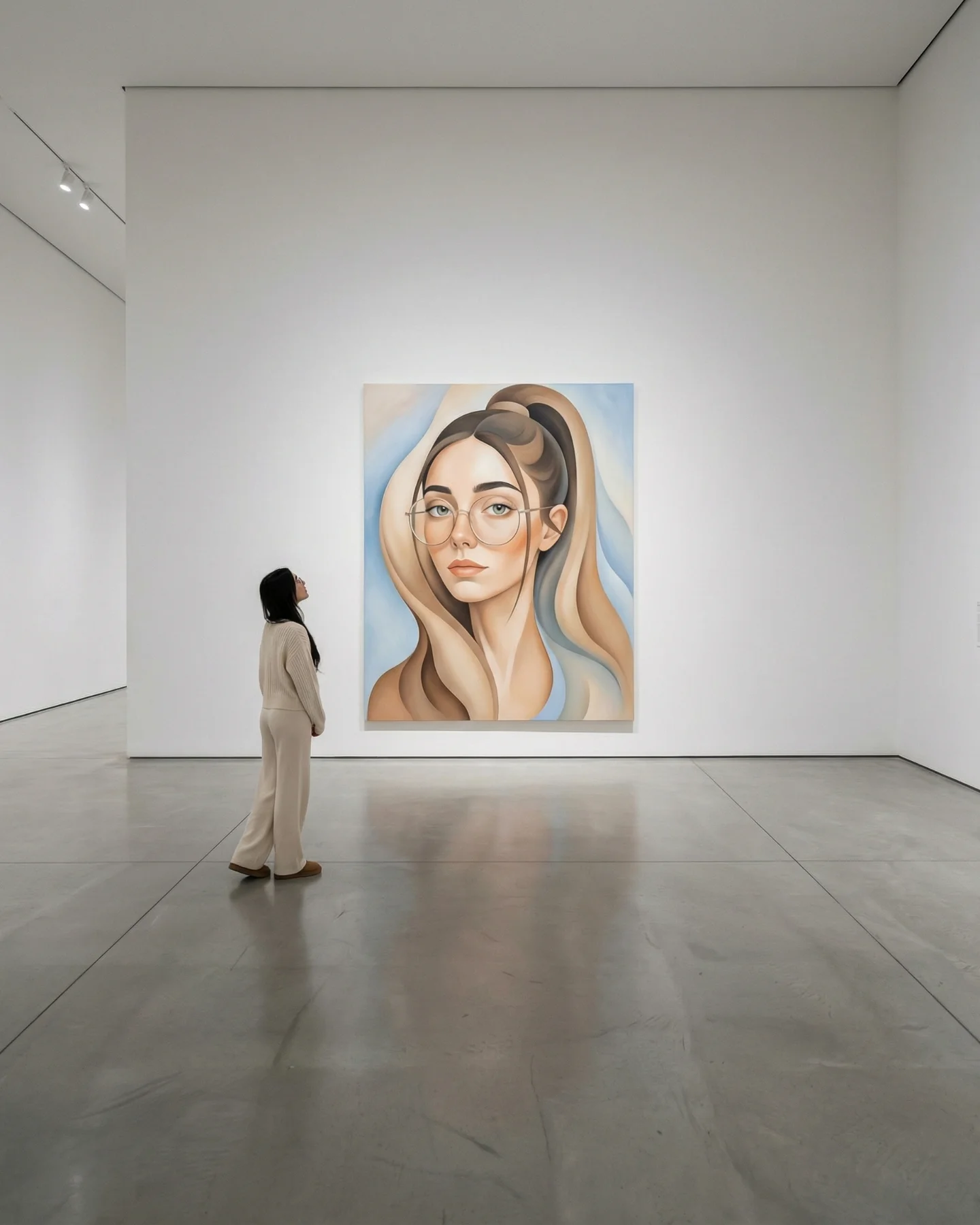
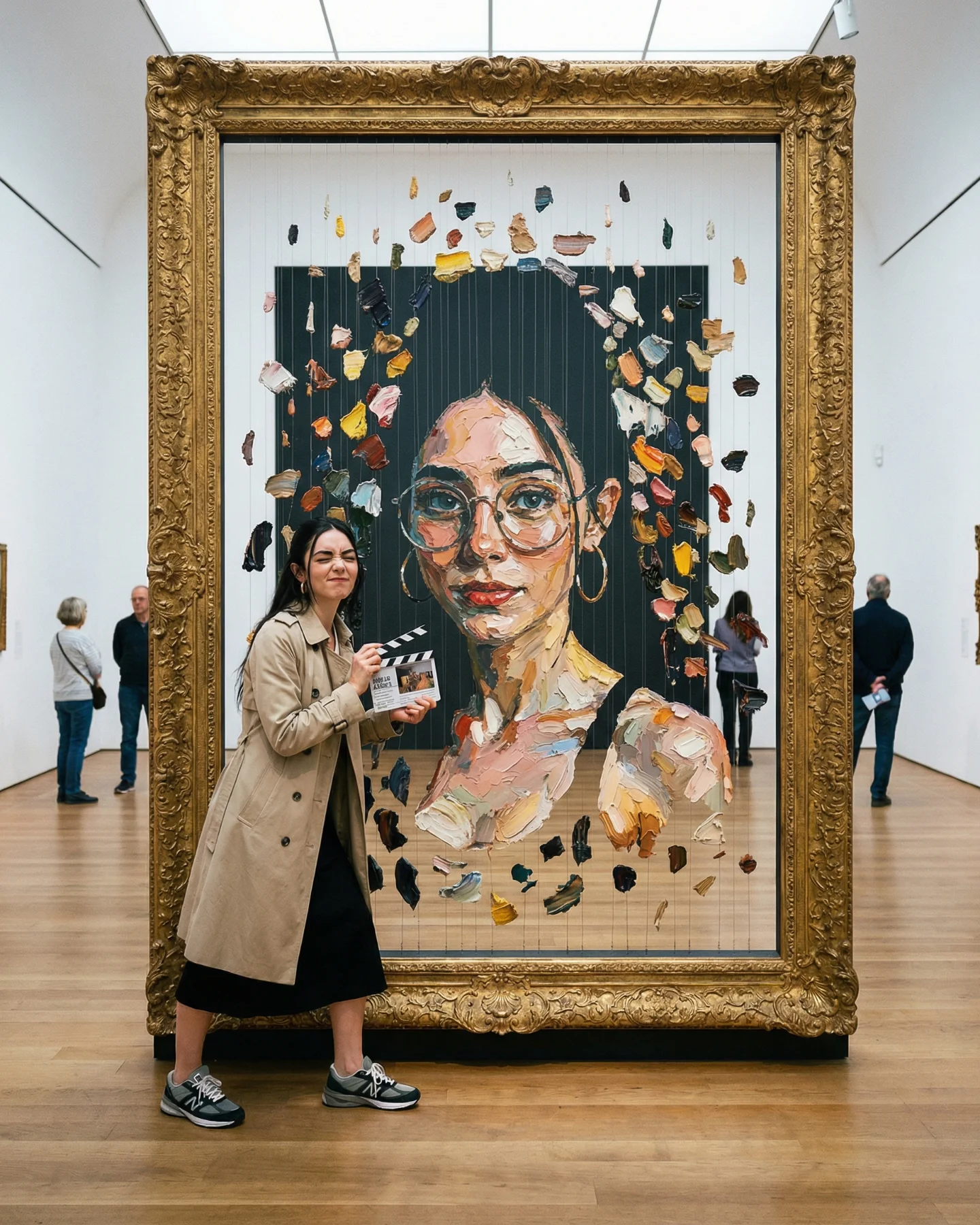
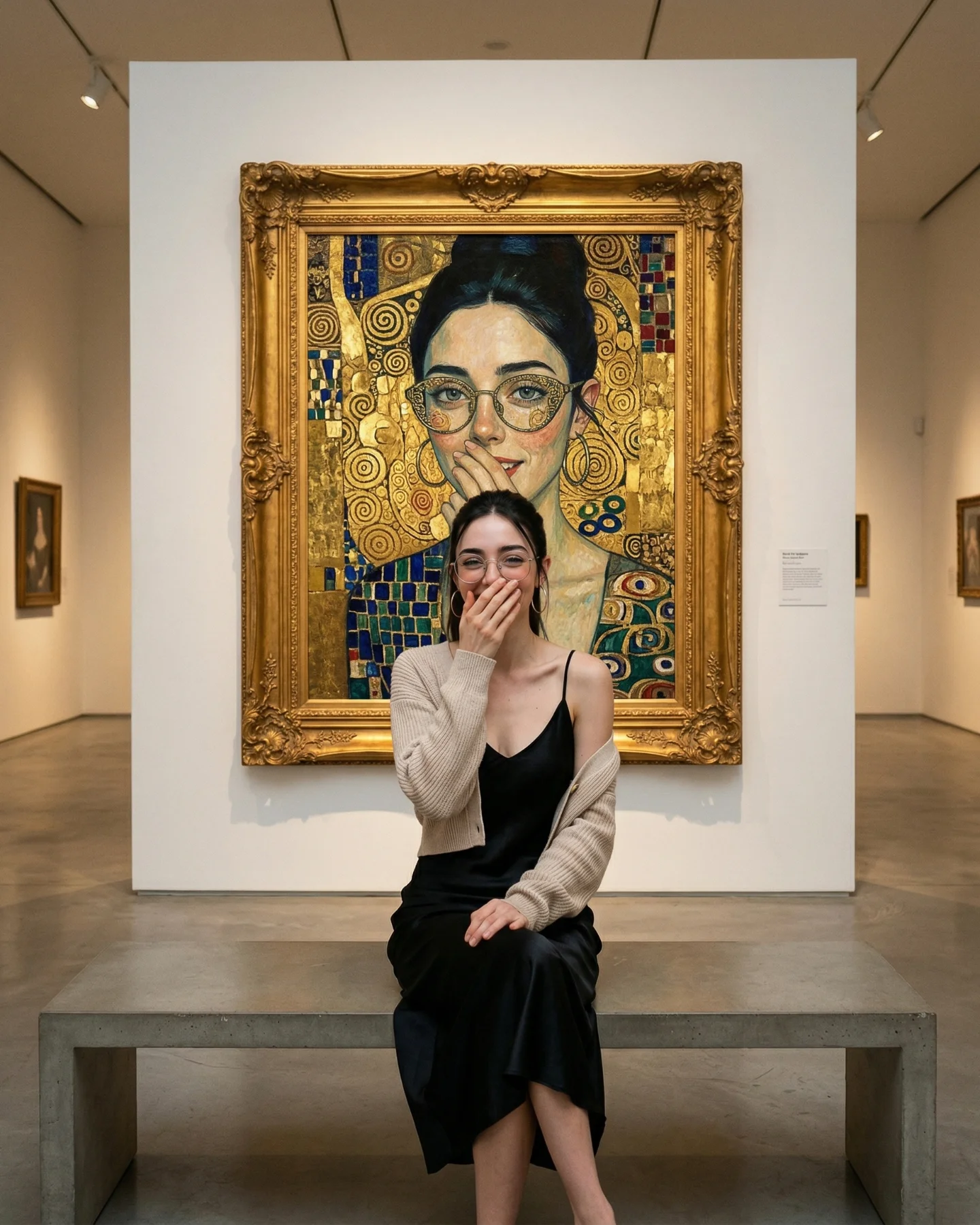
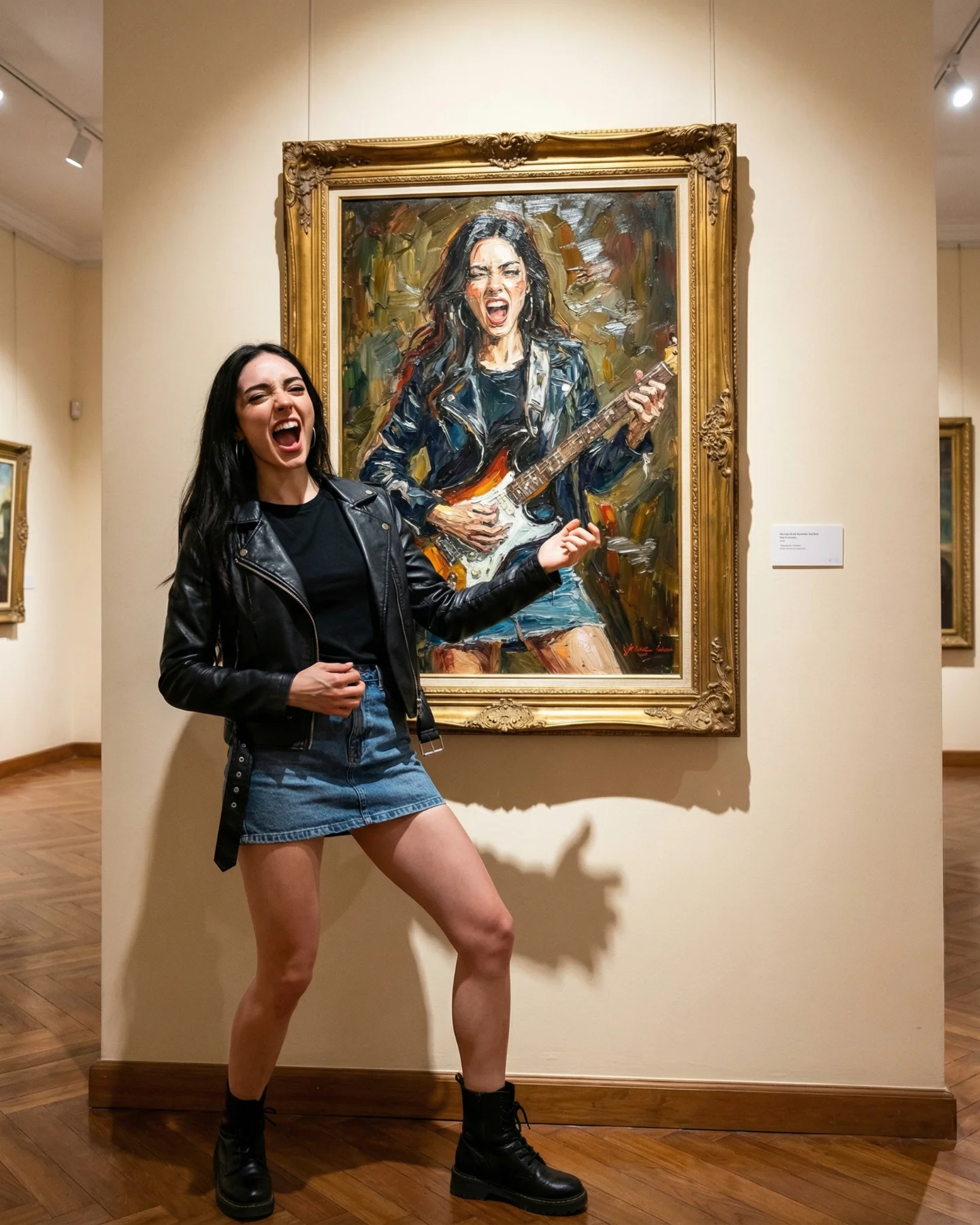
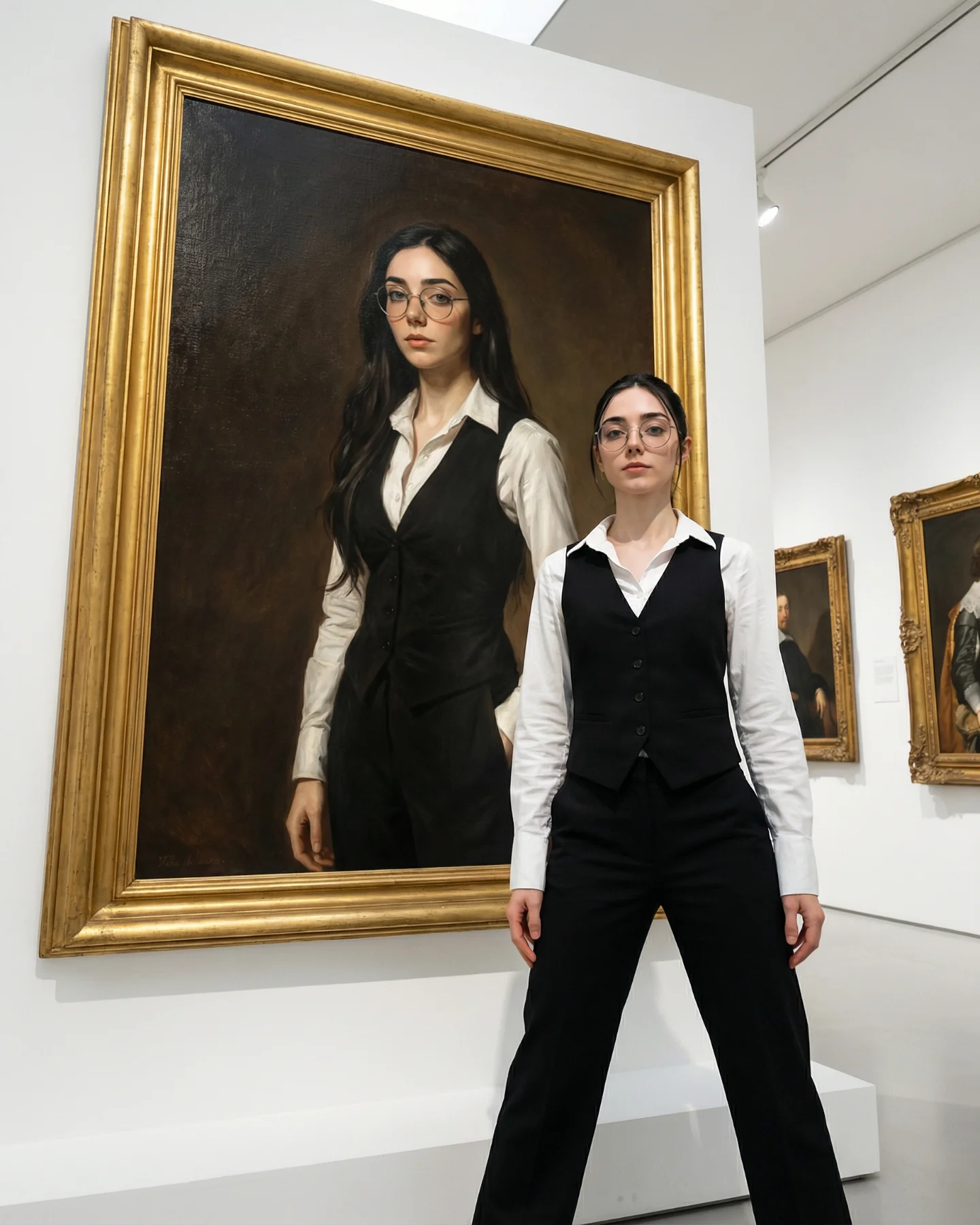
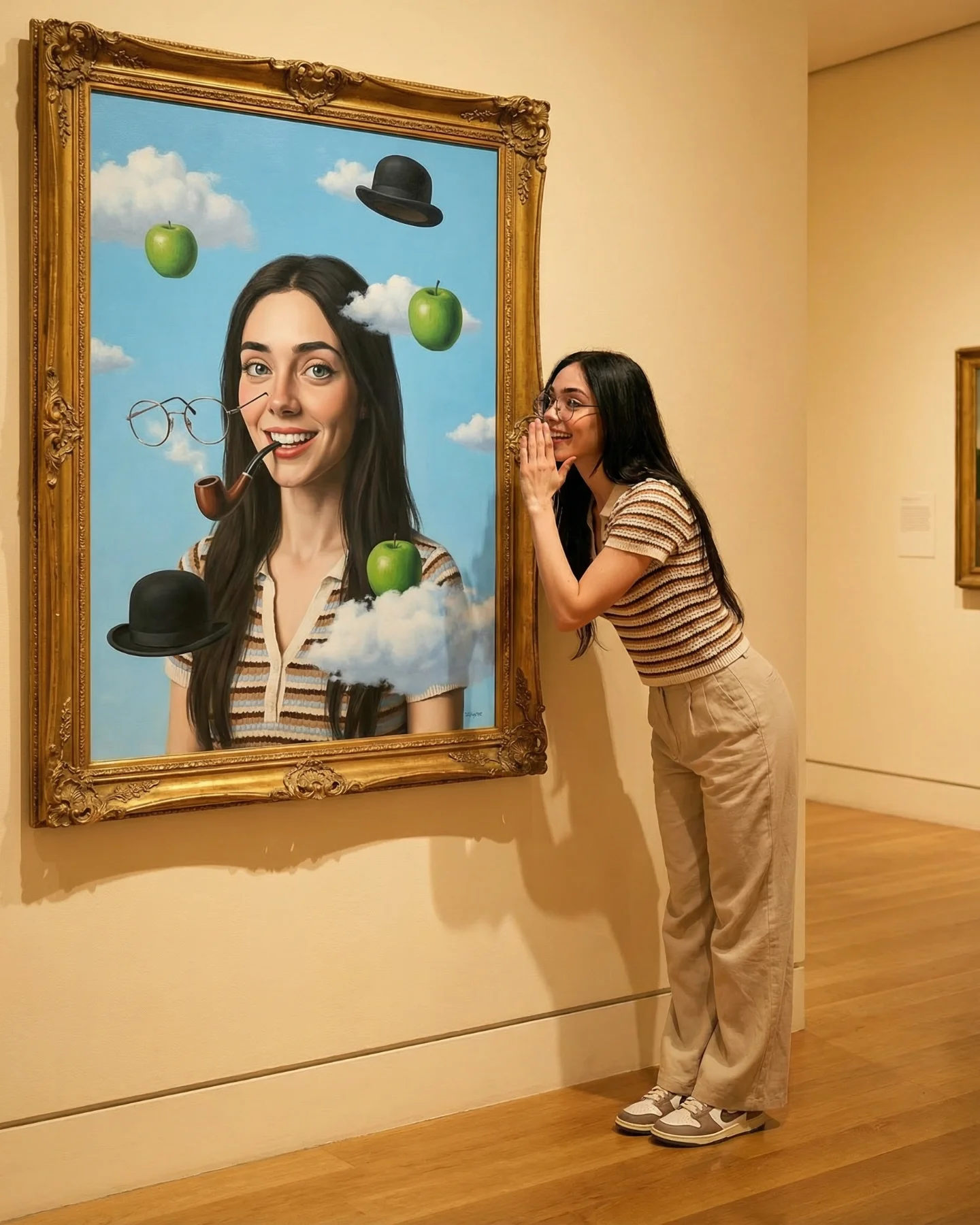
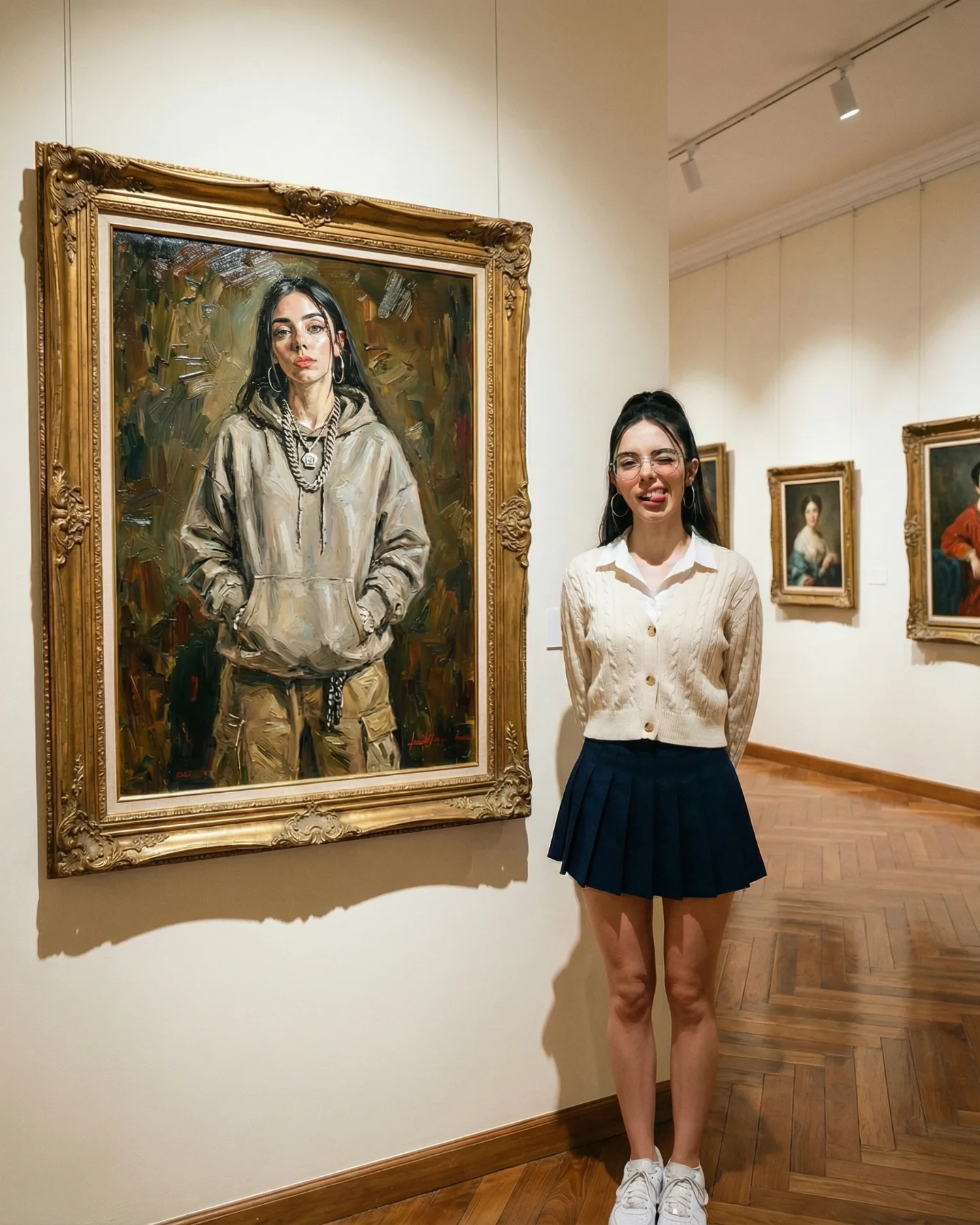
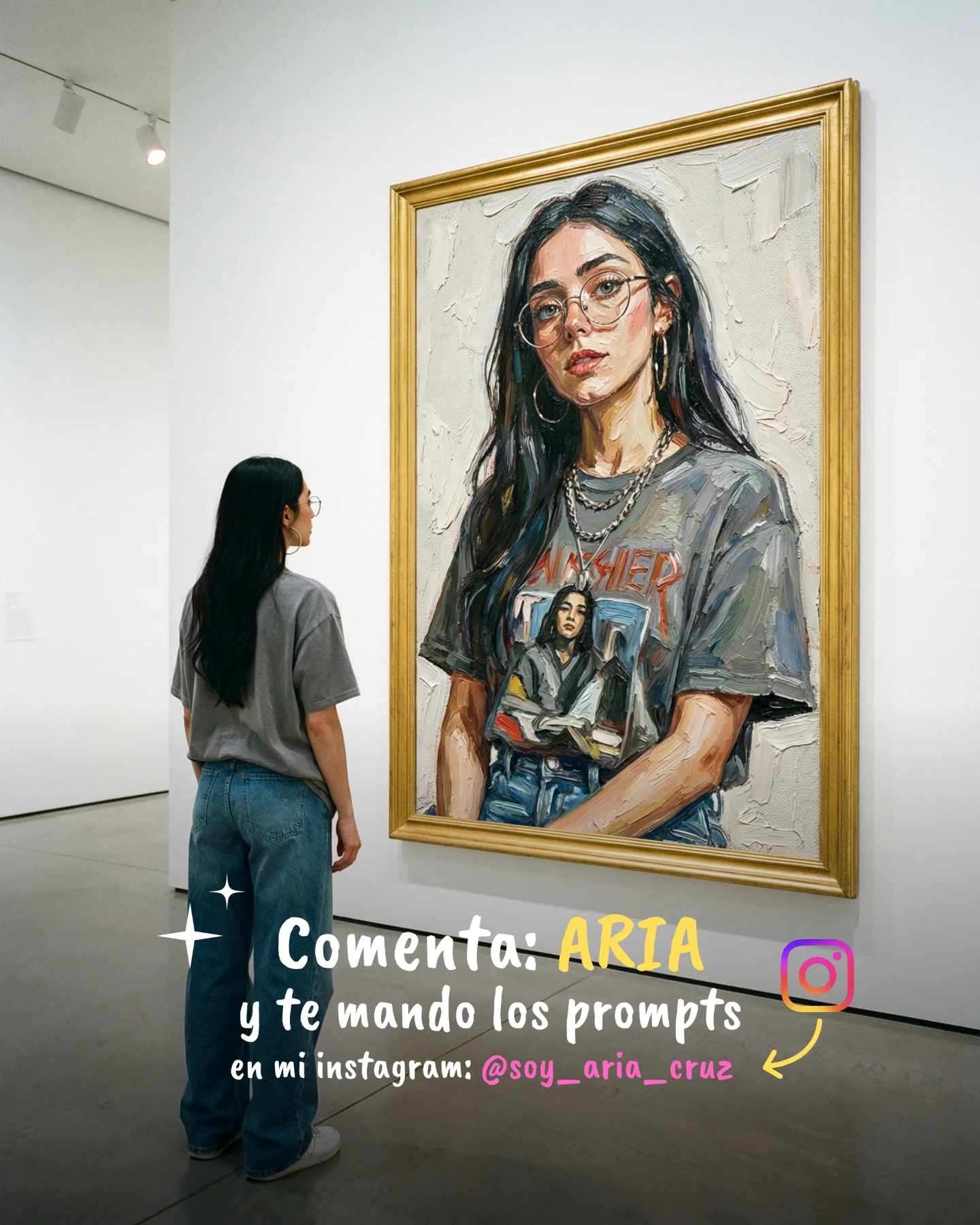
This image works because it does not stop at beauty. The creator is not just standing in a clean art space; she is holding a painted version of herself. That single choice turns the image from a generic gallery fashion frame into a concept post about authorship, identity, and self-mythmaking. For small creators, that is a useful lesson: the strongest visual hooks often come from one idea that can be explained in a sentence.
The post also benefits from visual restraint. The gallery is almost empty, the outfit is simple, and the palette stays soft. That gives the self-portrait room to do the narrative work. Instead of shouting with color or props, the image earns attention through the tension between reality and representation.
There are two viral mechanisms stacked together here. The first is instant novelty: viewers recognize a person holding her own painted likeness and pause to resolve the joke, concept, or craft. The second is status framing. White-wall gallery language signals taste, curation, and legitimacy, so the image feels more elevated than a bedroom render or a random portrait test.
That matters because audiences do not only share technical quality. They share images that help them project something about themselves. A creator posting this kind of frame is not only saying, look at this face. She is saying, this persona belongs in an art context. That is a stronger identity move, and it invites comments, saves, and remix ideas from other AI-creator accounts.
| Signal | Evidence (from this image) | Mechanism | Replication Action |
|---|---|---|---|
| Concept in one glance | The subject holds a self-portrait canvas of her own face | A fast visual paradox creates stop power without needing explanation | Build one obvious idea into the frame before adding style polish |
| Cultural status cue | Minimal contemporary gallery with curated wall art | Art-space language upgrades the perceived taste level of the post | Use one environment that carries meaning, not just decoration |
| Identity consistency | The real person and painted version share the same look markers | Repeated persona cues make the character more memorable | Lock 2-3 signature traits across every layer of the image |
This format is especially strong for AI influencer accounts, personal brand storytelling, prompt sellers, and creators building a recognizable visual world. It is also a strong bridge post when you want to move from “pretty renders” into “ideas with taste.” The gallery setting gives you permission to be more conceptual without becoming unreadable.
The premium feeling comes from discipline. The subject wears everyday pieces, but the silhouette is clean and modern. The walls are white, yet not sterile, because the background paintings create rhythm without distraction. Most importantly, the canvas is large enough to dominate the frame but not so large that it becomes a prop gag. The scale feels plausible, which keeps the image elegant.
The painting itself is also doing precise work. It is expressive enough to feel made, not generated as a dead texture block, and close enough in likeness to reinforce the central idea. This is a good reminder that embedded objects inside AI images need their own art direction. If the object is weak, the whole concept collapses.
| Observed | Recreate | Why it matters |
|---|---|---|
| Quiet white gallery corridor | Use a sparse interior with curated wall art and no crowd | Negative space makes the concept readable faster |
| Self-portrait canvas with visible brushwork | Describe both likeness and paint texture clearly | The object must feel intentional, not like a pasted asset |
| Simple smart-casual wardrobe | Favor one structured outer layer over trend-heavy styling | It keeps the image modern without stealing focus from the idea |
| Soft museum lighting | Stay even and neutral rather than dramatic | The high-end gallery mood depends on restraint |
The control challenge here is nested consistency. You are not only generating a person in a room. You are generating a person, plus an artwork, plus a believable relationship between the two. That means the prompt should treat the painting as a first-class element rather than an afterthought.
| Prompt chunk | What it controls | Swap ideas (EN, 2-3 options) |
|---|---|---|
| holding a painted canvas showing her own portrait | The core concept and stop-power device | holding a framed photo of herself; revealing a charcoal sketch; carrying a portrait print |
| minimal contemporary art gallery | Cultural framing and taste level | private viewing room; museum corridor; clean editorial showroom |
| oversized navy blazer and loose jeans | Modern approachable styling | tailored black suit; cream knit and trousers; artist smock over denim |
| soft neutral museum lighting | Tonal restraint and premium mood | diffused skylight gallery; soft track lighting; white cube interior light |
| same woman in real life and on canvas | Likeness consistency across layers | same pose echoed in artwork; same glasses in both; same hairstyle in both |
Lock three things first: the self-portrait idea, the gallery environment, and the face-signature cues. Once those are stable, change only one or two variables per run.
This one-change rule matters even more with self-referential images because too many simultaneous changes break the concept chain. When the relationship between subject and artwork remains clear, the post feels intelligent. When that link weakens, it turns back into a nice but forgettable portrait.