Arte Moderno 🎭🎨 Comenta "ARIA" y te paso todos los prompts 💌
Arte Moderno 🎭🎨 Comenta "ARIA" y te paso todos los prompts 💌
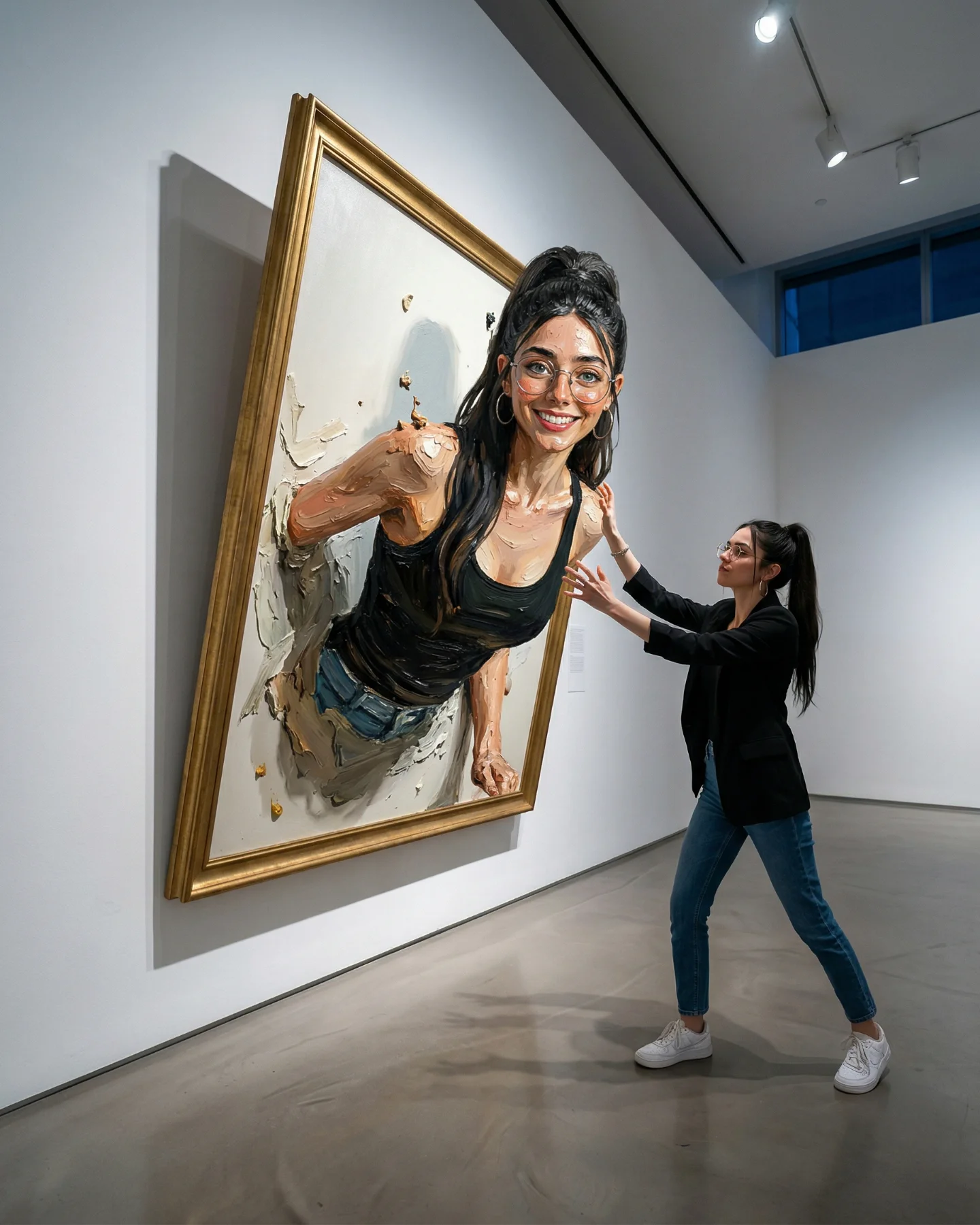
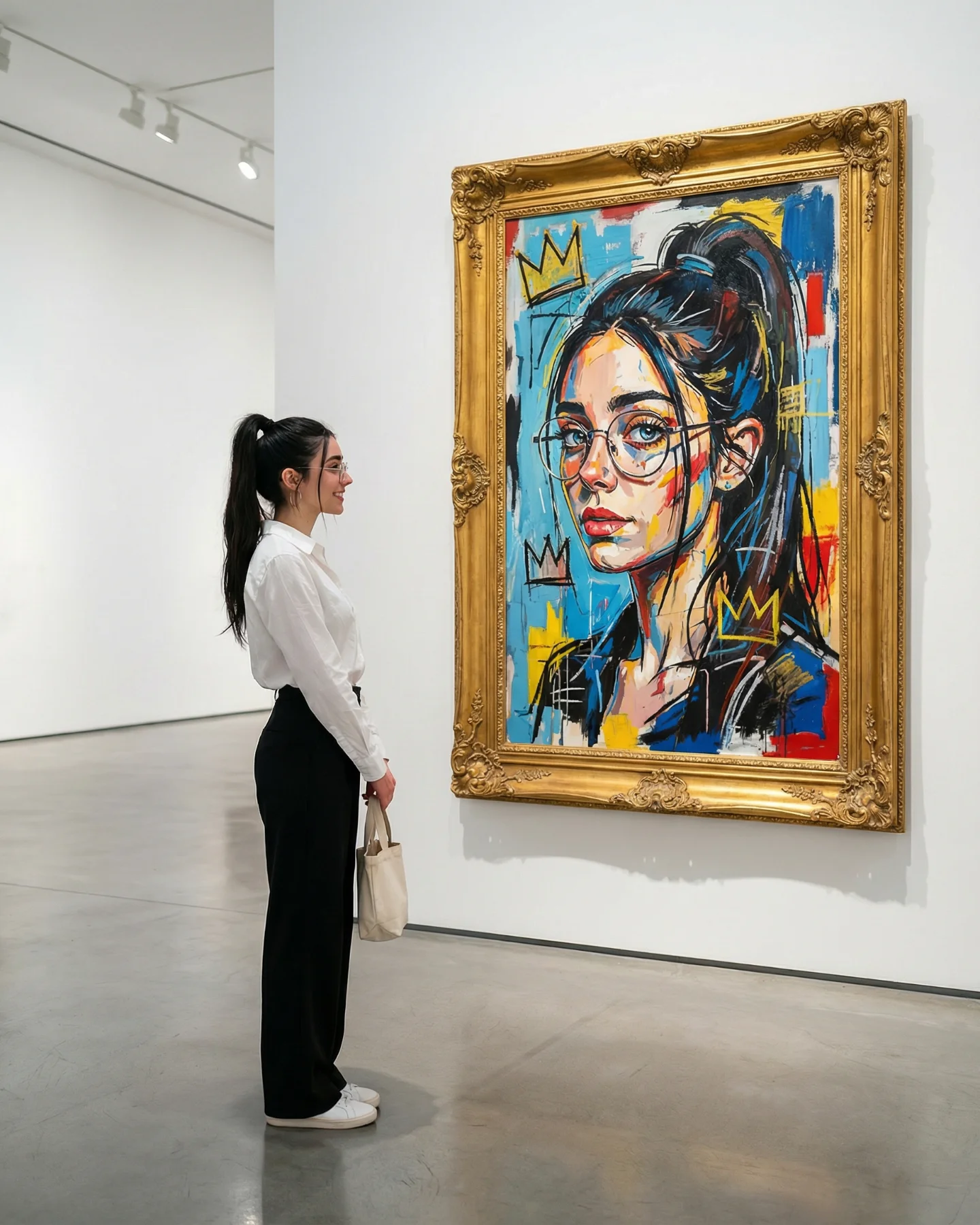
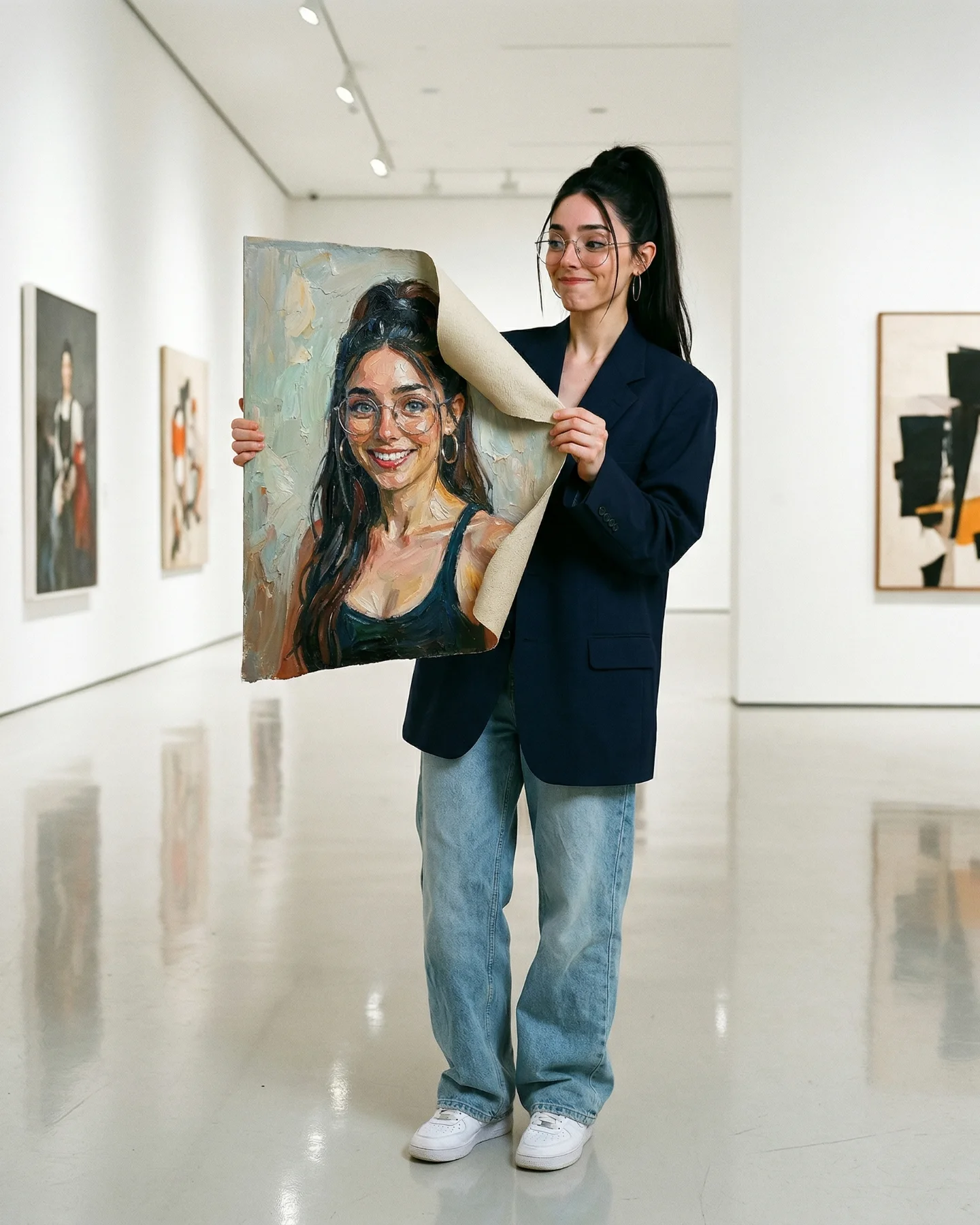
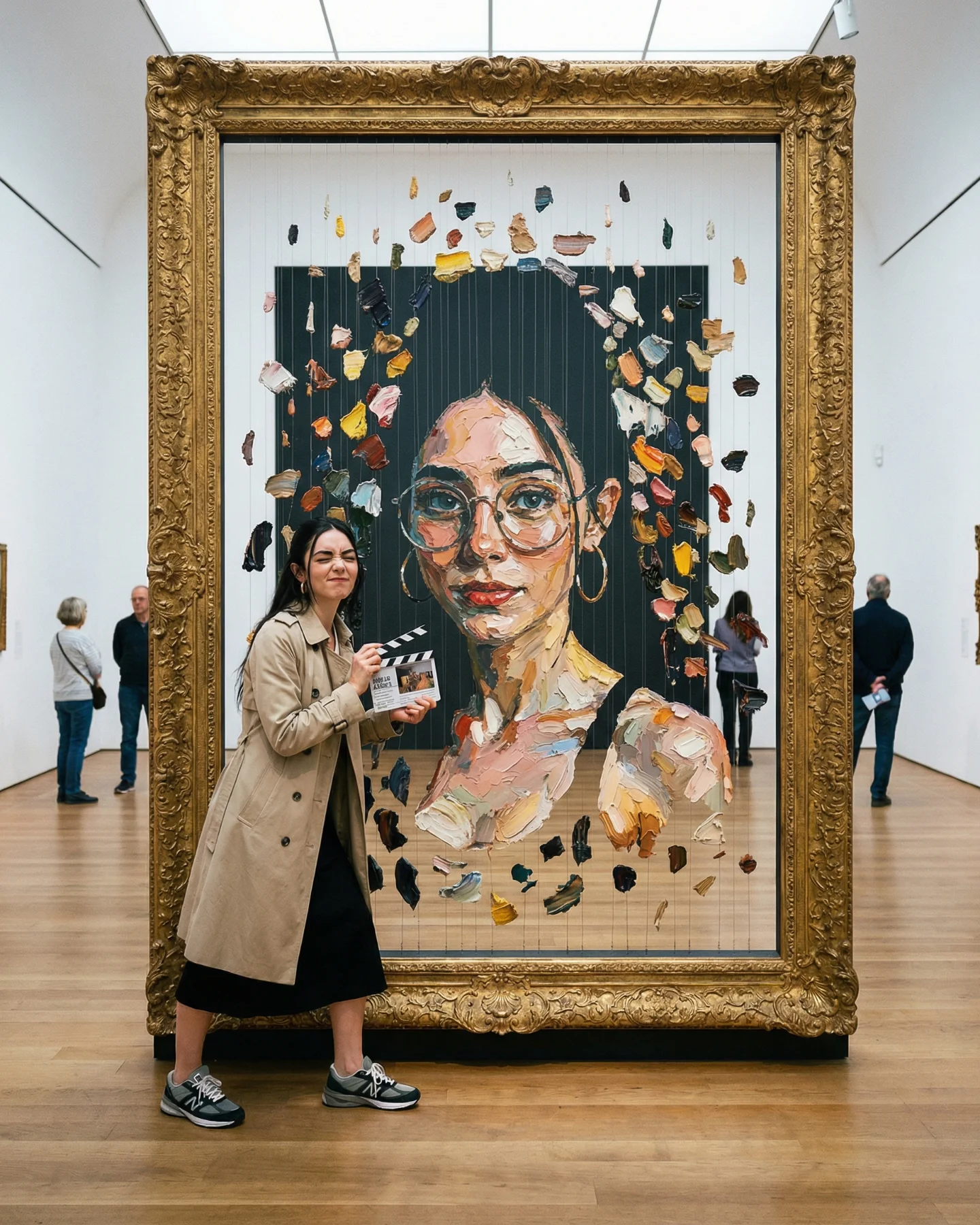
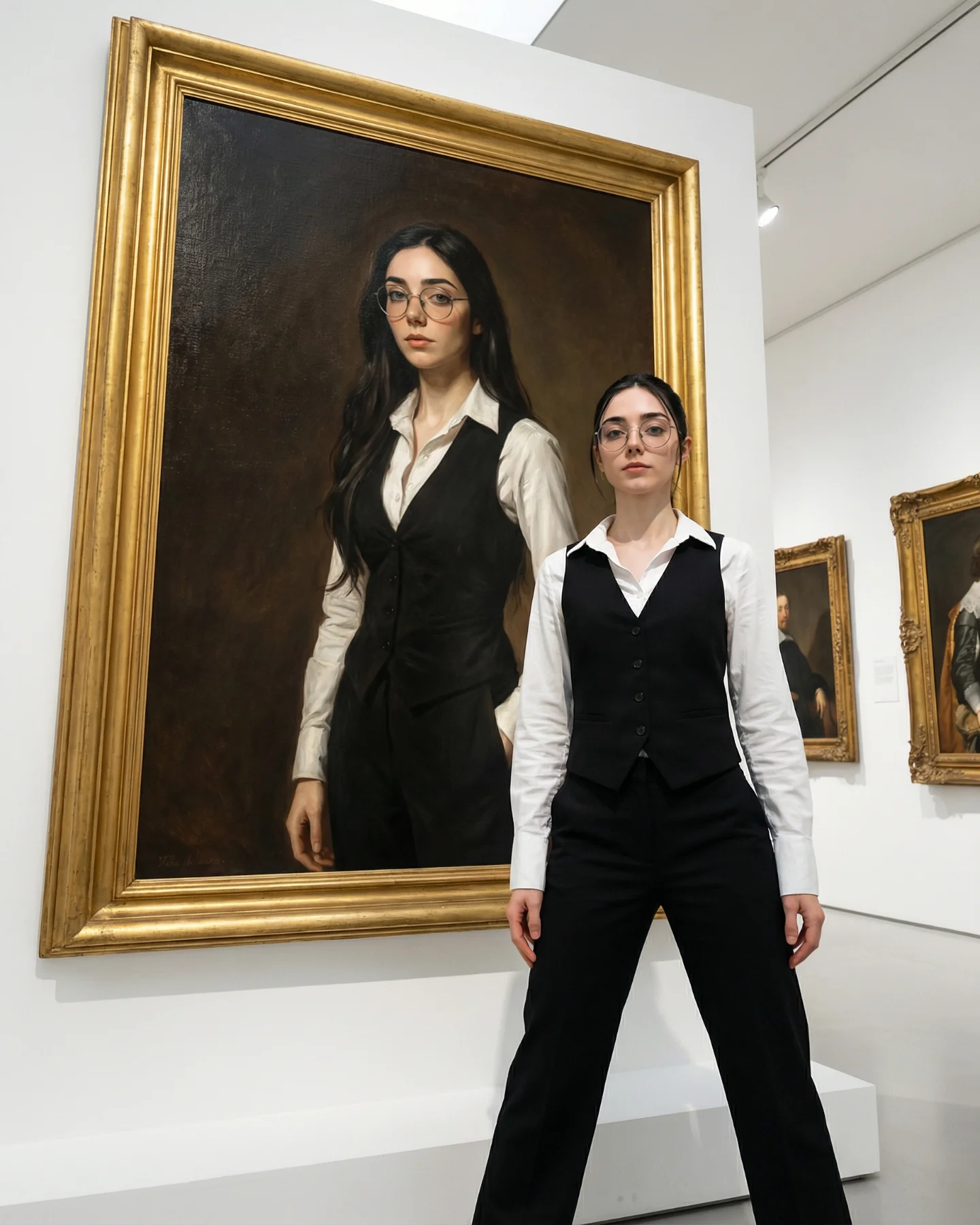
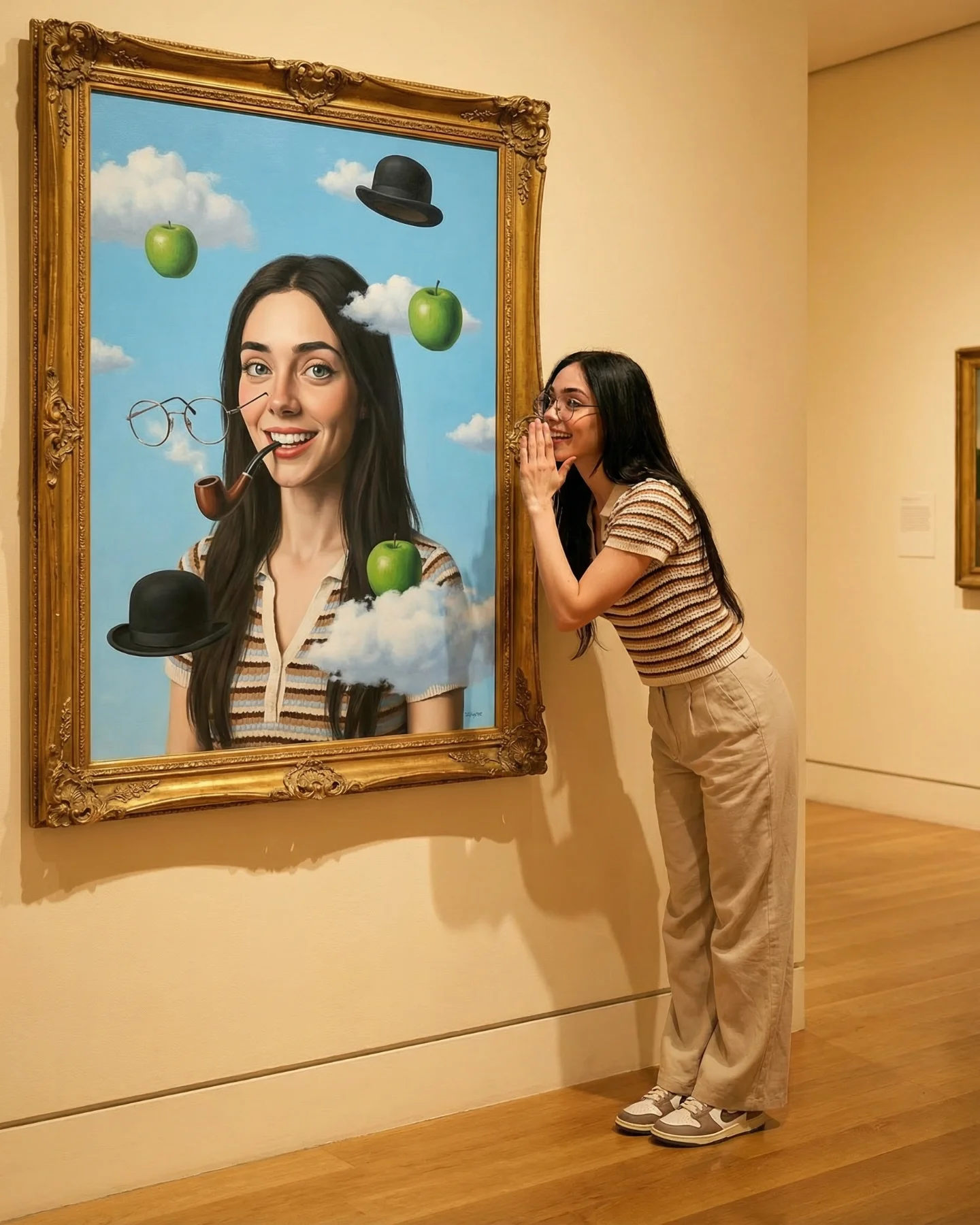
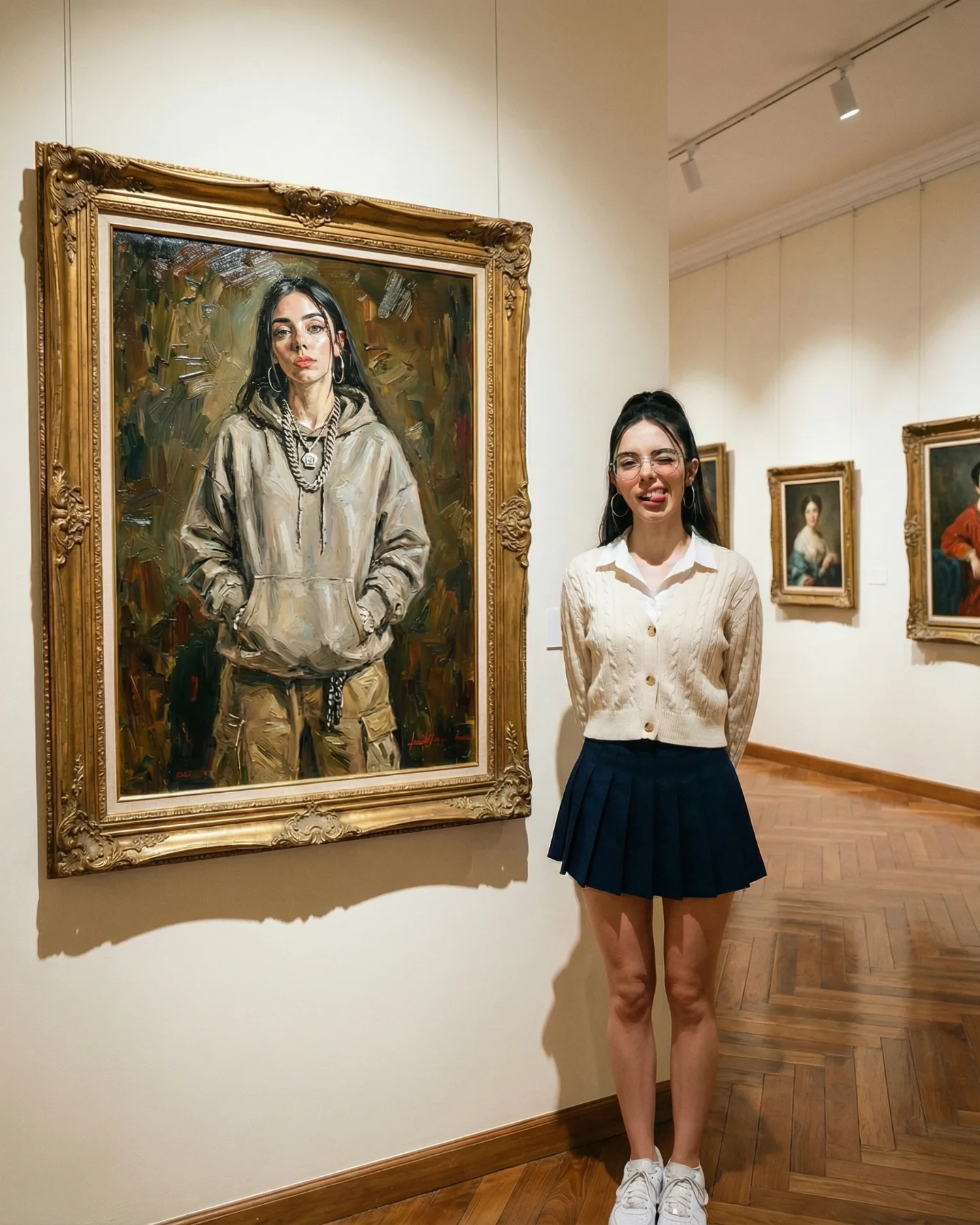
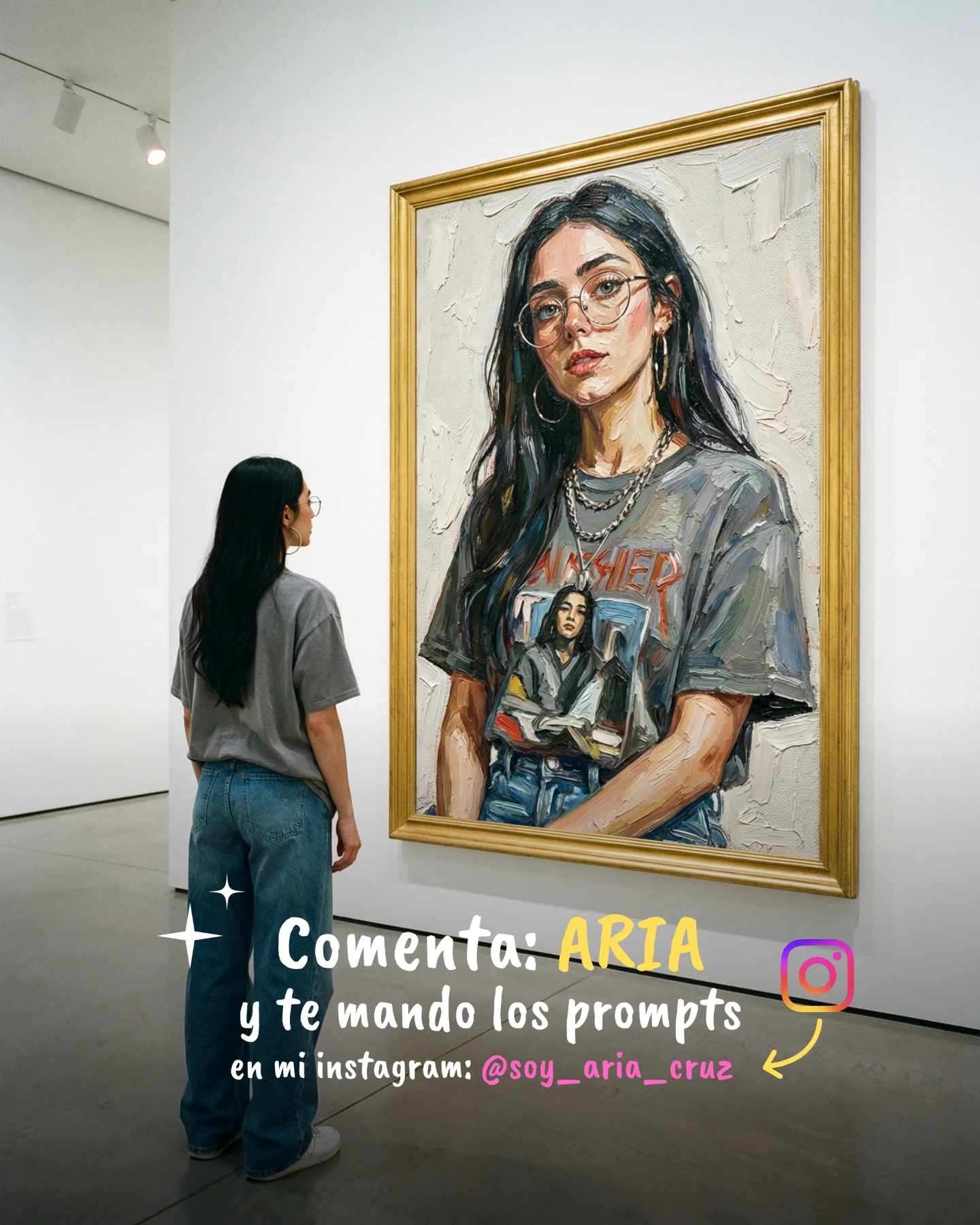
Some images go viral because they are loud. This one works for the opposite reason: it takes a quiet museum setup and inserts one impossible moment that your eye has to resolve. A woman is not just painted inside the frame. She is halfway out of it, smiling as if the wall has stopped behaving like a wall. The real figure on the floor is not reacting with fear or spectacle either. She reaches toward the artwork casually, which makes the illusion feel even more convincing.
That balance is what gives the post creator value. It is visually surprising, but still clean, elegant, and easy to read in one second on a phone screen. The white gallery background removes noise. The black clothing anchors both figures. The gold frame creates an instant art-world cue. And the hand interaction between the real woman and the painted woman gives the composition a human story instead of leaving it as a pure rendering trick.
The strongest part of this image is that it combines two familiar codes that normally do not belong together. On one side you have a polished contemporary gallery photo. On the other side you have a fantasy moment that feels almost physical because the paint texture is treated like sculpture. When those two languages meet, the brain spends an extra beat decoding the scene. That extra beat is often the difference between a passive impression and a stop.
There is also a creator lesson here: the image is not complicated, but it feels expensive. The room is nearly empty, the palette is disciplined, and the impossible effect is concentrated in one area. That means the viewer remembers the core idea instantly. For social media, memorability is usually stronger than complexity. This image proves that one sharply executed contradiction can outperform a busier concept.
| Signal | Evidence (from this image) | Mechanism | Replication Action |
|---|---|---|---|
| Instant visual contradiction | A smiling woman appears to break through a framed painting into real space | The viewer pauses to resolve whether the scene is sculpture, painting, or edit | Lock one impossible event into an otherwise believable environment |
| Clean readability | White walls, gray floor, two dark outfits, one gold frame | Low clutter makes the illusion legible at thumbnail size | Reduce background objects and keep the palette to three dominant values |
| Human interaction | The standing woman reaches toward the emerging figure | Contact creates narrative and emotional accessibility | Add a physical interaction cue instead of showing the artwork alone |
| Premium cultural framing | The museum setting signals taste, curation, and share-worthy novelty | People are more likely to reshare work that feels both artistic and technically clever | Stage the concept in a gallery, showroom, or similarly elevated space |
{beauty muse} breaking out of {framed artwork} in {gallery space} with {brand prop}{editorial model} emerging from {classical frame} while {second model} interacts in {minimal museum}{fantasy character} pushing through {ornate painting} inside {modern gallery} with {observer interaction}The first thing worth noticing is the discipline of the palette. Almost everything is built from white, gray, black, denim blue, skin tone, and a restrained gold accent. That restraint is important because the illusion itself is already high-signal. The image does not need more decoration.
The second strength is directional realism. The overhead gallery spots create believable shadow shapes on the wall and floor, which helps the impossible subject feel physically present. If the lighting were flatter or more cinematic, the scene would drift toward poster art. Instead, it stays close to documentary photography, and that realism is what sells the trick.
Another subtle win is the composition ratio between installation and participant. The painting takes up most of the left side, so the illusion remains the hero. The standing woman on the right acts as scale reference, narrative trigger, and proof of environment. Without her, the image would still look clever, but it would lose much of its social energy.
| Observed | Why it matters |
|---|---|
| Large vertical frame dominates the left two-thirds of the image | Creates instant hierarchy and keeps the concept readable in a feed |
| Directional soft overhead spotlights | Ground the illusion in believable physical space |
| Two-to-three core color families with one gold accent | Prevents visual noise and supports a premium editorial feel |
| Subject interaction at arm's length | Turns the scene from pure effect into a shareable story moment |
| Clean architectural background with visible floor depth | Adds realism, scale, and room for the eye to travel |
If you want to recreate this look consistently, think in control blocks rather than one giant poetic prompt. The image works because several technical choices are locked at the same time: environment cleanliness, frame position, tactile texture, and believable interaction.
| Prompt chunk | What it controls | Swap ideas (EN, 2–3 options) |
|---|---|---|
| Framed figure breaking through the canvas | The core impossible effect and thumbnail hook | woman emerging from painting; dancer pushing through framed artwork; portrait stepping out of canvas |
| Minimal white-cube gallery interior | Clean stage, premium context, and background discipline | contemporary museum hall; modern exhibition room; minimalist art gallery |
| Gold frame + tactile impasto texture | Art-world credibility and sculptural realism around the tear | ornate gold frame; brushed brass frame; classical museum frame |
| Second person interacting with the artwork | Narrative, scale reference, and human warmth | visitor reaching forward; curator touching the frame; model reacting with open hands |
| Neutral overhead track lighting | Believable realism and controlled contrast | museum spotlights; soft ceiling track lights; clean commercial gallery lighting |
| 28mm wide editorial camera feel | Spatial depth and enough room for both figures | 28mm documentary photo; 24mm interior editorial shot; wide-angle gallery photograph |
hyper-realistic woman emerging from a framed oil painting in a modern white gallery, tactile impasto texture, gold frame, second woman reaching toward the artwork, neutral museum spotlights, polished concrete floor, wide editorial composition, photorealThis kind of image improves fastest when you converge in layers instead of changing everything at once. The baseline should lock the illusion before you chase styling.
Only change one or two variables per run. If you alter wardrobe, lighting, camera distance, and frame shape in the same iteration, you will not know which adjustment improved or damaged the illusion.
That sequence matters because the image wins on structure first and styling second. Once the breakout illusion reads instantly, almost every aesthetic choice becomes easier to optimize.