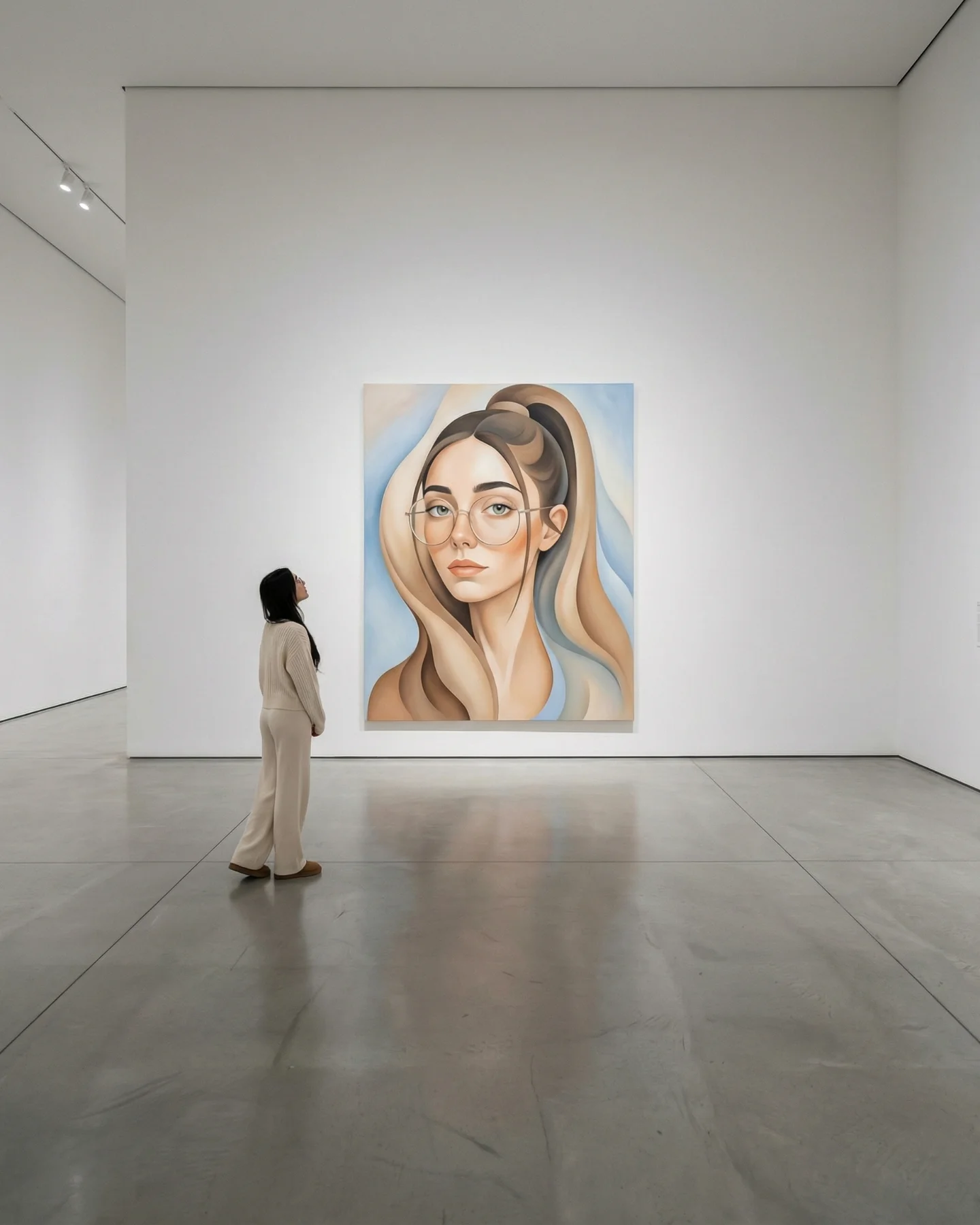
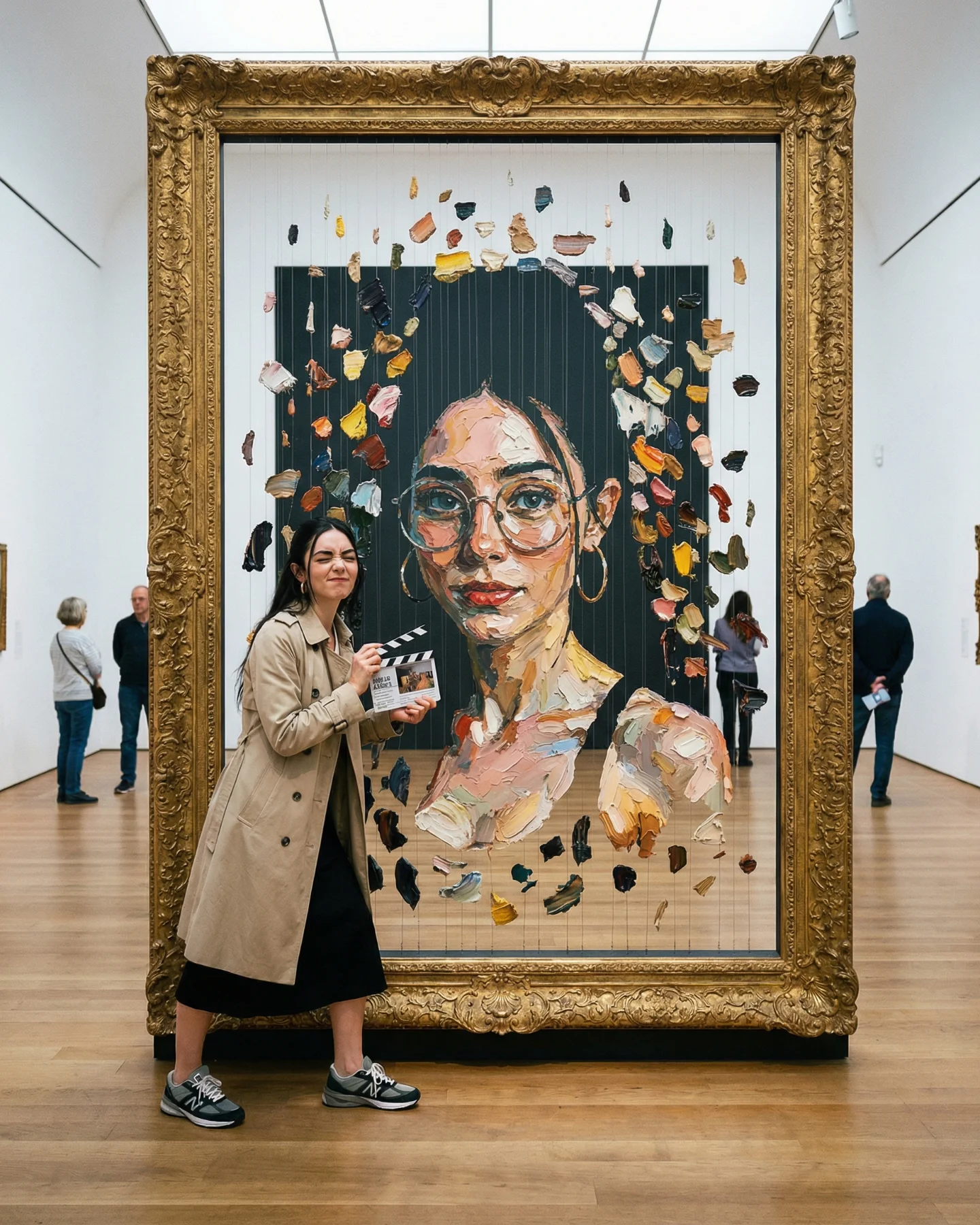
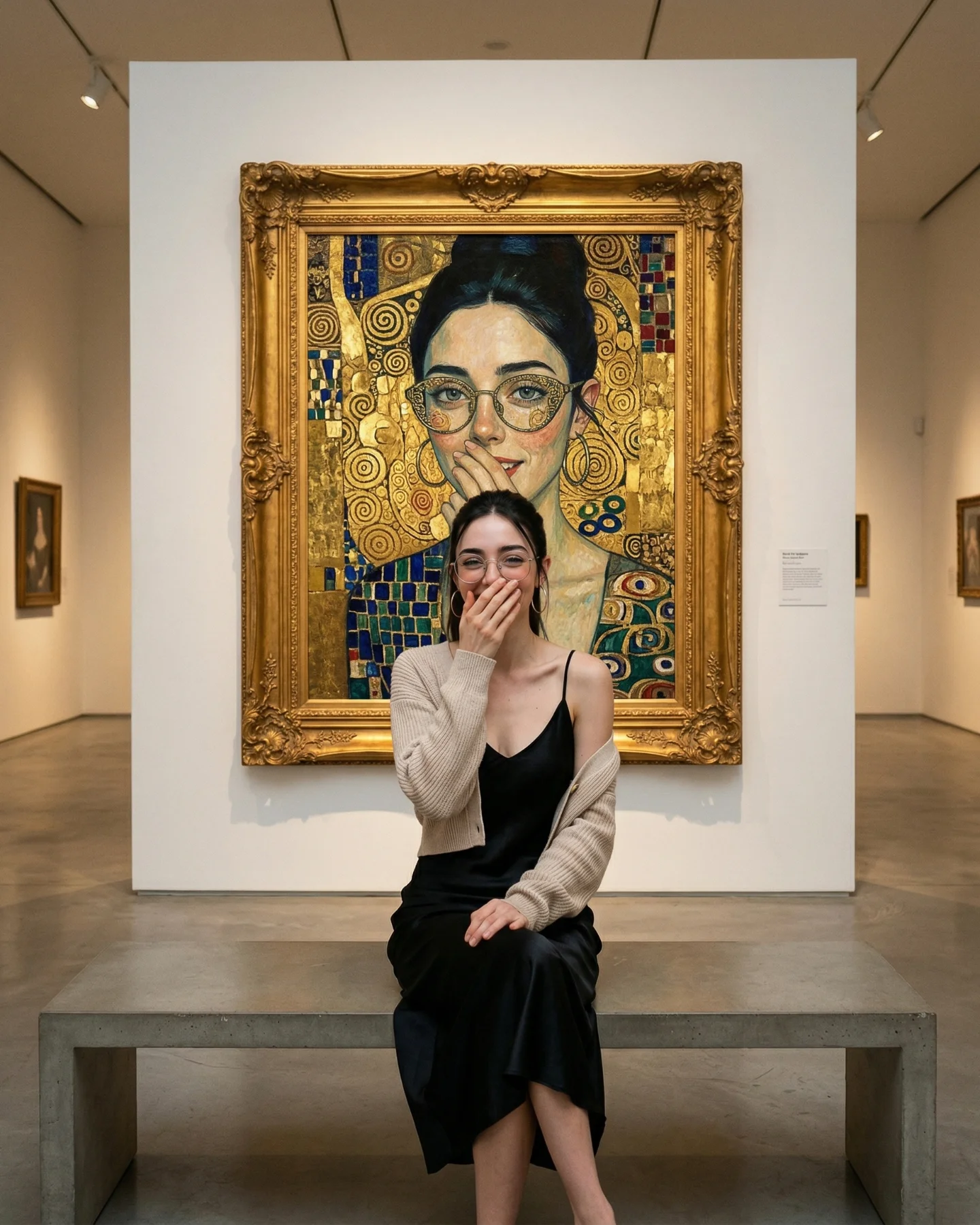
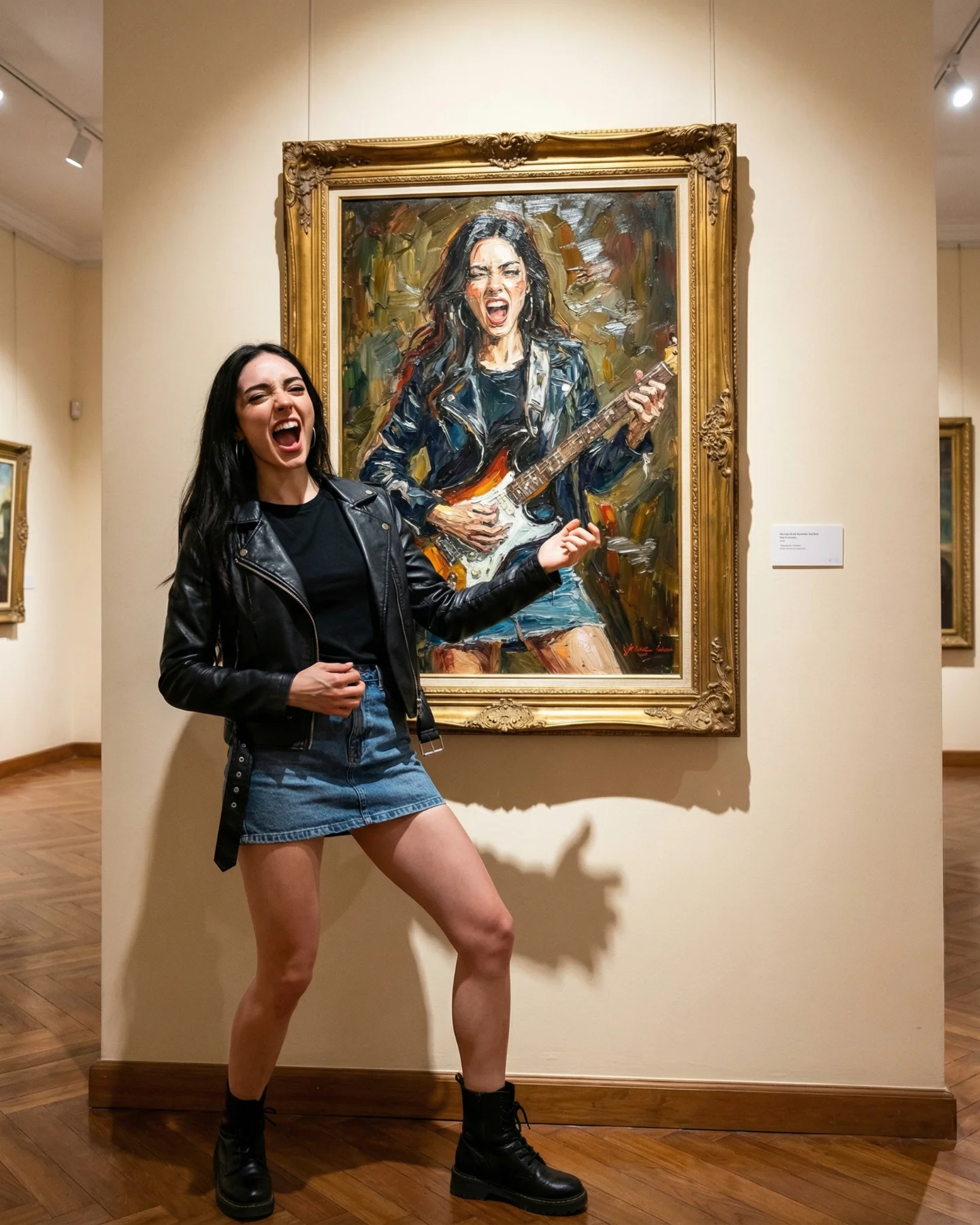
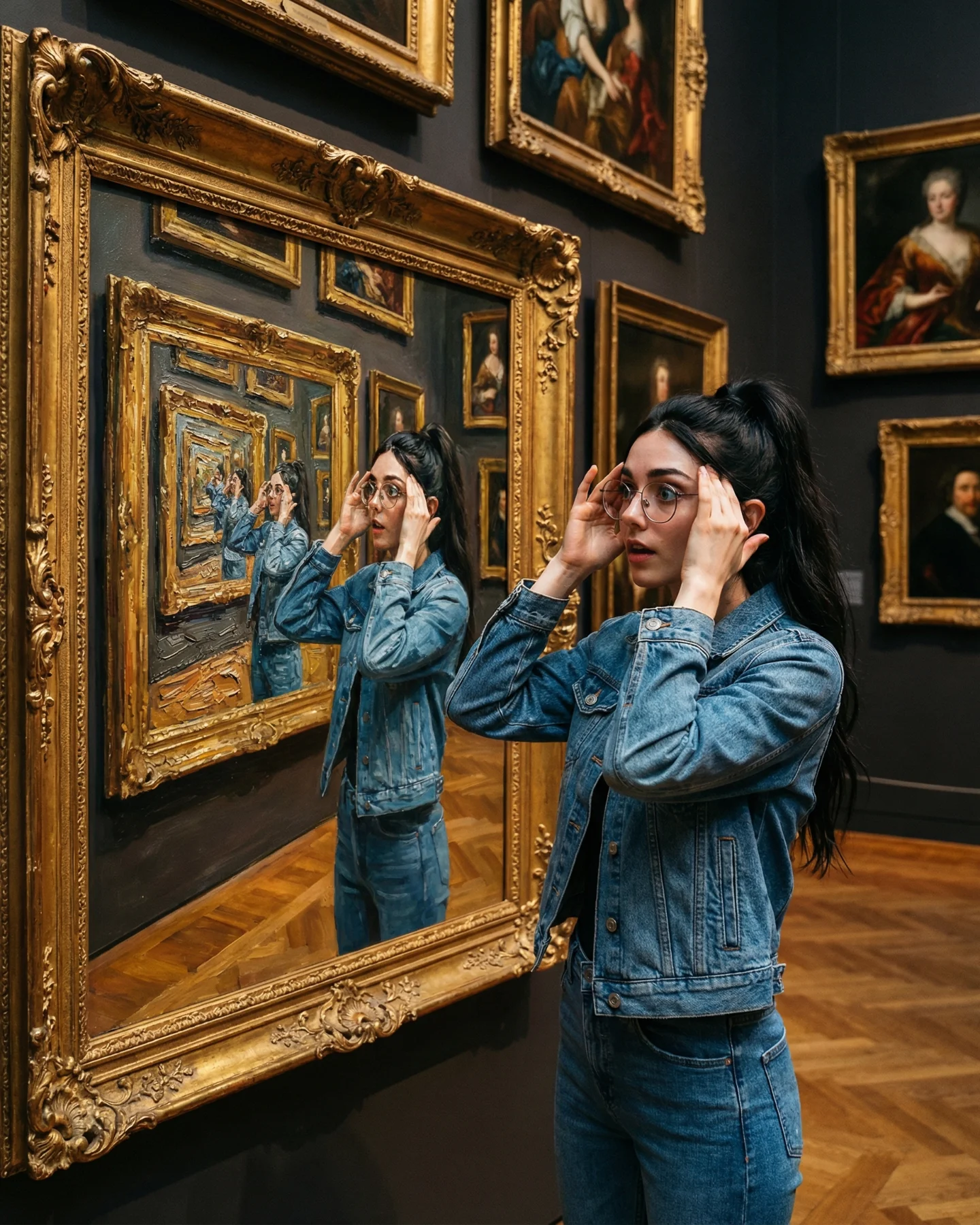
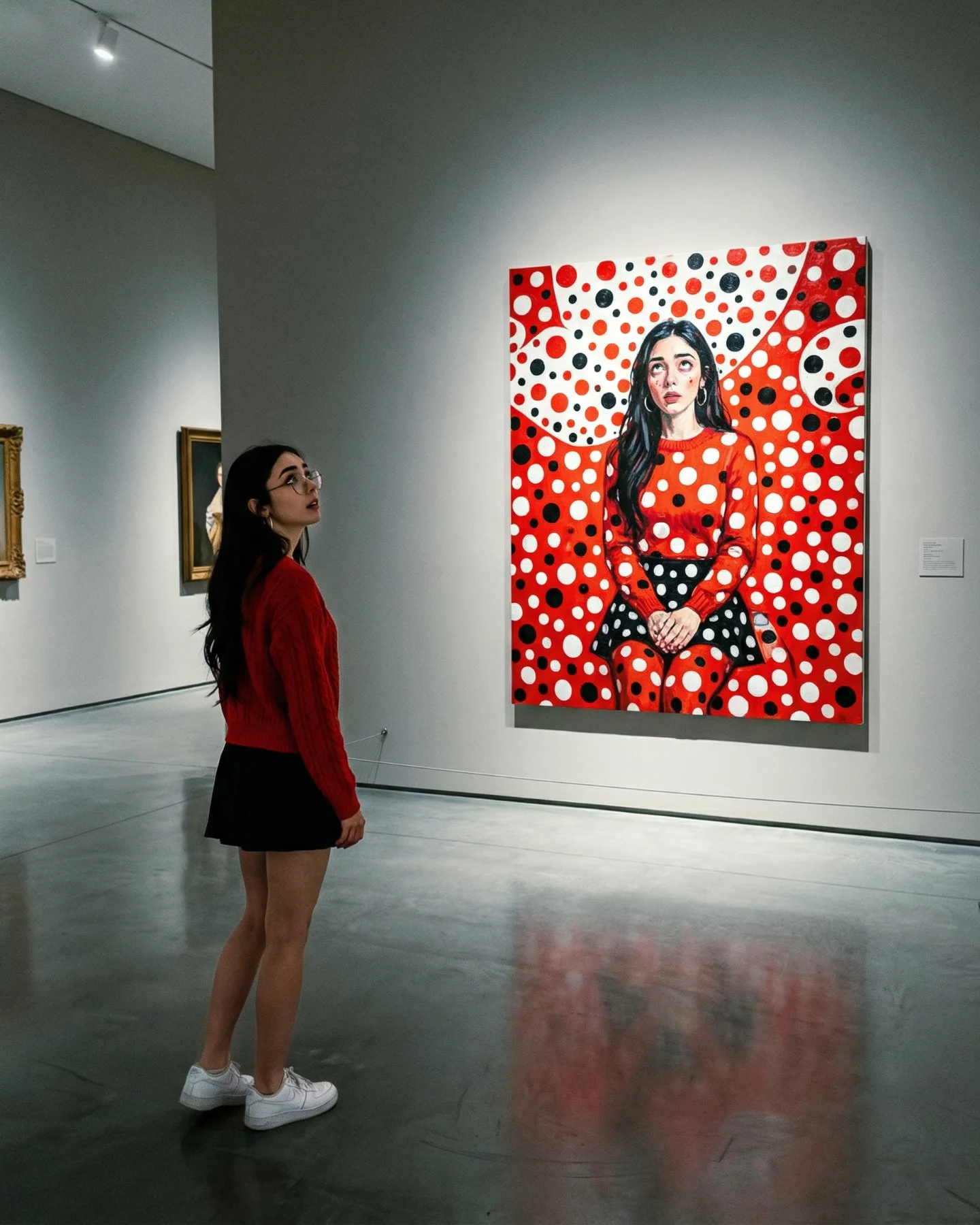
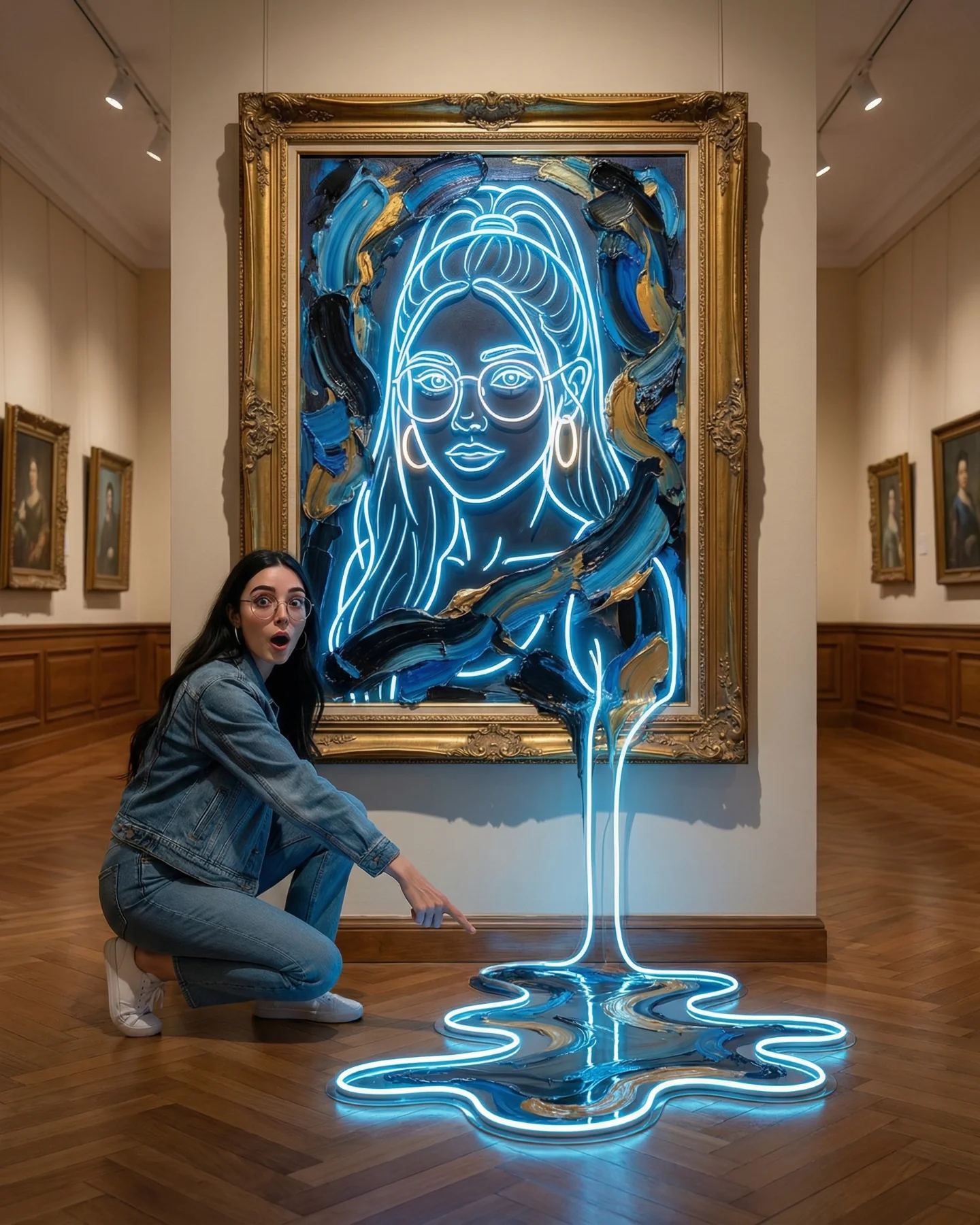
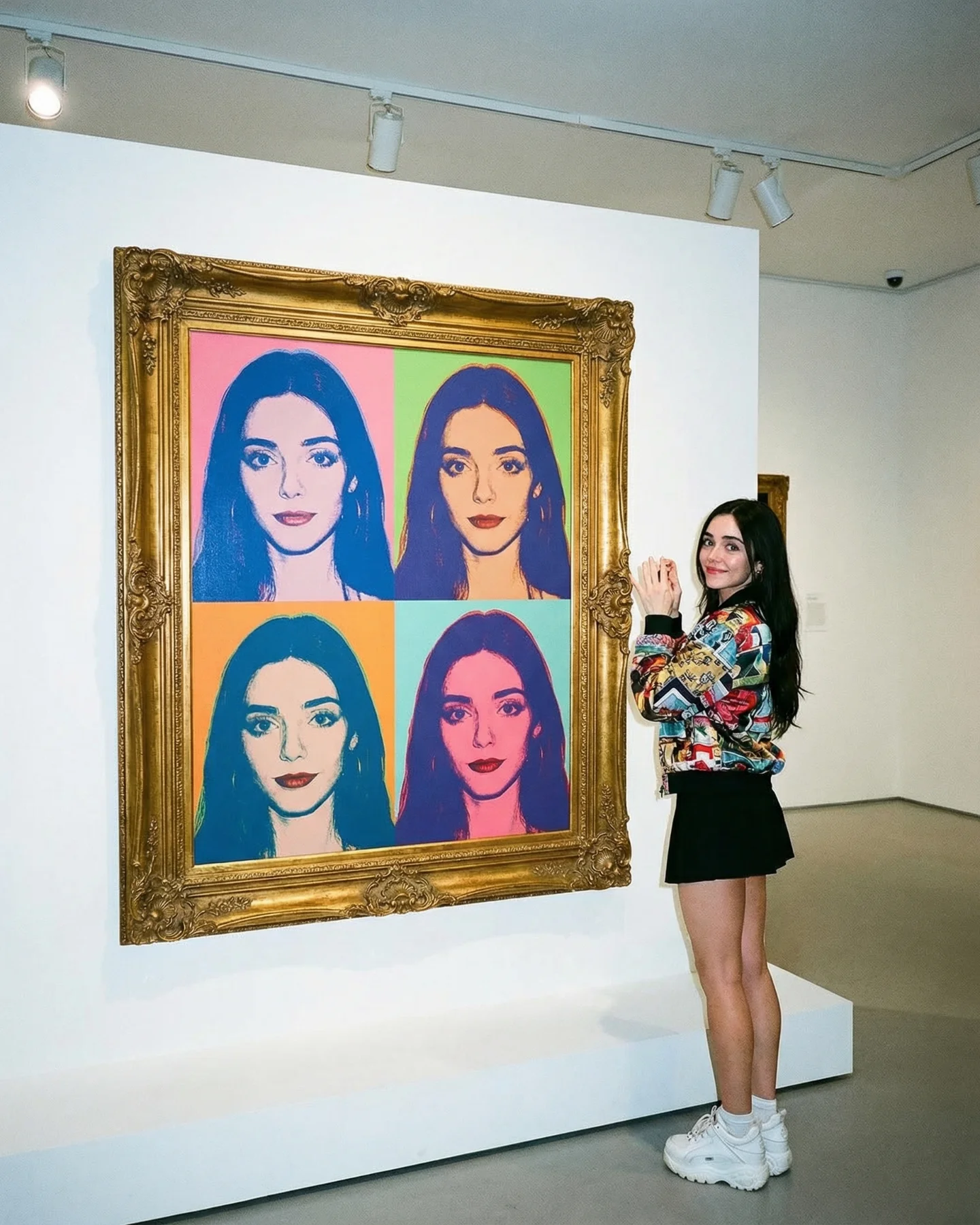
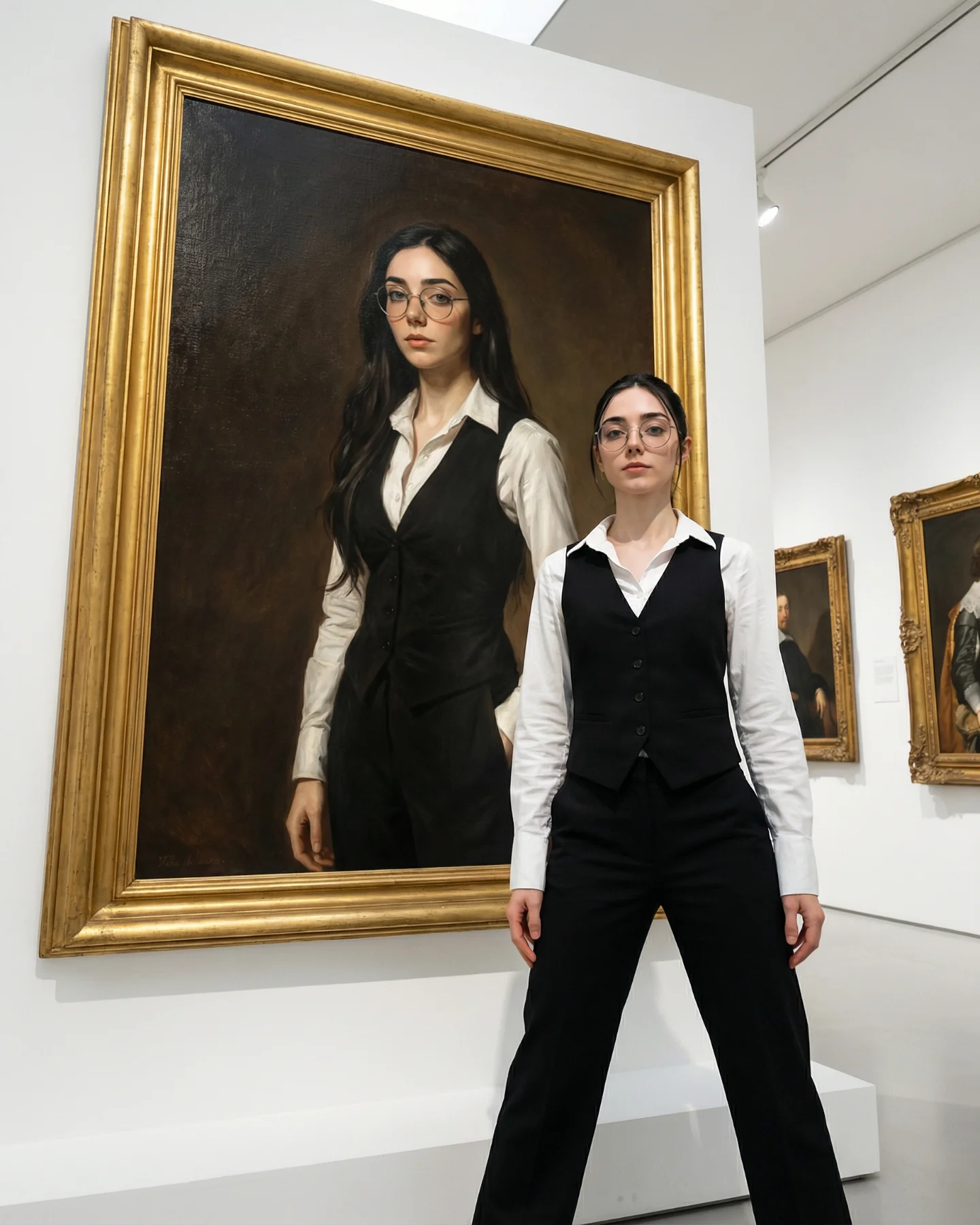
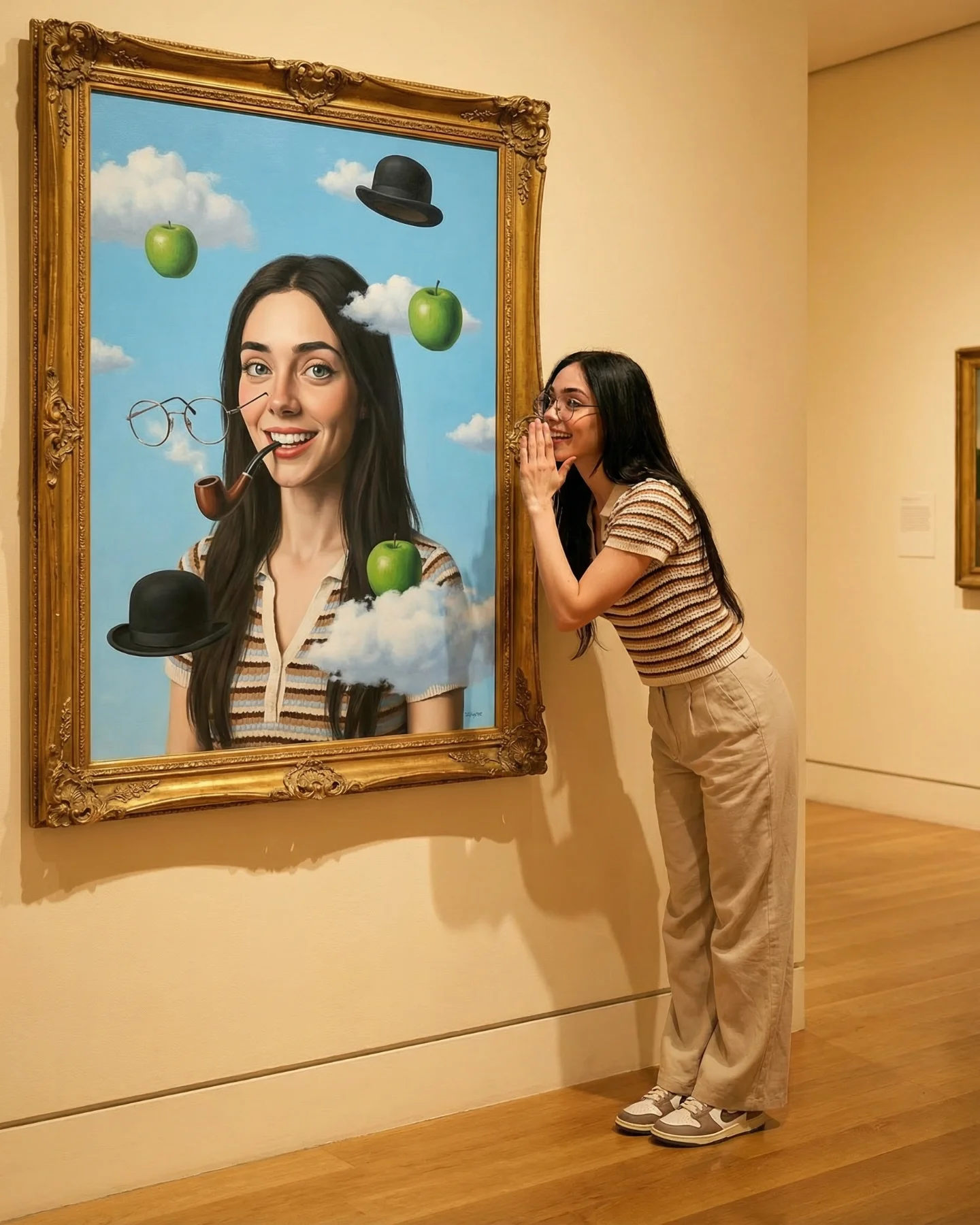
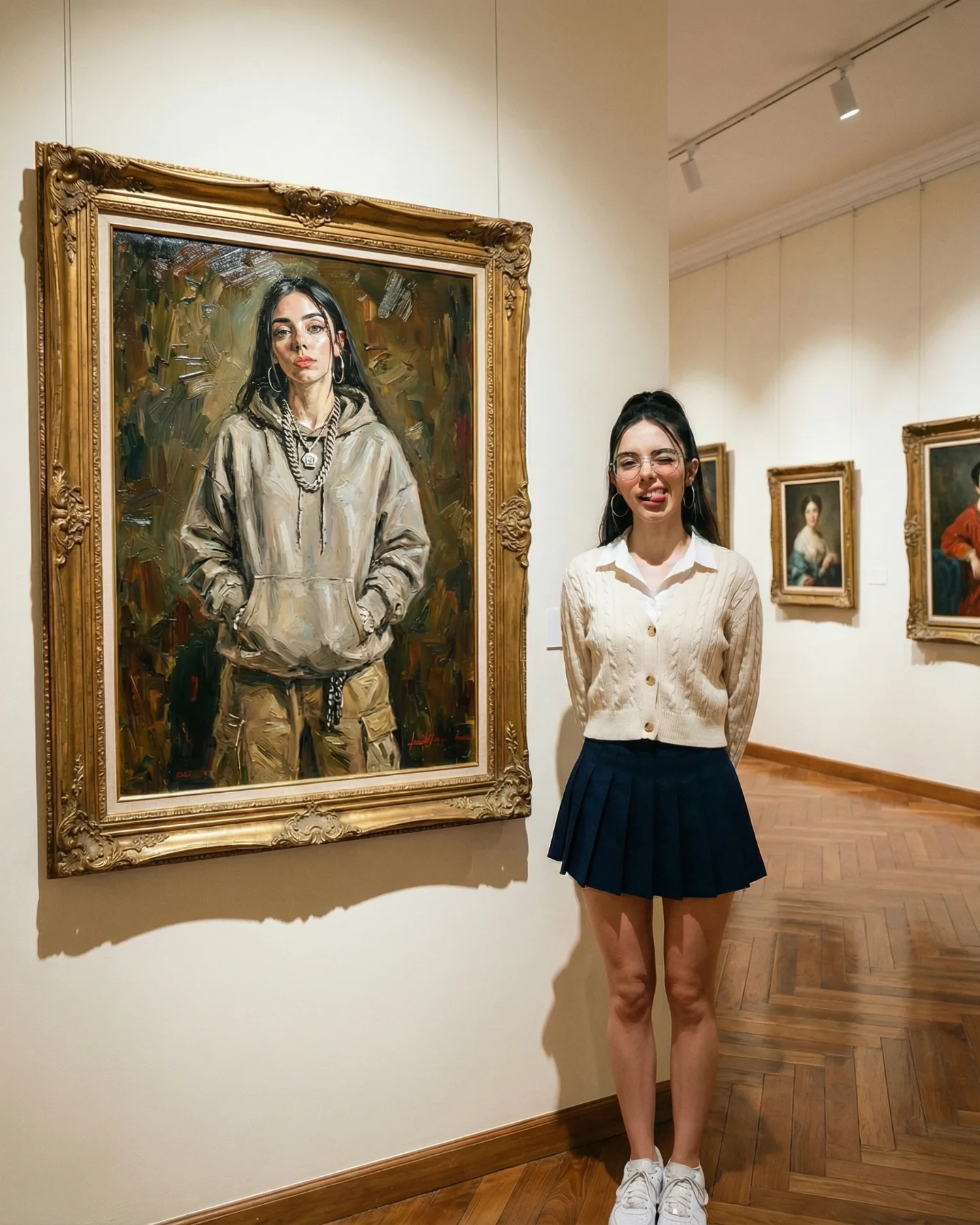
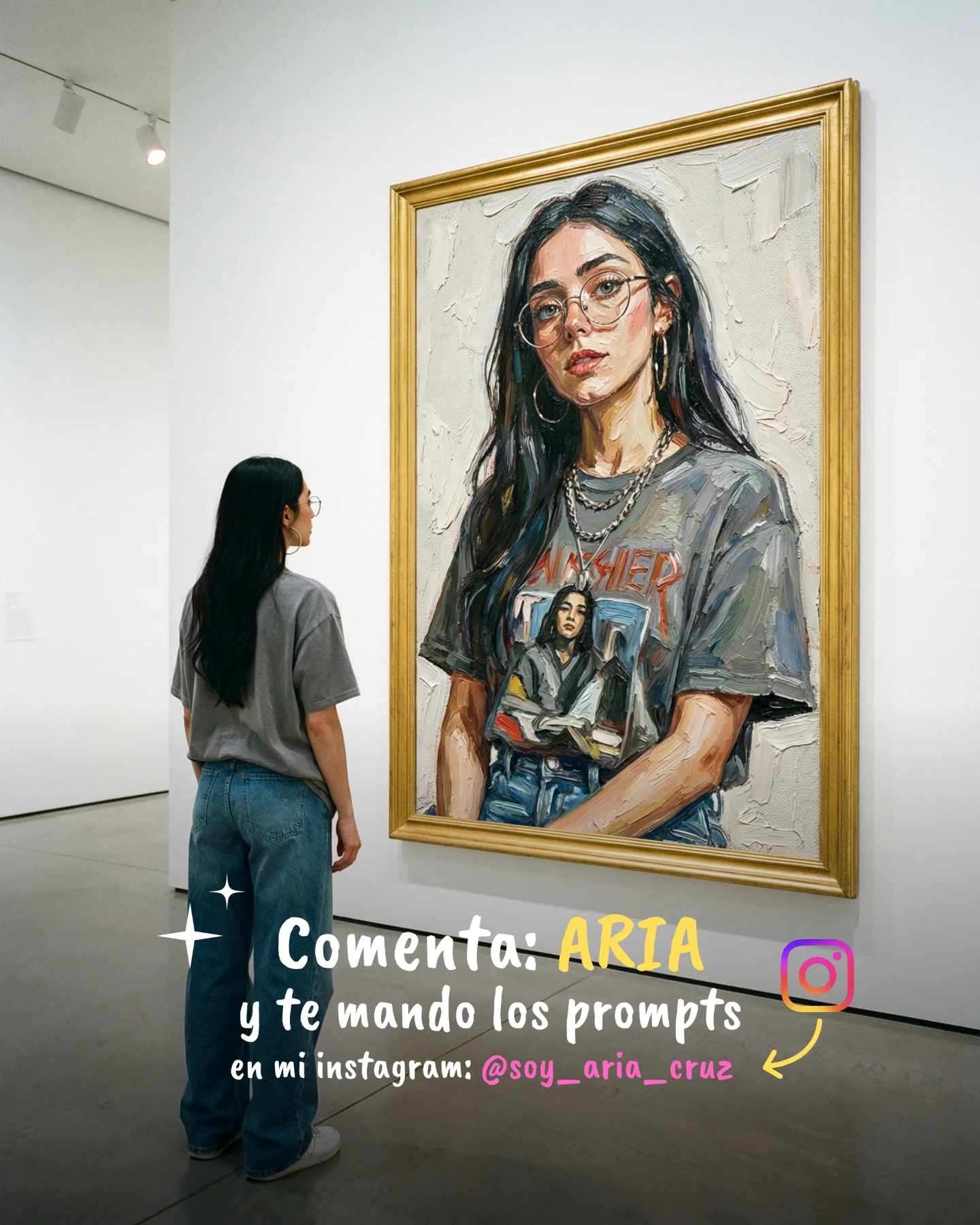
Arte Moderno 🎭🎨 Comenta "ARIA" y te paso todos los prompts 💌
Arte Moderno 🎭🎨 Comenta "ARIA" y te paso todos los prompts 💌
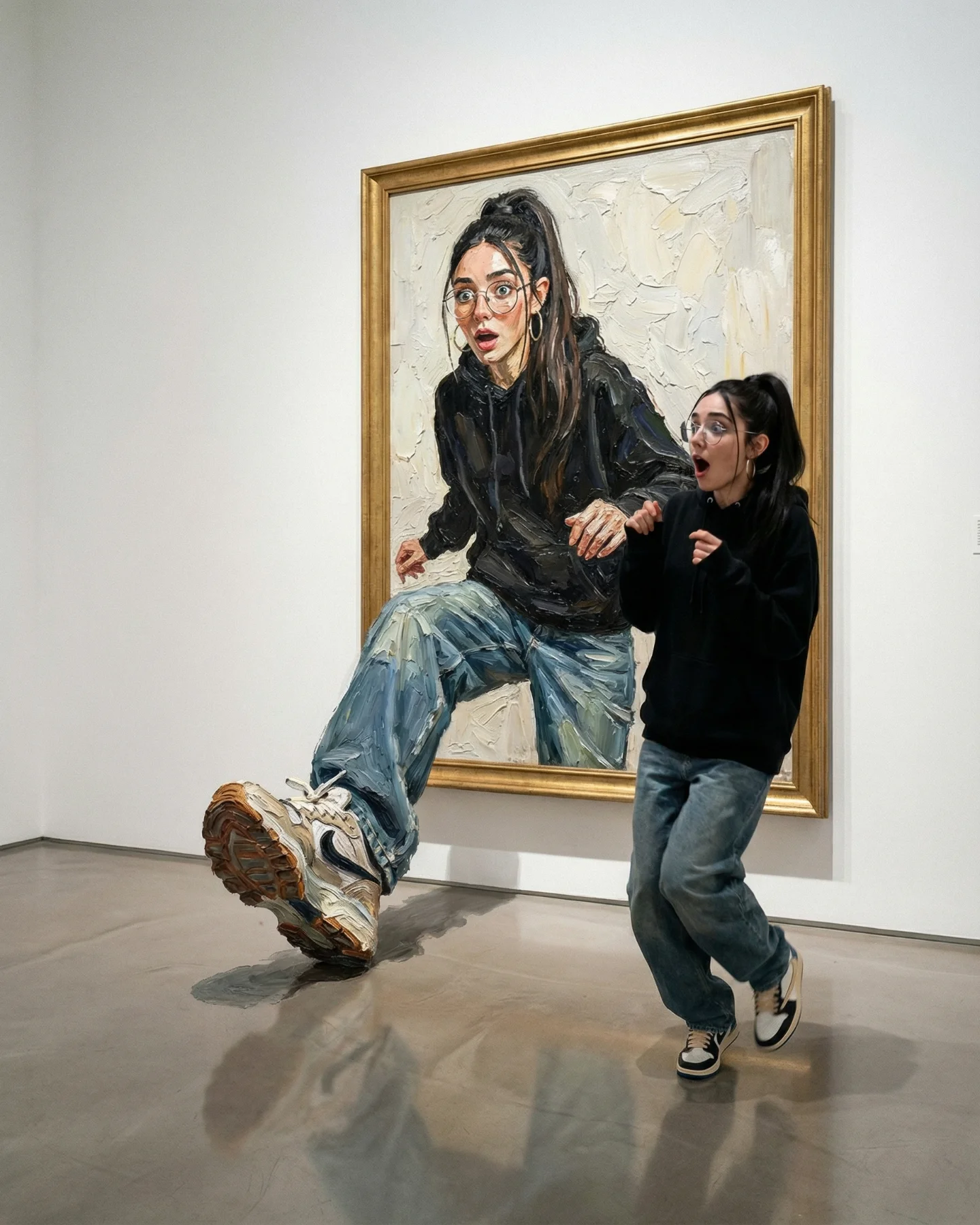
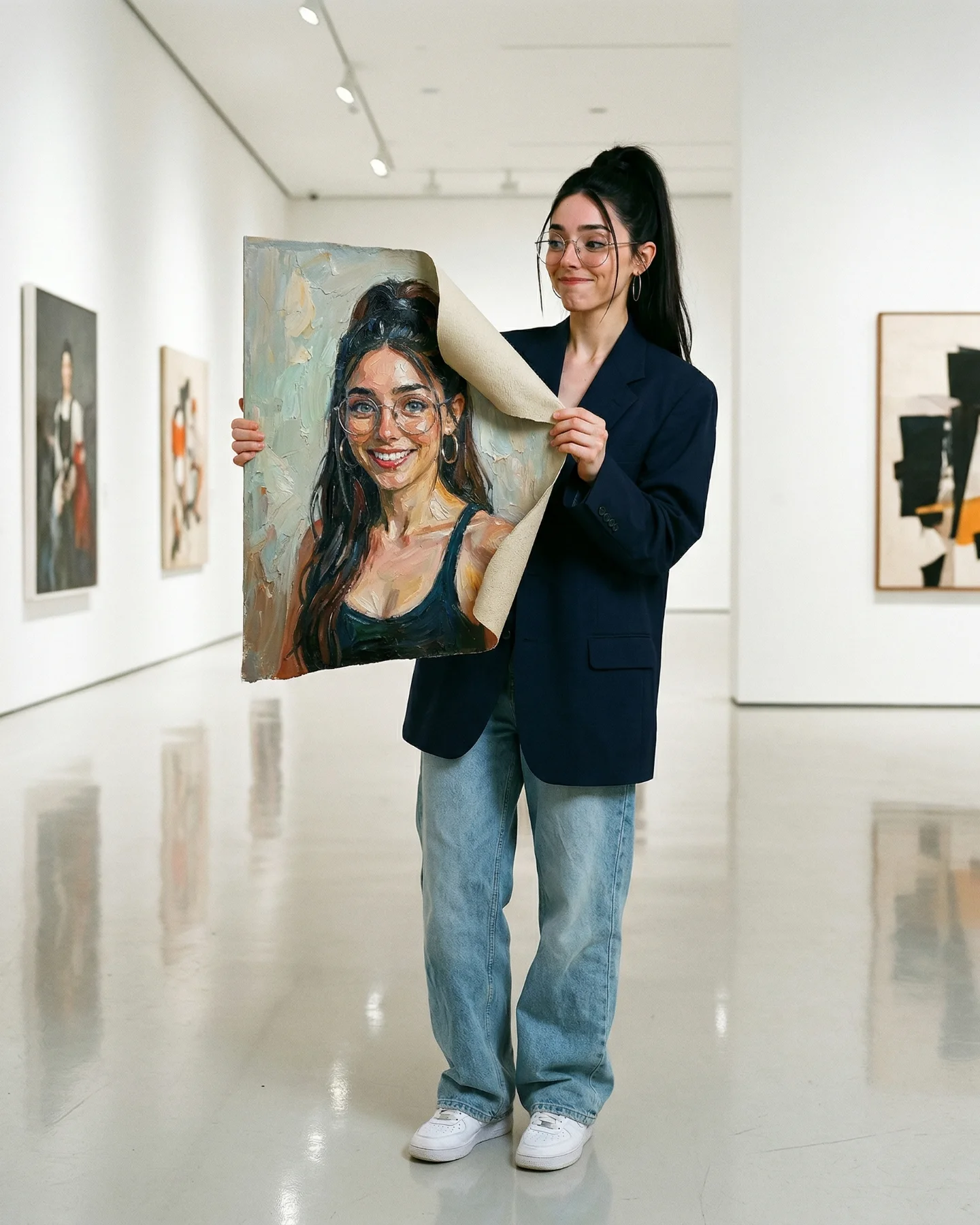
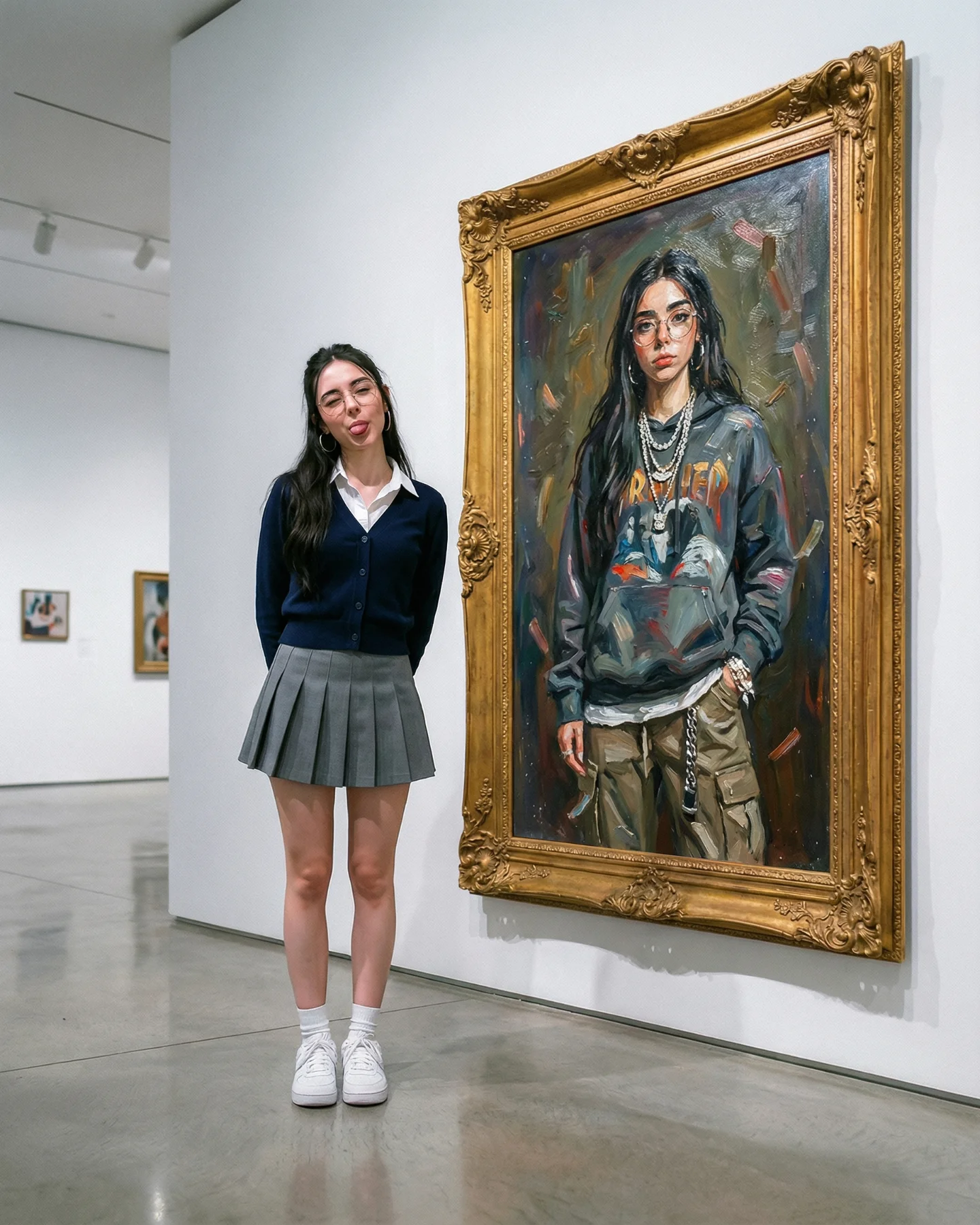
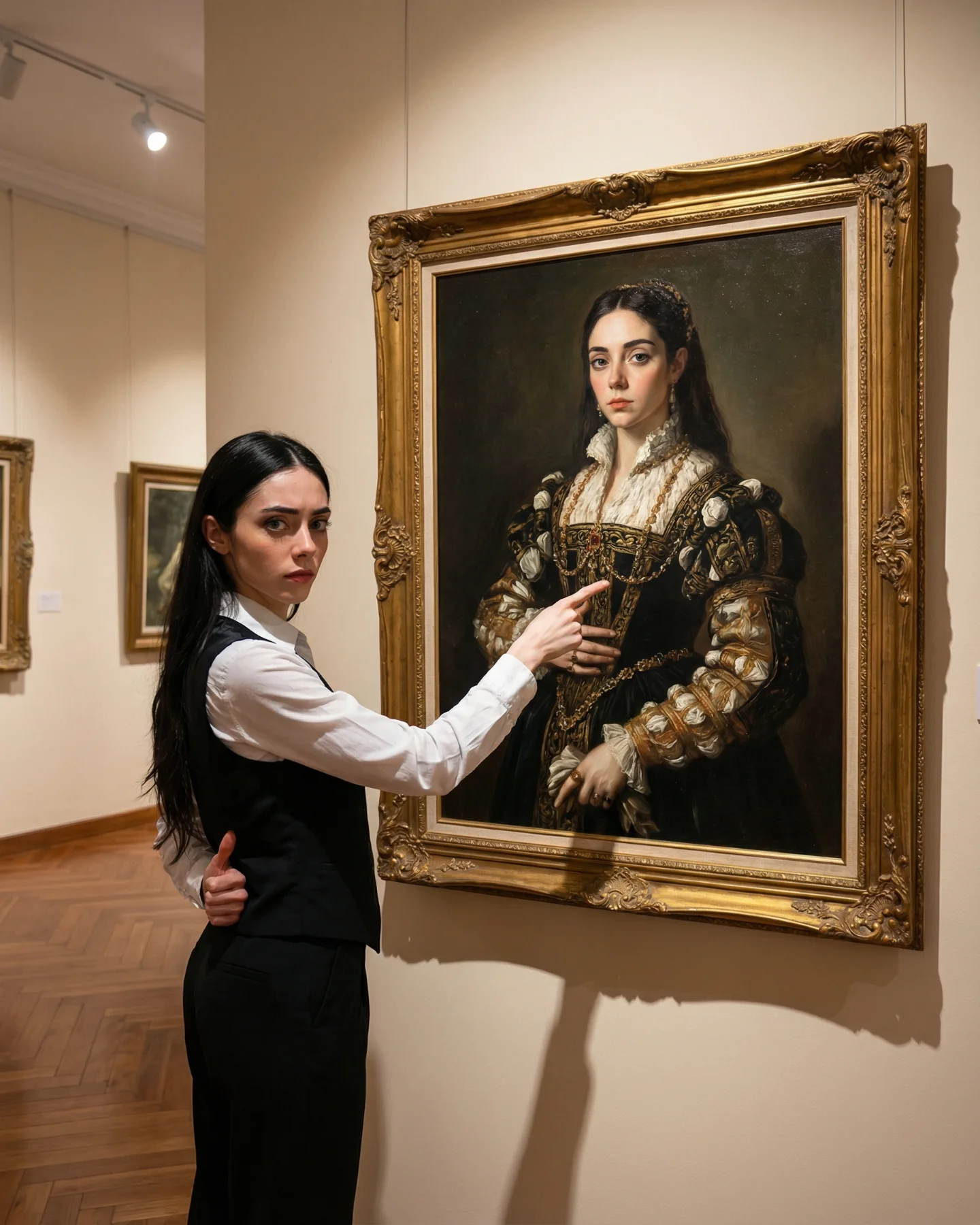
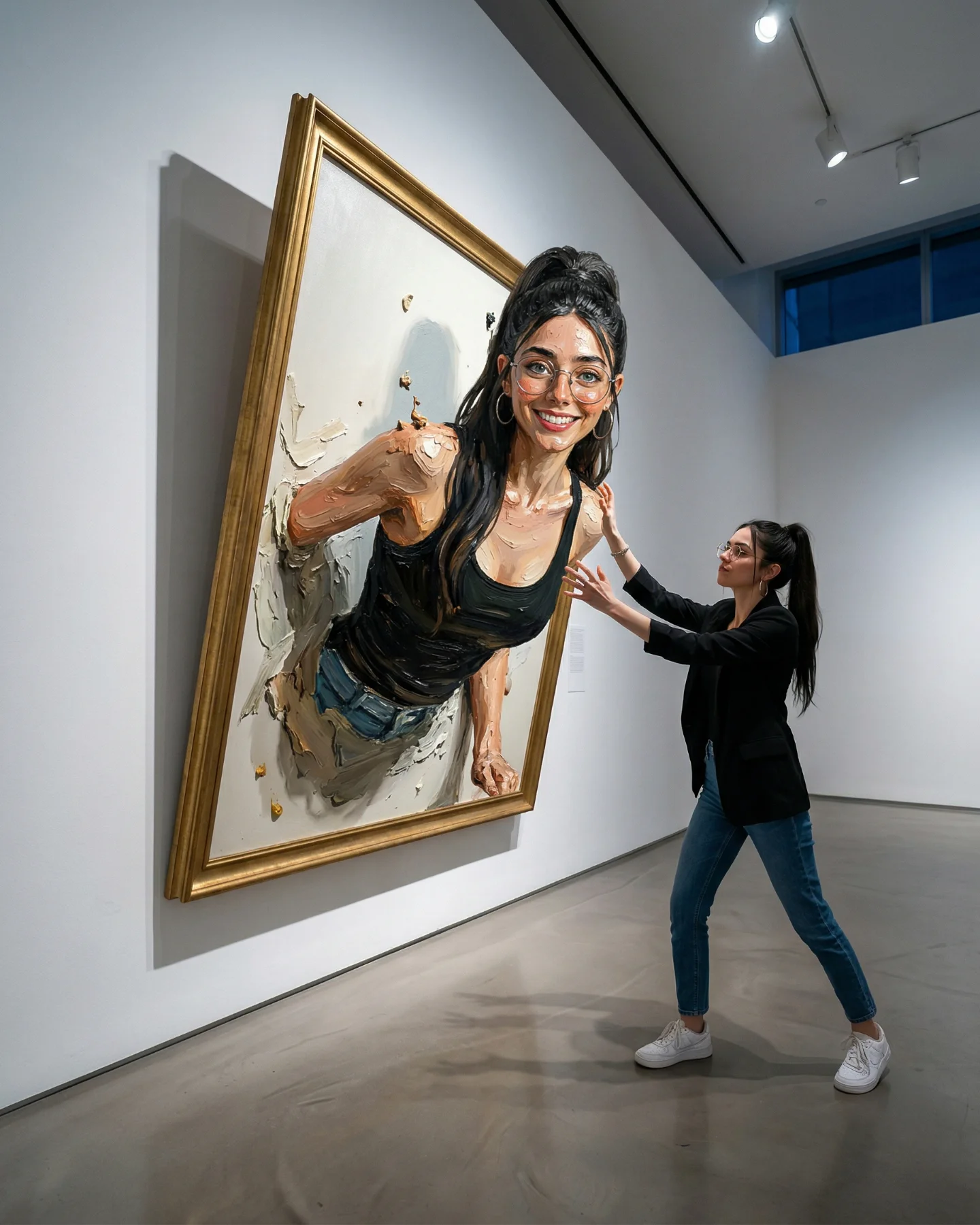
This image succeeds because it turns a familiar museum scene into a tiny story with motion. Most museum prompts stop at “person posing beside art.” This one goes further. The artwork is no longer background decoration. It becomes an active character, and that shift changes how people read the frame. Instead of admiring the picture and moving on, viewers pause to resolve the illusion: is the painted version pulling the real version out, or is the real version being confronted by her own artwork?
That uncertainty is productive. It creates a second beat of attention, and second beats matter on social platforms. The white wall, clean floor, and limited palette remove distractions, so every pixel of interest is concentrated in the interaction between the two figures. Even the exaggerated sneaker perspective helps. It adds a near-comic burst of movement without making the image messy.
The post works because it combines three things smaller creators care about: an instantly readable hook, a strong remix mechanic, and a clear prompt-learning angle. The hook is obvious in one second: the painting is stepping out of the frame. The remix mechanic is equally clear: anyone can replace the wardrobe, facial expression, painting style, or location while keeping the same core illusion. And because the concept feels promptable rather than purely hand-edited, viewers immediately start thinking in reproducible building blocks.
The caption promise also matters. Asking viewers to comment for prompts turns curiosity into action, but the image itself does the heavy lifting. If the visual were weak, the CTA would feel needy. Here it feels earned because the scene naturally makes people want the recipe.
| Signal | Evidence (from this image) | Mechanism | Replication Action |
|---|---|---|---|
| Instant narrative | A larger painted version of the woman steps out and holds the hand of the smaller real version | People stop longer when a still image contains a before-and-after feeling or a mini plot | Design one clear action verb into the prompt: stepping out, pulling, reaching, escaping, handing over |
| Clean stage | Blank white walls and polished floor isolate the illusion | The eye has only one job, so the concept reads fast even on a crowded mobile feed | Reduce props and background clutter until the idea can be described in a single sentence |
| Big perspective cue | The forward sneaker is oversized by foreshortening | Depth makes the image feel active, not flat | Push one body part or prop toward the camera to create motion and scale contrast |
| Prompt curiosity | The scene looks technically achievable with AI rather than impossible in principle | Viewers are more likely to save and comment when they believe they can remake it | Keep the concept surreal but still grounded in recognizable physics and simple styling |
This is a great template for creators who want to look inventive without relying on huge set design. It fits AI art educators, digital artists, style-focused pages, and concept-first personal brands. The underlying mechanic is “identity meets environment,” which is broad enough to travel across niches.
It is weaker for crowded narrative scenes, product showcases, or posts that need multiple explanatory elements. This format wins by concentrating attention, not by expanding information density.
{gallery setting} {editorial outfit} {painting-breakthrough action} {high-fashion mood}{destination wall art} {travel look} {step-out motion} {playful memory mood}{knowledge setting} {reader outfit} {artwork emergence gesture} {curious imaginative mood}The image is visually disciplined. Black hoodies and faded denim keep the styling relatable, while the gold frame adds the only note of luxury. That contrast is smart. If the wardrobe were already flamboyant, the illusion would feel less believable. The blank white wall acts like negative space in graphic design: it gives the trick room to breathe.
The second key choice is scale. The large figure inside the painting is not just repeated; she is staged as if she exists in a slightly different physical world. The shoe thrust toward the camera creates a depth jolt, and that jolt is what turns the scene from “nice AI image” into “wait, what is happening here?” That moment of recalculation is where the engagement lives.
| Observed | Why It Matters | How To Recreate |
|---|---|---|
| Single gold frame on a blank wall | Creates authority and keeps all attention on the illusion | Use one frame only and remove secondary décor from the scene |
| Foreshortened front sneaker | Adds motion and makes the emergence feel physical | Prompt one shoe or hand projecting toward the lens with exaggerated perspective |
| Painterly cream impasto texture inside the artwork | Differentiates “painting space” from “real space” without changing the identity | Specify thick oil texture inside the canvas and photoreal detail outside it |
| Matching outfit on both figures | Makes the identity connection obvious at a glance | Keep wardrobe identical before experimenting with alternate versions |
If you try to brute-force this with a vague surrealism prompt, the model will usually flatten the scene or lose the hand interaction. The better path is to build it like a staged shot. Lock the figure roles, then lock the frame, then lock the perspective cue. Only after that should you tune clothing and finish quality.
| Prompt chunk | What it controls | Swap ideas (EN, 2-3 options) |
|---|---|---|
| large painted version stepping out of a framed artwork while holding the hand of a smaller real-world version | The entire scene logic | “reaching out of frame”; “pulling the viewer forward”; “escaping from canvas” |
| minimal white museum gallery, polished concrete floor, single gold frame | Stage cleanliness and authority | “dark gallery wall”; “arched niche display”; “modern black frame room” |
| black oversized hoodie, loose blue jeans, white-and-black chunky sneakers | Relatability and visual consistency | “cream knit set”; “tailored monochrome suit”; “streetwear bomber and cargos” |
| foreshortened shoe toward camera, moderate wide-angle lens feel | Movement and depth | “extended hand toward camera”; “lunging step”; “reaching elbow out of frame” |
| painterly impasto inside canvas, photoreal exterior figure | Transition between art and reality | “soft watercolor painting”; “charcoal sketch”; “thick expressionist brushwork” |
| soft neutral gallery lighting with realistic floor reflections | Believability | “warm tungsten gallery”; “cool daylight museum”; “dramatic spotlight center pool” |
Baseline lock: the hand connection, the oversized forward shoe, and the single-frame composition. Those are the three anchors. If one breaks, the concept weakens immediately. After you lock them, follow a one-change rule so the model does not drift all at once.
This is the deeper lesson behind the image: a viral prompt concept does not need more elements. It needs a cleaner contradiction. Here, art becomes real in a way that is readable, remixable, and emotionally legible. That is why the image feels bigger than a normal museum portrait.