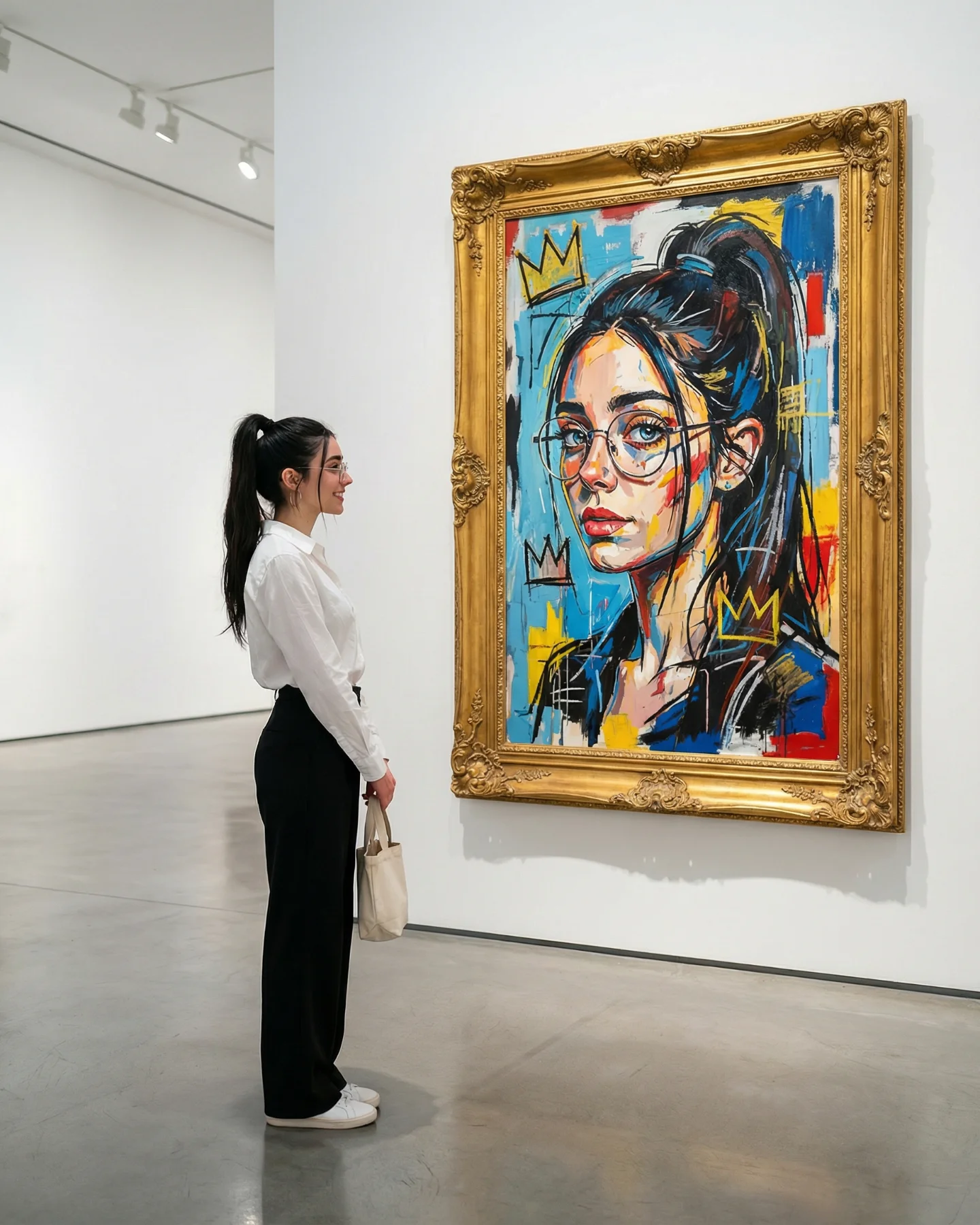
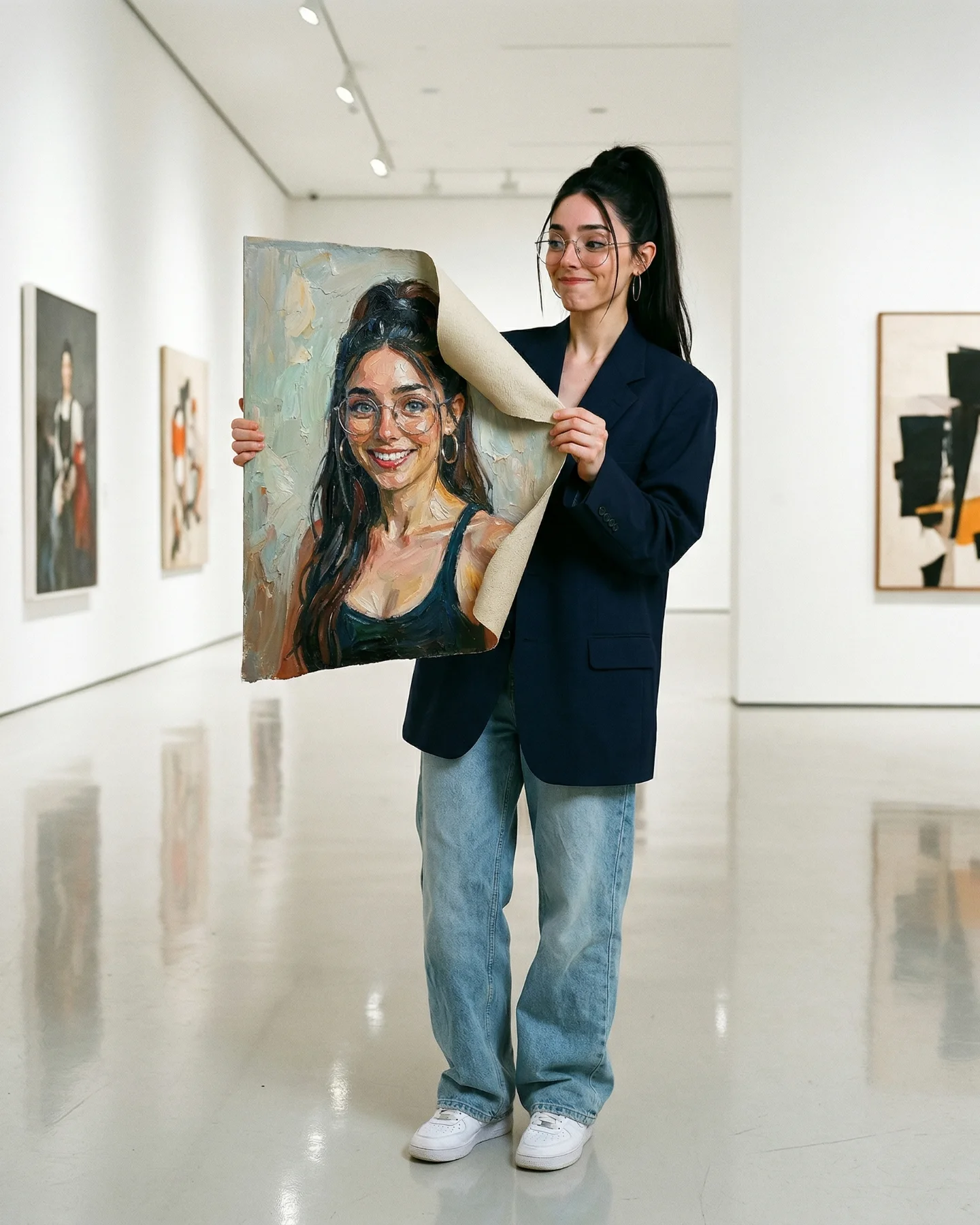
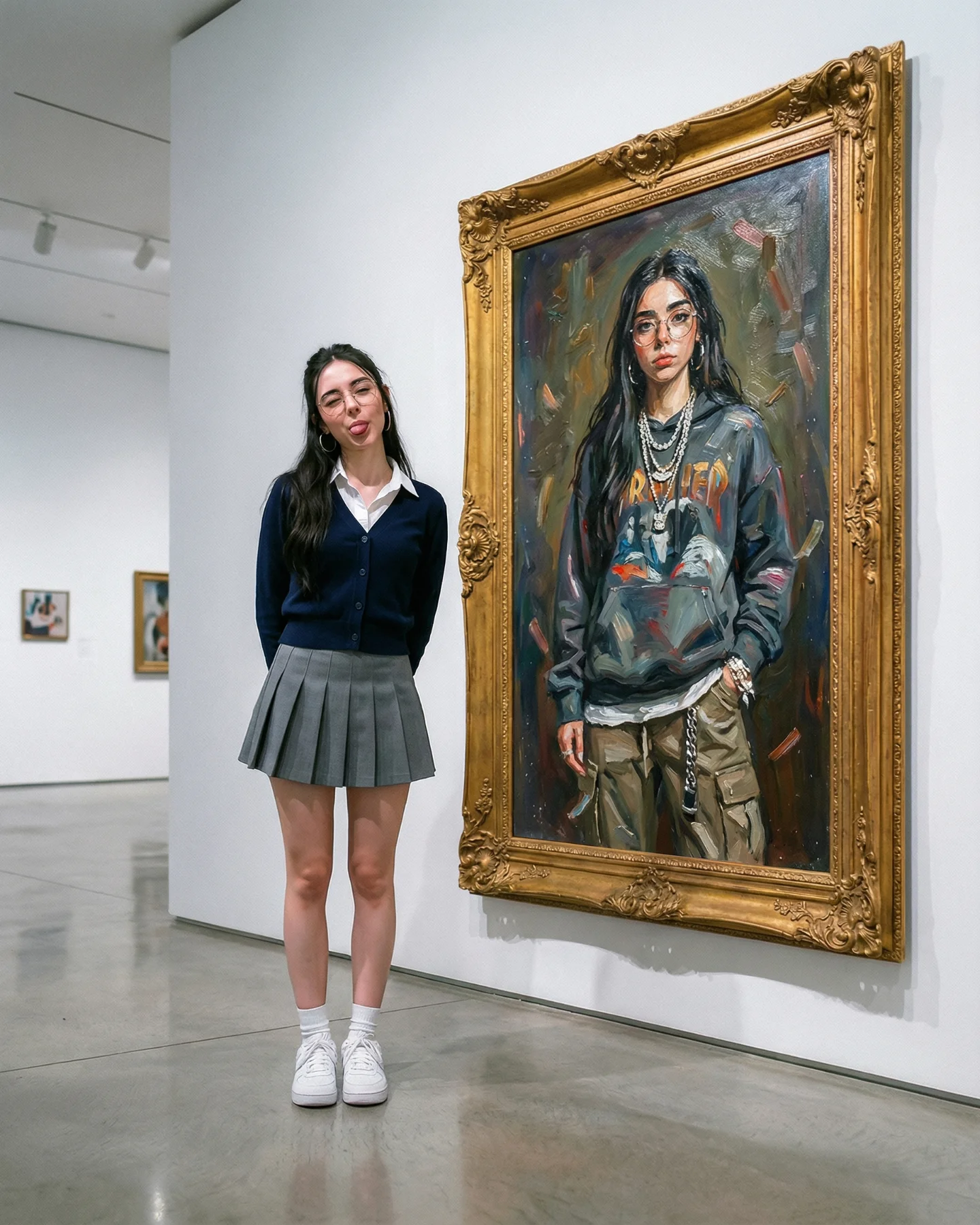
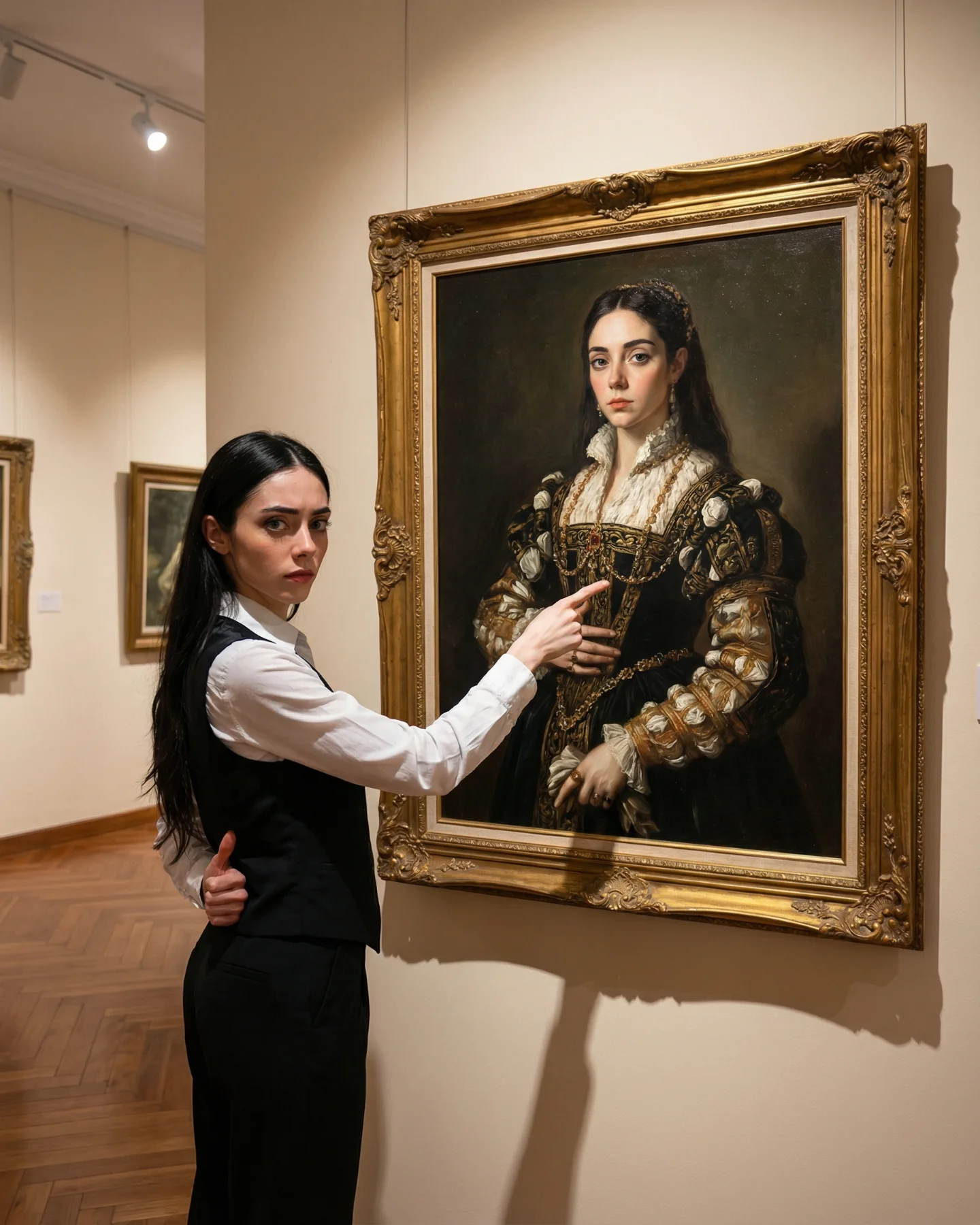
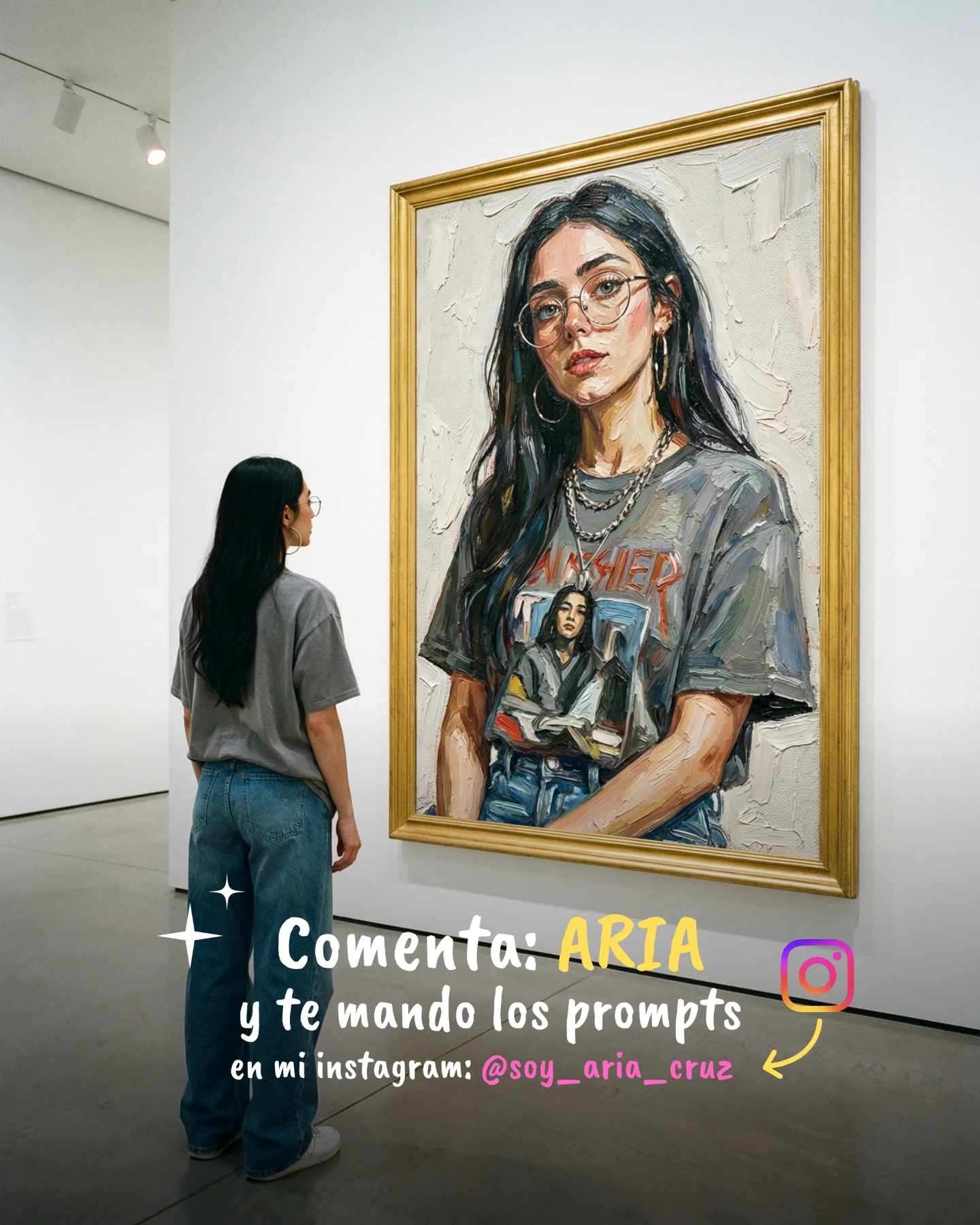
Arte Moderno 🎭🎨 Comenta "ARIA" y te paso todos los prompts 💌
Arte Moderno 🎭🎨 Comenta "ARIA" y te paso todos los prompts 💌
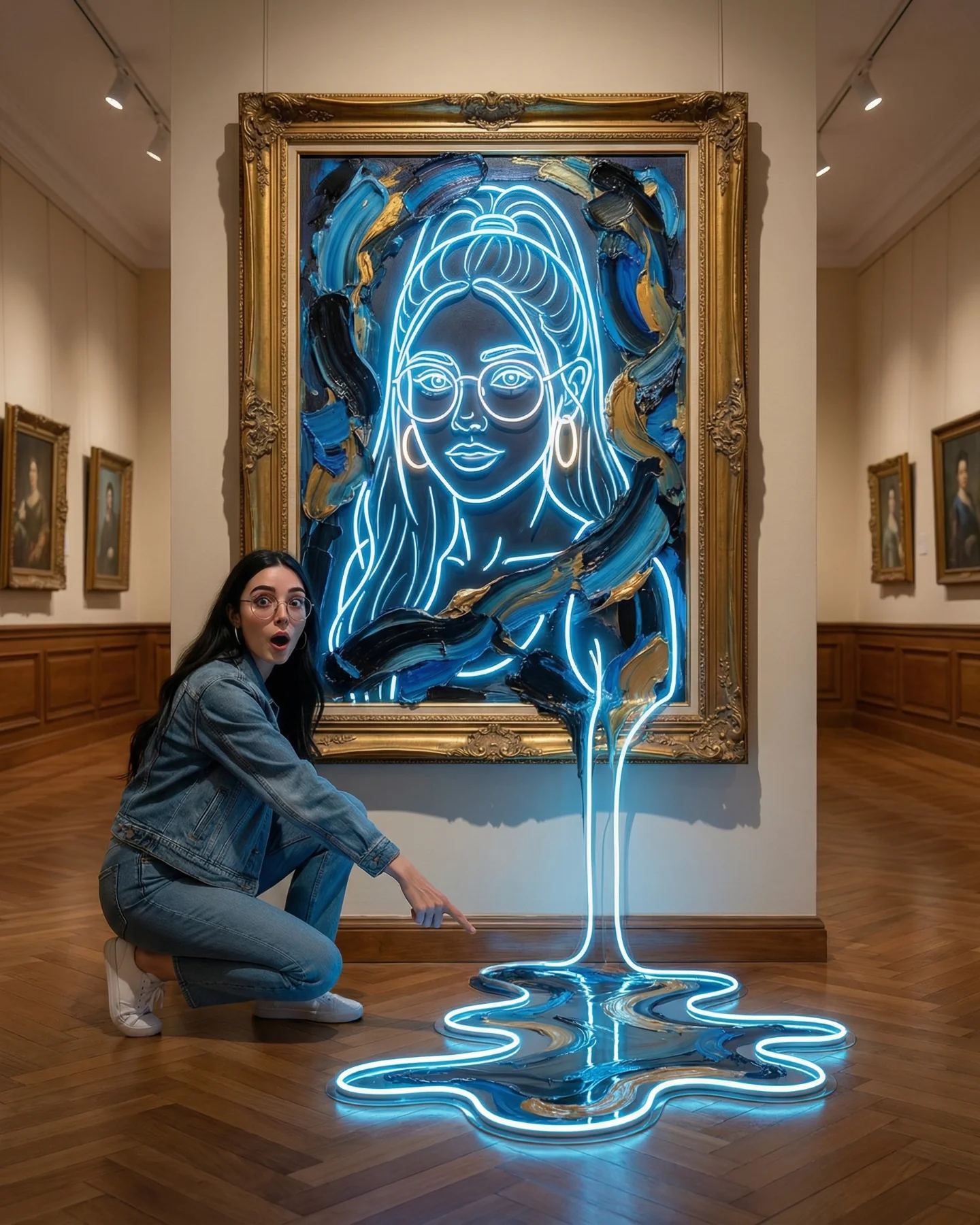
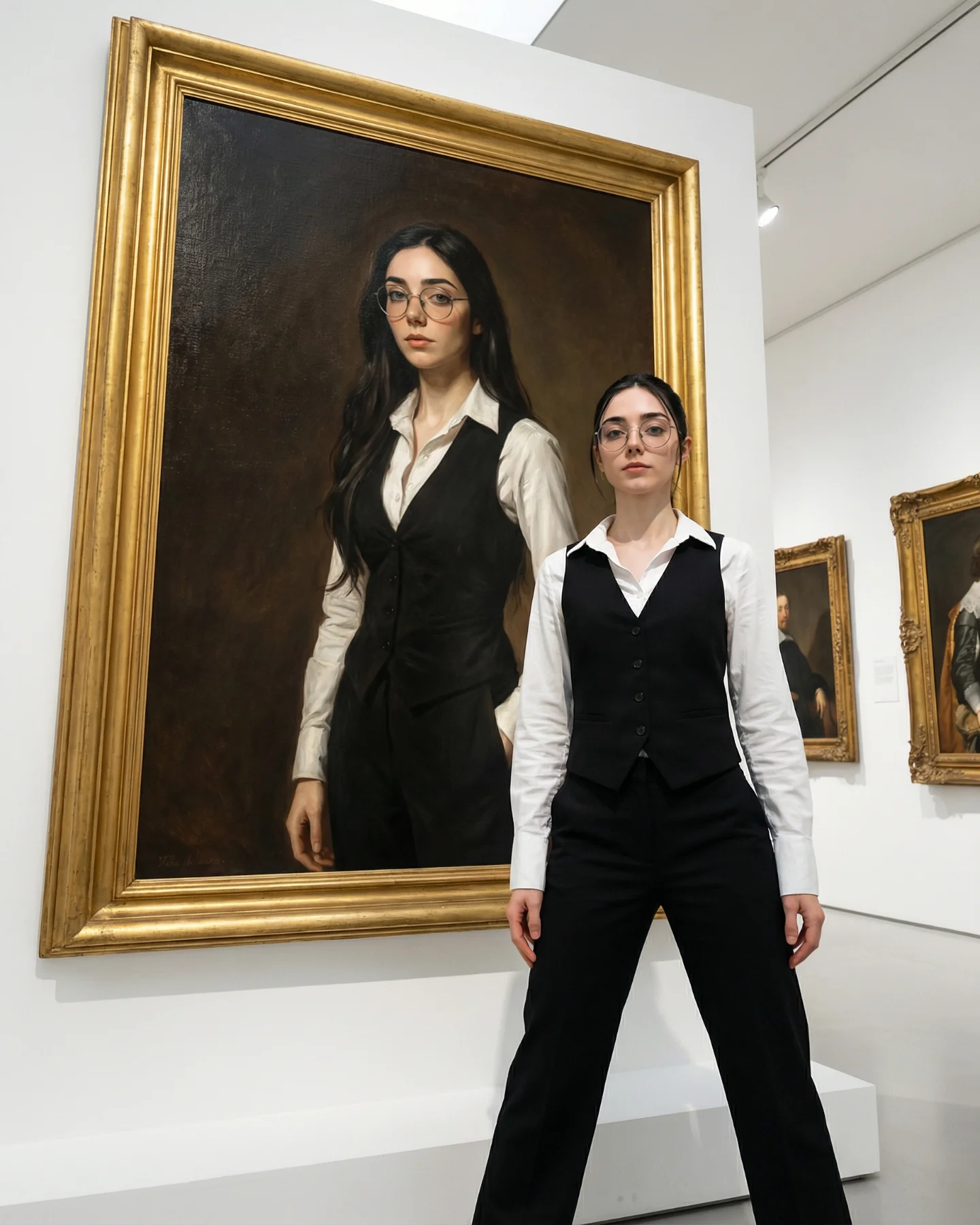
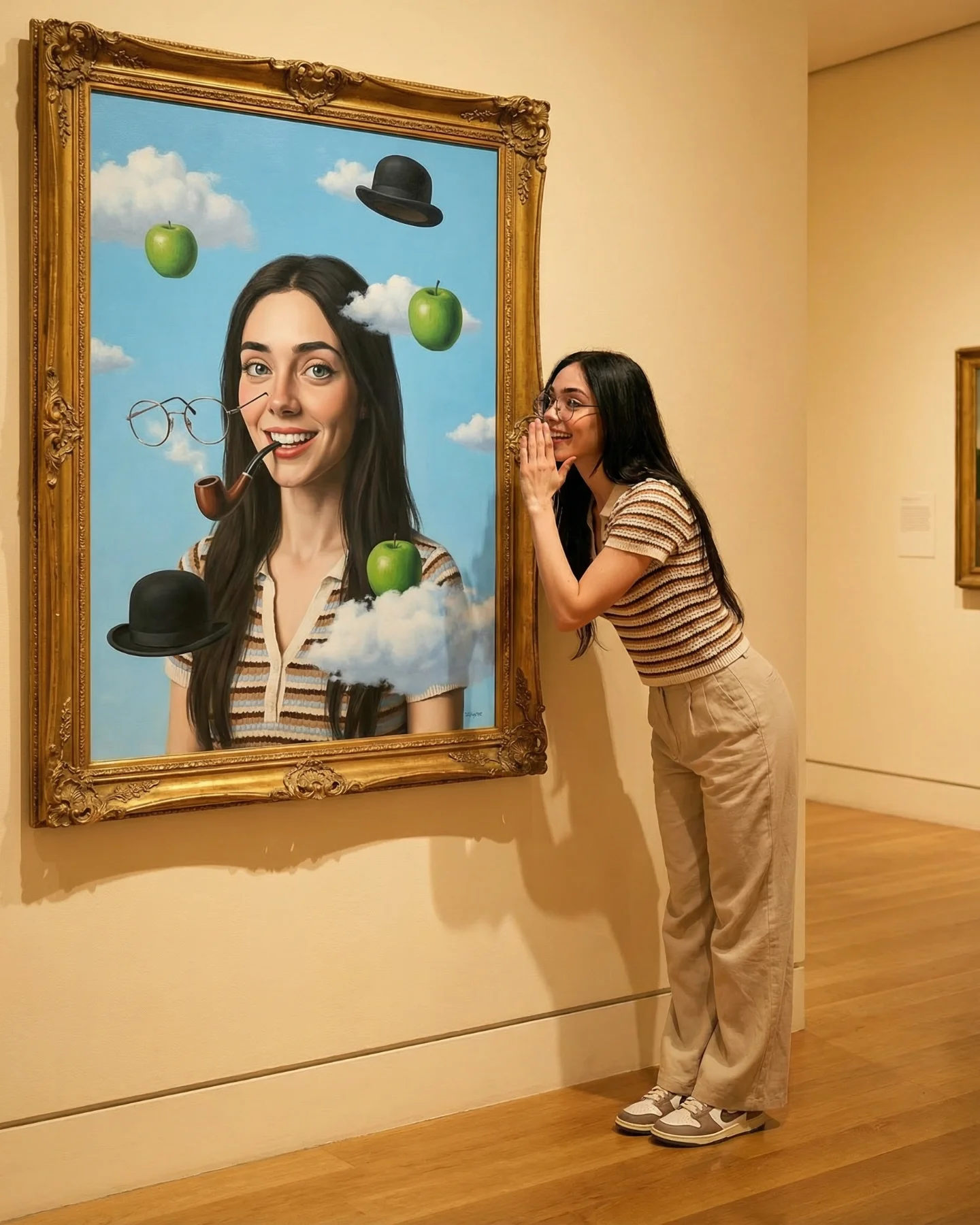
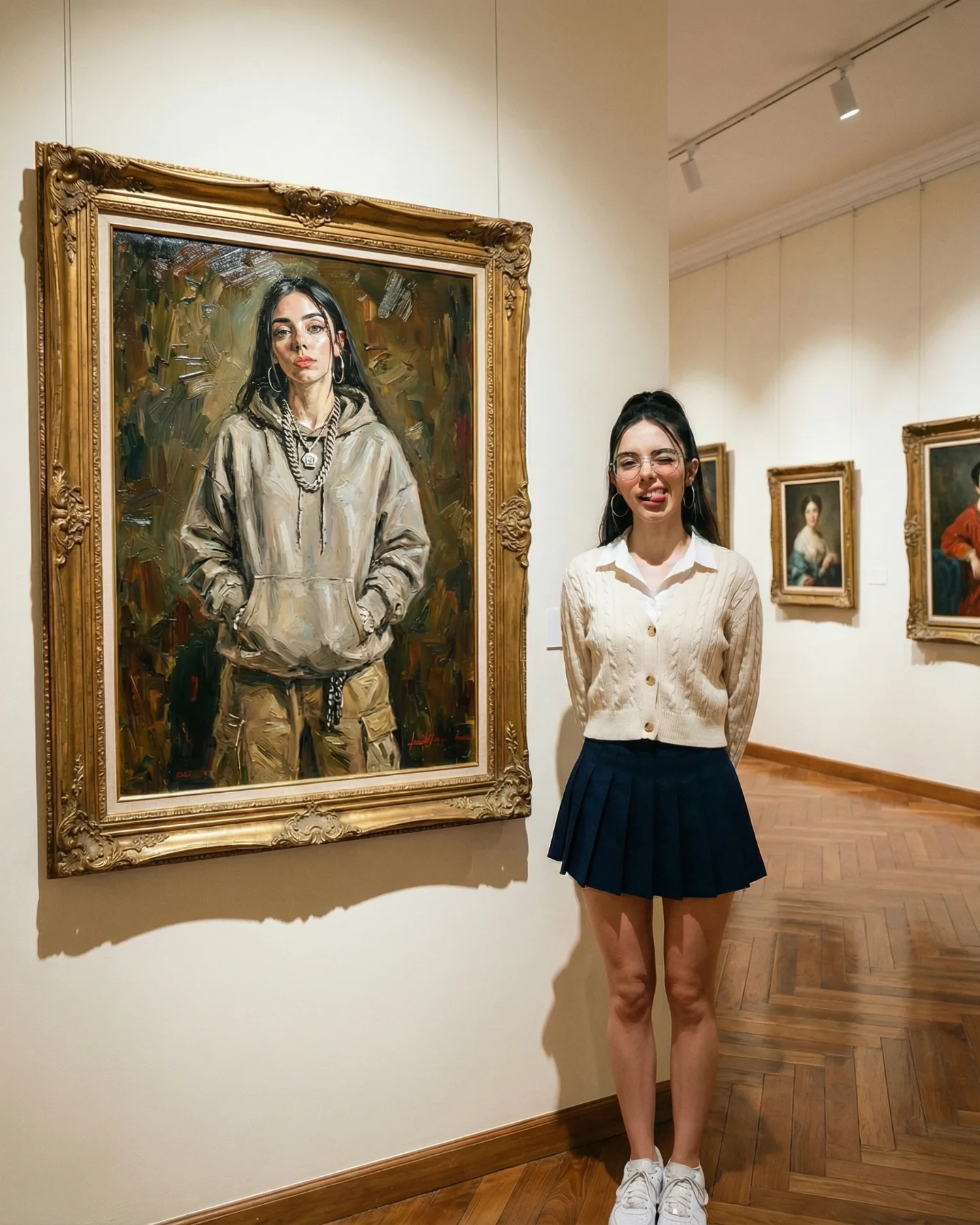
This image works because it starts with a familiar museum format and then breaks only one rule. At first glance, you see an ornate portrait in a traditional gallery. A second later, the portrait is no longer staying inside the frame. The neon lines pour down the wall and pool onto the floor like liquid electricity. That single visual violation gives the image its replay value.
The creator choice that makes it especially strong is contrast discipline. The room is warm, historical, and calm. The artwork is cool, synthetic, and alive. Viral images often depend on tension, and here the tension is not emotional chaos. It is aesthetic contradiction: old frame versus futuristic medium, stable portrait versus moving light, museum order versus controlled rupture.
{fragrance muse} rendered as {glowing medium} escaping from {ornate frame} into {luxury interior}{artist portrait} made of {light effect} flowing out of {frame} while {fan or performer} reacts in {venue}{mystic figure} drawn in {arcane light} pouring from {ancient portrait} onto {reflective floor}The most useful observation is that the blue neon is not fighting many other colors. It sits inside a room dominated by warm brown wood, muted cream walls, and aged gold. That gives the glow permission to dominate. If the room contained red signage, bright clothing, or busy visitors, the image would become noisy very quickly.
The second strength is material contrast. The frame is carved and heavy. The portrait lines are weightless and electric. The wood floor is dense and tactile. The spill is luminous and almost liquid. When different materials behave in sharply different ways, the image gains depth without needing more objects.
The third advantage is perspective. The room recedes on both sides, which gives the central wall authority. That architectural order makes the impossible effect feel staged with intention rather than random. It reads like a designed exhibit, and that is why the image feels premium.
| Observed | Why it matters |
|---|---|
| Central symmetrical wall placement | Makes the installation feel curated and authoritative |
| Warm wood and gold surrounding a cyan glow | Creates instant contrast with very little visual clutter |
| Glowing stream continues onto the floor | Extends the artwork into real space and deepens the illusion |
| Crouching figure placed off-center in the foreground | Adds narrative without blocking the main artwork |
| Visible side paintings and gallery depth | Confirms the museum setting and raises perceived realism |
To reproduce this image, think less about adjectives and more about systems. You need one system for the room, one for the framed artwork, one for the emissive material, and one for the reacting person. When those systems are separated clearly, the result becomes easier to iterate.
| Prompt chunk | What it controls | Swap ideas (EN, 2–3 options) |
|---|---|---|
| Neon line-art female portrait | Defines the visual language inside the frame | cyan neon portrait; glowing wireframe face; luminous contour drawing |
| Liquid light flowing onto the floor | Creates the impossible physical extension | melting light trail; luminous spill; glowing ribbon puddle |
| Traditional museum room with parquet floor | Supplies authority, realism, and contrast | historic gallery hall; elegant museum interior; classical exhibition room |
| Surprised crouching witness | Adds scale and emotional entry point | astonished visitor pointing; crouching observer reacting; woman examining glowing spill |
| Antique gold frame | Keeps the art-reference legible and premium | baroque frame; museum portrait frame; ornate carved gold border |
| Warm ambient light plus cyan self-illumination | Balances realism with spectacle | warm spotlight + cool glow; gallery lighting with neon bounce; mixed-temperature exhibition light |
ornate gold-framed portrait in a traditional museum, female face drawn in bright cyan neon line art, glowing light melting out of the frame onto polished parquet floor, crouching woman pointing in surprise, warm gallery spotlights, photoreal installation artThe fastest route to a strong remake is to converge in a strict order.
Change one control block at a time. If you modify the room, the figure, and the emissive material in the same generation, you will lose the source of any improvement.
This sequence protects what actually makes the image viral: not the fact that it glows, but the fact that the glow behaves as if it has escaped from a very formal art context.