Arte Moderno 🎭🎨 Comenta "ARIA" y te paso todos los prompts 💌
Arte Moderno 🎭🎨 Comenta "ARIA" y te paso todos los prompts 💌
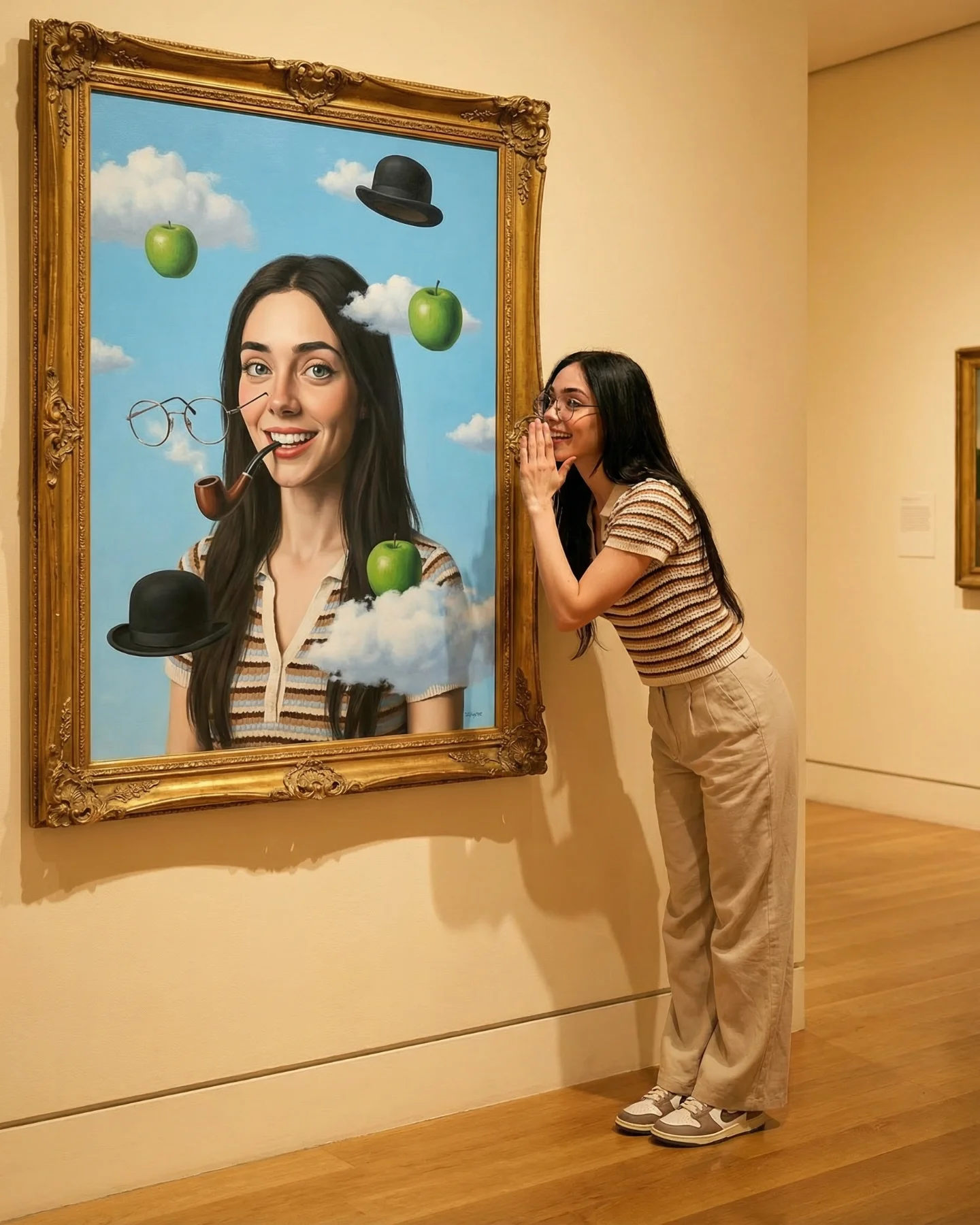
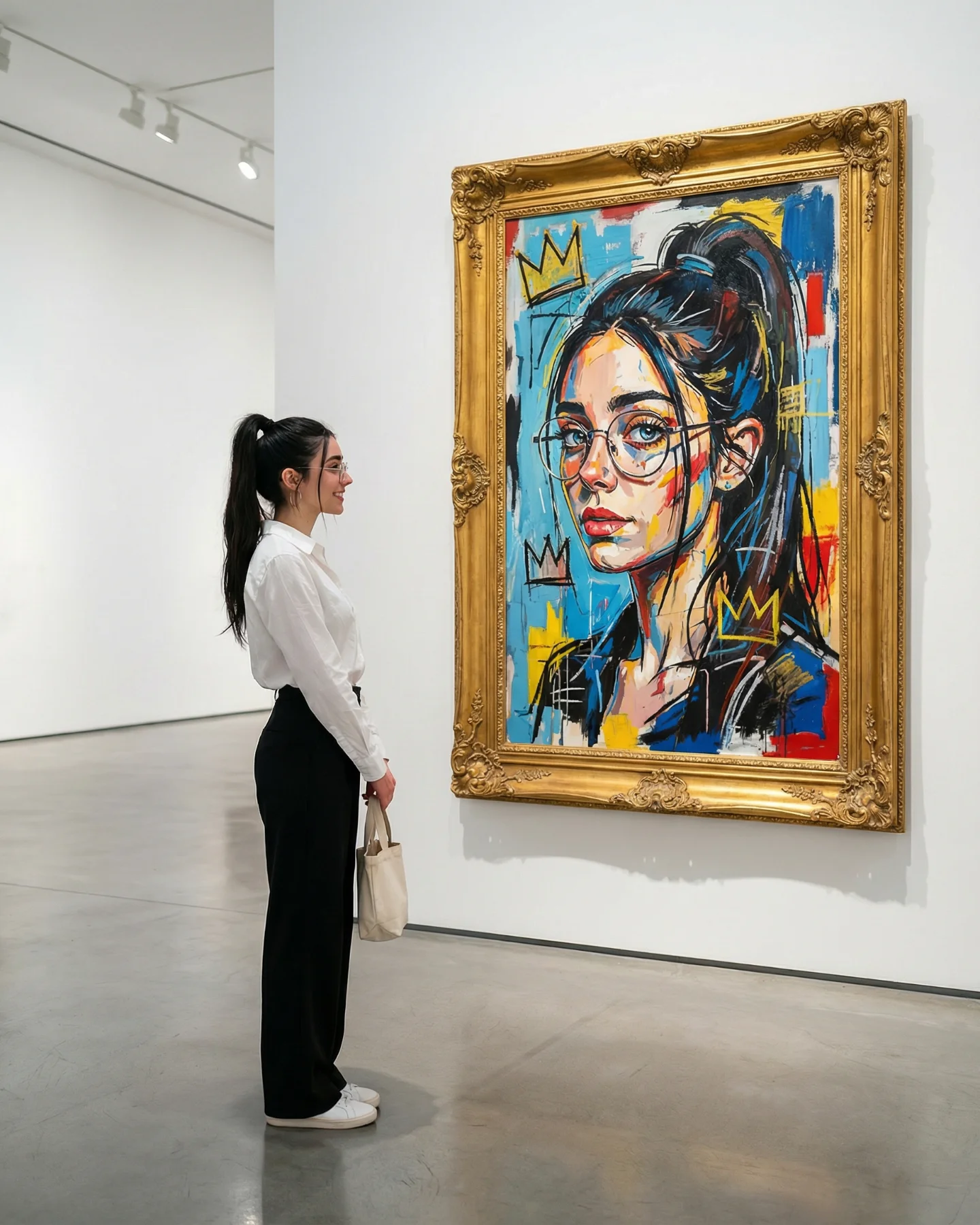
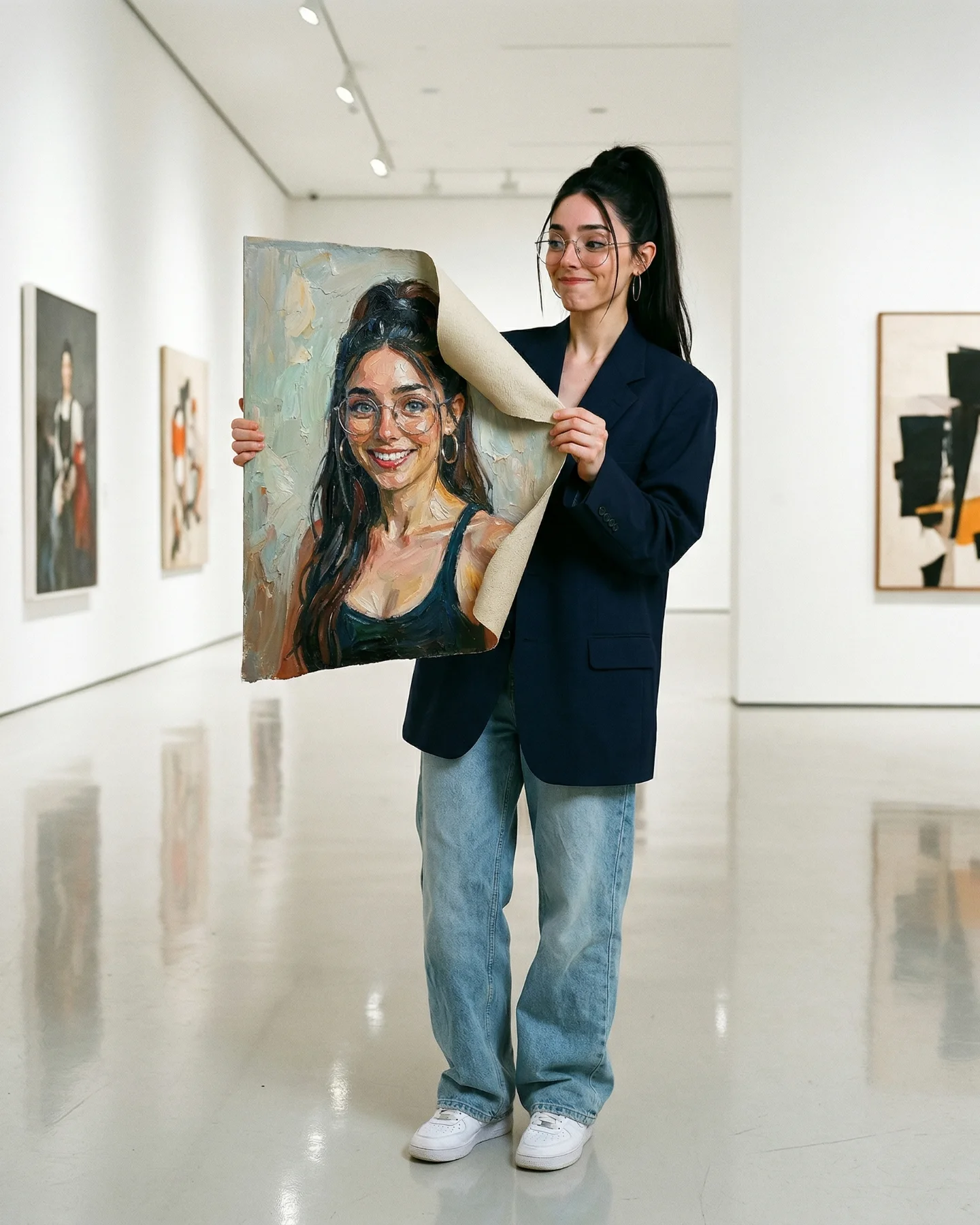
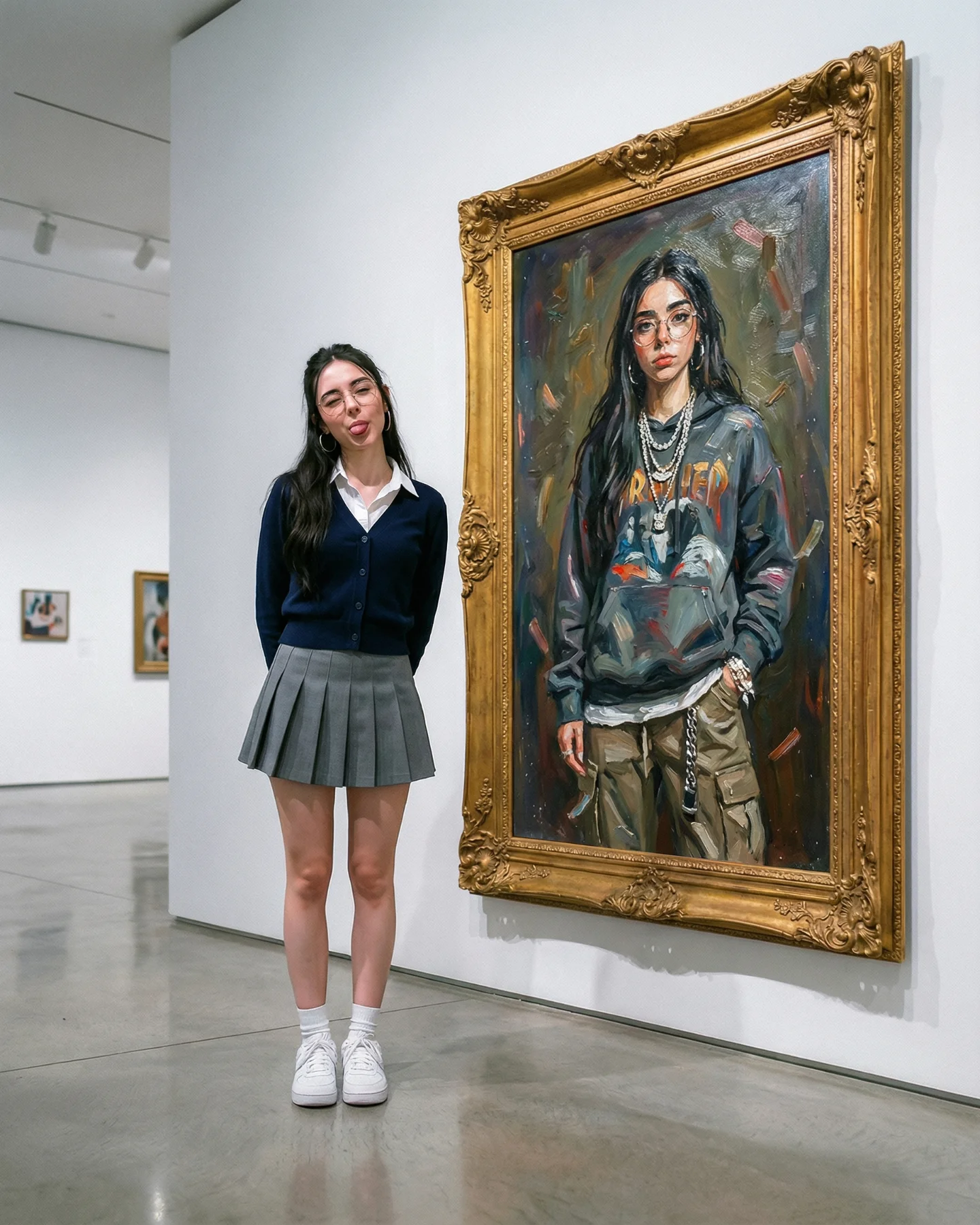
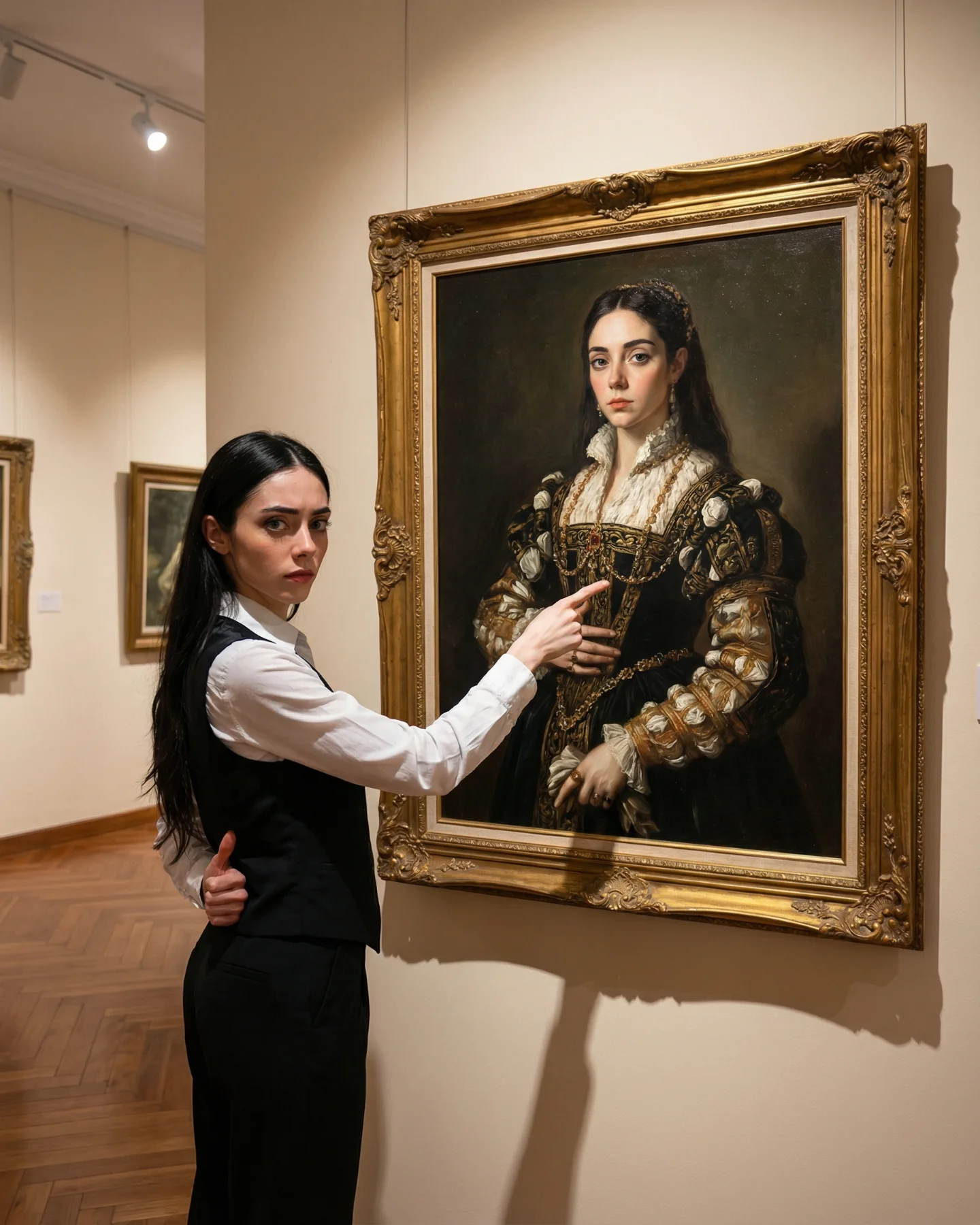
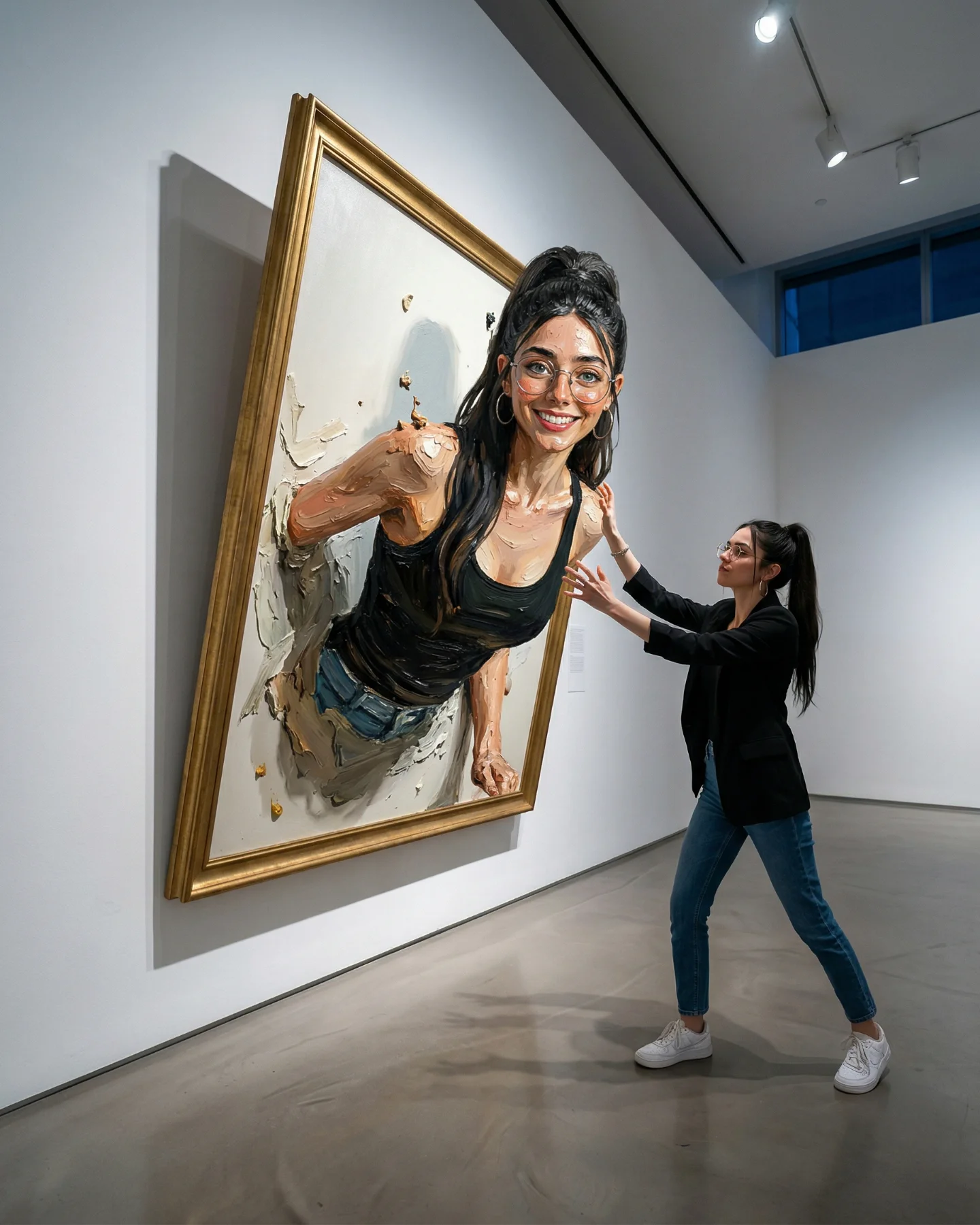
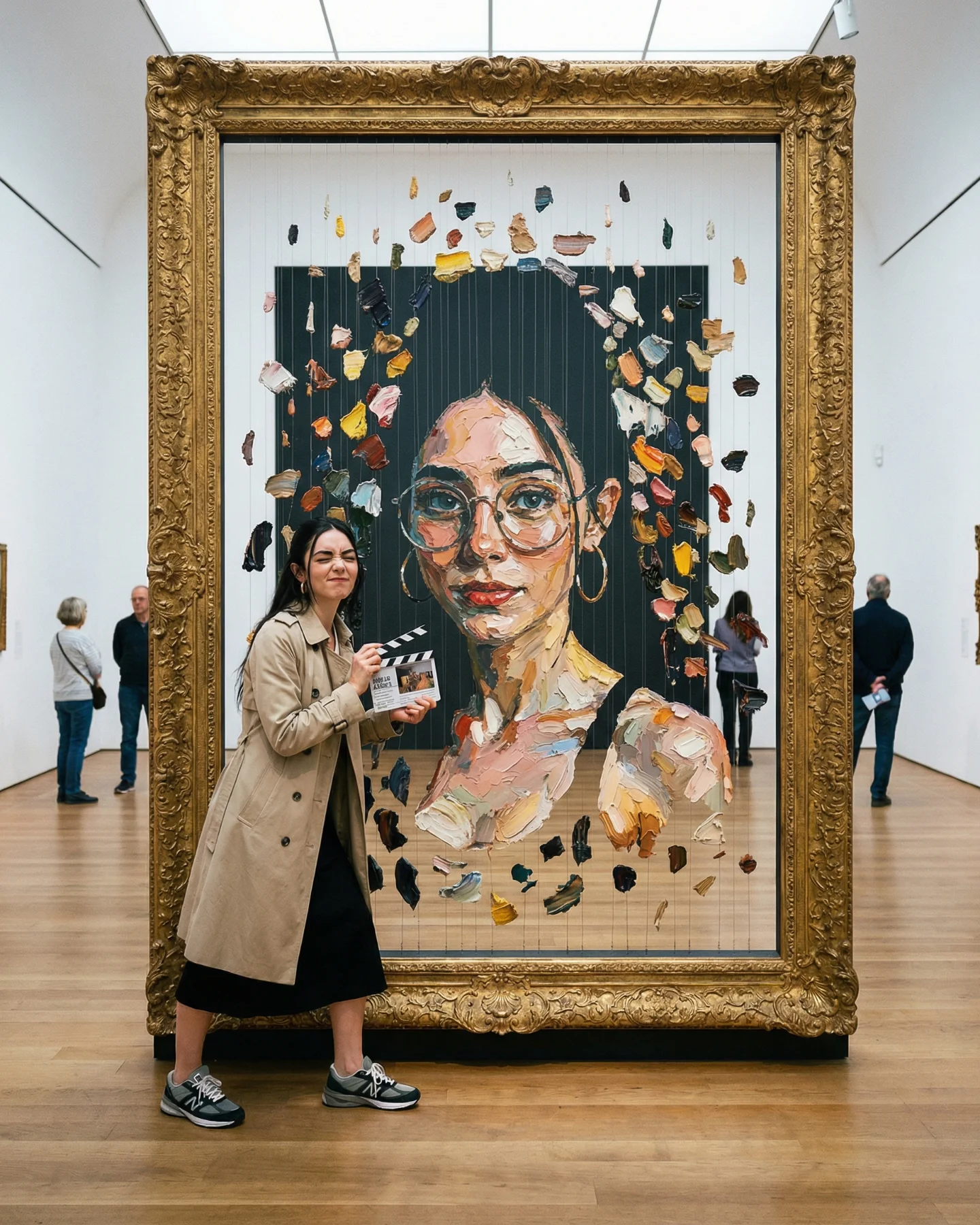
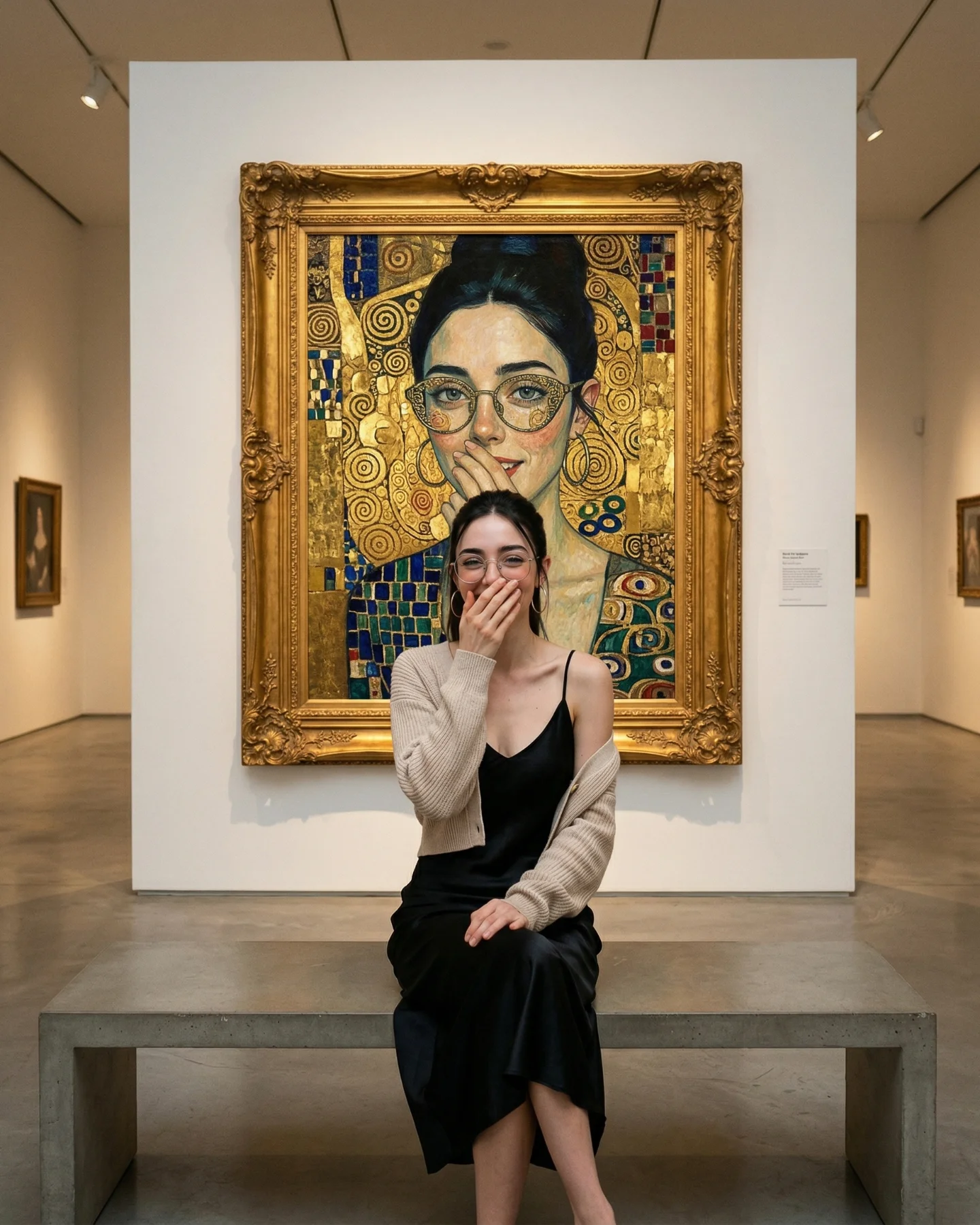
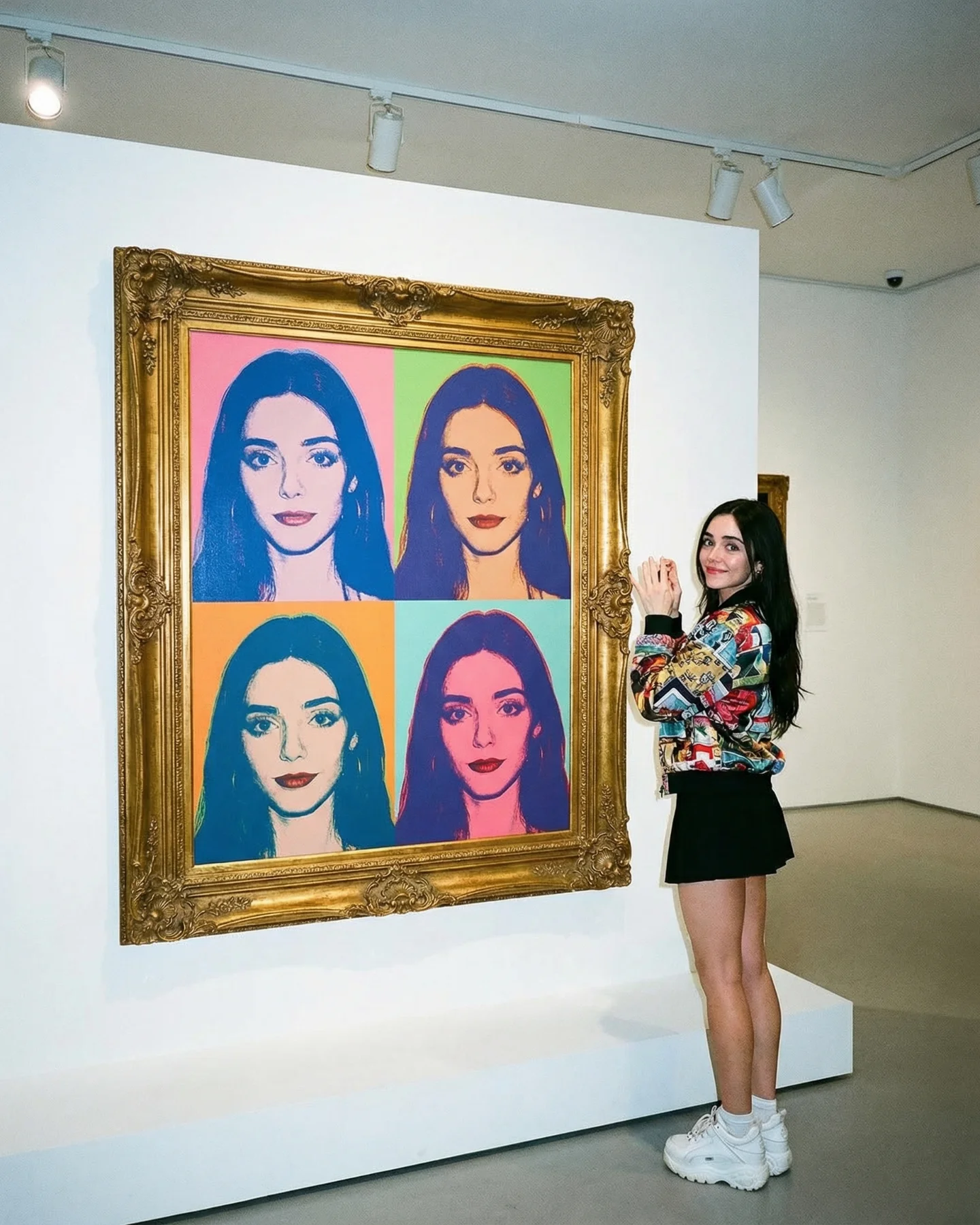
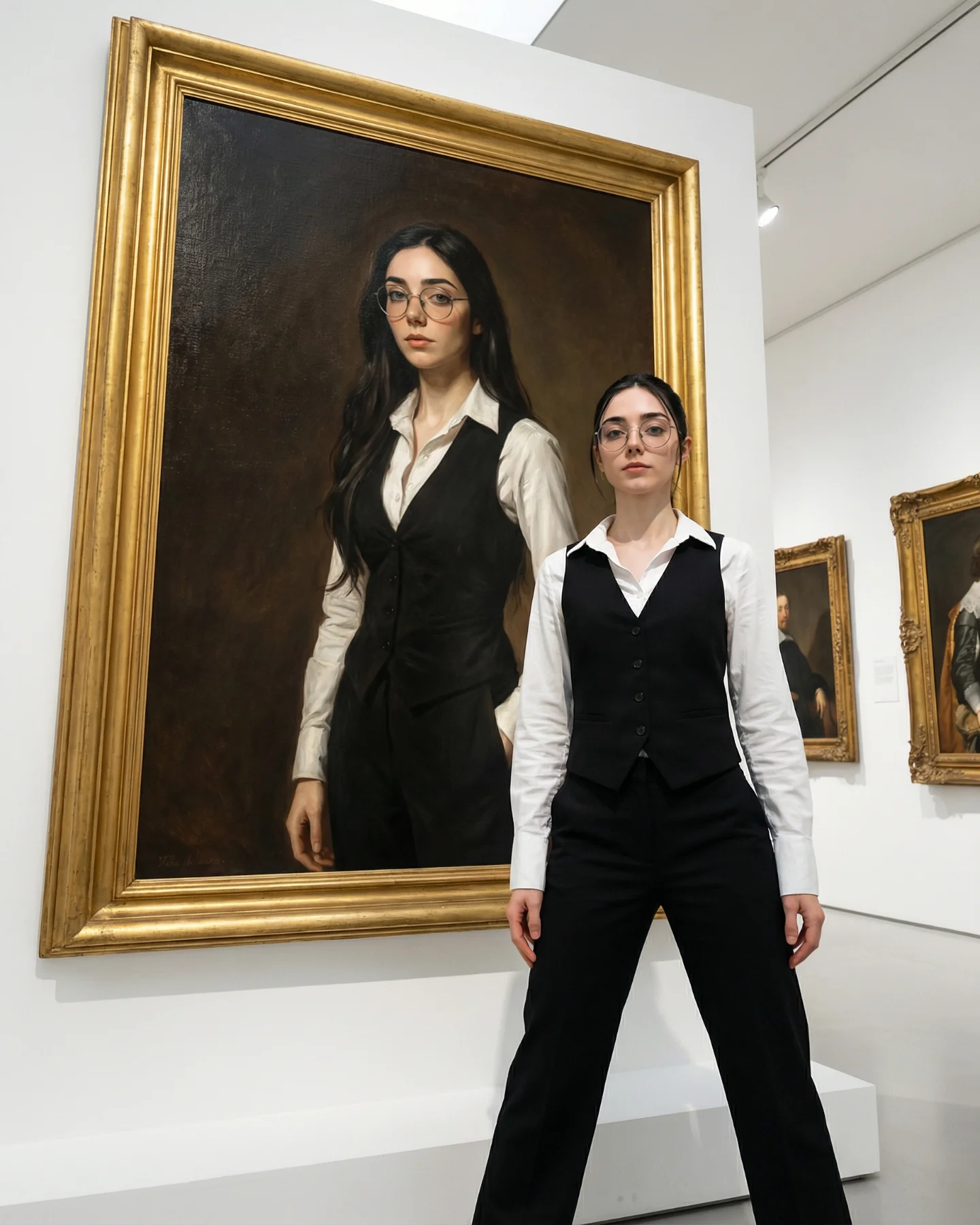
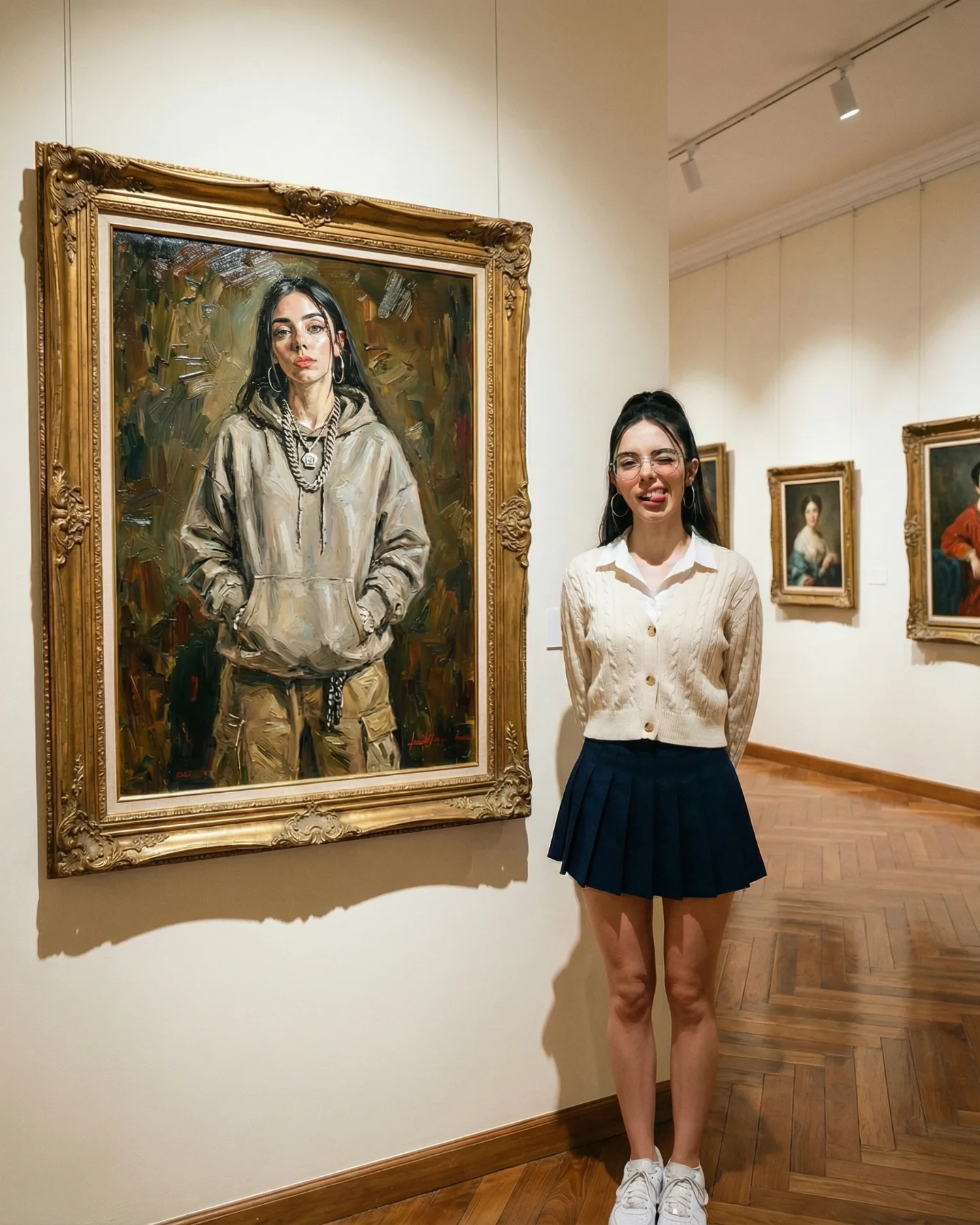
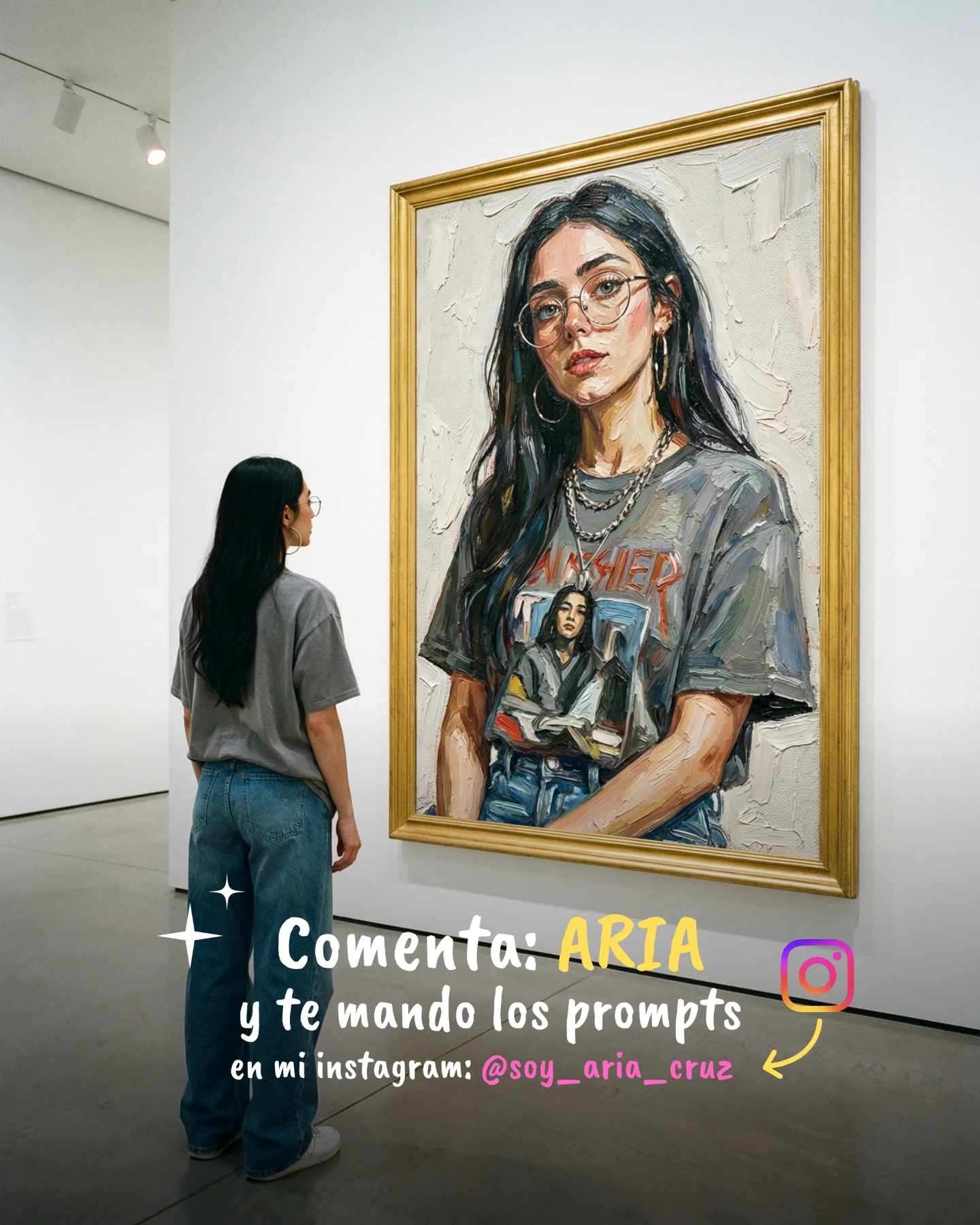
This post works because it layers two kinds of curiosity at once. First, there is the familiar appeal of a person interacting with art in a gallery. Then there is the second reveal: the artwork itself is full of surreal symbols, and the person outside the frame appears to be speaking to her painted double. That makes the image feel playful, intelligent, and easy to revisit.
It also has a built-in contrast that performs well on social. The real museum space is calm and neutral, while the artwork inside the frame is bright, whimsical, and impossible. That inside-versus-outside tension gives the image a strong mental hook. Viewers are not just looking at a portrait. They are looking at a conversation between reality and imagination.
The strongest mechanism here is self-reference. The woman outside the frame mirrors the woman inside it, which immediately creates a loop in the viewer's mind. People want to understand the relationship. Is she speaking to her alter ego? Is the painting coming alive? That kind of unresolved but readable mystery is excellent for dwell time.
The surreal objects inside the portrait also help. Floating apples, clouds, bowler hats, a pipe, and detached glasses all signal “modern art” quickly, but they do it in a highly legible way. Nothing is so abstract that the viewer feels shut out. The image remains accessible, which is why it works for broad social audiences rather than only for art-world viewers.
| Signal | Evidence (from this image) | Mechanism | Replication Action |
|---|---|---|---|
| Reality vs artwork tension | The real woman leans toward a surreal painted version of herself | Creates a story loop people want to decode | Stage an interaction between the viewer and a transformed version inside the frame |
| Readable surrealism | Apples, clouds, bowler hats, floating glasses, and pipe inside the portrait | Signals modern art quickly without becoming incomprehensible | Choose surreal motifs that are iconic and easy to recognize |
| Gallery credibility | Ornate frame, neutral walls, wood floor, museum lighting | The image feels elevated and shareable beyond a simple joke | Ground the concept in a believable exhibition environment |
This aesthetic is strongest for creators exploring art themes, identity loops, surreal humor, or concept posts that need to look smart without becoming cold. It works well for modern-art prompt packs, visual essays, carousel covers, and comment-bait posts where the image itself invites interpretation.
It is less suited for hyper-minimal product shots, candid lifestyle posts, or straightforward realism. The power of this image comes from symbolic layering and visual wit.
{gallery scene} {real visitor pose} {surreal portrait world} {symbol set}{museum or lobby wall} {creator interaction} {dreamlike landscape portrait} {iconic objects}{exhibition-like space} {whispering or reacting pose} {stylized self-portrait} {floating beauty motifs}The image is carefully split between restraint and fantasy. Outside the painting, the palette is warm beige, wood, and soft neutrals. Inside the painting, the blue sky and floating symbols add energy. Because the real space is so controlled, the surreal elements feel intentional rather than noisy.
The pose is also doing precise work. If she were just standing beside the painting, the image would be decorative. By leaning in and whispering, she activates the concept. That simple gesture transforms the artwork from background into participant, and that is what makes the scene shareable.
| Observed | Why it matters |
|---|---|
| Large ornate gold frame on a clean gallery wall | Creates immediate art-context credibility |
| Blue-sky surreal portrait with floating icons | Adds strong category recognition for modern surrealism |
| Real subject whispering toward the portrait | Turns the image into a narrative rather than a museum snapshot |
| Matching striped tops inside and outside the frame | Strengthens the connection between the two selves |
| Neutral gallery palette around a vivid artwork interior | Makes the surreal elements pop without chaos |
To make this kind of image work, control the layers separately. First define the realistic gallery shot, then define the surreal portrait world, then define the interaction between them. If you collapse all three into one vague prompt, the result usually loses either realism or conceptual clarity.
| Prompt chunk | What it controls | Swap ideas (EN, 2-3 options) |
|---|---|---|
| real gallery visitor interacting with framed artwork | The grounding layer and story setup | pointing at the frame; leaning close to inspect; laughing at the portrait |
| surreal self-portrait inside ornate frame | The conceptual core and visual payoff | dreamscape portrait; cubist self-portrait; floating-symbol editorial painting |
| floating symbolic objects around the painted face | Category clarity and modern-art flavor | roses and mirrors; birds and clocks; ribbons and masks |
| warm museum lighting with neutral walls | Believability and contrast against the inner artwork | soft spotlight gallery; natural skylight museum; quiet contemporary white cube |
| whispering pose aimed at the portrait | The narrative connection between real and painted self | hand-on-frame reaction; amused side glance; secret-sharing pose |
Baseline lock the full gallery composition, the surreal blue portrait interior, and the whispering interaction first. Those are the three pillars. Once they are stable, adjust only one or two variables per run.
A solid iteration path would be: first solve the frame size and gallery balance, second refine the painted portrait and symbol set, third tune the real woman's pose and facial expression, and fourth polish lighting, wall shadows, and texture. That order keeps the image readable as both art and social content.
The larger lesson is that art-themed posts spread better when they offer a clear entry point. This image does that by making surrealism feel playful rather than remote.