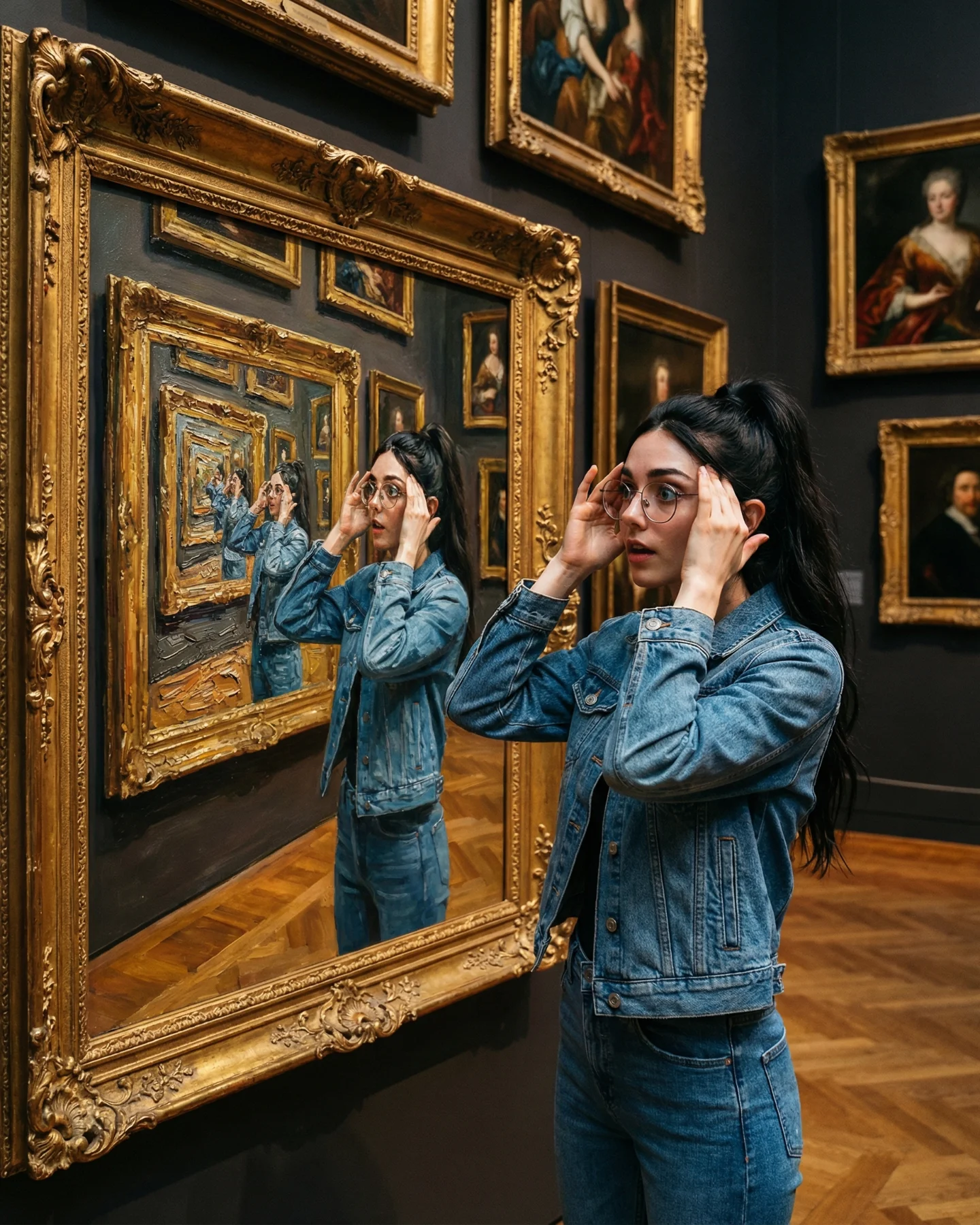
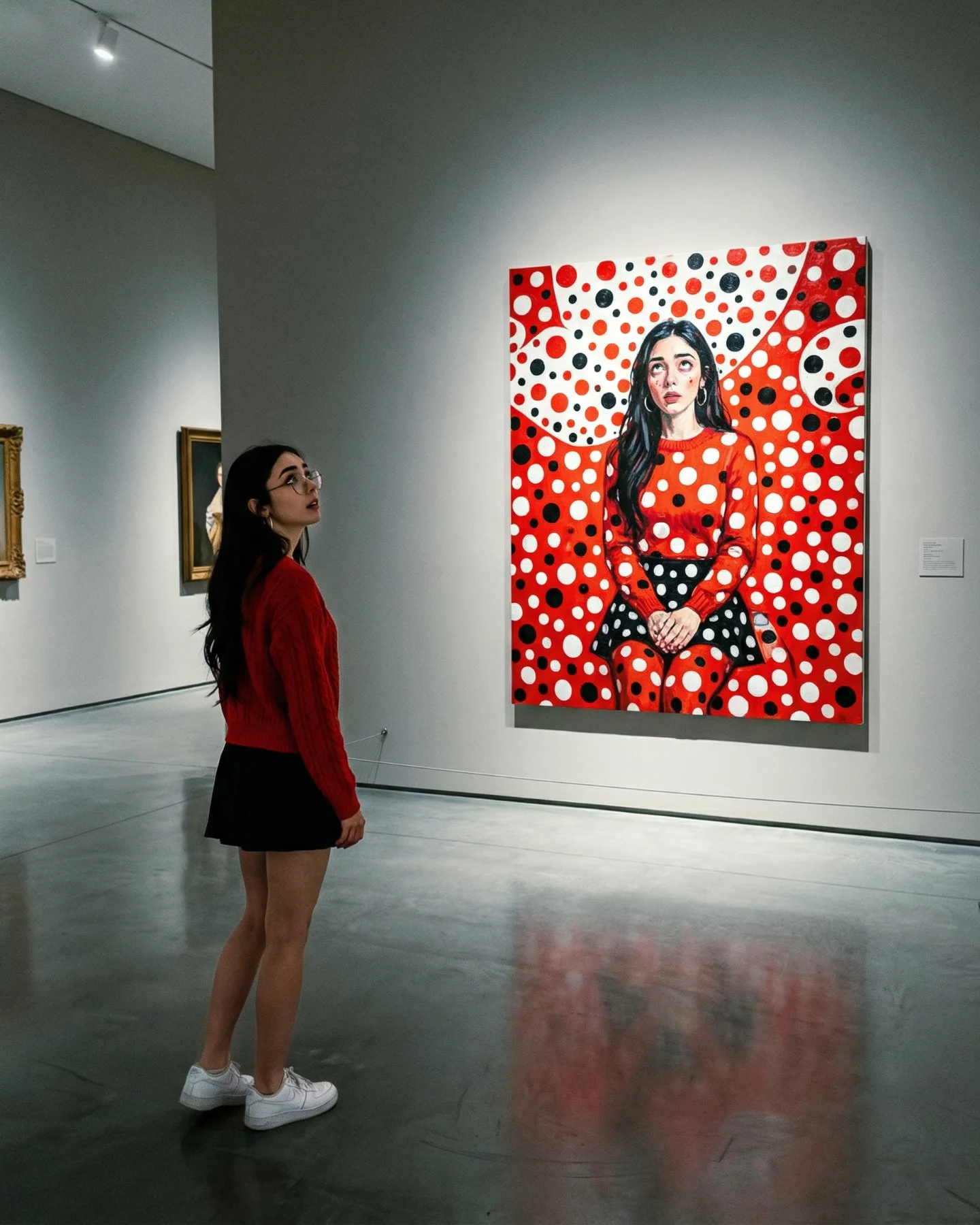
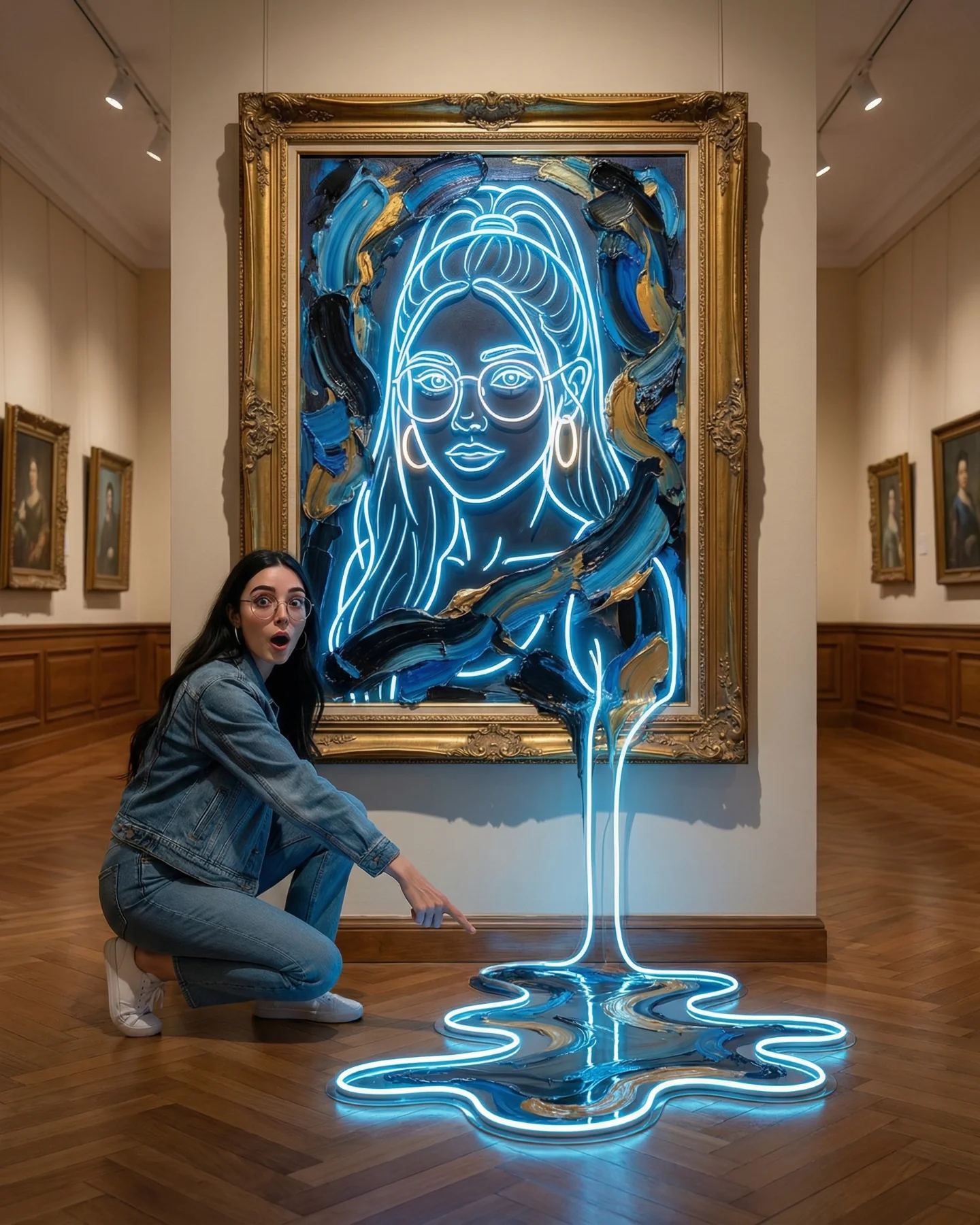
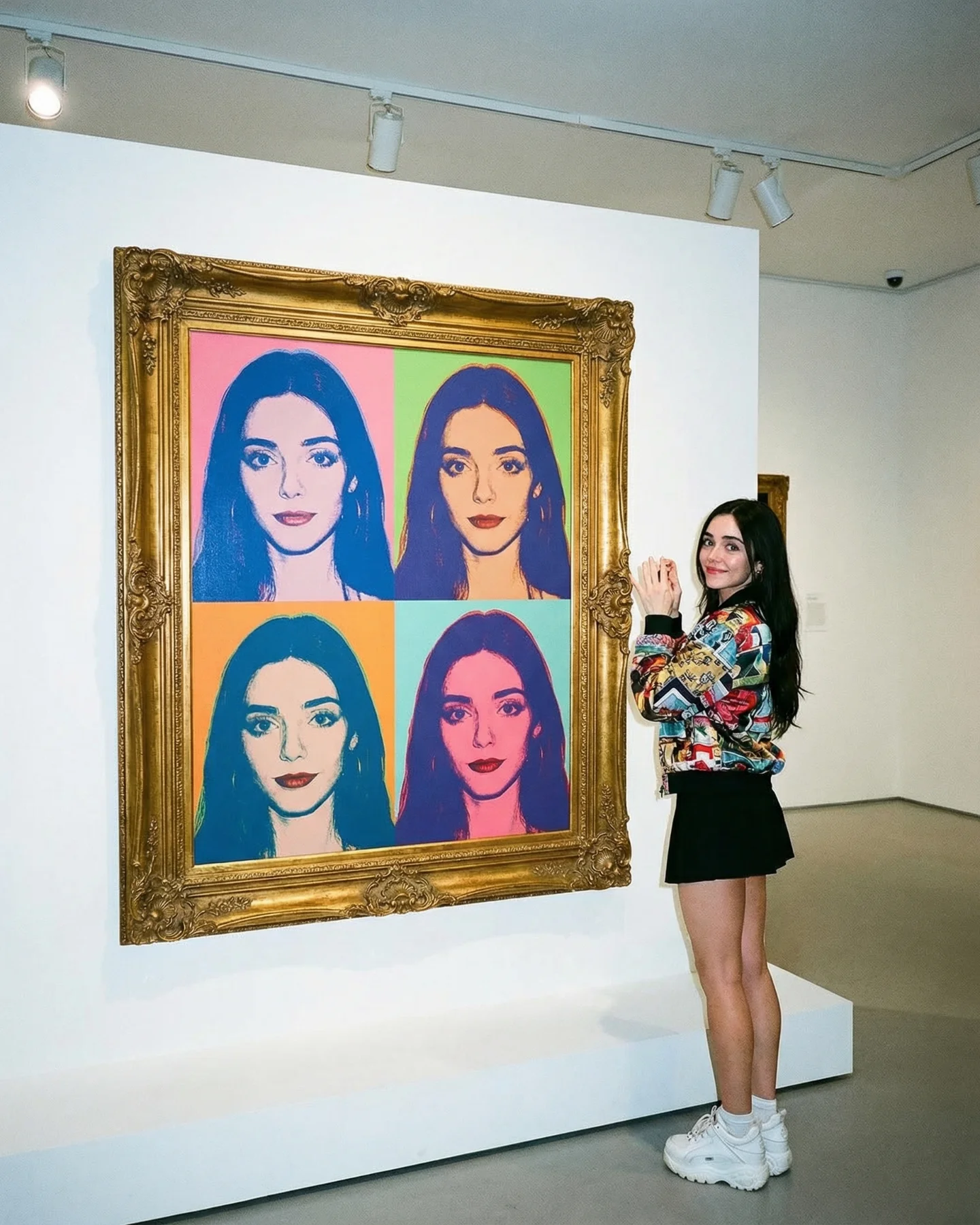
Arte Moderno 🎭🎨 Comenta "ARIA" y te paso todos los prompts 💌
Arte Moderno 🎭🎨 Comenta "ARIA" y te paso todos los prompts 💌
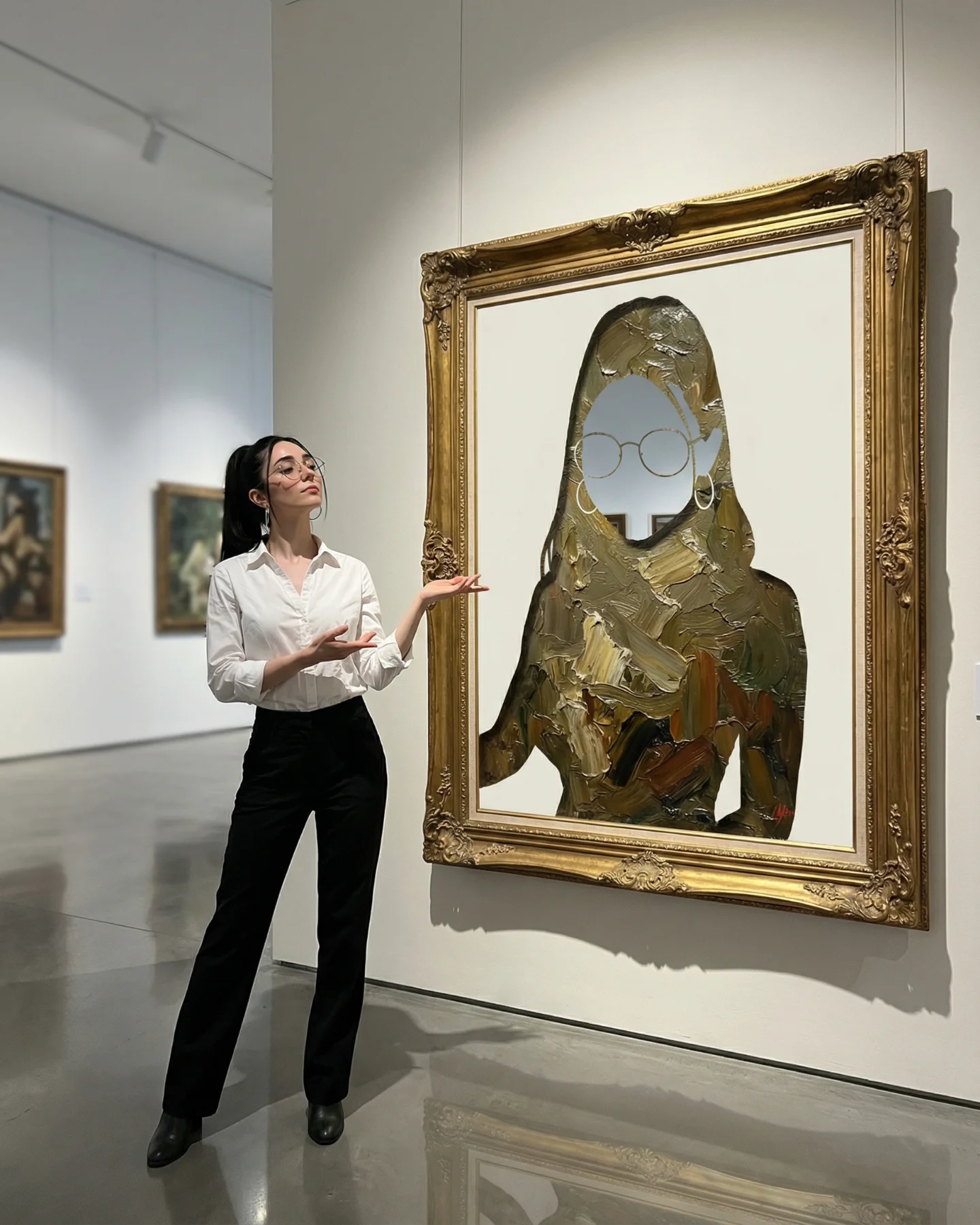
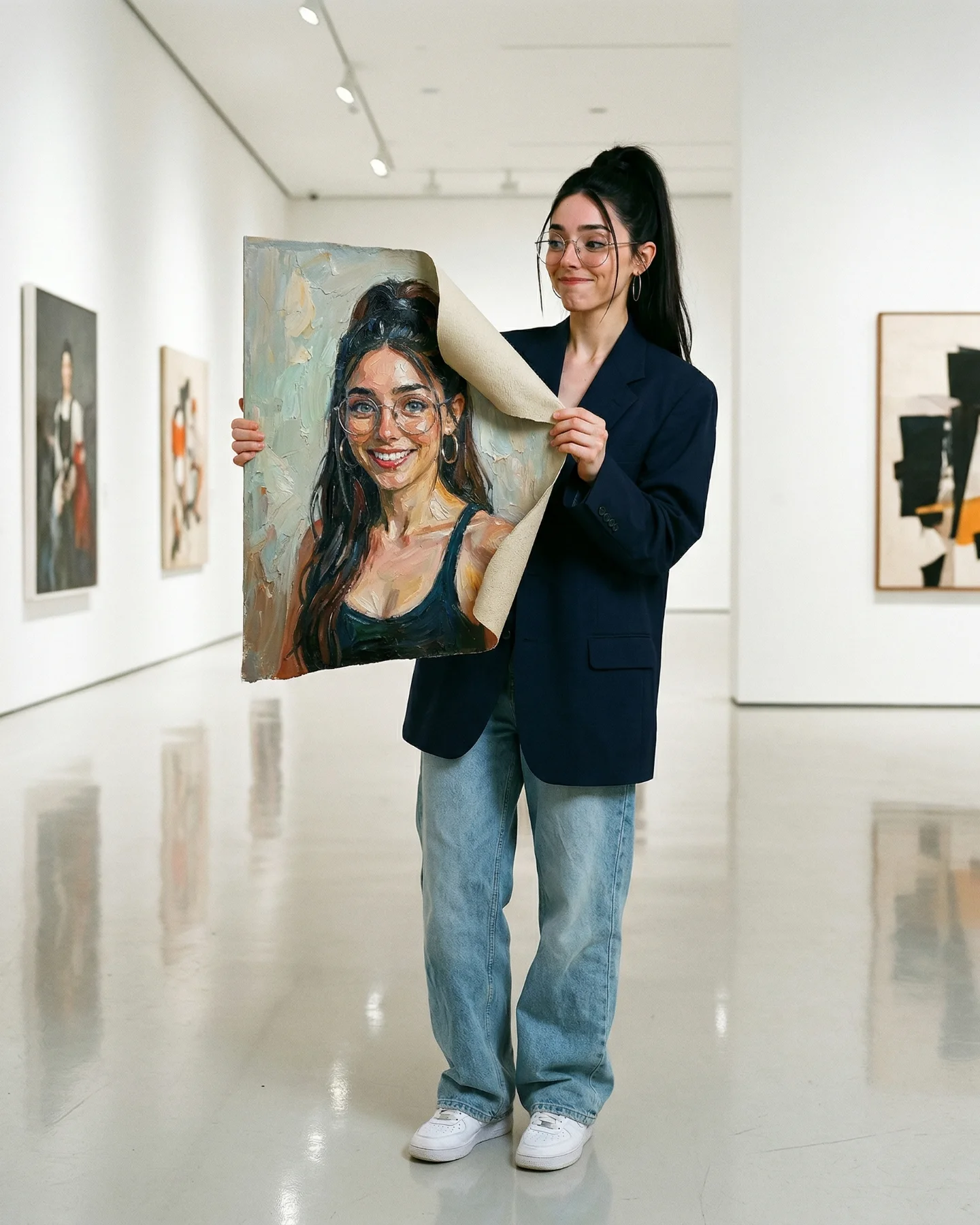
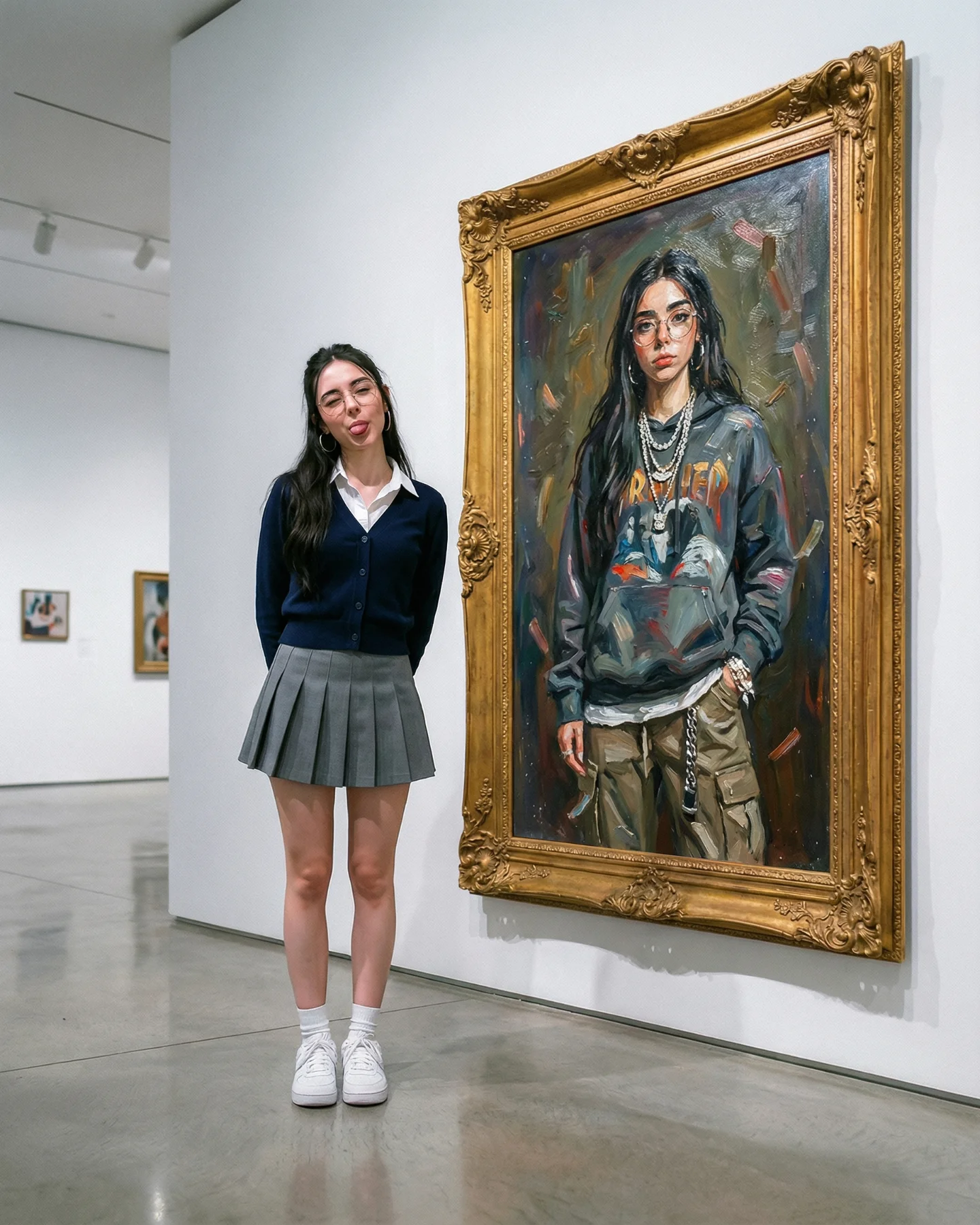
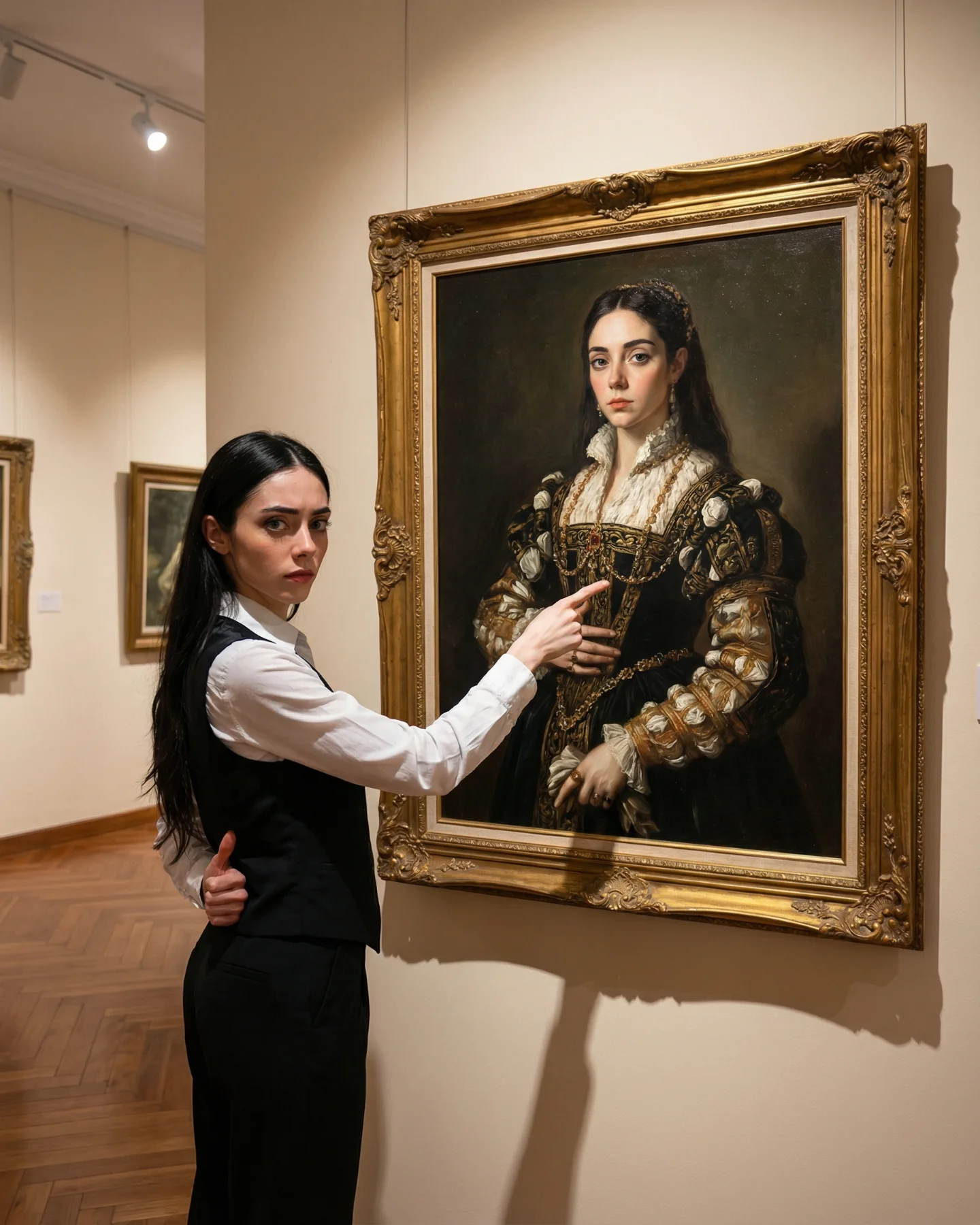
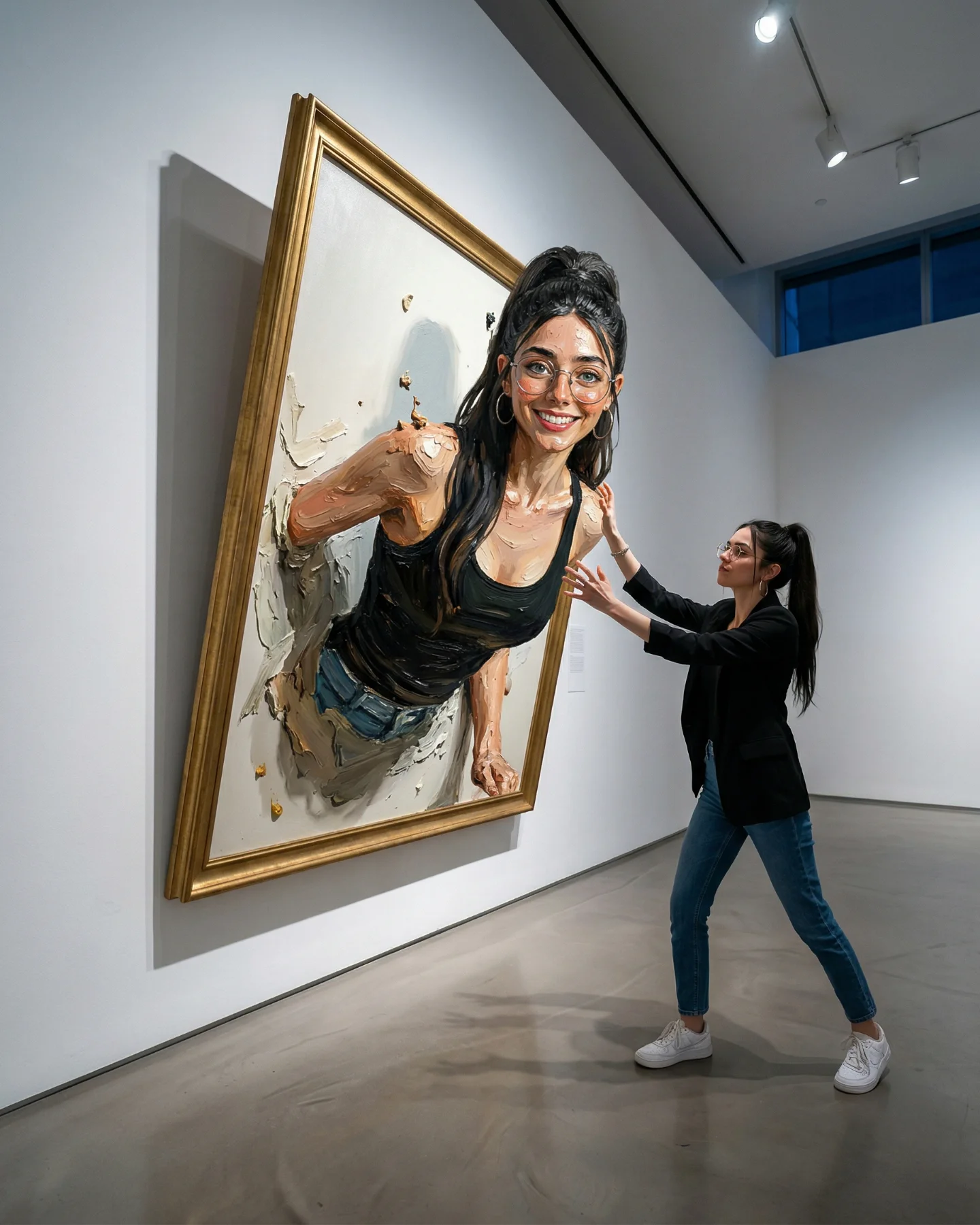
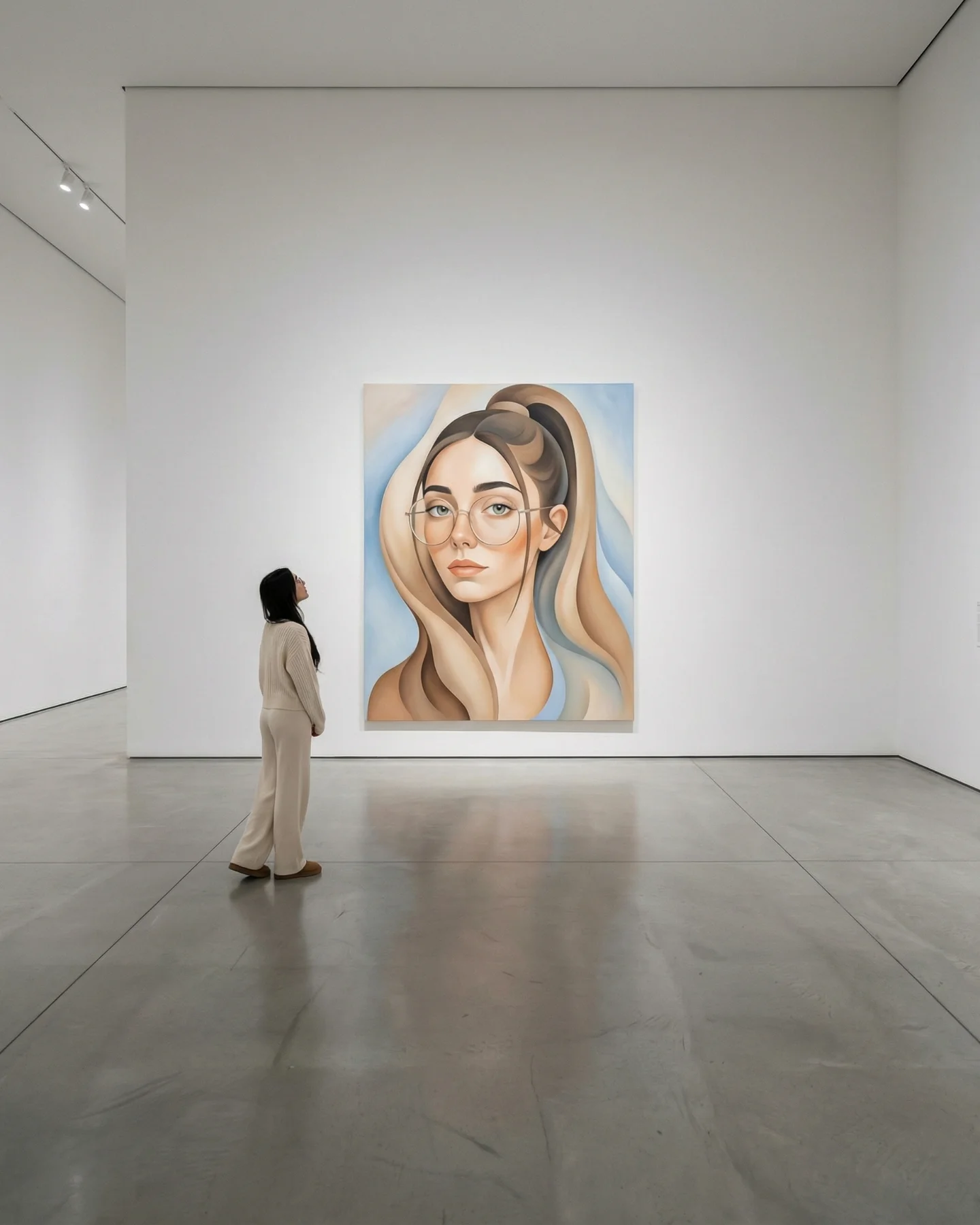
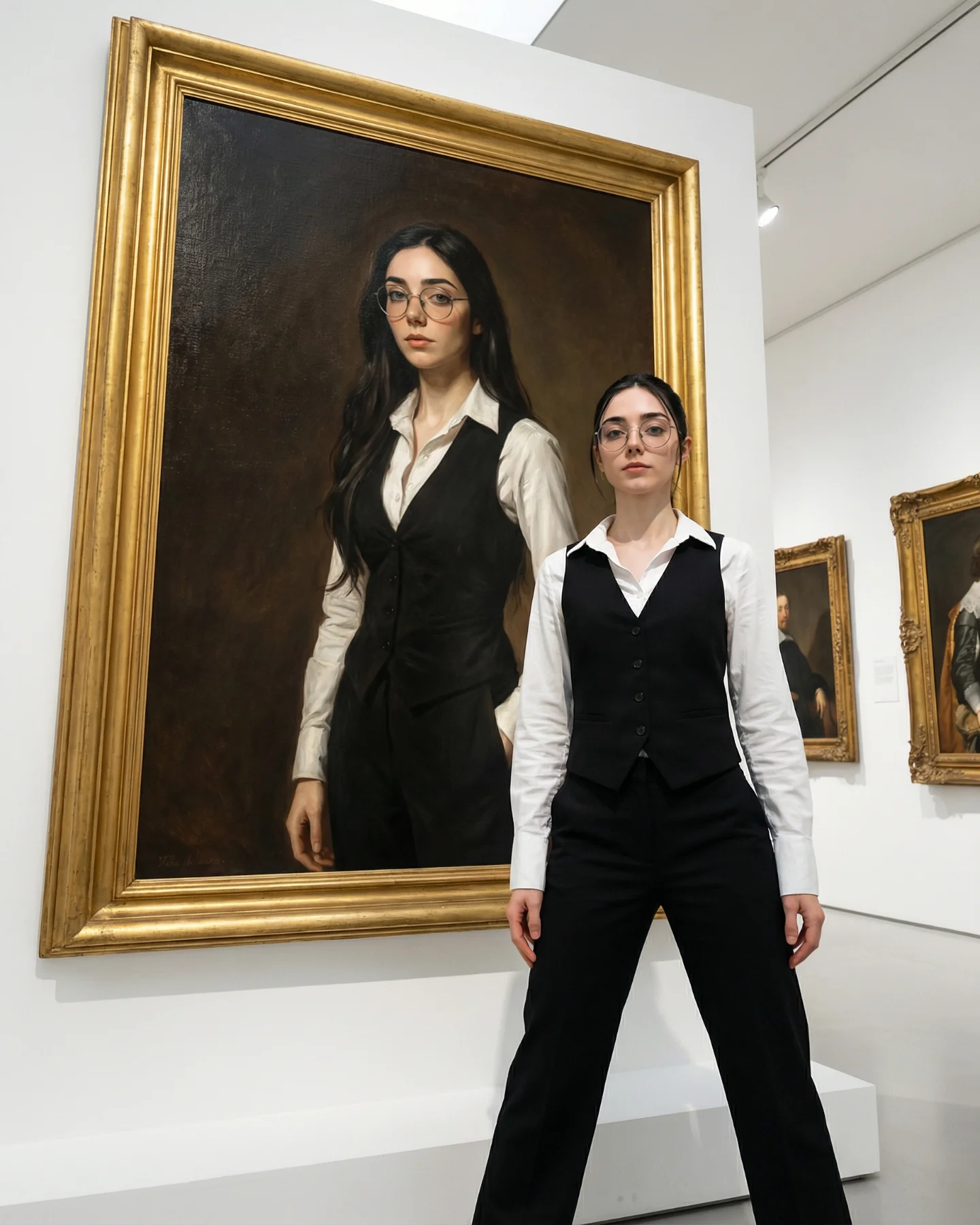
At first glance this image looks easy to copy: a woman in a white shirt, a gallery wall, a big frame. The reason it works so well is that it never behaves like a plain outfit photo. It reads as taste, performance, and visual joke at the same time. The subject is not only standing beside art; she is staged as the bridge between polished museum culture and a creator-friendly Instagram payoff. That tension is what gives the post its scroll-stopping power.
The post caption says “Arte Moderno,” and that short phrase is doing more than naming a theme. It gives permission for the image to feel conceptual. The audience immediately understands that the picture should be read as a stylish interpretation, not as literal documentation. That matters because the framed painting itself carries the strongest hook: the abstract female bust with a blank face area and round glasses echoes the presenter without becoming a direct copy. Viewers get a fast puzzle to solve, and fast puzzles are excellent engagement fuel.
The viral quality here comes from controlled contrast. The woman is dressed in a very disciplined monochrome look, while the painting is rich, textured, and antique-framed. The gallery space is sparse, so every design decision feels intentional. Nothing is noisy, yet there is enough novelty for people to pause. The image also creates a role that many small creators want: not merely being photographed, but appearing to curate, explain, or embody an aesthetic world.
Another reason it performs is that the image compresses status signals into one frame. A museum setting suggests taste. The oversized frame adds spectacle. The abstract portrait introduces originality. The pose, with one hand presenting the piece, quietly turns the creator into a guide rather than a model. That makes the post feel more shareable because it offers an attitude people can borrow, not just a face to admire.
| Signal | Evidence (from this image) | Mechanism | Replication Action |
|---|---|---|---|
| Instant visual puzzle | The framed artwork mirrors a female figure but leaves the face area blank except for glasses. | People pause to decode the relationship between the presenter and the painting. | Lock one surreal detail inside the artwork and keep everything else realistic. |
| Status through environment | White gallery walls, polished floor, sparse hanging art, ornate gold frame. | The setting signals taste and elevates a simple pose into a cultural moment. | Use a clean exhibition-like space and remove casual background clutter. |
| Embodied authorship | The subject gestures toward the work instead of simply posing beside it. | The creator looks like a curator or maker, which increases authority and saves the image from feeling passive. | Direct the pose so one hand presents the focal object and the chin lifts slightly. |
This format works best when a creator wants to signal taste without becoming overly luxurious or cold. Fashion creators can use it to frame outfit content as editorial culture rather than retail content. AI art creators can use it to make generated visuals feel exhibited instead of merely posted. Personal brand accounts can adapt it for “pointing at my work” storytelling because the composition naturally supports commentary, launches, and reveal posts.
This is less ideal for sports, high-energy dance, or comedic meme content because the composition relies on stillness and curated polish. It is also not ideal for crowded street scenes or product-heavy commercial posts, since too many visual elements would kill the museum illusion. If the brand voice is rugged, candid, or deliberately messy, this aesthetic may feel over-controlled.
| Transfer | Keep | Change | Slot Template (EN) |
|---|---|---|---|
| Beauty creator version | Gallery lighting, full-body composition, oversized frame, presenter gesture. | Swap the framed artwork for a textured cosmetic-inspired portrait and soften wardrobe lines. | {gallery scene} {tailored wardrobe} {beauty-inspired framed portrait} {elegant mood} |
| Tech founder version | Minimal wall, reflective floor, left-right composition split, premium restraint. | Replace the painting with a schematic or abstract interface canvas and use a sharper blazer silhouette. | {exhibition lobby} {structured blazer} {abstract product canvas} {confident mood} |
| Fantasy art version | Scale contrast, museum stillness, warm spotlight, presenting pose. | Turn the artwork into a mythic painted figure with metallic textures and richer earth tones. | {museum wall} {monochrome outfit} {mythic framed portrait} {quiet dramatic mood} |
The image succeeds because its beauty is built on observable controls rather than vague “good taste.” First, the palette is highly disciplined: white wall, black trousers, white shirt, gold frame, then earthy olive-and-umber brush textures inside the artwork. That keeps the image luxurious without becoming loud. Second, the scale relationship is excellent. The frame is large enough to feel important, which makes the woman look like she belongs in a designed scene, not a casual snapshot.
Third, the light is soft and directional. The brighter zone above the artwork subtly crowns the frame, while the subject stays evenly readable. Fourth, the body language is elegant but useful. The hands are not random; they guide attention. Finally, the background depth is handled with restraint. Those blurred paintings on the far left are tiny, but they validate the location and stop the image from feeling staged in a blank showroom.
| Observed | Recreate |
|---|---|
| Soft warm spotlight above the painting | Use overhead gallery-style illumination with gentle falloff, not direct flash. |
| Two-to-three dominant neutral colors plus gold and earth-tone accents | Limit wardrobe to black and white, then let the framed artwork carry texture and color. |
| Subject fills less space than the artwork | Make the framed piece oversized so the scene feels curated rather than portrait-only. |
| Clean wall geometry and reflective floor | Choose a location with architectural simplicity and subtle floor reflections. |
The easiest way to miss this look is to describe it emotionally instead of structurally. Think in prompt chunks that each control a visible lever.
| Prompt chunk | What it controls | Swap ideas (EN, 2–3 options) |
|---|---|---|
| presenting woman in white shirt and black tailored trousers | Creates the clean editorial silhouette and keeps the human side disciplined. | black blazer and ivory trousers; crisp blouse and pencil skirt; sleeveless turtleneck and wide-leg pants |
| oversized ornate gold-framed abstract portrait | Introduces spectacle, art-world status, and the main hook. | silver carved frame; distressed wood museum frame; minimal black gallery frame |
| minimal contemporary museum with polished gray floor | Defines environment quality and removes clutter. | quiet exhibition hall; white cube gallery; luxury art fair booth |
| soft warm gallery spotlight with ambient fill | Controls mood and avoids cheap flash aesthetics. | neutral skylight wash; tungsten exhibition pool light; diffused overhead museum light |
| left-third subject, right-heavy artwork composition | Locks the storytelling balance between presenter and object. | subject centered with artwork behind; tighter crop on hands and frame; wider corridor composition |
| abstract faceless portrait with round glasses and palette-knife texture | Supplies the surreal detail that drives curiosity. | masked portrait with metallic leaf; fragmented cubist face; blurred figurative oil silhouette |
Start with a baseline lock before you chase variations. The first three things to lock are composition, lighting direction, and the relationship between the human figure and the framed artwork. If those move too much, the image stops feeling intentional. After that, follow a one-change rule. Change only one or two knobs per run so you know what caused the improvement.
The core lesson is simple: this image is not powerful because it is complicated. It is powerful because every visual decision supports one idea. If you recreate that discipline, you can transfer the format into many niches without losing the high-end feel that made the original post memorable.