Arte Moderno 🎭🎨 Comenta "ARIA" y te paso todos los prompts 💌
Arte Moderno 🎭🎨 Comenta "ARIA" y te paso todos los prompts 💌
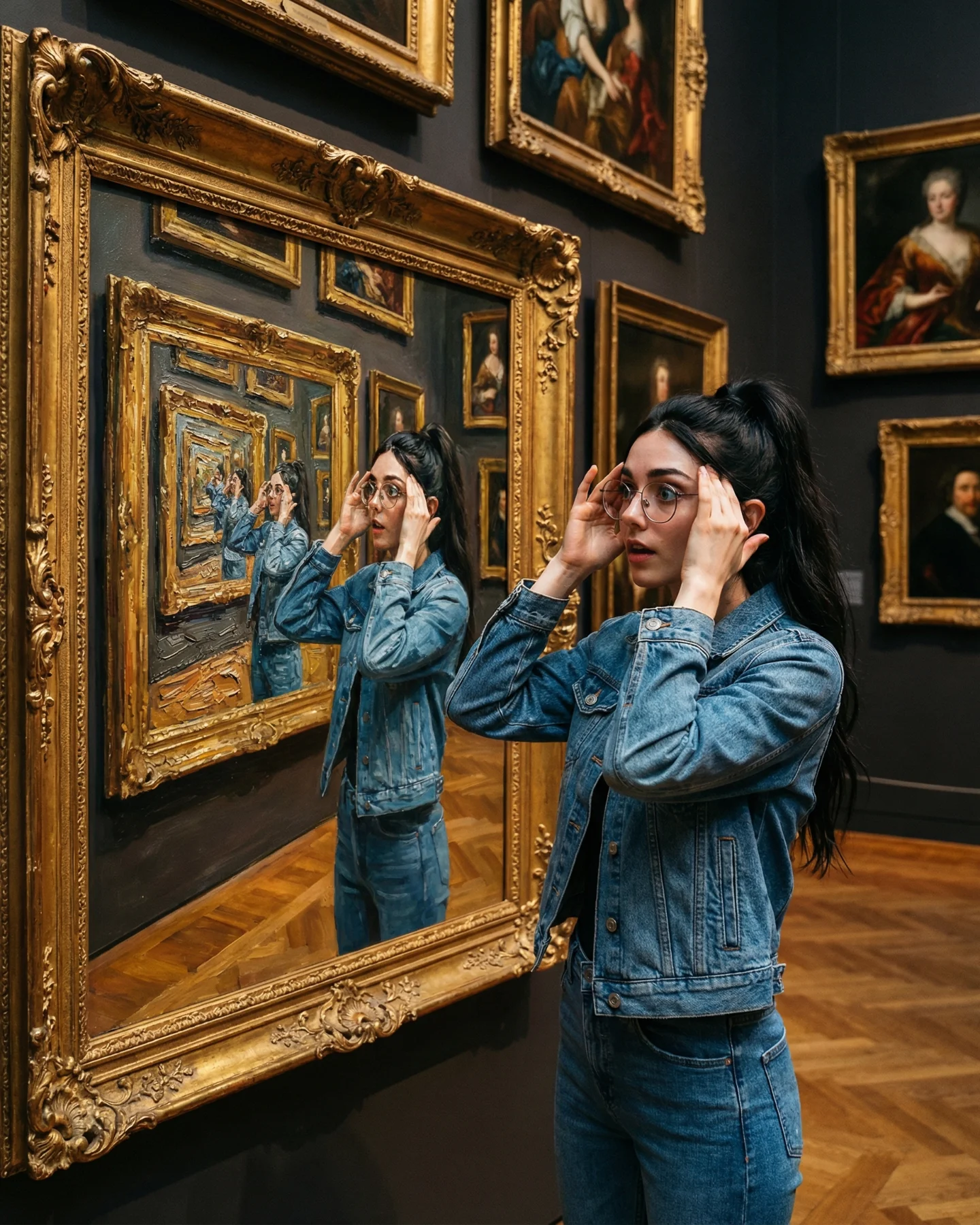
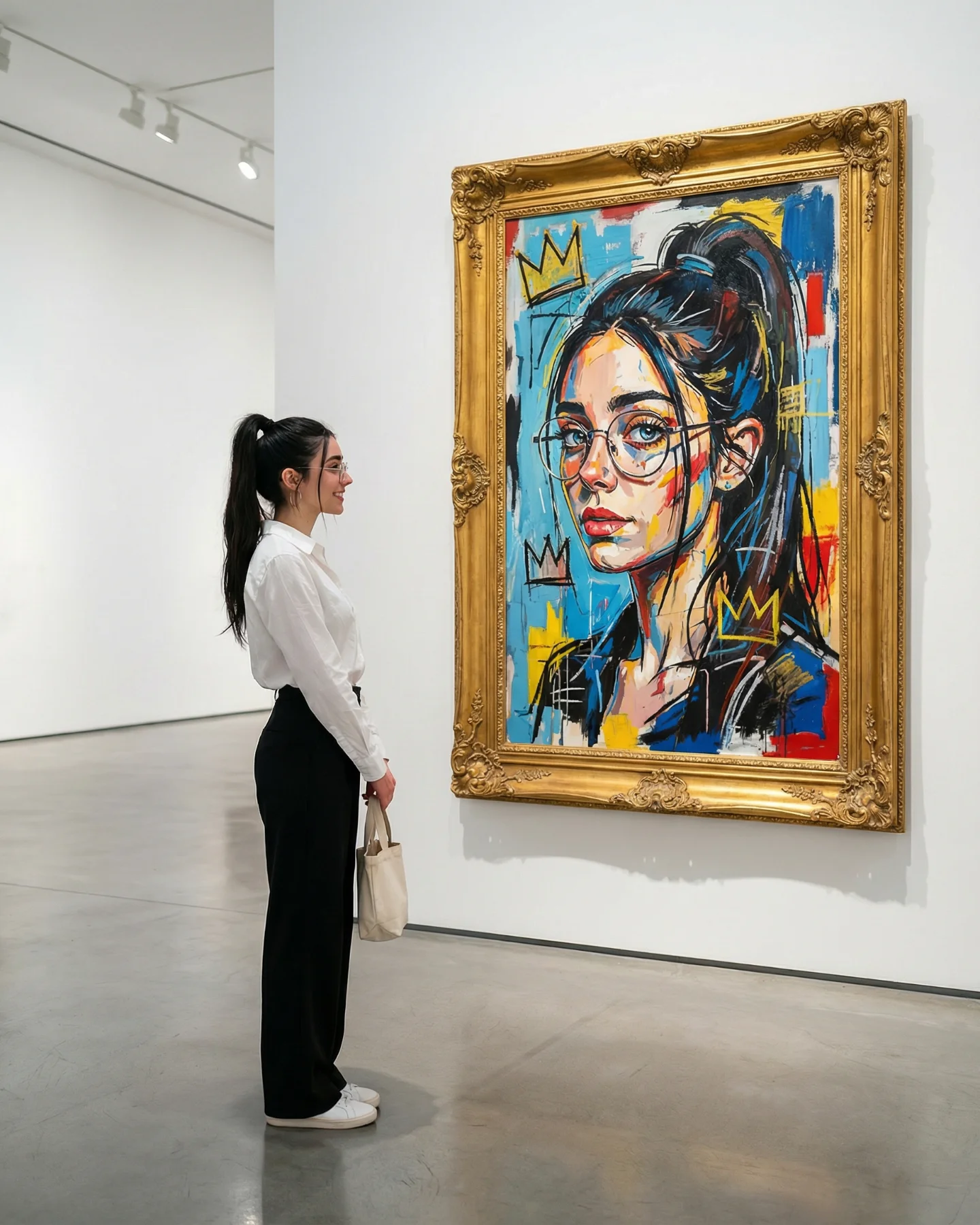
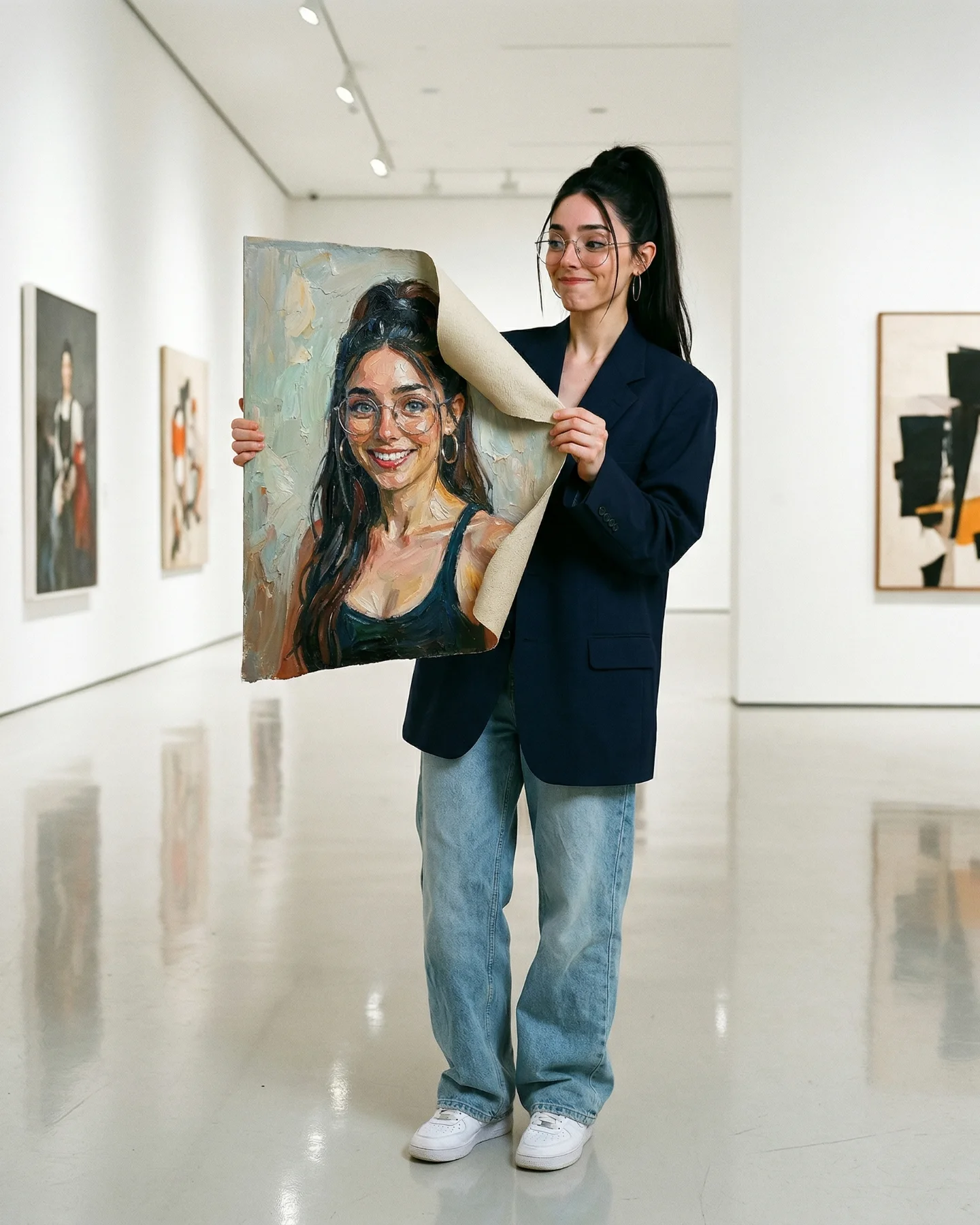
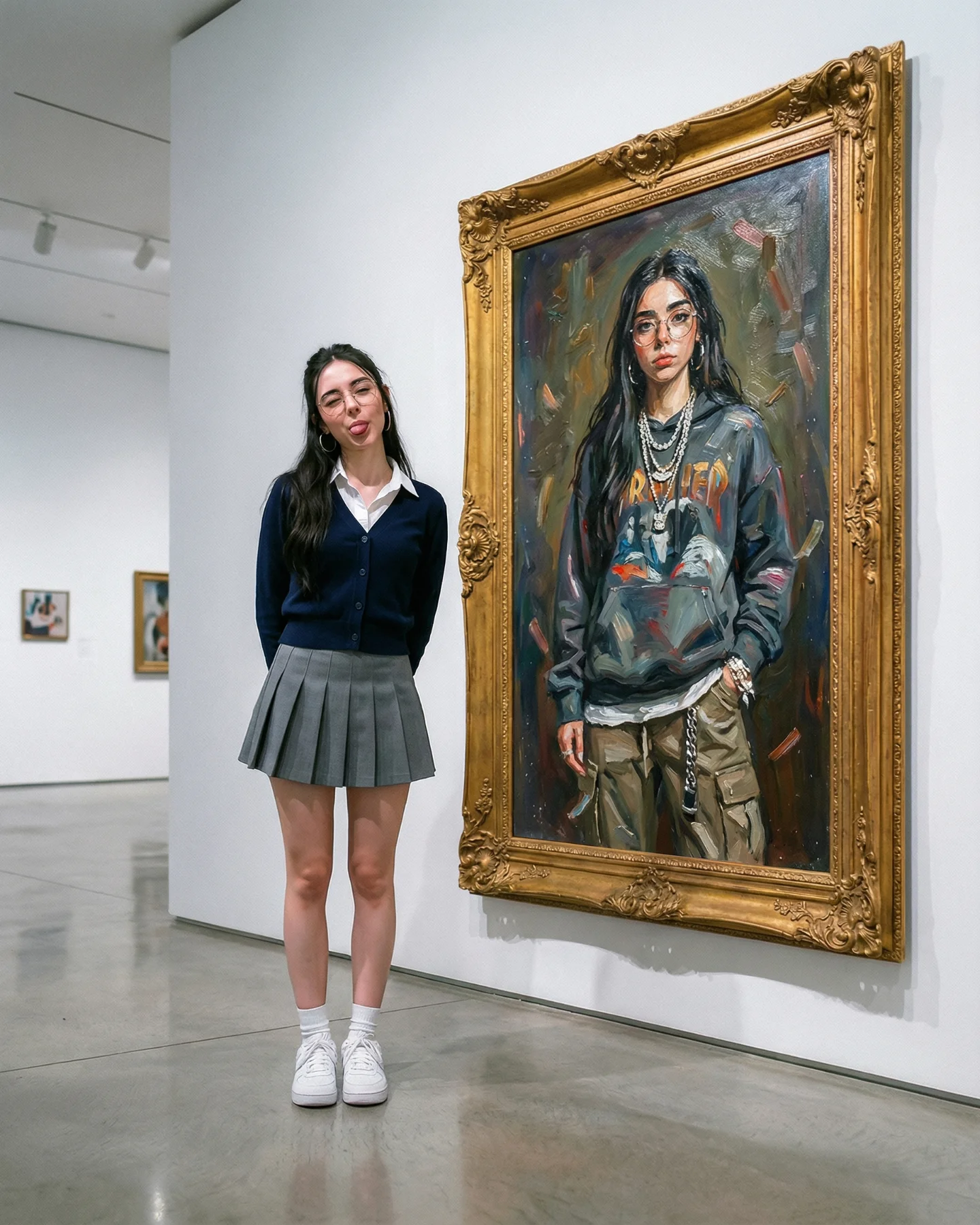
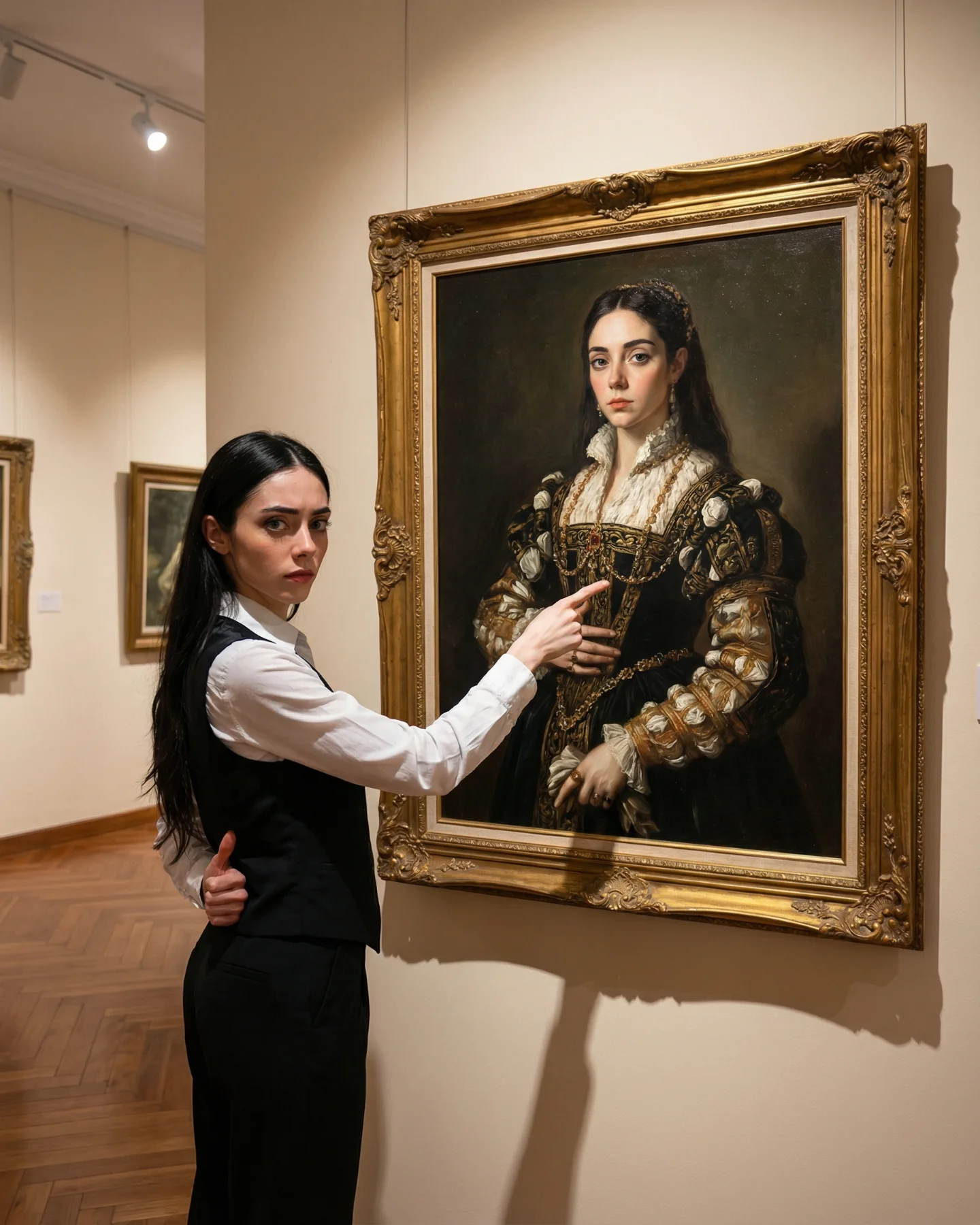
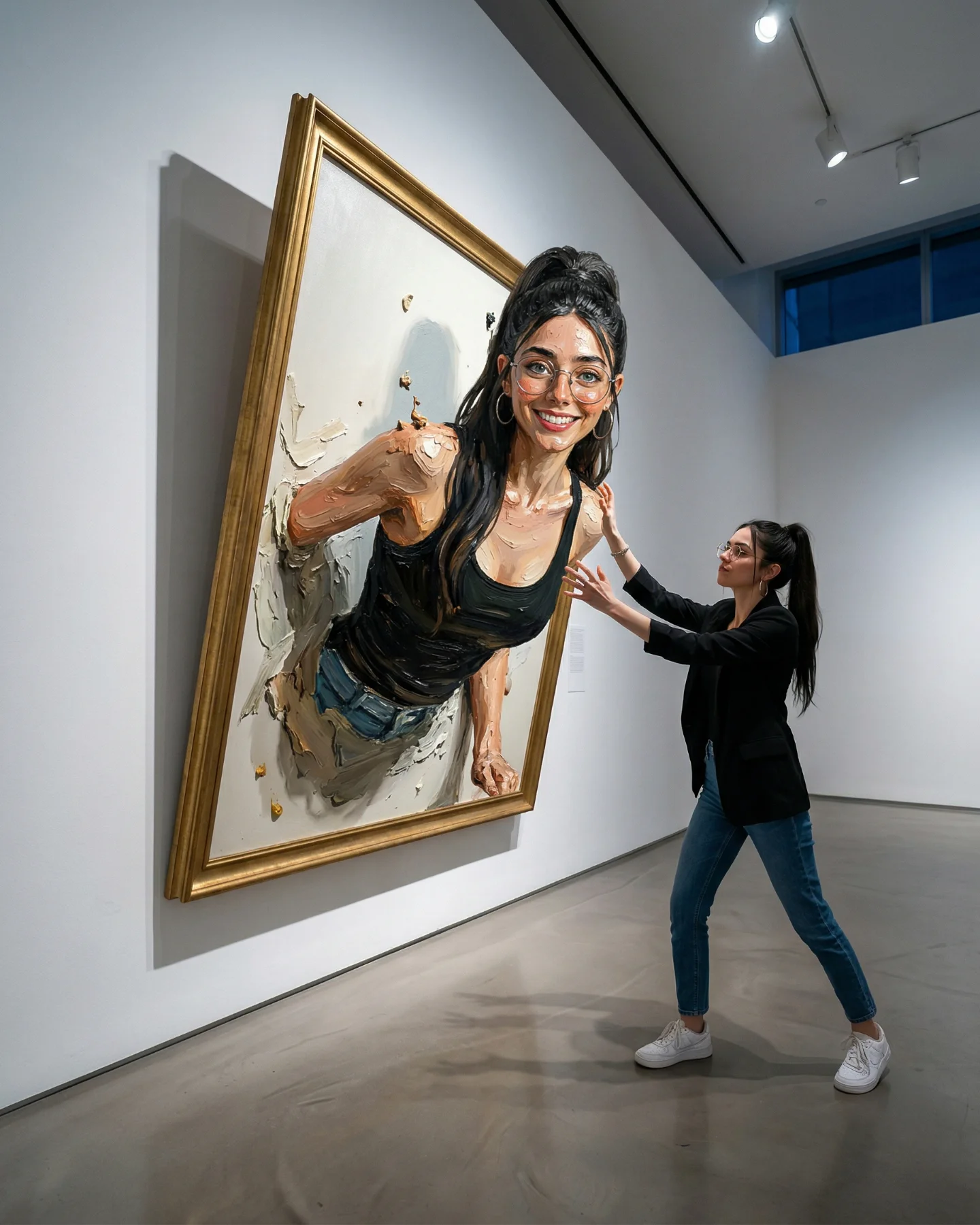
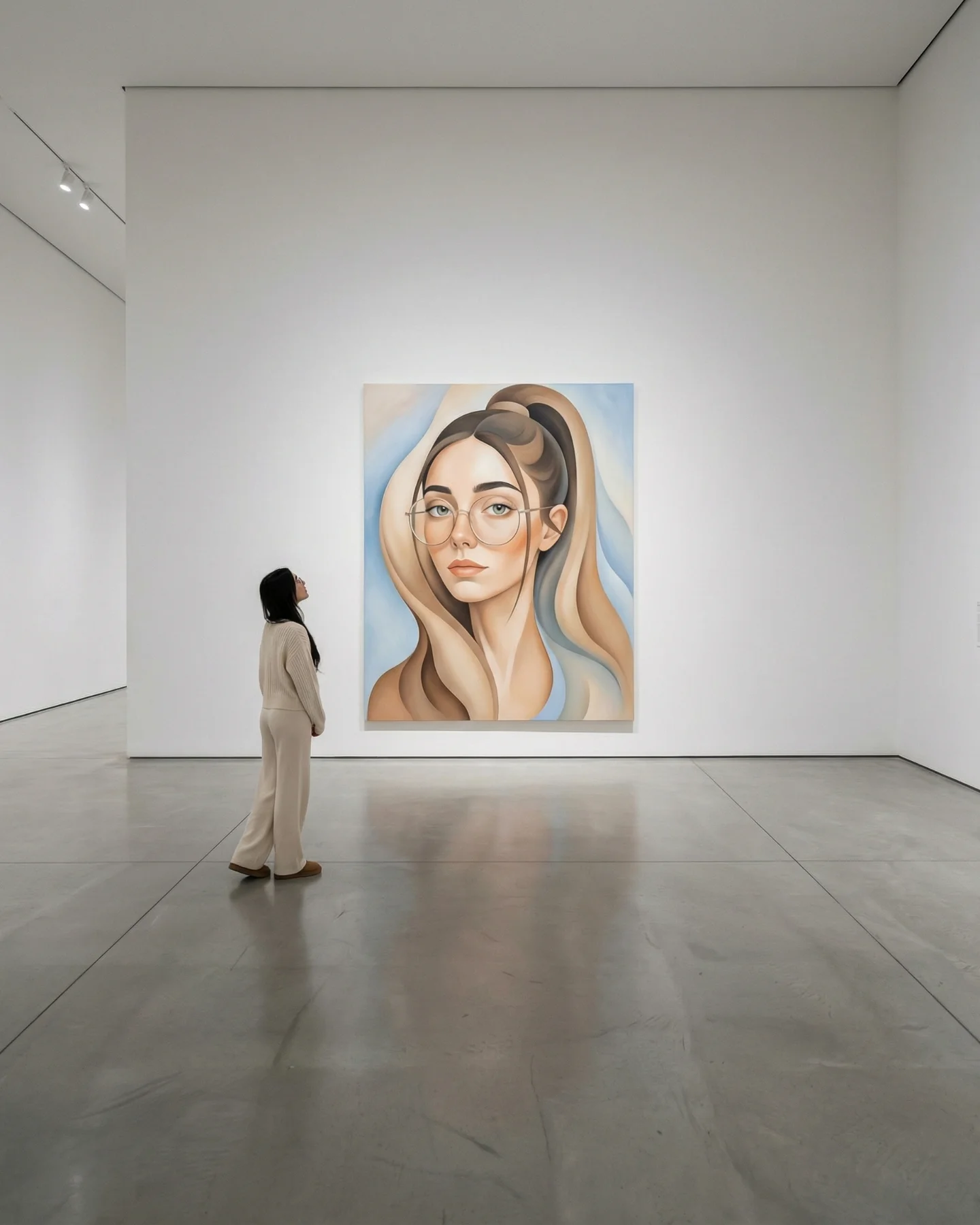
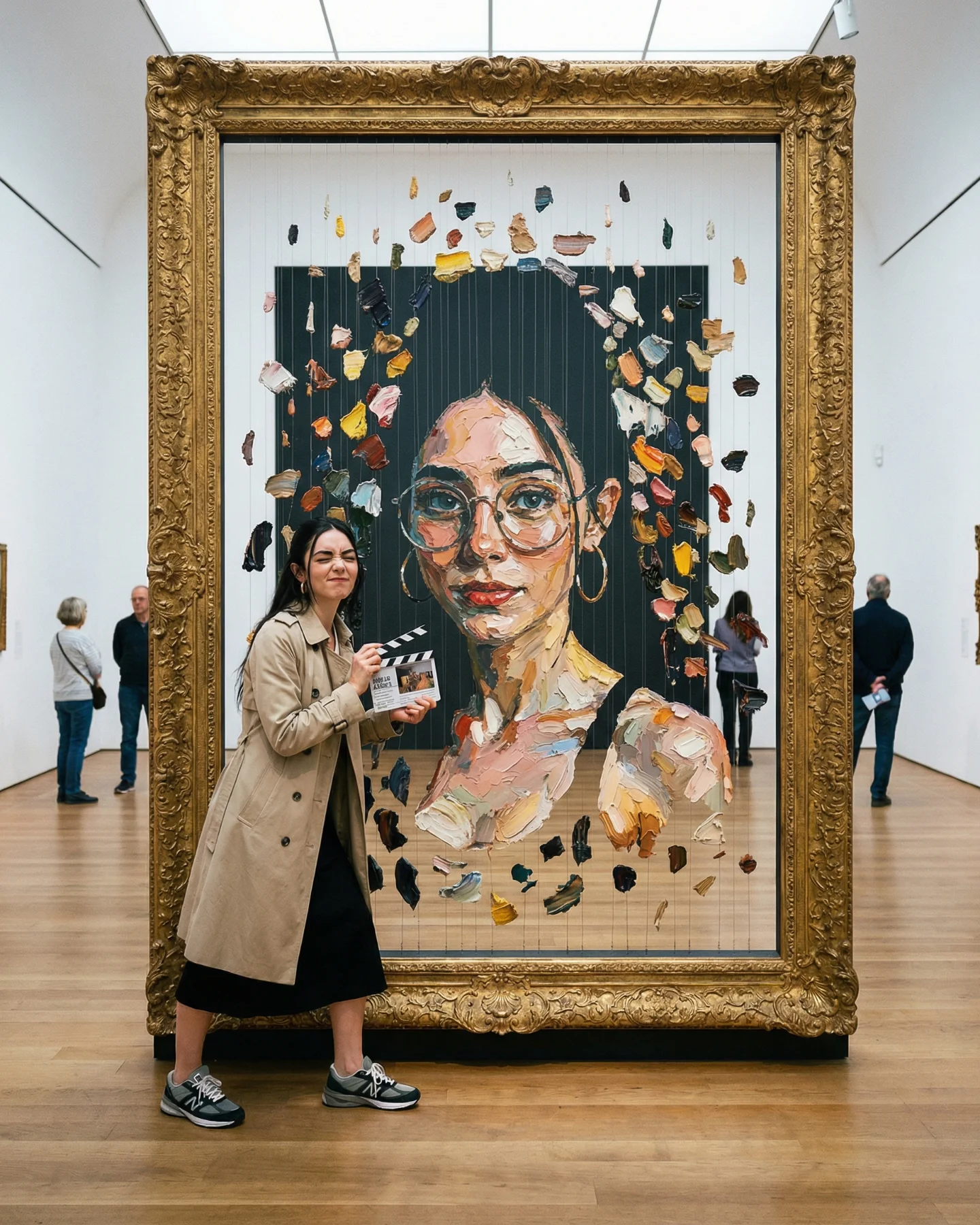
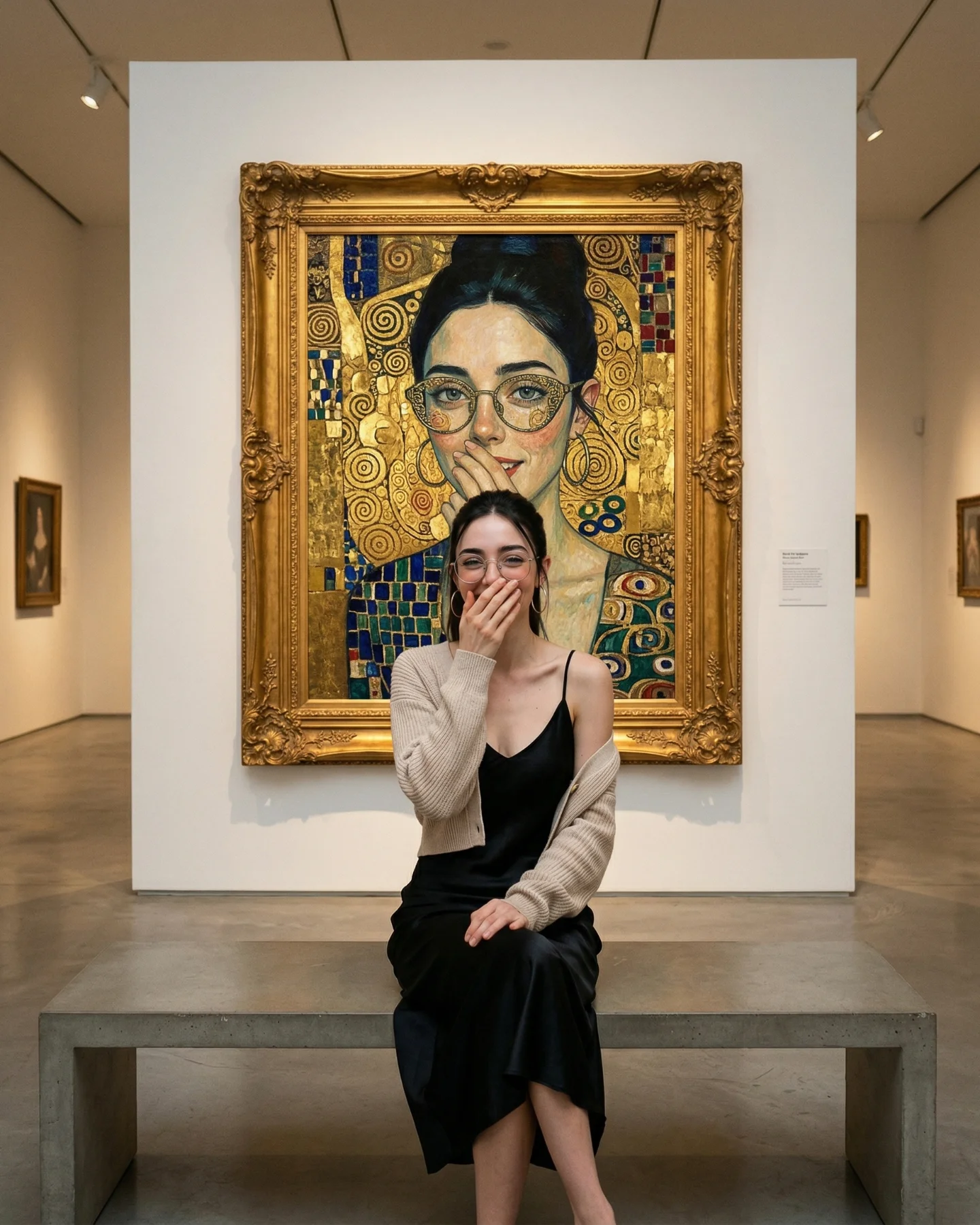
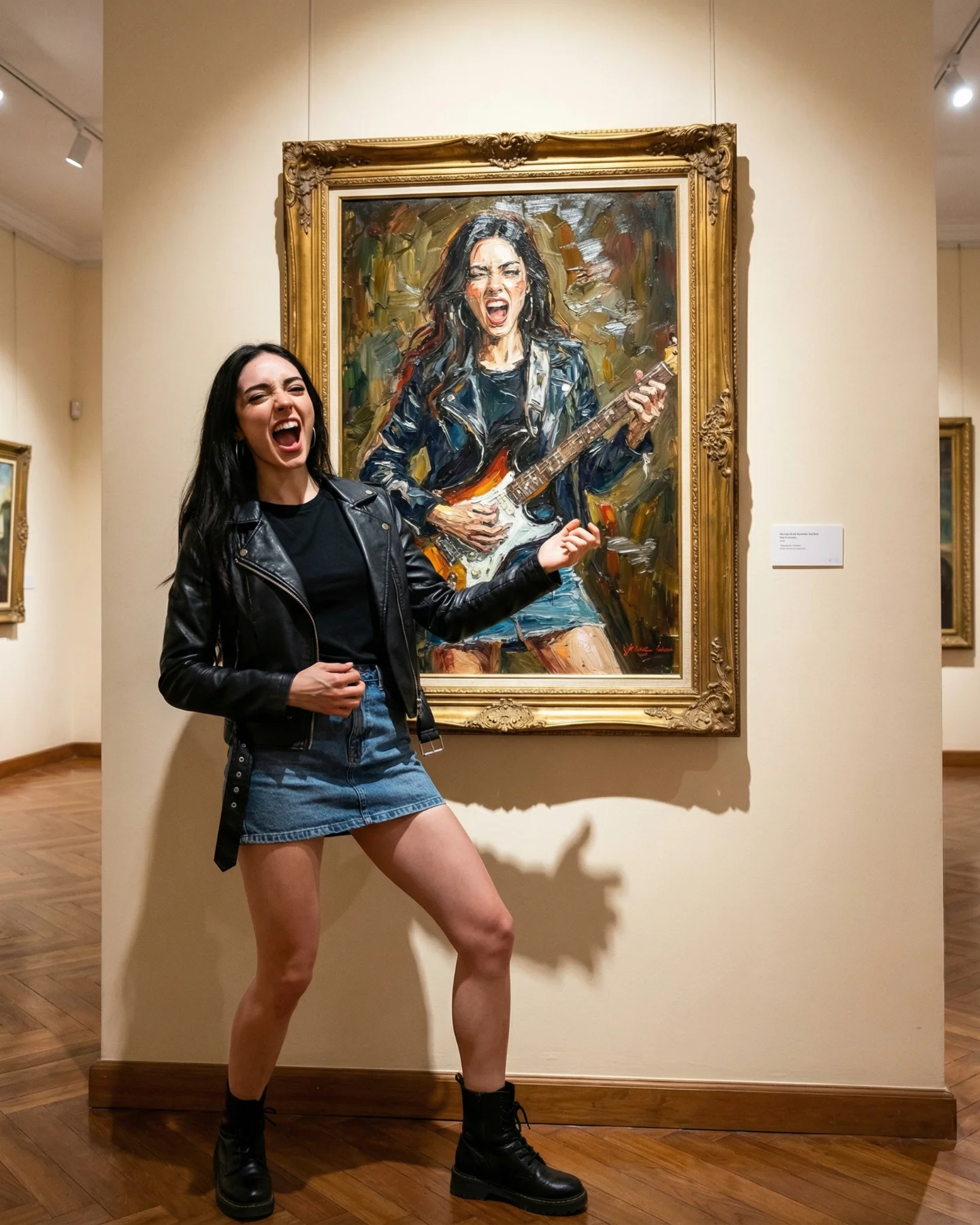
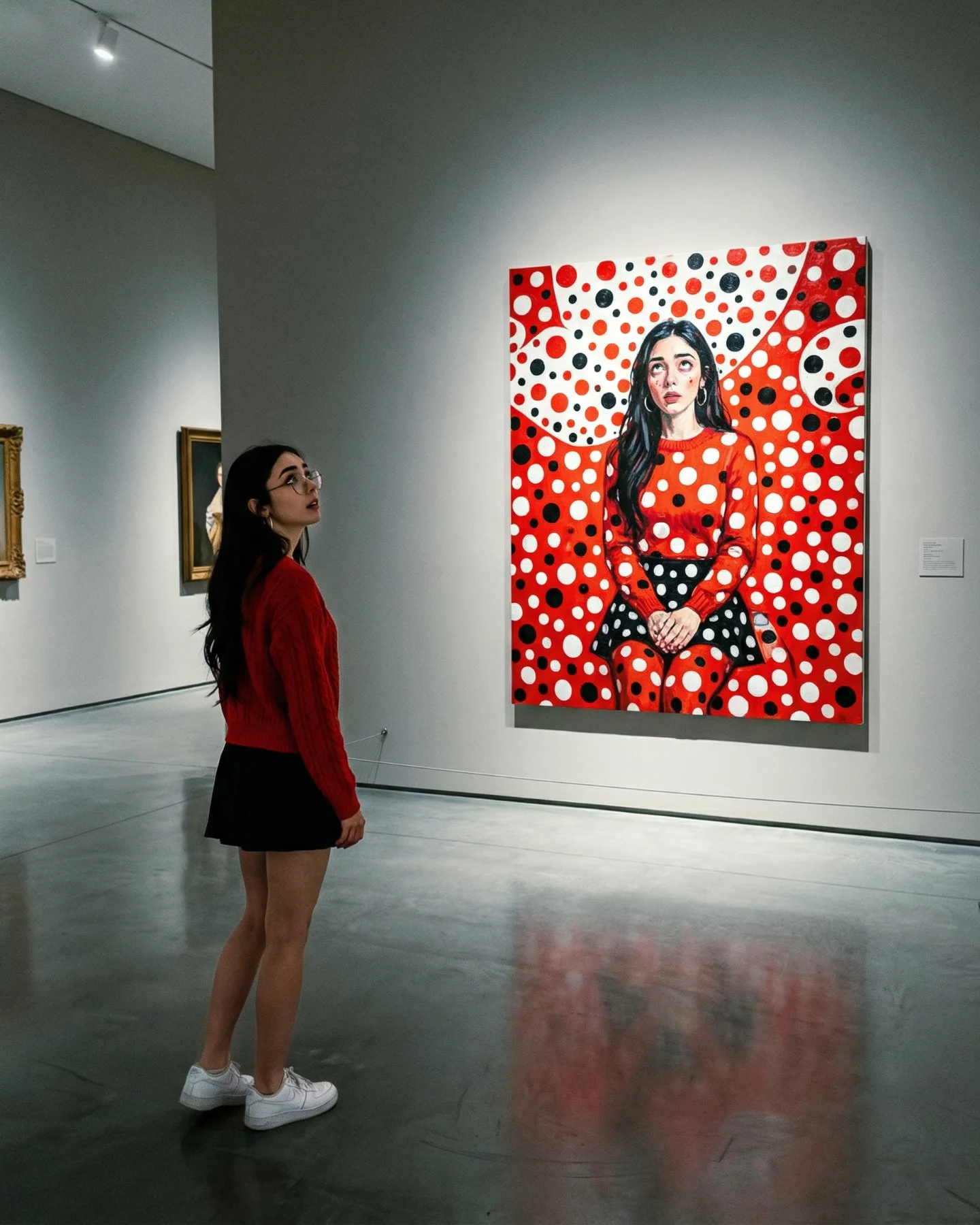
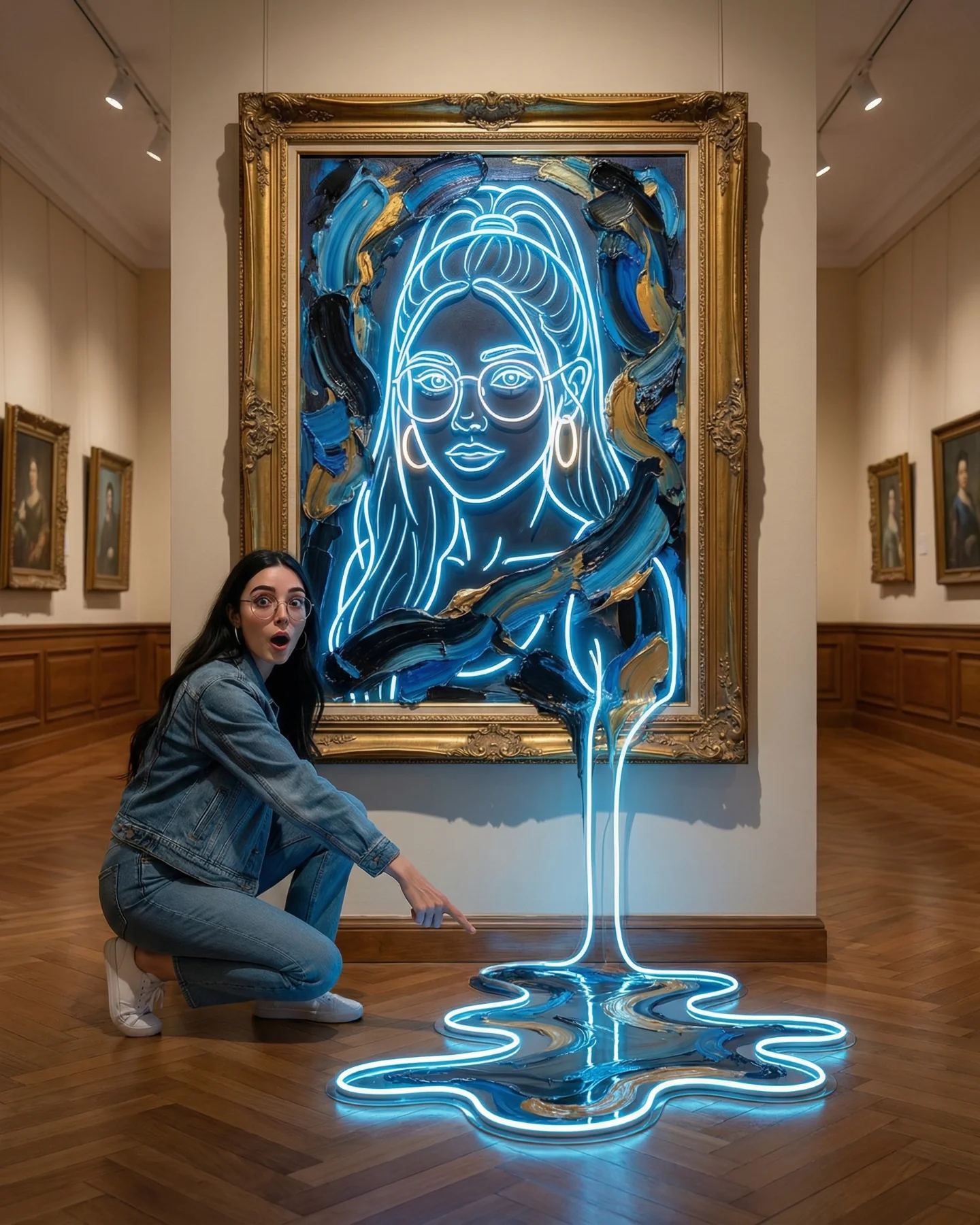
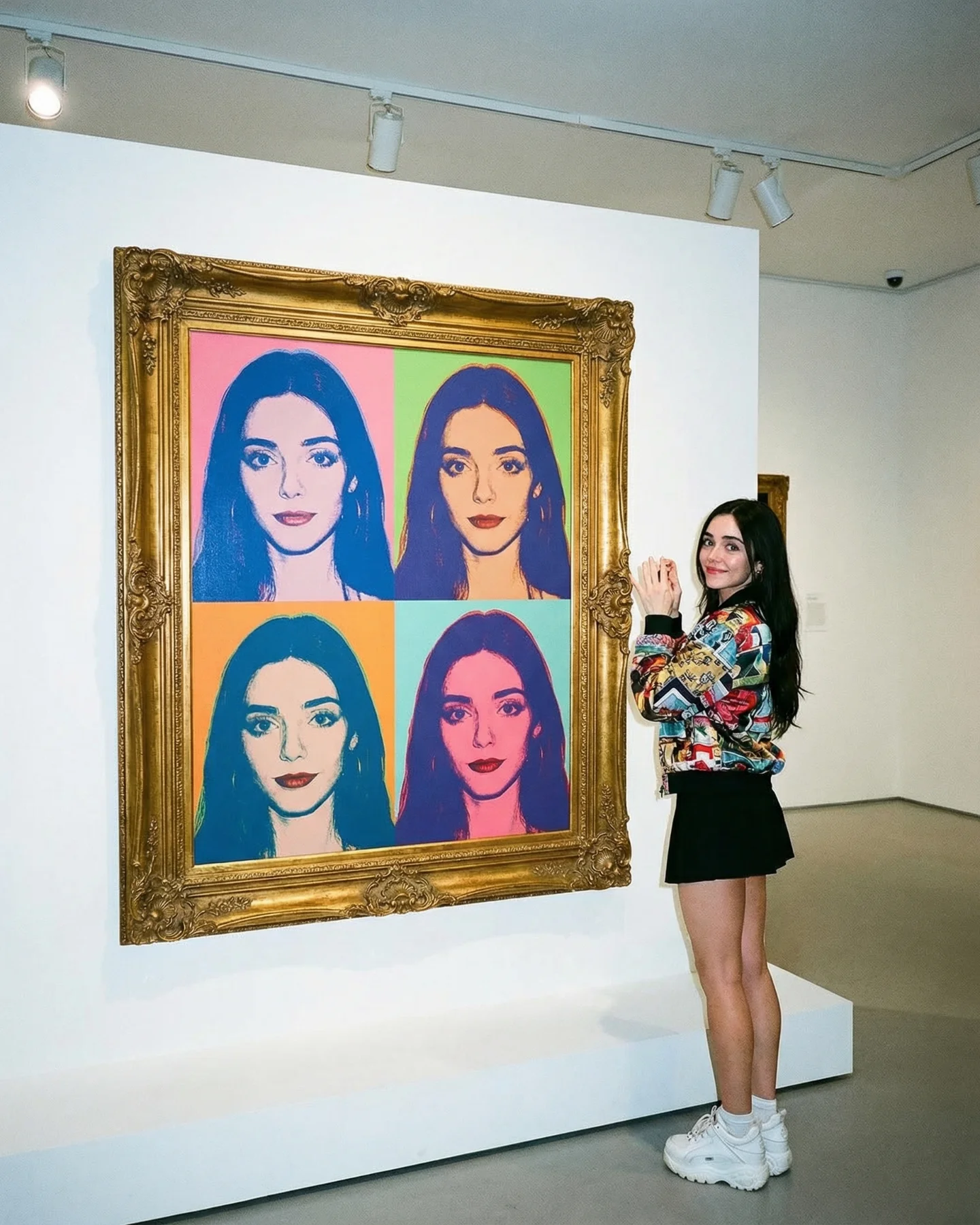
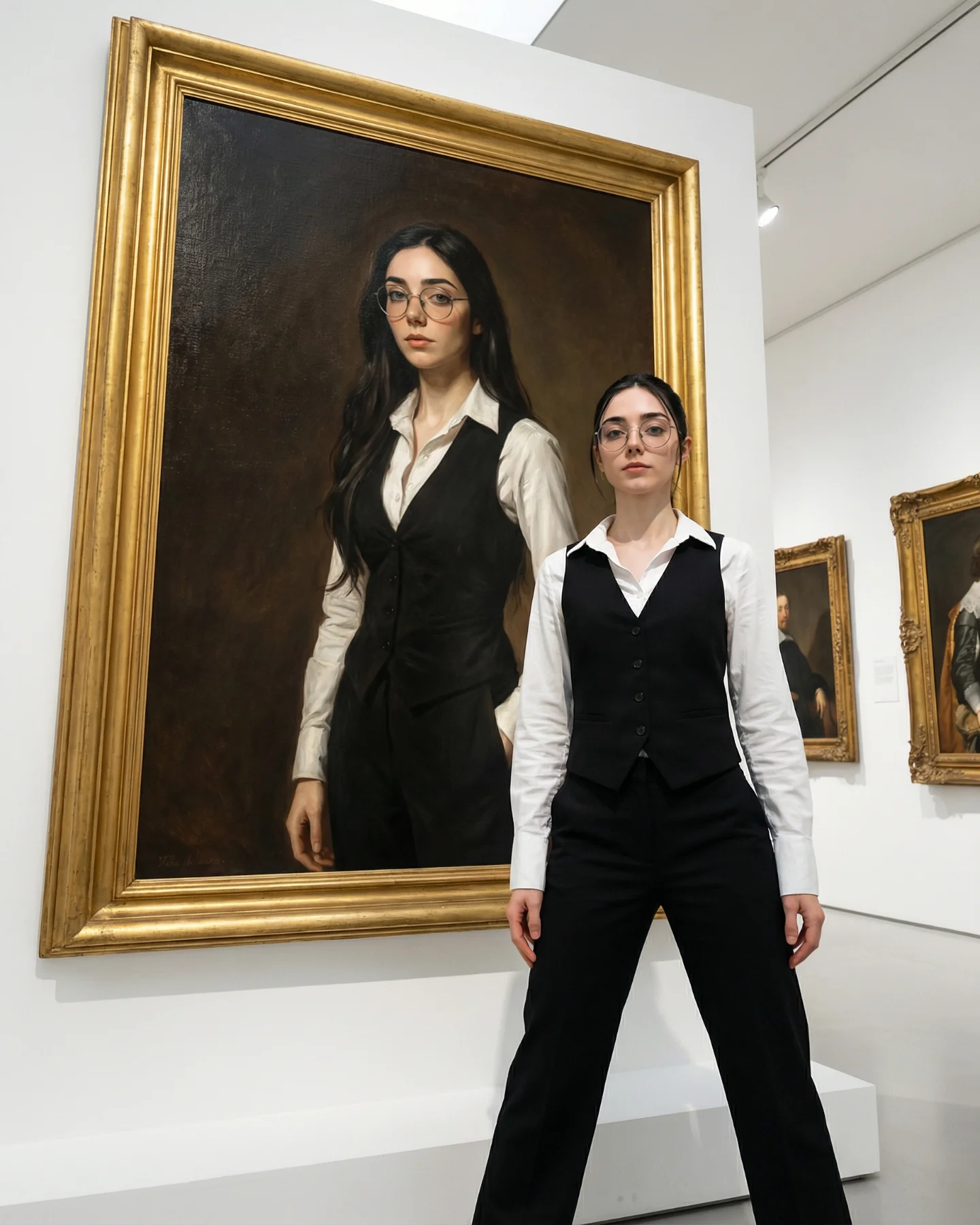
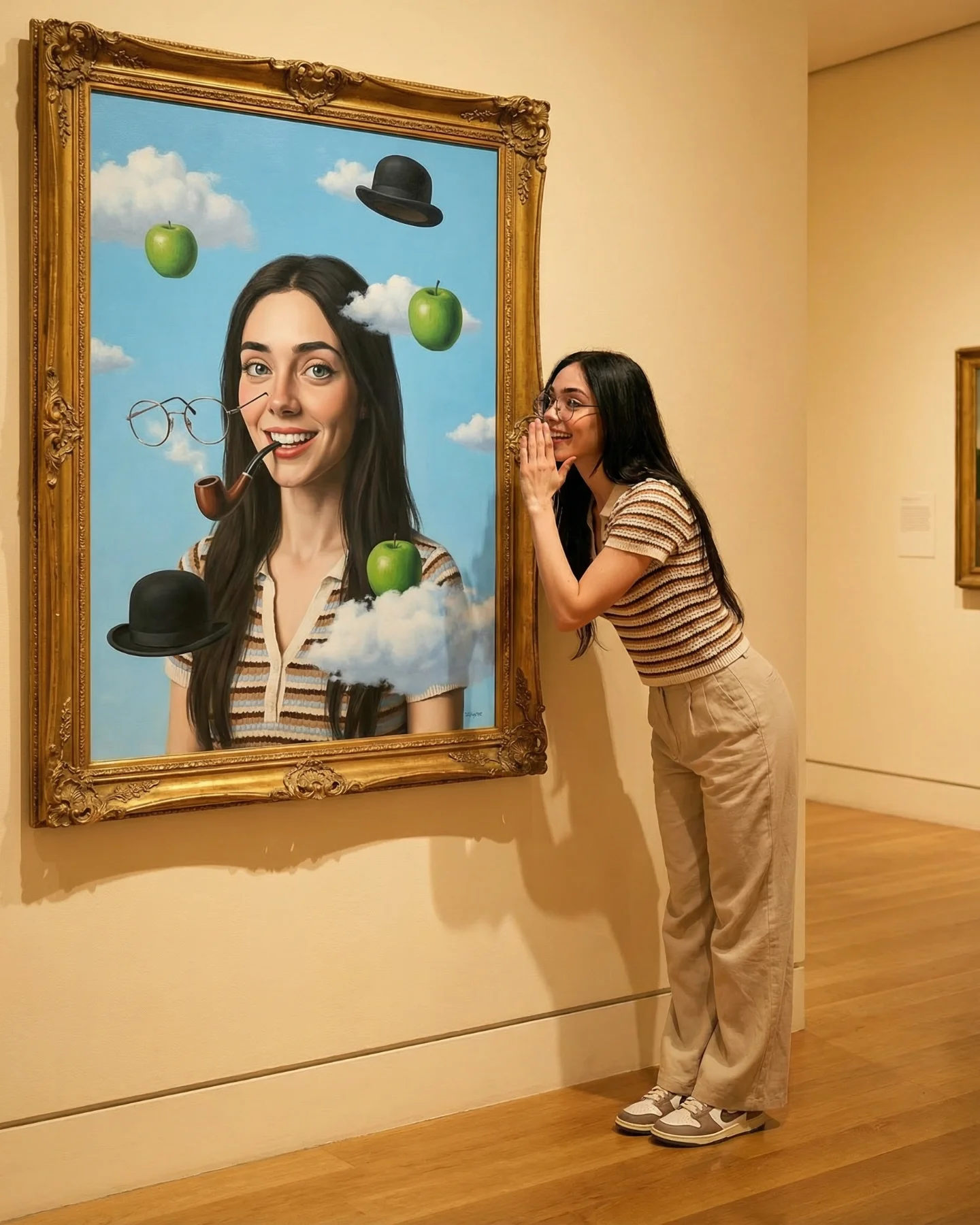
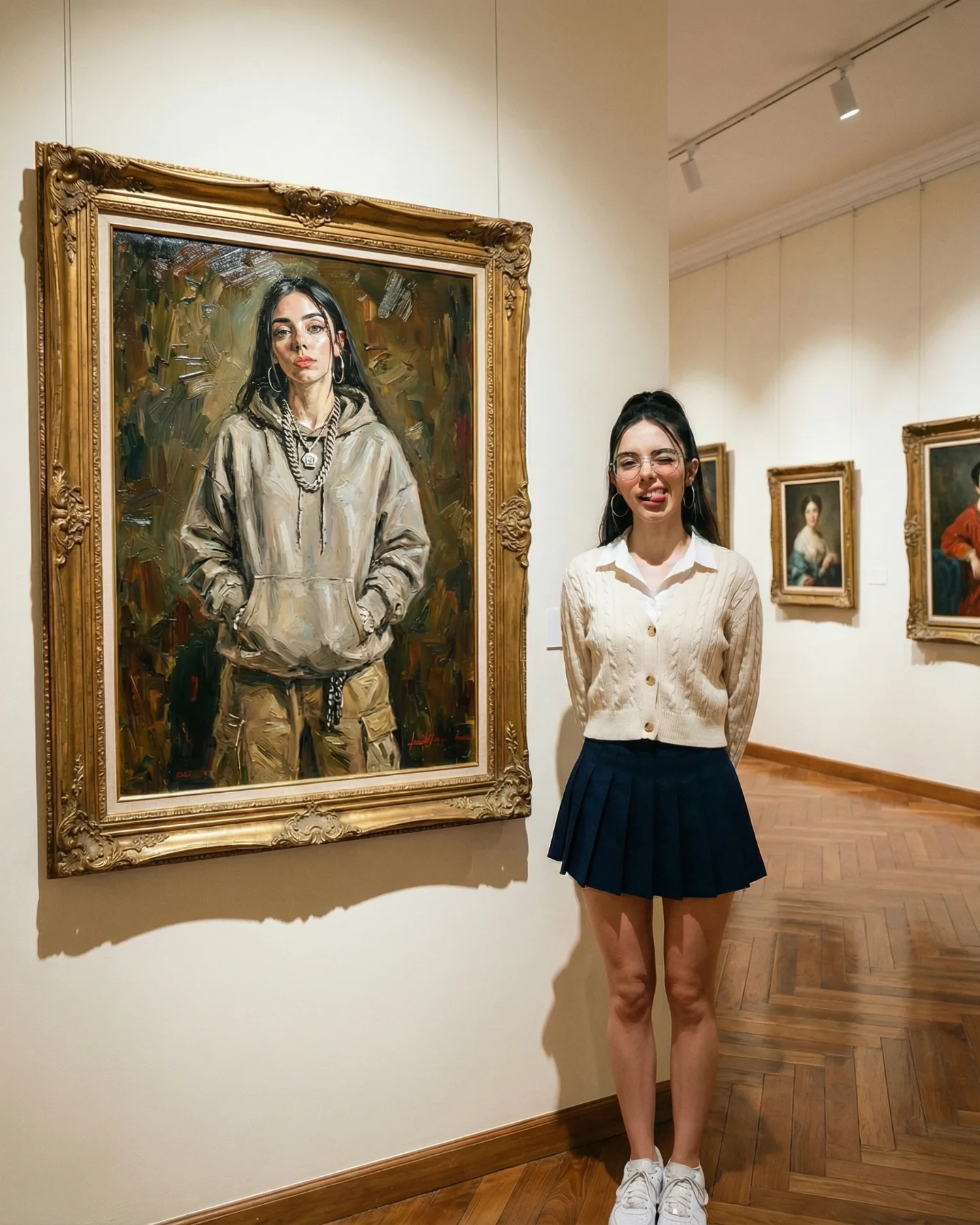
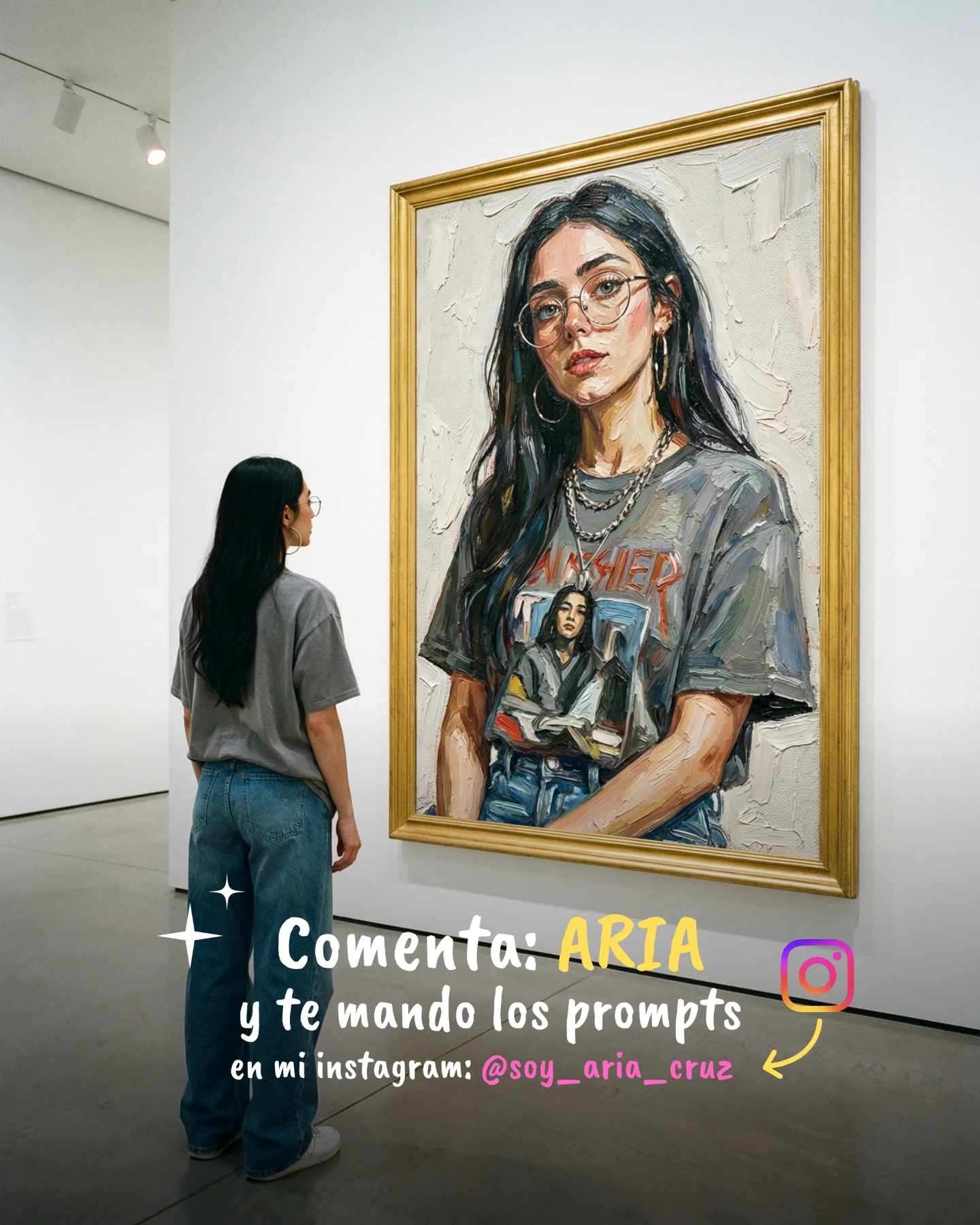
This image works because it gives the audience two pleasures at once. First, it offers the instant visual appeal of a stylish museum shot: gold frames, dark walls, parquet floors, denim against warm gallery tones. Second, it rewards a longer look with a recursive trick. The woman is not just standing beside a painting. She is caught in a painting that keeps restaging her inside itself.
That second layer is what makes the frame perform. People stop for the outfit and the museum mood, but they stay because their eyes need to resolve the illusion. It is not a loud gimmick. It is a clean, readable visual puzzle, which is exactly the kind of thing that earns saves and shares from creators looking for fresh prompt ideas.
The main viral mechanism here is delayed recognition. At first glance, the image looks like a strong gallery portrait. A second later, viewers realize the painting contains the same woman. Then they realize the scene repeats again inside the painting. That sequence creates a mini-discovery loop, and discovery loops are one of the most reliable ways to increase attention time.
The second mechanism is identity doubling. The subject outside the frame and the subject inside the frame feel like two versions of the same person: observer and artwork, consumer and muse, real and represented. That kind of self-reference is especially effective for creator audiences because it feels aspirational and conceptually smart without becoming difficult to read.
| Signal | Evidence (from this image) | Mechanism | Replication Action |
|---|---|---|---|
| Delayed reveal | The recursive painting is not obvious until you inspect the large frame | A second-look payoff increases dwell time | Use one strong concept that unfolds in stages instead of revealing everything at once |
| Identity echo | The woman outside the frame appears again inside the artwork | Self-reference makes the image feel personal and memorable | Duplicate the subject conceptually, not by cloning random copies into the room |
| Luxury context | Gold frames, dark walls, classical portraits, wood floor | Museum signals elevate the trick into something save-worthy | Place surreal ideas inside environments that already carry cultural prestige |
| Clear gesture cue | The same hands-to-glasses pose appears in the real subject and in the painting | Repeated gesture makes the illusion easier to read | Lock one recognizable gesture and reuse it inside the repeated scene |
This style works especially well for AI art creators, conceptual portrait pages, prompt libraries, and taste-driven creator brands that want to feel both elegant and surprising. It is useful when the goal is not just “beautiful image,” but “beautiful image with an idea.”
It is less suited to highly practical product posts or information-heavy carousels. The strength here is contemplation and discovery. Too much text or too many narrative demands would weaken the visual puzzle.
The denim is doing important work here. Against the dark wall and gold frames, it creates a modern everyday anchor that keeps the image from drifting into costume drama. Without that casual note, the scene would feel too period-specific. With it, the image feels like a contemporary creator walking into a historical art world and bending it around herself.
The second aesthetic win is the density of the gallery wall. There are many smaller portraits, but only one frame matters. That density tells the eye this is a real museum context, while the oversized recursive frame becomes the clear hero. It is a good lesson in visual hierarchy: rich background, singular concept.
| Observed | Recreate | Why it matters |
|---|---|---|
| One dominant ornate frame | Make a single hero artwork much larger than the surrounding pieces | The recursion needs a clear focal gateway |
| Repeated hands-to-glasses pose | Lock one distinctive gesture in both the real figure and the artwork | Gesture repetition makes the illusion readable fast |
| Dark salon-style wall with many smaller works | Use a dense background that still supports one dominant anchor | The room feels rich without competing with the main concept |
| Modern denim against historic frames | Pair casual contemporary styling with classical environment cues | The contrast creates freshness and thumbnail appeal |
| Warm museum lighting | Favor elegant ambient warmth over hard theatrical spotlights | Warmth keeps the concept premium and believable |
If you want this kind of image to hold up, separate the prompt into three systems: subject identity, museum context, and recursive logic. Most failed versions happen because the recursion is under-described and the model turns it into a mirror, a collage, or random duplicates.
| Prompt chunk | What it controls | Swap ideas (EN, 2-3 options) |
|---|---|---|
| subject identity block | Who the viewer is tracking across the real and painted layers | "woman with glasses and ponytail", "same face repeated in artwork", "consistent denim-styled creator identity" |
| gesture block | The immediate link between outside scene and inside scene | "hands touching glasses", "same surprised pose", "matching expression inside the painting" |
| recursive artwork block | The conceptual hook and second-look payoff | "painting within a painting", "nested gallery scene", "self-referential framed recursion" |
| gallery richness block | Prestige, atmosphere, and environment credibility | "dark salon wall with gold frames", "classical portrait gallery", "historic museum room" |
| modern contrast block | Freshness and creator relevance | "blue denim outfit", "casual streetwear in museum", "modern subject inside old-world space" |
| lighting block | Believability and mood | "warm museum ambient light", "soft gallery illumination", "subtle highlights on gilded frames" |
Lock three things first: the diagonal gallery composition, the repeated hands-to-glasses gesture, and the recursive frame logic. Those are the non-negotiable bones. Once they are stable, you can refine style and density.
The one-change rule matters here because recursion can break easily. If you alter camera angle, outfit, room density, and painting logic all together, the image often collapses into noise. Preserve the illusion first. Then polish the scene around it.
Images that reward a second look often outperform images that explain themselves instantly. This one does that through structure, not shock.