Arte Moderno 🎭🎨 Comenta "ARIA" y te paso todos los prompts 💌
Arte Moderno 🎭🎨 Comenta "ARIA" y te paso todos los prompts 💌
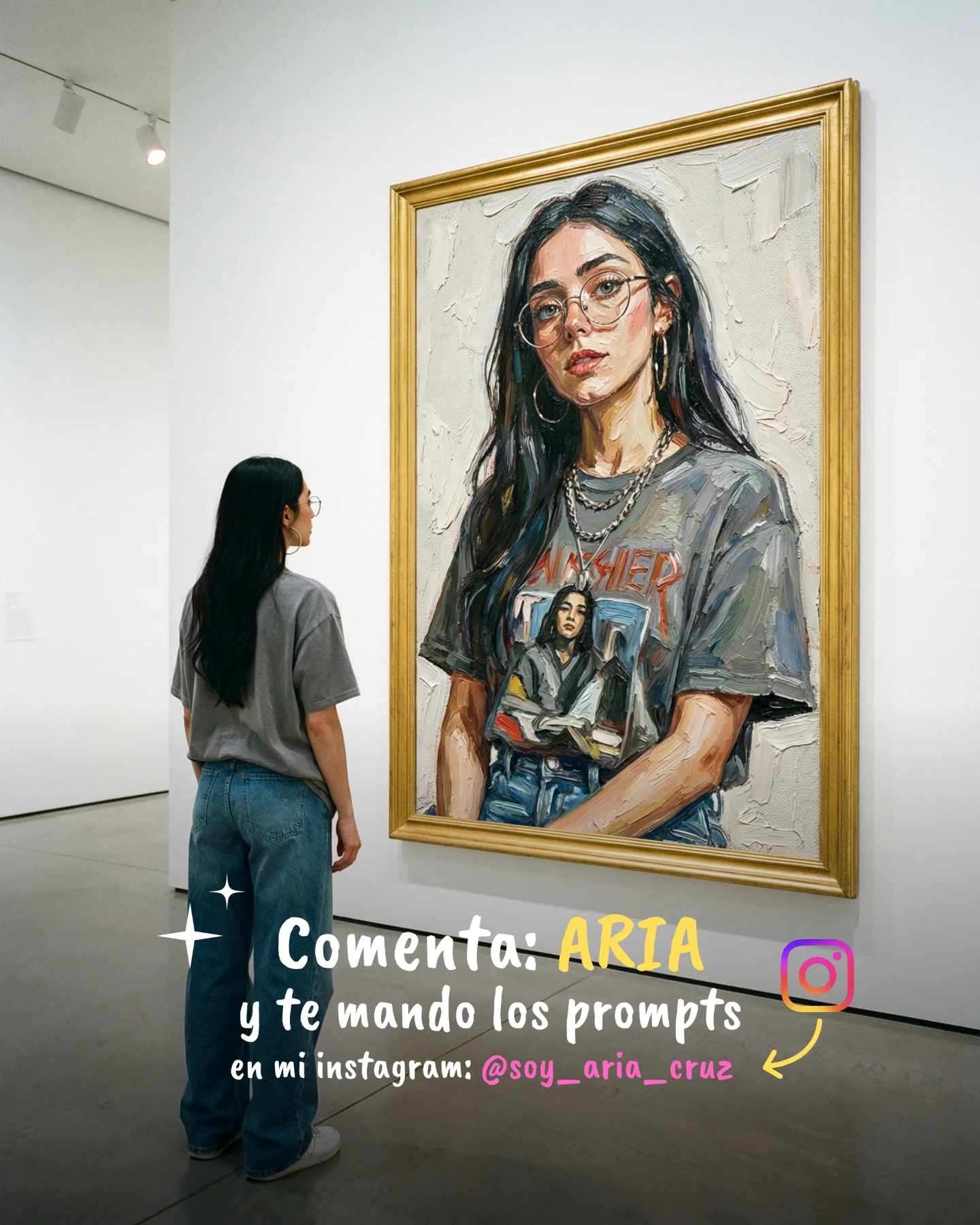
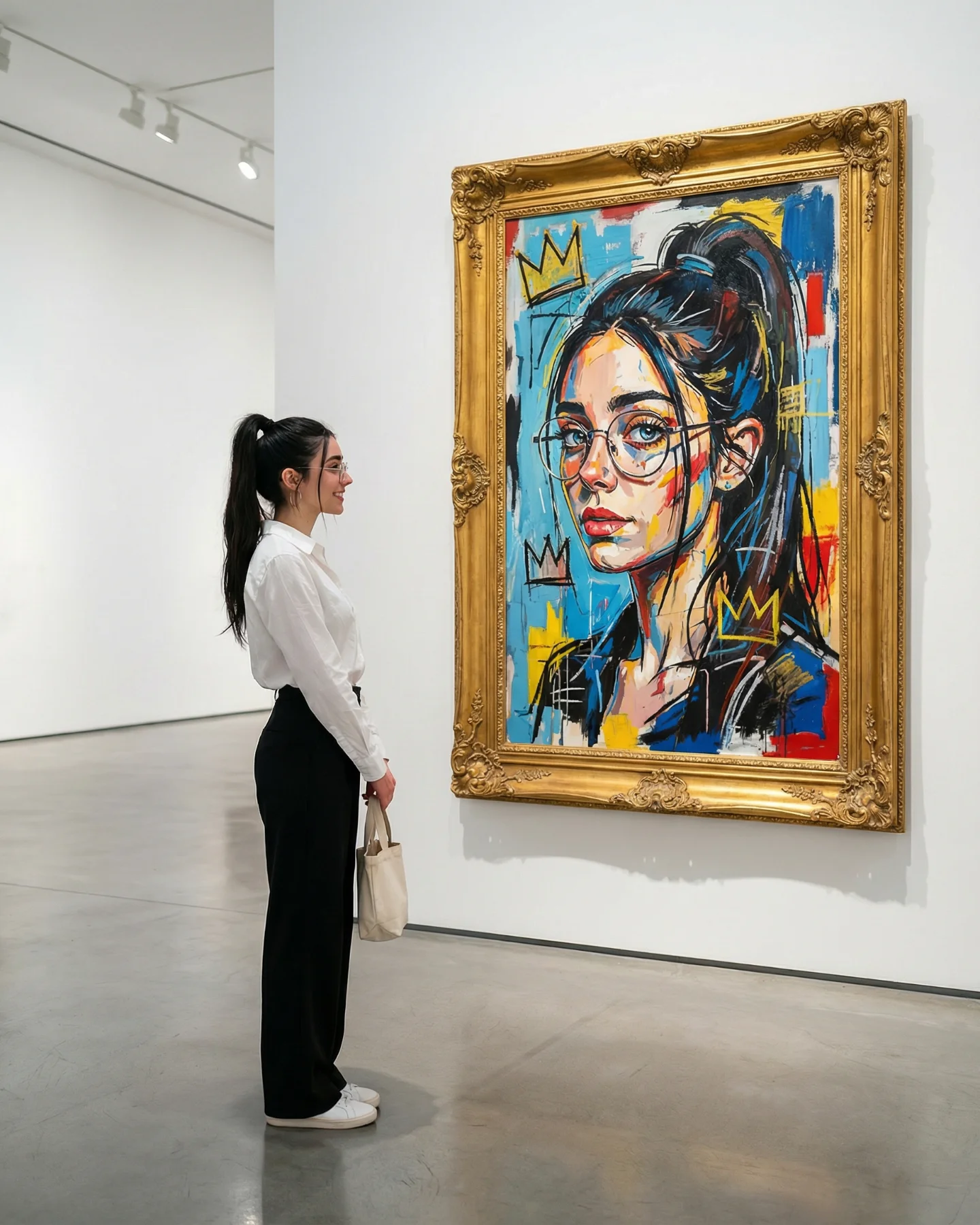
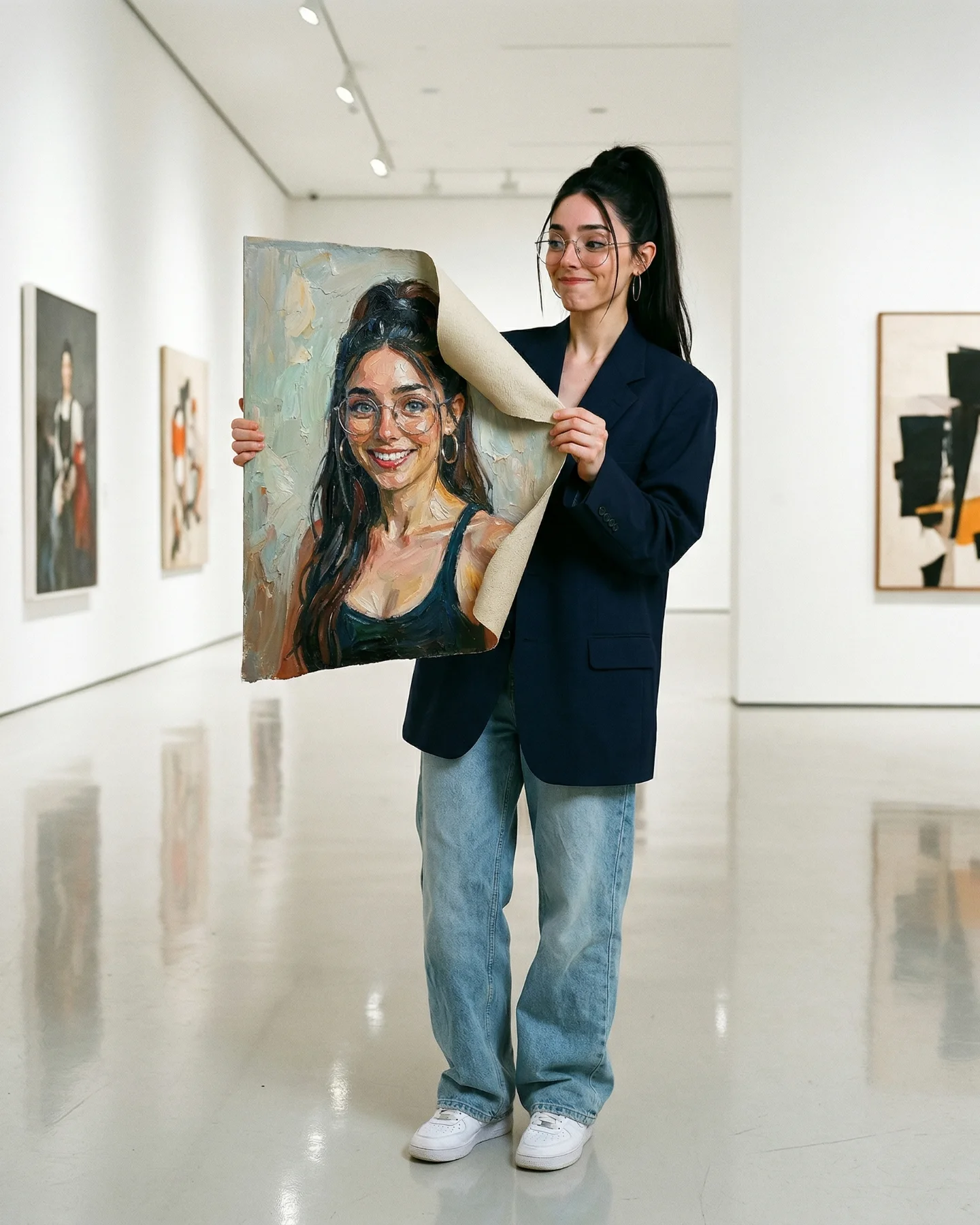
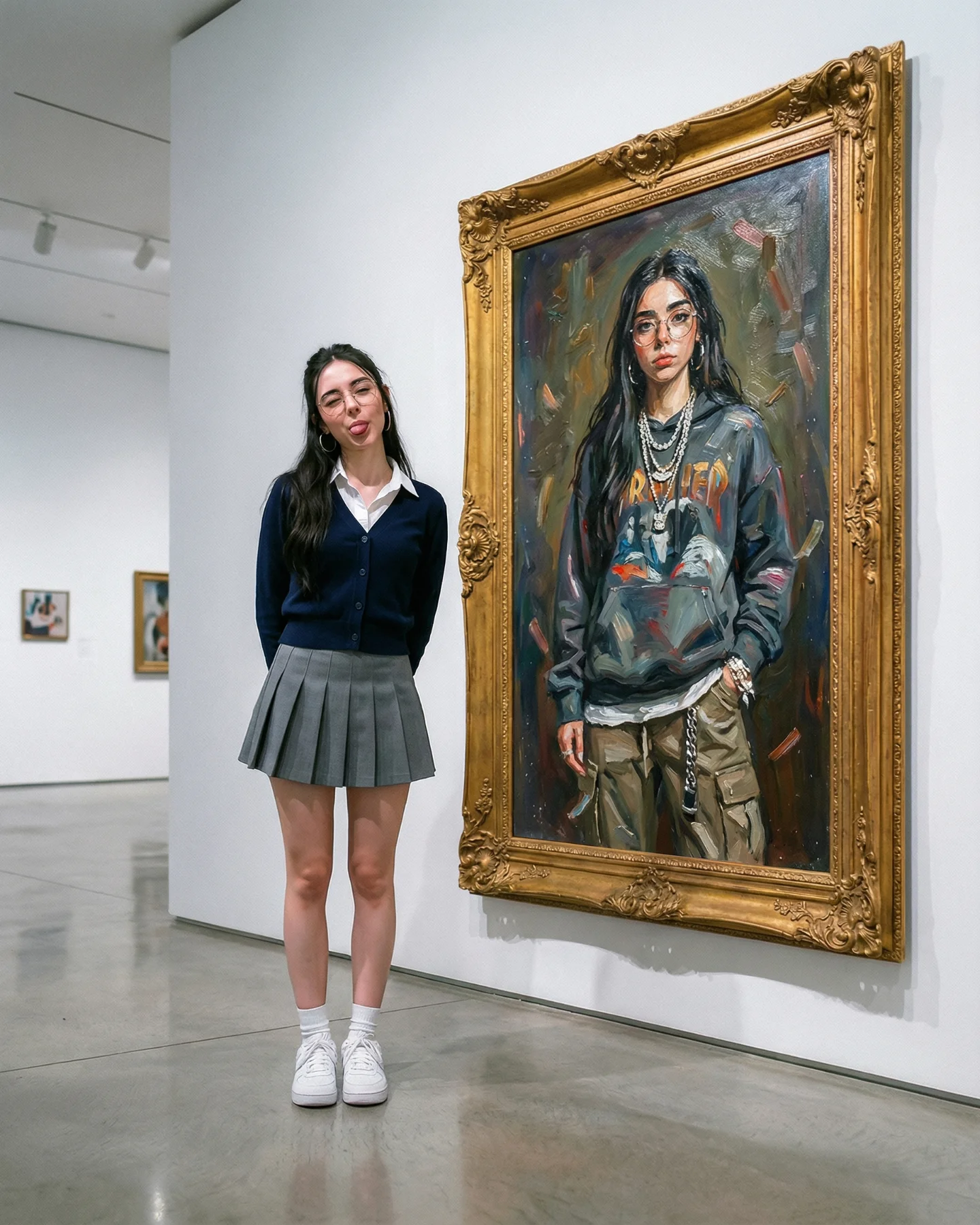
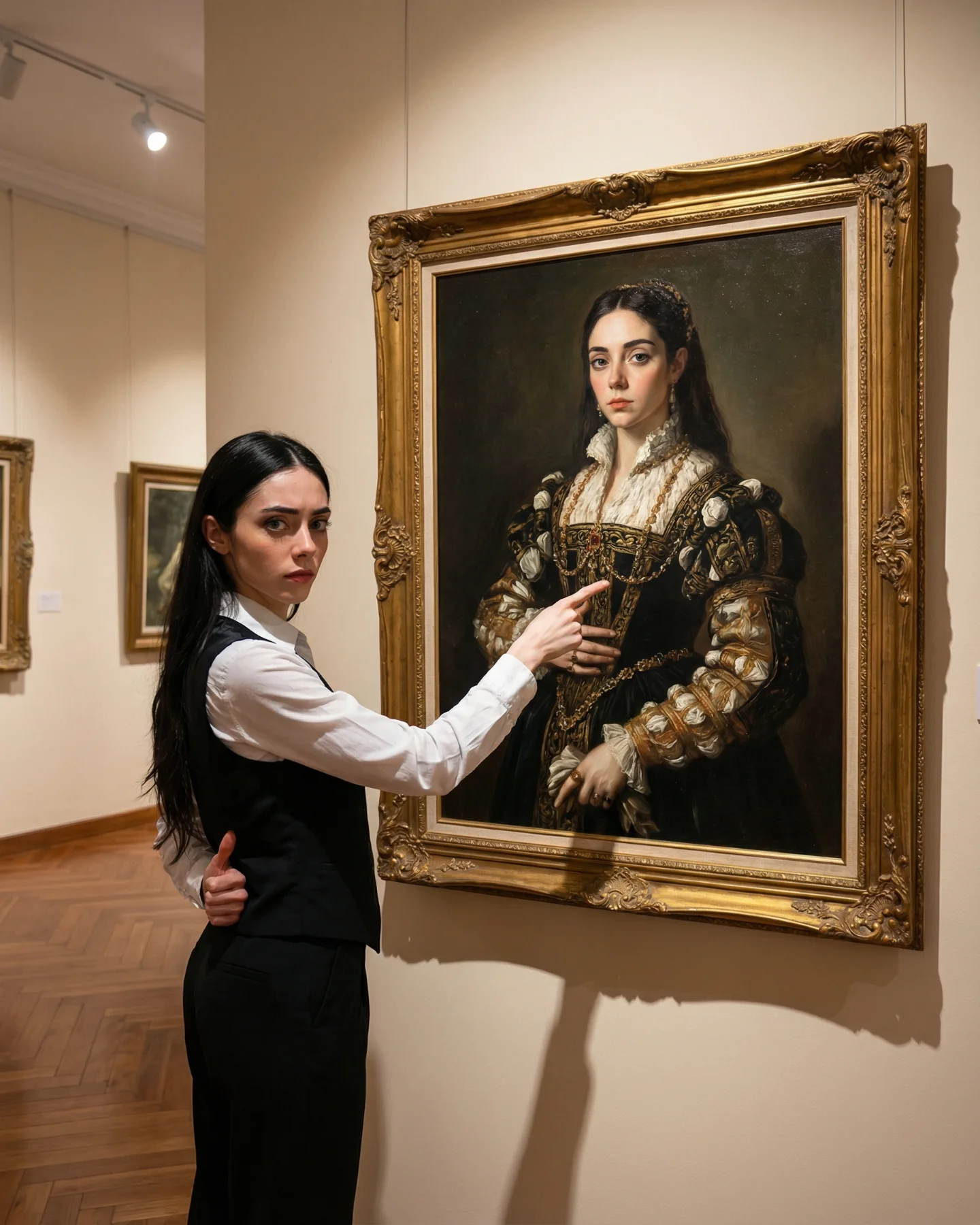
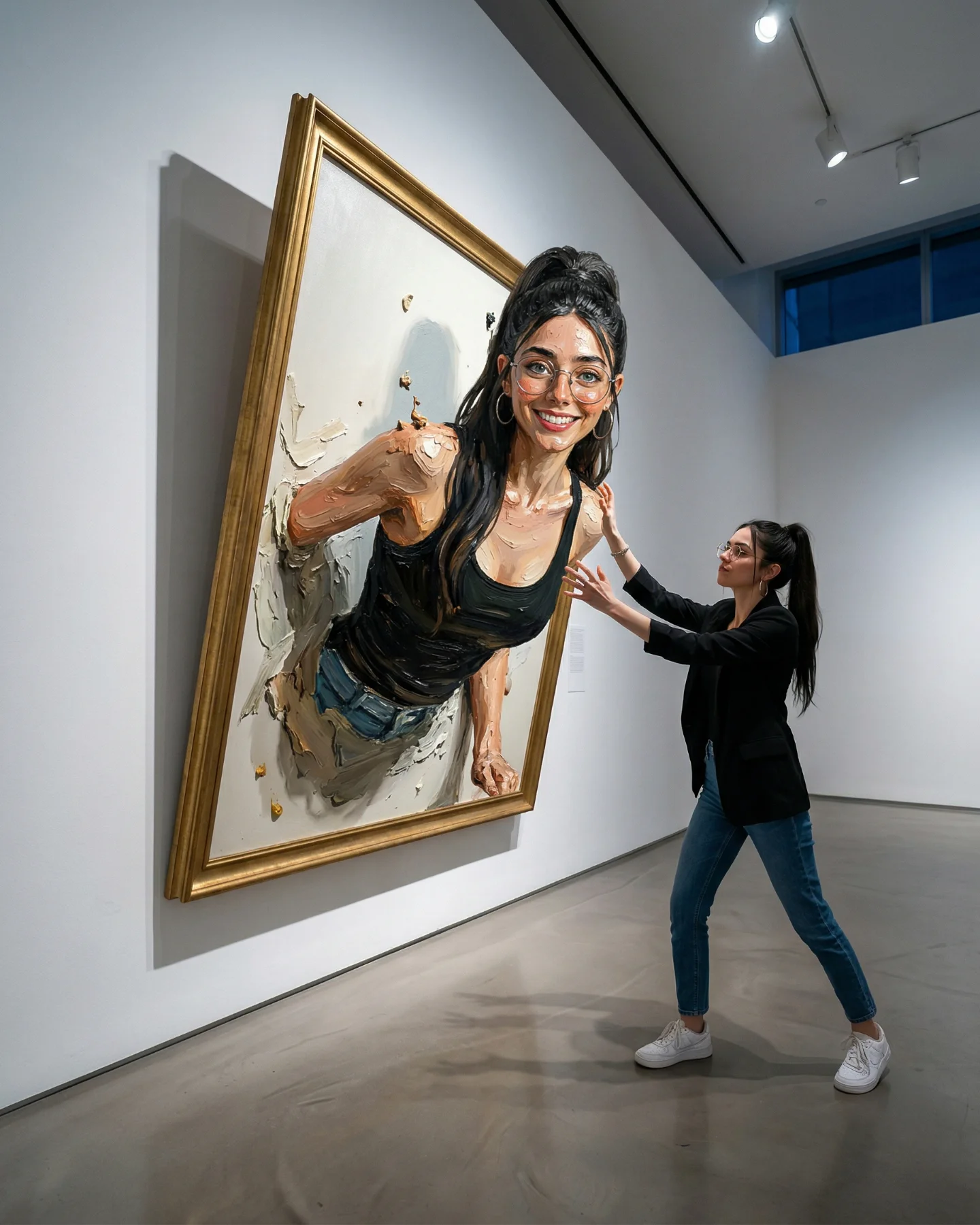
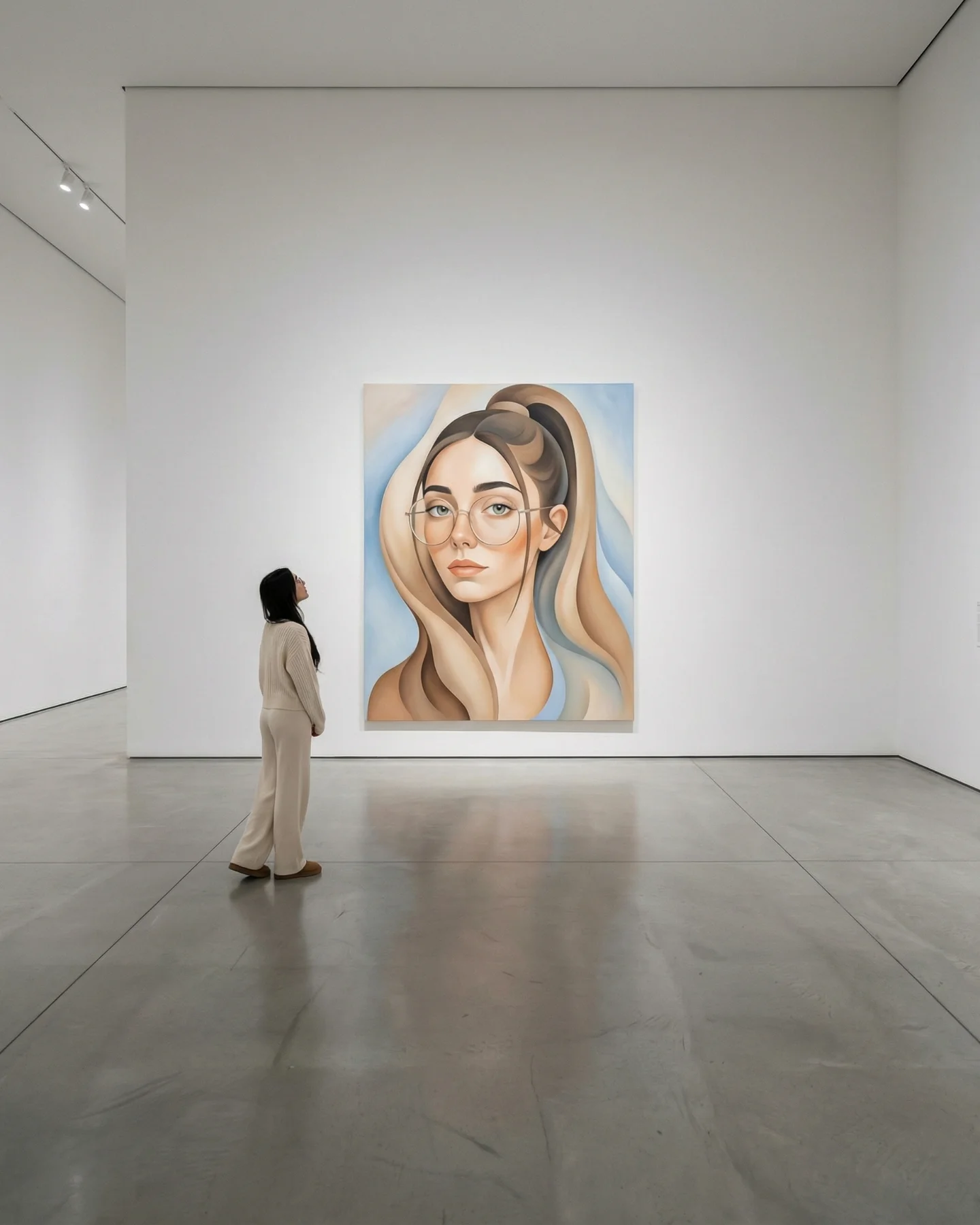
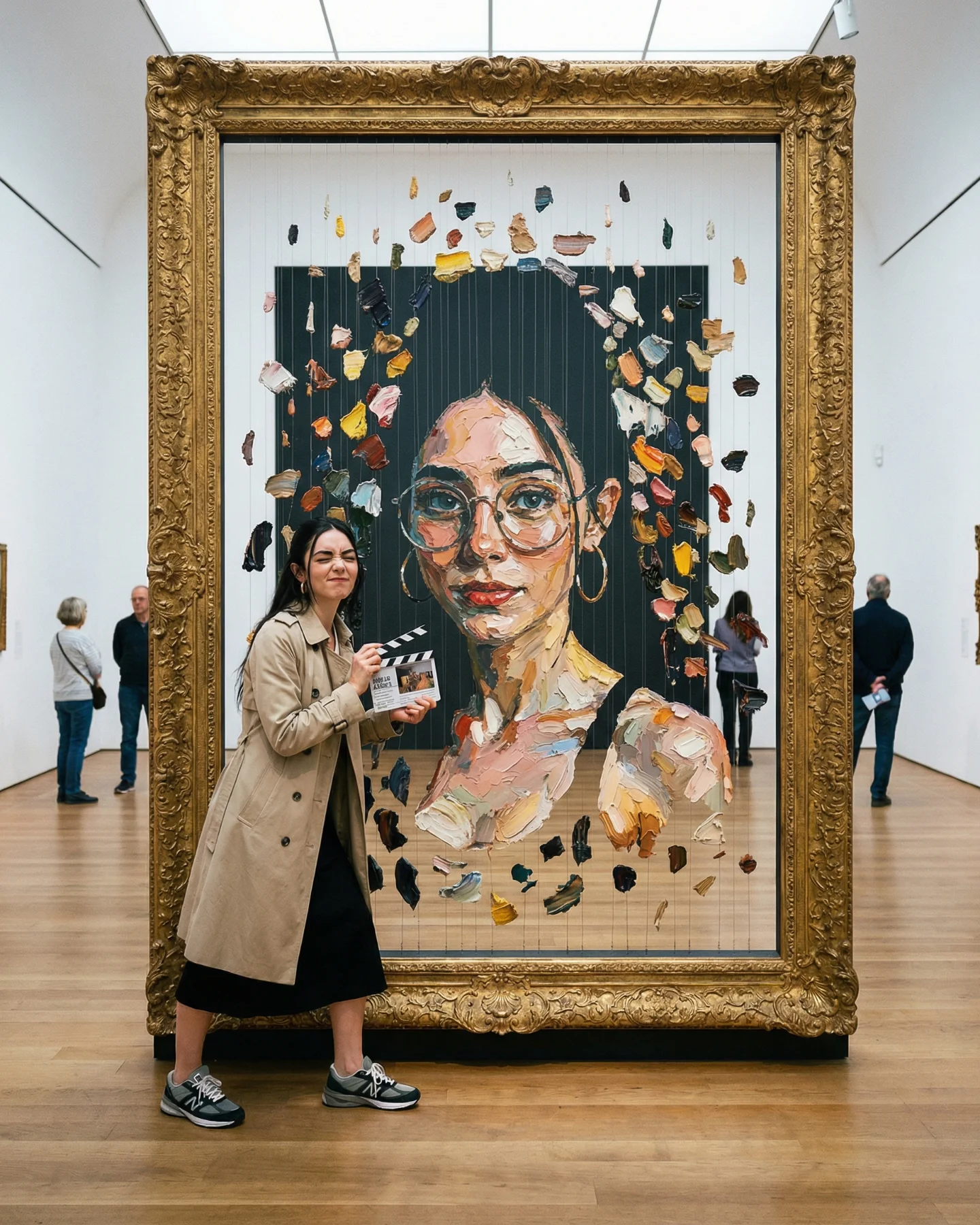
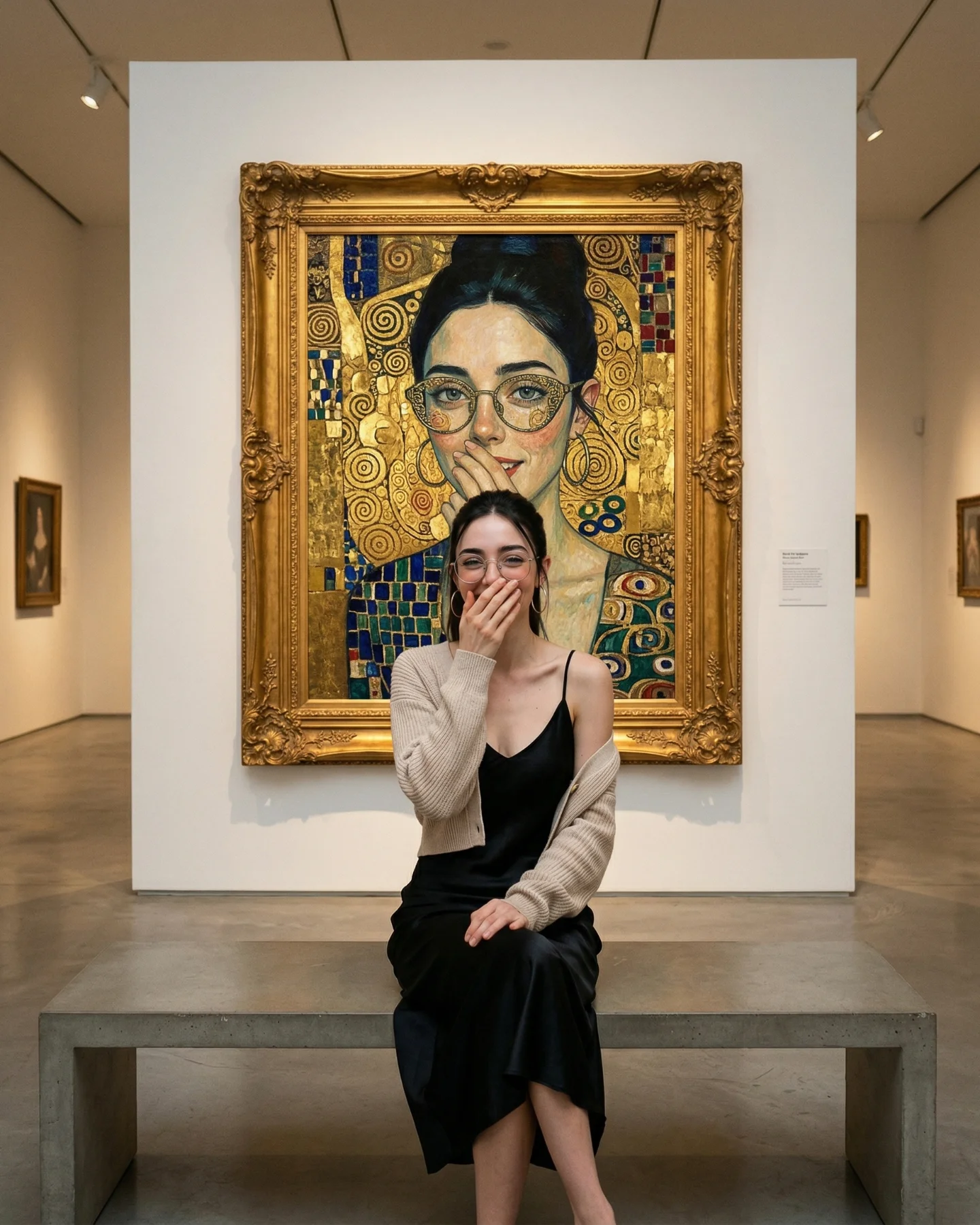
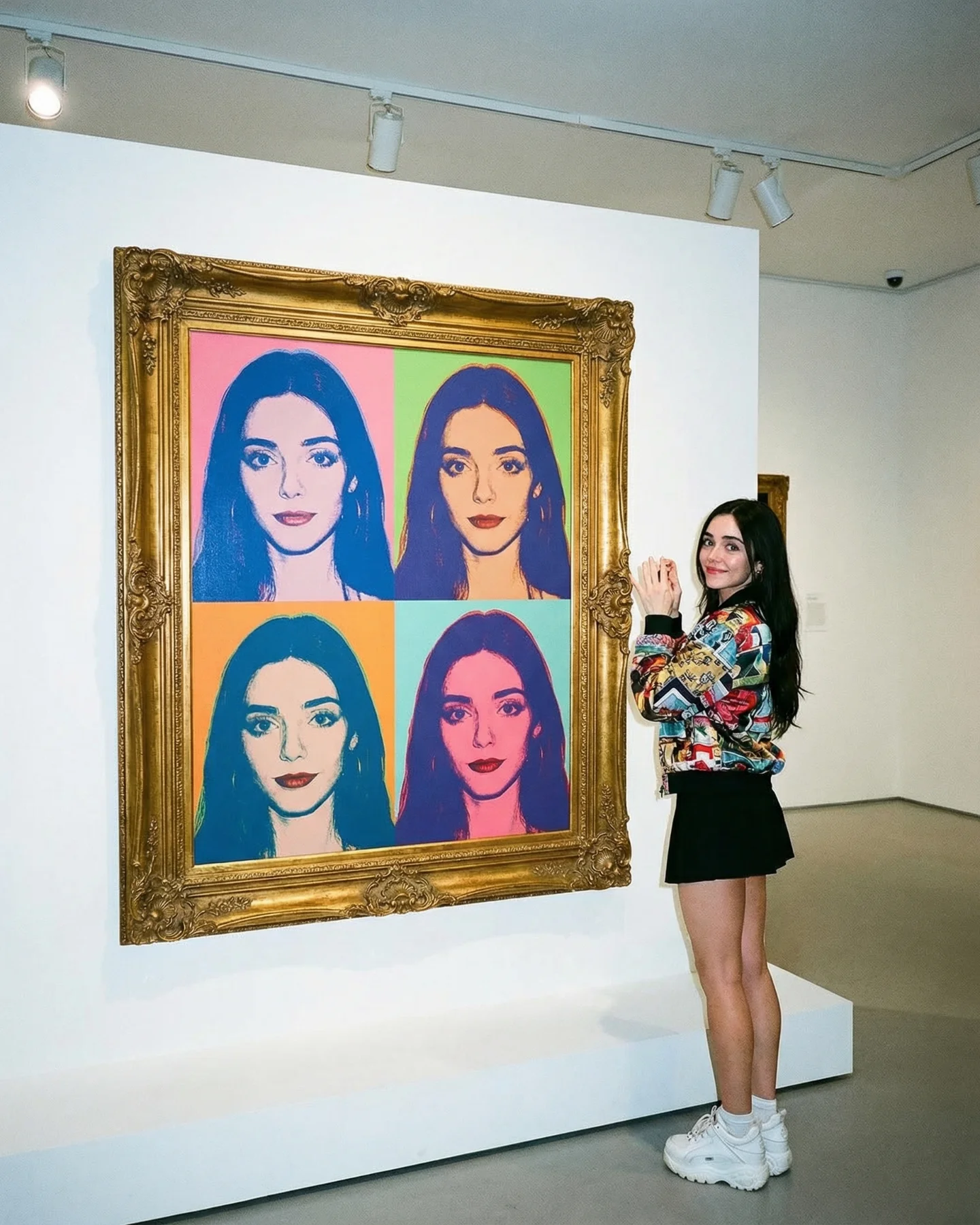
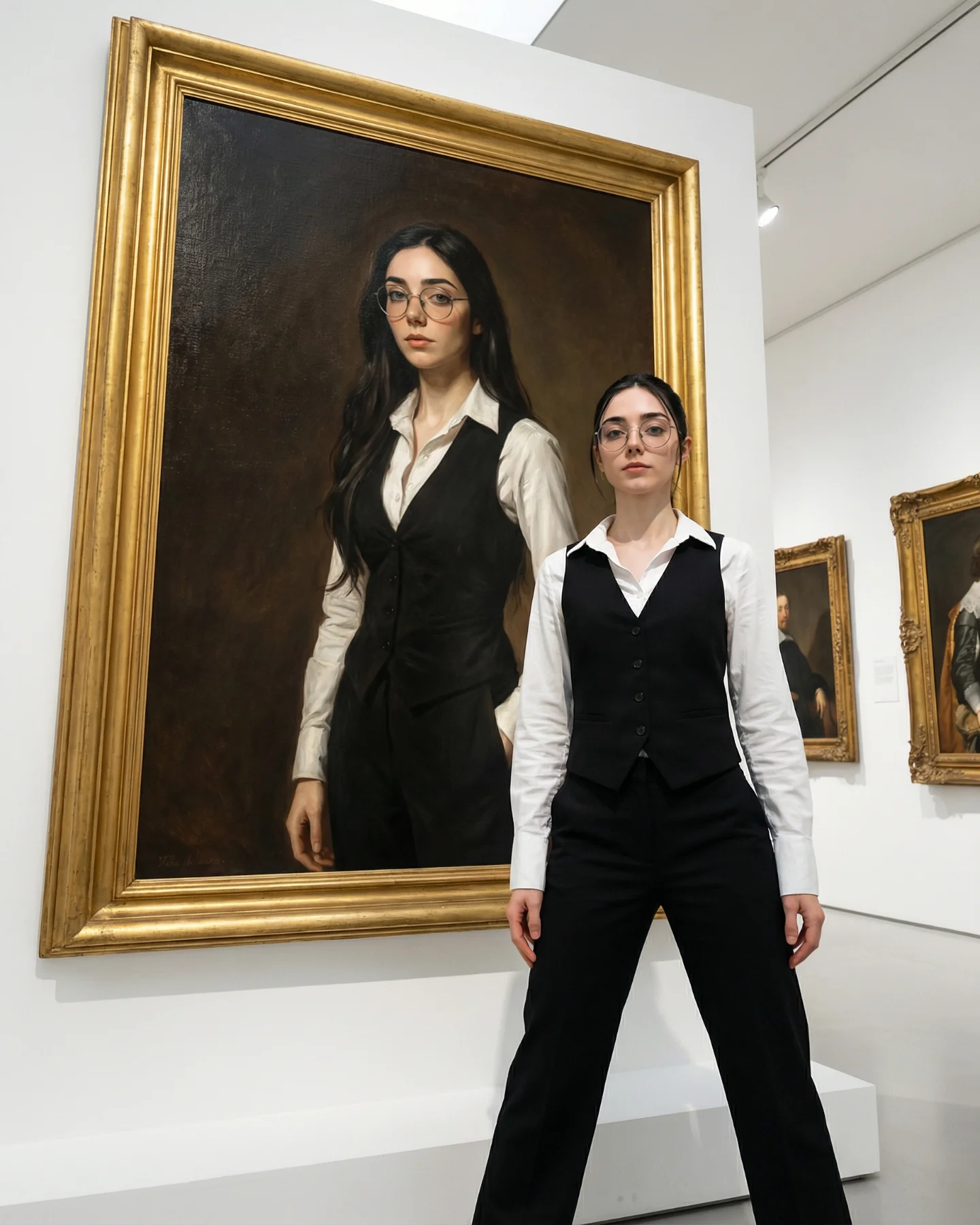
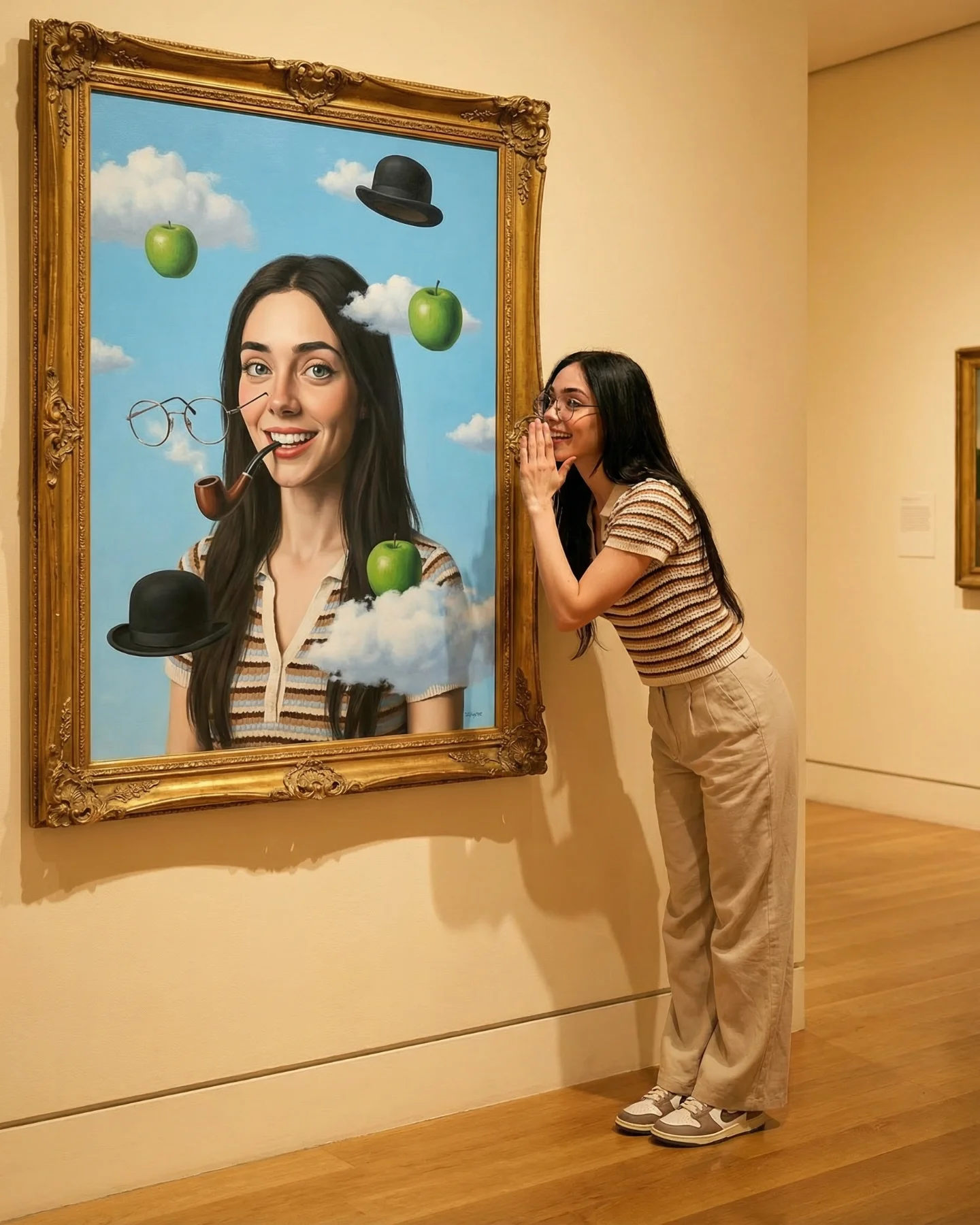
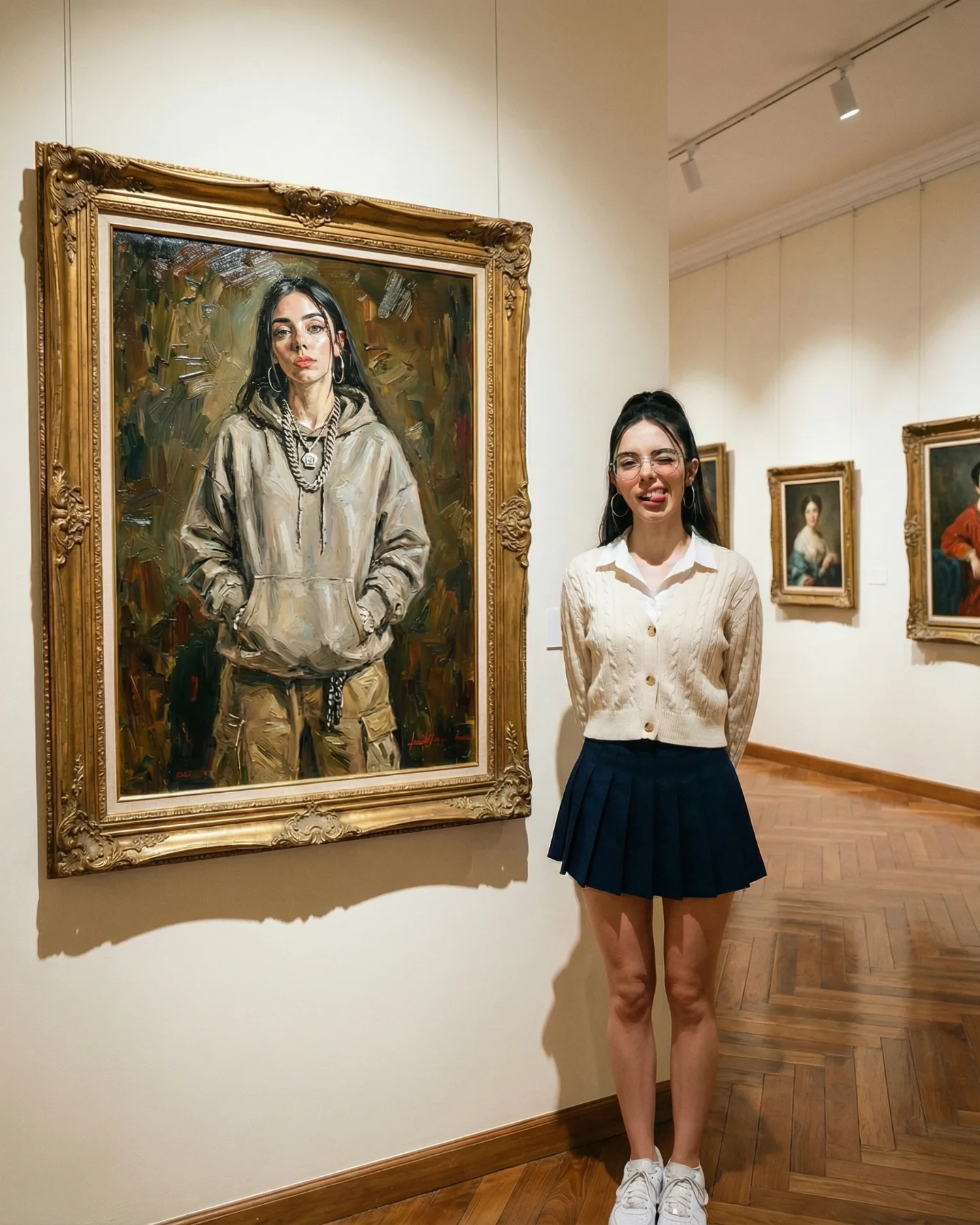
This image is doing something smarter than a simple art reference. It stages a conversation between the creator and an elevated version of herself. The real woman stands in casual clothes, almost anonymous from behind, while the framed portrait presents a more polished, idealized identity. That gap is exactly what makes the frame sticky. It is not just beautiful. It is aspirational in a very personal way.
The other important layer is that the post does not hide its growth intention. The Spanish call-to-action at the bottom asks people to comment “ARIA” to get the prompts. That means the image is not only a mood piece. It is an engagement machine built on self-recognition, museum credibility, and a clear action for the audience.
The strongest hook here is self-reference. Viewers immediately understand the emotional script: a woman looking at a portrait that feels like a more artistic version of herself. That creates projection. Audiences do not just admire the image; they imagine their own upgraded version. That is a reliable save trigger for creators who want “I want this look” behavior.
Then the image adds a direct response mechanic. The CTA text does not feel bolted on because the rest of the composition is already minimal. There is enough clean space in the museum scene for the overlay to remain readable. This is an important lesson: if you want to mix aesthetics with growth, the image structure has to make room for the conversion layer.
| Signal | Evidence (from this image) | Mechanism | Replication Action |
|---|---|---|---|
| Identity projection | The real subject faces a portrait that resembles her | Viewers imagine their own transformed self and save the reference | Build a scene where the subject interacts with an idealized version of herself or himself |
| Clear engagement ask | Bottom overlay explicitly says to comment “ARIA” for prompts | Visual clarity plus a simple action lowers friction for comments | Use one short command with one highlighted keyword, not a long paragraph CTA |
| Museum authority | White gallery, gold frame, clean lighting, no clutter | Institutional context makes the image feel premium and trustworthy | Use a curated environment to make the final image feel worth saving |
| Casual-to-aspirational contrast | Relaxed gray T-shirt and jeans versus elevated painted persona | The contrast creates emotional lift without needing heavy styling in real life | Keep the real-world styling simple and let the artwork carry the upgrade fantasy |
This style is especially strong for AI creator accounts, personal branding pages, glow-up storytelling, fashion prompt libraries, and educational accounts selling “become this version of yourself” energy. It works because it turns image prompting into a transformation narrative instead of a dry technique post.
It is less useful for product demos, multi-item carousels that need a lot of explanation, or highly dynamic scenes. The power here comes from calm visual focus plus one strong emotional idea.
What makes this image feel expensive is not just the gold frame. It is the restraint around it. The wall is almost empty. The floor is quiet. The real person is styled simply. The palette stays mostly gray, white, black, denim, and gold. That allows the portrait face and the yellow CTA keyword to become the two main attention anchors.
The portrait itself also avoids overcomplication. It is textured, but not chaotic. The shirt graphic, jewelry, hair, and face all support the same idea: a cleaner, more composed visual identity. For creators, that is a useful reminder that aspiration works better when the upgraded self still feels reachable.
| Observed | Recreate | Why it matters |
|---|---|---|
| Back-view real subject in simple outfit | Keep the real-world subject understated and relatable | This makes the elevated portrait version feel like a believable transformation |
| Large portrait on textured off-white background | Use visible paint texture and one oversized framed artwork | The art object becomes both emotional symbol and visual hook |
| Bottom CTA integrated into open floor space | Reserve clean lower-frame space for conversion copy | Readable overlays work only when the underlying image gives them room |
| Neutral room with small accent colors | Restrict saturation and highlight just one keyword or icon | That keeps the image premium while still supporting engagement goals |
| Direct gaze from the painted figure | Make the portrait look outward, not away | The outward gaze gives the image emotional reciprocity and pull |
If you want to reproduce this format, think in layers: observer, portrait-self, room credibility, and CTA readability. Most failed versions happen because people only prompt the portrait and forget the relational structure between the real person and the framed self.
| Prompt chunk | What it controls | Swap ideas (EN, 2-3 options) |
|---|---|---|
| observer placement | The emotional perspective of the whole image | "woman from behind looking at portrait", "subject in side-back view", "viewer standing before framed self-image" |
| portrait-self styling | The aspiration level and transformation story | "editorial self-portrait", "glam future-self painting", "polished street-style portrait" |
| museum environment | Authority, cleanliness, and premium feel | "white-cube gallery", "quiet museum corridor", "clean exhibition room" |
| wardrobe realism | Relatability and contrast against the elevated portrait | "oversized gray tee and jeans", "minimal black outfit", "casual sneakers and denim" |
| overlay CTA | Comment conversion and lead capture behavior | "comment keyword CTA", "DM-for-prompt overlay", "save-this-look instruction" |
| accent logic | Where attention lands after the first glance | "yellow highlighted keyword", "pink social icon accent", "single red text accent on shirt" |
Lock three things first: the back-view observer, the giant framed portrait, and the clean lower area for CTA copy. Those three elements create the growth mechanism. Everything else is secondary styling.
The one-change rule matters even more when a CTA is involved. If you change text style, portrait style, room angle, and wardrobe at the same time, you lose the ability to see what actually improved conversion. Build the aesthetic first. Then add the growth layer with precision.
This format works because it makes prompting feel like transformation, not just technique. The audience is not only learning how to make an image. They are imagining the upgraded identity behind it.