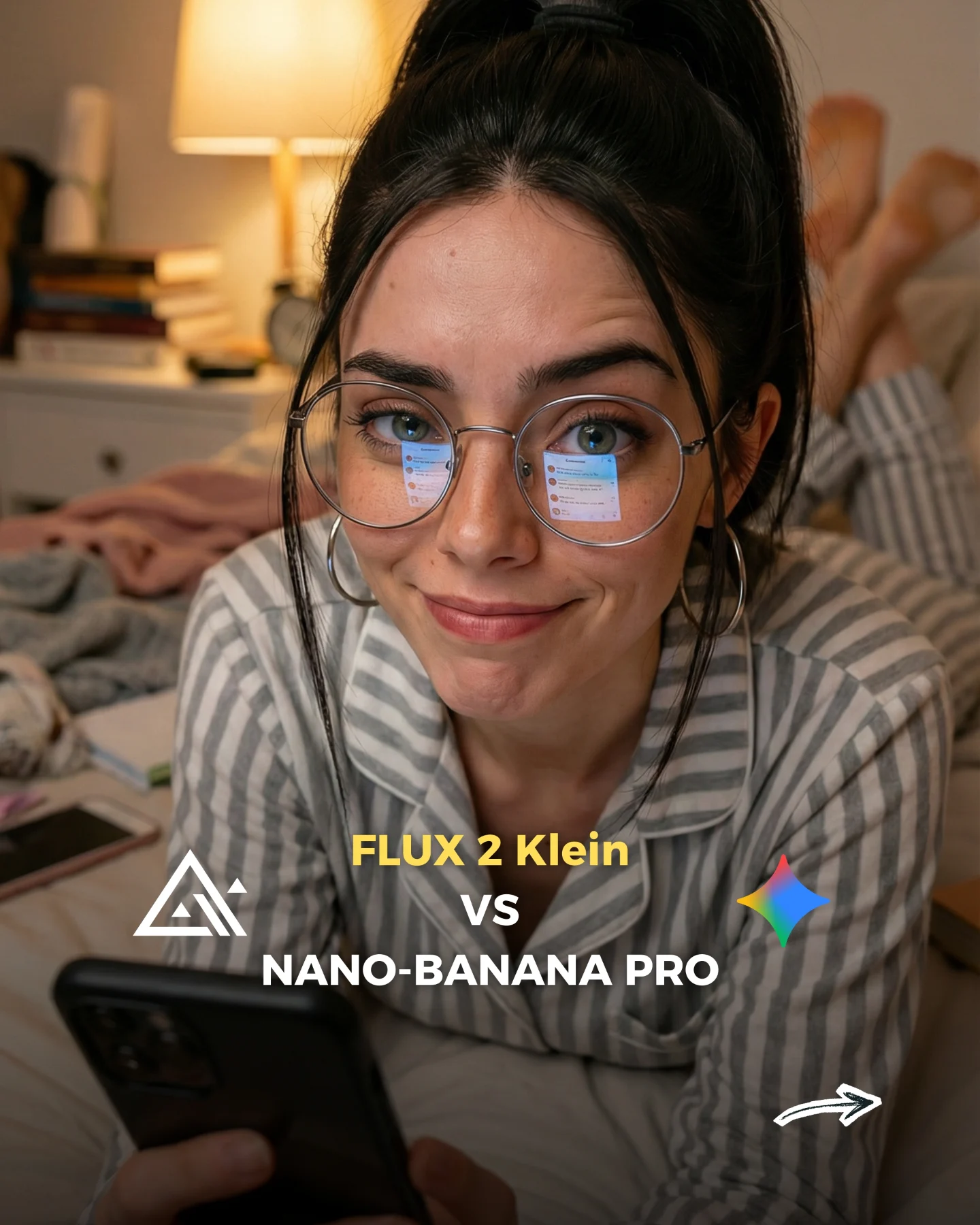
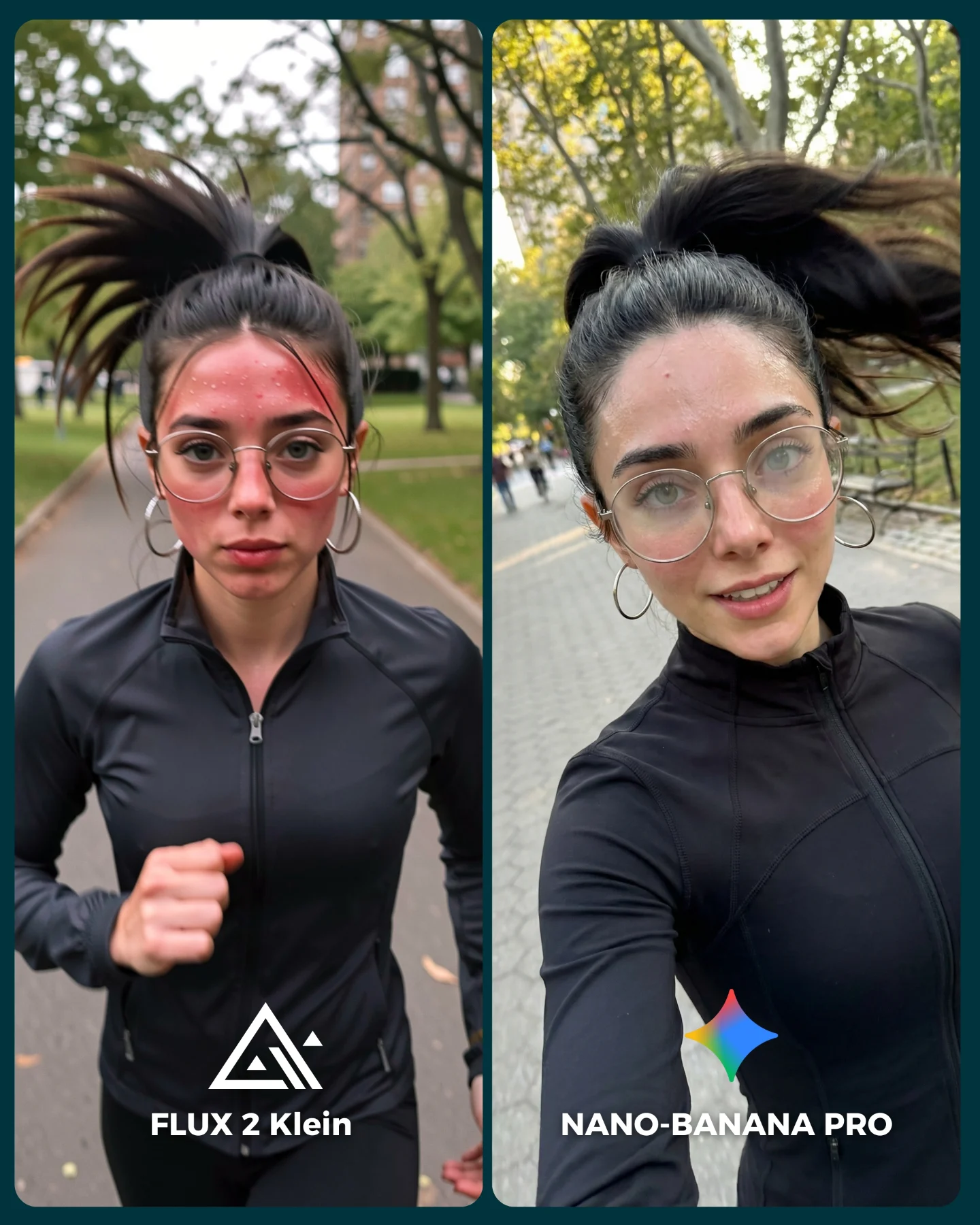
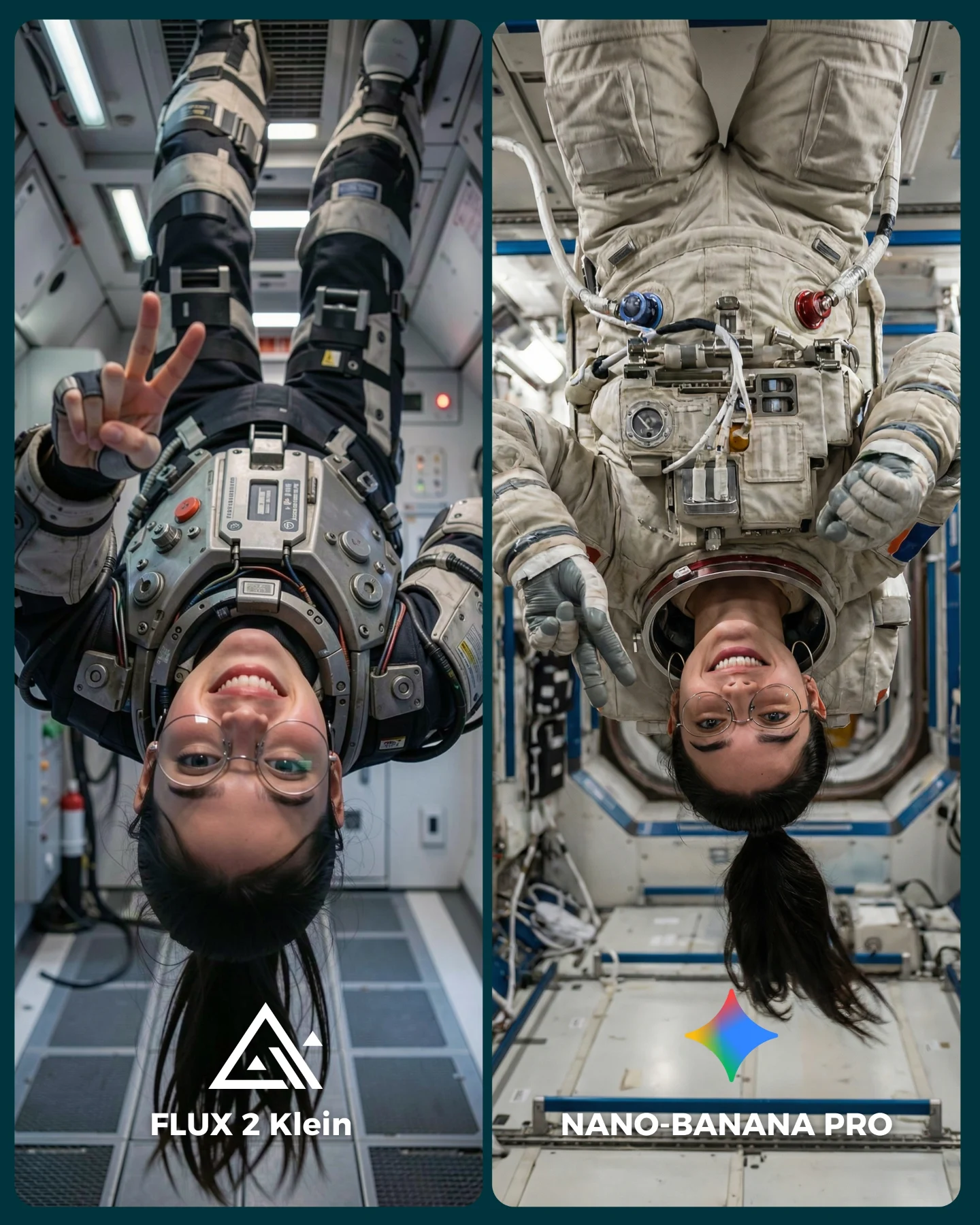
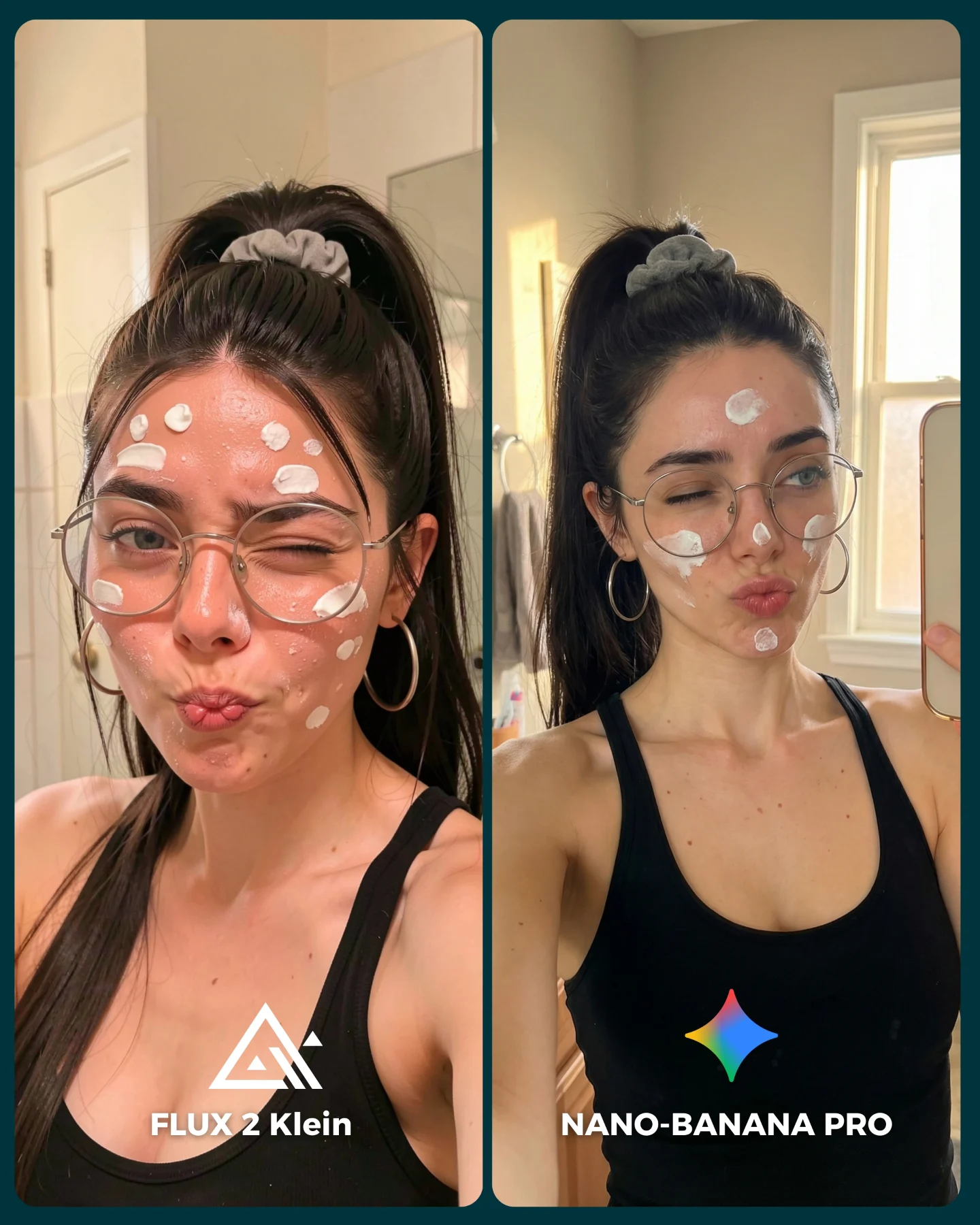
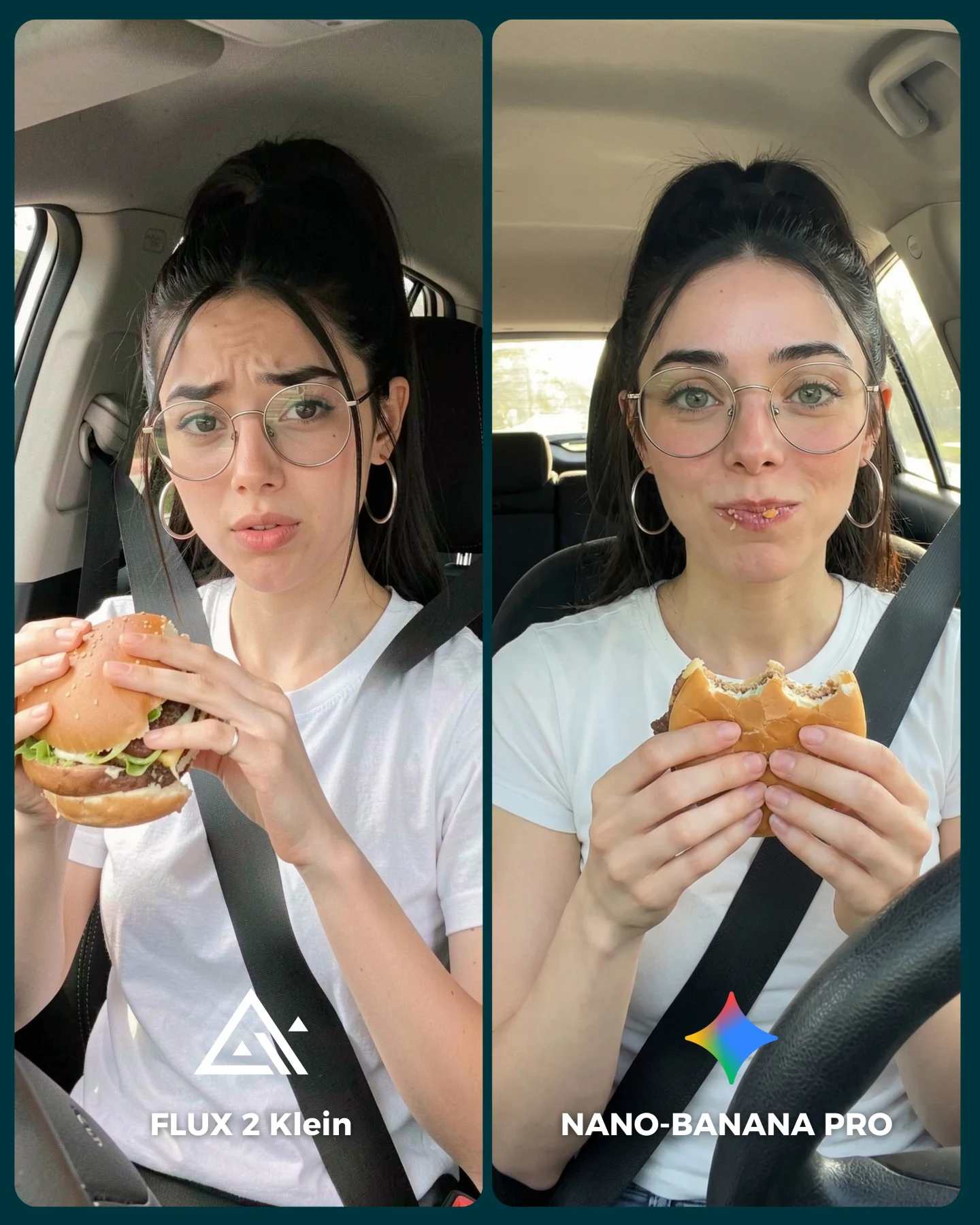
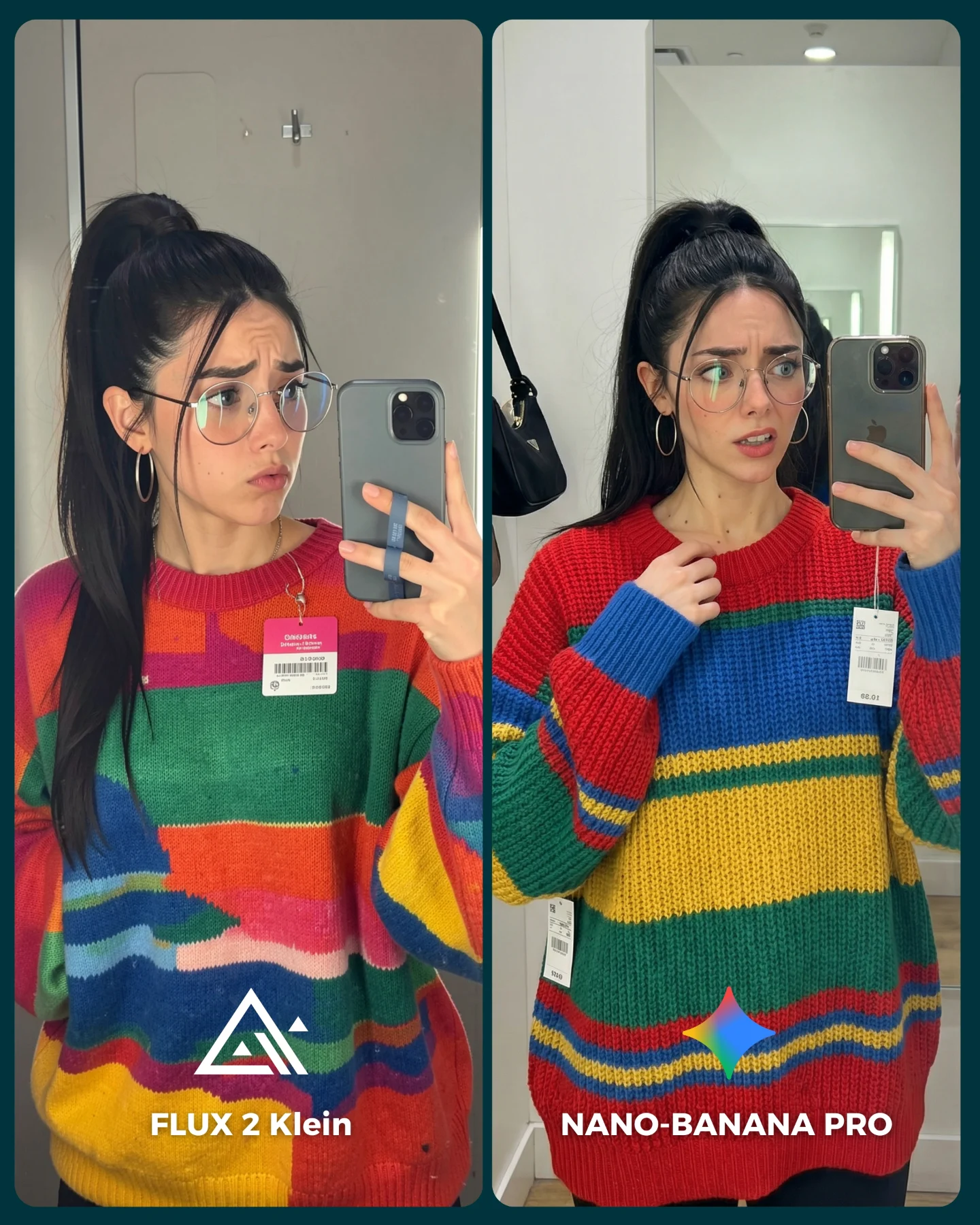
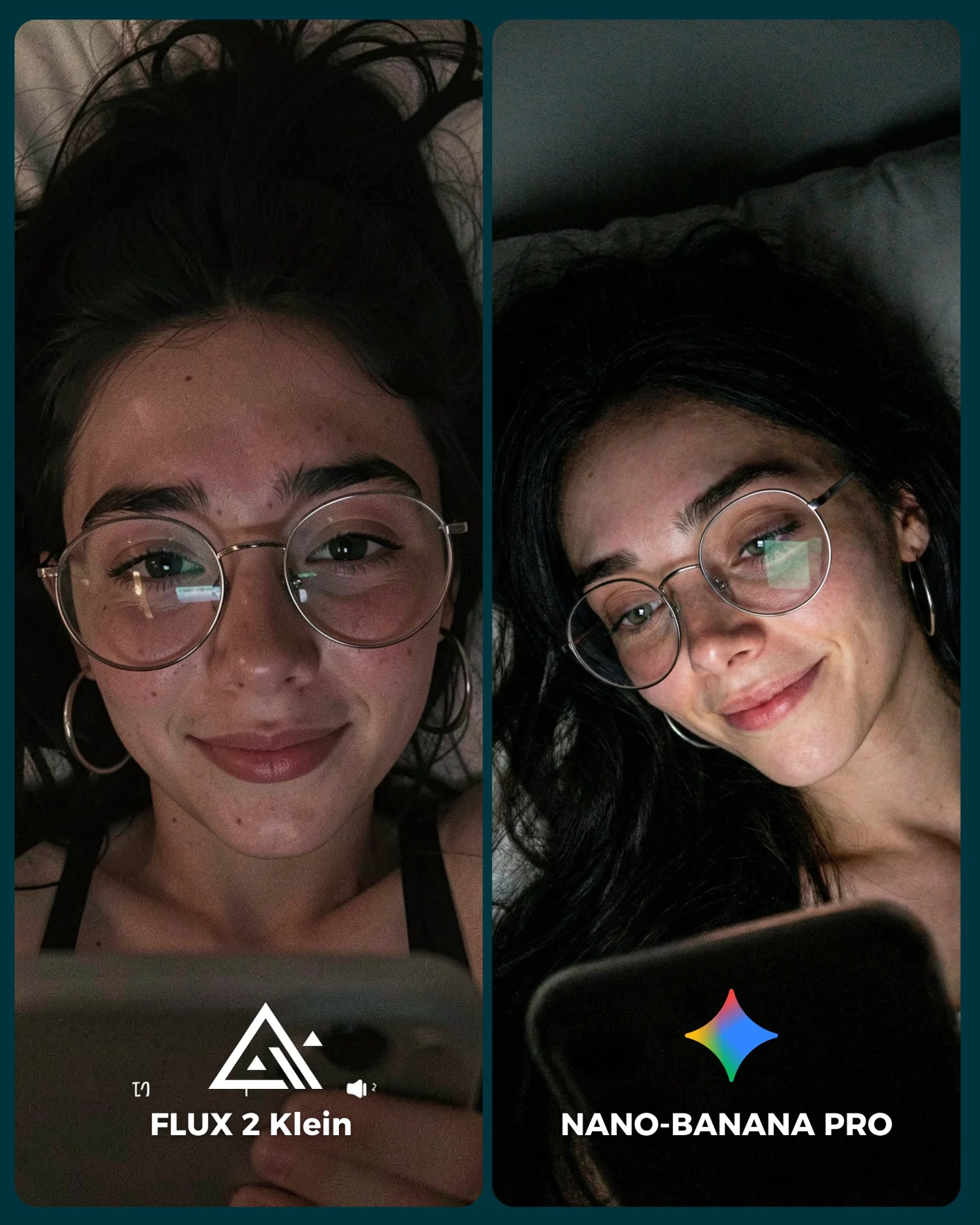
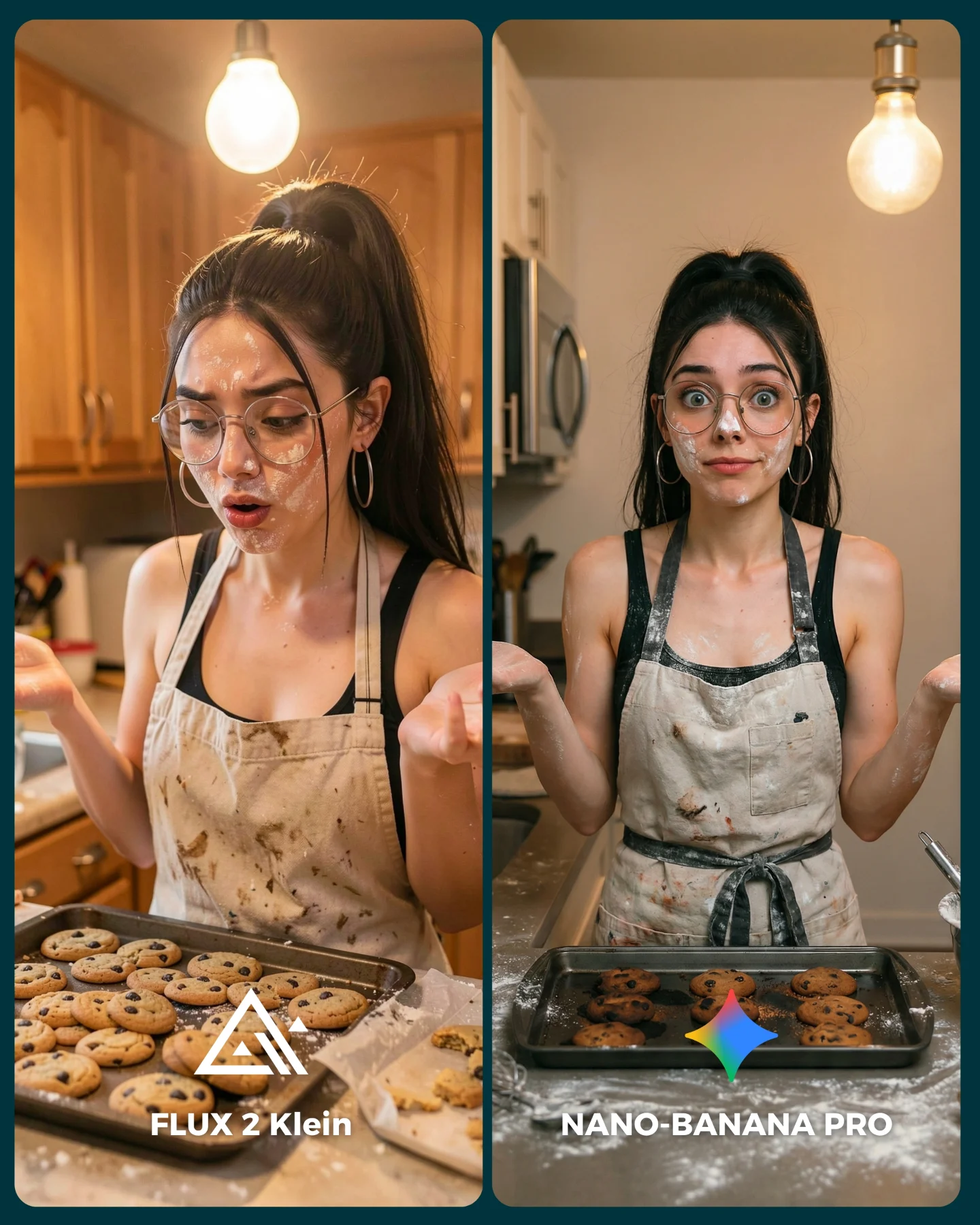
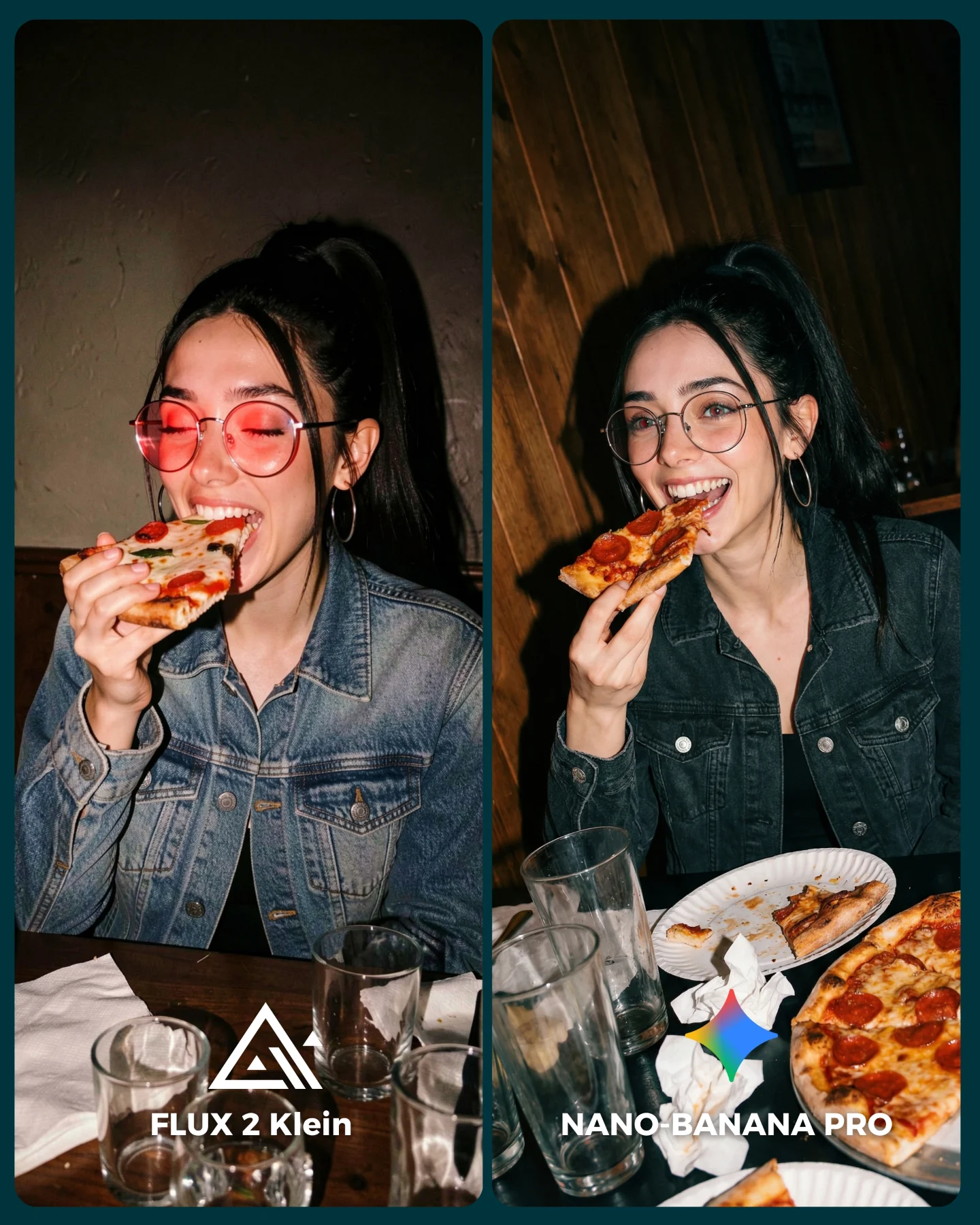
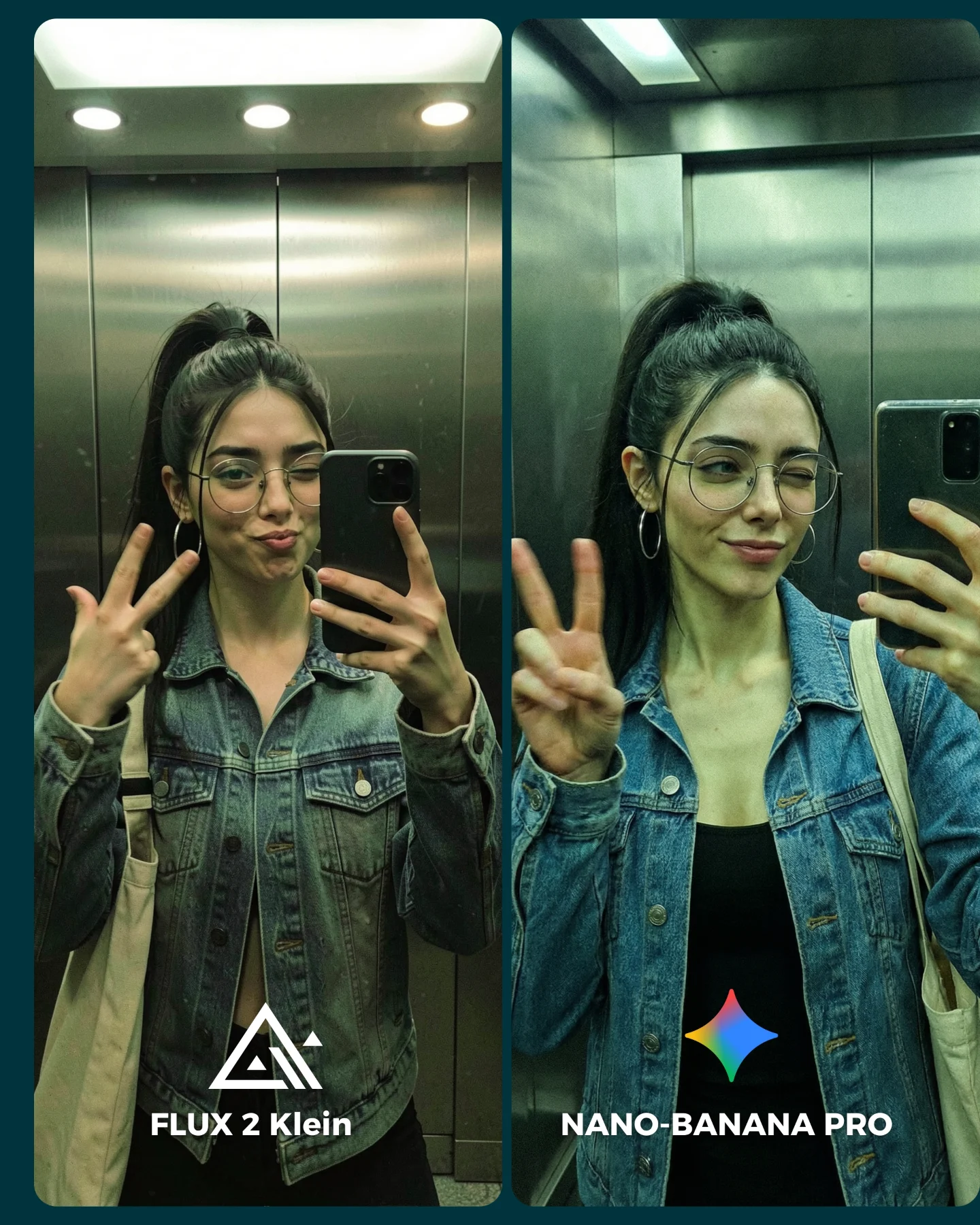
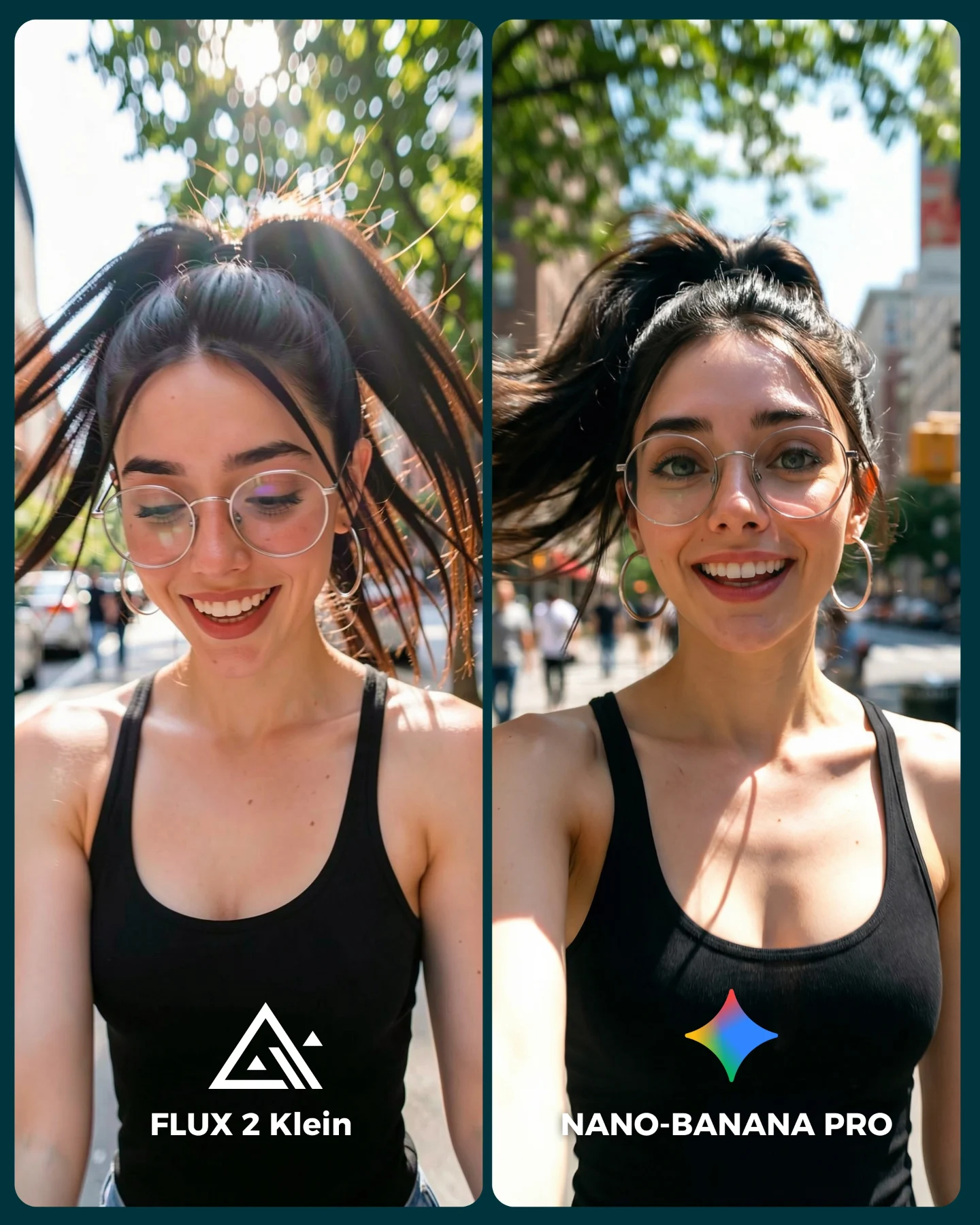
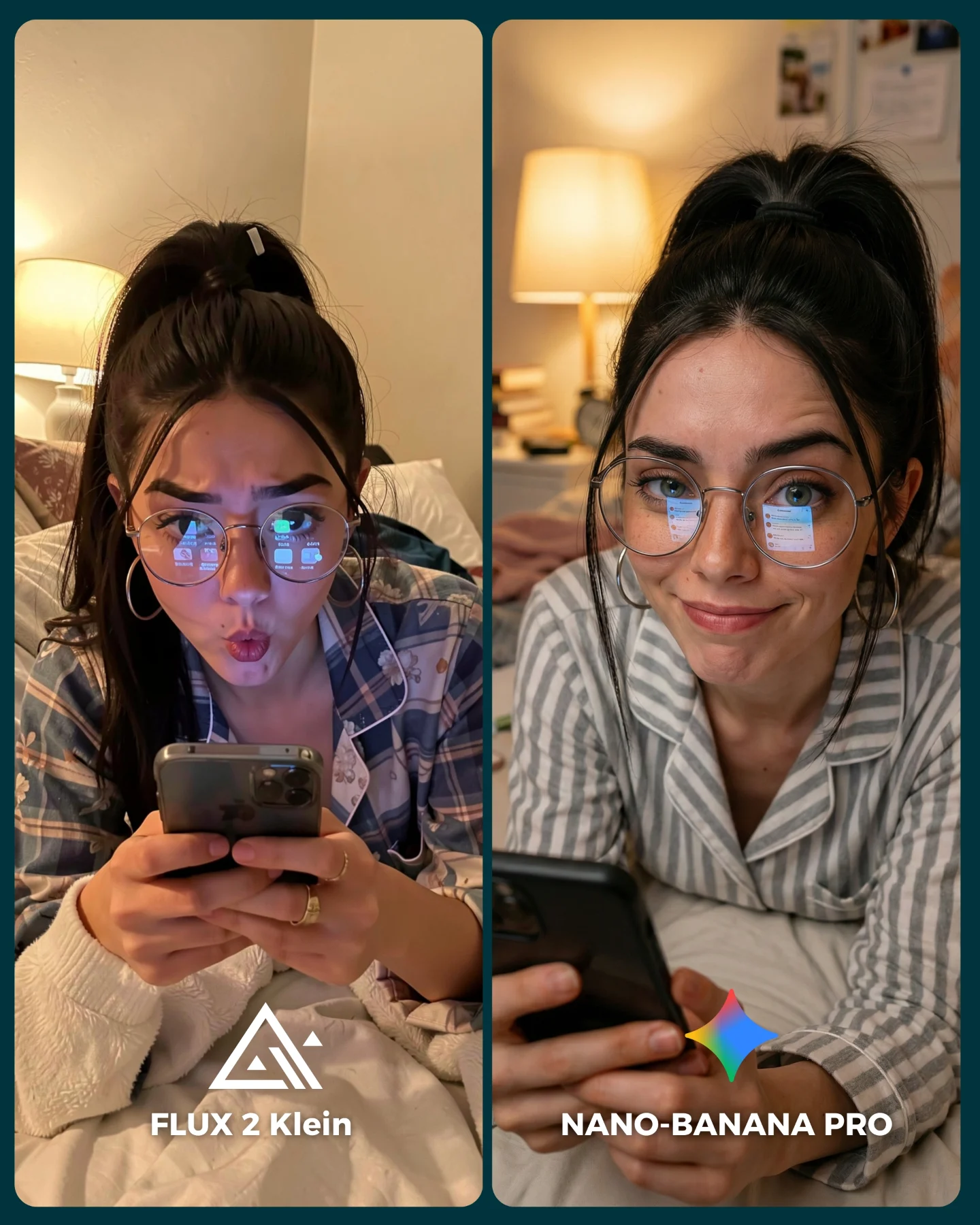
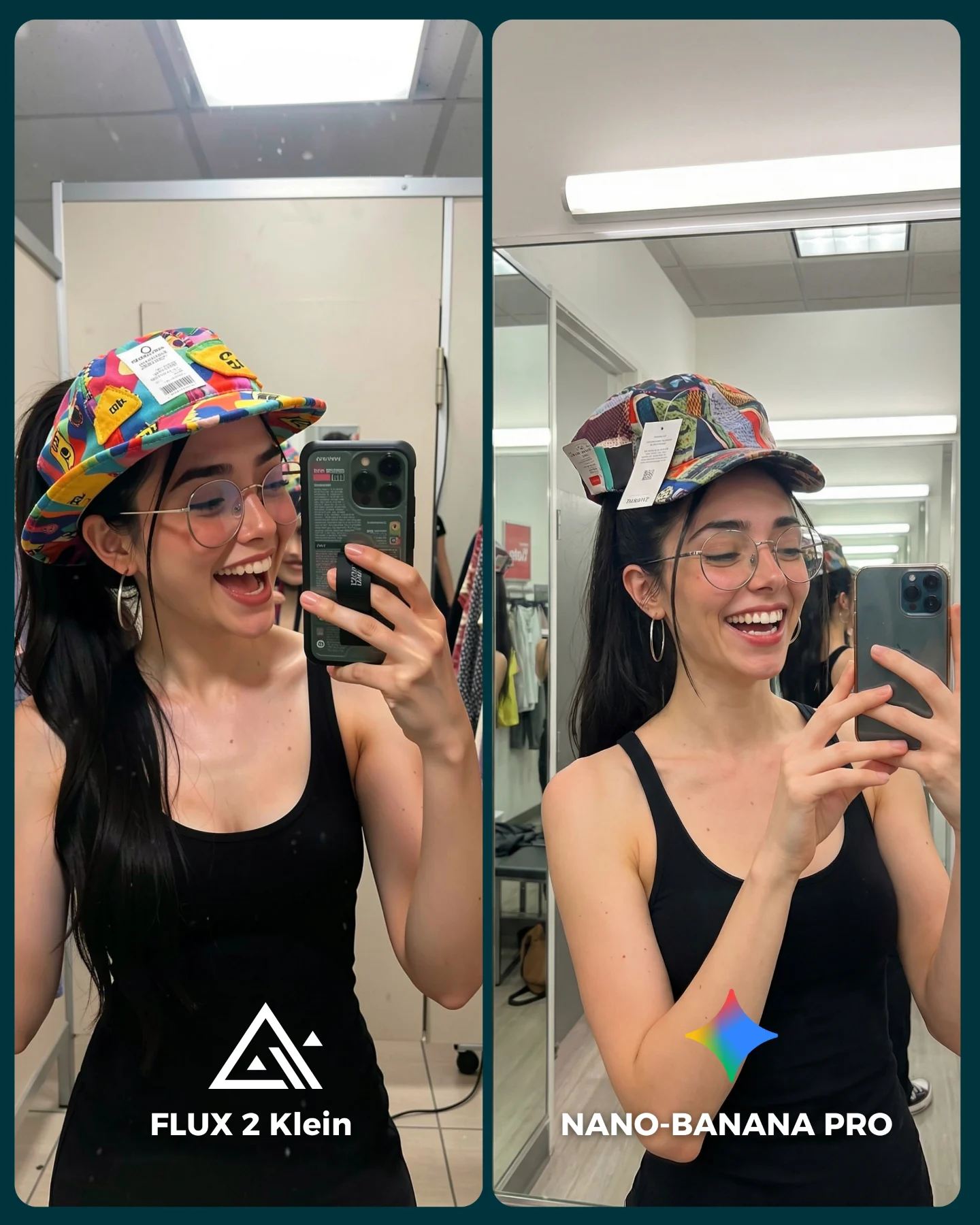
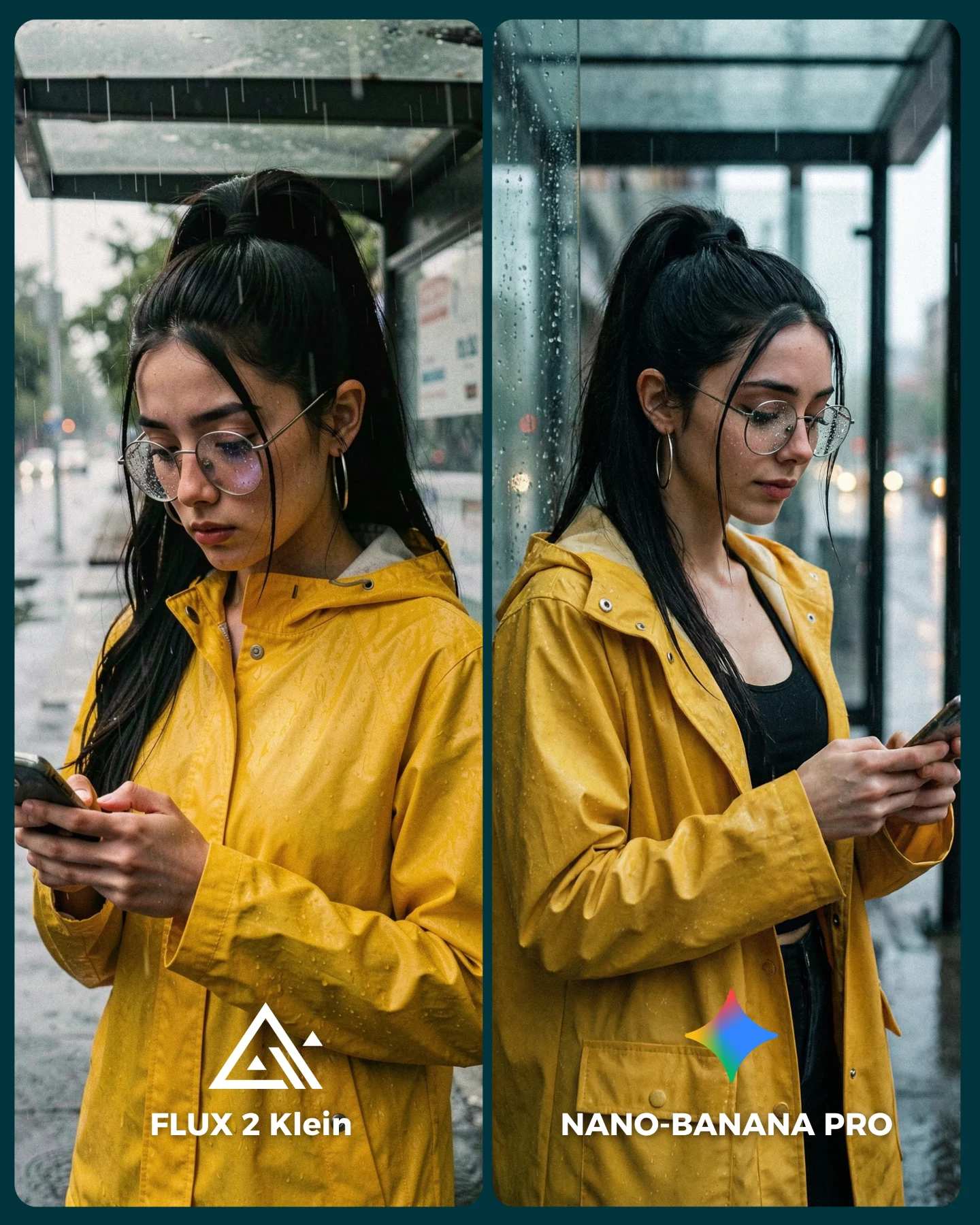
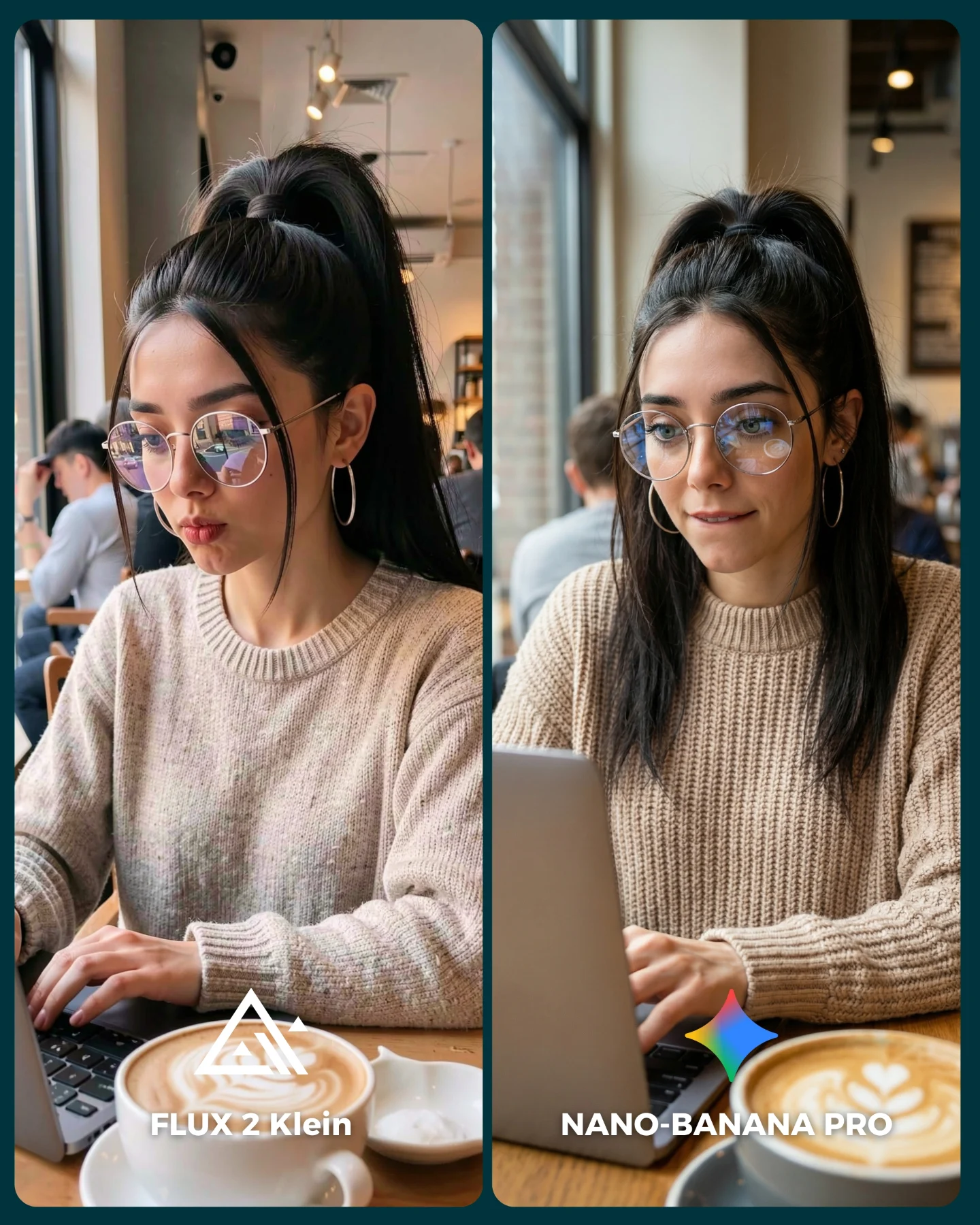
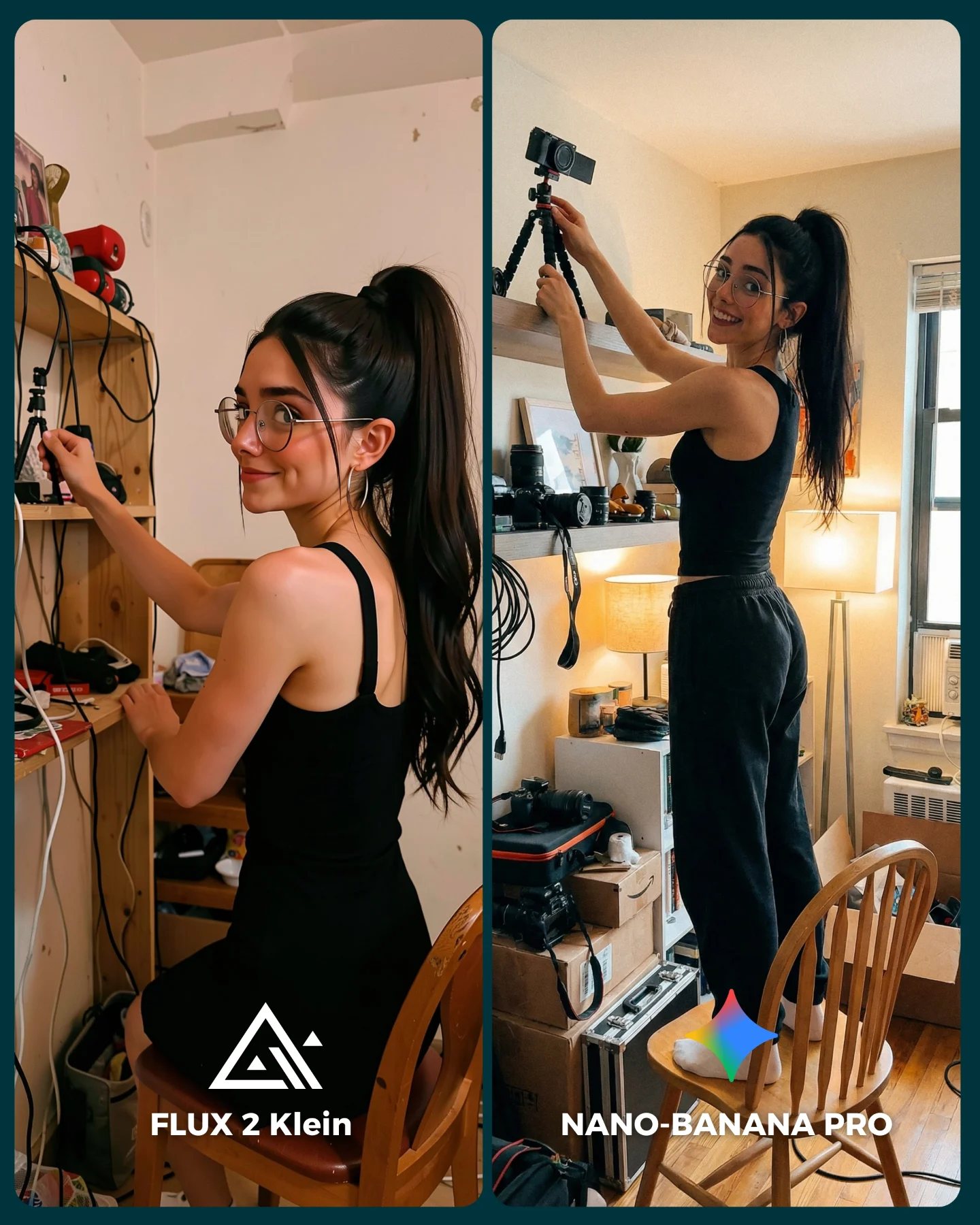
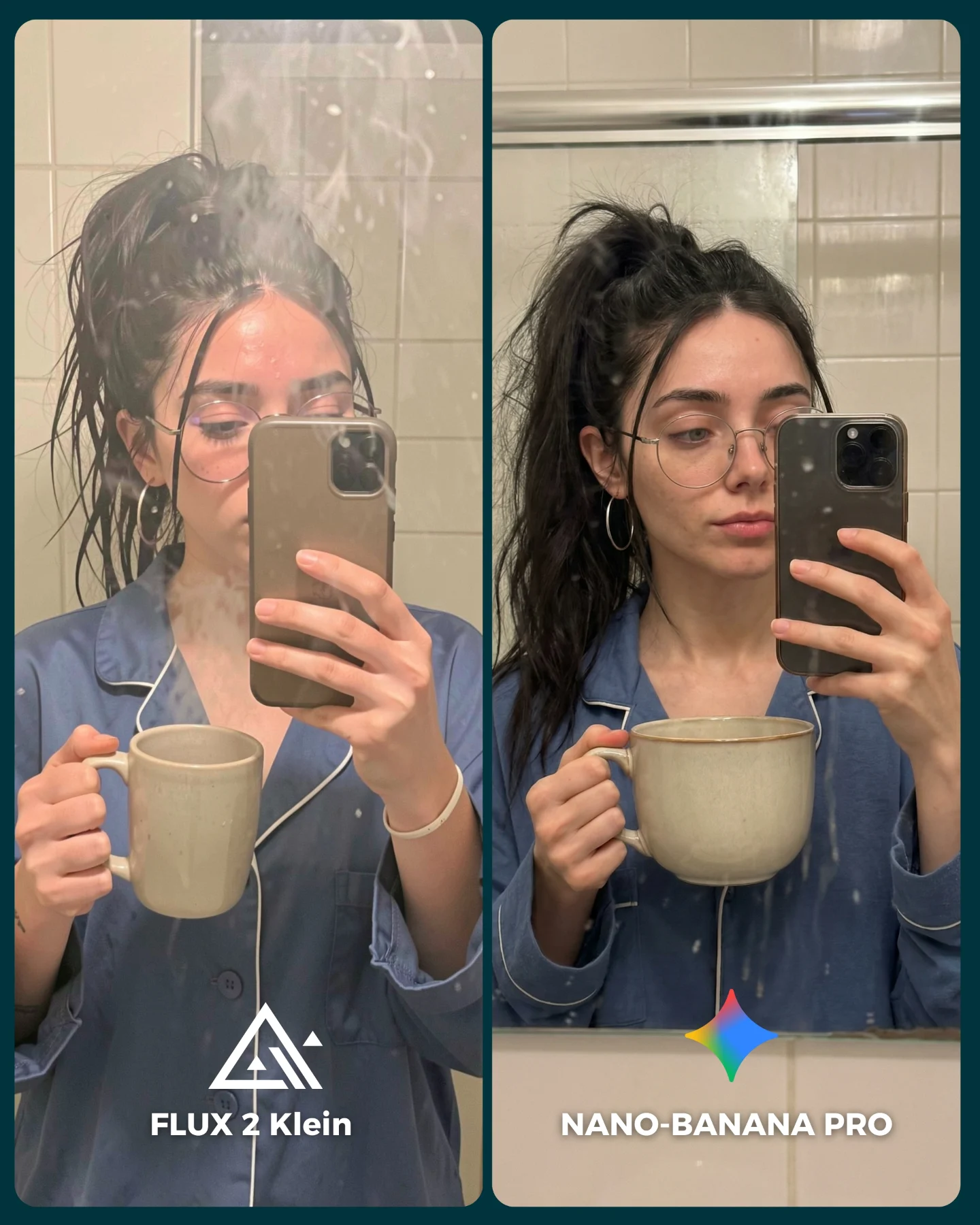
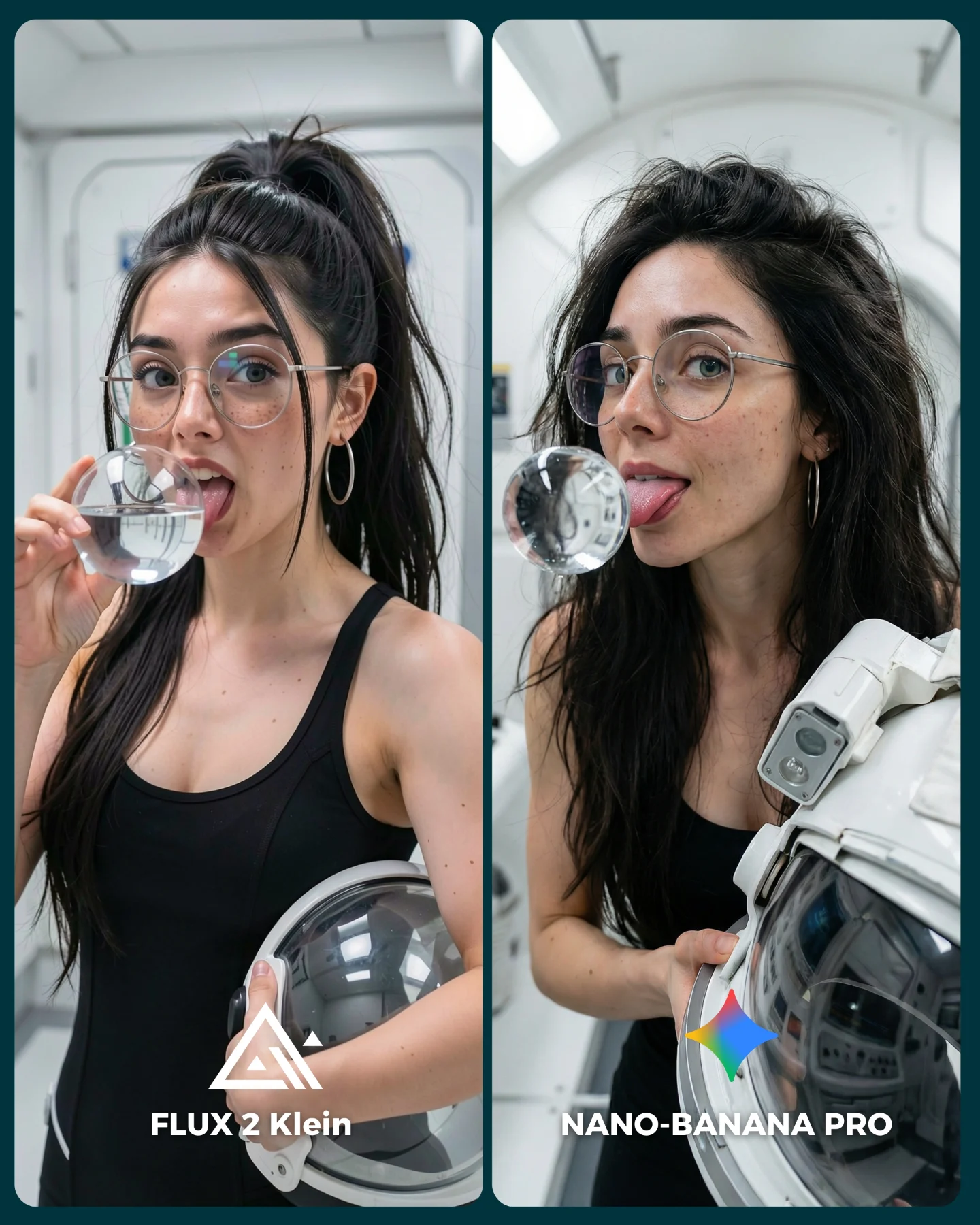
Flux 2 Klein VS. Nano Banana Pro 💥
Sigo pensando que no hay nada mejor que Nano Banana Pro 😅
O crees que hay algún generador de imágenes que le hace la competencia?? 👀
Como siempre... os puedo mandar todos los prompts de las imágenes si comentas "ARIA" 💕
How soy_aria_cruz Made This Study Desk Model Comparison Image and How to Recreate It
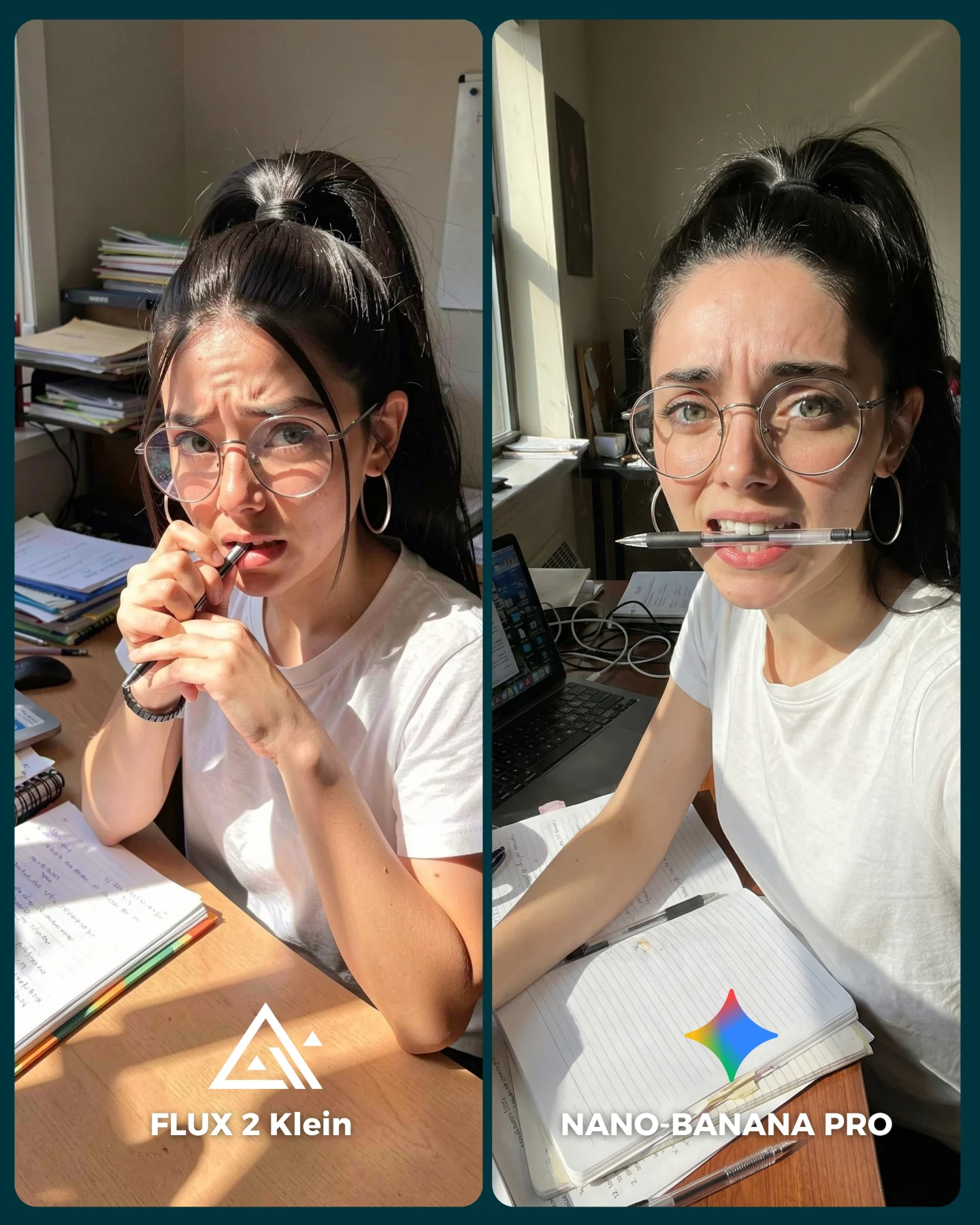
This image works because it picks an ordinary but unforgiving situation: being stuck at a desk, under window light, chewing on a pen, surrounded by messy notes. It is exactly the kind of scene people know from life, which means they can judge it very quickly. If the hands, desk clutter, light, or expression feel wrong, the image breaks immediately.
That is why this comparison is useful. It does not test only face beauty. It tests stress, behavior, object handling, and environmental realism all at once. The right panel feels stronger only if all of those small familiar details cooperate together, not just because the face is prettier.
Why this comparison feels meaningful
The strongest mechanism is lived familiarity. A study desk is not aspirational in the same way a fashion shoot is. It is known. People understand how notebooks overlap, how cables sit awkwardly, how sunlight lands across a desk, and how a stressed face looks when someone is thinking too hard. That familiarity makes the realism benchmark tougher and more useful.
The second strength is that the image combines face and environment pressure. The model is not only asked to render a person. It must also render a believable desk ecosystem. When those details work together, the scene feels whole. When they do not, the scene becomes uncanny fast.
Signal
Evidence (from this image)
Mechanism
Replication Action
Everyday stress realism
Pen biting, furrowed brows, notebooks, and desk mess all appear together
The viewer recognizes the emotional and physical setup immediately
Use common real-life situations where small errors are easy to notice
Multi-object pressure
Papers, laptop, pen, notebook, cables, and window light all matter
The model has to solve several realism tasks at once
Choose benchmark prompts with hands, objects, and environment interacting together
Strong A/B clarity
Two similar desk scenes are labeled side by side
Viewers can compare naturalness quickly without confusion
Keep framing and identity stable so quality differences stay visible
Familiar lighting logic
Hard natural sunlight cuts across the desk and face
Incorrect shadow or light behavior becomes obvious in a domestic study scene
Use natural light benchmarks instead of only controlled studio setups
Where this format works best
Model realism comparisons: ideal for testing daily-life fidelity rather than aesthetic fantasy.
Prompt engineering tutorials: useful when teaching how to benchmark common indoor scenes fairly.
Student or desk-work prompt tests: strong because desk clutter and pen handling expose weak generation quickly.
AI influencer consistency checks: effective for showing a character inside ordinary stress, not only curated glamour.
Where it is less effective
Luxury or fashion audiences: the scene is intentionally mundane.
Abstract art communities: the value here is realism, not imagination.
Ultra-clean productivity aesthetics: the desk mess is part of what makes the image believable.
Three transfer recipes
Exam-prep transfer Keep: desk clutter, daylight realism, anxious hand-object interaction. Change: pen to highlighter or calculator, paper density, posture tightness. Slot template (EN): {same subject} under {daylight desk setup} interacting with {study object} in a side-by-side model benchmark
Laptop-work transfer Keep: common workspace realism and behavioral stress cue. Change: object from pen to glasses arm, coffee cup, or sticky note. Slot template (EN): {young woman} at a messy desk with {work object} shown as an everyday realism comparison between {two models}
Creative-block transfer Keep: face-plus-environment pressure and natural light. Change: notebooks to sketchbooks or scripts, expression nuance, object in hand. Slot template (EN): {person} in a stressed creative desk moment with {visible clutter and daylight} as a model-comparison scene
Aesthetic read: why the image feels believable
The sunlight is doing a lot of work here. It creates bright desk patches and awkward shadow boundaries that feel genuinely domestic. That slight harshness is good. It keeps the scene from drifting into overdesigned “study aesthetic” territory.
The desk clutter matters for the same reason. Too much order would make the image feel like a staged productivity setup. The scattered notebooks and cables tell a better story: this is not a moodboard. It is a real working moment.
The pen at the mouth is the smallest but most important detail. It changes the whole frame from “girl at desk” to “person actively under mental pressure.” That shift gives the benchmark emotional specificity.
Observed
Why it matters
Pen biting with visible hand tension
Adds behavioral realism and emotional clarity
Window sunlight across the desk
Creates familiar domestic lighting pressure
Messy notebooks, papers, and laptop
Turn the environment into a believable lived-in workspace
Same woman in both panels with stable styling
Keeps the comparison fair and easy to read
Left awkwardness versus right naturalness
Makes subtle realism improvement visible without changing the concept
Prompt technique breakdown
To recreate a benchmark like this, you want everyday pressure points, not dramatic effects. The model should have to solve light, clutter, hands, expression, and a familiar object interaction all at once. That is what makes the result informative.
Prompt chunk
What it controls
Swap ideas (EN, 2–3 options)
Same woman in both desk panels
Locks identity consistency and fairness of comparison
matched study subject; duplicated desk-scene identity; stable A/B character
Pen biting at a messy desk
Adds hand-object realism and emotional specificity
stressed student with pen; anxious desk gesture; study-pressure expression
Daylight through a nearby window
Creates a recognizable and testable lighting system
split-screen comparison of the same young woman with glasses and hoop earrings sitting at a messy daylight study desk, biting a pen with a stressed expression, white T-shirt, notebooks and laptop around her, warm window sunlight across the desk, left labeled FLUX 2 Klein and right labeled NANO-BANANA PRO, hyper-real everyday realism test
Remix playbook
The best way to improve this image is to lock the desk realism before refining the face.
Baseline lock
Lock the pen, desk clutter, and window light first.
Lock the same subject identity and T-shirt second.
Lock the left-versus-right naturalness difference only after the room feels believable.
One-change rule
If you change the desk, the object, and the expression all together, the comparison becomes noisy. Keep the study scenario stable and adjust one realism pressure point at a time.
Run 1: establish the same woman, same desk, and same daylight in both panels.
Run 2: refine the pen-biting gesture and hand anatomy.
Run 3: tune the stress expression so the left is weaker and the right feels more human.
Run 4: polish paper overlap, laptop visibility, and window-shadow logic.
The final result should still feel ordinary. That ordinariness is what makes the benchmark sharp enough to be useful.