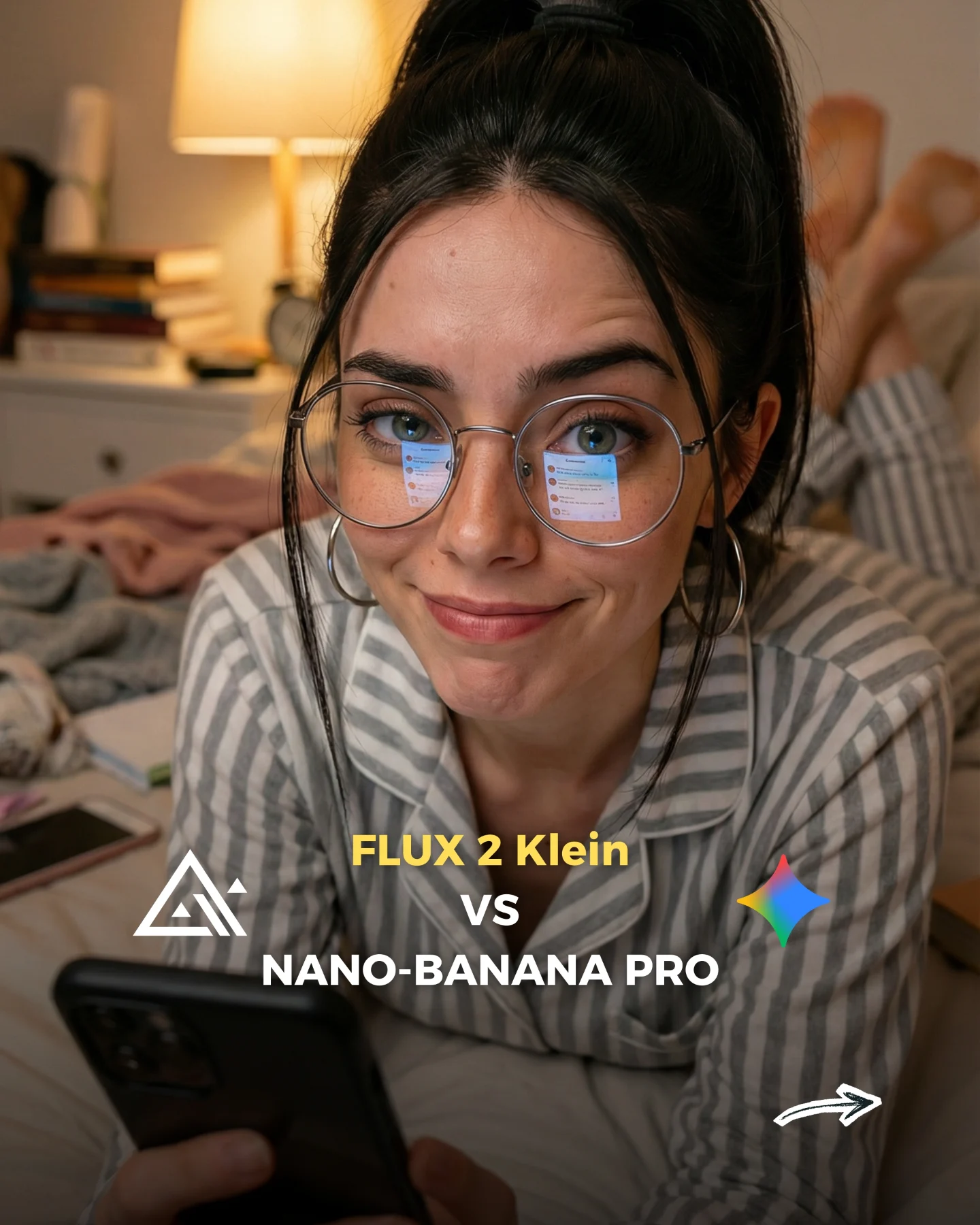
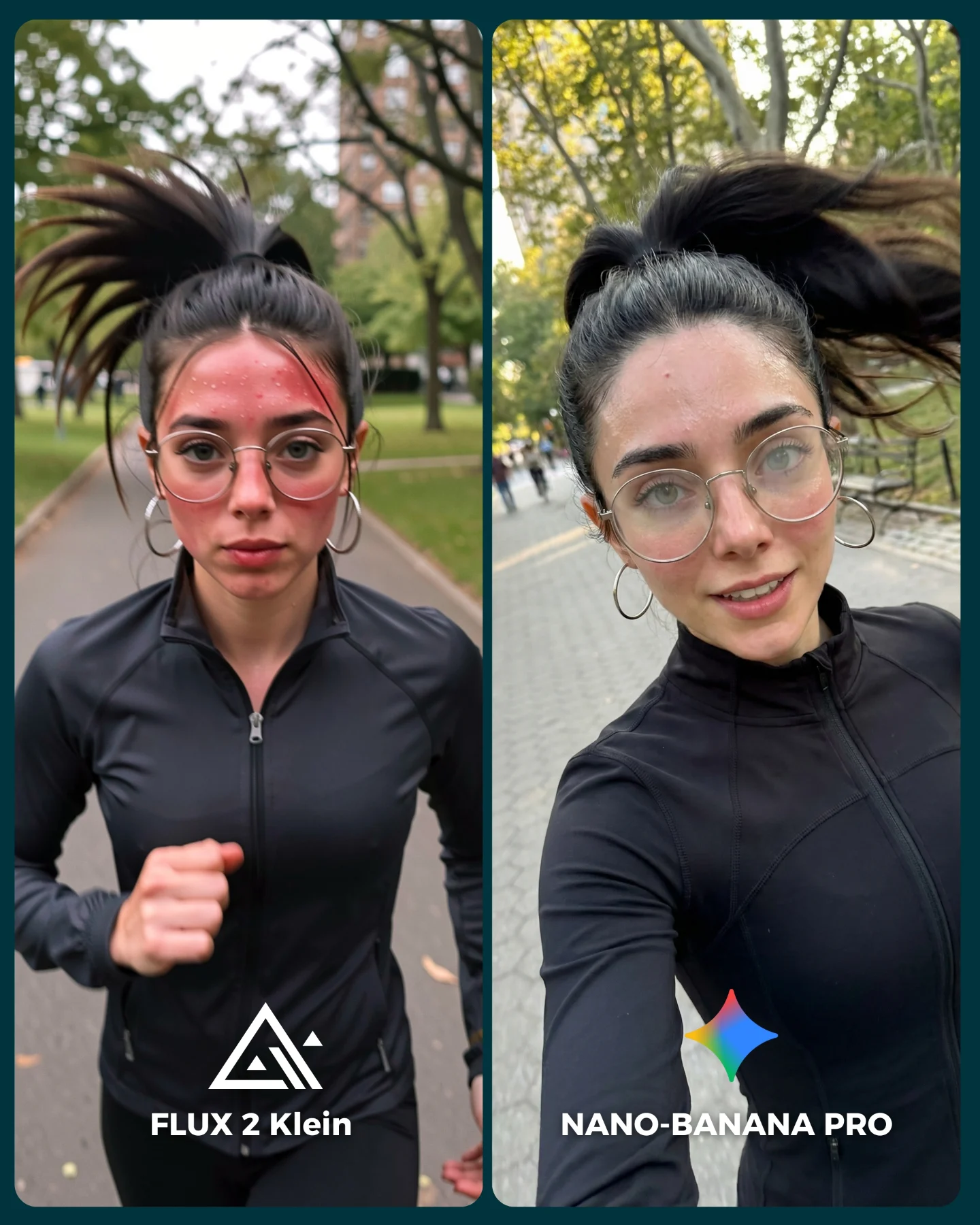
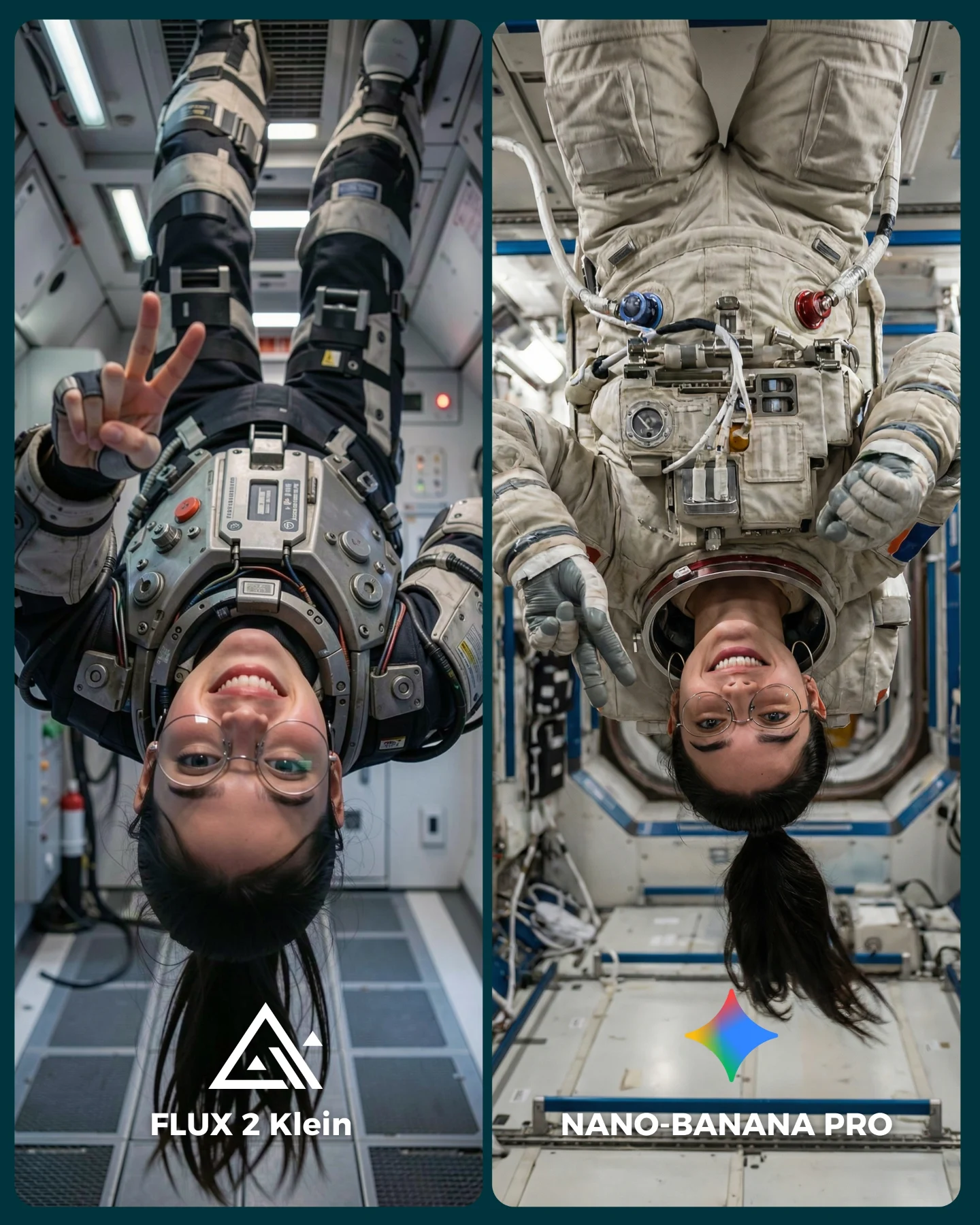
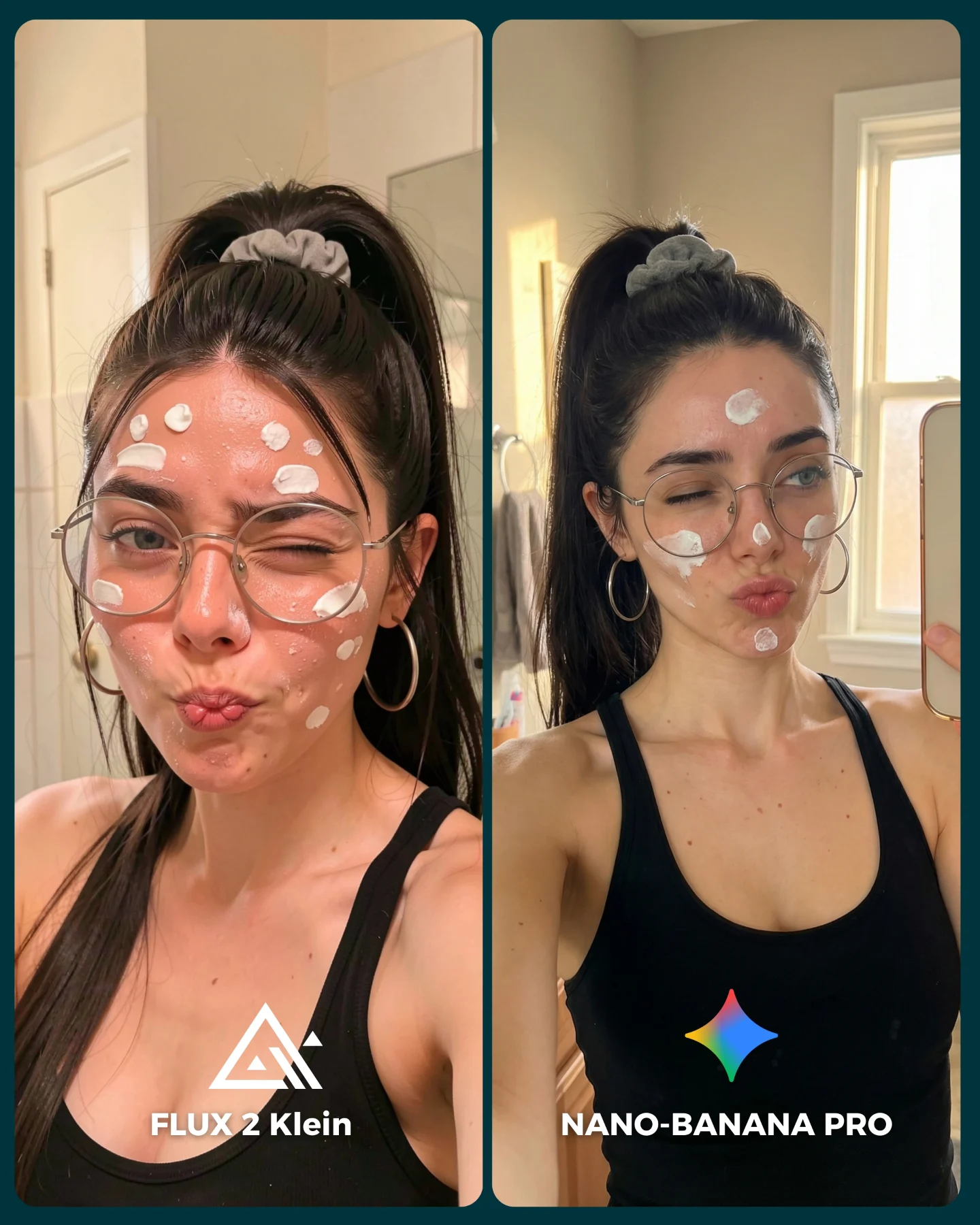
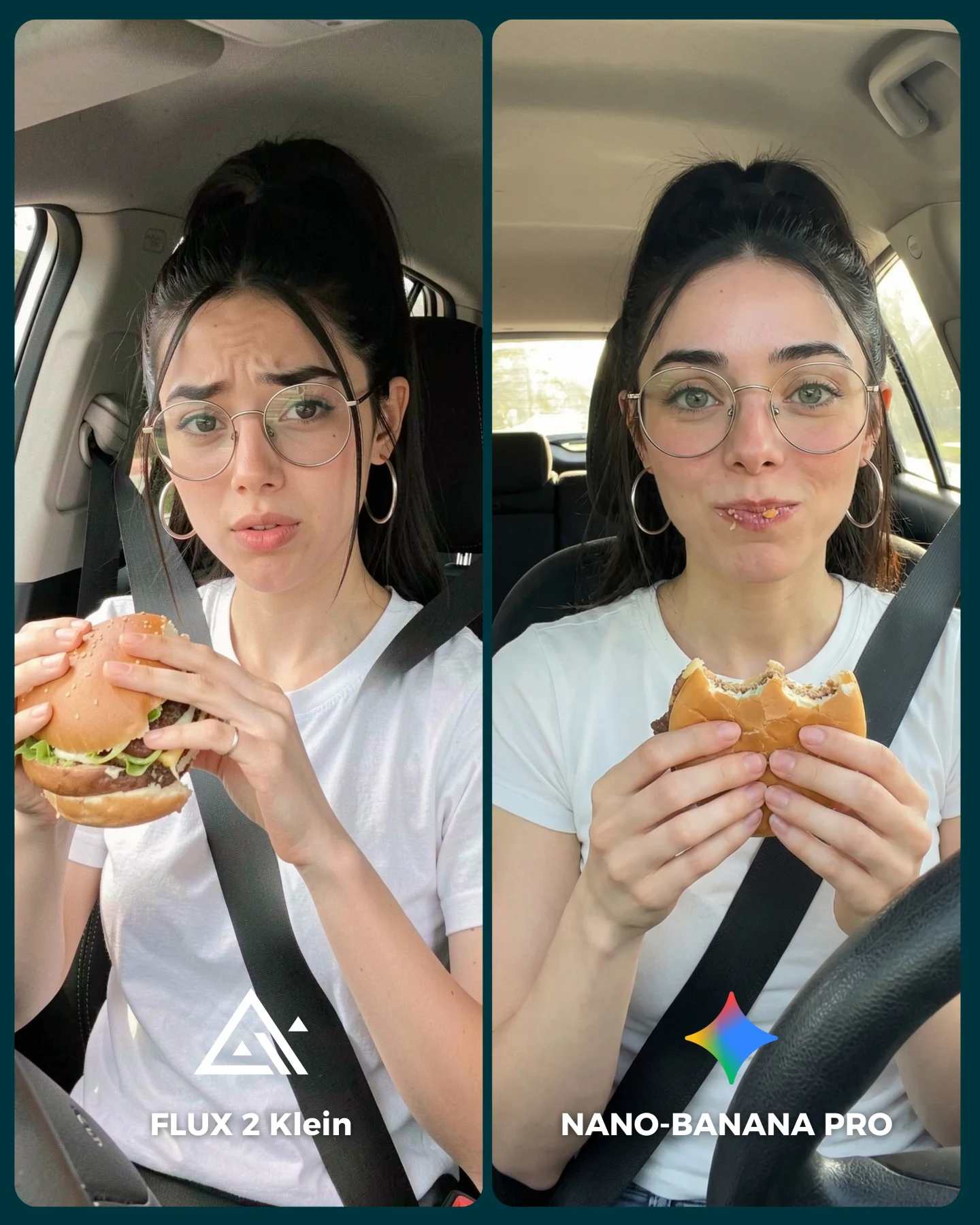
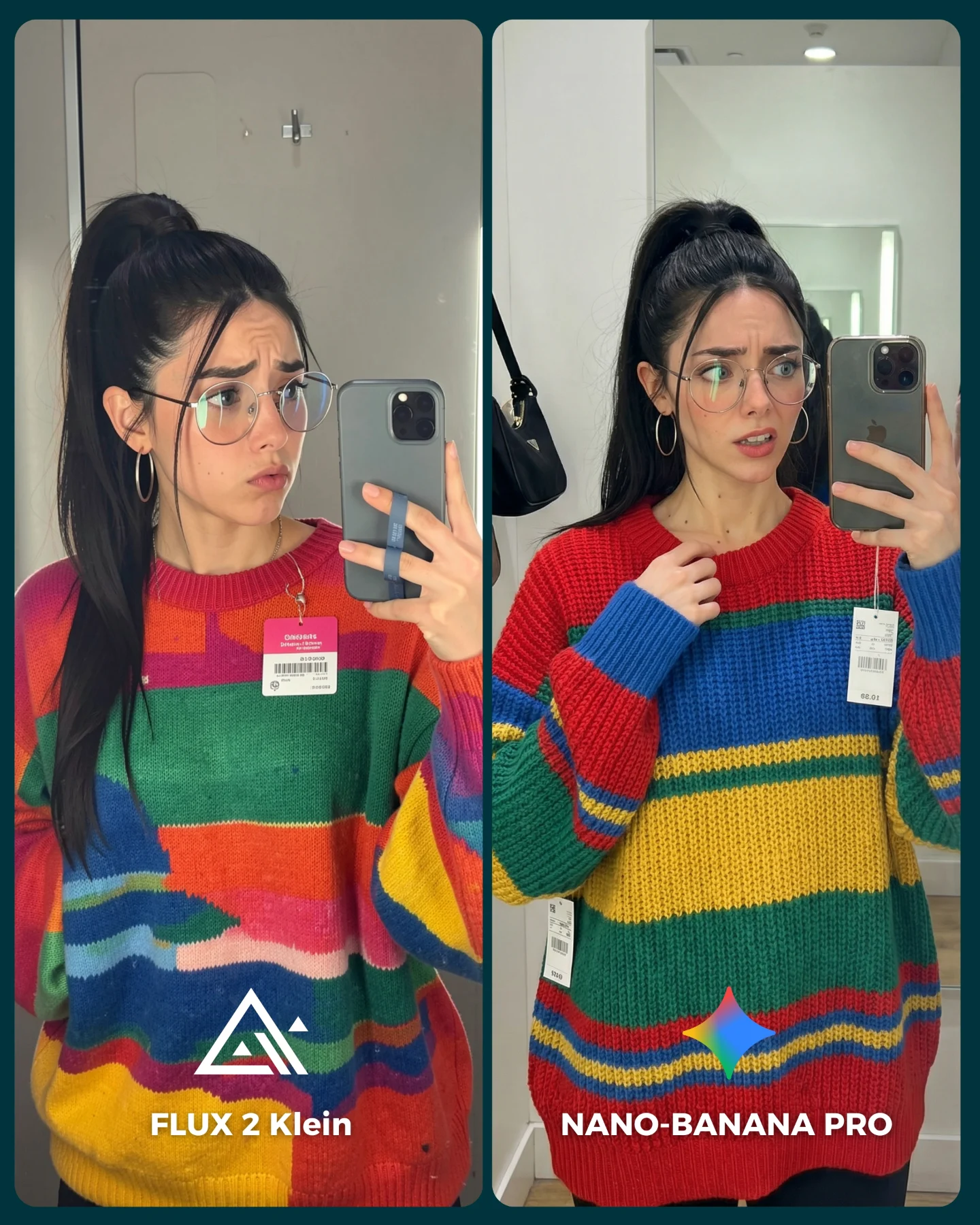
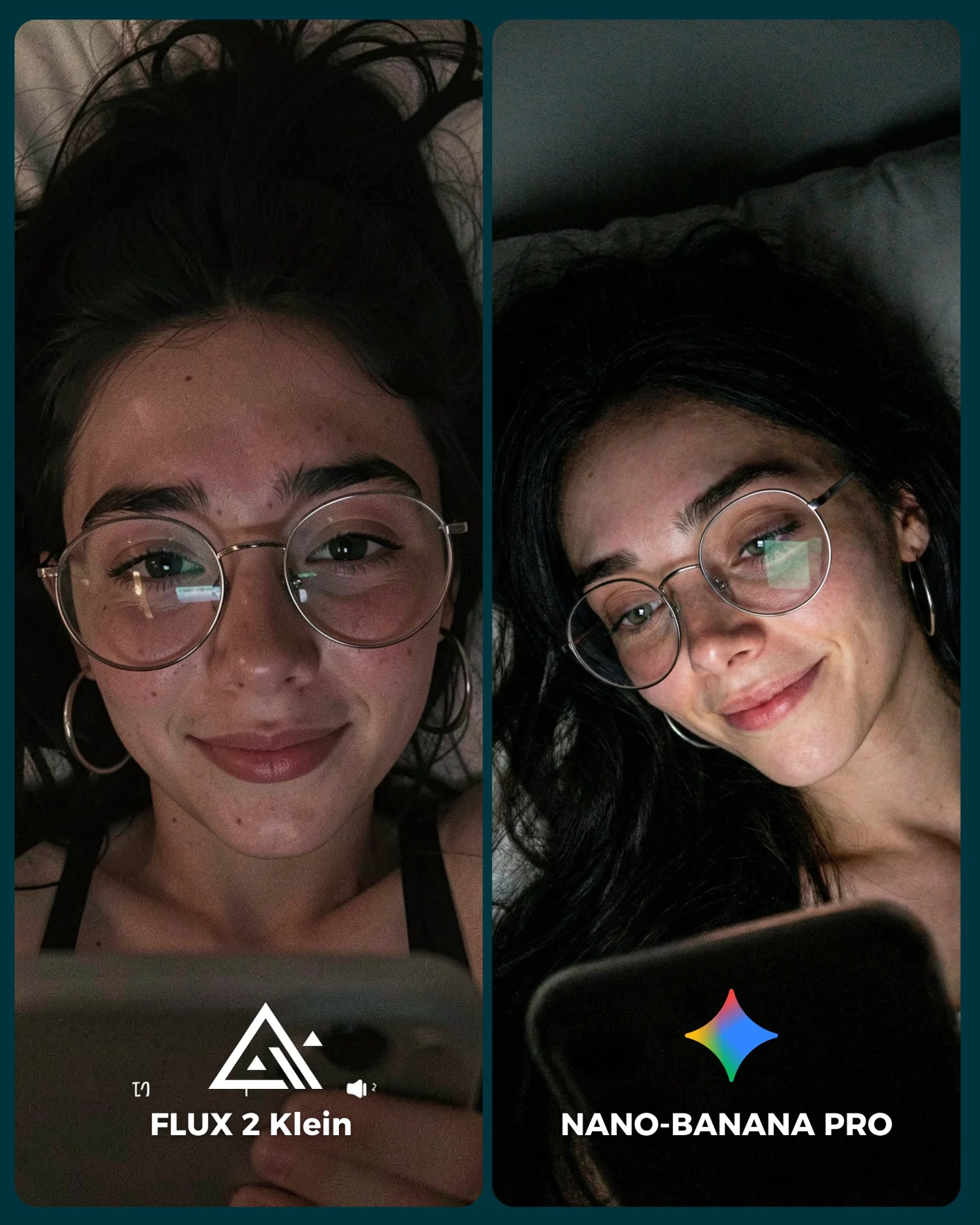
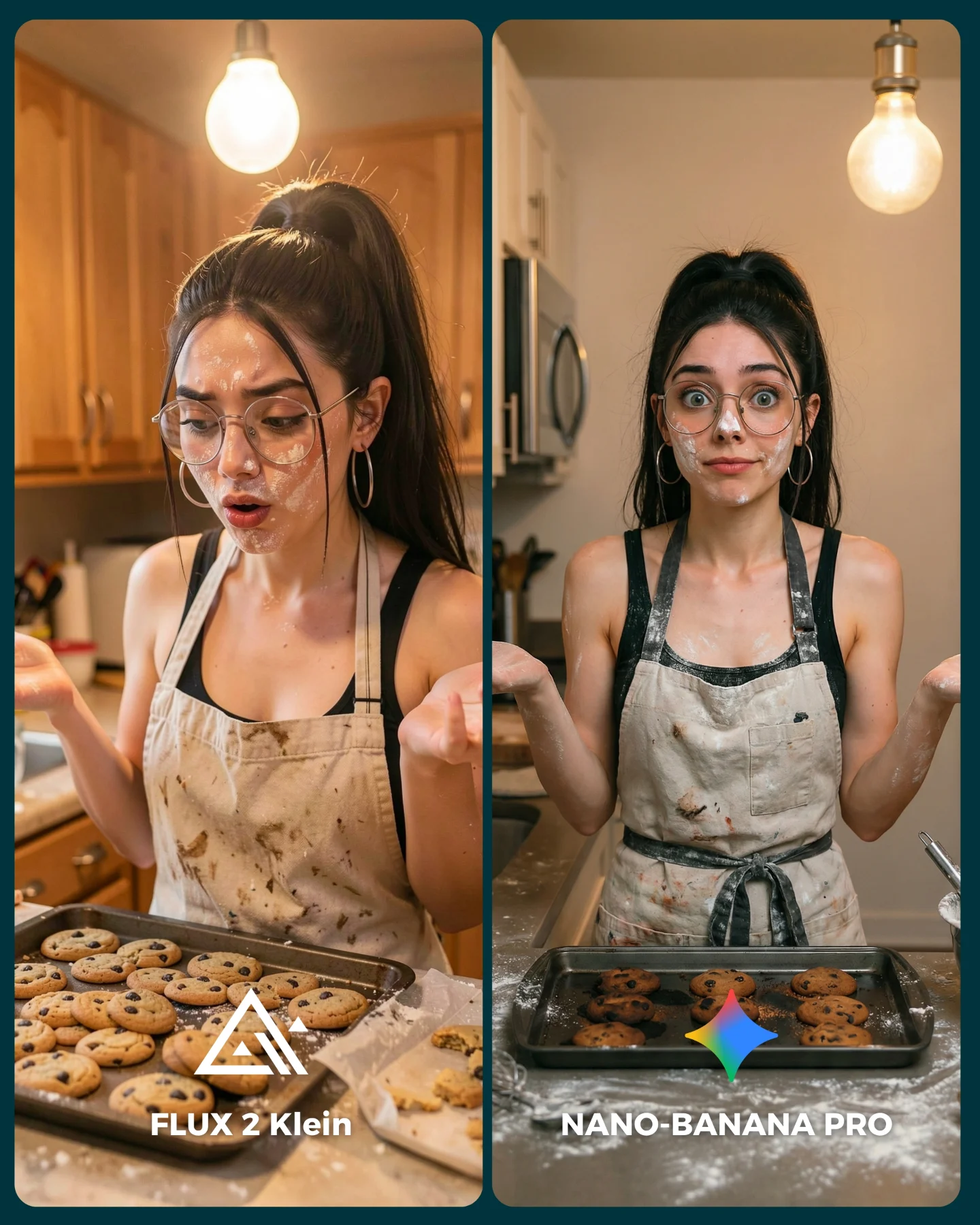
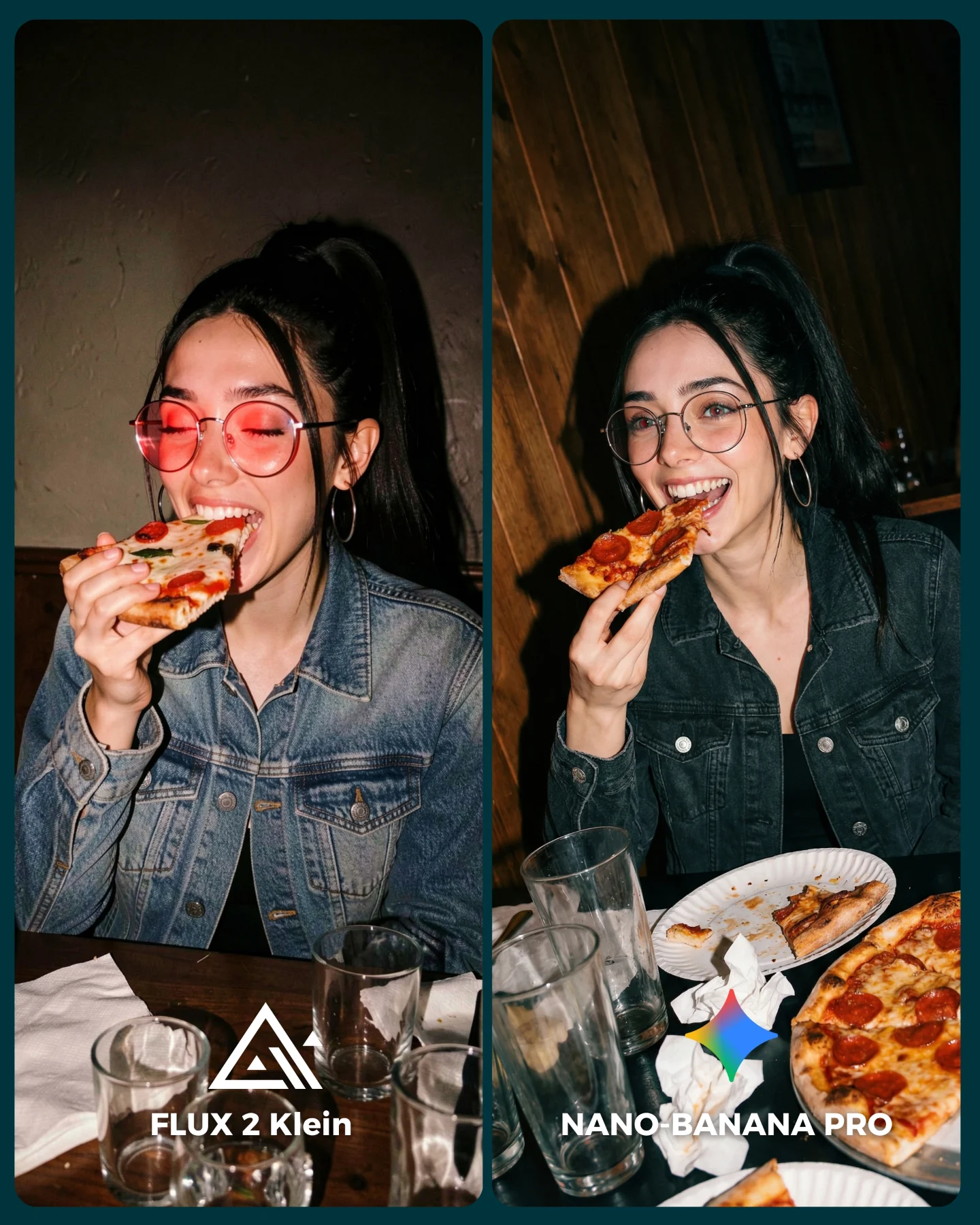
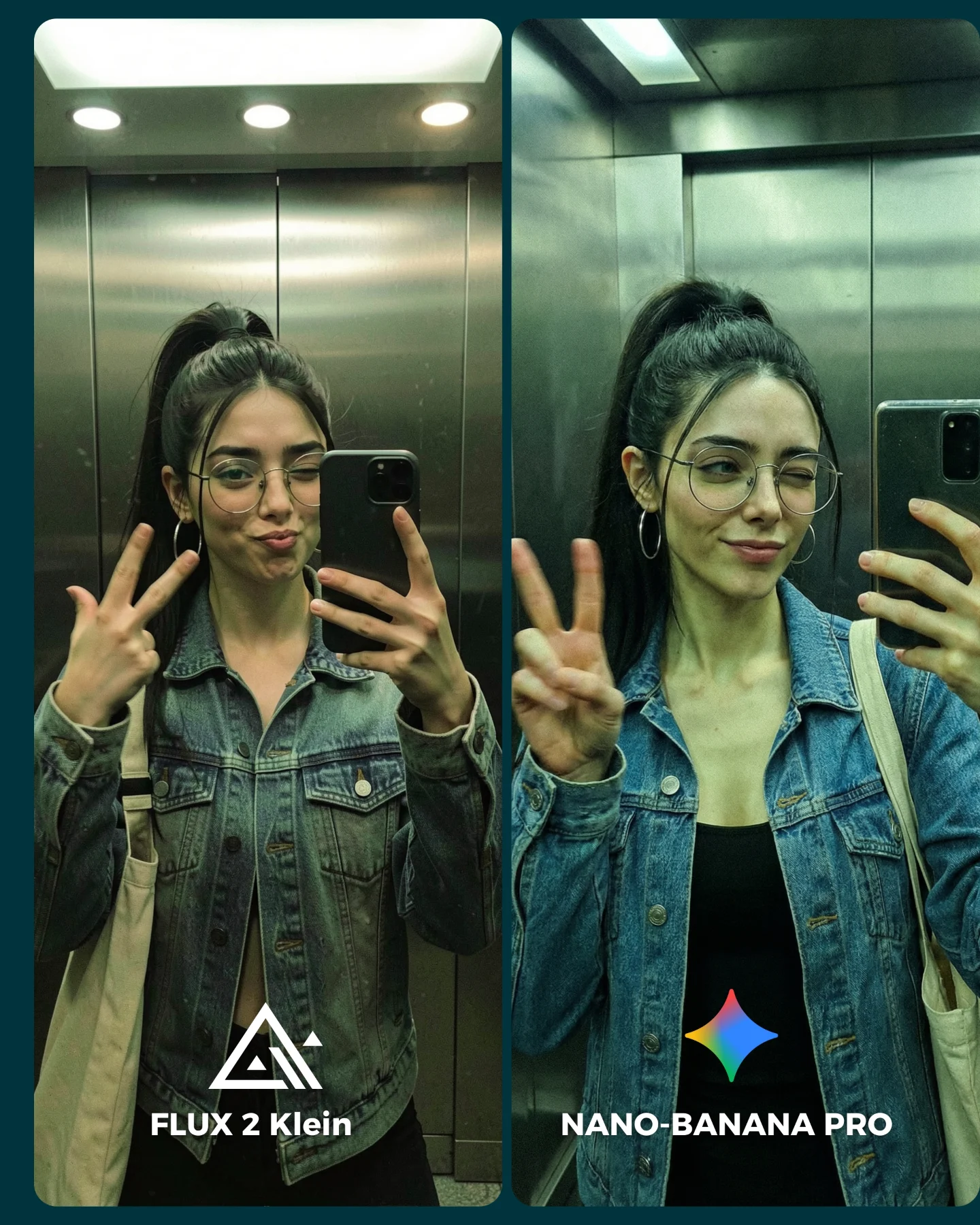
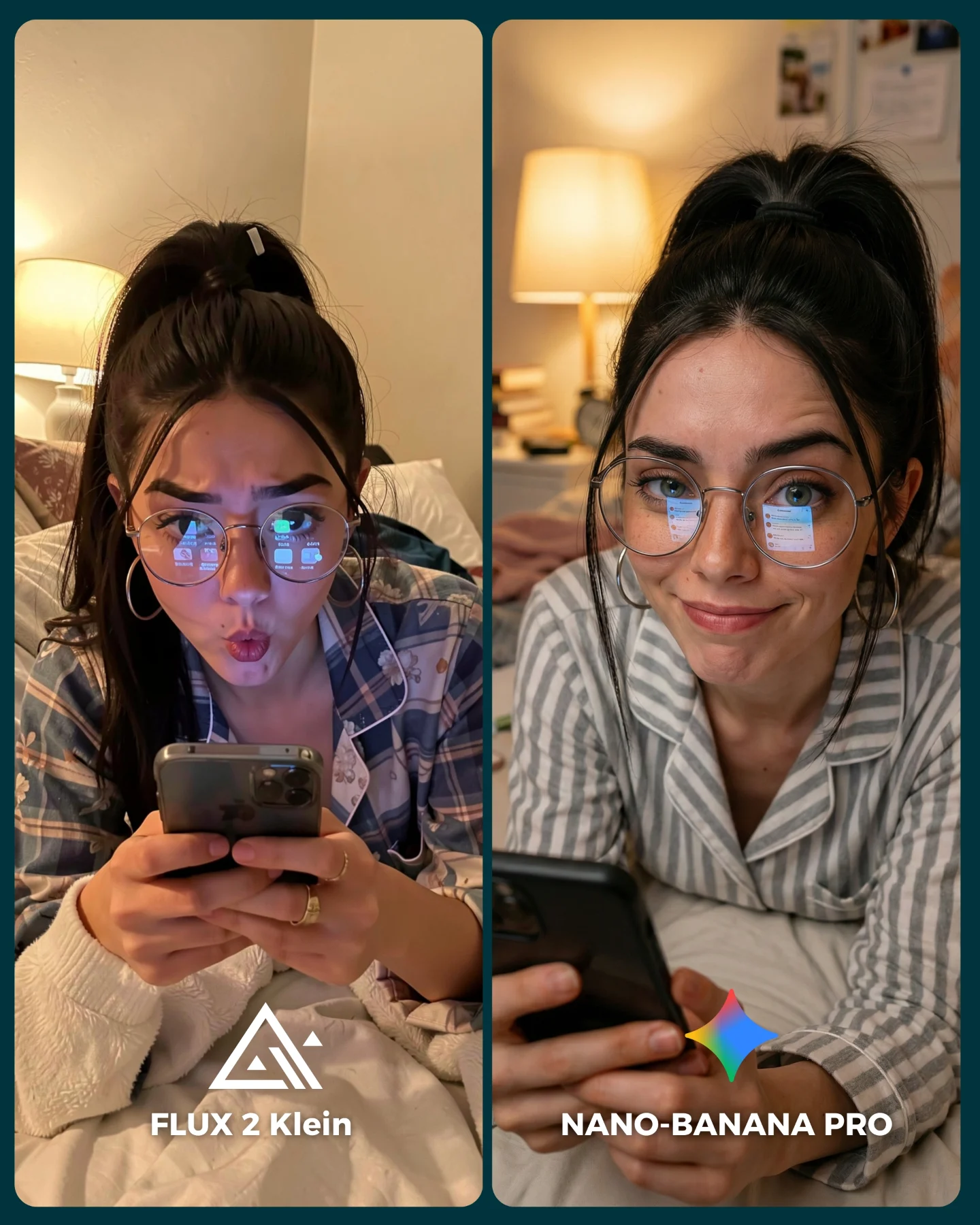
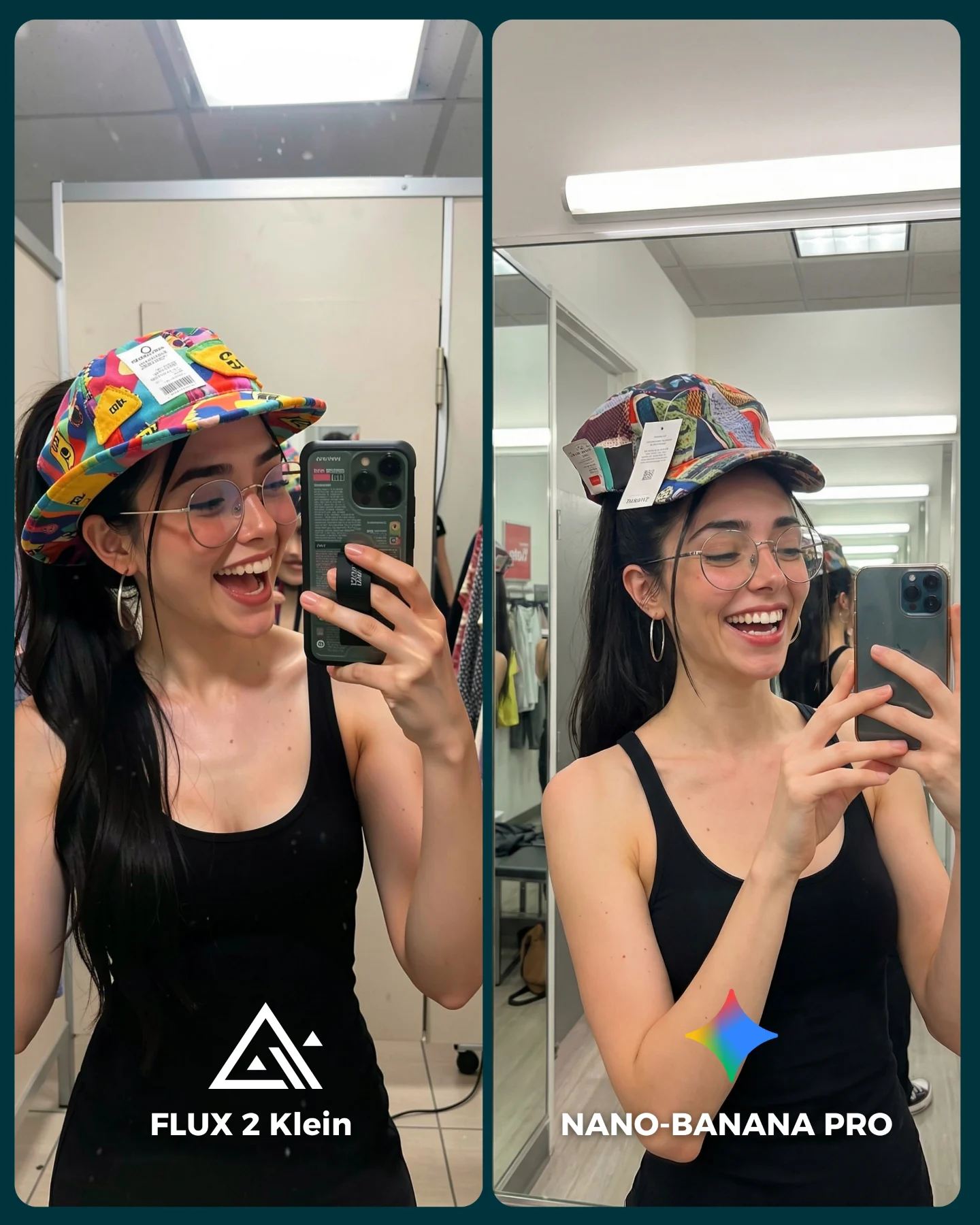
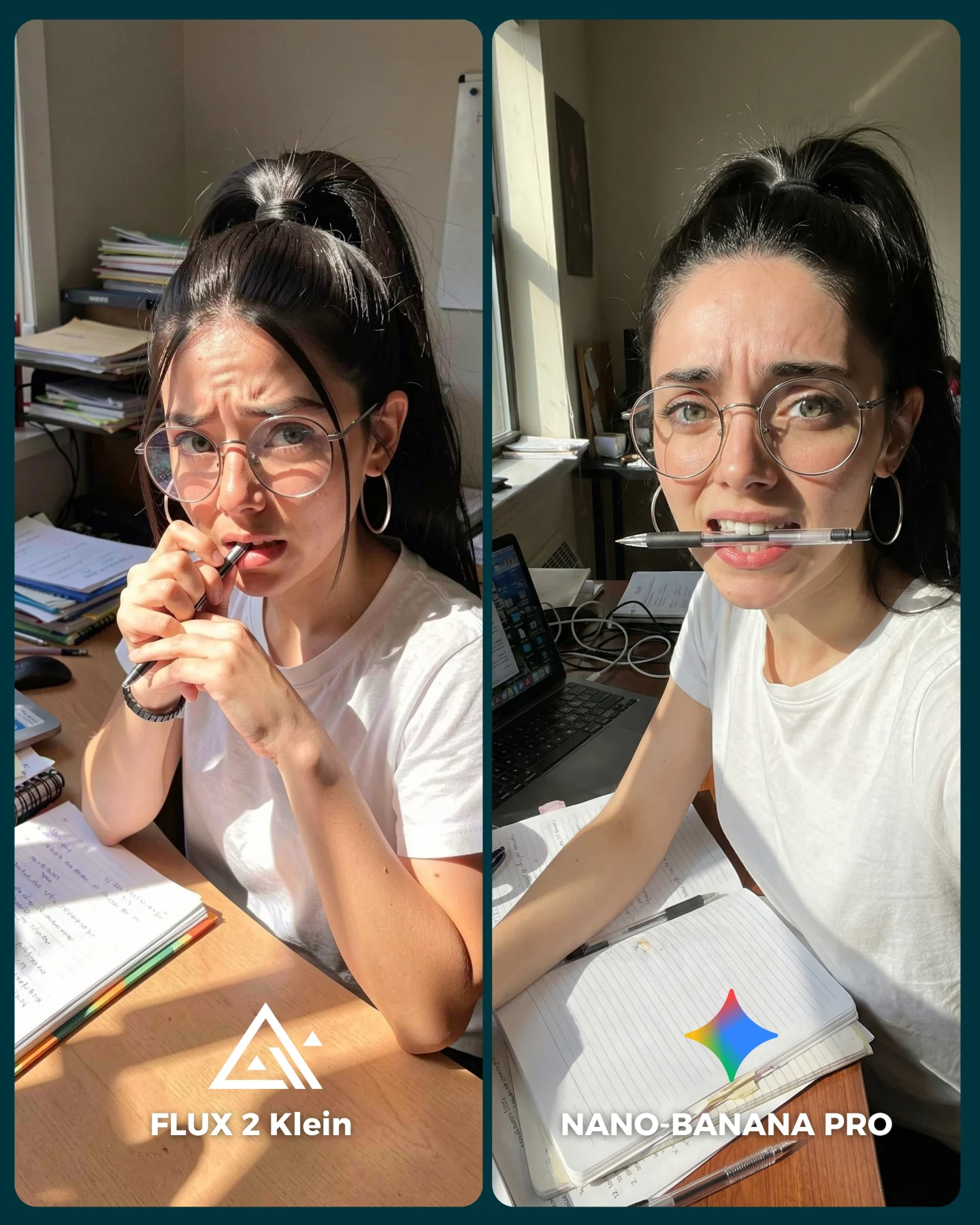
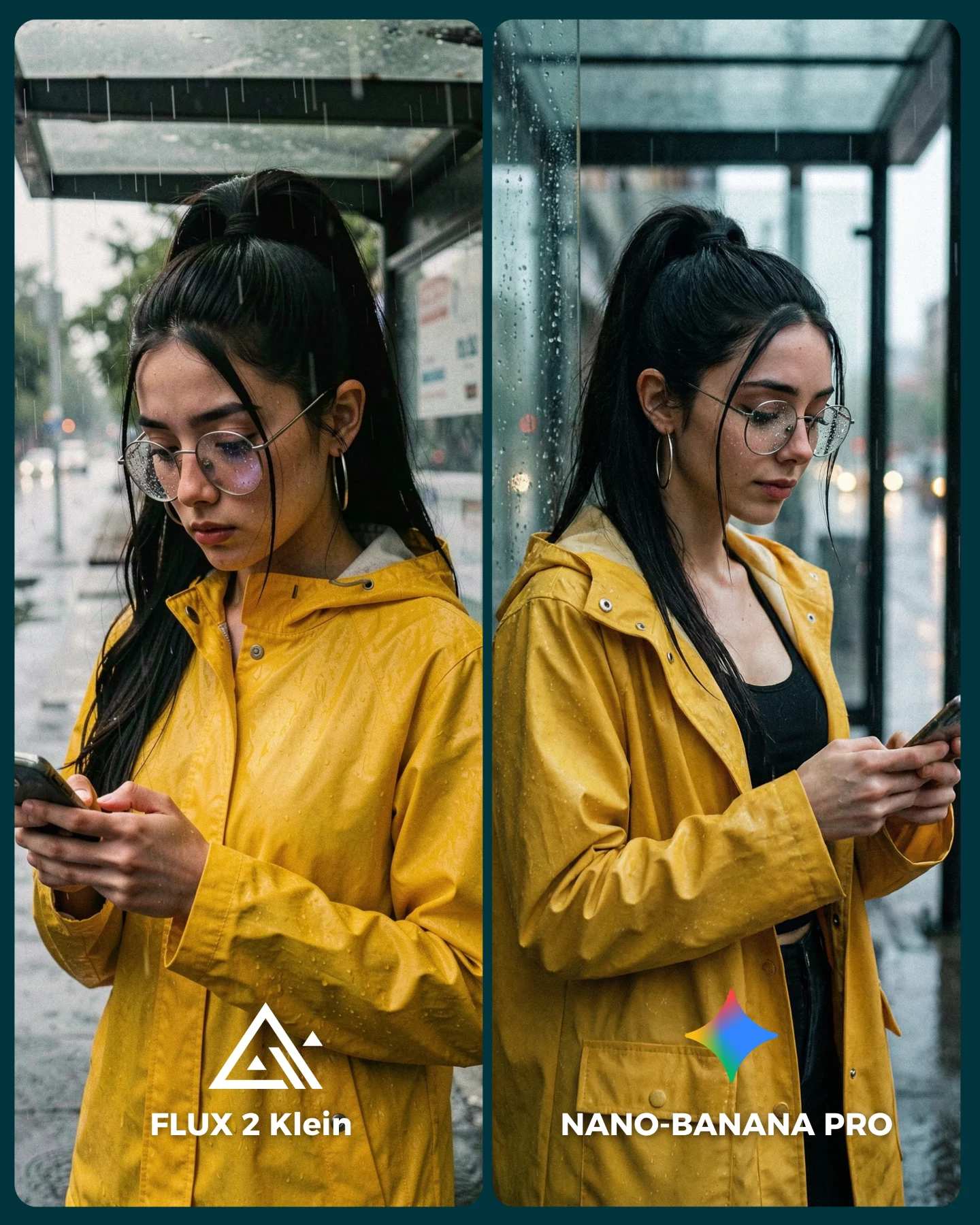
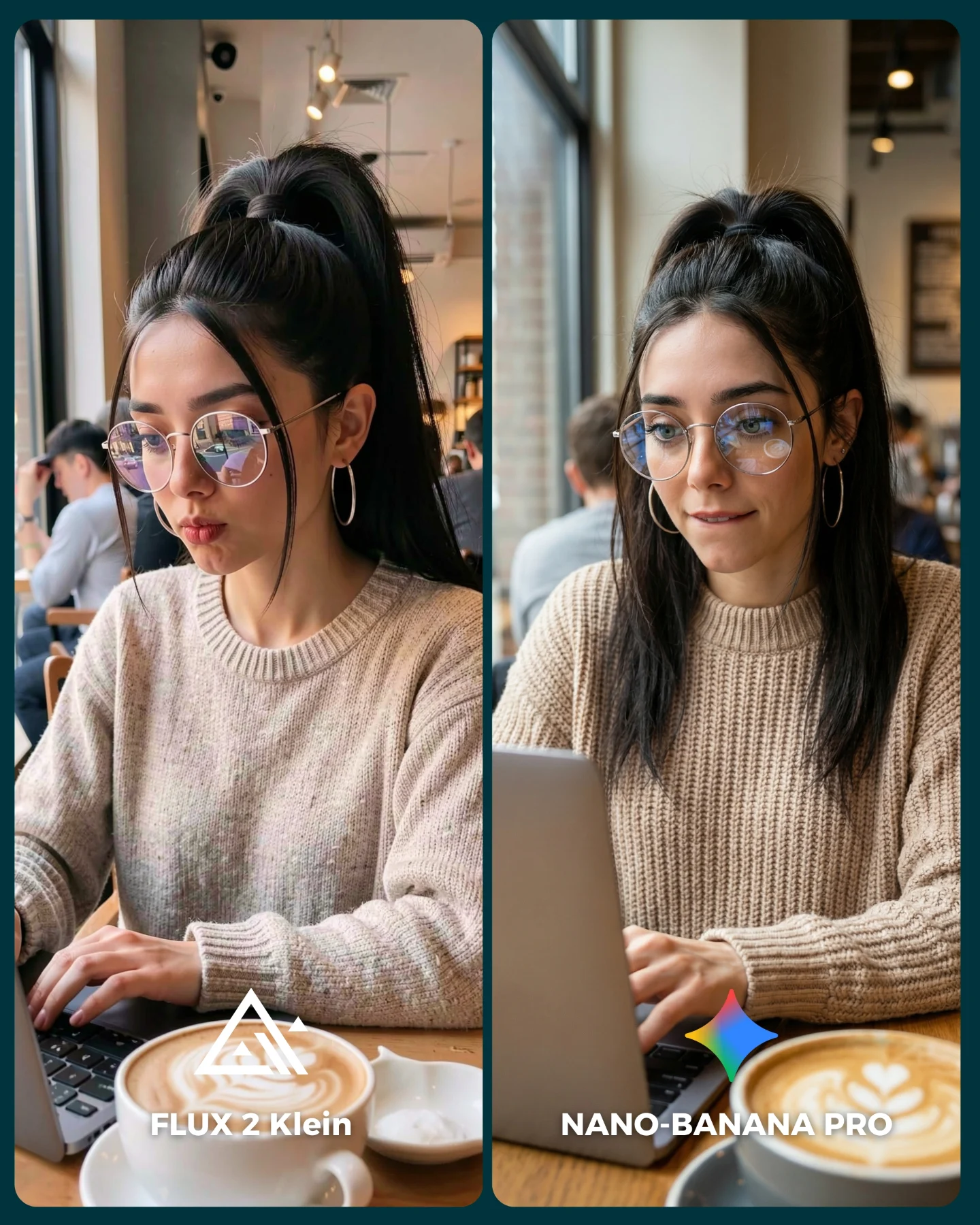
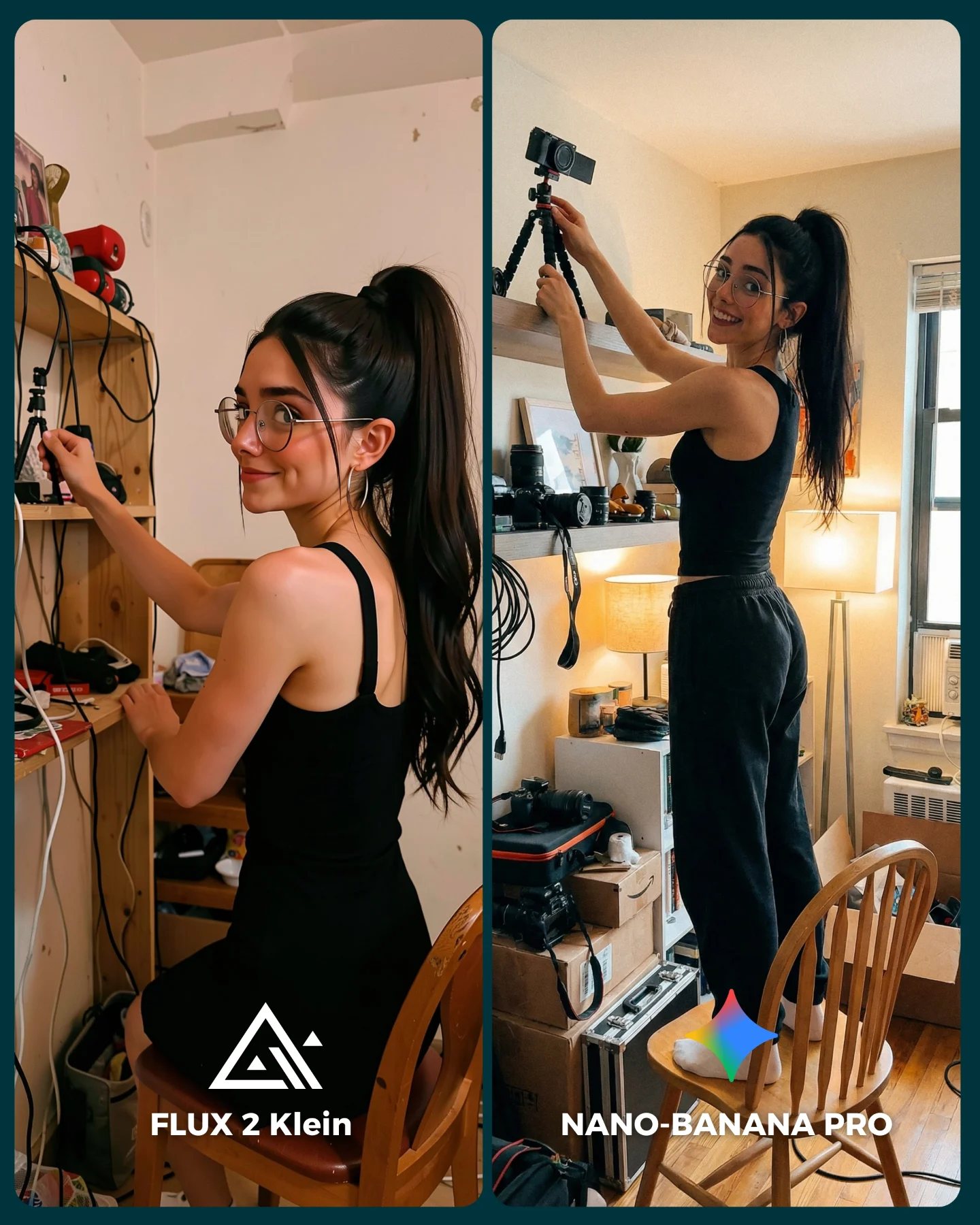
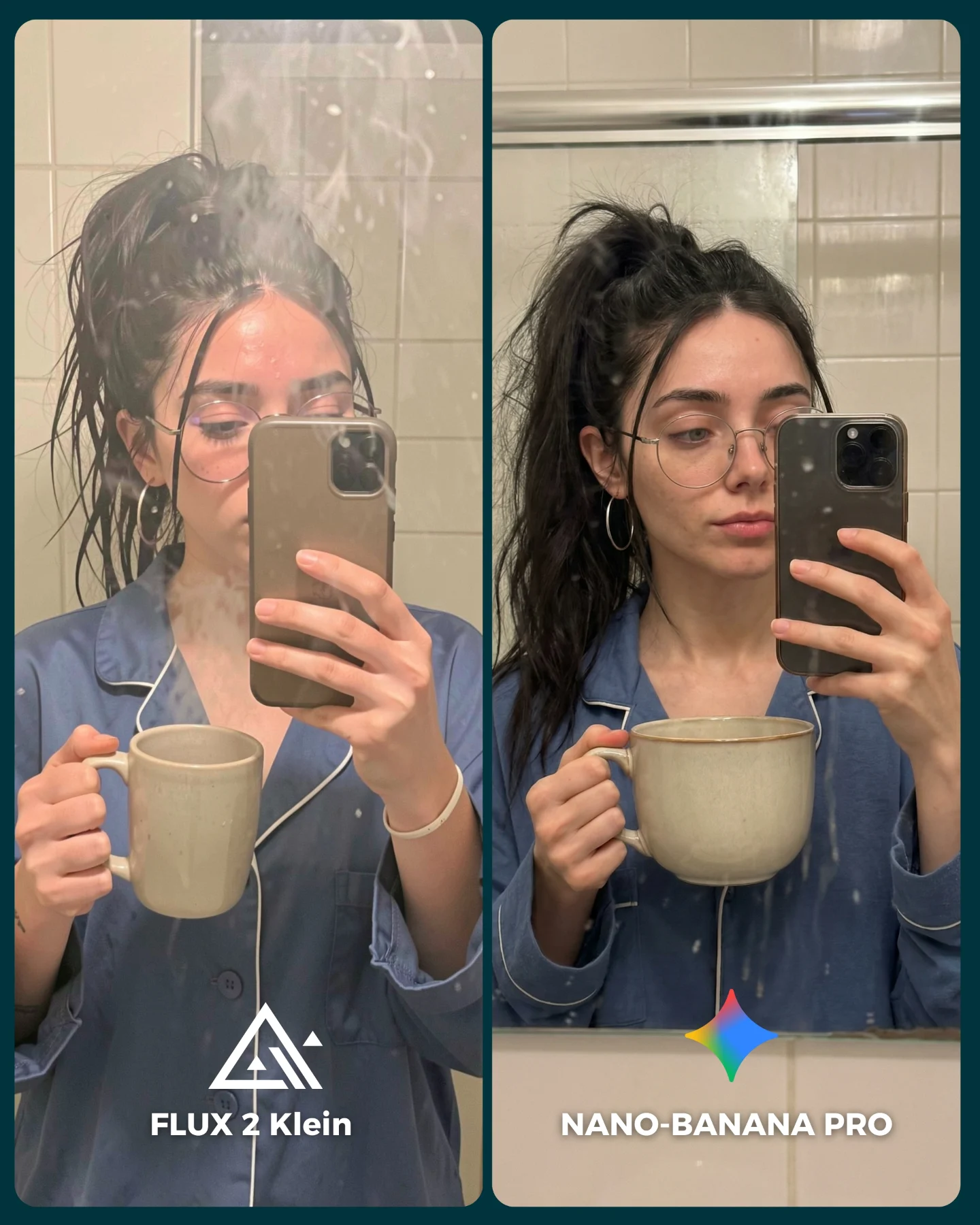
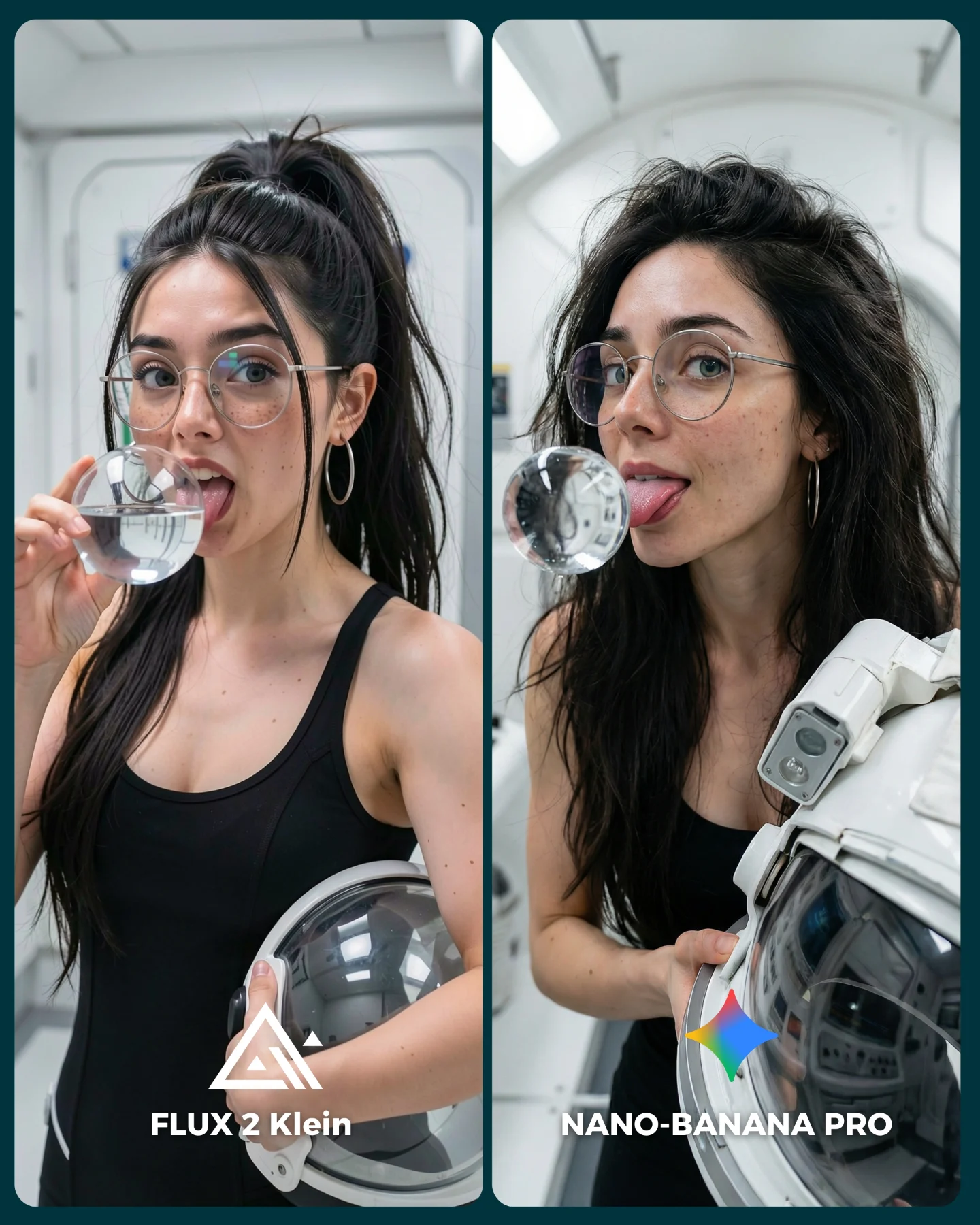
Flux 2 Klein VS. Nano Banana Pro 💥
Sigo pensando que no hay nada mejor que Nano Banana Pro 😅
O crees que hay algún generador de imágenes que le hace la competencia?? 👀
Como siempre... os puedo mandar todos los prompts de las imágenes si comentas "ARIA" 💕
How soy_aria_cruz Made This Flux vs Nano Banana Selfie AI Art — and How to Recreate It
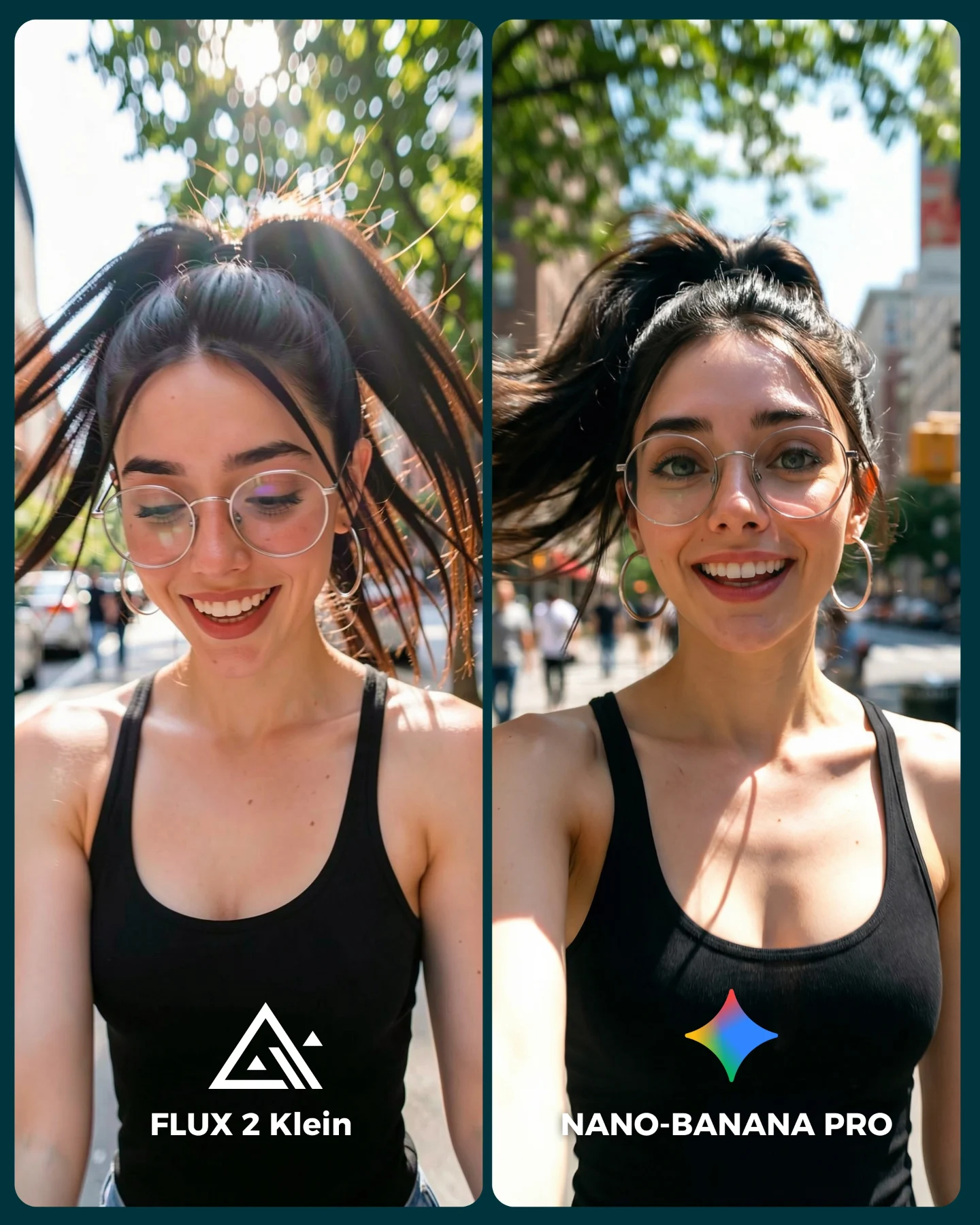
This comparison works because it tests one of the most common creator formats on the internet: the bright outdoor selfie. At first glance, that seems easy. It is not. Strong sun, moving hair, reflective glasses, skin under mixed shade and daylight, and a believable city background all create small points where image models often drift. That is why a side-by-side like this is useful. It checks whether the output still feels like something a real person would casually post.
The two panels are especially helpful because they test slightly different social signals. The left image has a more candid, in-between mood, with the subject smiling downward and sun filtering through the trees. The right image is closer to the classic creator selfie: direct eye contact, a friendly smile, and a more openly social vibe. Together, they cover a broader range of what people actually expect from lifestyle content.
For creators, this matters because outdoor selfie content is everywhere. If a model cannot handle sunlight, glasses, and motion in a normal street setting, it will struggle to produce believable everyday imagery at scale.
Why The Image Holds Attention
Signal
Evidence (from this image)
Mechanism
Replication Action
Common social format
Both panels look like real creator selfies taken during a sunny walk or light run.
Familiar formats invite closer scrutiny because viewers know what “normal” should look like.
Test models using situations people actually post every day, not only stylized scenes.
Hair and glasses under sun
The ponytail moves dynamically while the round glasses catch and transmit outdoor light.
These are small but revealing realism checks that viewers notice quickly.
Keep movable hair and reflective eyewear in frame when evaluating selfie quality.
Two emotional reads
One panel feels candid and inward, the other feels open and directly social.
Different micro-moods make the comparison more informative and less repetitive.
Use one relaxed candid angle and one direct-to-camera angle when comparing similar outputs.
Bright city context
Urban street cues remain readable without stealing attention from the face.
A believable public setting makes the content feel current and usable.
Choose light-touch background context that signals place without cluttering the portrait.
Aesthetic Read
The strongest quality here is that the comparison stays in the lane of everyday beauty instead of pushing toward ad-polish. The tank top is simple, the glasses are personal, the hair is a little wild from movement, and the background is familiar. That normalcy is exactly what makes the benchmark meaningful. Good creator imagery often depends on small believable details more than on major styling decisions.
The sunlight is also doing real work. On the left, it filters through leaves and creates a softer candid mood. On the right, it opens up the face and adds immediate warmth. Those two variants help reveal whether a model can stay consistent when light behavior shifts slightly within the same overall setting. That is a much better test than a flat studio frame.
Observed
Why it matters for recreation
High ponytail lifting with movement
Adds natural energy without needing exaggerated motion blur.
Round glasses visible in bright daylight
Tests facial detail retention under sun and reflection.
Black tank top in both panels
Keeps the comparison anchored and easy to read.
Tree-filtered city light
Creates believable mixed outdoor illumination.
One candid smile and one direct smile
Shows two useful versions of creator-friendly realism.
Where This Style Fits Best
Model comparison posts: Ideal for judging everyday selfie realism in natural outdoor light.
Lifestyle prompt libraries: Strong for creators building believable city-walk, running, or casual summer content.
Creator-avatar consistency tests: Useful because the same identity has to hold across slightly different camera moods.
Educational prompt content: Great for explaining what to inspect in daylight selfies, like hair motion and glasses behavior.
Not ideal
Studio beauty campaigns: The charm here is in outdoor normalcy, not controlled perfection.
High-fashion editorials: The frame is intentionally everyday and social-media native.
Heavy athletic branding: The image leans lifestyle-selfie more than performance-sport.
Three transfer recipes
Summer campus selfie test. Keep: split-screen logic, glasses, black top, bright outdoor realism. Change: city street to campus path. Slot template: {sunny everyday outdoor selfie} shown in {candid angle} and {direct selfie angle}
Beachwalk comparison. Keep: hair motion, two capture styles, natural smile contrast. Change: tree shade to seaside sunlight, tank to light athletic top. Slot template: {bright outdoor creator look} compared across {two social-camera moods}
Coffee-run street realism. Keep: black top, city background, creator-native framing. Change: workout context to casual errand with drink in hand. Slot template: {city lifestyle selfie} split into {candid moment} and {direct-to-camera post}
Prompt Technique Breakdown
Prompt chunk
What it controls
Swap ideas (EN, 2-3 options)
young woman with round glasses, high ponytail, black sleeveless tank top
Locks the core creator identity and clean styling.
white tee variation; braid variation; light hoodie version
split-screen outdoor selfie comparison with one candid downward smile and one direct smile
sunny tree-lined city street with bright daytime bokeh
Provides realistic outdoor context without visual overload.
campus path; neighborhood sidewalk; downtown park edge
sunlight through leaves, motion in ponytail, everyday social-media realism
Creates believable creator content rather than ad imagery.
golden-hour light; breezy midday walk; light run energy
bottom labels identifying model outputs
Keeps the image useful as a direct comparison asset.
minimal branding tags; clean model badges; simple bottom identifiers
Remix Steps
This style only works if the subject still feels like a normal person in normal light. The first thing to protect is ordinariness. Lock the outdoor environment, the face, and the simple outfit before you try to make the image more polished.
Baseline lock
One consistent subject identity across both panels
One believable sunny street environment
One clear difference in capture mood between candid and direct selfie
One-change rule sequence
Run 1: stabilize the split-screen structure and make sure both panels feel like the same person in the same outing.
Run 2: change only the expression, keeping the background and outfit fixed.
Run 3: change only the light quality, from direct sun to softer tree shade.
Run 4: change only the activity context, moving from walk to run, coffee run, or park stroll while preserving the selfie realism.
Fast correction
If the image starts feeling too polished, simplify the light and lower the styling drama. Outdoor creator selfies are persuasive because they feel ordinary, not perfected.