How soy_aria_cruz Compared Flux 2 Klein vs Nano Banana Pro and What to Recreate
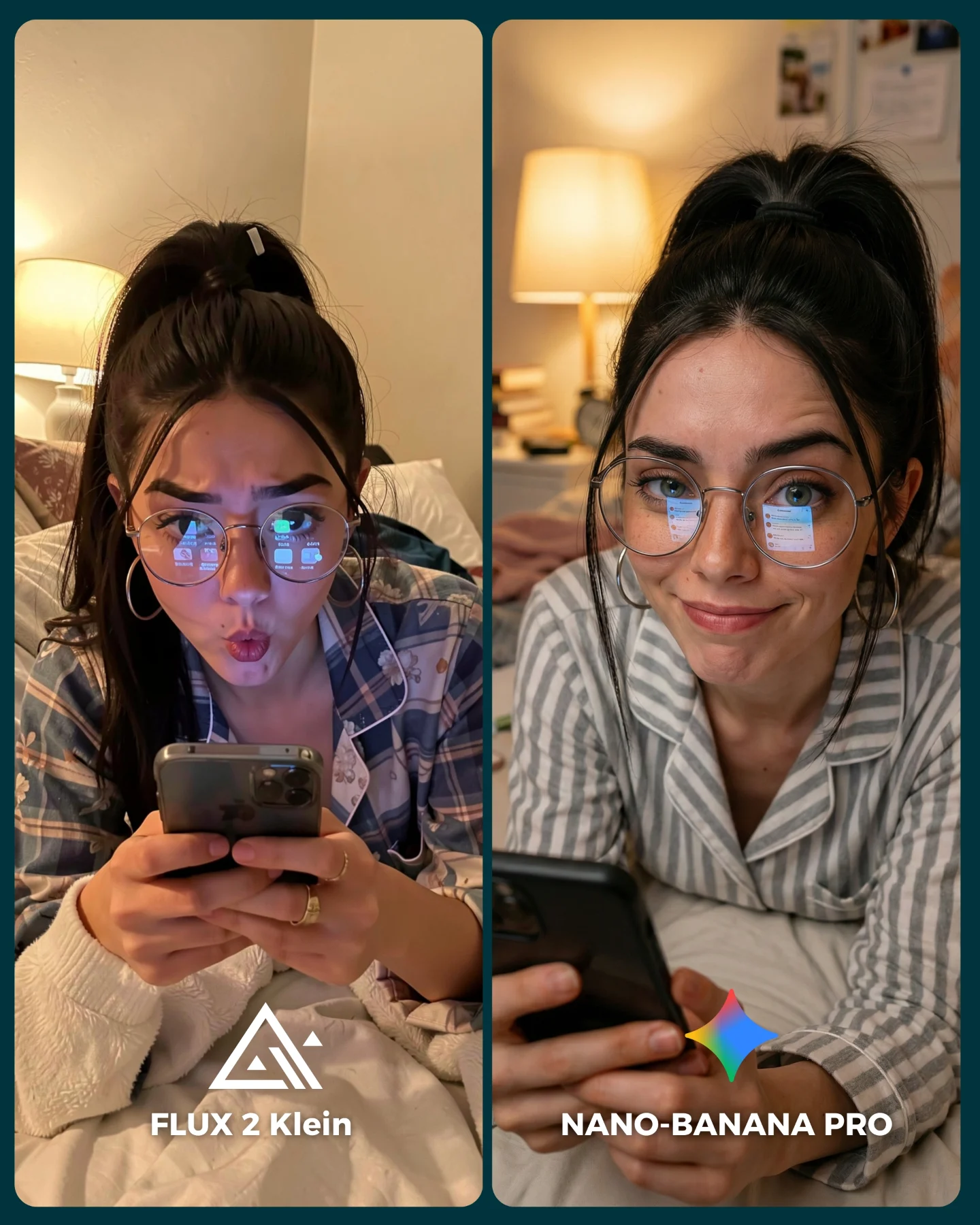
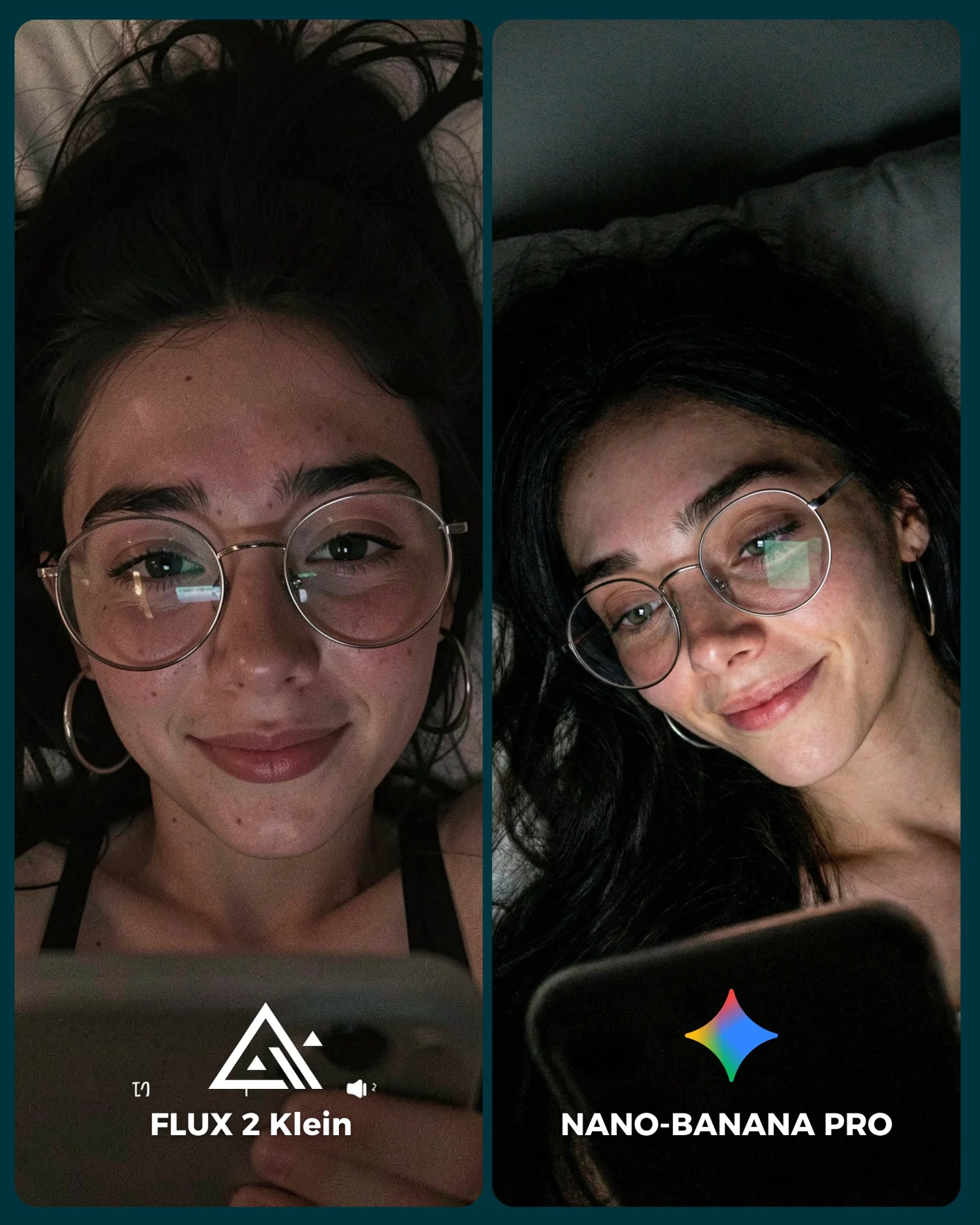
This image works because it chooses an everyday behavior almost everyone recognizes: lying in bed and checking your phone when you probably should be sleeping. That instantly lowers the barrier to engagement. The viewer does not need to admire a fantasy or decode a concept. They only need to think, yes, I know this moment.
That relatability is what makes the comparison valuable. When AI images can handle everyday scenes well, they become much more useful to creators. Hardware-heavy sci-fi tests are impressive, but domestic realism is what makes audiences trust the output. This image is quietly benchmarking exactly that.
Why it can perform
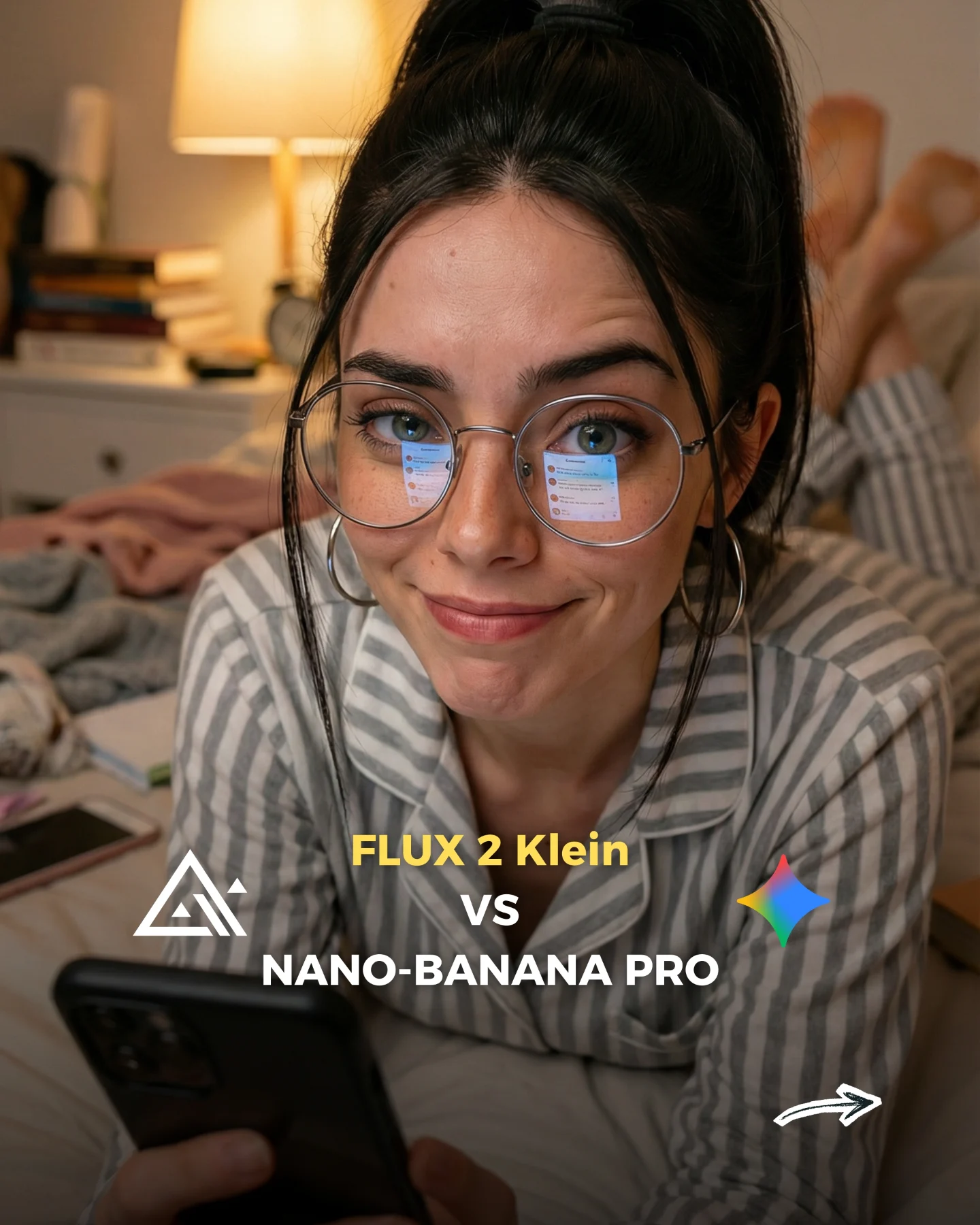
The main hook is recognition. The warm bedside lamp, the pajamas, the screen reflected in the glasses, the slightly silly facial expression: all of these cues tell the story instantly. Because the scene feels familiar, viewers are more willing to compare the subtle differences between the two model outputs.
The image also creates an appealing contrast between coziness and technology. Bed and lamplight suggest rest, while the phone and screen reflections suggest stimulation. That tension is part of why bedtime-phone content performs so consistently. It feels intimate, slightly guilty, and very real.
| Signal | Evidence (from this image) | Mechanism | Replication Action |
|---|
| Everyday realism | Pajamas, bed linens, bedside lamp, phone in hand | Viewers recognize the behavior immediately and trust the setting | Benchmark models on scenes people actually live in |
| Micro-expression contrast | Puckered playful face on one side, amused smirk on the other | Small facial shifts give the comparison more texture than a static pose | Keep the setup locked and vary expression subtly |
| Screen-glow proof point | Phone reflections visible in the lenses | Transparent reflections give viewers a realistic detail to inspect | Use one small optical challenge in a domestic scene |
Where this format works best
This format is ideal for model comparisons around casual realism, cozy home prompt packs, and creator feeds that want to look more relatable than aspirational. It is especially useful because it proves whether a model can handle normal bedrooms, textiles, hands, and subtle light without leaning on spectacle.
- Best fit: realism benchmark posts for home and lifestyle scenes.
- Best fit: prompt breakdowns focused on lamplight, screen glow, and casual portraiture.
- Best fit: creator personas built around cozy, self-aware, everyday moods.
- Not ideal: big travel or fantasy content where domestic quiet would feel too small.
- Not ideal: hard-sell promotional posts that need a more polished or aspirational tone.
Three transfer recipes
- Keep: bed setup and phone glow. Change: the emotional register, such as sleepy, annoyed, or excited. Template: {same bedtime scene} with {different facial mood}
- Keep: warm lamp plus cool device reflection. Change: the room, such as dorm, hotel, or small apartment. Template: {cozy interior} with {screen-lit subject}
- Keep: one relatable habit. Change: the object from phone to laptop, book, or tablet. Template: {night routine action} in {soft home lighting}
Aesthetic read
The image feels strong because it does not overreach. The room is warm, small, and believable. The pajamas are ordinary. The phone is ordinary. That ordinariness is exactly what makes the picture valuable. It captures the texture of a lived-in moment instead of chasing cinematic grandeur.
The glasses are the key detail. They let the phone’s presence become visible without the screen dominating the frame. That is a subtle but important trick. The viewer sees both the person and the device at once, which makes the digital habit feel integrated into the portrait rather than tacked on.
| Observed | Recreate | Why it matters |
|---|
| Warm lamp in the background | Use one visible practical light source behind the subject | It gives the room emotional warmth and context |
| Screen reflections in glasses | Let the device light show up optically rather than only by exposition | It creates believable realism and a good comparison checkpoint |
| Soft bed textures and pajamas | Use tactile fabrics and simple sleepwear | These details make the scene feel lived-in and relatable |
| Tight chest-up framing | Stay close enough for expression and phone interaction to matter | Intimacy is the whole point of the image |
Prompt technique breakdown
This should be prompted as domestic realism with one optical challenge. If the prompt leans too far into “cozy aesthetic,” the scene can become generic. The phone reflections and micro-expression differences are what make the comparison useful.
| Prompt chunk | What it controls | Swap ideas (EN, 2-3 options) |
|---|
| lying on a bed using a smartphone at night | The core relatable behavior | late-night scrolling; bedtime texting; checking messages in bed |
| warm bedside lamp and soft bedding | The emotional atmosphere | cozy nightstand lamp; hotel bedside light; intimate home lamp glow |
| screen reflections visible in round glasses | The realism benchmark detail | blue screen glare in lenses; reflective glasses; device-light reflections |
| two pajama looks in a split comparison | The readable left-right variation | plaid sleepwear vs striped sleepwear; casual pajama contrast; bedtime outfit variation |
| same woman in both panels | Identity consistency across the test | same face lock; same creator in two home outputs; consistent bedtime persona |
Execution playbook
Lock the bed, lamp, and phone interaction first. Then refine the glasses, expression, and fabric details.
- Run 1: solve the hand-plus-phone relationship and keep the pose natural.
- Run 2: refine lens reflections and face consistency across both panels.
- Run 3: tune pajama fabric and bedding textures for lived-in realism.
- Run 4: keep the room simple so the scene stays intimate rather than decorative.
The image works because it understands that ordinary moments are often the hardest to fake convincingly. That is exactly why they make good benchmarks.