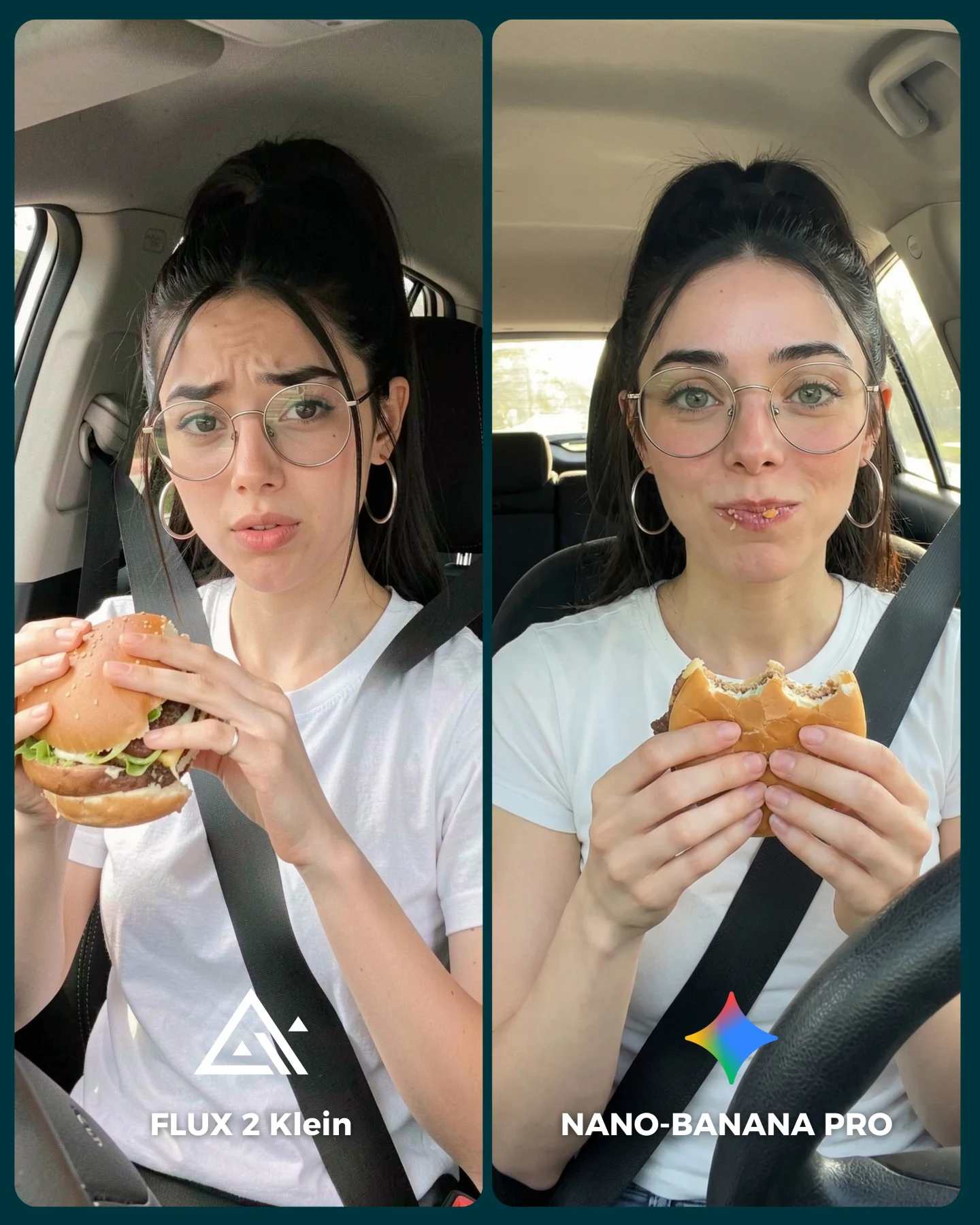
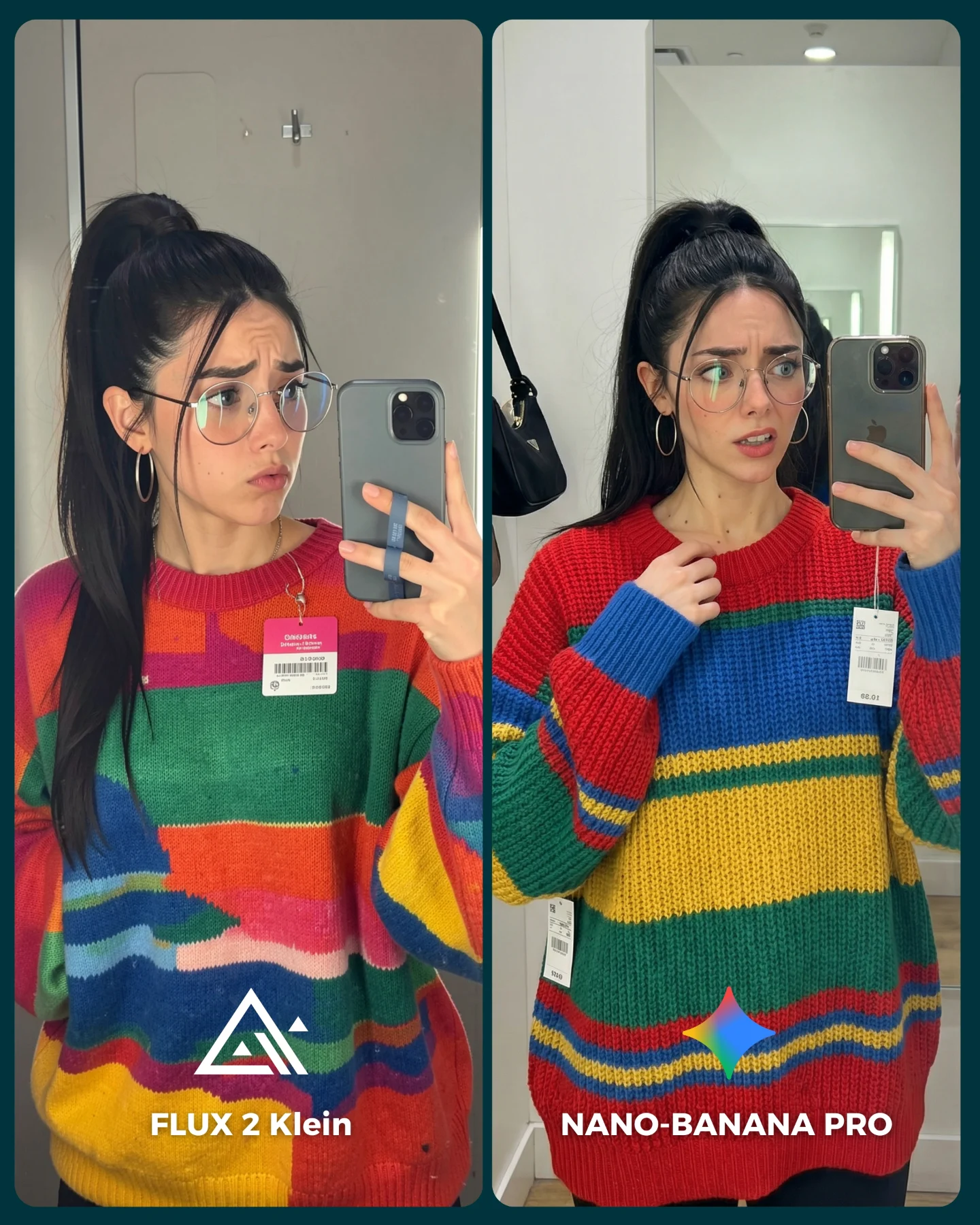
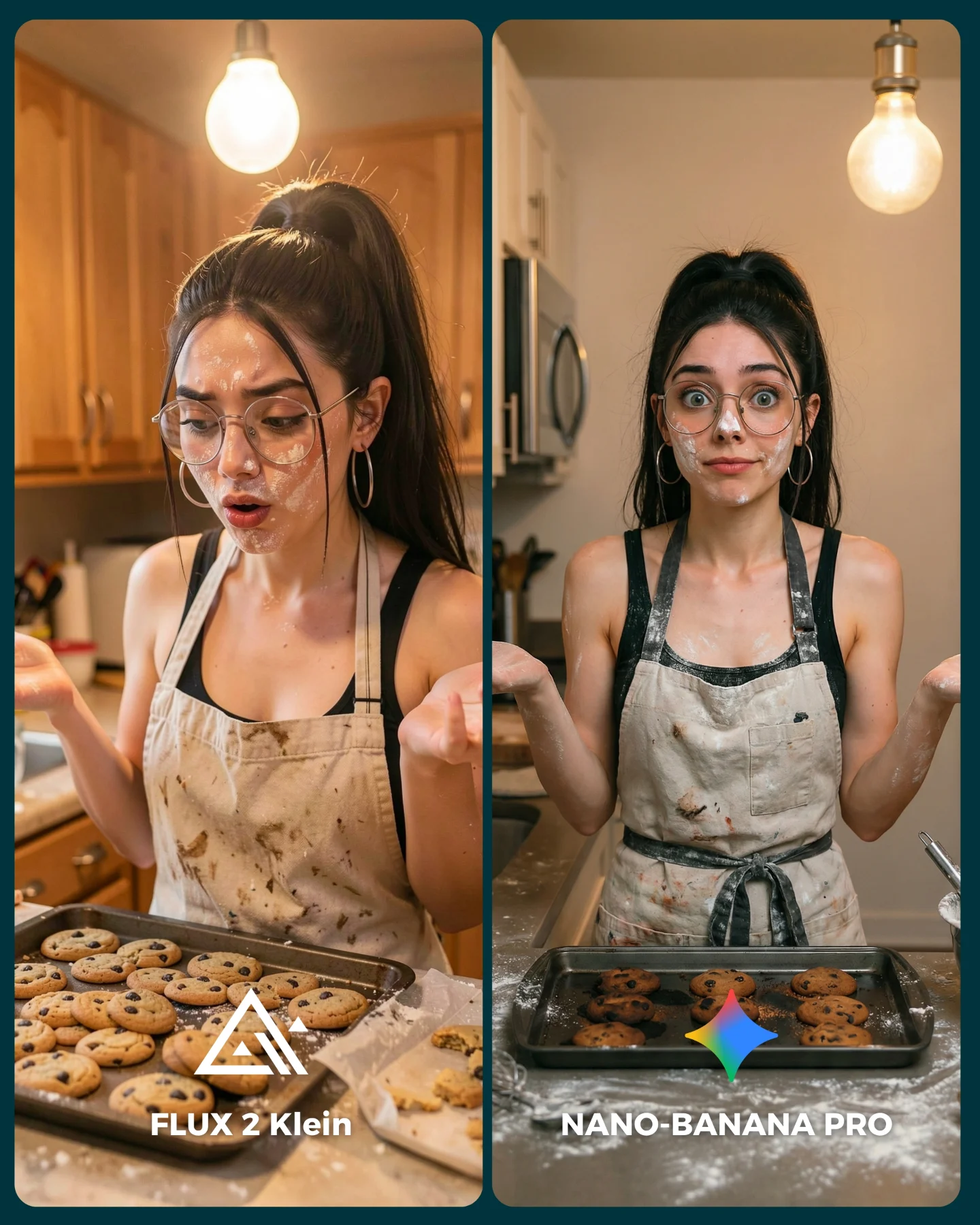
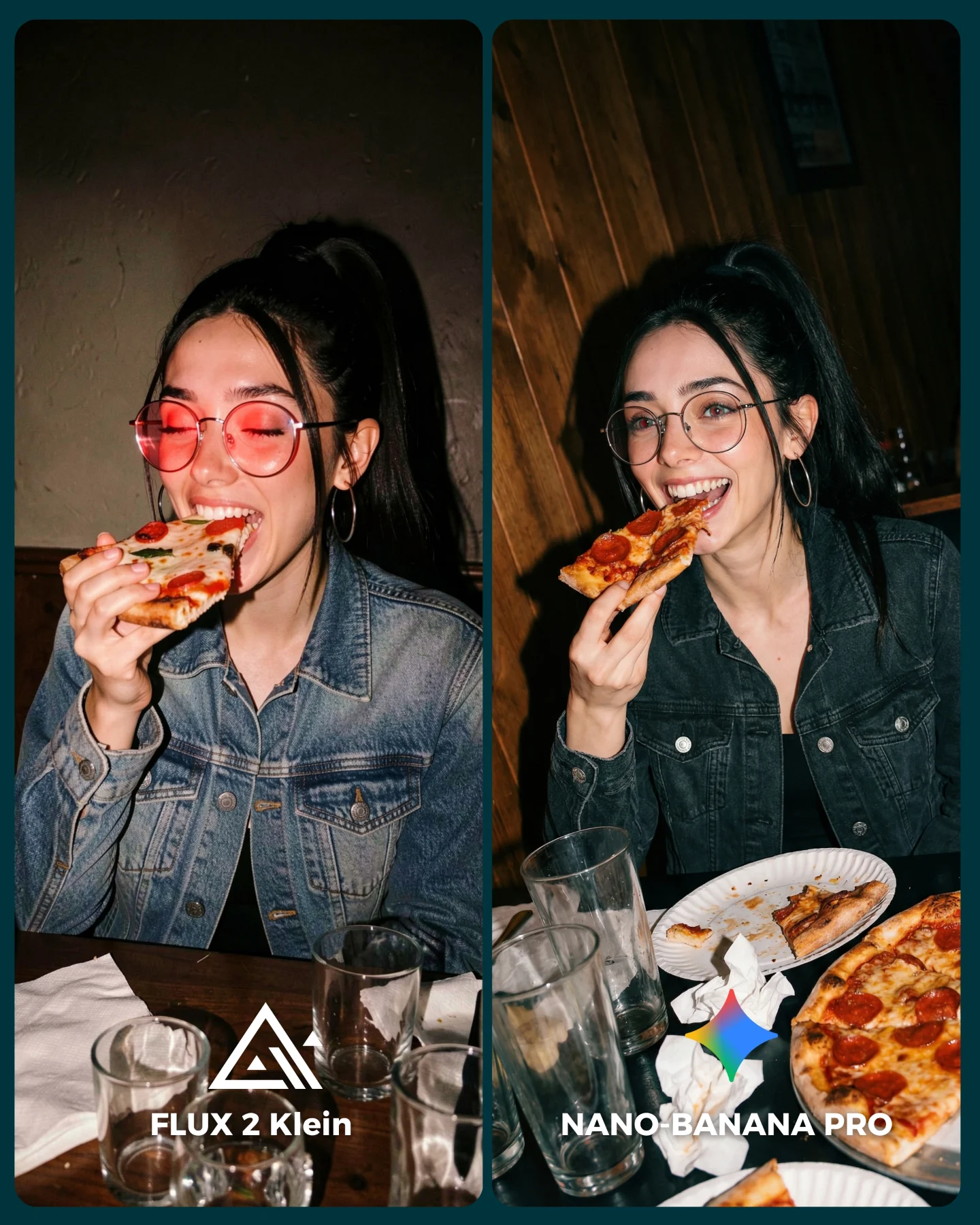
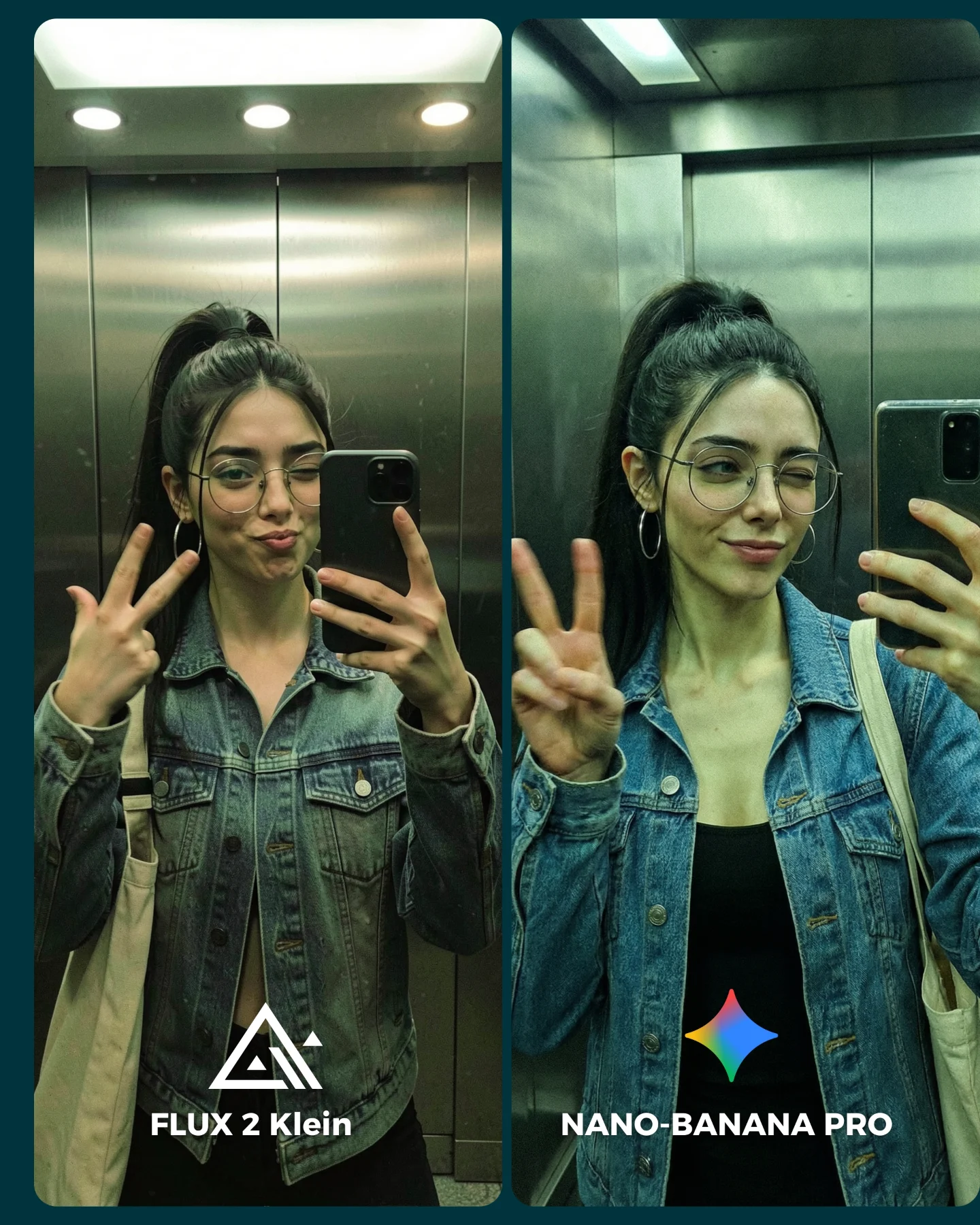
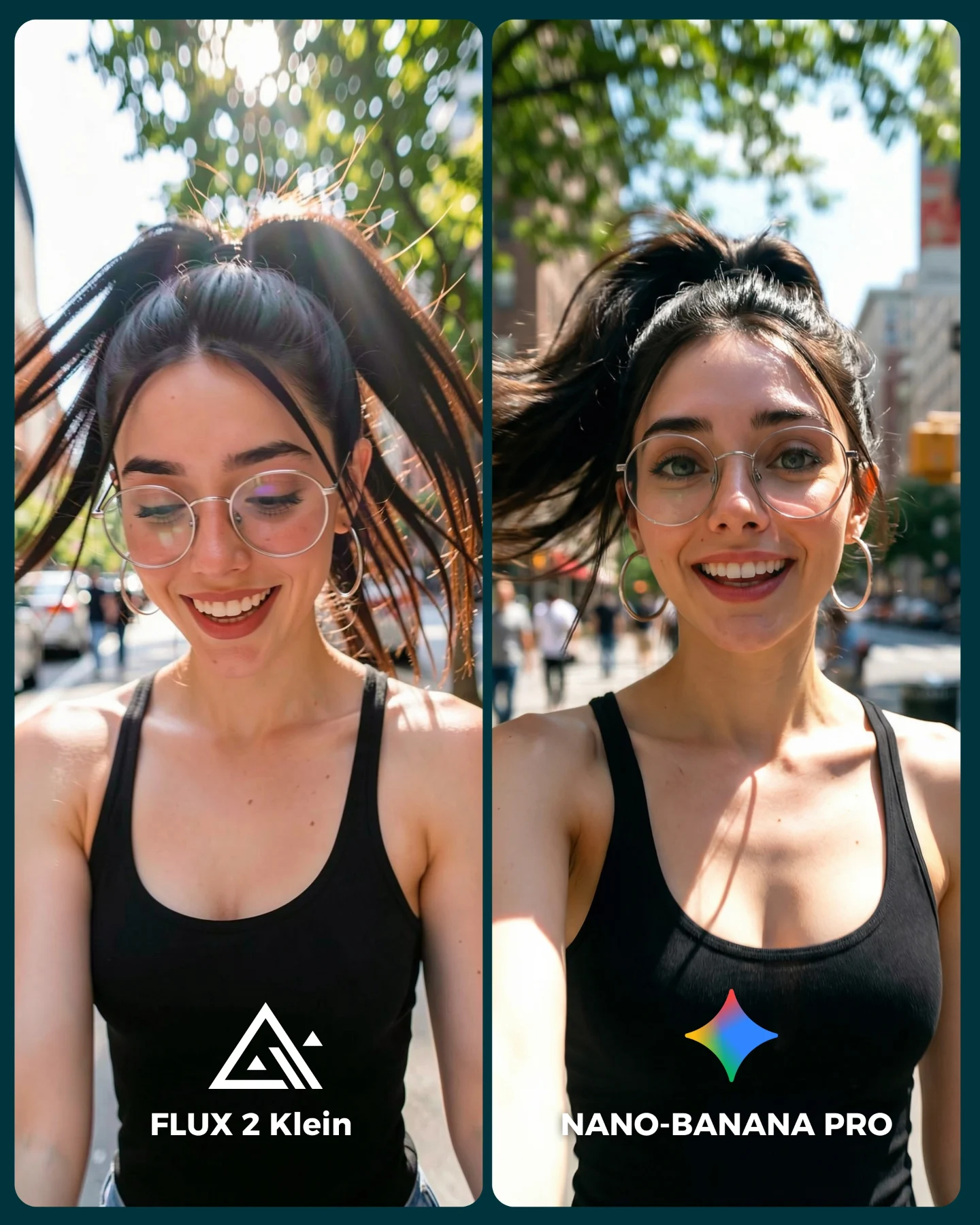
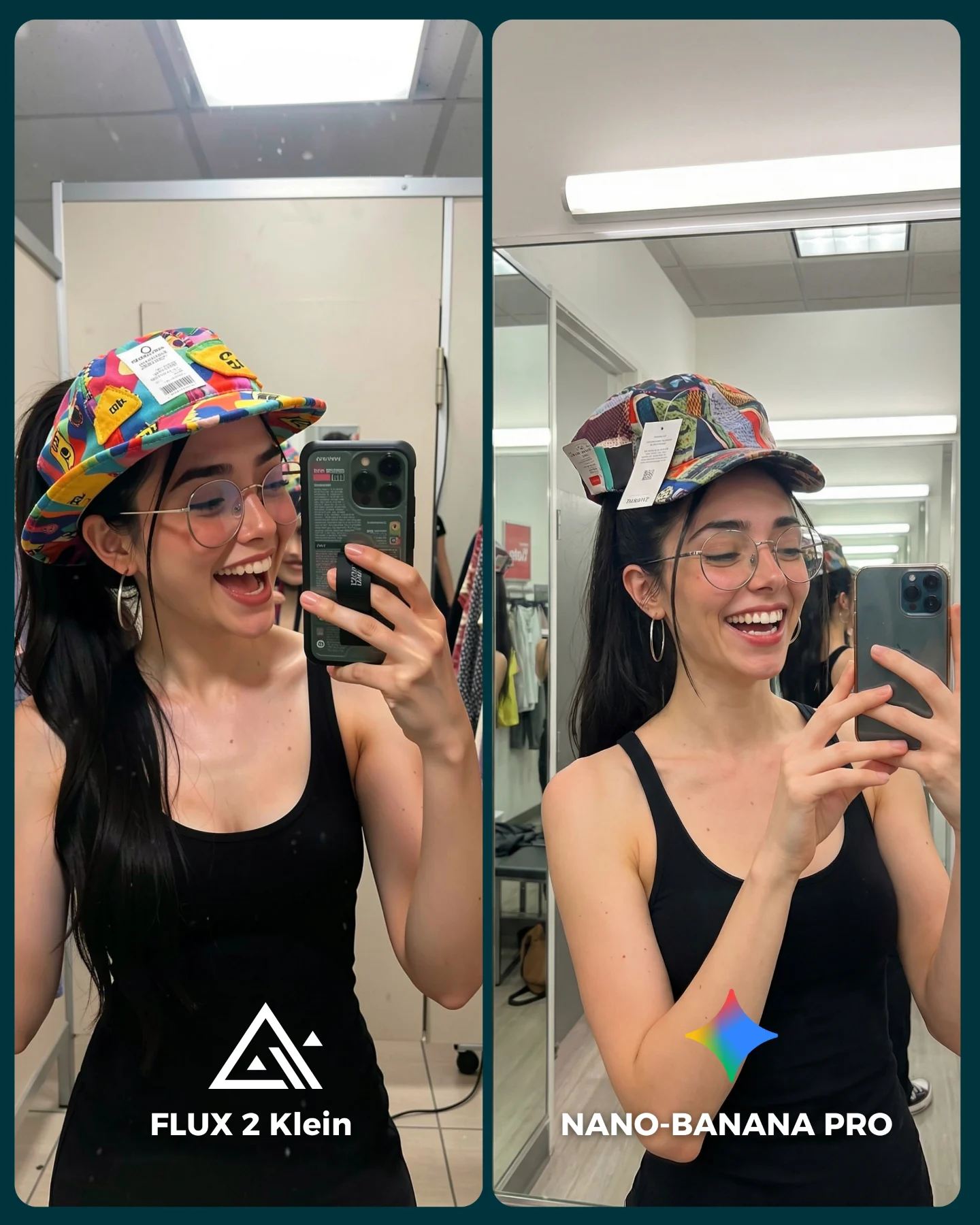
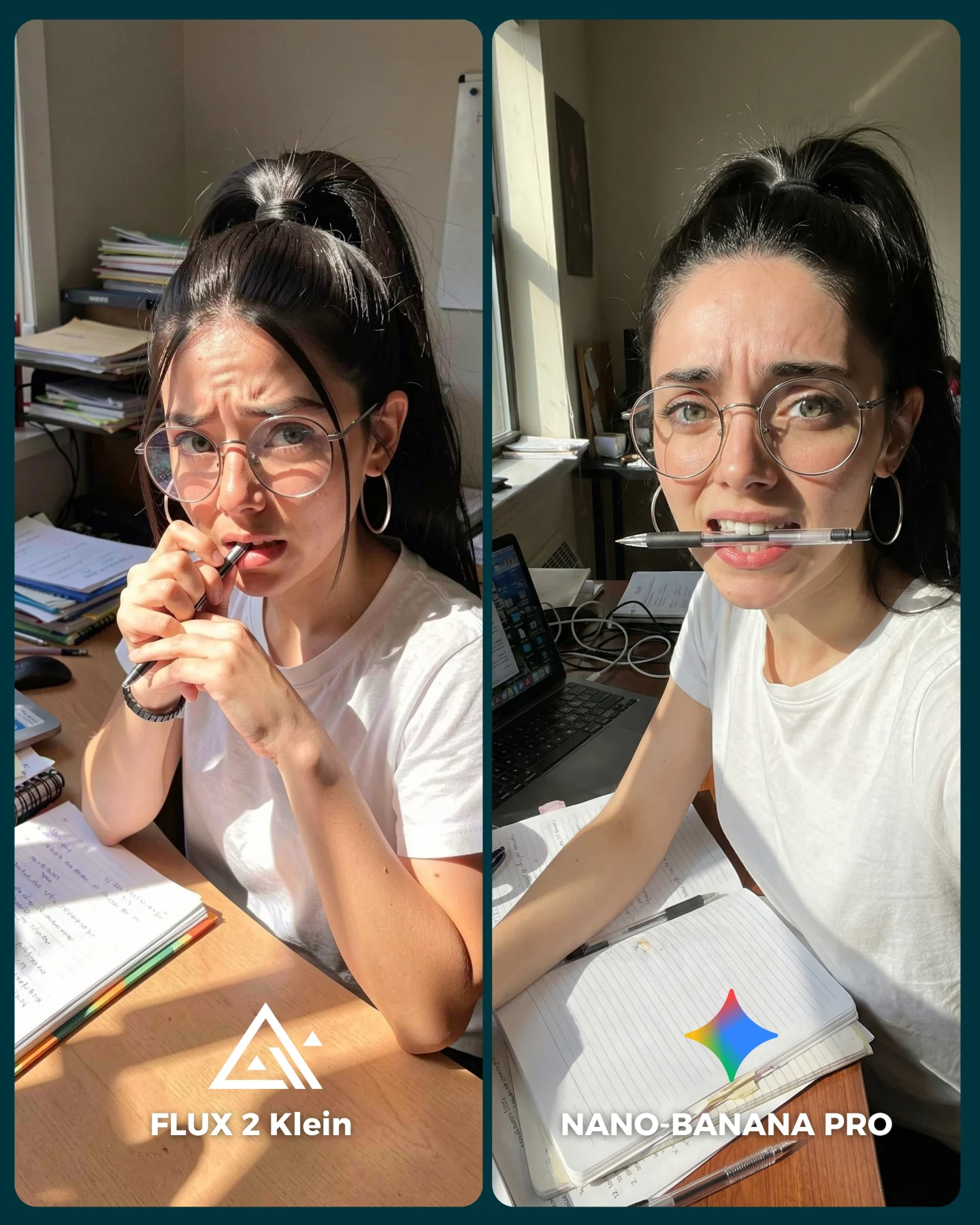
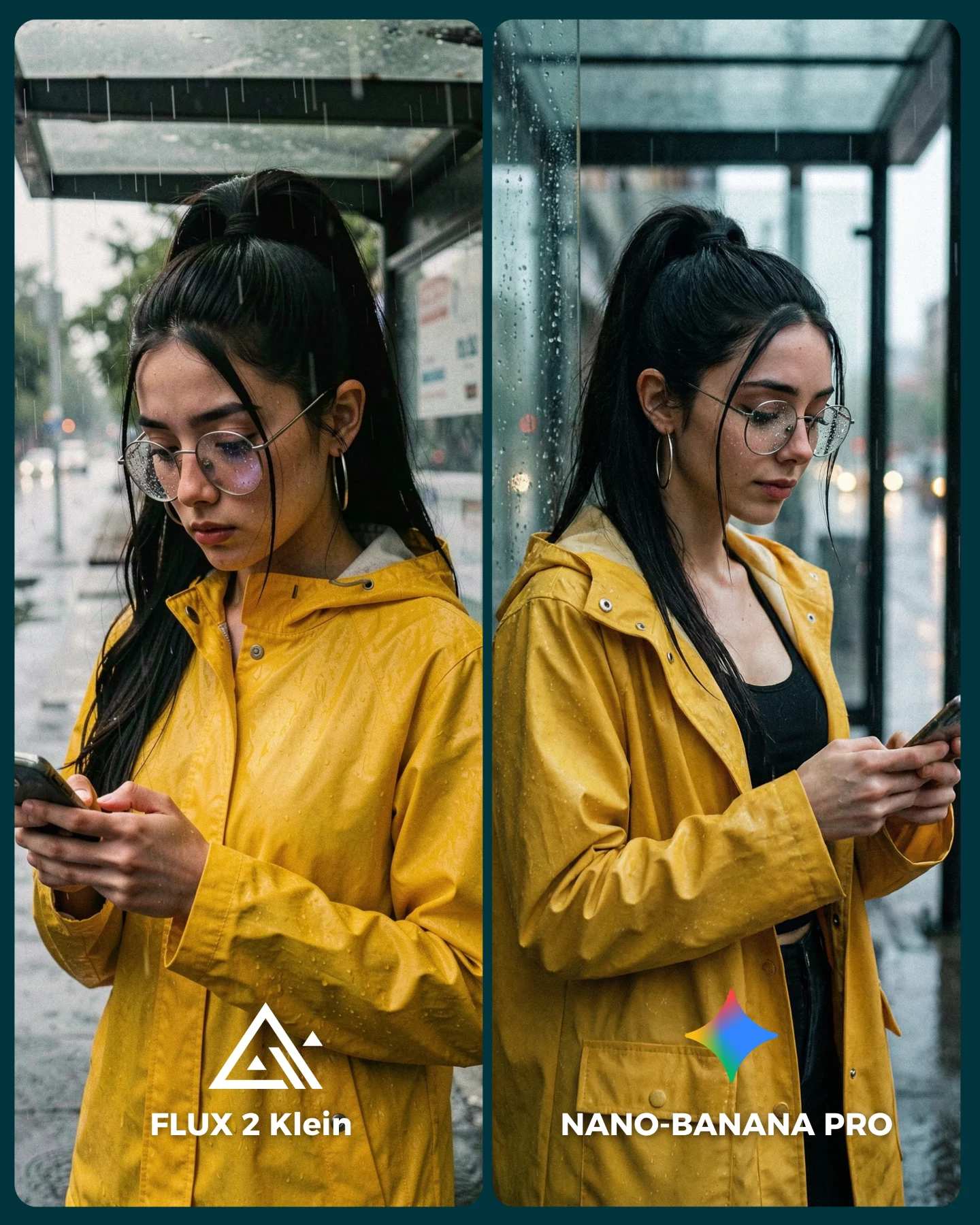
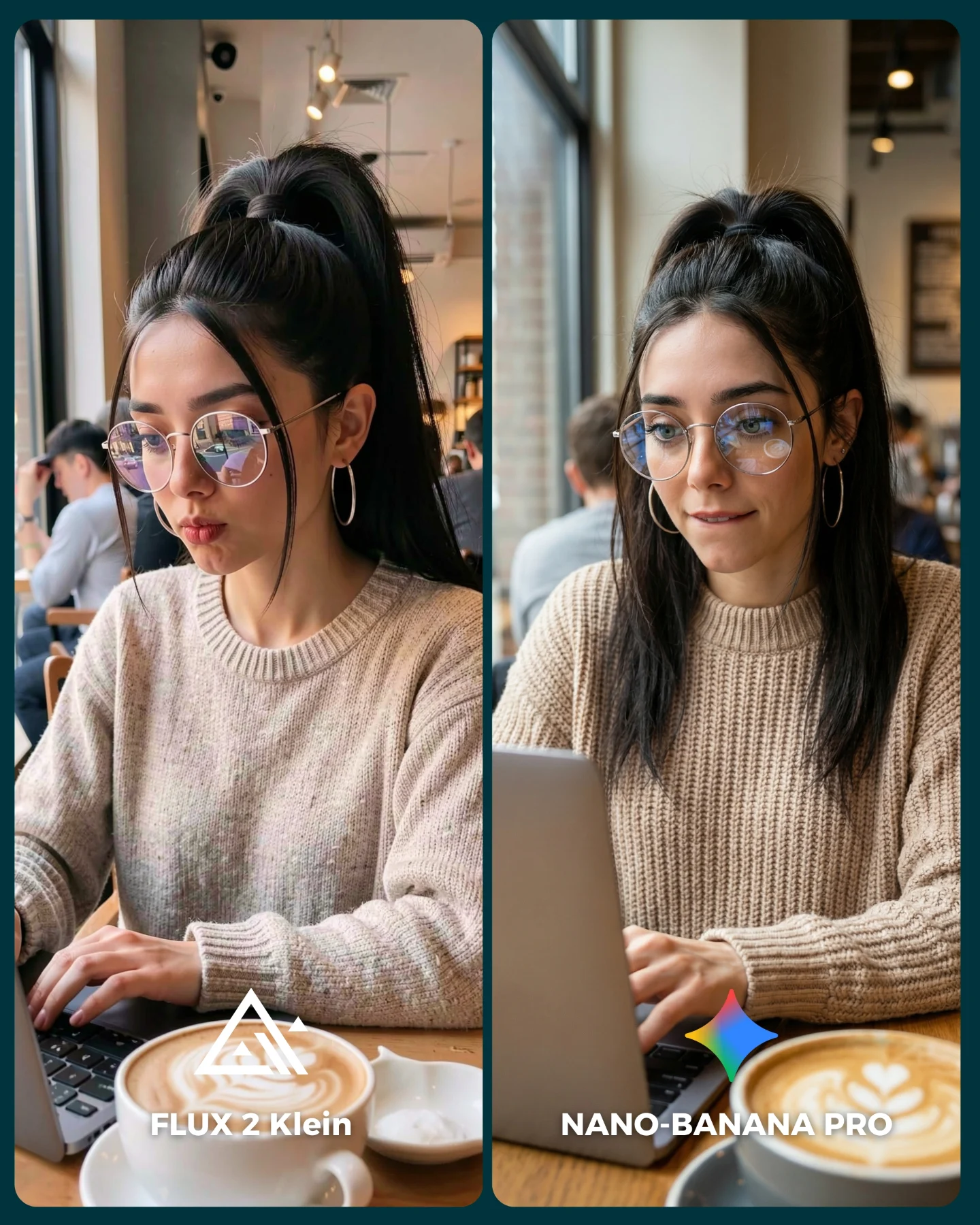
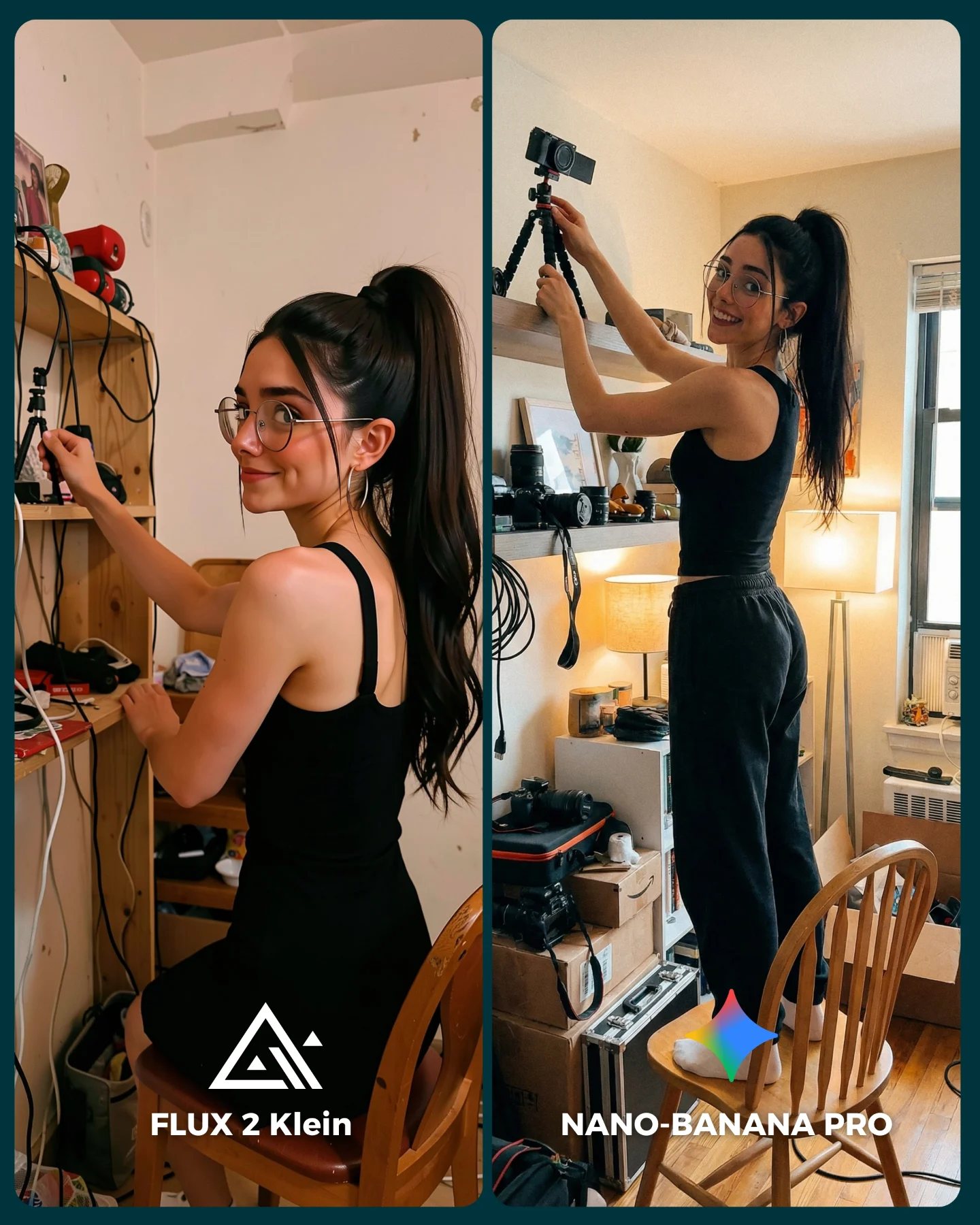
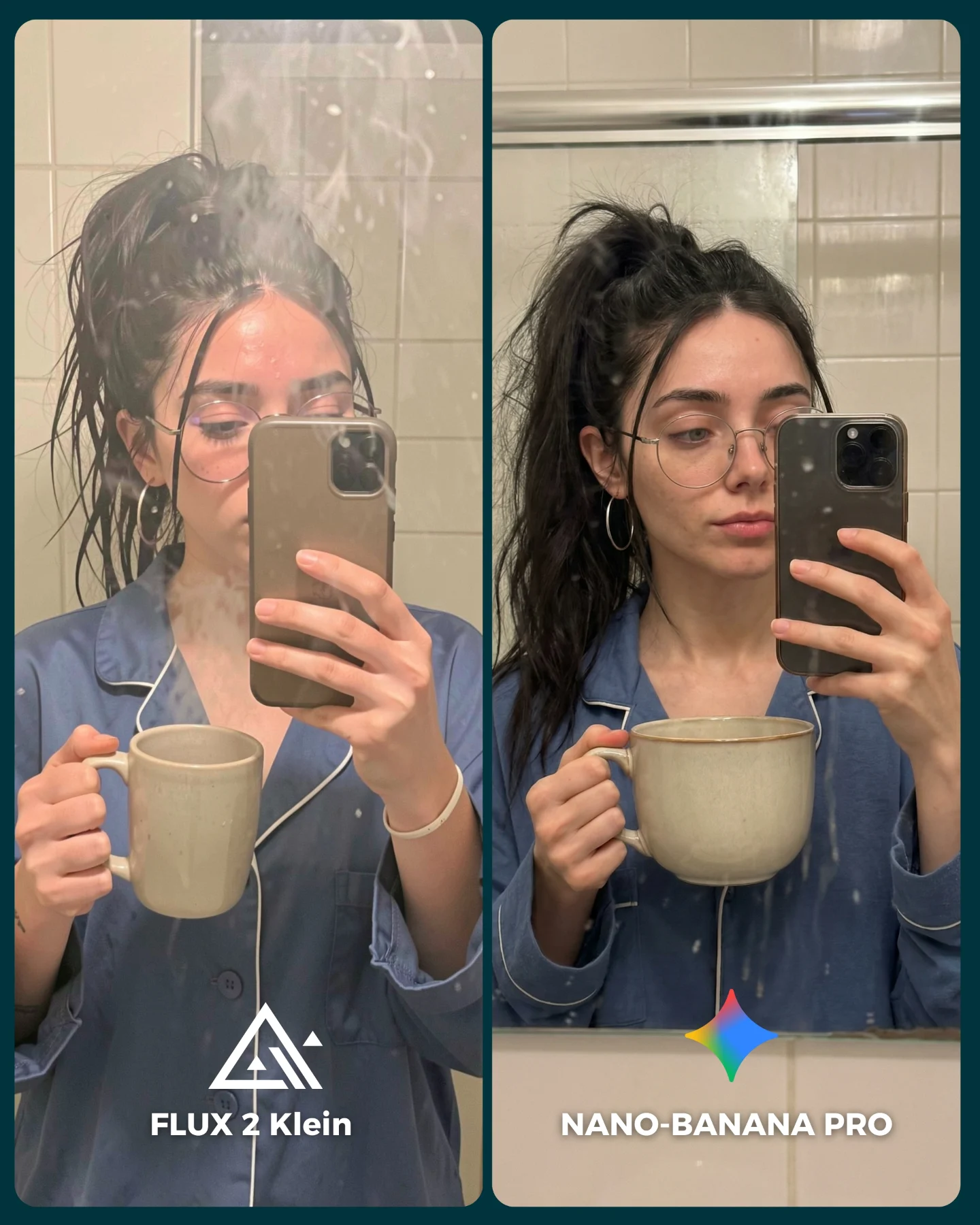
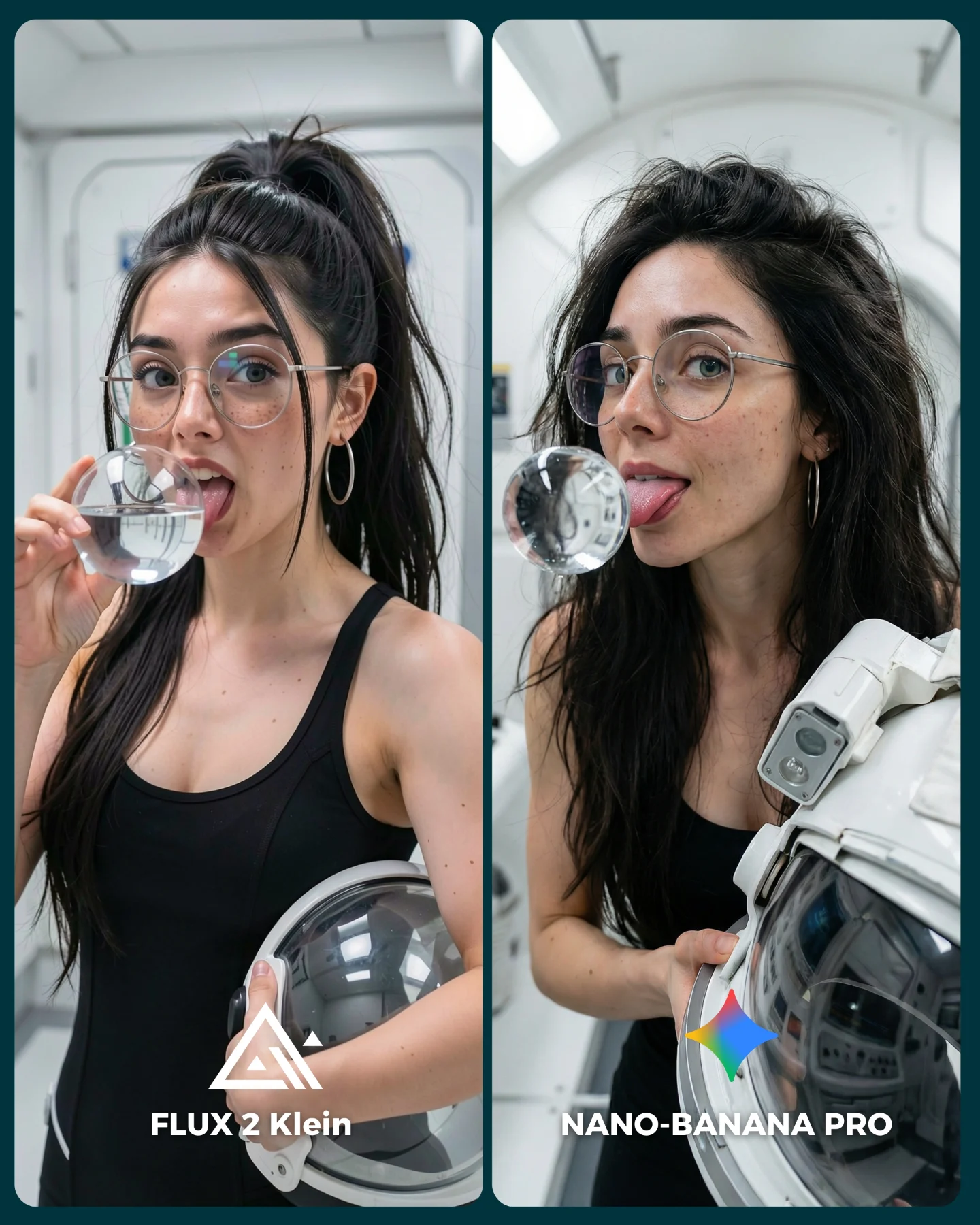
Flux 2 Klein VS. Nano Banana Pro 💥
Sigo pensando que no hay nada mejor que Nano Banana Pro 😅
O crees que hay algún generador de imágenes que le hace la competencia?? 👀
Como siempre... os puedo mandar todos los prompts de las imágenes si comentas "ARIA" 💕
Why soy_aria_cruz's Bedroom Flux 2 vs Nano Banana Went Viral
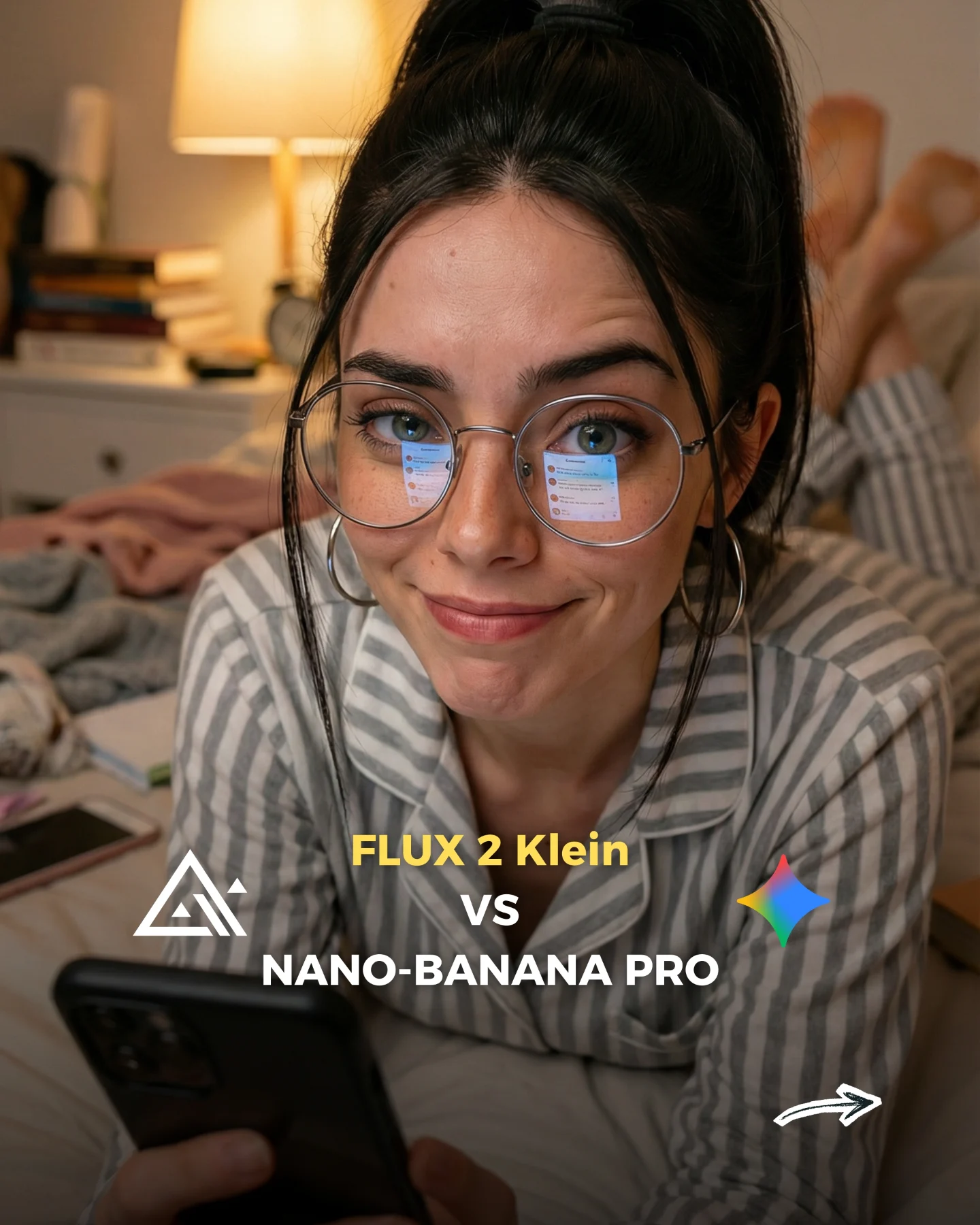
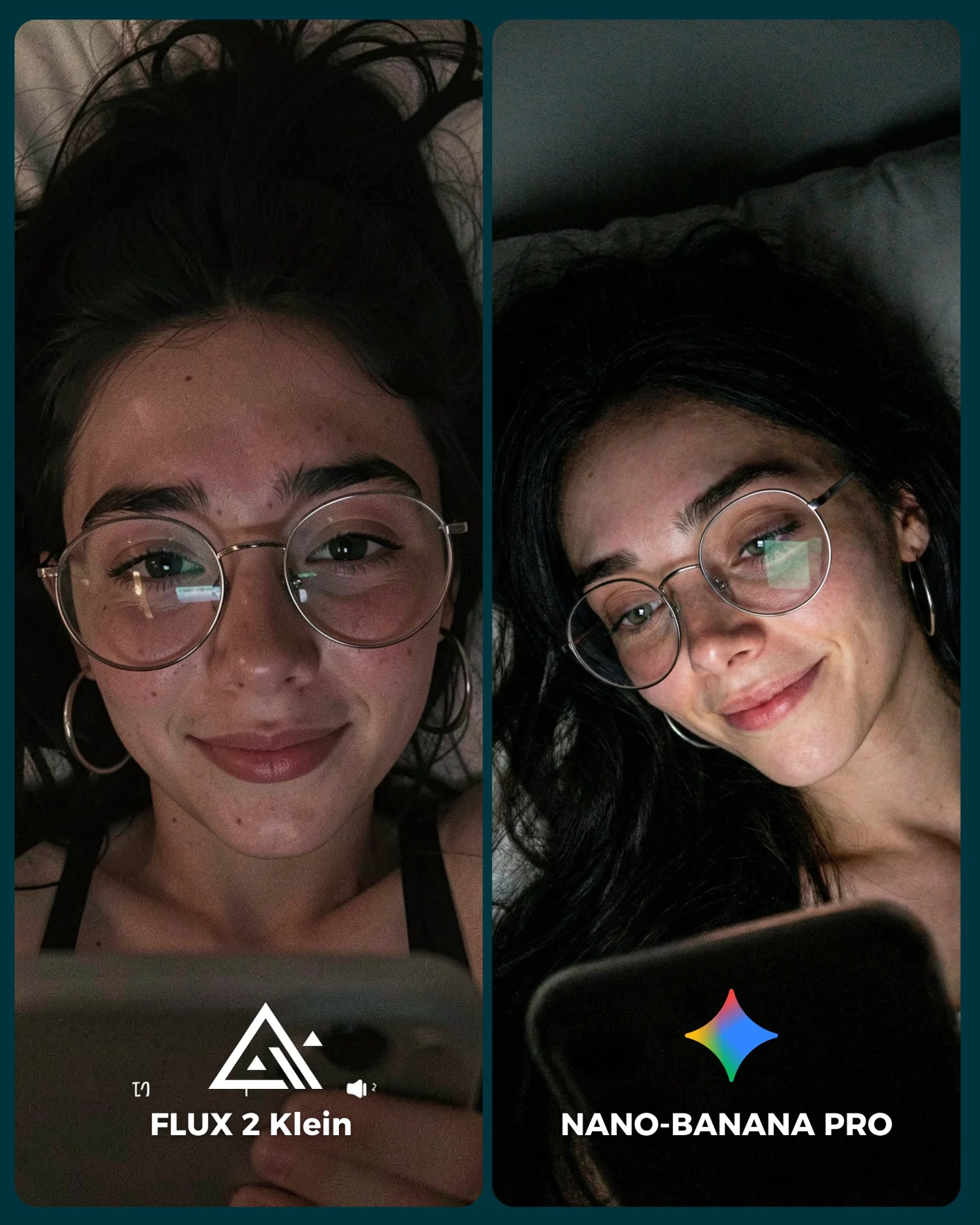
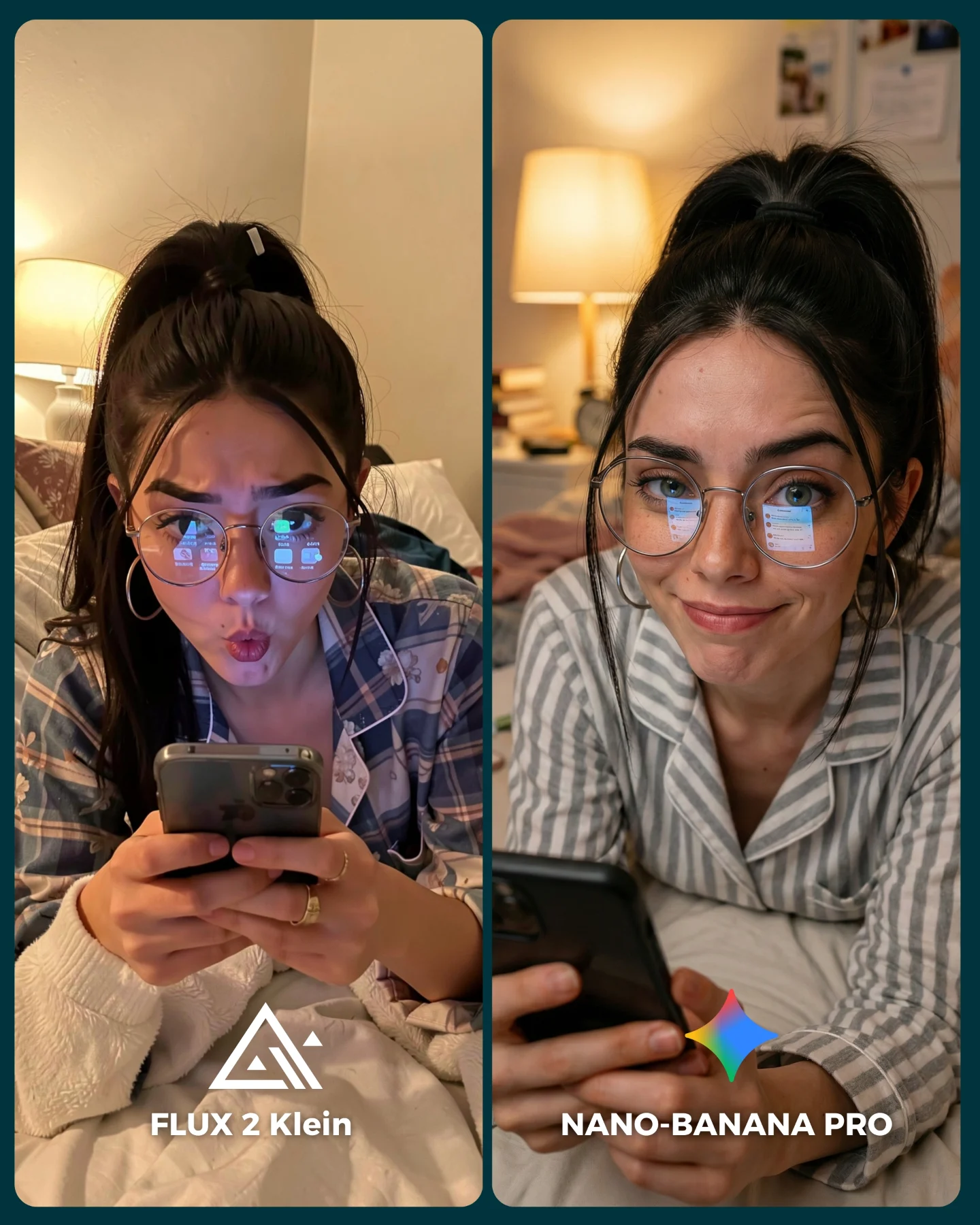
This image succeeds because it turns a software comparison into a relatable lifestyle moment. Instead of showing charts, browser tabs, or a sterile screenshot, it places the conversation inside a familiar scene: a woman lying on a messy bed at night, phone in hand, lamp glowing, glasses reflecting open windows, and a big on-image title announcing the comparison. That is a much smarter way to package a tool debate for social media. It feels human first and technical second.
The strongest choice here is the environment. Testing AI image generators is framed as something you do casually at home, almost like texting a friend or scrolling late at night. That matters because it lowers the barrier to interest. Viewers do not feel like they are entering a tutorial. They feel like they are peeking into a real creator habit. Once that intimacy is established, the comparison title lands much more naturally.
This is also a good example of how educational content can still be aesthetically sticky. The striped pajamas, messy bedding, warm lamp light, phone in hand, and slightly amused expression all create a visual story. The story says: I have been trying these tools myself, and I have opinions. That kind of embodied expertise usually performs better than a purely abstract claim.
Why It Holds Attention
The first hook is facial expression. She is not smiling like a generic beauty portrait. She looks amused, mildly skeptical, and very online. That expression pairs perfectly with a comparison format because it suggests a verdict is coming. The audience senses judgment before reading a single word.
The second hook is the hybrid design. The image is part photo, part thumbnail, part personal post. The title text is clear and direct, but the room remains soft and believable. This mix is useful because it gives the content both emotional texture and practical clarity. In other words, it earns the scroll-stop visually and then immediately tells the viewer what the post is about.
Signal
Evidence (from this image)
Mechanism
Replication Action
Humanized expertise
Phone, browser reflections in glasses, and casual bedroom setting imply real hands-on testing
Viewers trust opinions more when they look lived rather than purely announced
Show the creator inside the act of comparison, not only after the conclusion
High topic clarity
The title “FLUX 2 Klein VS NANO-BANANA PRO” is visible directly on the image
The audience knows the subject instantly, which improves hold time
Put the comparison target names on-image when the post format is educational or evaluative
Cozy-scroll relatability
Messy bedding, striped pajamas, warm lamp, and phone create an everyday late-night mood
Domestic familiarity makes technical content feel less intimidating
Frame tool-testing inside a believable routine environment instead of a formal workspace
Meme-adjacent expression
The face communicates a playful “I already know which one wins” feeling
Opinionated expressions invite comments and tool loyalty debates
Direct the subject into a knowing or amused look rather than a neutral tutorial face
Where This Format Works Best
This visual style is ideal for AI comparison posts, prompt-library covers, creator opinions, product benchmark carousels, and “I tested this for you” content. It is especially useful for solo creators who want to discuss tools without becoming visually dry. The image creates a bridge between expertise and personality, which is often what smaller accounts need most.
Best for AI tool comparisons: the overlay title makes the topic instantly legible.
Best for personal recommendation content: the face and room imply genuine firsthand use.
Best for carousel covers and reels thumbnails: the format is readable fast and memorable at small size.
Best for prompt-sharing creators: it turns backend experimentation into audience-friendly storytelling.
It is less ideal for creators aiming for highly formal software education, corporate B2B polish, or ultra-luxury lifestyle branding. The charm here depends on informality. If the content needs authority through restraint, the cozy-messy setup may feel too casual.
Not ideal for enterprise software positioning: the bedroom context is intentionally personal, not institutional.
Not ideal for minimalist branding: the text overlays and clutter add energy through density.
Not ideal for pure beauty content: the message is tool-focused, not appearance-focused.
Three Transfer Recipes You Can Reuse
The real lesson is not “make every comparison on a bed.” The lesson is to package informational content inside a setting that already feels emotionally familiar. That gives the audience an easier way in.
Desk-night remix. Keep: close face framing, glasses reflections, visible tool title, opinionated expression. Change: bed to compact desk, lamp to monitor glow, phone to tablet. Slot template (EN): {creator} comparing {tool A} vs {tool B} in {cozy personal setting}, direct title overlay, screen reflections, lived-in creator mood
Coffee-shop remix. Keep: personal testing vibe and text-led clarity. Change: bedroom to cafe booth, warm lamp to table light, striped pajamas to sweater and coat. Slot template (EN): {subject} casually testing {tools} in {everyday environment}, on-image comparison text, relatable creator energy
Studio-floor remix. Keep: informal body posture, visible device, integrated comparison graphics. Change: bed to editing-room floor with prints, lamp to task light, clutter to moodboard materials. Slot template (EN): {creator} mid-test of {software comparison} in {creative workspace}, strong title overlay, candid smart expression
What Makes the Image Feel Sticky
The first strength is optical storytelling. The screen reflections in the glasses quietly confirm the topic. They are a small detail, but they matter because they make the “comparison” idea feel embedded in the photo instead of simply pasted on top. The same is true for the phone in hand. Without those signals, the title would feel more detached from the image.
The second strength is tonal contrast. Warm lamp light fills the room, while the reflected screens add cool blue rectangles in the lenses. That warm-cool split is subtle but effective. It creates the feeling of comfort plus active digital thinking, which is exactly the emotional territory of late-night creator experimentation.
The third strength is layout discipline. The face sits high and dominant, the phone anchors the lower left, and the title occupies the lower center. That gives the image a clear reading order: person first, topic second, details third. Good social covers often work that way. The audience should feel the personality before they parse the information.
Observed
Why it matters for recreation
Close face framing with amused expression
Builds instant personality and signals an opinion-based post
Screen reflections in both lenses
Ties the visual directly to the tool-testing theme
Warm bedside lamp in the background
Keeps the comparison post feeling cozy rather than clinical
Large centered comparison title overlay
Makes the topic scannable even at thumbnail size
Messy bedding and casual striped pajamas
Creates real-life intimacy and makes the content feel accessible
Prompt Technique Breakdown
To rebuild this image in AI, you need separate control over domestic setting, facial attitude, device cues, and overlay typography. If you only prompt “girl comparing AI tools at home,” the result will usually become generic tech-lifestyle content without the same hook.
Prompt chunk
What it controls
Swap ideas (EN, 2–3 options)
young woman lying on stomach on messy bed, close to camera
Main posture and lived-in environment
cozy bed pose; relaxed late-night testing posture; at-home creator snapshot
striped pajamas, glasses with screen reflections, phone in hand
How I Would Iterate This Without Breaking the Format
Lock three things first: the bedroom environment, the glasses reflections, and the on-image comparison title. Those are the core signals. If one disappears, the concept gets weaker fast.
Then iterate in a controlled sequence.
Run 1: establish the face, pose, and bed environment clearly.
Run 2: refine the phone, glasses reflections, and lamp placement so the tool-testing story feels believable.
Run 3: tune the title overlay and icon placement for clean readability.
Run 4: polish expression, bedding texture, and warm-cool light balance.
If the image starts feeling too much like a poster, bring back more room clutter and realism. If it looks too casual and loses topic clarity, strengthen the title and the device cues. The best version sits right between intimate and informative.
The Larger Creator Lesson
For creators, this image is a useful reminder that educational content does not need to look educational in the old sense. You can package information inside a mood, and in many cases that mood is what earns the first second of attention. Once that first second is won, the information has a better chance of landing.
That is the bigger growth takeaway here: if you want people to care about your comparison, show them why the comparison lives inside your actual life. The more your testing process feels embodied and specific, the more your audience will treat your verdict as something worth hearing.