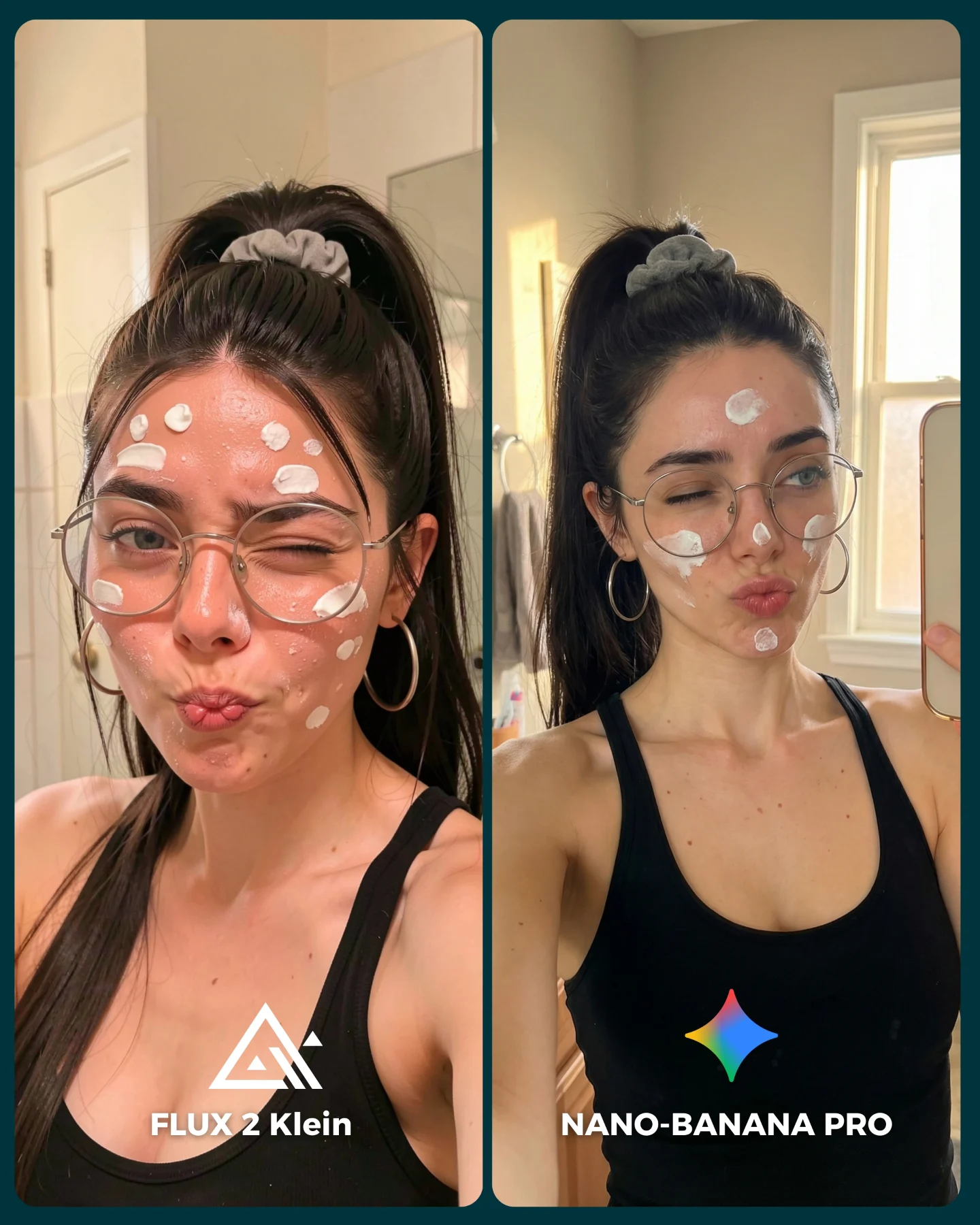
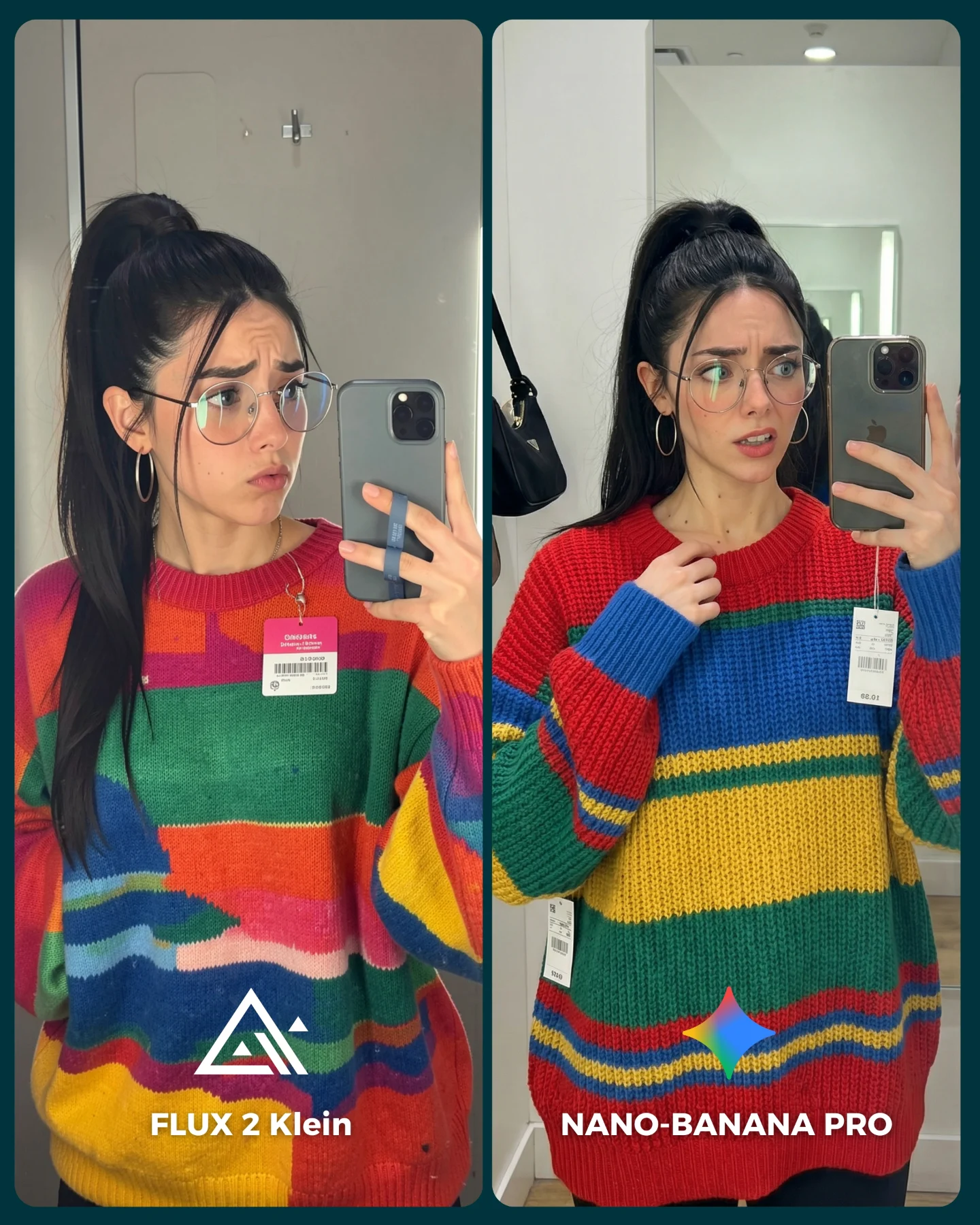
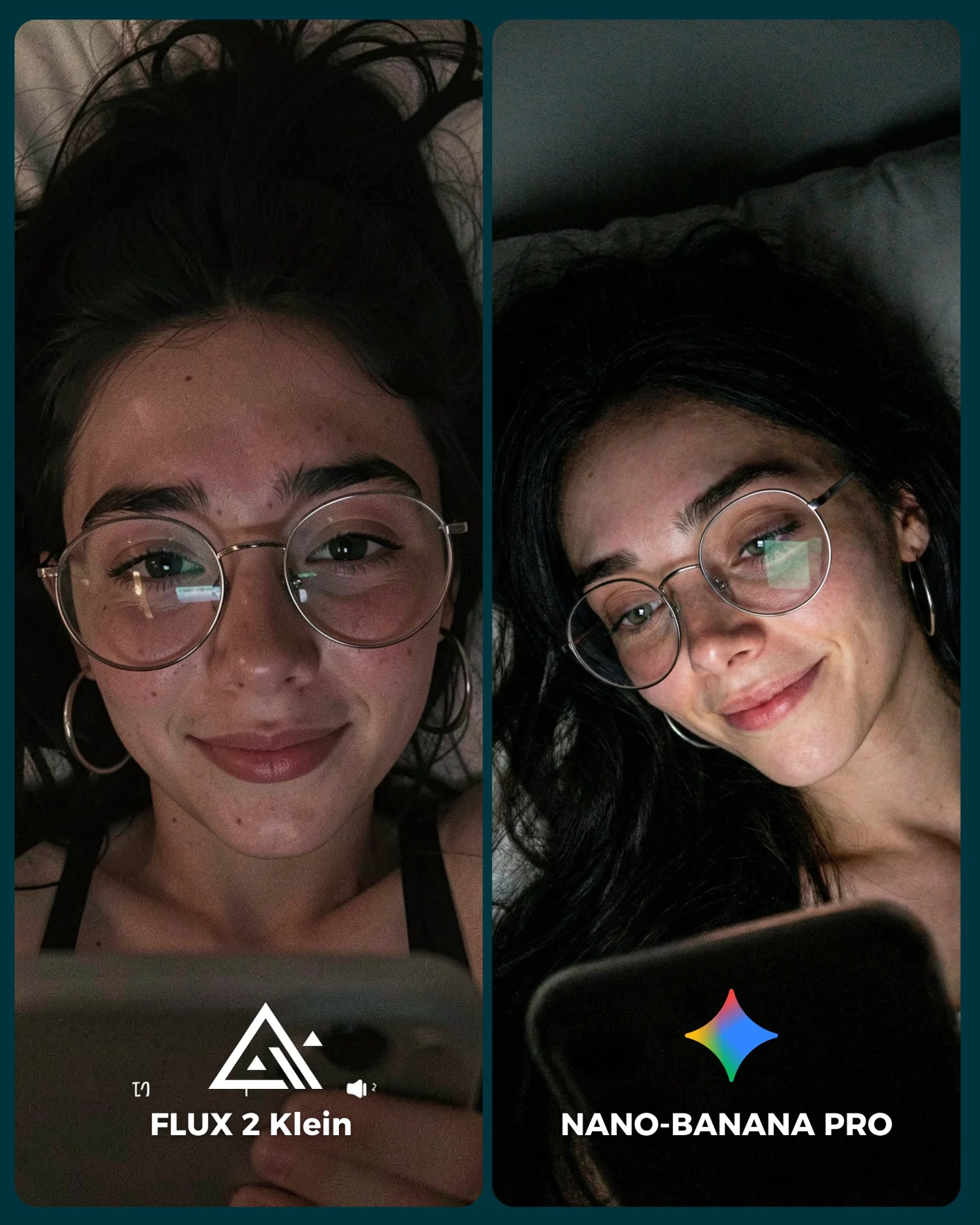
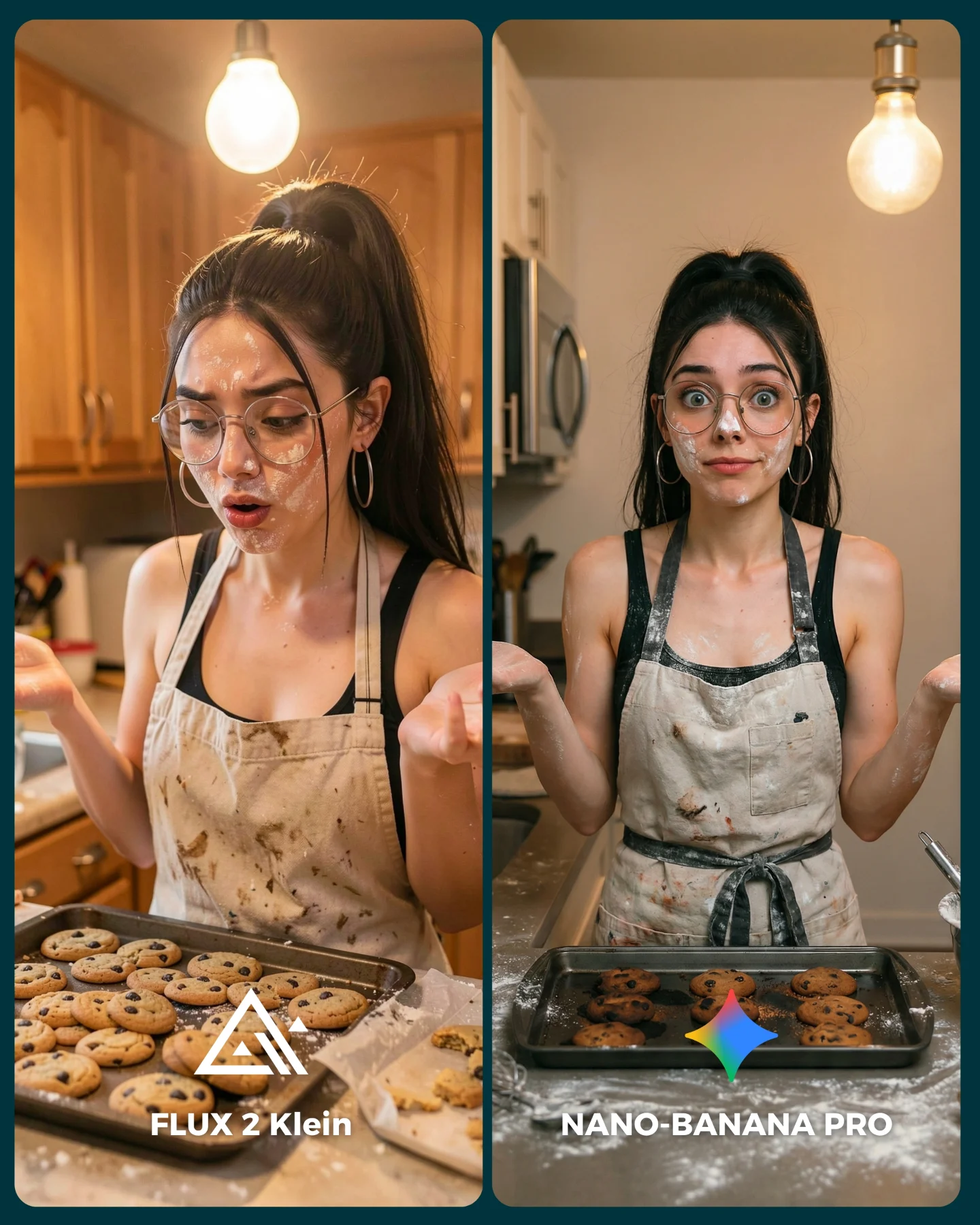
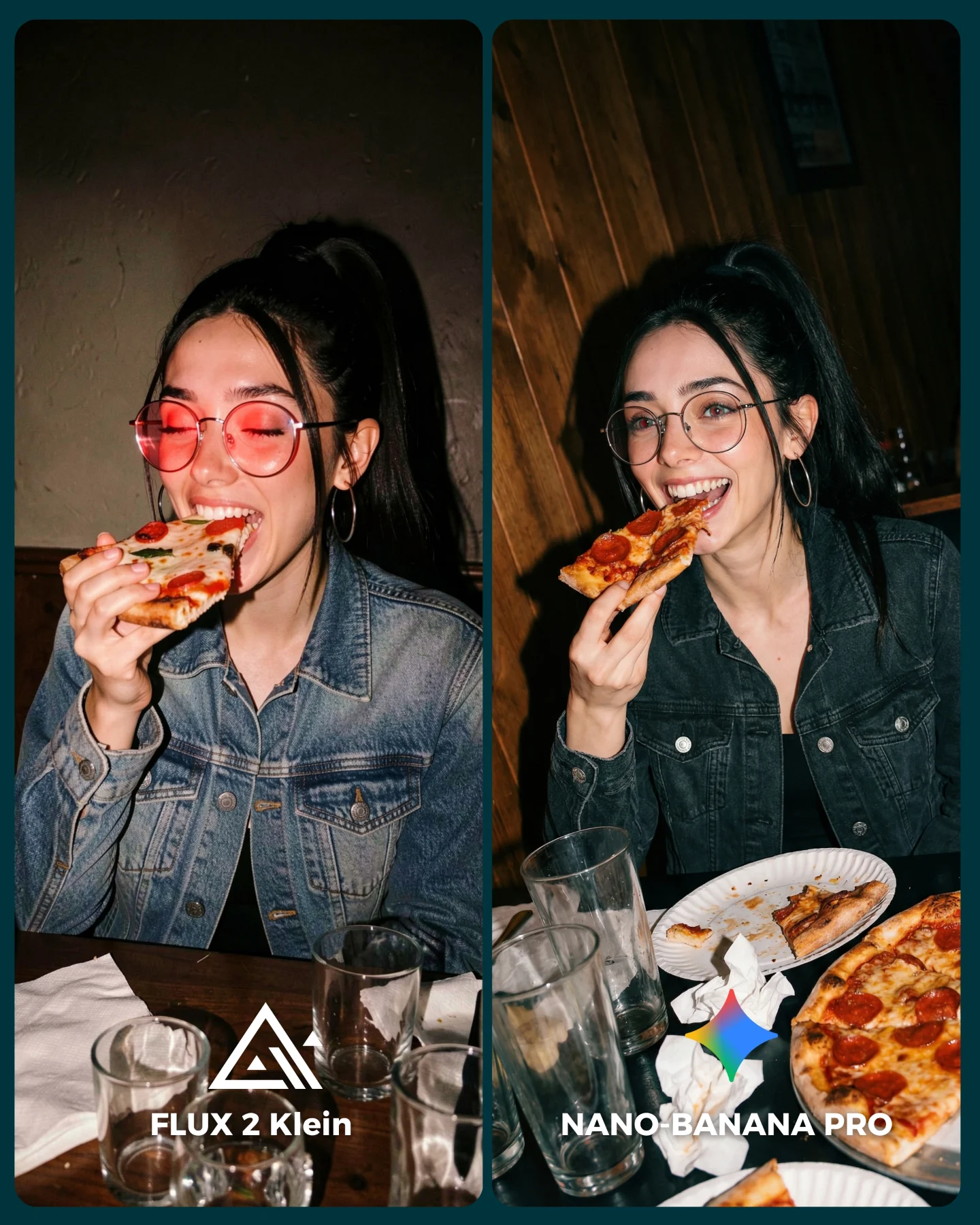
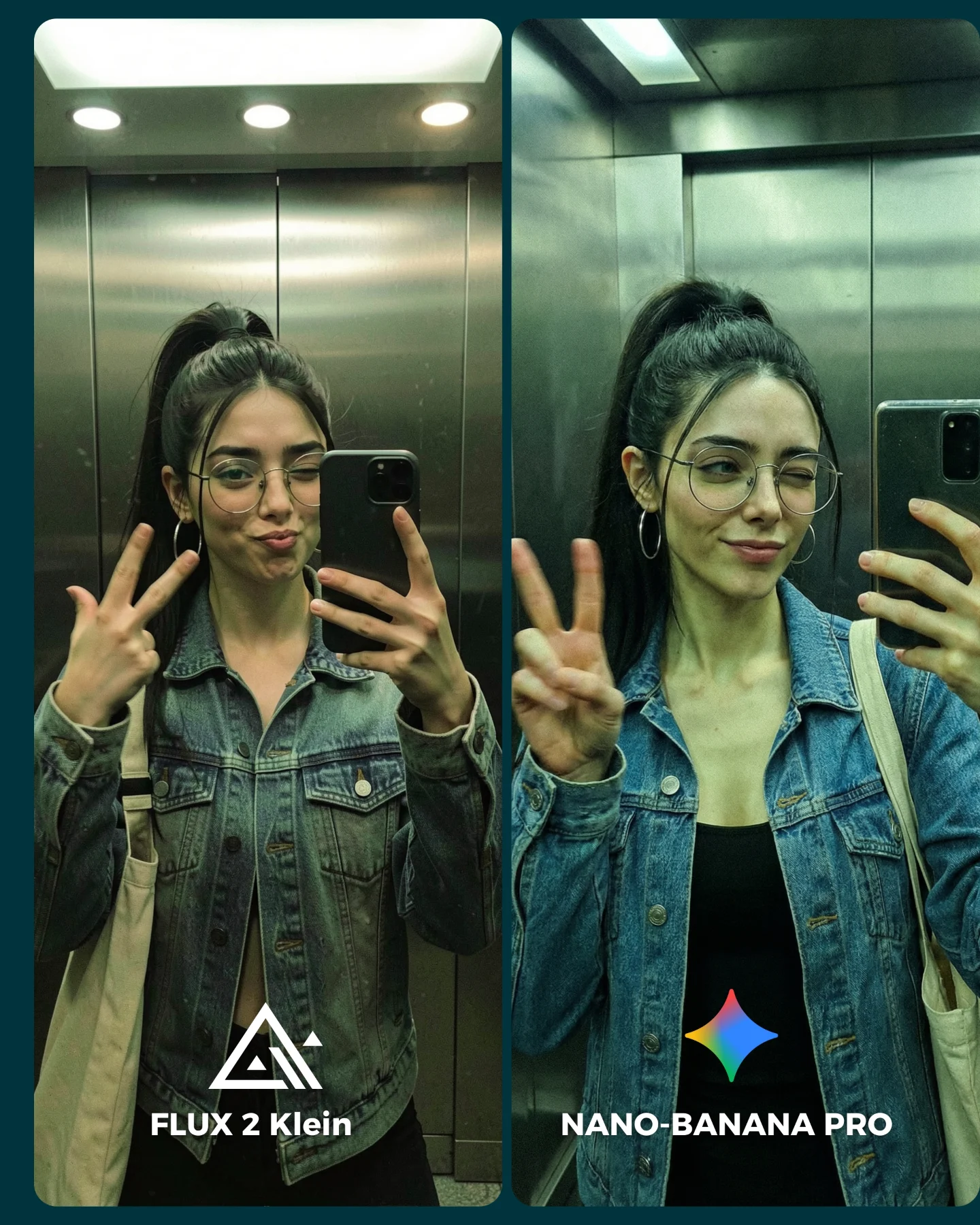
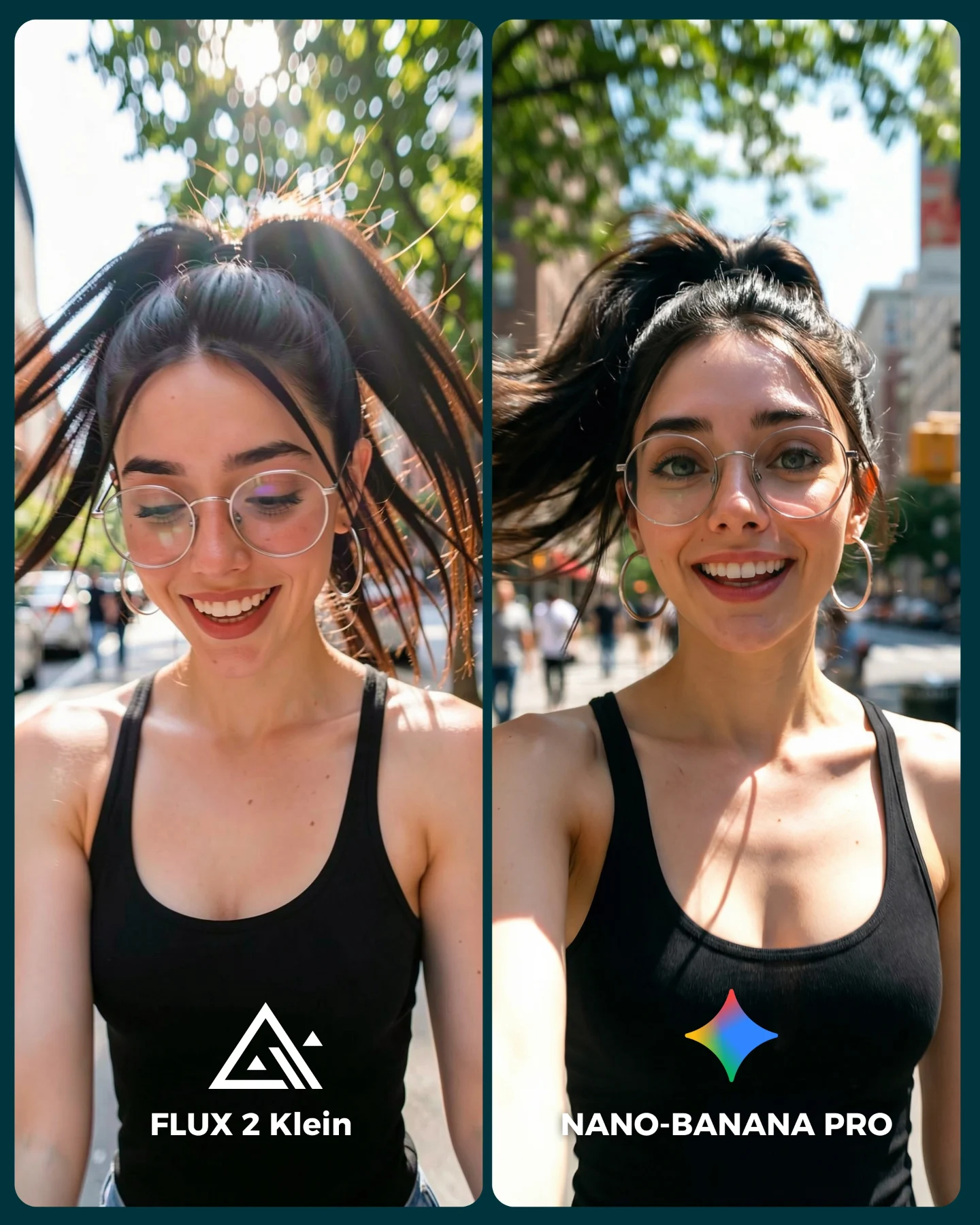
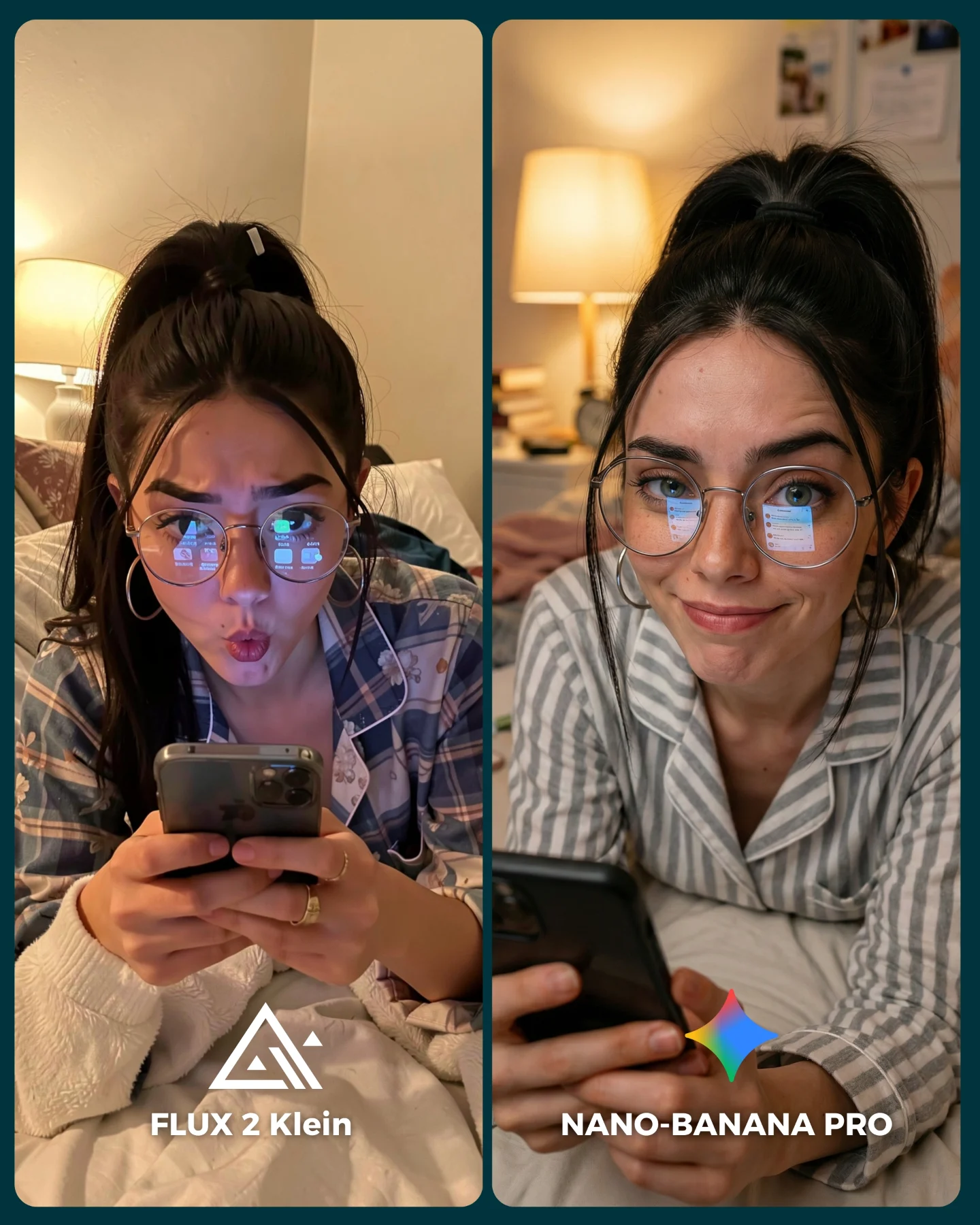
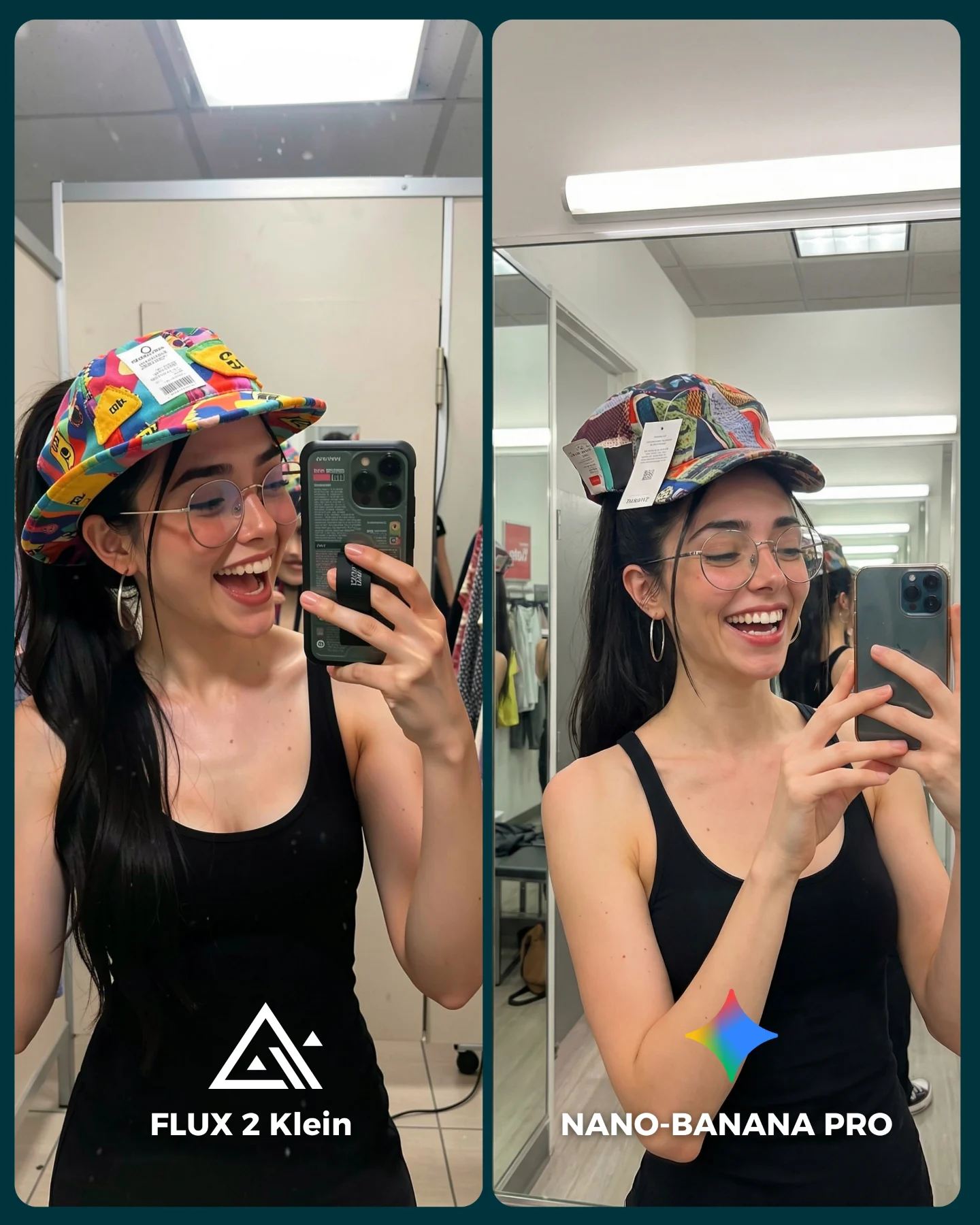
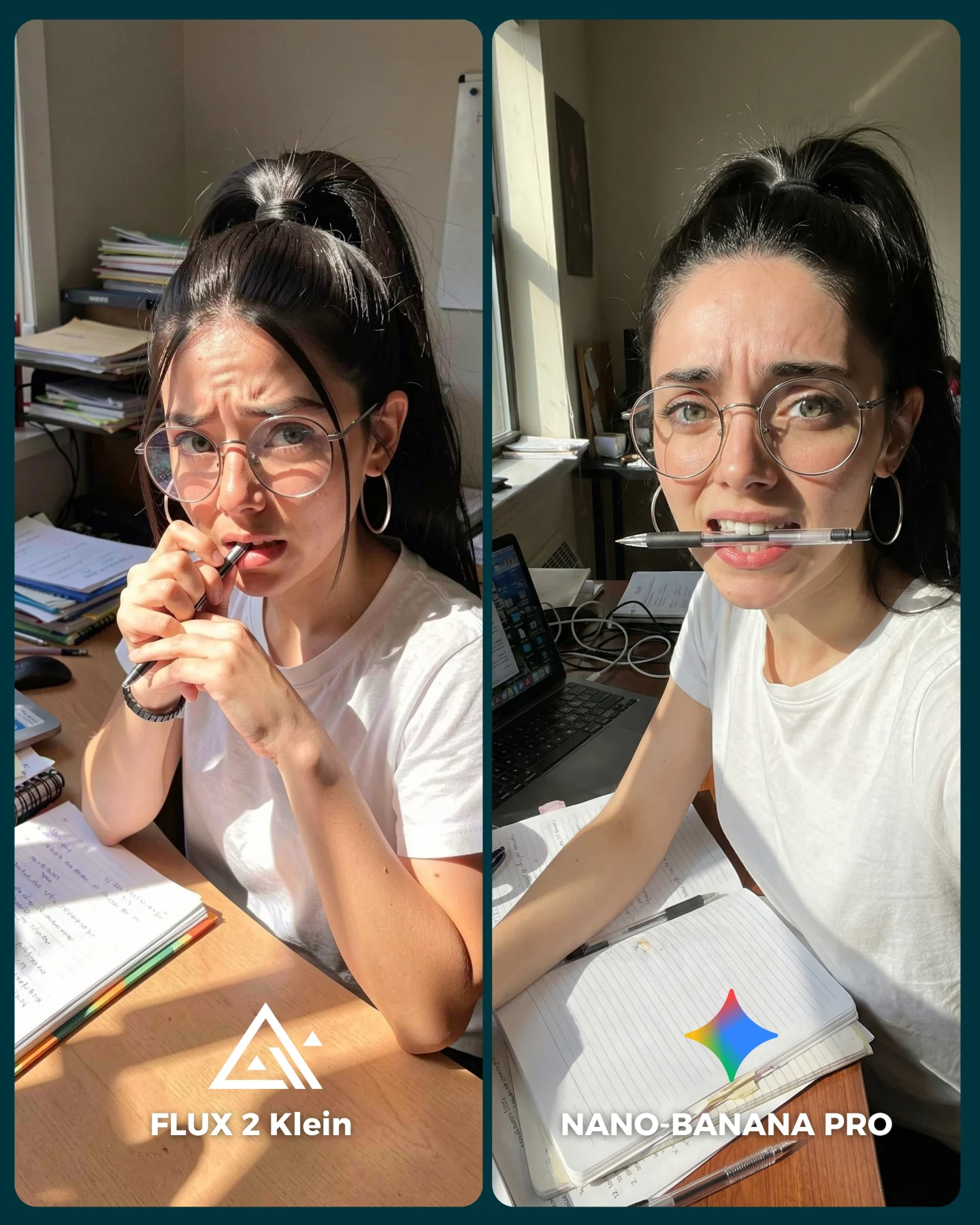
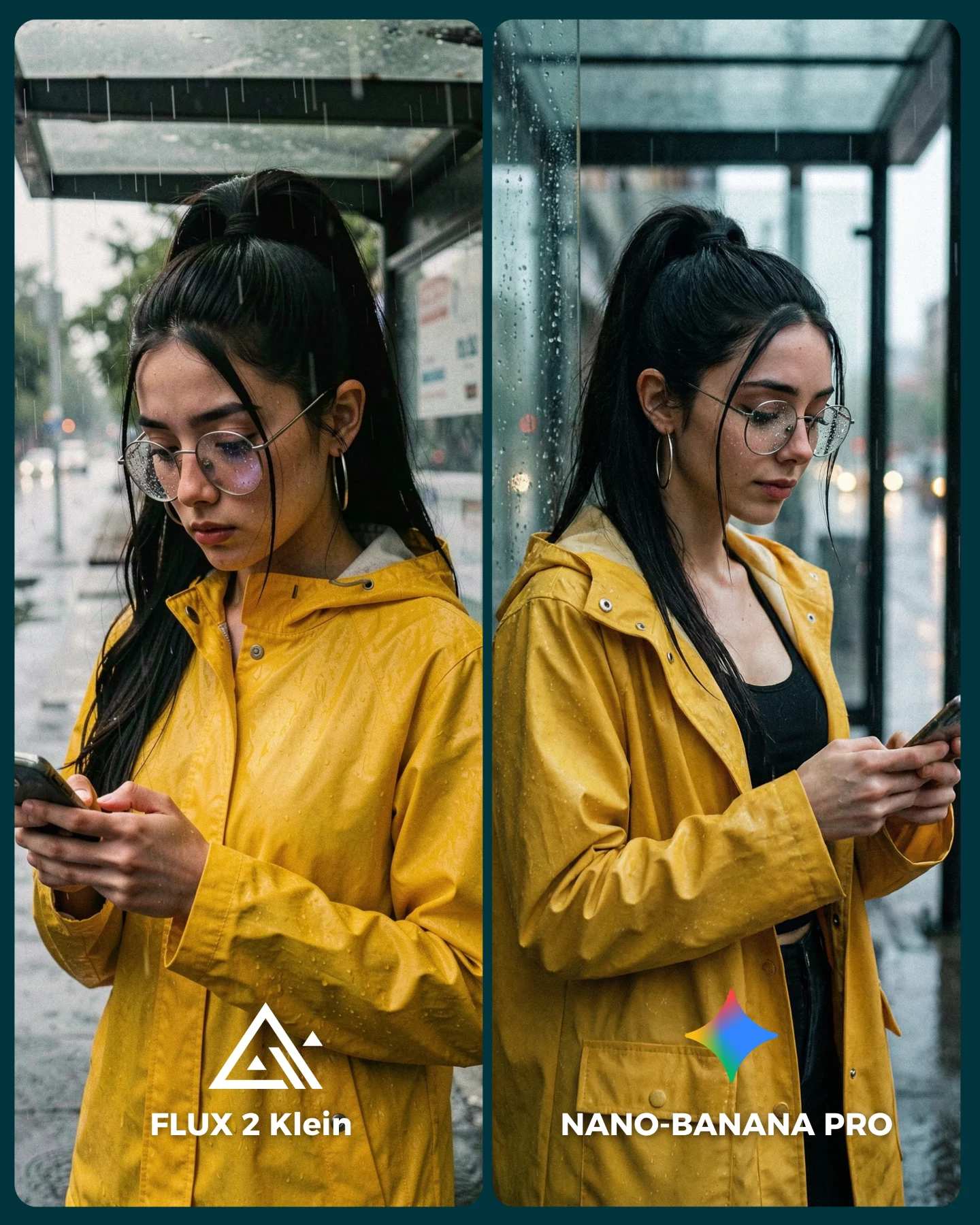
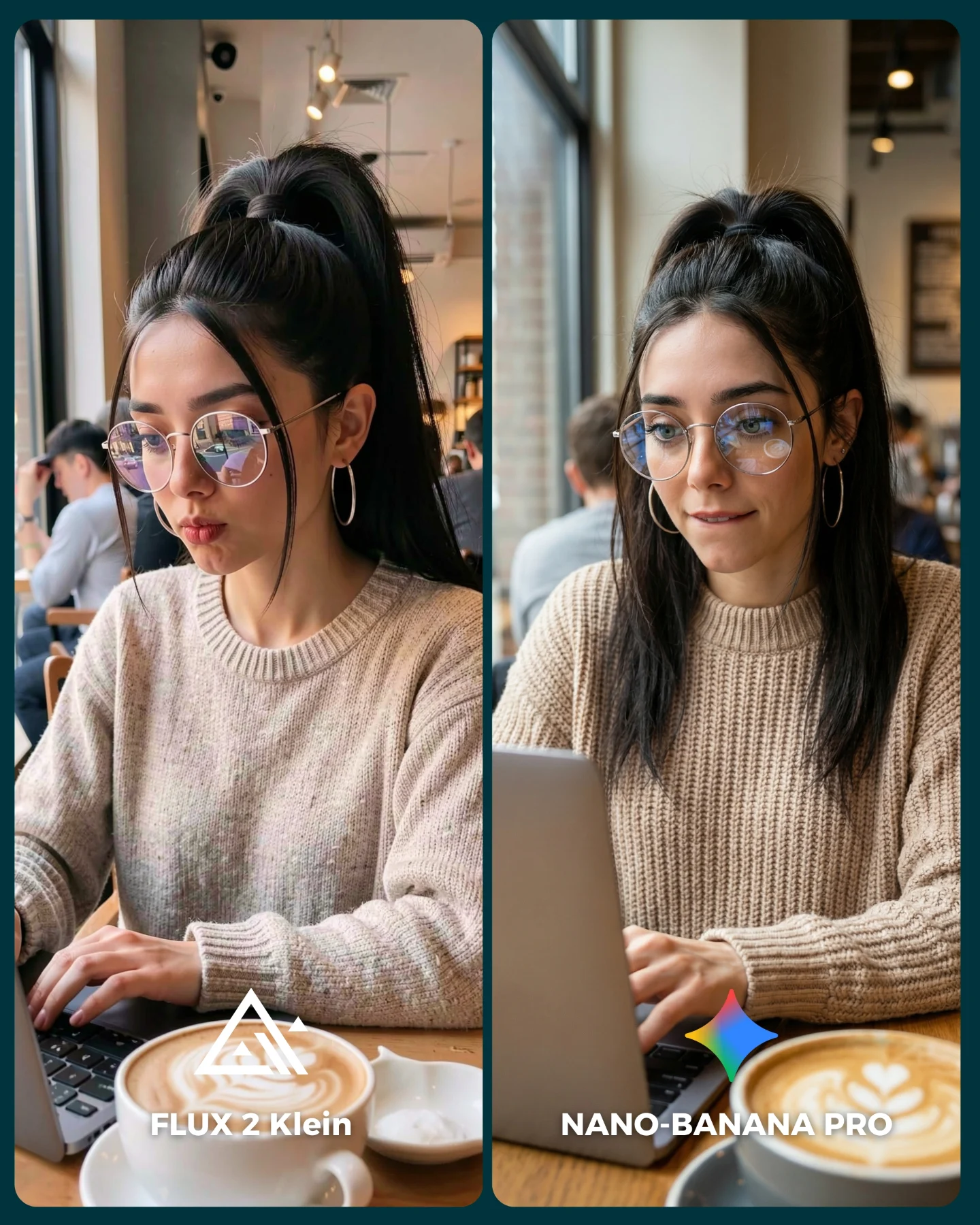
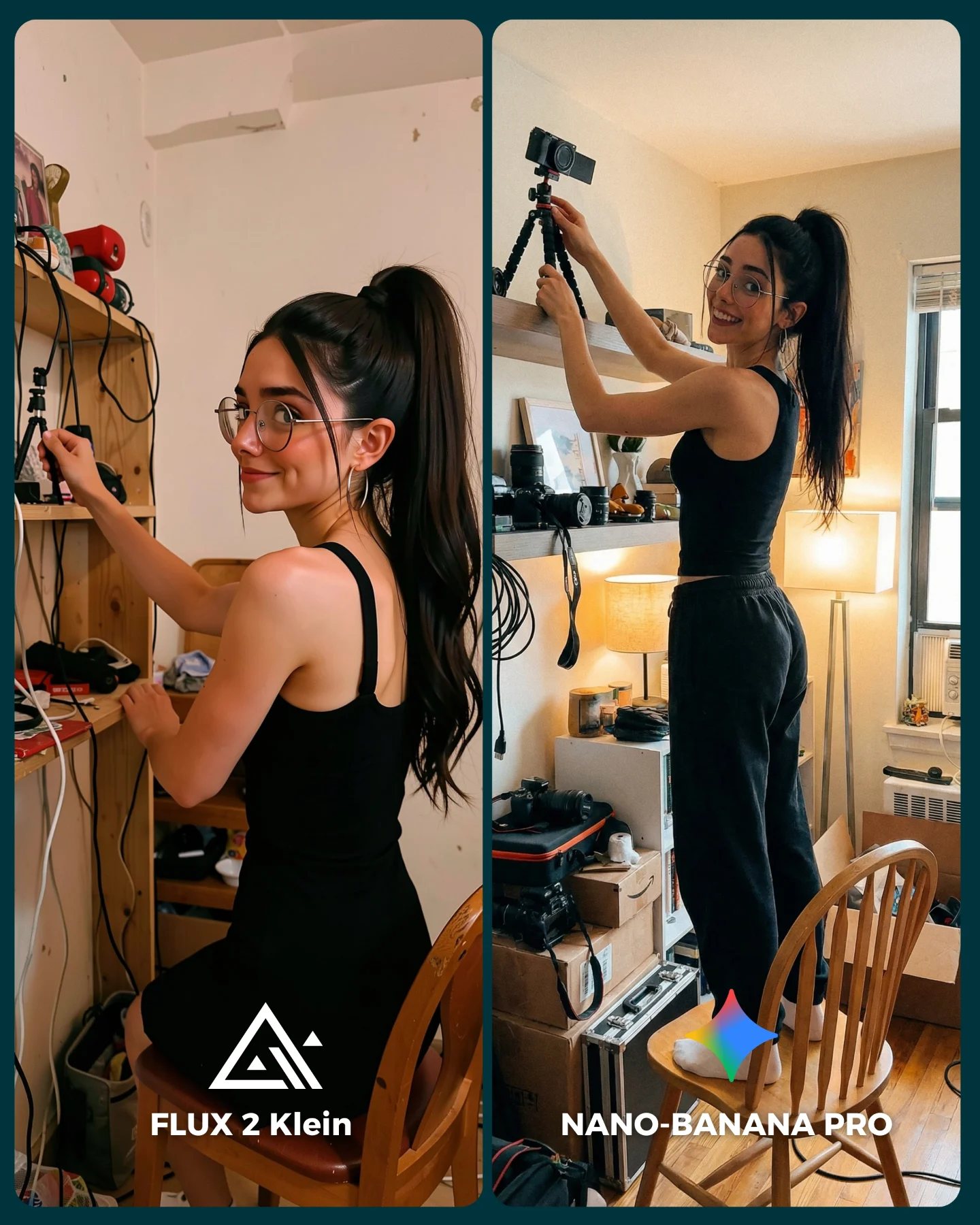
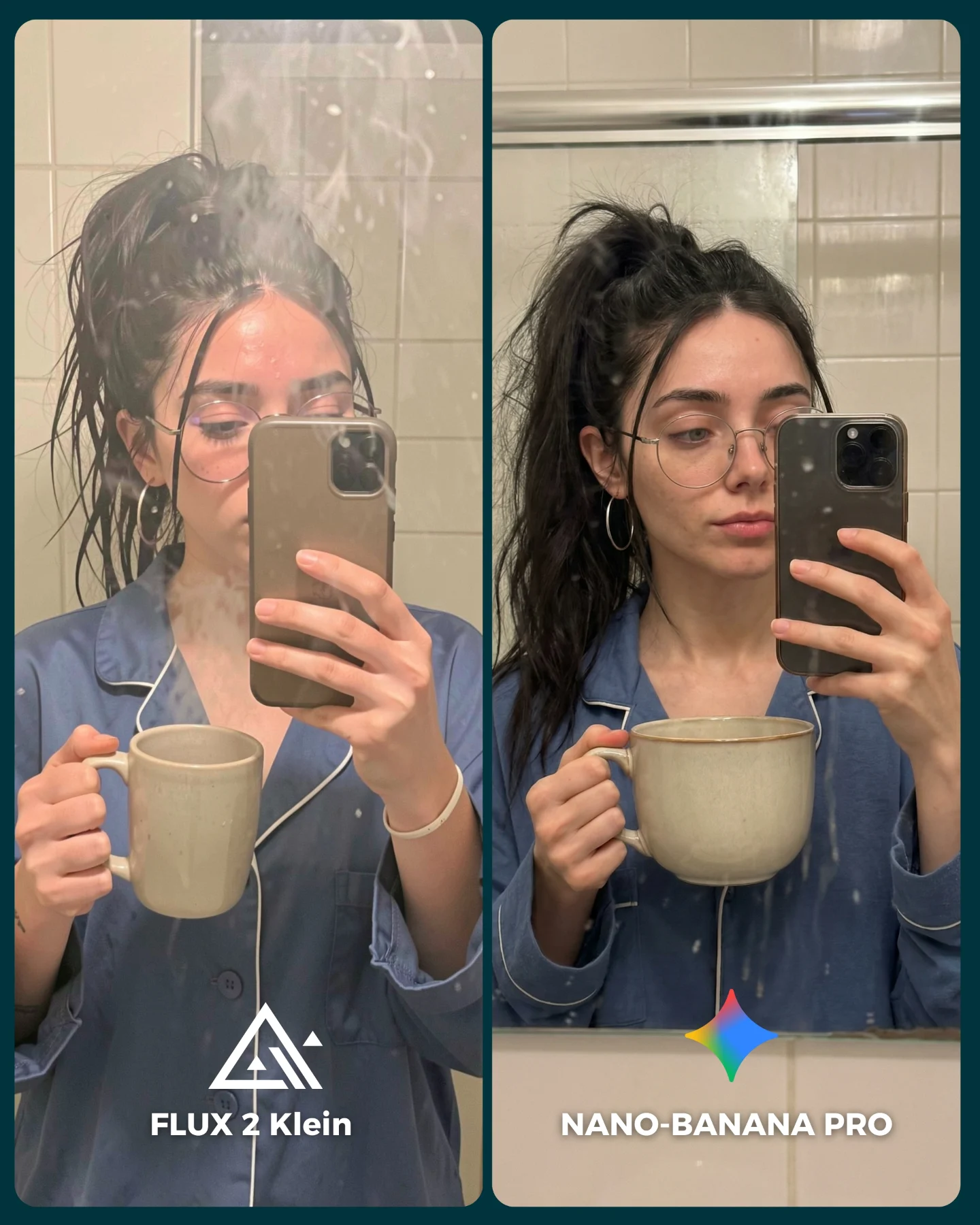
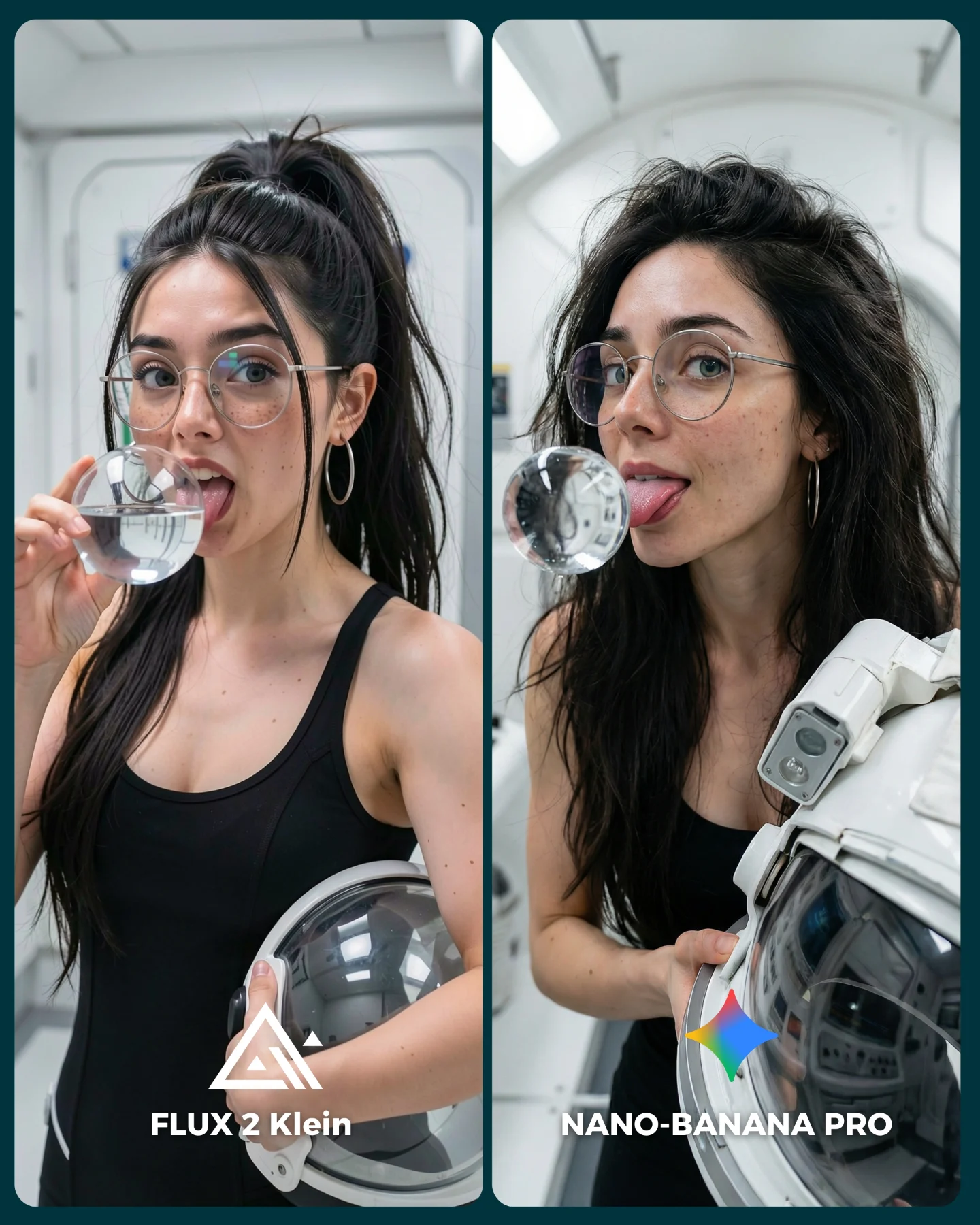
Flux 2 Klein VS. Nano Banana Pro 💥
Sigo pensando que no hay nada mejor que Nano Banana Pro 😅
O crees que hay algún generador de imágenes que le hace la competencia?? 👀
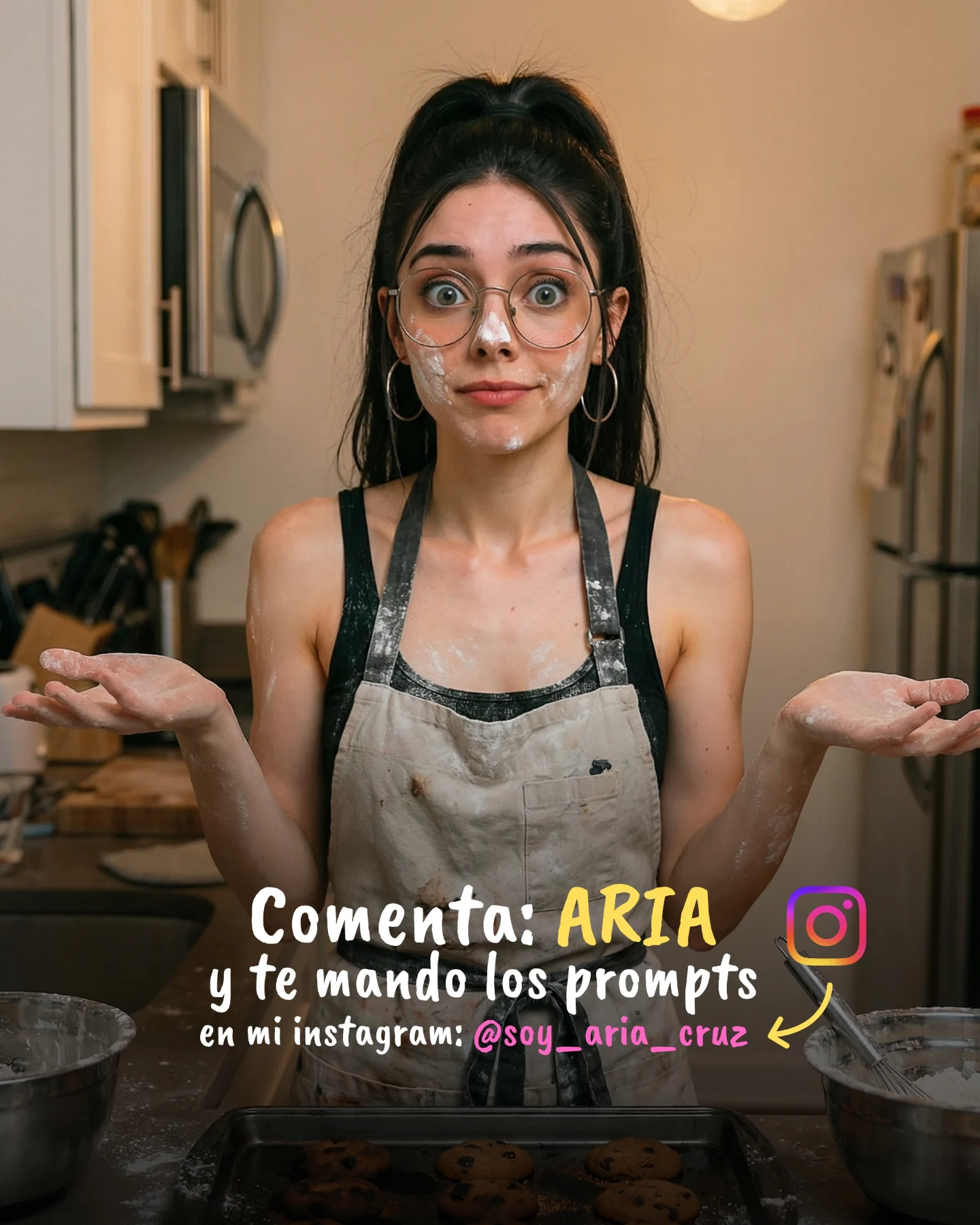
Como siempre... os puedo mandar todos los prompts de las imágenes si comentas "ARIA" 💕
How soy_aria_cruz Made This Car Burger Model Comparison Image and How to Recreate It
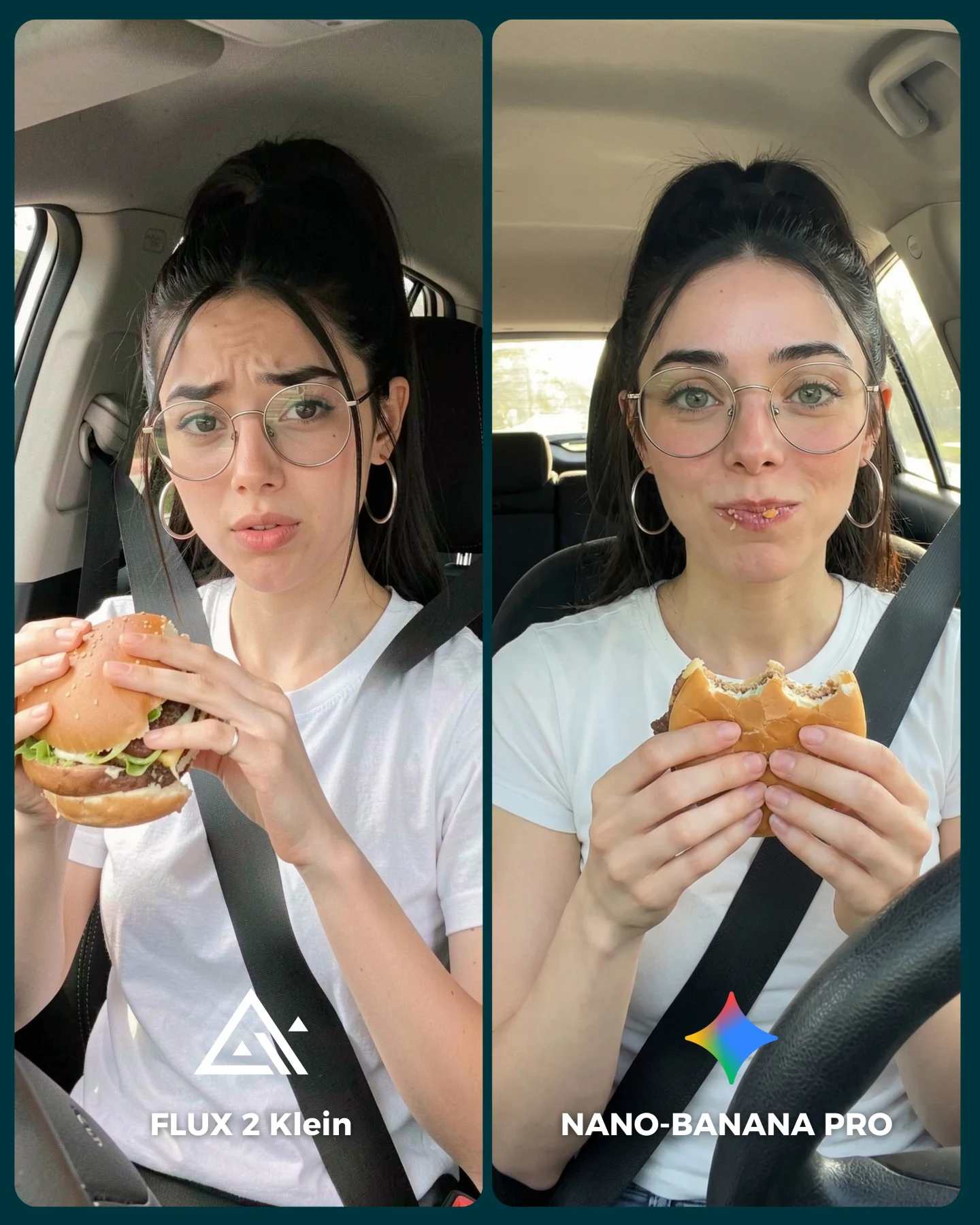
This image works because it chooses a situation everyone understands instantly: eating a burger in a car. That may sound simple, but it is exactly the kind of ordinary scene that reveals model weaknesses fast. Hands on food, seatbelts across clothing, the geometry of a car interior, chewing expressions, and daylight through windows are all details people recognize subconsciously.
That makes the comparison more useful than a polished studio headshot. A clean portrait can hide a lot. An everyday in-car food selfie cannot. If a model gets this right, it is doing something valuable. If it gets it wrong, viewers notice immediately because the scenario is so familiar.
Why this comparison earns attention
The strongest mechanism is ordinary-life pressure. AI images often look good when the situation is dramatic or stylized, because viewers have less real-world reference. But almost everyone knows what a burger looks like in hand, how a seatbelt falls across a shirt, and how daylight hits a face inside a car. Familiarity makes this kind of test much stricter.
The second strength is that the split-screen setup highlights behavioral realism, not just face quality. The right panel succeeds more if the hands, bite, expression, and car context all cooperate at once. That makes the comparison more holistic. It is not only a face test. It is a “whole scene behaving like real life” test.
Signal
Evidence (from this image)
Mechanism
Replication Action
Everyday familiarity
Eating a burger in a car while wearing a seatbelt
Viewers instantly know when something feels off in a common real-life setup
Compare models using scenes people encounter often, not only stylized portraits
Multi-detail stress test
Hands, food, expression, clothing folds, steering wheel, and windows all matter
The model has to solve several realism problems at once
Choose prompts that combine face, object handling, and environmental logic
Simple binary reading
Two panels with clear model labels and nearly matched framing
The viewer can compare quality quickly without confusion
Keep the A/B layout simple and the variables tightly controlled
Behavioral difference
Left side feels more awkward while the right looks more natural
Naturalness becomes a visible and discussable metric
Use slightly expressive scenarios rather than blank neutral portraits
Where this format works best
Model realism comparisons: ideal for testing ordinary-life fidelity instead of only beauty output.
Prompt engineering education: useful when teaching how to build hard but fair A/B benchmarks.
Food-and-lifestyle prompt tests: strong because food handling and facial behavior often expose weak generation.
AI influencer consistency checks: effective for proving that a character still looks believable in daily, unstaged contexts.
Where it is less effective
Luxury branding: the scene is intentionally mundane and unglamorous.
Abstract art communities: the image is about fidelity, not concept or style experimentation.
Landscape-driven content: the car interior keeps the scope personal and enclosed.
Three transfer recipes
Coffee-run transfer Keep: car interior, daytime realism, object-in-hand behavior test. Change: burger to coffee or pastry, expression tone, steering-wheel visibility. Slot template (EN): {same subject} handling {everyday food or drink} inside a {daytime car interior} as a model comparison
Drive-thru transfer Keep: seatbelt, dashboard context, split-screen realism focus. Change: meal type, hand pose, and expression nuance. Slot template (EN): {young woman} in a car holding {fast-food item} compared across {two image models}
Everyday bite test transfer Keep: casual clothing, common environment, realistic hand-object interaction. Change: object to sandwich, fries, or drink cup. Slot template (EN): {person} interacting with {familiar food object} in a {common everyday setting} shown as a side-by-side benchmark
Aesthetic read: why the image feels convincing
The strongest aesthetic choice is that nothing tries too hard to be beautiful. The white T-shirt, the daylight, and the plain car interior all reduce distraction. That forces the viewer to evaluate realism directly. It is a very smart setup because it removes excuses.
The burger is also important visually. Food often exposes weak generation because textures, volume, and hand contact need to align perfectly. Here the burger acts almost like a prop-based lie detector. The scene only works if the food feels truly held and truly edible.
The right panel benefits from emotional ease. It looks more natural not because the person is more glamorous, but because the whole body language feels less self-conscious. That kind of subtle naturalness is exactly what a good benchmark should surface.
Observed
Why it matters
Seatbelt across a plain white shirt
Creates an instantly familiar and testable everyday cue
Two-handed burger grip close to the chest
Adds a difficult realism challenge through hand-object interaction
Car roof, windows, and steering wheel visible
Anchor the scene in a believable enclosed environment
Left awkward expression versus right relaxed bite moment
Makes “naturalness” visible as a meaningful comparison metric
Minimal styling with glasses and hoop earrings
Keeps the identity consistent without distracting from the benchmark
Prompt technique breakdown
To recreate a useful comparison like this, think less about cinematic framing and more about ordinary pressure points. You want the model to solve hands, food, car geometry, and facial realism all in one familiar situation. That is where the value comes from.
Prompt chunk
What it controls
Swap ideas (EN, 2–3 options)
Same woman in both car panels
Locks identity consistency and makes the comparison fair
matched in-car selfie subject; same female identity duplicated; consistent character A/B test
Burger held with both hands
Adds complex hand-object realism and food texture stress
Creates a meaningful visual conclusion without changing the scenario
cleaner right panel; more human right-side behavior; improved realism on second output
Starter prompt block
split-screen comparison of the same young woman with round glasses and hoop earrings eating a burger inside a daylight car interior, white T-shirt, seatbelt visible, left labeled FLUX 2 Klein and right labeled NANO-BANANA PRO, realistic hands, natural burger texture, steering wheel visible on the right, hyper-real everyday benchmark
Remix playbook
The best way to improve this image is to lock the ordinary-life logic before refining face quality.
Baseline lock
Lock the seatbelt, burger, and car interior first.
Lock the same identity and clothing across both panels second.
Lock the left-versus-right behavioral difference only after the scene feels physically believable.
One-change rule
If you change the food, the car, and the expression all at once, the benchmark becomes muddy. Keep the environment stable and change one realism pressure point at a time.
Run 1: establish the same woman, same seatbelt, and same car context in both panels.
Run 2: refine hand grip, burger texture, and bite realism.
Run 3: tune expression so the left feels awkward and the right feels natural.
Run 4: polish steering wheel detail, daylight softness, and glasses reflections.
The final result should still feel boring in the best possible way. The more ordinary the setup, the more meaningful the realism test becomes.