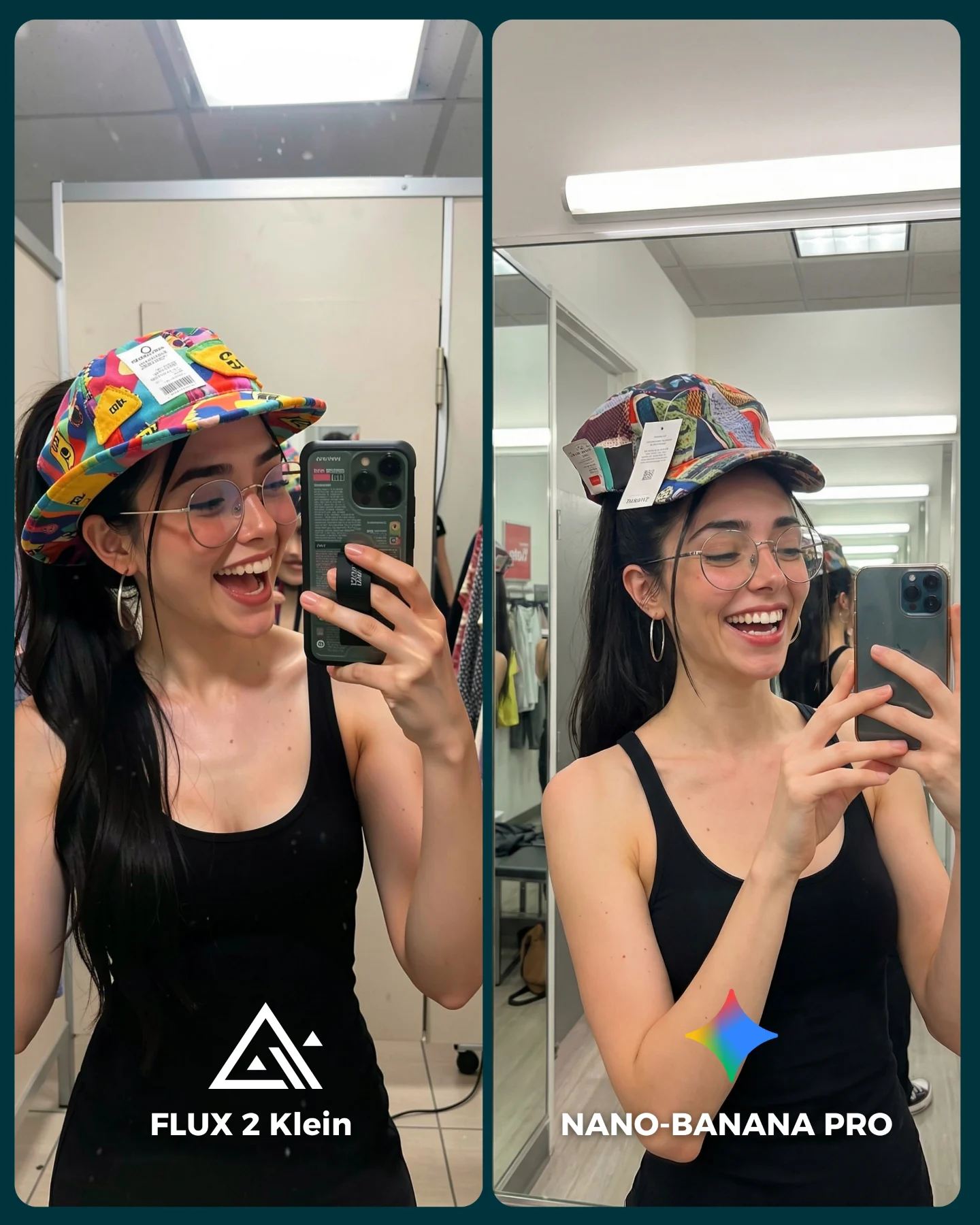
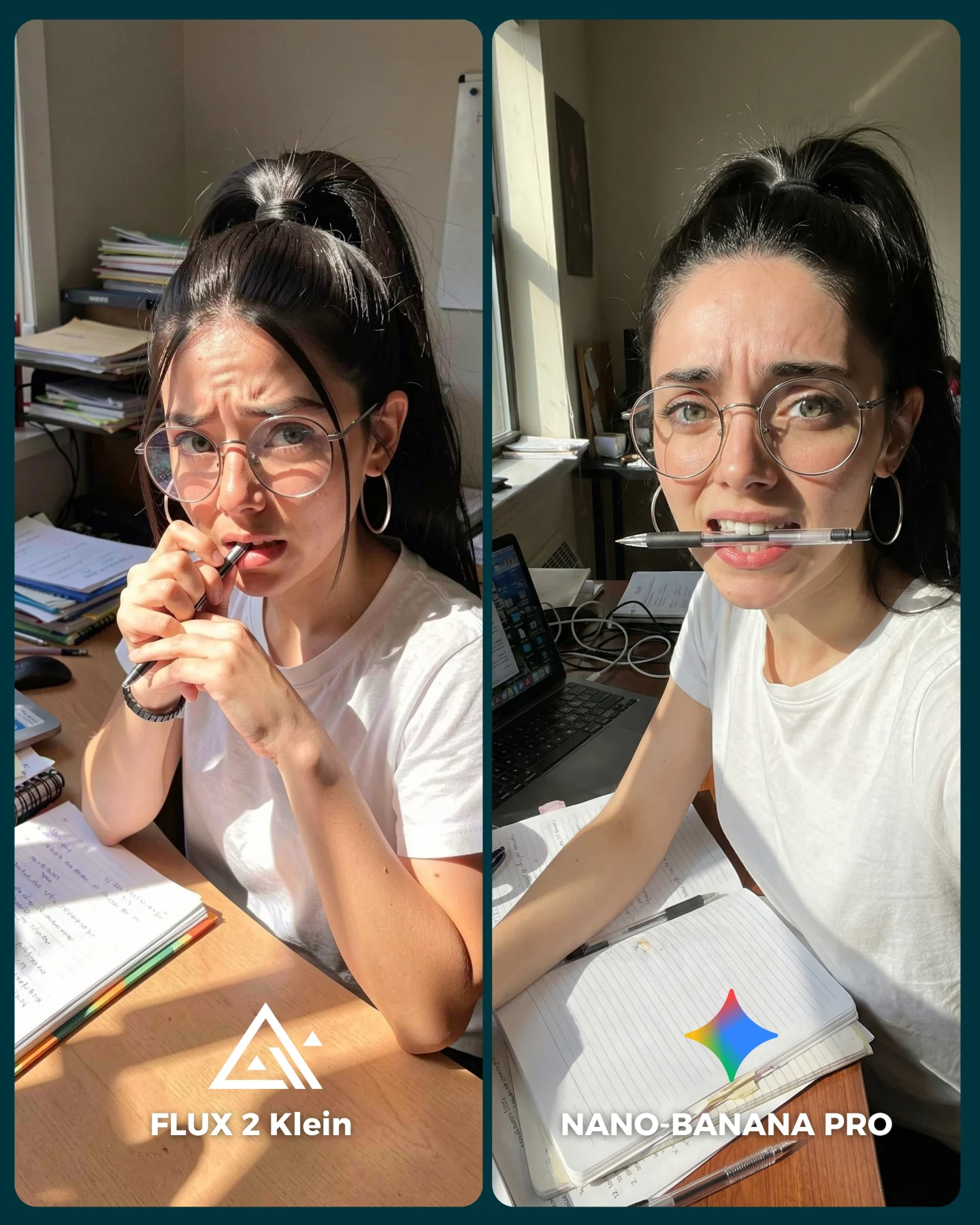
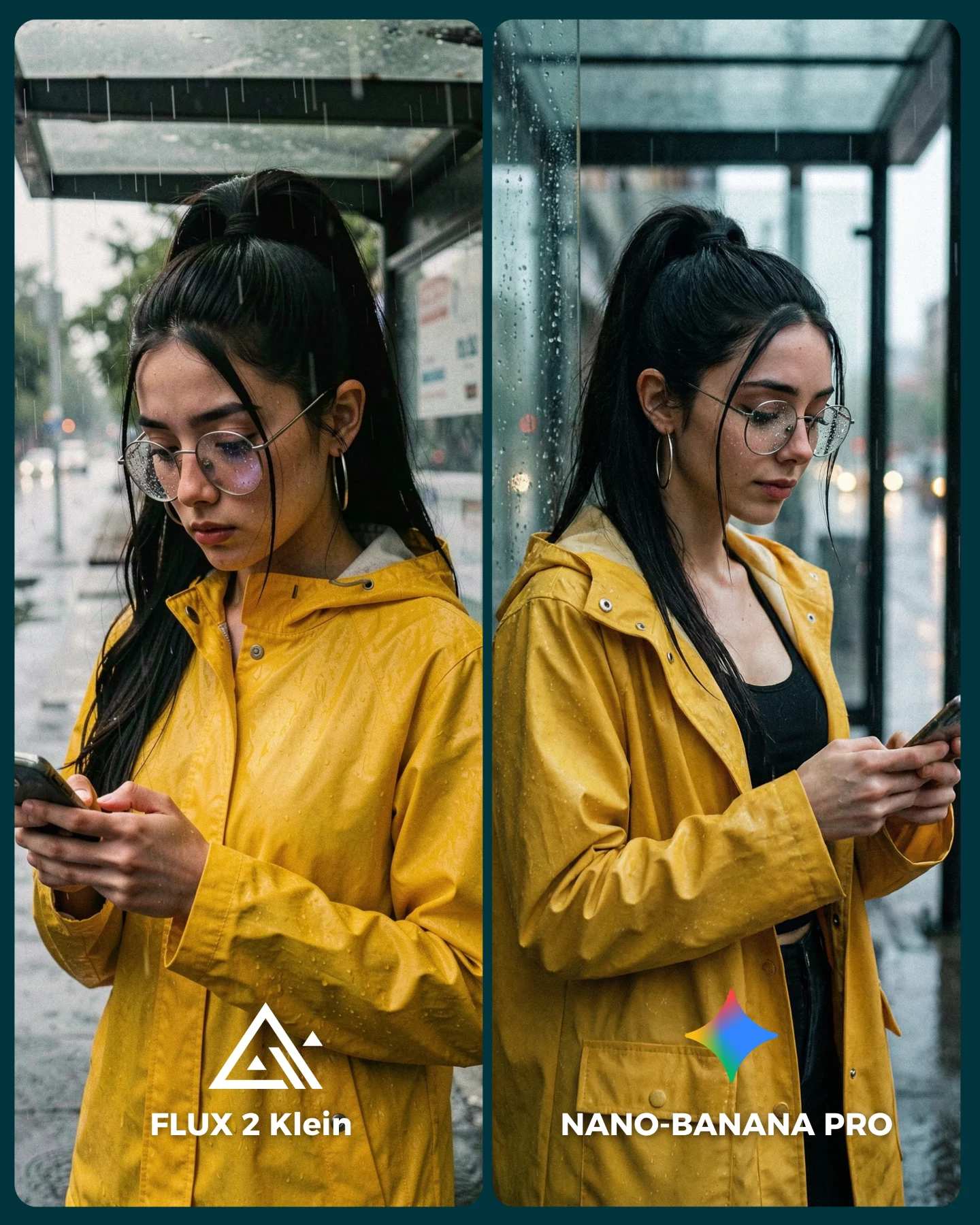
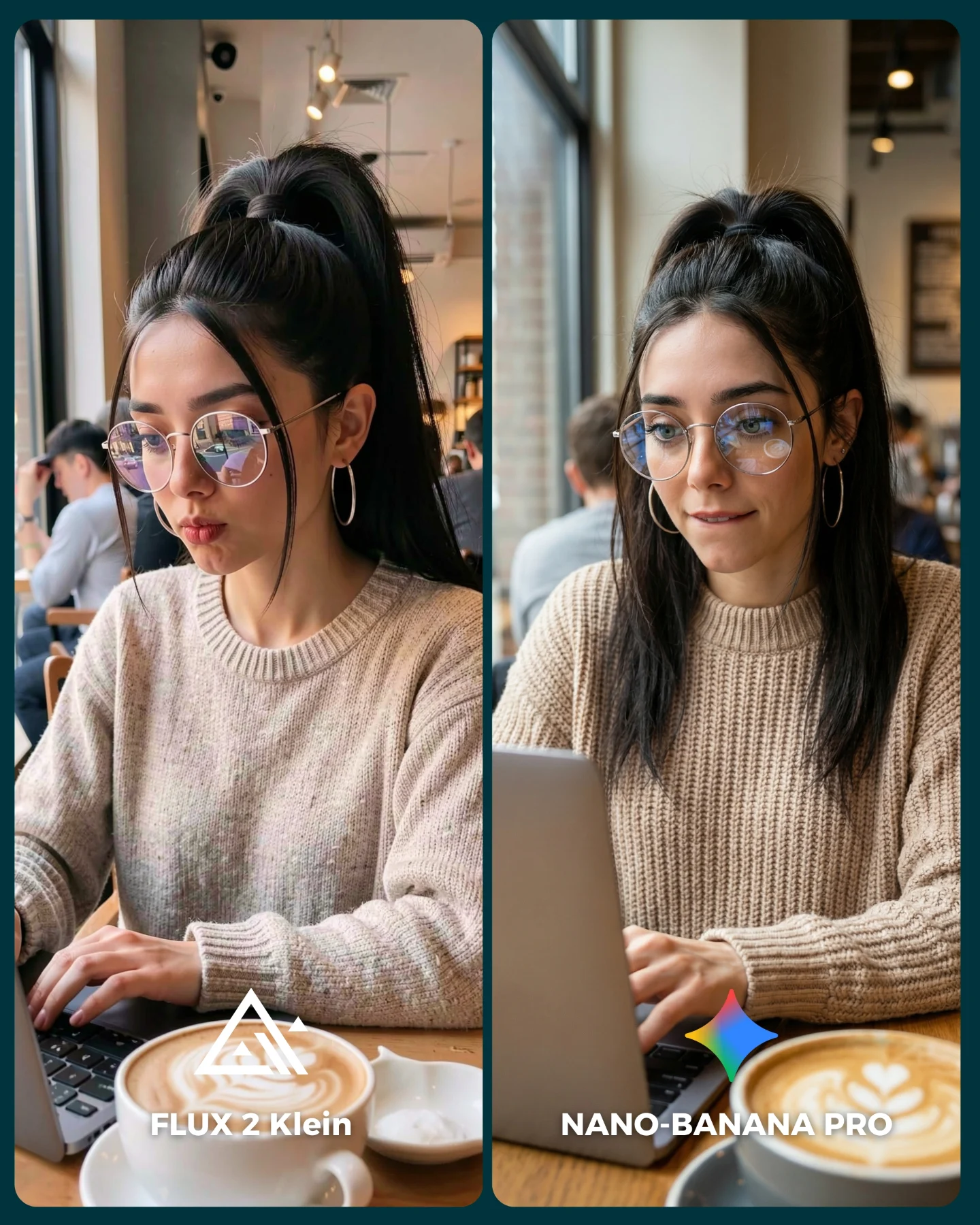
Running Selfie Model Comparison AI Photo
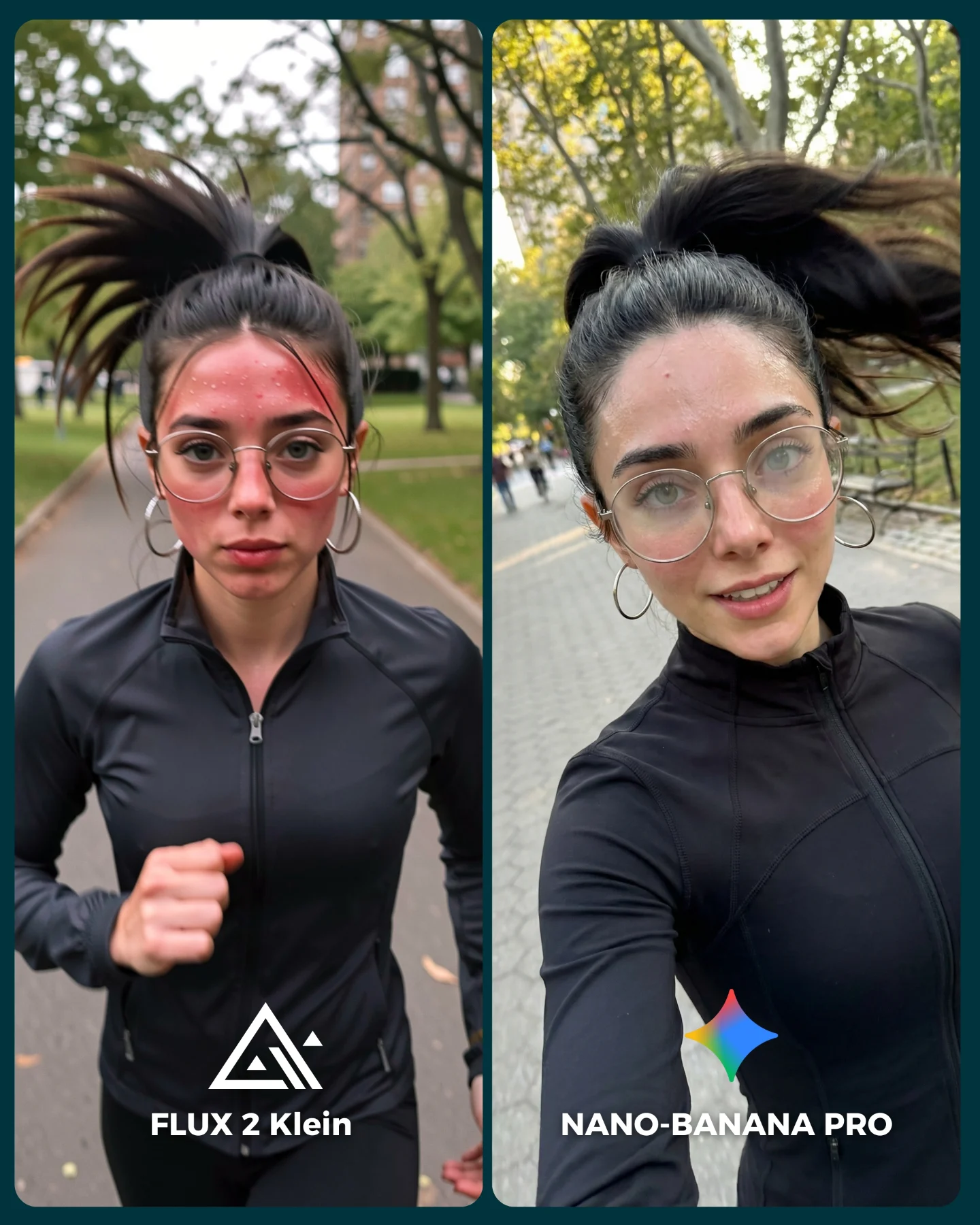
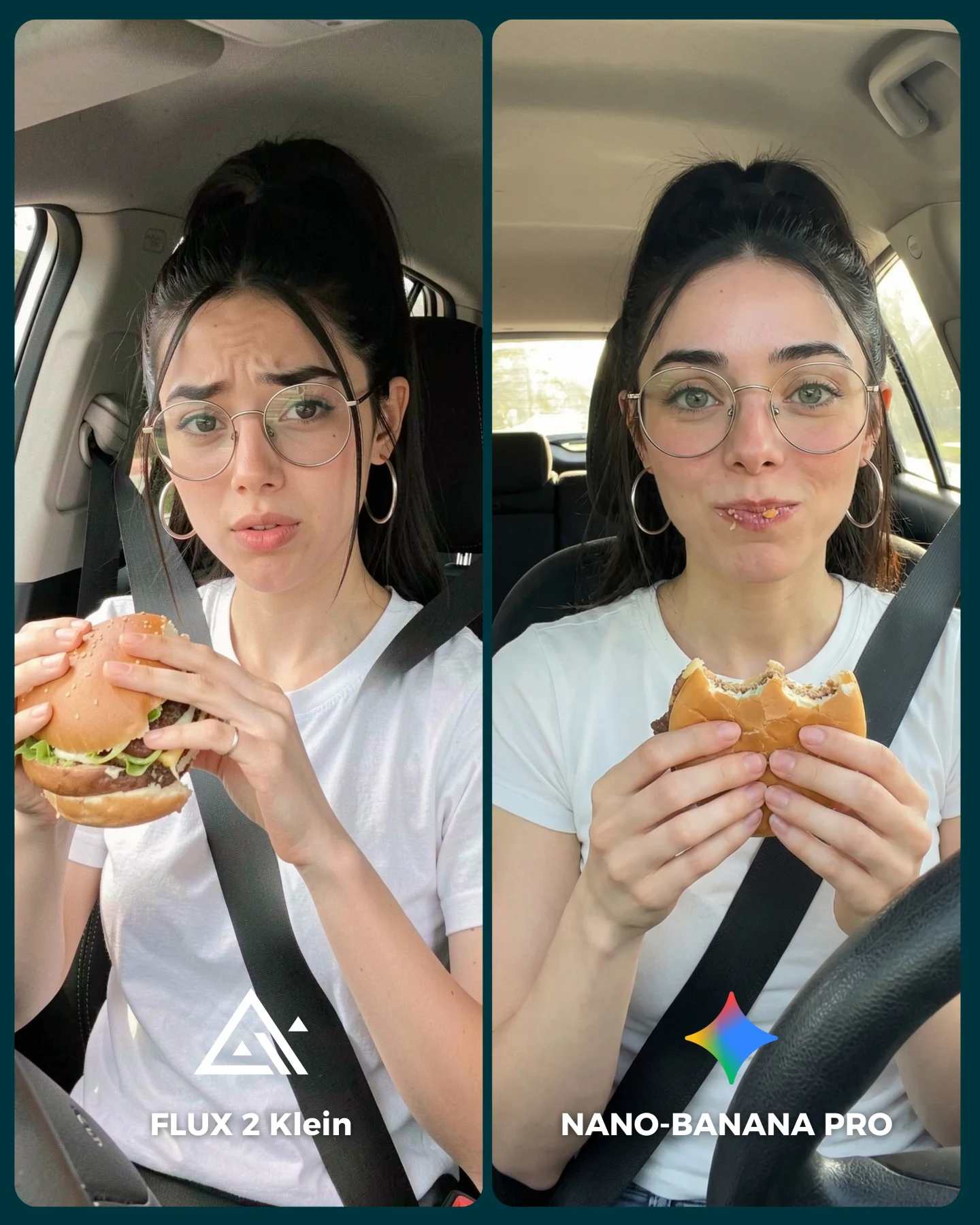
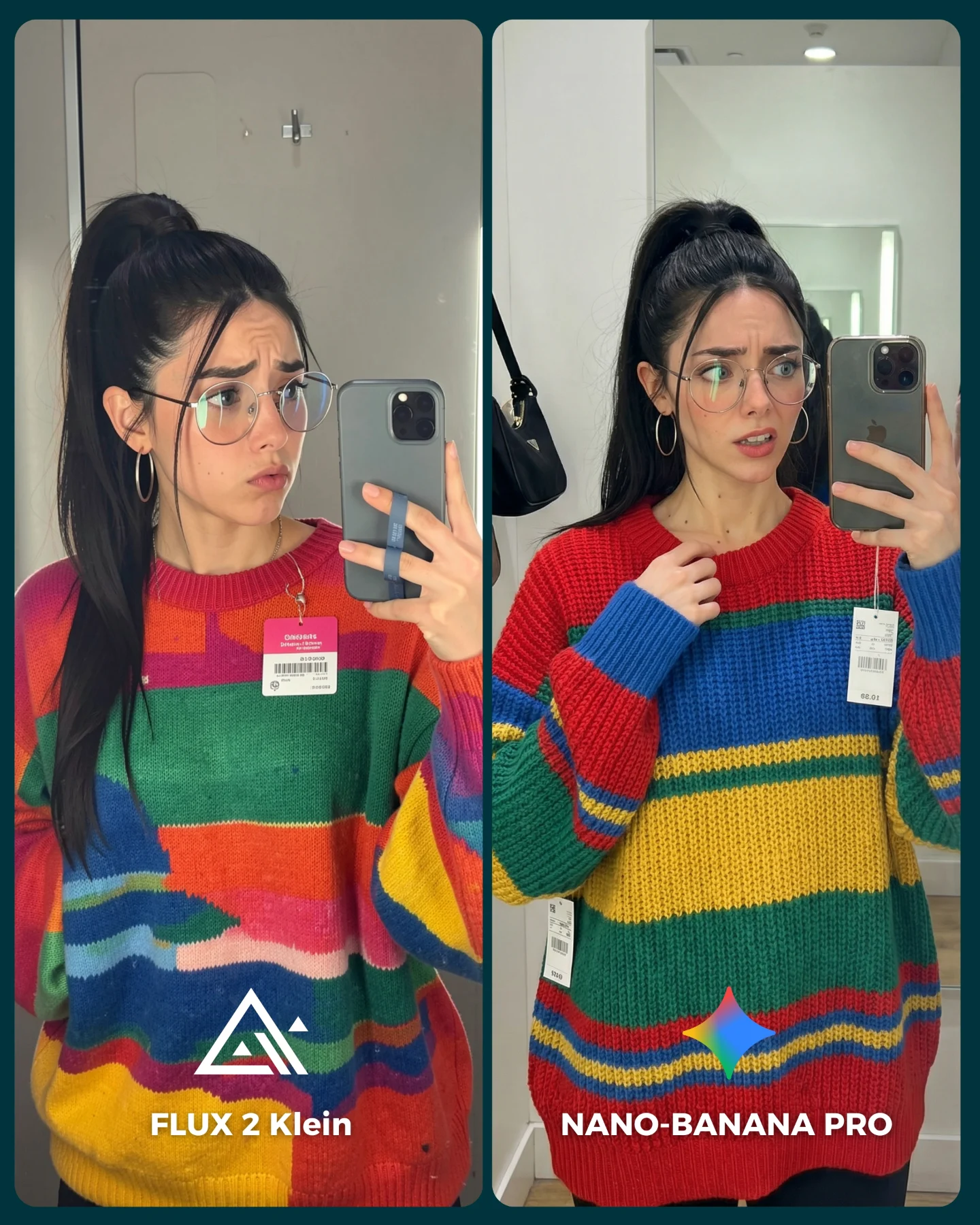
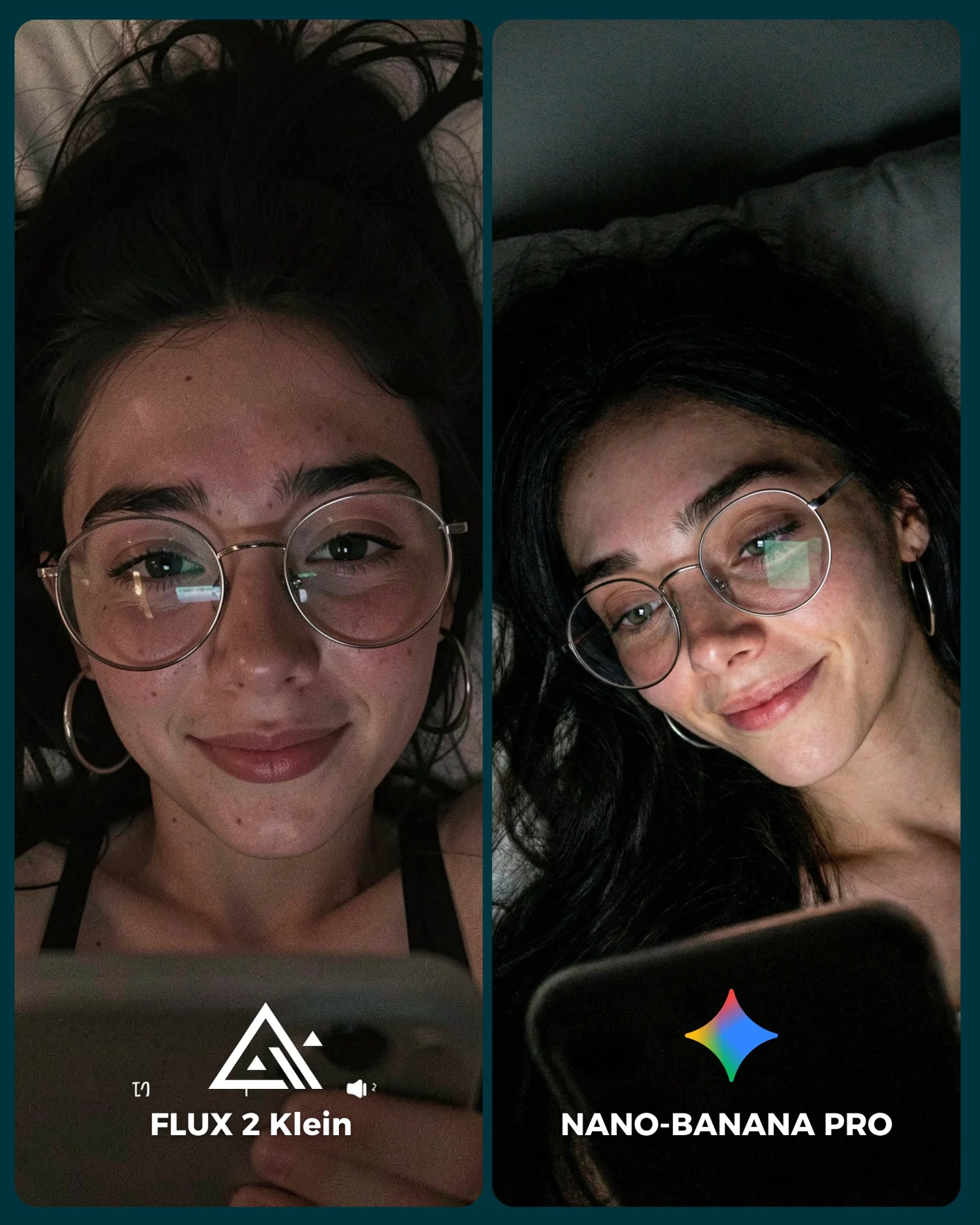
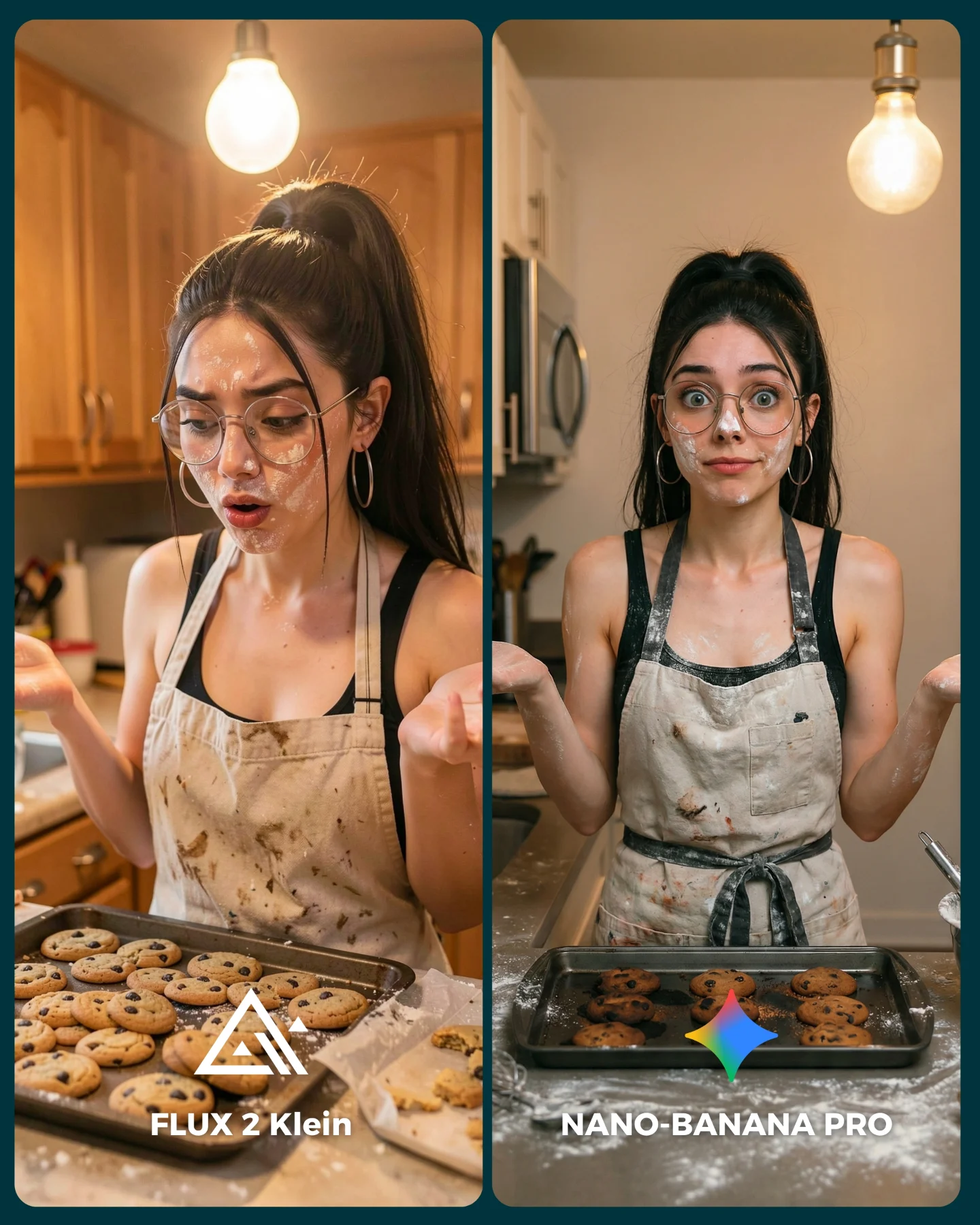
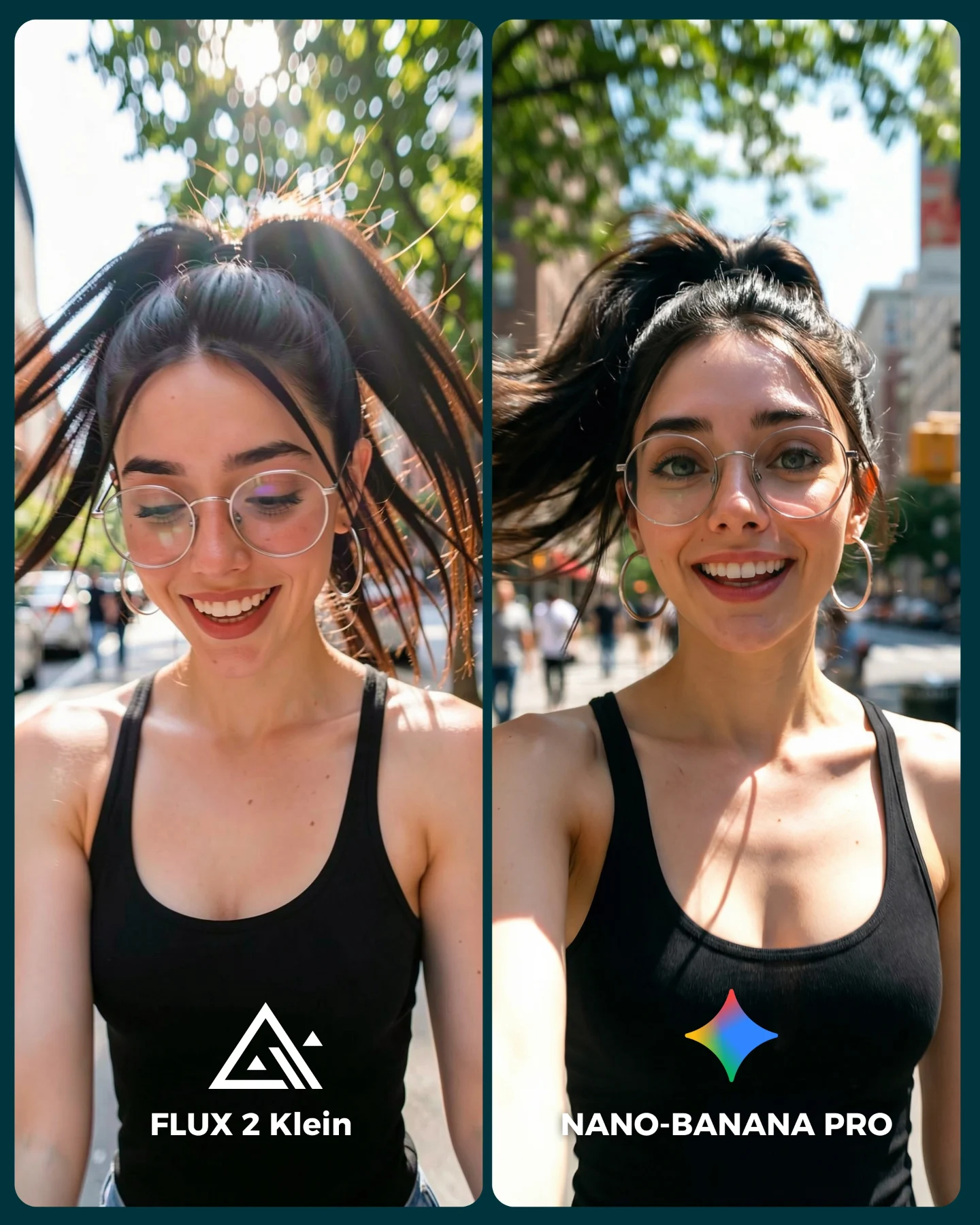
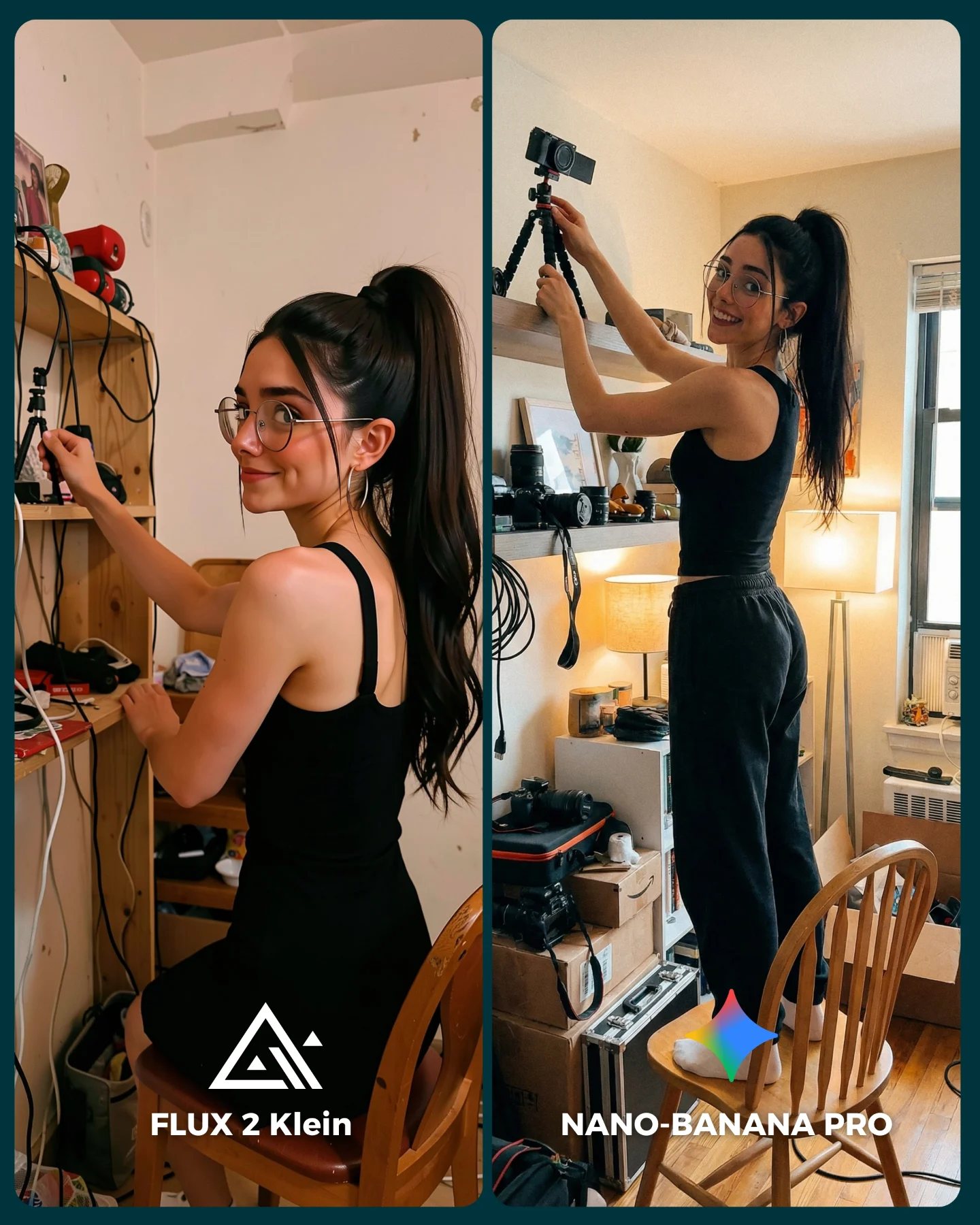
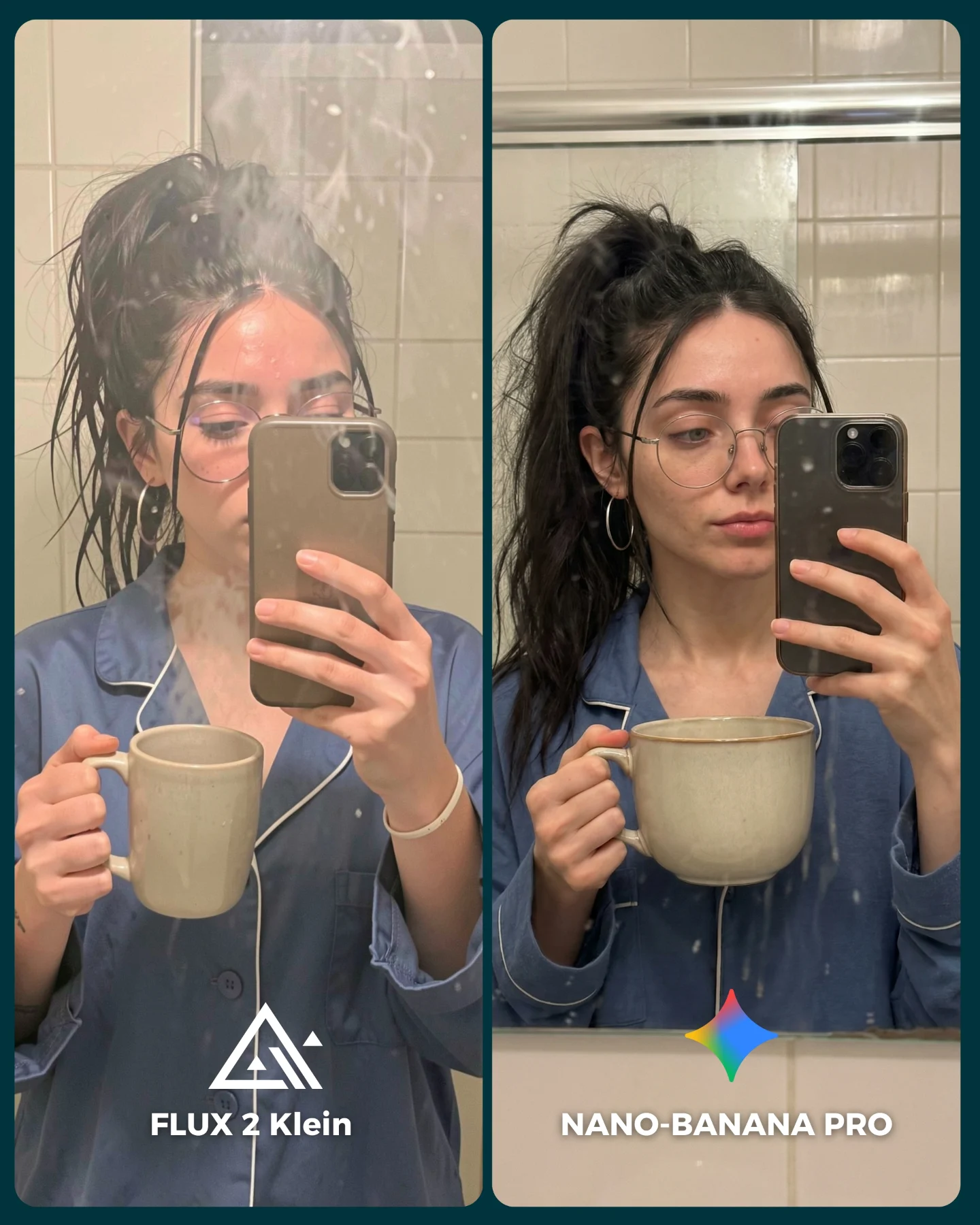
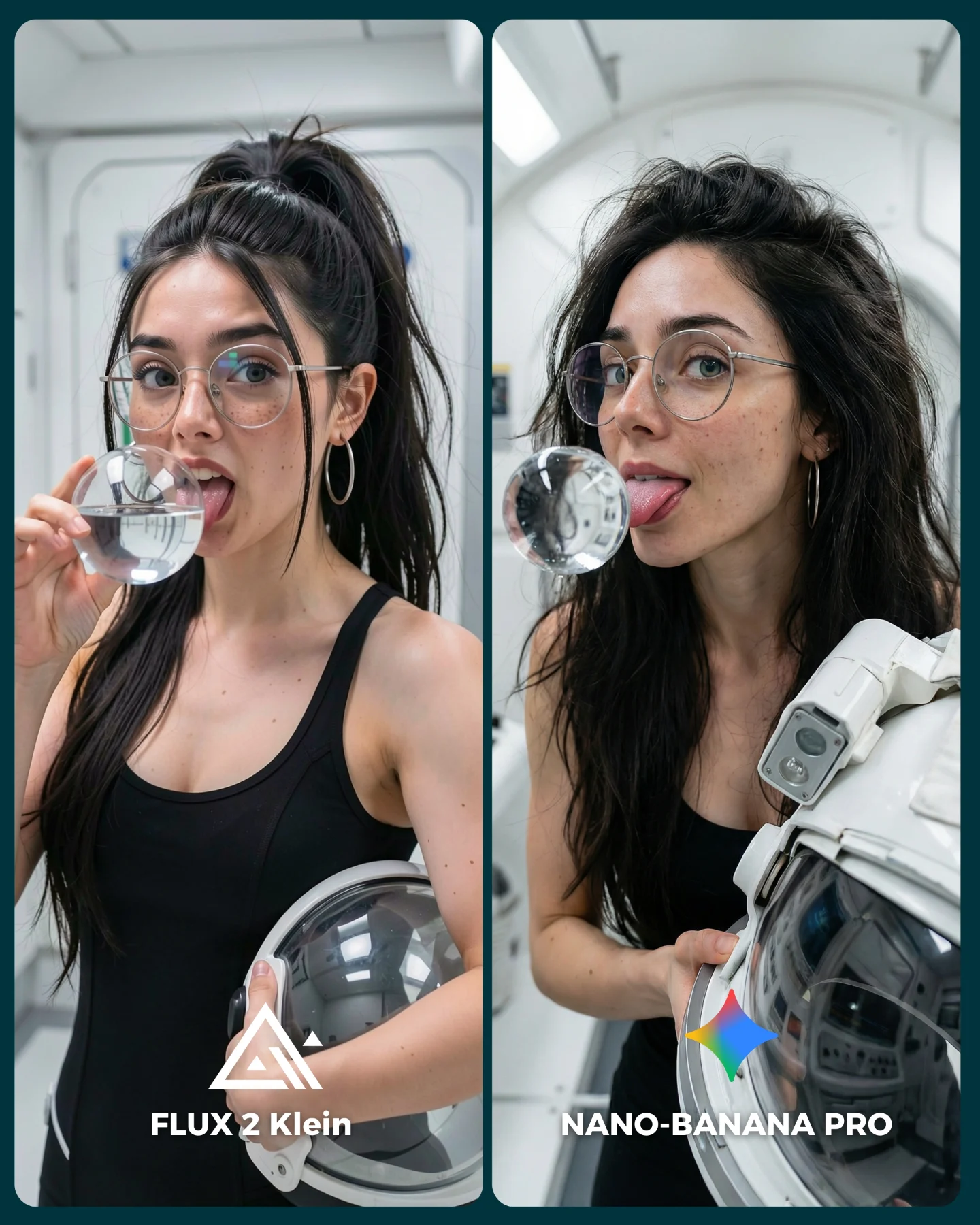
This image works because it tests a kind of realism that creators instantly recognize: the moving selfie. Jogging content is deceptively hard. Hair has to move believably, glasses have to stay plausible on the face, clothing has to sit correctly on a moving body, and the subject still needs to look like a person someone might actually follow. That is why this side-by-side comparison is more valuable than a static portrait benchmark. It evaluates whether the image model can survive everyday motion.
The left panel pushes one side of the problem: exertion, flushed skin, direct running posture, and a front-facing athletic moment. The right panel pushes another: the casual creator version of the same scenario, where the subject films herself mid-run and still looks approachable. Together, those two angles make the comparison more informative than a single output would be. You are not only testing likeness. You are testing how a model interprets the social language of fitness content.
For small creators, that matters because running clips and workout selfies rely on relatability. The goal is not perfect glamour. The goal is believable motion with just enough personality to feel human and shareable.
Why The Frame Holds Attention
| Signal | Evidence (from this image) | Mechanism | Replication Action |
|---|
| Two useful test angles | One panel shows direct frontal running, the other shows a jogging selfie. | Different camera behaviors reveal different model weaknesses in the same scenario. | When comparing models, keep the environment and outfit fixed but vary the capture style. |
| Readable motion cues | The ponytail lifts, the arm moves, and the selfie angle feels handheld. | Small believable movement details make the image feel native to real workout posting. | Prompt for hair motion and arm extension instead of relying only on generic blur. |
| Everyday fitness styling | The black zip athletic top and simple glasses keep the look grounded. | Minimal styling lets viewers judge realism instead of being distracted by fashion extras. | Use common running gear and recognizable personal details when testing fitness prompts. |
| Park realism | The background is a normal tree-lined path, not a hyper-produced sports venue. | Ordinary settings make quality differences easier for viewers to assess. | Choose familiar outdoor locations when the goal is social-media plausibility. |
Aesthetic Read
The strongest quality here is that the comparison stays grounded. There is no exaggerated sports aesthetic, no dramatic sweat sheen, no performance branding, and no stylized race environment. That simplicity is exactly why the differences between both panels become interesting. The image is using common creator language rather than aspirational campaign language.
The left panel also reveals a subtle but important benchmark: skin under exertion. The face looks flushed and slightly strained, which is a realistic condition that many image models either overdo or avoid entirely. The right panel, by contrast, shows how motion can still feel flattering without becoming artificial. That tension is useful because it mirrors how creators actually judge generated images: not just whether they look good, but whether they still look human while in motion.
| Observed | Why it matters for recreation |
|---|
| High ponytail flipping upward | Adds convincing movement without requiring extreme blur. |
| Round glasses remaining stable on the face | Tests whether details stay coherent during motion. |
| Black zip athletic top in both panels | Anchors the comparison by keeping wardrobe constant. |
| Natural park walkway with soft trees behind | Makes the scenario socially believable and easy to reuse. |
| One panel flushed, one panel softer and friendlier | Shows two useful interpretations of fitness realism. |
Where This Style Fits Best
- Image-model comparison posts: Ideal for testing human motion, selfies, and outdoor everyday realism.
- Fitness creator prompt libraries: Strong when the goal is to build believable workout and running visuals.
- Creator-avatar consistency tests: Useful because the same identity must survive different camera behaviors.
- High-retention educational carousels: Works well for teaching viewers what details to inspect in generated content.
Not ideal
- Luxury activewear campaigns: The image is more about realism than brand-polish aspiration.
- Gym-heavy strength content: The outdoor jogging language points to cardio and lifestyle, not equipment-based training.
- Fantasy or cinematic fitness edits: The value here comes from normalcy, not spectacle.
Three transfer recipes
- Cycling selfie comparison. Keep: split-screen, everyday outdoor route, one performance angle plus one selfie angle. Change: run to bike ride, ponytail motion to wind motion. Slot template:
{outdoor fitness activity} shown as {direct action shot} and {selfie version}
- Hiking realism test. Keep: same outfit anchor, social-media capture language, natural environment. Change: park run to hill trail, flushed skin to post-climb exertion. Slot template:
{active lifestyle scenario} compared across {two capture styles}
- Dance rehearsal outdoors. Keep: side-by-side comparison logic, identity consistency, everyday setting. Change: running path to plaza or courtyard, selfie to handheld dance check-in. Slot template:
{movement-based creator content} in {normal location} with {comparison-friendly framing}
Prompt Technique Breakdown
| Prompt chunk | What it controls | Swap ideas (EN, 2-3 options) |
|---|
| young woman running outdoors with high ponytail, round glasses, black zip athletic top | Locks the creator identity and everyday fitness styling. | baseball cap version; braid variation; gray running jacket |
| split-screen comparison with front run shot and jogging selfie | Defines the educational comparison structure. | three-angle comparison; front-vs-profile; run-vs-post-run selfie |
| tree-lined park path in soft natural daylight | Creates relatable outdoor fitness realism. | river path; neighborhood greenway; campus walkway |
| subtle flushed skin, moving ponytail, handheld selfie feel | Adds believable exertion and motion cues. | light sweat; windblown hair; post-run breathing expression |
| photoreal creator-style social fitness content | Prevents drift into sports-ad or generic portrait territory. | casual lifestyle workout post; authentic run-club selfie; everyday cardio realism |
Remix Steps
This style works when the motion stays ordinary and the identity stays stable. If either one breaks, the image becomes useless as a comparison. Start by locking the subject, the outfit, and the outdoor path before you experiment with expression or intensity.
Baseline lock
- One consistent subject identity across both panels
- One familiar outdoor fitness setting
- One clear difference in capture style between the comparison panels
One-change rule sequence
- Run 1: stabilize the split-screen identity so both panels clearly show the same person in the same outfit.
- Run 2: change only the exertion level, from fresh to flushed, while keeping the same park and camera logic.
- Run 3: change only the capture angle, preserving the same subject and movement type.
- Run 4: change only the activity, such as jogging, brisk walking, or light cycling, while keeping the same creator-content realism.
Fast correction
If the image starts feeling fake, reduce pose drama and make the selfie angle more ordinary. Creator fitness content works best when it looks achievable, not cinematic.