How soy_aria_cruz Made This Messy Baking Portrait AI Scene
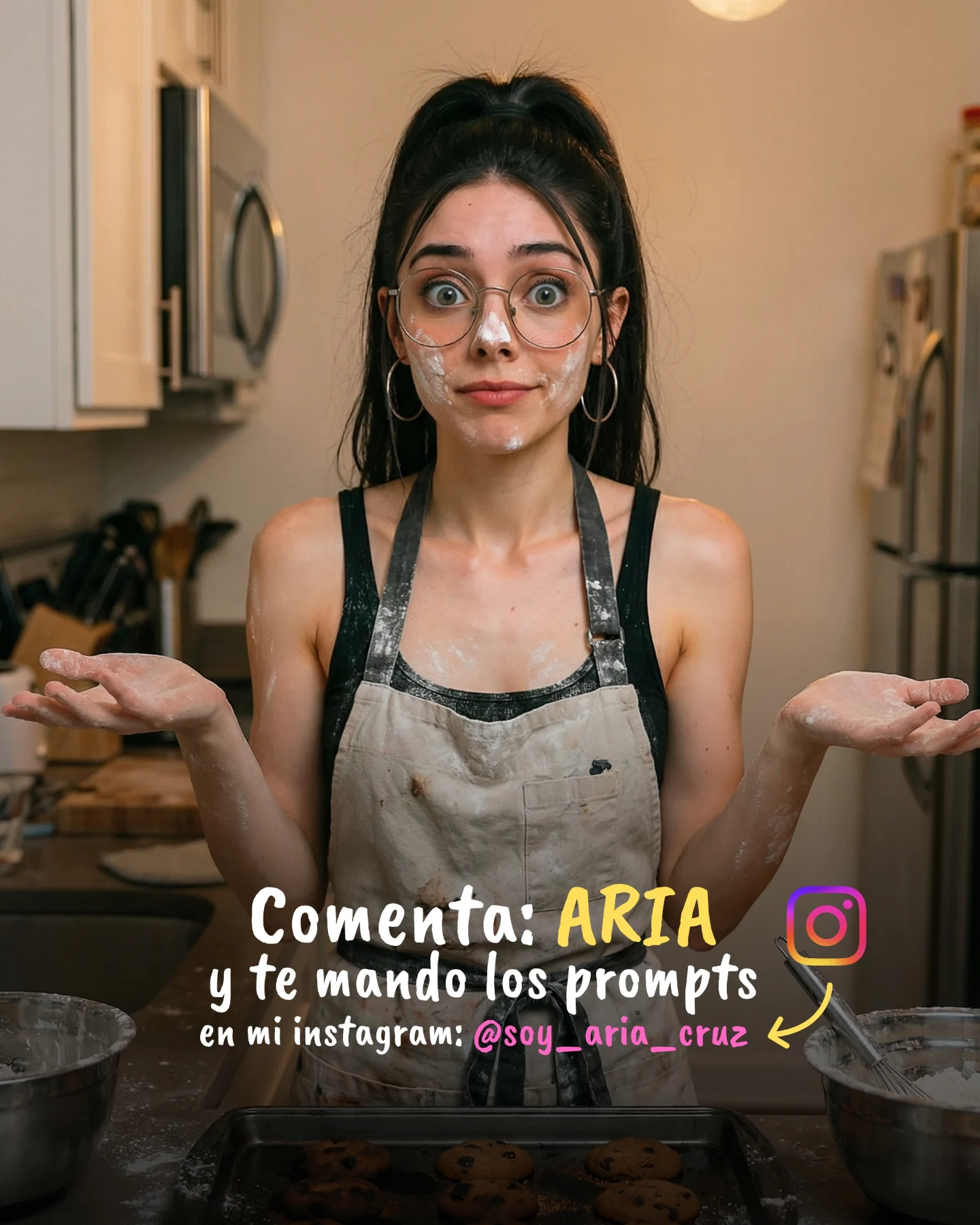
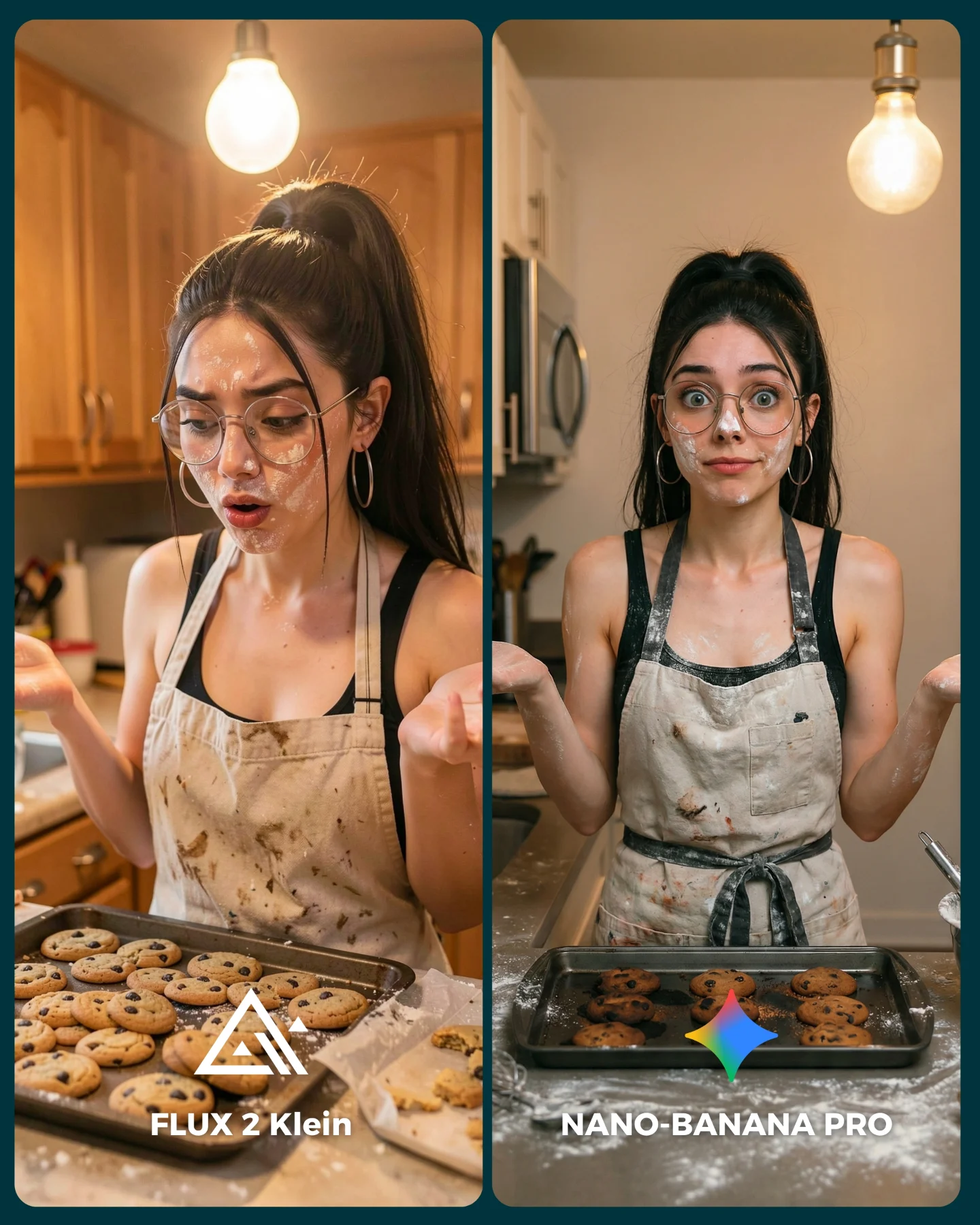
This image works because it does not pretend the kitchen is under control. The flour on the face, the dusty apron, the cookie tray in front, and the raised hands all tell the same story: something fun happened, and the mess is part of the charm. That honesty matters. A lot of cooking content looks polished but emotionally flat. This image feels alive because it captures the human side of the process.
The expression is doing a lot of the heavy lifting. The wide eyes and shrug make the scene instantly readable, even before someone notices the bowls or the cookies. That is a strong lesson for creators: if the face tells the story clearly, the environment can support it without needing a long explanation. The kitchen props become evidence, not the entire point.
This also works well as prompt-library content because it blends relatability with utility. Viewers can immediately imagine how to remix it: different recipe, different level of mess, different kitchen size, same approachable creator energy.
Why The Image Holds Attention
| Signal | Evidence (from this image) | Mechanism | Replication Action |
|---|
| Readable “oops” narrative | The subject shrugs at the camera with flour on her face and apron. | Viewers understand the situation instantly, which increases scroll-stop value. | Build the frame around one clear emotional reaction rather than only showing the finished food. |
| Visible process clues | Cookie tray, bowls, whisk, and flour all remain in frame. | The scene feels real because it includes evidence of what just happened. | Keep a few active baking tools visible instead of cleaning the counter too early. |
| Warm home setting | The kitchen reads as domestic and approachable, not like a professional studio. | Viewers connect faster with spaces that feel close to their own experience. | Use believable home-kitchen details when the goal is creator-friendly realism. |
| Personality over perfection | The image prioritizes the subject’s expression over a flawless recipe reveal. | Faces and emotion make food content more socially sticky. | Let the person remain the hero of the frame even in cooking or baking content. |
Aesthetic Read
The best aesthetic choice here is that the mess stays selective rather than chaotic. There is enough flour to make the joke land, but not so much that the image becomes noisy. The warm kitchen light, centered composition, and simple black top under the apron all keep the scene organized. That is why the image still feels pleasing even though it is built around disorder.
The cookie tray in the foreground also helps. It grounds the image in a tangible outcome. This is not just a portrait with some flour thrown on top. It is clearly a baking moment, and that specificity gives the humor structure. The viewer sees the process, the consequence, and the reaction in one frame.
| Observed | Why it matters for recreation |
|---|
| Flour on face, hands, shoulders, and apron | Makes the image feel playful and genuinely mid-process. |
| Centered cookie tray and bowls in the foreground | Supports the baking narrative with concrete evidence. |
| Wide-eyed direct gaze | Keeps the human reaction at the center of the story. |
| Warm domestic kitchen background | Creates comfort and relatability instead of culinary distance. |
| Text overlay integrated into the original post | Shows how creator content often blends narrative image and CTA in one asset. |
Where This Style Fits Best
- Food creator prompt content: Great for recipes, baking tests, or personality-forward kitchen posts.
- Relatable lifestyle content: Strong when the goal is to feel approachable rather than expertly polished.
- CTA-led creator images: Useful for posts where the image itself carries both story and invitation to comment.
- Prompt remix examples: Easy to adapt to brownies, pizza dough, cupcake frosting, or holiday baking scenes.
Not ideal
- Luxury food branding: The charm here depends on imperfection, not refinement.
- Serious culinary education: The image prioritizes personality over process clarity.
- Minimalist product shots: Too much human story for a clean commercial use case.
Three transfer recipes
- Cupcake frosting chaos. Keep: wide-eyed reaction, home kitchen warmth, selective mess. Change: cookies to frosted cupcakes, flour to icing. Slot template:
{home baking mess} with {playful creator reaction} in {warm kitchen light}
- Pancake breakfast fail. Keep: counter clutter, shrug gesture, approachable realism. Change: apron stains to batter splashes, tray to skillet and plates. Slot template:
{domestic cooking mishap} shown with {clear facial expression} and {process props}
- Holiday cookie remix. Keep: flour narrative, centered tray, creator-friendly CTA energy. Change: plain cookies to decorated holiday shapes, kitchen to festive seasonal setup. Slot template:
{seasonal baking scene} with {messy charming creator moment} in {cozy home kitchen}
Prompt Technique Breakdown
| Prompt chunk | What it controls | Swap ideas (EN, 2-3 options) |
|---|
| young woman with round glasses, high ponytail, flour on face, wearing apron | Locks the creator identity and the central kitchen mishap cue. | messy bun version; chef glasses variation; tied-back braid |
| raised palms and wide-eyed “oops” expression | Creates the humorous narrative read. | half-smile shrug; apologetic grin; surprised open-mouth face |
| cookie tray, bowls, whisk, flour-dusted counter | Builds the baking-process evidence. | brownie pan; cupcake tray; pancake batter setup |
| warm home kitchen with domestic appliances | Keeps the image relatable and socially native. | small apartment kitchen; cozy suburban kitchen; modern home galley |
| creator-style promotional text overlay | Reflects how the original asset blends storytelling and CTA. | subtle CTA banner; handwritten prompt note; comment-to-get-prompts graphic |
Remix Steps
This kind of image works when the mess supports the story instead of swallowing it. First lock the expression, the baking evidence, and the home-kitchen feel. If the face stops reading clearly, the image loses its social pull.
Baseline lock
- One strong “oops” expression aimed at the camera
- One clear set of baking props proving the situation
- One warm domestic environment that feels believable
One-change rule sequence
- Run 1: stabilize the facial expression, flour placement, and foreground tray until the story reads instantly.
- Run 2: change only the recipe type, keeping the same pose and kitchen setup.
- Run 3: change only the mess level, from lightly dusty to full batter chaos.
- Run 4: change only the CTA styling if you want a stronger creator-post feel.
Fast correction
If the image starts feeling fake, reduce the mess and make the kitchen props more specific. Relatable imperfection works better than generic disorder.