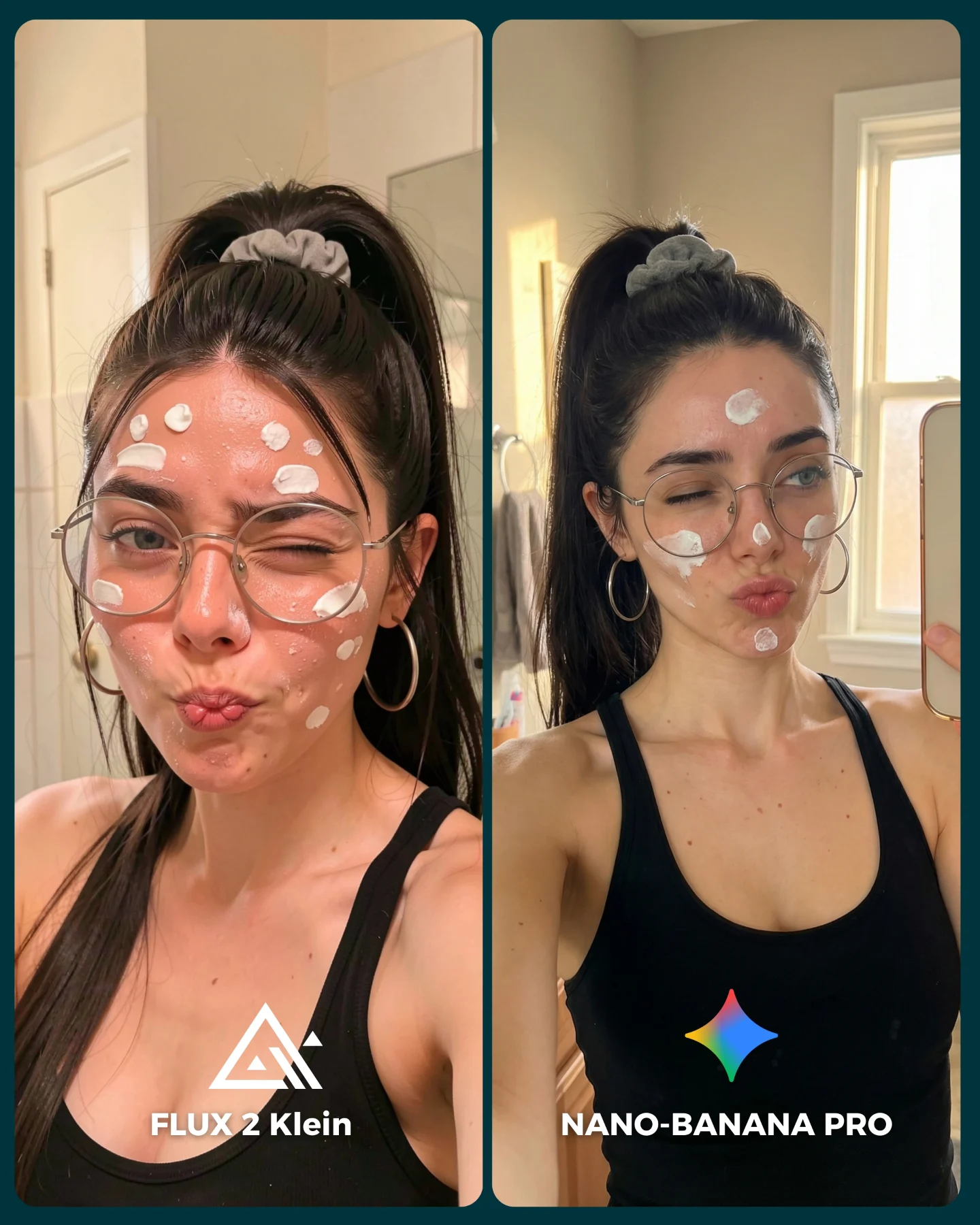
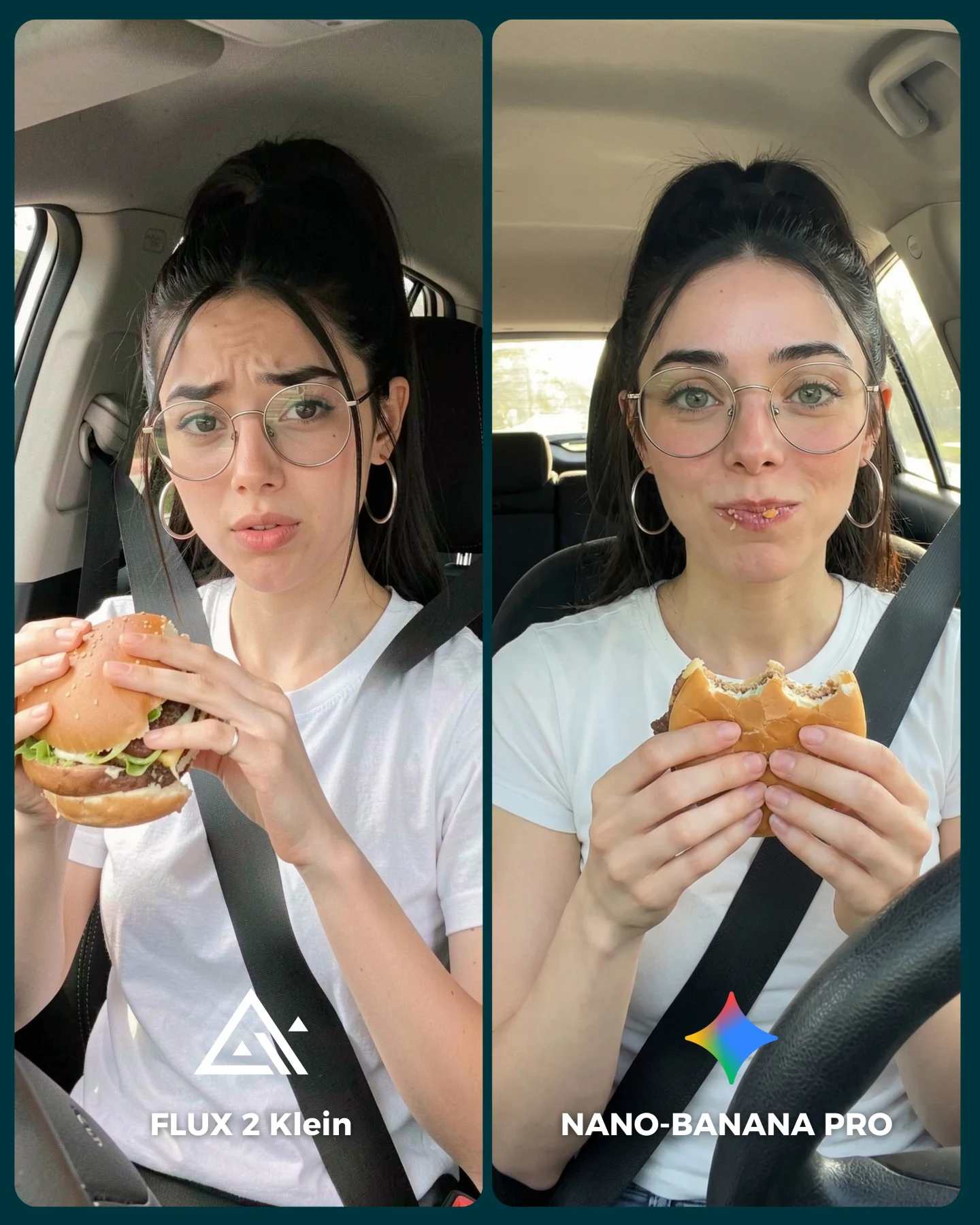
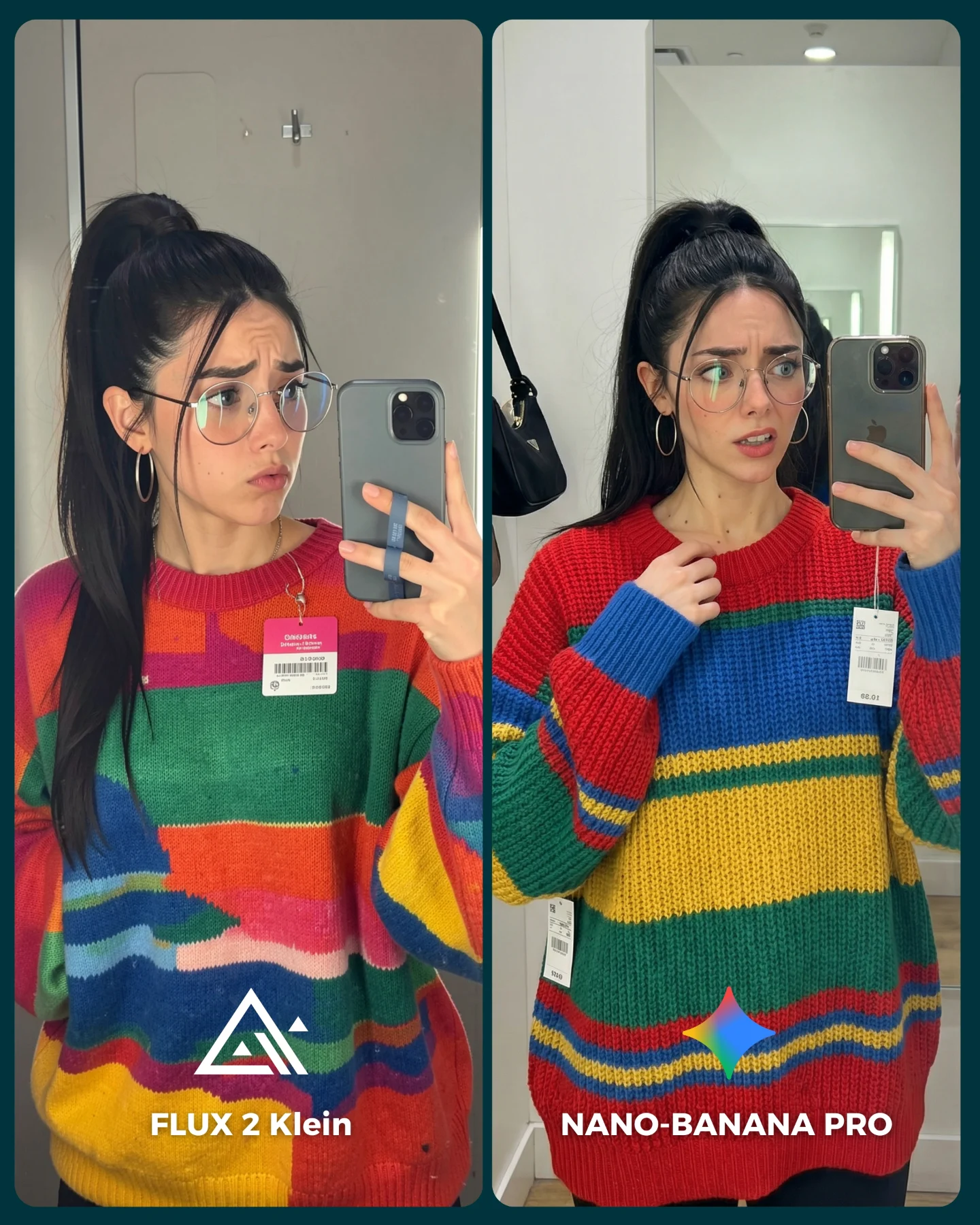
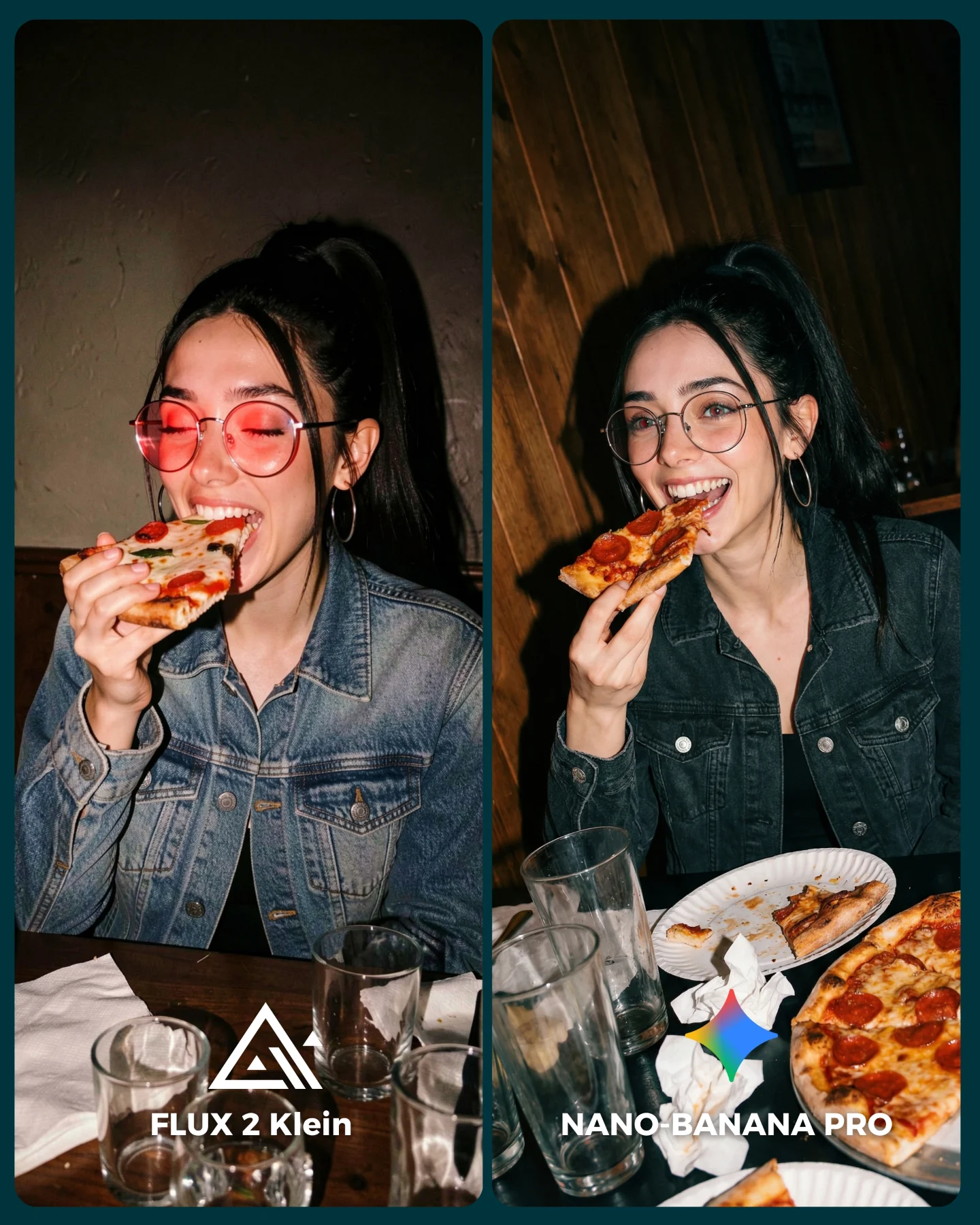
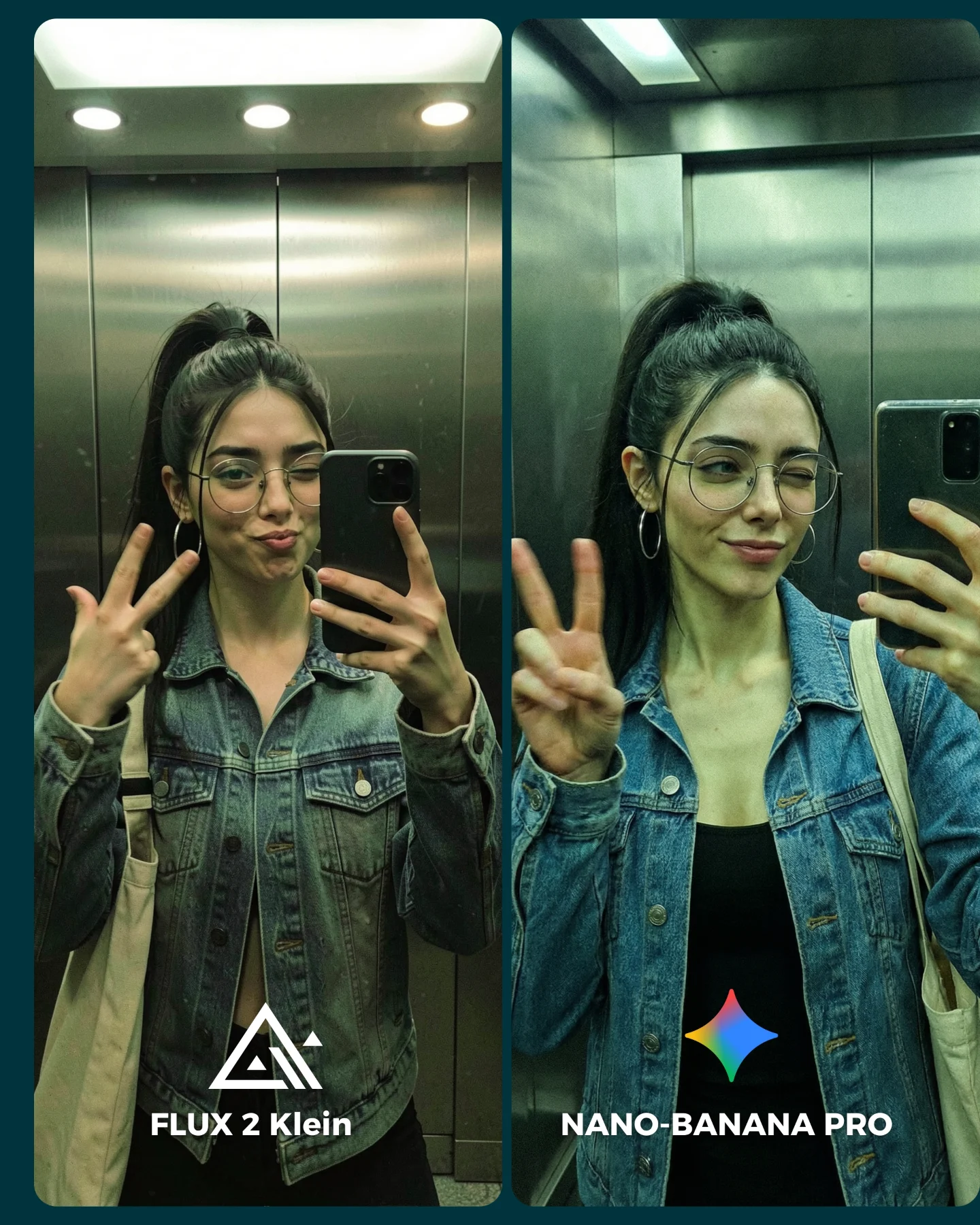
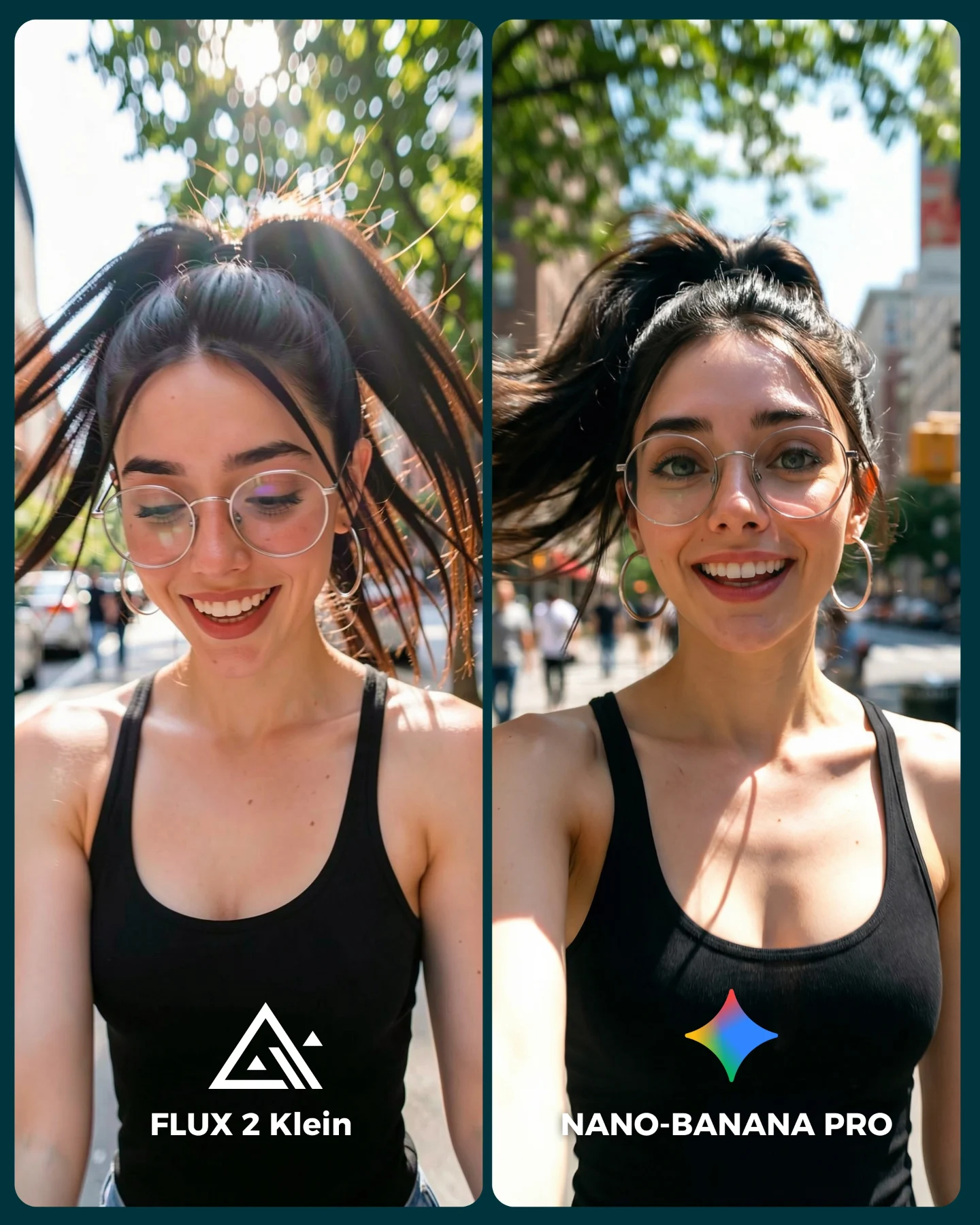
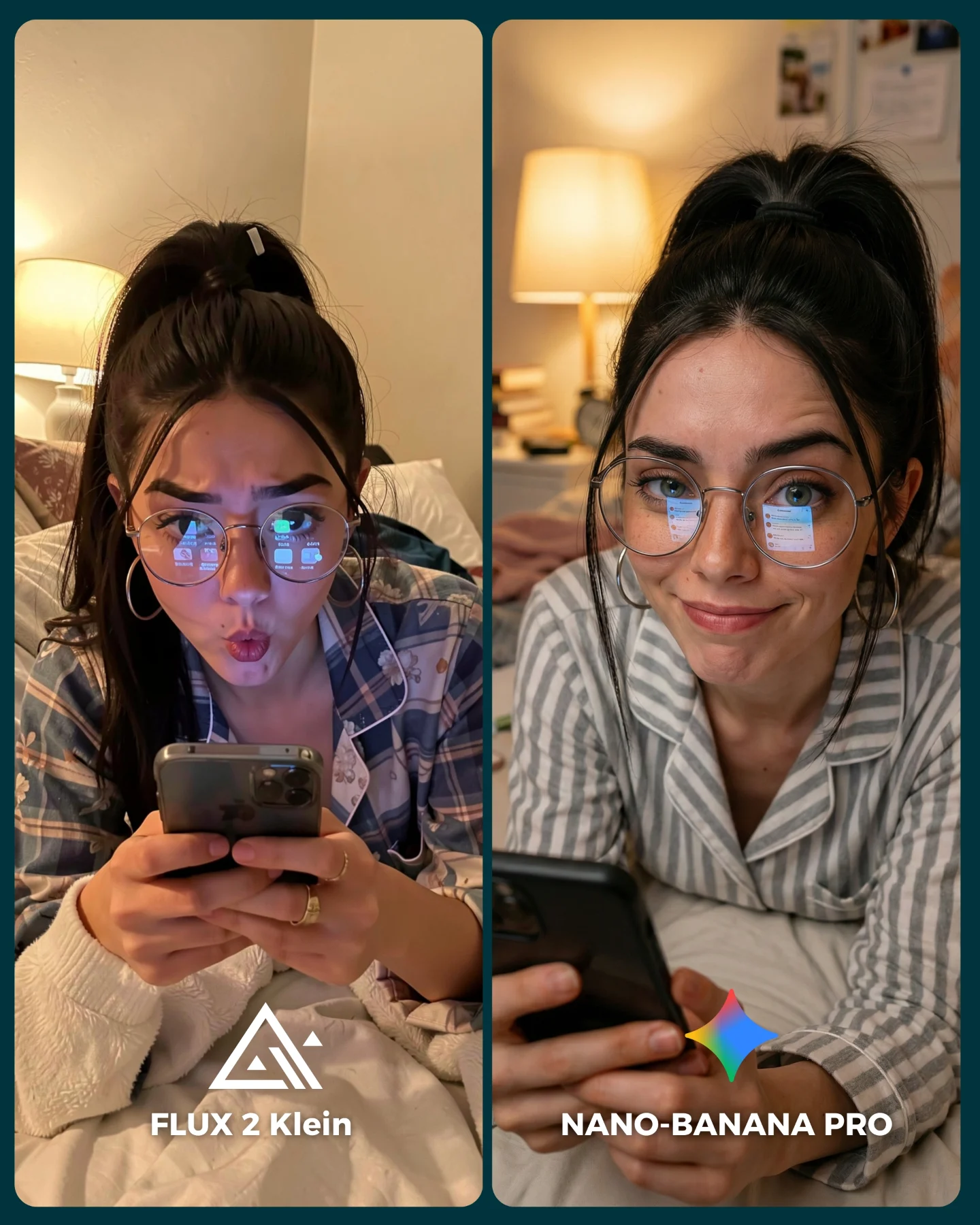
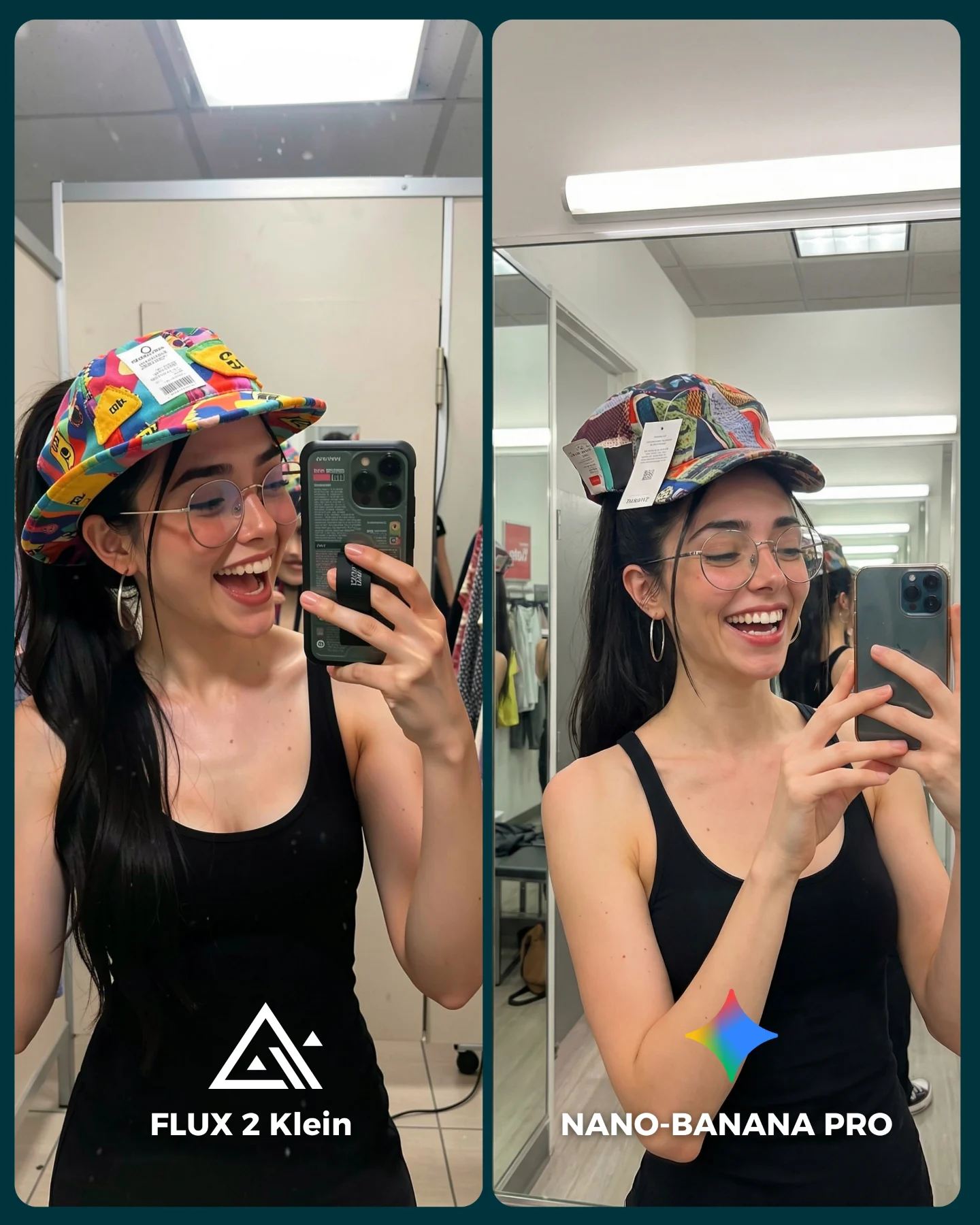
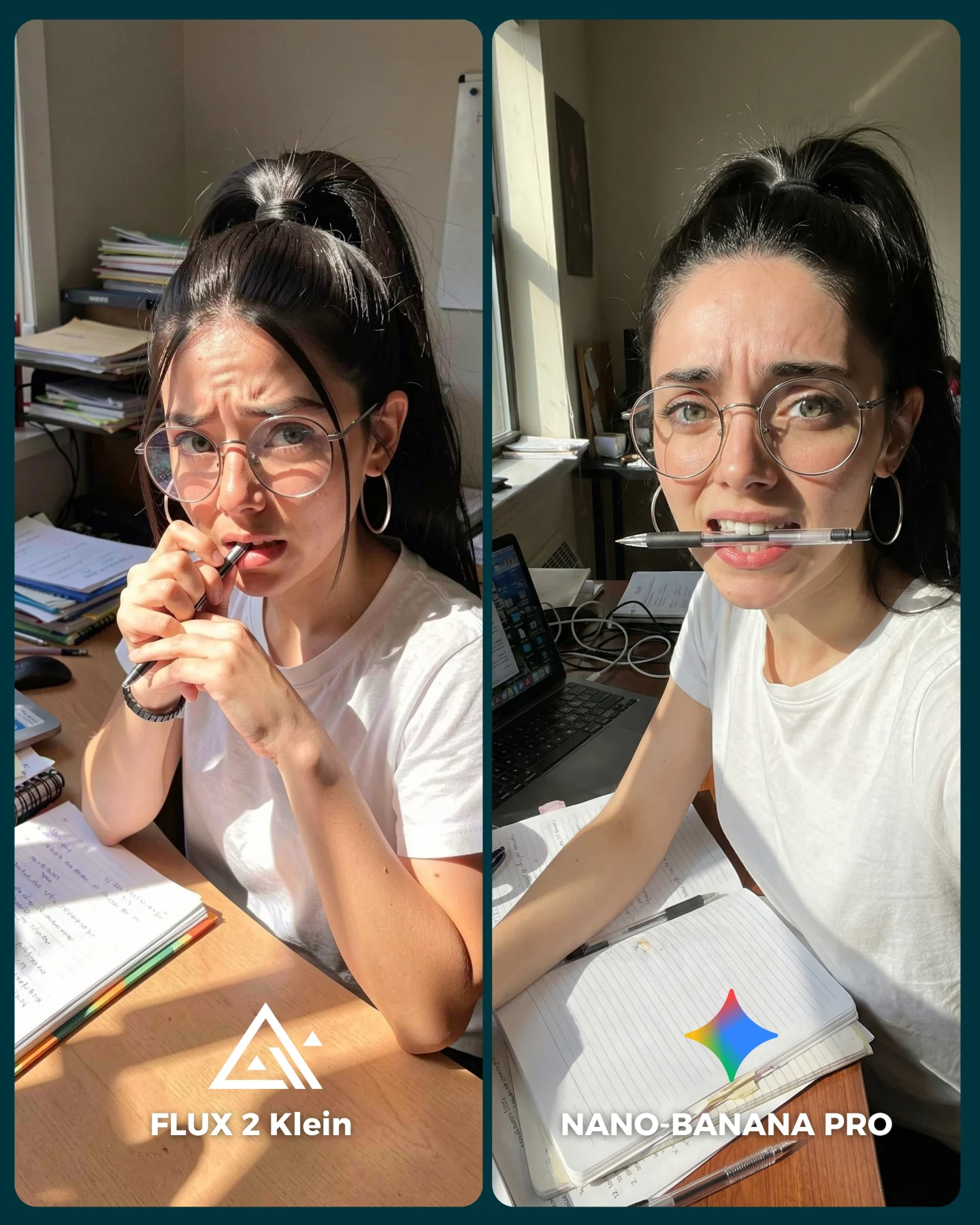
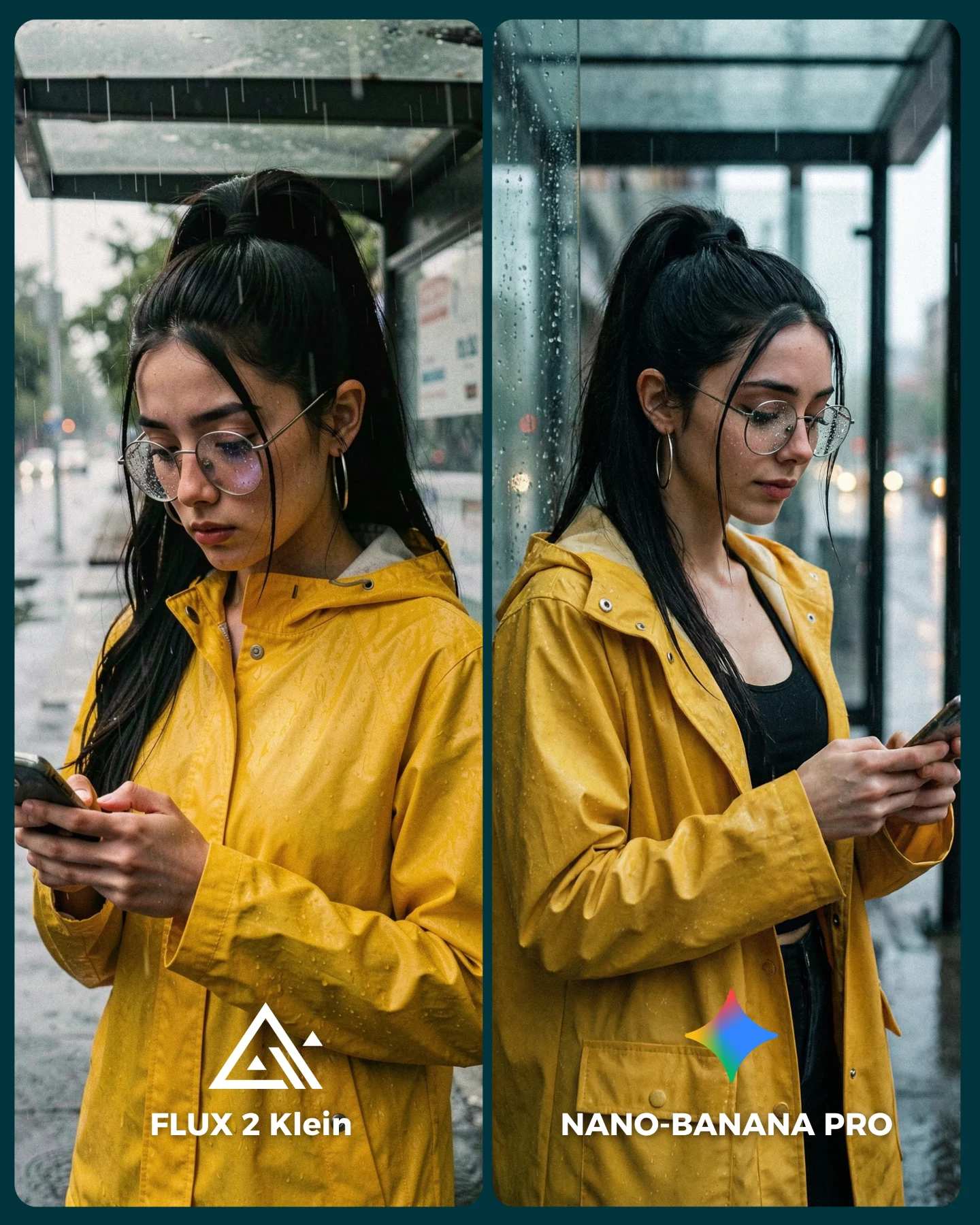
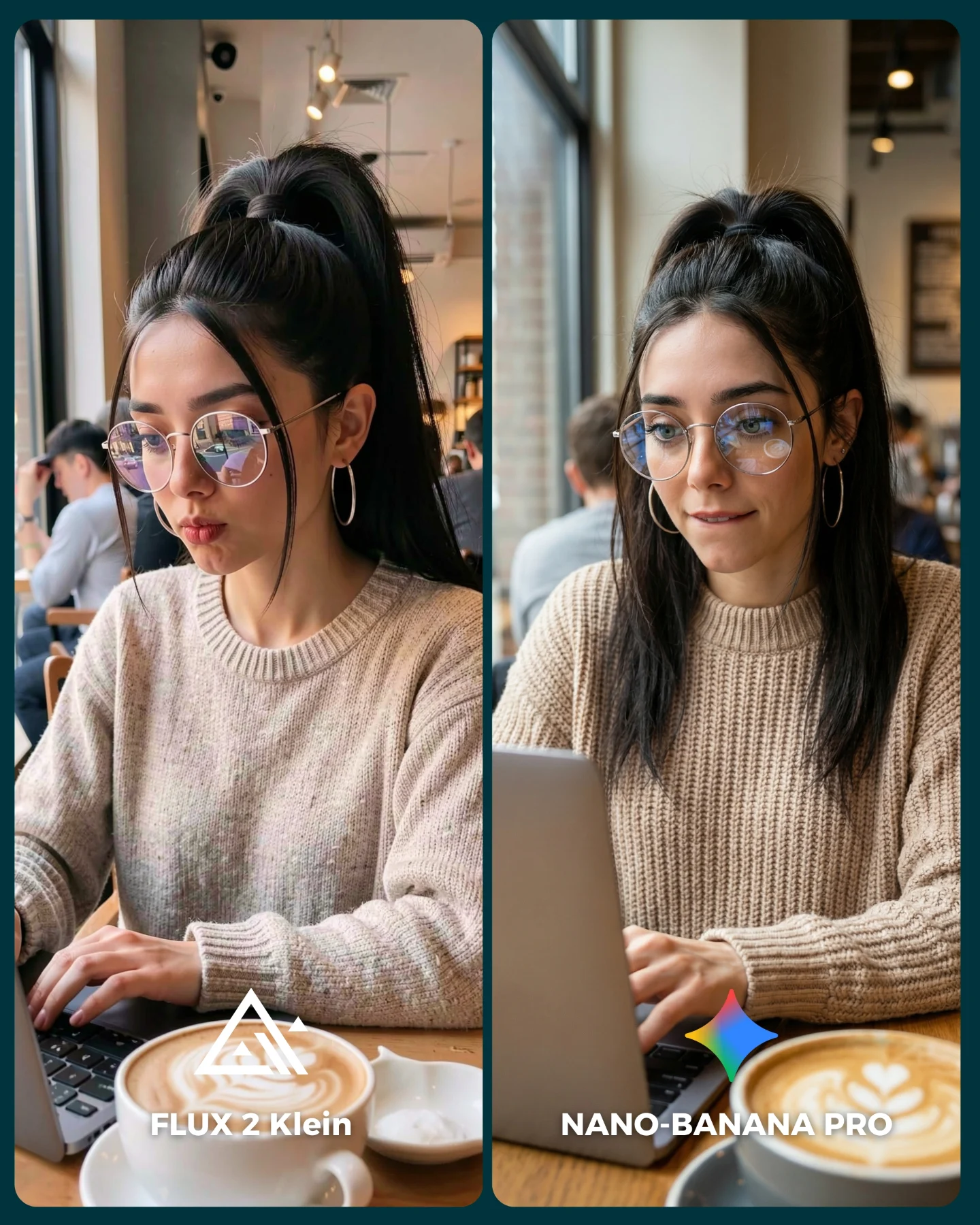
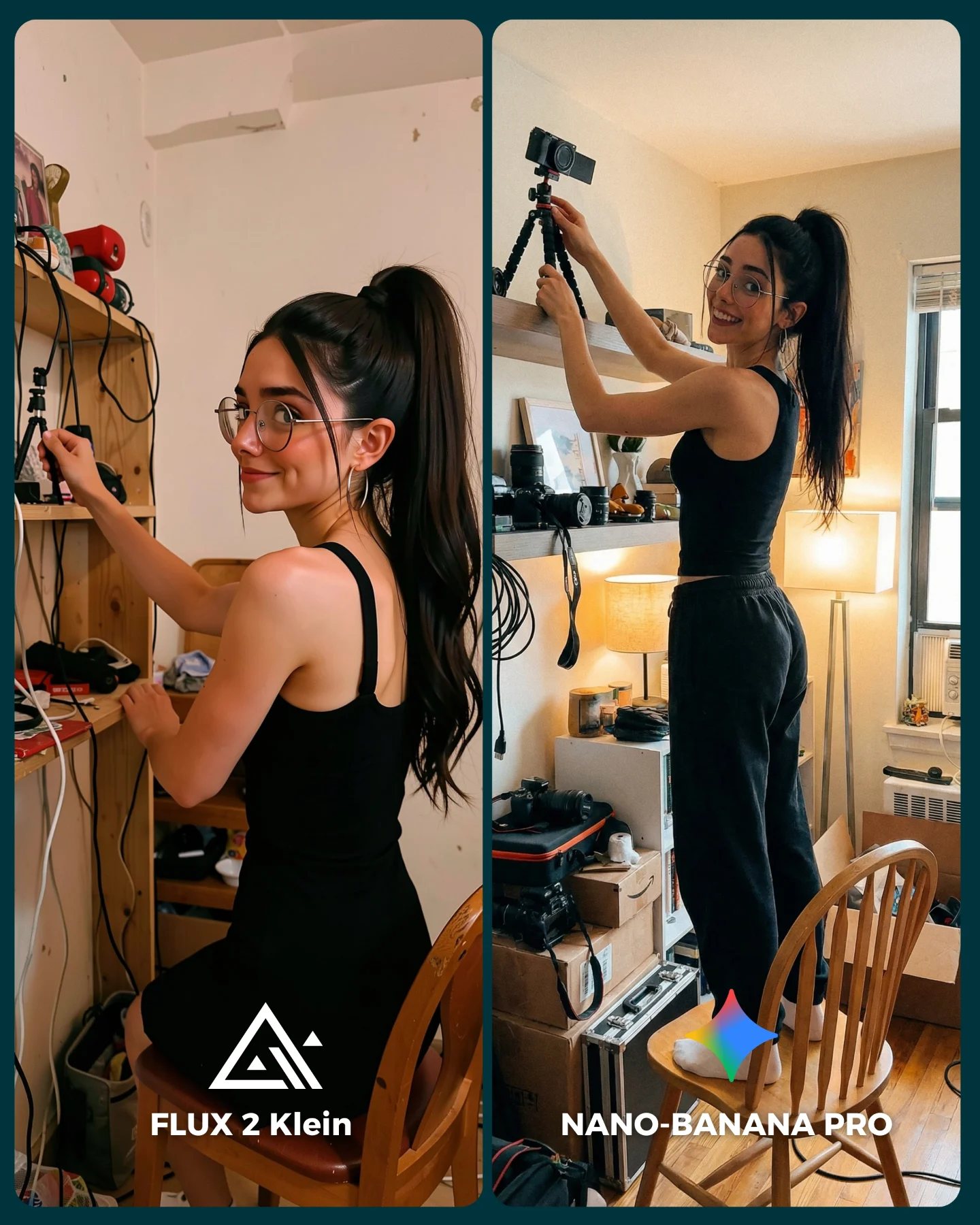
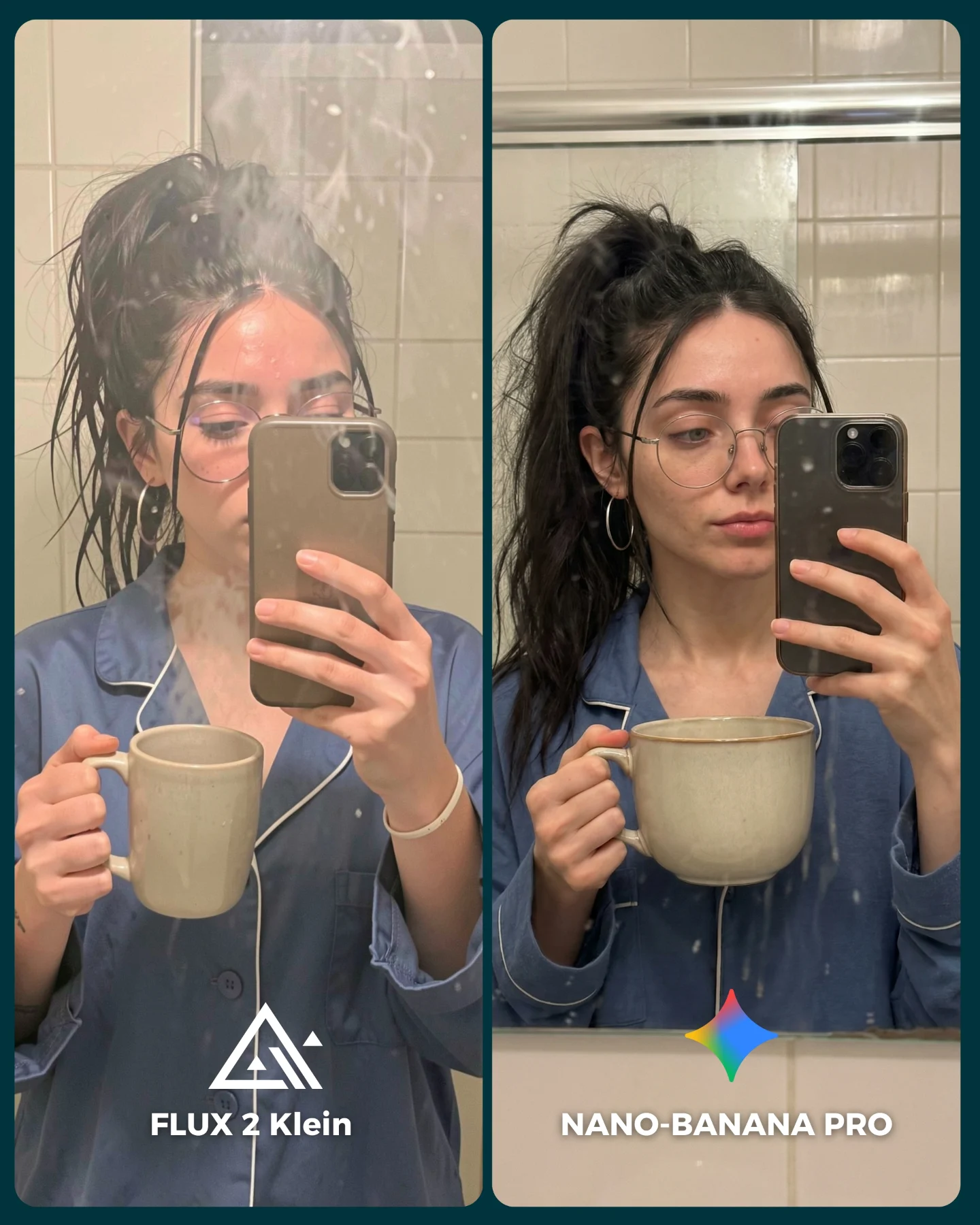
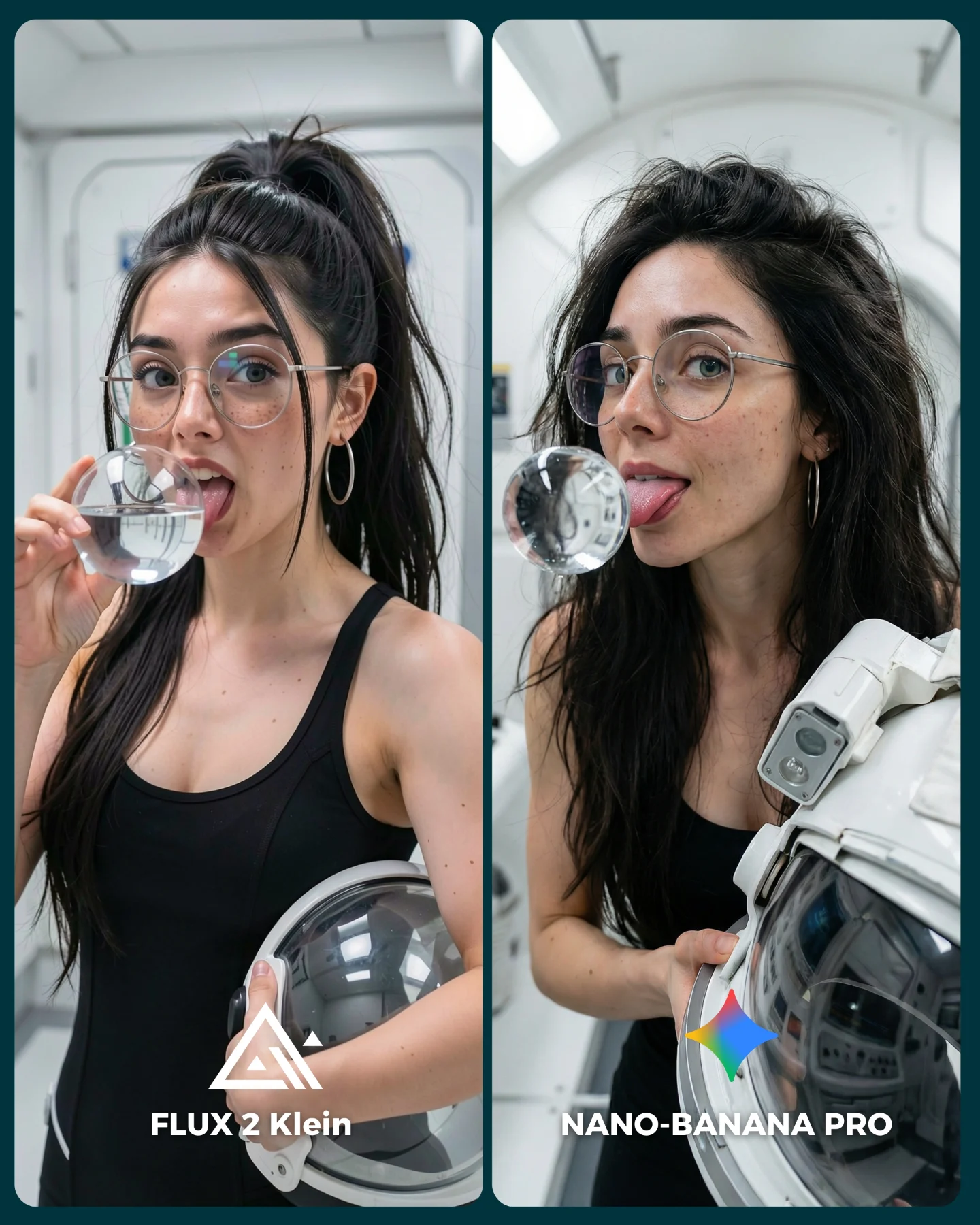
Flux 2 Klein VS. Nano Banana Pro 💥
Sigo pensando que no hay nada mejor que Nano Banana Pro 😅
O crees que hay algún generador de imágenes que le hace la competencia?? 👀
Como siempre... os puedo mandar todos los prompts de las imágenes si comentas "ARIA" 💕
How soy_aria_cruz Made This Messy Baking Comparison AI Art - and How to Recreate It
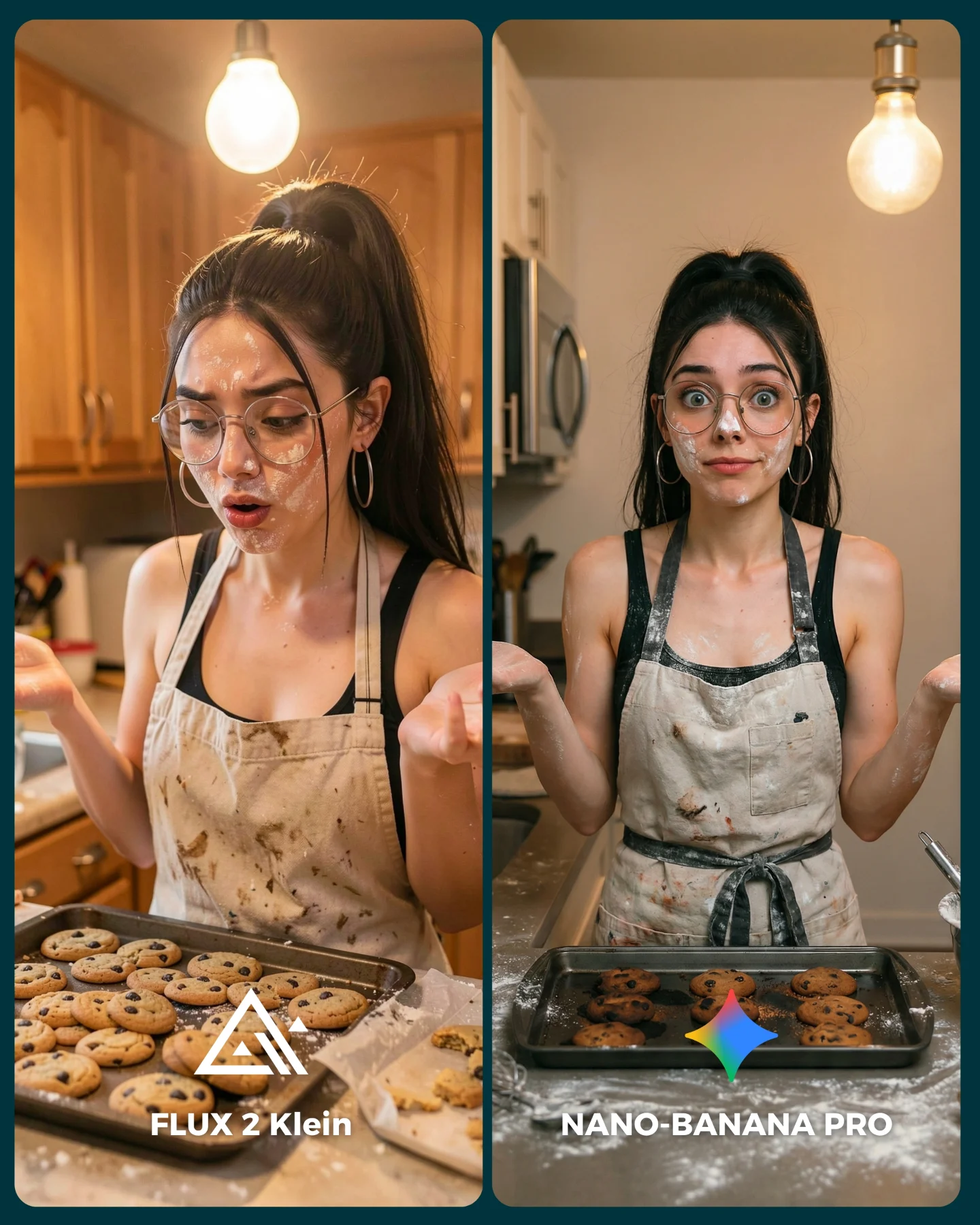
Clean lifestyle scenes are easy places for image models to hide. A tidy kitchen, a pleasant smile, and a staged tray of cookies can look convincing even when the model is not doing much real problem-solving. This comparison is stronger because it adds failure, mess, and emotion. Suddenly the model has to handle face smudges, stained fabric, awkward hand gestures, uneven cookies, and believable domestic chaos all at once.
That is why this image works as a benchmark. It is not comparing beauty. It is comparing credibility under disorder. The audience can instantly tell whether the baking mess feels lived in or artificially sprinkled on top.
Why This Kind Of Post Gets Comments
People love comparisons when the subject matter is relatable. Almost everyone understands a failed baking moment. That familiarity lowers the barrier to engagement. Viewers do not need technical knowledge to decide which image feels more natural. They can simply react to whether the flour, expressions, and kitchen scene feel believable.
The stronger side also has a social advantage: the expression reads like a real reaction rather than a generic posed face. That matters because domestic realism is often judged emotionally first. If the face and hands do not feel natural, the whole scene becomes less persuasive no matter how detailed the countertop looks.
Signal
Evidence (from this image)
Mechanism
Replication Action
Controlled same-subject test
The same woman, glasses, apron, and kitchen setup appear in both panels
Matched variables make quality differences easier to see
Hold identity, wardrobe, and scene constant when comparing models
Mess as realism stress test
Face smudges, stained apron, messy counter, and imperfect cookies are all visible
Domestic disorder exposes whether the model understands lived texture
Test models on scenes with believable imperfection, not only polished setups
Readable comedic reaction
The palms-up shrug and “what happened?” face tell a full story immediately
Clear facial and hand emotion makes the post more commentable
Prompt one strong emotional beat that fits the scene instead of neutral expression
Warm kitchen practicality
A hanging bulb and home-cabinet background keep the scene grounded
Specific domestic cues make the image feel more trustworthy
Use practical home-light sources and ordinary kitchen architecture in the prompt
Where This Format Works Best
This structure is ideal for model comparisons, domestic prompt education, and creator posts that want to turn technical benchmarking into something widely relatable. It works especially well because home-kitchen scenes combine human mess, materials, food, and gesture in one accessible package.
Best for realism comparisons: cooking disasters reveal hand, prop, and texture weaknesses quickly. Change the task, but keep the controlled setup.
Best for lifestyle prompt education: the scene teaches creators that realism often lives in imperfection, not polish.
Best for comment-driven AI content: viewers can pick the stronger side without needing prompt jargon.
Best for meme-adjacent creator content: the domestic failure vibe makes the benchmark more socially fun.
It is less effective for serene aesthetic feeds, premium food photography, or minimal design accounts. The whole point here is believable chaos.
Three Transfer Recipes
Pancake disaster transfer. Keep: split-screen, same subject, messy apron, and expressive reaction. Change: cookies to burnt pancakes, spatula, and batter spill. Slot template: {same home kitchen} {same identity anchors} {specific cooking fail} {A/B realism labels}
Painting mess transfer. Keep: domestic imperfection benchmark and hand expressiveness. Change: baking mess to paint splatters, brushes, and ruined canvas. Slot template: {same character} {messy creative task} {realistic stains and reaction} {comparison layout}
DIY repair transfer. Keep: practical environment and “what went wrong?” emotion. Change: cookies to a failed home-repair attempt with tools, dust, and confusion. Slot template: {ordinary home space} {failed task scene} {relatable frustration} {side-by-side model test}
Aesthetic Read
The image works because it gives the viewer a simple emotional ladder. First you see the face. Then you see the tray. Then you notice the stains and flour. That sequence is important. If the mess came first, the post would feel more like a food image. By putting emotion first, it becomes a human story.
The warm bulb above also matters. It gives the scene a believable domestic anchor and stops the comparison from feeling too synthetic. Small home details like that are often what separate “AI image of a kitchen” from “moment that looks like it happened.”
Observed
Why It Matters
How To Recreate
Smudged face and stained apron
Turns the scene into a real aftermath instead of a styled cooking setup
Prompt visible traces of action on both skin and fabric
Cookie tray front and center
Keeps the source of the problem clear
Place the failed result in the foreground, not hidden in the background
Warm hanging bulb in frame
Signals real kitchen practicality and gives the image a lived-in light source
Include one visible practical light instead of generic soft illumination
Palms-up shrugging gesture
Completes the narrative instantly
Use a body gesture that reinforces the emotional expression
Prompt Technique Breakdown
To recreate a useful comparison like this, you need to lock the kitchen facts first and the emotional difference second. If you start with “funny baking fail,” the model may overplay the comedy and lose realism. It is better to define the failed setup precisely, then add the emotional reaction on top.
Prompt chunk
What it controls
Swap ideas (EN, 2-3 options)
same young woman in glasses and stained apron behind a tray of failed cookies
Core benchmark consistency
“same woman with burnt pancakes”; “same woman with messy cake fail”; “same woman with ruined pie”
flour smudges on face, messy countertop, imperfect homemade cookies
left panel calmer confusion, right panel stronger shrug and eye expression
Outcome separation
“left flatter, right more expressive”; “A restrained, B lifelike”; “baseline vs improved realism”
warm home kitchen with visible hanging bulb and cabinets
Environmental credibility
“apartment kitchenette”; “suburban family kitchen”; “small cozy baking corner”
baking tray at the bottom foreground
Narrative clarity
“mixing bowl foreground”; “cooling rack foreground”; “burnt pan foreground”
clean split-panel comparison with bottom labels
Content packaging
“carousel A/B format”; “simple footer labels”; “minimal model badges”
How I Would Iterate It
Baseline lock: the kitchen mess, the cookie tray, and the same-person comparison. Those elements are non-negotiable. Once they are stable, the main refinement is emotional credibility.
Run 1: solve the domestic scene: tray, stains, counter mess, and kitchen layout.
Run 2: stabilize face identity, glasses, hoop earrings, and apron structure across both panels.
Run 3: separate the two outputs through expression quality and hand realism rather than changing the whole scene.
Run 4: polish warm light, crumb detail, cookie realism, and the subtle difference between “acceptable” and “convincing.”
Quick remix checklist
One same-subject A/B layout
One believable failed result in the foreground
One practical kitchen light source
One messy-but-real counter surface
One expression that tells the story without extra text
The bigger lesson is useful for AI benchmarking in general: reality is often tested better by small messes than by big spectacles. This comparison gets that right. It shows that domestic imperfection can be a much sharper benchmark than another flawless lifestyle shot.