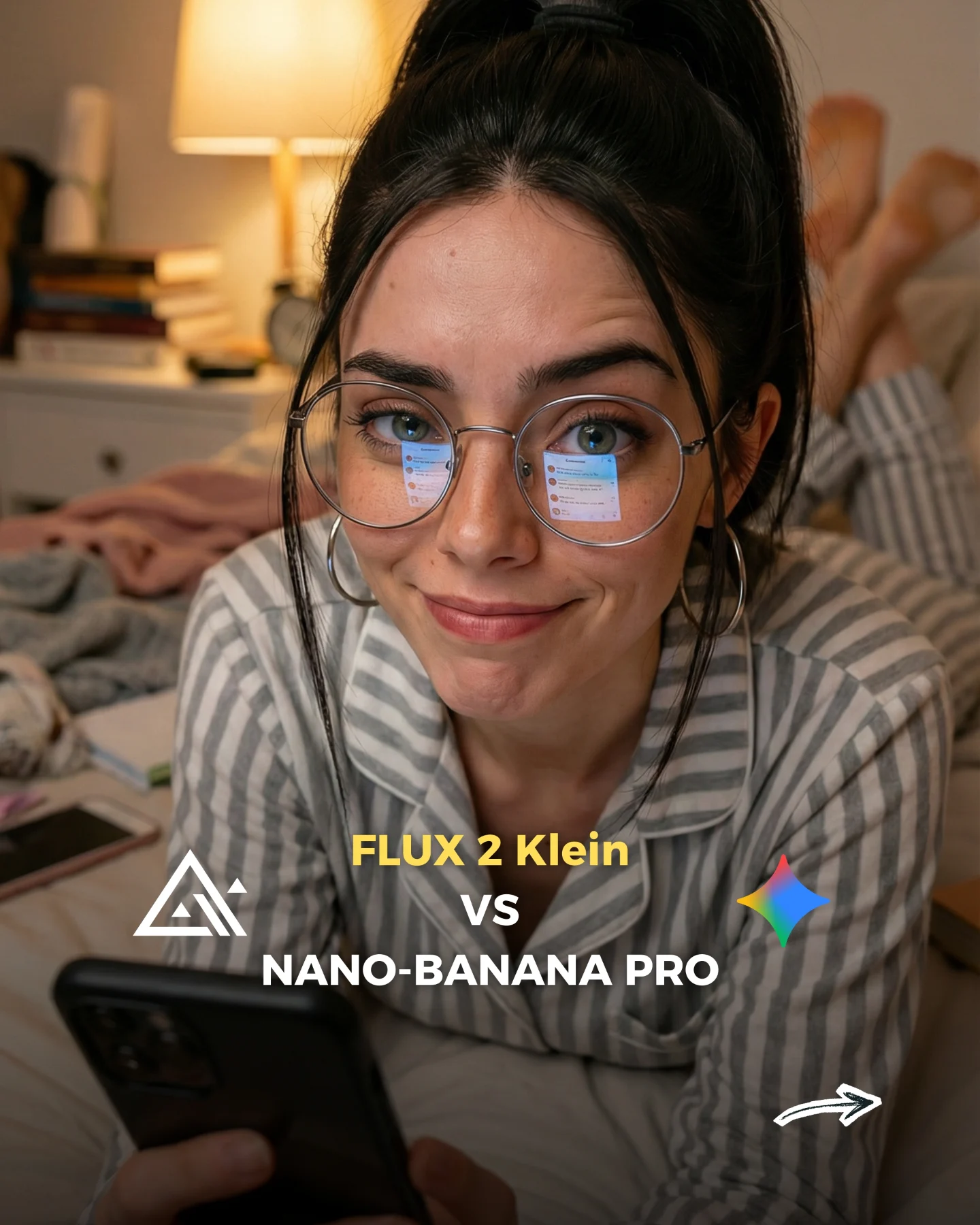
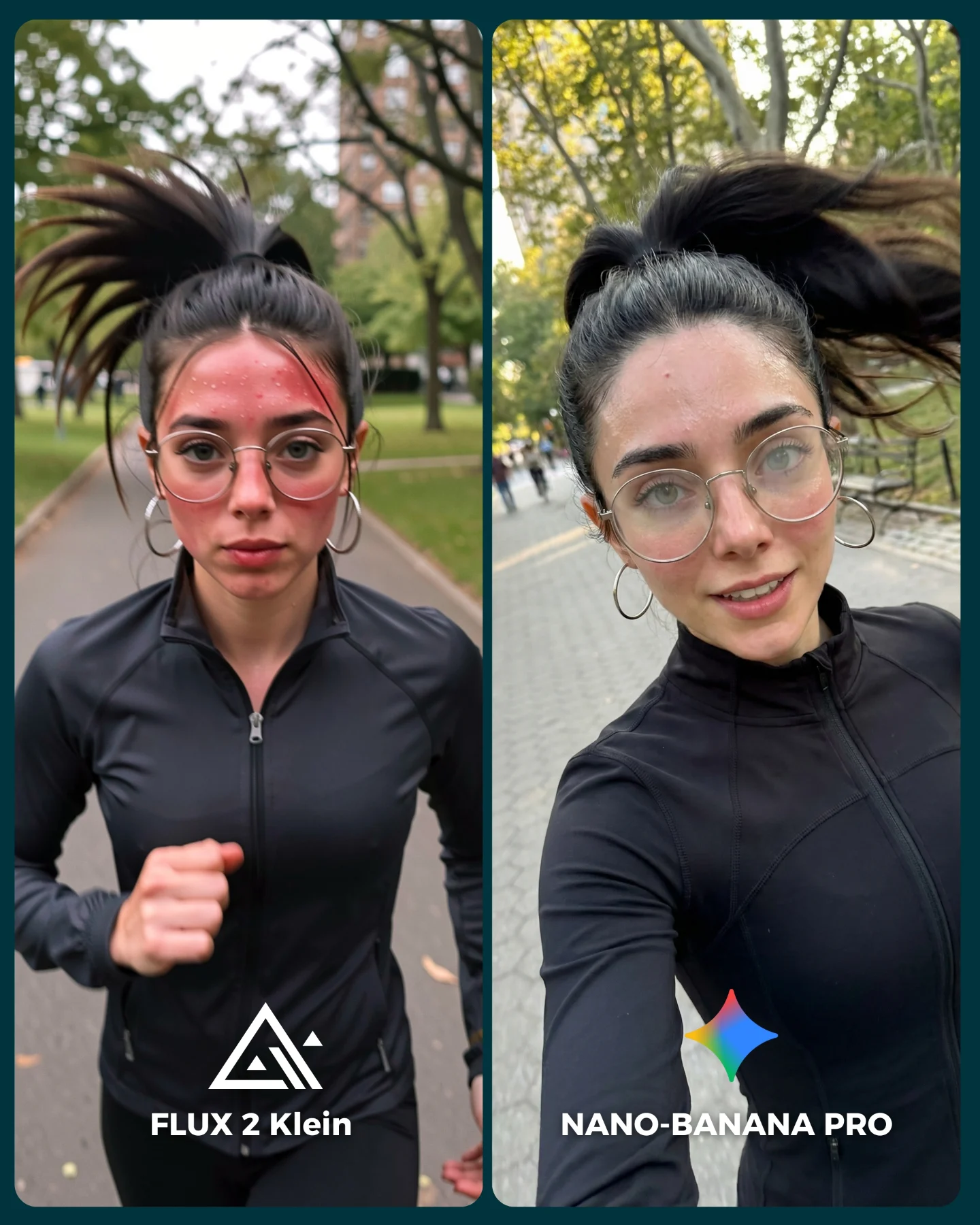
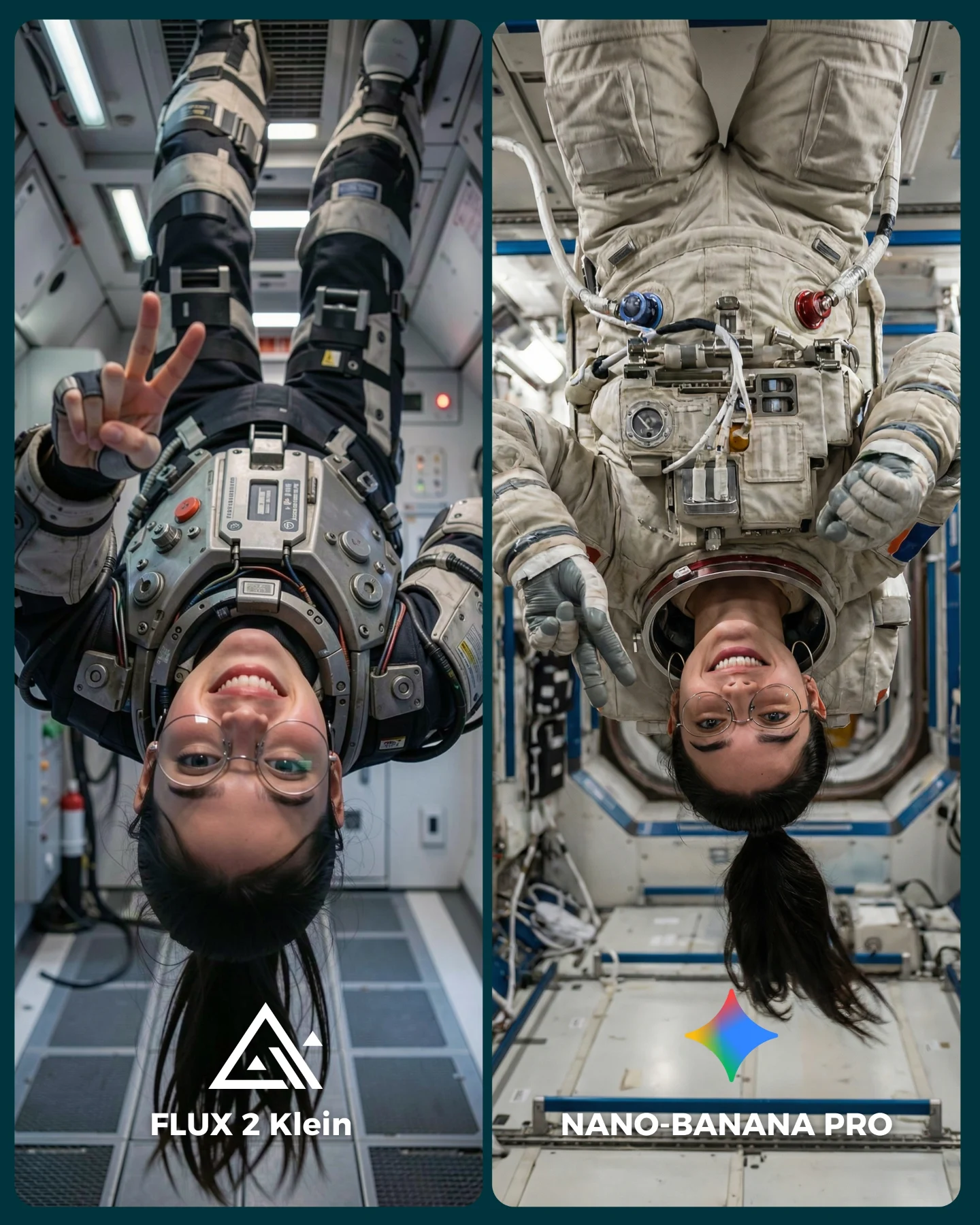
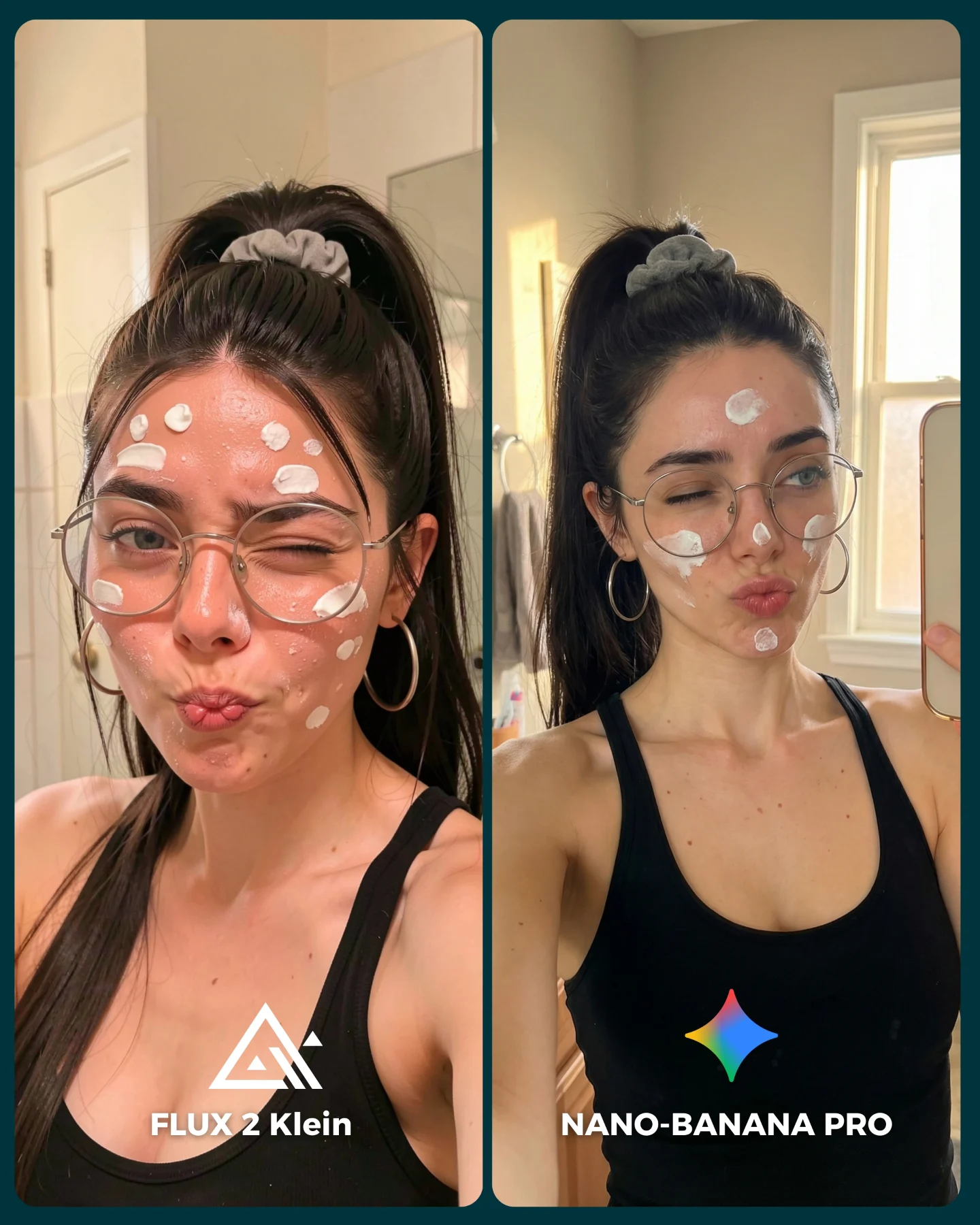
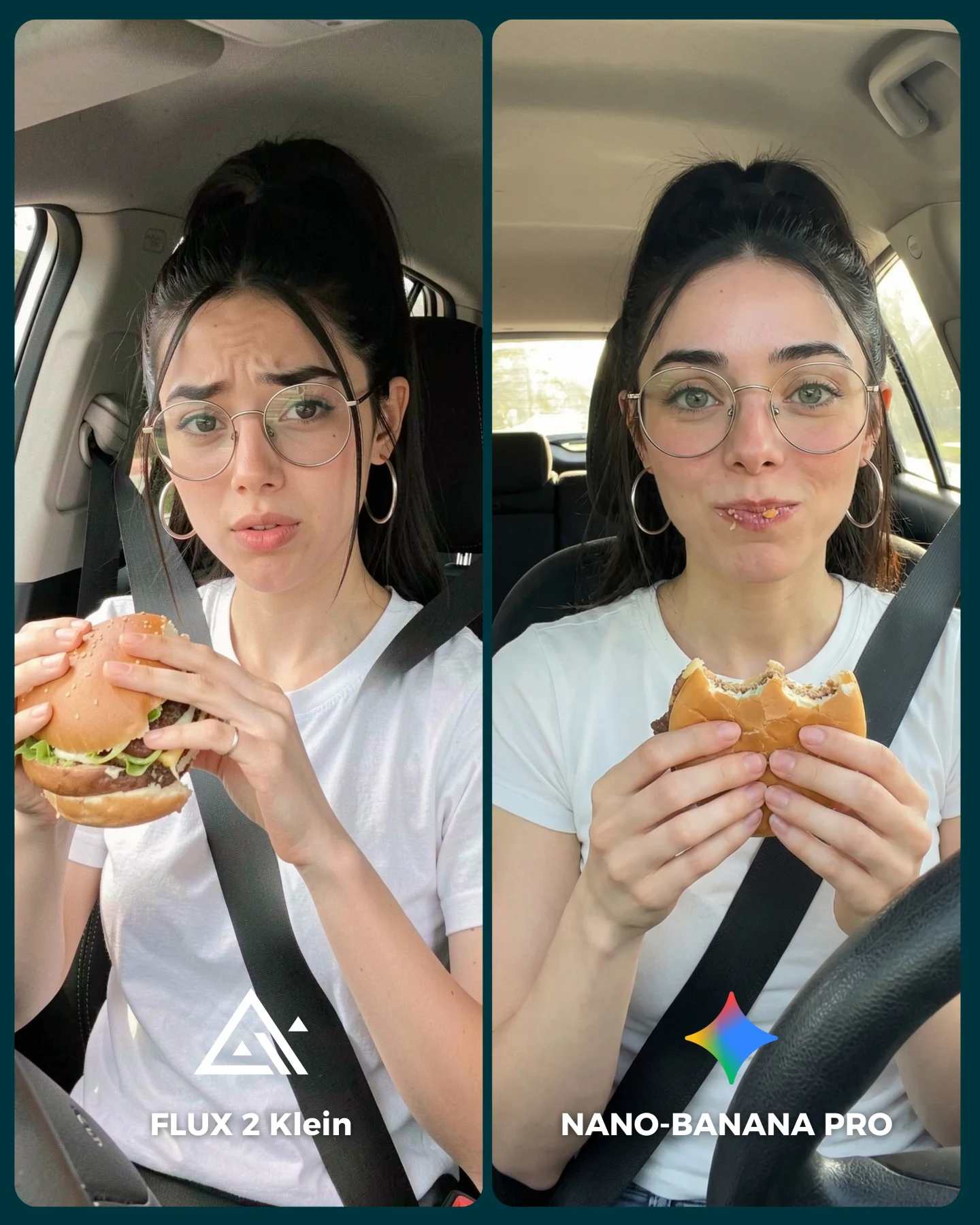
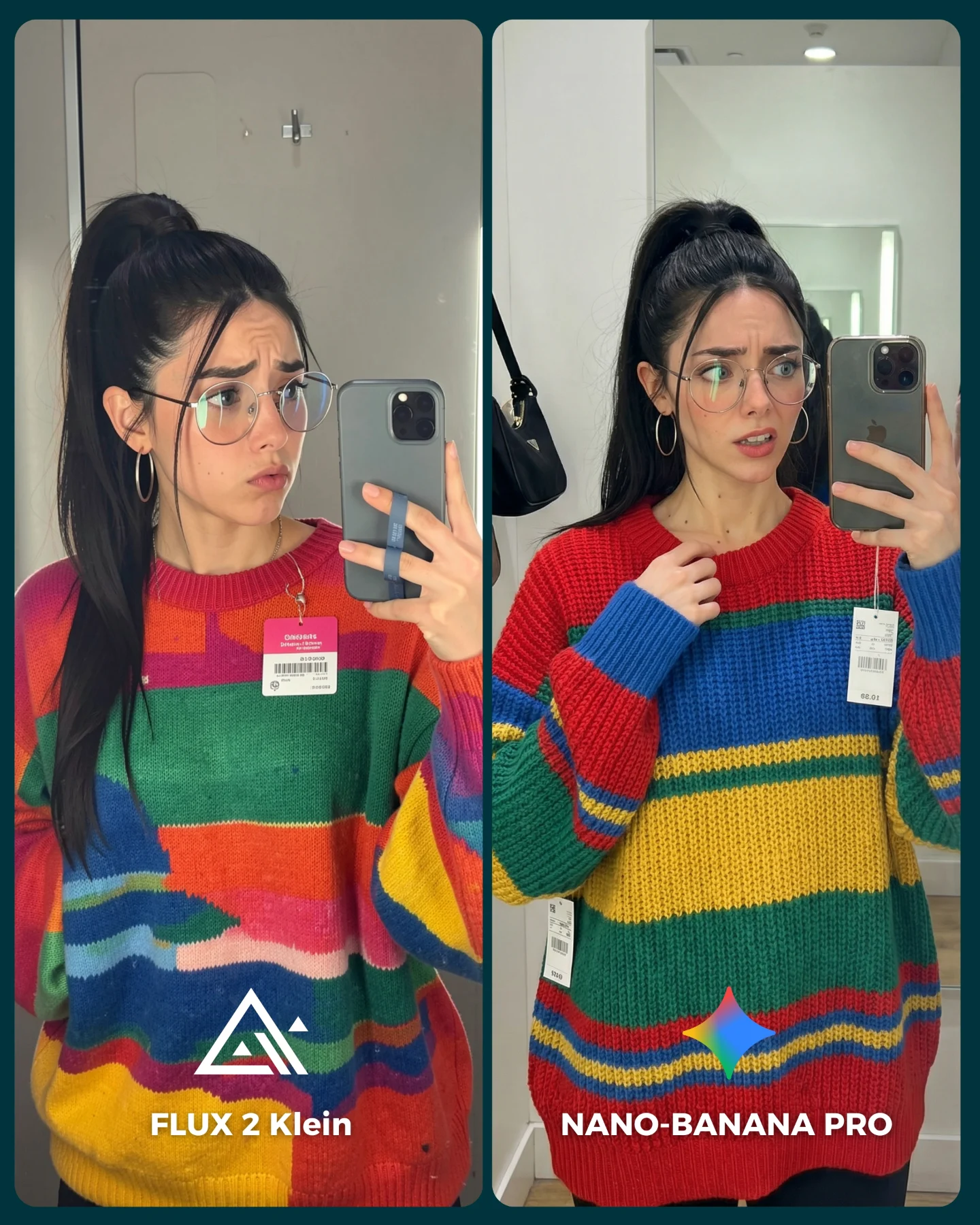
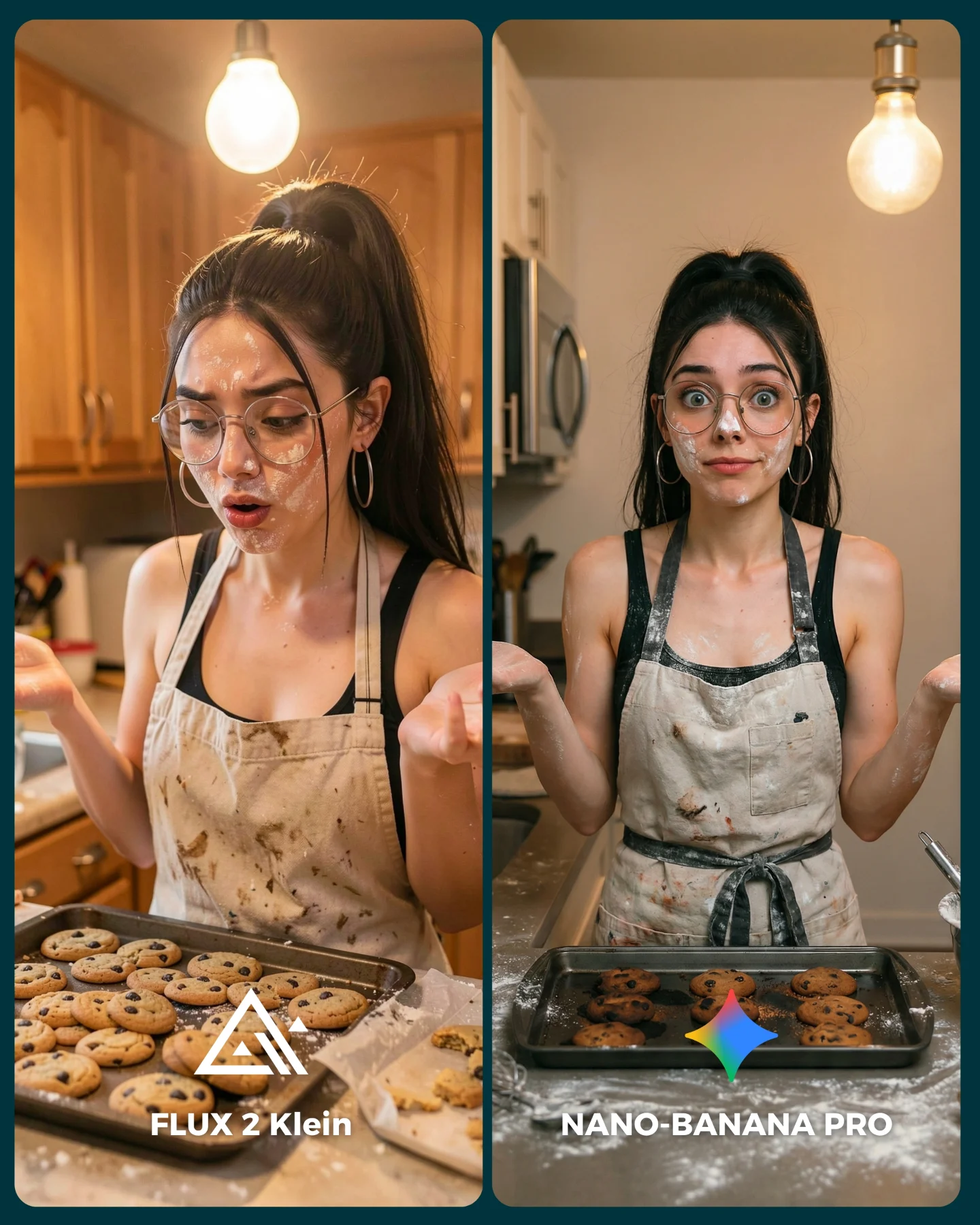
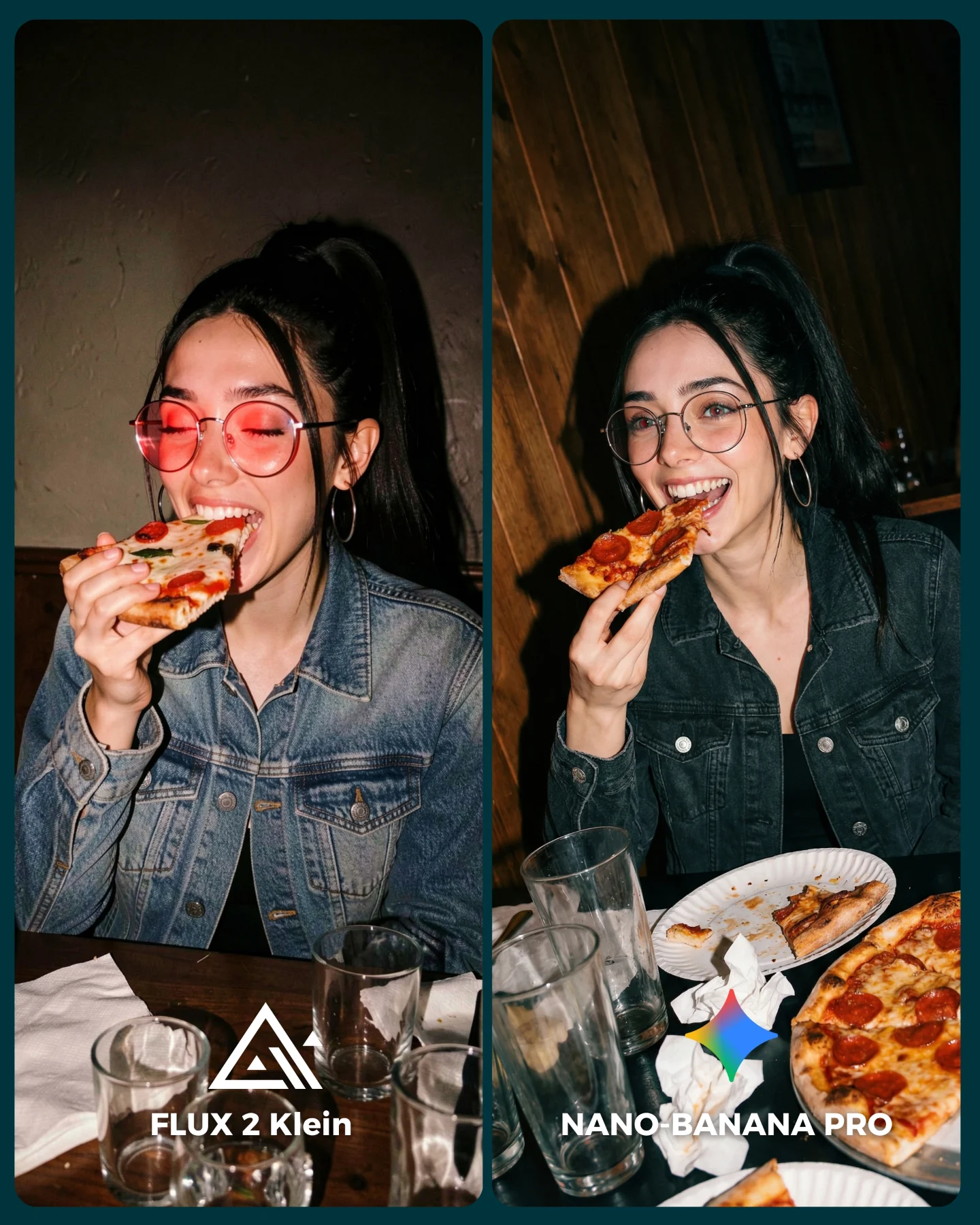
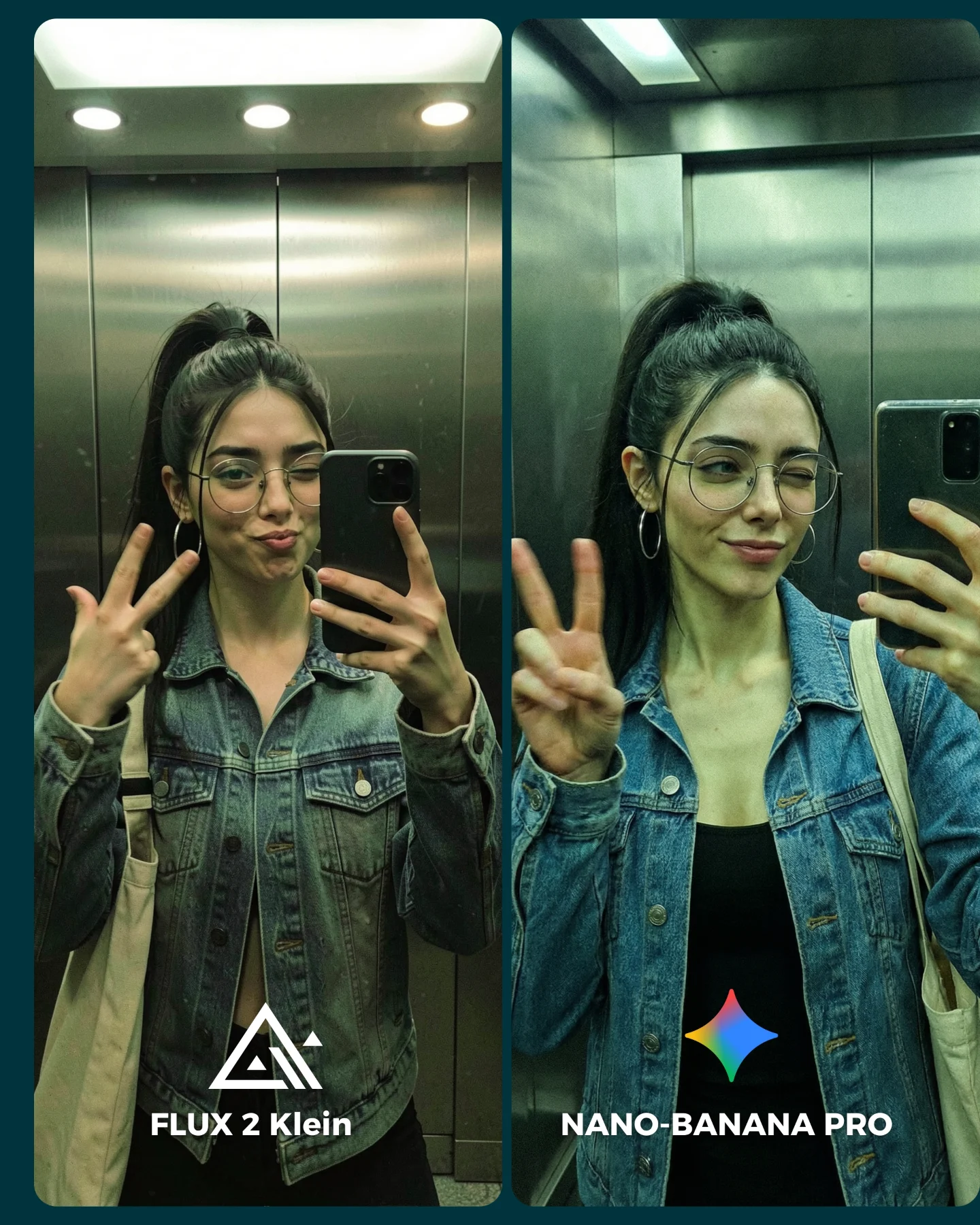
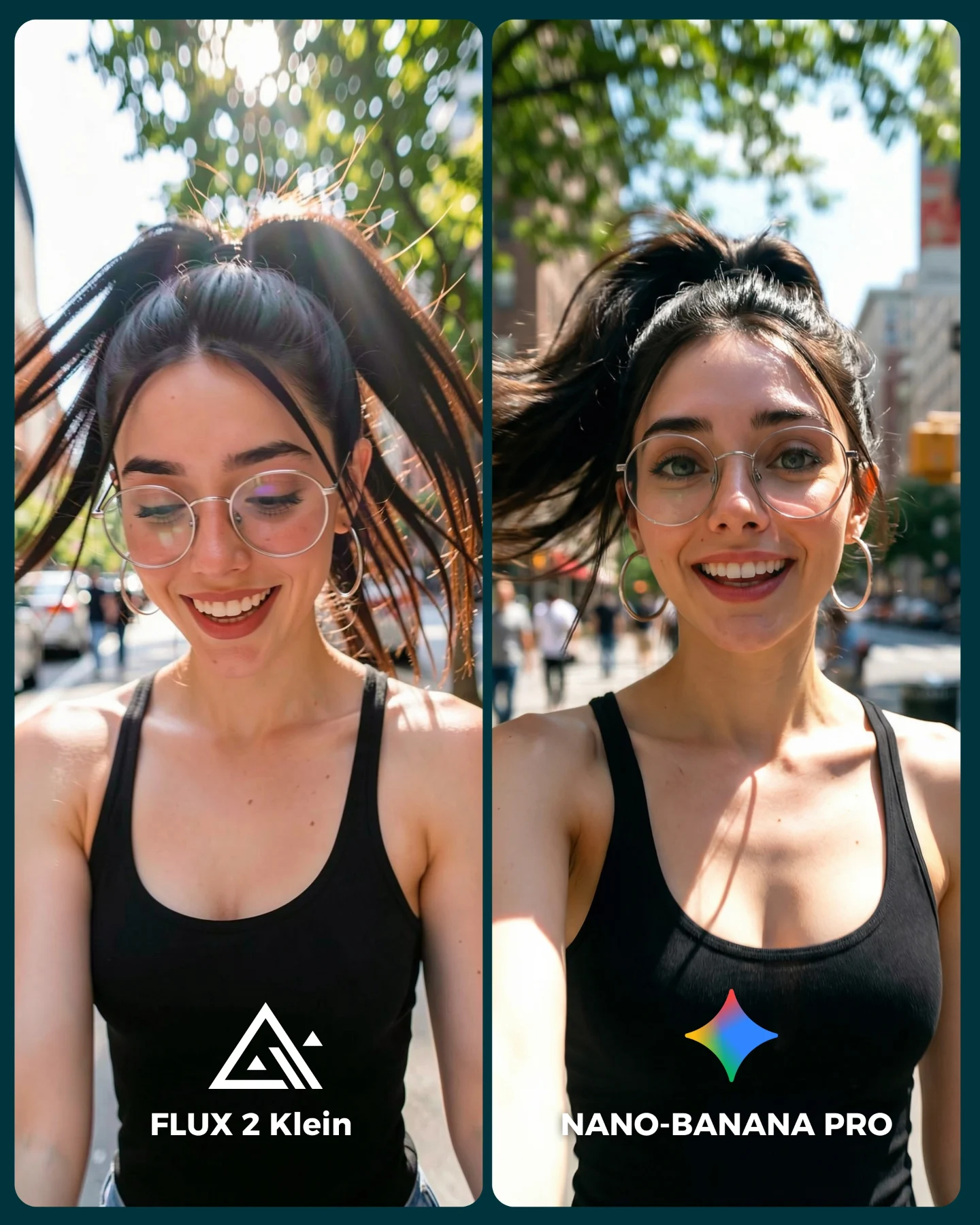
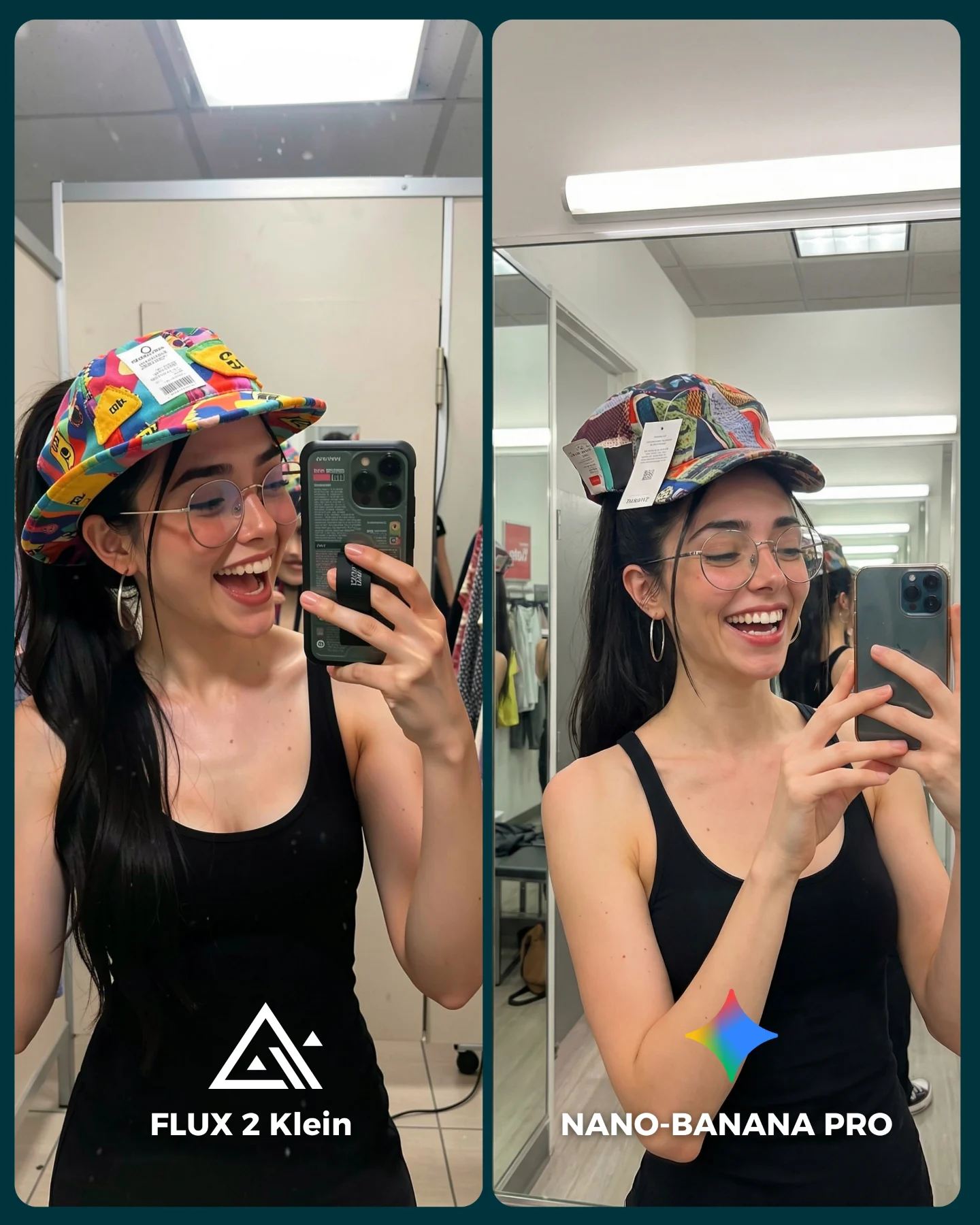
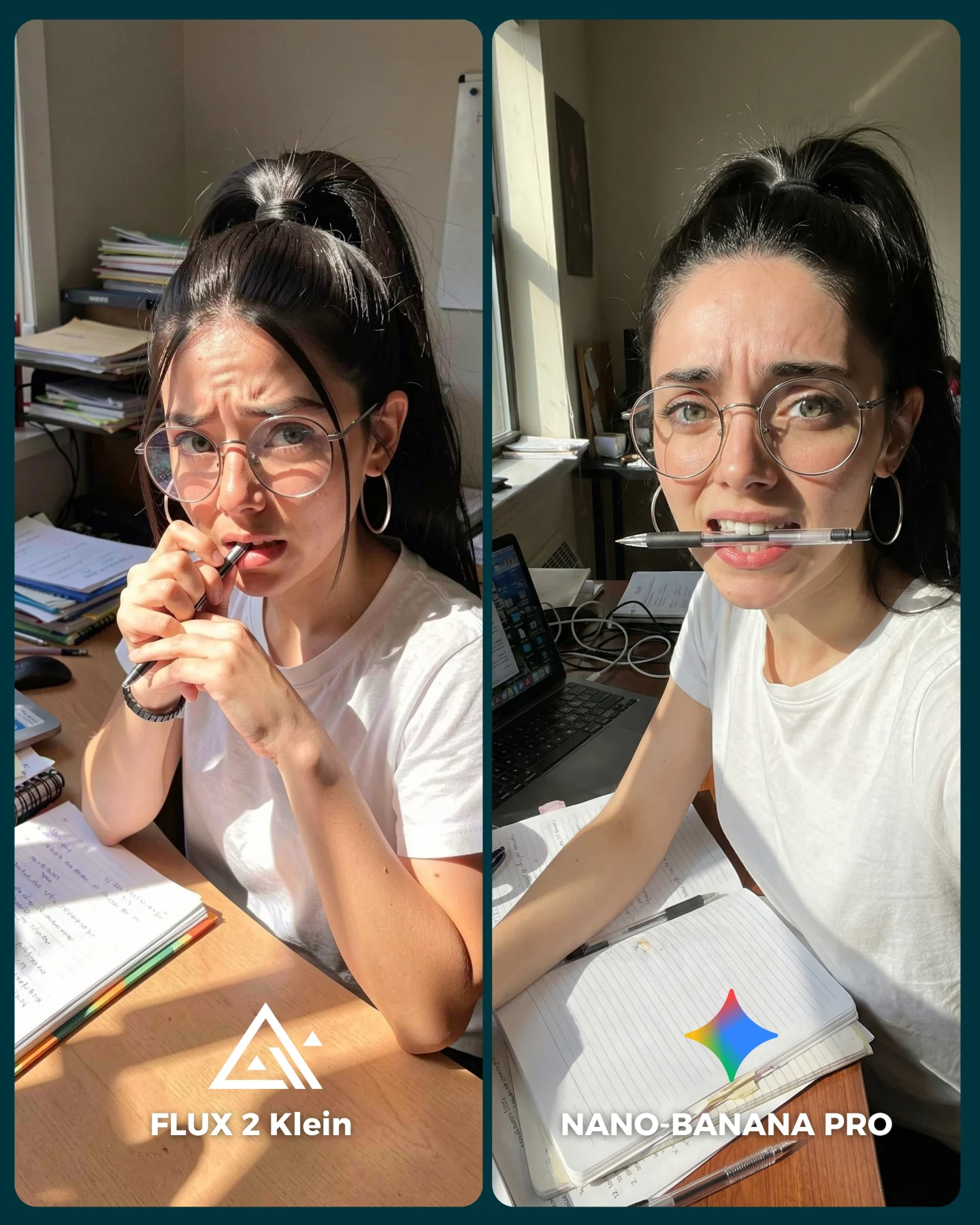
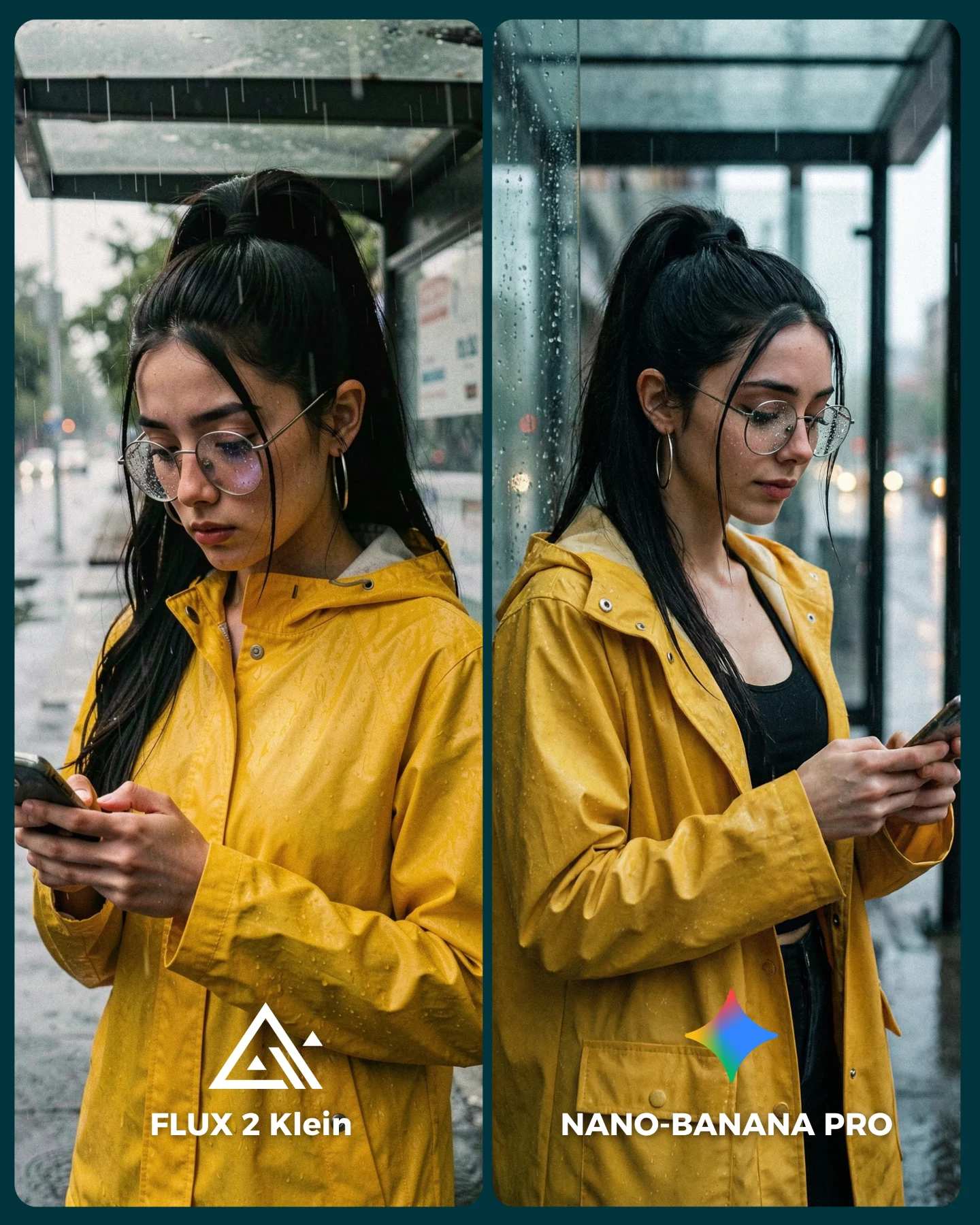
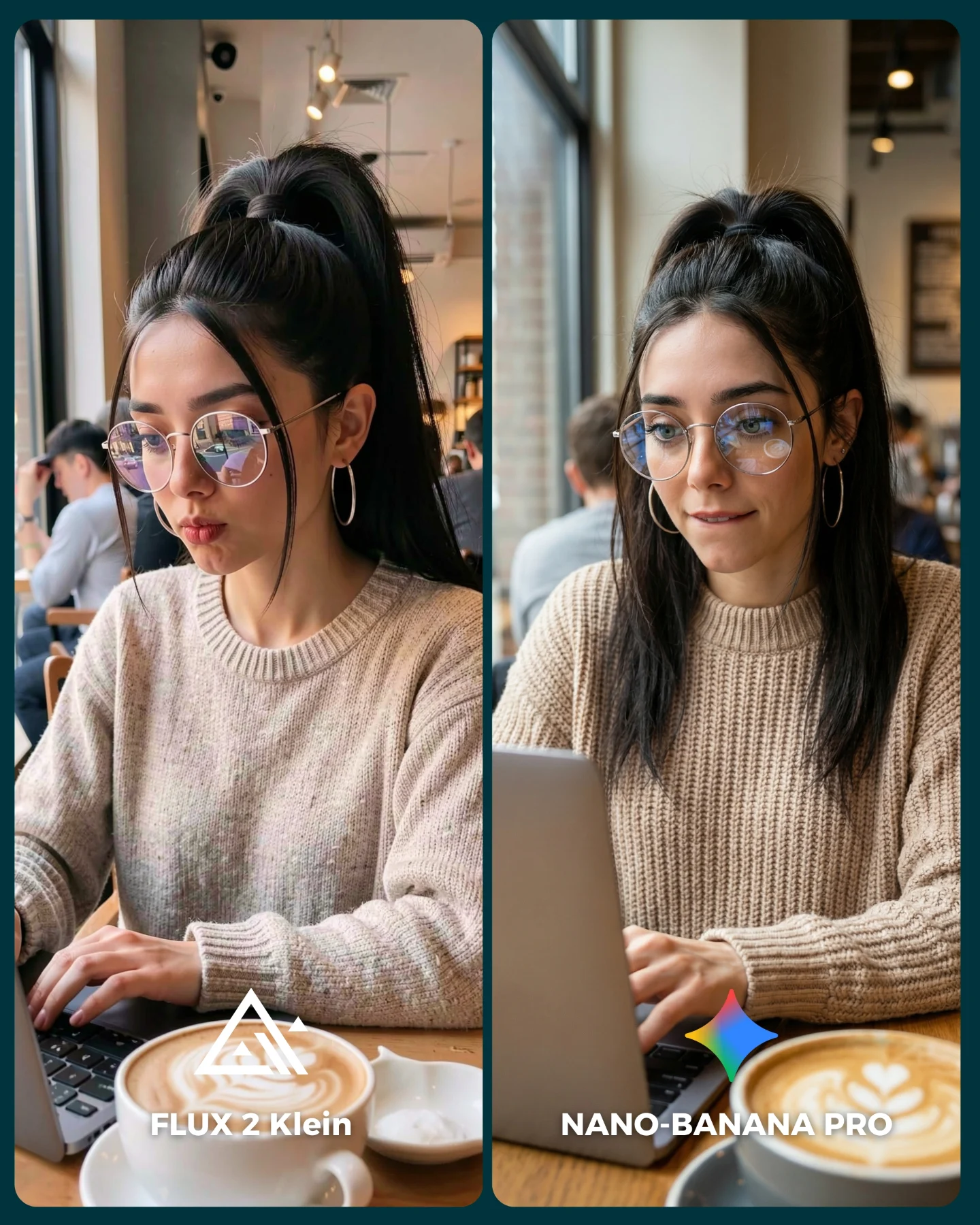
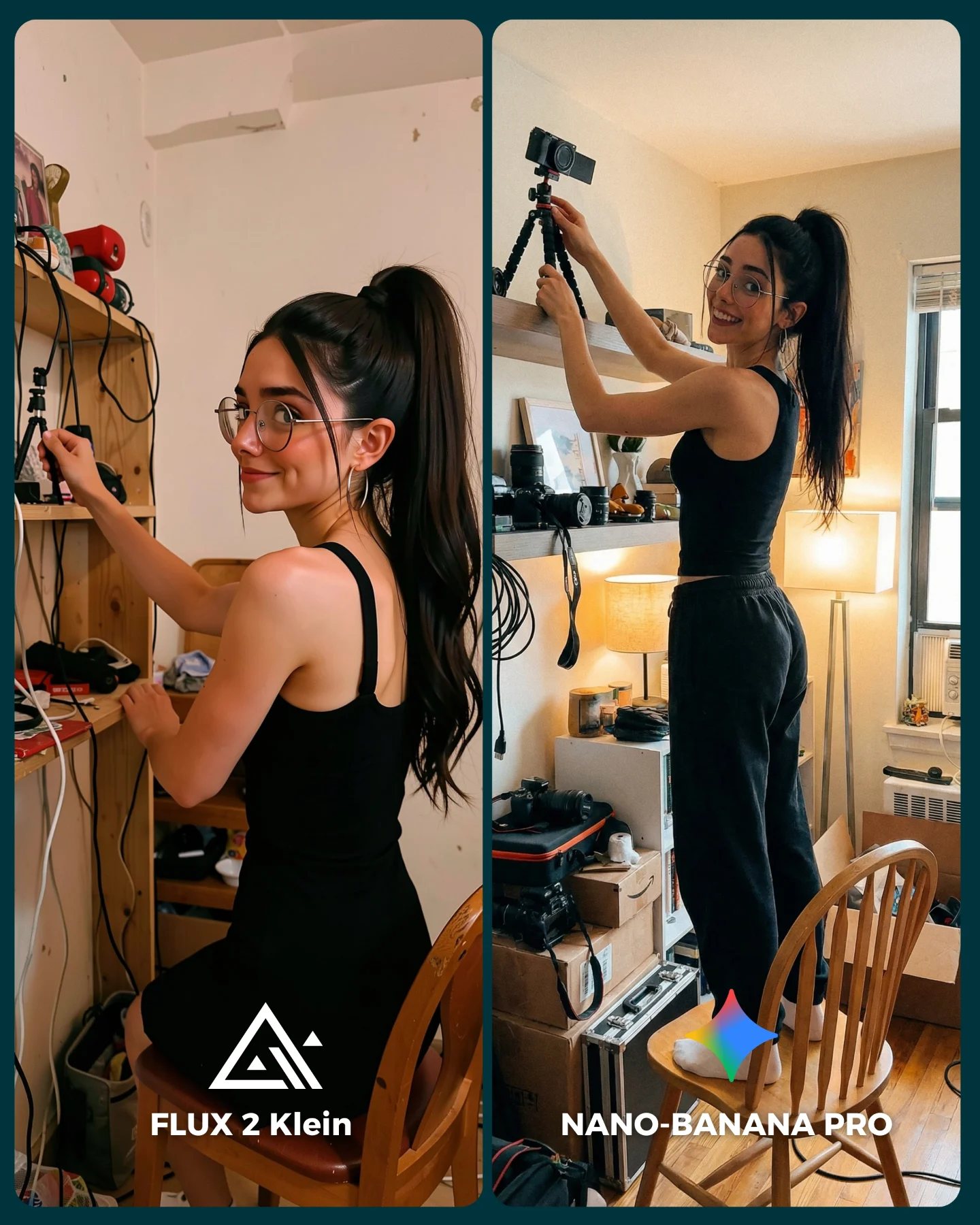
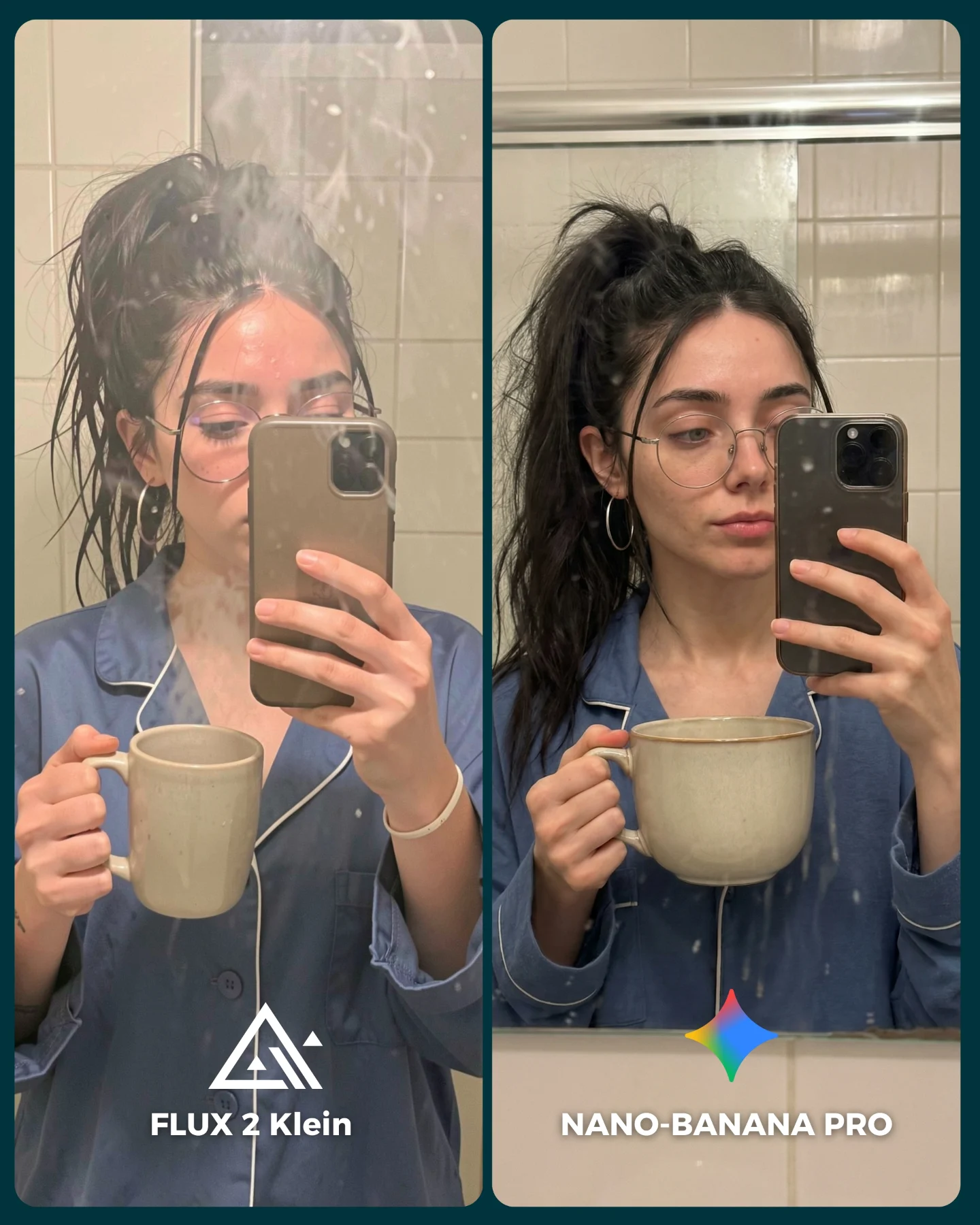
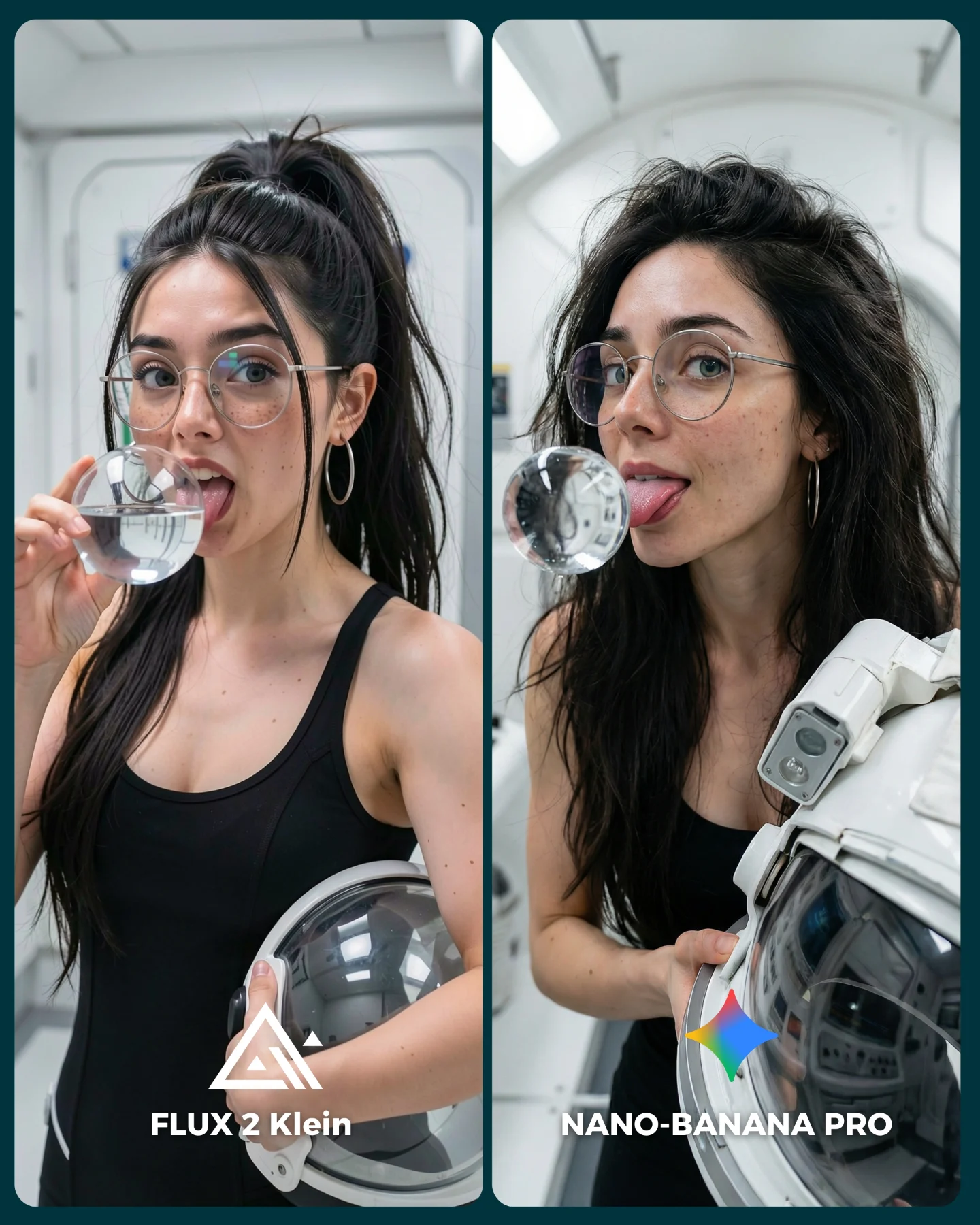
Flux 2 Klein VS. Nano Banana Pro 💥
Sigo pensando que no hay nada mejor que Nano Banana Pro 😅
O crees que hay algún generador de imágenes que le hace la competencia?? 👀
Como siempre... os puedo mandar todos los prompts de las imágenes si comentas "ARIA" 💕
How soy_aria_cruz Made This Flux 2 Klein vs Nano Banana Pro AI Art — and How to Recreate It
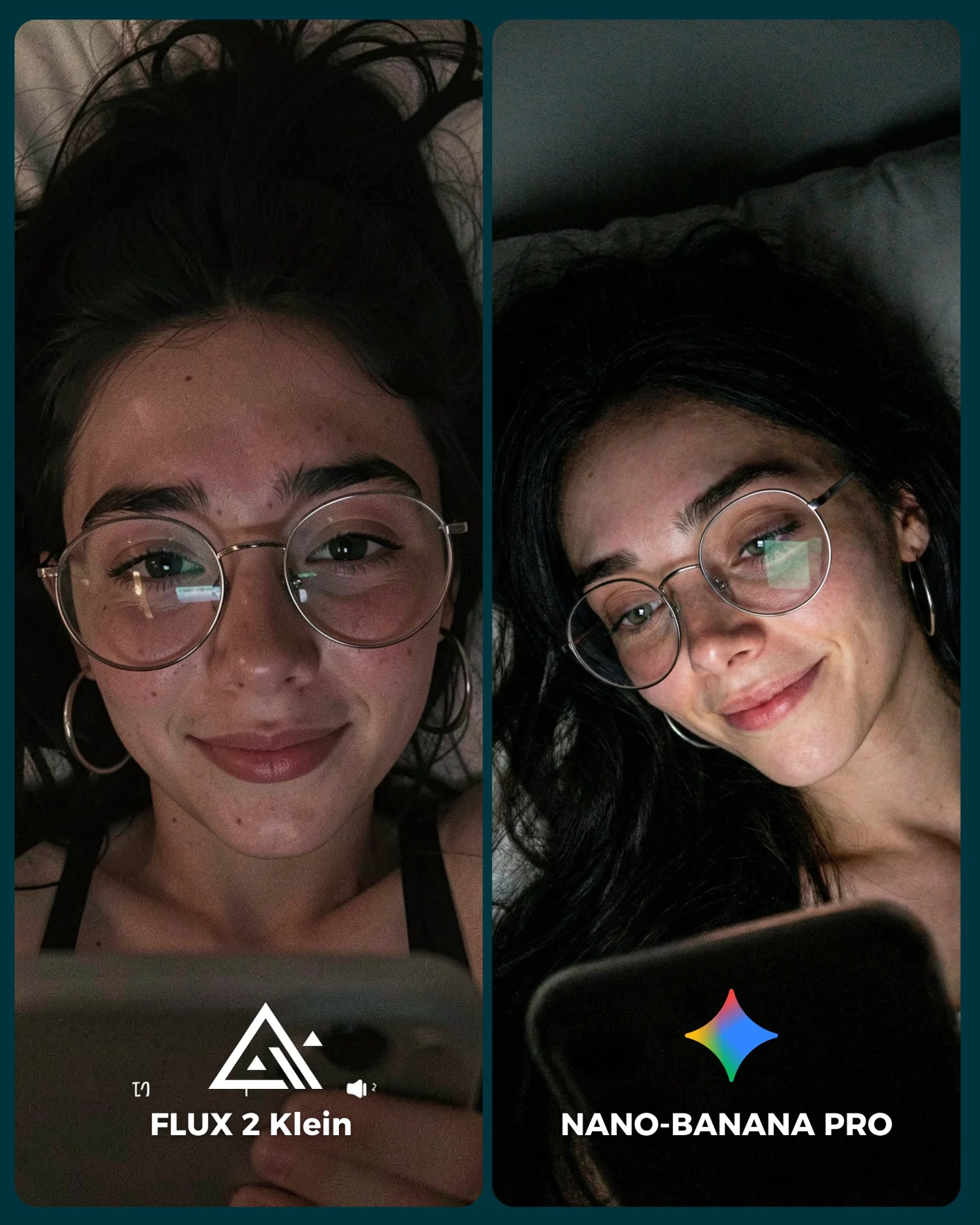
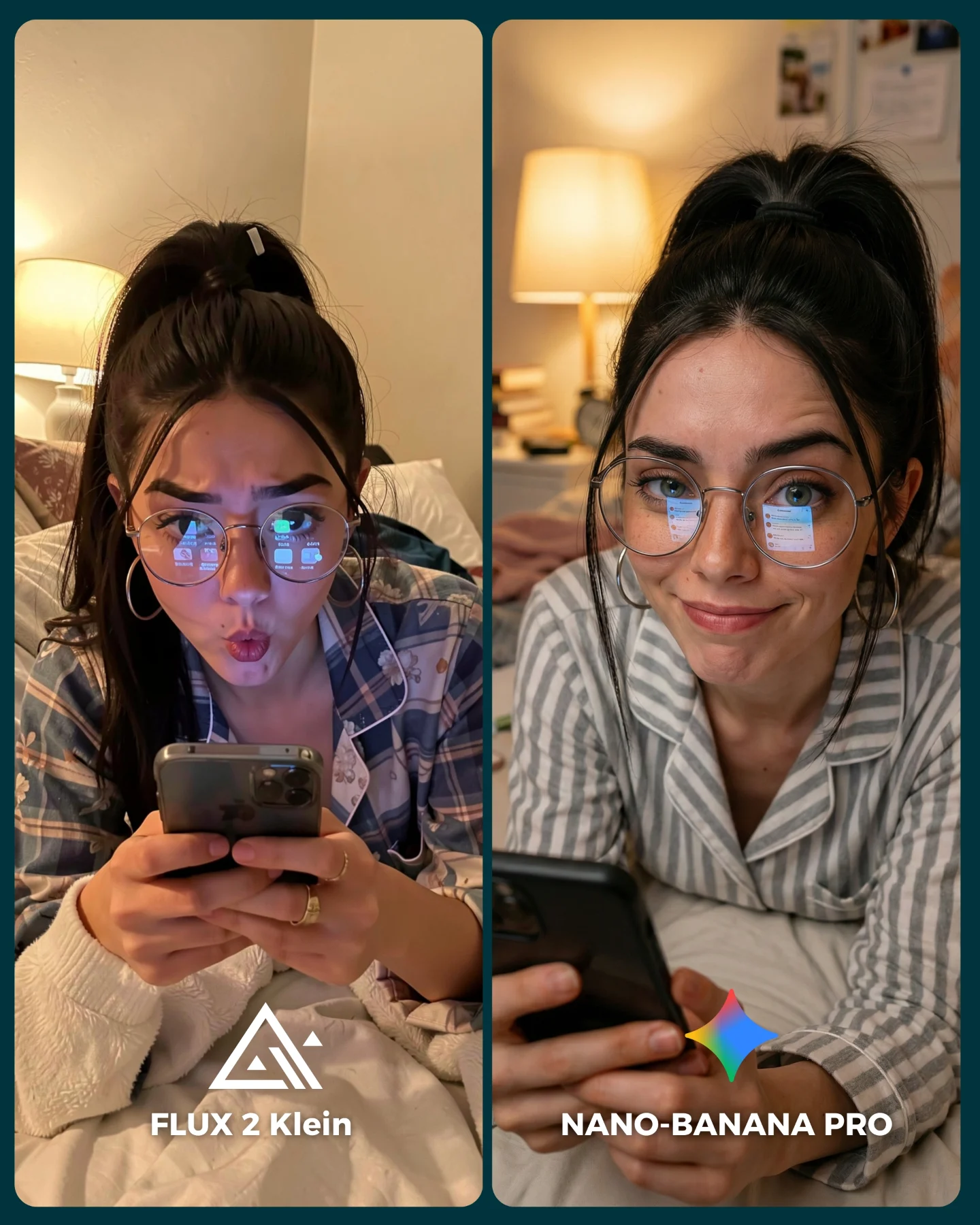
This image works because it benchmarks realism on a scene that feels completely ordinary. A woman lying in bed looking at her phone is one of the most familiar visual experiences in modern life. That familiarity makes the comparison especially effective. Viewers instantly notice whether the skin, the glasses reflection, the pillow, and the expression feel right.
That is why this kind of image is more useful than it first appears. It is not a flashy concept. It is a realism test wrapped in intimacy. When a model can render a quiet low-light phone moment convincingly, audiences often trust it more than when it handles loud cinematic scenes.
Why This Format Performs
The strongest part of the frame is emotional normalcy. There is no costume, no dramatic prop, and no elaborate setting. The only real variables are face, light, pillow, hair, and phone. That simplicity sharpens the audience’s attention. Small quality differences become very easy to see.
The second reason it performs is the screen-light challenge. Phone glow is subtle and very easy to overdo. If it becomes too bright, the image looks fake. If it disappears, the scene loses its logic. That makes it a useful stress test for model control. The comparison format lets viewers inspect exactly how each model handles that balance.
Signal
Evidence (from this image)
Mechanism
Replication Action
Everyday realism
The subject is simply lying in bed reading a phone.
Common scenarios expose fake details more quickly than stylized ones.
Use familiar modern moments when you want viewers to evaluate realism intuitively.
Low-light nuance
The face is lit mostly by the phone and the room stays dim.
Subtle lighting control reveals model strengths and weaknesses fast.
Specify phone-screen light carefully and keep the rest of the room restrained.
Identity consistency
The same glasses, hair, earrings, and pillow framing persist across both panels.
Repeated identity is the main proof point in side-by-side comparison content.
Lock signature personal markers before tuning mood differences.
Quiet intimacy
The scene feels private rather than performative.
Soft intimate scenarios often create stronger audience attachment than loud spectacle.
Favor natural expressions and minimal styling when the concept is emotional realism.
Best Use Cases and Transfers
This pattern is excellent for model comparison posts, realism tests, low-light portrait prompt packs, and content about everyday AI character consistency. It also transfers well to laptop glow, bedside reading, night-train window portraits, tablet scrolling, and any modern scene where one light source defines the mood.
Best for realism benchmarking: subtle ordinary scenes reveal weaknesses more clearly than dramatic fantasy setups.
Best for creator identity testing: glasses, face shape, and expression are easy to compare side by side.
Best for saveable prompt examples: people often want references for believable modern low-light portraits.
Best for intimacy-driven social content: the scene feels relatable, soft, and current.
It is less useful for high-energy promotional content, large-environment storytelling, or heavily stylized fashion posts. The image depends on minimalism and close attention. It should not be overloaded with concept layers.
Not ideal for spectacle-first carousels: the scene is too quiet to anchor maximal content.
Not ideal for product-heavy tech ads: the phone is a mood light, not a hero object.
Not ideal for bright daytime optimism: the image draws its strength from nighttime privacy.
Three Transfer Recipes
Phone-glow realism test. Keep: lying pose, screen reflections, minimal bedroom cues. Change: device type, angle, and bedding palette. Slot template (EN): {same subject in bed at night} {phone screen lighting the face} {close-up intimate framing} {side-by-side model comparison}
Everyday-life benchmark. Keep: familiar action and soft low light. Change: bedroom into couch, train seat, or desk chair. Slot template (EN): {ordinary modern activity} {single screen-based light source} {minimal background} {identity-stable portrait}
Quiet comparison cover. Keep: two-panel shell and intimate realism. Change: emotional micro-expression and device position. Slot template (EN): {two closely matched low-light portraits} {same person and environment} {subtle mood differences} {clear version labels}
Aesthetic Read
The image feels strong because it avoids over-acting. The woman is not dramatically emotional. She is simply content, relaxed, and a little amused by what she is seeing on her phone. That tiny emotional register is exactly what makes the frame believable. Real late-night screen moments are usually subtle.
The glasses reflections are doing a lot of work here. They make the phone light feel real and contemporary. Without them, the image might still be pretty, but it would lose much of its “I know this moment” accuracy. Small signals like that are often what separate a convincing low-light portrait from a generic one.
Observed
Why it matters for recreation
Phone cropped at the lower edge of both panels
The light source remains present without taking over the composition.
Pale pillows framing the face
The bed context is established cleanly and softly.
Gentle smile and relaxed eyes
The subject reads as naturally absorbed rather than posed for the camera.
Visible screen reflections in the glasses
The low-light logic becomes believable and modern.
Dark room with minimal background detail
The scene stays intimate and uncluttered, which supports the realism test.
Prompt Technique Breakdown
To recreate this well, define the low-light setup before the emotional tone. If you only ask for a woman in bed, you may get a daytime lifestyle shot. If you only ask for phone glow, the environment may feel abstract. The prompt has to bind bed, pillow, glasses reflection, and phone position into one everyday nighttime scene.
Prompt chunk
What it controls
Swap ideas (EN, 2-3 options)
same young woman lying in bed at night looking at her phone
The core narrative and physical logic
late-night scrolling portrait; bedtime phone moment; low-light bed selfie scene
clear glasses, hoop earrings, dark hair on the pillow, black strap top
Identity consistency and specific modern styling
recognizable creator markers; stable close-up identity; intimate but not glam wardrobe
soft screen glow illuminating the face and reflecting in the lenses
Lock the pillow framing and phone position first. Then stabilize the face, glasses, and hair. After that, tune the screen glow and the darkness of the room. The final pass should focus on subtle expression differences and lens reflections, because those are what make the image feel specific rather than generic.
Run 1: establish the bed setup with both panels showing the woman lying on pale pillows in a dark room.
Run 2: refine the face, glasses, hoop earrings, and hair spread so the identity remains stable across both outputs.
Run 3: tune the phone glow and lens reflections until the lighting feels plausible and not overexposed.
Run 4: adjust the micro-expression and panel labels so the comparison looks intentional and emotionally natural.
If the image starts feeling too polished, reduce brightness before reducing detail. Quiet night scenes are convincing because they leave room for shadow and softness.