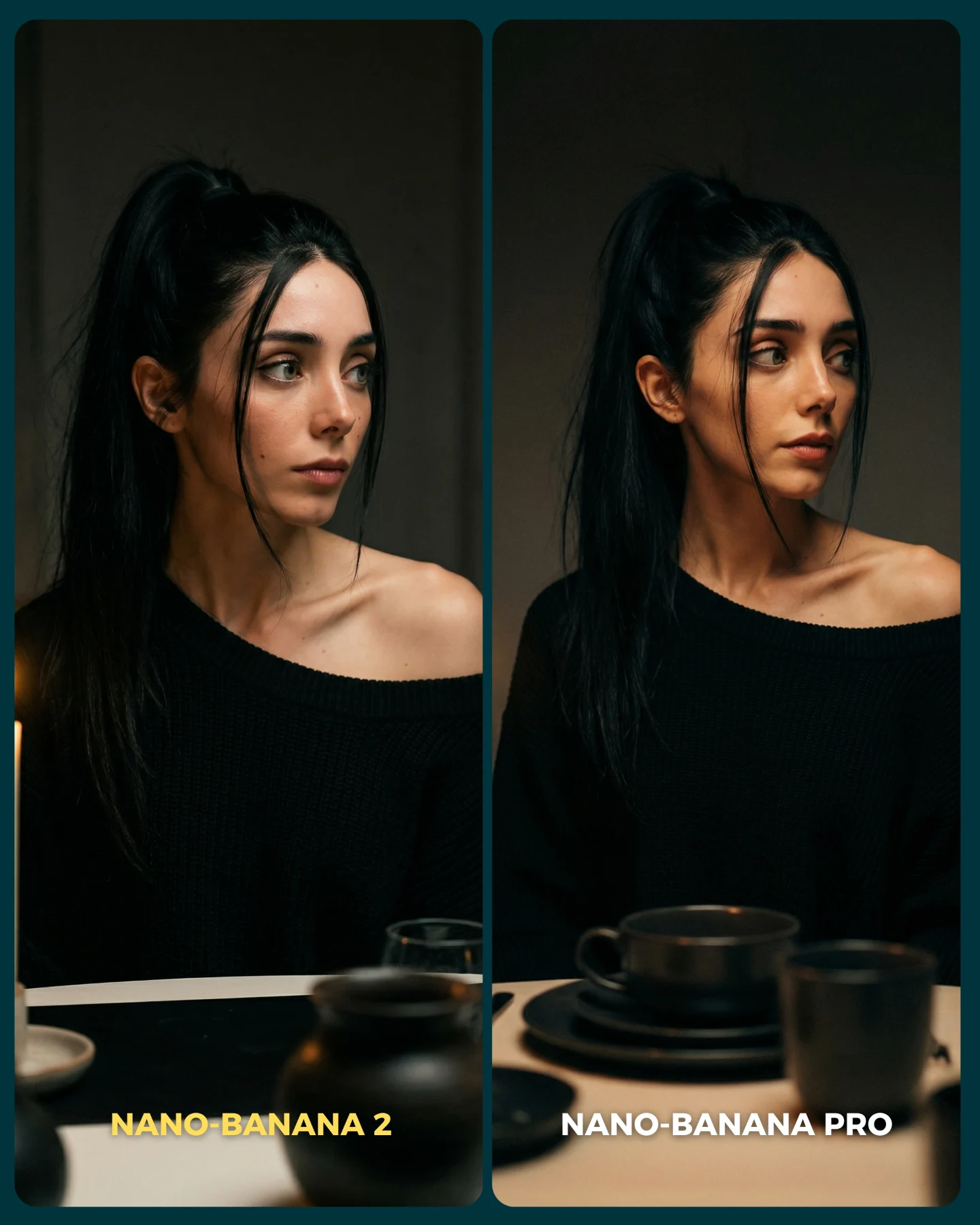
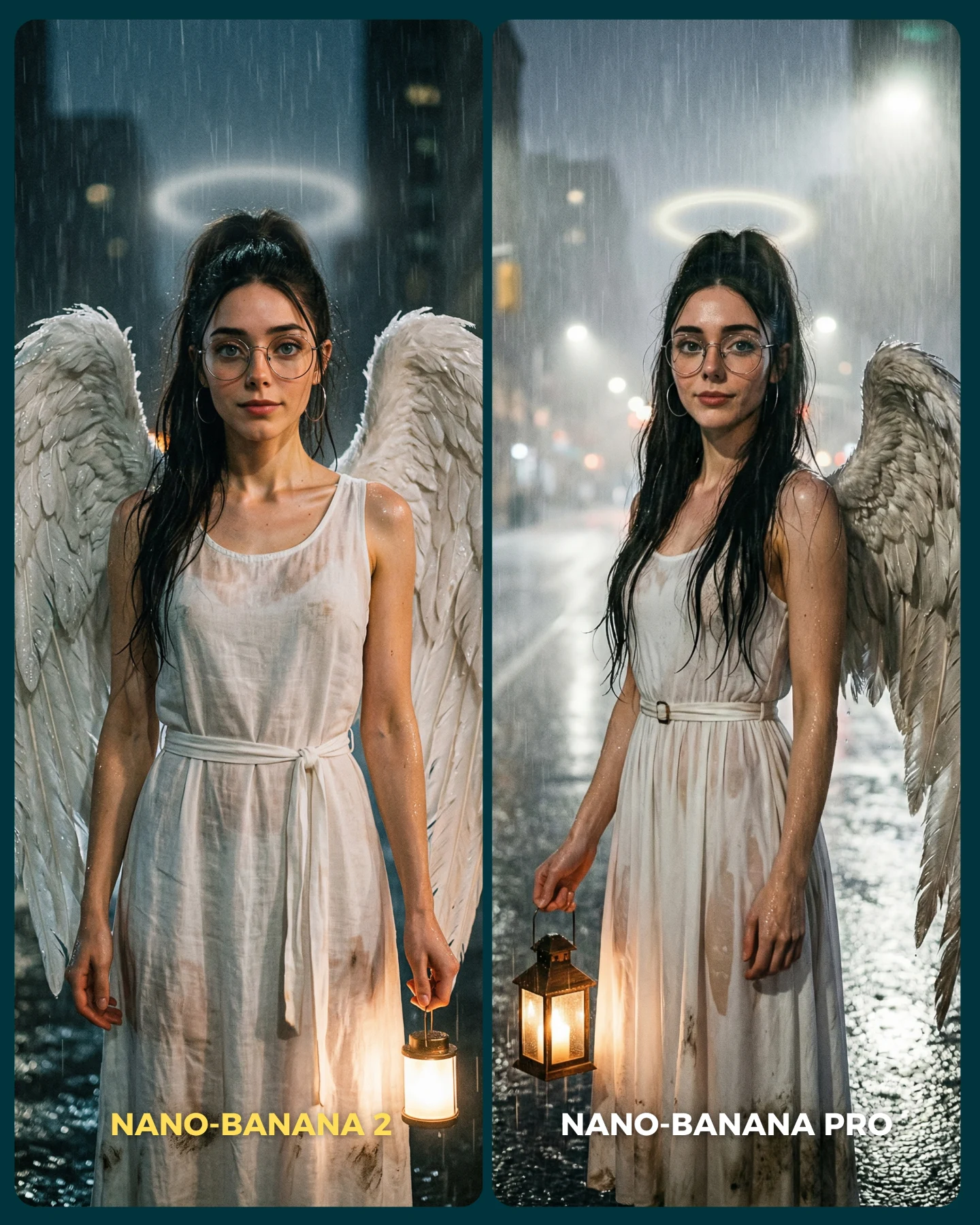
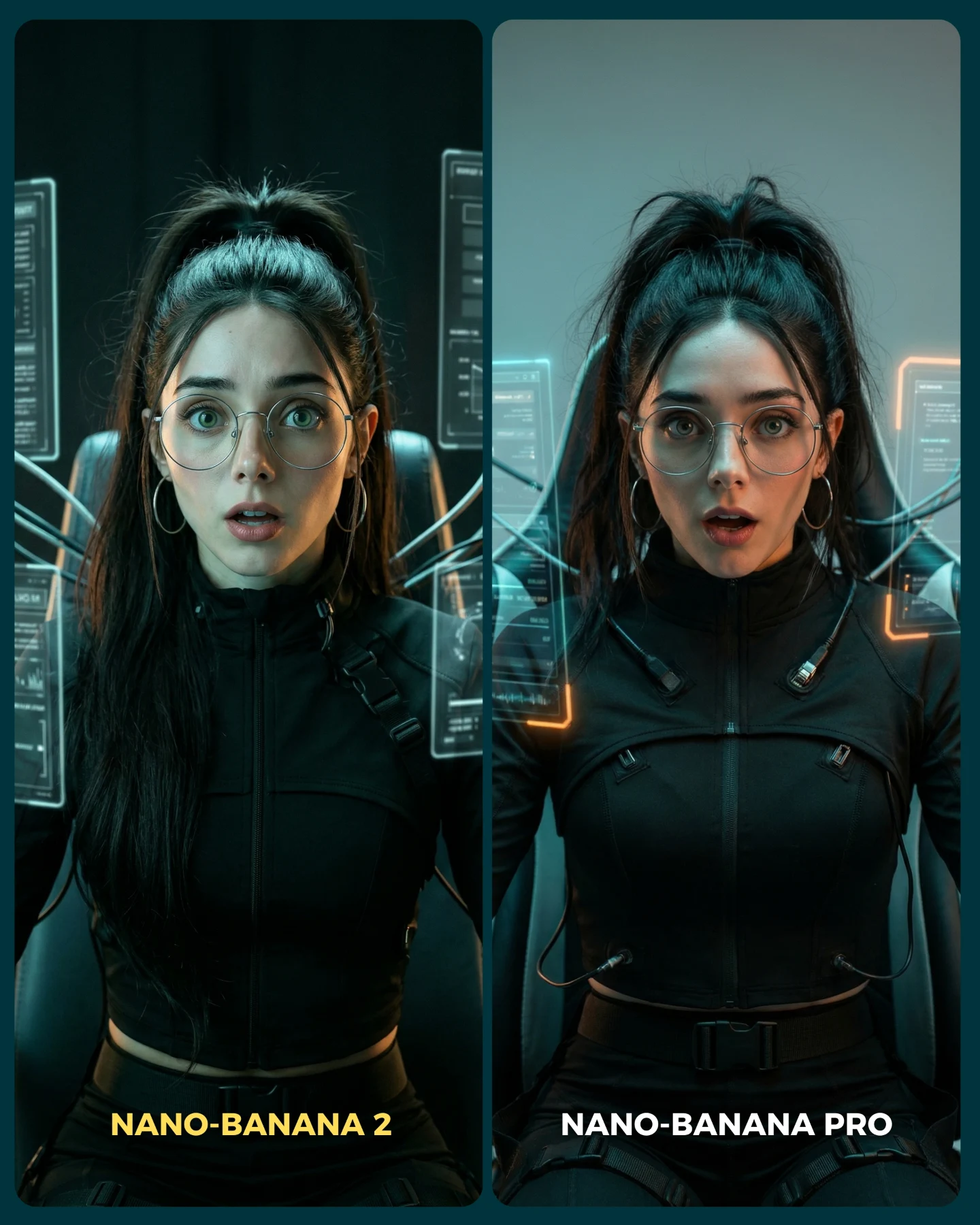
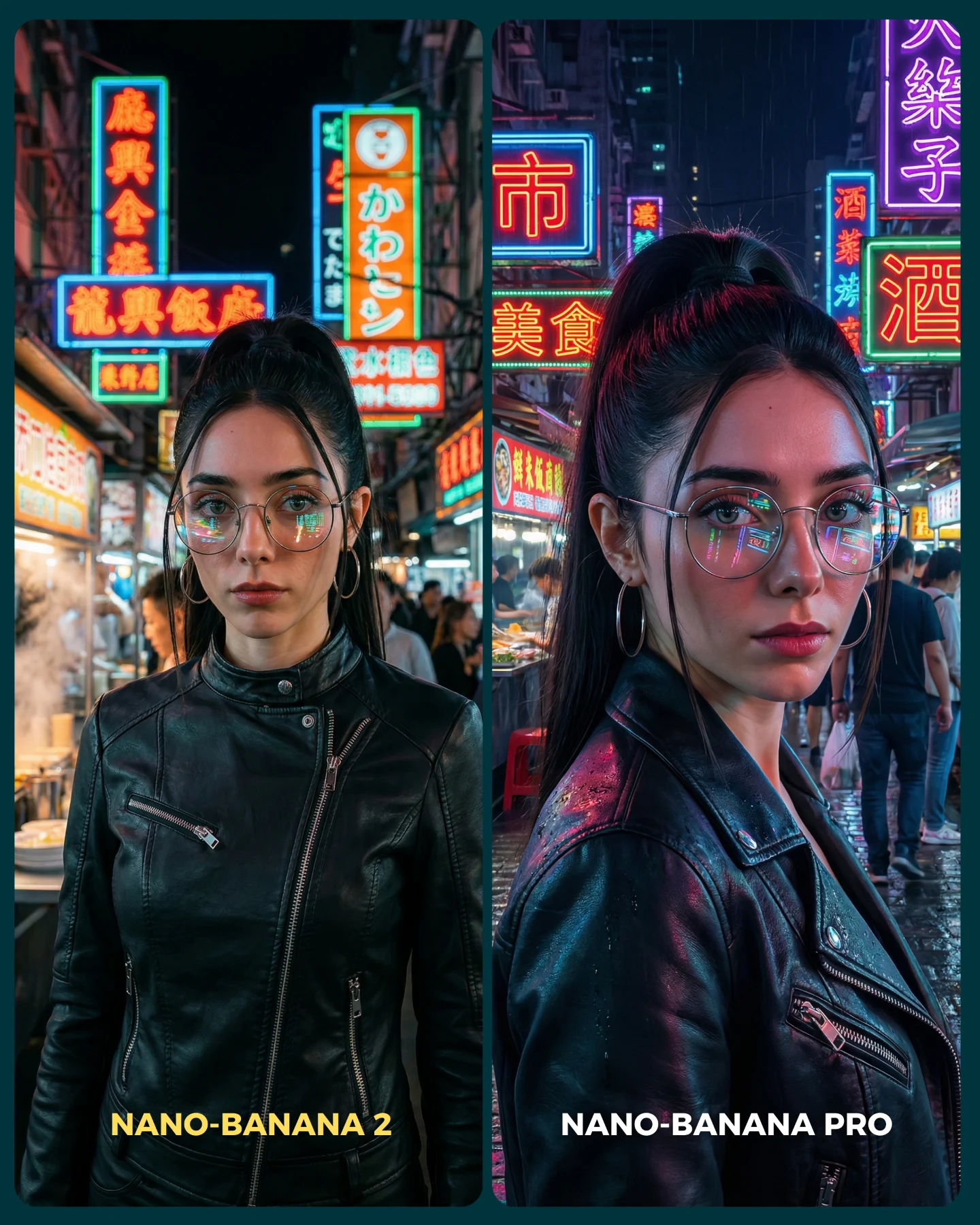
Rainy Teddy Bear Model Comparison AI Photo
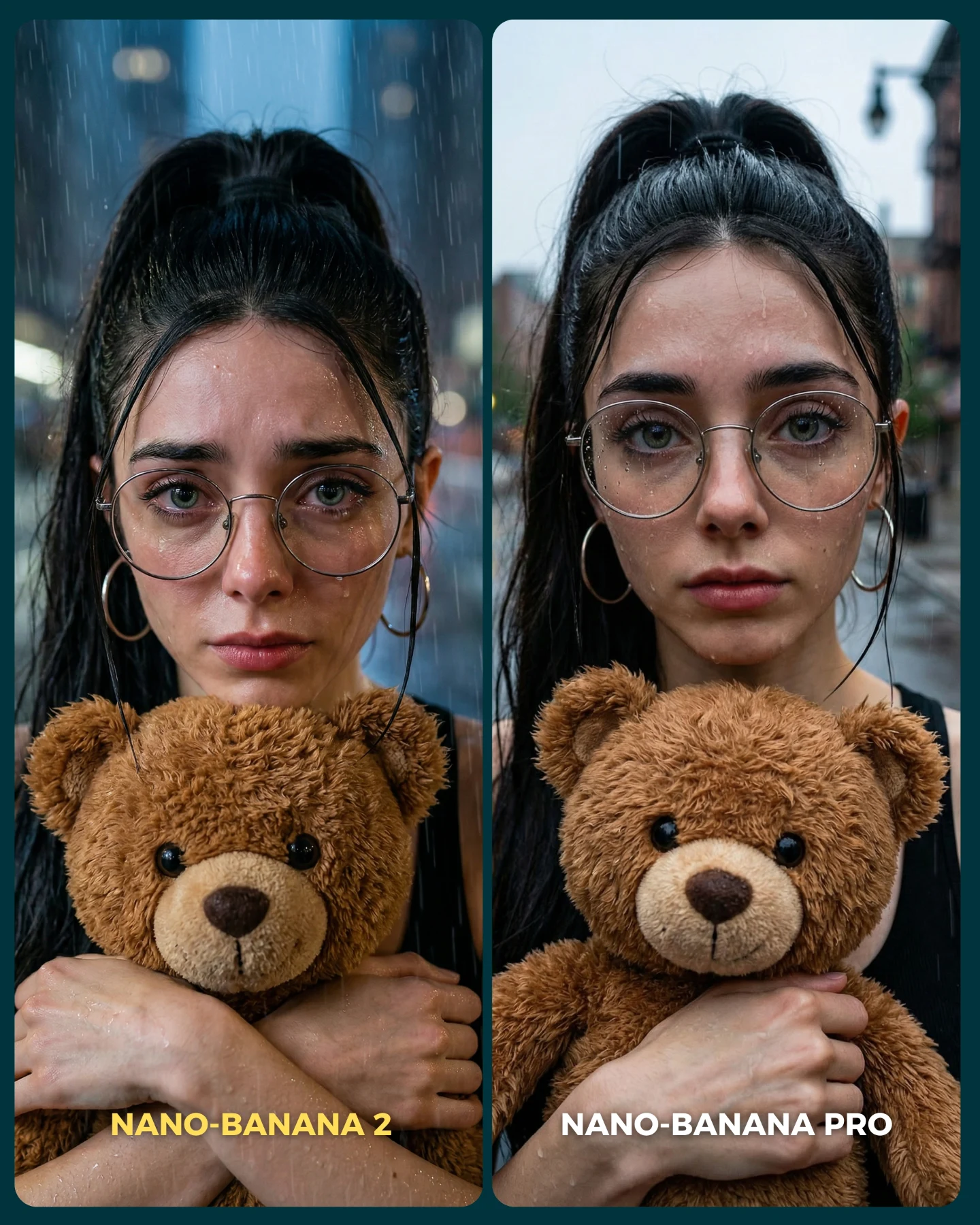
This image is a stronger benchmark than it may seem at first glance. Fairy outfits and glowing wings are obvious fantasy tests, but sadness is a deeper realism test. A human face holding quiet emotion under rain is much harder to render convincingly than a flashy magical scene. The moment you ask a model to handle wet skin, believable eyes, restrained expression, soft plush texture, and emotional weight all at once, weak systems start to show their seams.
The caption explains that the creator selected prompts that Nano Banana Pro had previously handled more realistically. This image fits that logic perfectly. There is nowhere for the renderer to hide. The face is close, the hands are visible, the teddy bear must look tactile, and the rain has to interact with the scene without turning everything into dramatic nonsense. That makes this comparison useful, not just pretty.
Why the Comparison Feels Meaningful
The strongest part of this image is that both sides are emotionally legible. Viewers are not only comparing sharpness or color. They are comparing trust. Which face feels more human? Which skin feels more alive? Which teddy bear looks like a real comfort object instead of a prop? Those are higher-value questions than “which side has more detail?” because realism is often about restraint rather than intensity.
The teddy bear is also a smart benchmark object. Plush fur is difficult because it needs softness, volume, and believable strand behavior without turning muddy. At the same time, the object carries emotional meaning. It makes the portrait feel protective and fragile, which raises the quality bar for the face beside it. The object is not decorative; it amplifies the emotional test.
| Signal | Evidence (from this image) | Mechanism | Replication Action |
|---|
| Quiet emotional benchmark | The same woman looks sad and vulnerable in both rainy close-ups. | Subtle emotion exposes weak facial realism faster than loud fantasy scenes. | Test models on restrained expressions, not only on smile-heavy beauty prompts. |
| Texture under softness | Wet skin, damp hair, plush teddy fur, and glass reflections all coexist. | Multiple soft materials force the renderer to manage realism carefully. | Combine skin, moisture, hair, and fabric or plush in the same portrait test. |
| Fair side-by-side structure | Same subject, same pose idea, same emotional setup, clear labels. | The viewer can judge the render quality instead of guessing what changed. | Keep identity and composition stable when benchmarking models. |
What Makes One Side Feel More Real
In emotional portrait comparisons like this, the better side is usually the one that tries less. Overly dramatic wetness, oversharpened eyes, or too-perfect fur can all make an image feel more synthetic, even if it is technically detailed. The stronger result tends to be the one where rain is present but not screaming, skin keeps natural variation, and the expression remains small but believable.
That is why comparison posts like this are useful for creators. They train the eye away from “more effects equals better image.” When realism matters, softer control often wins. A face can feel alive precisely because it is not exaggerated.
Where This Format Fits Best
This format is ideal for model benchmark content, prompt education, realism testing, and AI influencer accounts trying to prove emotional range. It also works for community-driven discussion because viewers love to debate subtle quality differences when the variables are held steady.
- Emotion-based realism tests: perfect fit because close-up sadness is difficult to fake convincingly.
- Prompt comparison content: strong fit because creators can isolate what each model does with skin, rain, and object texture.
- AI influencer brand building: useful when the goal is to show that the same character can carry feeling, not just style.
- Audience engagement posts: effective because viewers can vote on which side feels more human.
It is less ideal for pure entertainment reels or high-concept fantasy pages where emotional subtlety is not the main evaluation point.
Three Transfer Recipes
| Transfer | Keep | Change | Slot Template (EN) |
|---|
| Rainy umbrella portrait version | Same identity anchors, emotional realism test, side-by-side labels. | Swap the teddy bear for a transparent umbrella and test hand realism on the handle. | {two-panel benchmark card} {same woman identity} {rainy emotional portrait} {left-right model comparison} |
| Hospital waiting-room realism version | Quiet sadness, close facial crop, object as emotional amplifier. | Replace rain with indoor sterile light and use a blanket or file folder as the comfort object. | {split portrait comparison} {same subject} {subtle emotional stress scene} {model realism test} |
| Winter scarf comparison version | Controlled diptych layout, same expression family, texture realism challenge. | Swap the bear for a thick knit scarf and test cold skin plus fabric softness. | {side-by-side card} {same character anchors} {cold-weather realism challenge} {clear benchmark labels} |
Aesthetic Read
The image works aesthetically because it limits the palette. Black hair, silver glasses, brown teddy bear, pale skin, gray-blue rain mood. That narrow palette keeps the comparison clean and makes texture differences more noticeable. If the scene were full of loud colors, viewers would judge styling first and realism second. This image avoids that trap.
The close crop is also doing important work. It gives almost no escape space. Viewers have to confront the face and the teddy bear directly. That is exactly what a realism benchmark should do. The more the image eliminates distractions, the easier it becomes to see which side is handling skin, eyes, moisture, and plush texture more convincingly.
| Observed | Recreate |
|---|
| Direct gaze with low-amplitude sadness | Use subtle emotion instead of theatrical crying if you want to test realism properly. |
| Rain interacting with hair and skin | Add moisture where it naturally collects, not as random decorative droplets. |
| Teddy bear filling the lower portrait zone | Choose one comfort object that also challenges texture rendering. |
| Left-right tonal split between moodier and more natural render | Separate models by realism handling, not by completely different scenes. |
Prompt Technique Breakdown
For this kind of benchmark, the prompt should lock emotional structure before stylistic variables. Otherwise you end up comparing two different moods instead of two different renderers.
| Prompt chunk | What it controls | Swap ideas (EN, 2–3 options) |
|---|
| same woman with ponytail, glasses, hoop earrings, sad direct gaze | Locks identity and emotional baseline. | same bob haircut and tired eyes; same braid and soft frown; same freckles and restrained expression |
| brown teddy bear held against chest | Adds emotional narrative and texture complexity. | stuffed rabbit; knit blanket; soft cardigan sleeve bundle |
| rainy urban close-up portrait | Creates the realism challenge around moisture and atmosphere. | misty morning portrait; drizzly street portrait; damp overcast city look |
| two-panel labeled comparison card | Makes the benchmark readable and discussion-friendly. | model A vs B diptych; version comparison card; split portrait benchmark layout |
| left more dramatic, right more naturalistic | Clarifies the evaluation axis. | left moody right believable; left overprocessed right grounded; left stylized right lifelike |
Remix Steps
Start by locking the same identity and emotional pose on both sides. Then hold the object constant. Only after that should you vary the renderer or generation method.
- Run 1: freeze face, glasses, ponytail, and teddy-bear placement across both panels.
- Run 2: lock the rainy environment and close crop so the comparison remains fair.
- Run 3: vary only the model or rendering process to expose realism differences.
- Run 4: add labels and final card design so the audience can compare without extra explanation.
The broader creator insight is that emotional portraits are one of the best benchmark categories available. They reveal whether a model understands not only how to decorate a face, but how to make a face feel inhabited.